

AN EXCEPTIONAL MAGNETIC AZIMUTH COMPASS DIAL
Stock Number: 10156
$12,500
Circa
1700
Description
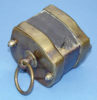
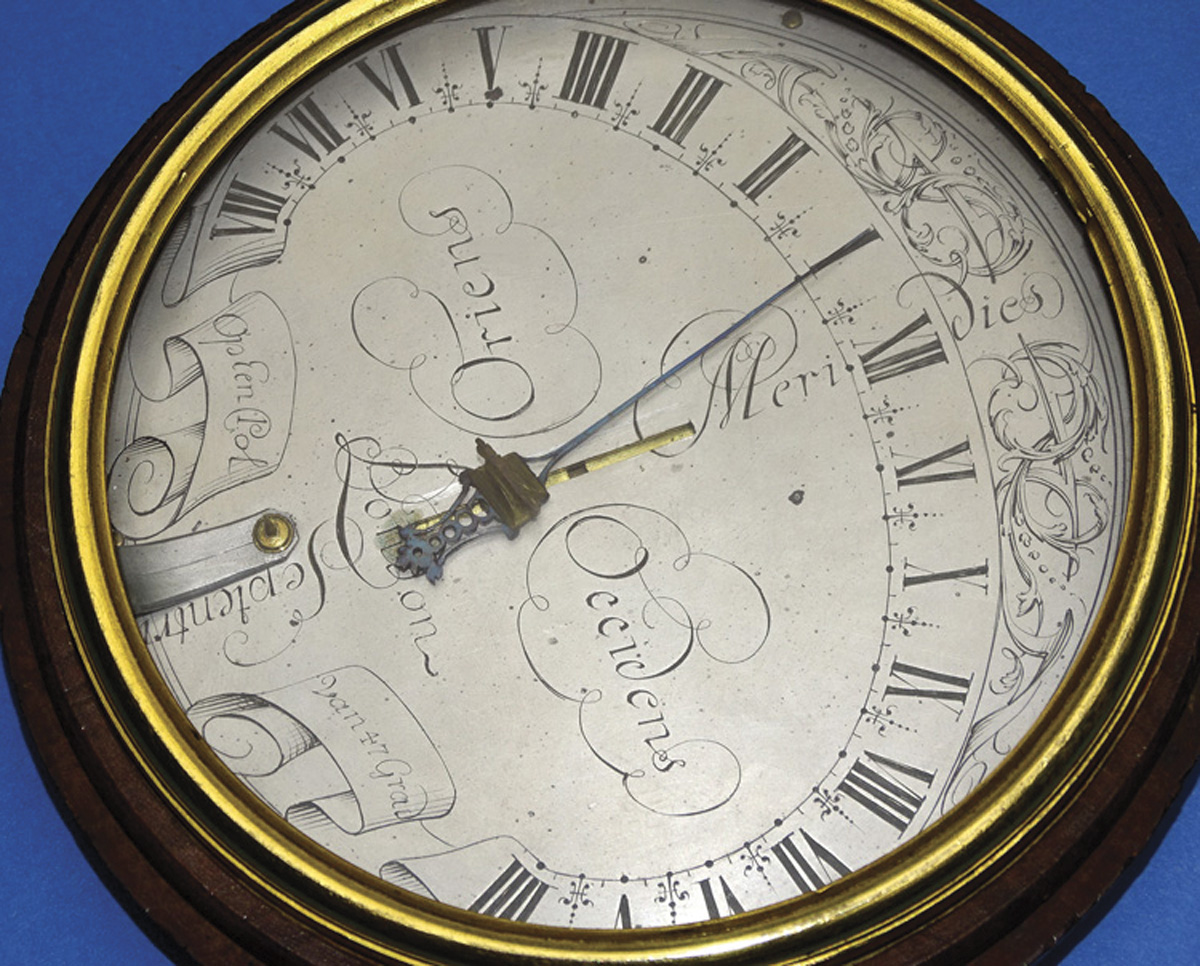
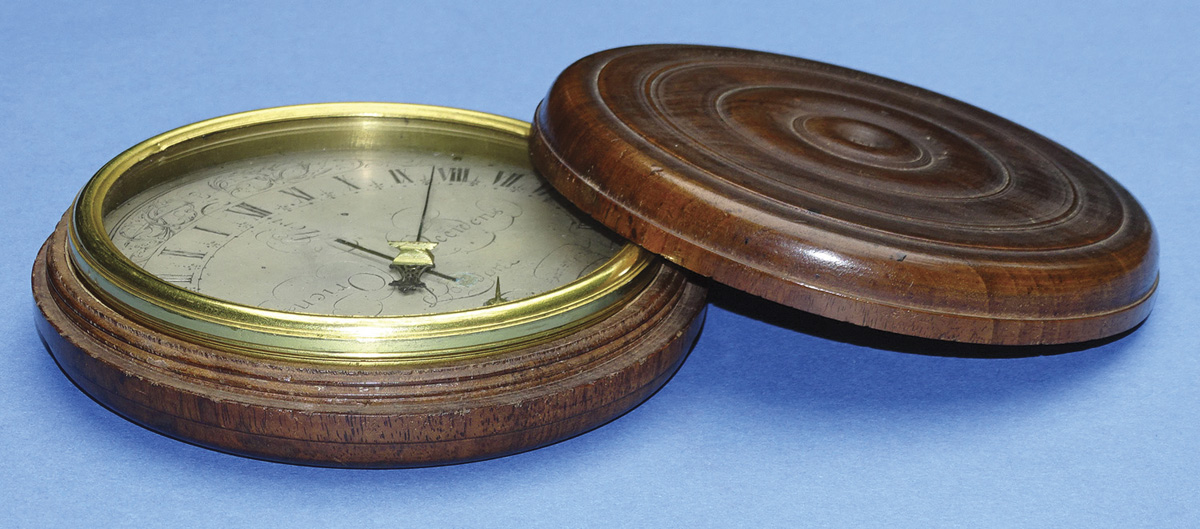
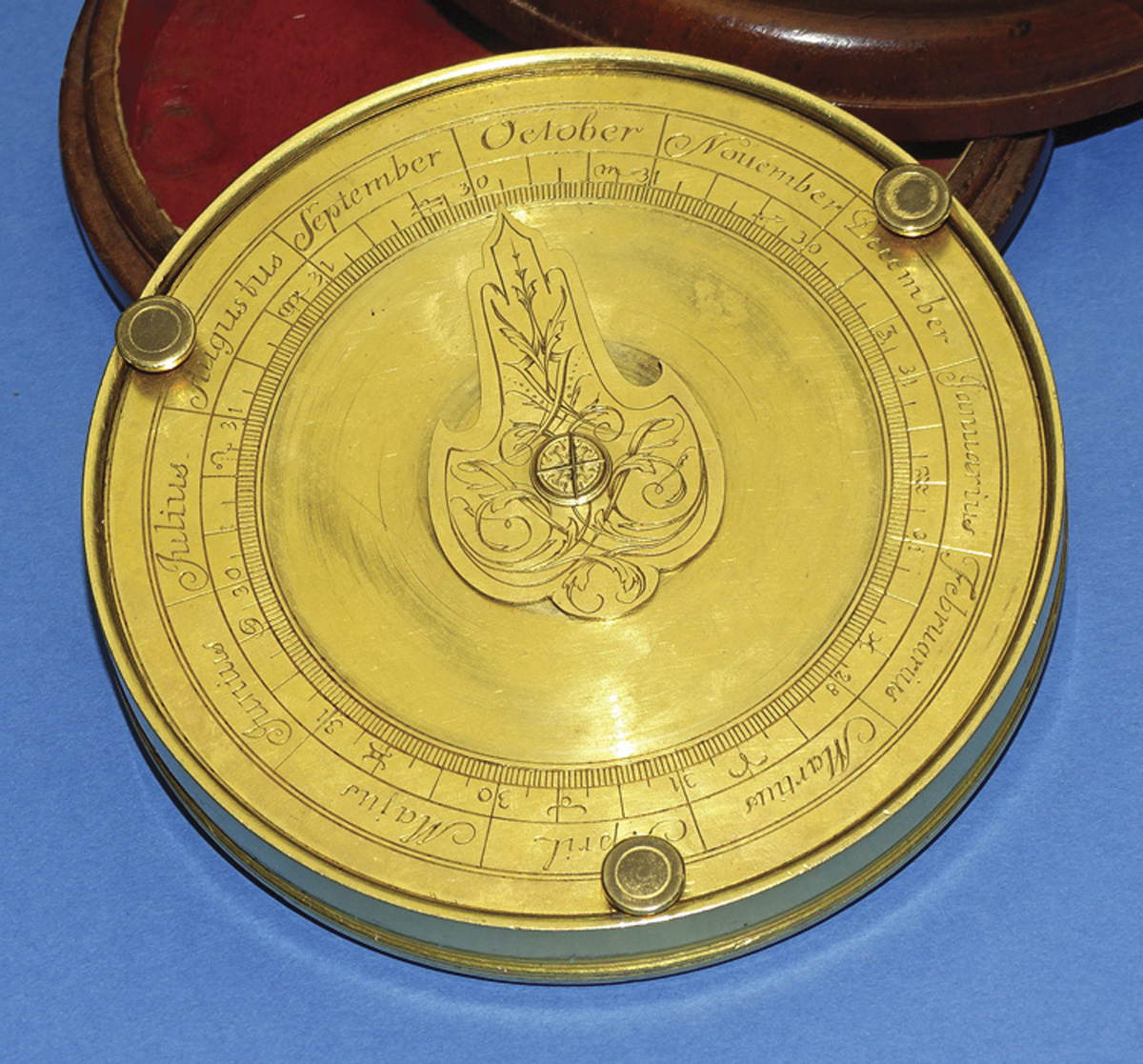
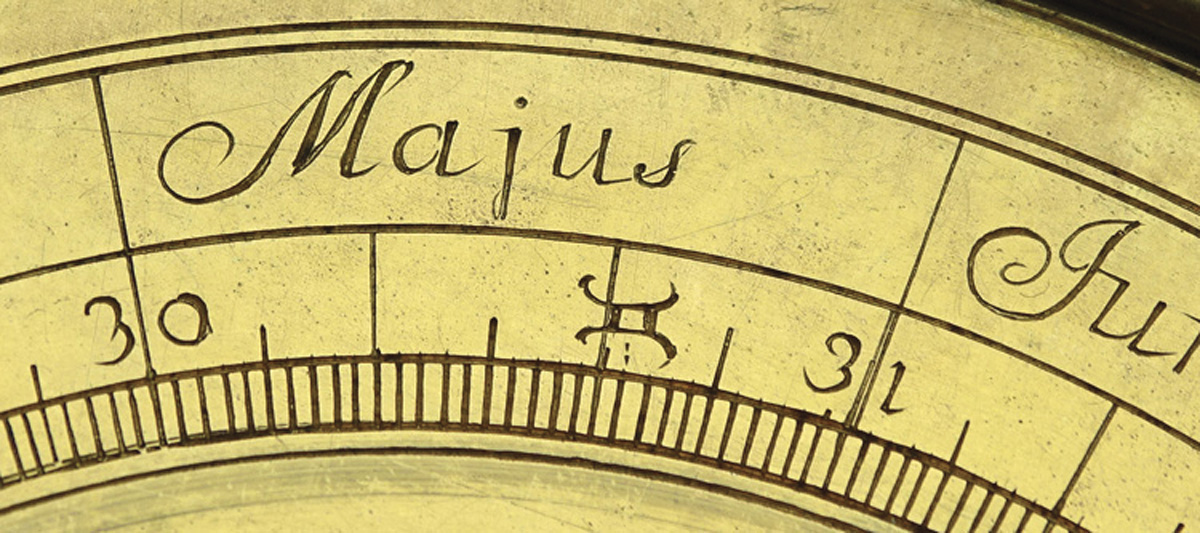
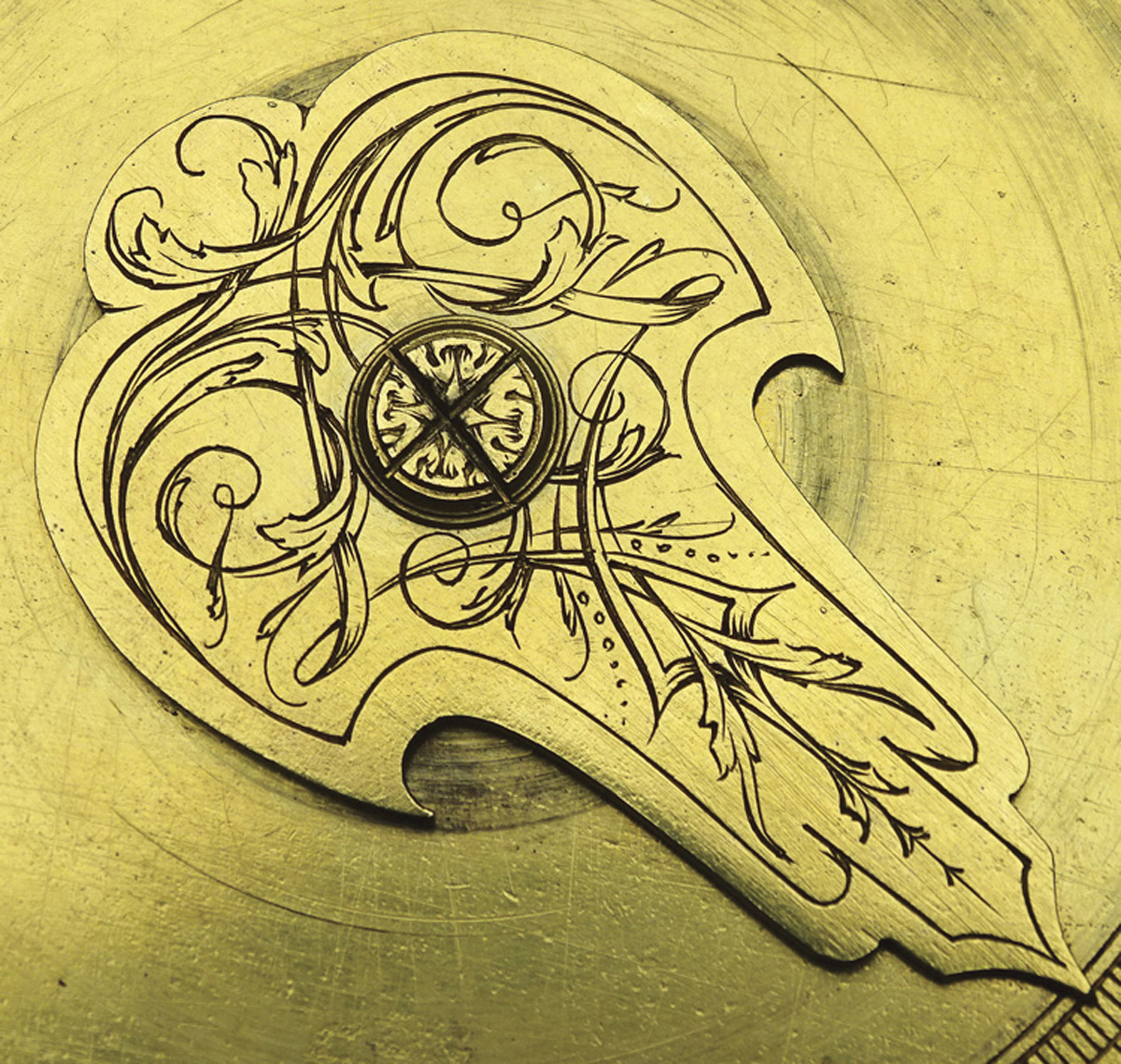
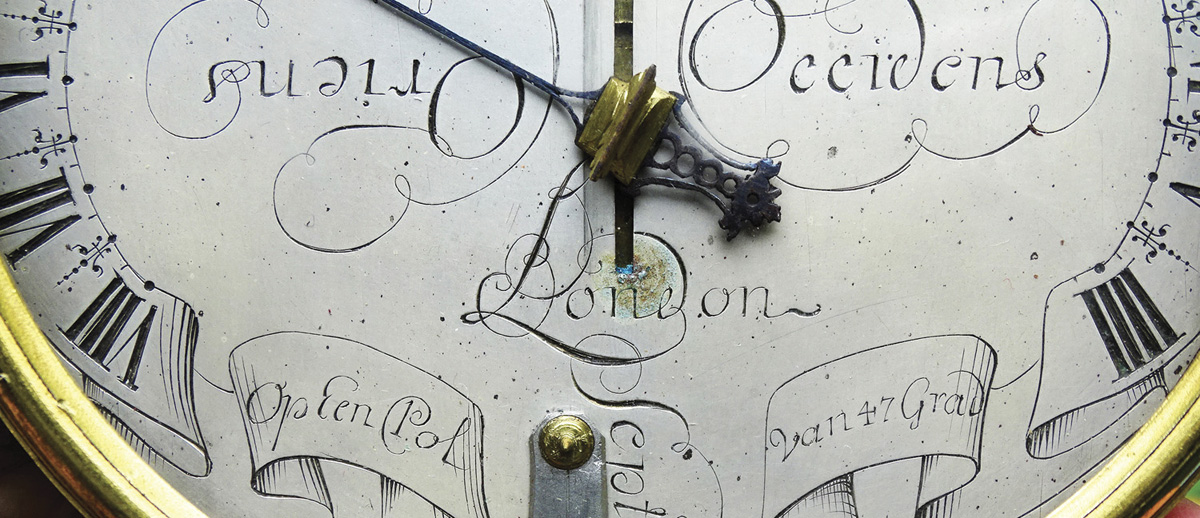
Just Set the Date and Point at the Sun, Dutch, c. 1700. The 5″ (13 cm) diameter gilt brass body is almost 1″ (2.5 cm) thick, standing on three round feet. It has a large glazed compass with silvered dial beautifully engraved with an oval chapter ring, principal compass directions (in Latin), swirling foliate decor, an engraved banner with the inscription “Op Een Pol van 47 Grad” and the enigmatic “London.” The compass needle has a slender long arm to one side and finely shaped and pierced short arm to the other. The hub has a central brass knife edge to keep the needle on the pivot. The gnomon is a short pin at the end of a little alignment line. The underside reveals full circle calendar and Zodiacal scales (showing 20 March vernal equinox), and an exquisitely engraved rotatable index which translates the needle pivot along the 12 noon “meridian” line, positioning it for the current date. The dial is contained in its original turned wood case, lined with chamois and with screw-on cover. Condition is excellent noting one discolored spot on the dial face, and the needle needing remagnetization.
This is a beautiful example of a direct-reading azimuth dial. After setting the index (and thus the pivot position) to the current date, you point the compass towards the sun (indicated by the little gnomon and fiducial line) and simply read the time by the position of the needle. It is of course laid out for a single latitude, and presumes a magnetic declination offset of 0° (which obtained in much of Europe in the late 17th c.)
The dial is unsigned, but design and execution is of very high quality. The months and directions are in Latin, the latitude inscription in Dutch. The latitude of 47° has nothing in common with London (at 51°30′), but rather Bern, Graz, Budapest, etc., leaving us with a small mystery.
Ask the Dealer
Dealer information
 TESSERACT
David and Yola Coffeen both have enjoyed academic careers, as planetary astronomer and as linguist/educator. But since 1982 (yes, 1982!) they have been full-time dealers in early scientific and medical instruments, under the name Tesseract. Selling primarily by catalogue (over 100 issued so far) they also have a web presence at www.etesseract.com, and can be contacted at mail@etesseract.com.