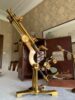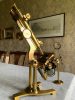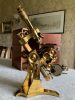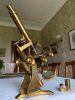


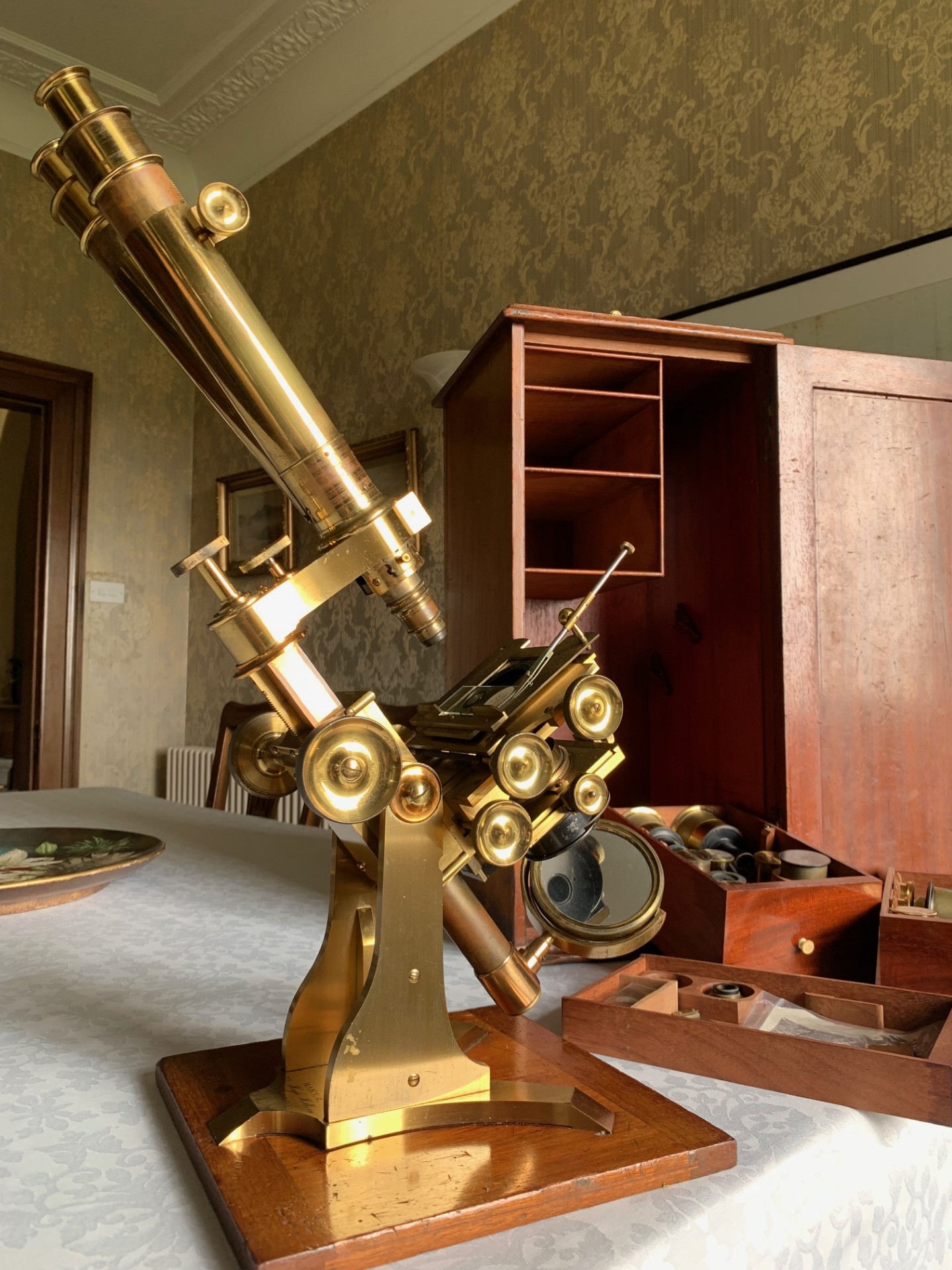
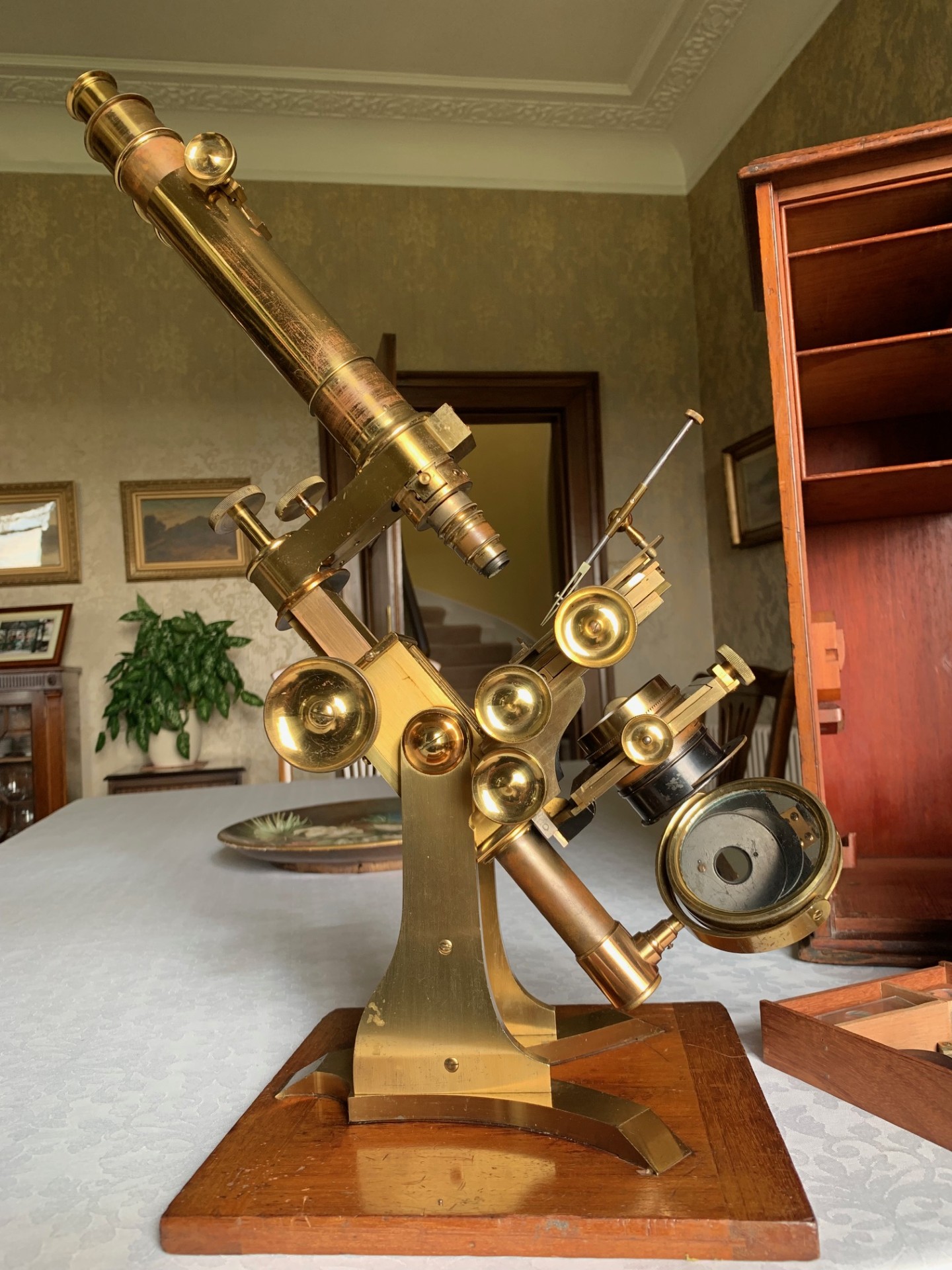
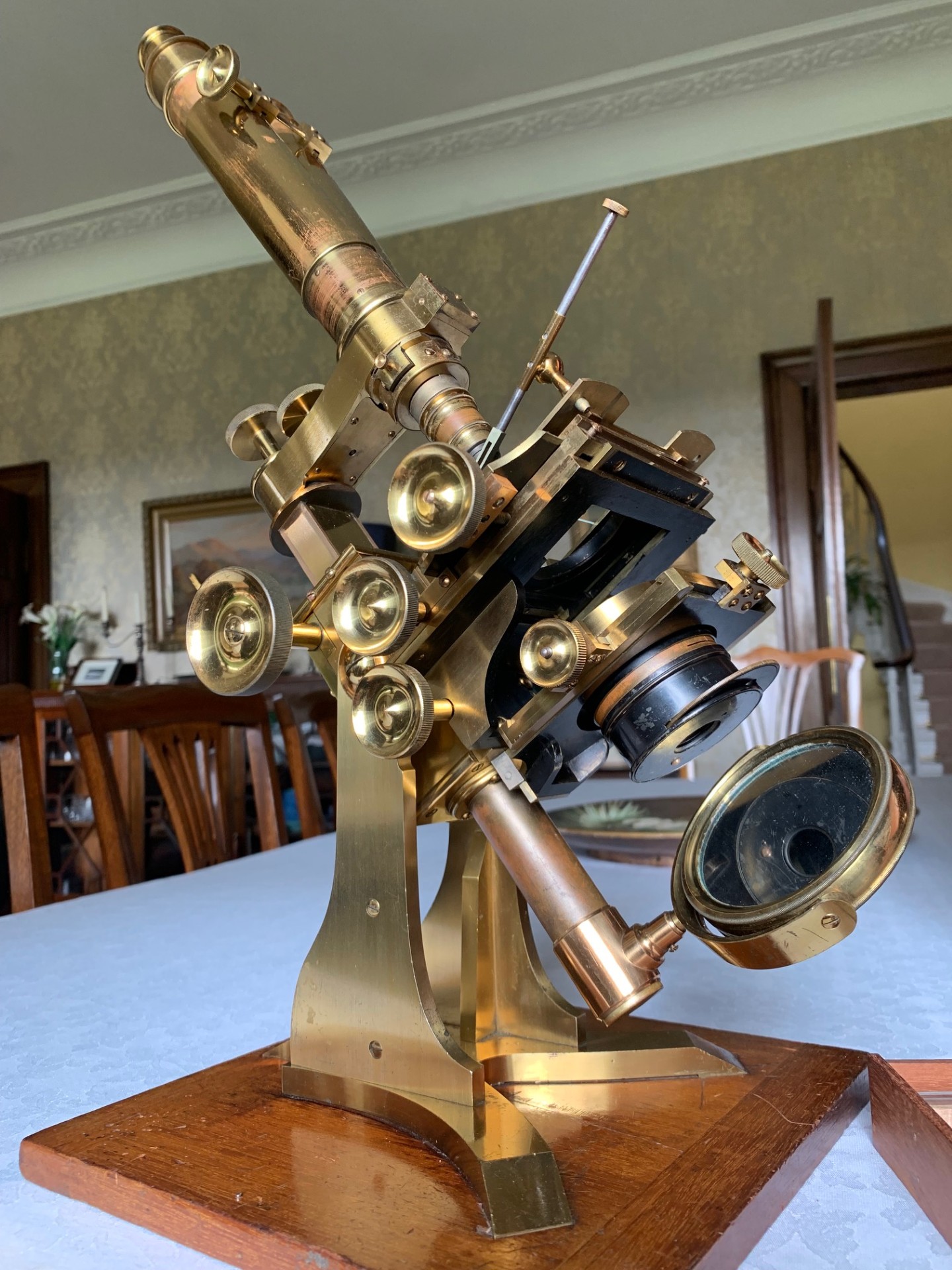
Antique Baker Best No. 1 Wenham Binocular Bar-limb Brass Microscope c1860, Cased
£1,975
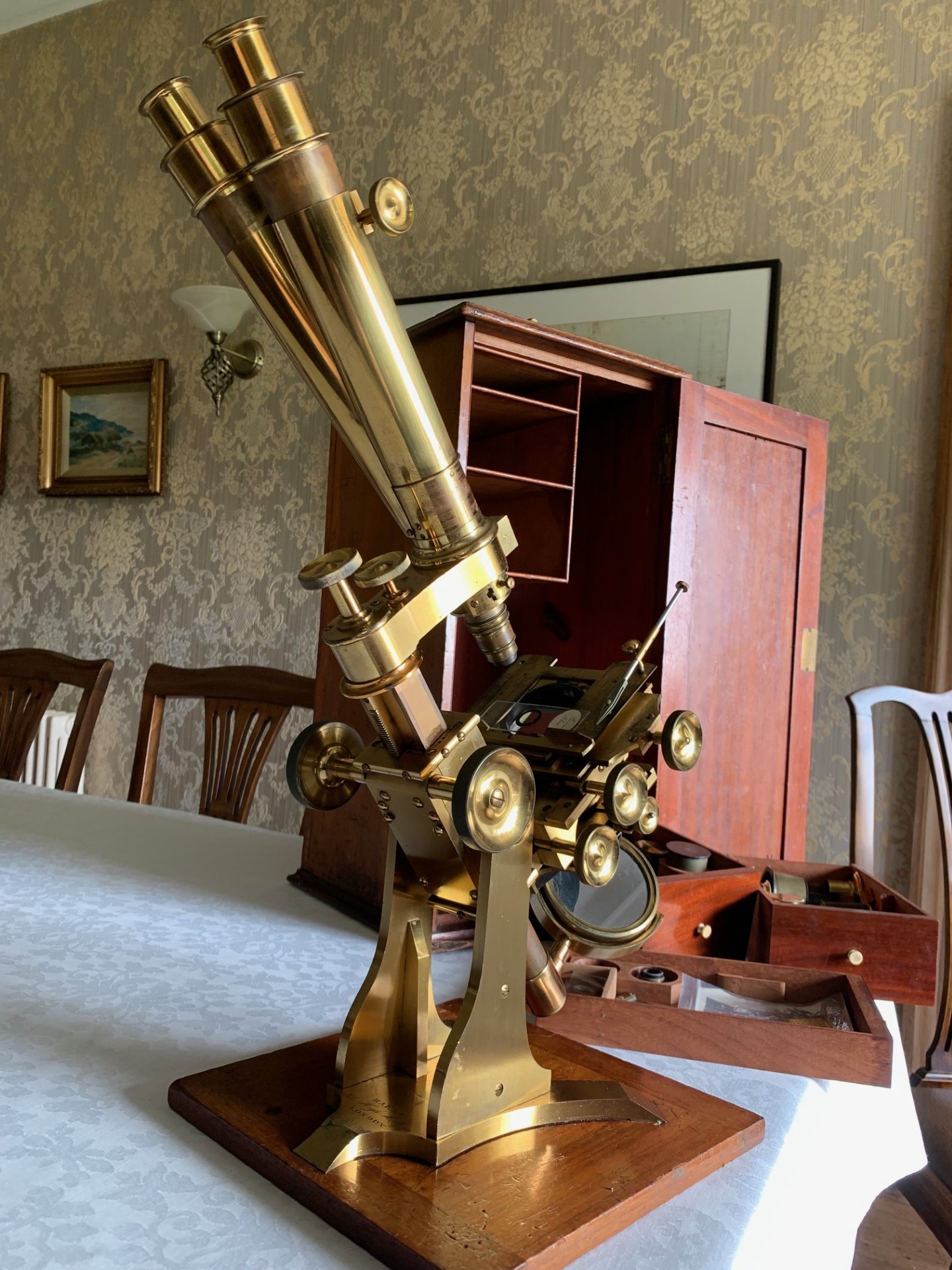
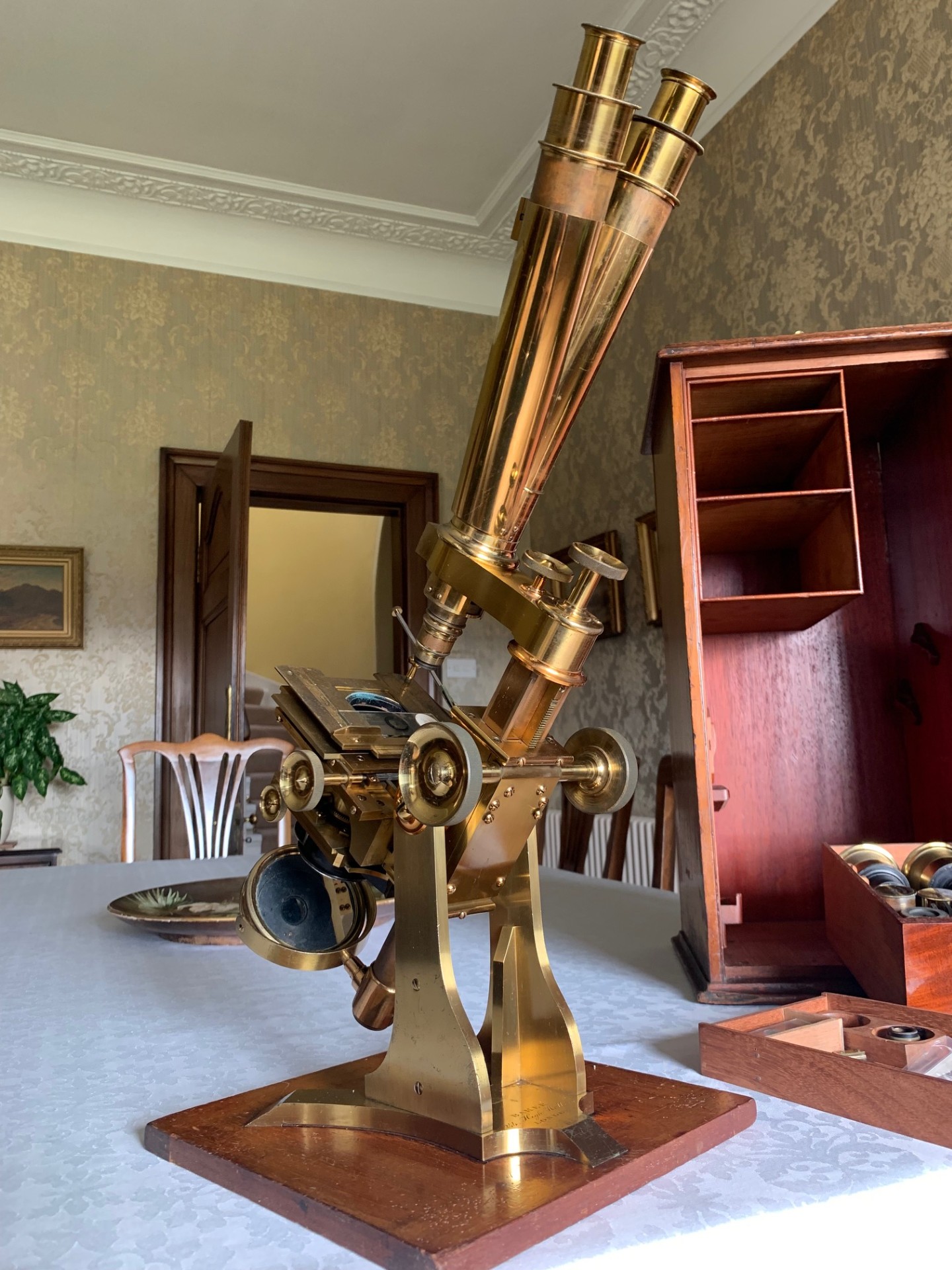
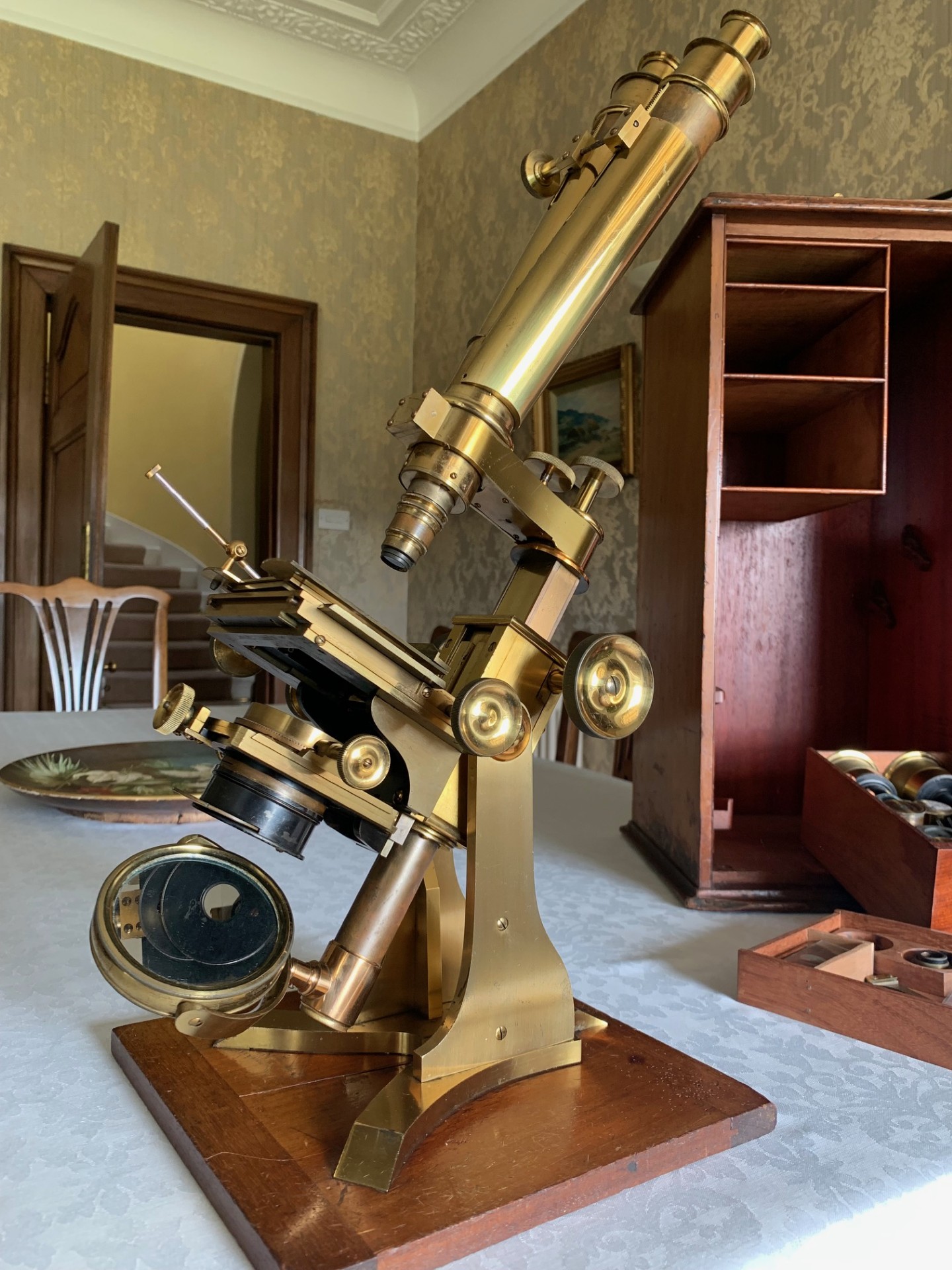
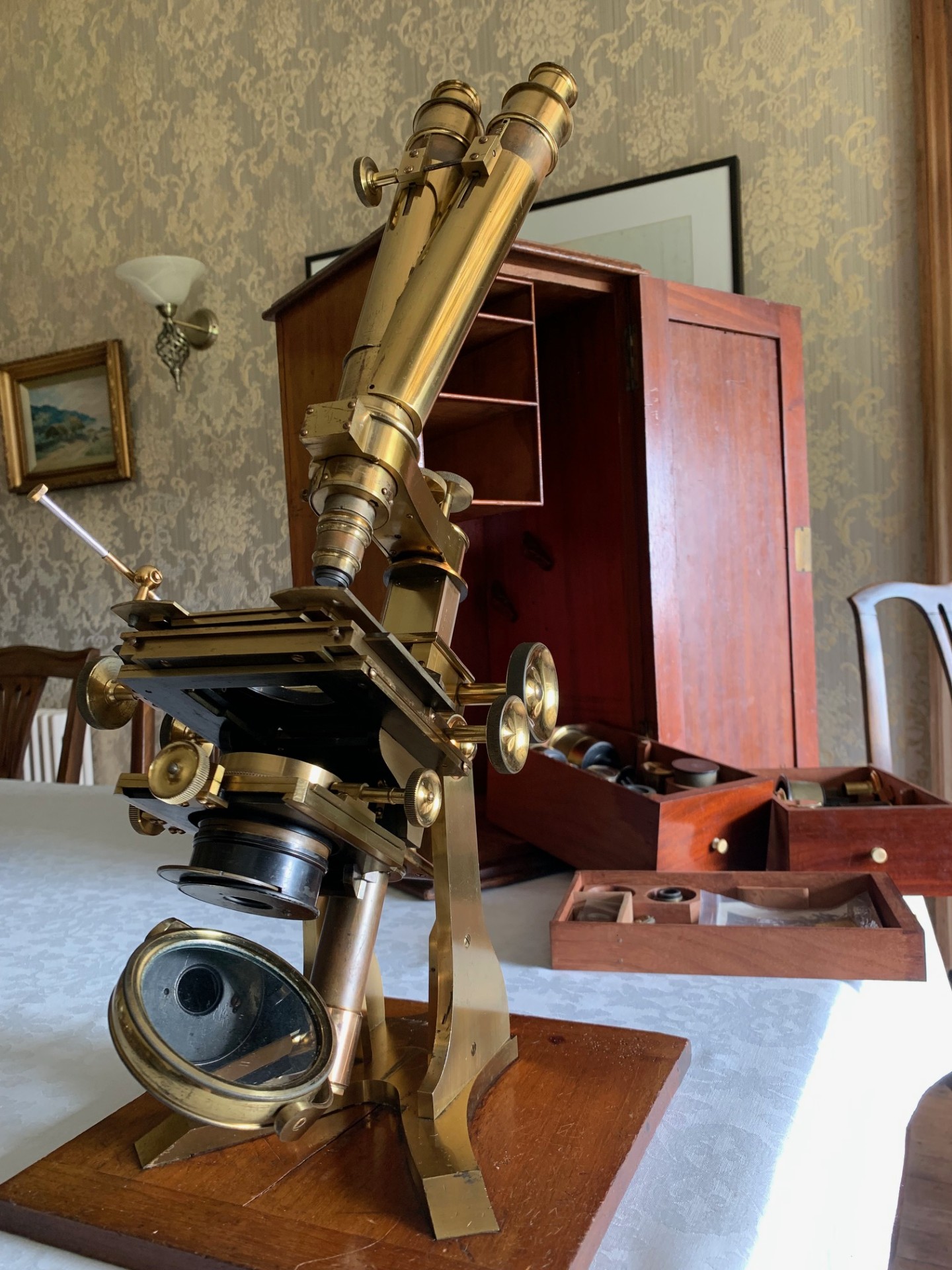
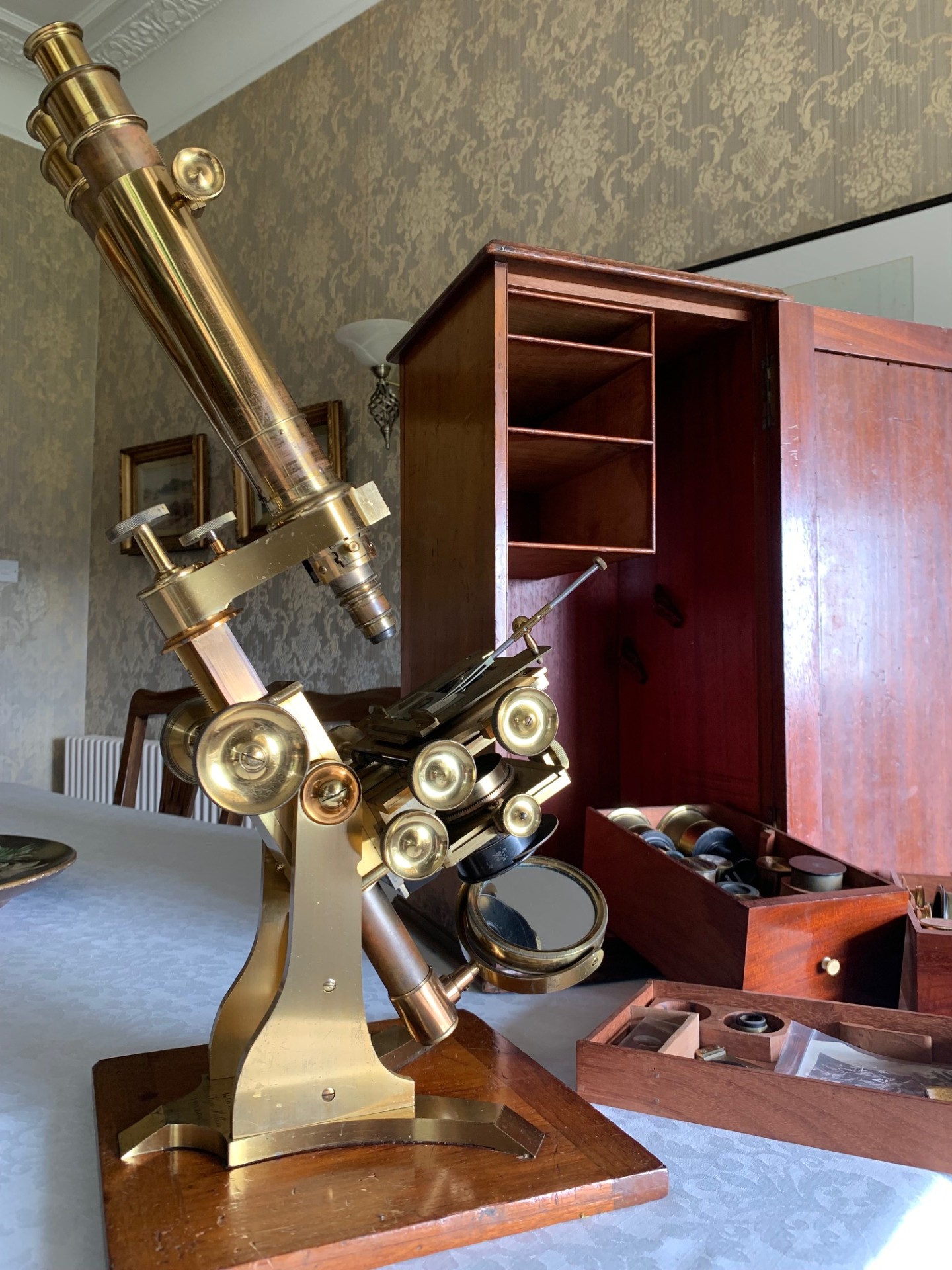
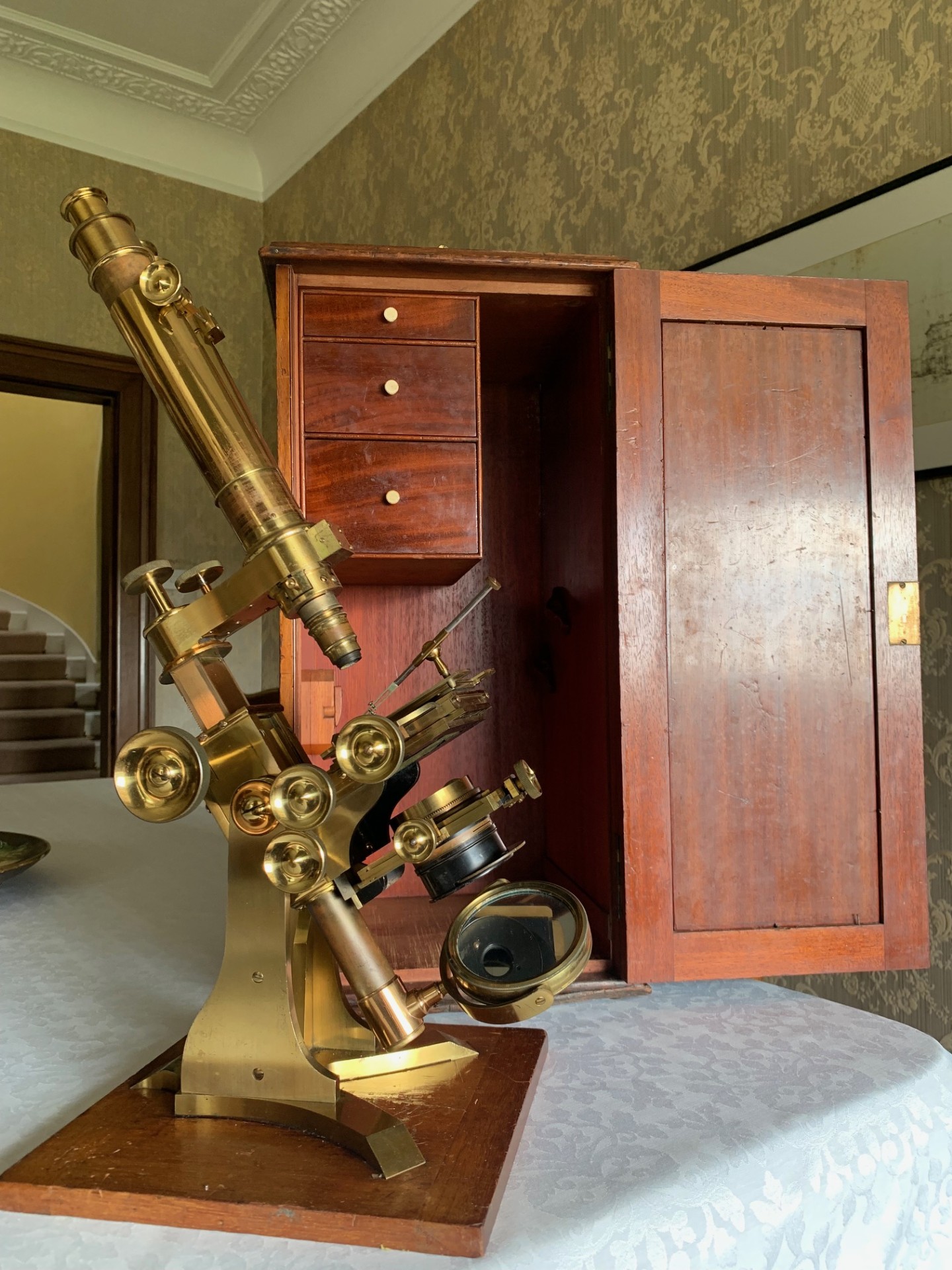
Lovely antique mid-Victorian period example of a very large Wenham binocular brass bar-limb microscope by quality London makers C. Baker. This model is the No. 1 or Best First Compound Microscope, is the largest produced by Charles Baker and this example comes with a host of useful accessories.
Circa
1860
Maker
C. Baker, London
Country of manufacture
UK and Ireland
Description
Offered for sale is a really good rare example of an antique monocular brass microscope by English makers Charles Baker of High Holborn, London with the instrument dating to around the 1860 period. The condition is generally extremely good, with only a few age and use appropriate signs of wear to the finish on the instrument and it has just the right time worn look to its lacquered finish and brass-work for a 166 year old antique instrument. Being a very large heavy microscope with quite an imposing sense of scale (and weight), it’s also a good proposition for display, say on a desk-top or other suitable setting such as a home office, especially when set up with an antique slide. It’s also perfectly usable, producing some nice bright images at low and medium magnification with its current set of optics and with the wooden base plate fitted it can also be used or displayed on a polished surface.
Background to C. Baker, London – source Microscope Museum
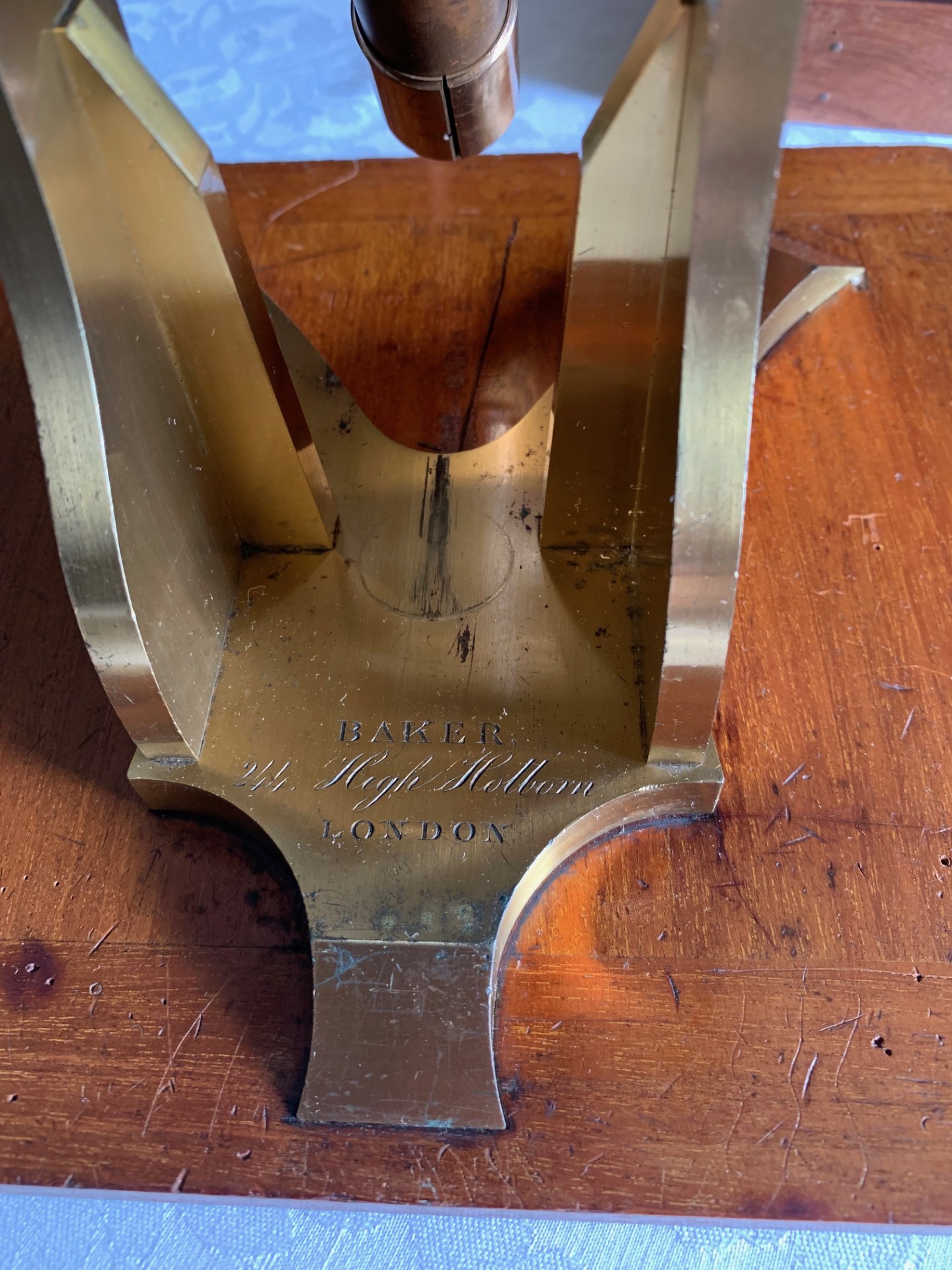
The business of Baker was founded in London in about 1765, Charles Baker, who was born in 1820, giving his name to the company from about 1851. When Charles Baker died in 1894 the firm continued under the same name but run by the Curties family until it became, in 1936, Charles Baker & Co. and subsequently, sometime in the 1940s, C. Baker Ltd. The firm’s address mostly given as 244 High Holborn, London (but sometimes 243 and 245, sometimes in combination). The firm produced optical and surgical instruments. In 1963, Vickers acquired the C Baker Ltd microscope factory and a new company called Vickers Instruments was formed. The microscope in this listing is signed with ‘BAKER, 244 High Holborn, London’ and appears to be be a version of Baker’s very large compound microscope No. 1 or Best First model. The instrument isn’t numbered and dates to circa 1860 or thereabouts.
Turning to the main technical details of this fine Victorian binocular bar-limb microscope, we have the following:
1) Large Y-shaped foot construction in lacquered brass and large twin uprights with bolsters to pivot point, with rectangular bar-limb form and lacquered brass finishes to the upper parts of the instrument. The microscope is inclinable, holds position well on adjustment and can be manually tightened at the pivot point as may be required.
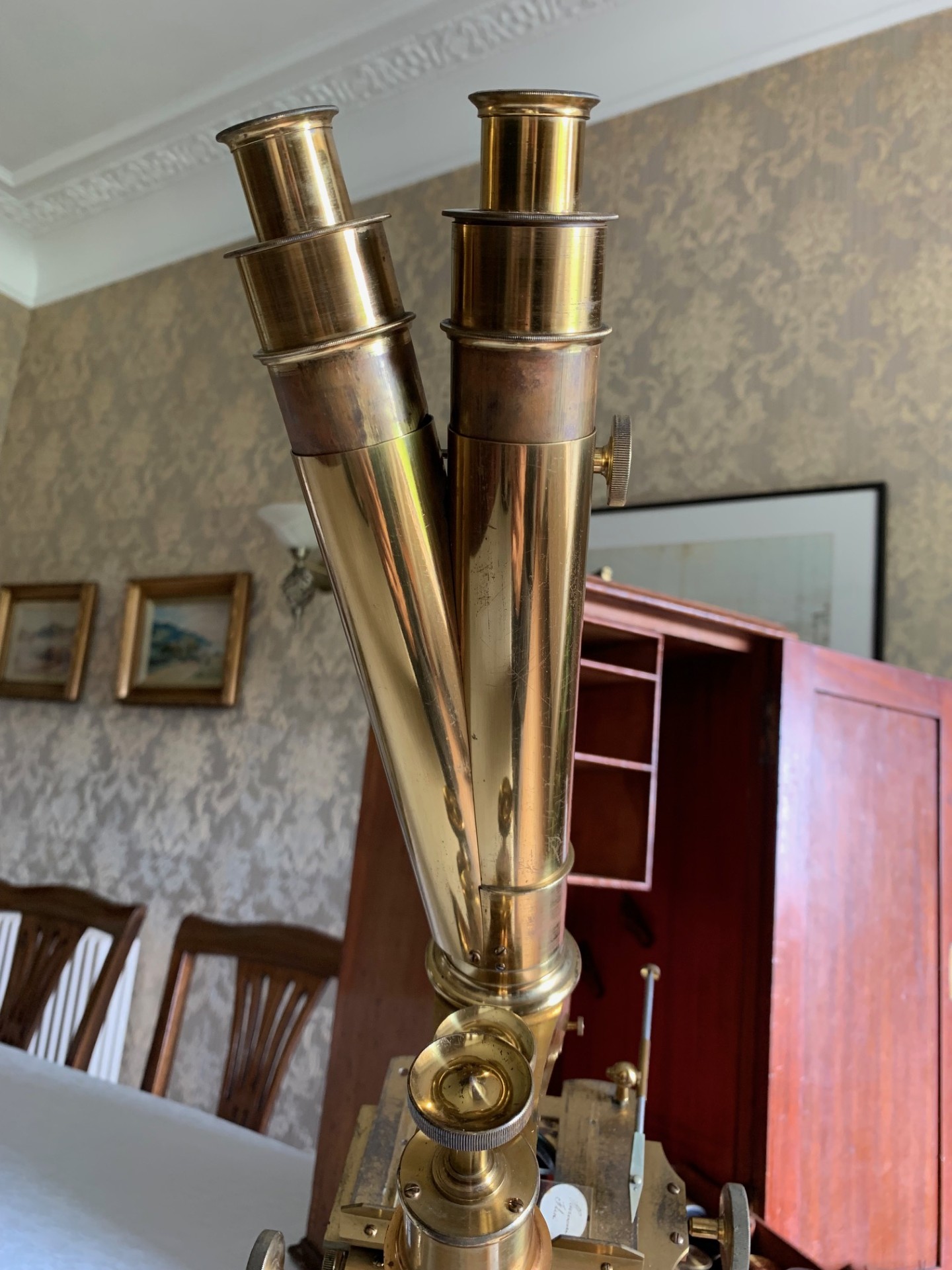
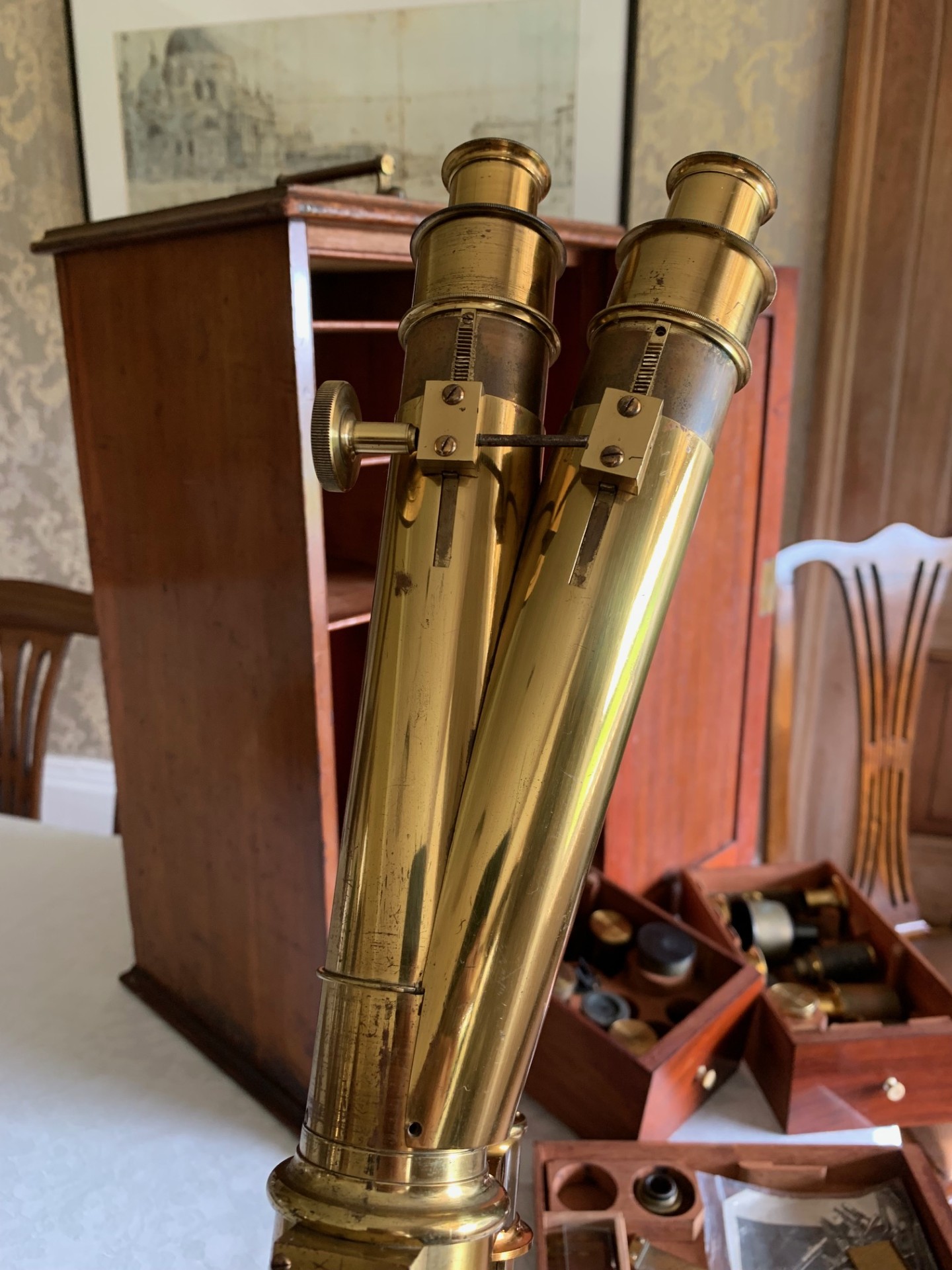
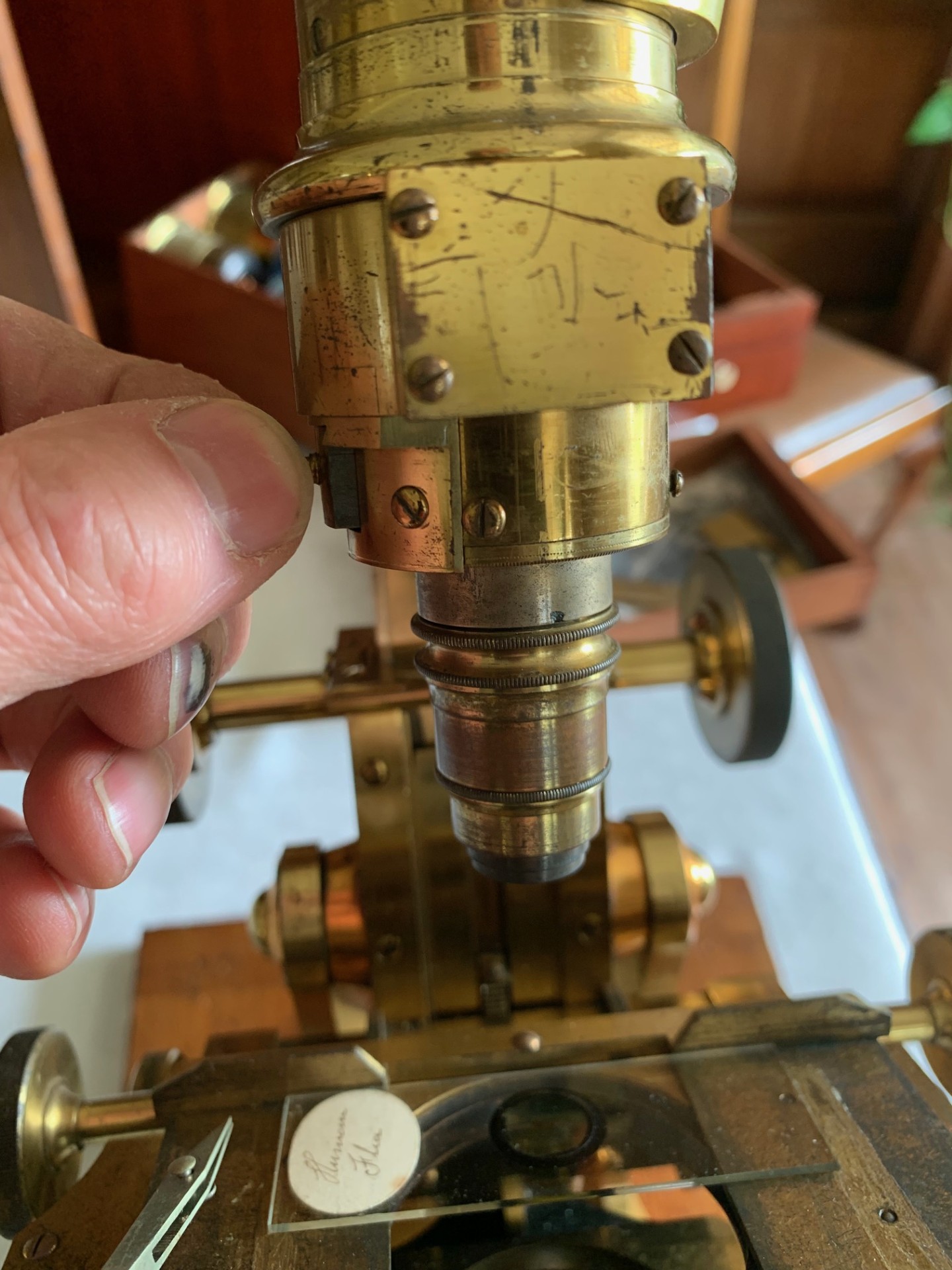
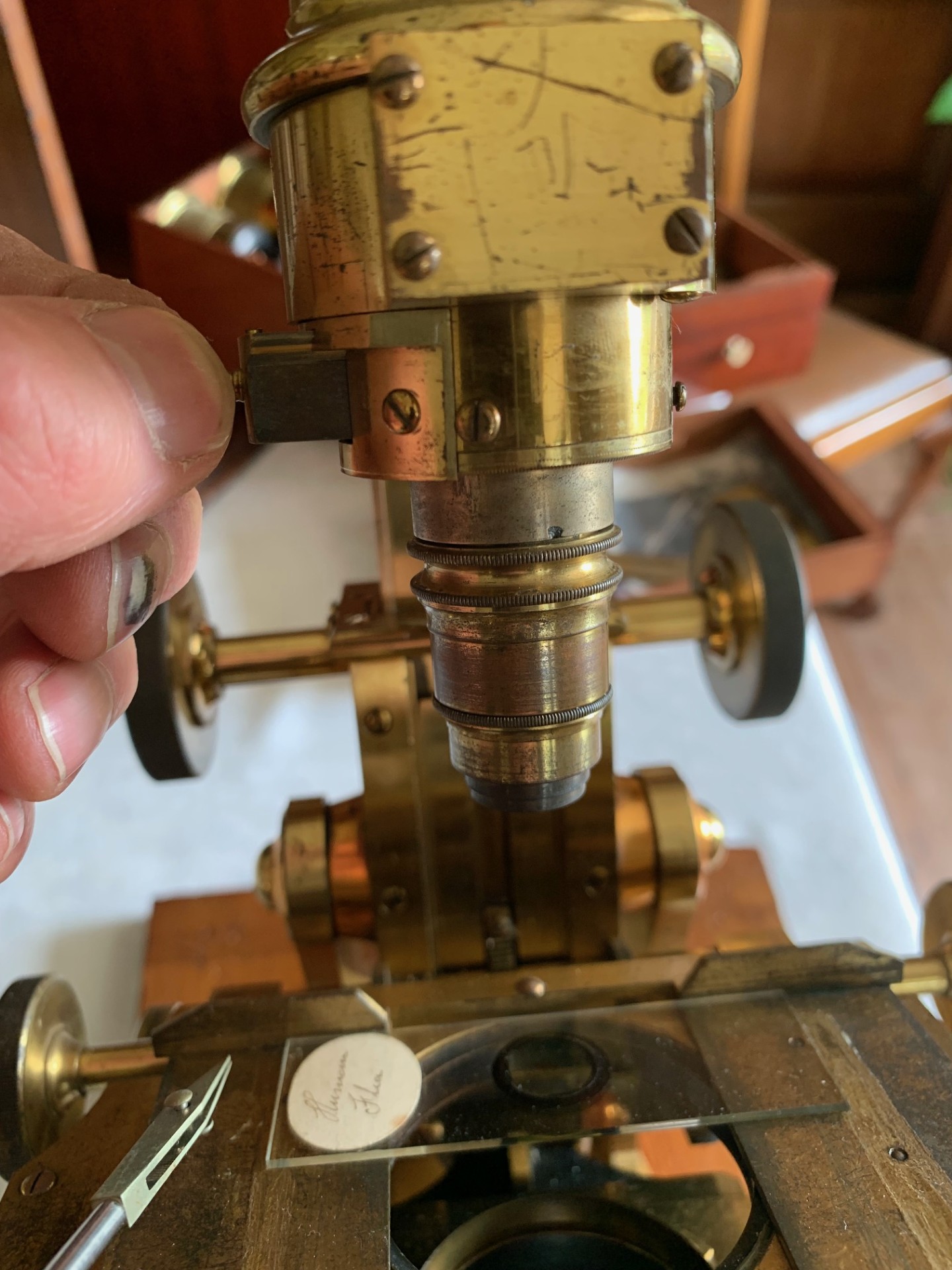
2) A Wenham binocular eyepiece unit with top-hat eyepieces giving 6x and 8x magnification options, plus a higher-power 10x eyepiece for monocular use, along with a blanking plug for the left hand tube when not being used, which is a useful accessory. The instrument also has mechanical eyepiece draw-tubes operated by rack & pinion with reasonably smooth action when used with care. The Wenham prism is present in its carrier in clean condition. Images to both tubes are acceptable, with very slightly duller image to the left tube, which is quite normal for antique Wenham optical systems of this type. Images are collimated and perfectly acceptable at tested magnifications.
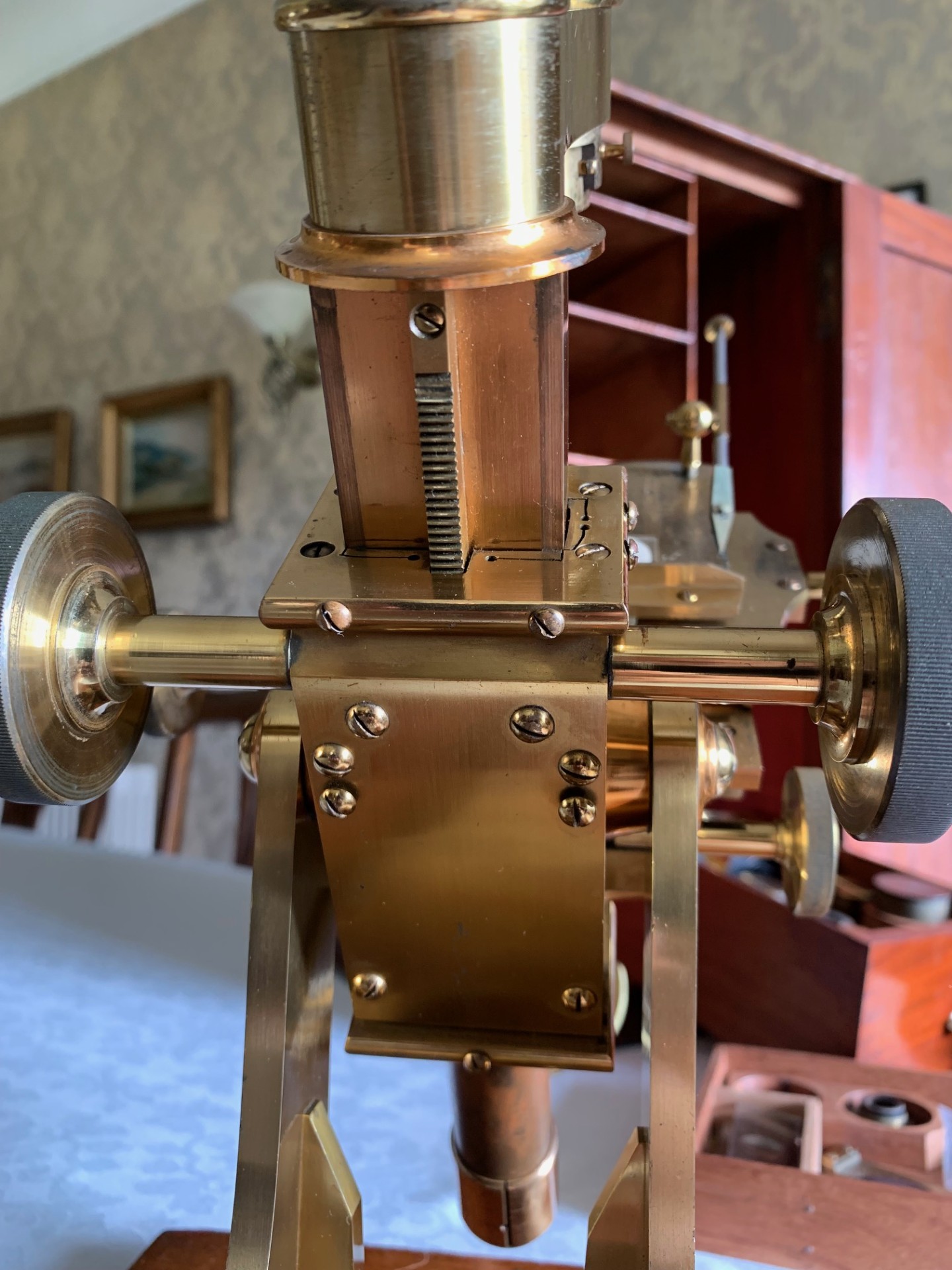
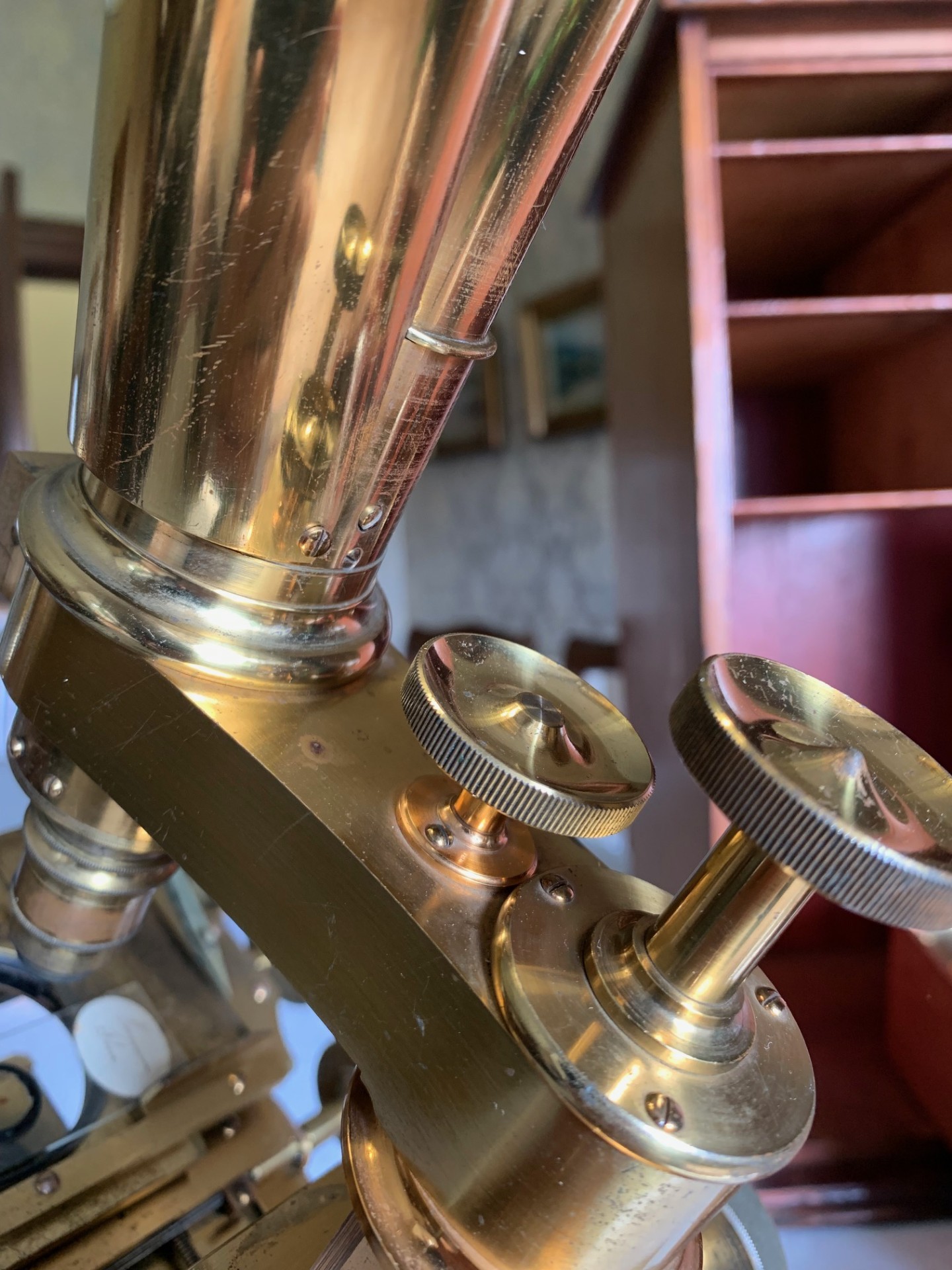
3) The instrument’s main coarse focus is controlled by a set of large thumb-wheels with smooth action. The bar-limb design comprises a rectangular section coarse focus with large pinion box. The coarse focus has the older style straight cut rack, which supports dating to around the 1860 period. Travel and focus are both very good with positive feel and good tightness with the optical tube holding in position as it should throughout its working range. There’s a couple of worn teeth to the rack, but this is outside the normal working range.
Fine focus is via a single brass thumb-wheel at the rear of the optical tube positioned on the bar, acting on the nose-piece only, that also has a smooth action being freshly lubricated.
4) There’s various brass objectives lenses as under:
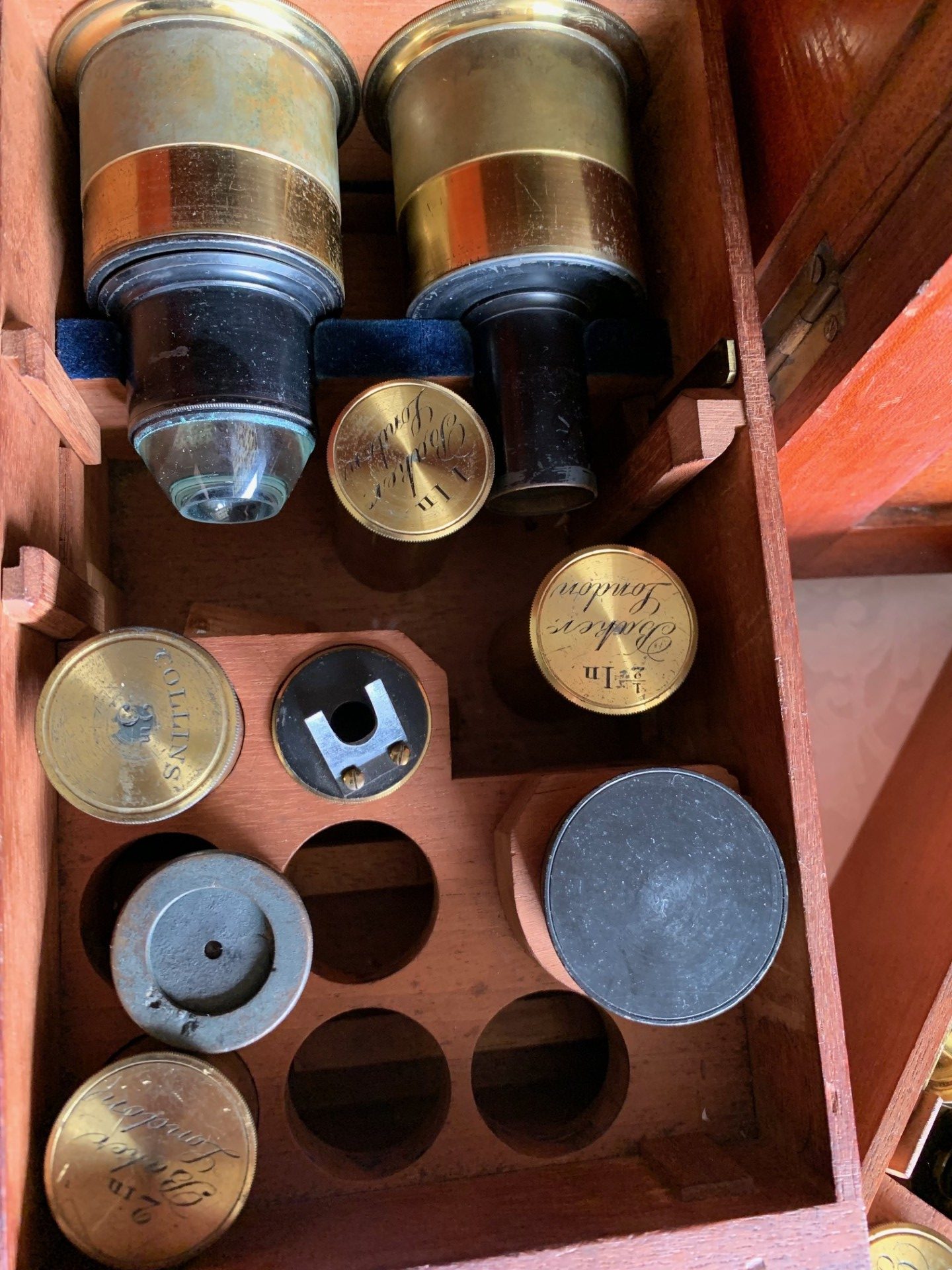
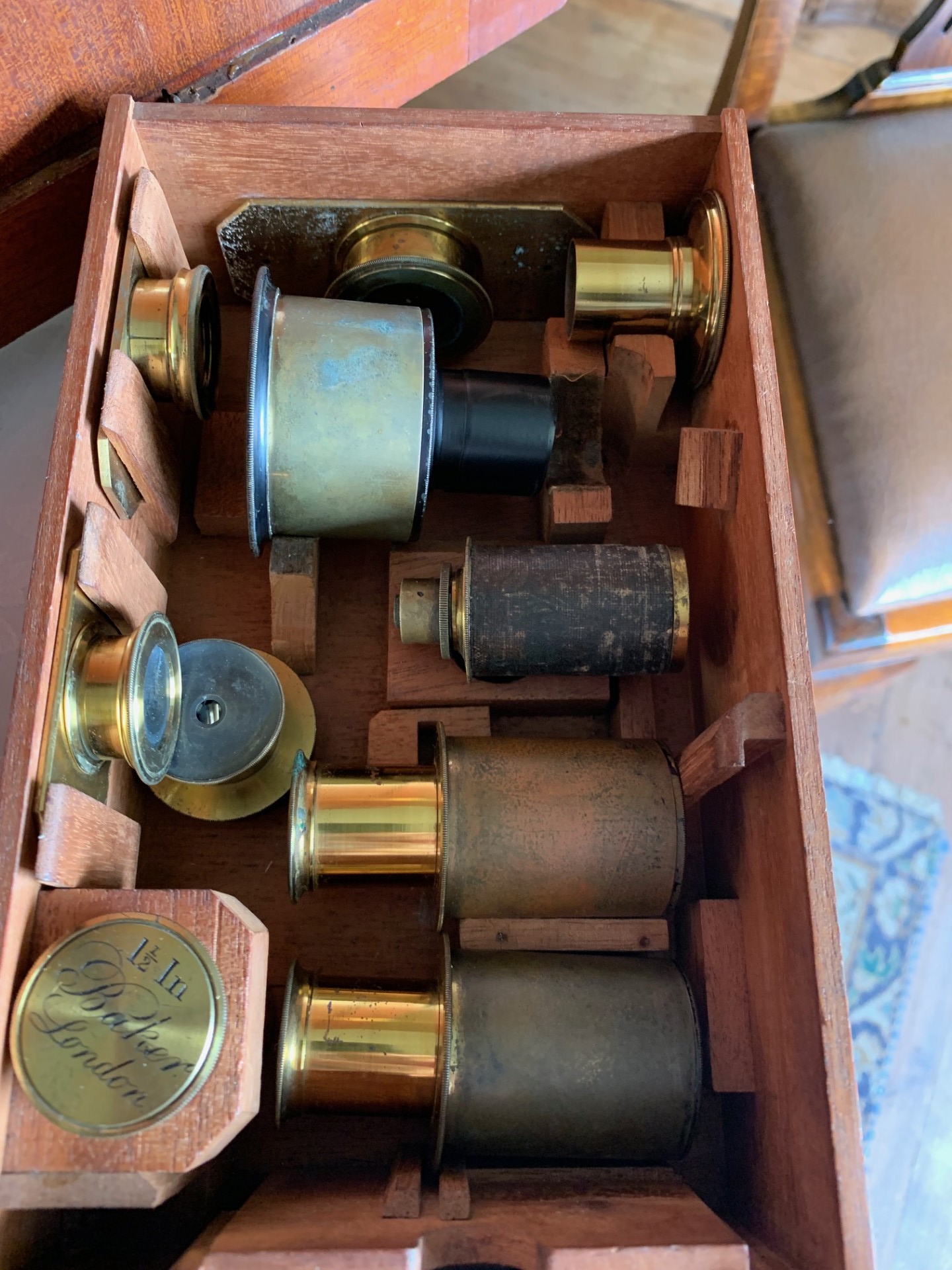
– 3 inches – by Collins – about 2x magnification
– 2 inches by R & J Beck – about 3x magnification
– 1 inch in brass – about 6x magnification
– Unmarked brass lens but will be about 1/6th inch giving 40x magnification
(the objectives have brass canisters and there are some additional empty canisters)
The objective lens and eyepieces supplied therefore provide an effective magnification of around 18x to 480x and it’s pleasing to note the RMS fitment, so plenty of other objectives should also fit the instrument.
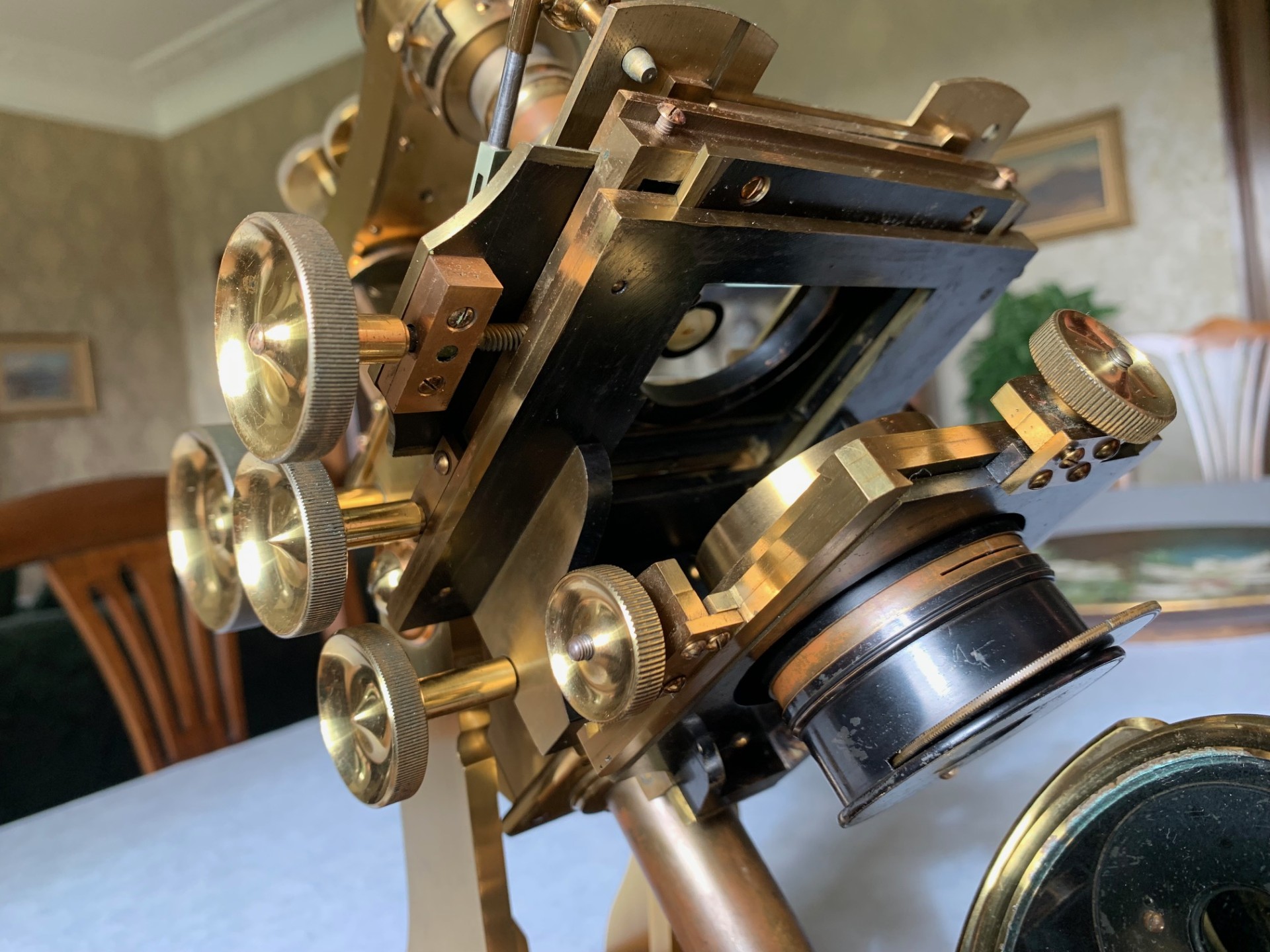
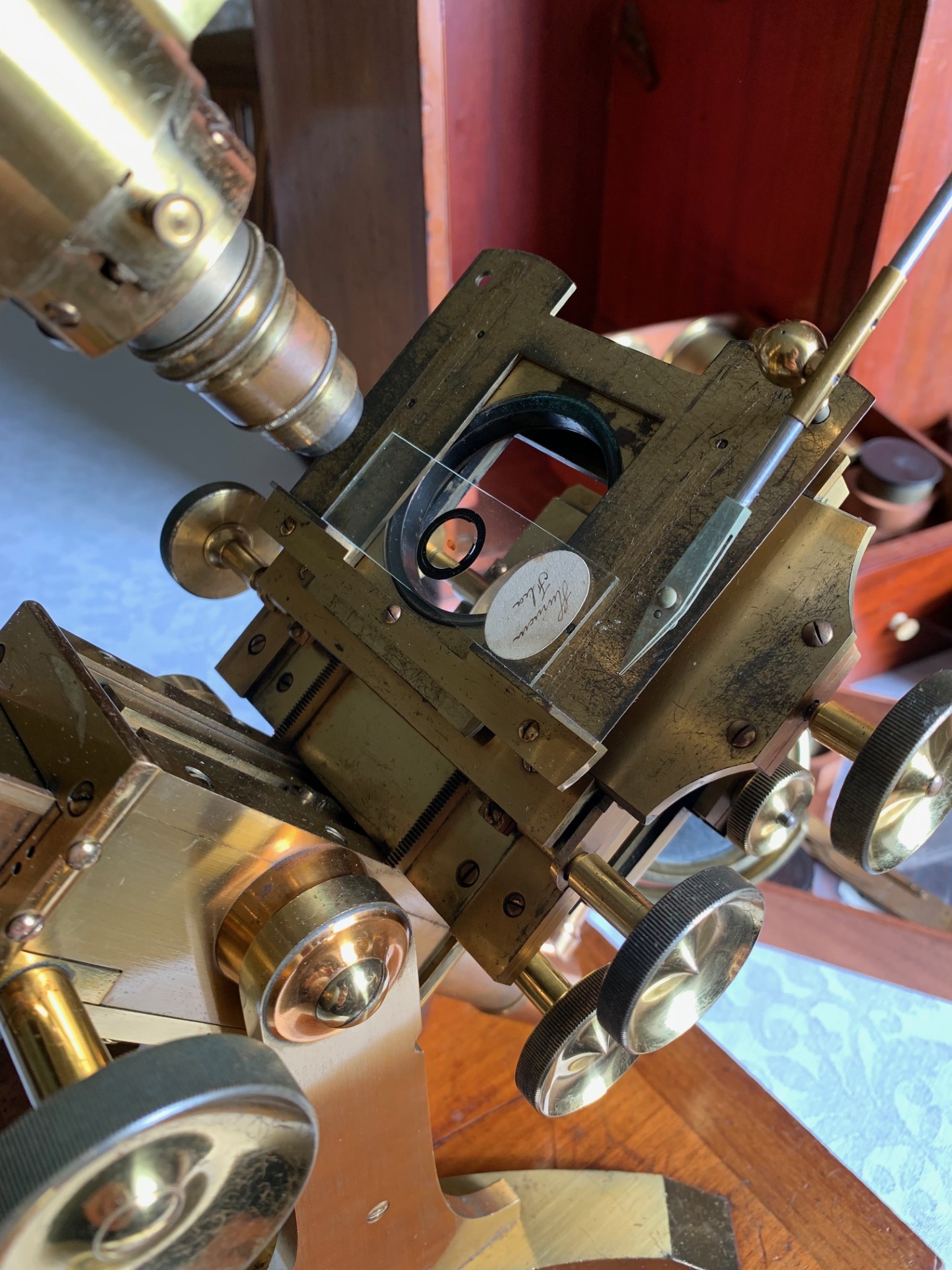
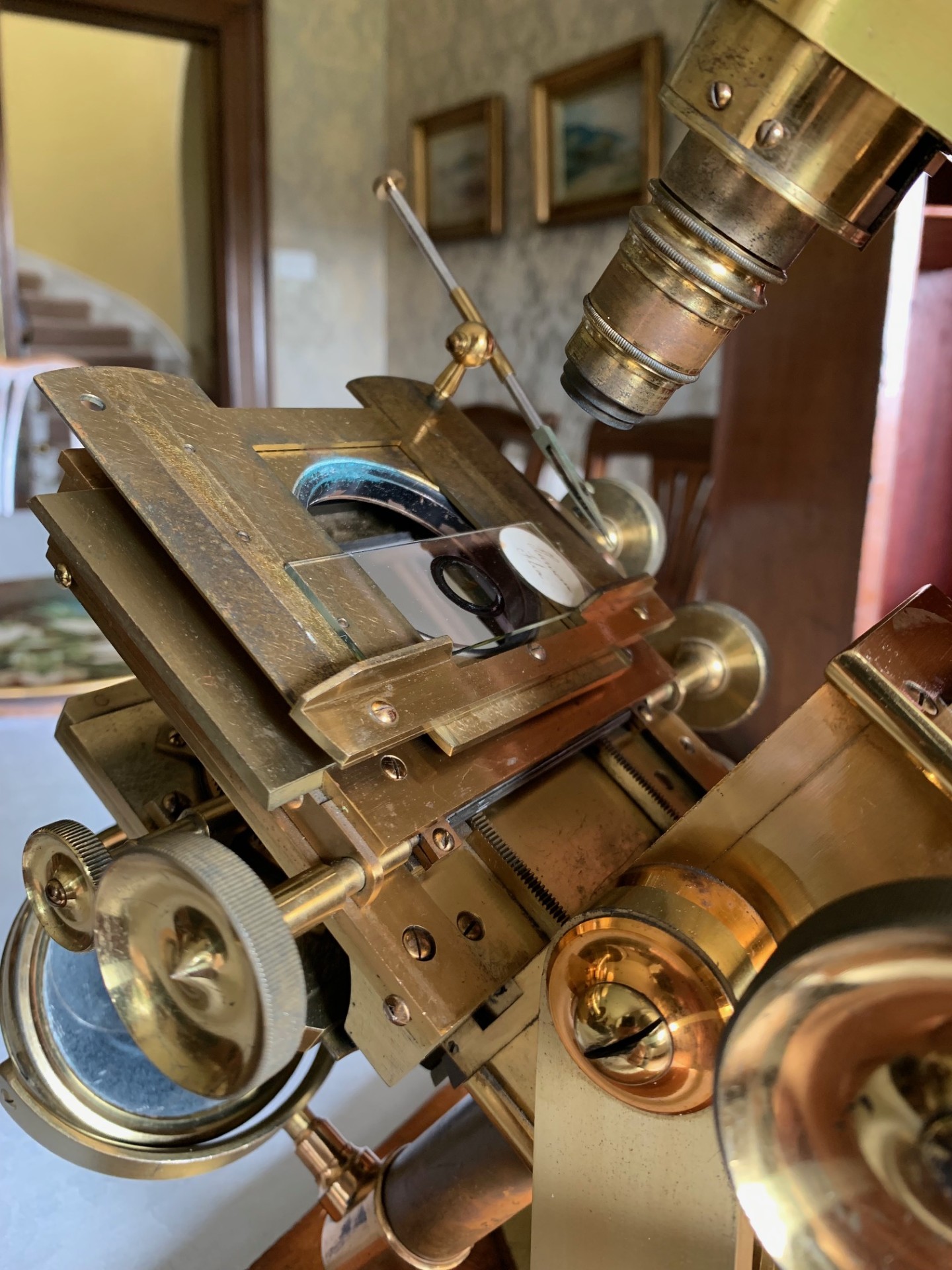
5) The stage is of a square design in brass with some signs of surface patination to the top-plate, which slides in the y-direction and also rotates and will complete a full 360 degree rotation. There’s mechanical adjustment for both x and y-axes, with smooth movement from the straight-cut rack & pinion and screw adjustment mechanisms. It’s currently fitted with a ledge for holding slides which works well, along with a couple of sockets for stage clips or stage tools, with pair of forceps shown fitted.
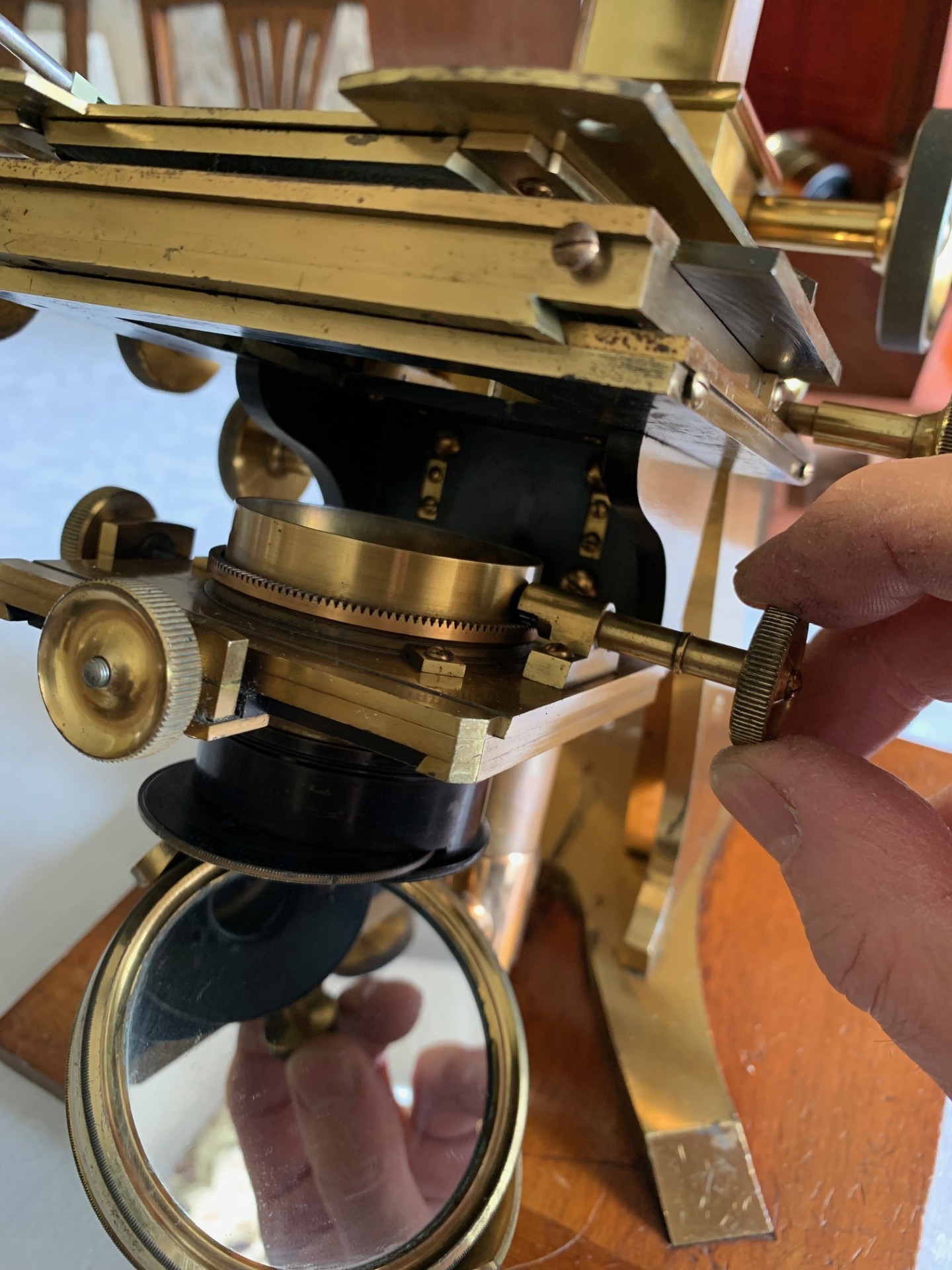
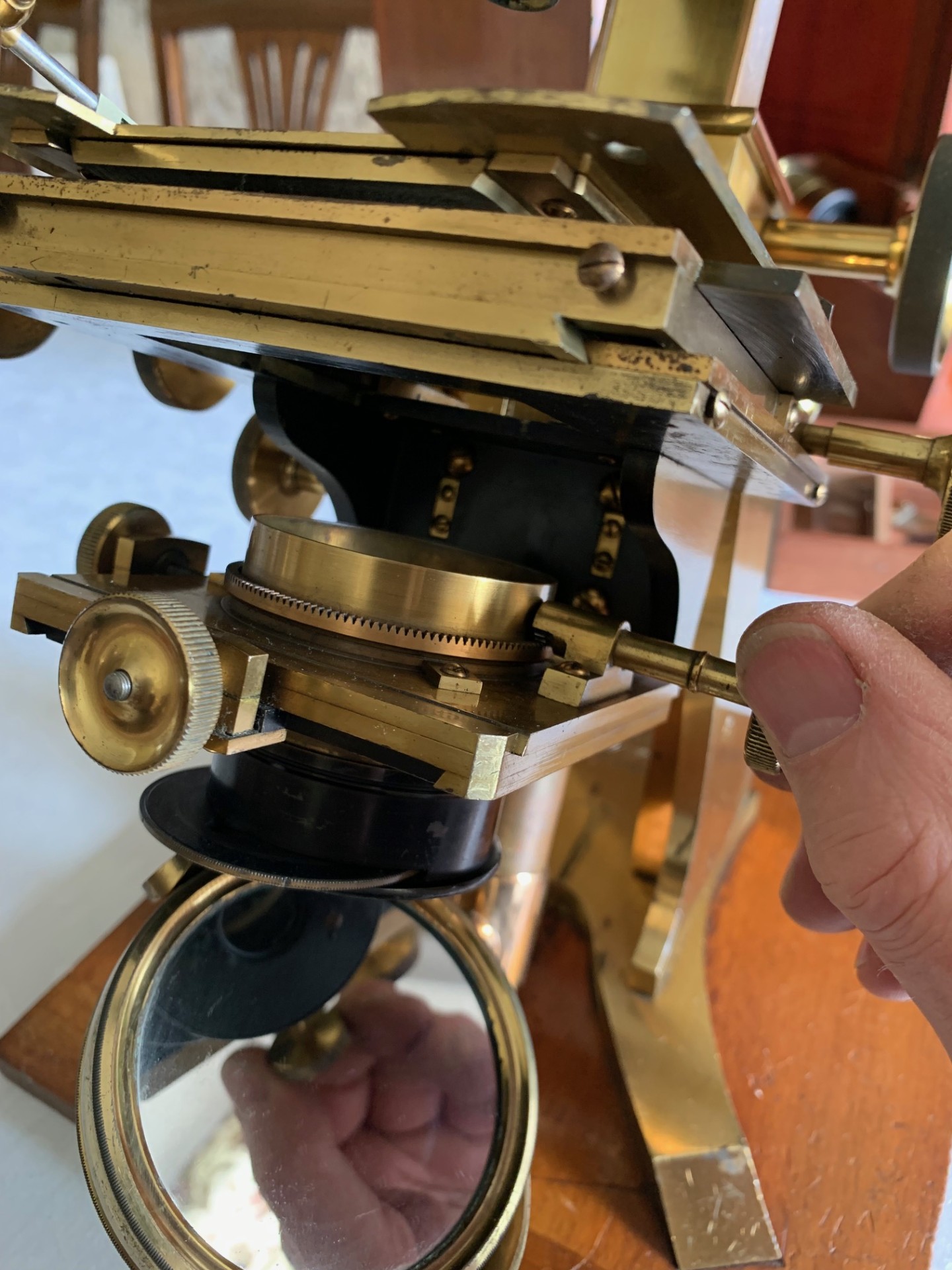
6) Sub-stage there’s a complex mechanism for fitting sub-stage accessories that can be top or under mounted in to the ring carrier. There’s height adjustment via a rack & pinion system, centering via twin thumb-screws and mechanical rotation for the sub-stage. The sub-stage can be manually removed by siding the dovetail fitment out. The sub-stage accessories supplied are as under:
– wheel-of-stops with 3 apertures and positive feel
– nicol prism polariser
– dark-field condenser
– condenser with various different top-lens fittings
7) Lighting is provided by a large plano-concave mirror in a brass carrier that sits in a gimbal mount slider fitted to the limb tail-piece, with height & rotation adjustment, silvering in very good condition to both sides and reflectivity that’s perfectly adequate.
In summary, this is a top quality very substantial example of an antique binocular bar-limb design No. 1 compound microscope from the Victorian period by C. Baker, that’s in very good condition for its age. This example may therefore appeal to collectors as well as specialists seeking a large imposing quality brass instrument for use and/or display from a good English maker.
The instrument has its original very large fitted case with brass handle, internal drawers and lock but the key is missing.
Accessories:
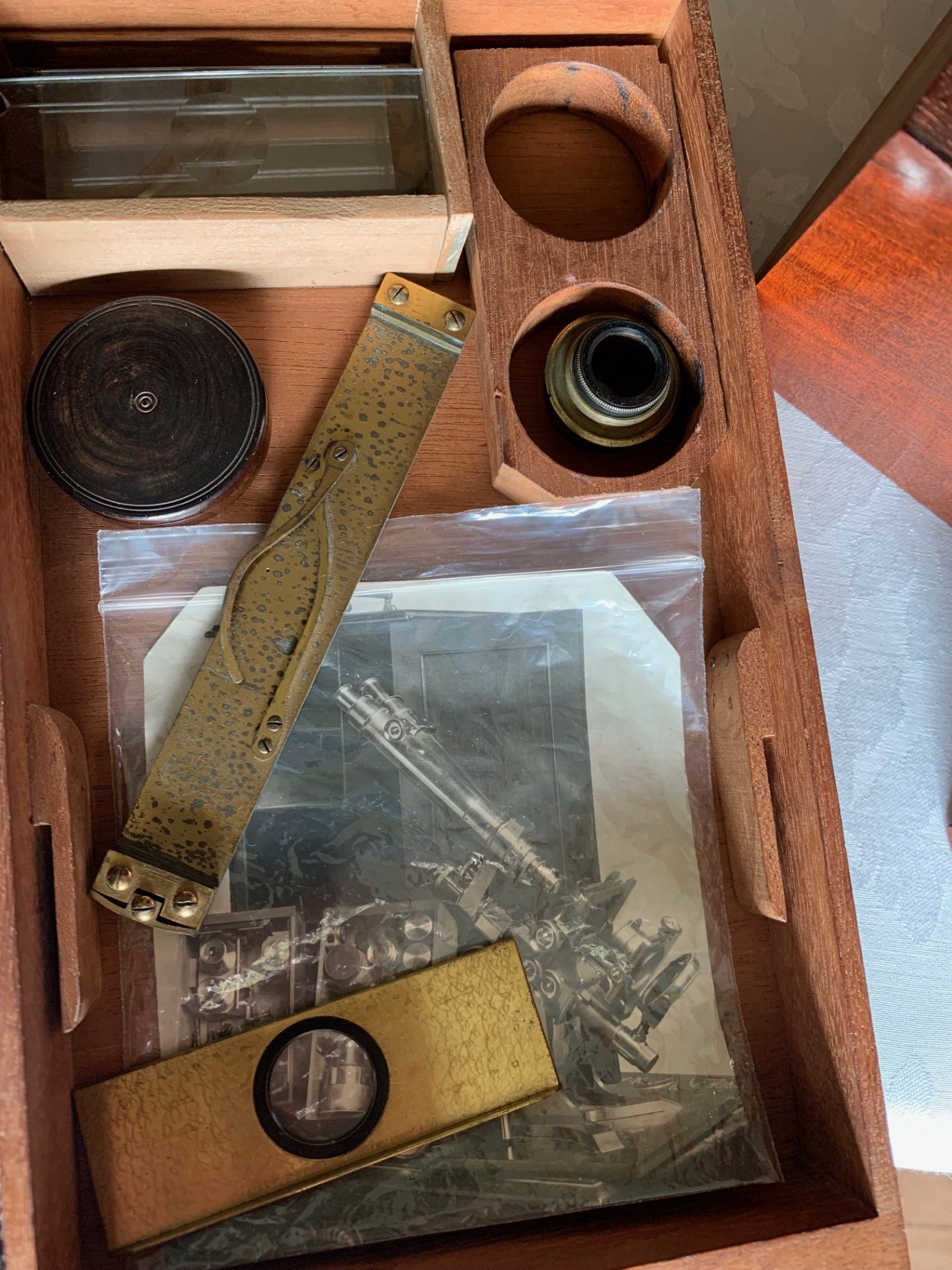
– three live boxes
– stage forceps
– nicol prism polariser and an analyser with polaroid film fitted
– lieberkuhn for 1 inch objective
– brass slide holders
– eyepiece graticule
– glass trough
– glass containment slide
– historic b&w photo of the instrument from around the 1960s
For shipping, the instrument and case will be very well packed and dispatched by insured courier upon receipt of cleared funds. In view of the size and weight of instrument and case, it may be necessary to ship in two separate packages.
Thanks for looking.
Ask the Dealer
Dealer information
 Arcboutant Scientific
Arcboutant Scientific based in Glasgow Scotland, with an interest in scientific collectables dating back to 1988. Now making available carefully curated fine examples, principally of antique microscopes and associated scientific equipment by quality English and Continental makers, to collectors world-wide.