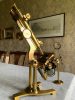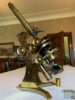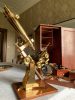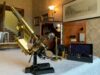


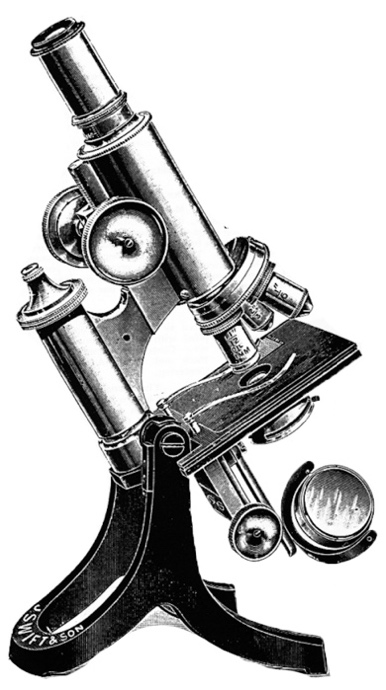
Antique J. Swift & Son – Army Bacteriological Brass Microscope – c1910, Cased
£335
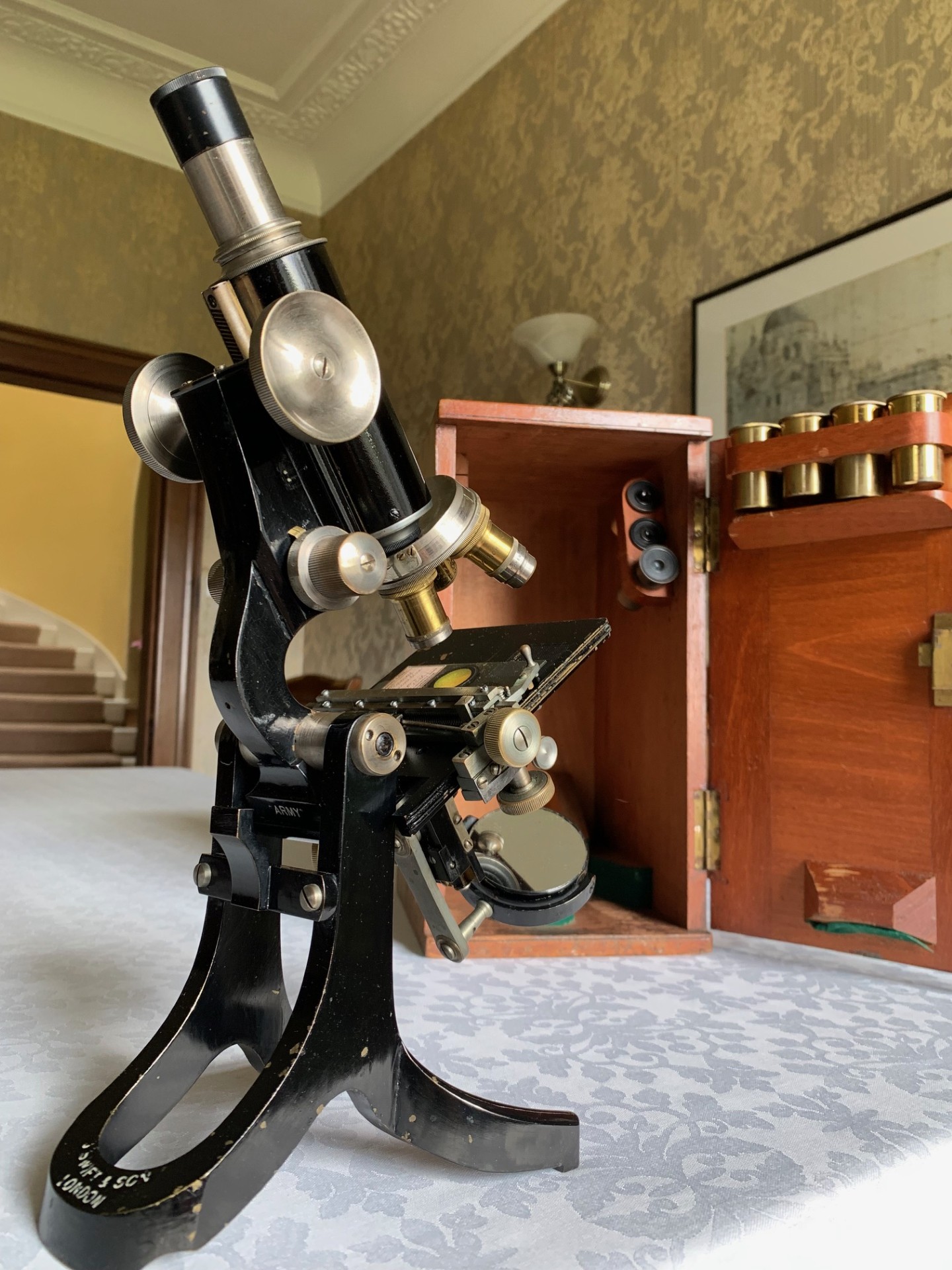
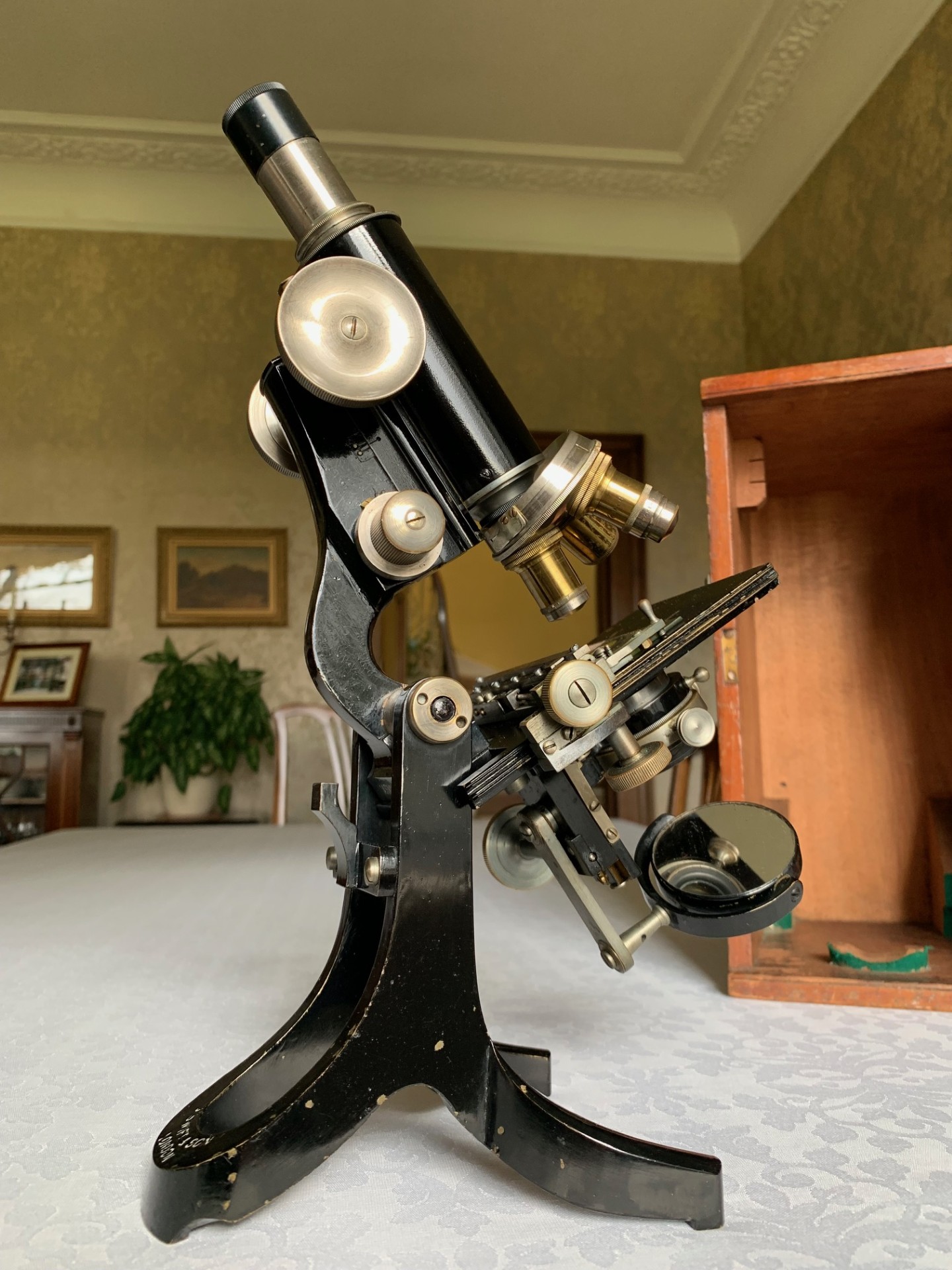
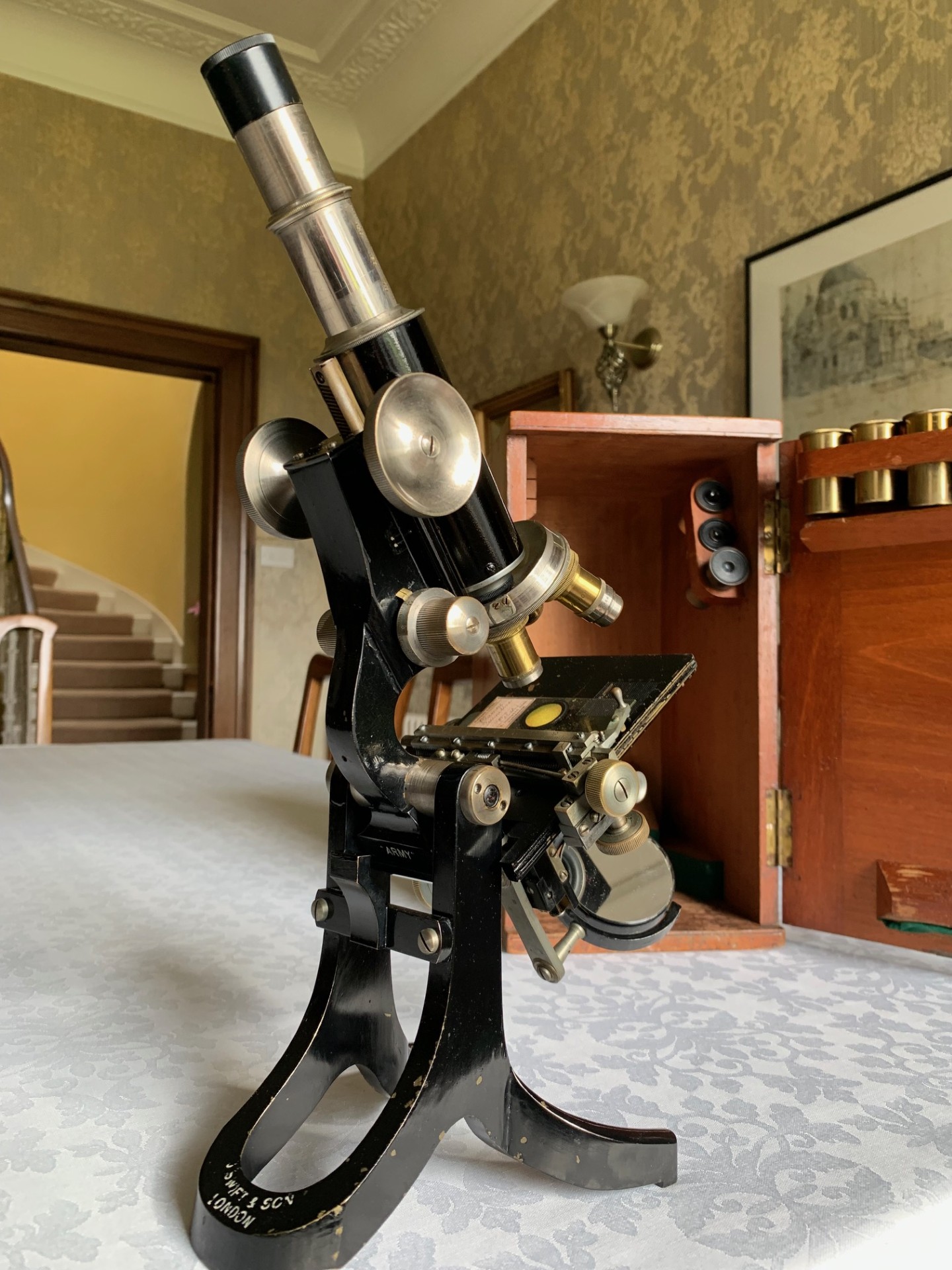
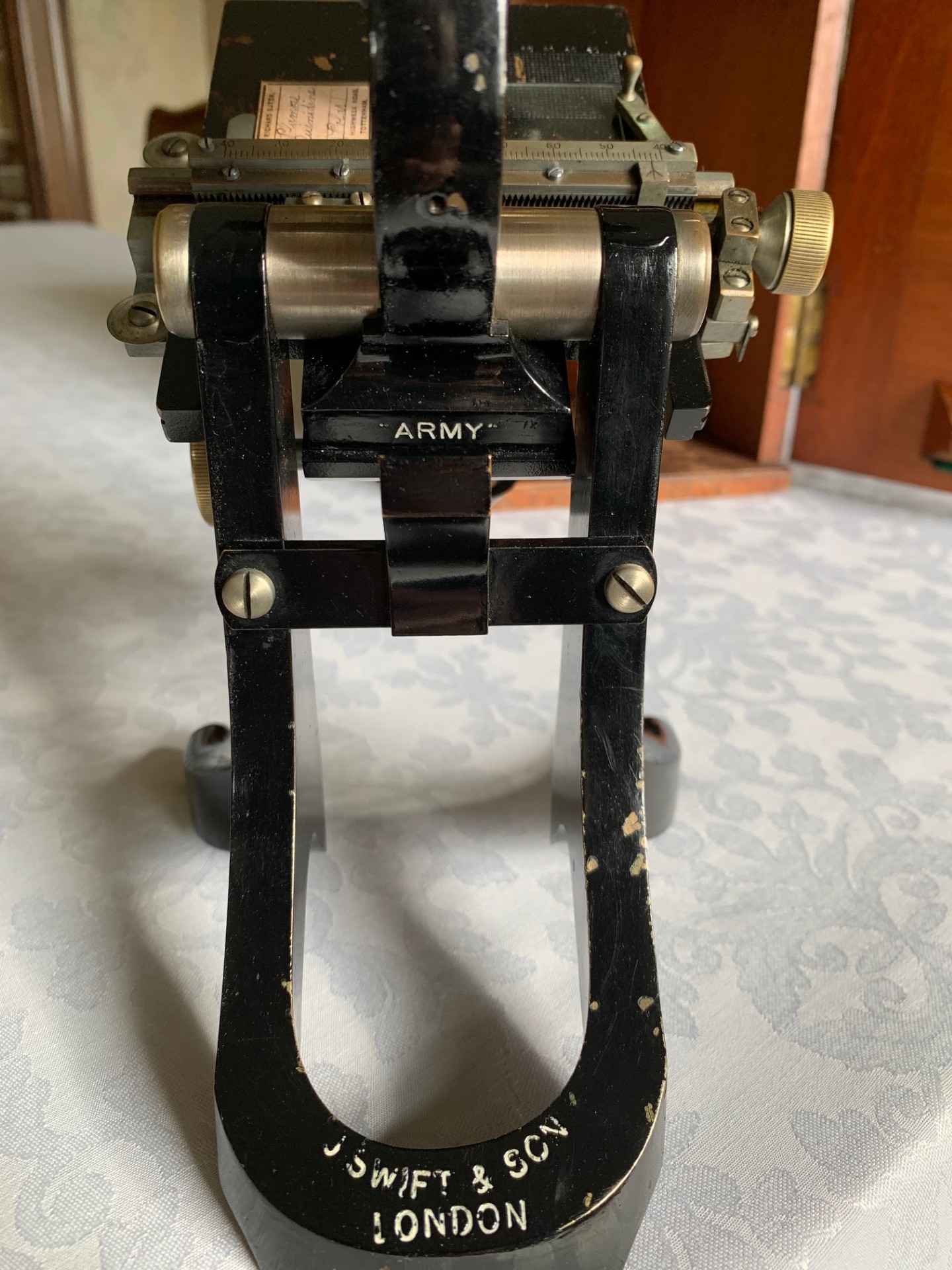
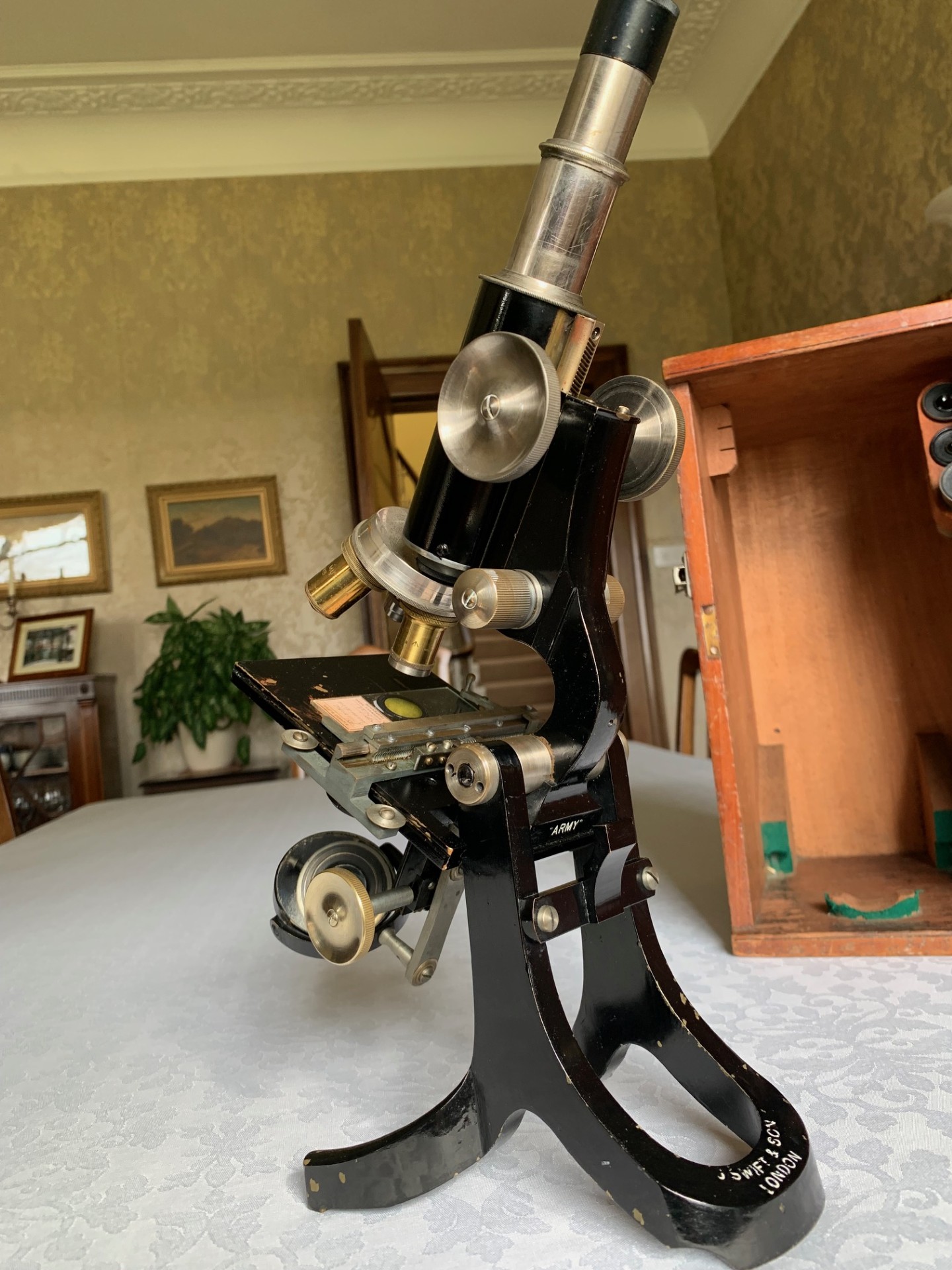
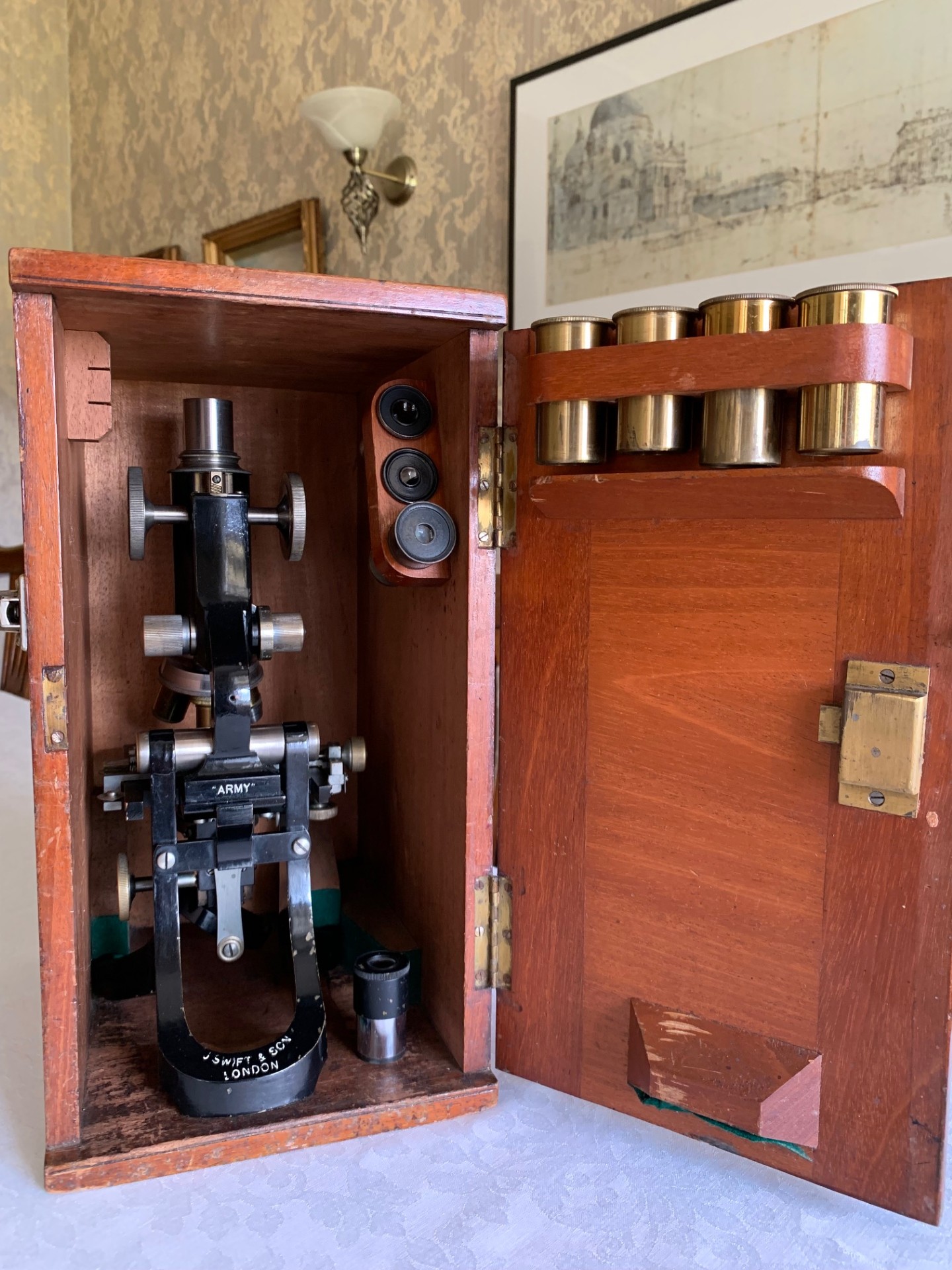
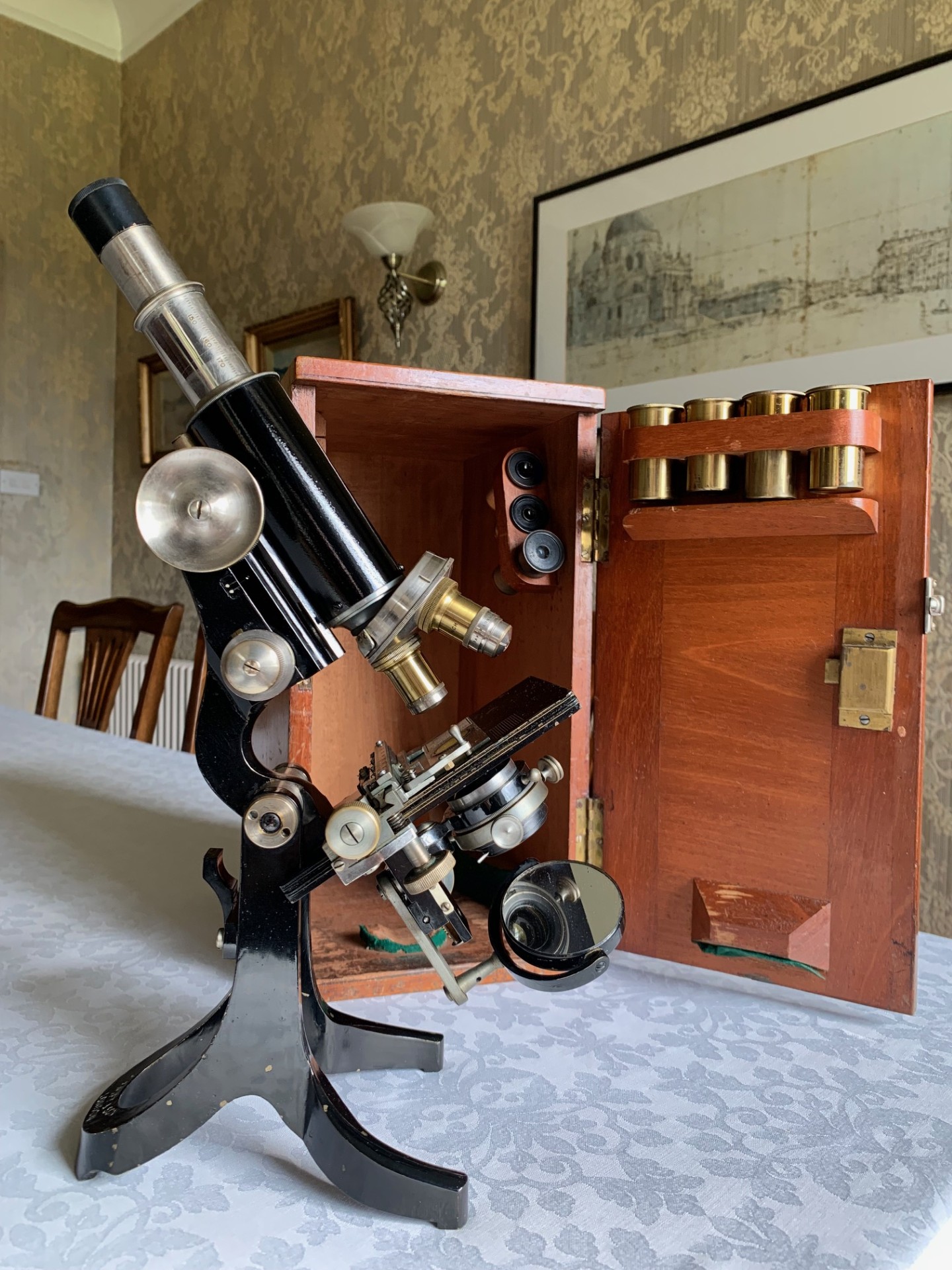
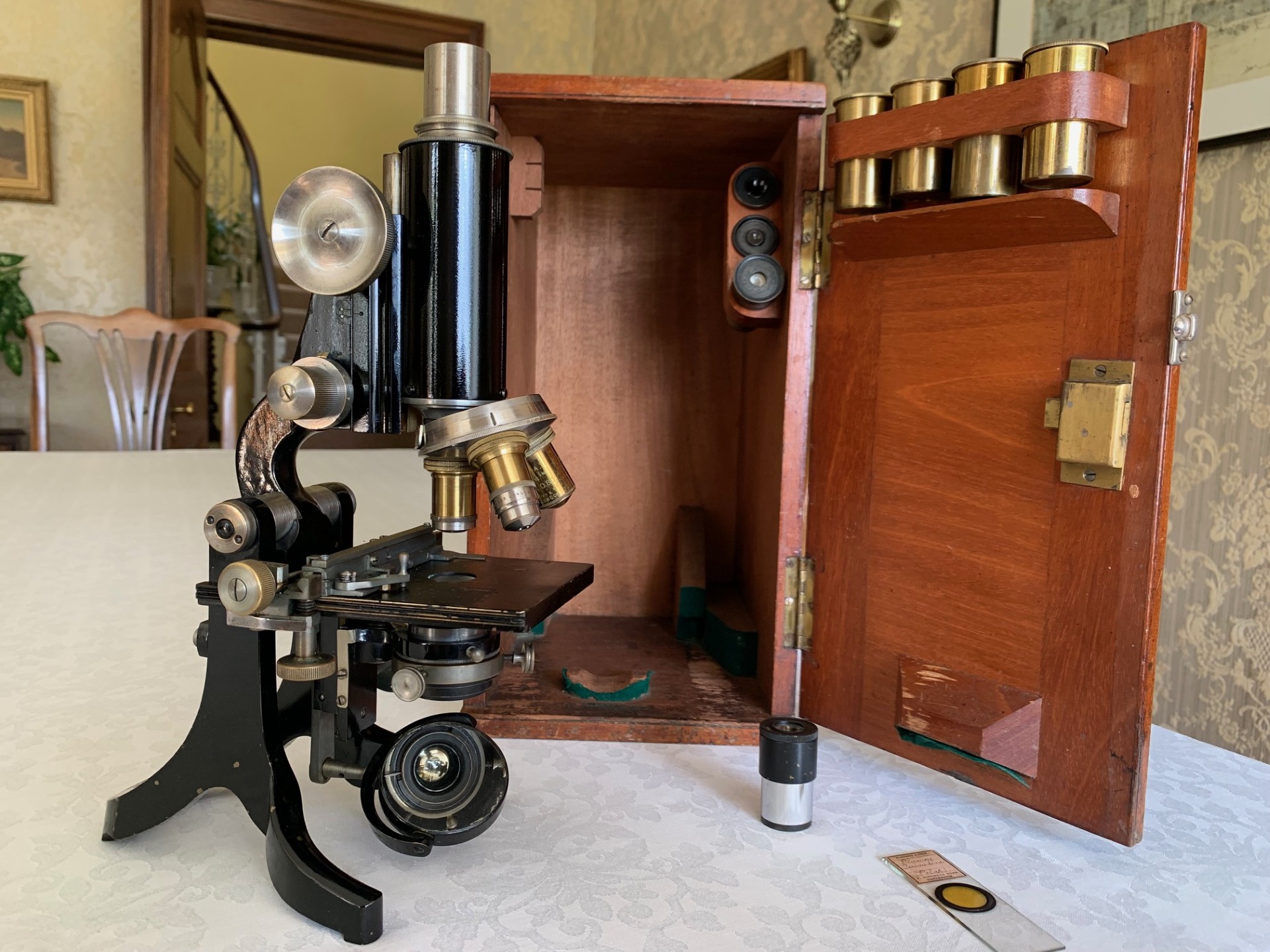
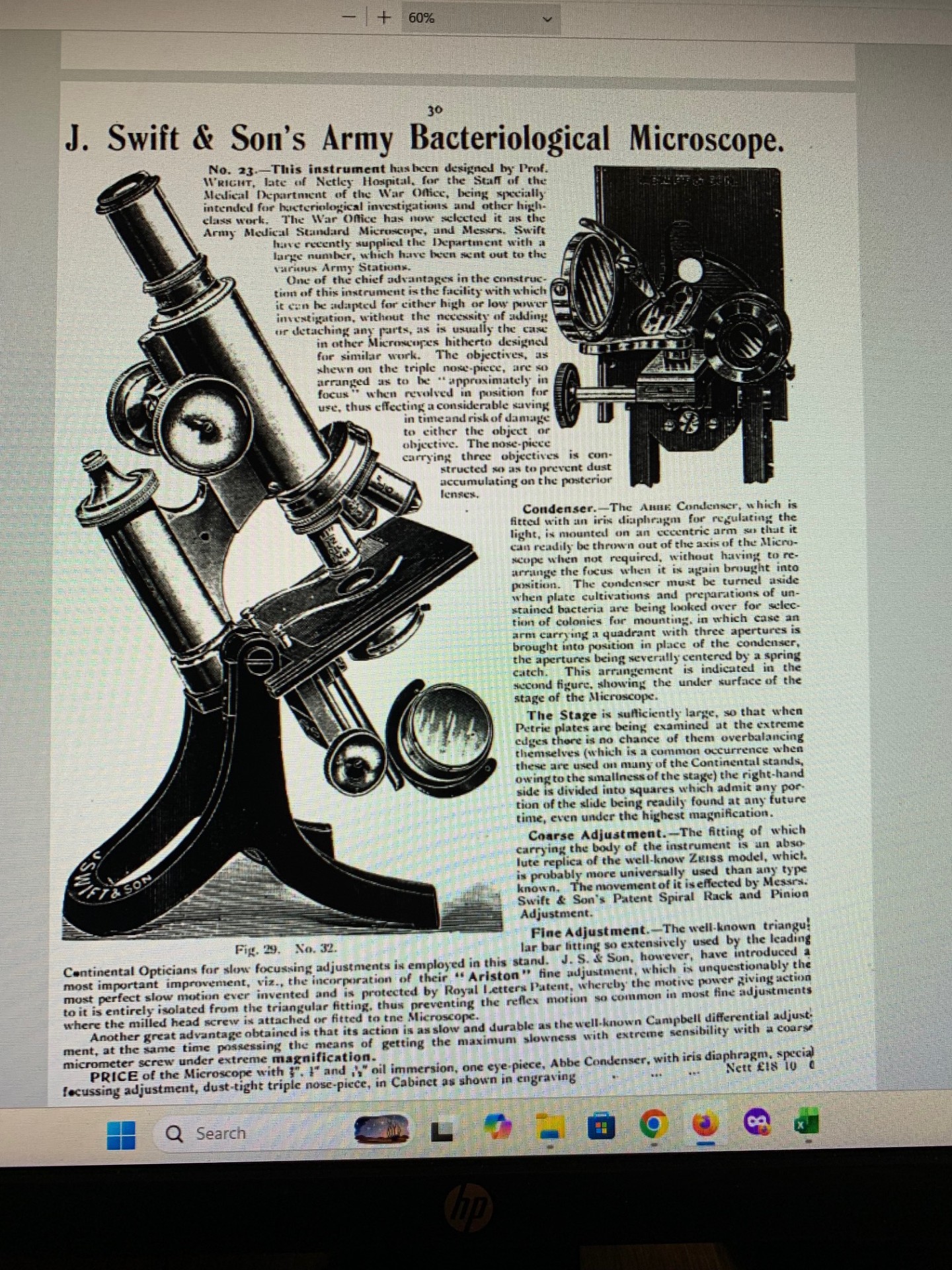
Antique late Edwardian period Swift Army Bacteriological model brass microscope, complete with case. Unusual example for the period in what's probably nickel plated finish along with black lacquer.
Circa
1910
Maker
James Swift & Son of London
Country of manufacture
UK and Ireland
Description
Background to J Swift & Son from Microscope Museum:
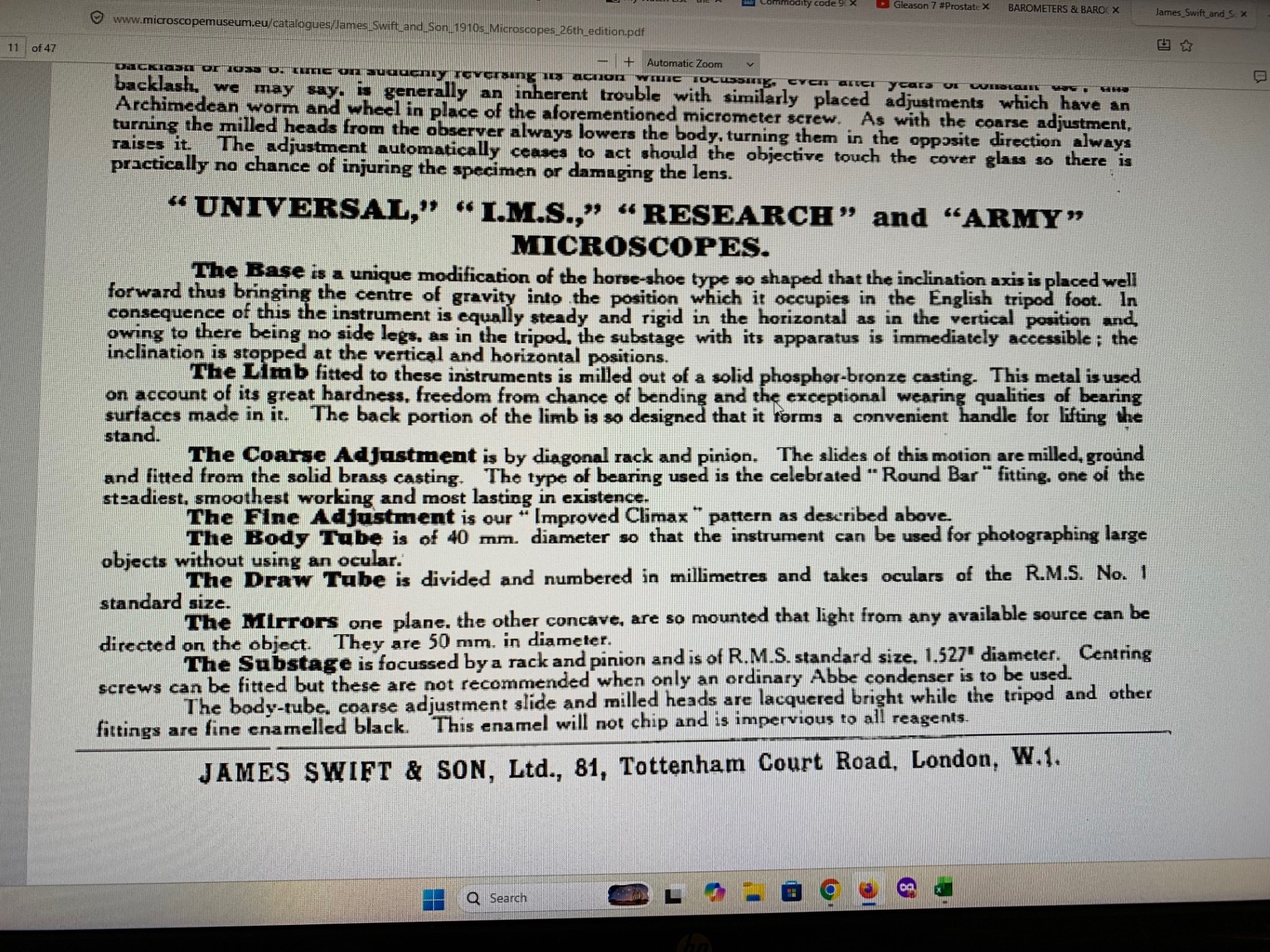
James Swift were microscope makers trading from London and were founded in 1853 by James Powell Swift, who was the son of the watchmaker Thomas Swift. Before founding his company, James Swift was apprenticed to the well-known microscope maker Andrew Ross. In 1881 Swift brought in improvements to microscope design, including replacement of straight rack and pinion focusing with helical cut components along with a new fine focus mechanism. In 1884, Mansell James Swift, son of James Powell, joined the company and the firm’s name was therefore changed to James Swift & Son. Captain Scott was supplied with Swift microscopes for use on the RRS Discovery for his 1901-1904 Antarctic expedition, named in the catalogue of the time as the ‘Discovery’ model. In 1903, Mansell Powell John Swift, grandson of the founder, joined the company. In 1906, the founder of the company, James Powell Swift, died. In 1912, the company was incorporated as a limited company and the firm’s name changed to J. Swift Ltd. In 1942, both Mansell Powell and Mansell James died. In 1946, ER Watts and Son Ltd took over the company, mainly due to the association between the Watts and Swift families in earlier years. In 1949, they employed John H. Basset who, in 1968, took over the company.
This example of a late Edwardian Swift instrument is in pretty good cosmetic condition for its age, with only light patination and no doubt quite a back story in light of its previous medical-related custodians. It’s a survivor from the last 115 years or so – the bright-work catches the light subtly as I hope the listing photos illustrate and it’s also complete with original case. The instrument’s look and feel is pretty solid in that’s it’s fashioned from solid brass, giving it a heavy feel and quite a presence when in use and also when stored in its upright wooden case.
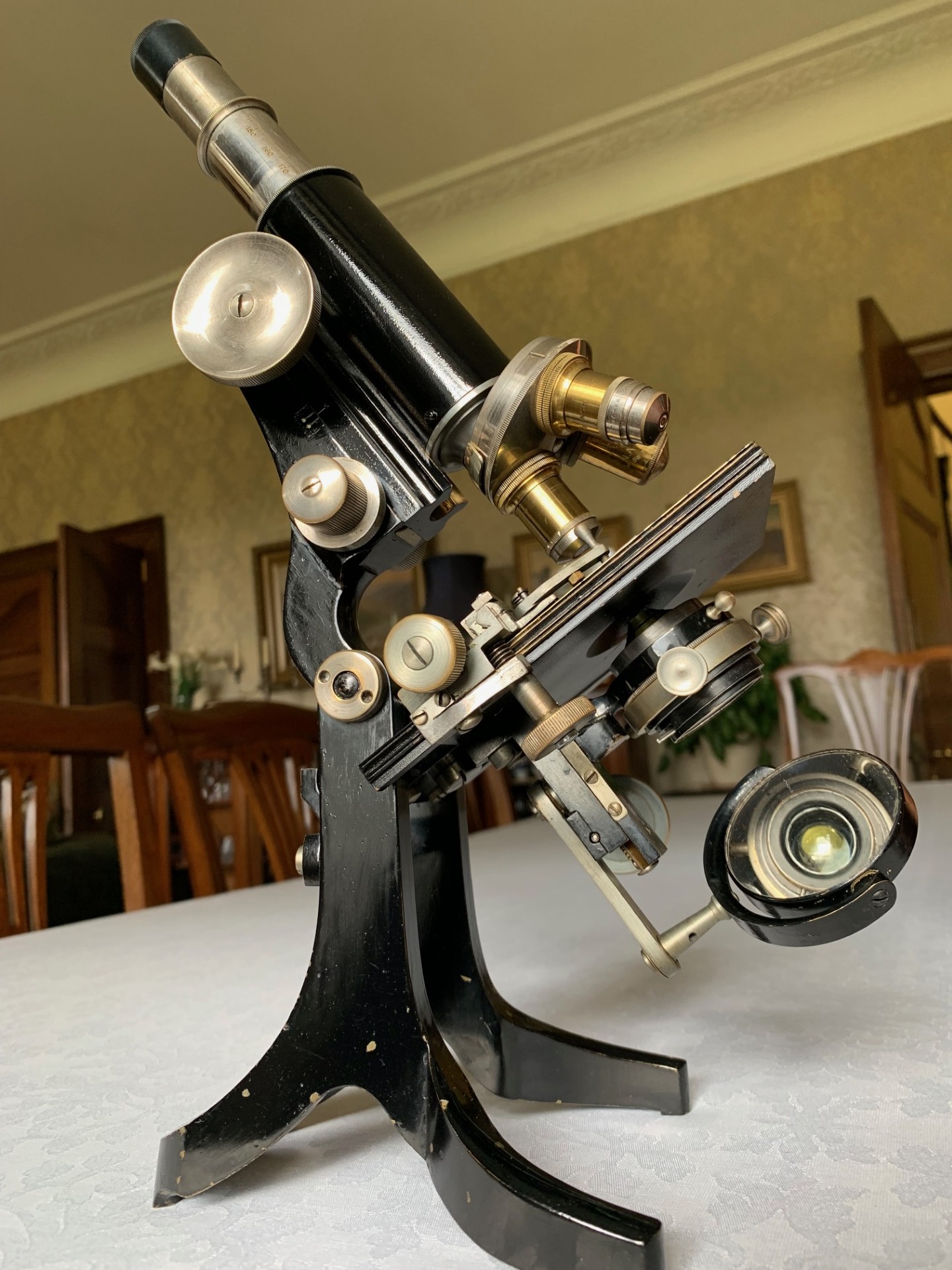
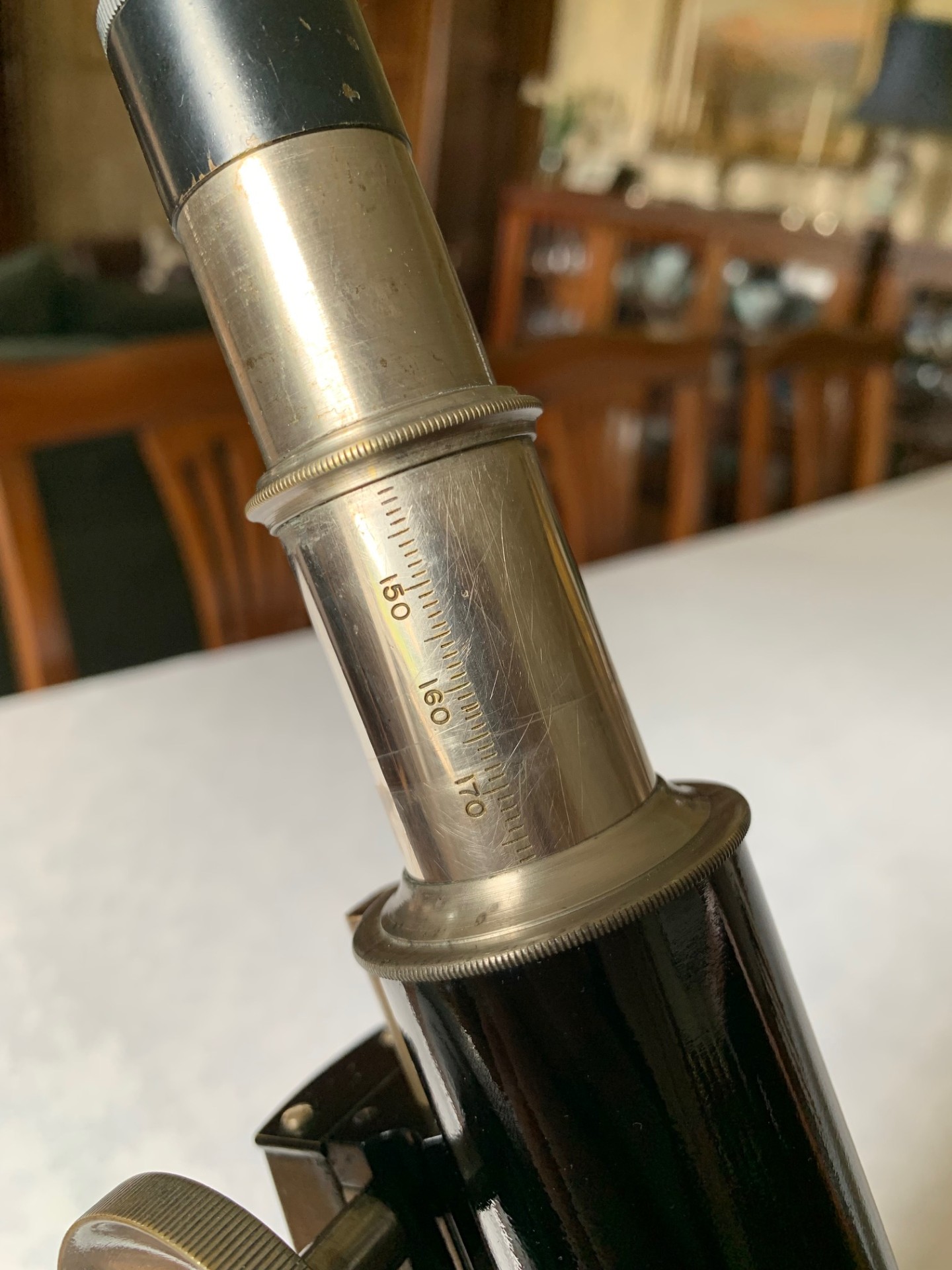
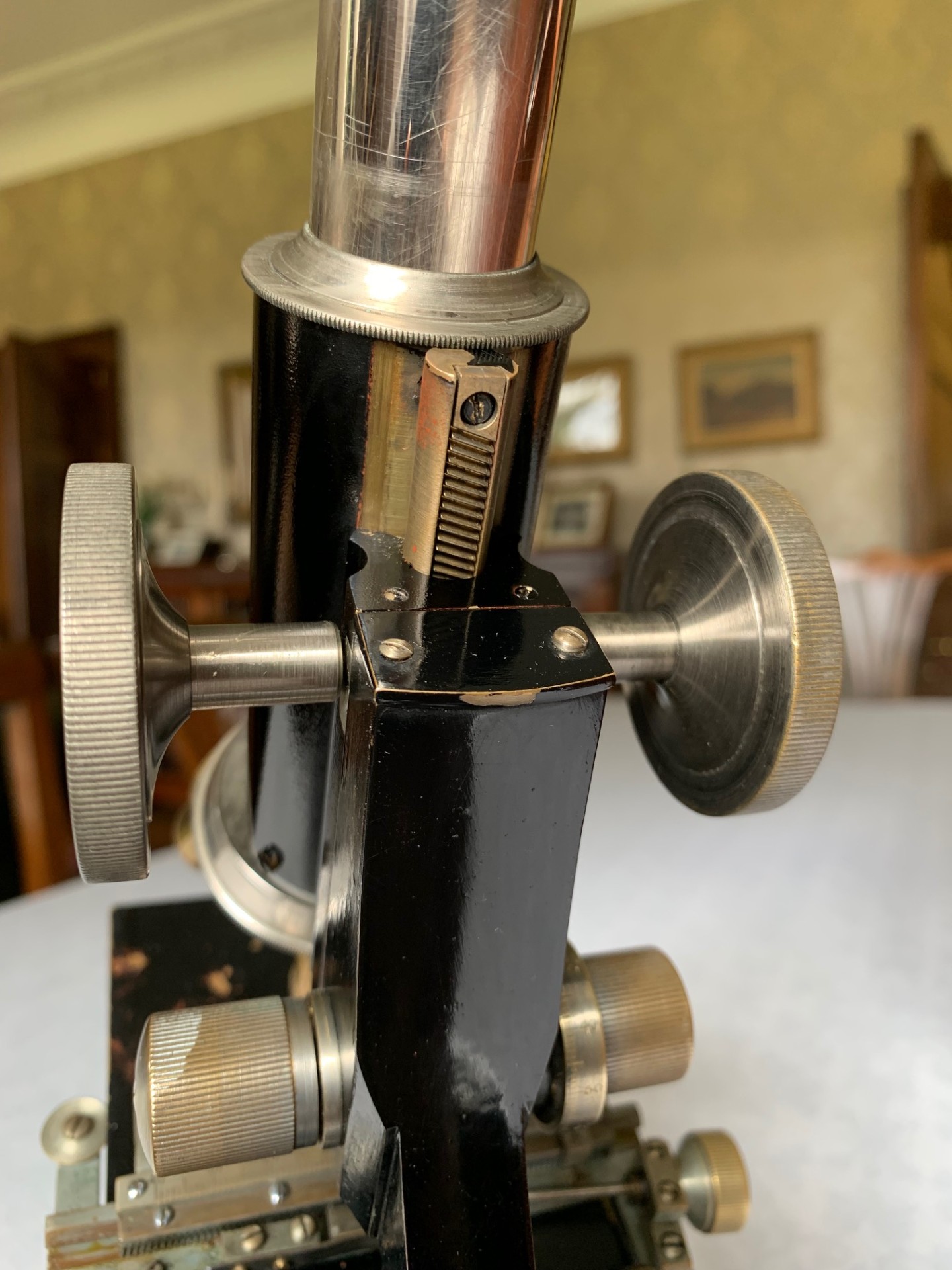
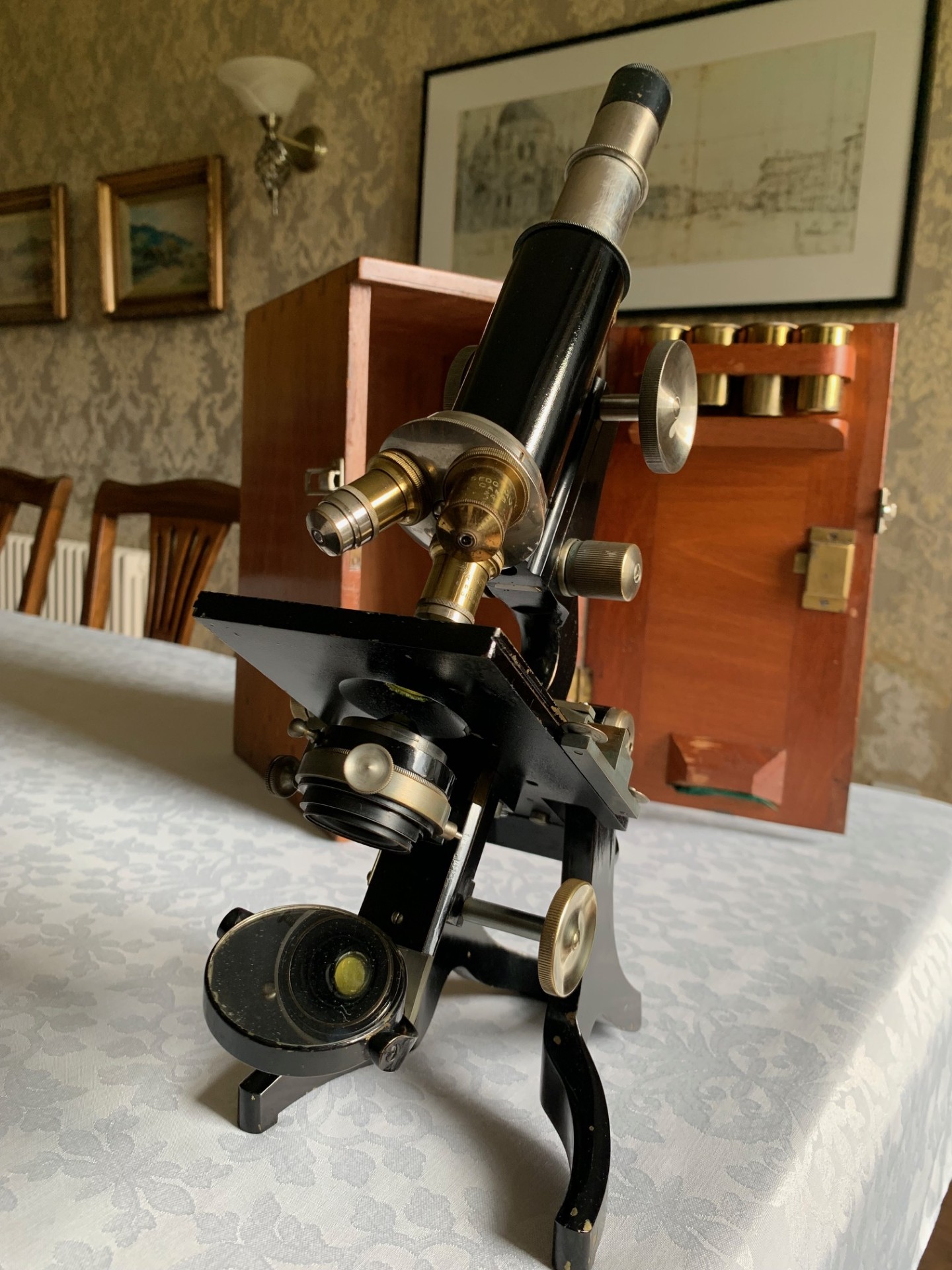
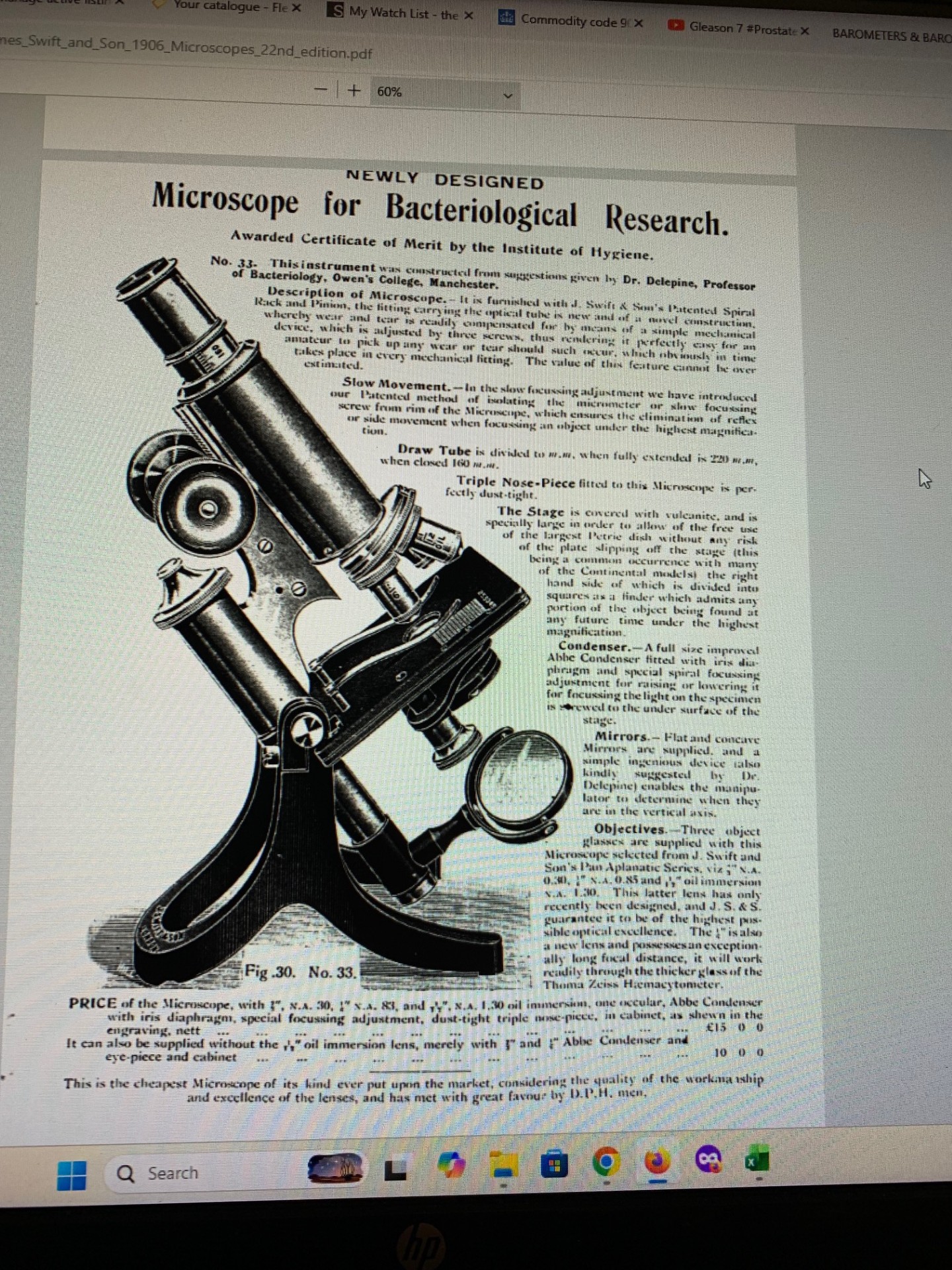
Technical details – the construction is a black lacquered brass tripod foot similar to a design used by Crouch. From the tripod twin uprights support a pivot and a Lister-style upper limb. Coarse focus is by a rack and pinion system with limb and optical tube in black lacquer with additional graduated draw-tube. The coarse focus works well holding in position as it should with diagonal cut rack. Fine focus is controlled by a pair of horizontal thumb-wheels on the limb also with nice smooth action.
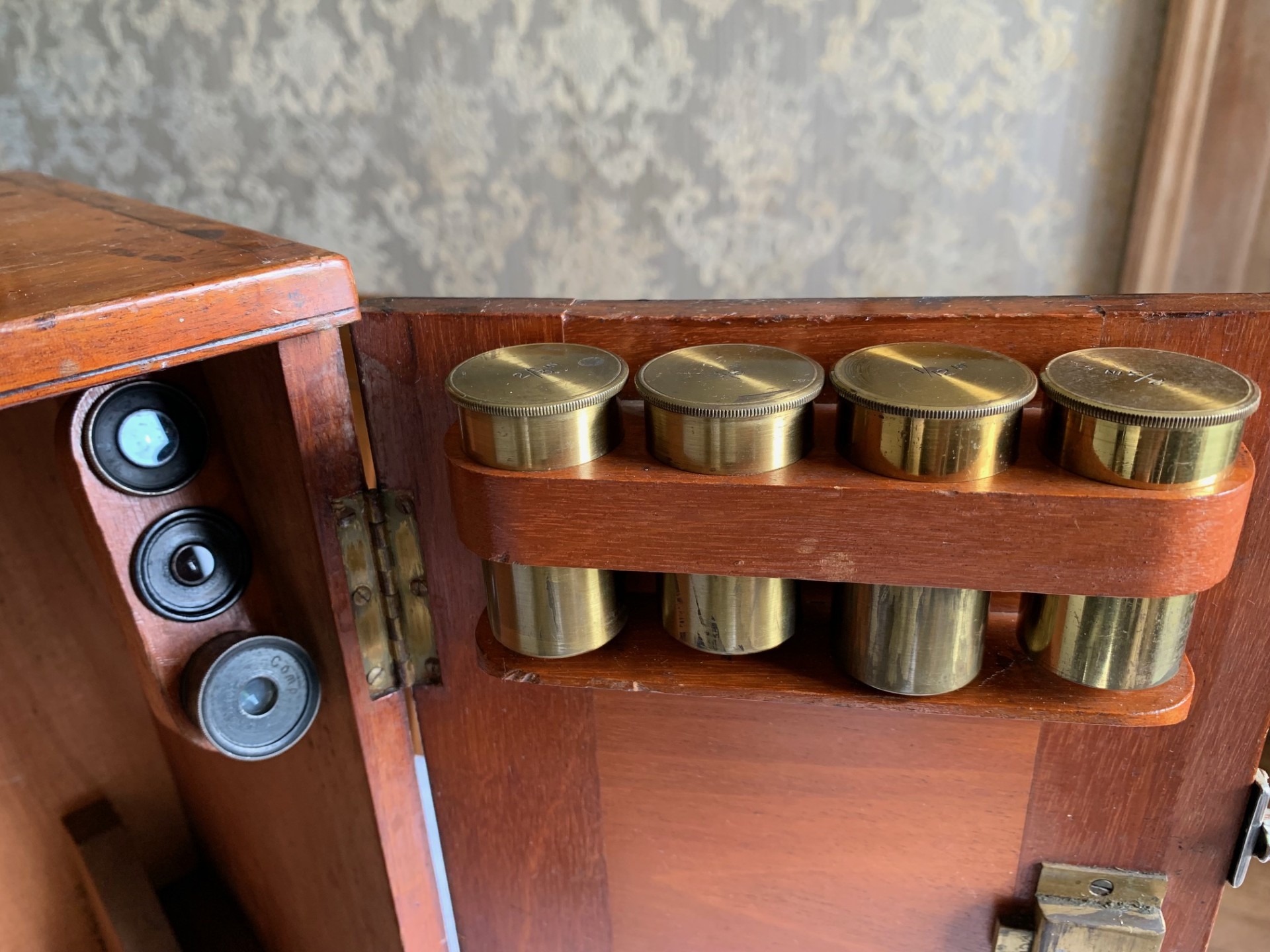
In terms of its optics, this microscope is supplied with eyepieces as under:
– 42mm – 6x magnification by Beck
– 10x magnification wide-field with graticule – unbranded
– 45mm – 10x magnification by Beck
– Comp 12x magnification by Reichert
The eyepieces work well giving nice bright images.
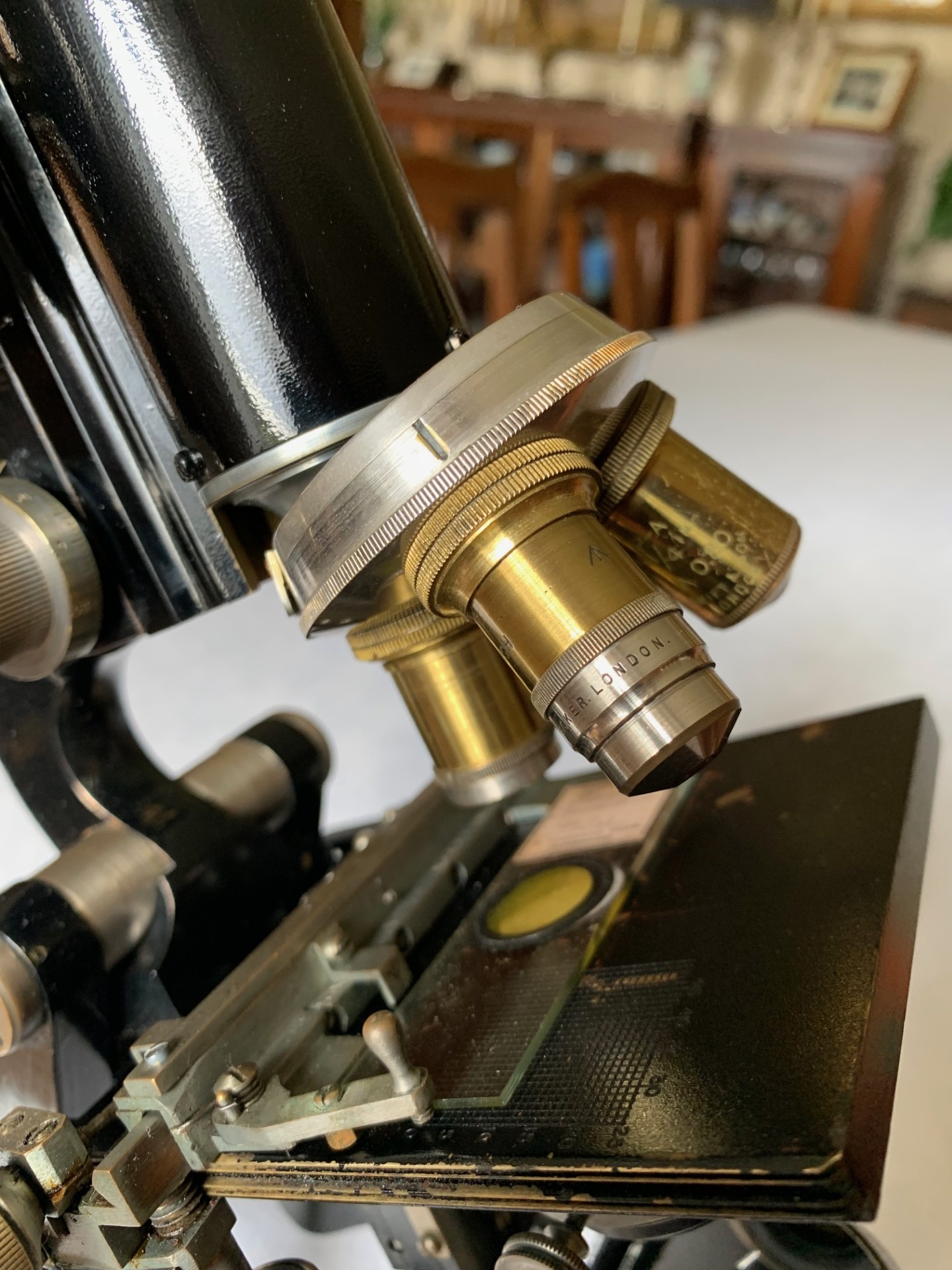
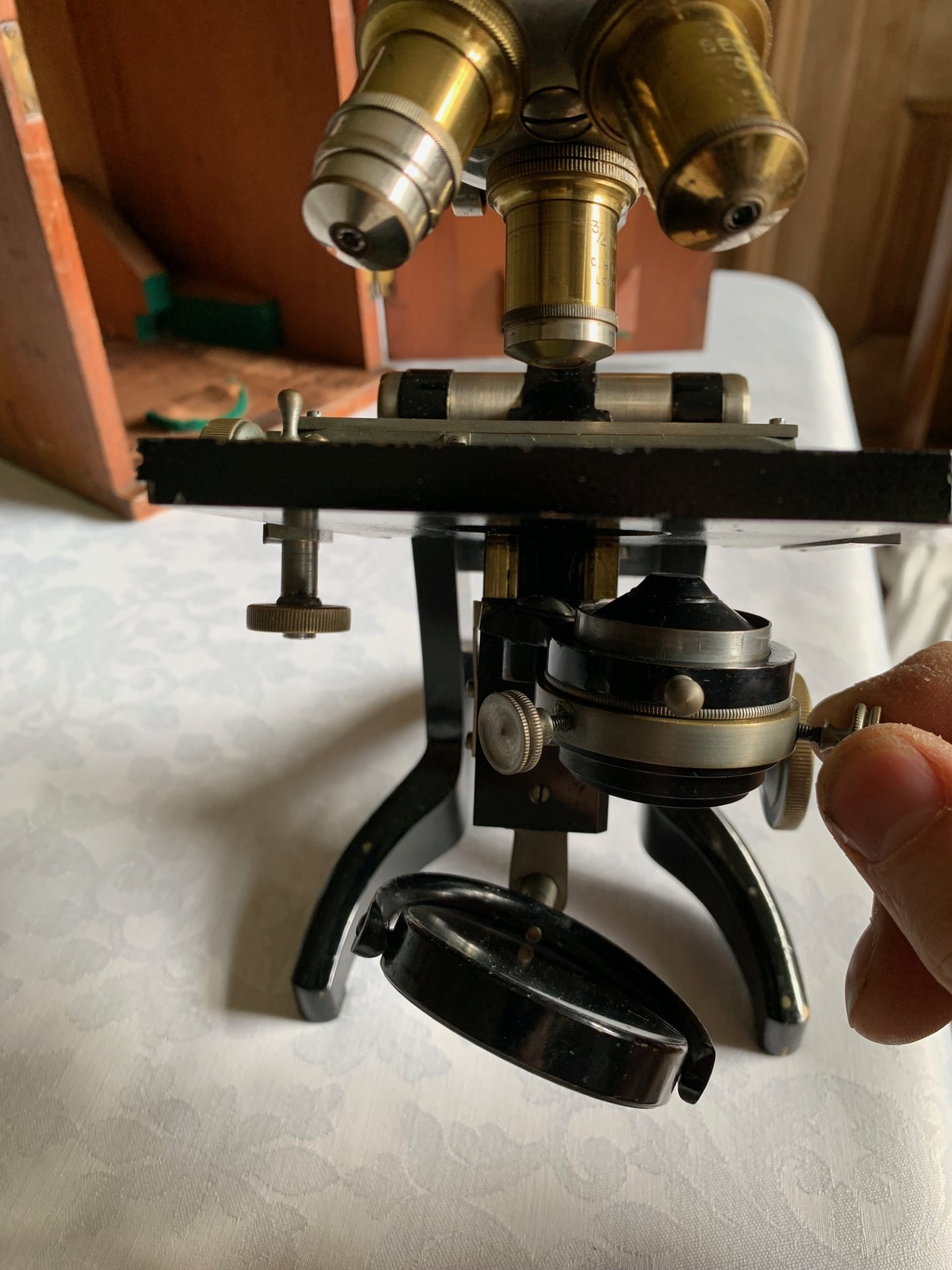
It’s also got a selection of objective lenses with RMS thread, which fit into the triple turret, as under:
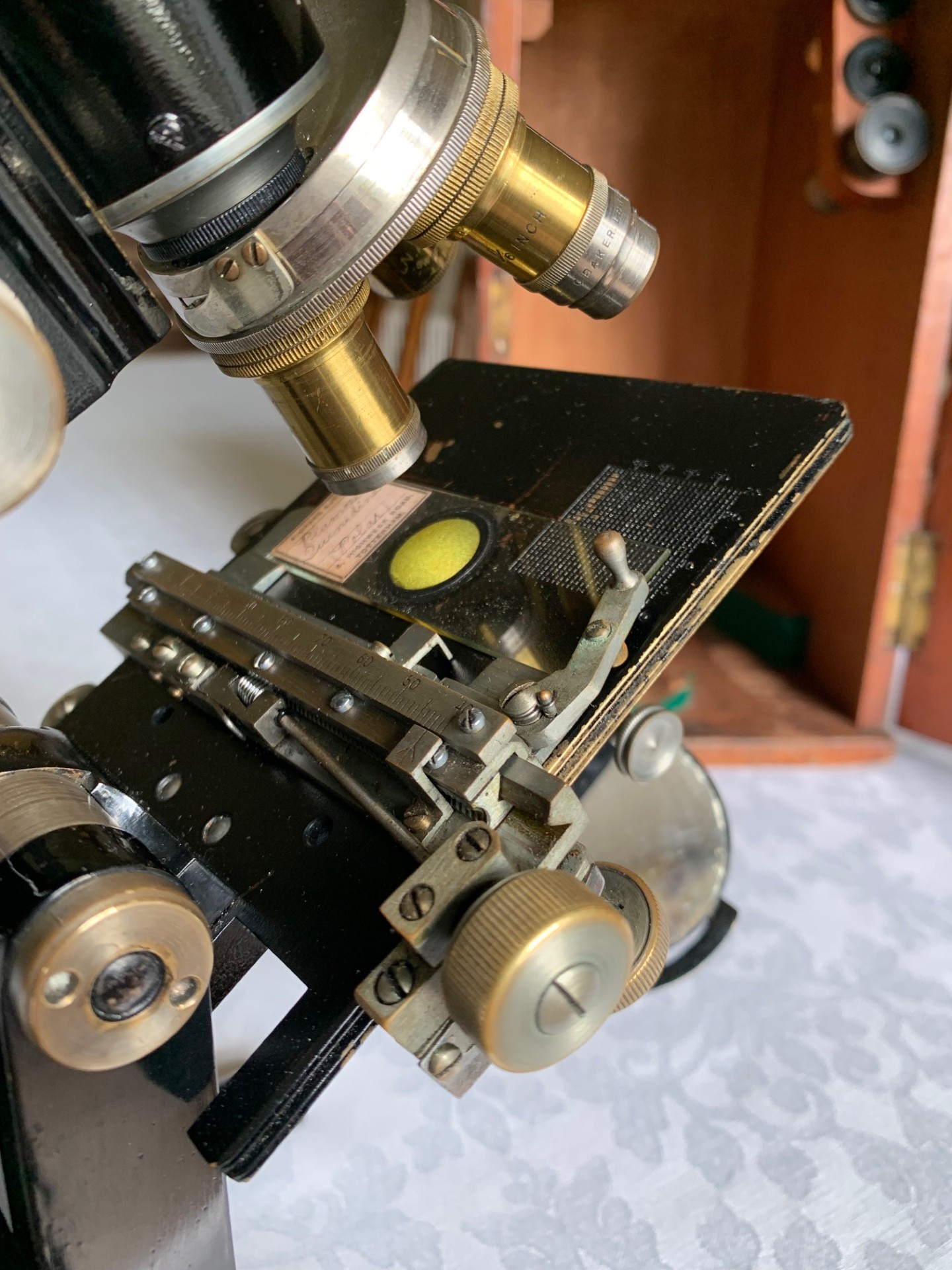
– 3/4 inch – 8x magnification by C. Baker
– 1/4 inch – 15x magnification by Swift
– 1/6th inch – 40x magnification by C. Baker
– 1/12th inch – 100x magnification by Swift – requires oil immersion
The objectives also all have brass canisters.
The magnification available with its current set of optics is therefore 48x to a theoretical 1,200x when using the highest power combination, along with an oil immersion technique and very good illumination. I’ve tested the optics with various antique slides and the images produced are perfectly acceptable when using suitable illumination.
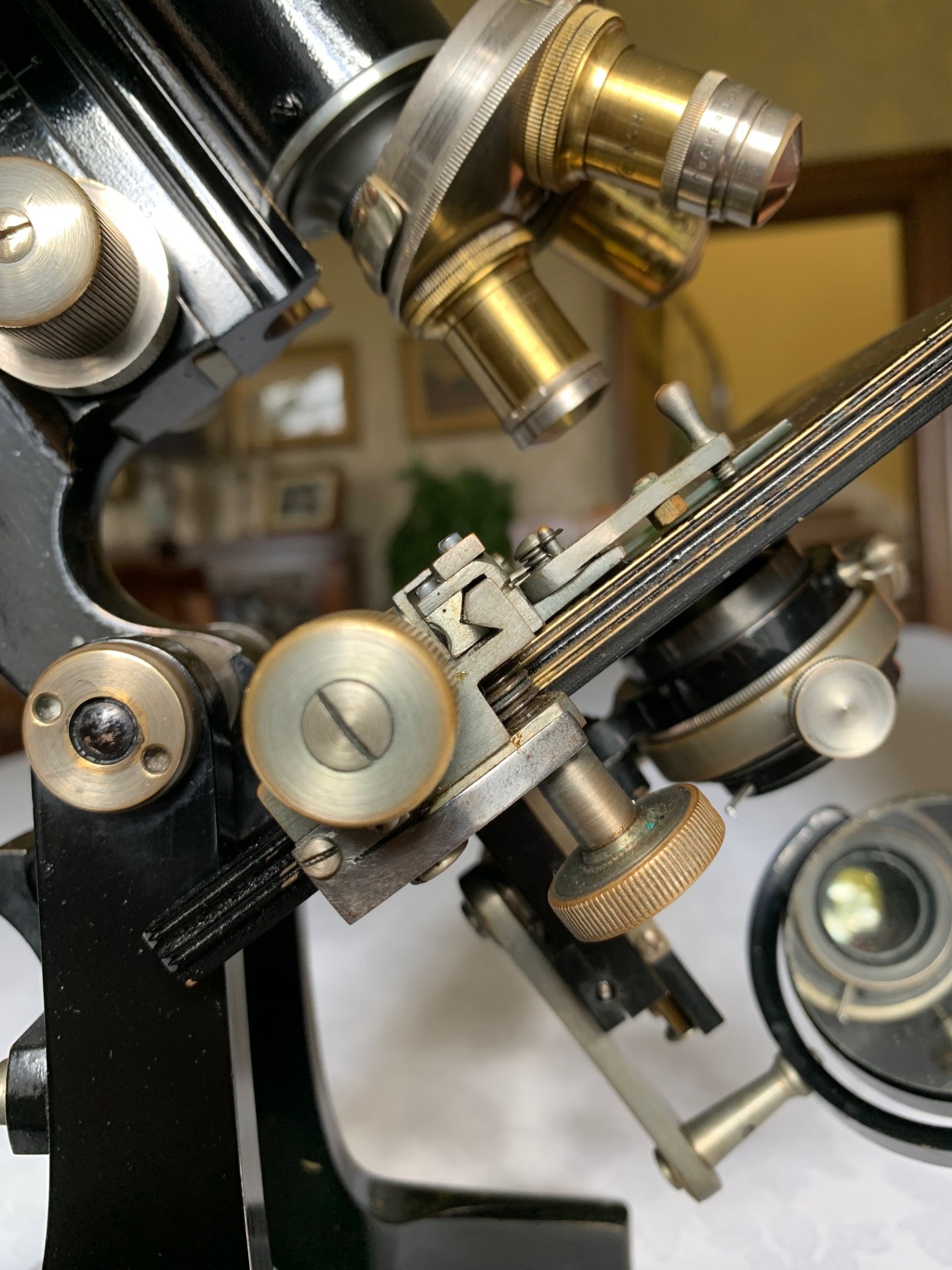
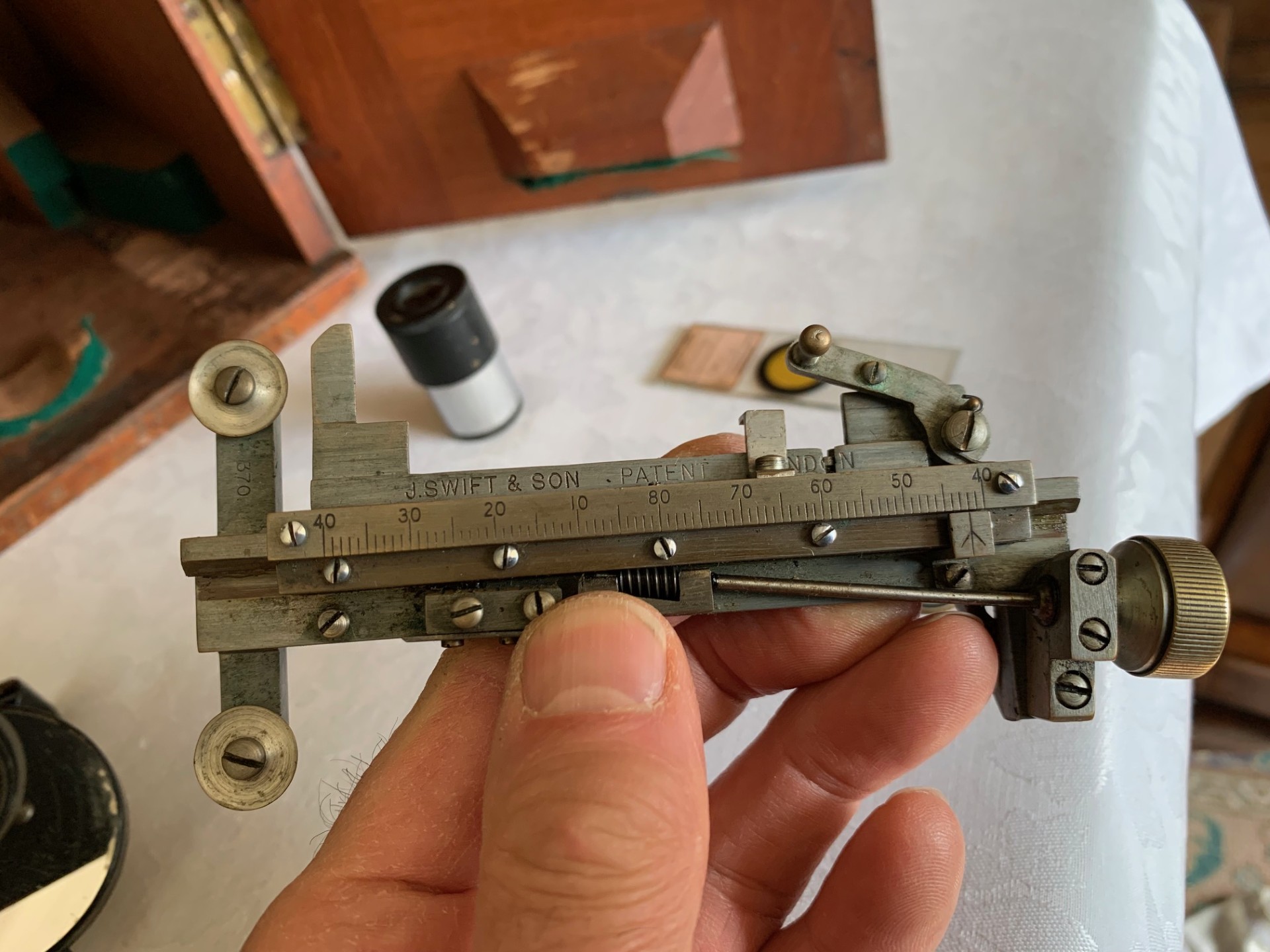
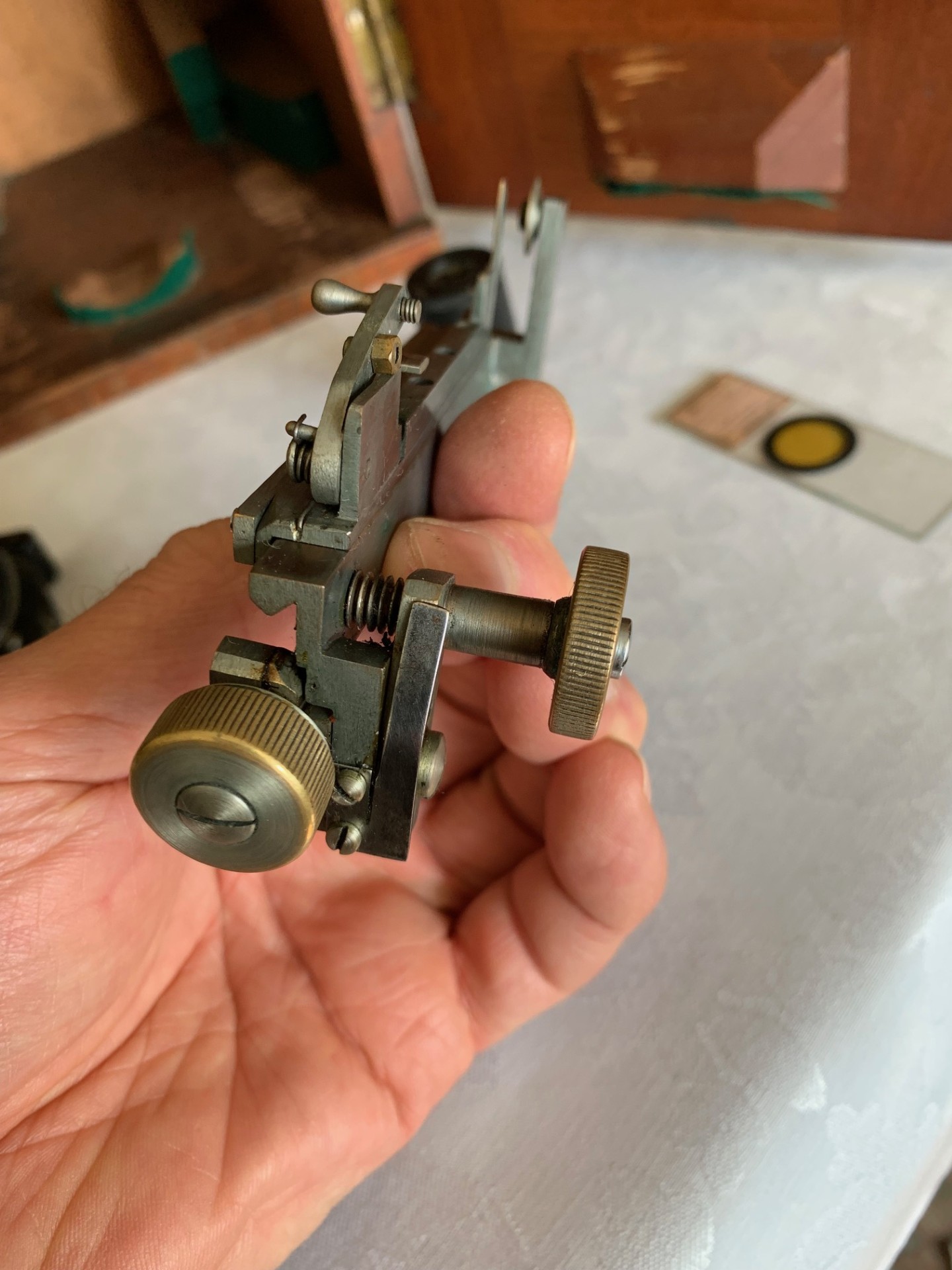
The instrument tilts for inclined viewing and holds in position through its working range as it should. The specimen stage is square and solid brass with engraved grid-lines, fitted with the signature patented Swift roller-stage which works extremely well. For those not familiar with the Swift roller-stage, I’ve taken some close-up photos – it really is an amazing piece of micro-engineering.
Sub-stage there’s ring mount to which is fitted an Abbe-type condenser with iris. The ring mount also has centering via twin brass thumb-screws as well as a rack & pinion system for height adjustment with single-sided brass thumb-wheel for control. The condenser swings out for maintenance as shown and also has adequate reach for oiling to the back of slides as may be required for higher power work.
Lighting is via a double-sided plano-concave mirror in a gimbal mount fitted to a support rod. The mirror has a useful range of height, swing and rotation adjustment, with good period silvering to both sides.
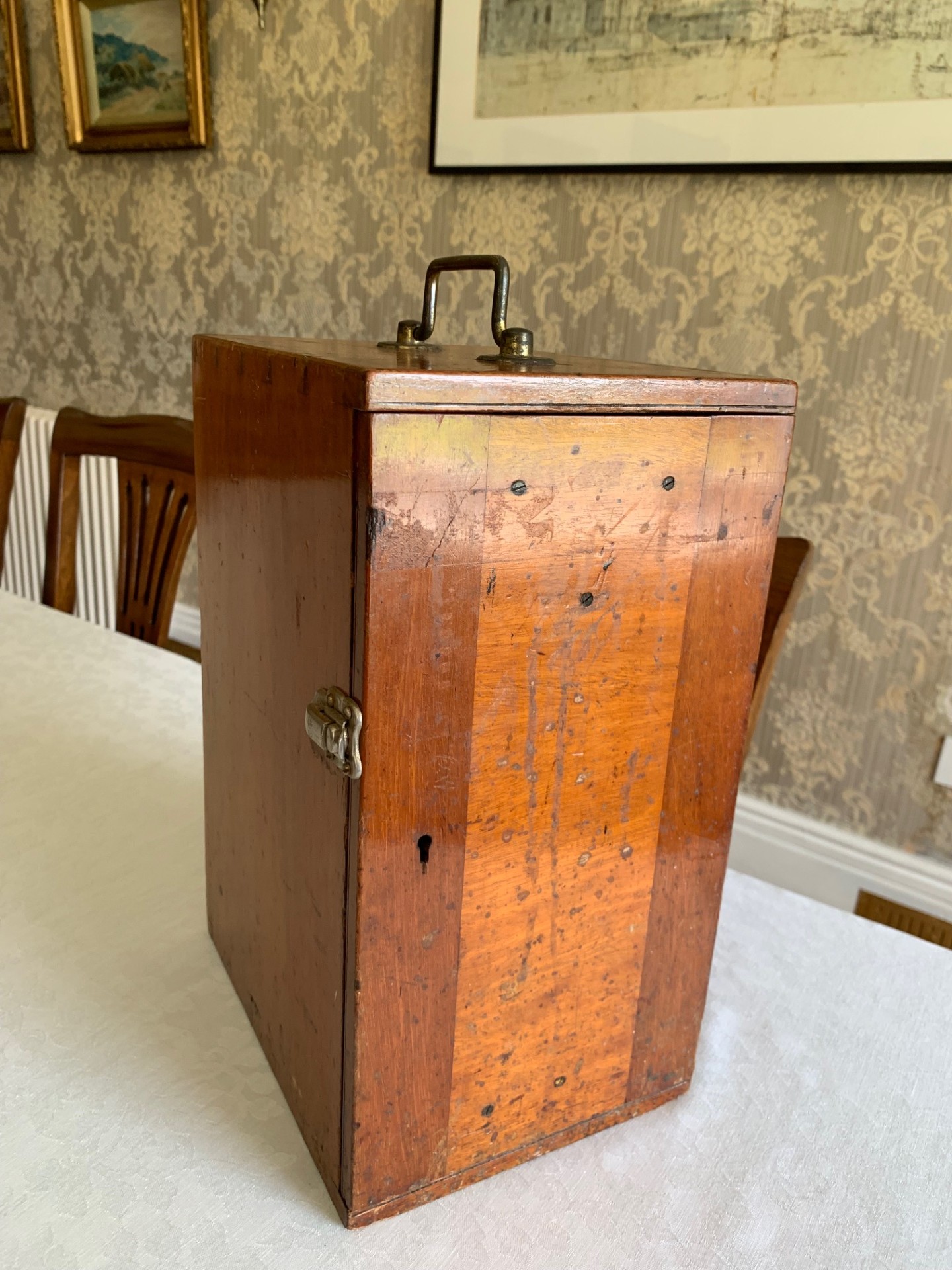
There’s a good quality, original fitted case probably that’s showing some age but still functional. It’s still in decent condition with appropriate external finish, brass carry-handle, a lock but the key is missing, so it’s got a cupboard latches to keep the door closed, which works well.
The instrument has been very lightly lubricated with non-hardening grease where necessary, so that the controls operate smoothly. This example of a late Edwardian Swift “Army” microscope is very usable and essentially makes a superb technical display piece. It could be displayed in a library or home office type of setting, especially when set up with an appropriate antique slide.
Owing to the weight and delicacy of this antique microscope and its case, it will be partially dismantled, carefully wrapped for shipping and dispatched by insured courier upon receipt of cleared funds.
Thanks for looking.
Ask the Dealer
Dealer information
 Arcboutant Scientific
Arcboutant Scientific based in Glasgow Scotland, with an interest in scientific collectables dating back to 1988. Now making available carefully curated fine examples, principally of antique microscopes and associated scientific equipment by quality English and Continental makers, to collectors world-wide.