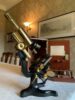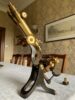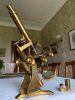


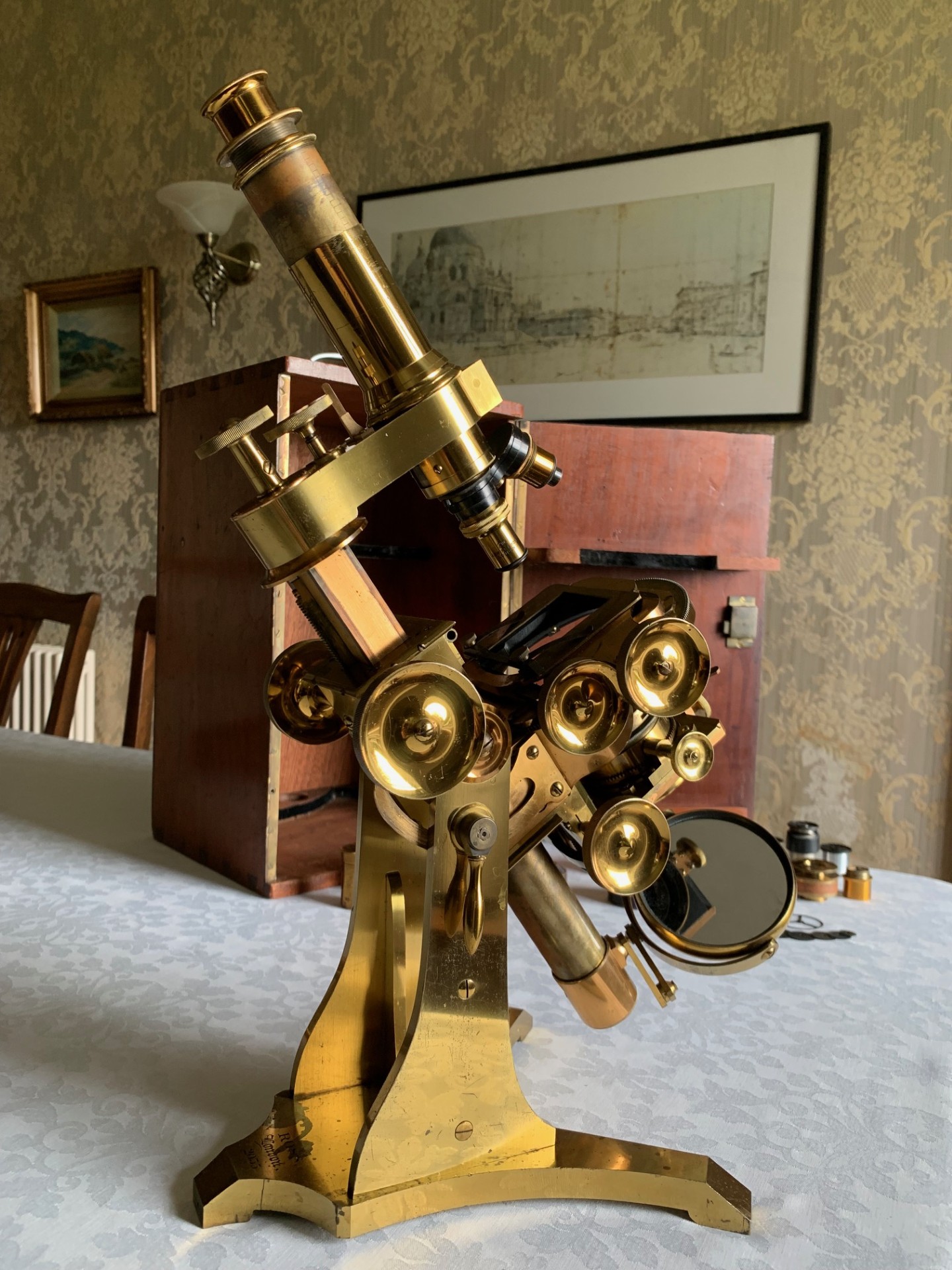
Antique Large First Class Bar-limb Brass Microscope by Andrew Ross c1863, Cased
£2,250
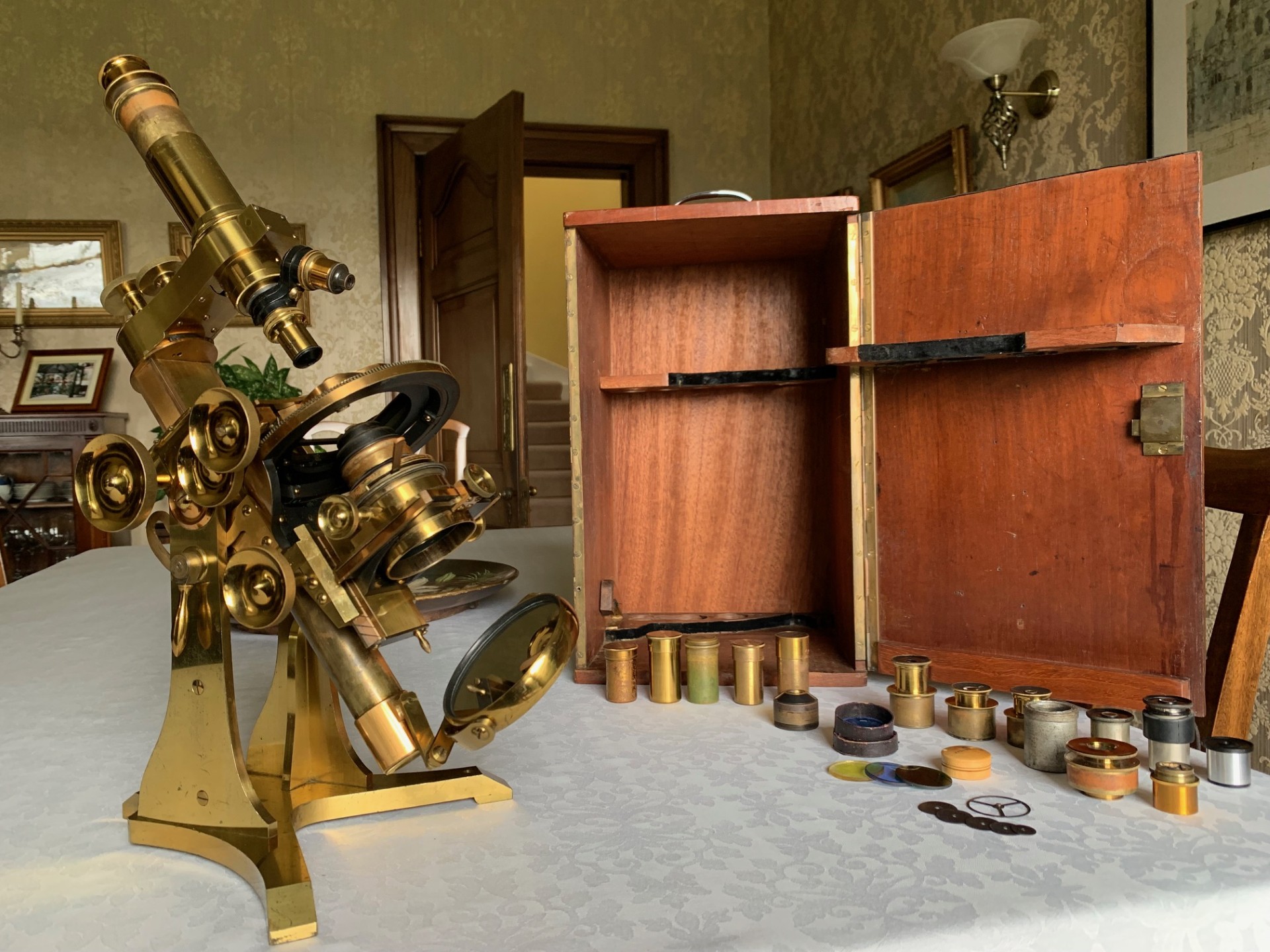
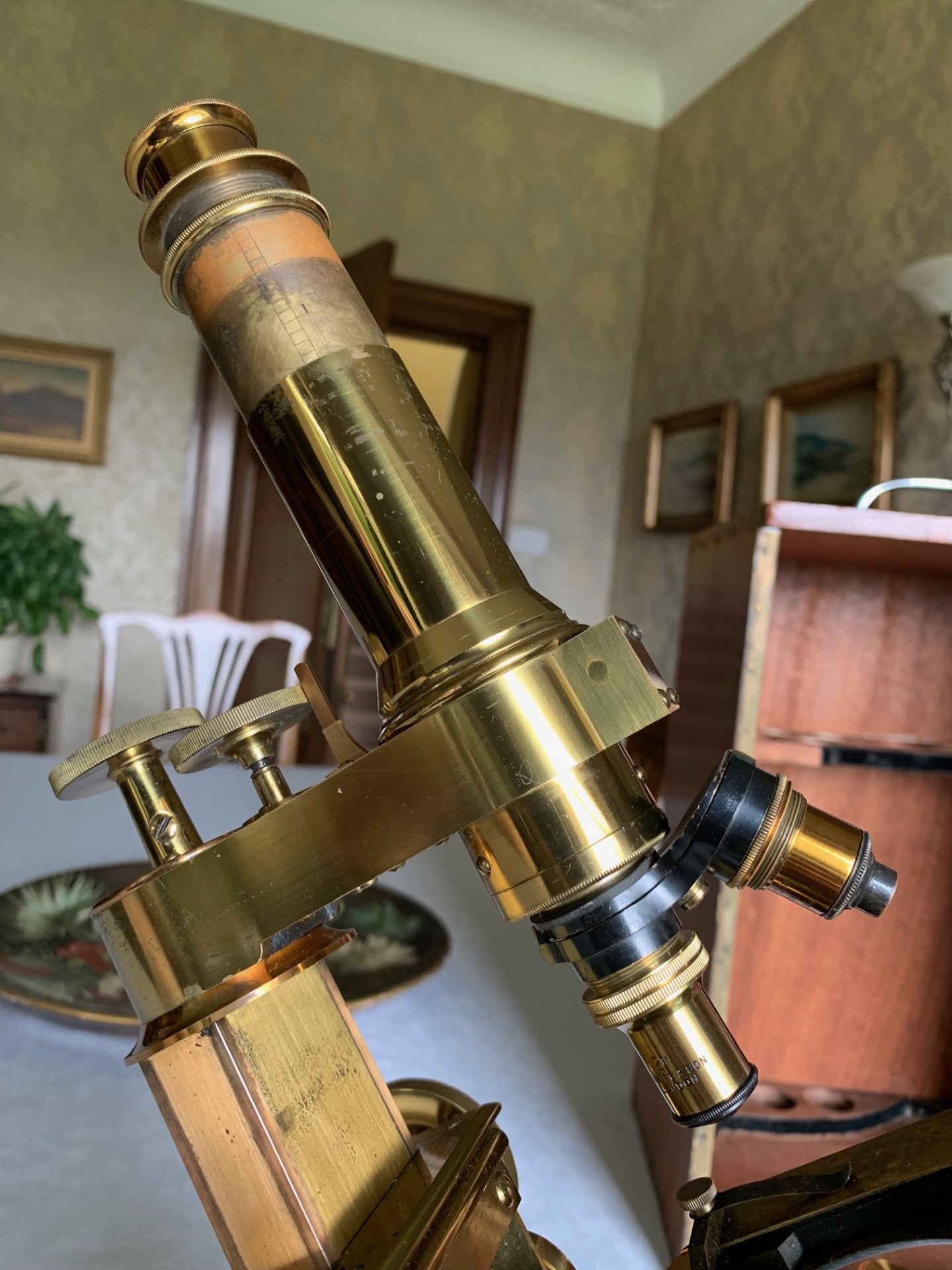
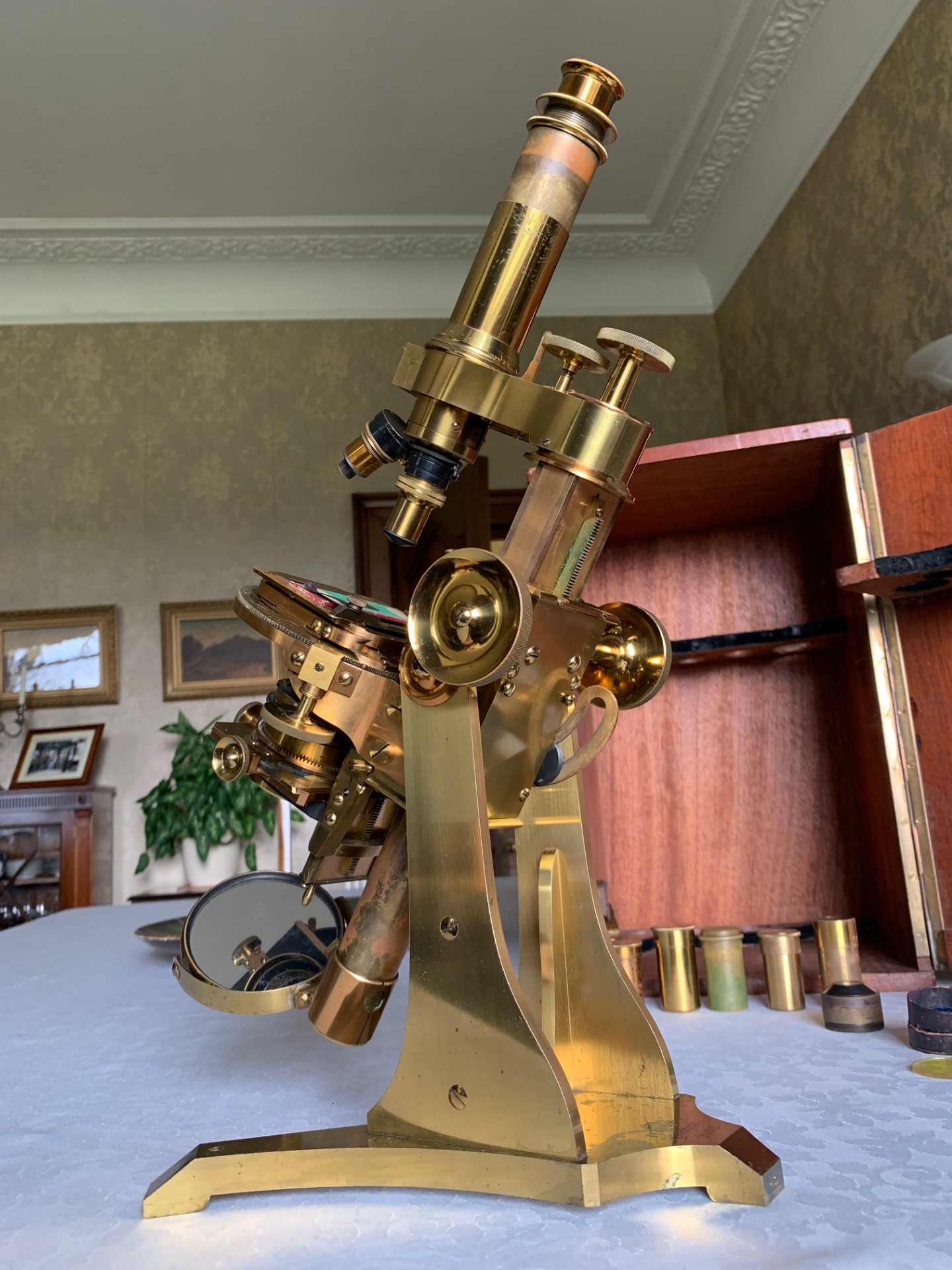
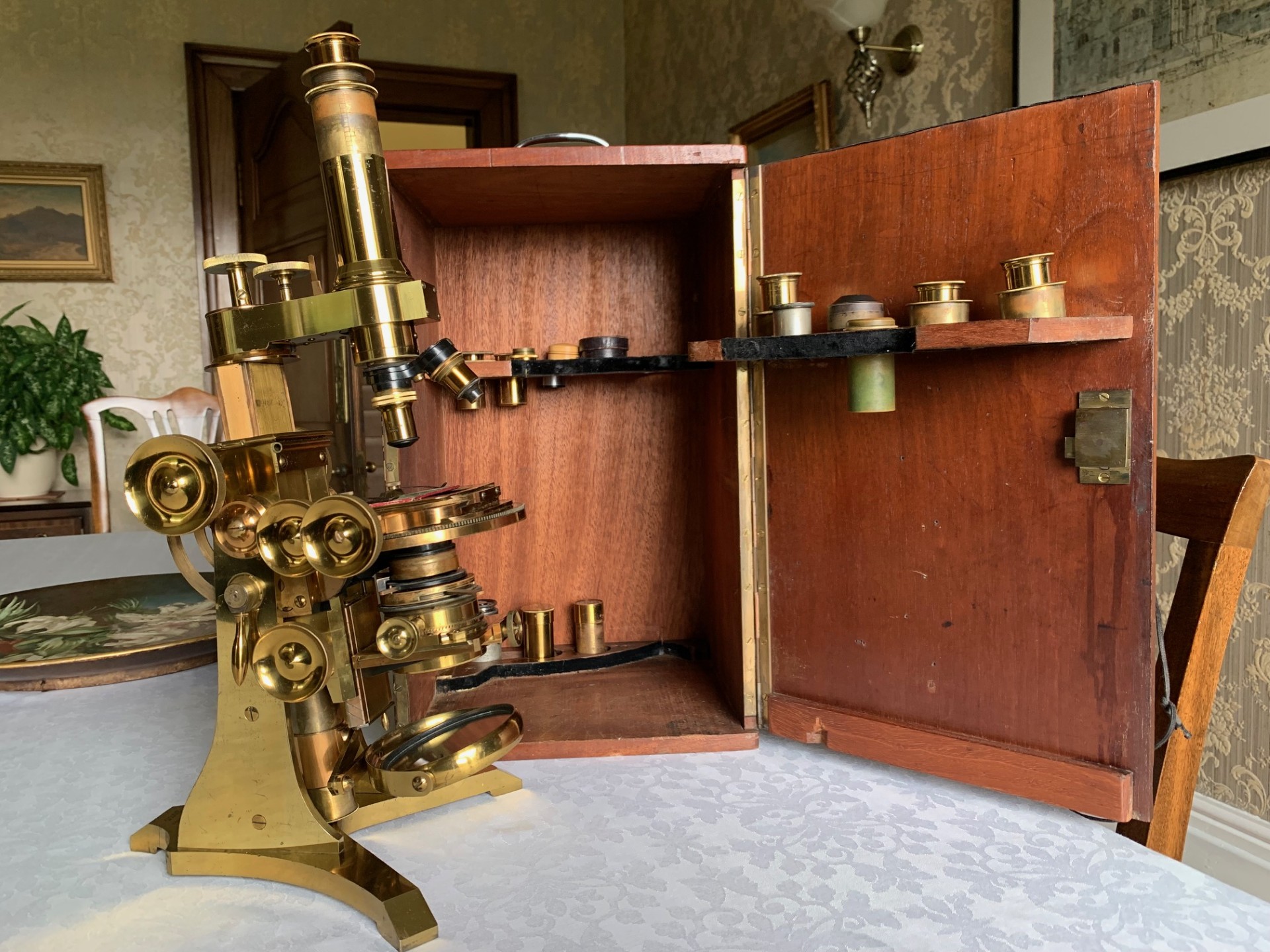
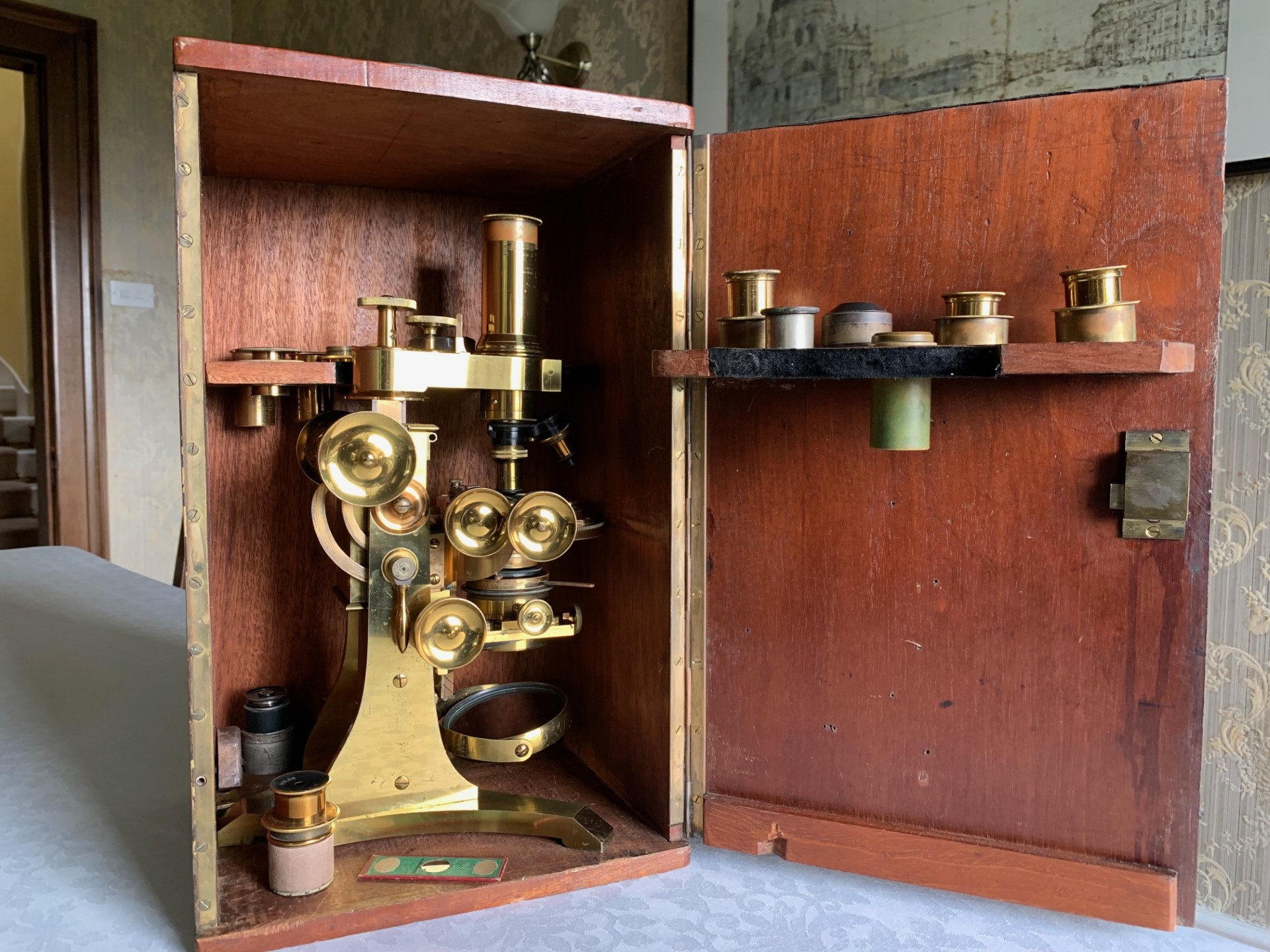
Lovely antique mid-Victorian period example of a very large monocular brass bar-limb microscope by quality London makers Andrew Ross. This model is the First Class Microscope, the largest produced by Ross and this example comes with a host of useful accessories.
Circa
1863
Maker
Andrew Ross & Co, London
Country of manufacture
UK and Ireland
Description
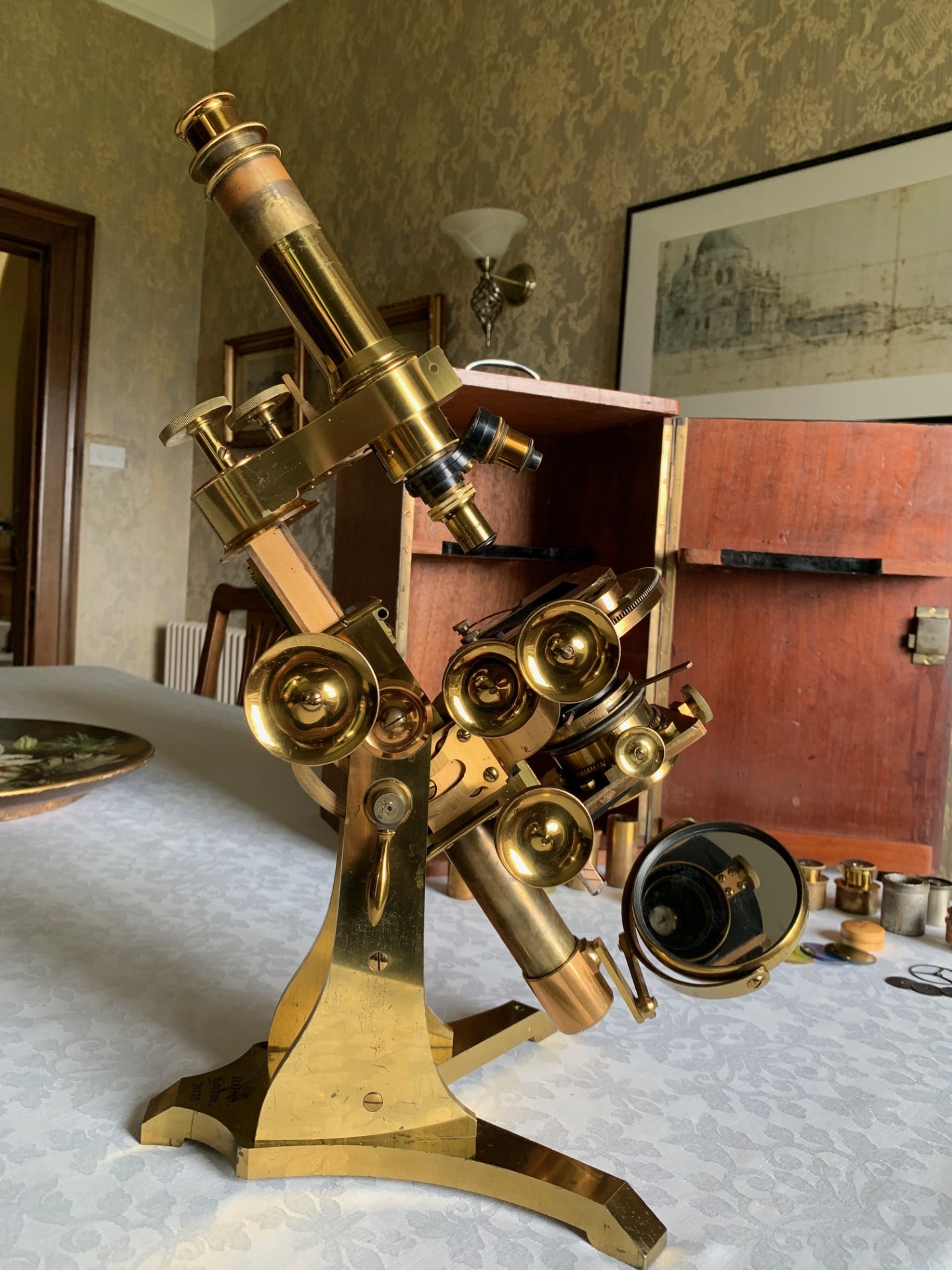
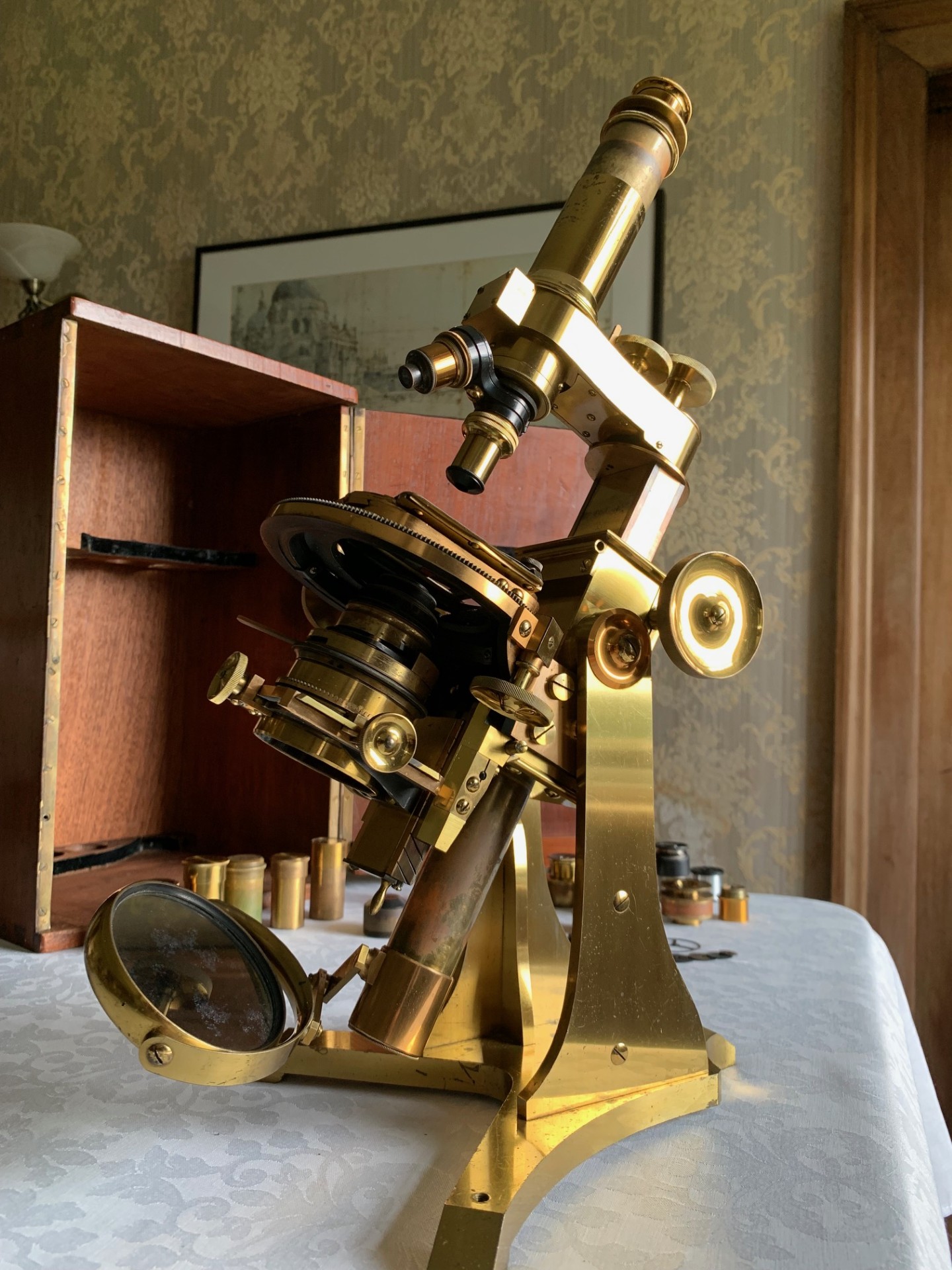
Offered for sale a rare find – an Andrew Ross Large First Class model, serial number 2035 of immense proportions.
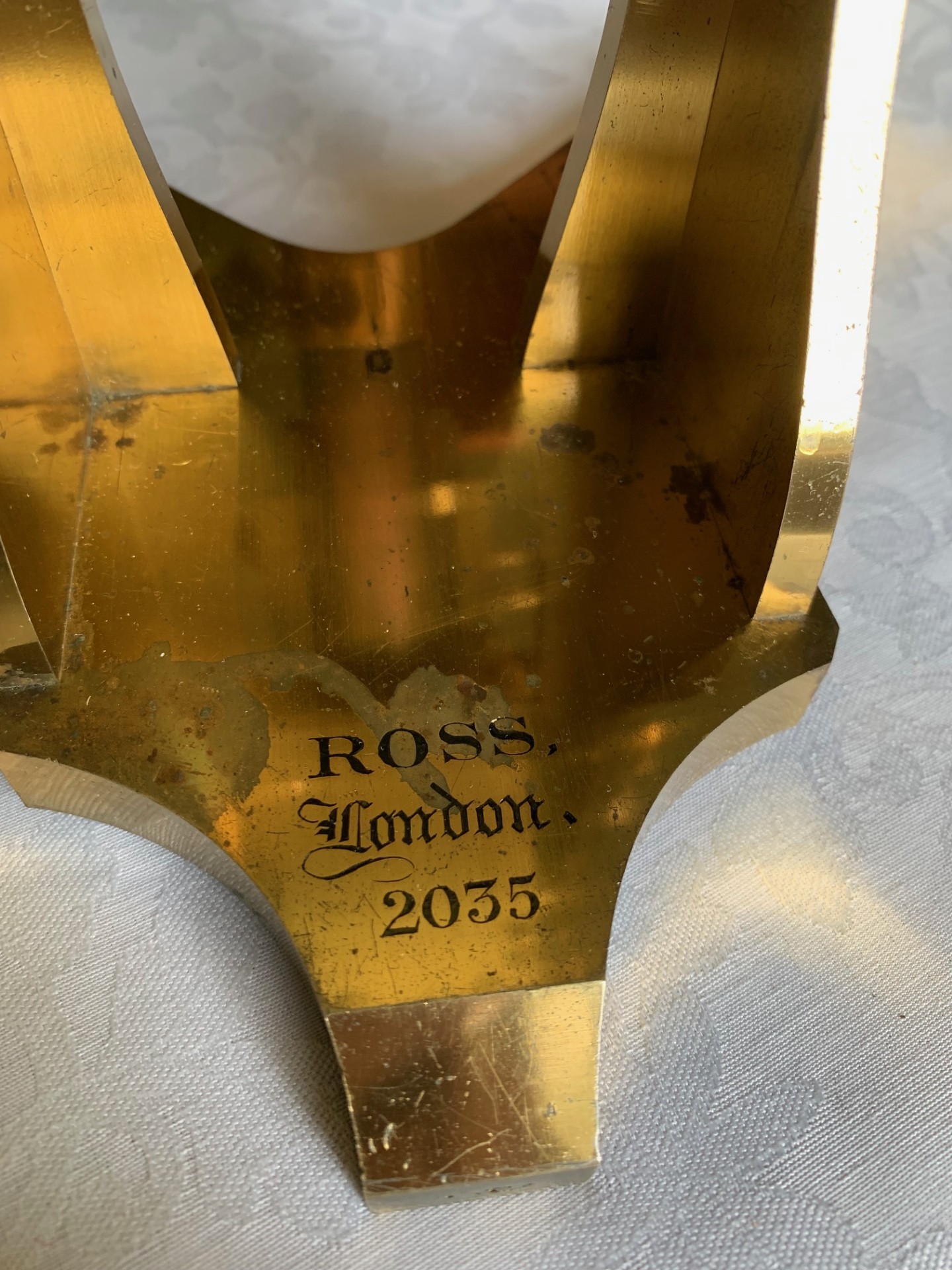
The foot engraved “Ross, London 2035” with:
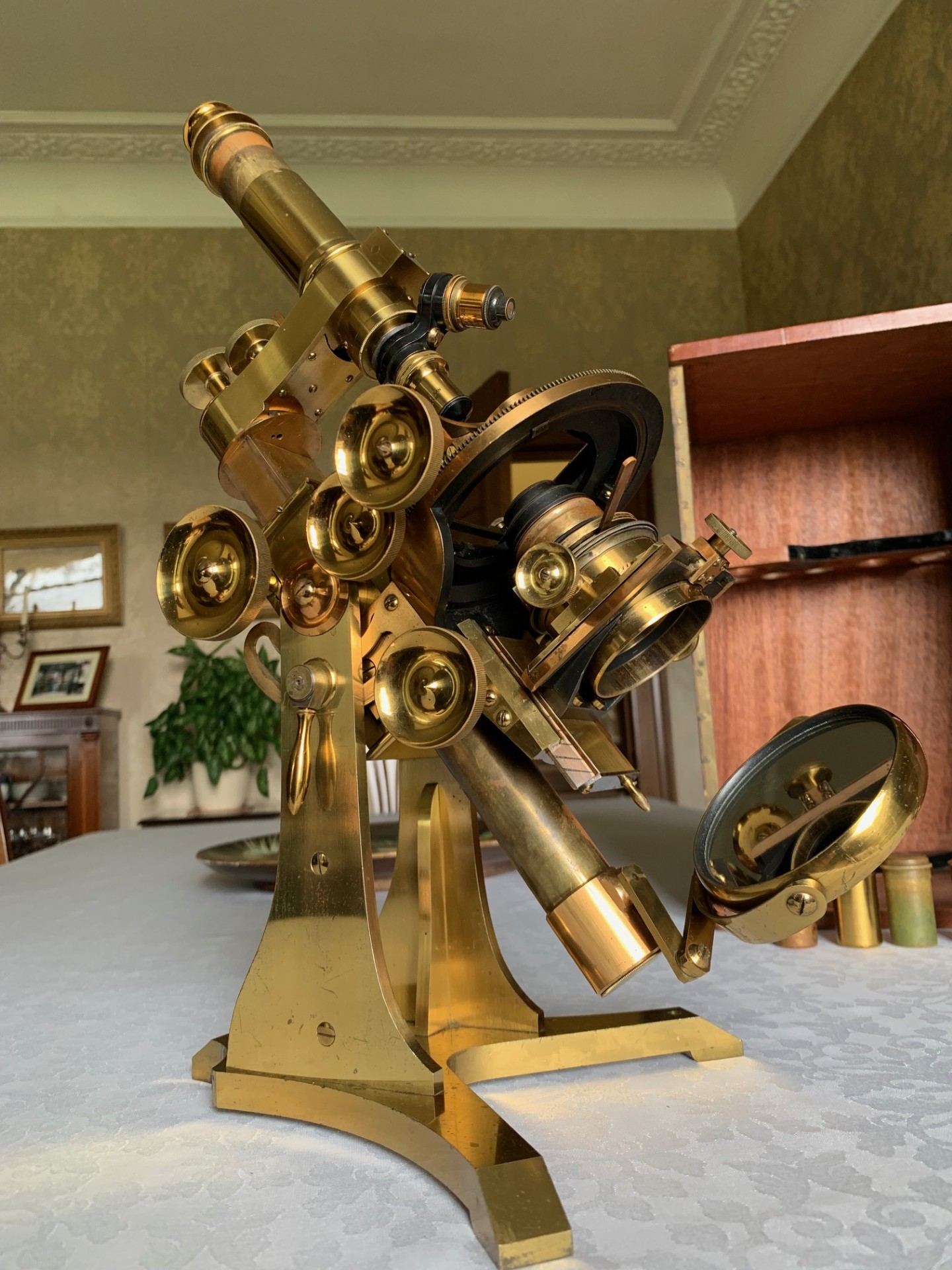
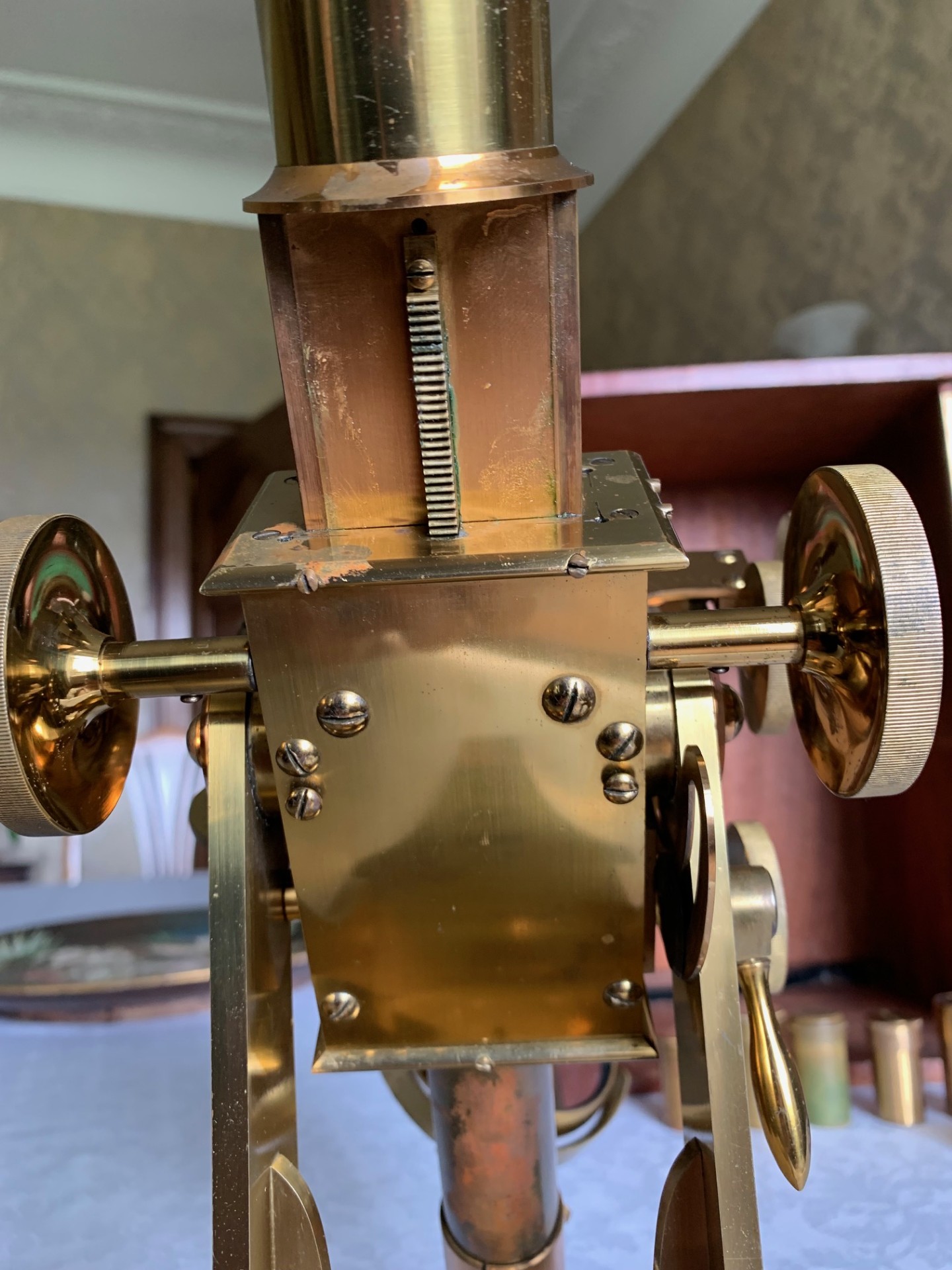
– Bar-limb design with large rectangular section limb slider
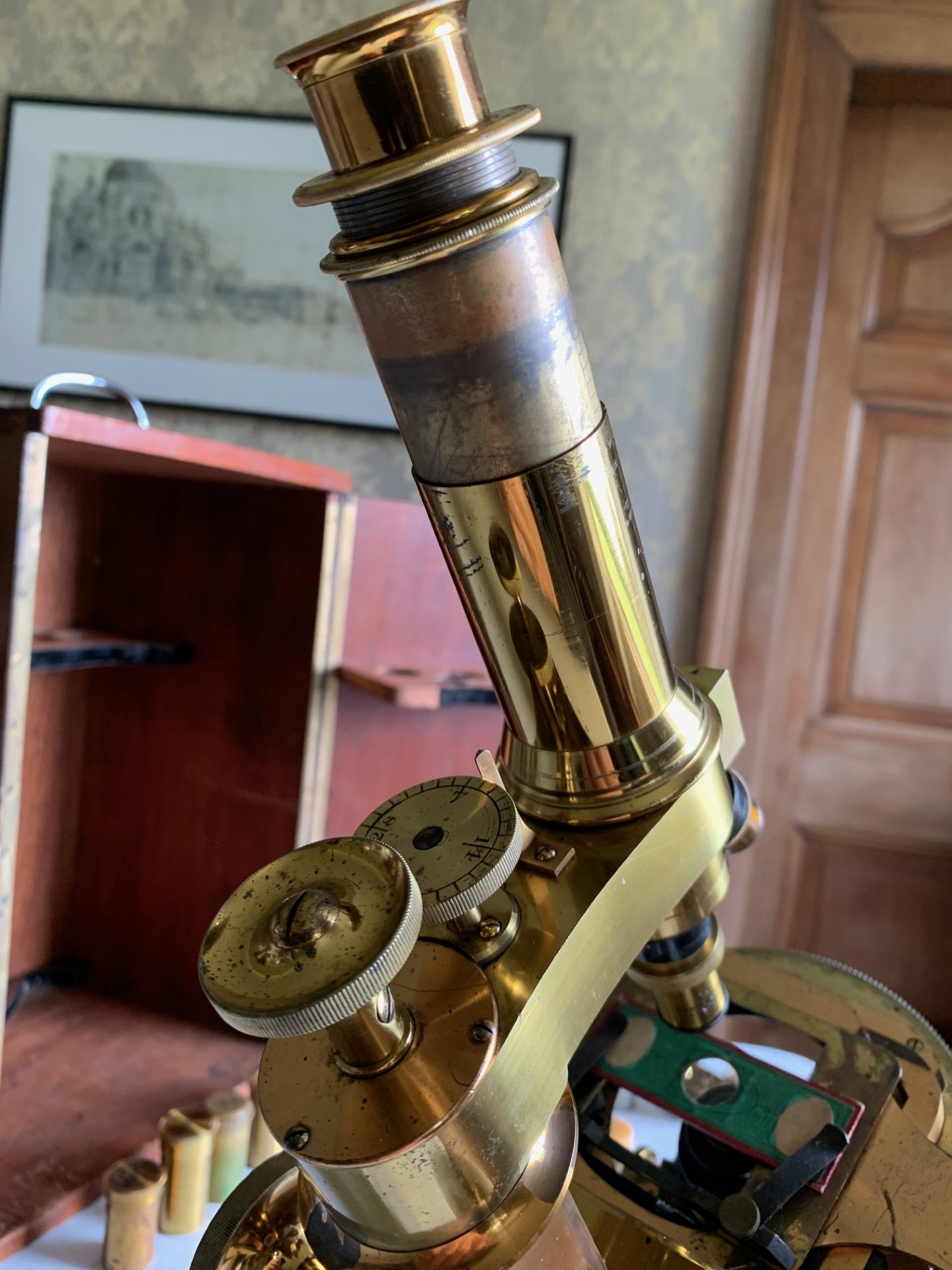
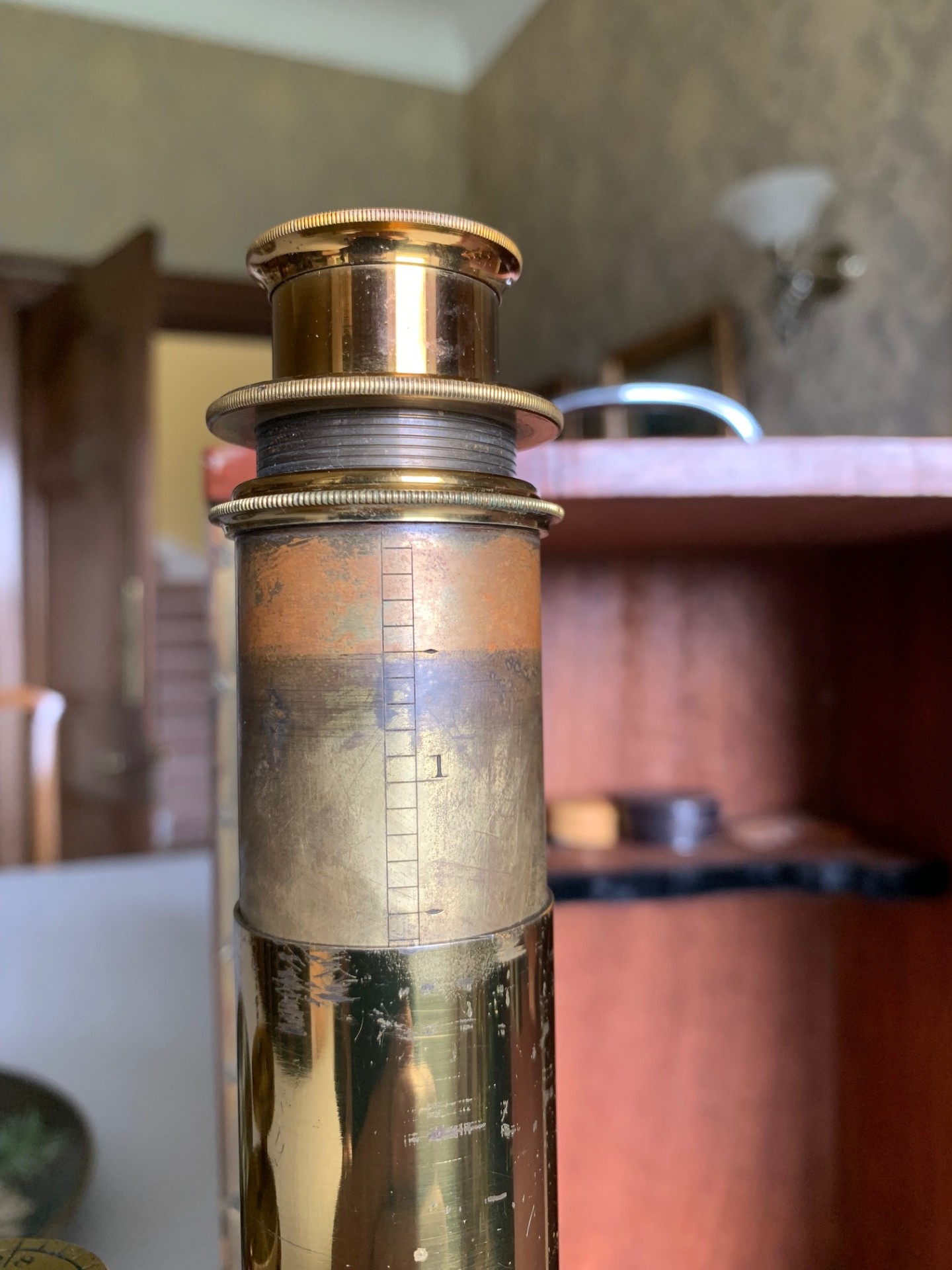
– Monocular optics – short optical tube with graduated manual draw-tube giving good stability for high-power work
– RMS objective fitment
– Straight-cut coarse focus
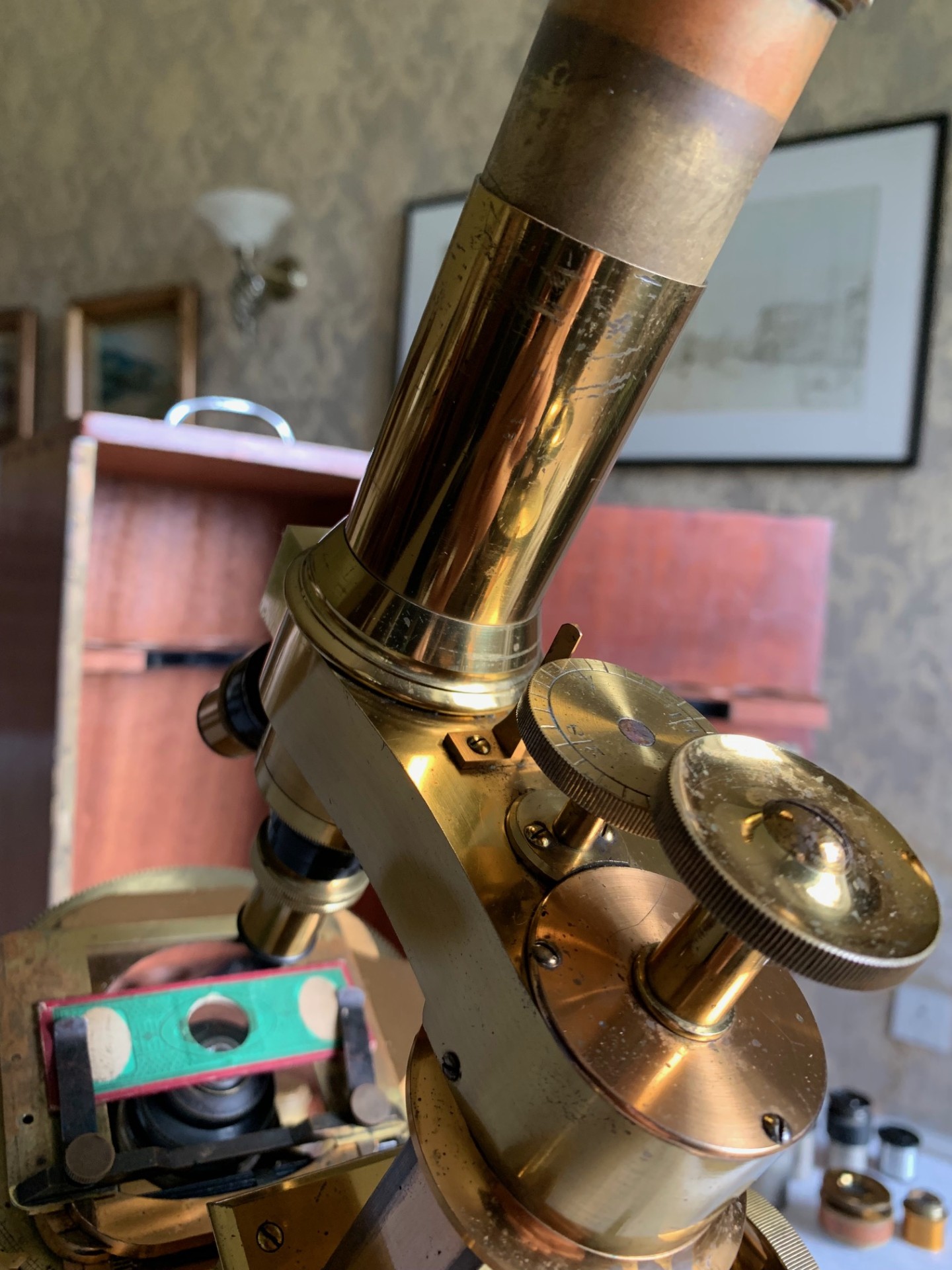
– Vernier screw/lever fine focus
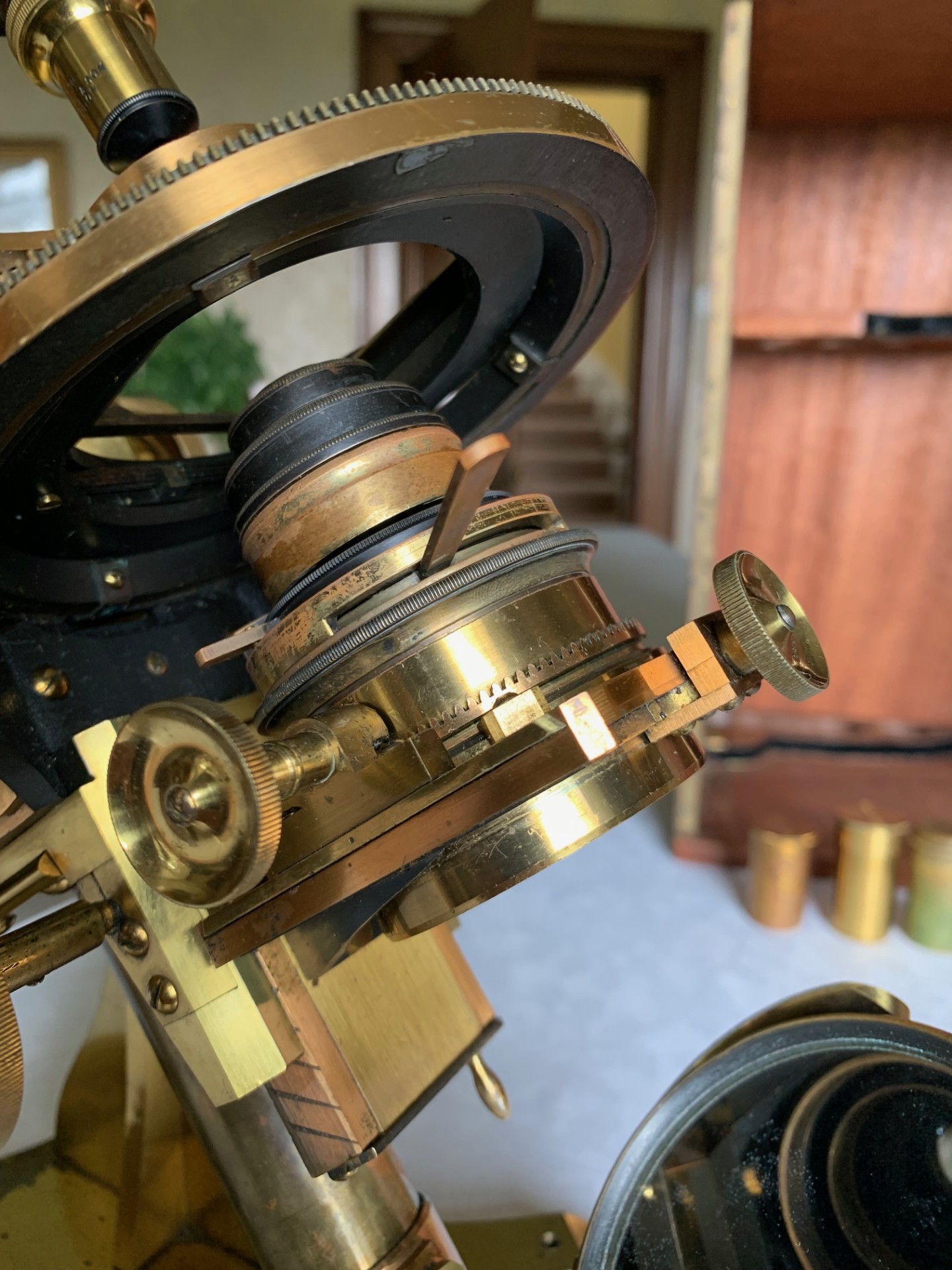
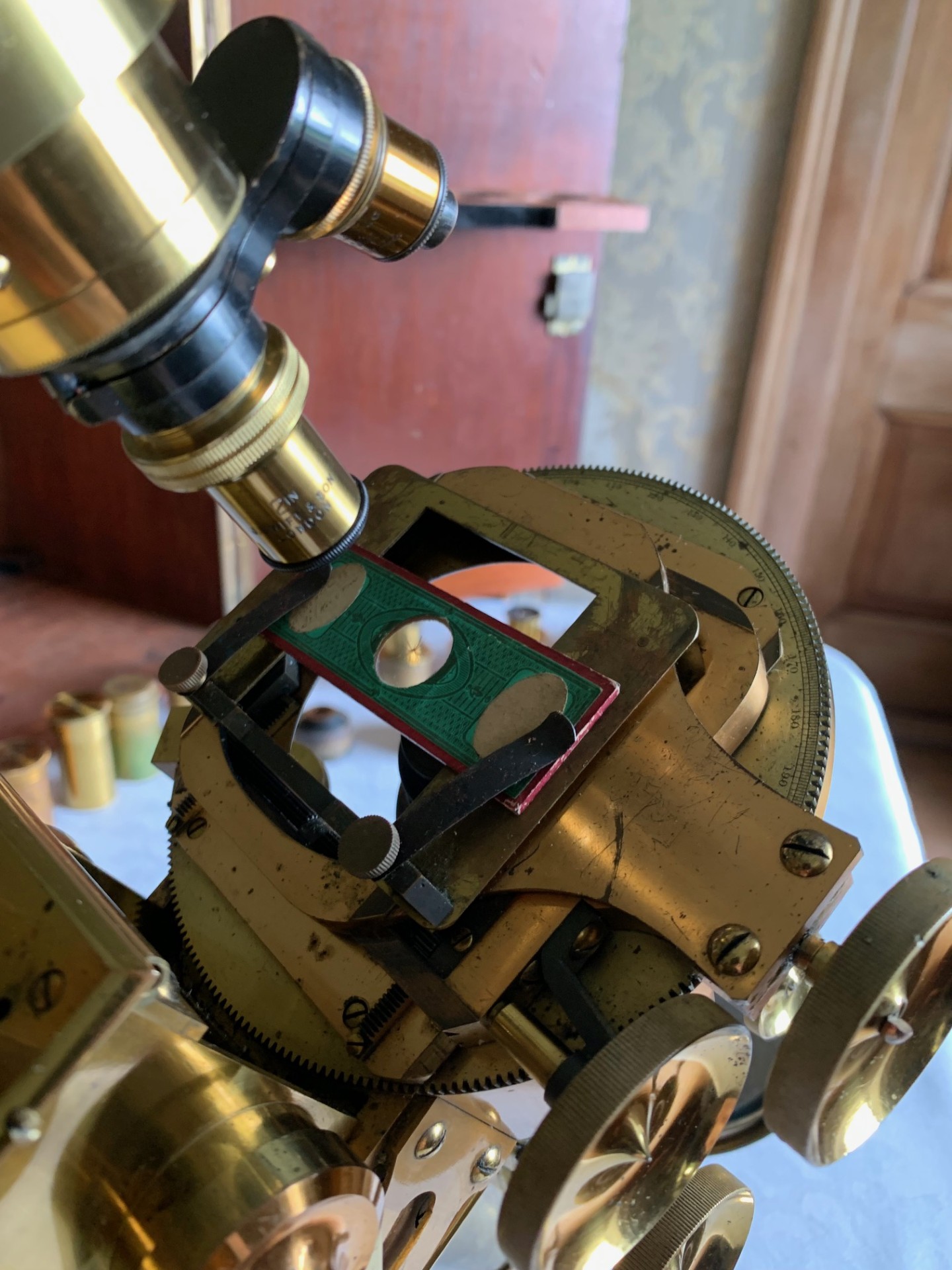
– Mechanically rotating fully mechanical stage with non-concentric x/y controls to right hand side
– Technical sub-stage with condenser featuring, mechanical rotation and centering
– Over-size plano-concave mirror on sliding mount with good silvering
– Good bright lacquer finishes throughout
Background to Andrew Ross & Co.
Andrew Ross founded his business in 1830 and, like James Smith, later of Smith & Beck, he collaborated with J.J. Lister, the manufacturing optician who invented a mathematical method of producing objectives which were both achromatic and aplanatic. Ross’s early instruments were constructed initially in a fashion similar to other contemporary makers, including a construction style similar to that of the Lister-limb design. He continued this practice until 1840 when he developed the “bar-limb”, a very stable design and from then on also supported his stands on the classic Y-shaped foot with two upright supports. Early examples of the Ross bar-limb construction used a triangular bar, which was later replaced by a square one and finally on the largest and heaviest version (like this example) a rectangular one. The Ross bar-limb design became the standard for many British microscope makers throughout the second half of the 19th century. Some conservative companies such as Powell and Lealand continued the manufacture of bar-limb microscopes into the 20th century, long after improved continental designs appeared in the market. Andrew Ross died in 1859 and his son Thomas Ross carried on the business. Thomas Ross died about 1870 and the management of the firm was taken over by famous inventor Francis Wenham who was responsible for the development of the Ross-Zentmayer models in the 1880s and these remained in production into the 1890s until replaced by continental designs. The Ross company went on to produce optical products well into the twentieth century, although large high-quality microscopes became less important to the firm as the years went by. The firm was called Ross & Co between 1837 and 1841, then Andrew Ross & Co and finally Ross Limited from 1897 onwards. The firm discontinued the production of microscopes in 1906. (Source: ‘Antique Microscopes’ website)
This example of a Ross monocular bar-limb microscope presents really well with some lovely gleaming brass-work details and some age-appropriate patination here and there, although nothing detracts from the visual appeal, which is what you’d hope for with an antique instrument of this age. The instrument’s look and feel is of a quality not found in modern microscopes in that’s it’s fashioned from solid brass, giving it a really heavy solid feel and it’s also quite a large imposing instrument ideal for both display and use.
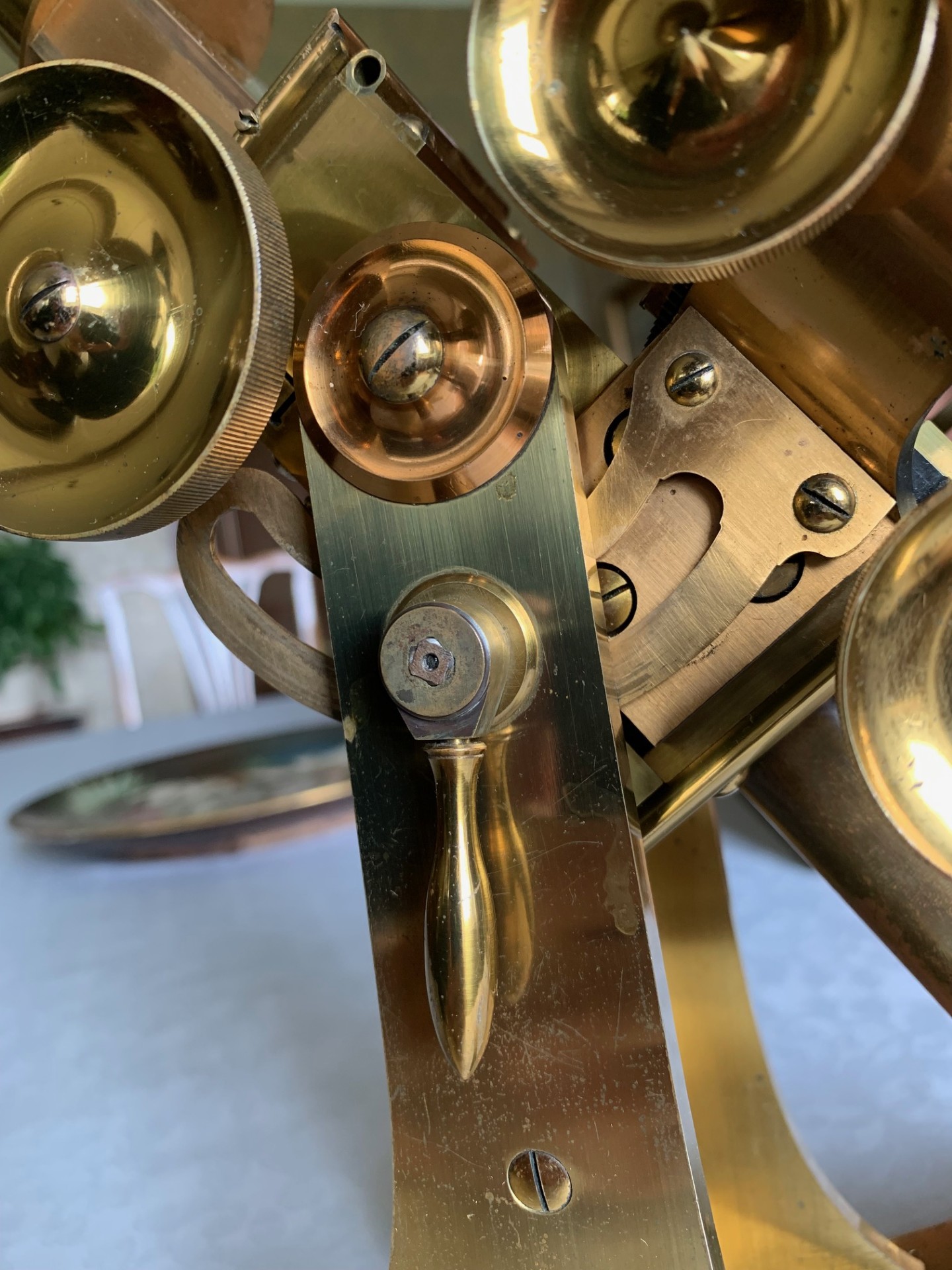
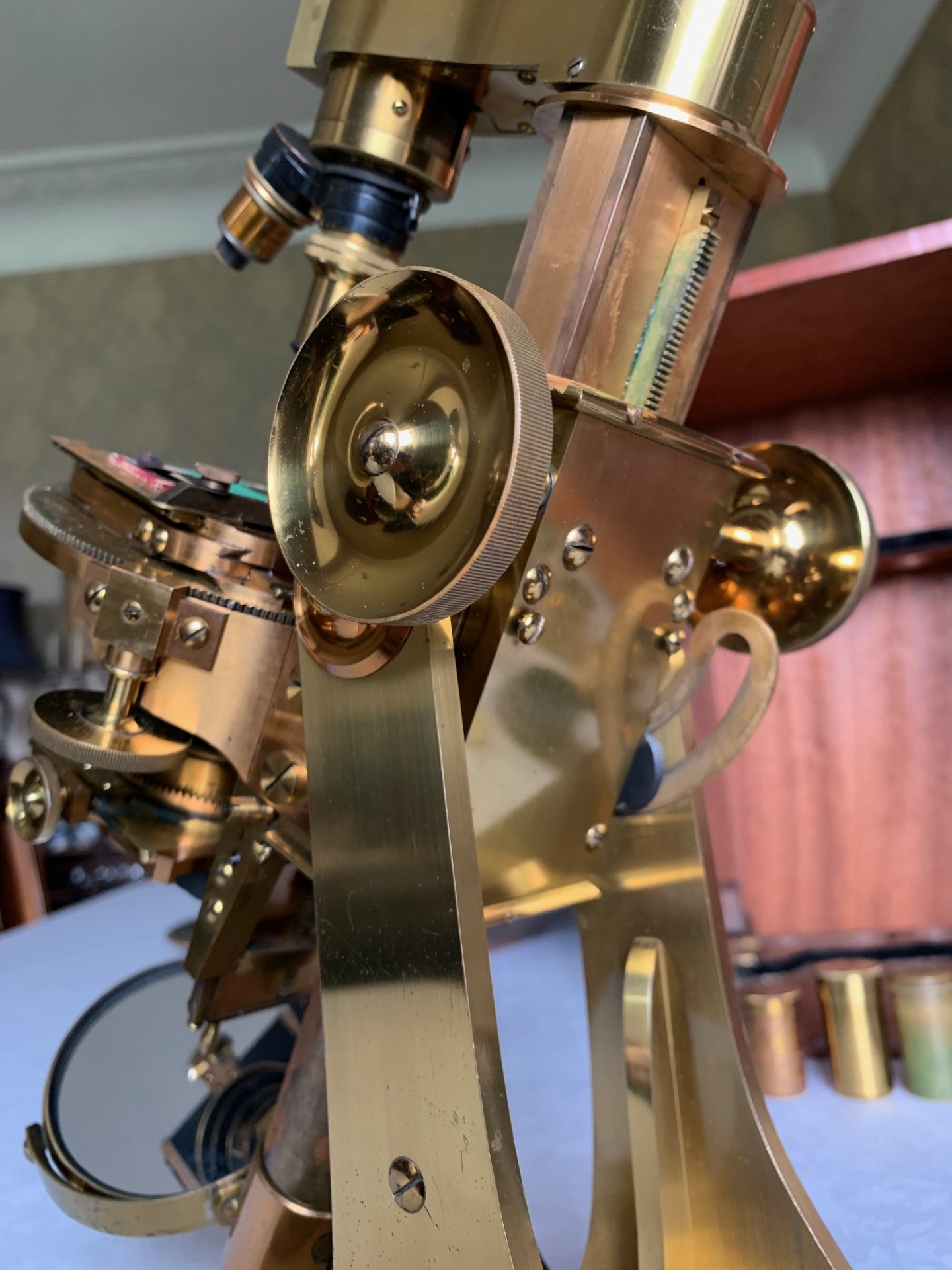
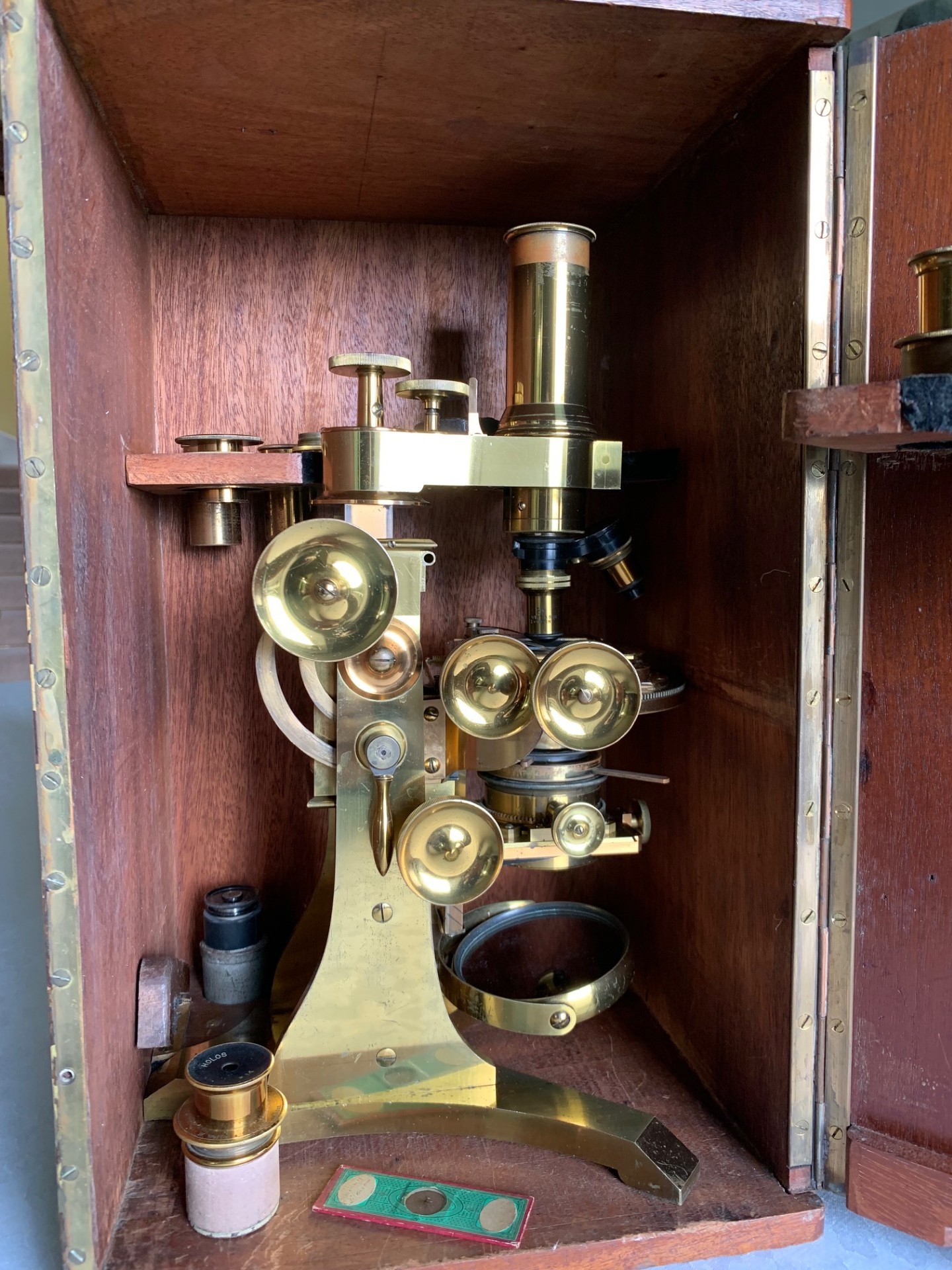
Technical details – the construction is a brass Y-shaped foot measuring 8 inches wide by 8 inches in length, with large twin 8 inch high uprights with additional bolsters. The uprights supporting a pivot with tension lever and inclination restrictor plate, which in turn supports a bar-limb configuration for the upper part of the instrument The coarse focus is by rack and pinion with the older-style straight cut rack and there’s plenty of travel, so I reckon even a 3 or 4 inch objective would achieve sharp focus. The slider for the coarse focus is Ross’s largest, being rectangular in section set in a massive brass pinion box and is very stable in operation. The coarse focus has a nice smooth action and holds in position as it should in its working range. Fine focus is operated via a graduated brass thumb-wheel located at the rear of the main tube on the bar, being a vernier screw acting on a lever against sprung resistance moving the nose-piece only, also working well.
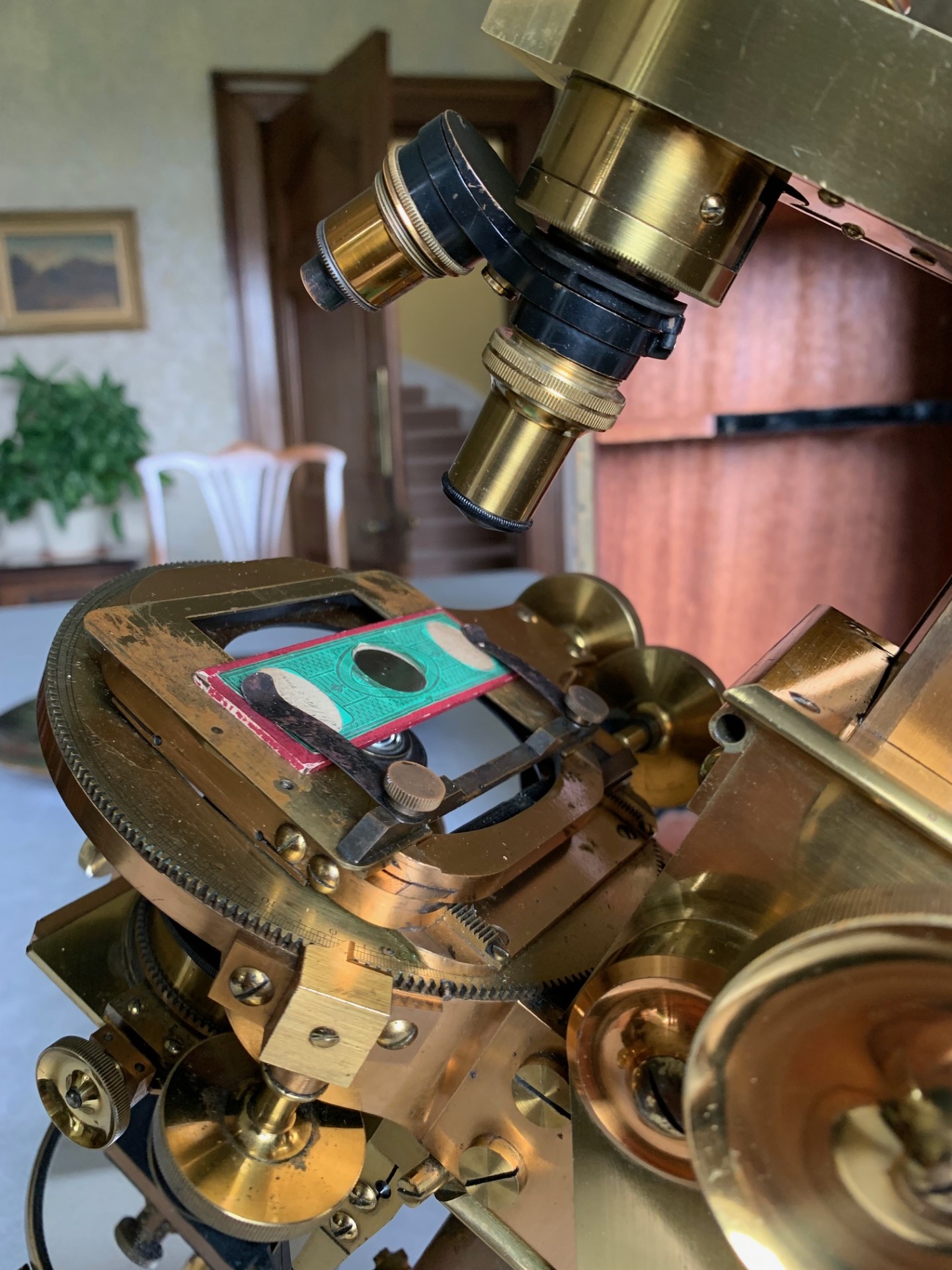
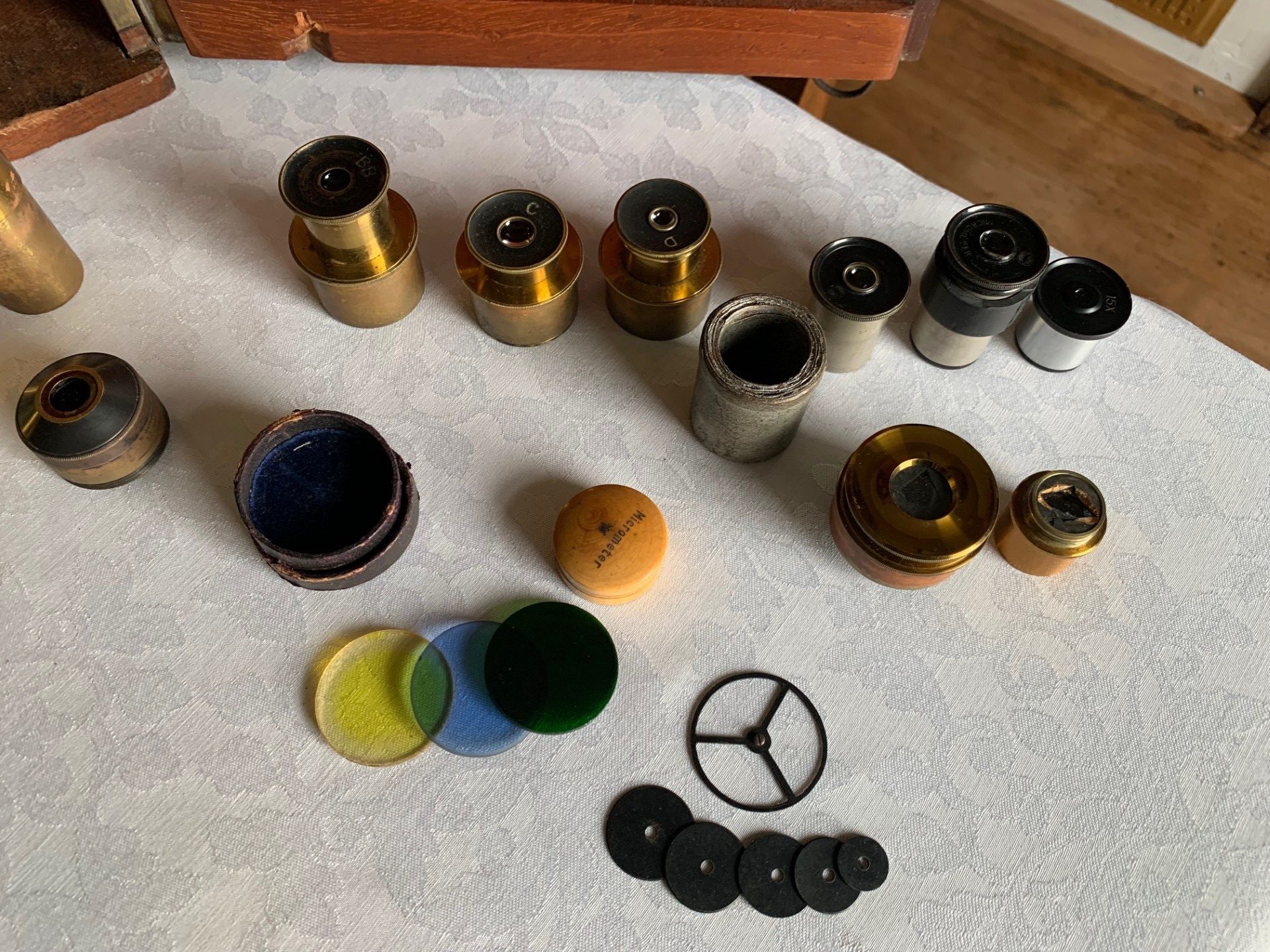
In terms of its optics, this microscope has a single shorter-style optical tube with manually operated graduated draw-tube with nice smooth action. It’s supplied with a very good selection of eyepieces, as under:
Top-hat Eyepieces
– BB – Ross
– C – Ross
– D – Ross
– Holos 14x by W. Watson & Sons Ltd
Standard 23mm Eyepieces (with adapter collar)
– Gifford Orthochromat 12.5mm – C. Baker
– No. 3 with micrometer 8x by C. Baker
– Unbranded 15x
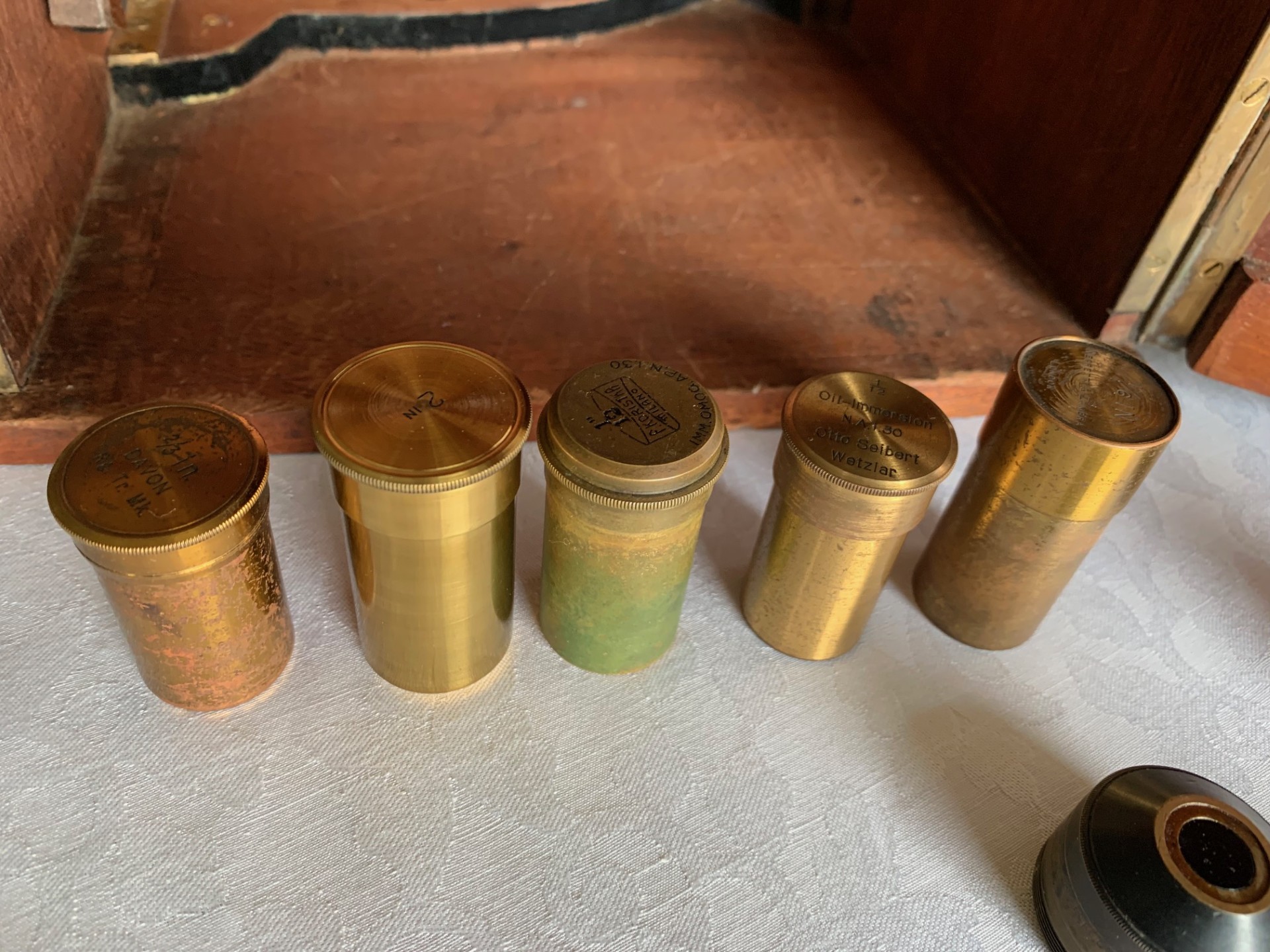
It’s also supplied with a decent selection of objectives in clean usable condition including high-power along with a later double turret. The objectives are:
– 2 inches – 3x magnification by James Swift
– 2/3rds inch by Davon – 10x magnification
– 1/6th inch by Negretti & Zambra – 40x magnification
– 1/12th inch by Otto Seibert – 100x magnification – oil immersion
– 1/12th inch by F. Koristka of Milan – 100x magnification – oil immersion
(all objectives have correct brass canisters)
As such this instrument is essentially currently set up for low, medium and high power work, with a magnification range of around 24x to a theoretical 1,500x. With the objective fittment being RMS, there are plenty of other objectives by Ross and other makers that should also fit.
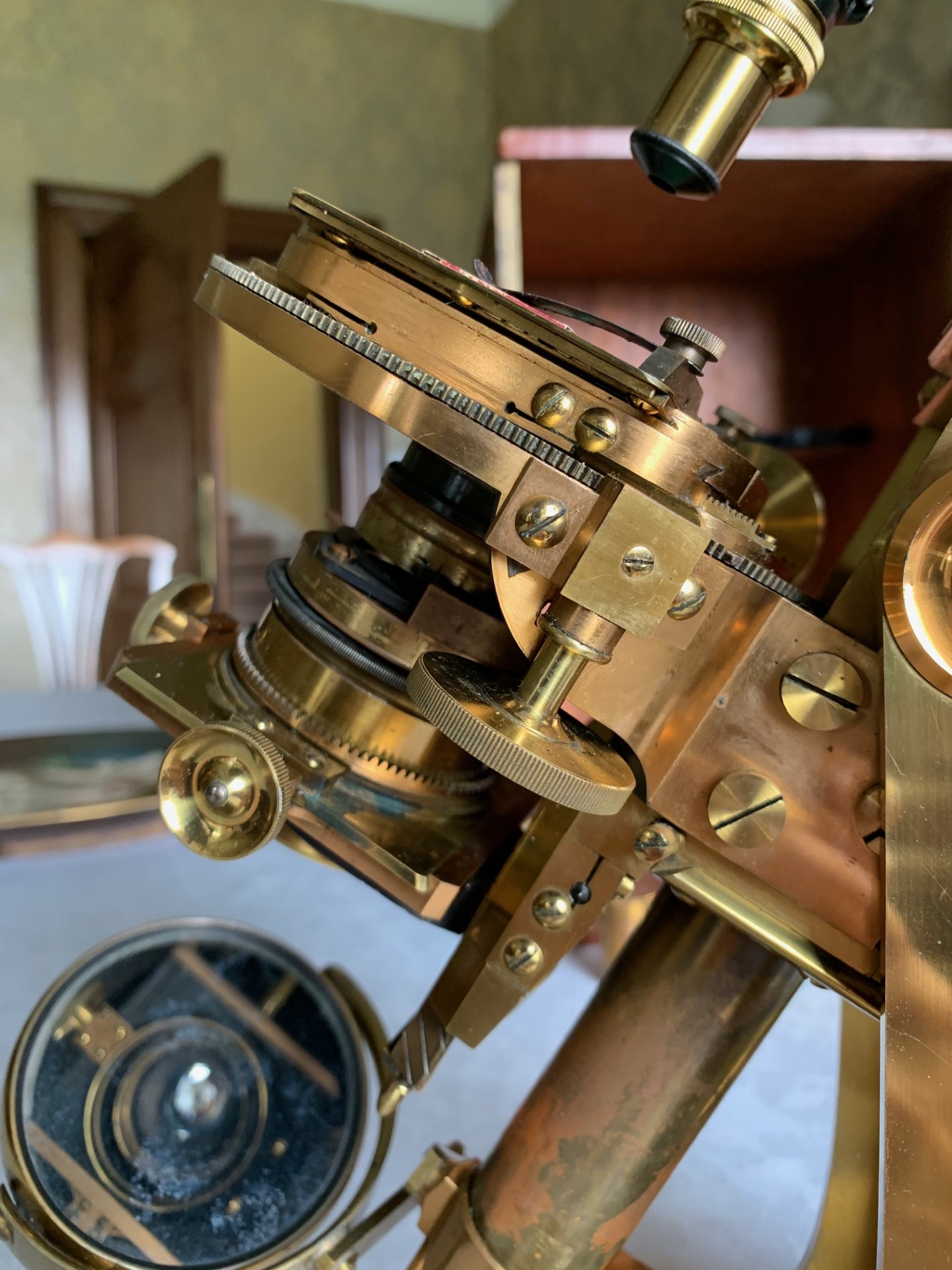
The instrument tilts for inclined viewing and holds in position as it should on inclination. It can be tightened in position via a limb-tension lever to the right hand side of the pivot, which is also fitted with a restrictor plate allowing the instrument to be tilted to the horizontal position with stability. The all-brass specimen stage is fully mechanical with in addition a mechanically operated rotation feature. The x/y adjustment thumb-wheels are on the right-hand side, giving about 1 inch of travel in the x/y planes, with the rotation control below stage. All the mechanical controls work very well and hold position on inclination, with rotation well damped. The brass stage top-plate is a slider that has a pair of slide clips which work well for holding slides in position – for testing I was using a paper-covered antique slide as seen in the listing photos.
Turning to the sub-stage, both stage and sub-stage are attached to the massive brass pinion box and there’s a condenser fitted to a mounting assembly with height control via a rack and pinion mechanism with single-sided control. The condenser is of the Abbe-type and has both a working iris with smooth action and also a swing-out filter carrier fitted. In addition there are further controls for condenser position, with mechanical rotation and centering via brass thumb-screws. There’s a lengthy brass tailpiece on which the plano-concave illumination mirror is mounted, with height, rotation and gimbal giving very good adjustability.
Accessories supplied:
– nicol prism nosepiece analyser
– nicol prism sub-stage polariser with rotation
– set of darkfield stops
– blue, green & yellow filters
– alternative dark ground condenser top lens
– eyepiece adapter collar to allow use of standard 23mm eyepieces
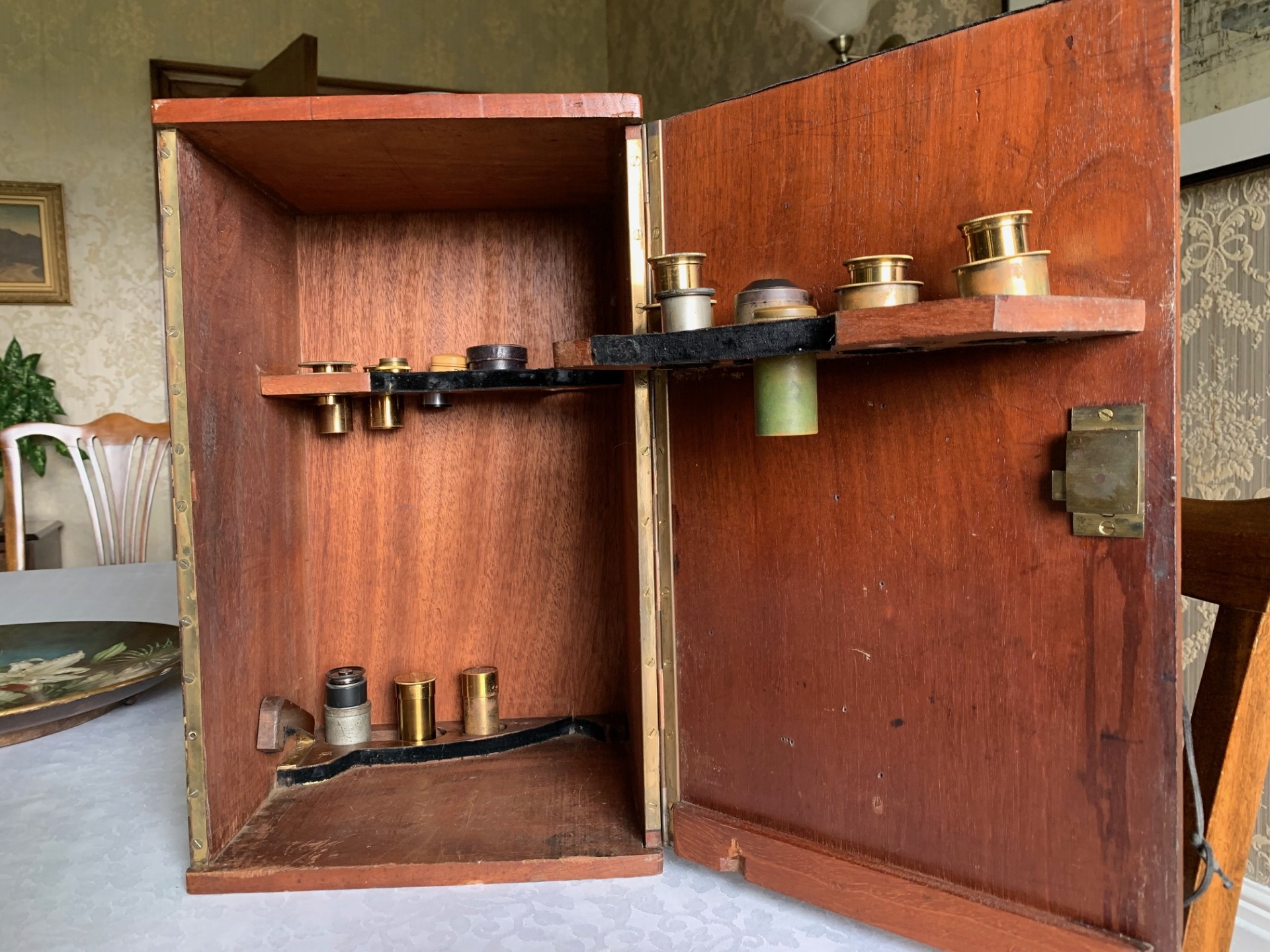
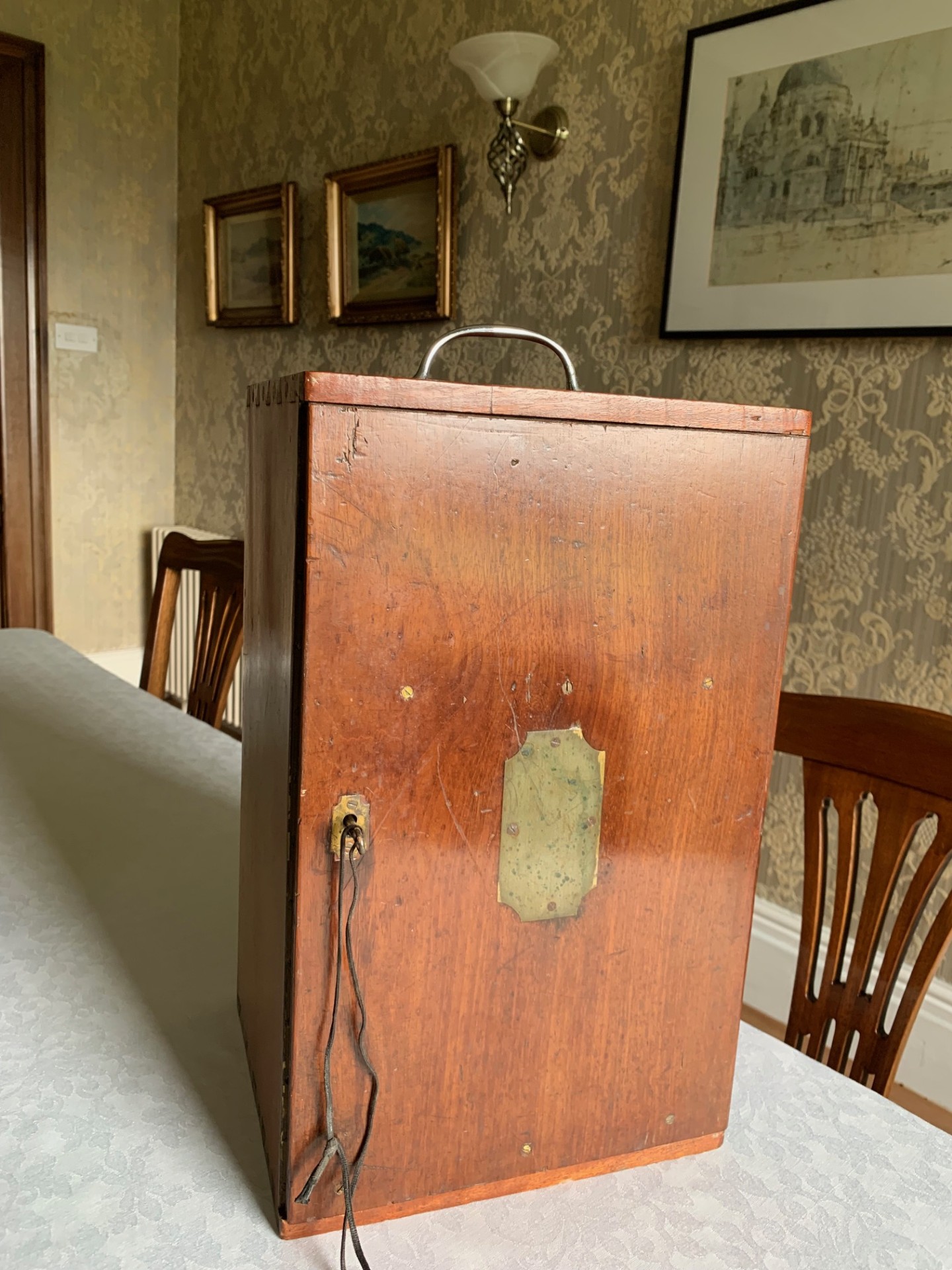
The instrument has been very gently dusted and also lightly lubricated with non-hardening grease where appropriate, so that the controls operate smoothly. This example displays exceptionally well having a substantial presence along with its quirky short-optical-tube look and some lovely lacquered brass-work with rich gold and copper tones which catch the light beautifully. This antique microscope is very much a usable proposition and it will also make a stunning antique display piece as is, perhaps in a library or home office type of setting, especially when set up with an appropriate antique slide. There’s also a case with this instrument with internal lens racking and working lock & key which is always nice to have.
Owing to the heavy weight and delicacy of this antique microscope, it will be partially dismantled, carefully wrapped for shipping and dispatched by insured courier upon receipt of cleared funds.
Thanks for looking.
Ask the Dealer
Dealer information
 Arcboutant Scientific
Arcboutant Scientific based in Glasgow Scotland, with an interest in scientific collectables dating back to 1988. Now making available carefully curated fine examples, principally of antique microscopes and associated scientific equipment by quality English and Continental makers, to collectors world-wide.