Antique Stand B Wenham First Class Binocular Brass Microscope by Wheeler circa 1860, Cased
£1,790
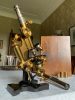
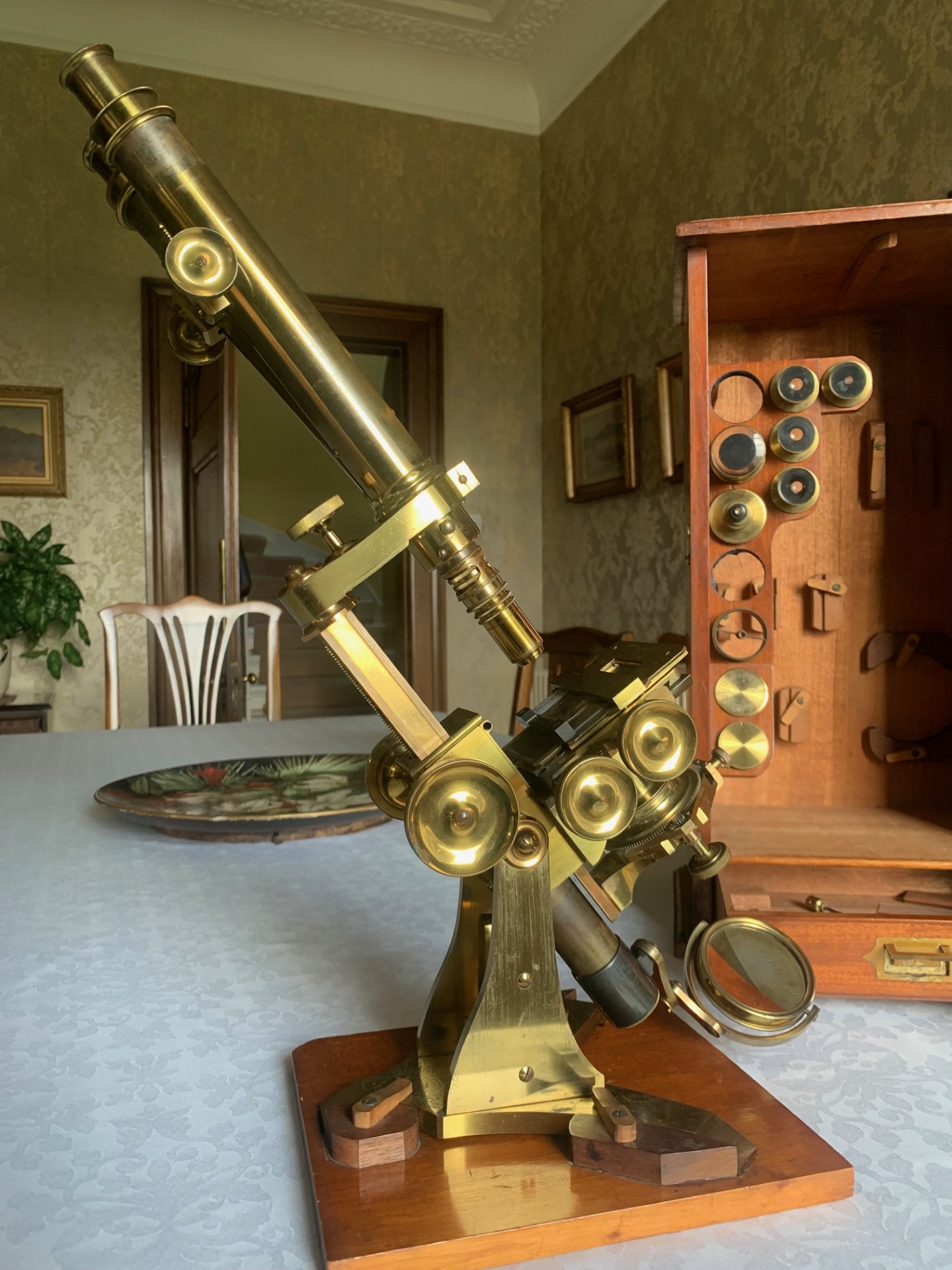
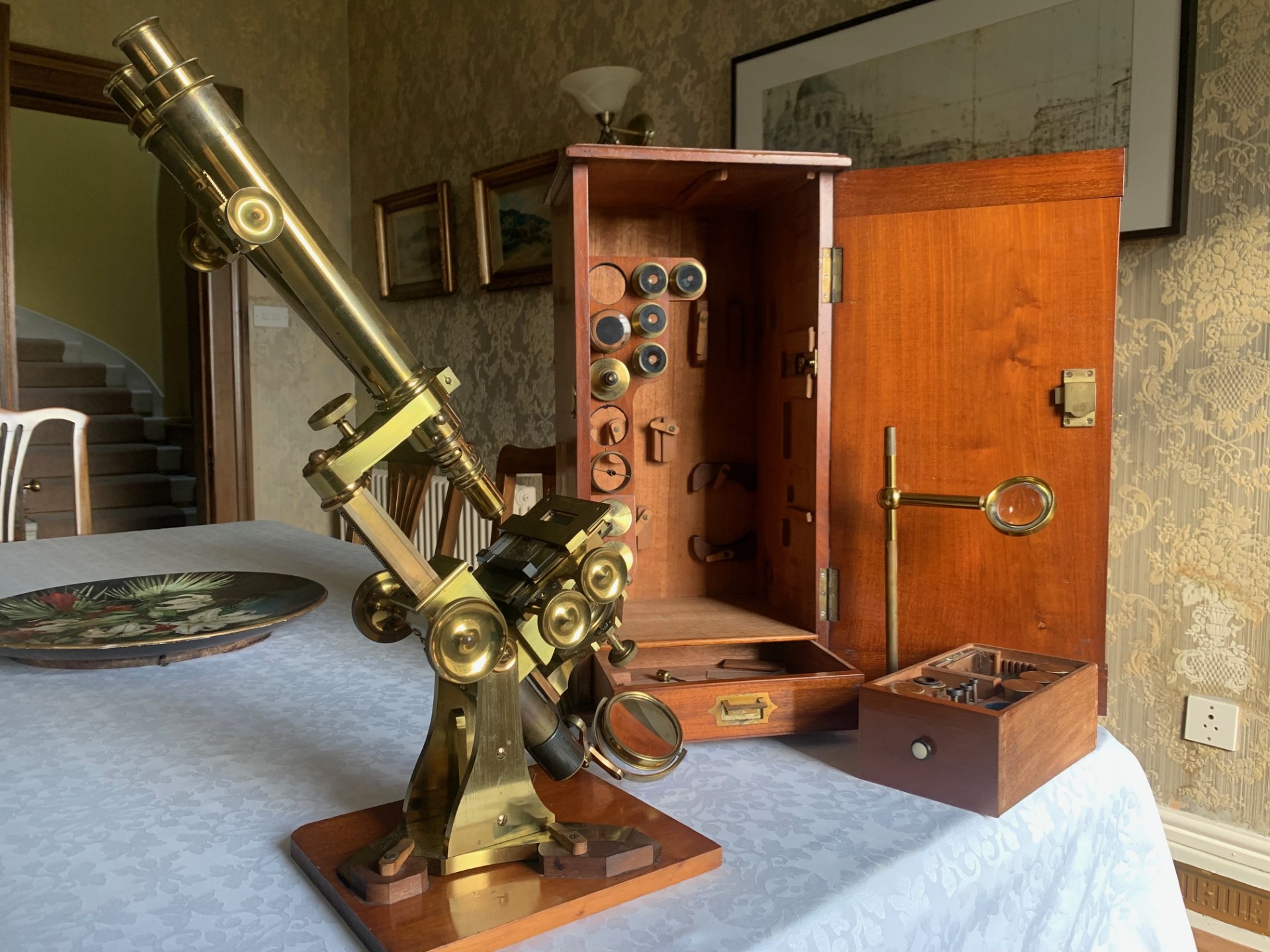
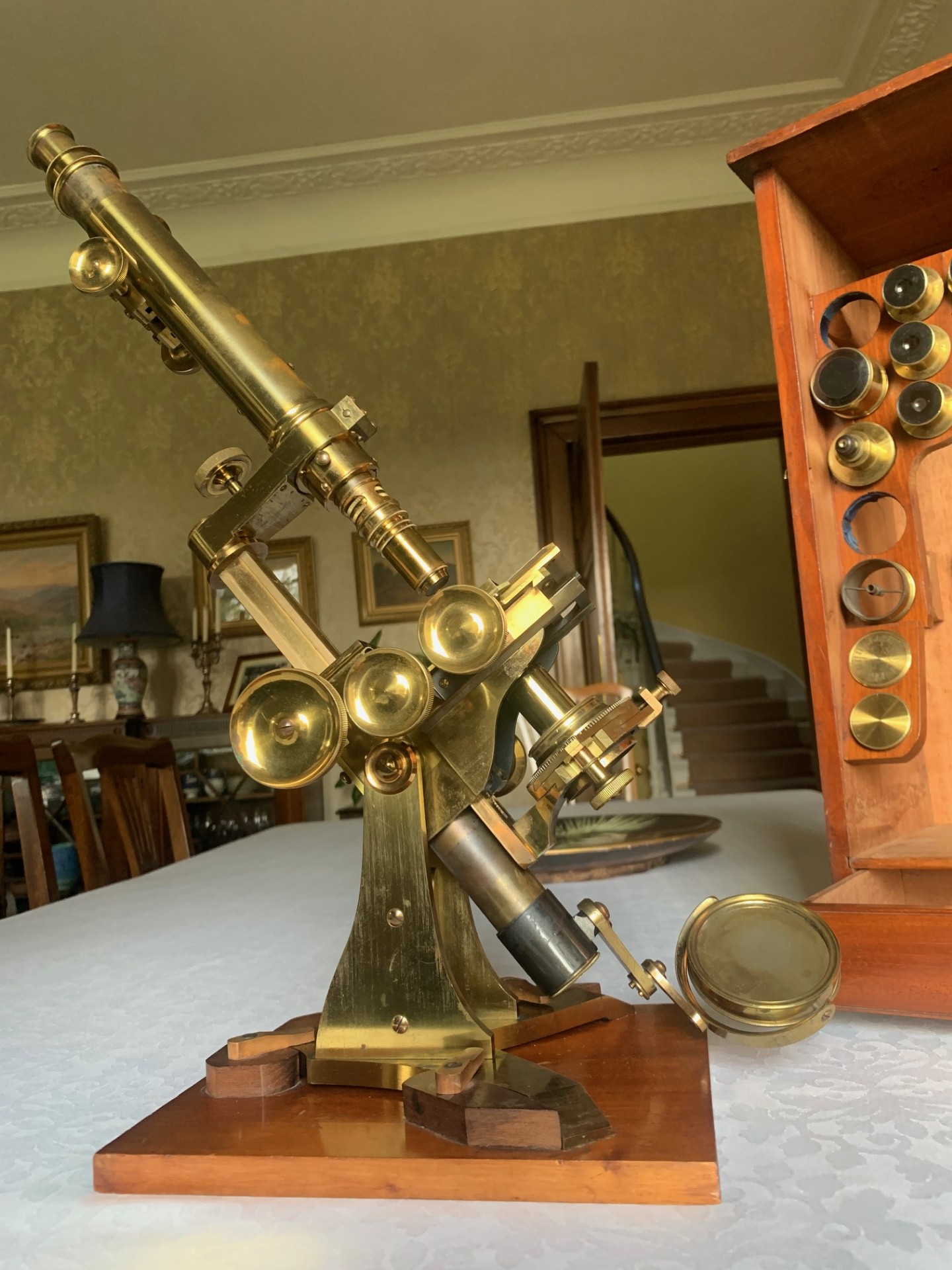
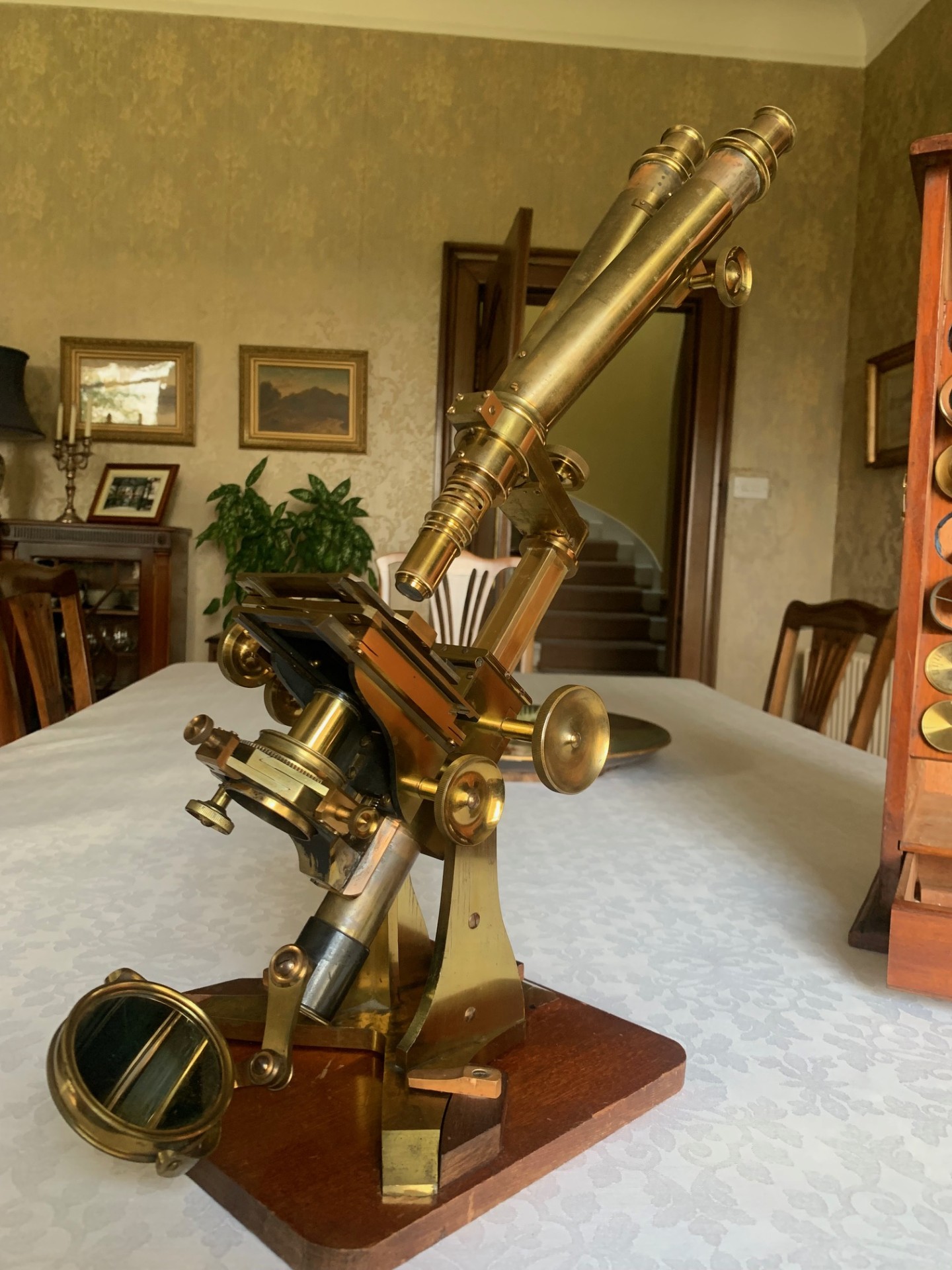
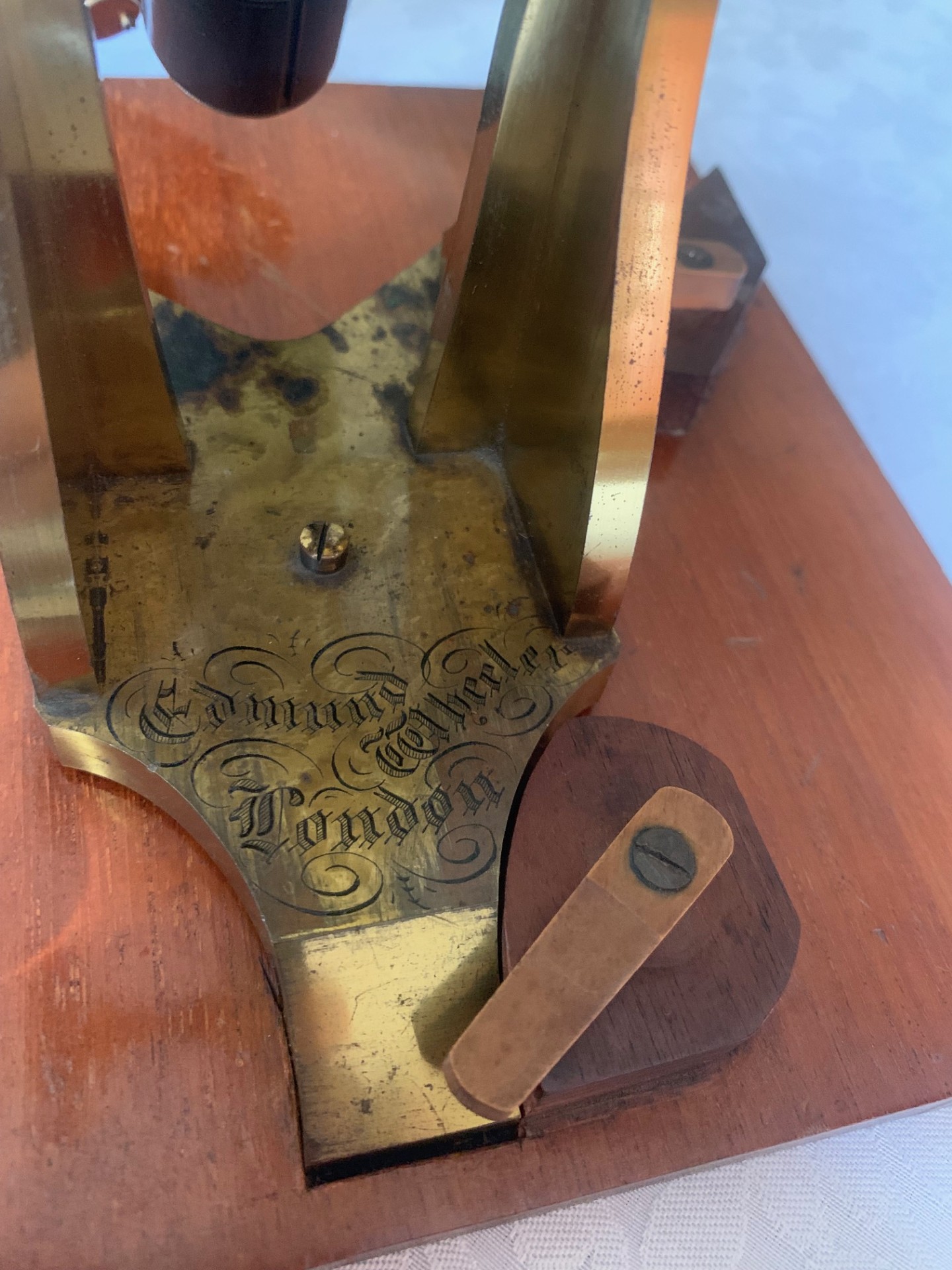
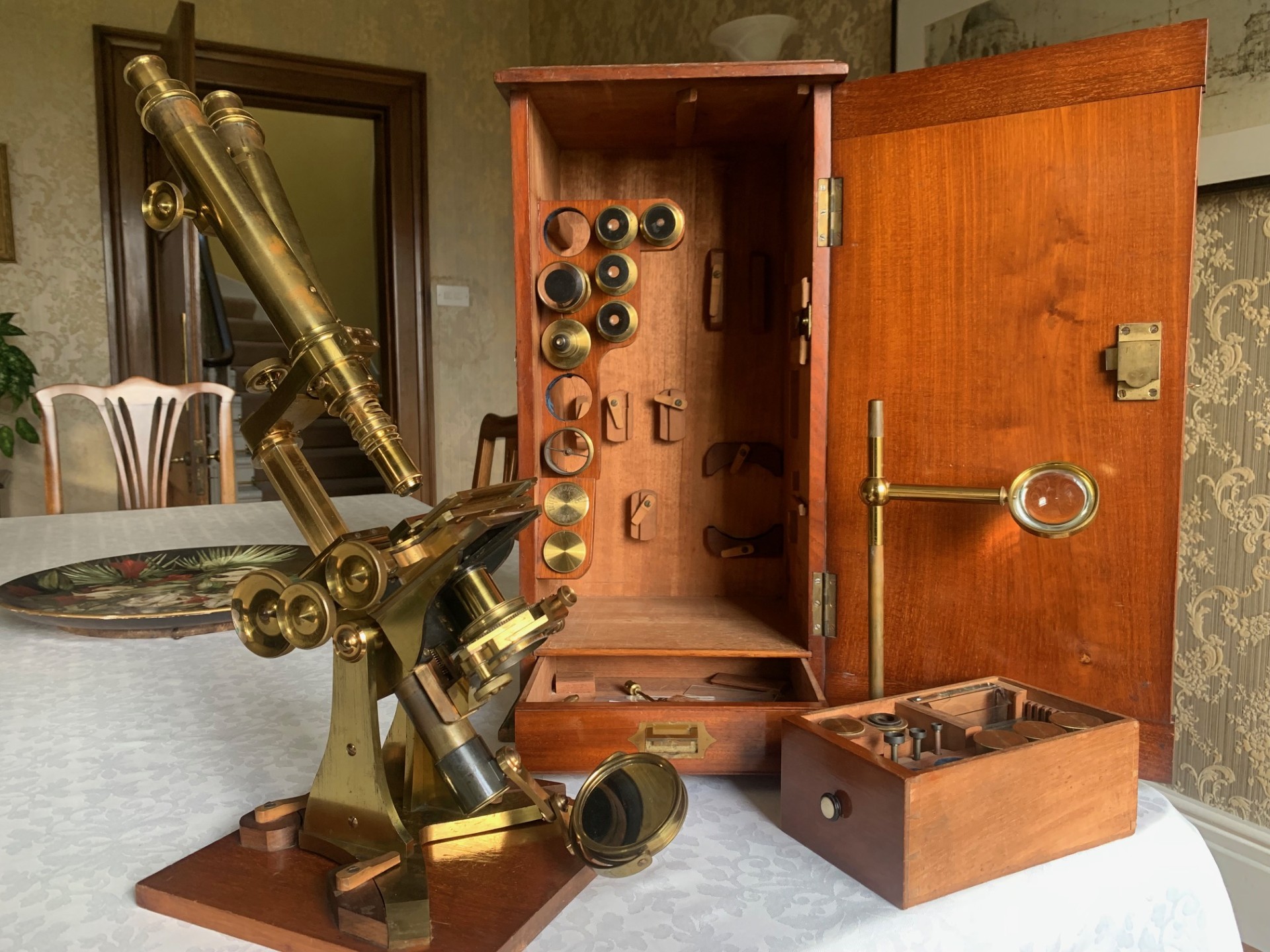
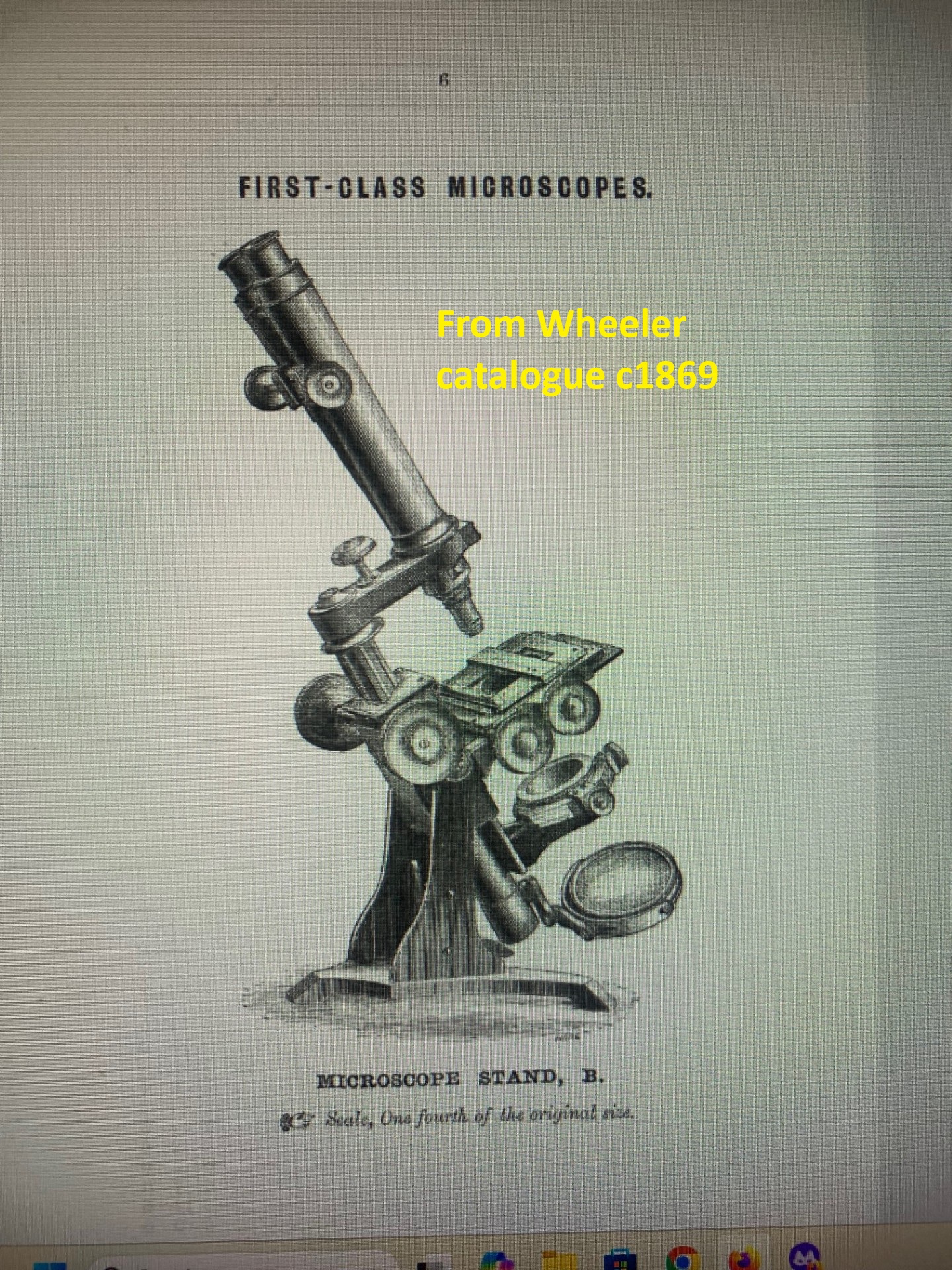
Lovely antique mid-Victorian period example of a good size Wenham binocular brass bar-limb microscope by quality London makers Edmund Wheeler. This model is the Stand B Best First Compound Microscope and this example comes with some useful accessories and its original fitted case. See image of a Wheeler Stand B from their 1869 catalogue in the listing photo stream.
Circa
1860
Maker
Edmund Wheeler
Country of manufacture
UK and Ireland
Description
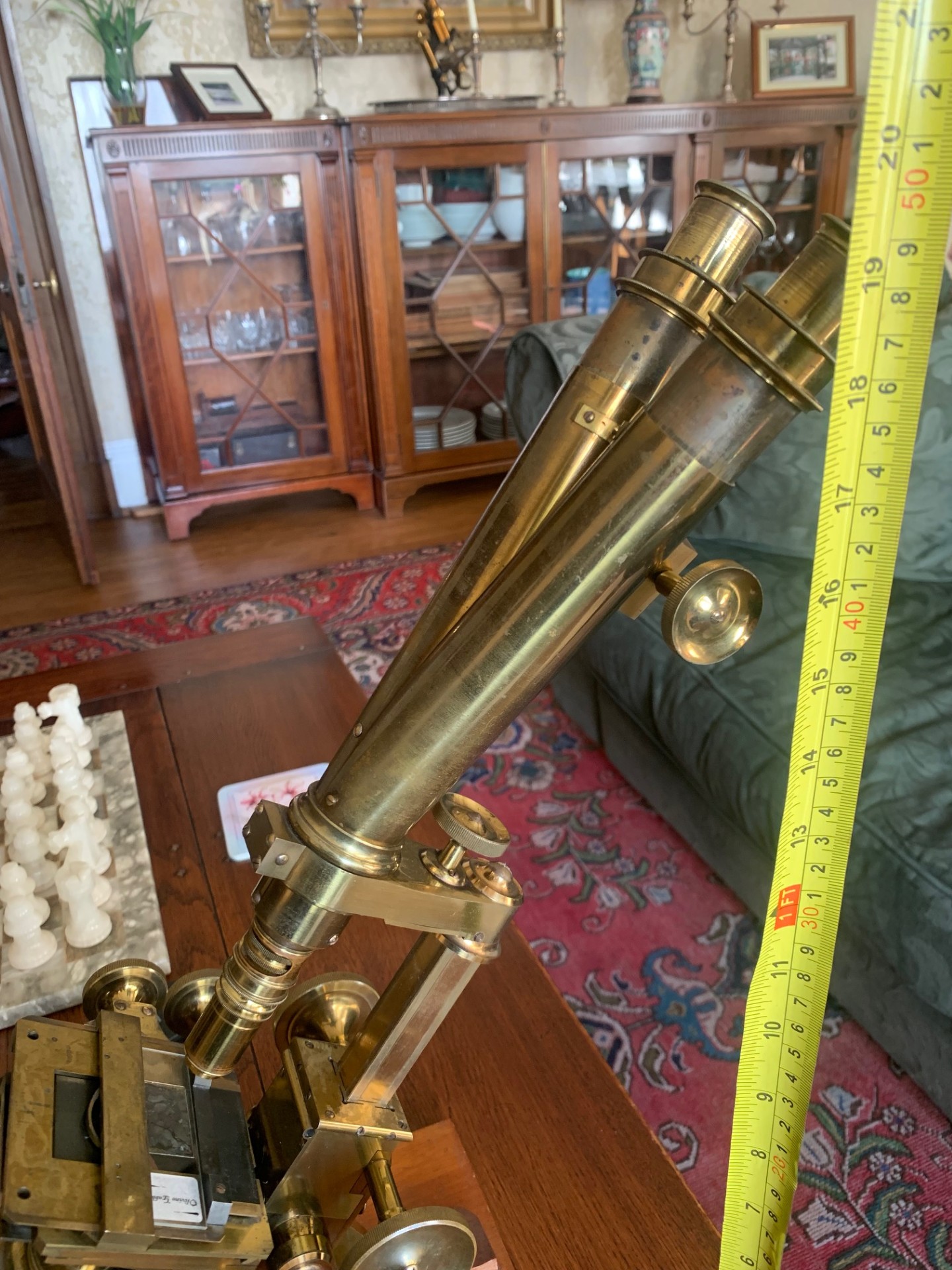
Offered for sale is a really good rare example of an antique binocular brass microscope by English makers Edmund Wheeler of High Holborn, London with the instrument dating to around the 1860 period. The condition is generally extremely good, with only a few age and use appropriate signs of wear to the finish on the instrument and it has just the right time worn look to its lacquered brass-work for a 166 year old antique microscope. Being a good size at around 19 to 20 inches high in working configuration when extended for use, it’s also a good proposition for display, say on a desk-top or other suitable setting such as a home office, especially when set up with an antique slide. It’s also perfectly usable, producing some nice bright images at low and medium magnification with its current set of optics and with the wooden base plate fitted it can also be used or displayed on a polished surface.
Background to Edmund Wheeler, London – source Microscope Museum
Although best known for his high-quality microscope slides, Edmund Wheeler generally described himself as being a science teacher. Coincident with his lecturing, Wheeler initiated a business of producing microscopes, slides, and other optical equipment and supplies. In Wheeler’s 1880 8th List of Microscopic Objects he claimed, “twenty-five years experience in the manufacture of microscopes and microscopic objectives, aided by his son, who occupied for many years an important position in the firm Smith & Beck”. That would give a starting date for his business of 1855. Wheeler had developed a serious business in optical instruments and supplies by 1863, in London, and an advertisement issued that year claimed that he had 10,000 prepared microscope slides in stock, along with various types of microscopes, objective lenses, telescopes, and binoculars. Wheeler’s 1869 microscope catalogue illustrated four “first class” and one “educational” stand, and described a dissecting stand, accessories, and a variety of implements. Wheeler claimed that his microscopes undercut others and that his educational model was the best ever produced at the price. Based on numerous historical documents, Wheeler and his assistants constructed the optical components of their microscopes and telescopes.
The main technical details of this fine Victorian binocular bar-limb microscope, are as per the following:
1) Large Y-shaped foot construction in lacquered brass and twin uprights with bolsters to pivot point, with square section bar-limb form and lacquered brass finishes to the upper parts of the instrument. The microscope is inclinable, holds position well on adjustment and can be manually tightened at the pivot point as may be required.
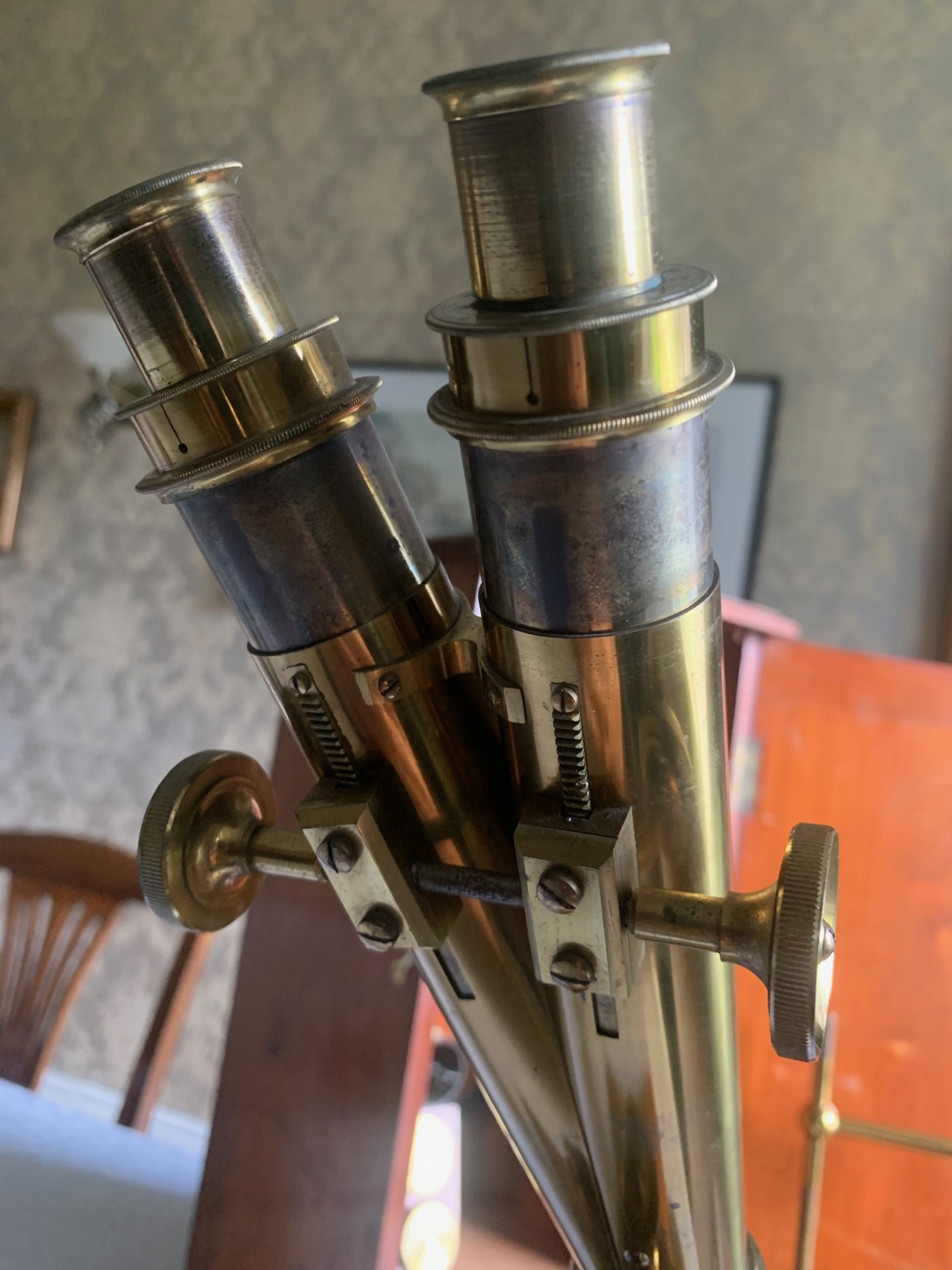
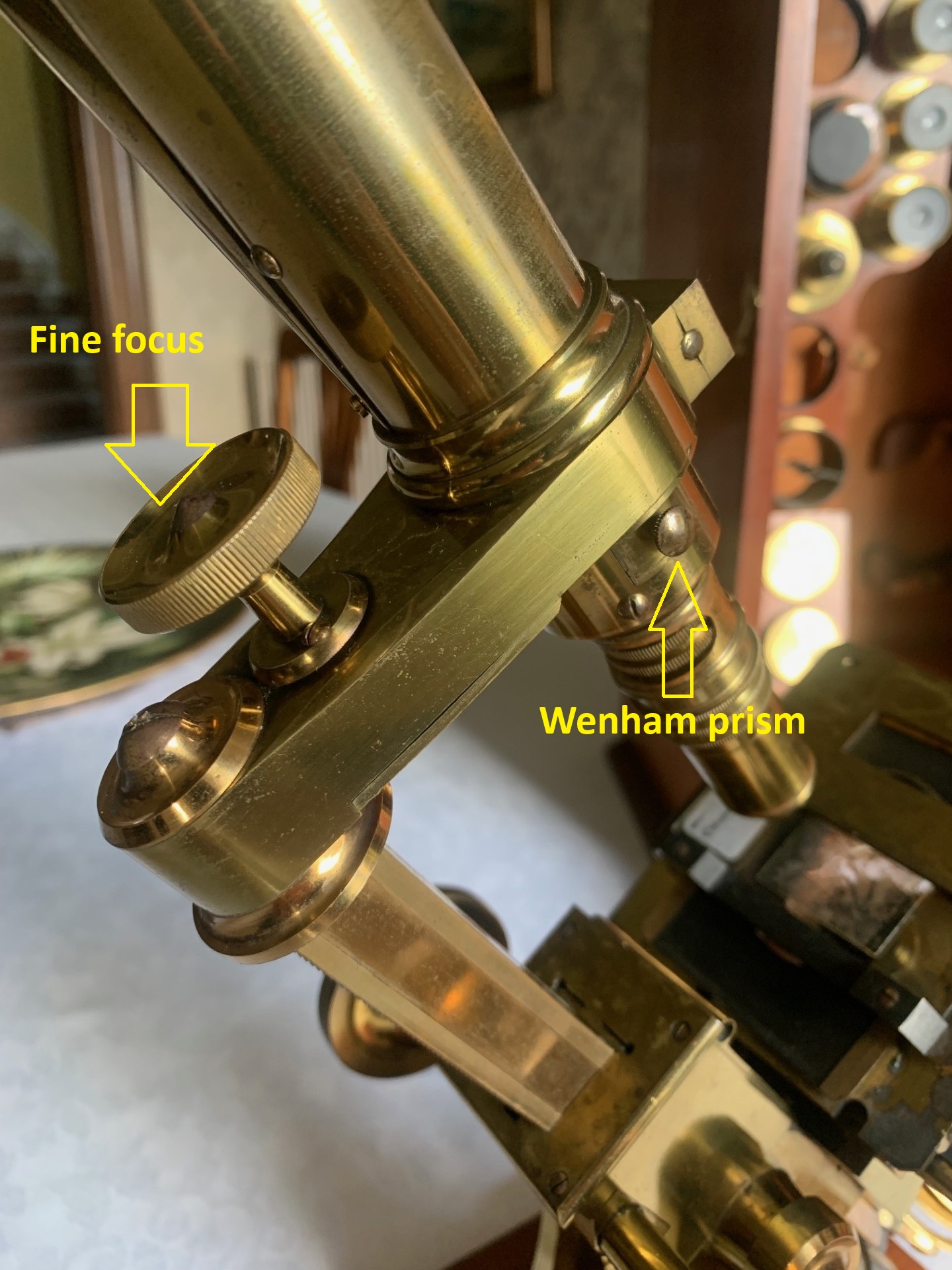
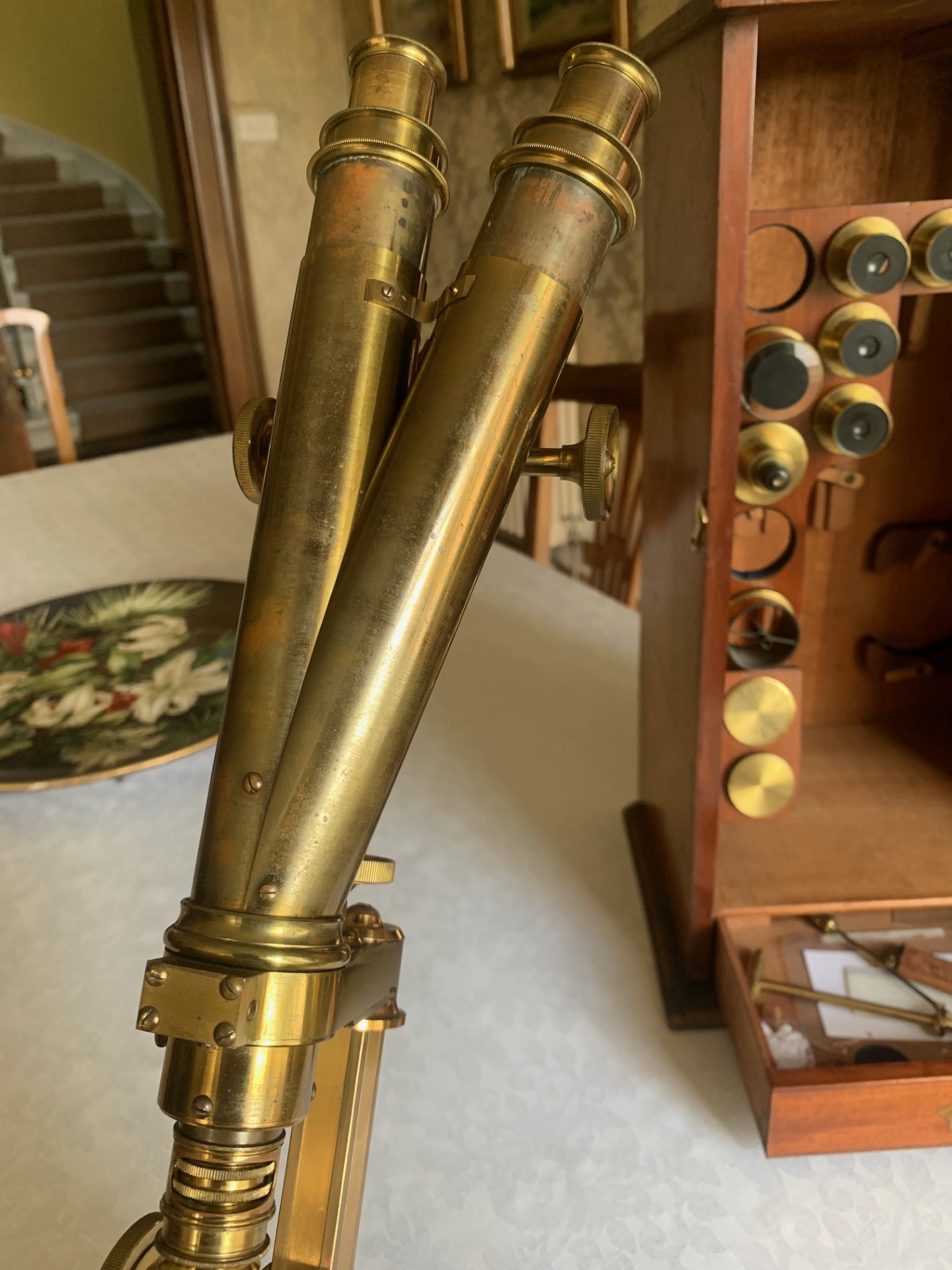
2) A Wenham binocular eyepiece unit with two sets of top-hat eyepieces giving 6x and 8x magnification options, plus higher-power 10x and 15x eyepieces for monocular use in just the right-hand tube. The instrument also has mechanical eyepiece draw-tubes operated by rack & pinion with smooth action. The Wenham prism is present in its carrier in clean condition. Images to both tubes are acceptable provided everything is correctly aligned. Sometimes with the Wenham binocular system, there may be a slightly duller image to the left tube, which is quite normal for antique Wenham optical systems of this type although it can usually be corrected with perfect alignment of mirror, use of appropriate sub-stage condenser and correct positioning of the Wenham prism. Images are collimated and perfectly acceptable at tested magnifications.
3) The instrument’s main coarse focus is controlled by a set of large thumb-wheels with smooth action. The bar-limb design comprises a square section limb focus with brass pinion box. The coarse focus has the older style straight cut rack, which supports dating to around the 1860 period. Travel and focus are both very good with positive feel and good tightness with the optical tube holding in position as it should throughout its working range.
Fine focus is via a single brass thumb-wheel at the rear of the optical tube positioned on the bar, acting on the nose-piece only, that also has a smooth if somewhat stiff action.
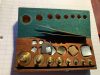
4) There’s various brass objectives lenses by Wheeler as under:
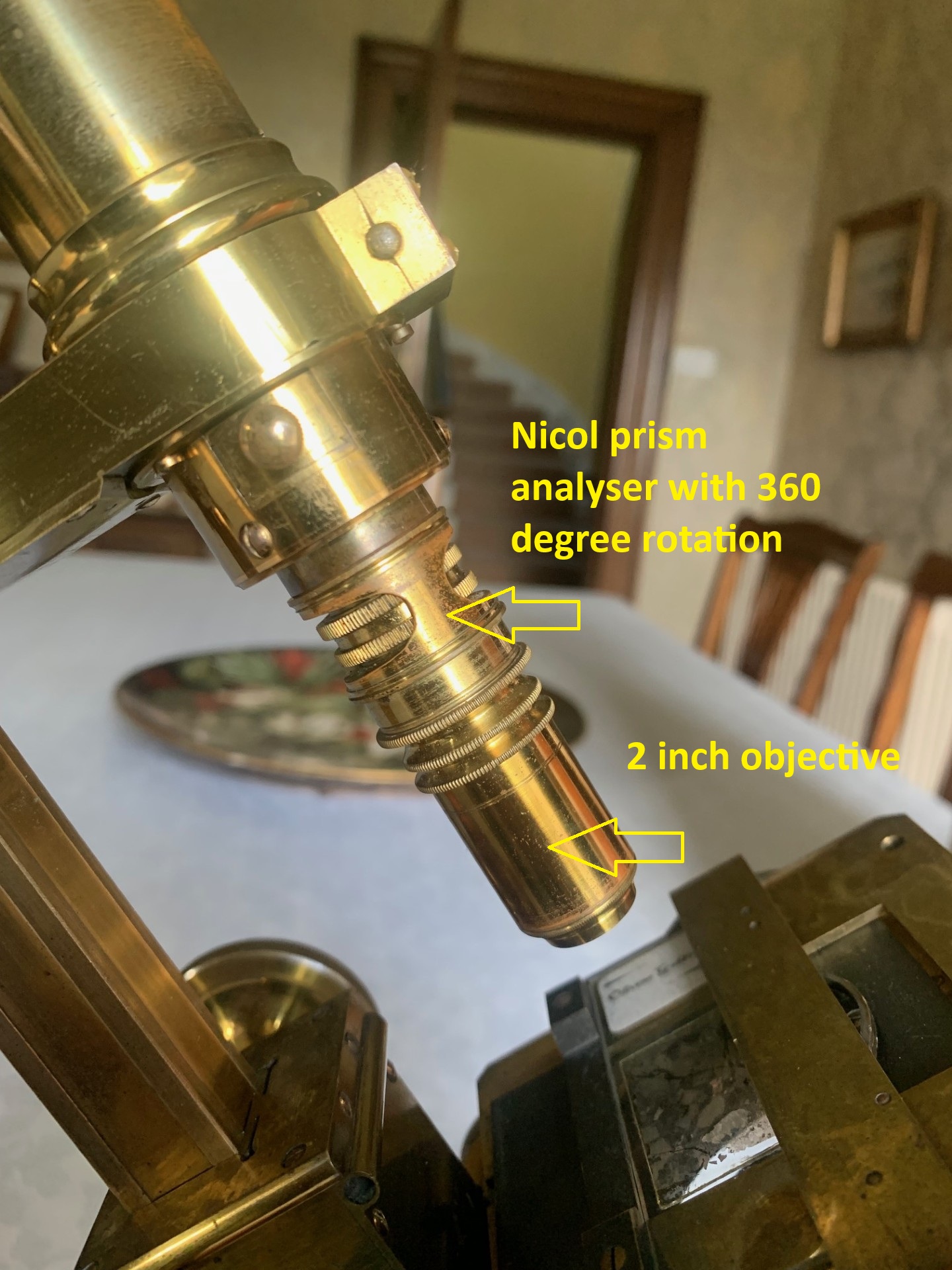
– 2 inches – about 3x magnification
– 1 inch – about 6x magnification
– 1/4 inch – about 25x magnification
(the objectives have correct brass canisters)
The objective lens and eyepieces supplied therefore provide an effective magnification of around 18x to 380x and it’s pleasing to note the RMS fitment, so plenty of other objectives should also fit the instrument.
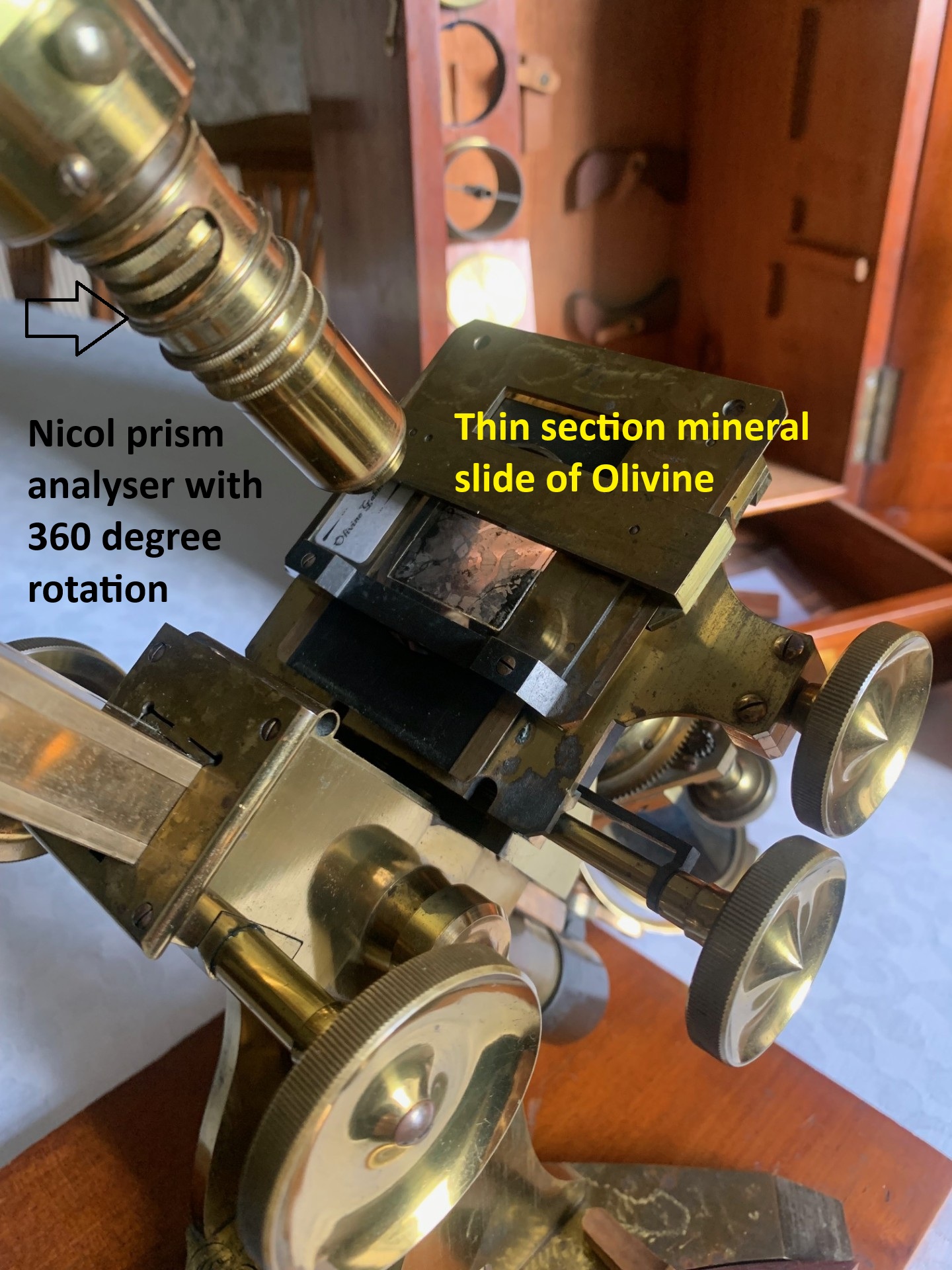
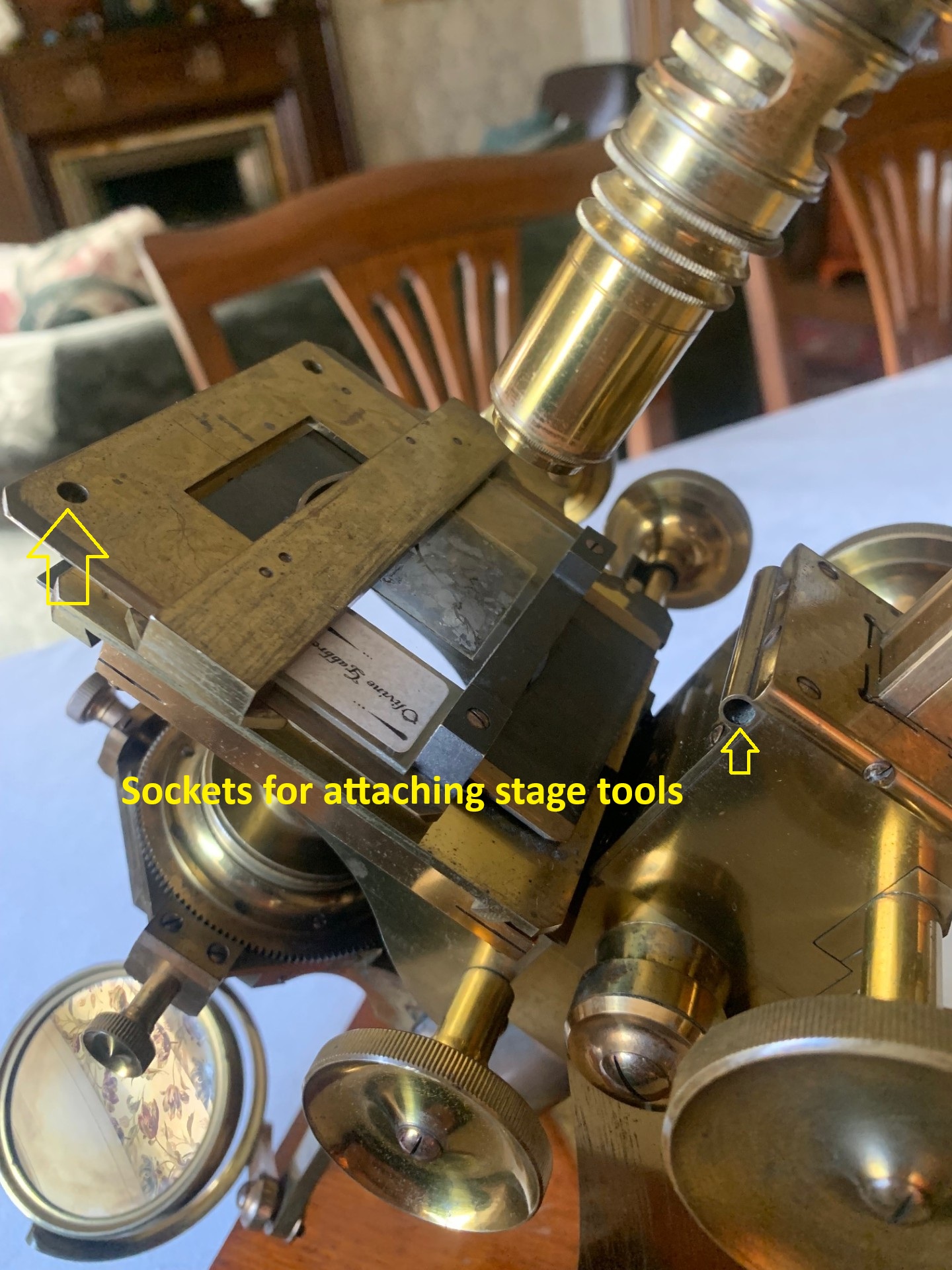
5) The stage is of a square design in brass with some signs of surface patination to the top-plate, which slides in the y-direction and also rotates and will complete a full 360 degree rotation. There’s mechanical adjustment for both x and y-axes, with smooth movement from the adjustment mechanisms. It’s currently fitted with a ledge for holding slides and a slider to retain the slide in place which works well, along with a couple of sockets for stage clips or stage tools.
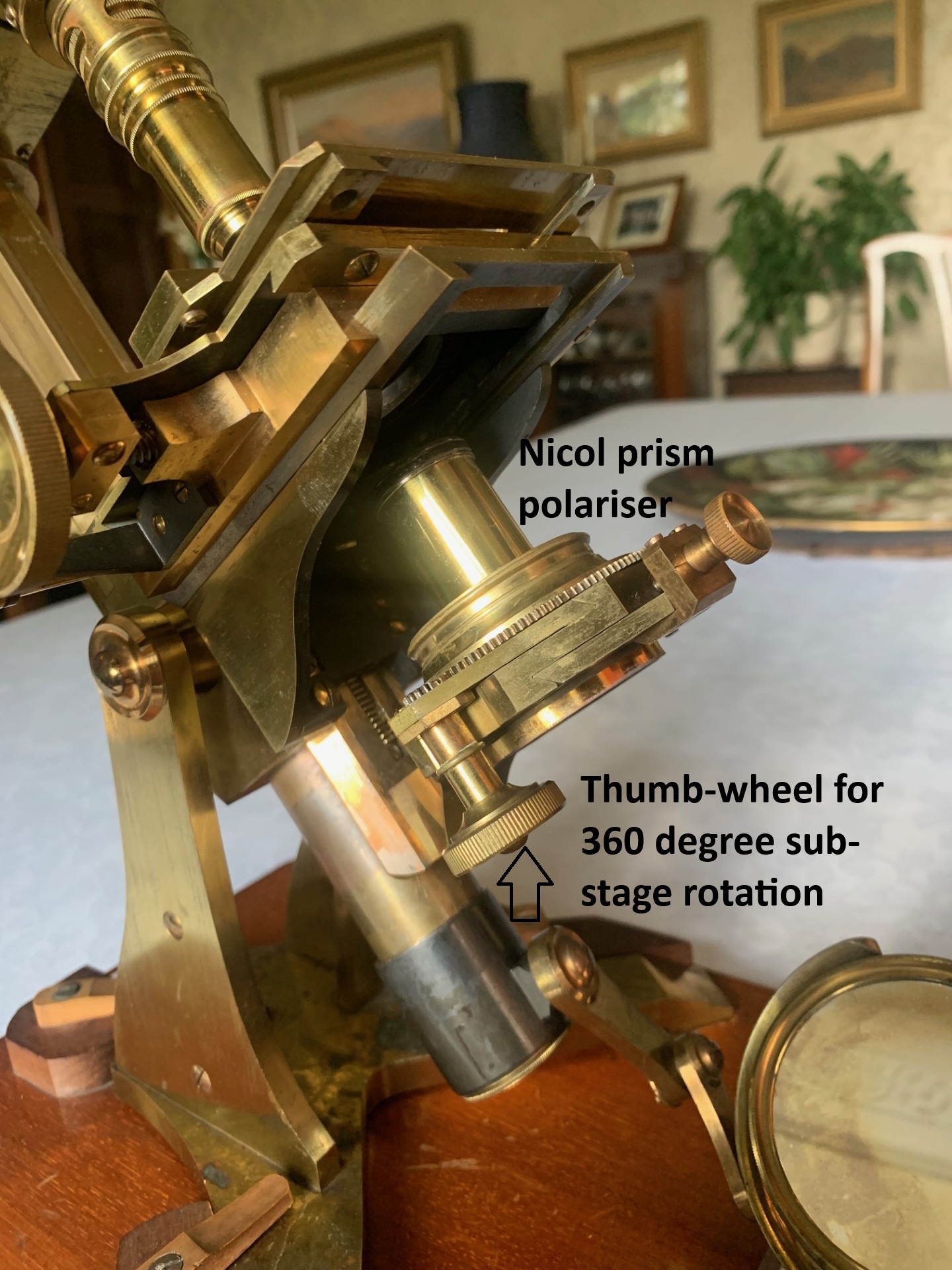
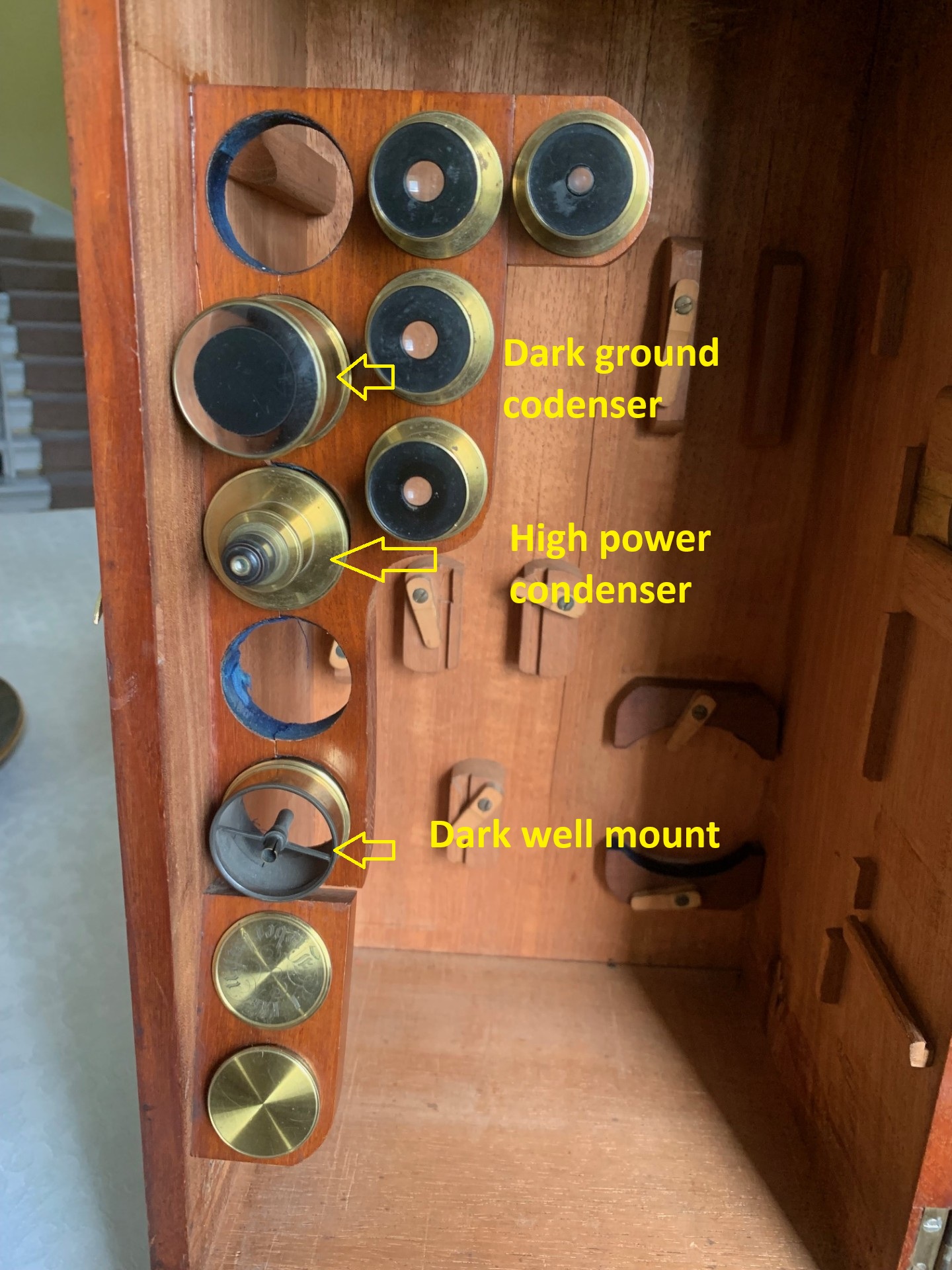
6) Sub-stage there’s a ring mount for fitting sub-stage accessories that can be top or under mounted in to the ring carrier. There’s height adjustment via a rack & pinion system, centering via twin thumb-screws and mechanical rotation for the sub-stage. The sub-stage can be manually removed by siding the dovetail fitment out. The sub-stage accessories supplied are as under:
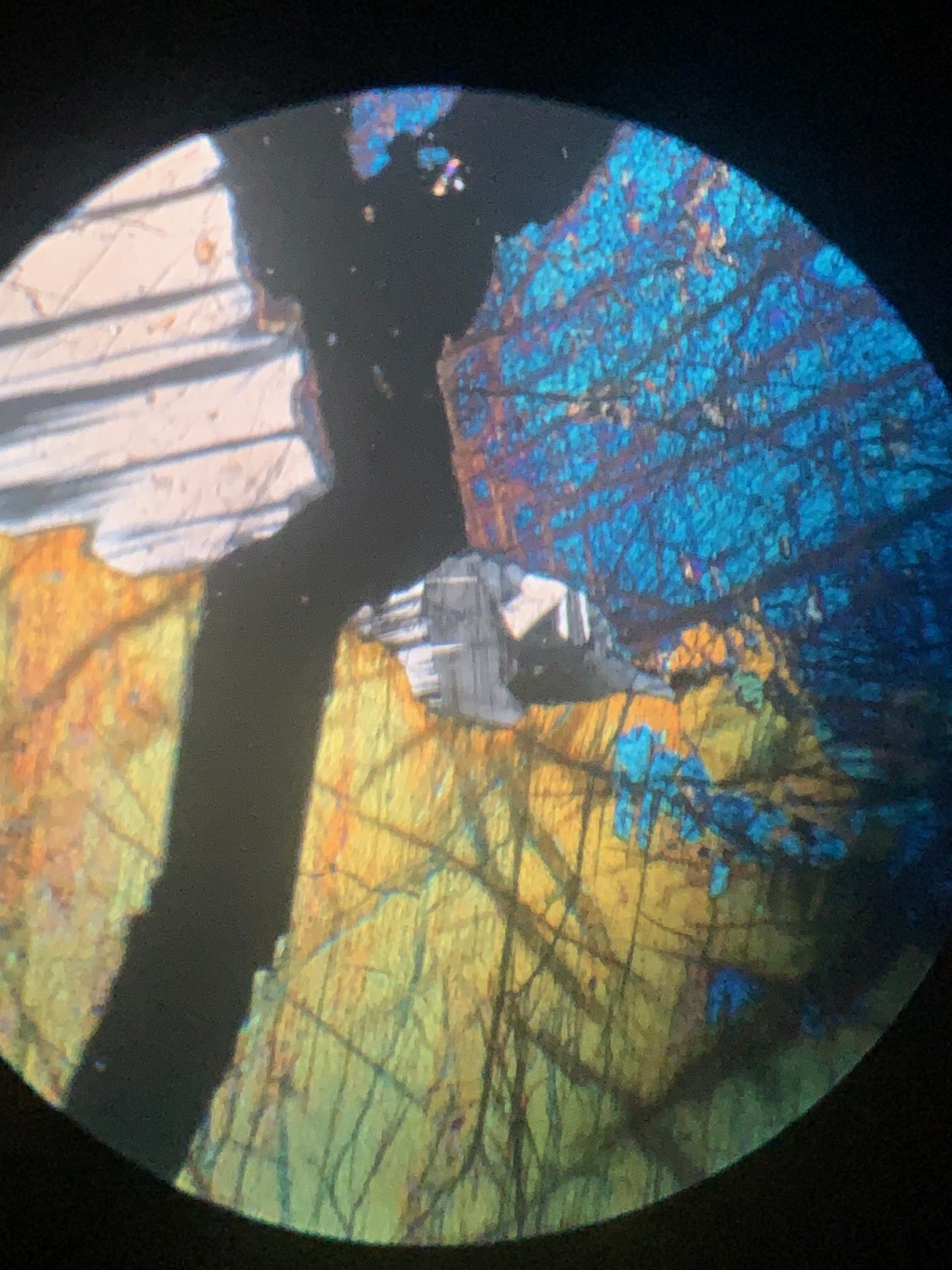
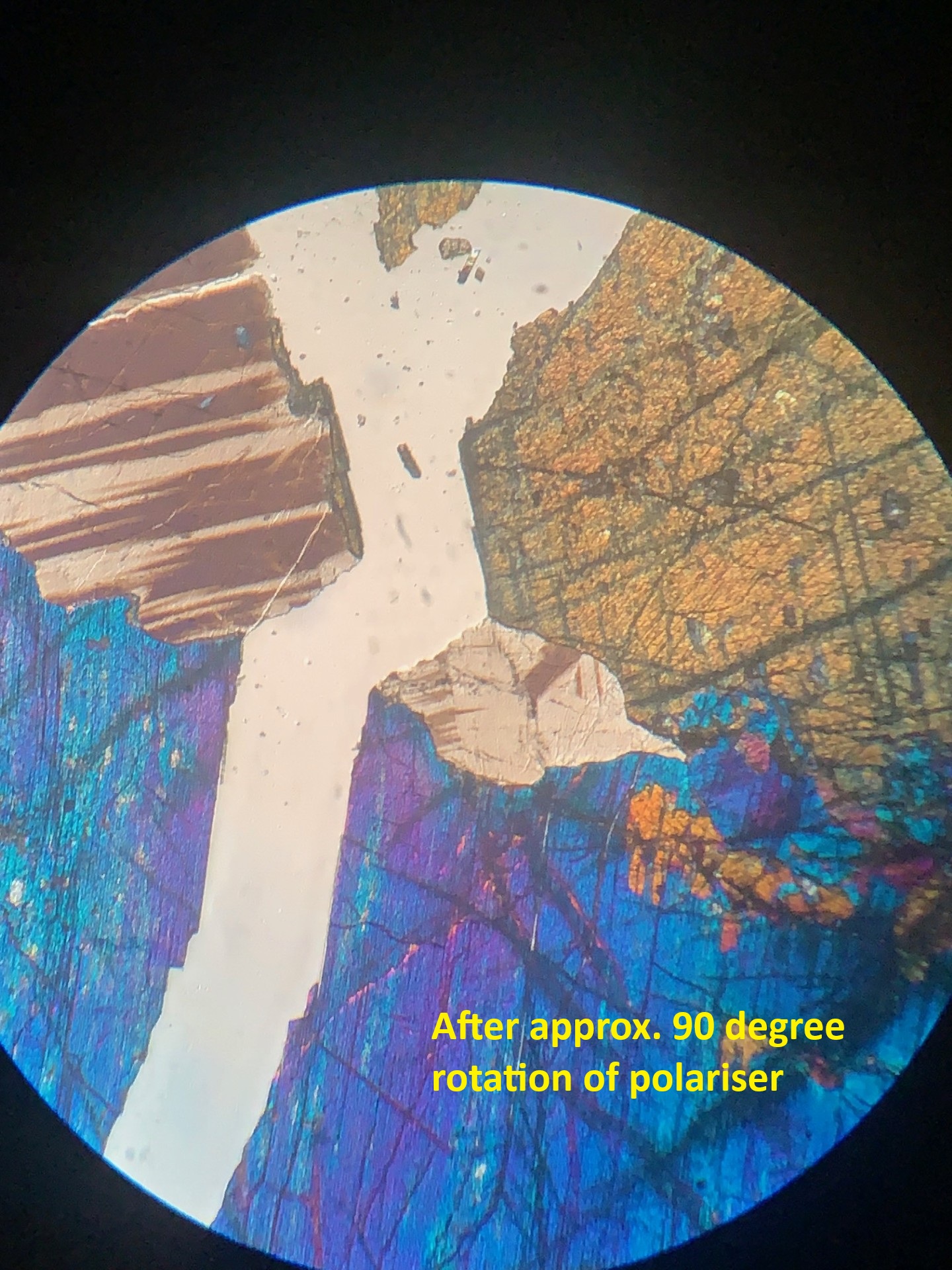
– top-mount nicol prism polariser – fitted in listing photos
– condenser for high-power work
– top-mount dark-ground condenser
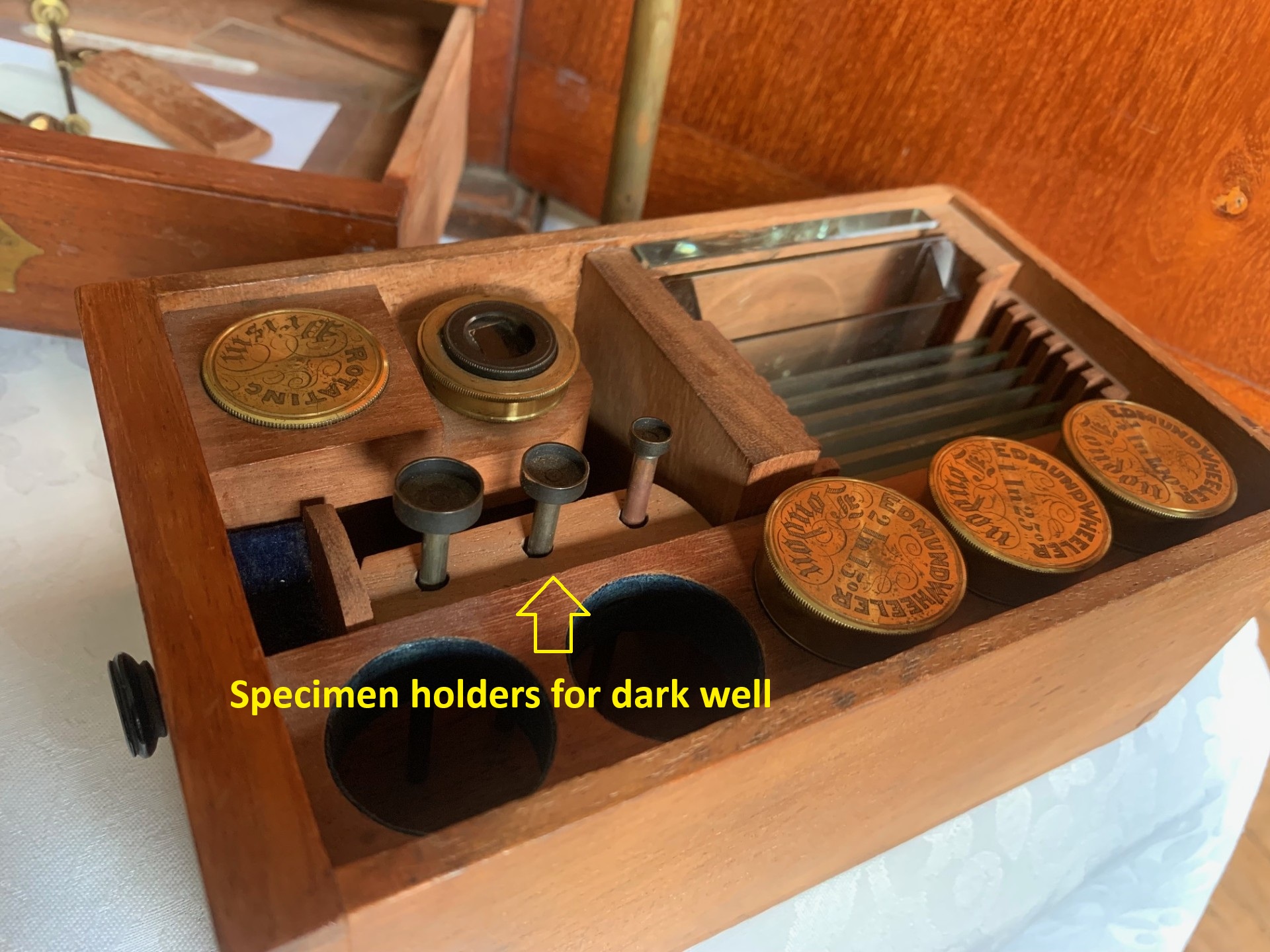
– top-mount dark-well carrier with three specimen holders
7) Lighting is provided by a large plano-concave mirror in a brass carrier that sits in a gimbal mount slider with a double articulated arm fitted to the limb tail-piece, with height, rotation and adjustment sufficient to also allow oblique illumination as may be required. The mirror silvering in very good condition to both sides with good reflectivity.
In summary, this is a top quality example of an antique binocular bar-limb design stand B compound microscope from the Victorian period by a good maker, that’s in very good usable condition for its age. This example may therefore appeal to collectors as well as specialists seeking an imposing quality brass Wenham binocular instrument with the signature double optical tubes for use and/or display, from a good English maker.
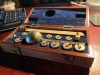
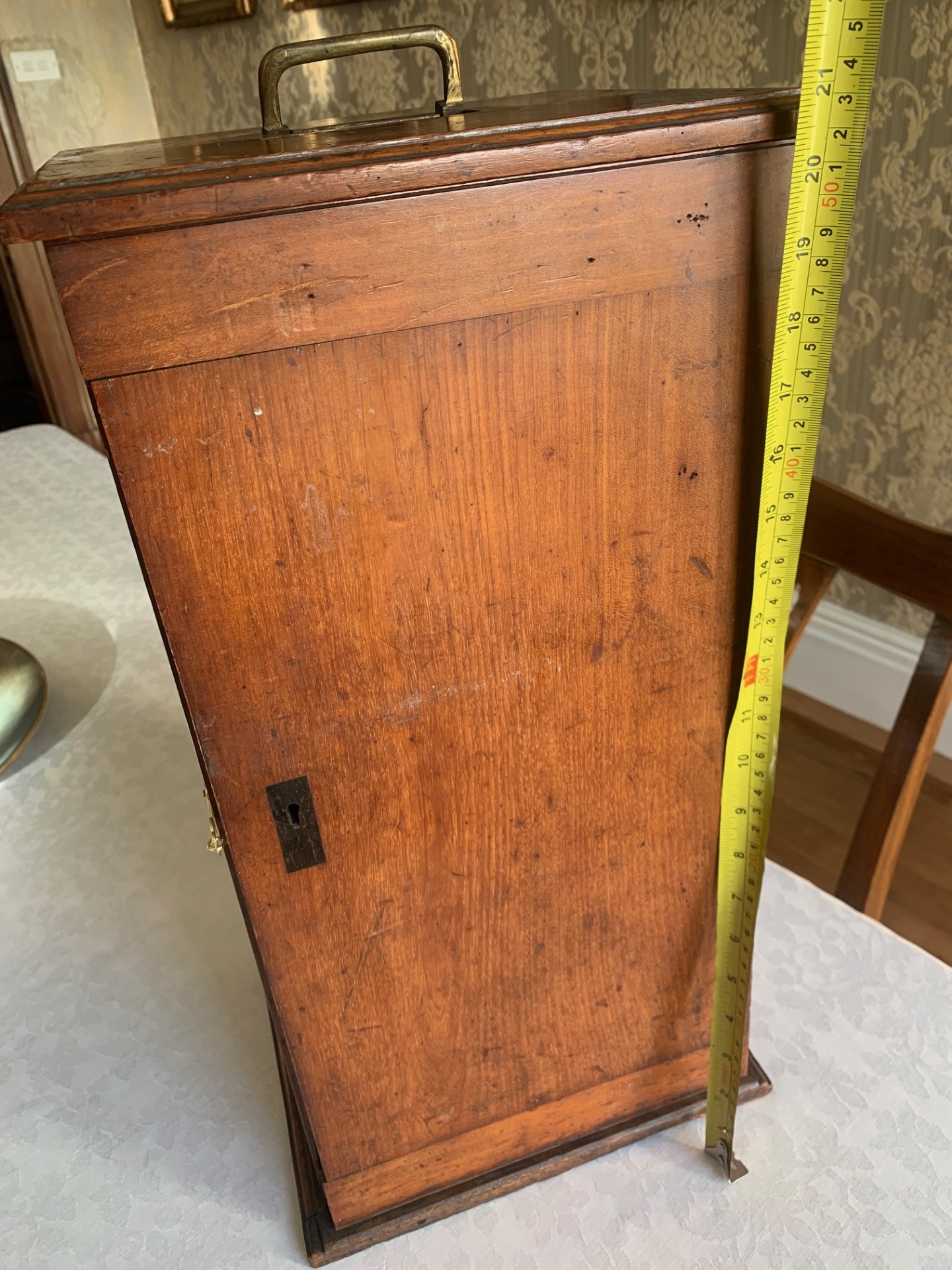
8) The instrument has its original quite large fitted case with brass handle which is 21 inches in height, with internal racking and two drawers, lock but the key is missing so a latch has been fitted.
Accessories:
– Lieberkuhn for 1 inch objective
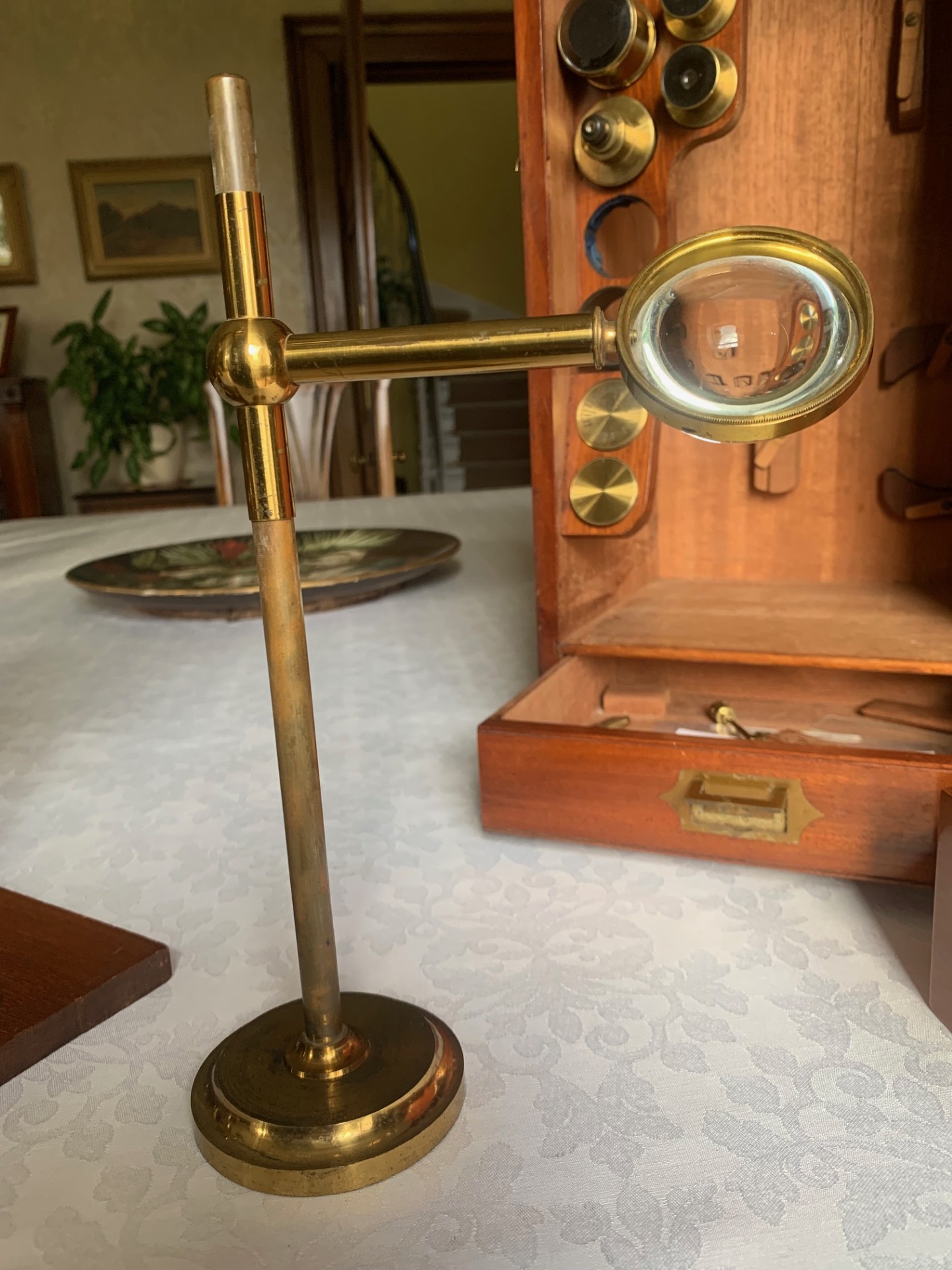
– Vertical illuminator
– nicol prism polariser and nosepiece analyser both with rotation – see images of Olivine under polarised light
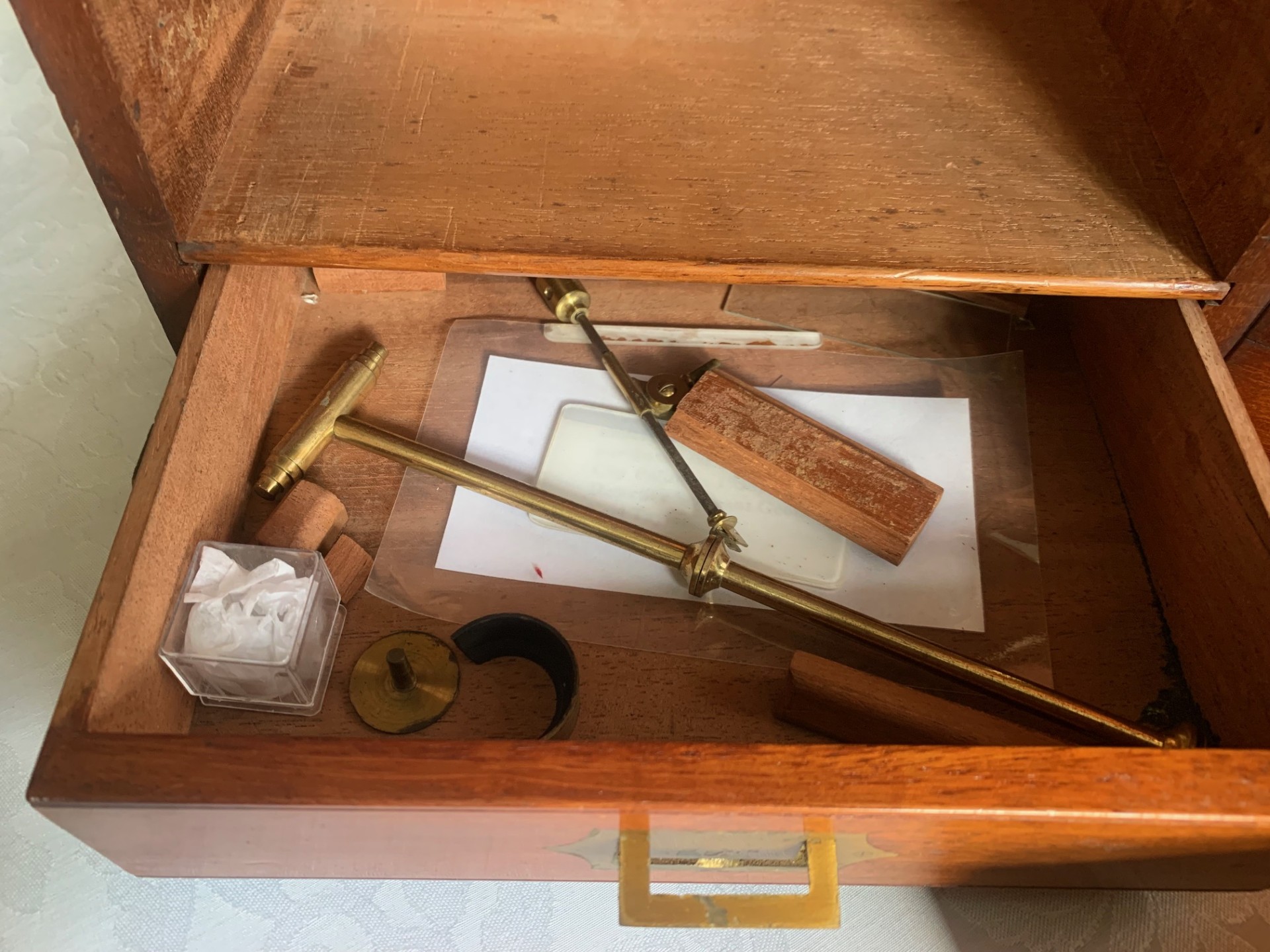
– stage forceps
– Glass trough
– Various blank slides (oversize)
– Slide compressor (glass cracked) and some further slide prep equipment
– additional nicol prism with rotation
For shipping, the instrument and case will be very well packed and dispatched by insured courier upon receipt of cleared funds. In view of the size and weight of instrument and case, it may be necessary to ship in two separate packages for safety.
Thanks for looking.
Ask the Dealer
Dealer information
 Arcboutant Scientific
 based in Glasgow Scotland, with an interest in scientific collectables dating back to 1988. Now making available carefully curated fine examples, principally of antique microscopes and associated scientific equipment by quality English and Continental makers, to collectors world-wide.