

Antique W. Watson & Sons Ltd – Bactil MkIV Brass Microscope – circa 1914, Cased
£475
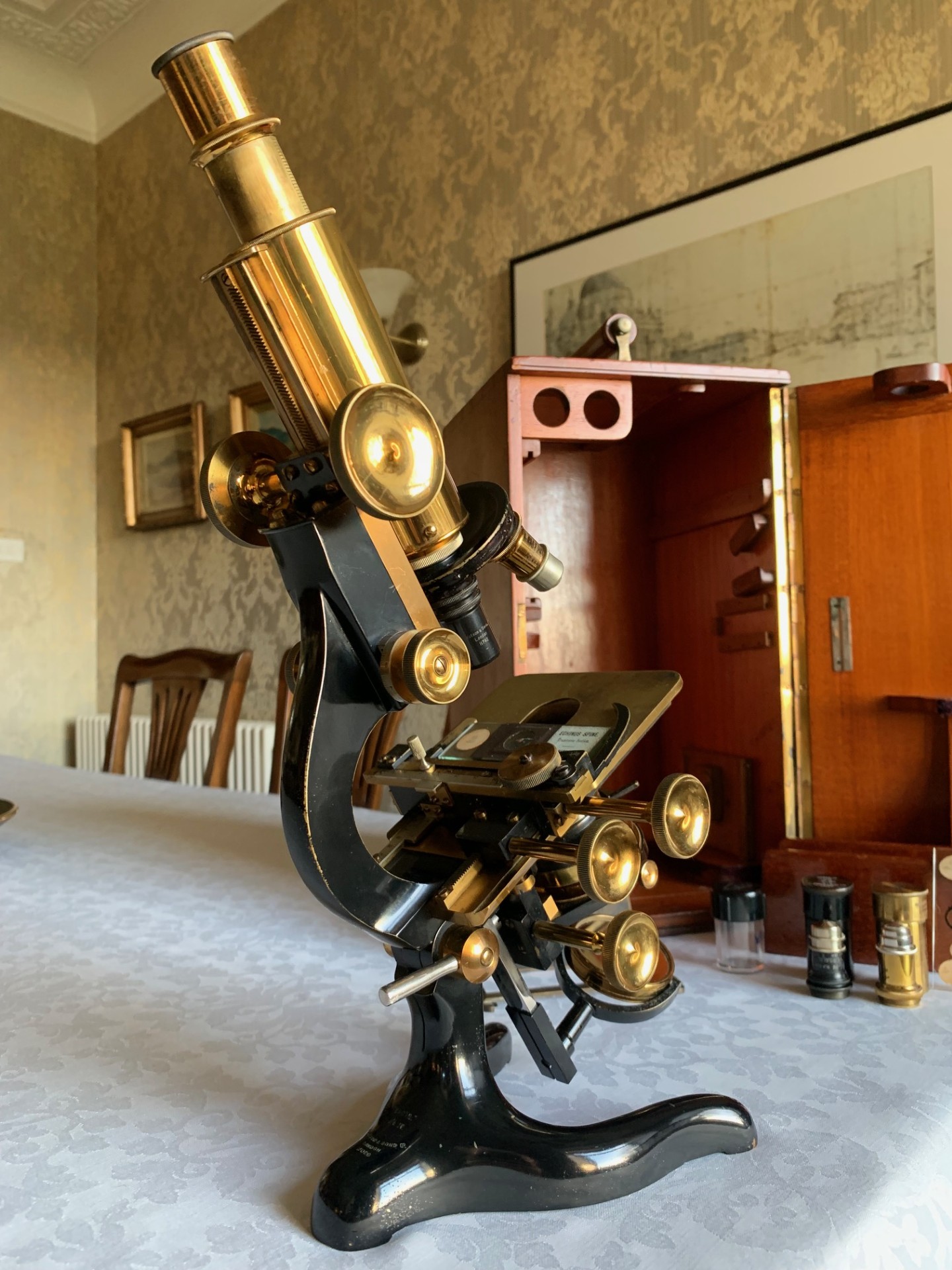
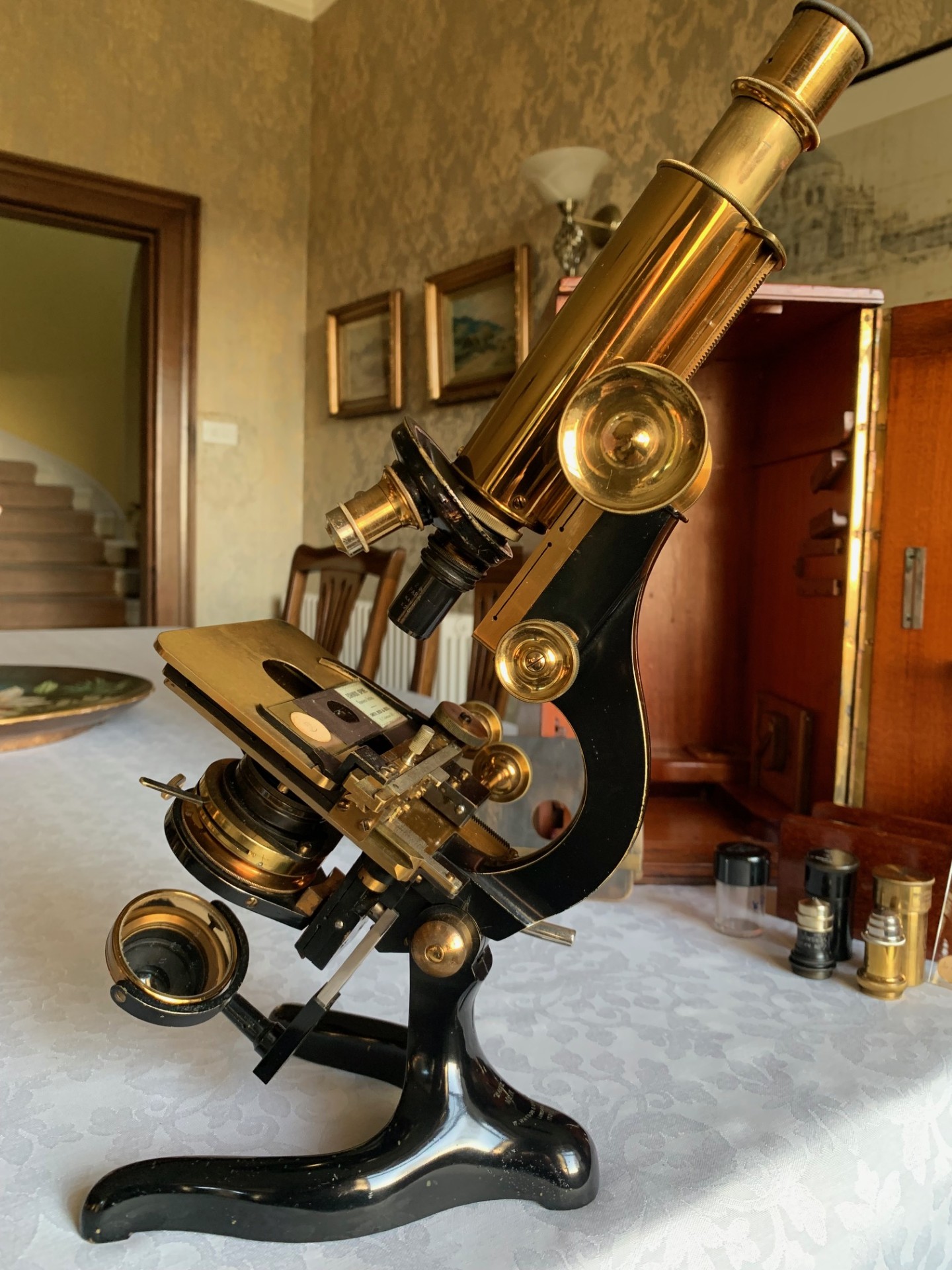
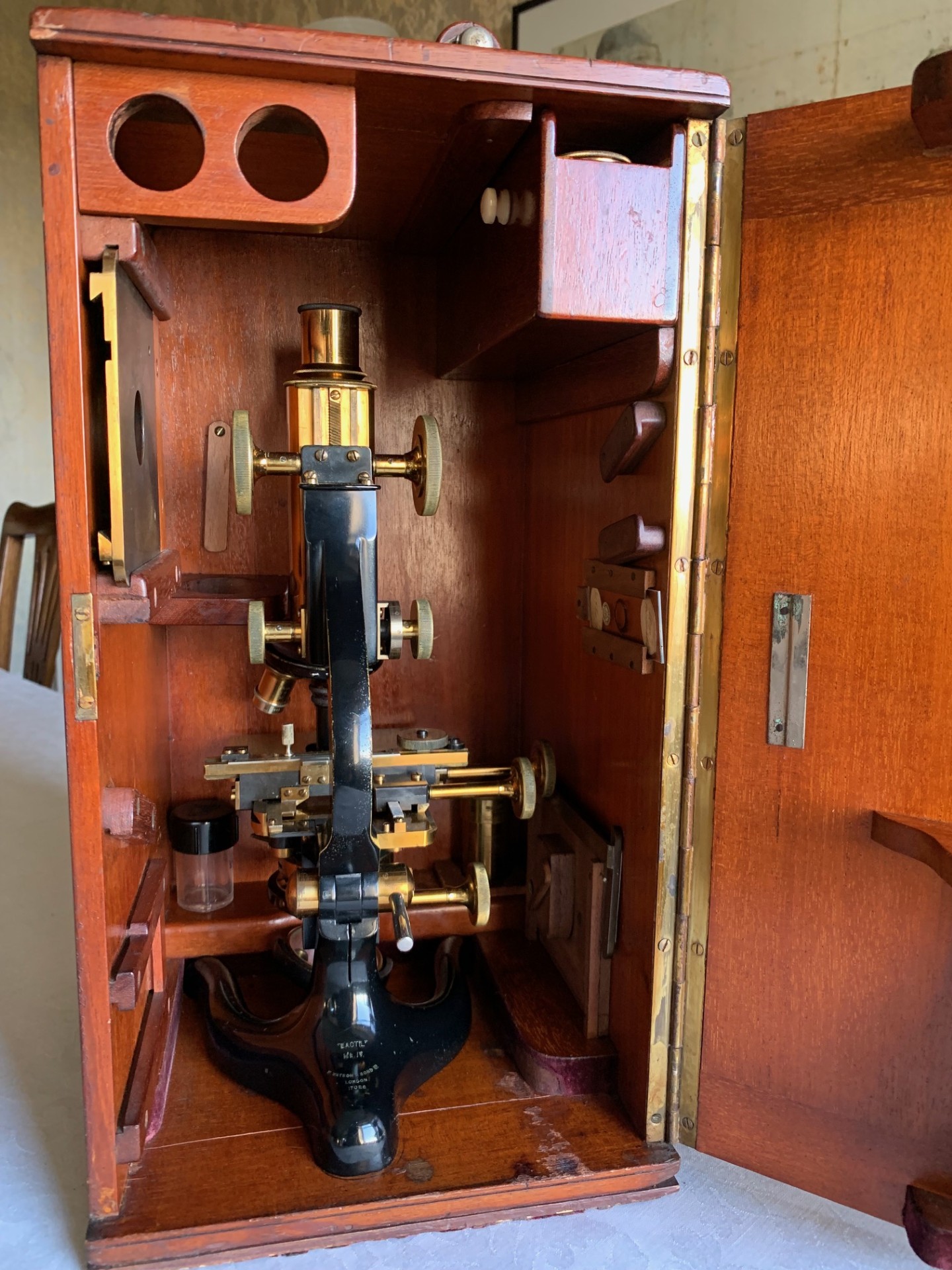
Super example of a very good cosmetic and excellent working condition Watson Bactil MkIV model microscope dating to 1914, so just prior to the outbreak of WWI. This well-specified example is an excellent candidate for a Watson collector/enthusiast or even someone that's new to owning an antique Watson microscope.
Circa
1914
Maker
W. Watson & Sons Ltd
Country of manufacture
UK and Ireland
Description
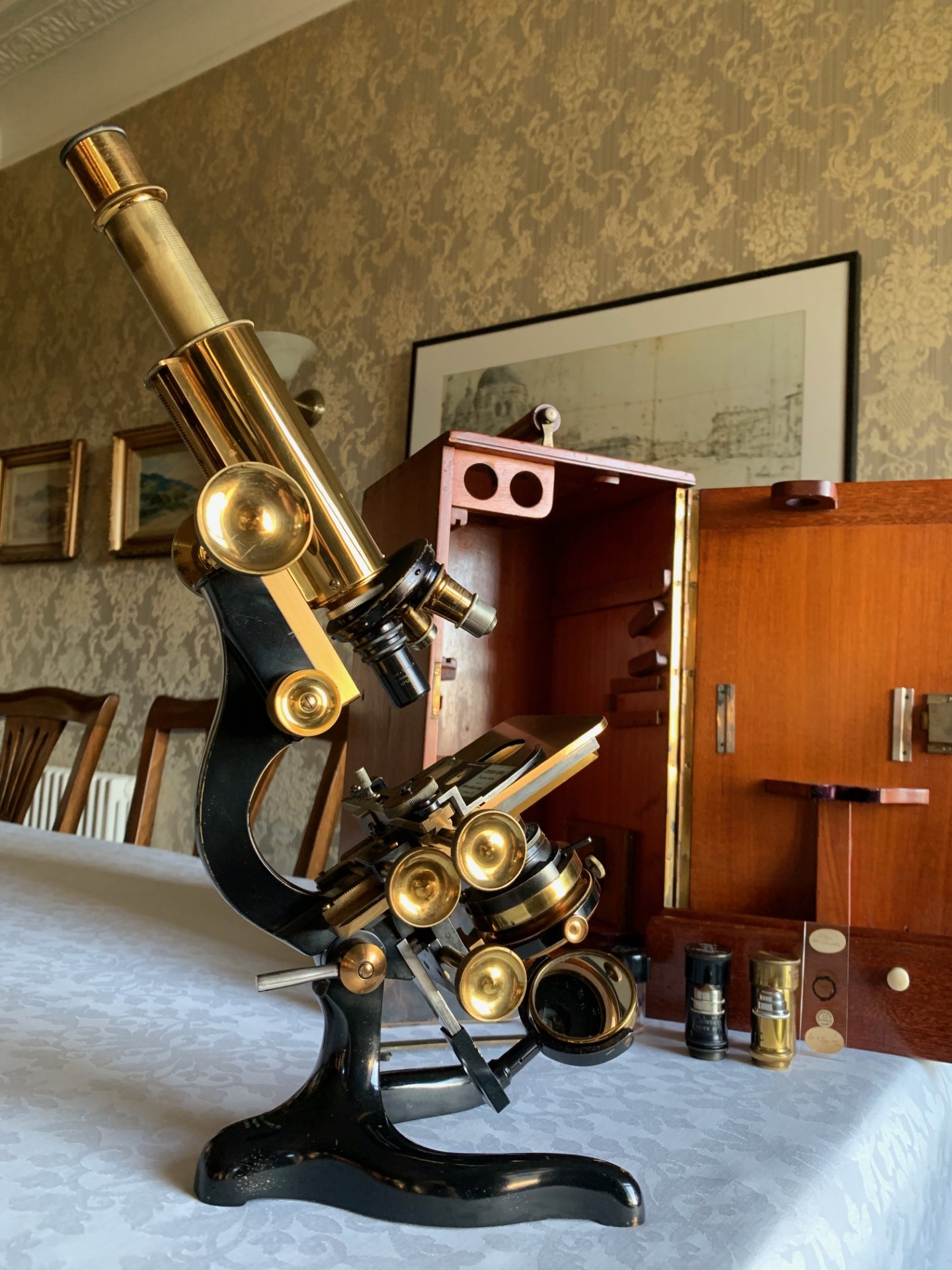
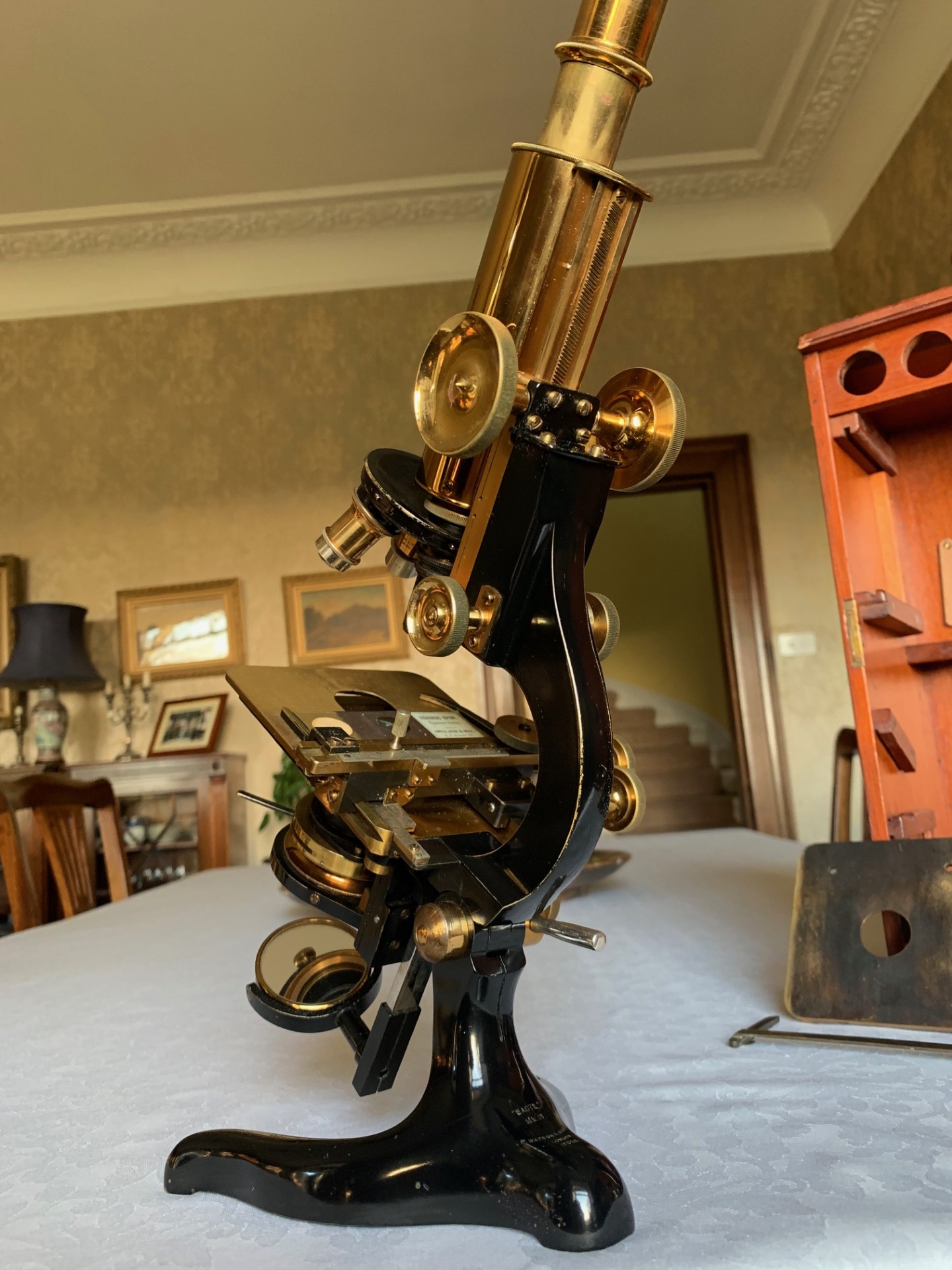
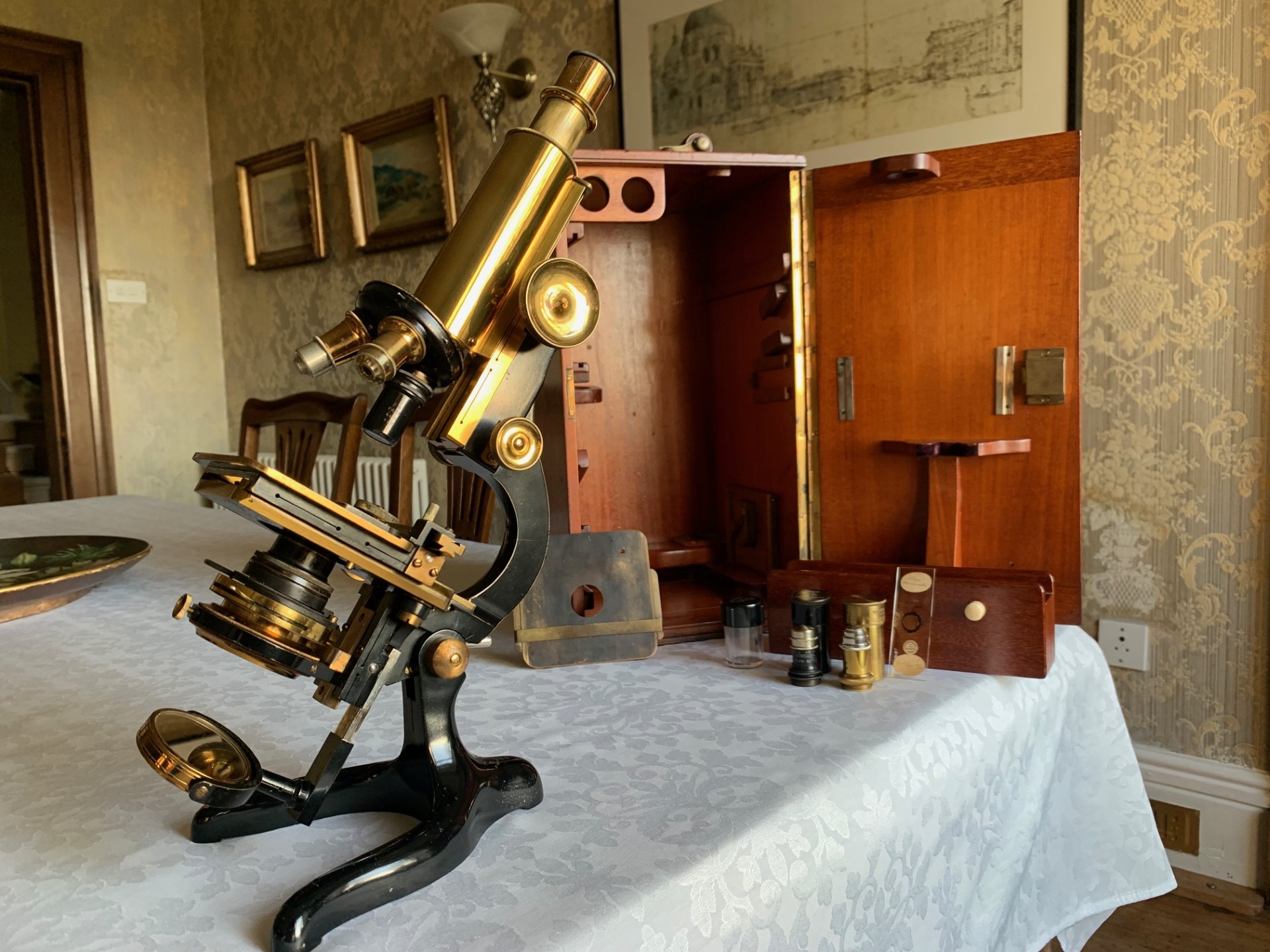
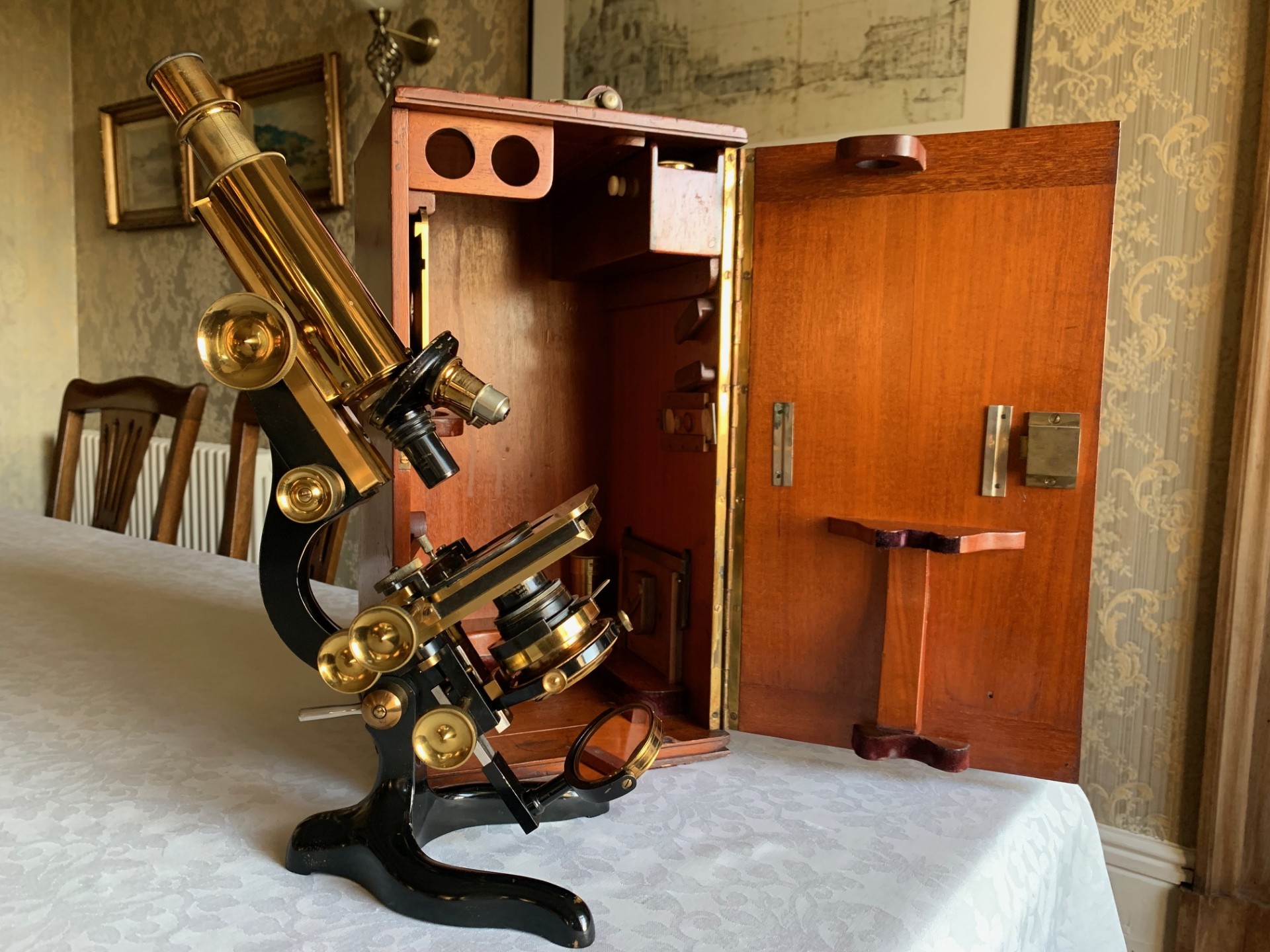
Watson Bactil MkIV Monocular – circa 1914 in Lacquered Brass Finish with Original Storage Case
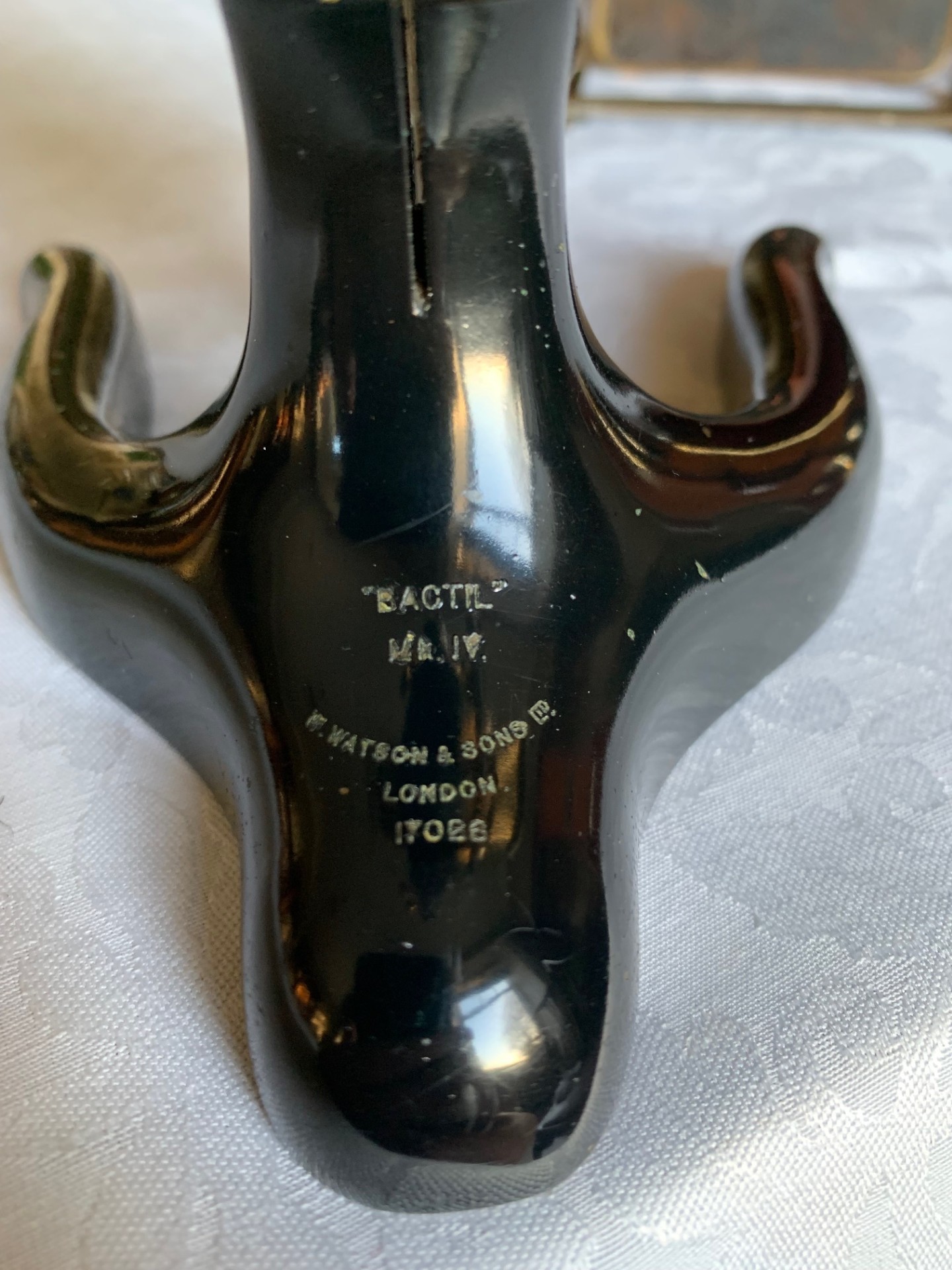
This listing is for a superbly engineered vintage original Bactil MkIV model microscope in lacquered brass finish by W. Watson & Sons Limited of London. It dates to about July 1914 based on the sequential Watson production number of 17028, which is engraved onto the rear of the foot and comes complete with a lovely storage case that’s also in superb condition.
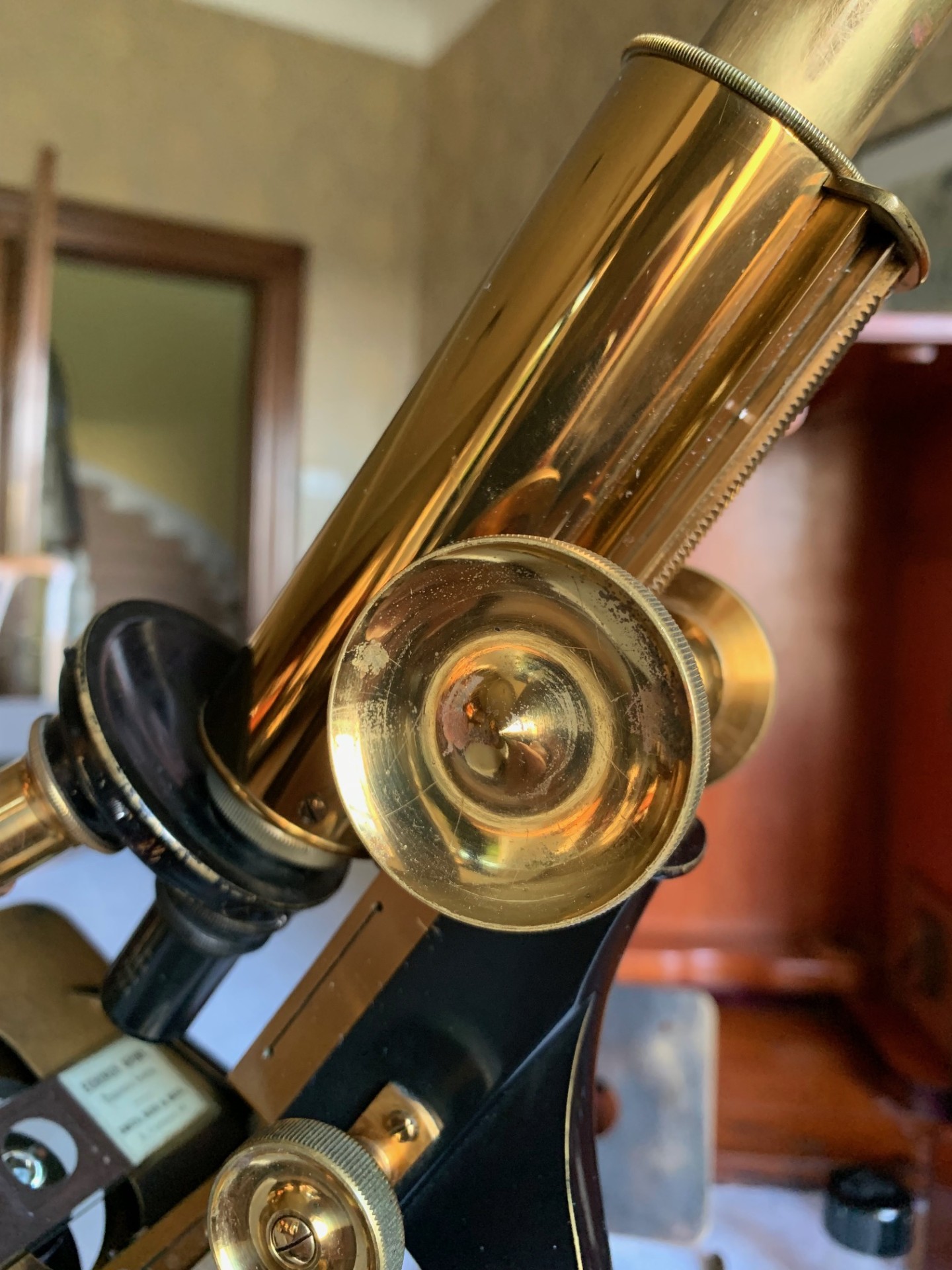
This pre-WWI example is in all-original condition as far as I can tell and has clearly been really well looked after by its former custodians. This Bactil MkIV also benefits from a good set of lenses, an original brass mechanical stage along with a plain brass stage that can be fitted as an alternative and a nice period storage case. It presents really well with hardly any age-related blemishes to its black paintwork, very few other signs of use anywhere on the instrument and probably most importantly, lovely gleaming brass-work detailing throughout. The brass-work really catches the sun and glints with a lovely warm yellow/golden glow as I hope the listing photos demonstrate.
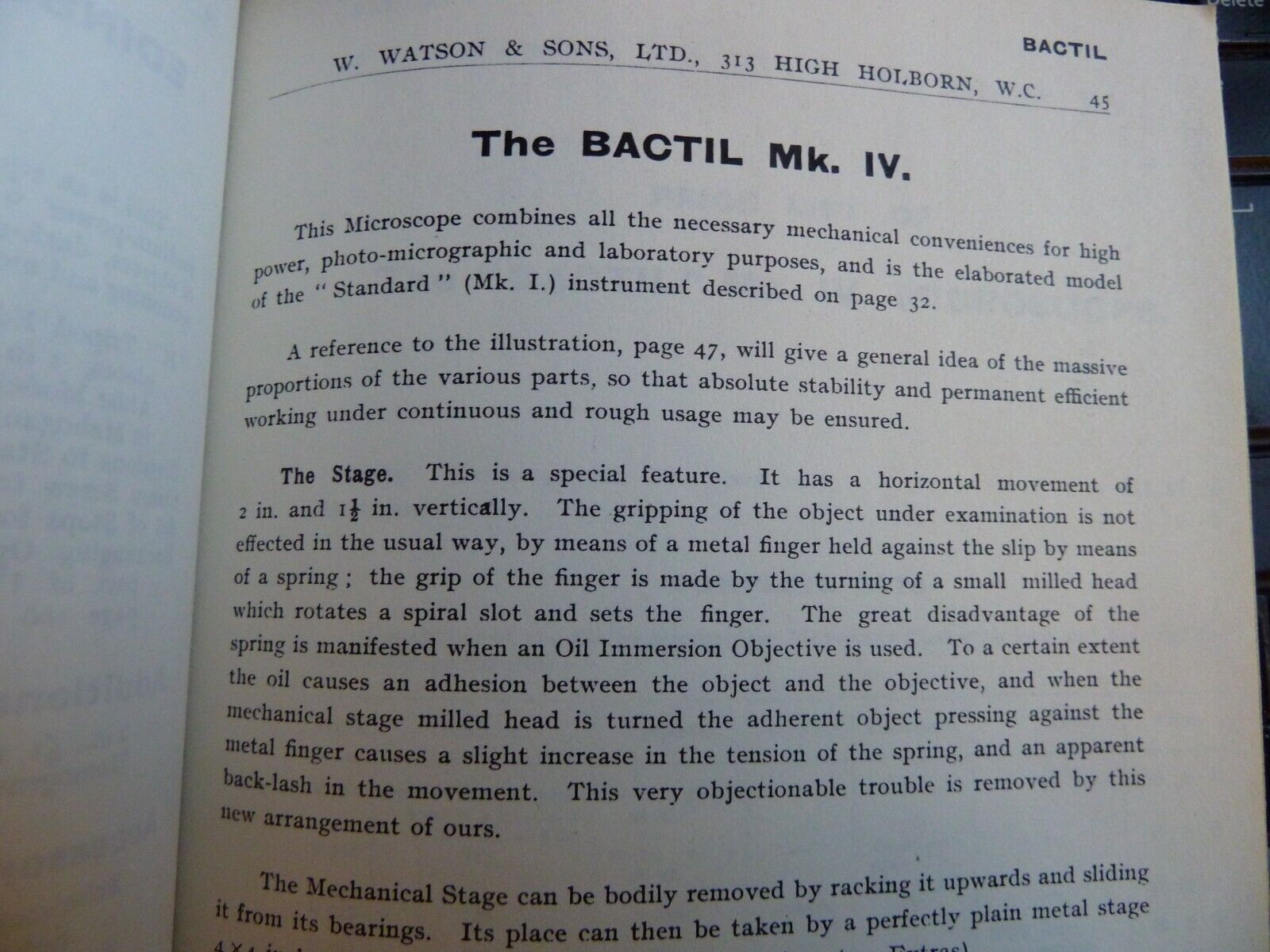
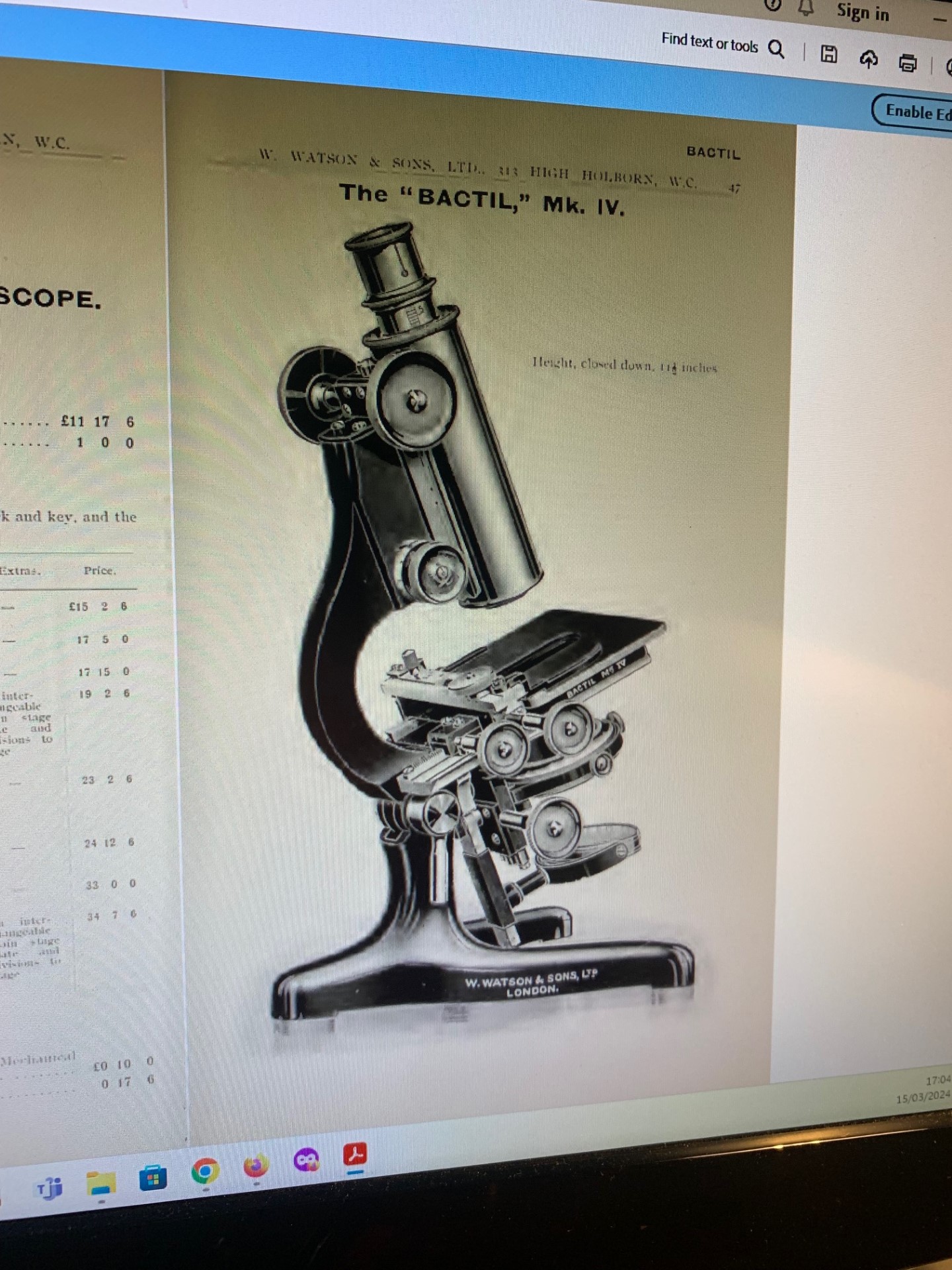
The Bactil MkIV is essentially an excellent piece of British optical engineering built from quality materials, with solid construction, great design and skilled workmanship and in this period many hours of hand-finishing and it’s hard to believe that it’s actually 112 years old, so definitely an antique. This is a sturdy good quality microscope in original condition, fully working, with no significant signs of wear that I can find, so it’s got a great look and patina and a top brass example from 1914. I’ve included a couple of pages from Watson’s 1912 product catalogue at the end of the listing photos, showing this model and confirming its research-grade credentials as an “elaborated” version of Watson’s Standard MkI model microscope.
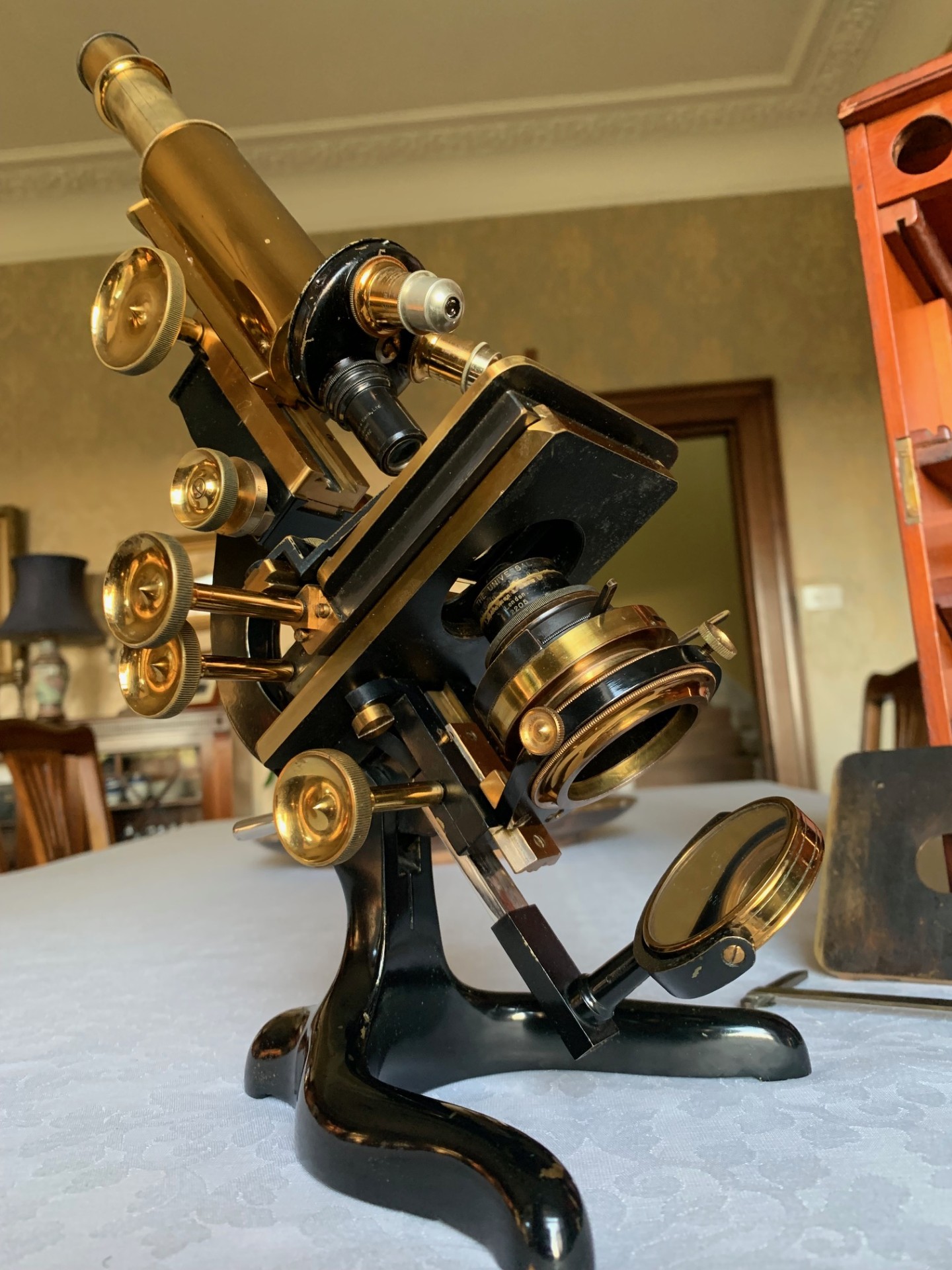
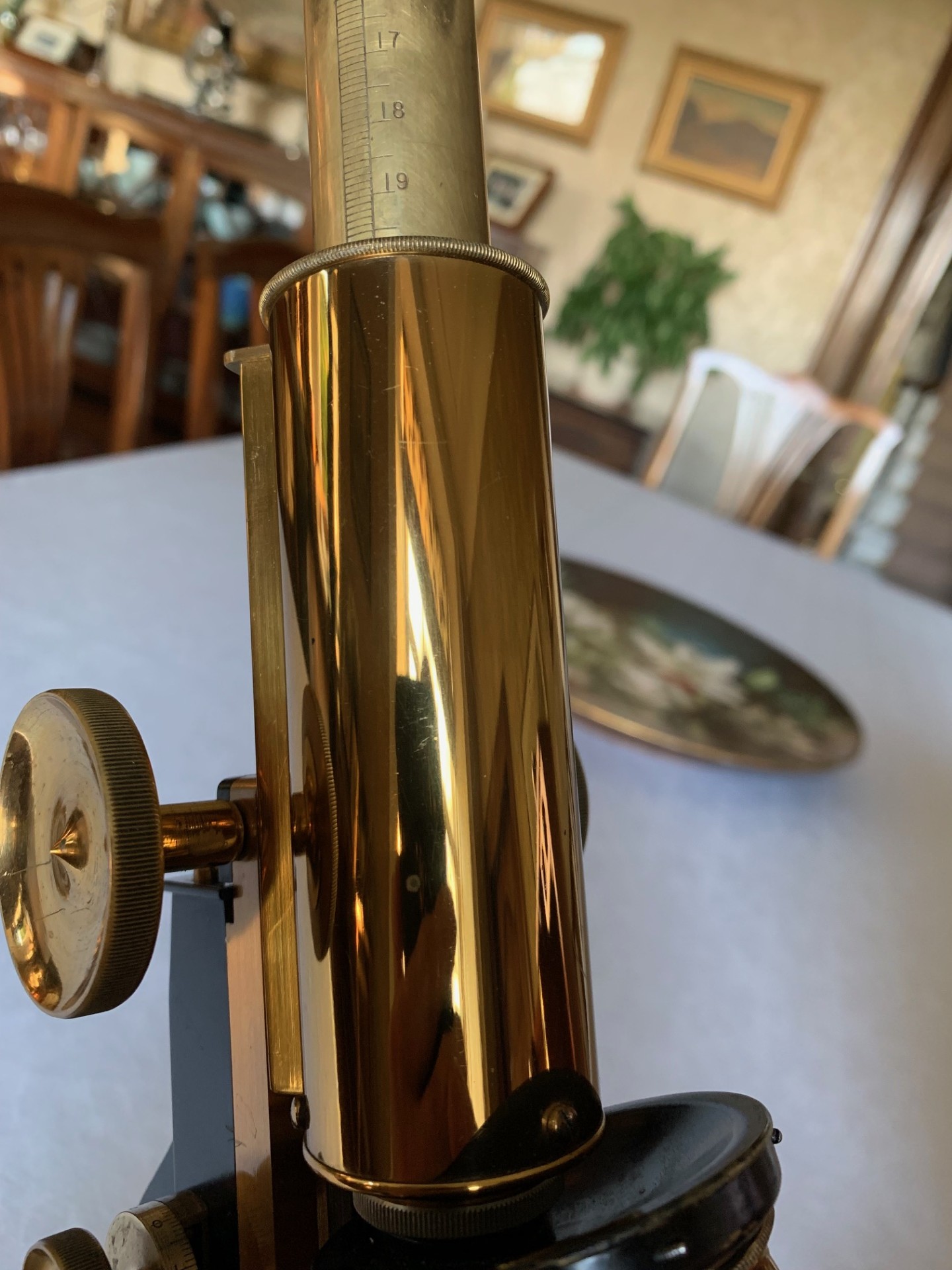
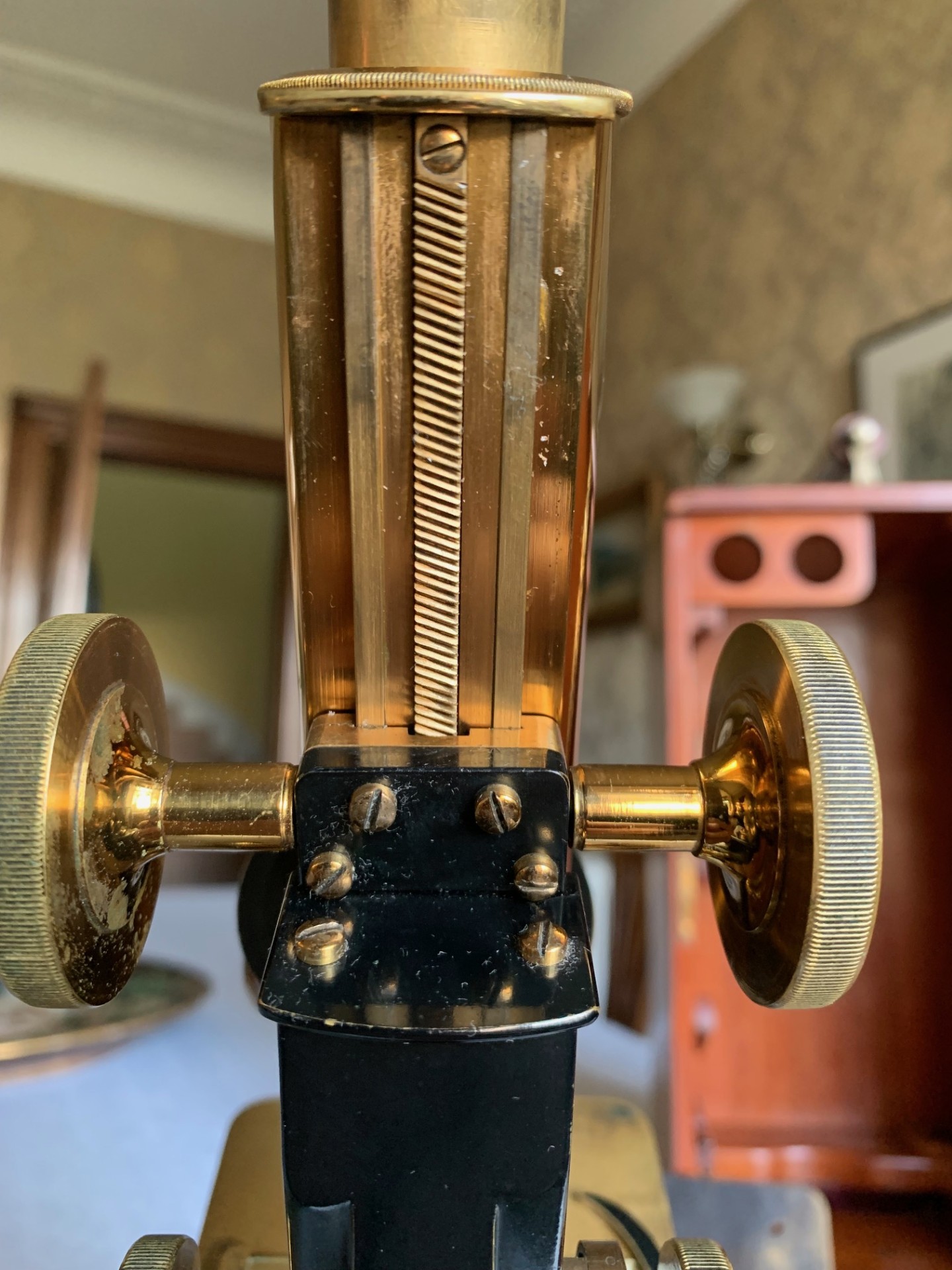
On the technical side, the construction is a heavy iron foot, with twin uprights, pivot with lever-operated tension adjustment and Lister-type upper limb also in iron. Both coarse and fine focus move freely through their working ranges with little wear evident. There’s a good range of coarse focus movement and you’ll see that in the listing photos I was able to use a low-power 2 inch objective with very high working distance.
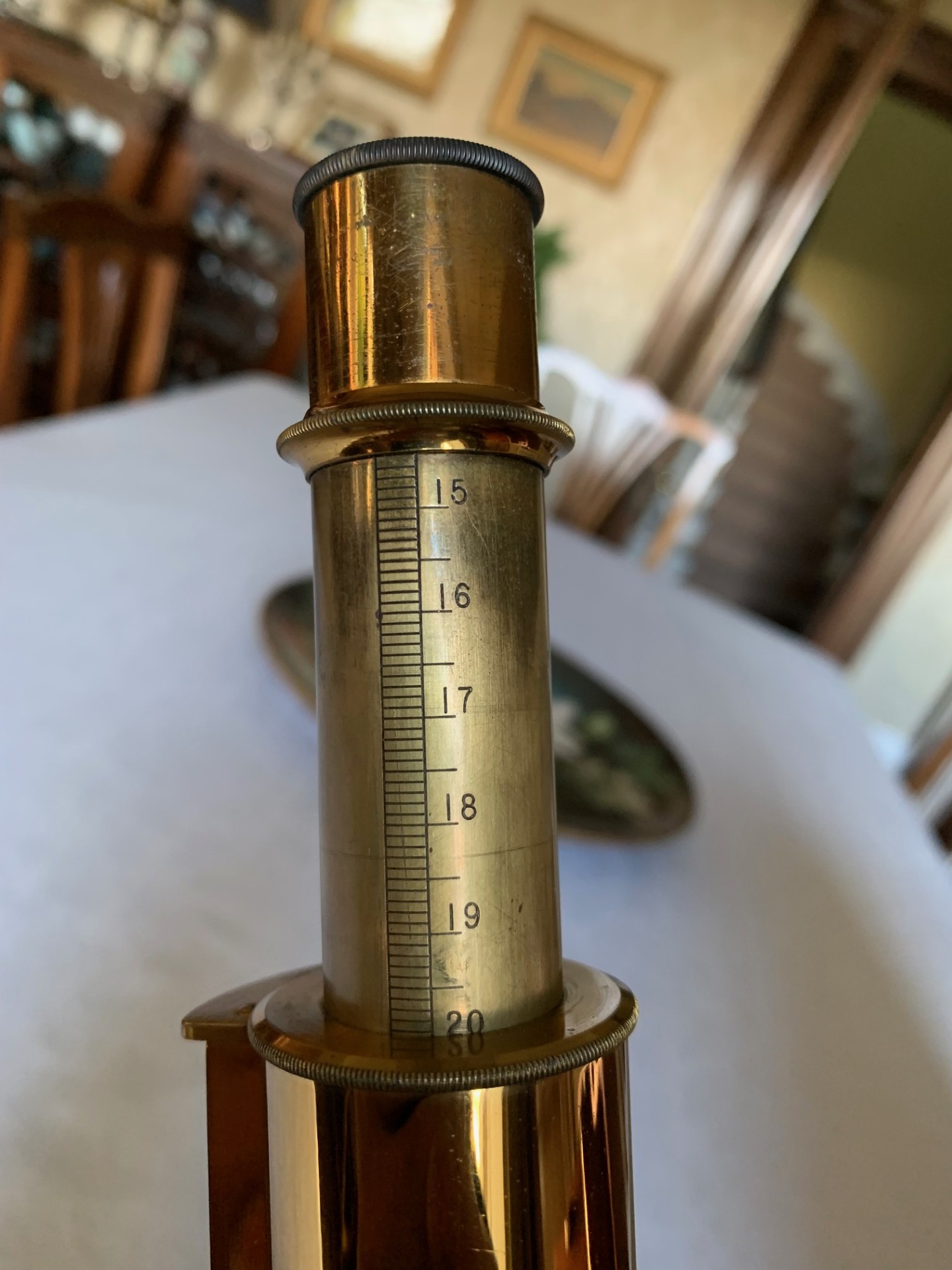
Turning to the optics, this Watson Bactil MkIV microscope comes fitted with a graduated brass eyepiece draw-tube inside an optical tube in lacquered brass. There’s a selection of appropriate vintage eyepieces all by Watson that with good illumination produce excellent images:
– 6x magnification
– 10x magnification
– 12.5x magnification
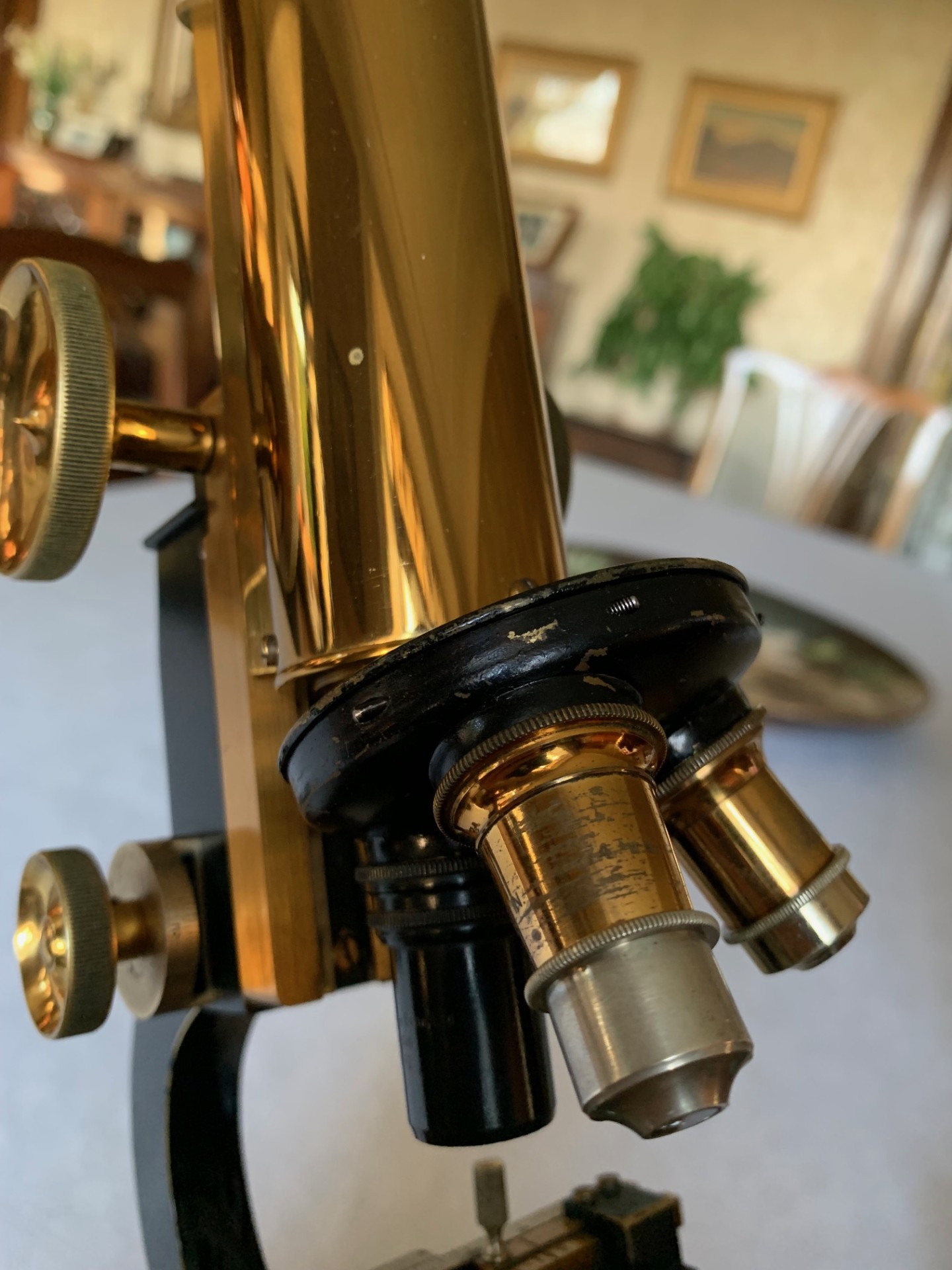
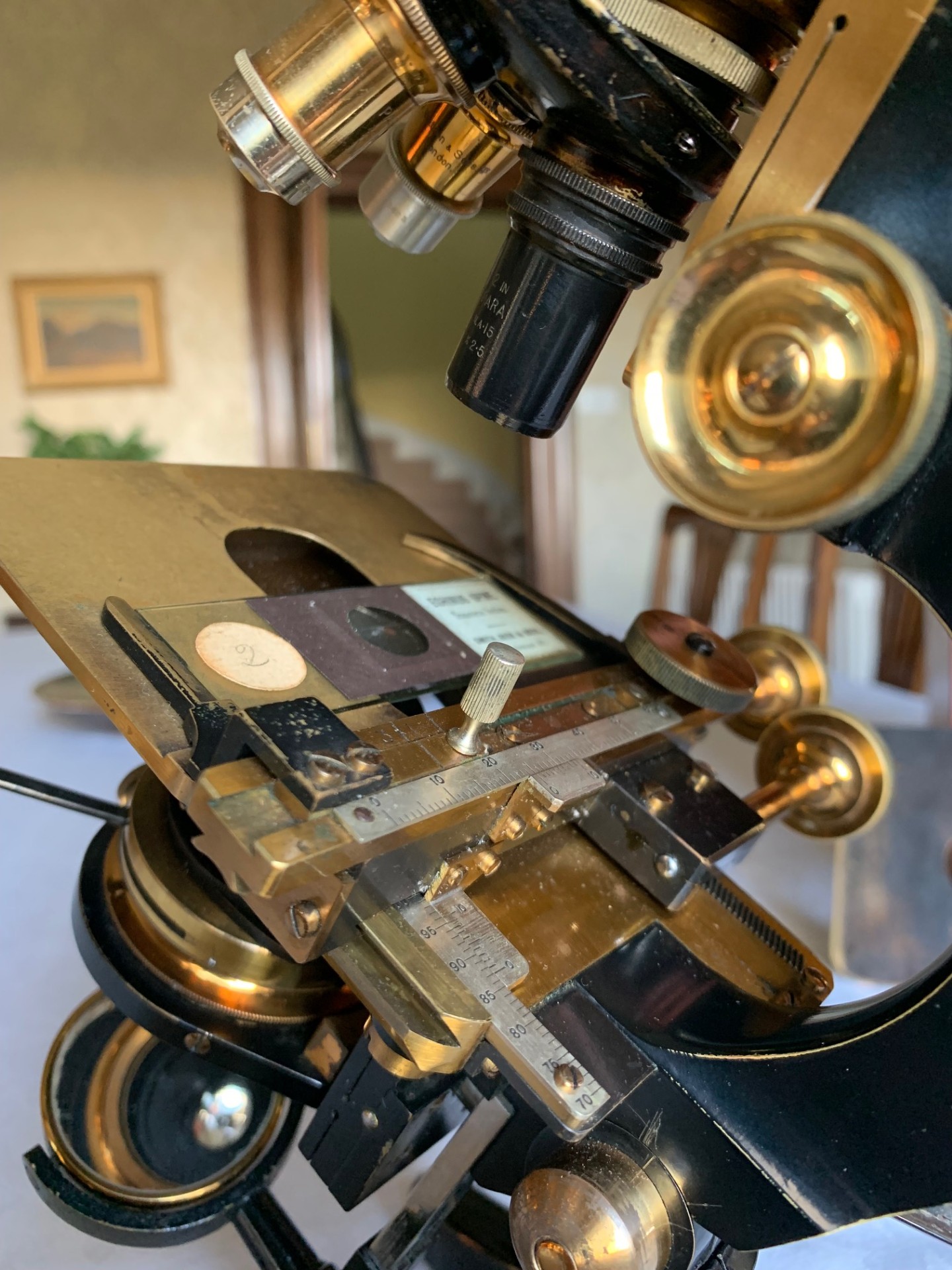
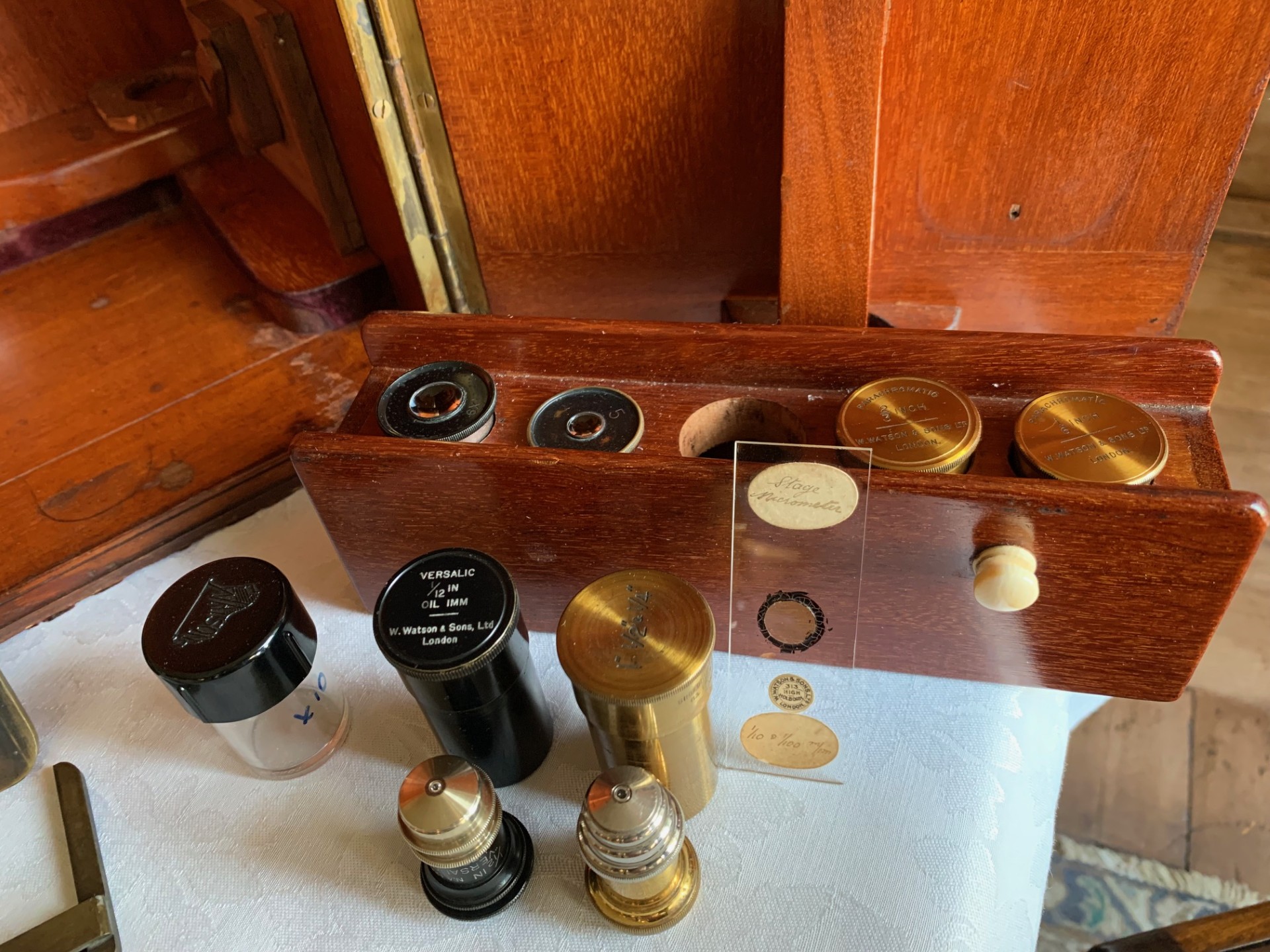
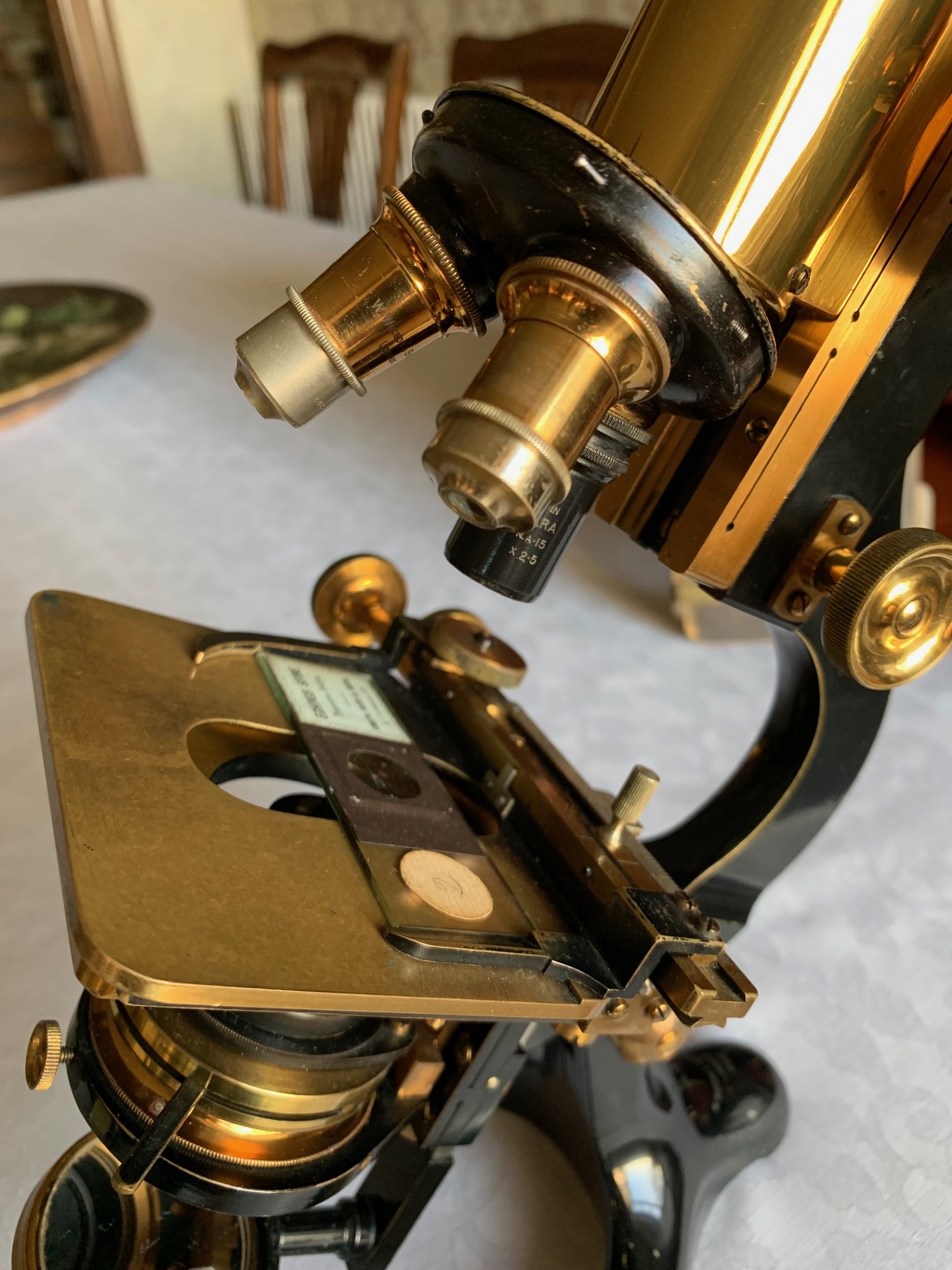
There are five vintage (mainly Watson) objectives along with a triple brass turret, which rotates freely with a positive feel as the objectives slot into position. The objectives are as follows:
– 2 inches – 2.5x magnification – very low power and high working distance
– 2/3rds inch -10x magnification
– 1/6th inch – 40x magnification
– Leitz No. 7 in brass – approx 50x magnification
– 1/12th inch Versalic – 100x magnification and requires oil immersion
(All objectives have appropriate period canisters)
Overall, the range of magnification provided by this Watson Bactil therefore ranges from about 15x to a perfectly respectable 1,250x.
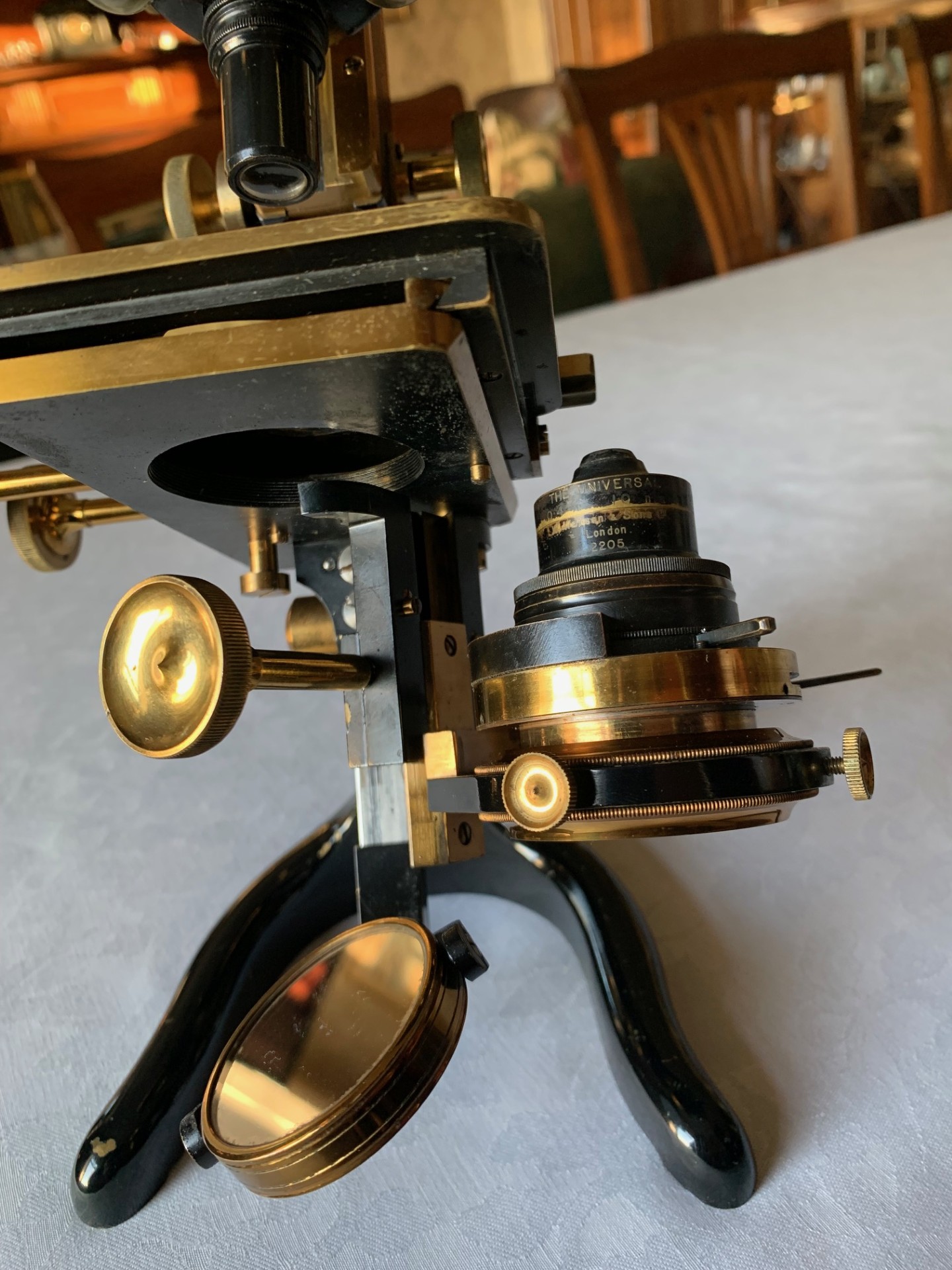
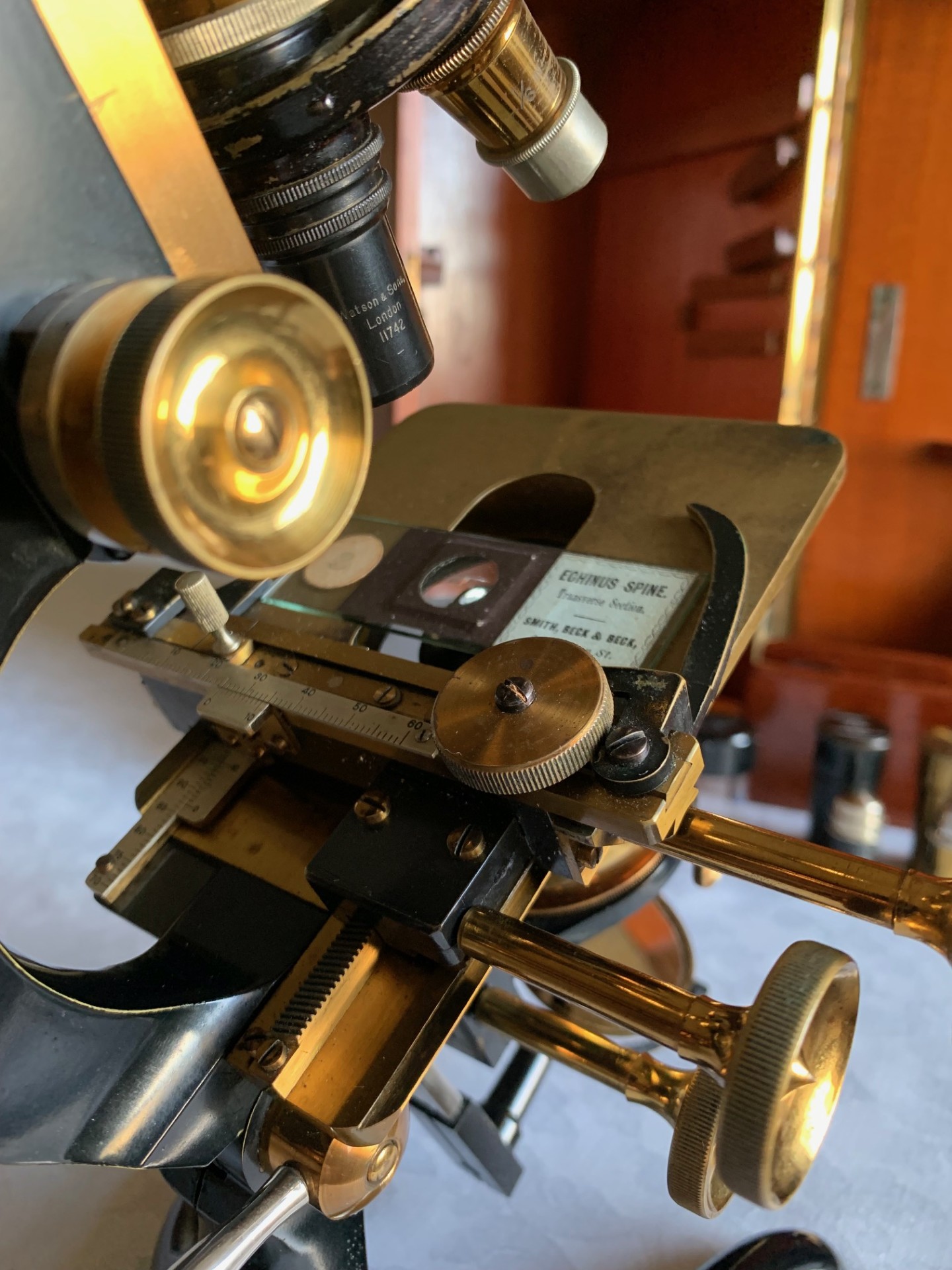
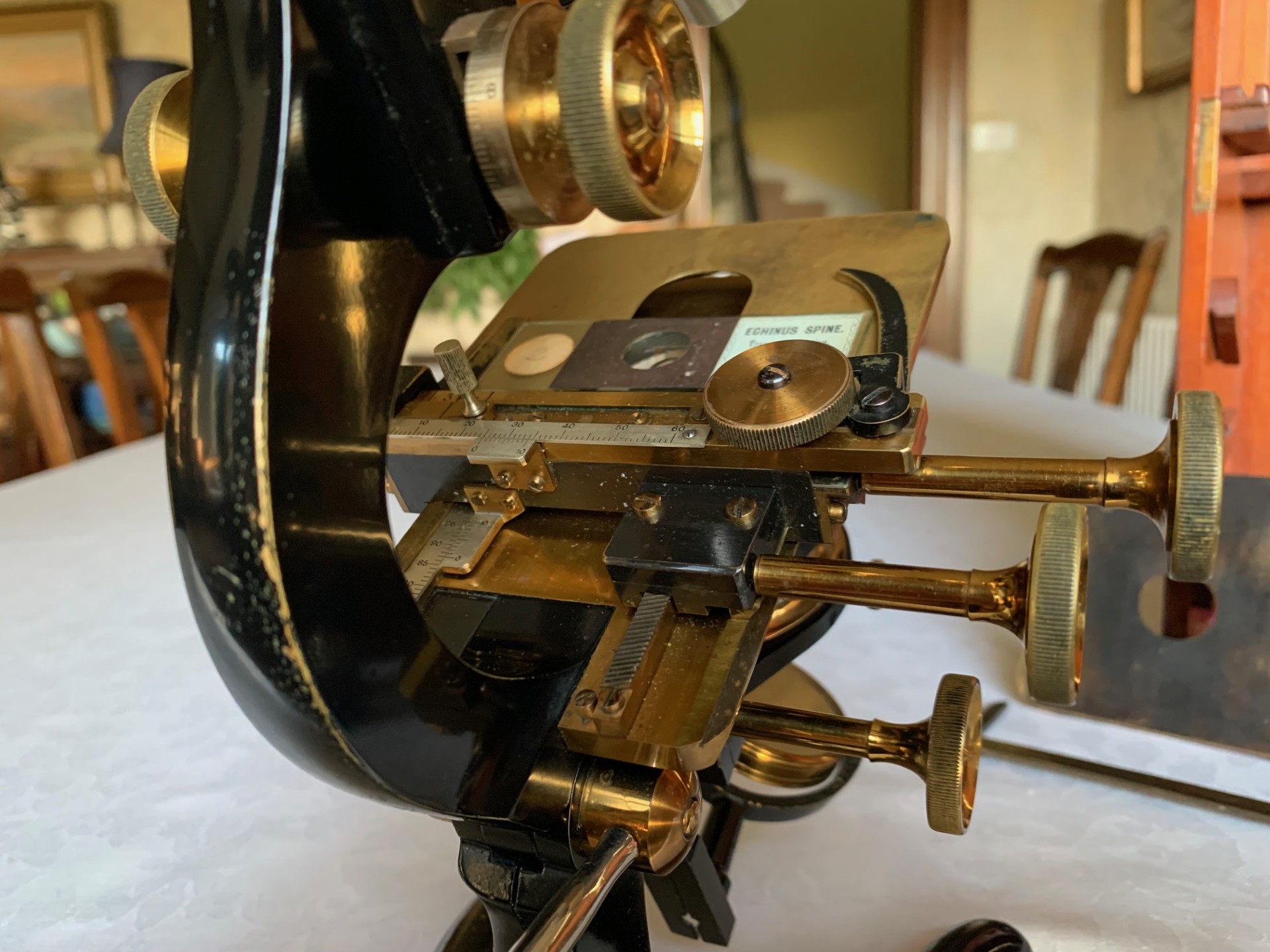
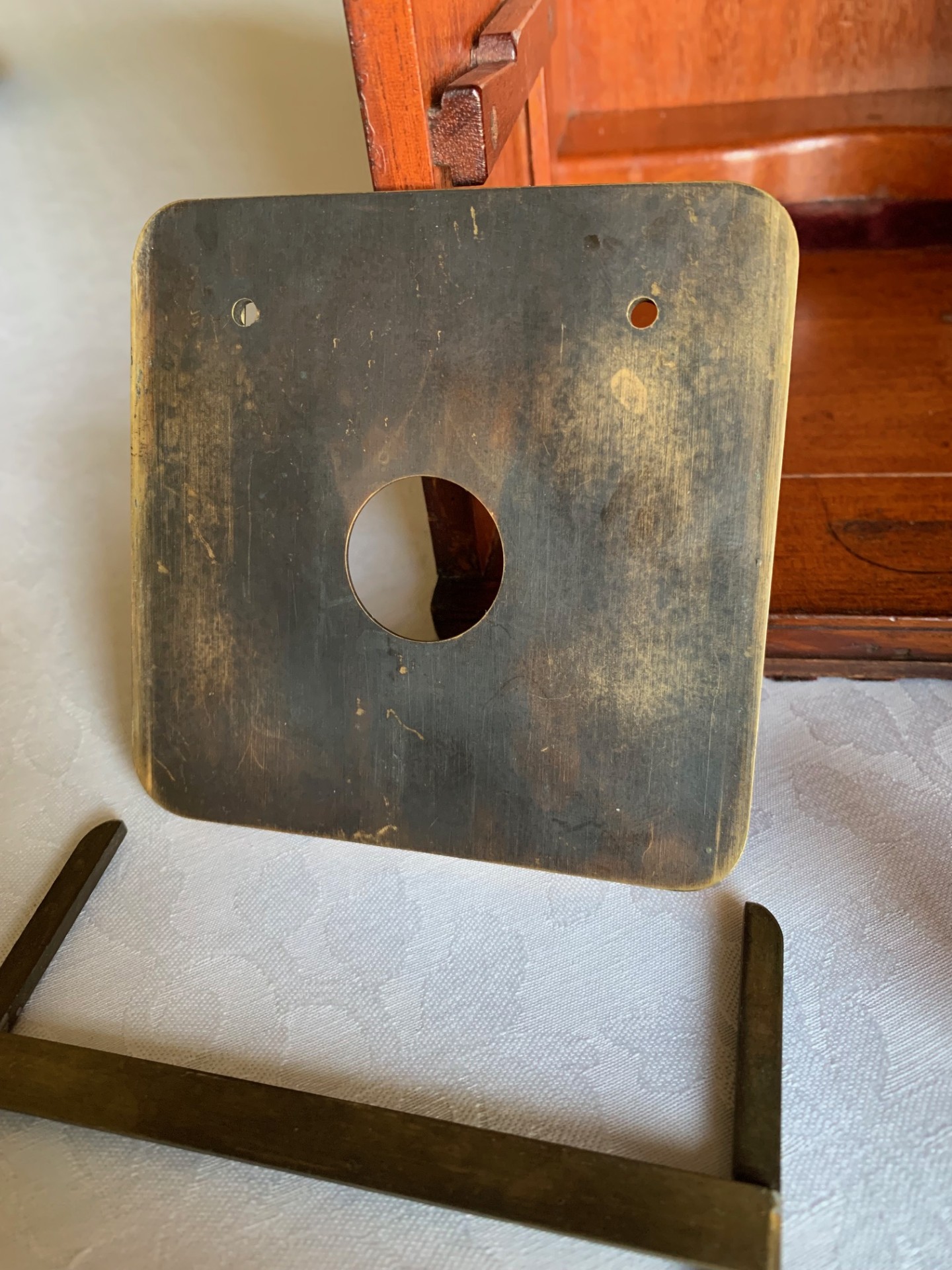
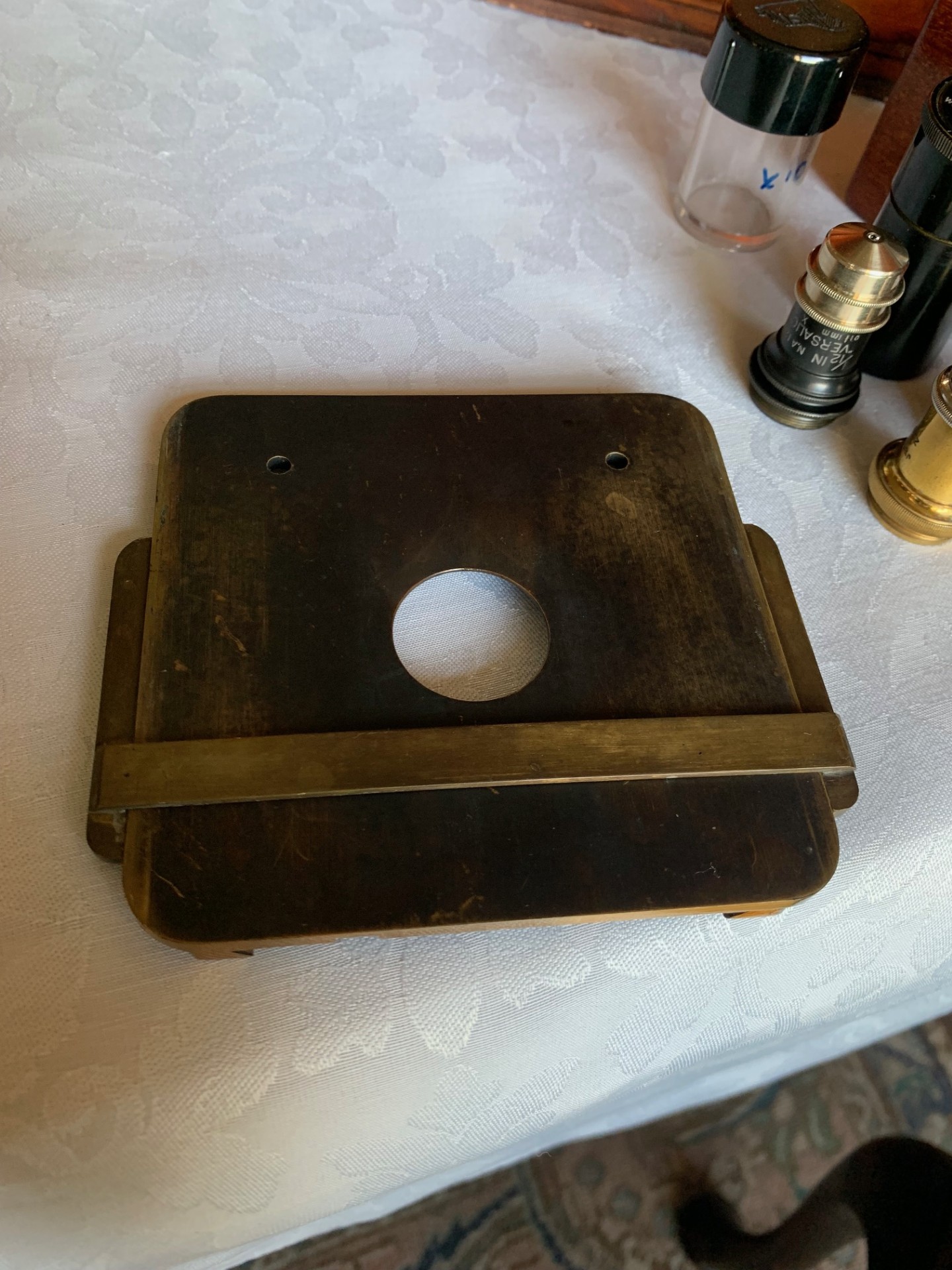
The stage is a Watson mechanical stage with twin x/y thumb-wheel adjusters to the right-hand side and two clips for holding slides with one of them sprung with thumb-wheel control and this system operates well for retaining slides during inclined viewing, with x/y controls also offering fine control of specimen positioning, along with good range of x/y adjustment. The y-axis also holds position well on inclination. There’s also an alternate plain brass stage with slide holder in the case that can be fitted as an alternative to the mechanical stage.
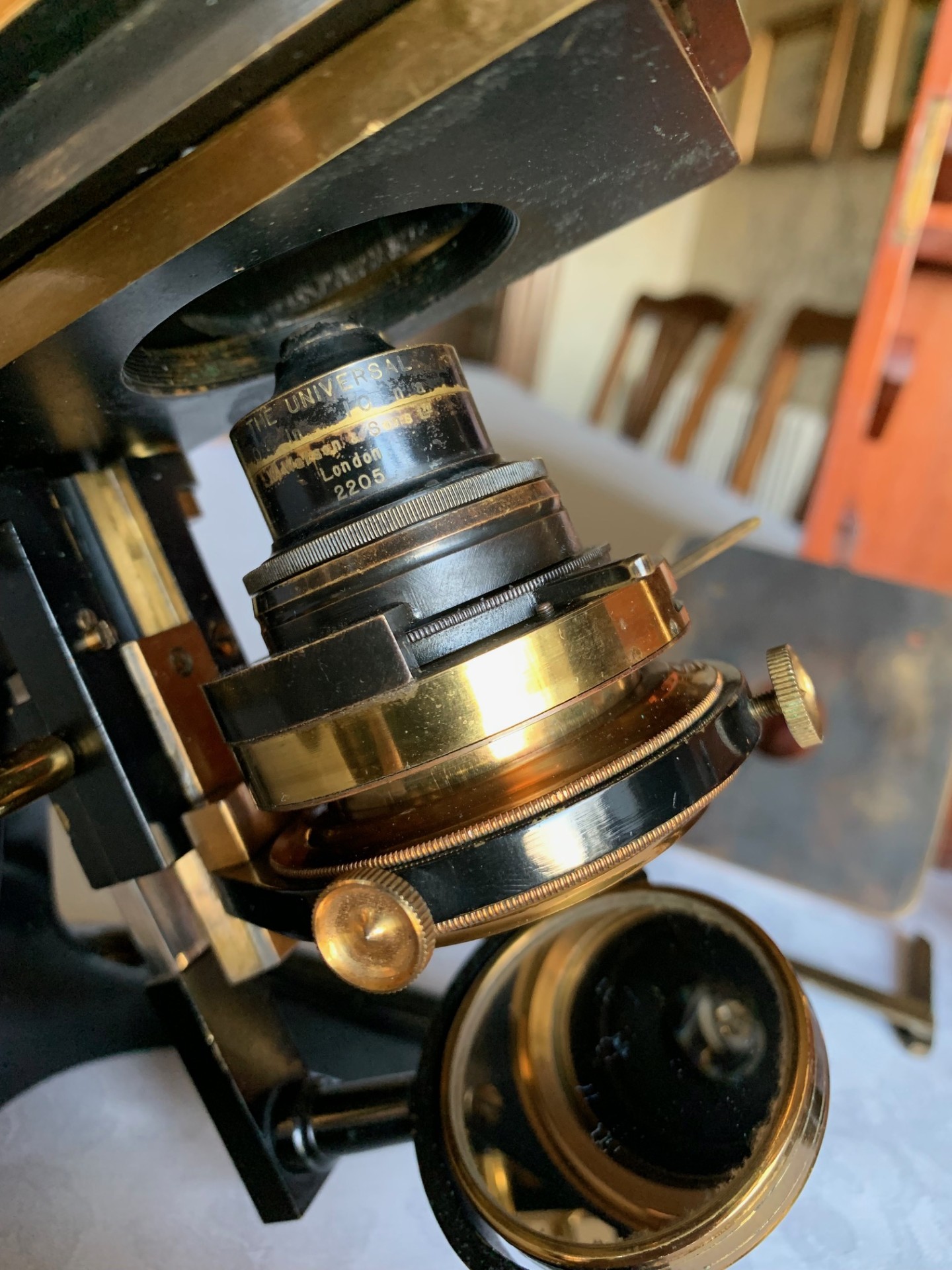
Turning to the sub-stage, we have a specialist model of Watson condenser (Universal) that’s top-mounted to a brass ring-mount, which in turn sits in a height adjustable rack and pinion system with single-sided height control, swing-out feature as demonstrate and there’s also centering via a pair of brass thumb-screws.
There’s also a working iris and a 35mm diameter swing-out filter carrier with its own rotation feature. The condenser has plenty of vertical height adjustment and adequate reach for oiling to the back of slides for higher magnification applications. Lighting is via a plano-concave mirror which is in very good condition on its adjustable slider/support rod and gimbal set-up, with excellent silvering to both sides.
This is a great visual and working example of Watson’s Bactil MkIV model in brass with excellent originality, making it quite an interesting proposition for a collector. It’s in highly original unmolested condition with a good specification, nice optics and it’s essentially a very collectable brass example of this rare-to-market model. The Watson 1912 catalogue entry confirms this model’s intended use is for high-power, photo-micrographic and laboratory applications.
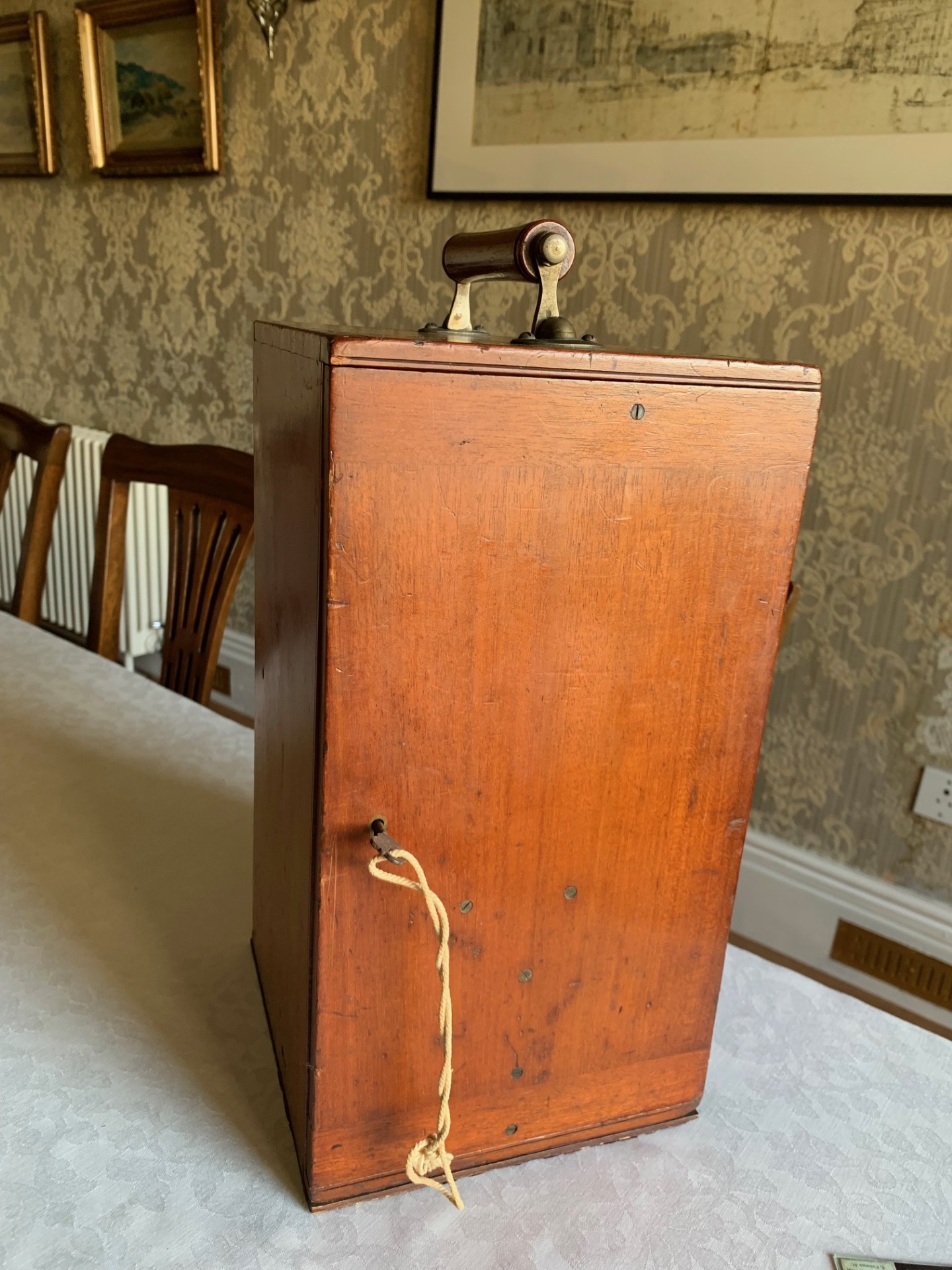
There’s also the correct original wooden case with wooden carry-handle internal storage racking, drawer for lenses and working lock and key. The case is also in excellent condition with correct period exterior sheen.
Owing to the weight and delicacy of the microscope and case, it will be partially dismantled, very well wrapped for shipping and dispatched by insured courier upon receipt of cleared funds.
Thanks for looking – please also check out my other listings if you get a chance.
Ask the Dealer
Dealer information
 Arcboutant Scientific
Arcboutant Scientific based in Glasgow Scotland, with an interest in scientific collectables dating back to 1988. Now making available carefully curated fine examples, principally of antique microscopes and associated scientific equipment by quality English and Continental makers, to collectors world-wide.