
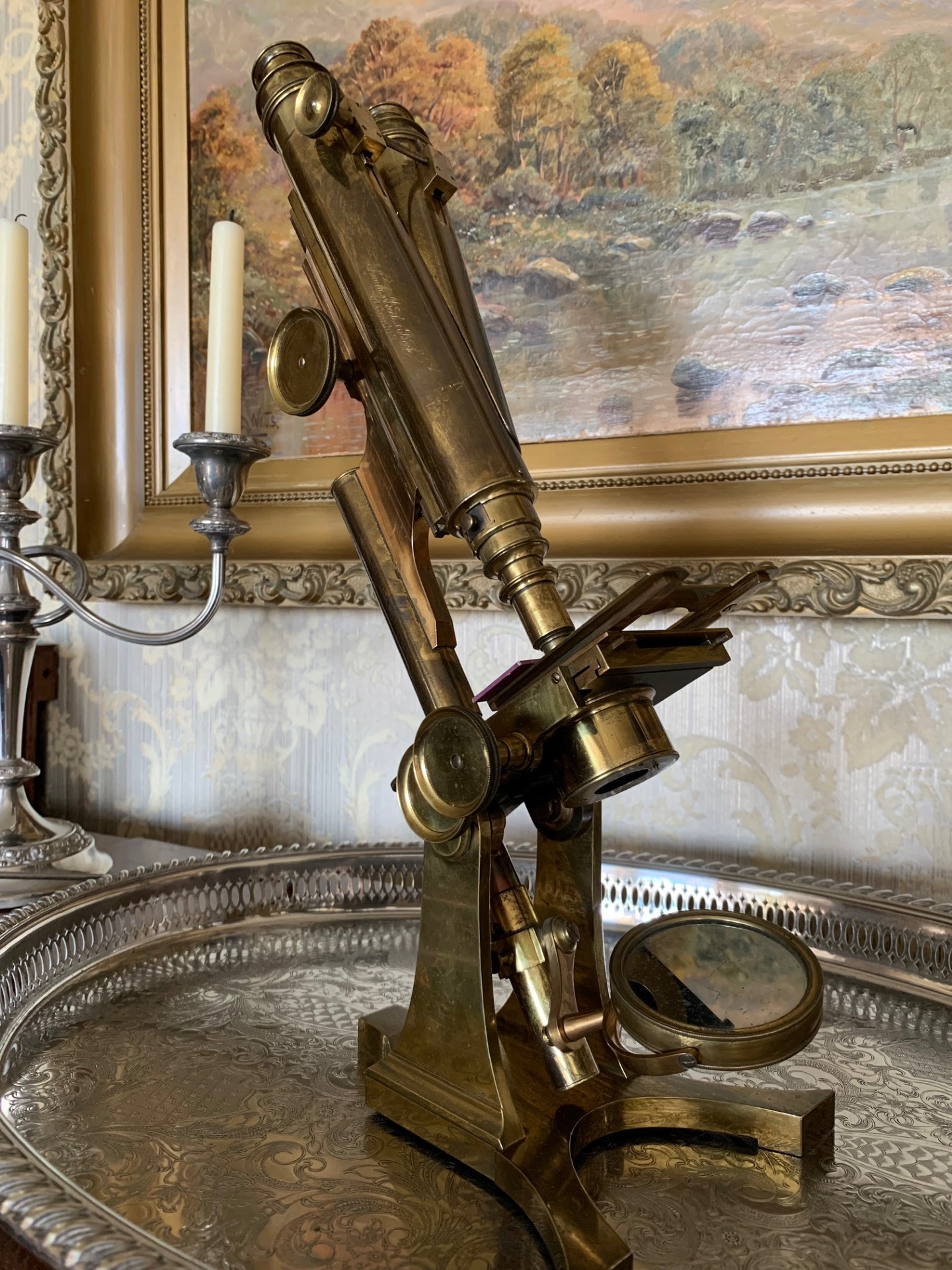
Antique Wenham Binocular Brass Microscope by Smith Beck & Beck, London – c1865

Antique Wenham Binocular Brass Microscope by Smith Beck & Beck, London – c1865

£565

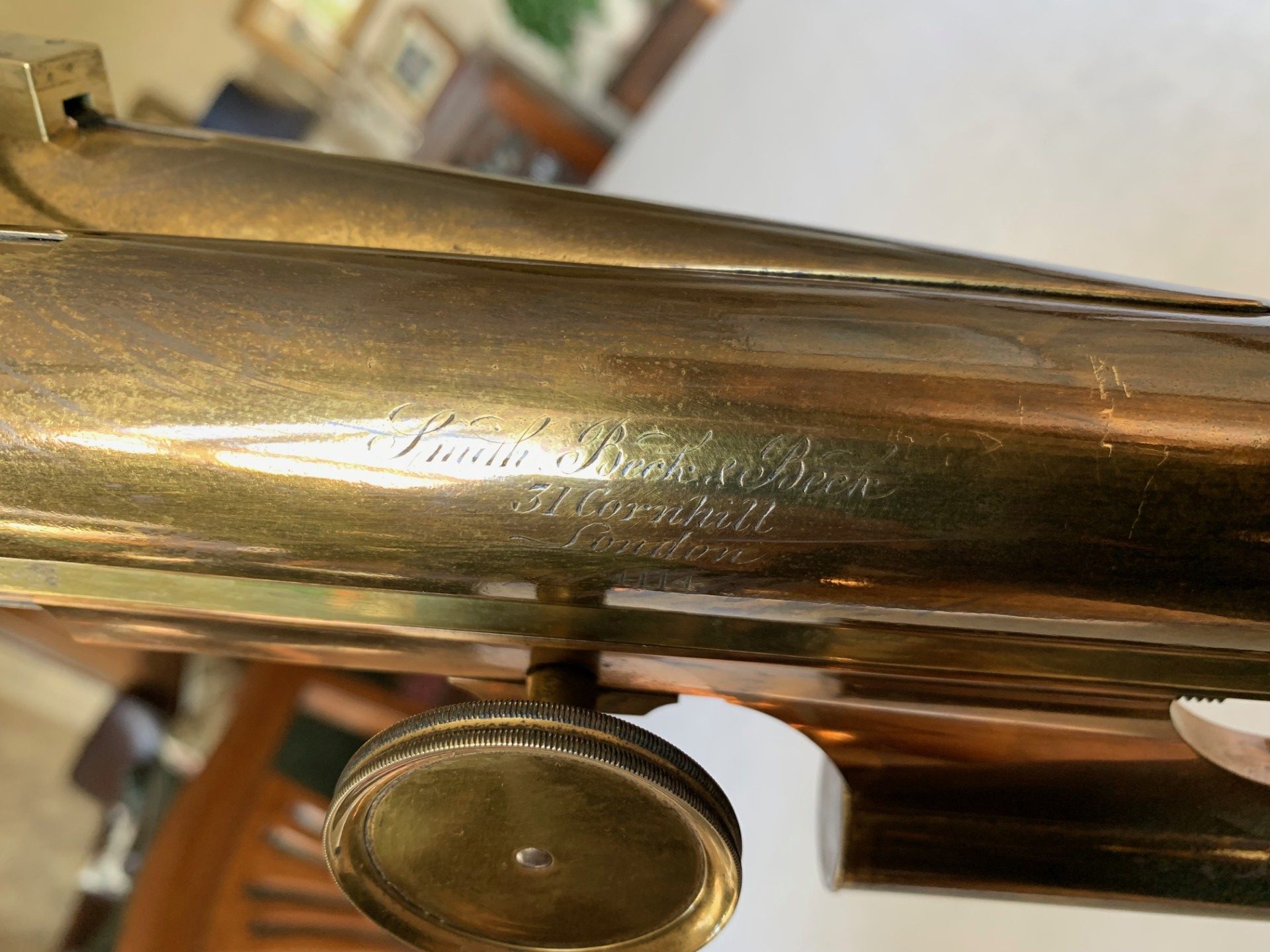
Antique generally good cosmetic and working condition Wenham binocular instrument serial no. 4114 marked Smith Beck & Beck, London - circa 1865. Note on condition: fine focus is inoperative and will require repair.

Circa

1865

Maker

Smith Bexk & Beck, London

Country of manufacture

UK and Ireland

Categories: Scientific, Microscopy

Description

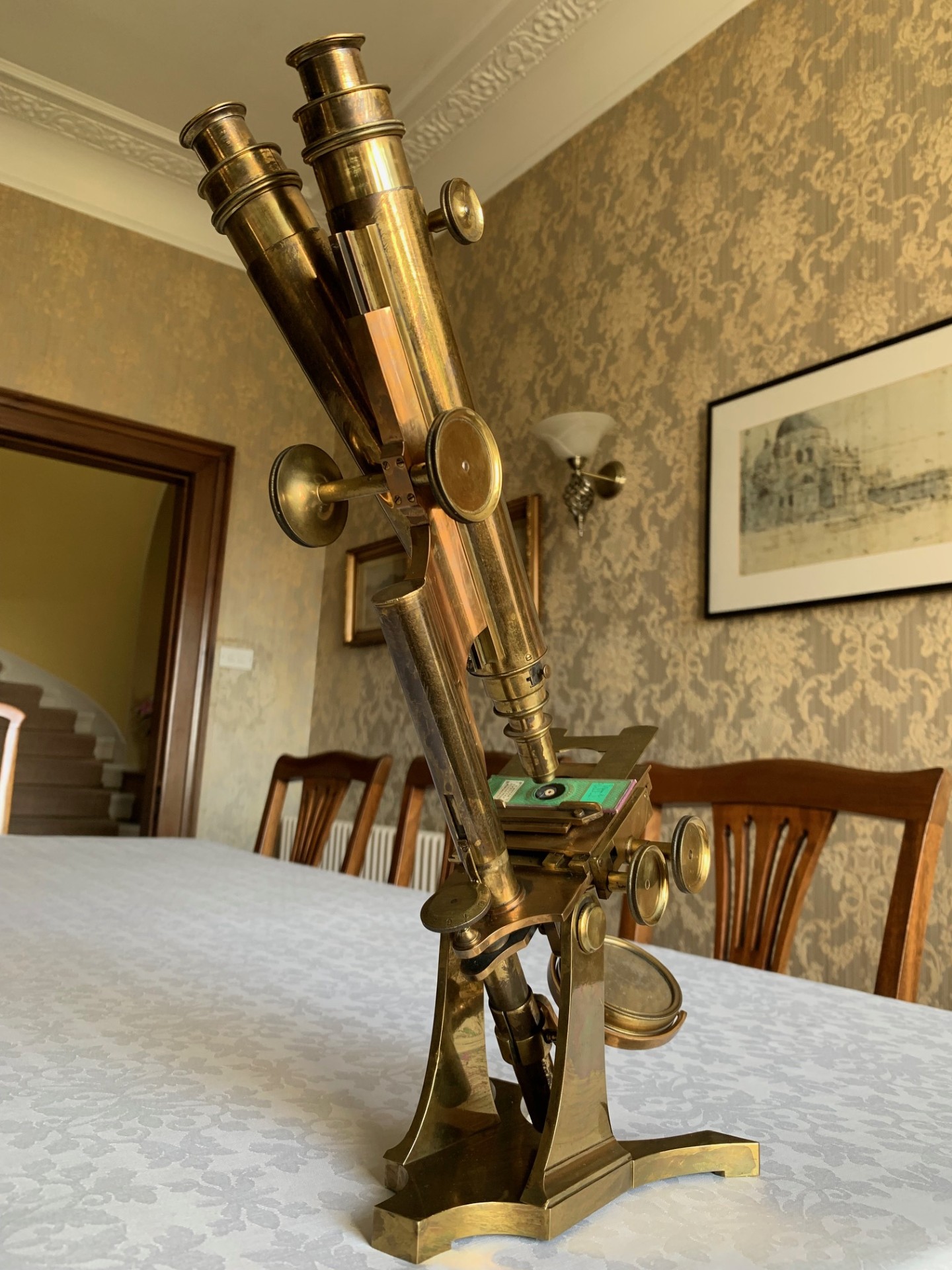
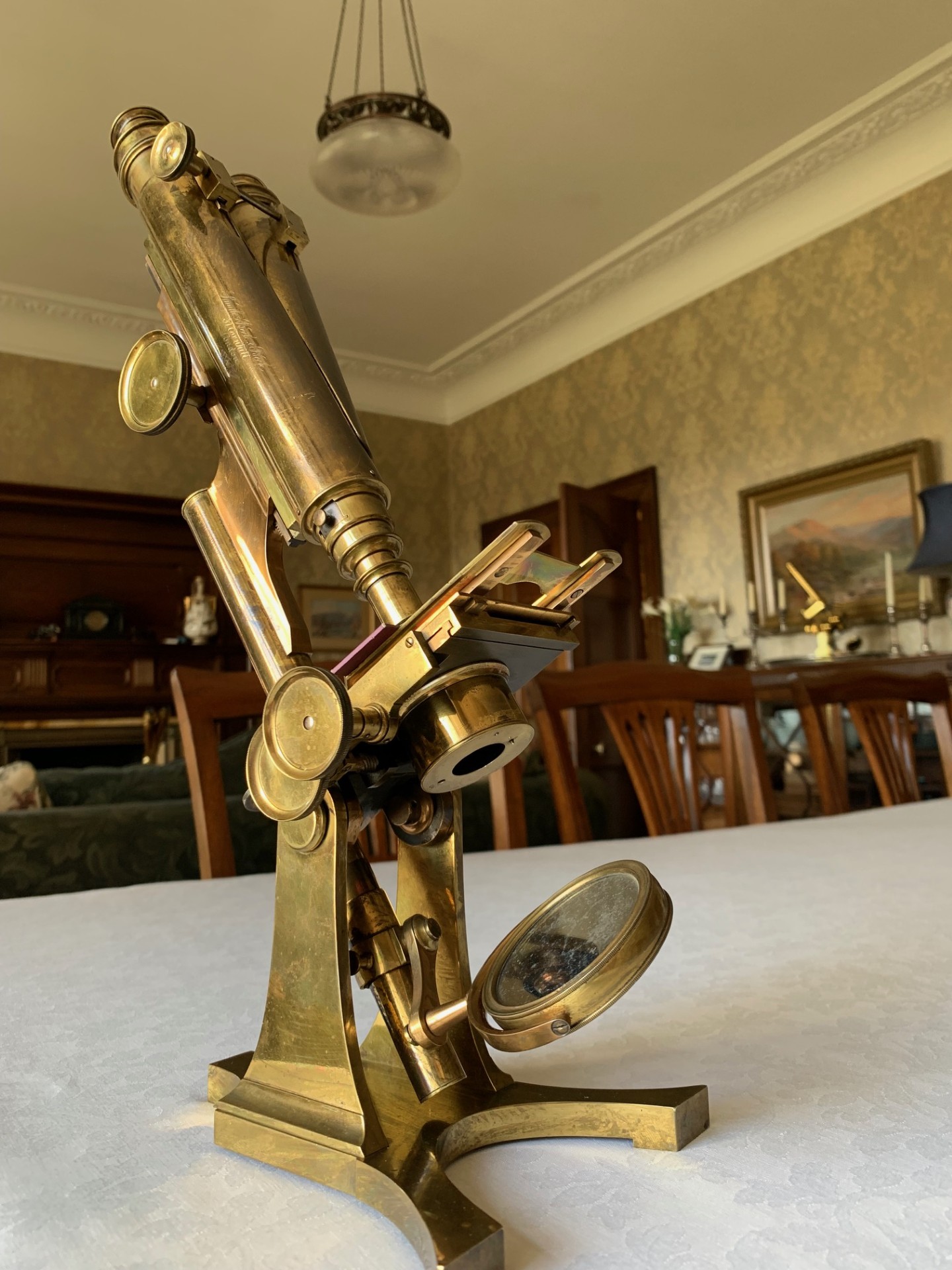
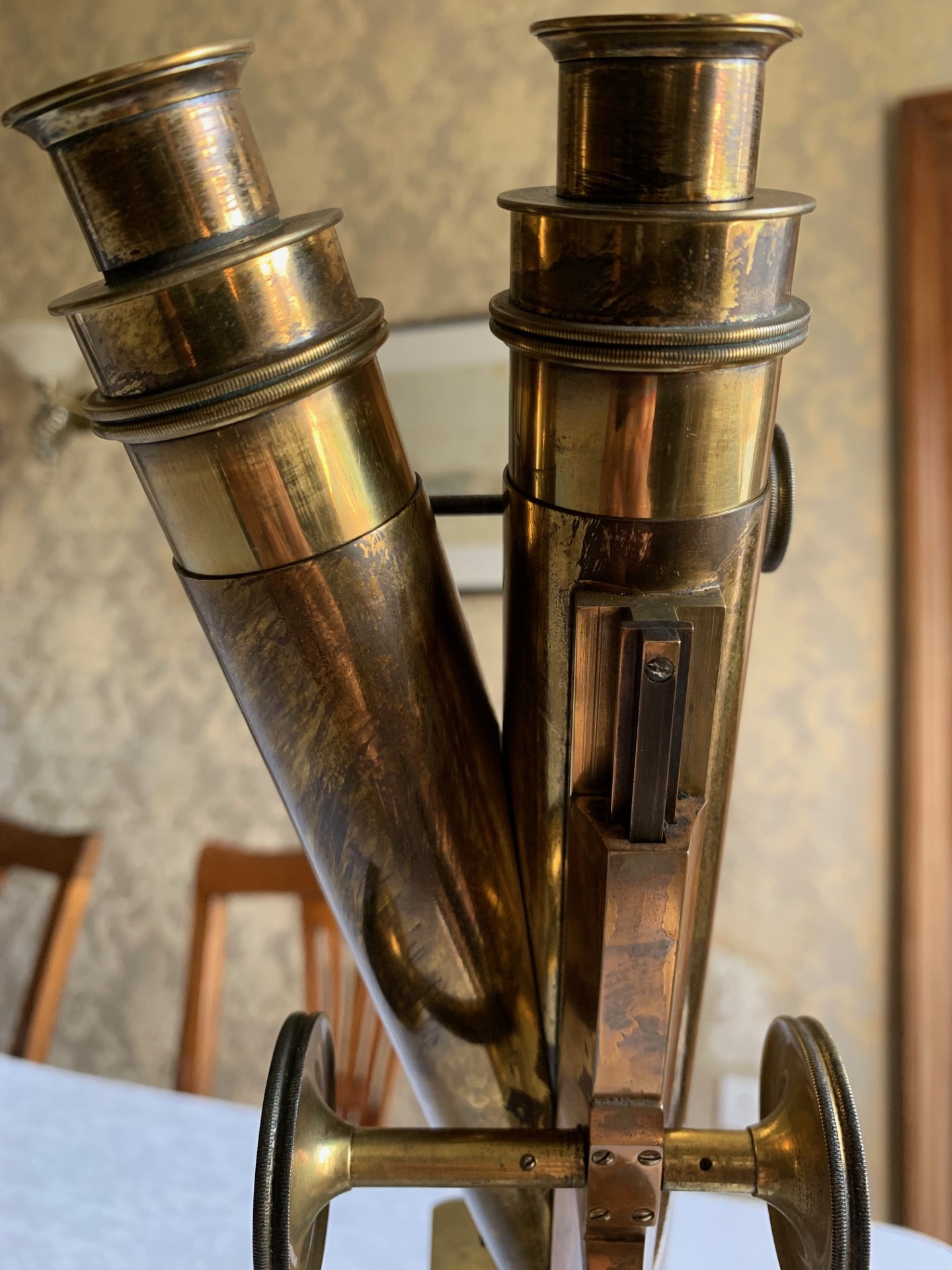
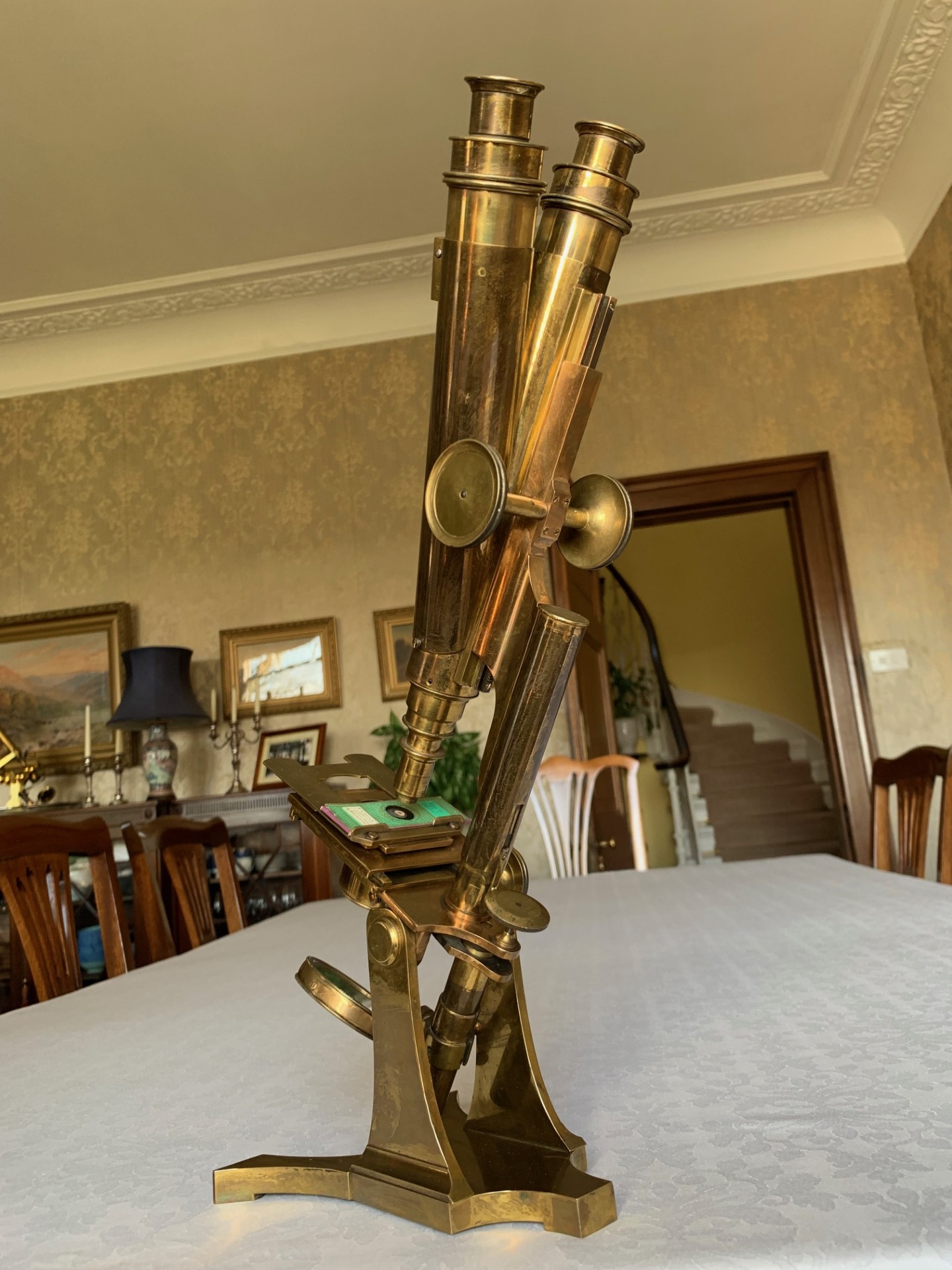
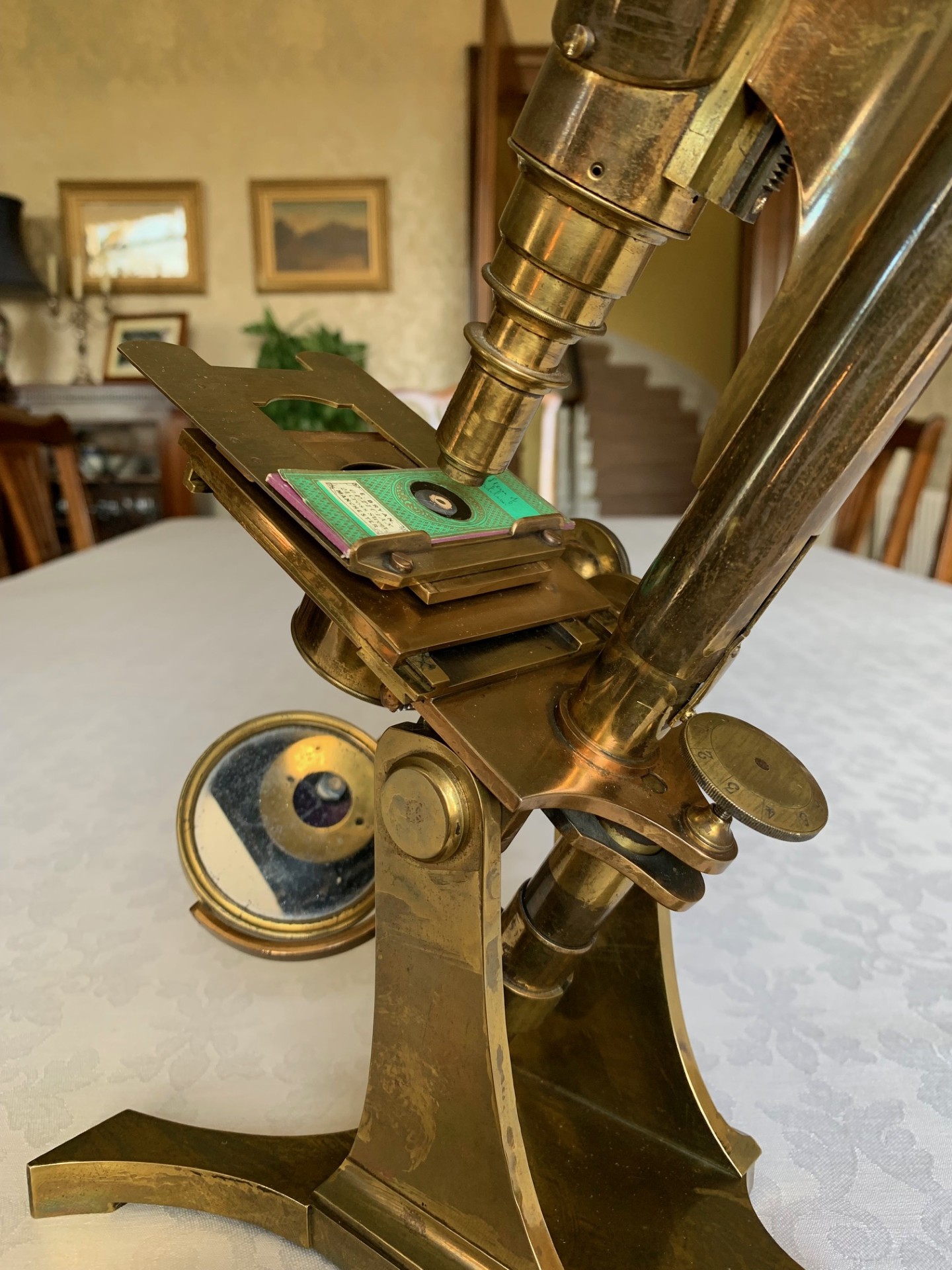
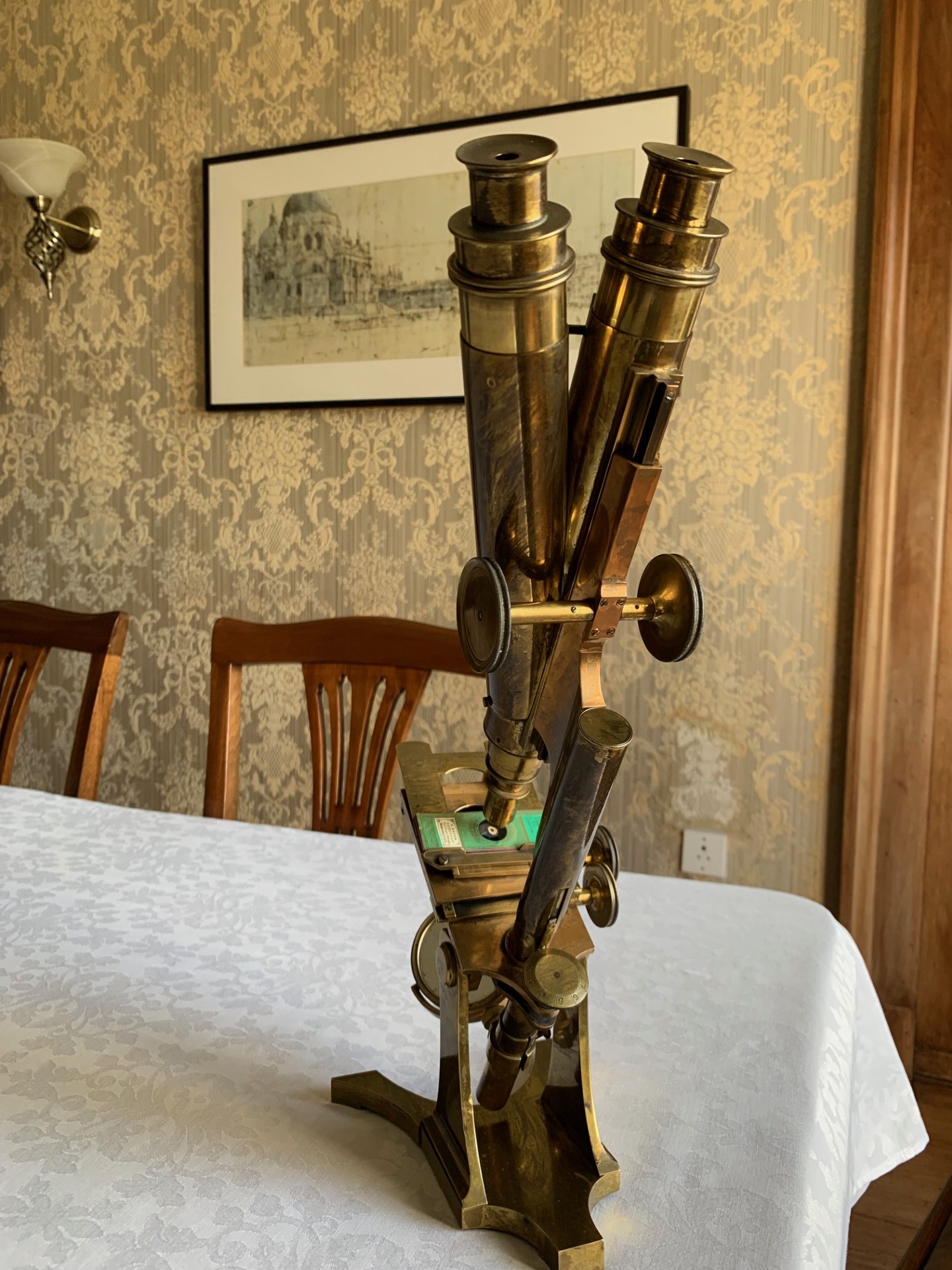
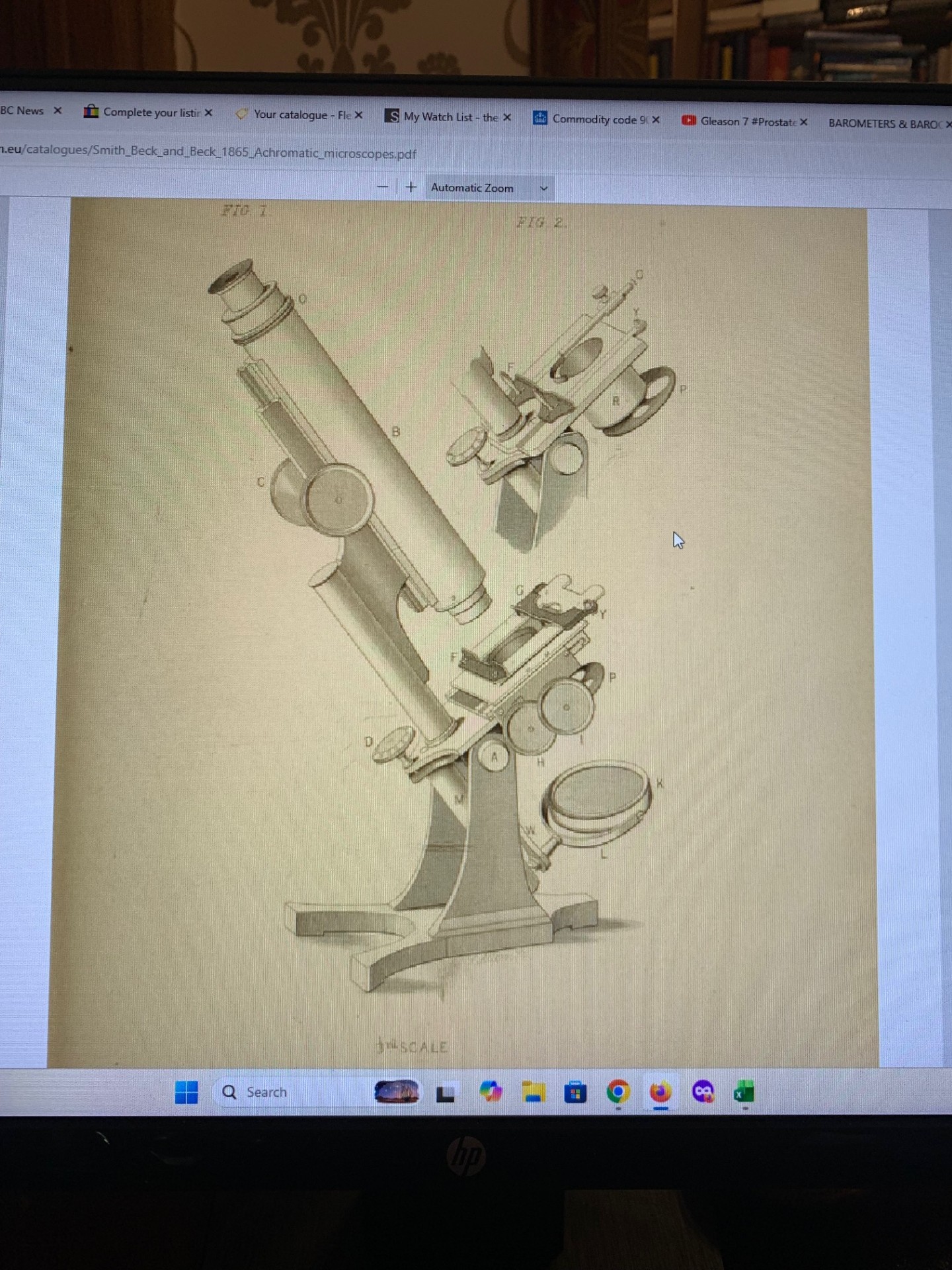
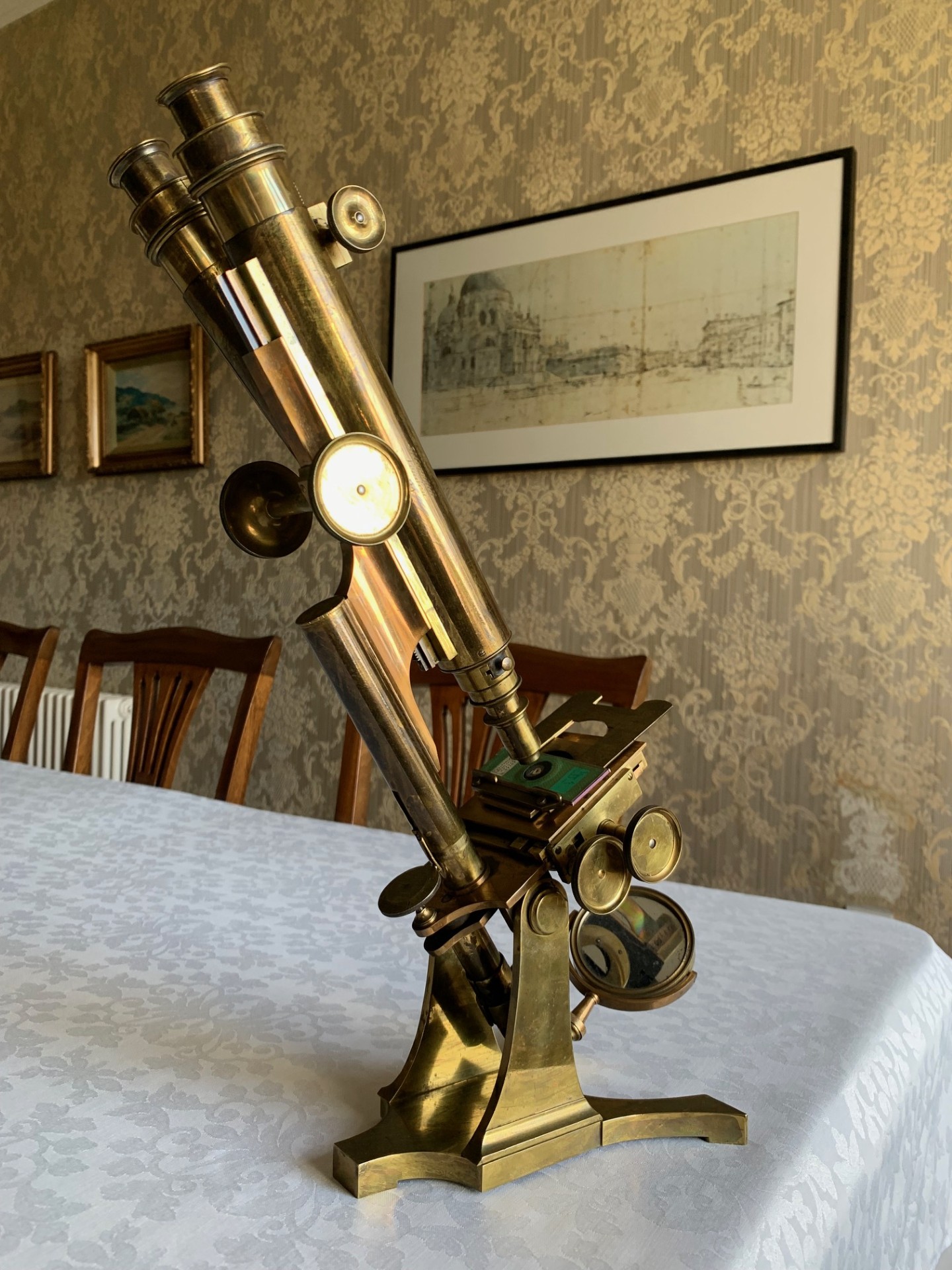
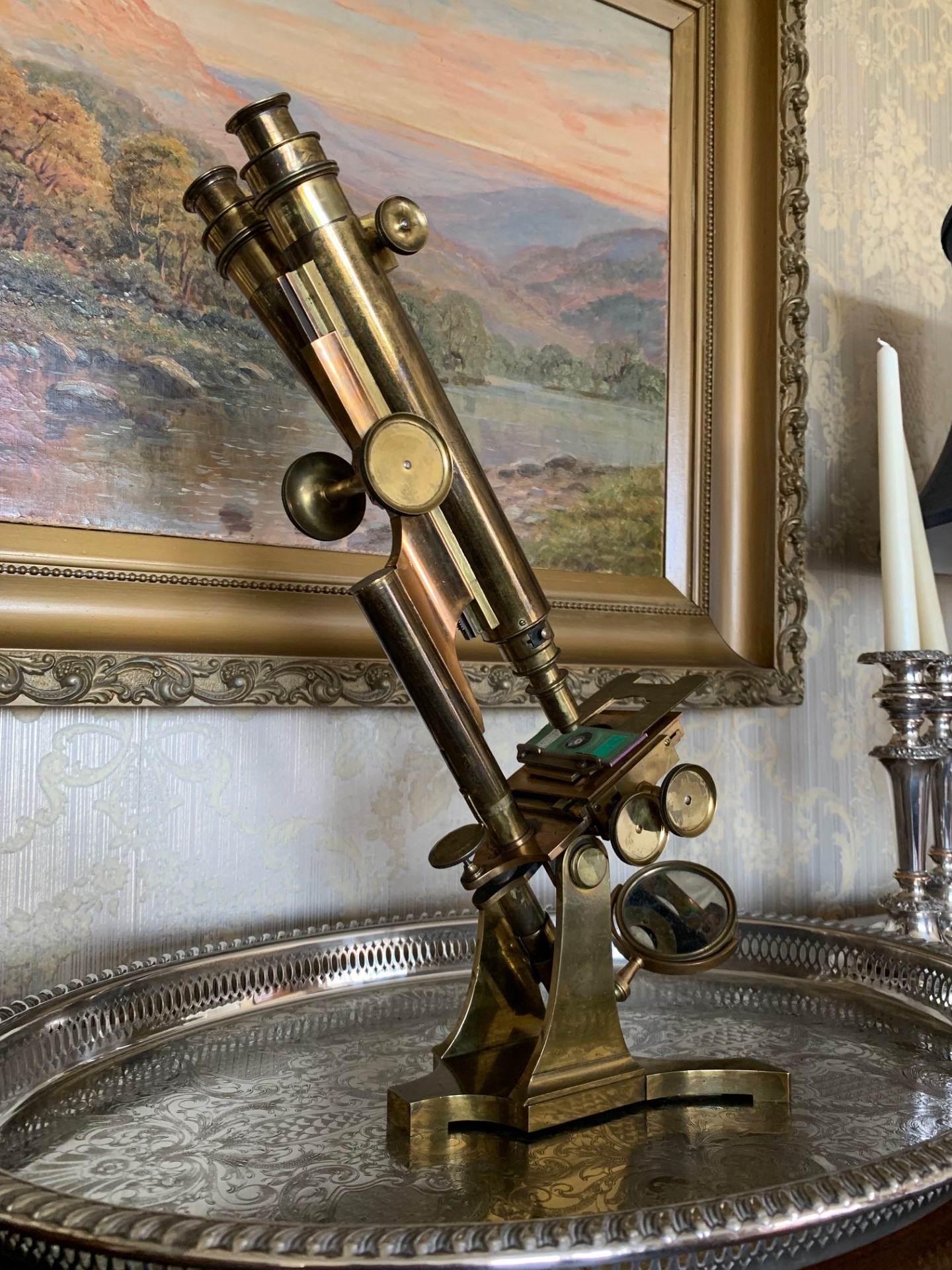
Offered for sale is a charming collectable example of a good size antique binocular brass microscope by quality makers Smith Beck & Beck of 31 Cornhill, London.   The instrument is numbered 4114 and bears the details of its makers and serial number on the main tube.  It’s a late example of a Smith Beck & Beck dating to 1865 according to my dating table source, in Wenham binocular configuration and is in pretty good cosmetic condition considering its age at around 160 years.  From a review of the available literature it seems to be a Wenham variant of the Smith Beck & Beck No. 3 stand with a conventional Y-shaped foot – see final image in listing photos.
 
Background to Smith Beck & Beck – source Microscope Museum:
 
Smith & Beck was originally established in London, by Richard Beck (1827 – 1866) in association with James Smith (1800 – 1873), and later to be joined by his brother Joseph Beck. Richard and Joseph Beck were nephews of Joseph Jackson Lister, who was a respected British optician and physicist who experimented with achromatic lenses and perfected an optical microscope. In commissioning the manufacture of his improved microscope, Lister worked with James Smith, an employee of the instrument-making firm of William Tulley, to create the stand. James Smith went on to establish his own optical instruments workshop in 1837. Through this relationship, Lister arranged for his nephew, Richard Beck to be an apprentice under Smith in 1843. In 1847, James Smith entered into partnership with Richard Beck, and the company was re-named Smith & Beck. In 1854, the company was renamed to Smith, Beck and Beck, as Richard Beck’s brother Joseph Beck joined the company in 1851. James Smith retired in 1865 and the company became R & J Beck and this name lasted for long time well into the twentieth century.
 
 
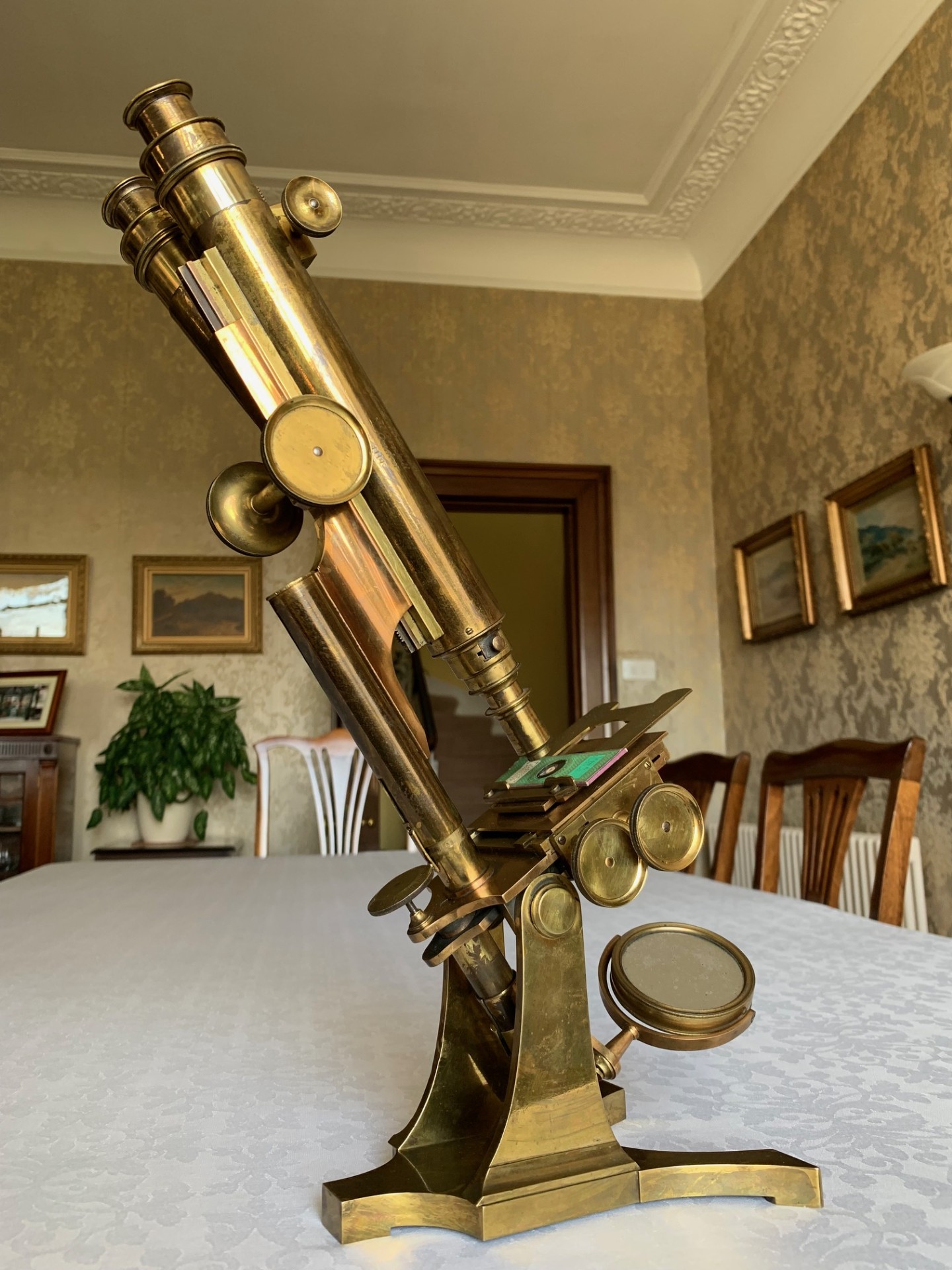
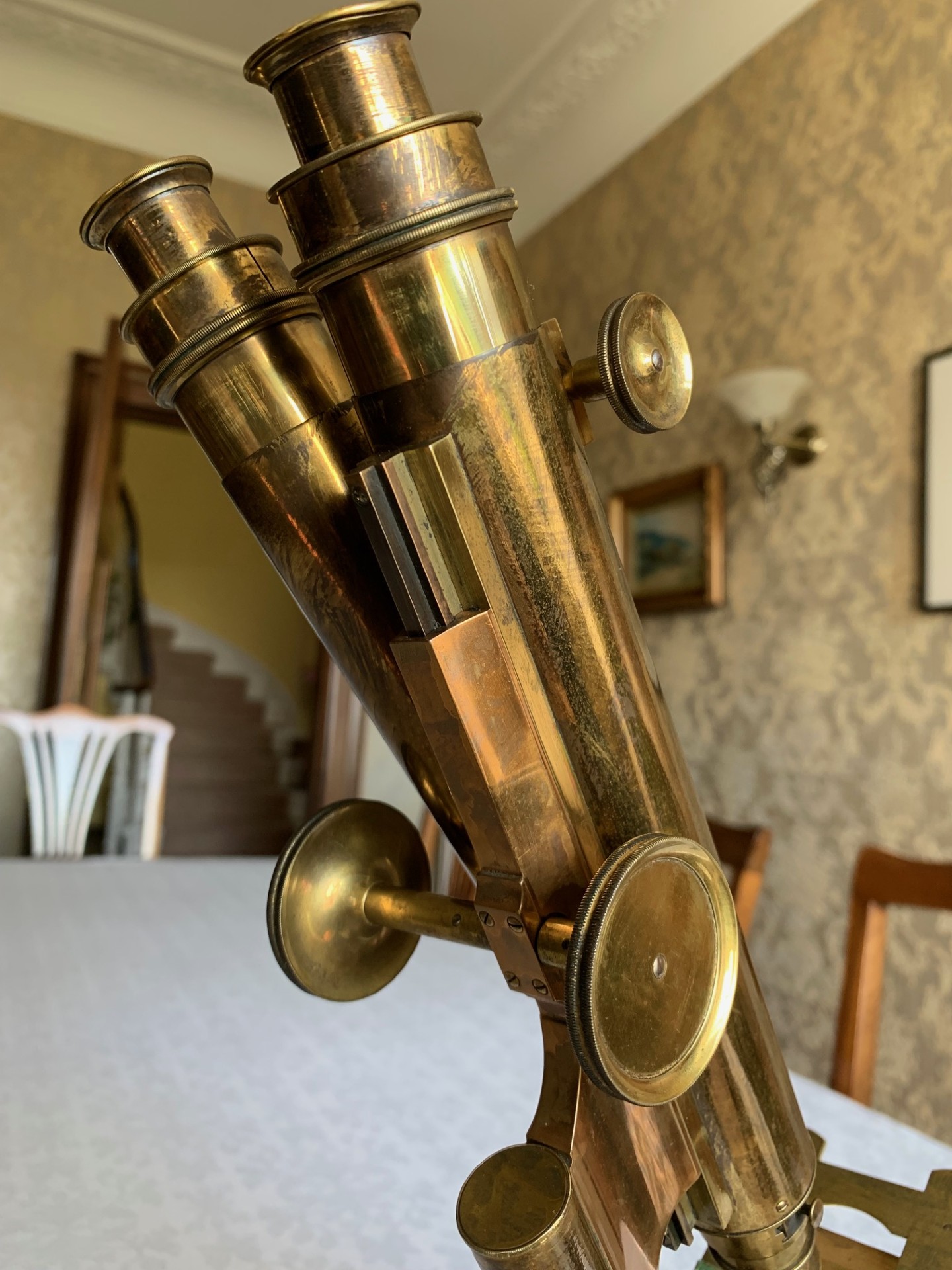
This example is a really well-engineered and characterful instrument, suitable for both low-power use and in the right setting as a signature display piece, with a wonderful patinated look about it.  It’s endowed with age and use-related patination and lacquer finishes showing evidence of historic polishing to the majority of its surfaces, which is quite common for antique instruments of this vintage.   It stands about 17 inches tall when racked out to focus a 10x magnification objective as shown fitted in the listing photos, with the eyepiece draw-tubes also extended and as such it makes a signature technical display piece.
 
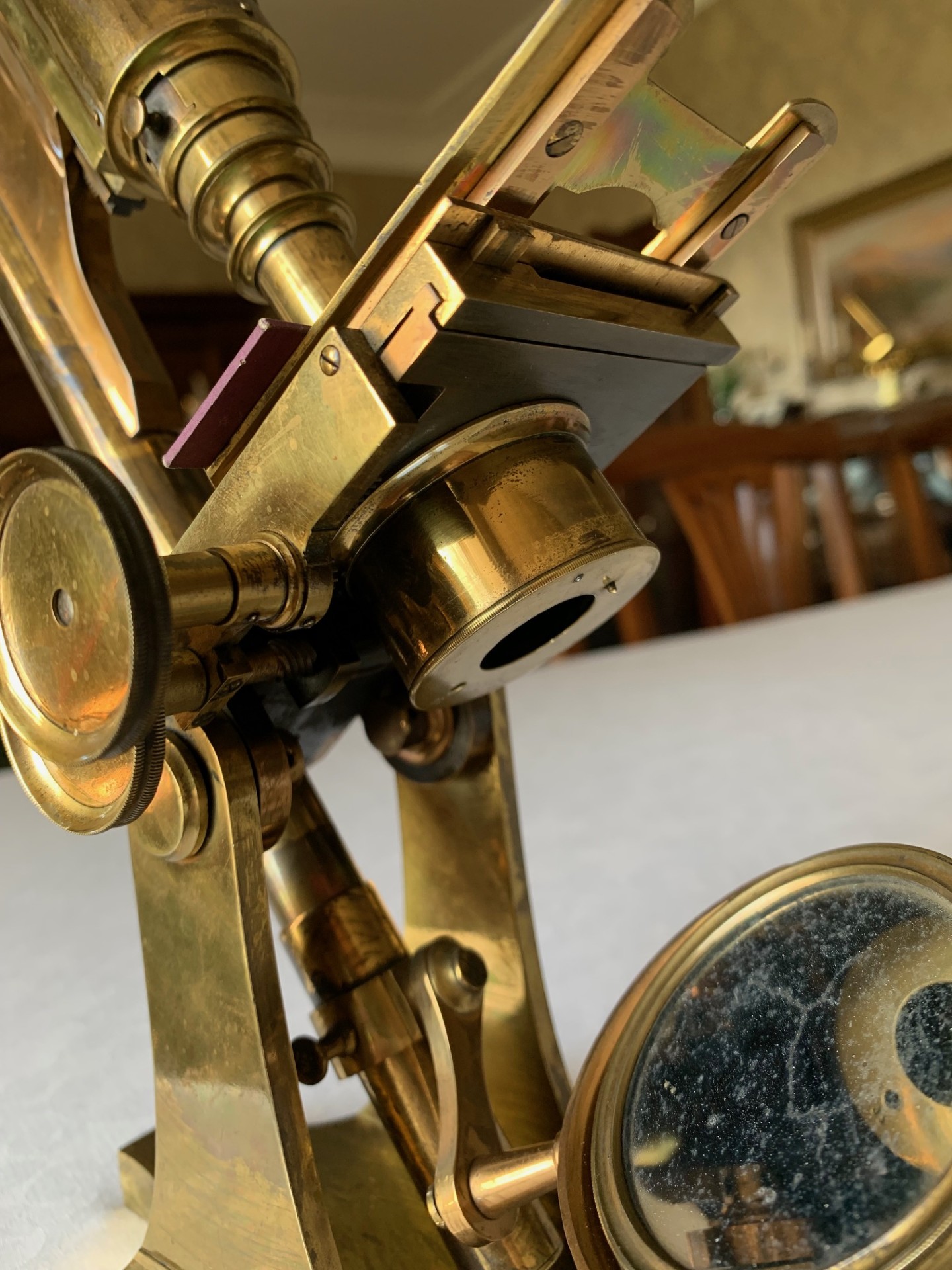
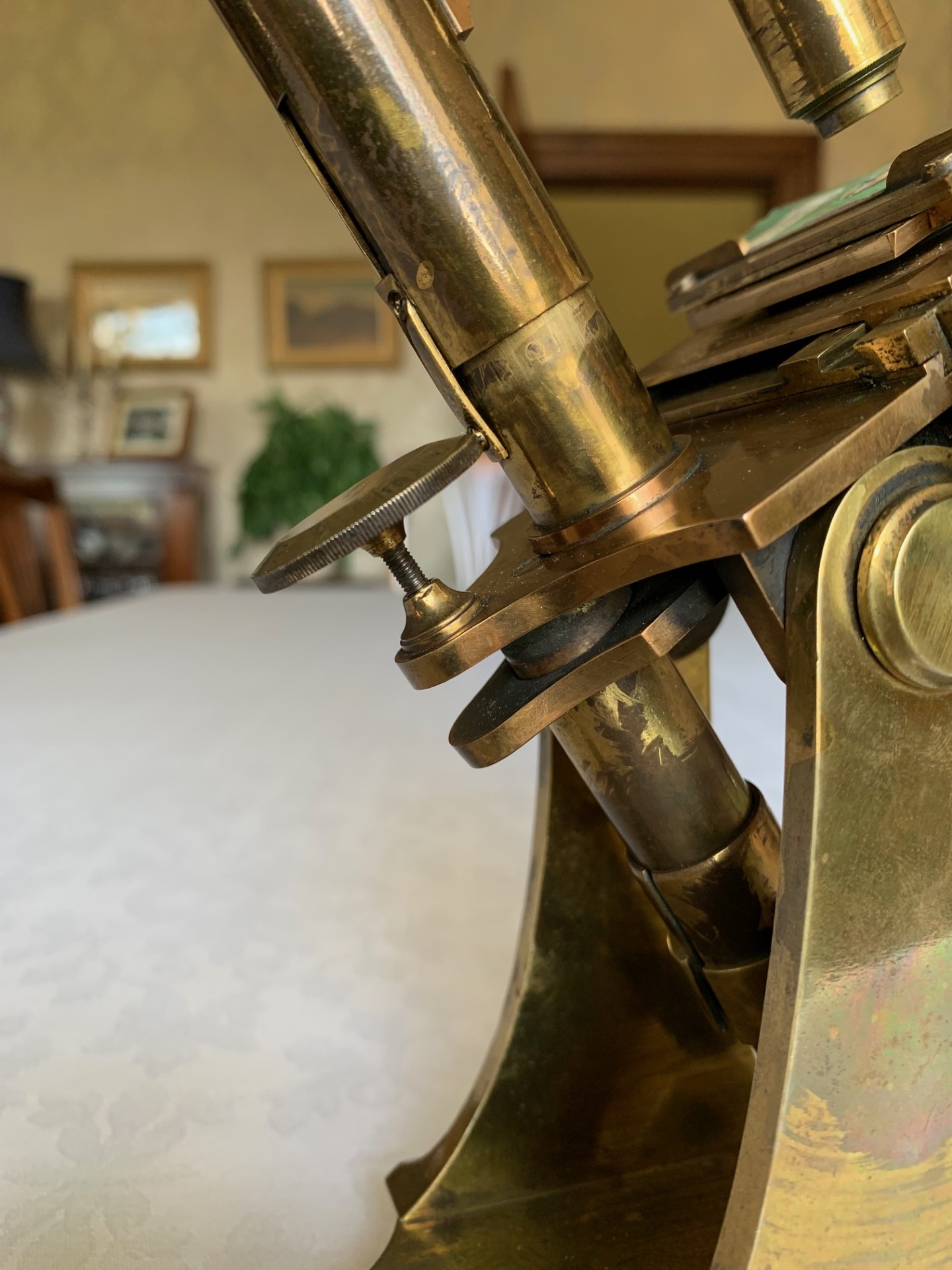
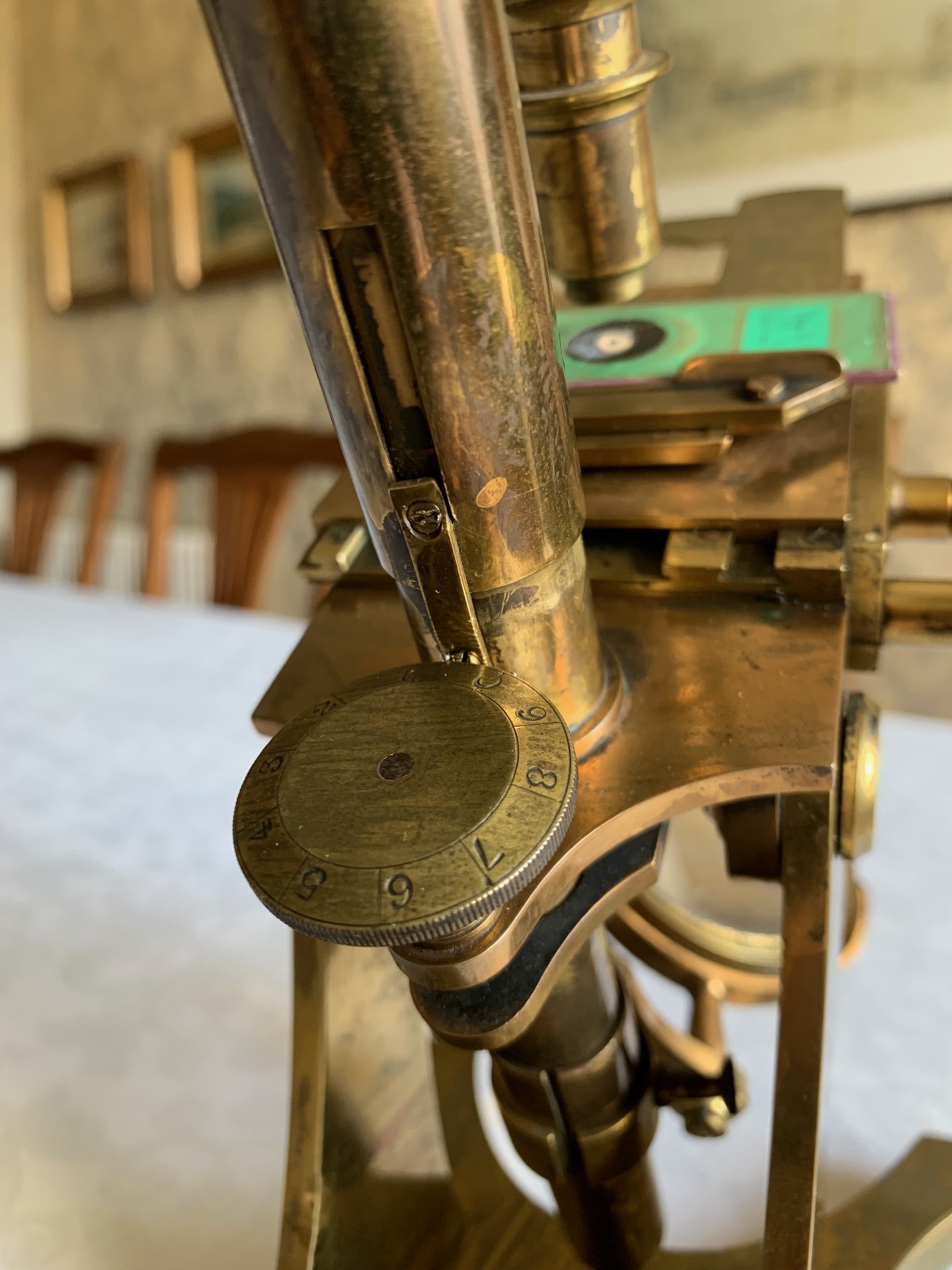
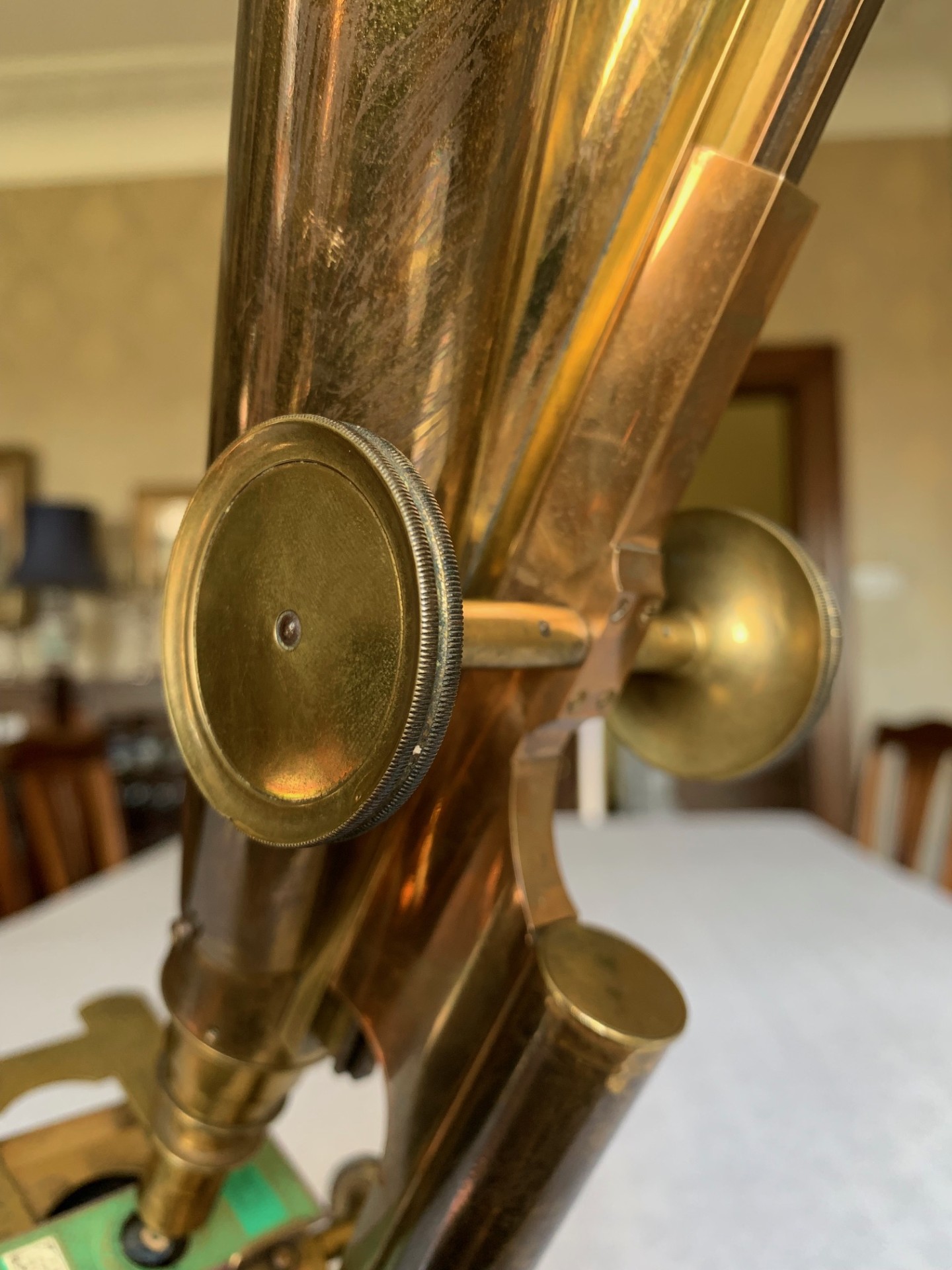
In terms of the technical details, the instrument stands on a brass Y-shaped foot with twin uprights leading to the main pivot joint.  There’s an upper limb with a pillar-type arrangement giving a good range of coarse focus travel, which allows low power high working distance objectives to be used for inter alia entomology, botany and similar applications.  The instrument tilts for inclined viewing and holds in position throughout the usable range of inclination.  Coarse focus is via the older-style straight-cut rack and pinion, with smooth action and good rack with no missing teeth with the main binocular tube holding in position as it should on adjustment throughout its working range.  For fine focus there’s a graduated thumb-wheel at the rear of the stage behind the upper limb, which moves the whole upper part of the instrument.  This control is inoperative at present and will need repair.  It’s an unusual location for this control, with the mechanism inside the limb and for low-power applications such as entomology and botany fine focus isn’t really essential in any event.

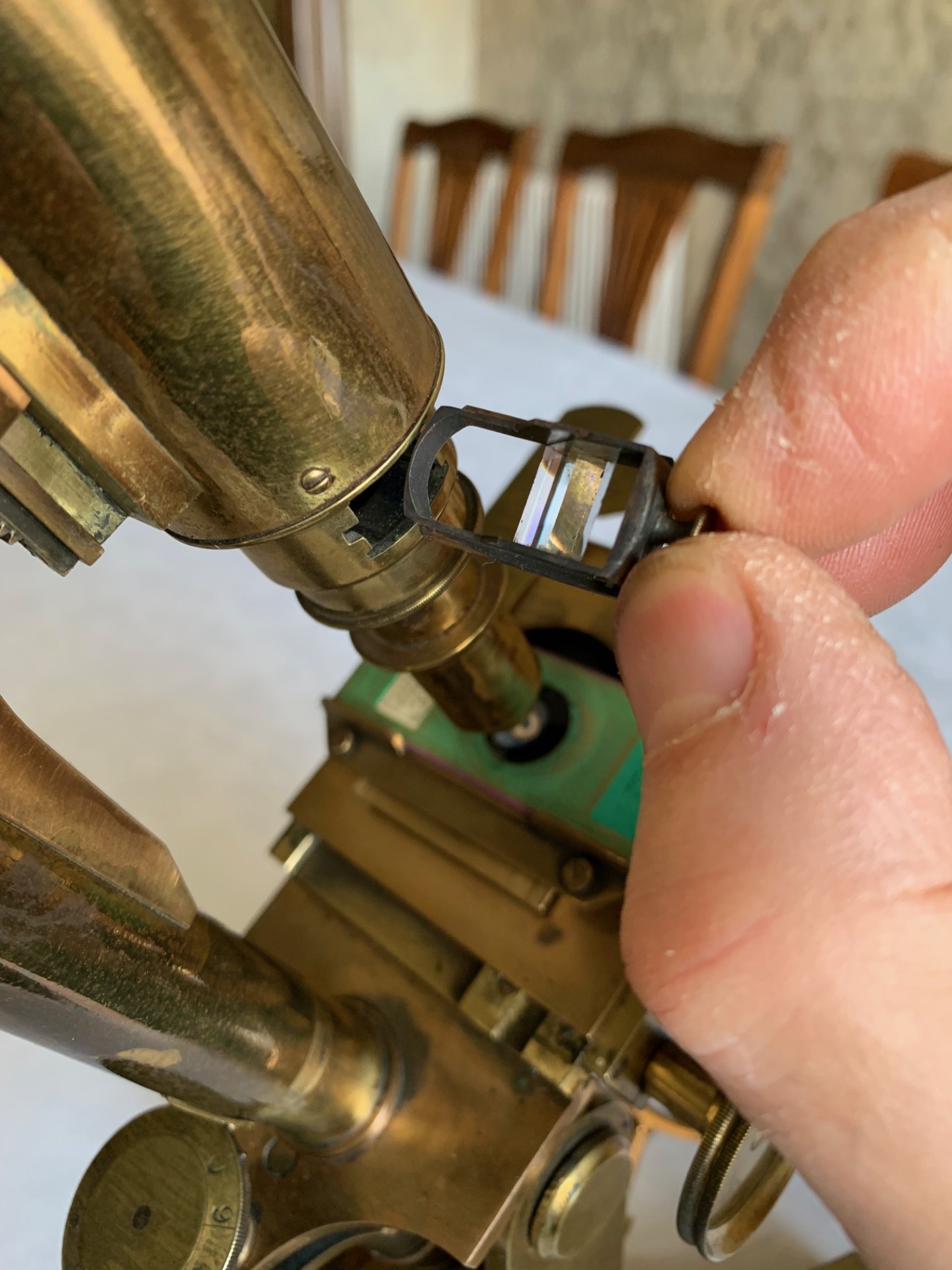
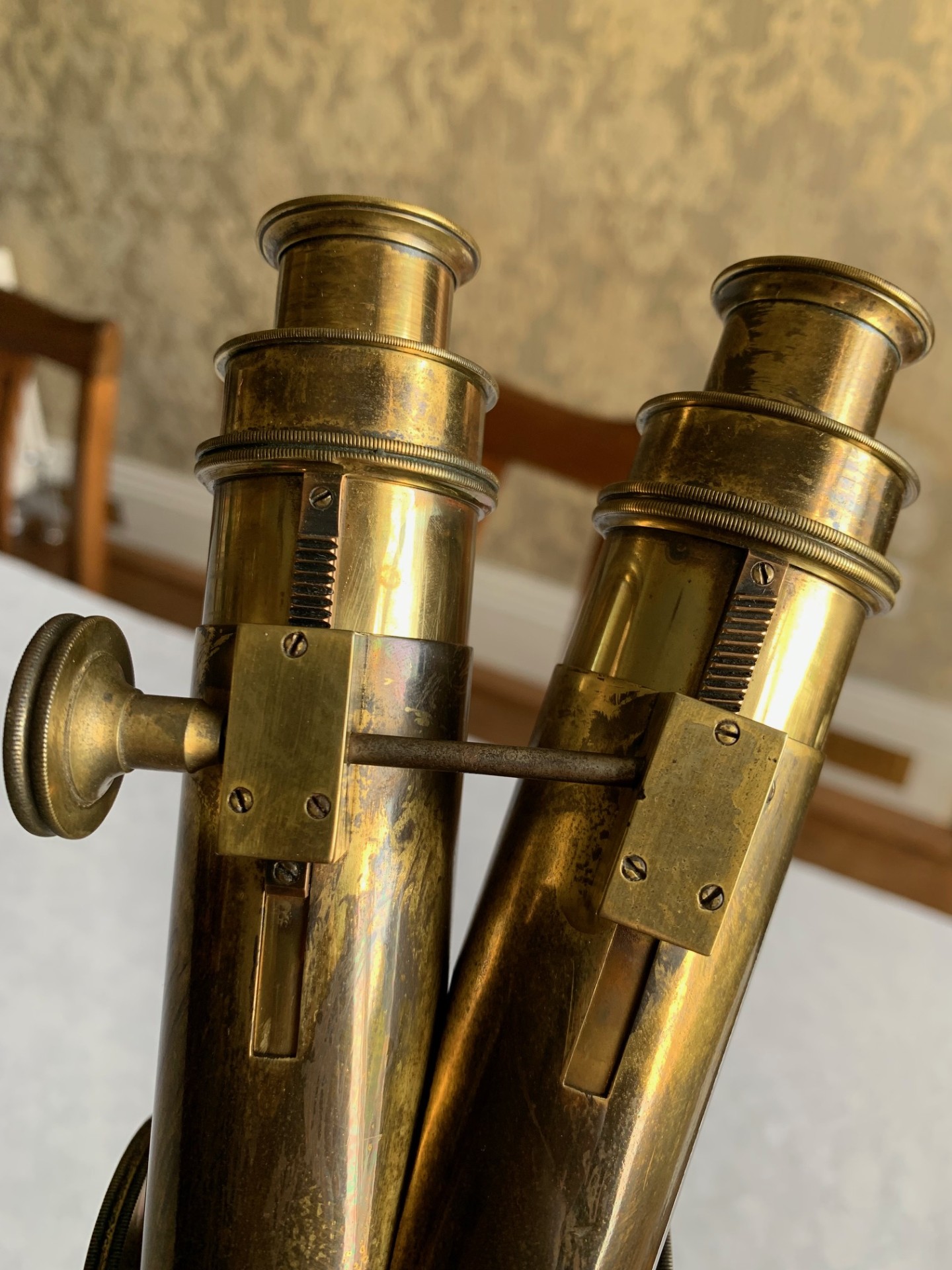
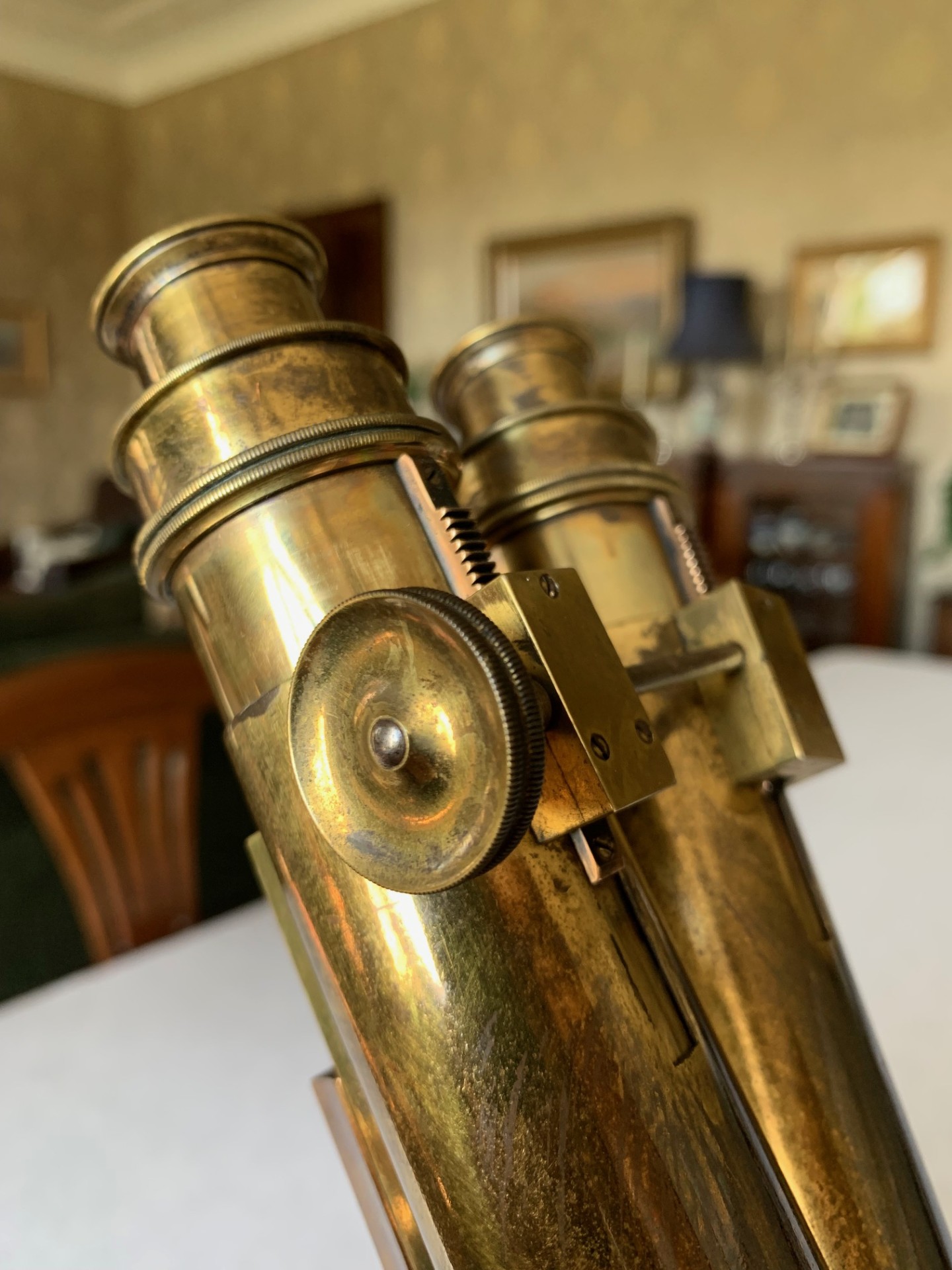
With its optics, this instrument is in binocular configuration with a Wenham-style prism in a shoe-carrier just above objective, which is on an in/out slider and when set to “in” splits the light beam thereby illuminating both optical tubes: collimation is good.  There’s mechanically extendable eyepiece draw-tubes operated by a rack and pinion system which works well.  Extending the draw-tubes will increase magnification – you also have to re-focus.  

There’s one pair of top-hat eyepieces:

– 6x magnification

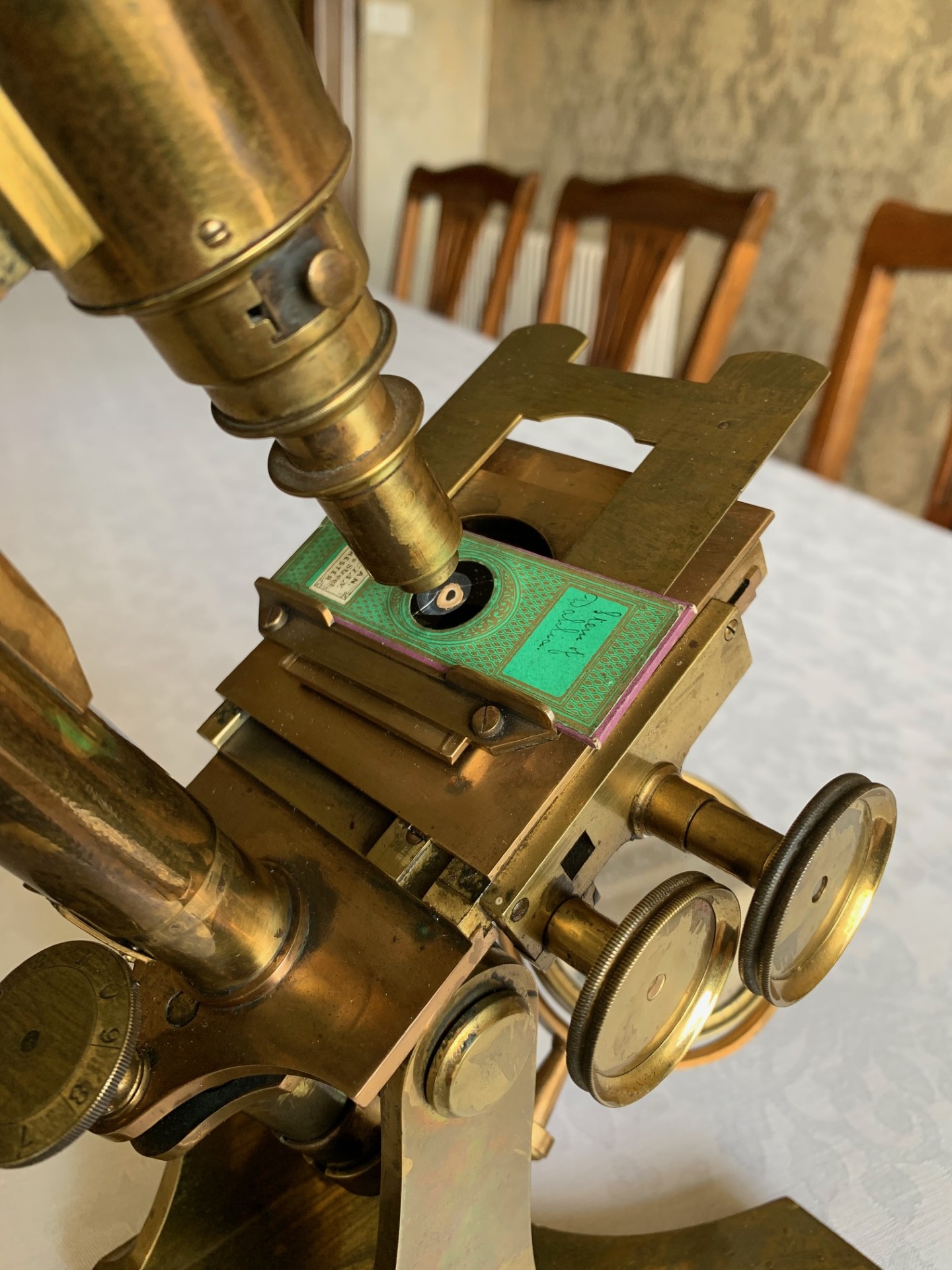
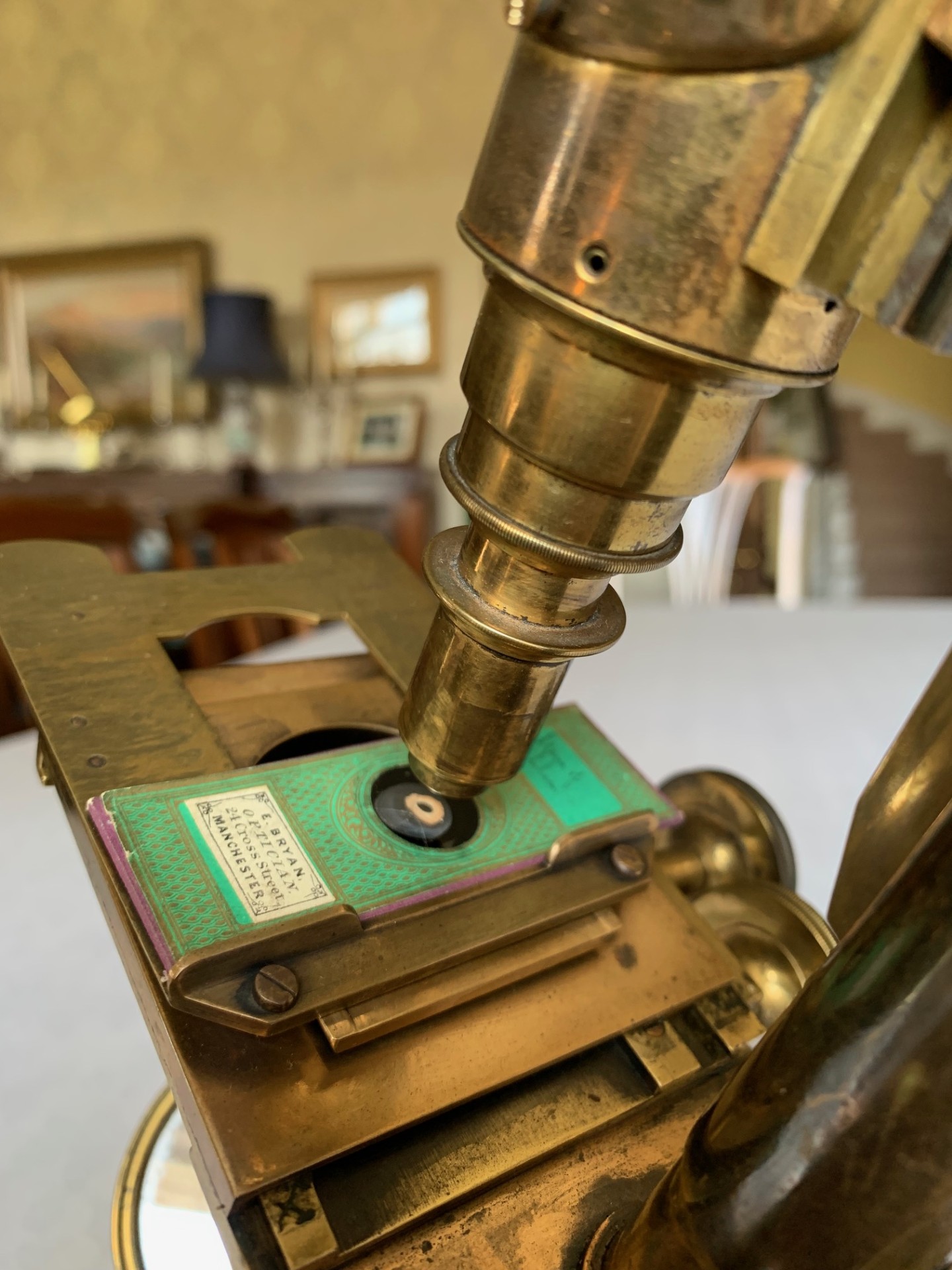
There’s one objective lens in brass, as under – note the instrument is RMS in terms of objective thread diameter, so plenty of other objectives should also fit:

– 2/3rds inch – approx 10x magnification

The magnification range available is therefore around 60x with the current set of optics.

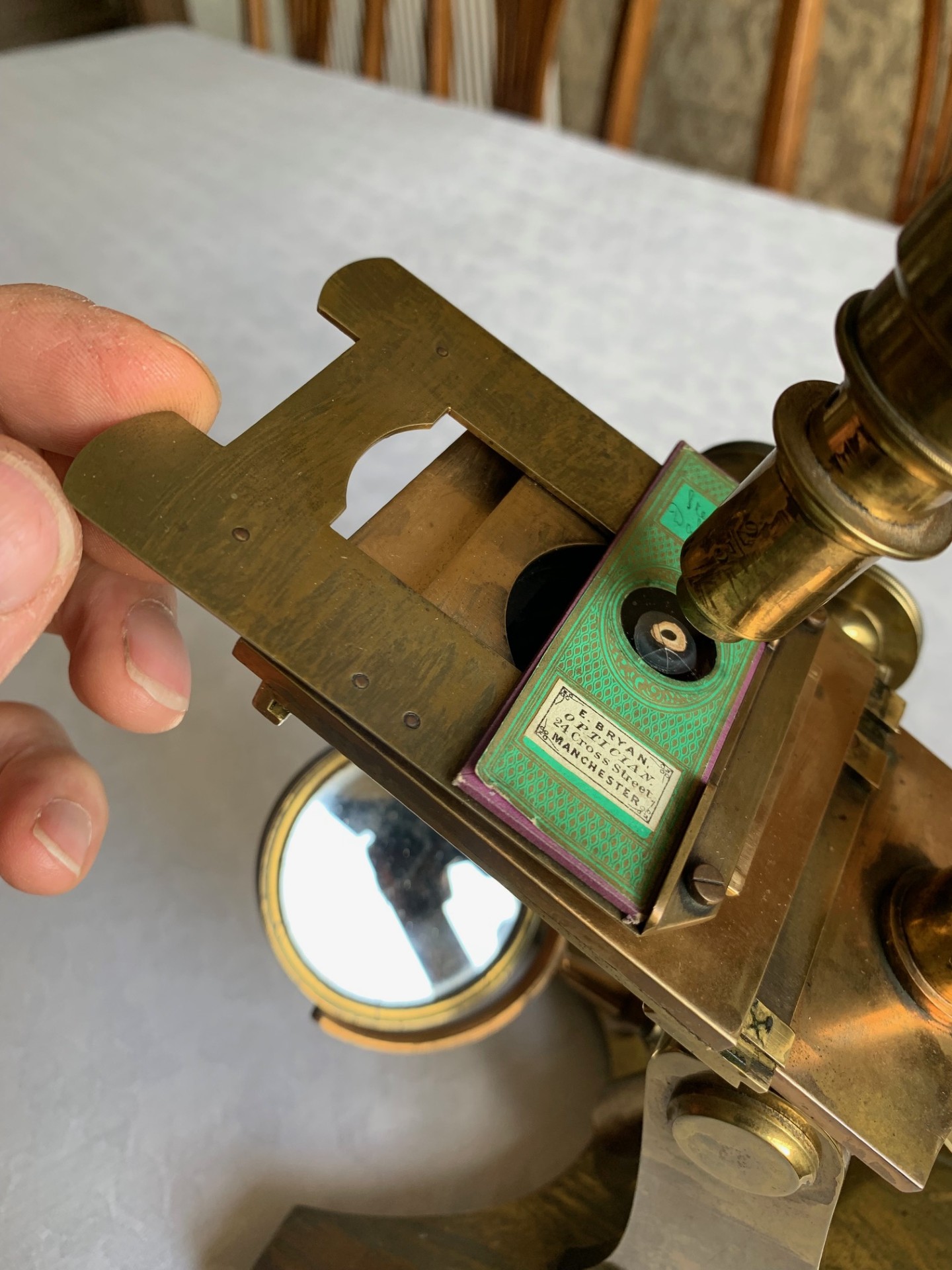
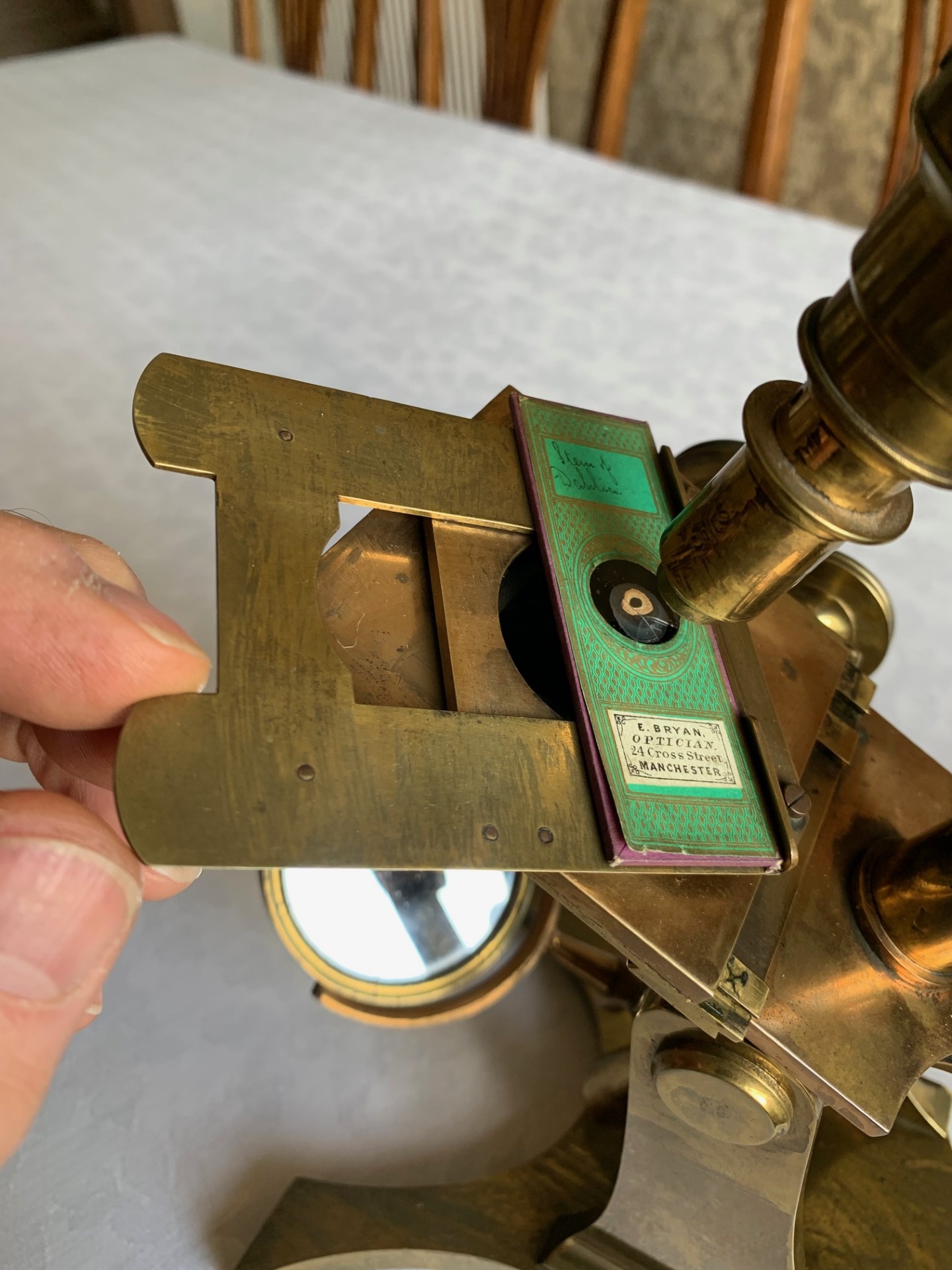
The fully mechanical rectangular brass stage is attached to the limb at the pivot point and is a well engineered feature that’s a delight to use, with nice smooth action to its moving parts.  It’s got thumb-wheel x/y adjusters for both axes with smooth operation.  The top-plate slides off and also rotates and with careful adjustment it will complete a full 360 degrees.  It also has an integral specimen slider/ledge for holding slides during inclined viewing and when the axes are being moved around which works well.  The x/y controls have a nice solid feel about them, offering good accurate control of specimen positioning.  

Turning to the sub-stage, we have a brass ring-mount that’s currently fitted with a fixed aperture also in brass.

Lighting is via a plano-concave mirror in a brass carrier on a height/rotation adjustable brass support arm and gimbal fitted to the limb tailpiece, with good range of adjustment also allowing oblique illumination as may be required for various applications.  The mirror silvering is in pretty good condition to both sides with reflectivity that’s perfectly adequate. 

There’s no case for the instrument and this instrument’s forte in its current condition is probably display with occasional light use.

The instrument and its controls have been very gently dusted, lightly lubricated and operate smoothly with age-appropriate signs of wear and condition points as described, very much as one would expect for an instrument of this quality and age.  With its patinated lacquered finishes and the signature double optical tubes, it’ll make a great display piece in the right setting and is also a usable instrument currently set up for low power applications.  It presents really well and I’m certain it will look the part in a library or home office, especially when set up with an appropriate antique slide. 

Owing to the weight and delicacy of this antique microscope, it will be partially dismantled, carefully wrapped for shipping and dispatched by insured courier upon receipt of cleared funds.  UK shipping will be by Royal Mail Special Delivery.

Thanks for looking and just message seller if any additional photos or details of condition are required.


Ask the Dealer

Item enquiry

To enquire about this item, complete the form bellow to send a message to the Dealer

Enter Email
Confirm Email
Sending

Dealer information

GB Arcboutant Scientific

Arcboutant Scientific based in Glasgow Scotland, with an interest in scientific collectables dating back to 1988. Now making available carefully curated fine examples, principally of antique microscopes and associated scientific equipment by quality English and Continental makers, to collectors world-wide.

Shipping information
Payment methods
Terms & conditions