
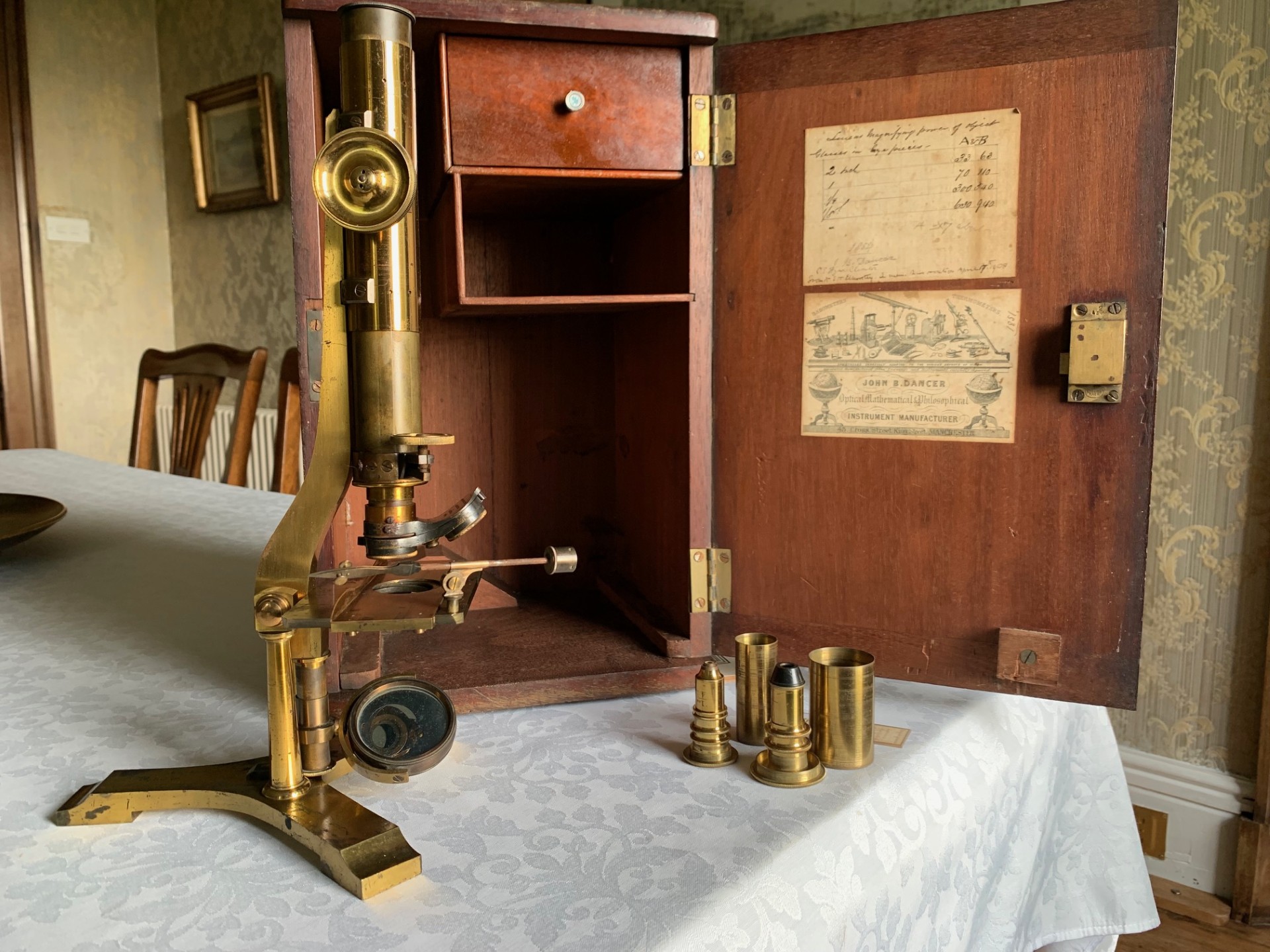
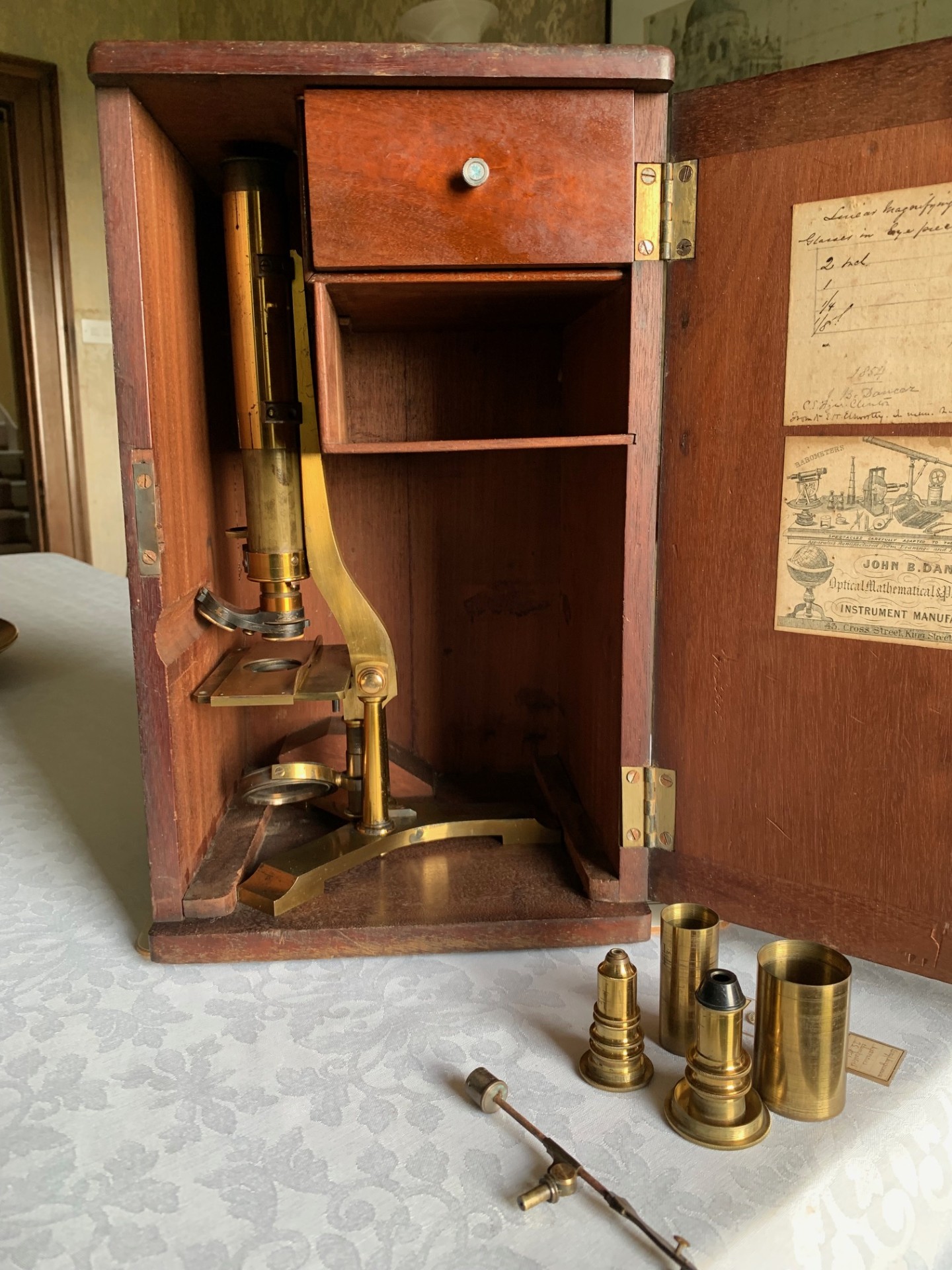
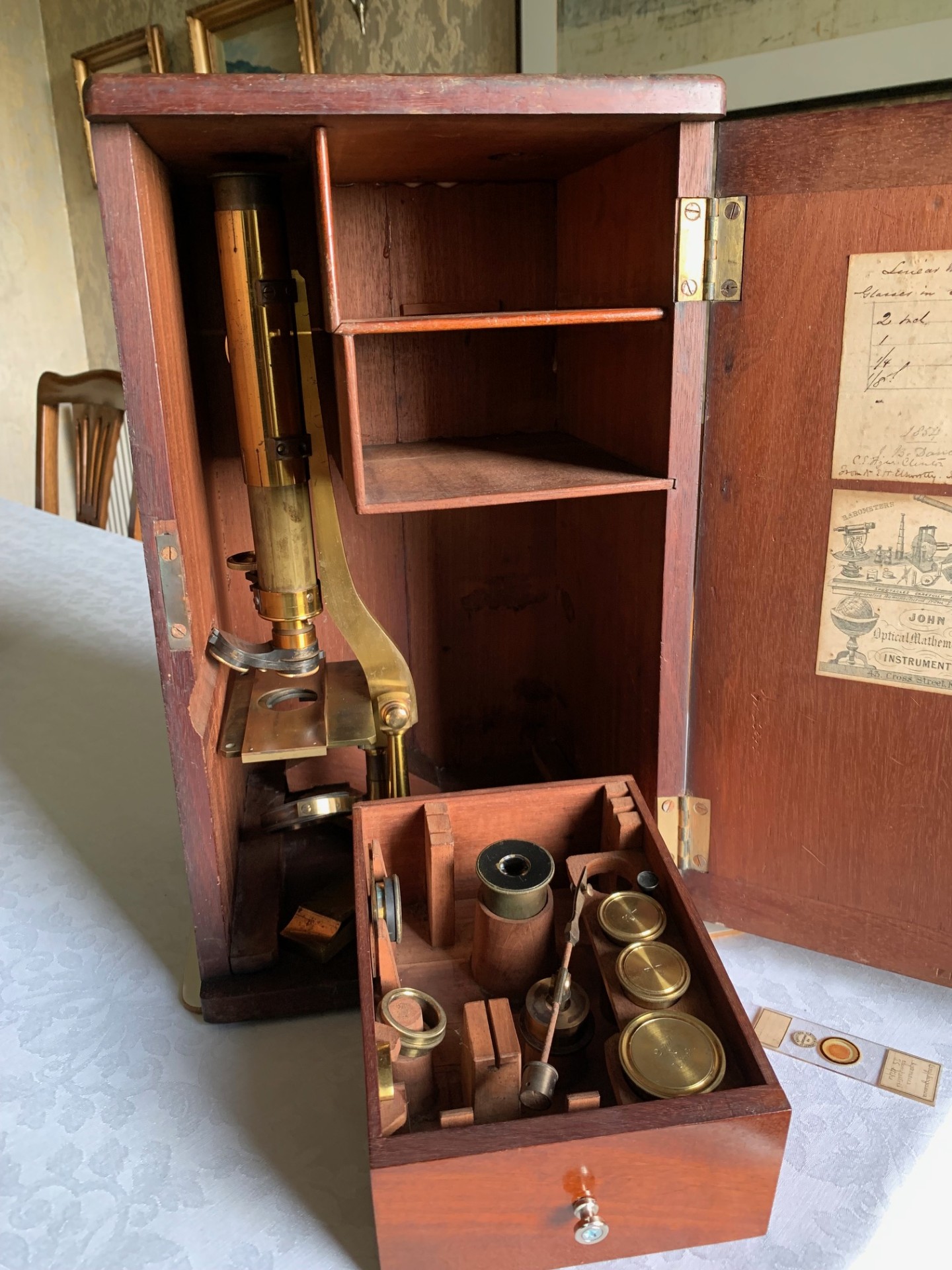
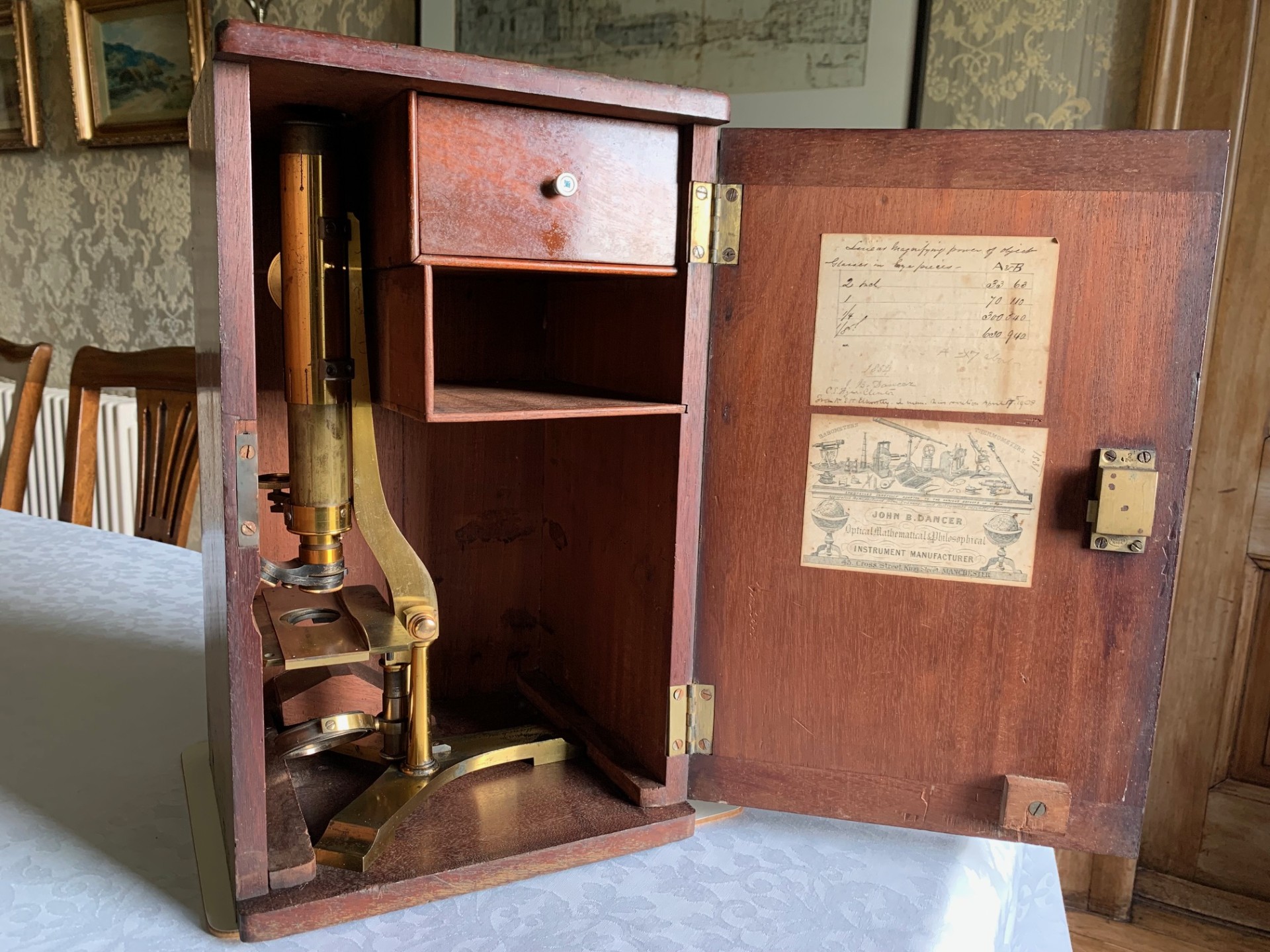
Early Antique Lister-limb Brass Microscope by John Benjamin Dancer c1850, Cased
£675
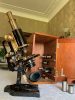
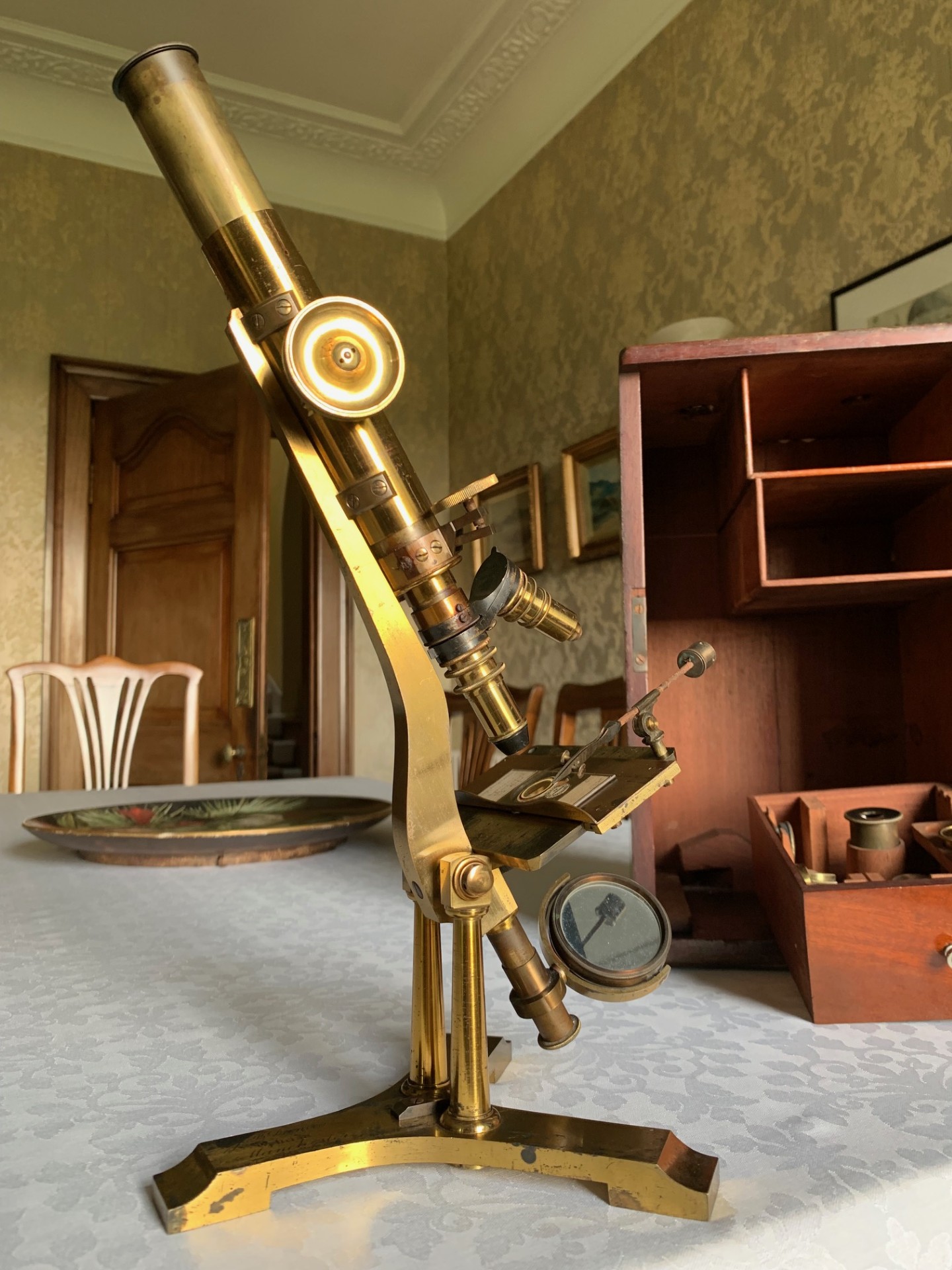
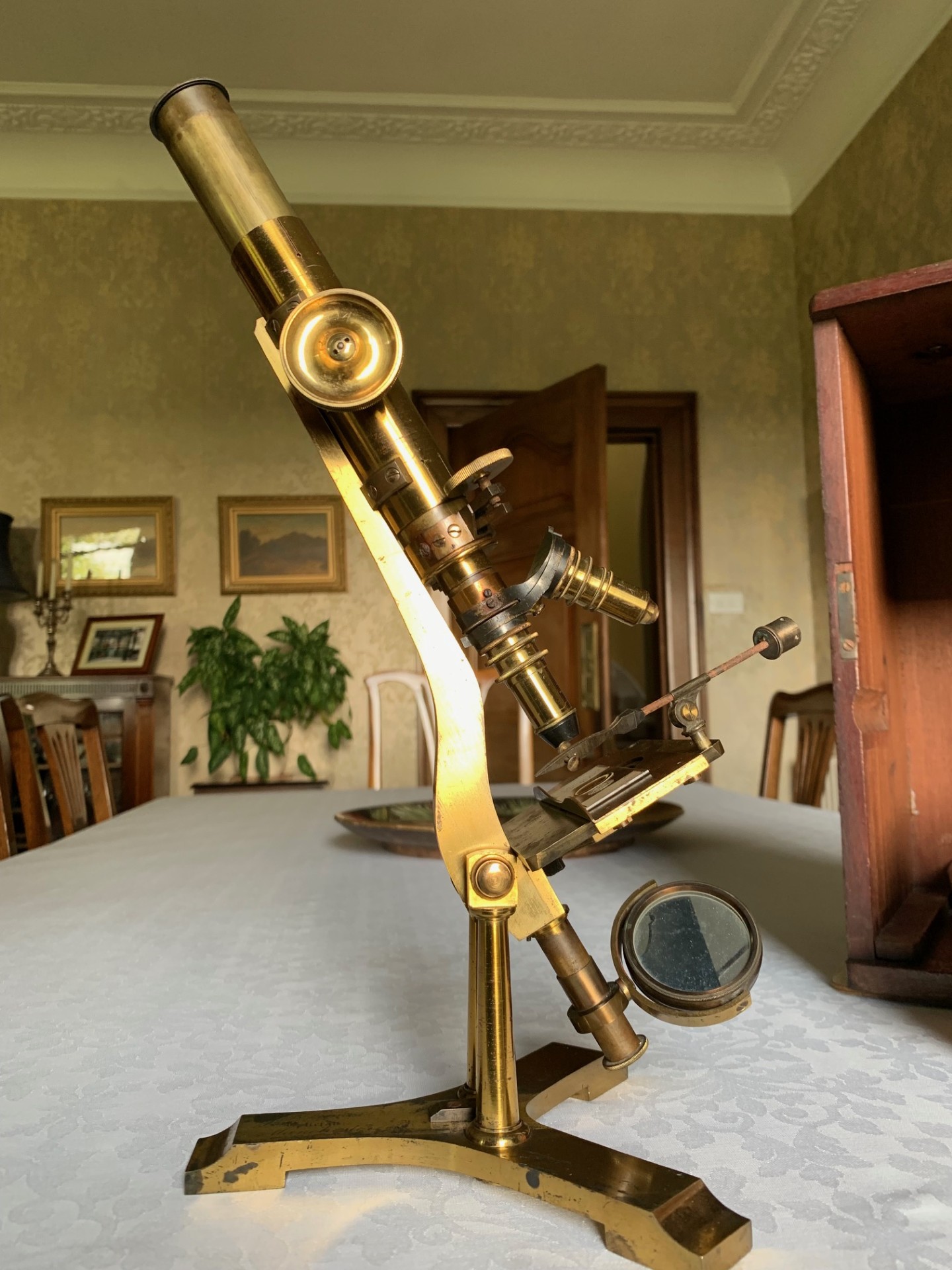
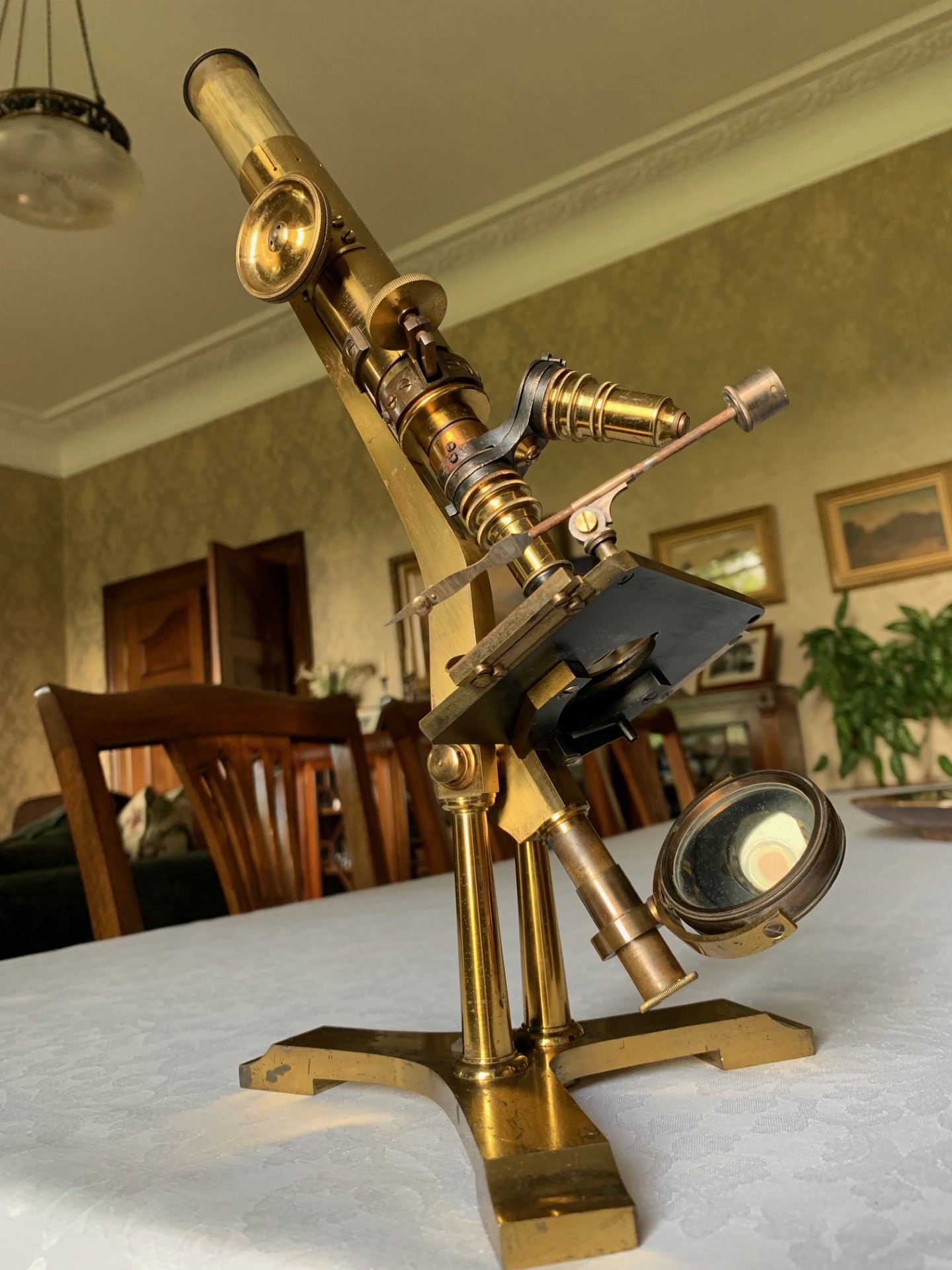
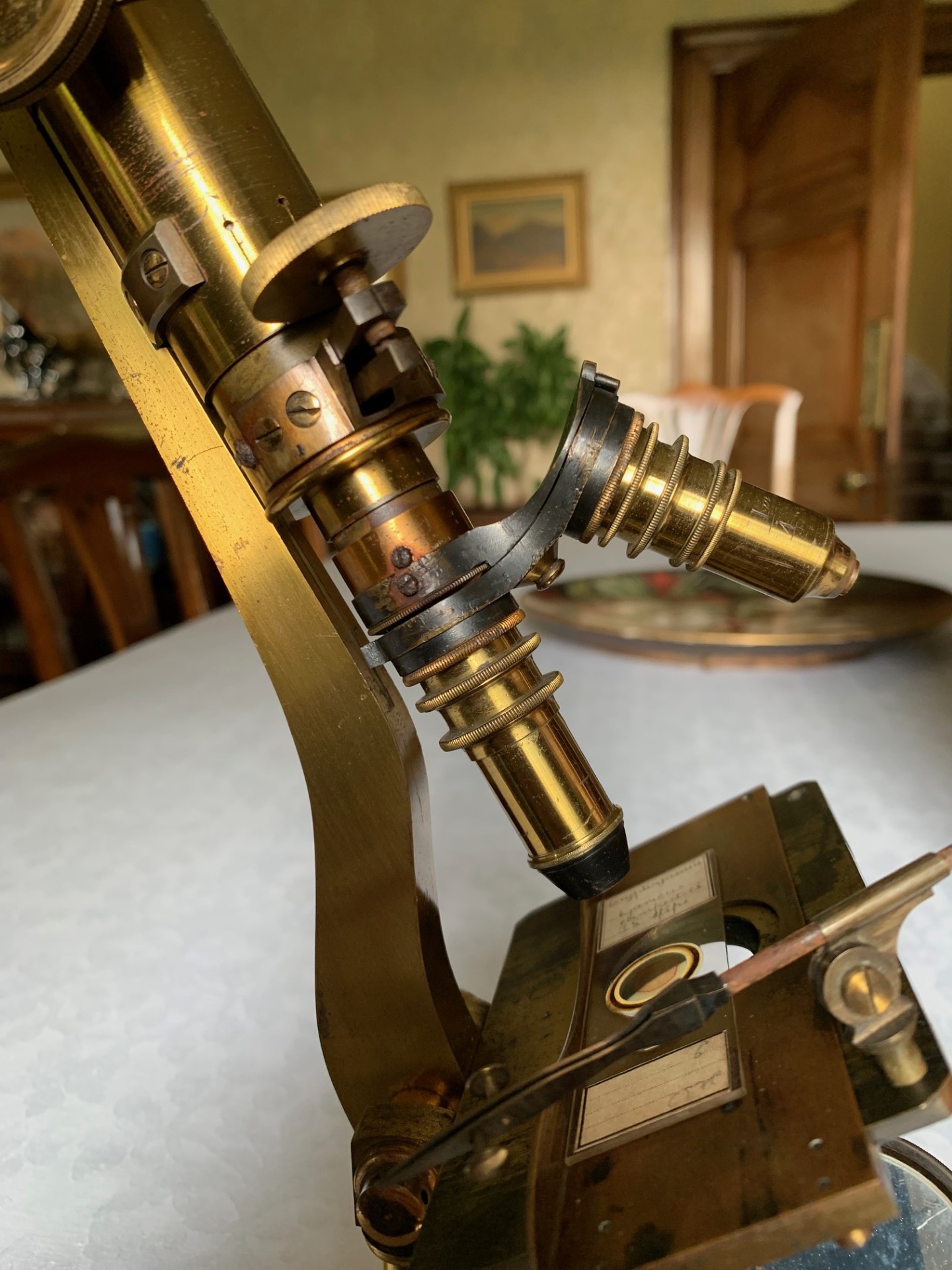
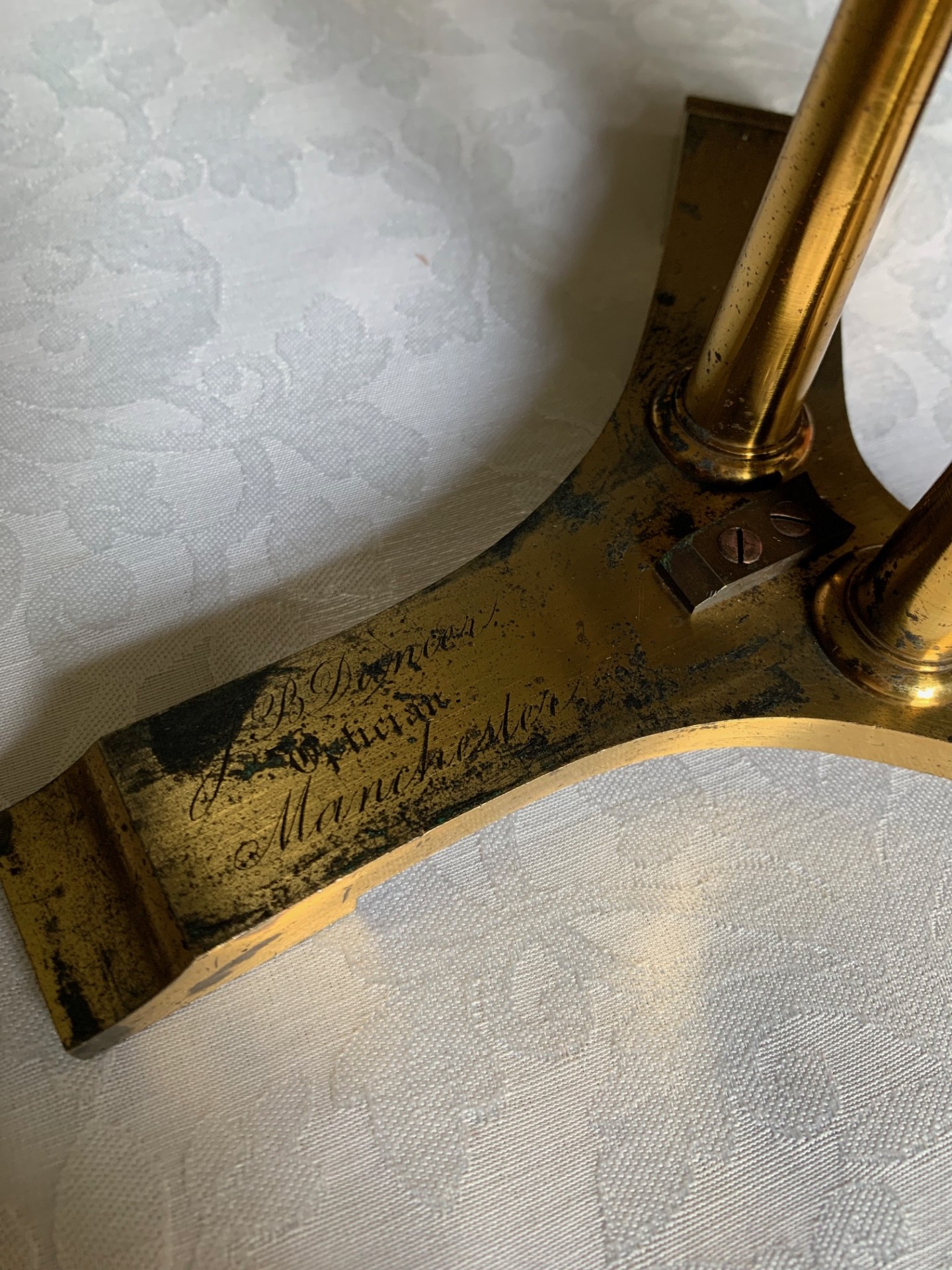
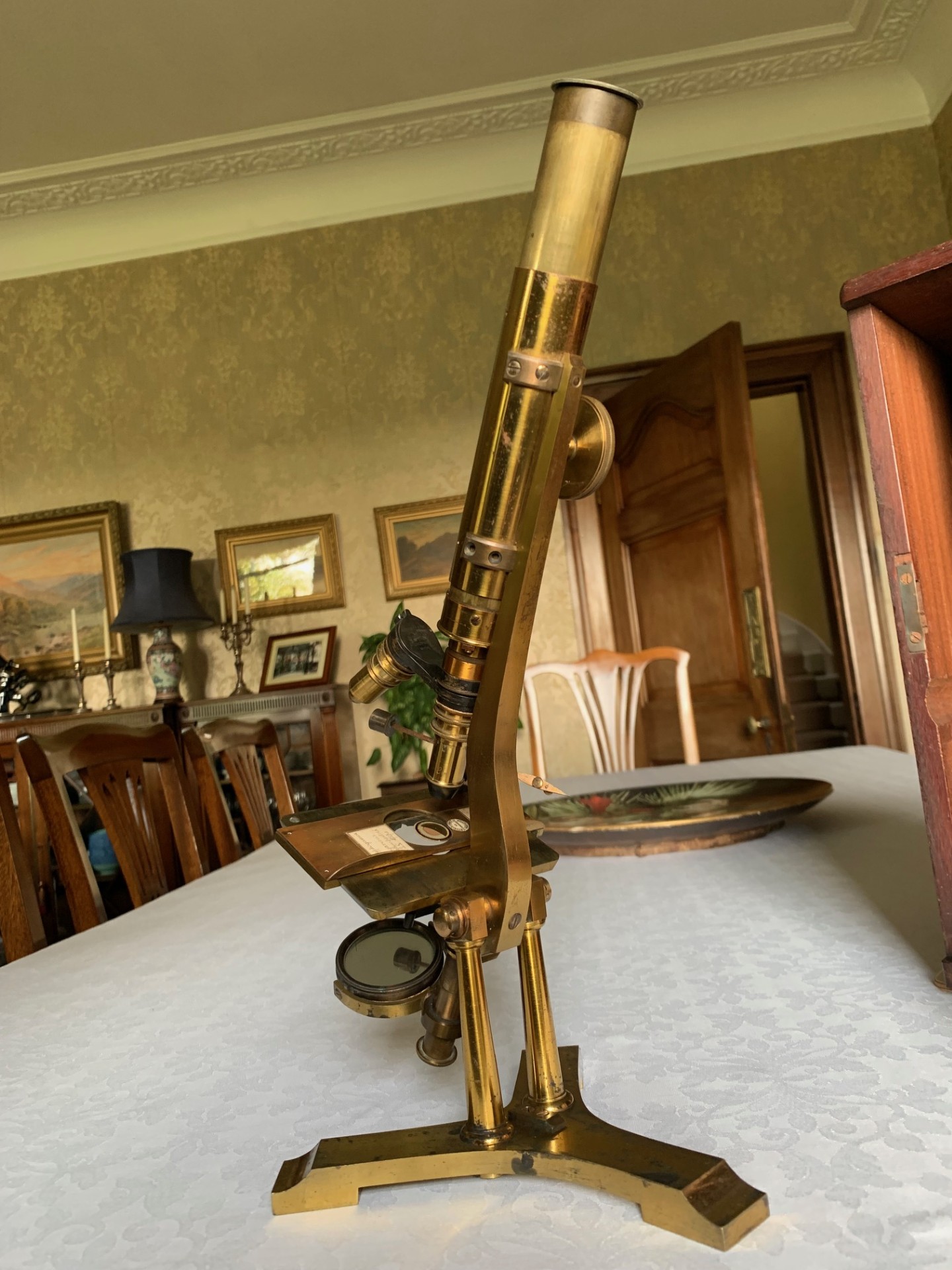
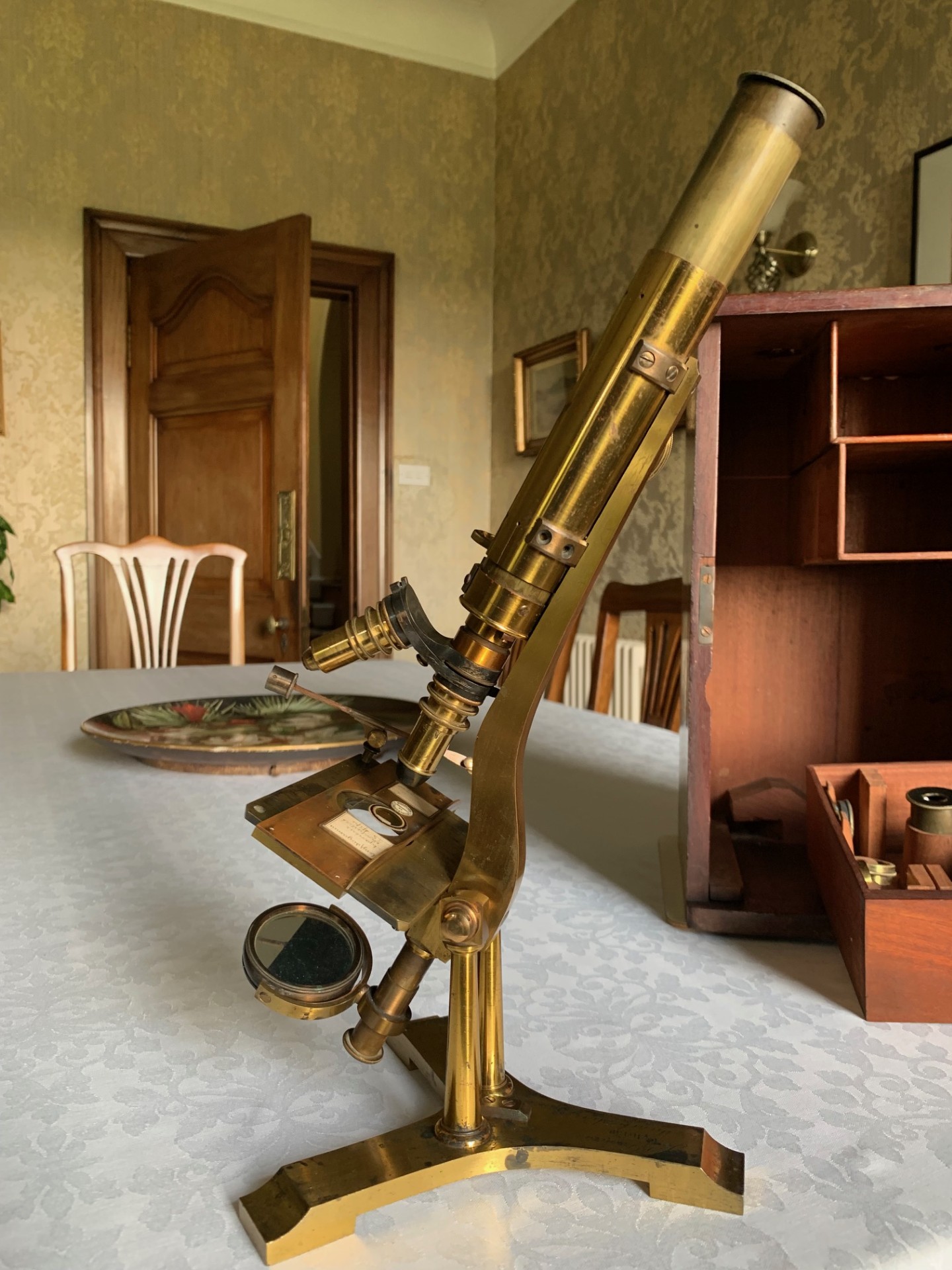
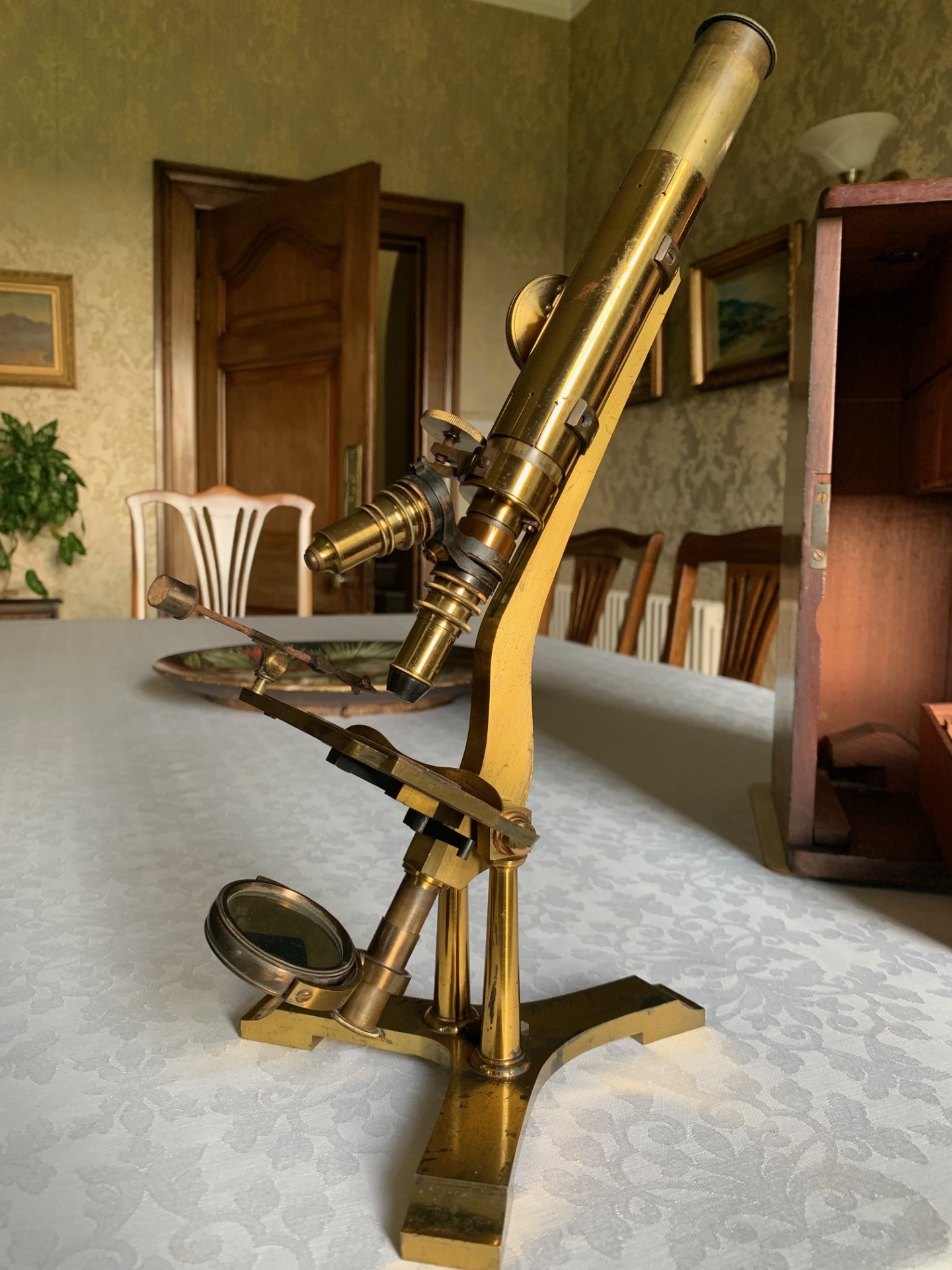
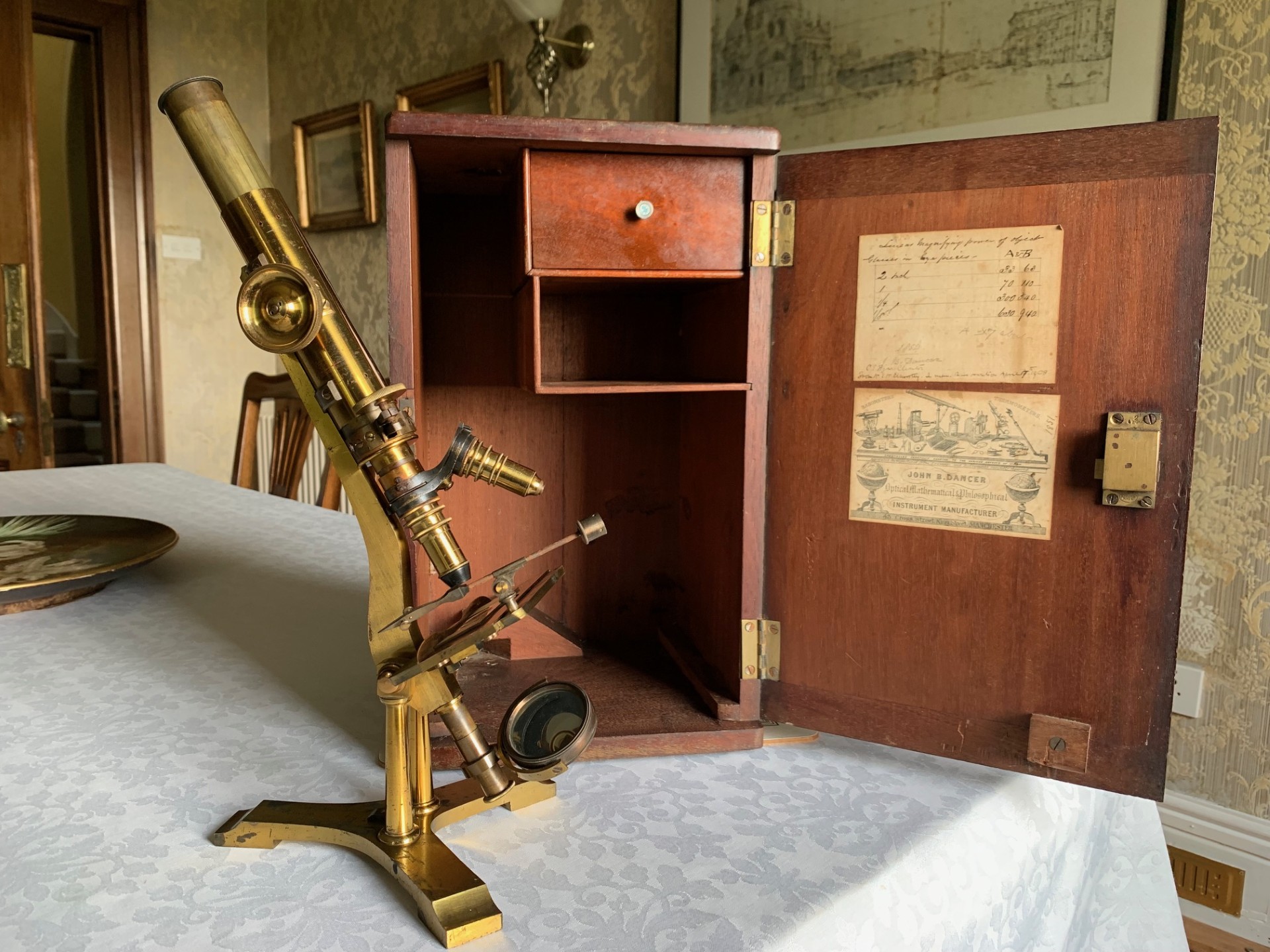
Lovely antique early-Victorian period example of an monocular brass Lister-limb microscope by quality maker John Benjamin Dancer of Manchester.
Circa
1850
Maker
John Benjamin Dancer, Manchester
Country of manufacture
UK and Ireland
Description
Background to J. B. Dancer (source – Microscope Museum website):
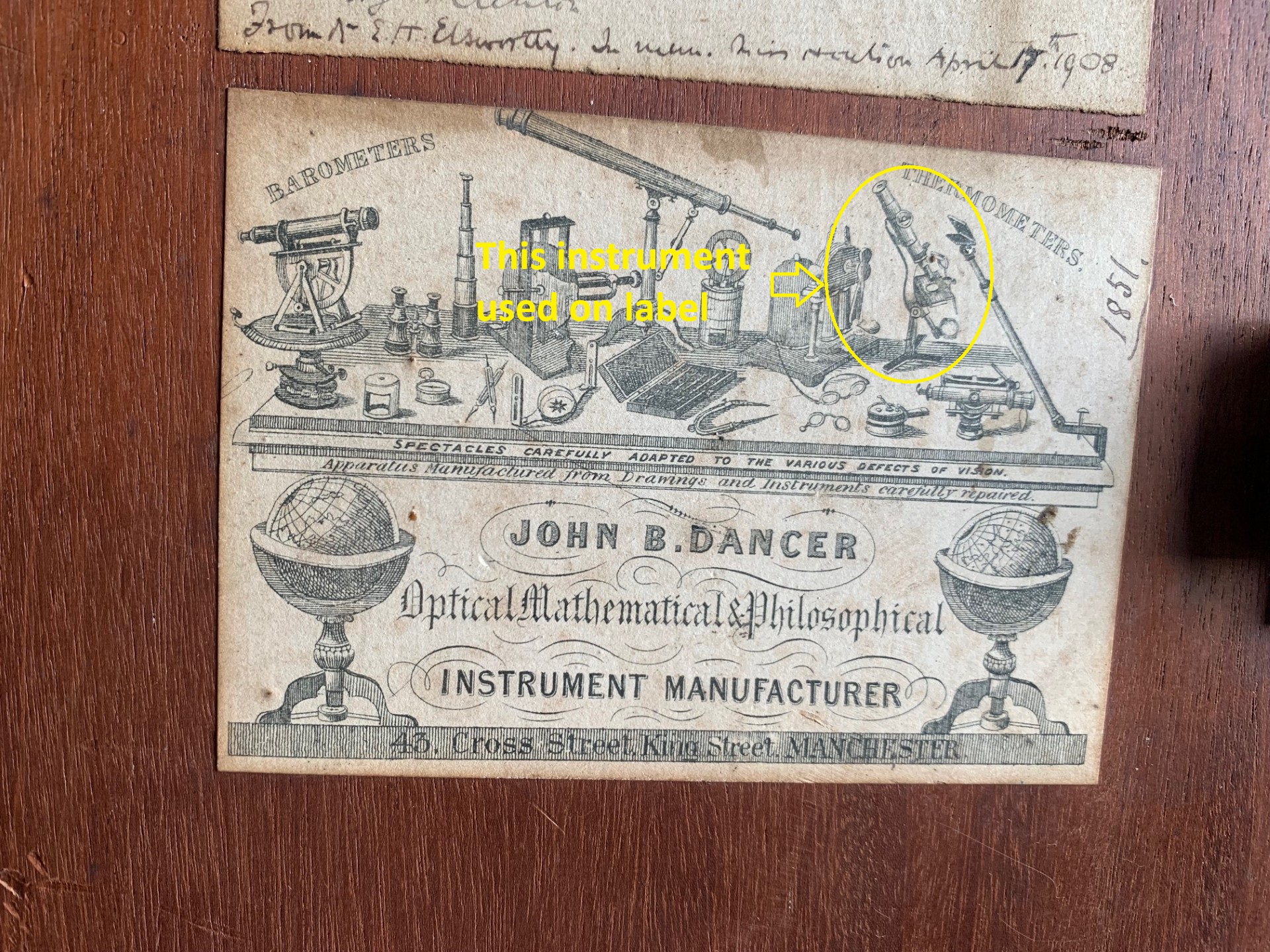
John Benjamin Dancer was a well-known Manchester optician and instrument maker, born in London in 1812, the son of Josiah Dancer, also an optician and manufacturer of optical, philosophical and nautical instruments. Josiah and his family moved from London to Liverpool in 1817. JB Dancer took over his father’s business in 1835 and continued in business in Liverpool until 1841, when he entered into partnership with A. Abraham, a scientific instrument maker of Lord Street, Liverpool. He moved to Manchester to establish a branch of the business as Abraham & Dancer at 13 Cross Street. The partnership ceased in 1845. Dancer continued in business under his own name until 1878, when part of the business was transferred to his daughters Elizabeth Eleanor and Anna Maria (he had to give up his business activities because of ill health and poor vision). The business continued trading under the name of EE Dancer & Co. until 1900, when the entire stock and the process of producing quality micro-photographs were sold to the London microscope dealer Richard Suter. Dancer became well known for the quality of his microscopes and received several honours, including a prize medal at the International Exhibition in London. He was appointed Optician in Manchester to the Prince of Wales. Dancer is perhaps best known for his photographic work, in particular on micro-photography and the stereoscopic camera. He took the earliest known photograph of Manchester, showing a cutler’s shop on Market Street in 1842.
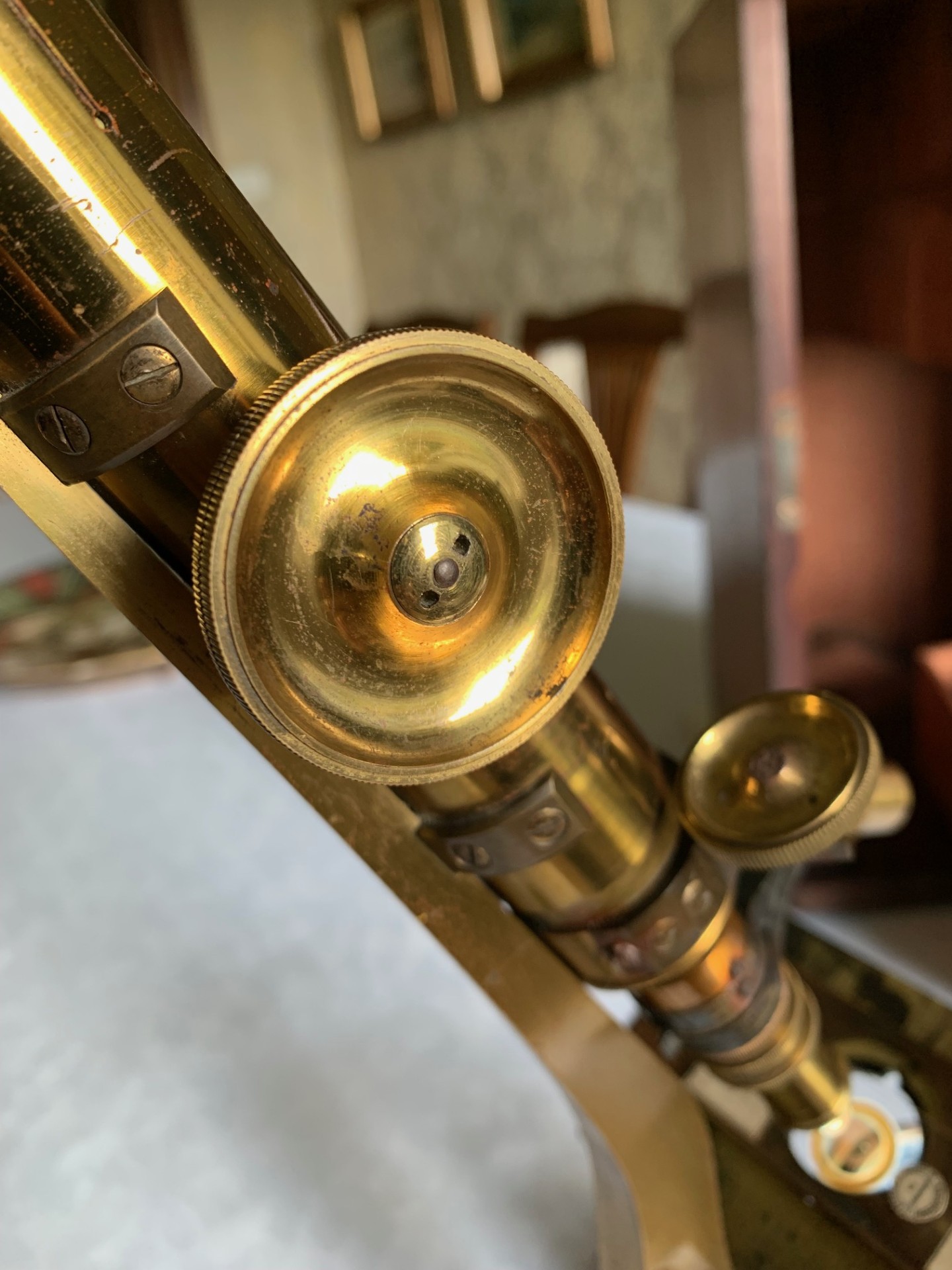
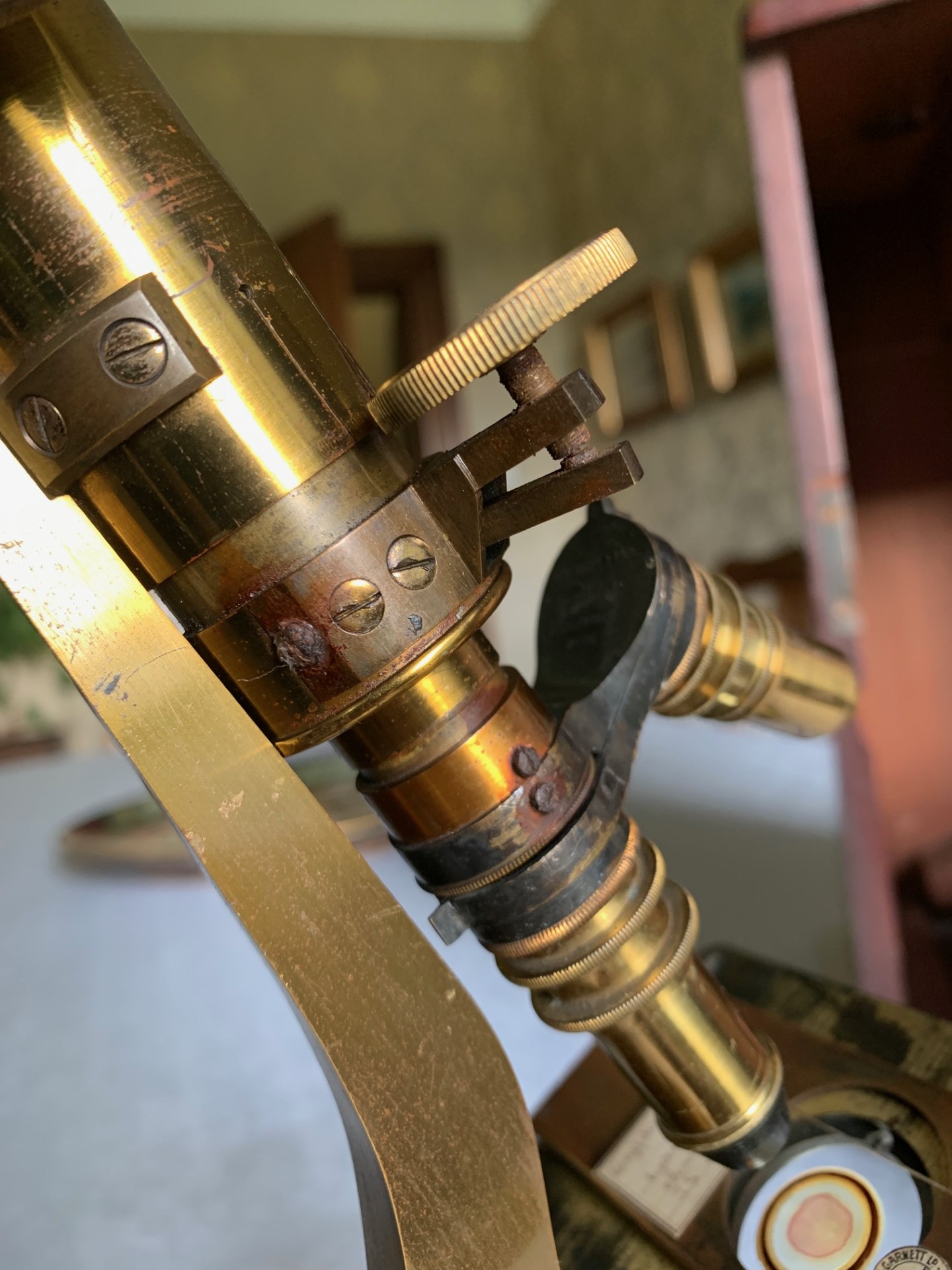
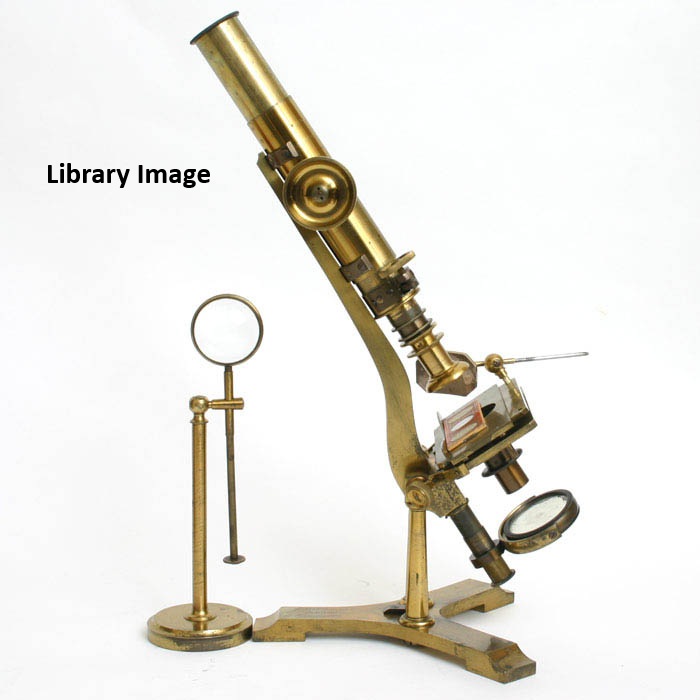
In terms of the technical details, the instrument stands on a brass Y-shaped foot giving good stability, with twin slender uprights leading to the main pivot joint, which can be adjusted for tension if required. There’s a long Lister-type upper limb giving a good range of coarse focus travel. The instrument tilts for inclined viewing and holds in position throughout the usable range of inclination. Coarse focus adjustment is single-sided with friction tube and is visually reminiscent of the system used by Powell & Lealand on one of their student “iron-claw” models of a similar period. The monocular tube holds in position as it should on adjustment throughout the coarse focus working range. Fine focus is controlled via a separate brass thumb-wheel towards the front of the optical tube, acting one the nose-piece only, working with a fairly limited range and functional nonetheless.
With its optics, this instrument is in monocular form with two eyepieces marked “A” and “B” and presumably by Dancer:
– A approx 6x magnification
– B approx 8x magnification
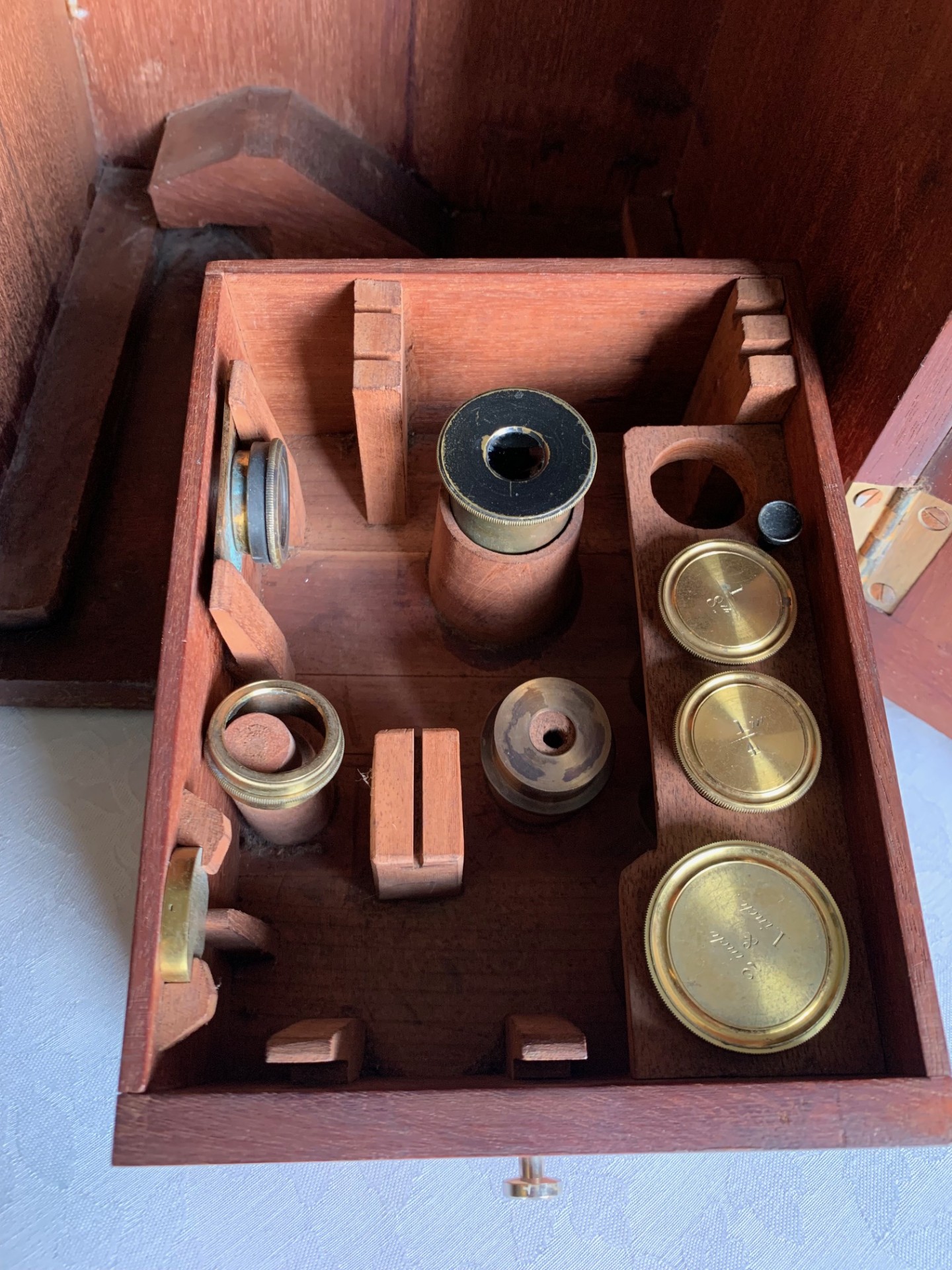
There’s also three objective lenses in brass by Dancer, as under – note the instrument is non-RMS in terms of objective thread diameter:
– 2 inch – 2.5x magnification with brass canister
– 1/4 inch – 15x magnification with brass canister
– 1/8th inch – 80x magnification with brass canister – untested
The magnification range available therefore as presently configured is around 15x to >600x.
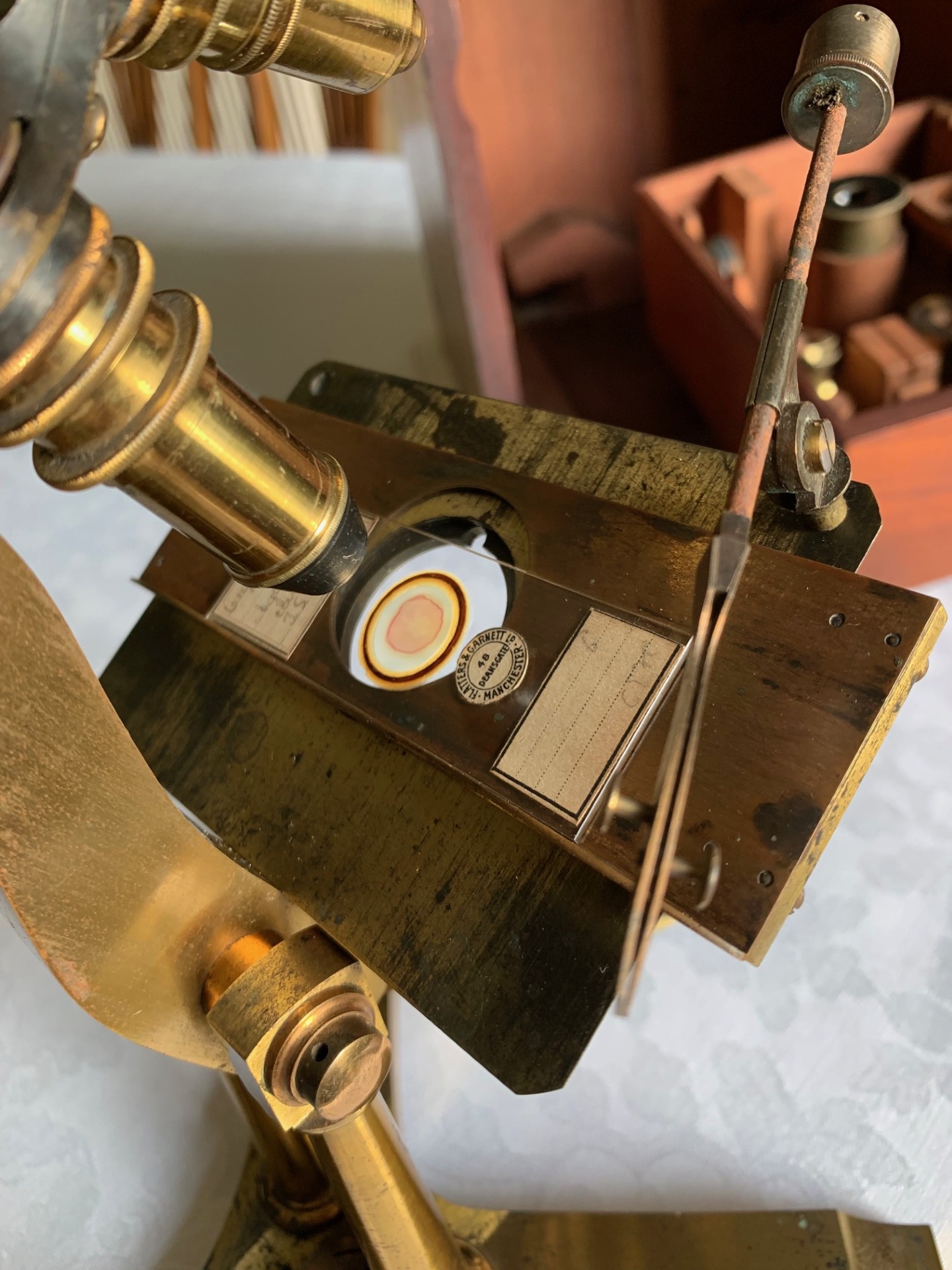
The rectangular brass stage has a slider with ledge for positioning slides which works well, holding position upon adjustment. There’s holes in the stage surface for stage tools, such as the pair of forceps supplied and shown fitted.
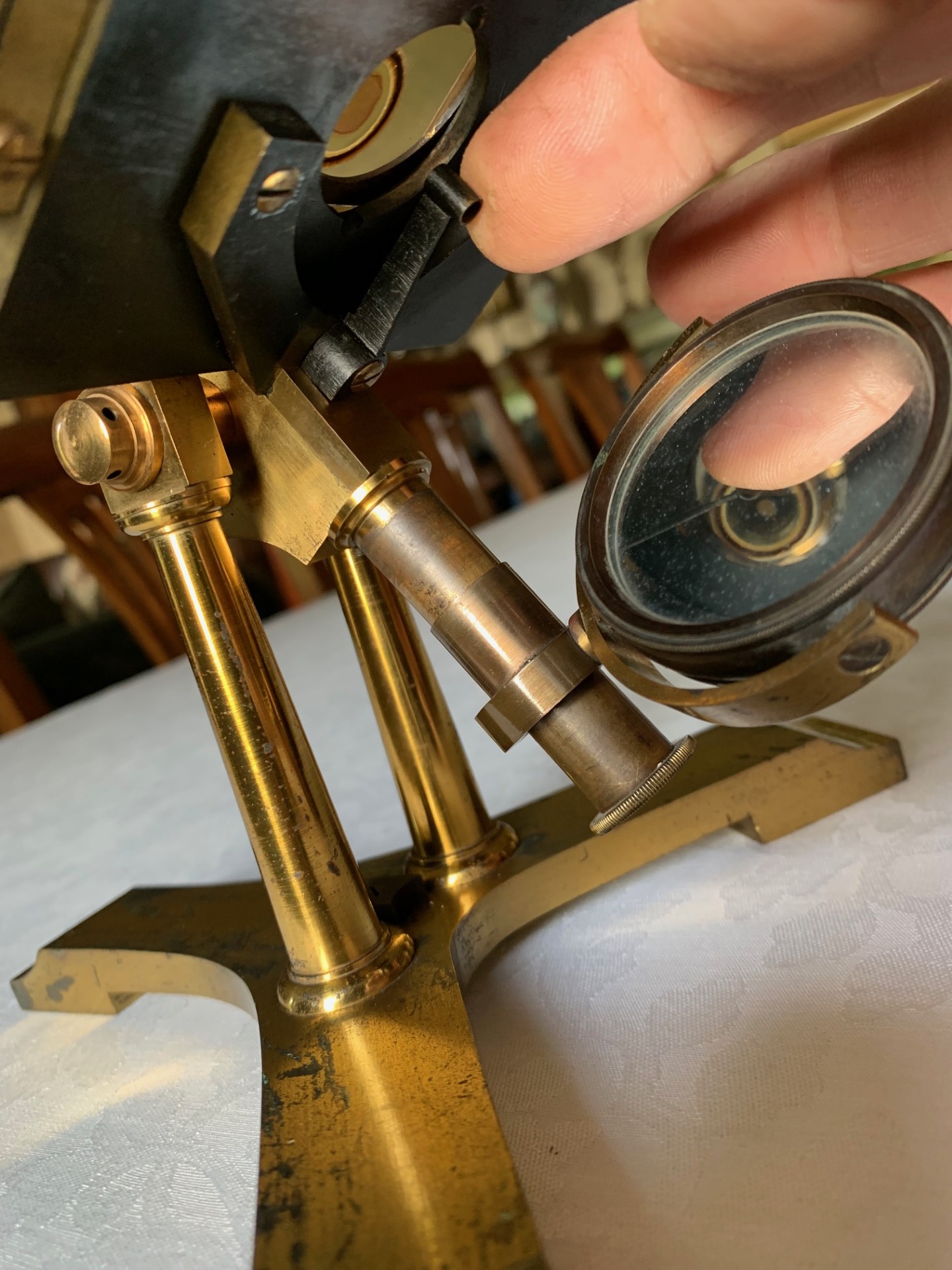
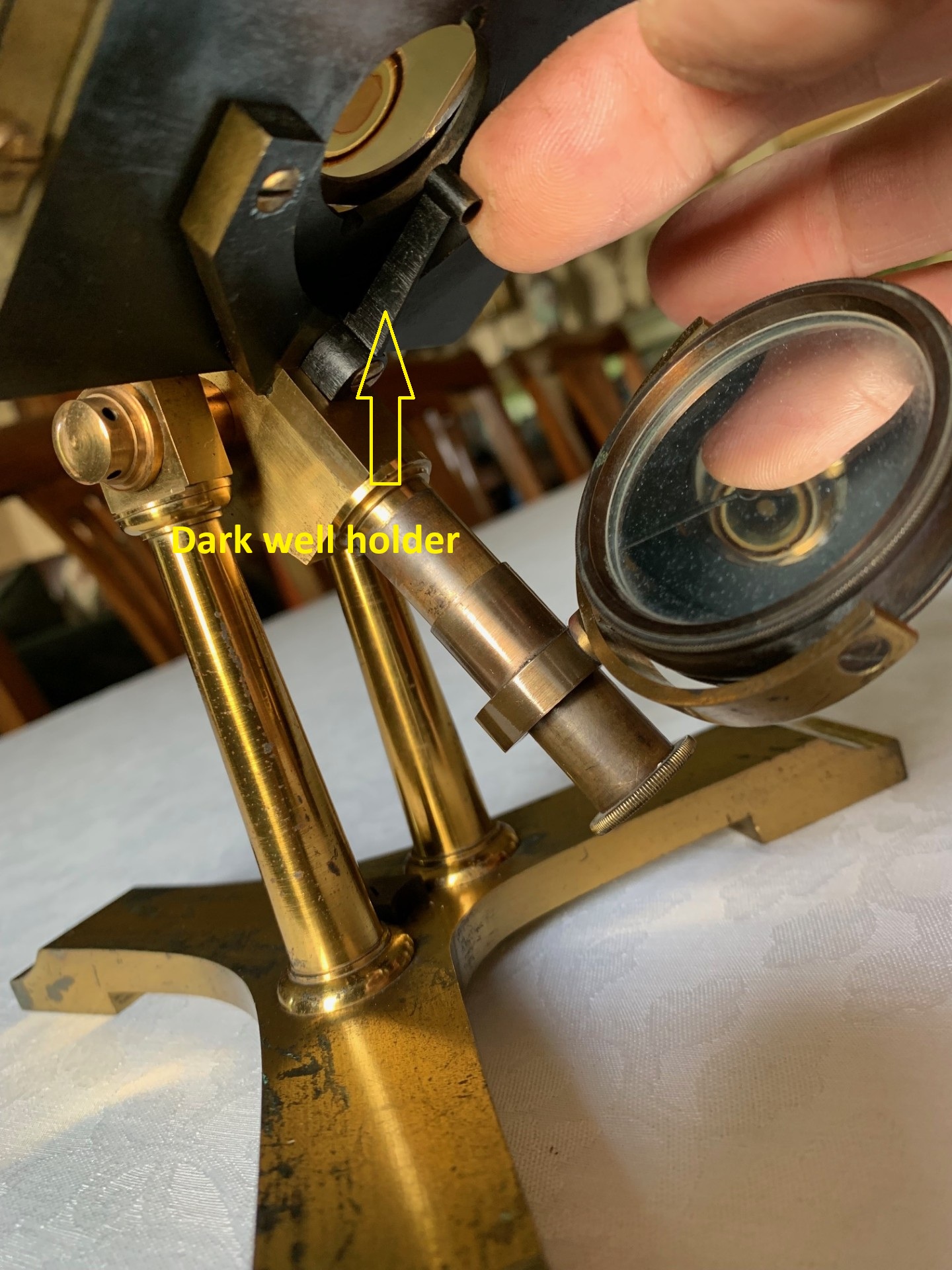
Turning to the sub-stage, we have swing-over arm to which fits accessories such as a dark well holders.
Lighting is via a plano-concave mirror in a brass carrier on a height/rotation adjustable brass support arm and gimbal fitted to the limb tailpiece, with period silvering that’s in good period
condition to both sides.
Accessories:
– stage forceps
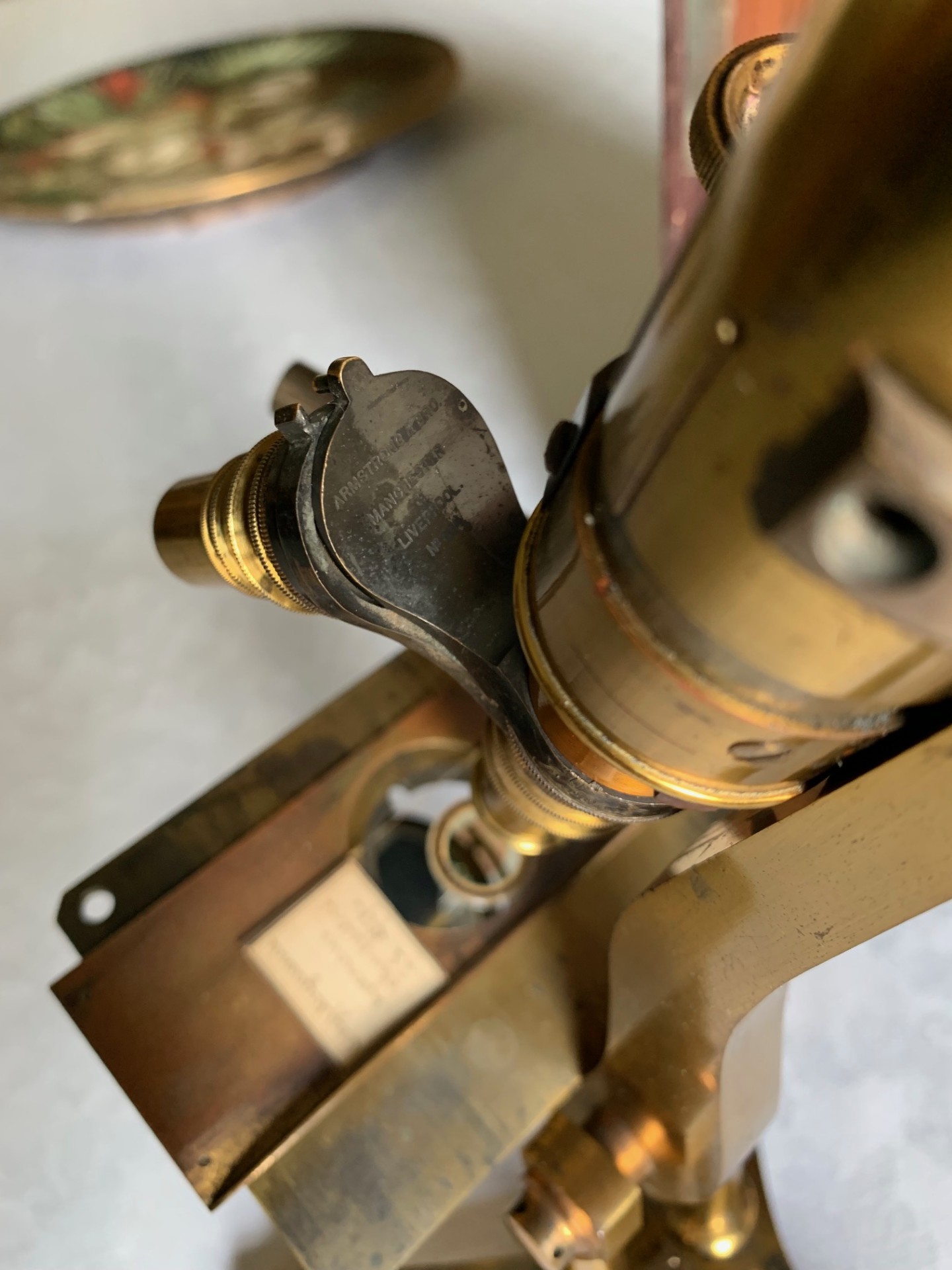
– later double turret by Thos. Armstrong & Bro. of Manchester
– dark well holder
– live box
– small brass tool for tightening thumb-wheels
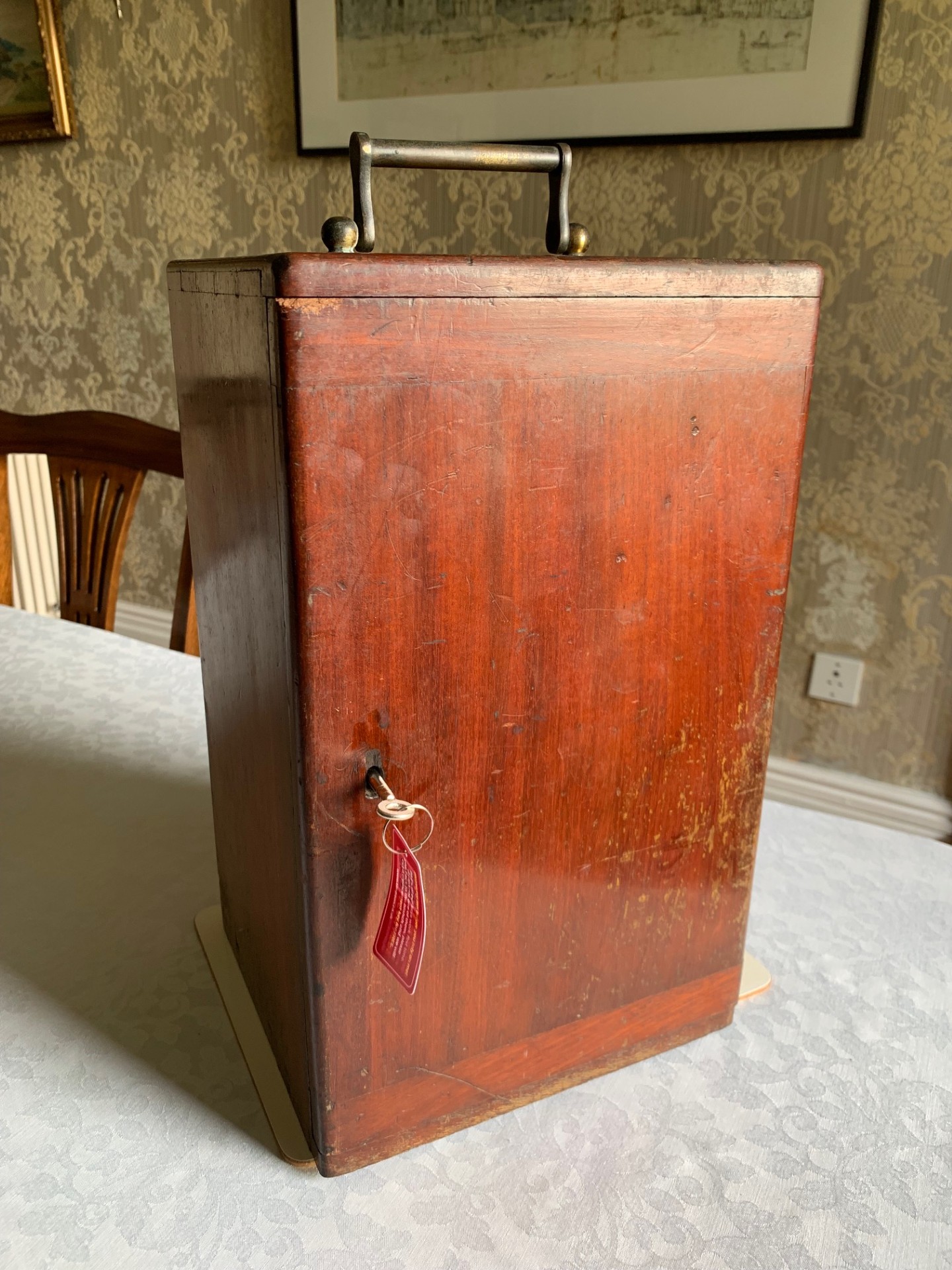
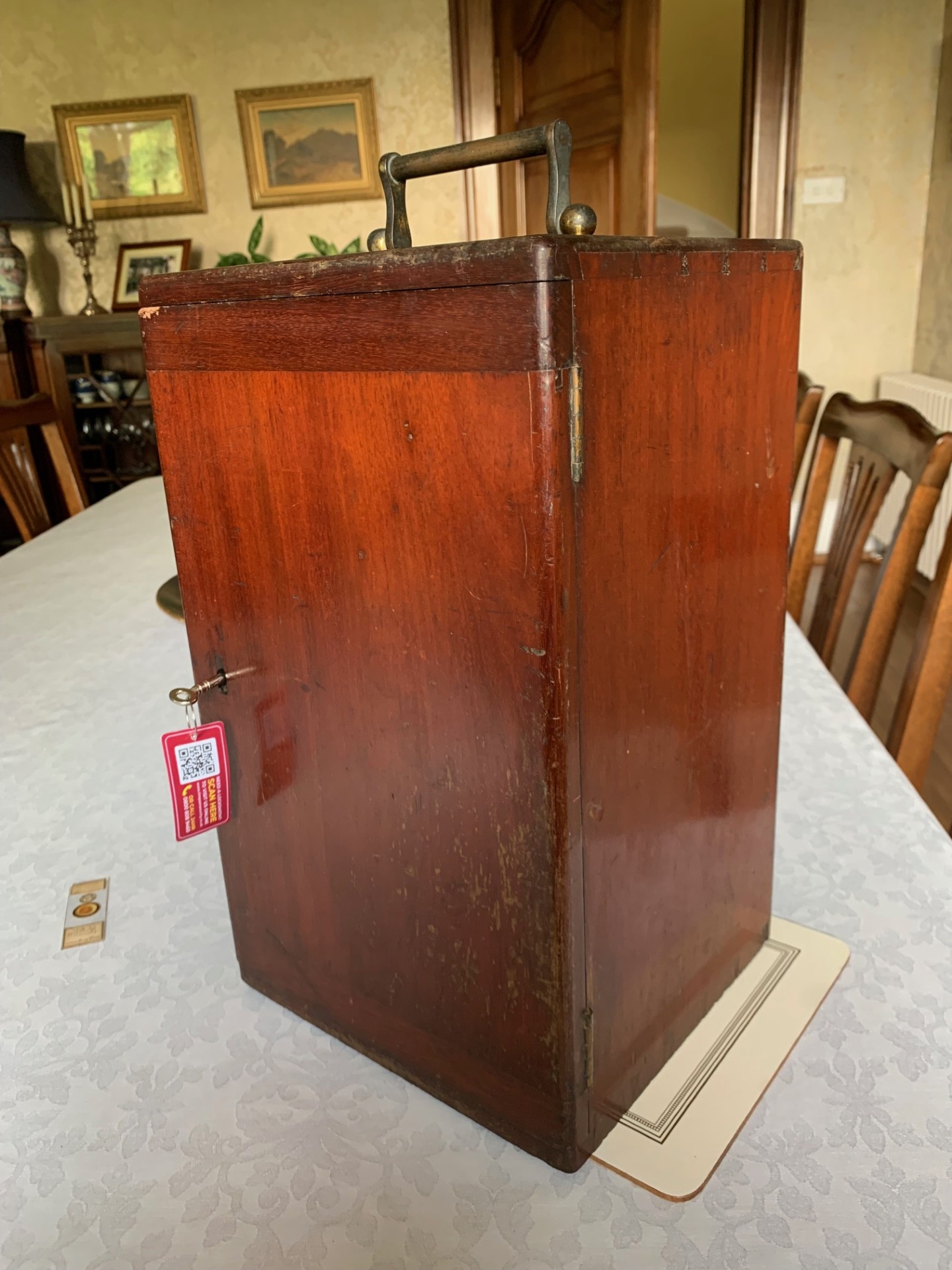
There’s a quality period hardwood case for the instrument, with good exterior period sheen and an internal drawer that can accommodate the accessories. There’s a good solid brass carry-handle to the case and there’s also a working lock & key, which is always nice to have for an antique instrument such as this early Dancer. The case has the Dancer paper label inside which remains in good readable condition. The case appears to have a shrinkage crack across the rear panel, but it’s still perfectly presentable.
The instrument and its controls have been very gently dusted, lightly lubricated so that moving parts and friction surfaces operate smoothly with age-appropriate signs of wear and condition points as described, very much as one would expect for an instrument of this quality and age. With its aged lacquer finishes, it’ll make a great display piece in the right setting and is also a usable instrument currently set up for low/medium power work. It presents really well and I’m certain it will look the part in a library or home office.
Owing to the weight and delicacy of this antique microscope, it will be partially dismantled, carefully wrapped for shipping and dispatched by UPS or Royal Mail Special delivery within the UK, UPS insured expedited for certain overseas territories and eBay Global Shipping elsewhere.
Thanks for looking and just message seller if additional photos or details are required.
Ask the Dealer
Dealer information
 Arcboutant Scientific
Arcboutant Scientific based in Glasgow Scotland, with an interest in scientific collectables dating back to 1988. Now making available carefully curated fine examples, principally of antique microscopes and associated scientific equipment by quality English and Continental makers, to collectors world-wide.