

*ON HOLD* EXQUISITELY CRAFTED ANATOMICAL MODEL OF THE HUMAN EYE
Stock Number: 9378
$18,500
Circa
Mid-18th century
Country of manufacture
Germany
Description
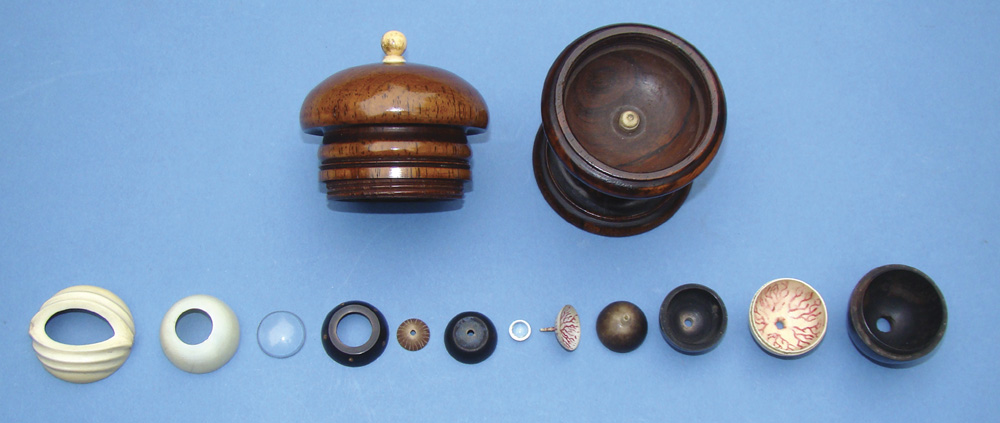
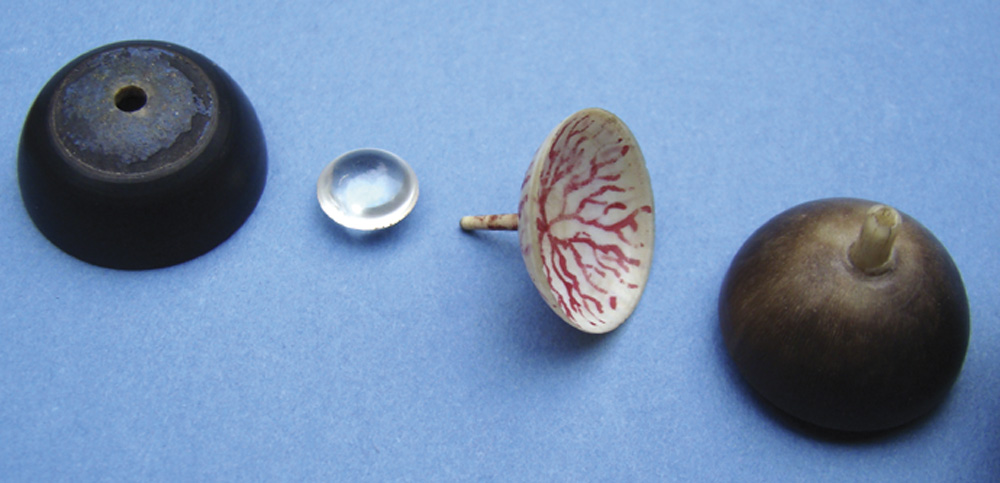
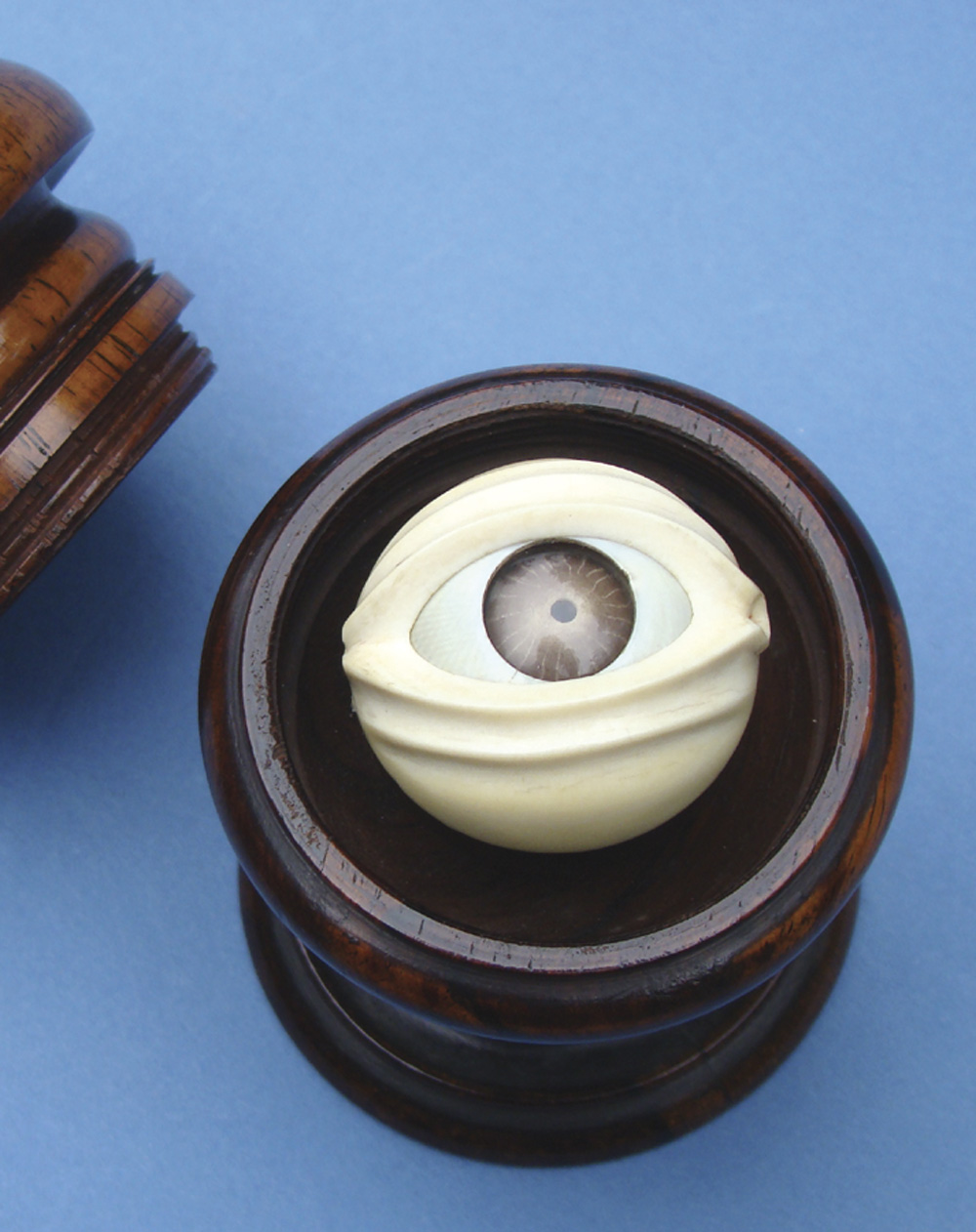
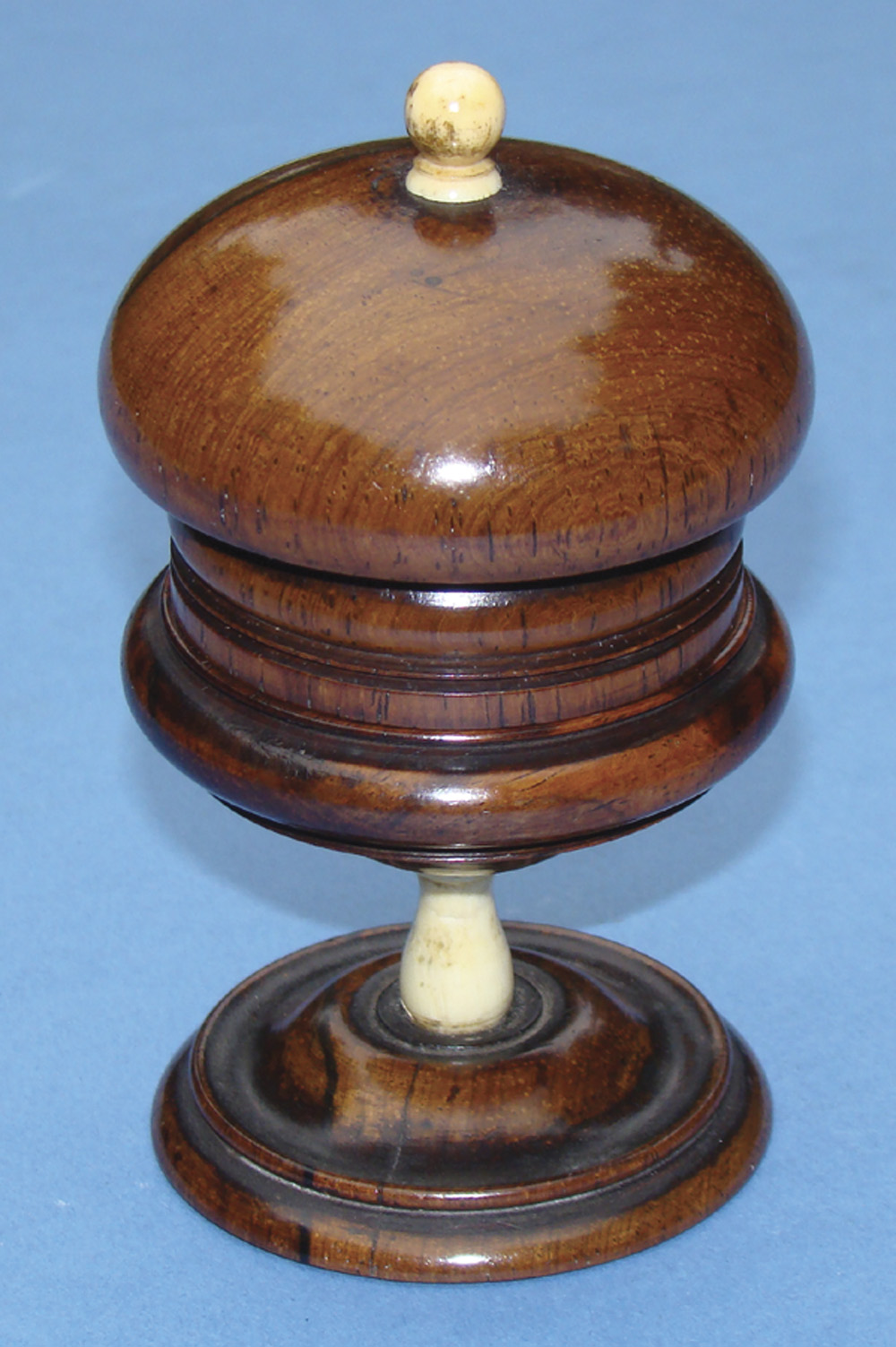
The Eye in Eleven Parts, in Mixed Materials, Continental, probably German, c. mid-18th century. Standing 4″ (10 cm) overall, the presentation case is made of beautifully grained wood, the lid, body, and base turned and mounted with pillar and knob. The eye itself is made of the most finely crafted wood, and glass. Some parts are so delicate one hesitates to touch them, yet they are all complete and undamaged, even the paper thin retina, with blood vessels shown appropriately in red. There are eleven elements to the eye, plus the wood cup which supports them in the stand. The eye seems complete (as we understand it) with cornea, iris, lens, scleral coat, choroid coat, retina, and optic nerve. A true “cabinet de curiosités” piece, most rare, in superb condition, it is a spectacular example of a very rare object. We have seen one other of this design in the marketplace in the past 30 years, that a less complete example which we sold in 1984 in our Catalogue F. We note a related form illustrated in Bennion’s book (p.289), and two in the Museum for the history of medicine in Zurich. The craftsmanship is comparable to that of the small anatomical models of the human body, also attributable to the tradition of Stephan Zick of Nuremberg.
Ask the Dealer
Dealer information
 TESSERACT
David and Yola Coffeen both have enjoyed academic careers, as planetary astronomer and as linguist/educator. But since 1982 (yes, 1982!) they have been full-time dealers in early scientific and medical instruments, under the name Tesseract. Selling primarily by catalogue (over 100 issued so far) they also have a web presence at www.etesseract.com, and can be contacted at mail@etesseract.com.