

~FINE AND RARE A-H-G FLAME SAFETY LAMP~
$1000 USD (800 GBP)-postage included
Ashworth-Hepplewhite-Gray methane gas (firedamp) testing instrument (lamp) c. 1900
Dimensions
24 x 9 cm.
Circa
1900
Maker
Ashworth-Hepplewhite-Gray
Country of manufacture
UK and Ireland
Description
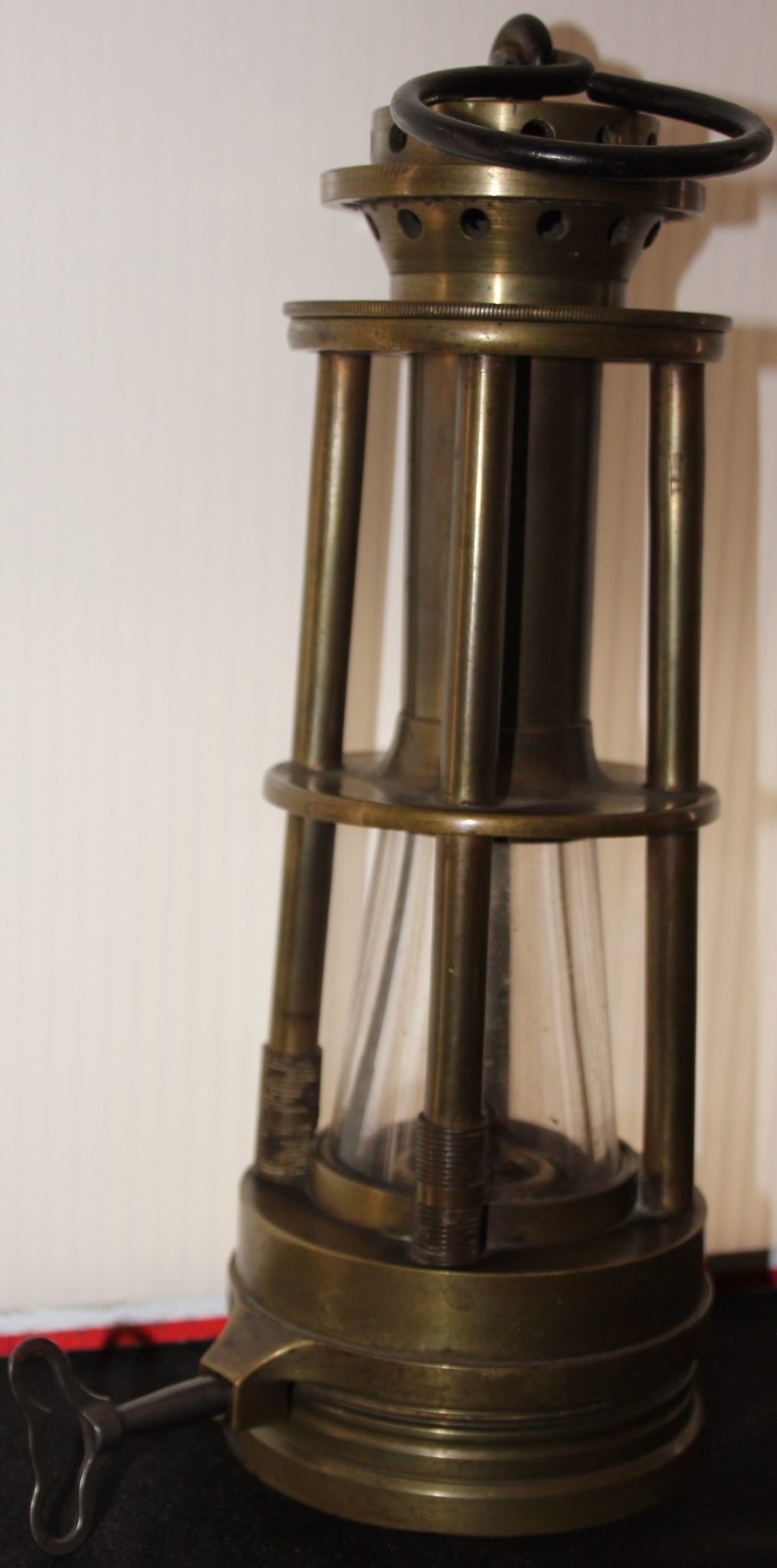
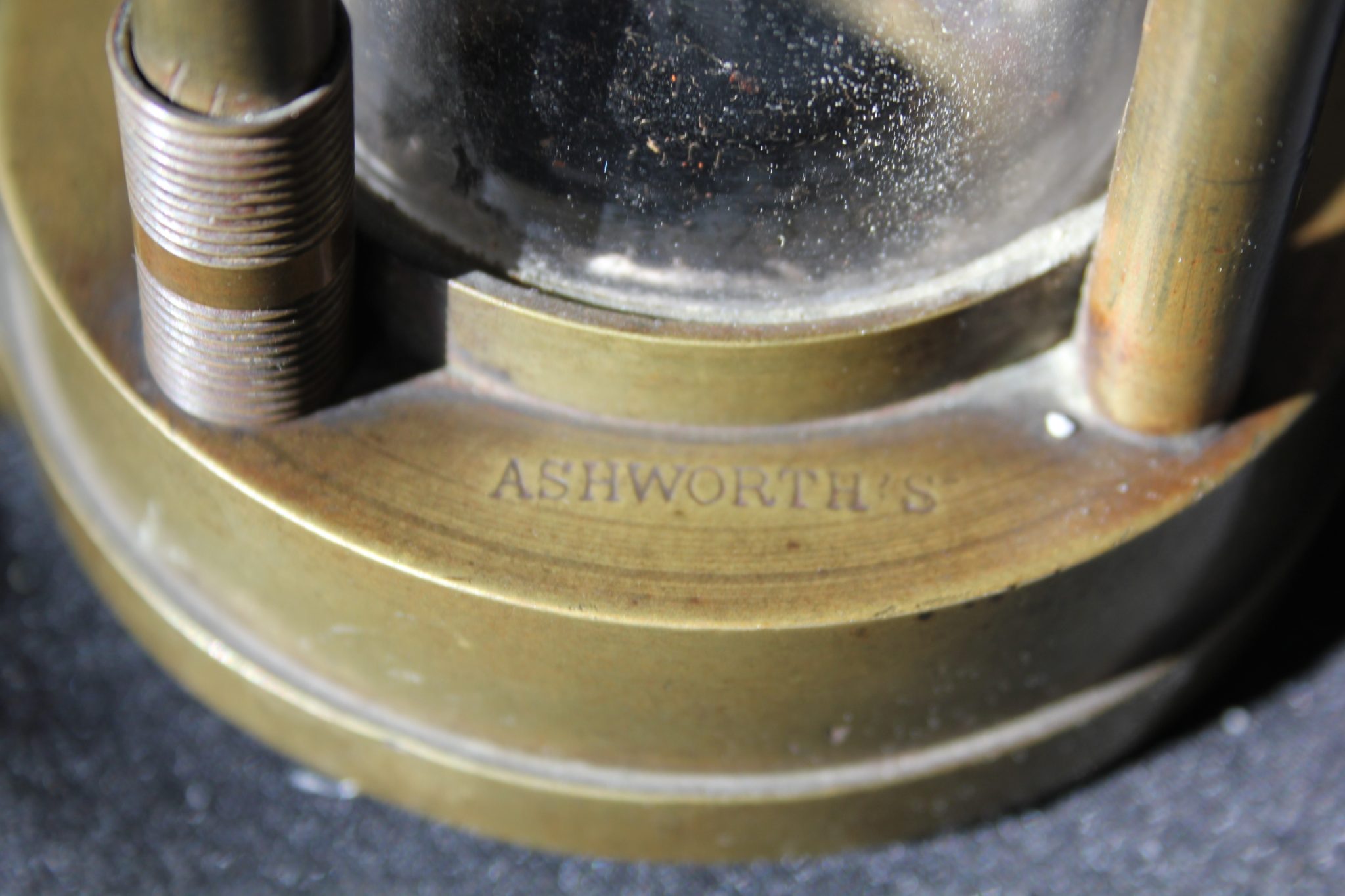
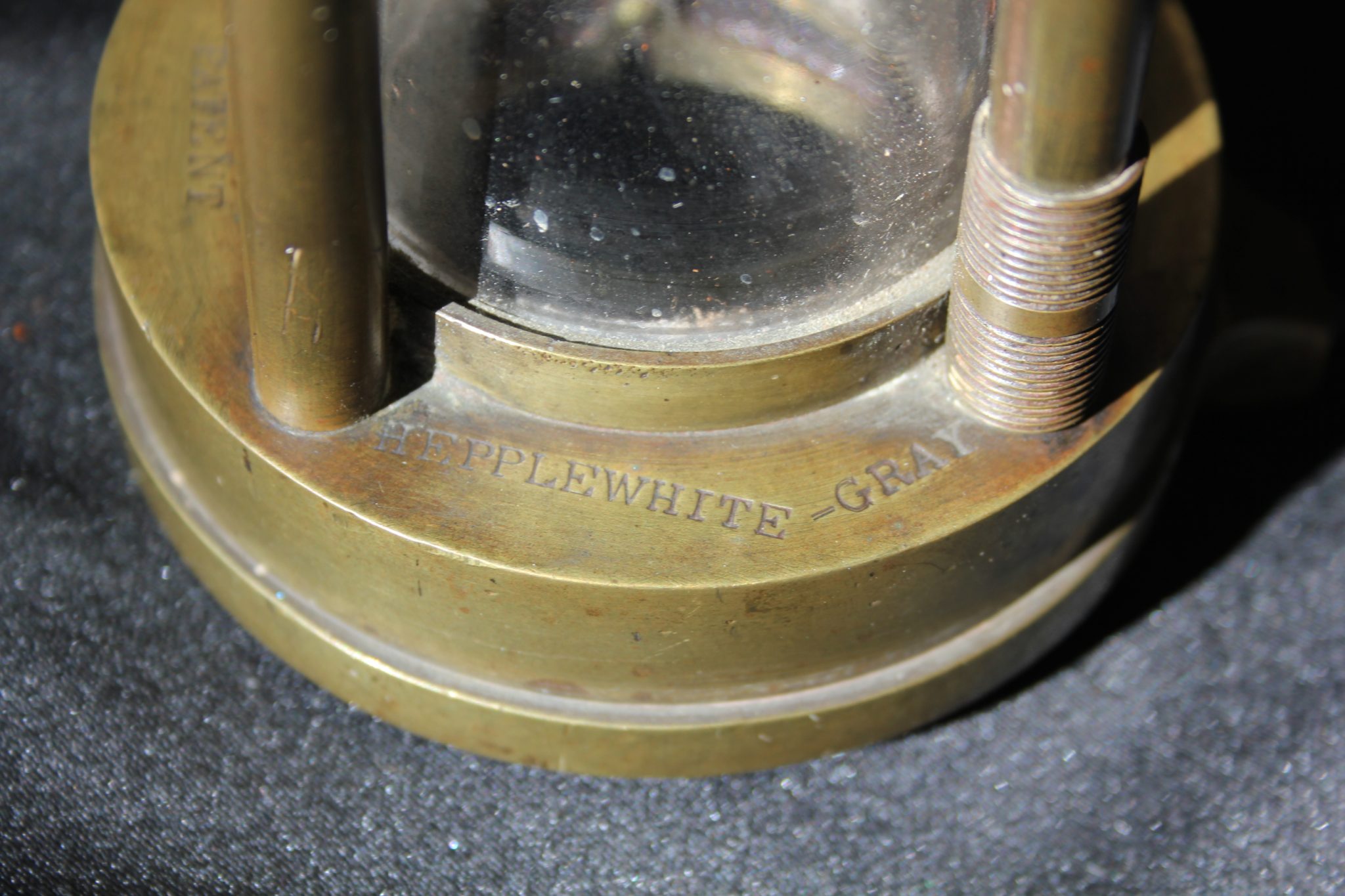
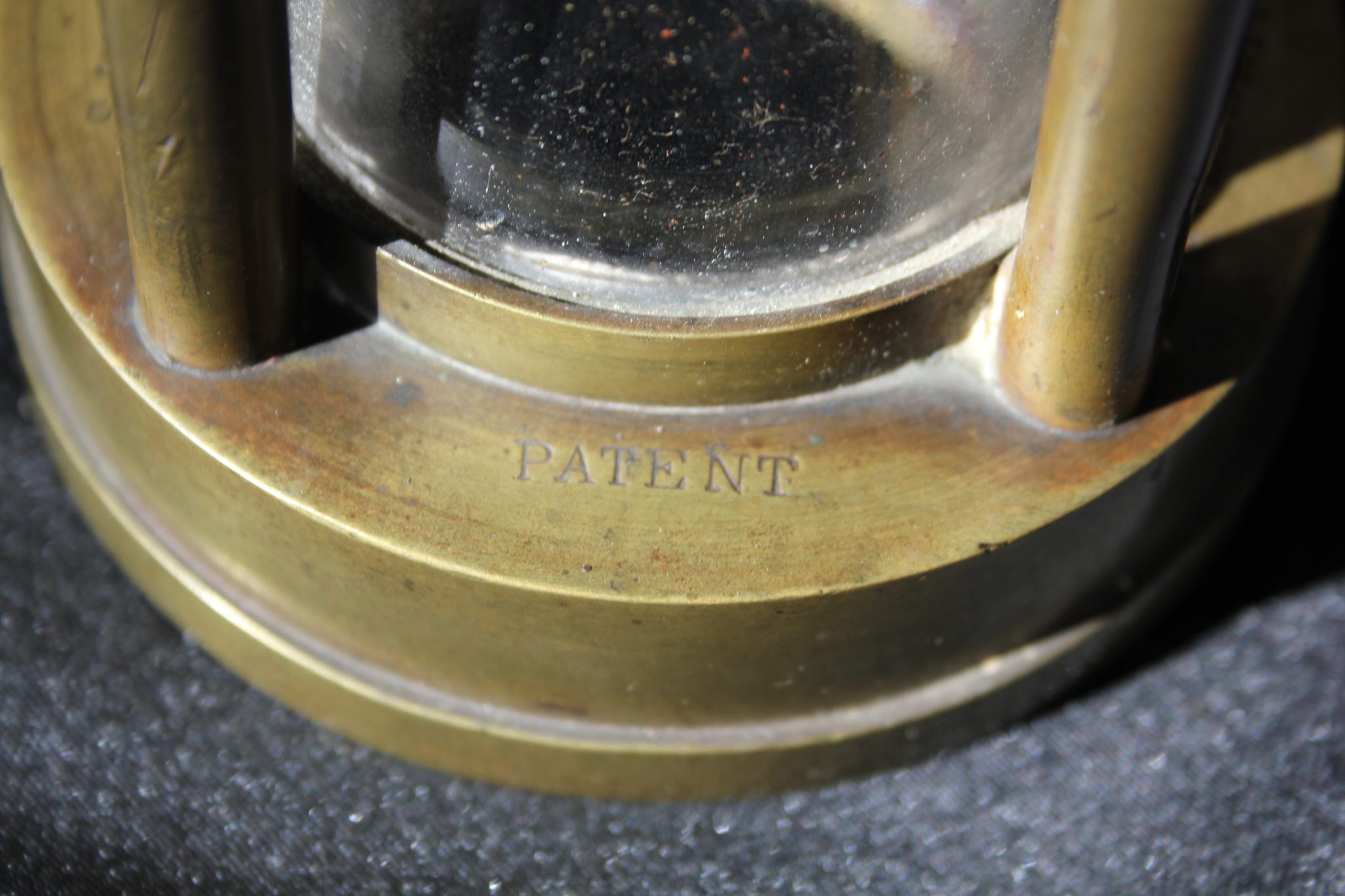
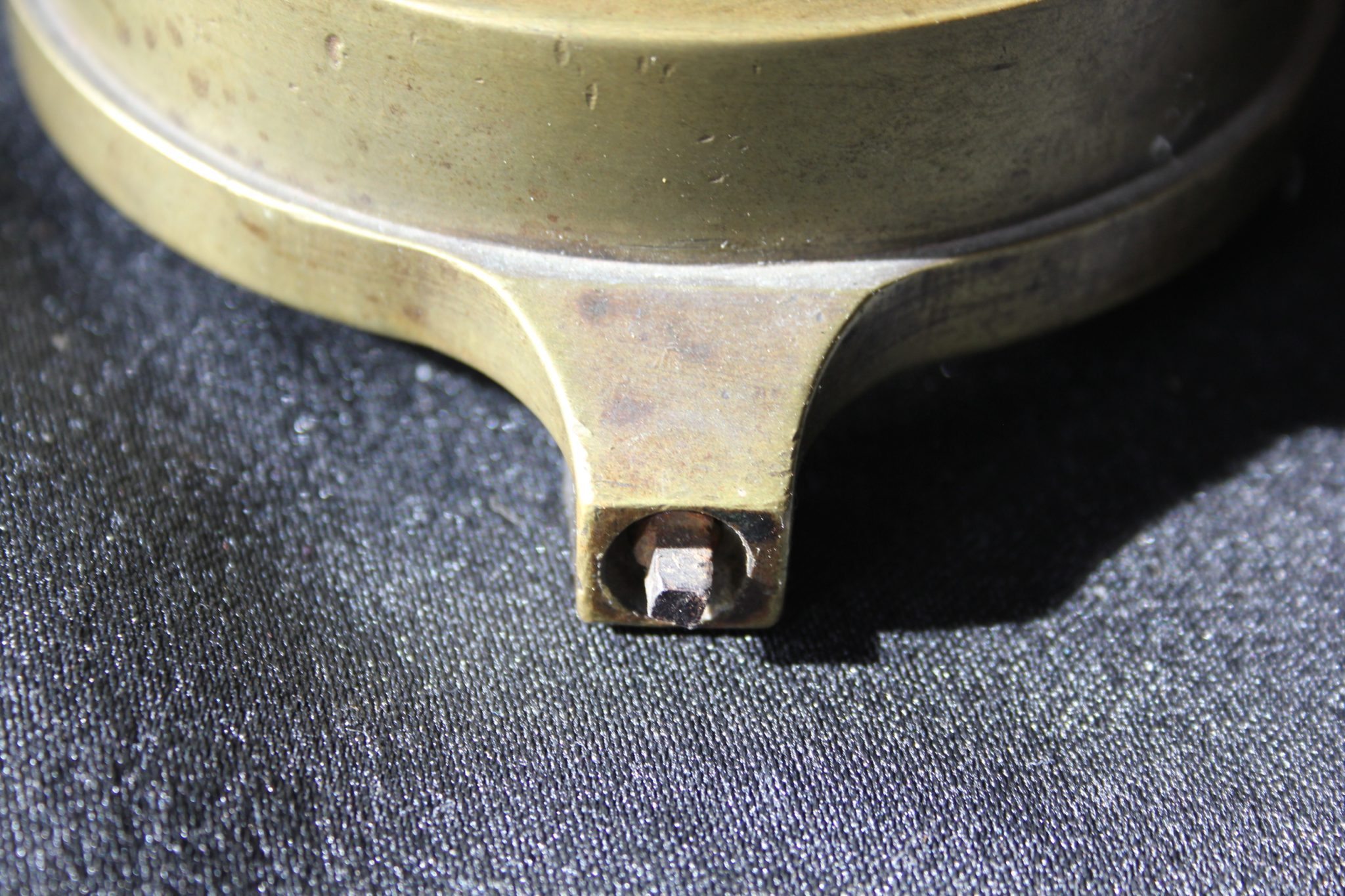
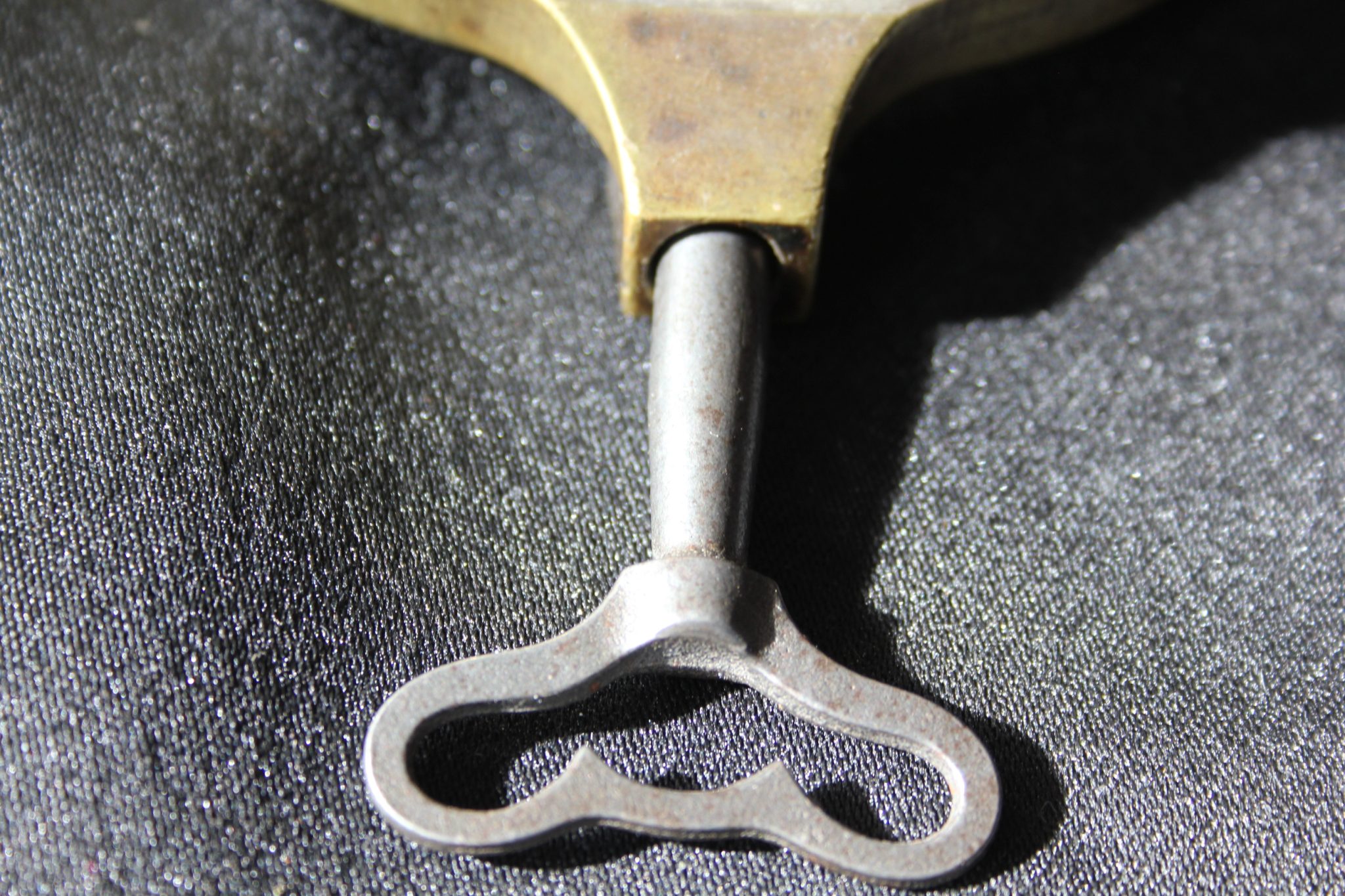
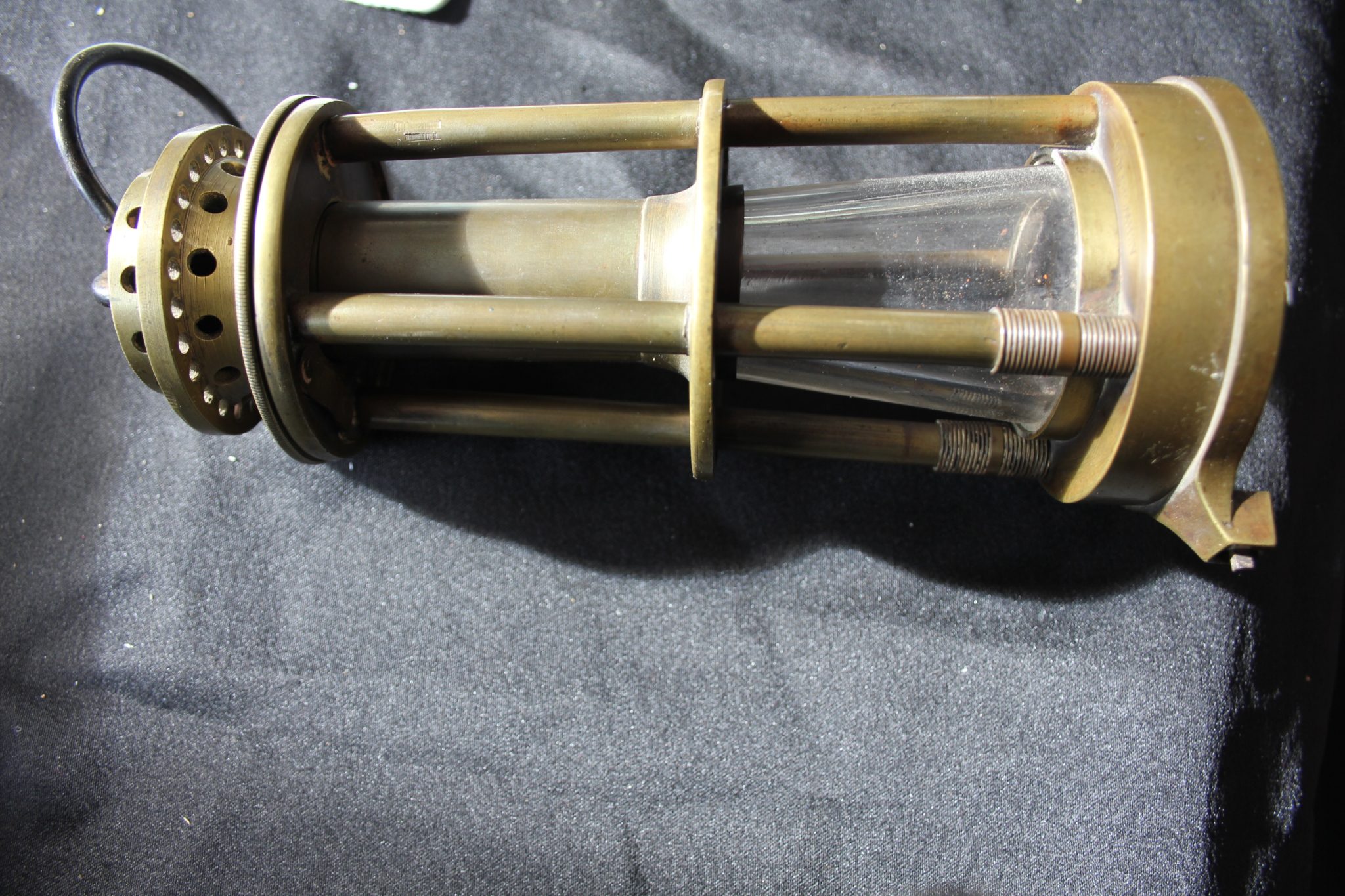
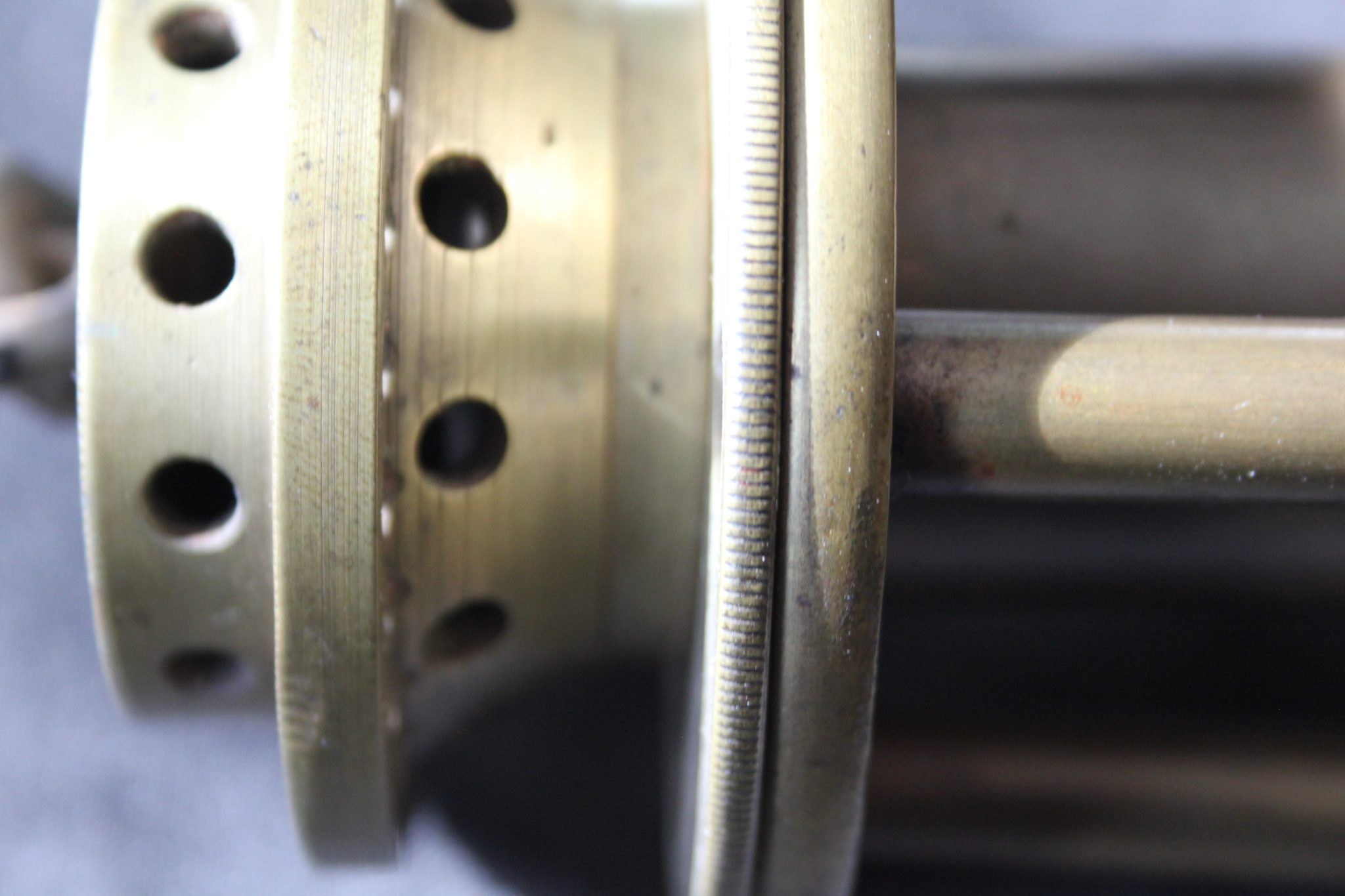
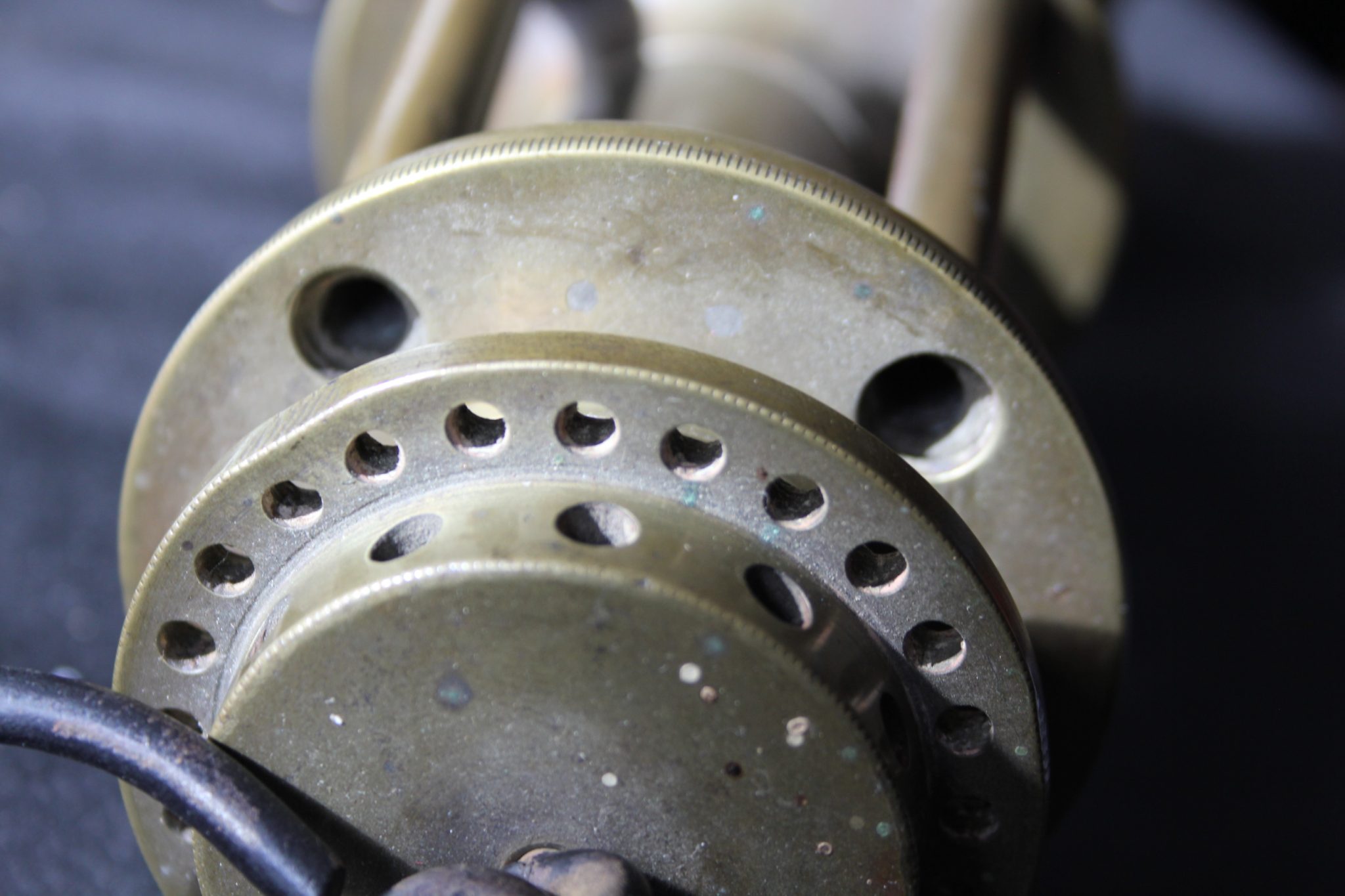
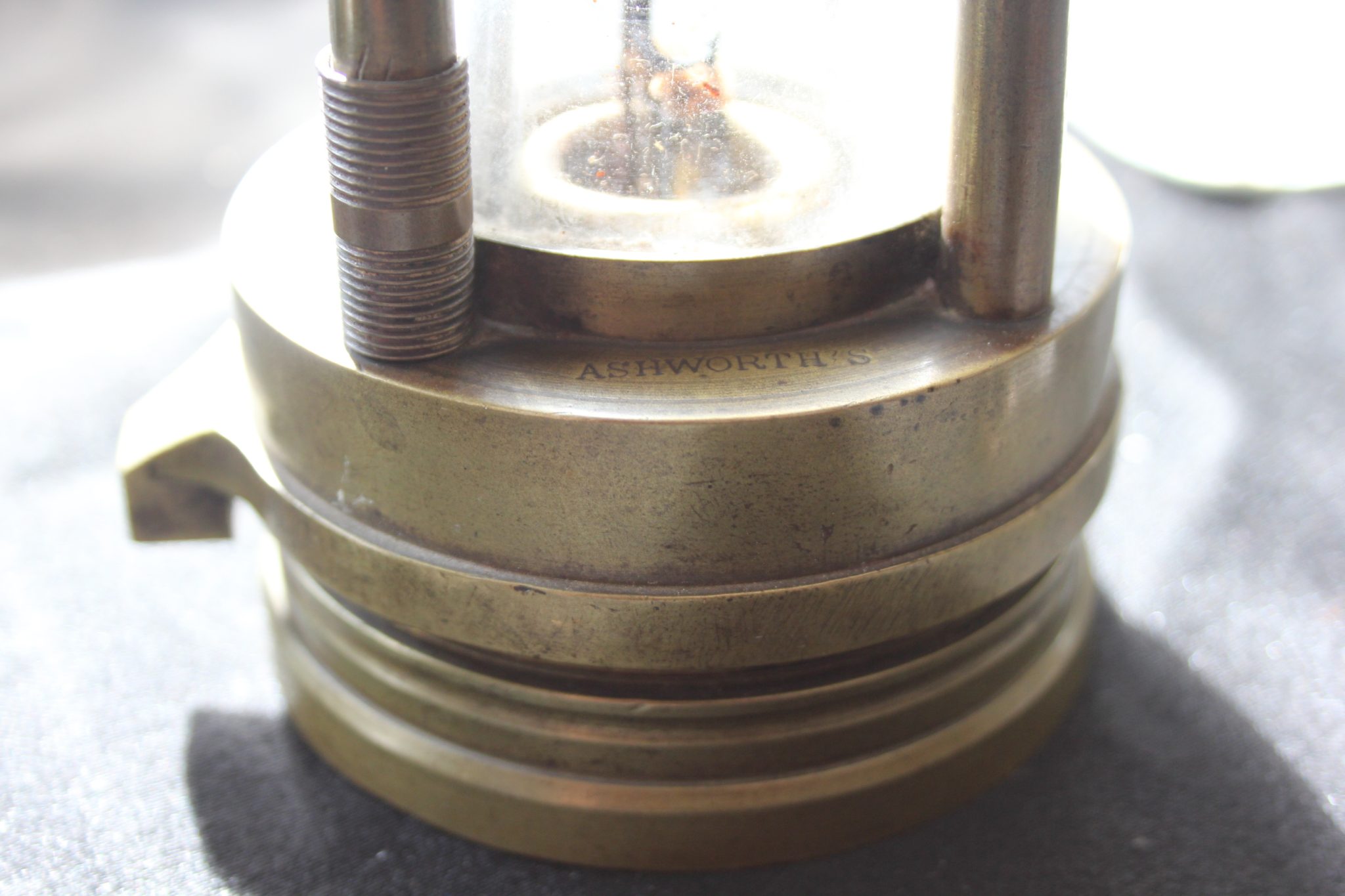
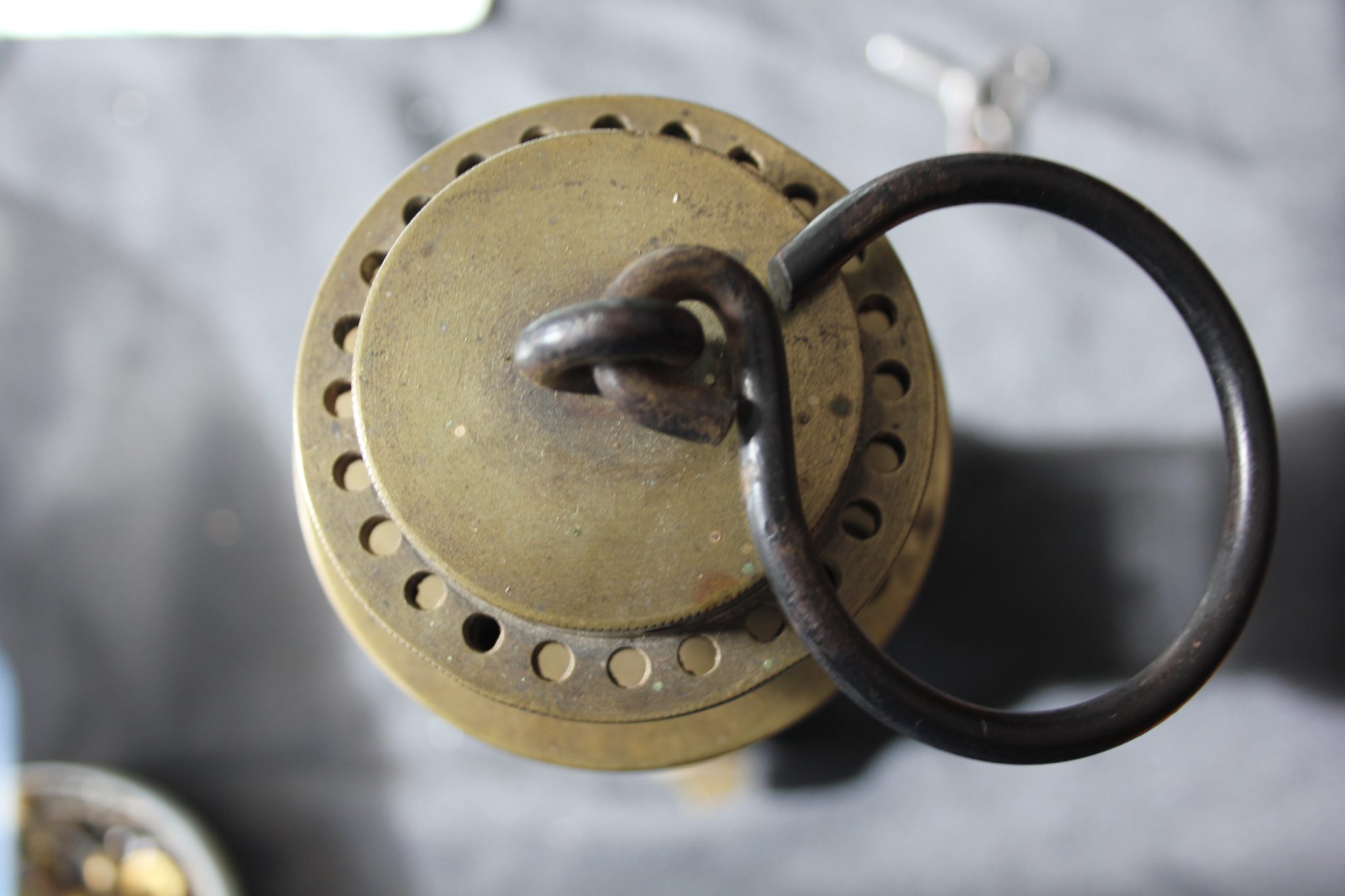
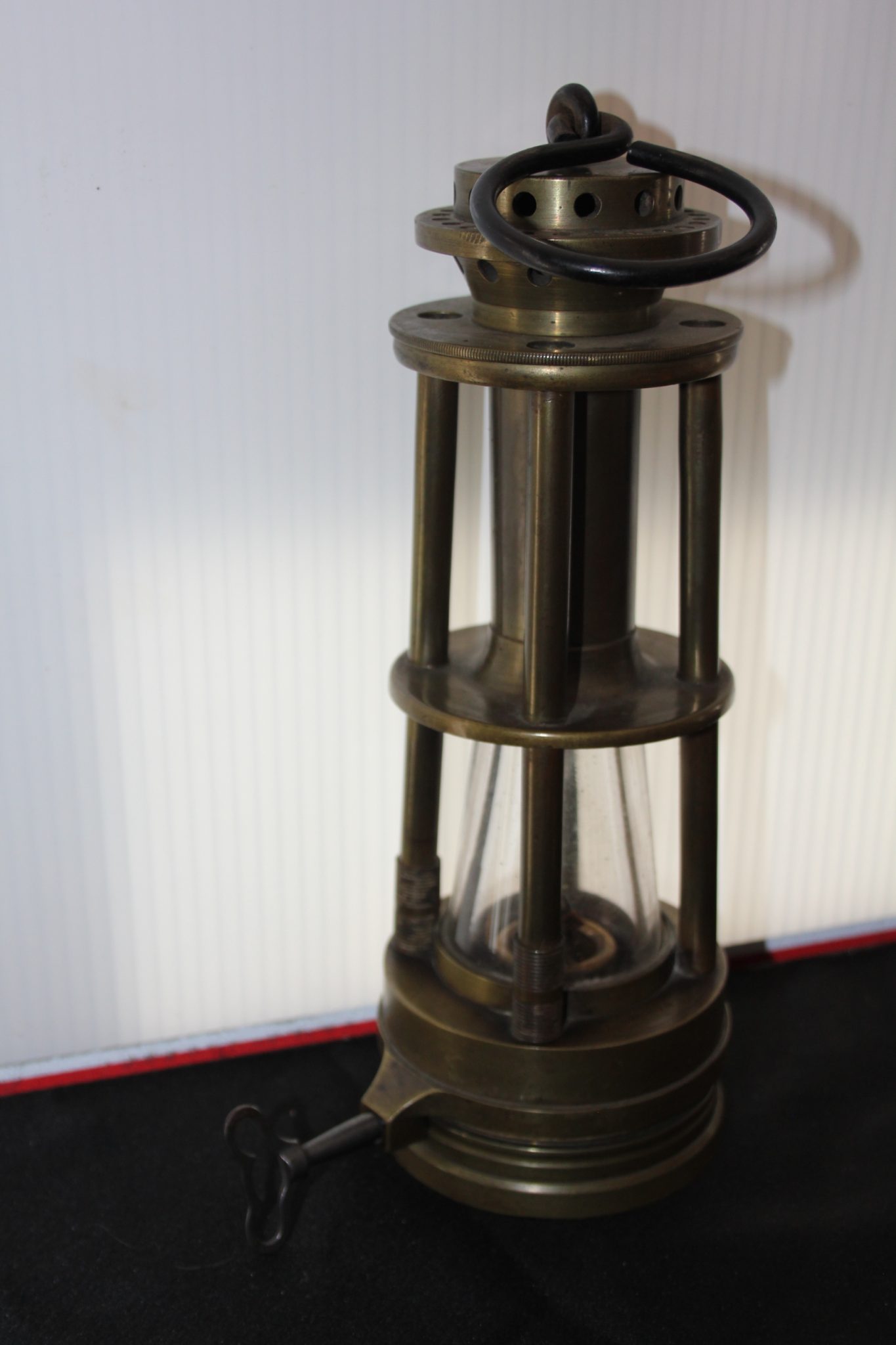
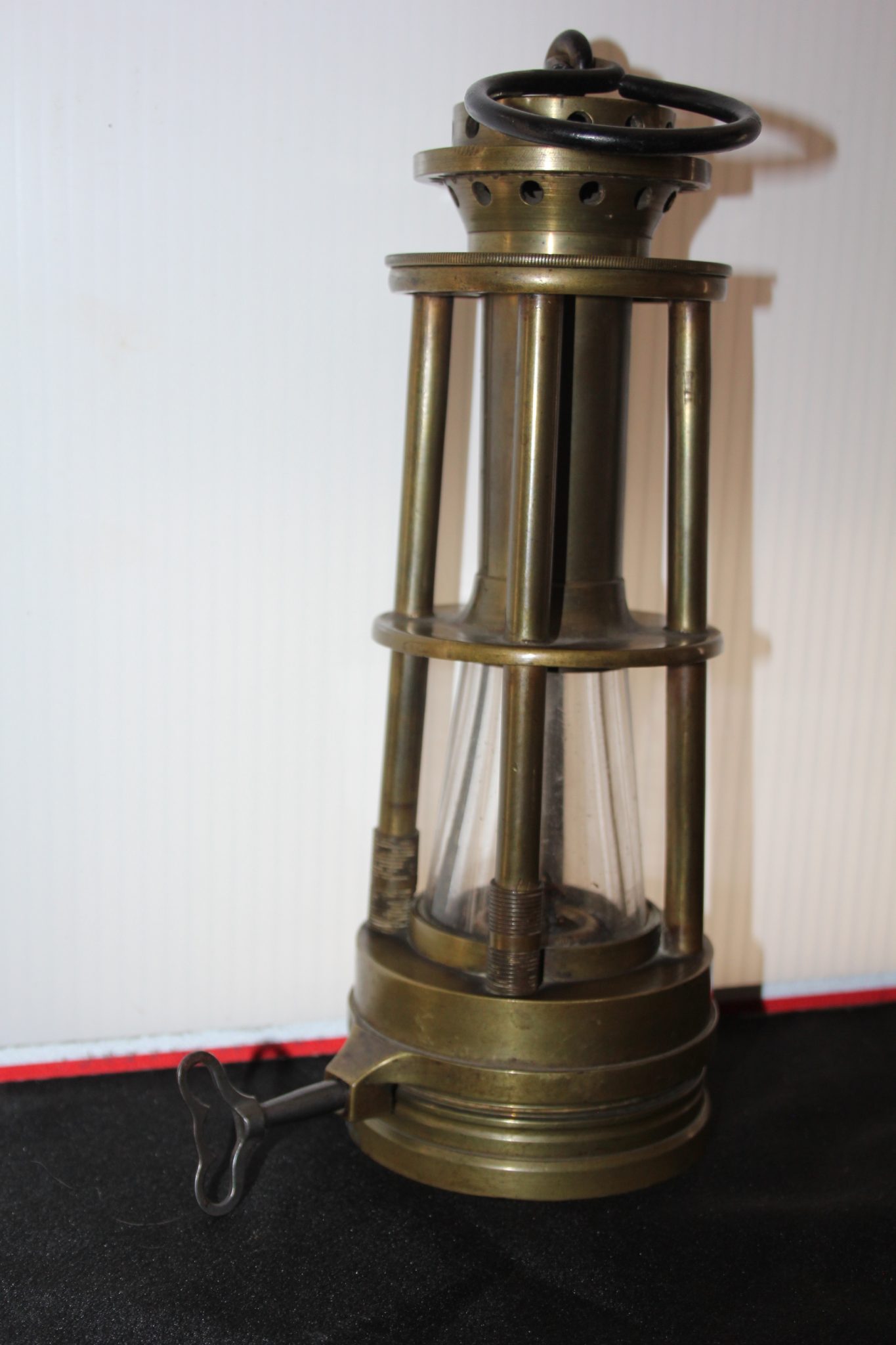
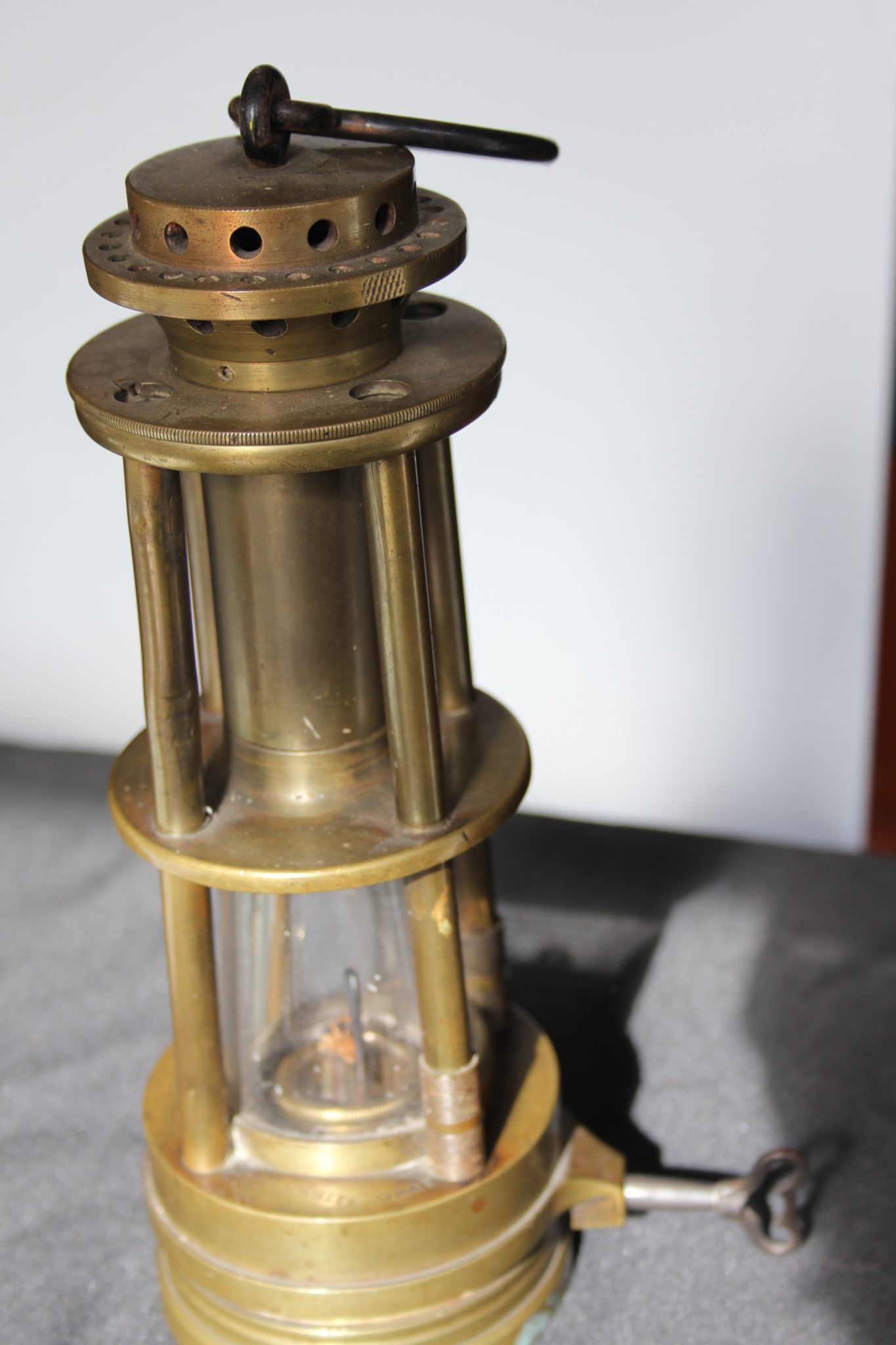
Standing 24 cm. tall on a threaded bronze/brass base 9 cm. in diameter, this was the pinnacle of Victorian methane gas detecting lamps for mine safety. Robust and heavy construction with conical chimney, it is signed “Ashworth Hepplewhite Gray Patent” on the base with the number 5 stamped internally and has no flaws or omissions, right down to the key to lock the base and adjust the wick.
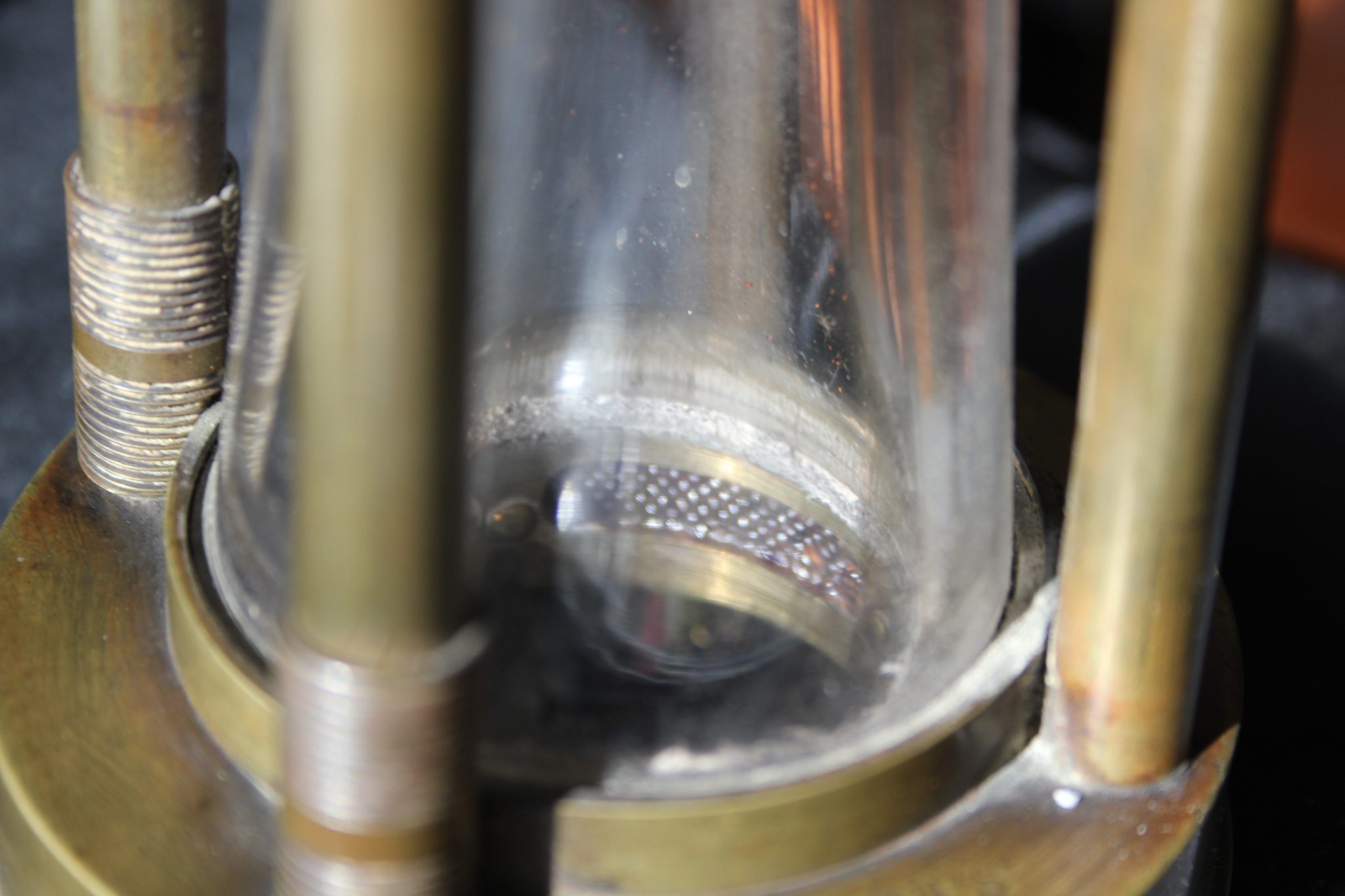
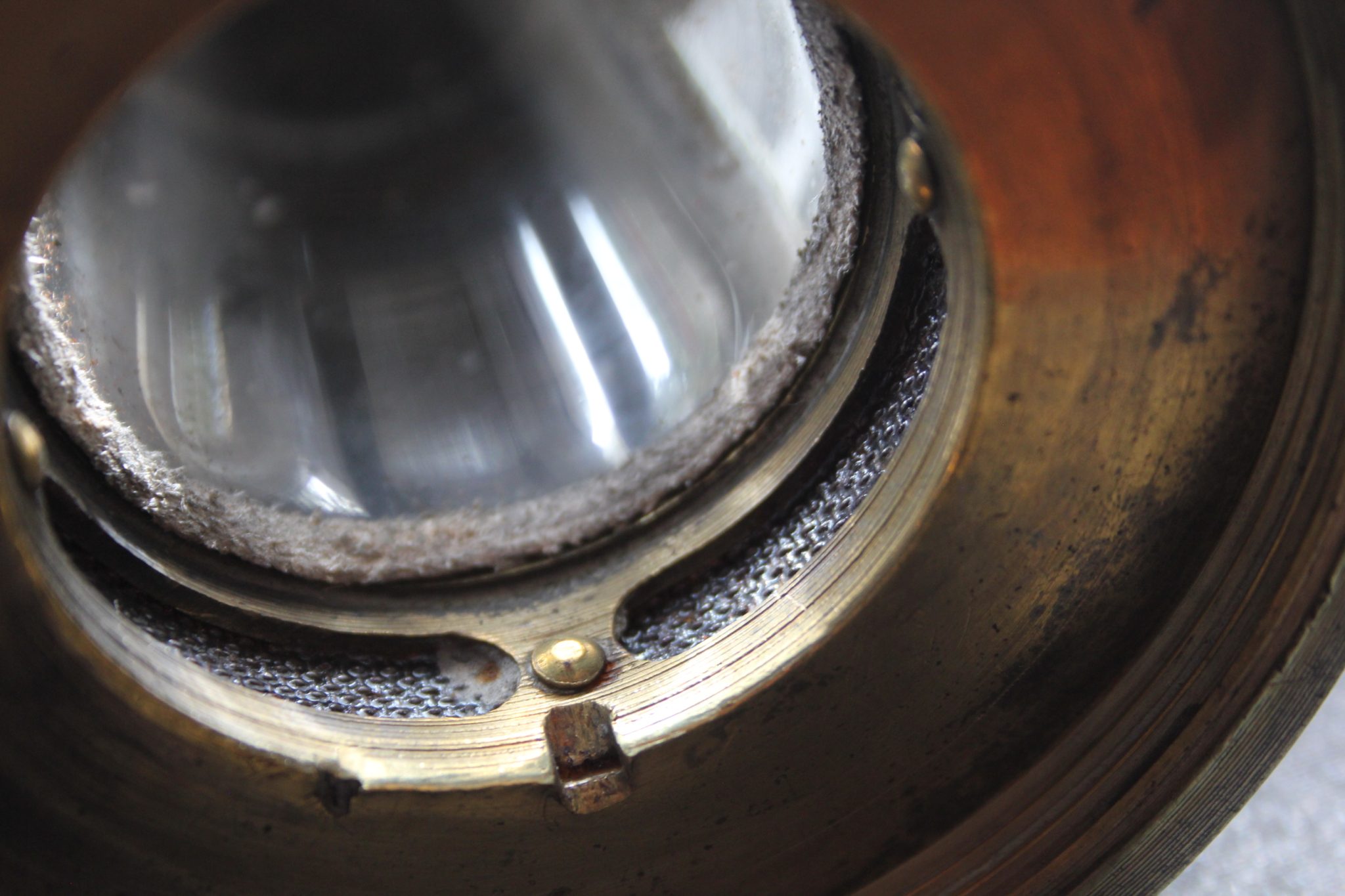
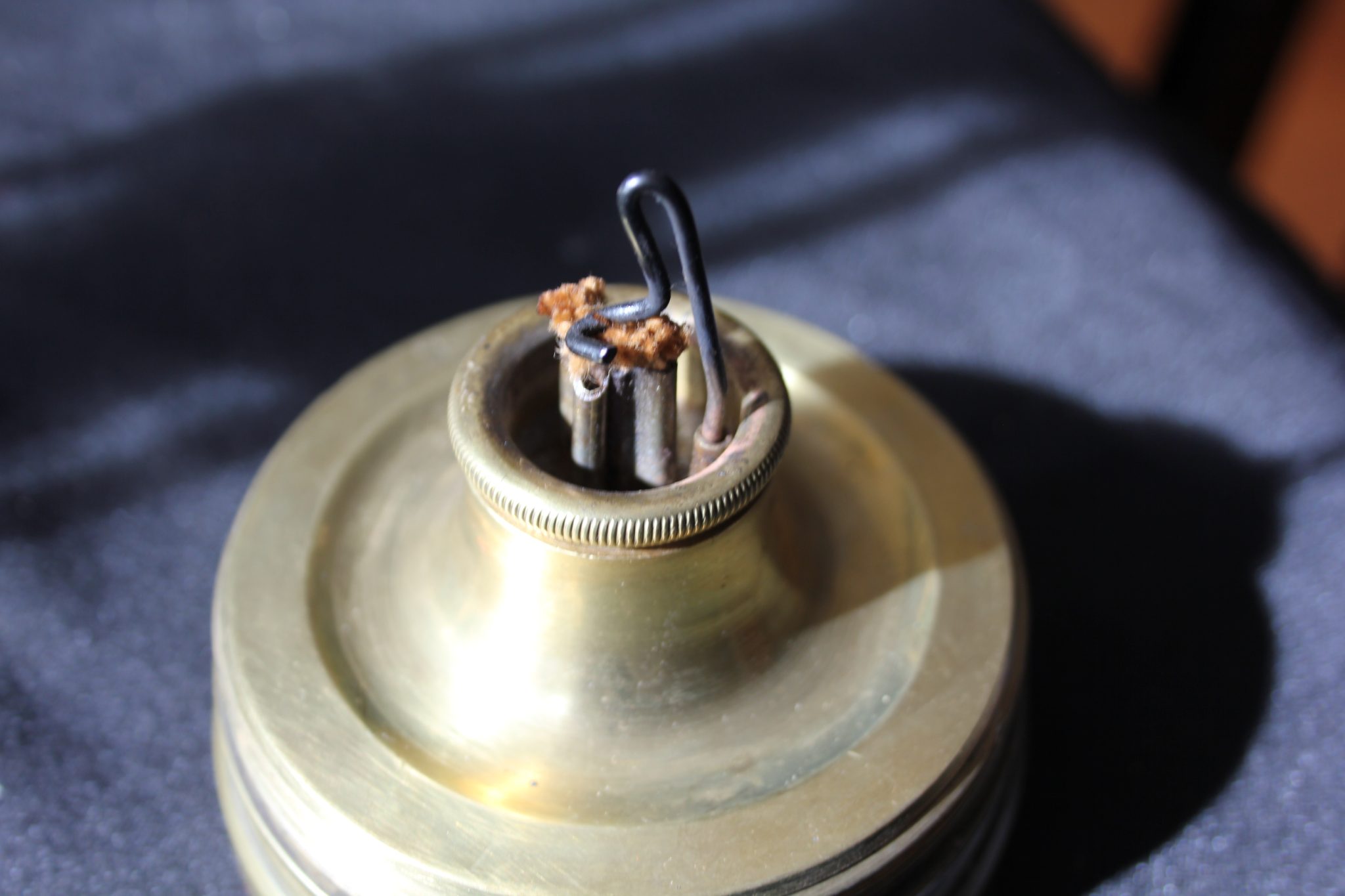
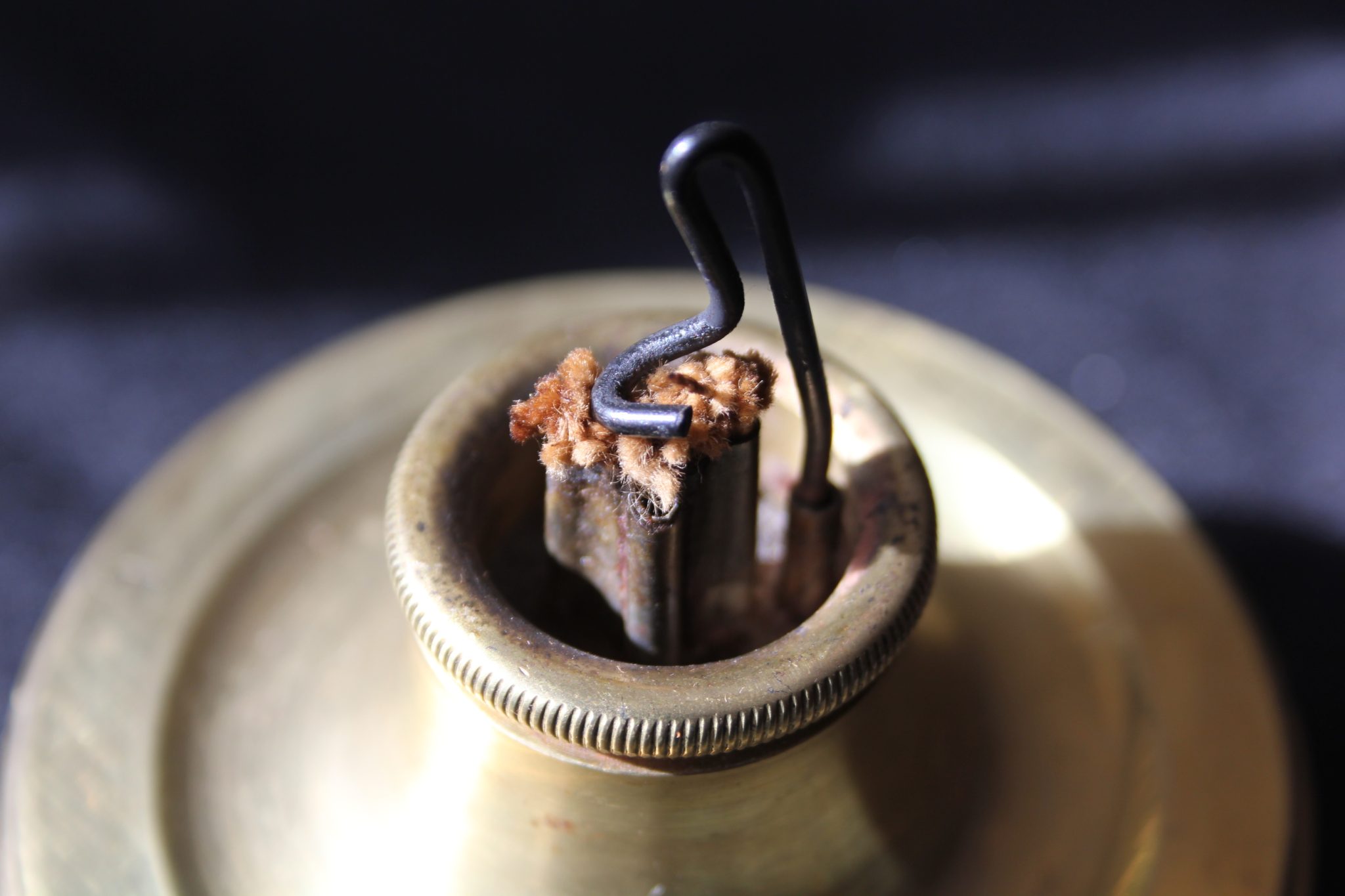
Instead of pulling damp air (MW 32) from the middle of the lamp as seen in the Davy-Clanny types, the AHG lamp utilizes four vertical hollow brass tubes to allow entry of the methane (MW 16) laden air from the top. The top and bottom of these tubes feature specialized, retractable shutters or vents. These can be opened or closed at will. Air directed through the hollow tubes travels down to the very base of the lamp, feeding the flame from underneath (an “underdraft” mechanism). The glass surrounding the flame is uniquely tapered (conical) to give an unobstructed, highly visible flame. An internal wire gauze cools down escaping heat to prevent the lamp from igniting an external explosion. Reservoir below wick assembly.
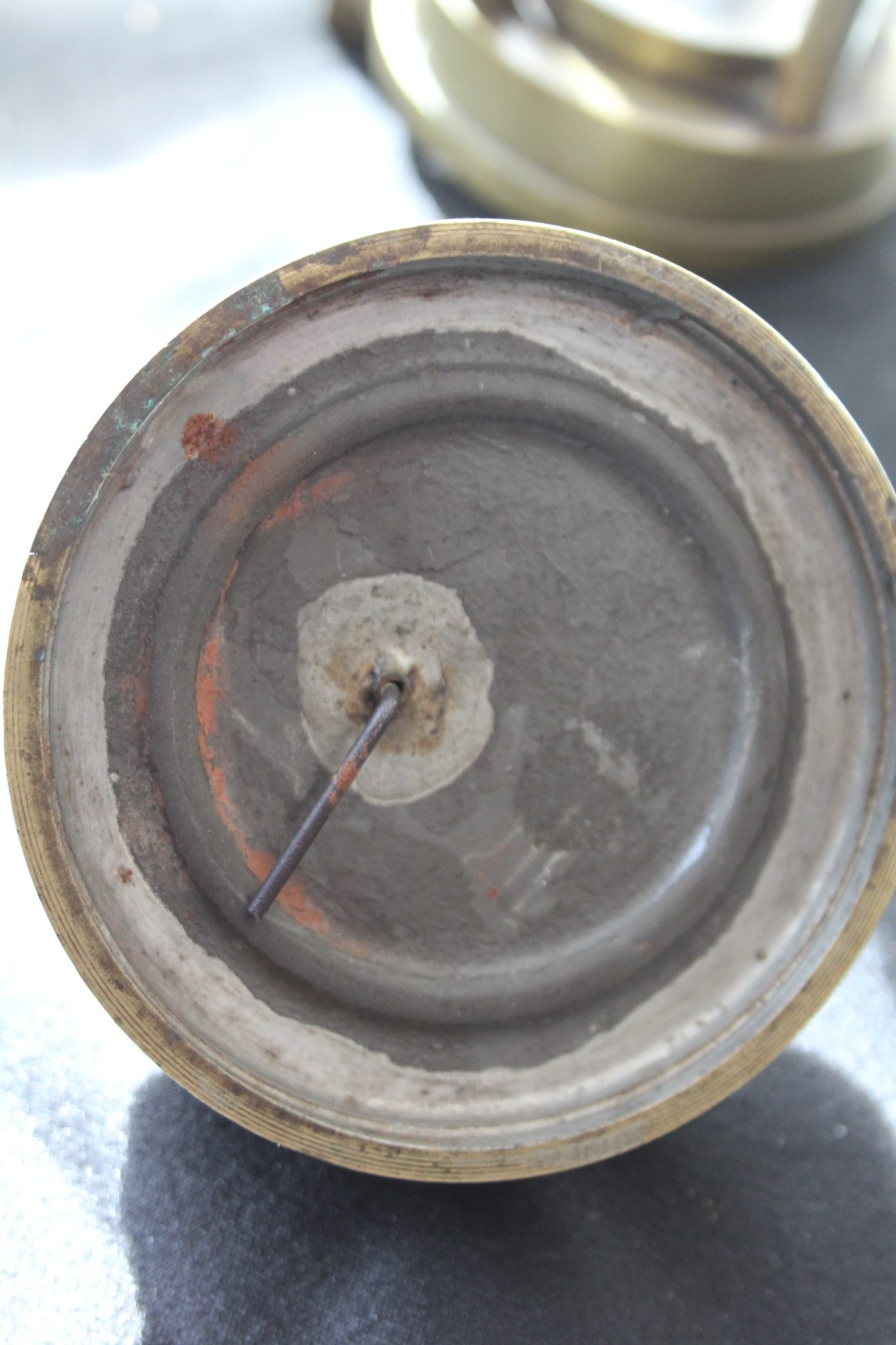
When employed, the tester raises the lamp to the ceiling of the mine and allows “air” to enter from the TOP of the lamp. As it burns a distinctive blue “cap” flame is seen. The larger the cap, the more methane is present. A platinum? wire could be raised, lowered or rotated to clear the wick for a clear reading of the height and colour of the flame. The wire extends through the soldered base to make it air tight from the bottom. In this way, methane laden air is only drawn from the top down through the hollow tubes when the vents are closed. Special training was needed to operate and “read” the lamp as explosions were the primary concern.
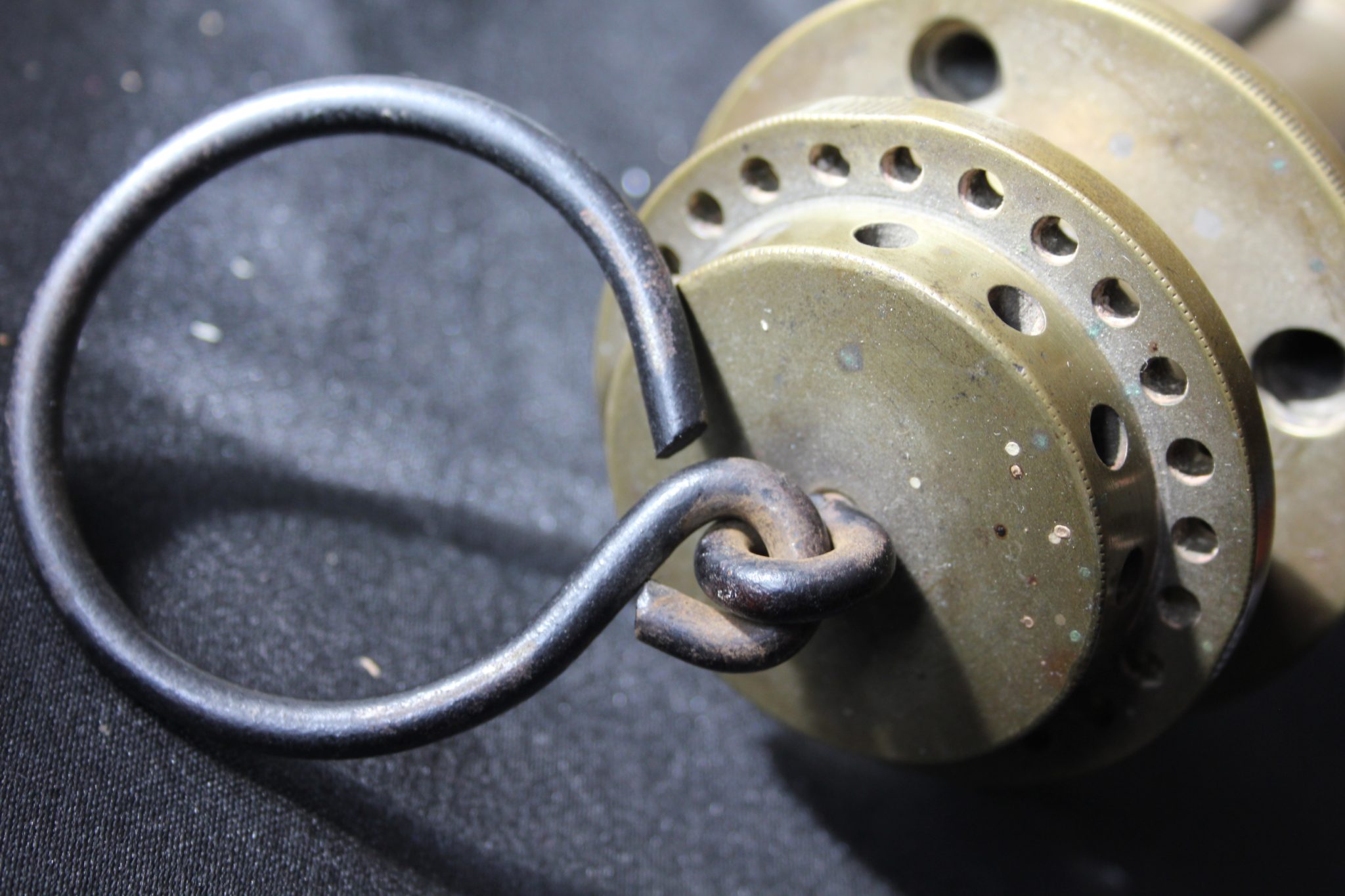
The lamp comes with a heavy, serpentine steel hanging loop. Beautiful and functional, I have only located 3 extant examples outside of private collections-Science Museum (London), Wales Mining Museum and the Smithsonian. No issues with this example. Later versions were steel (brass shortage during WWI) and aluminum (to reduce weight).
Ask the Dealer
Dealer information
 Scientifica Opticae Inc.
Scientifica Opticae
Mark Hacking (Scientifica Opticae Inc.) has been an avid collector/dealer for over 40 years. A former Science teacher, he has an innate love for anything natural or mechanical. Specializing in optical (microscopes, telescopes), surveying, medical, weighing and drawing instruments, he is an active participant of the Scientific Instrument Fair in London. Living in Stratford, Ontario, Canada, with his wife and two children; Mark looks forward to meeting as many fellow collectors as possible, and has a worldwide following on eBay (Sciopti). As of Nov. 1/24 my email has changed to either scioptimark@outlook.com or sciopti@outlook.com.

Other items See all
-
 ~UNIQUE DOUBLE ARM CIRCULAR PROTRACTOR-ELLIOTT~ $500 USD (400 GBP) + postage
 -
-
 ~MINT BAUSCH and LOMB CONTINENTAL MODEL CCDS c. 1900~ $1500 USD + shipping at cost
 -
 ~GOOD M. PILLISCHER TRAVELLING MONOCULAR MICROSCOPE~ $500 USD/400 GBP + shipping at cost