

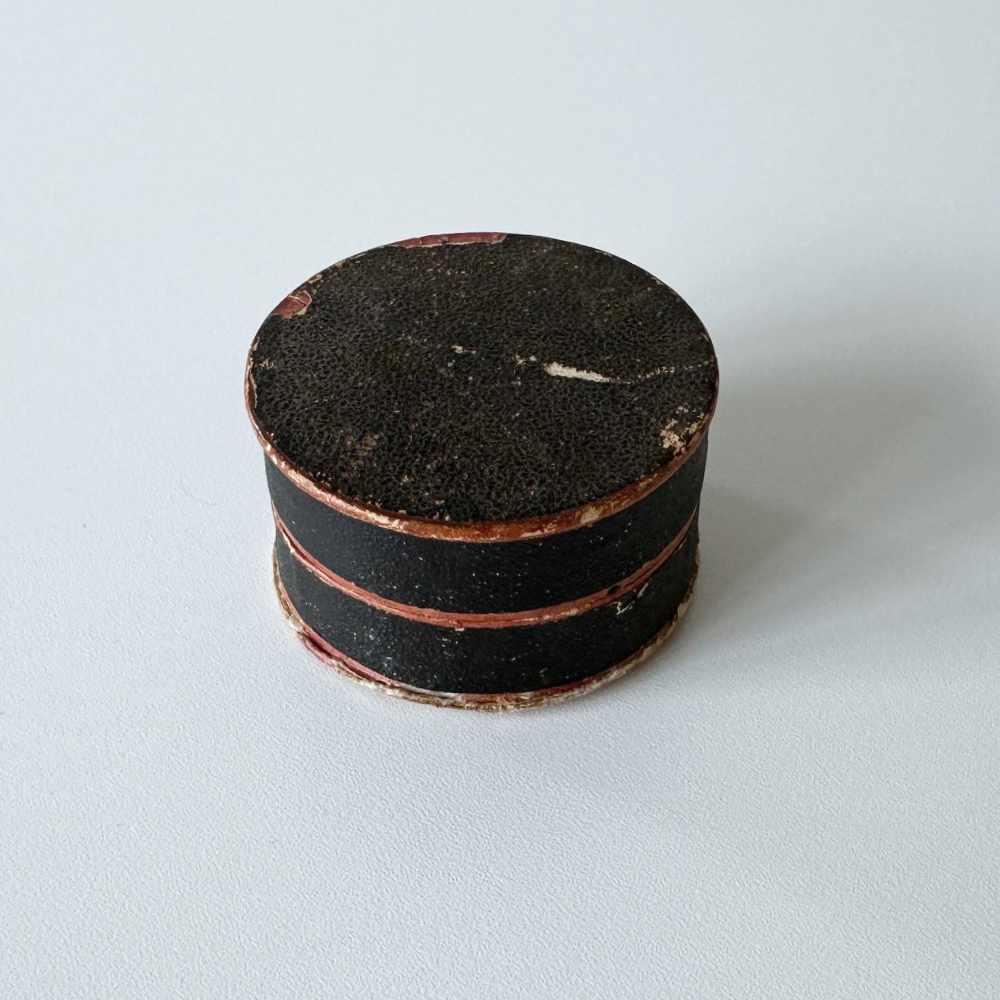
French Victorian Patent Alarm Clock in Original Case by Antoine Redier of Paris
£395
French Victorian Patent Alarm Clock in Original Case by Antoine Redier of Paris
Dimensions
H: 7 x W: 7 x D: 4cms
Circa
1860
Maker
Antoine Redier
Country of manufacture
France
Description
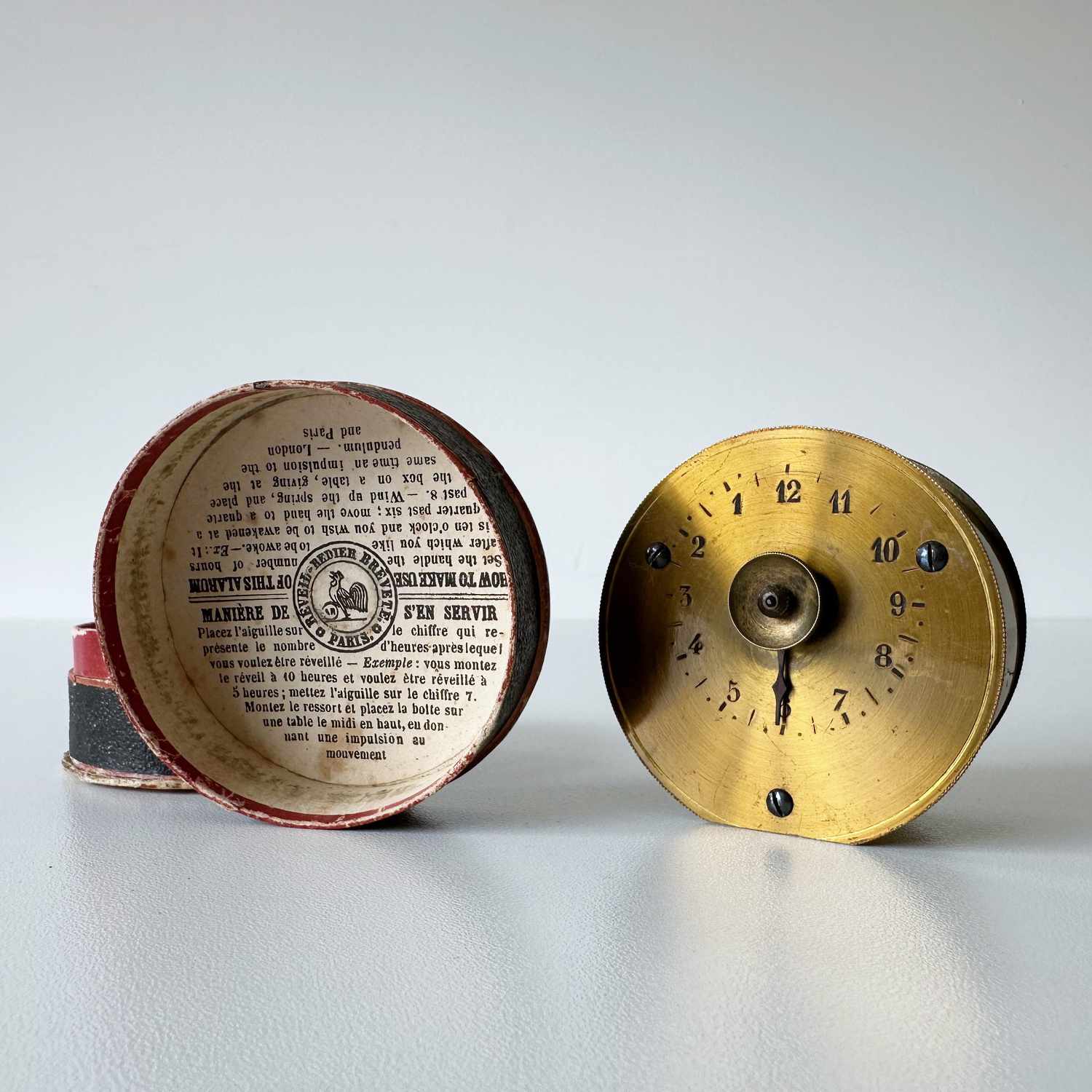
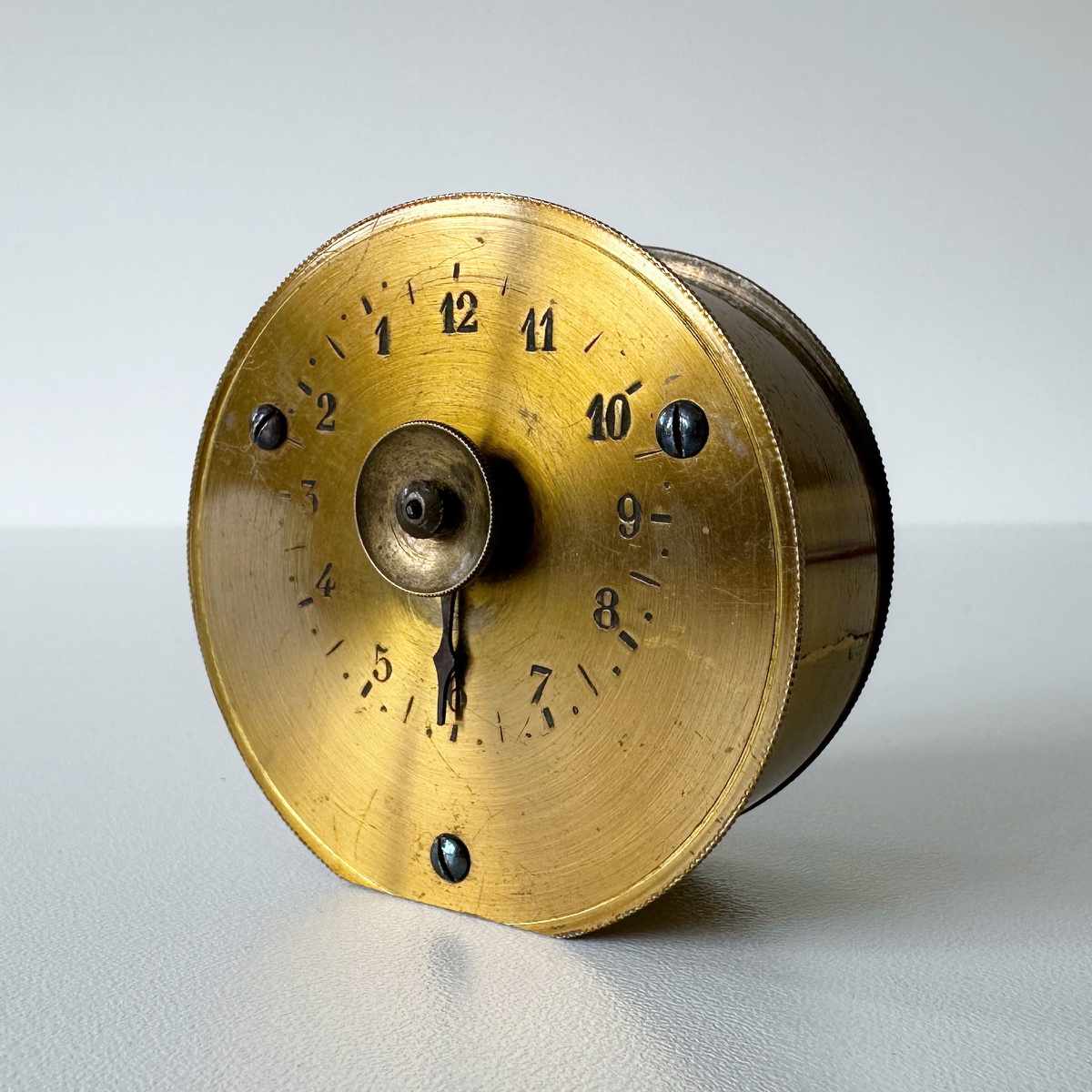
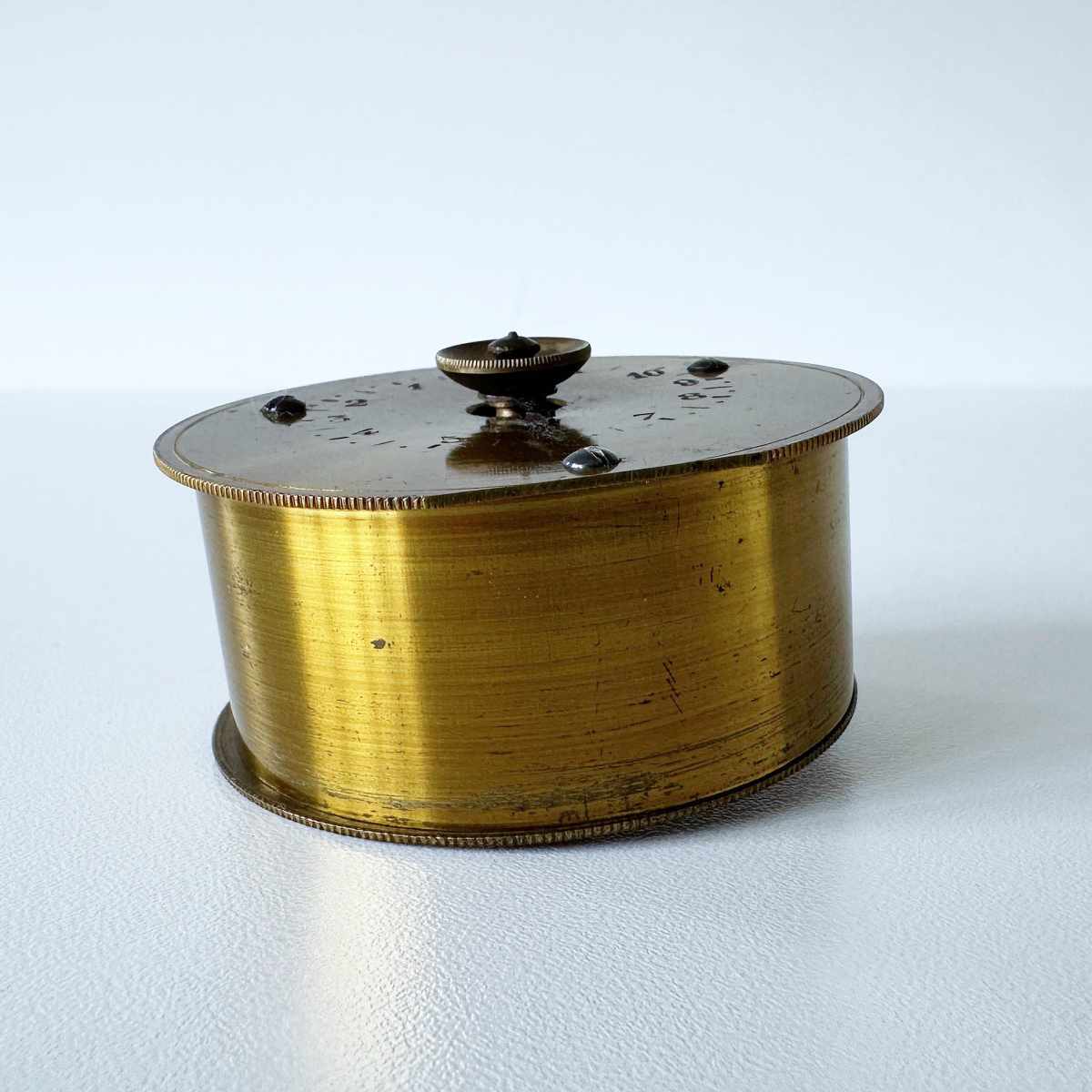
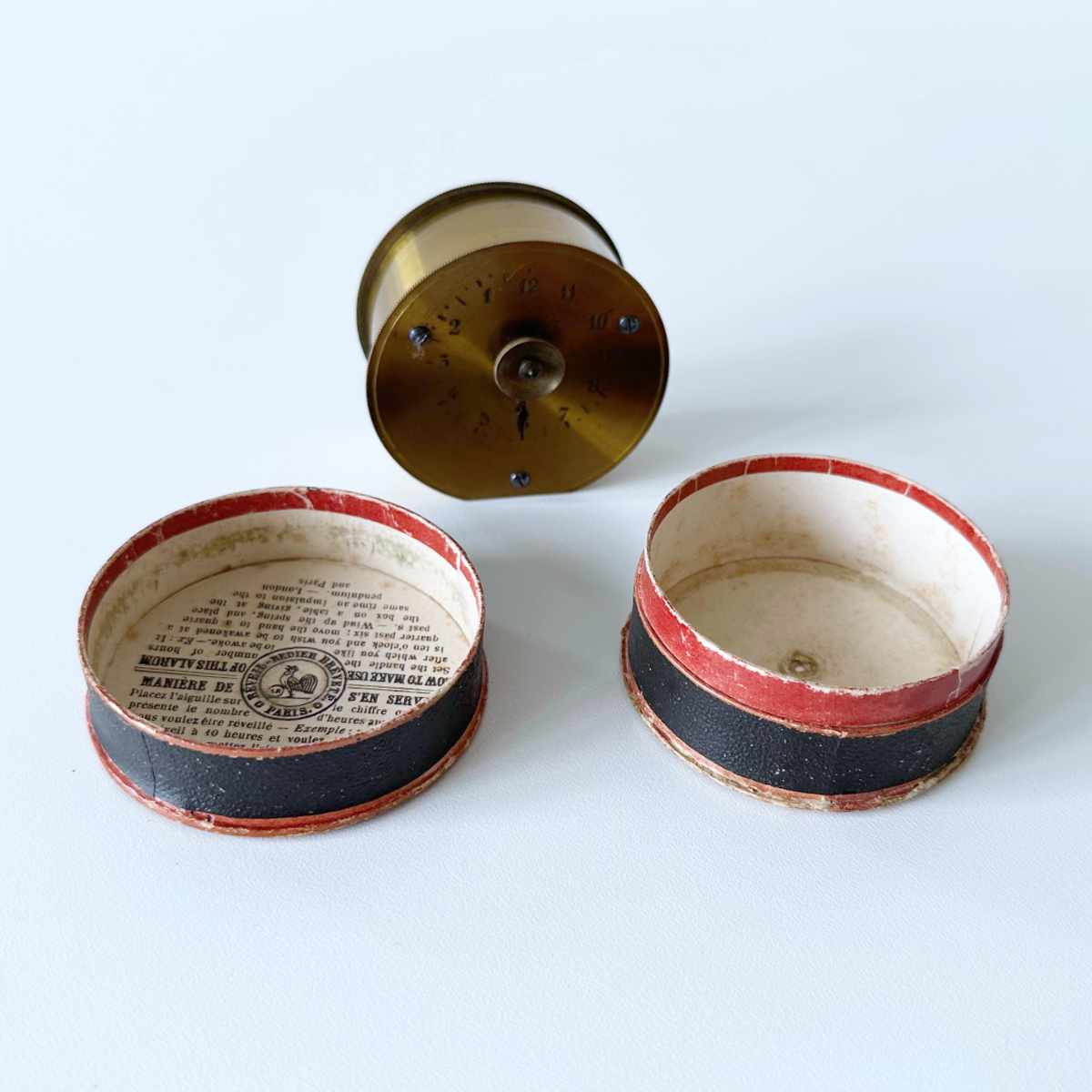
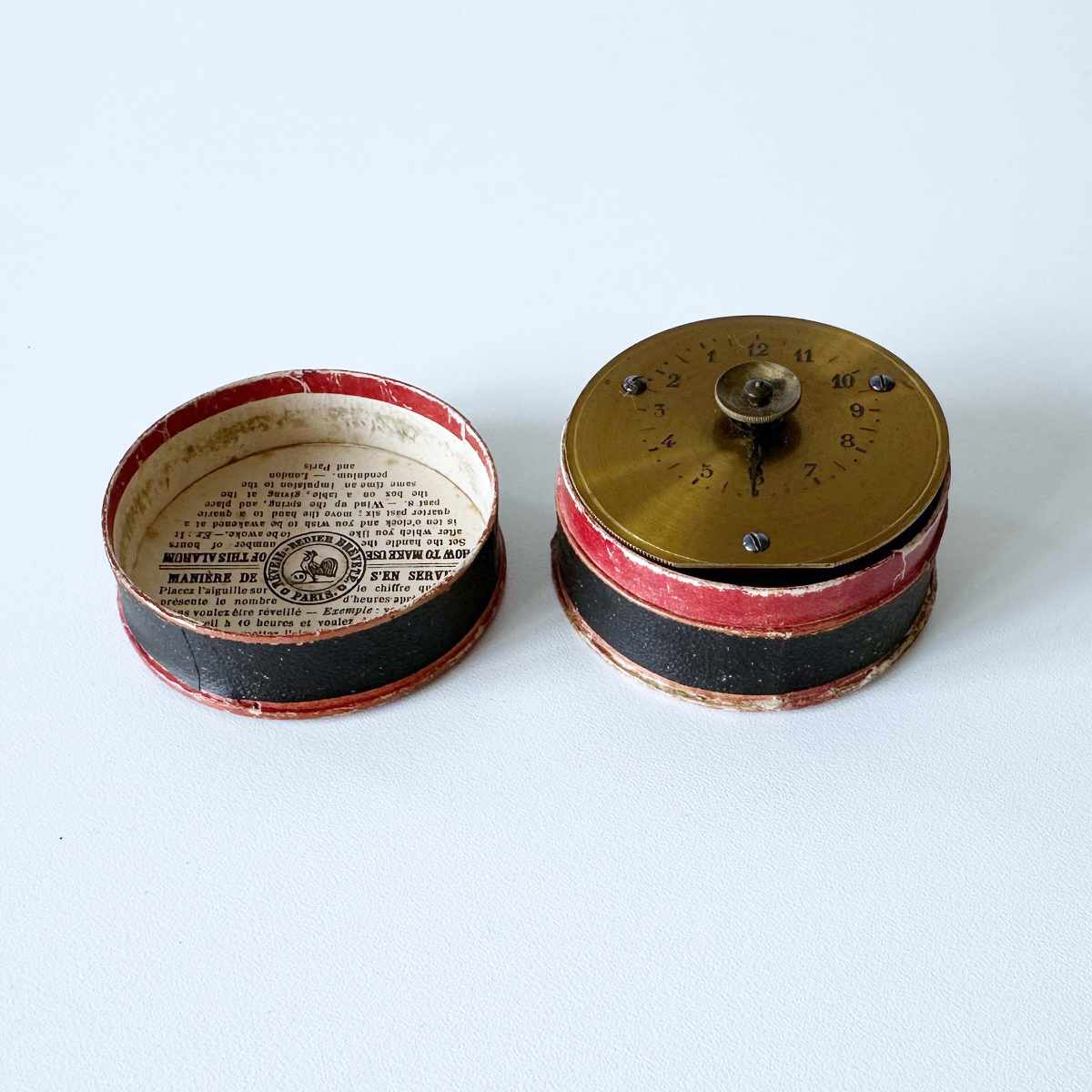
For sale, an early Victorian French patent alarm clock in original card case by Antoine Redier of Paris.
This simple yet iconic timekeeping mechanism was patented by Antoine Redier the famous French clockmaker and inventor in 1847. Earlier claims have been made over the first alarm clock, but Redier’s invention was undoubtedly the first scale manufactured example and the first to have received a formal patent.
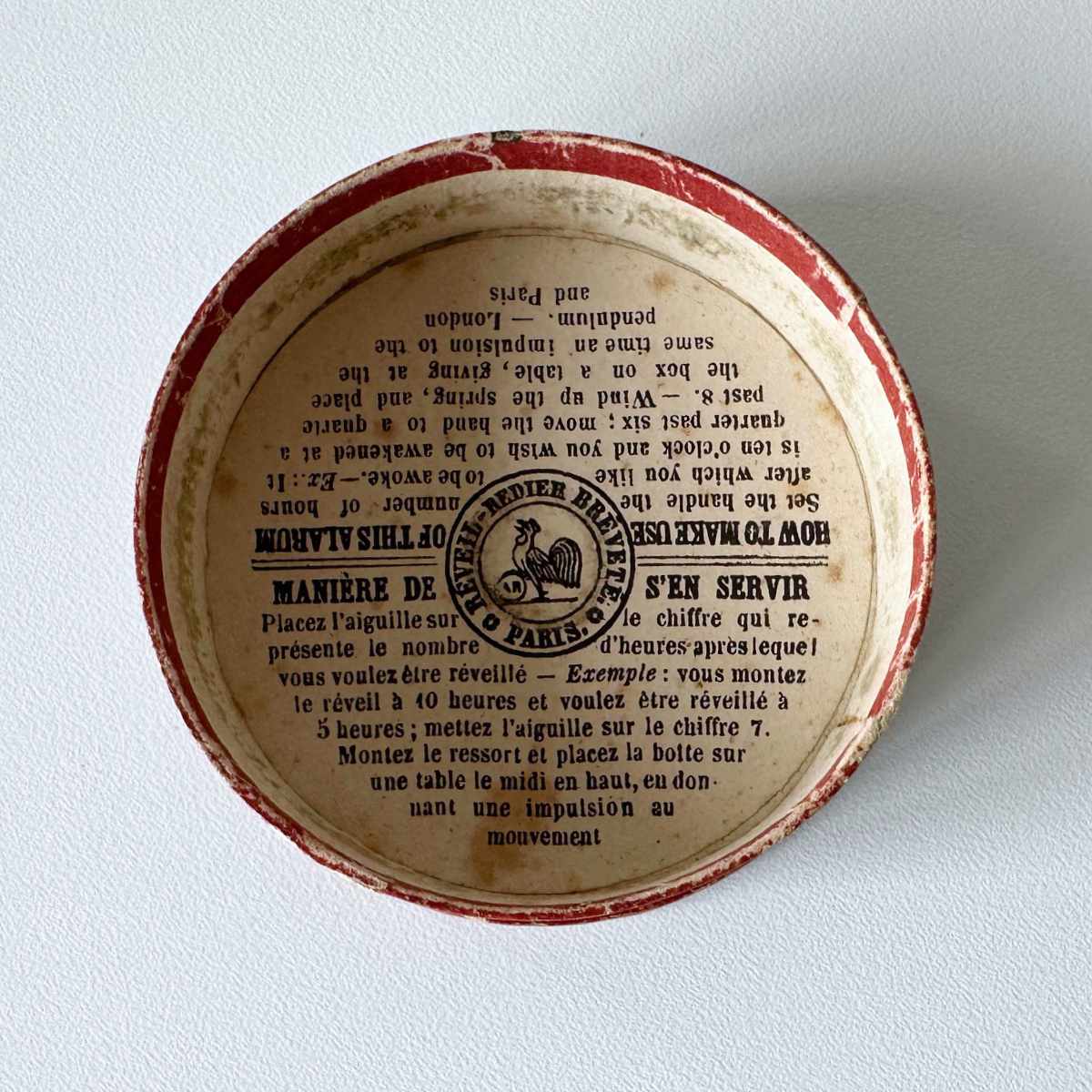
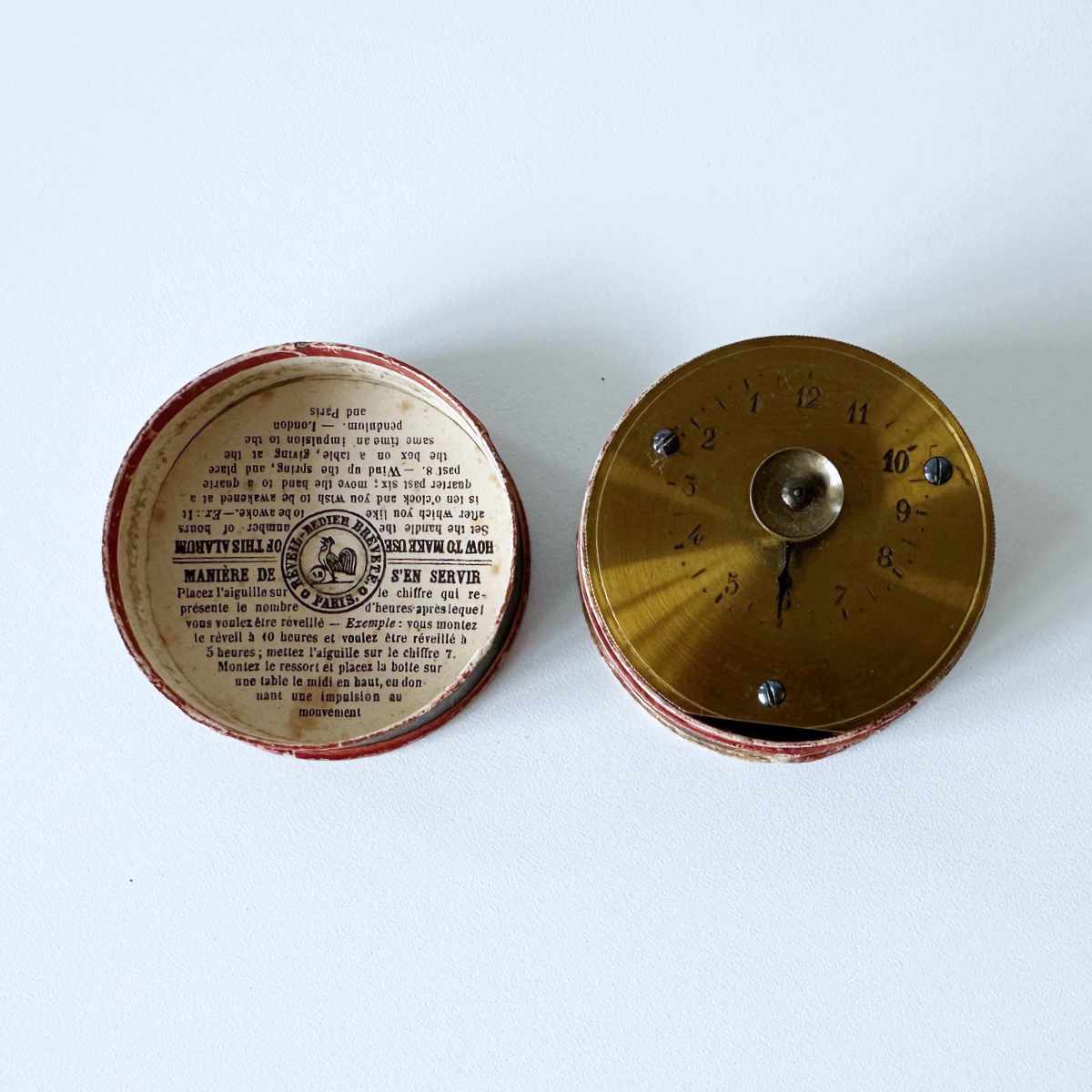
Comprised of a two-and-a-half-inch case with a front dial engraved with Arabic numerals from 1 – 12. The centre dial has a knurled brass knob with steel pointer which can be adjusted to set the time in which the owner wishes to be awoken. The interior of the original card case describes in both French and English the means by which it should be employed.
“HOW TO MAKE USE OF THIS ALARM
Set the handle the number of hours after which you like to be awoke. – Eg; It is ten o clock, and you wish to be awakened at a quarter past six; move the hand to a quarter past eight. Wind up the spring, and place the box on a table, giving at the same time an impulsion to the pendulum. – London and Paris.”
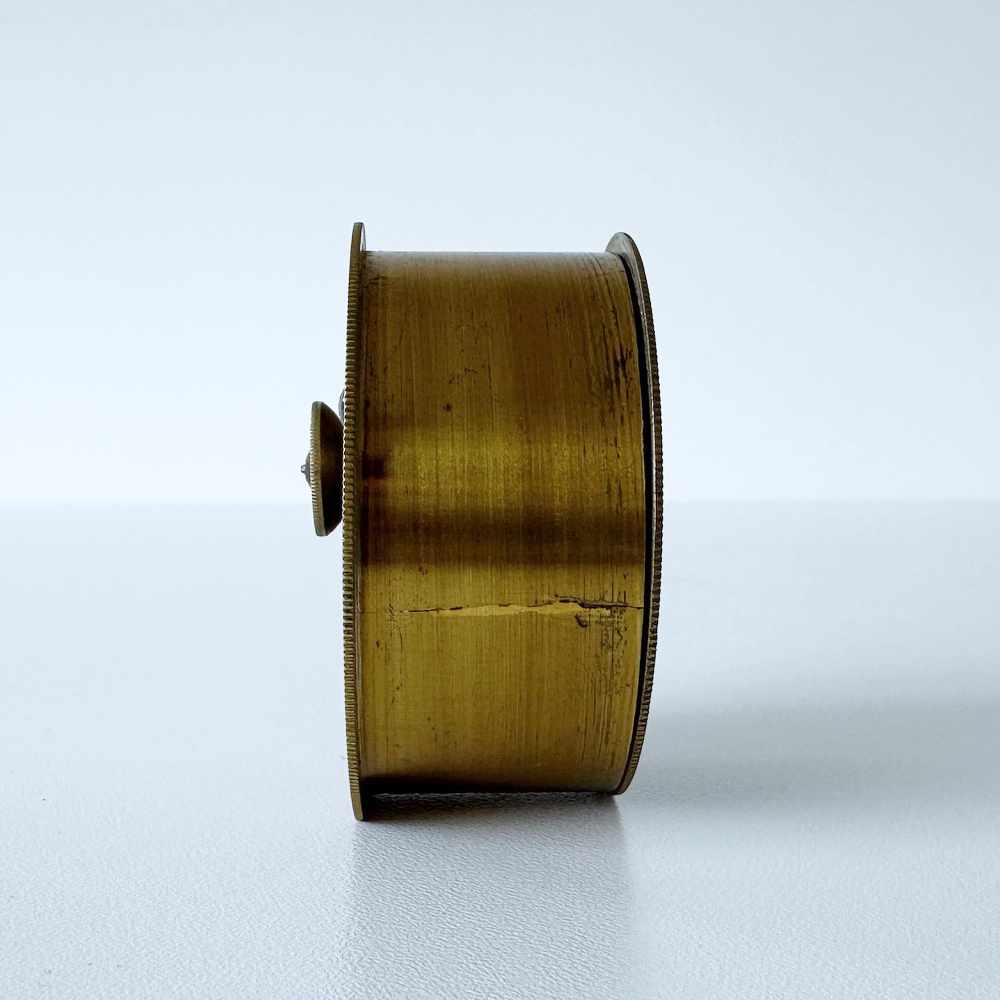
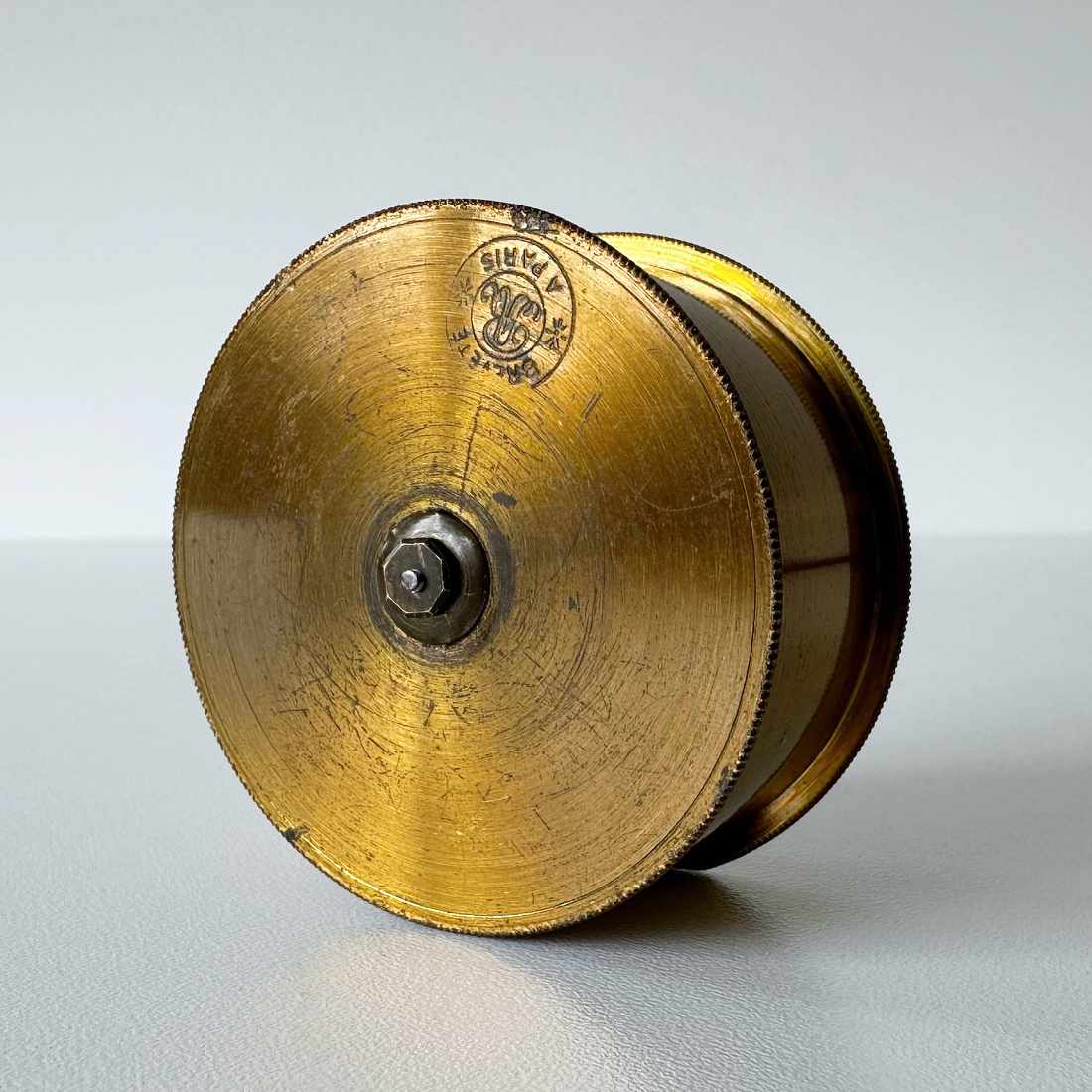
With reference to the winding mechanism, the reverse of the case is enclosed by a flat plate of brass which moves freely from the case sides and is secured by means of a central screw. This plate is attached to a clock main spring within the case and can be thus wound by clockwise movement of the case.
The front plate of the case is also slightly crudely cut flat at the base which serves as a level for the positioning of the alarm at the bedside when in use. The reverse is further stamped with the Brevete a Paris stamp denoting its French patent.
Extraordinarily, this example still retains its original two-part card case containing the original instructions provided above. It remains in good sturdy condition and should you wish to use it, the alarm remains in good working order. It is likely that Redier’s alarm clock grew in popularity through the numerous international exhibitions that took place during the middle of the Nineteenth Century.
Redier was born in 1817 in the French town of Perpignan. His Father was a Goldsmith and following his education, the young Redier began work at his Father’s business. The family were acquainted with the scientist Francois Arago, and it was under his advice that Redier took the exams for entrance to a Paris watchmaking school run by Louis Frederic Perrelet. He excelled in his schooling and went on to work for Henri Robert for a few years before eventually setting up on his own account in 1842 via the purchase of the Duchemin workshop in Paris.
One of Redier’s earliest clients was the inventor Lucien Vidie, now famed for the invention of the aneroid barometer capsule movement. In 1845, Vidie requested Redier to make the first one hundred examples of his new instrument however the relationship turned immediately sour after Vidie questioned the quality of the finished product and a long, drawn-out legal battle ensued which was finally settled in Redier’s favour some years after.
Just two years later, Redier invented and patented what would become the first travel alarm clock with adjustable wake up timing. His career was prolific from this point on, Redier accumulated over sixty patents to his name including a mercury recording barograph and a recording aneroid barometer produced just a year before his death in 1892. During his life he was also made a knight of the Legion of Honour (1863) and later became an Officer in 1878,
After his death, the company was bought by Hector Levy and managed by Georges Meyer although its popularity waned after the loss of the founder. It was finally bought out in the Early Twentieth Century by the equally famous French manufacturer Leon Maxant.
Circa 1860