Description
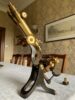
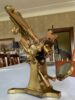
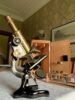
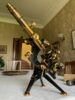
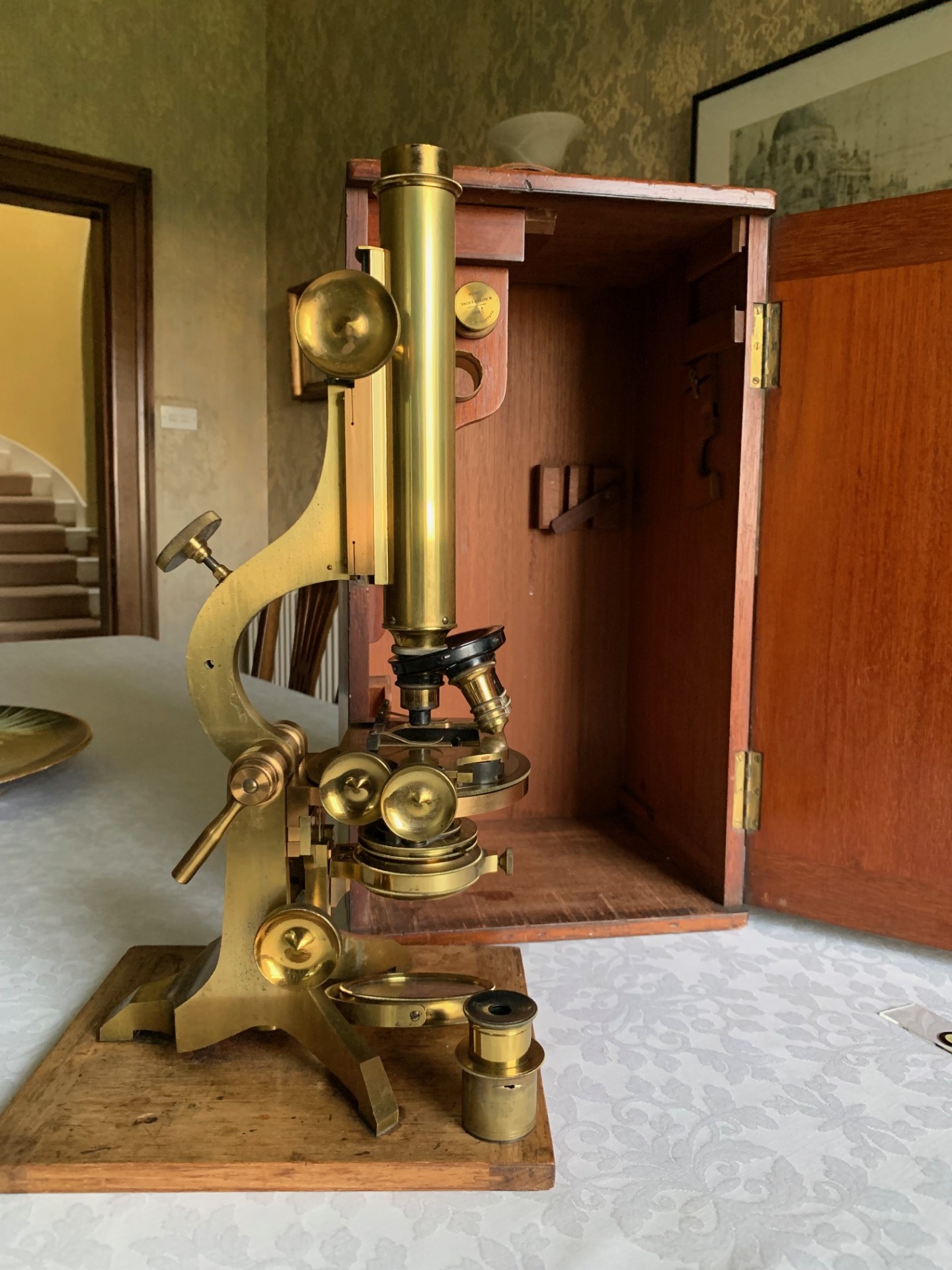
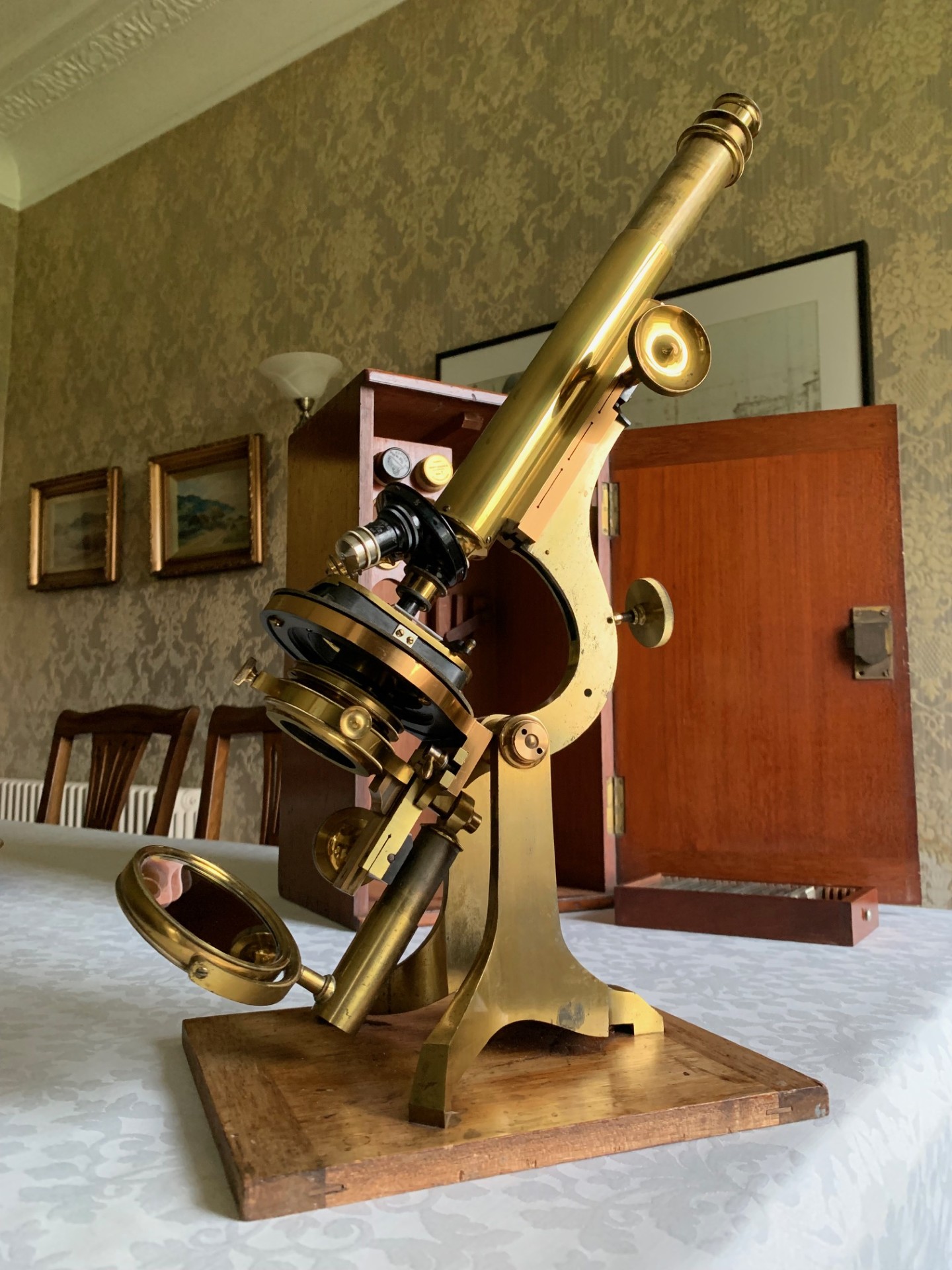
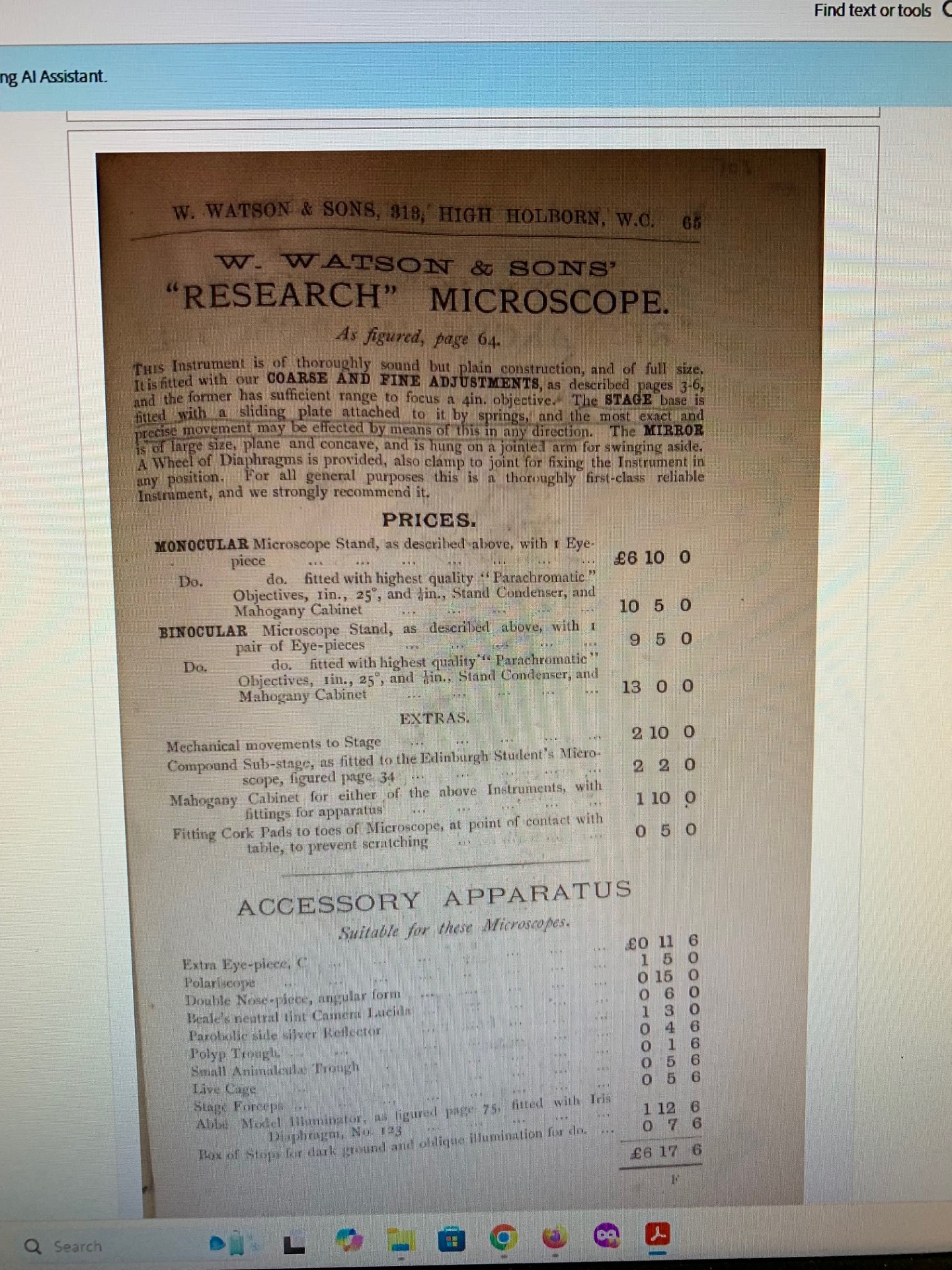
Lovely rare antique instrument from the Victorian period by Watson – a Research model Jackson-type variant in monocular configuration. This is probably one for a seasoned Watson collector with a gap in the collection for this type of early scarce-to-market Watson instrument, so please read on if you’re interested in this imposing early example of British optical engineering excellence.
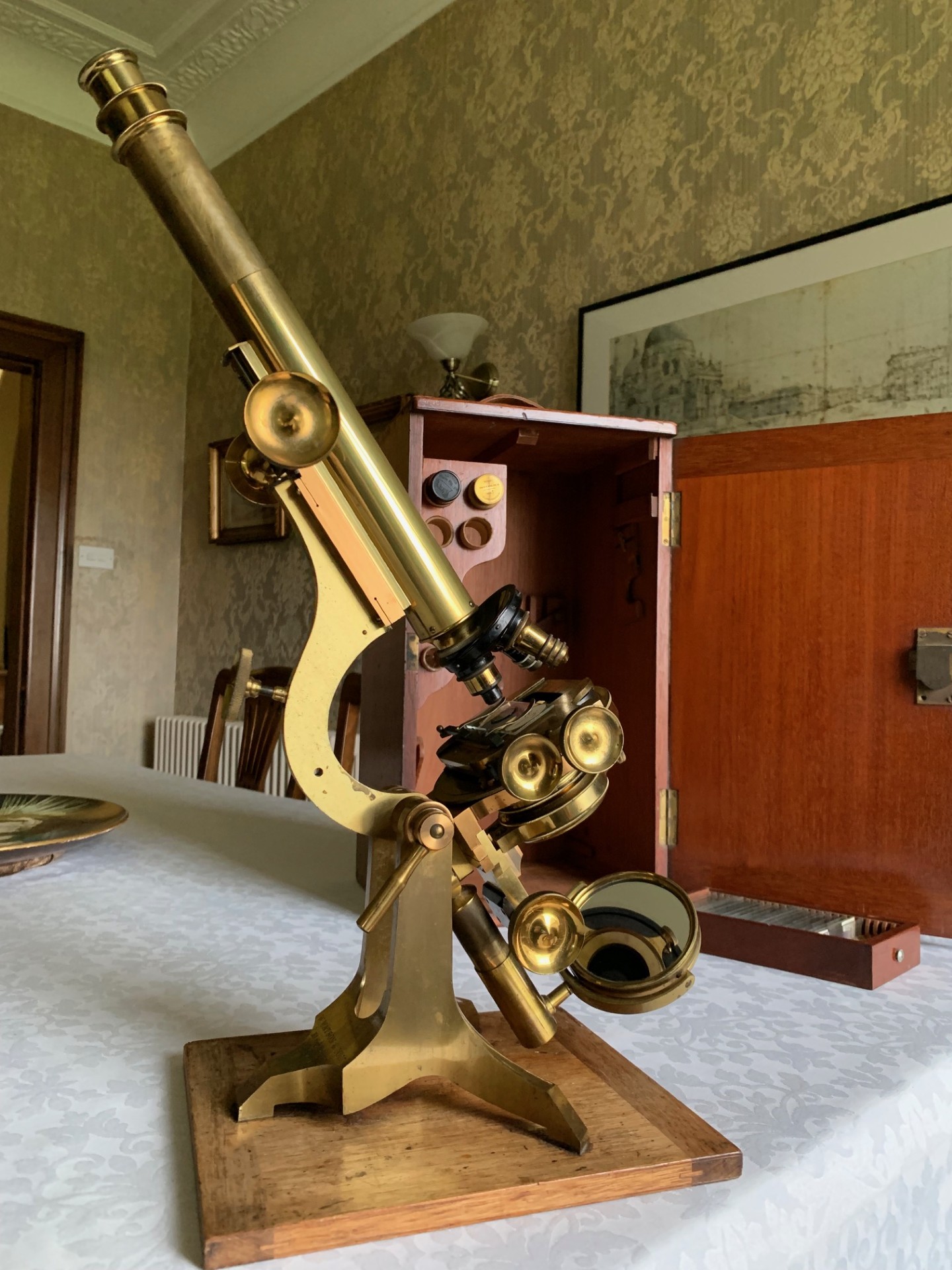
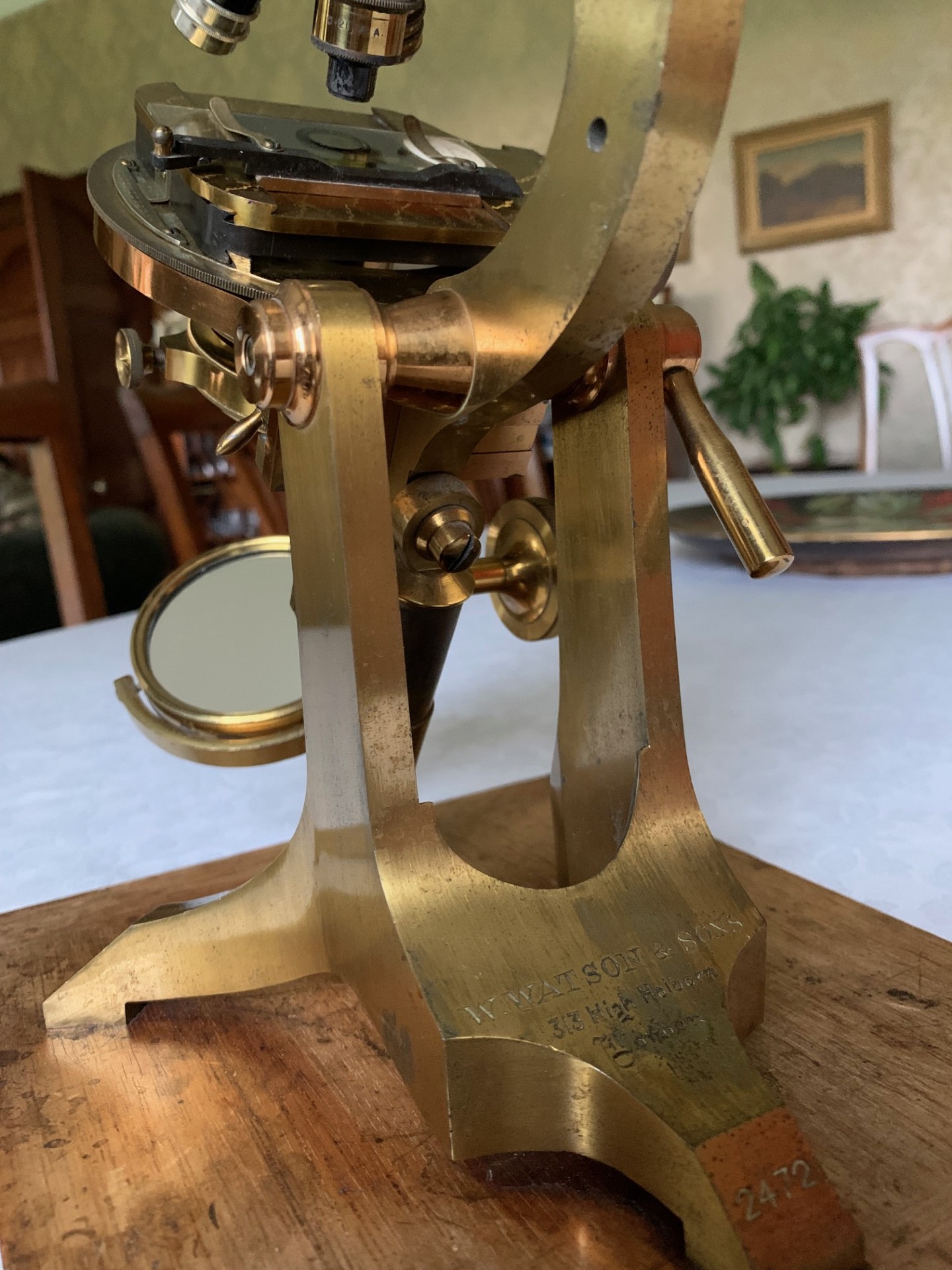
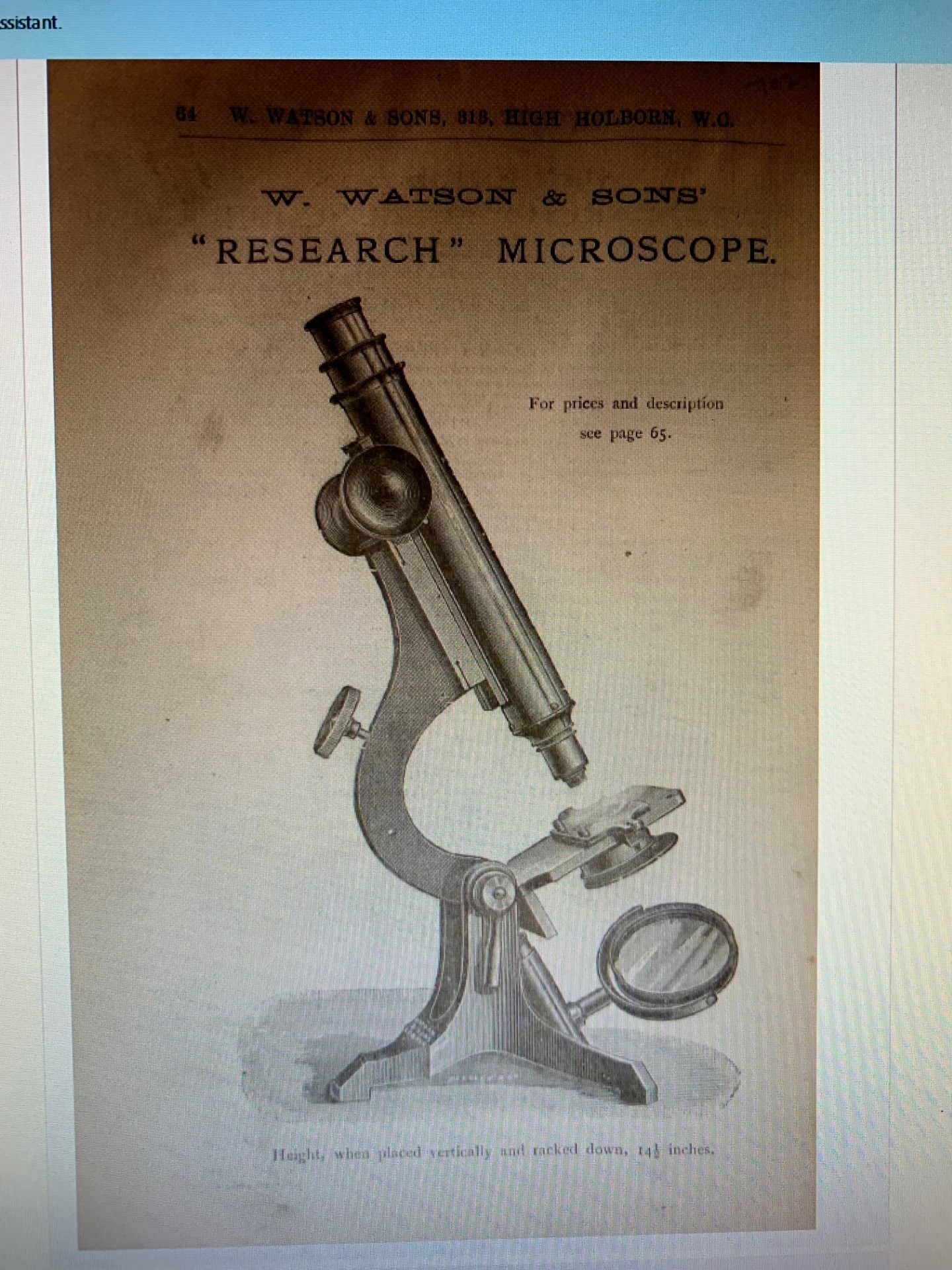
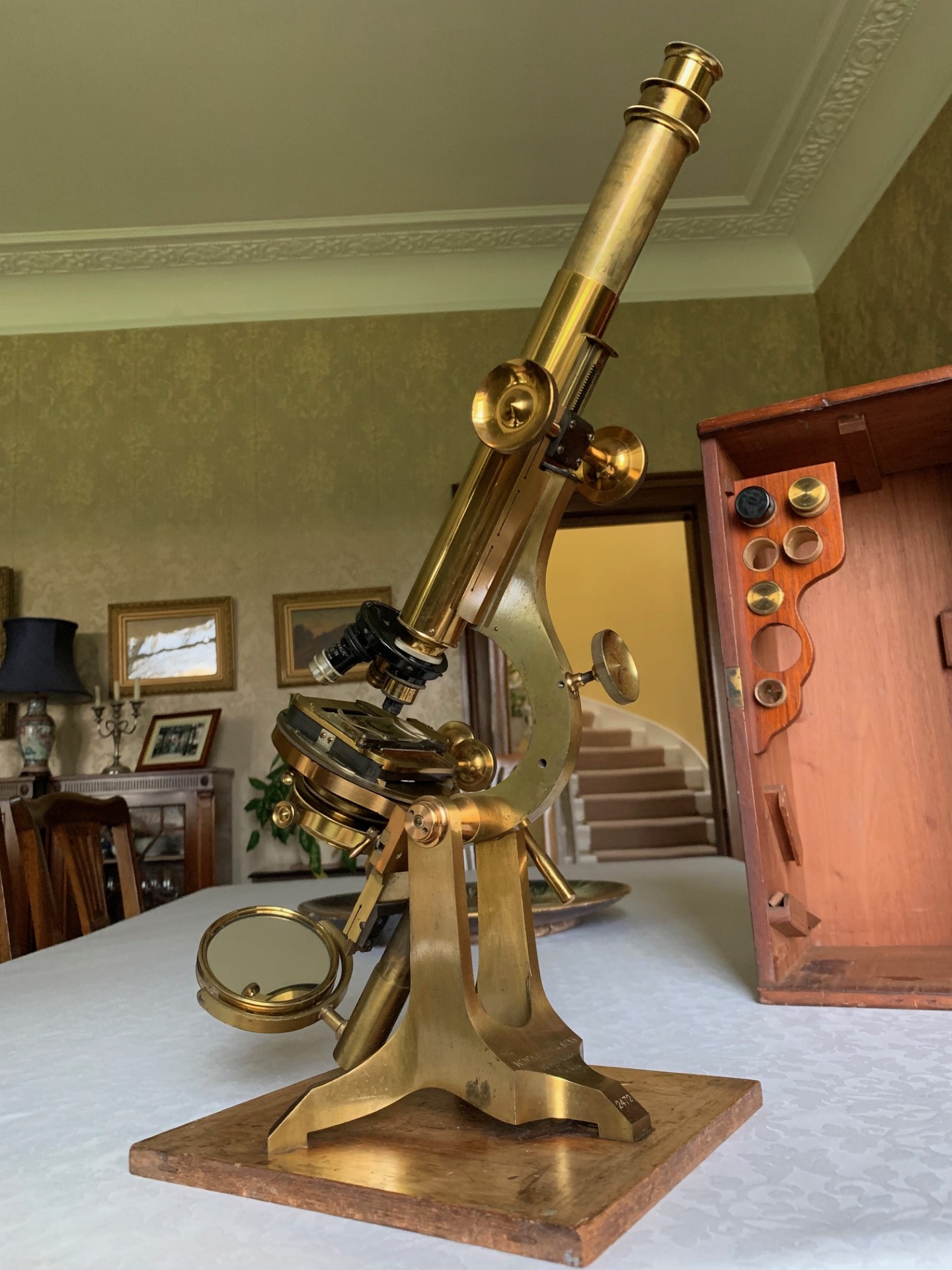
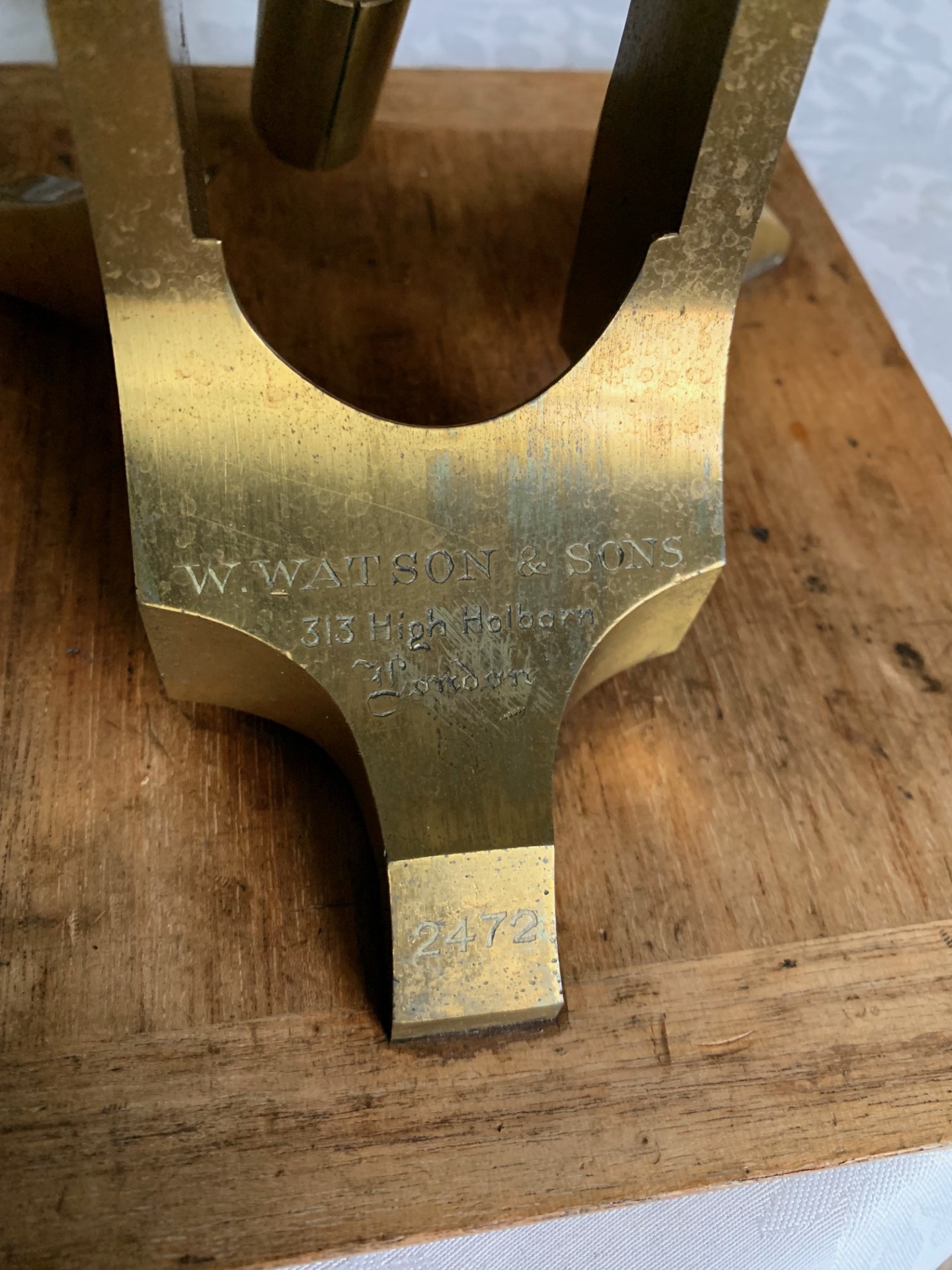
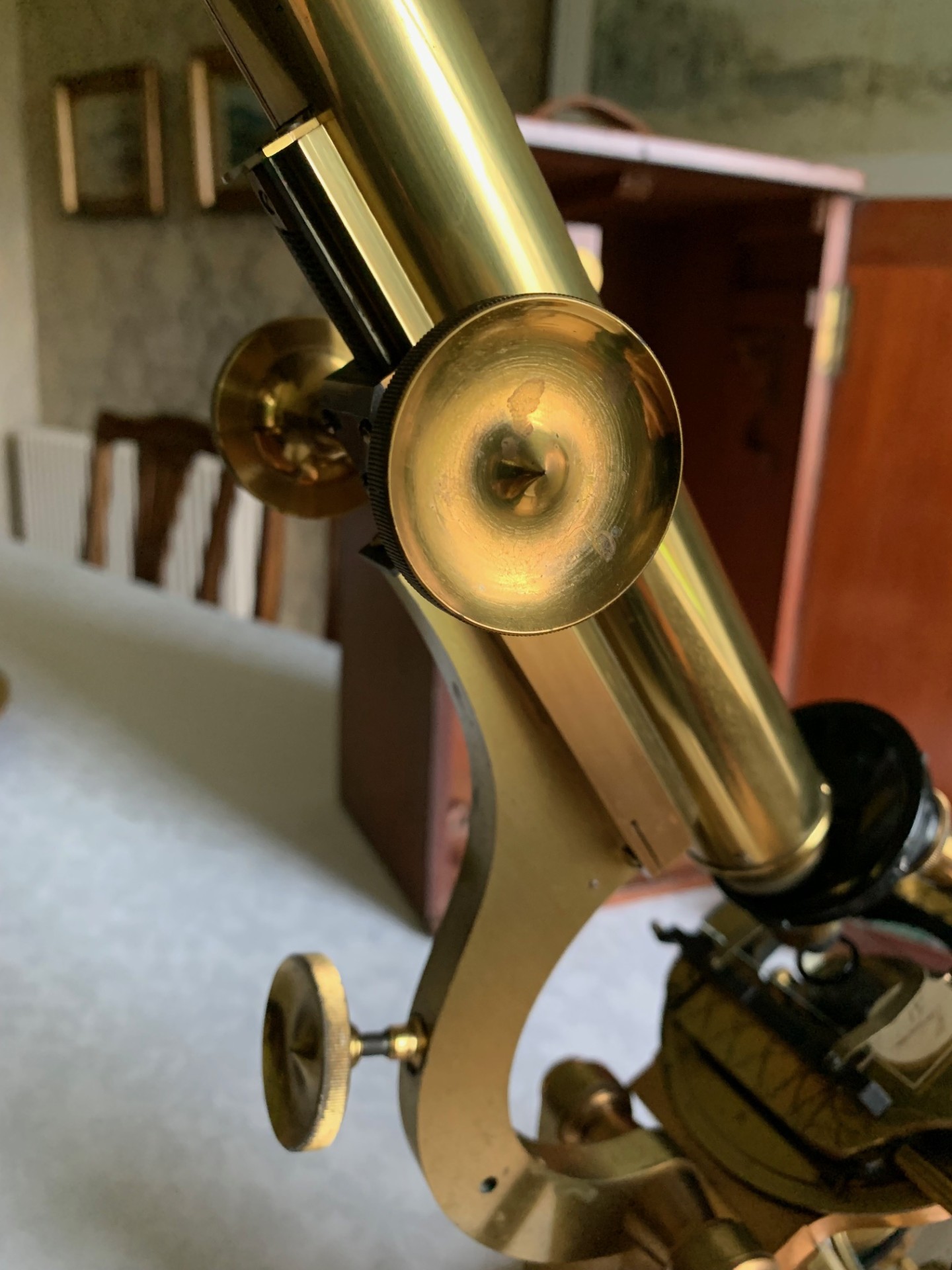
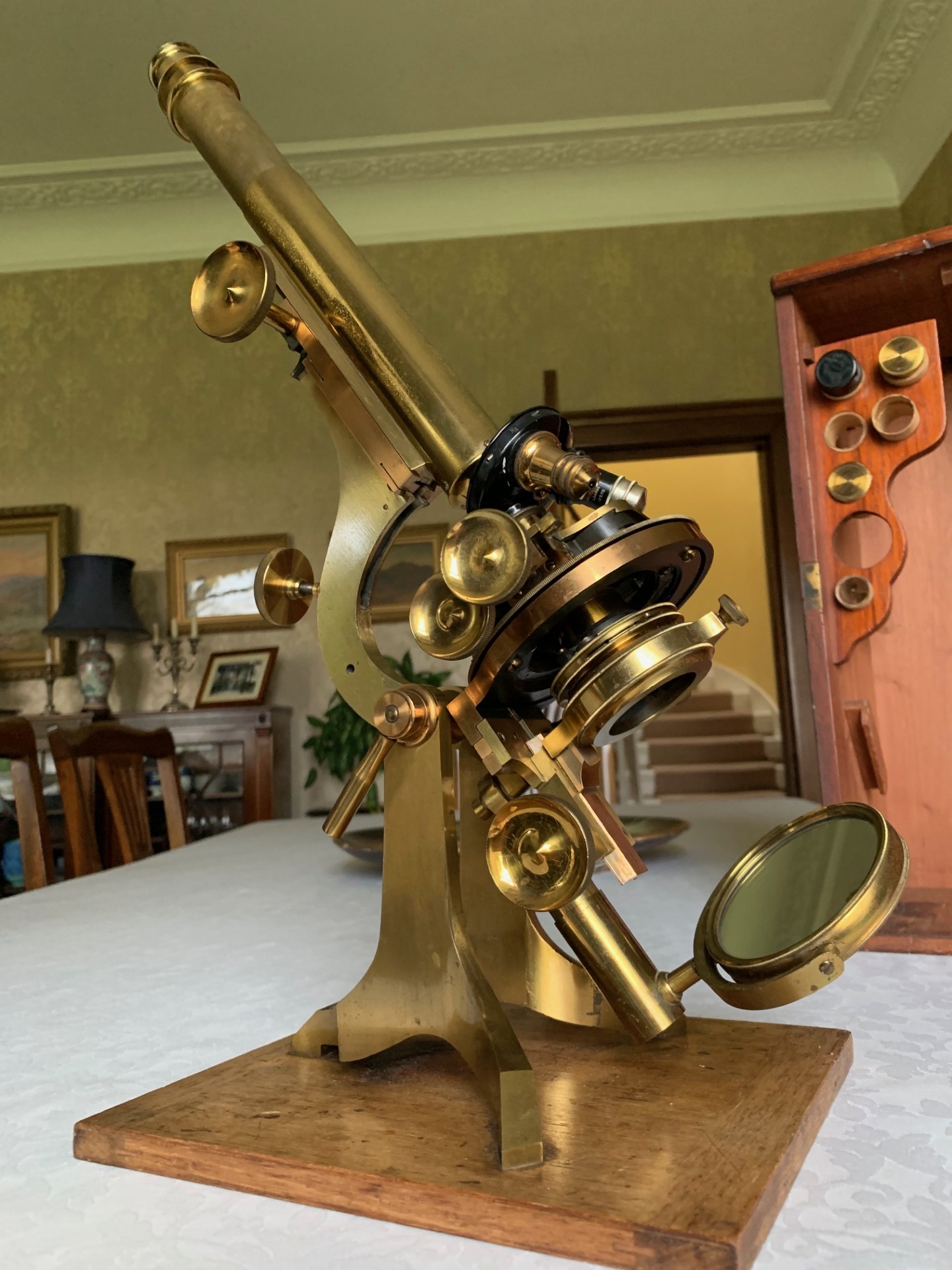
Offered for sale we have a fine example of a Jackson pattern microscope by W. Watson & Sons of London. The Jackson reference refers to the long elegant upper limb in brass, which on this model usually gives sufficient coarse focus travel to allow a 4 inch objective to achieve sharp focus. According to my Watson dating table, this instrument with serial number 2472 will date to 1890. The maker’s name being Watson & Sons means it’s definitely post 1882 and also, diagonal cut coarse focus and long lever fine focus also confirm post 1880, so the dating evidence is firm.
In terms of condition, the brass-work is showing some fairly minor signs of age and use-related tarnishing and lacquer spotting here and there, although not that bad in reality and overall a nice light aged patination to the instrument. It still catches the light really well, with overall condition that’s remarkable given the instrument’s age, as I hope the listing photos demonstrate. All controls and friction surfaces work well, with light re-greasing carried out, along with gentle sensitive cleaning where it was required.
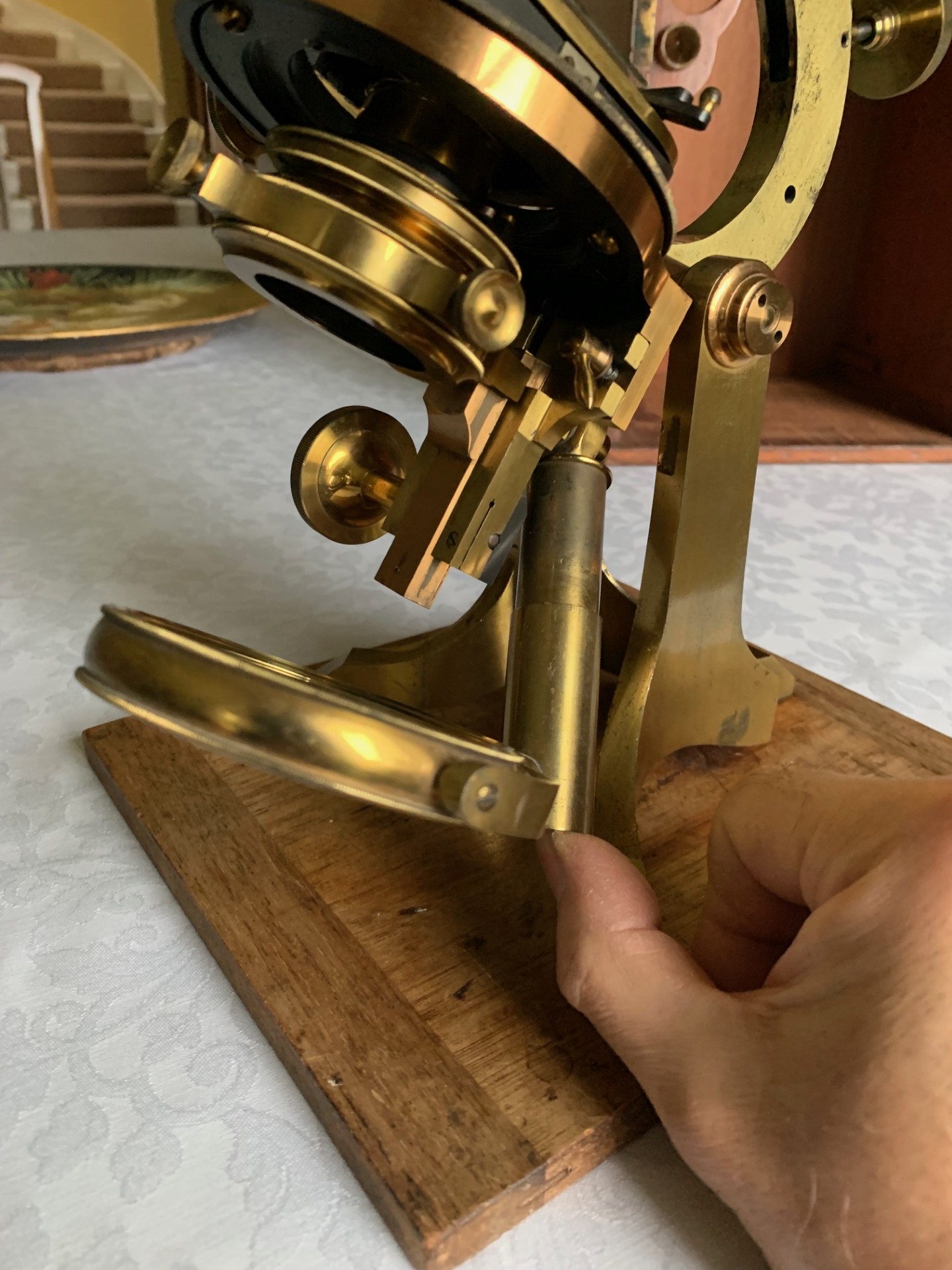
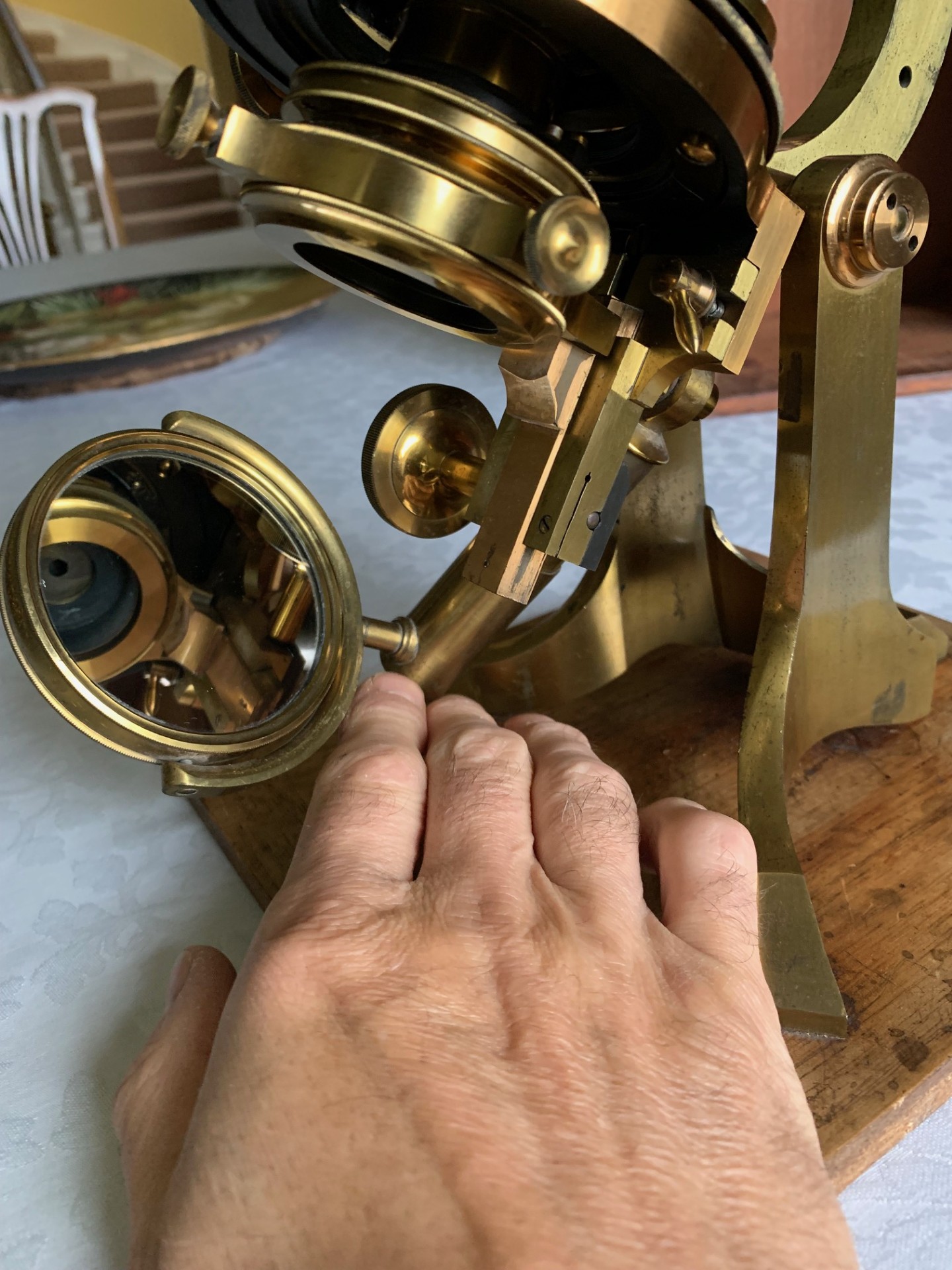
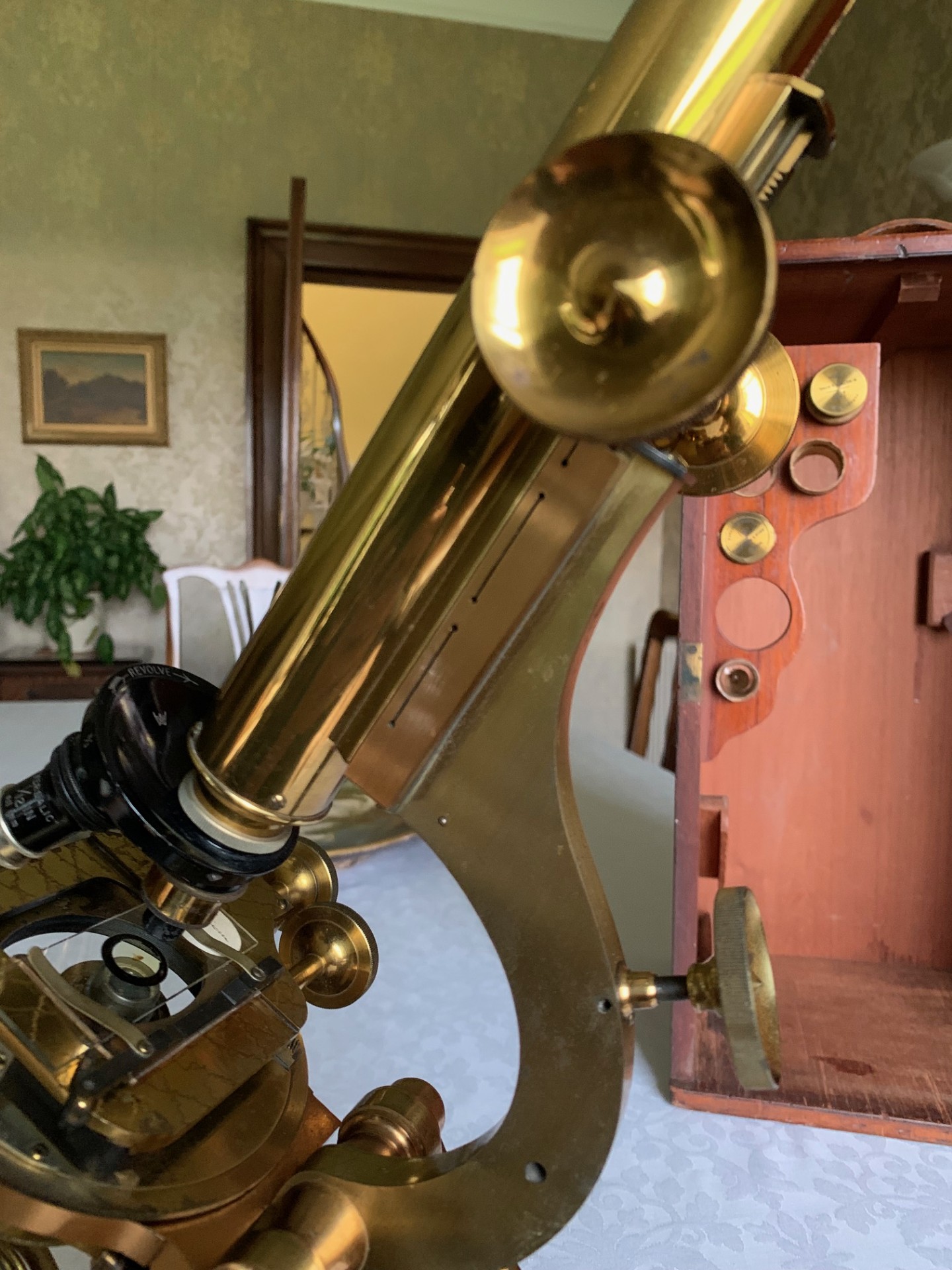
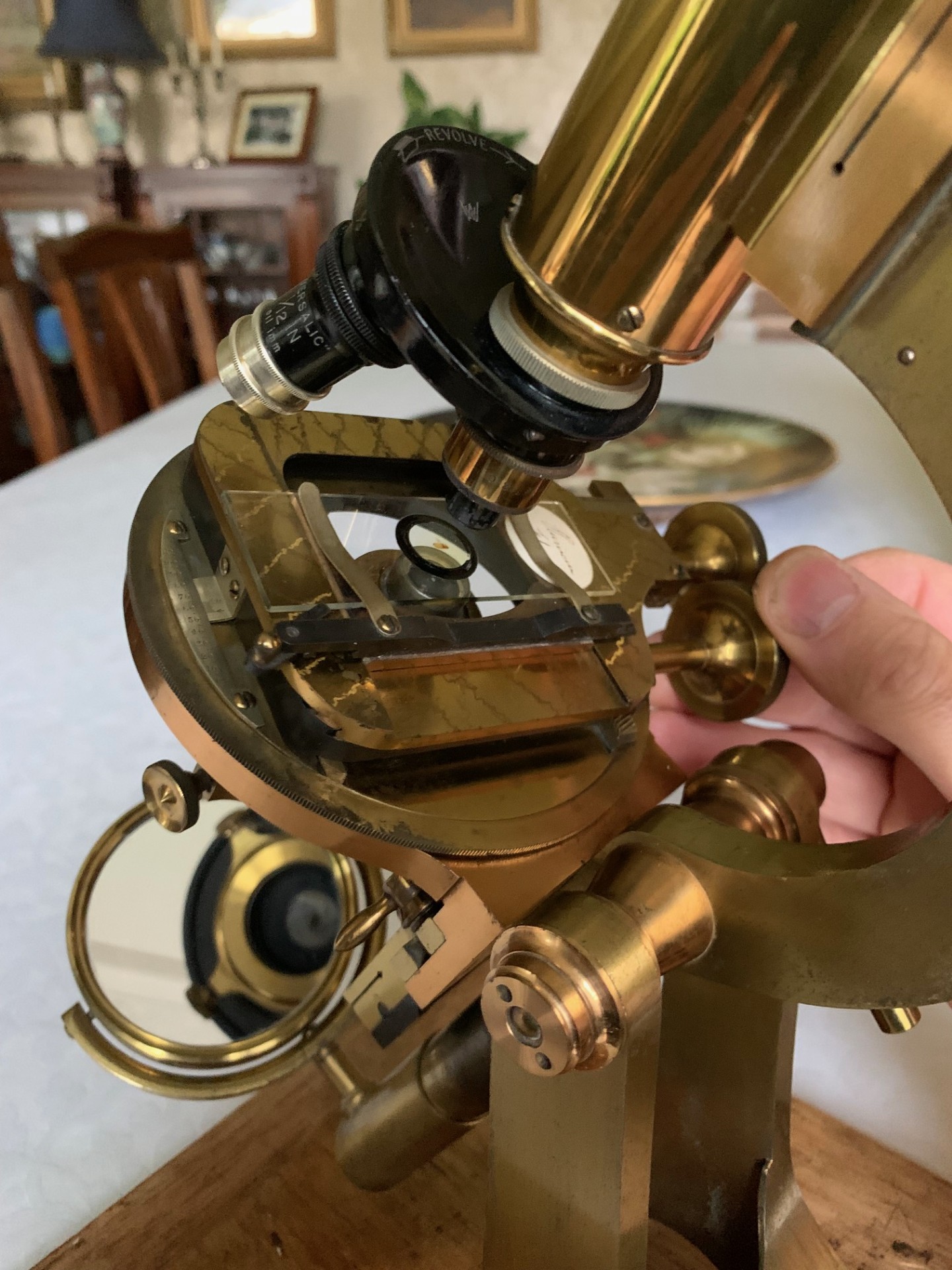
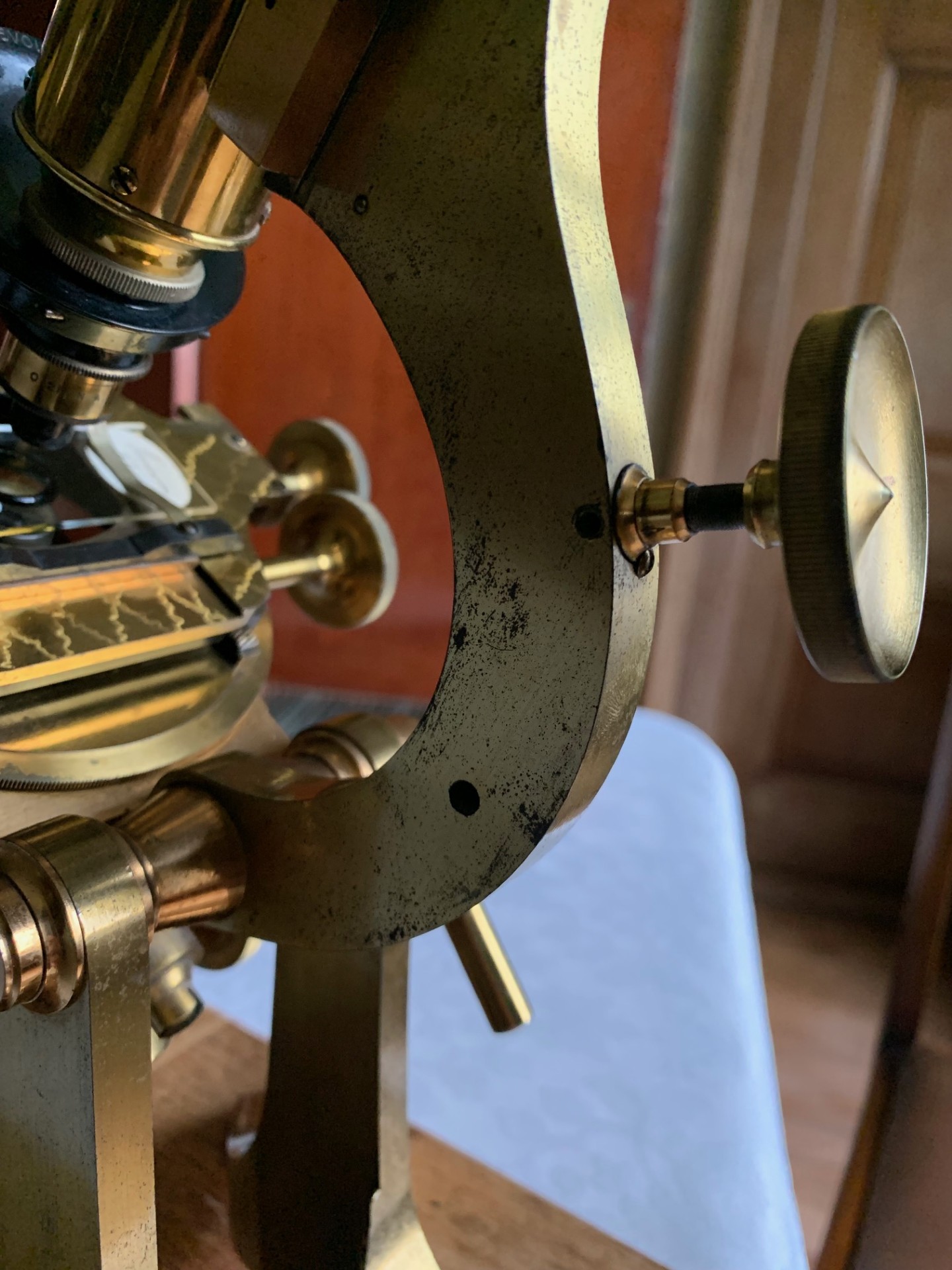
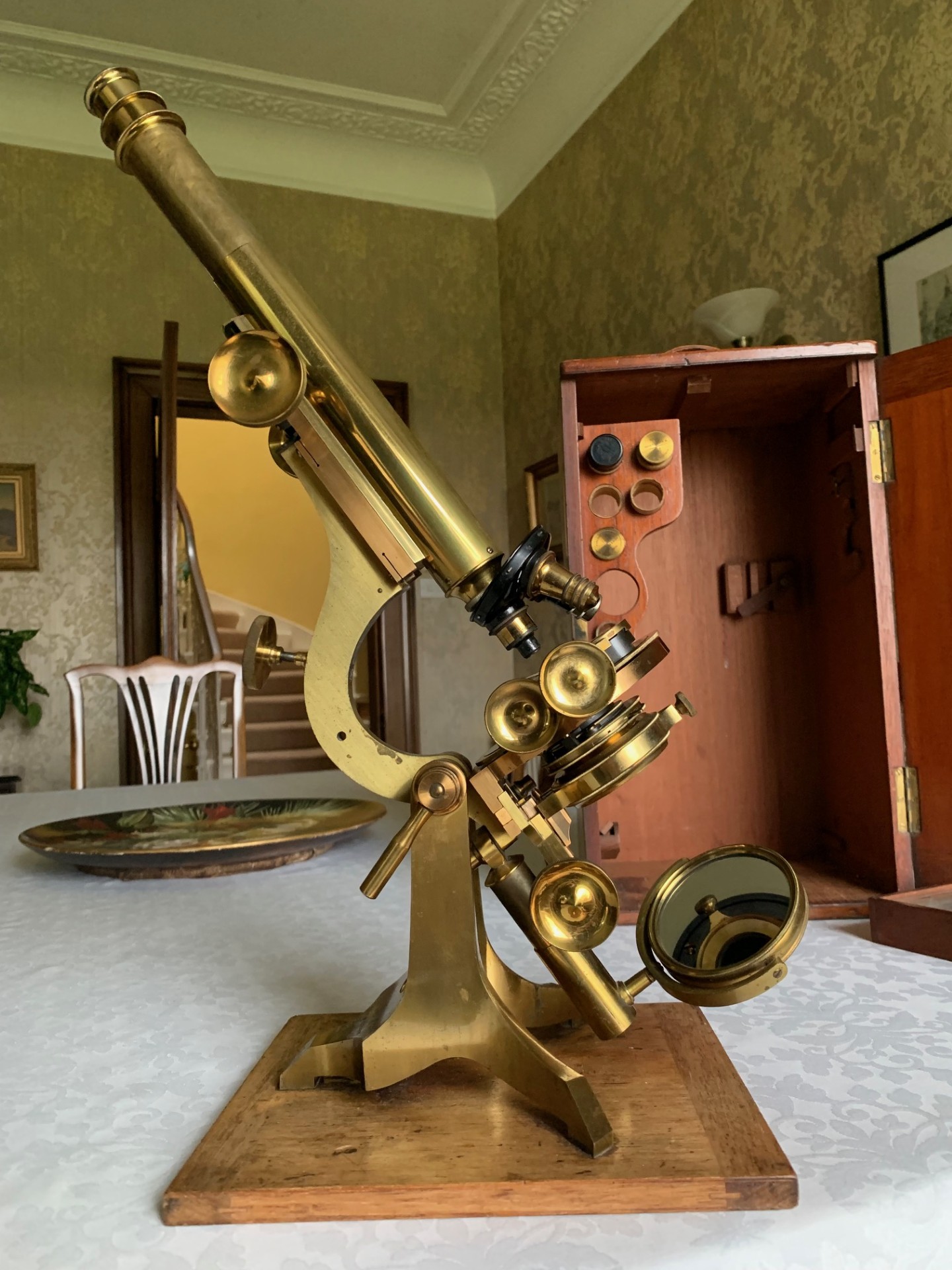
Turning to the technical details, construction is a heavy gauge brass tripod that’s attached to a wooden plate, giving both good additional stability and allowing the instrument to be used or displayed on a polished surface if so desired. From the tripod rise twin large uprights in brass supporting a pivot with tension adjustment available on the right hand side. The main pivot supporting a long Lister-type upper limb arrangement, with a hole in the limb where stage accessory tools can be located (such as stage forceps) and stage attached to the limb tail-piece via twin brass bolts.
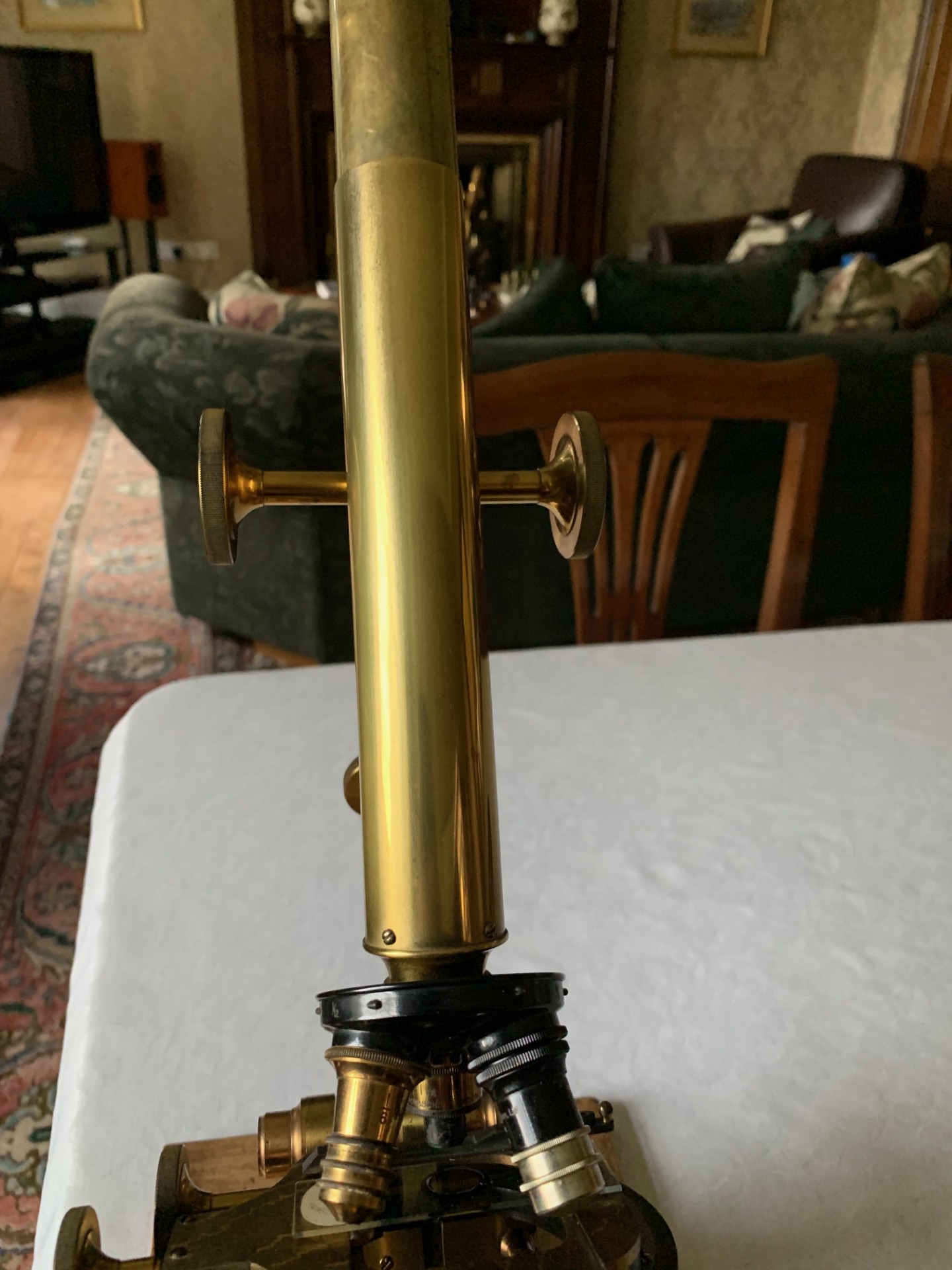
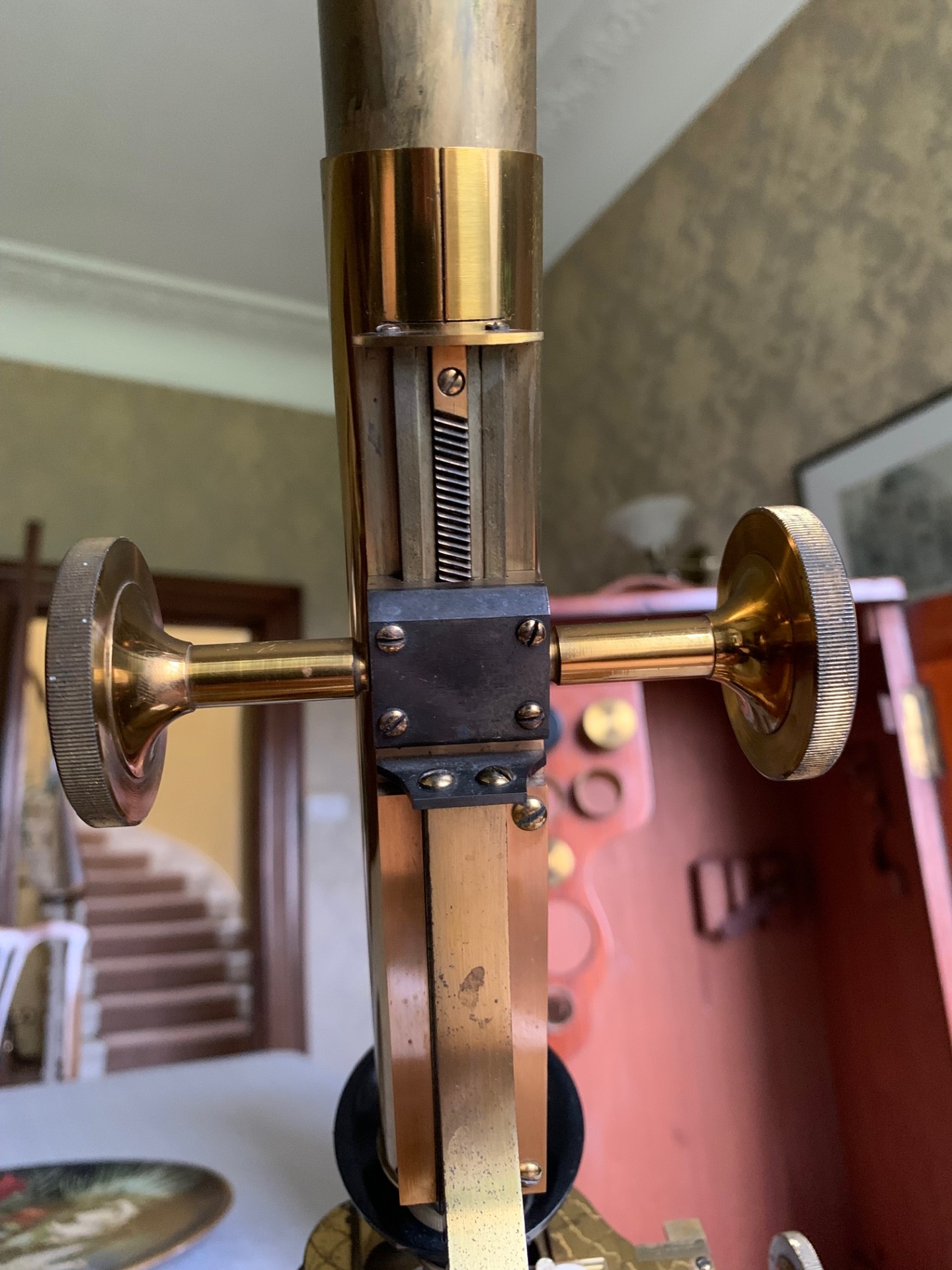
For the optics, this Watson is fitted with a manual non-graduated eyepiece draw-tube in brass. When fully extended the instrument rises to almost 20 inches in height, giving an imposing presence fitting for a research-quality instrument of this age and stature. Fully racked down it’s about 14 inches in height. The main optical tube is in brass with lacquer finish in pretty good condition for its age. Coarse focus is via rack and pinion, with diagonal cut rack, with the main tube holding in position as it should throughout its working range. Fine focus is via a single thumb-wheel at the rear of the upper limb in a novel angled position, being a vernier screw acting on long internal lever, which also works well.
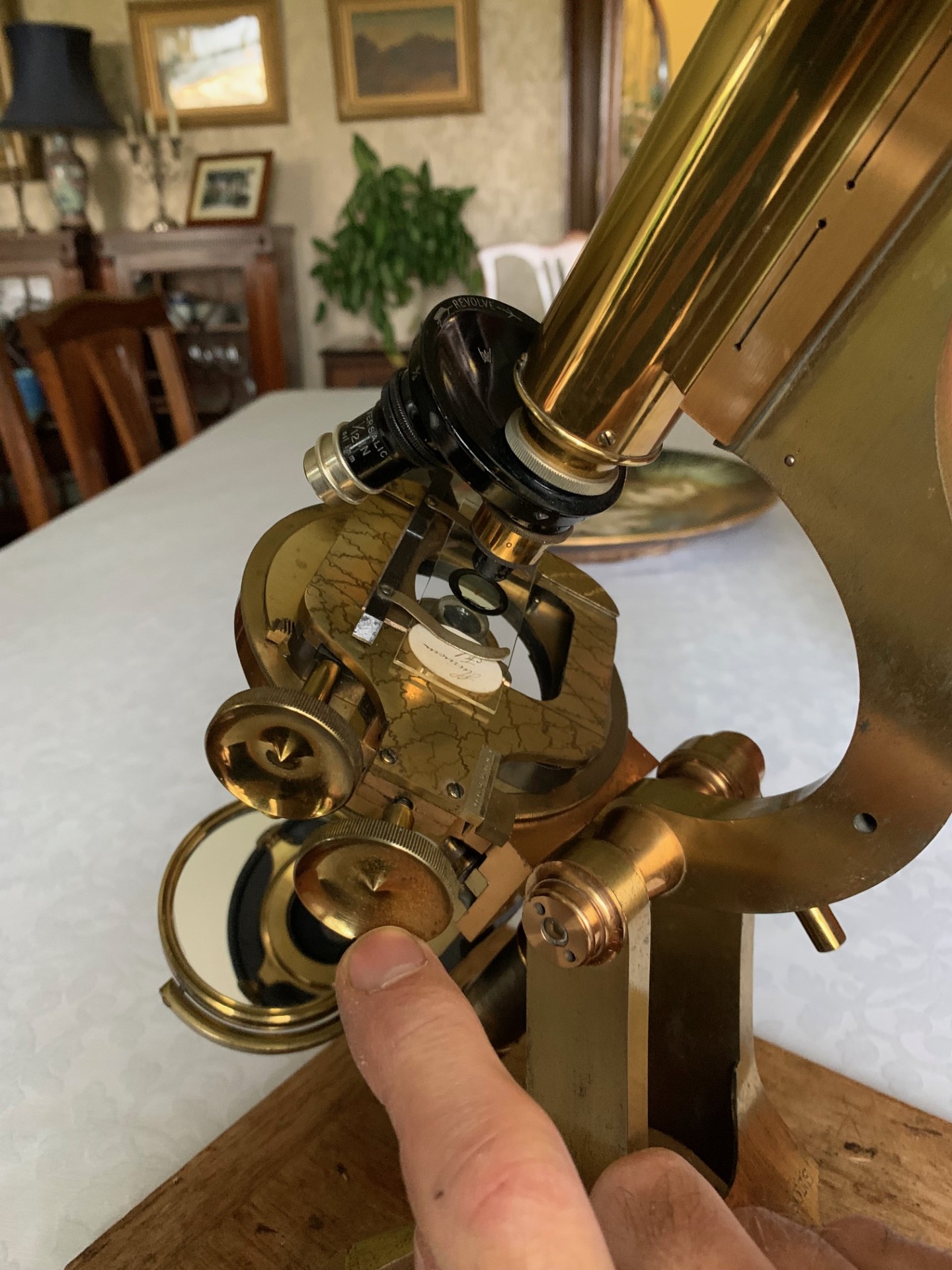
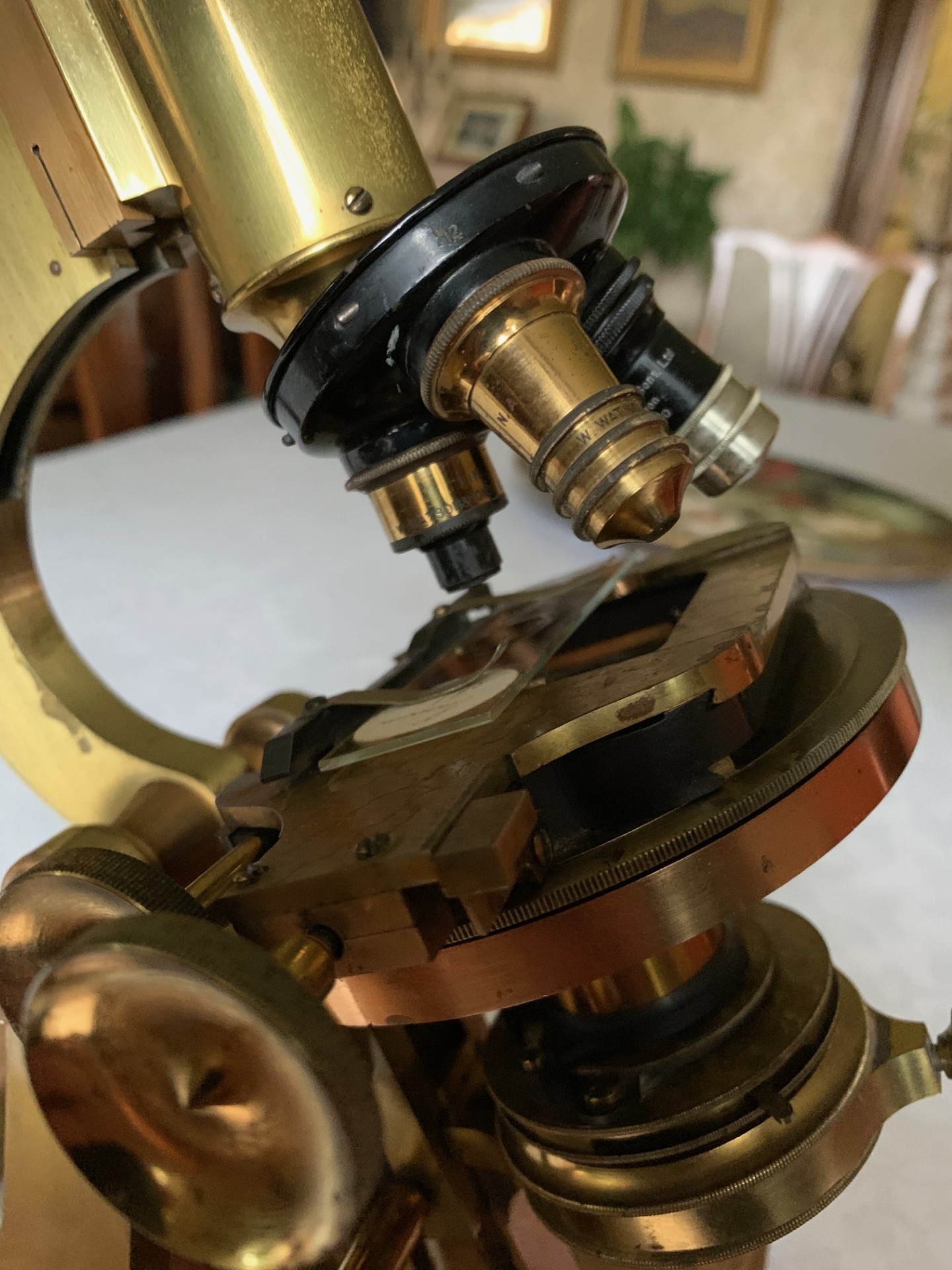
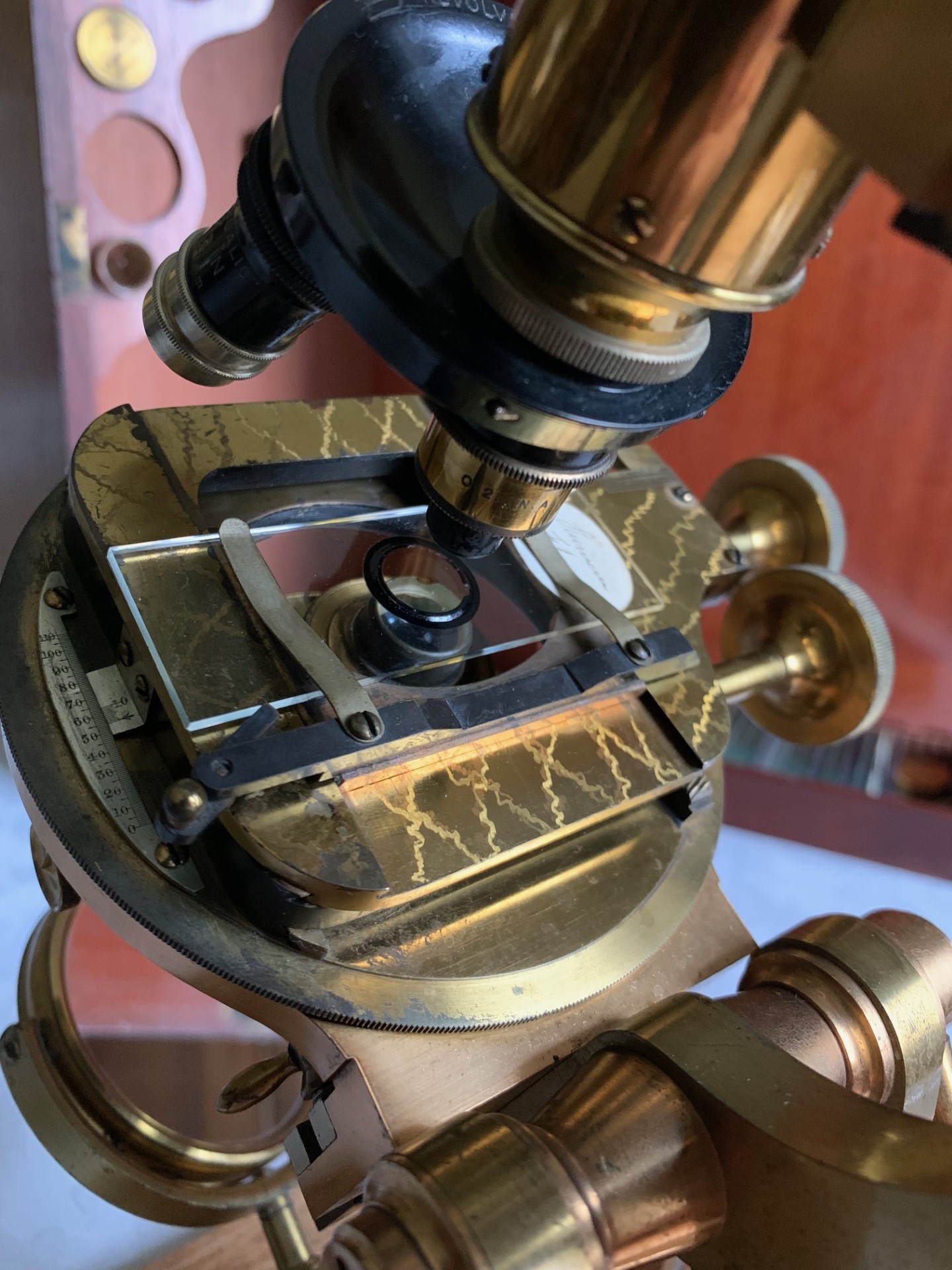
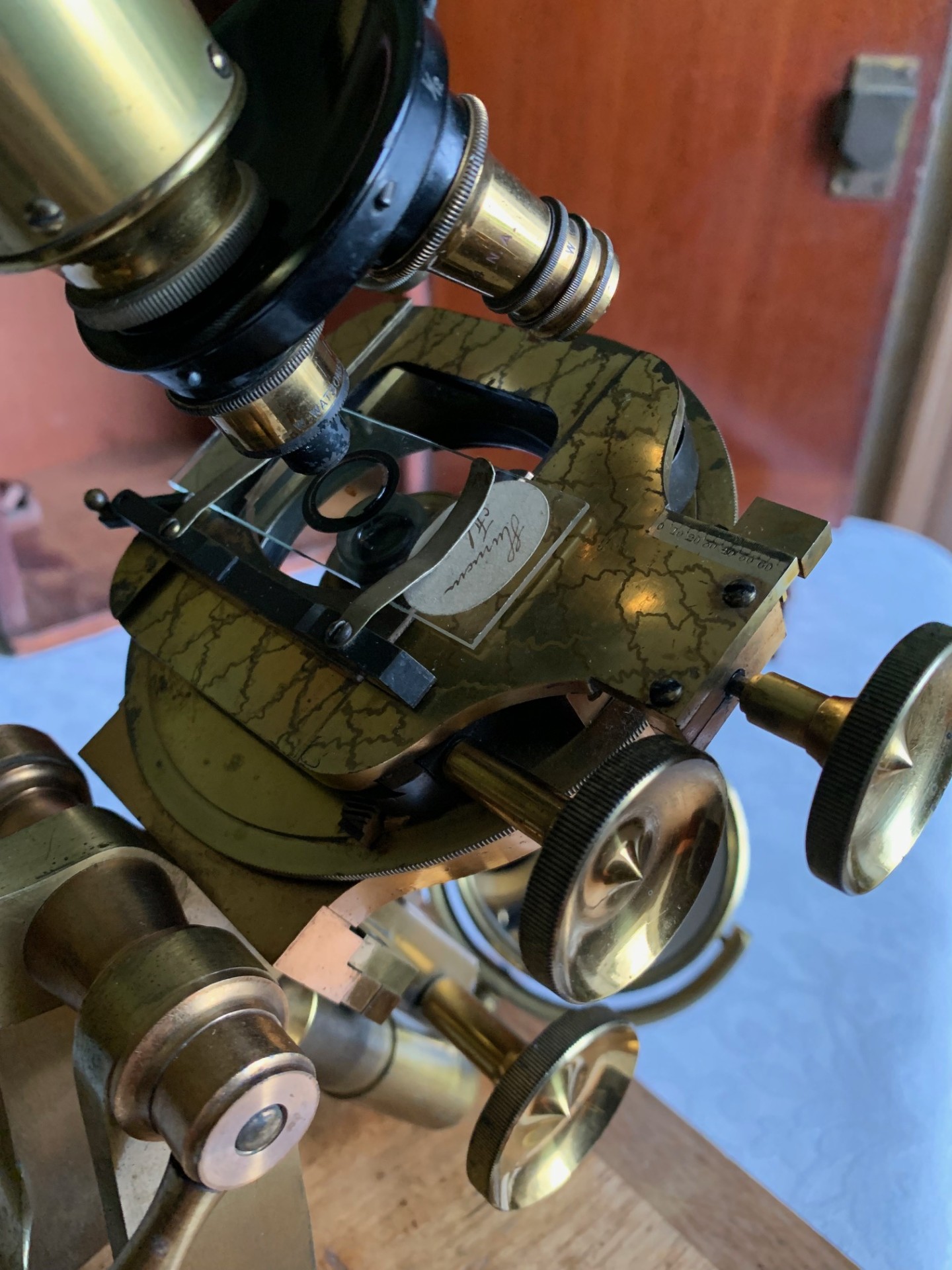
The instrument is supplied with an appropriate antique top-hat approx. 6x magnification eyepiece. It’s also got a later Watson triple turret and vintage objectives, as follows:
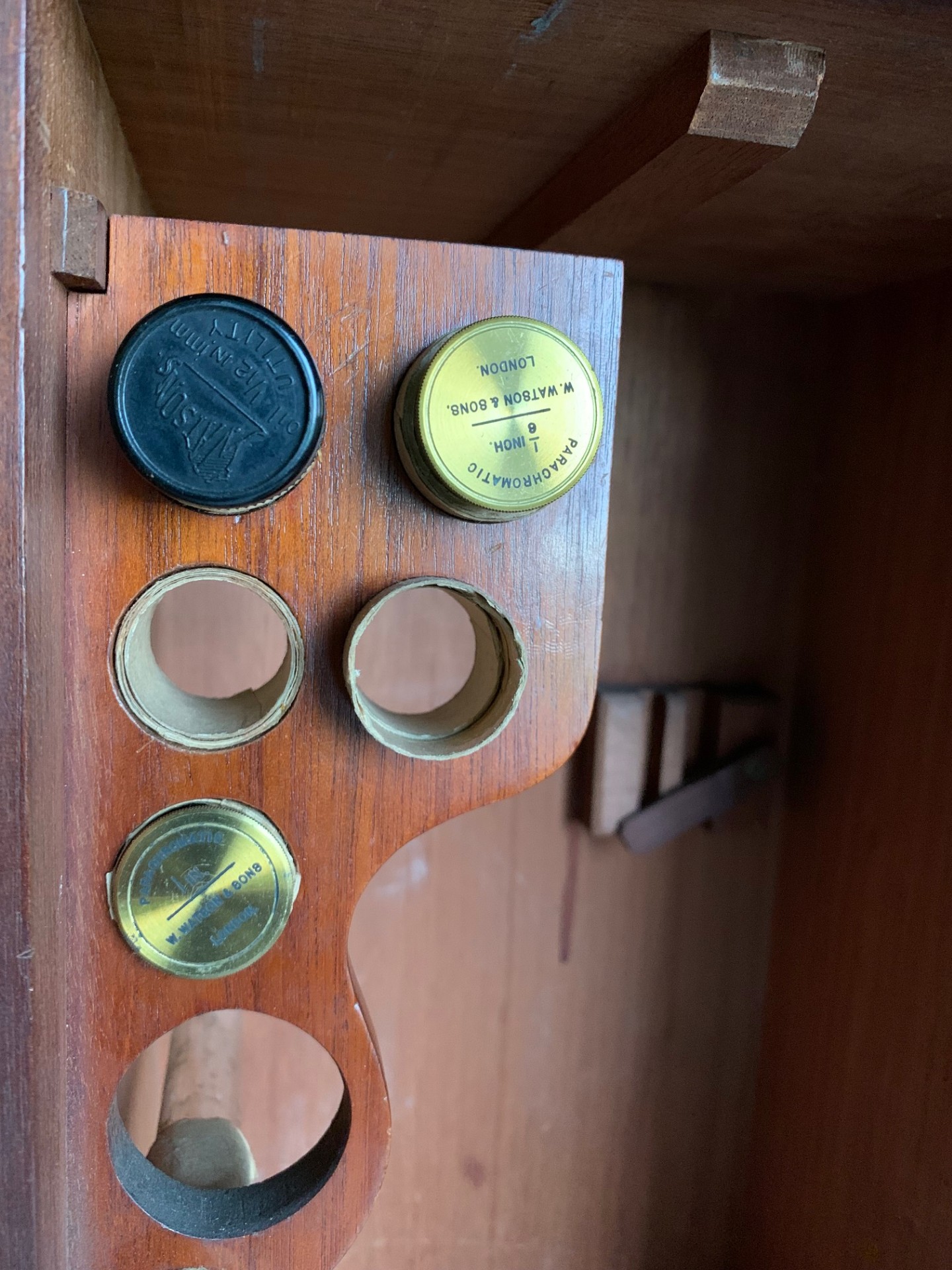
– Watson 1 inch – 6x magnification
– Watson 1/6th inch – 40x magnification
– Watson 1/12th inch Versalic – 100x magnification & oil immersion required
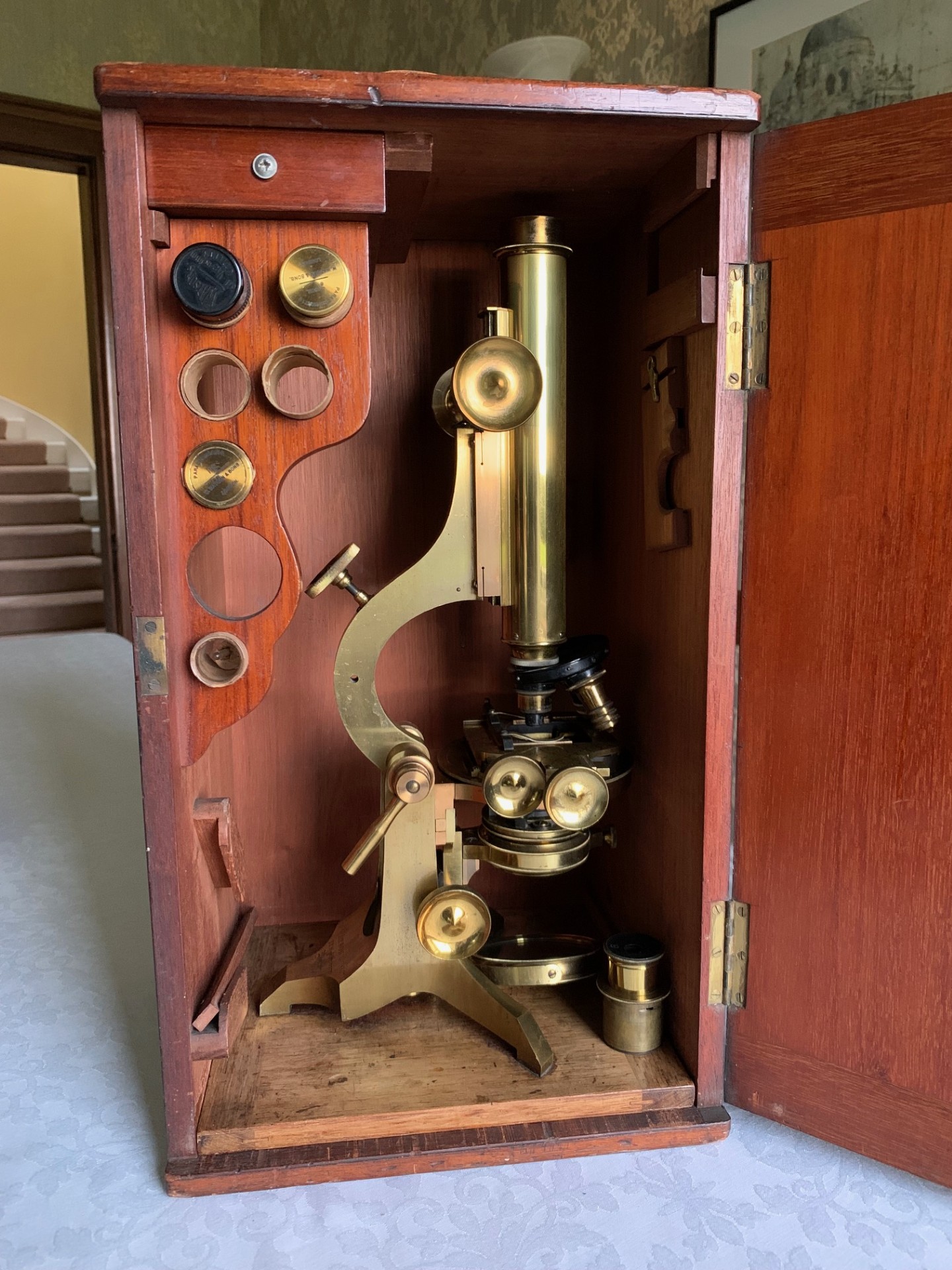
(The objectives all have canisters)
The range of magnification available via this antique Watson therefore runs from about 36x to around 600x and the objective fitment is RMS.
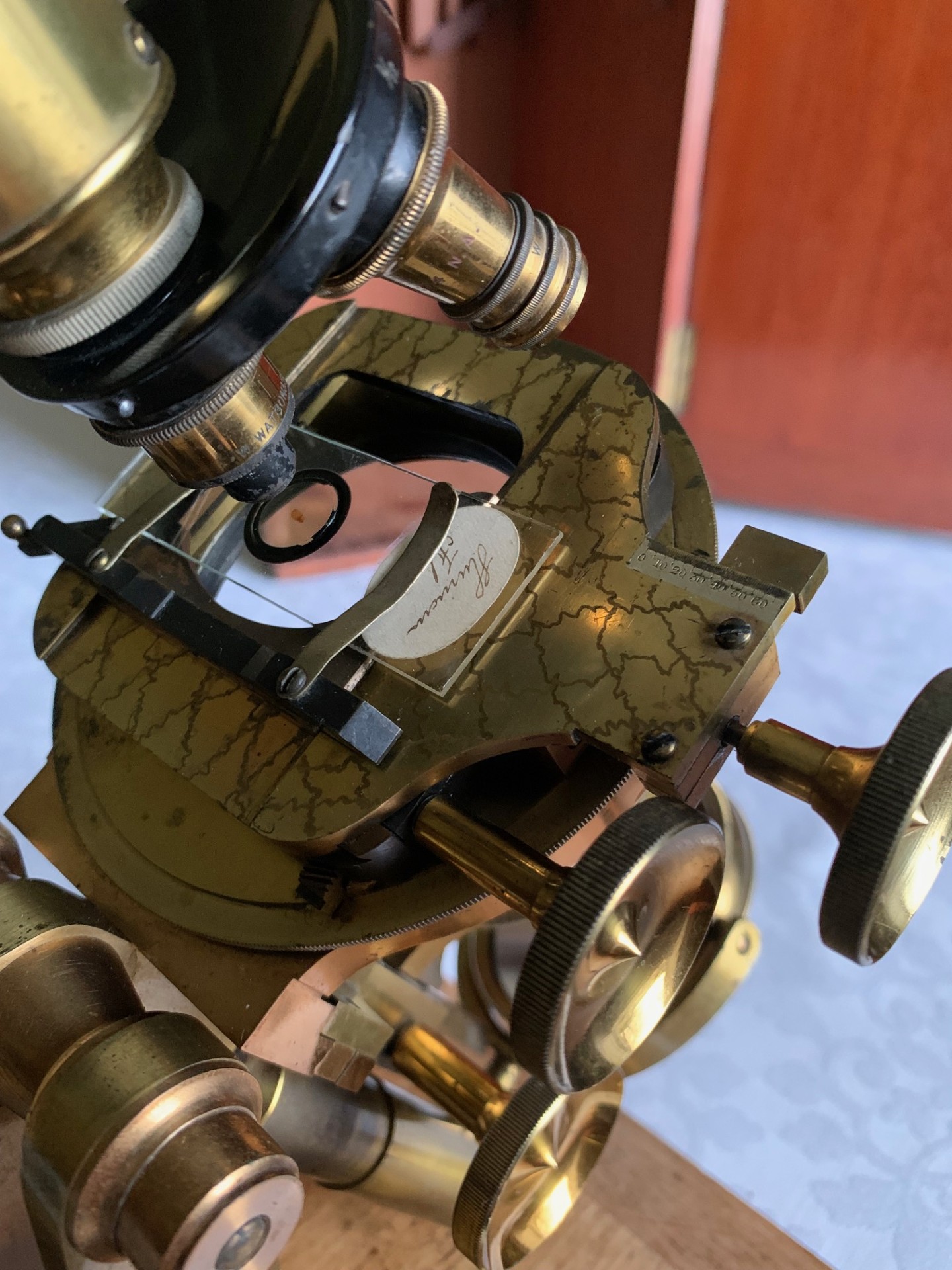
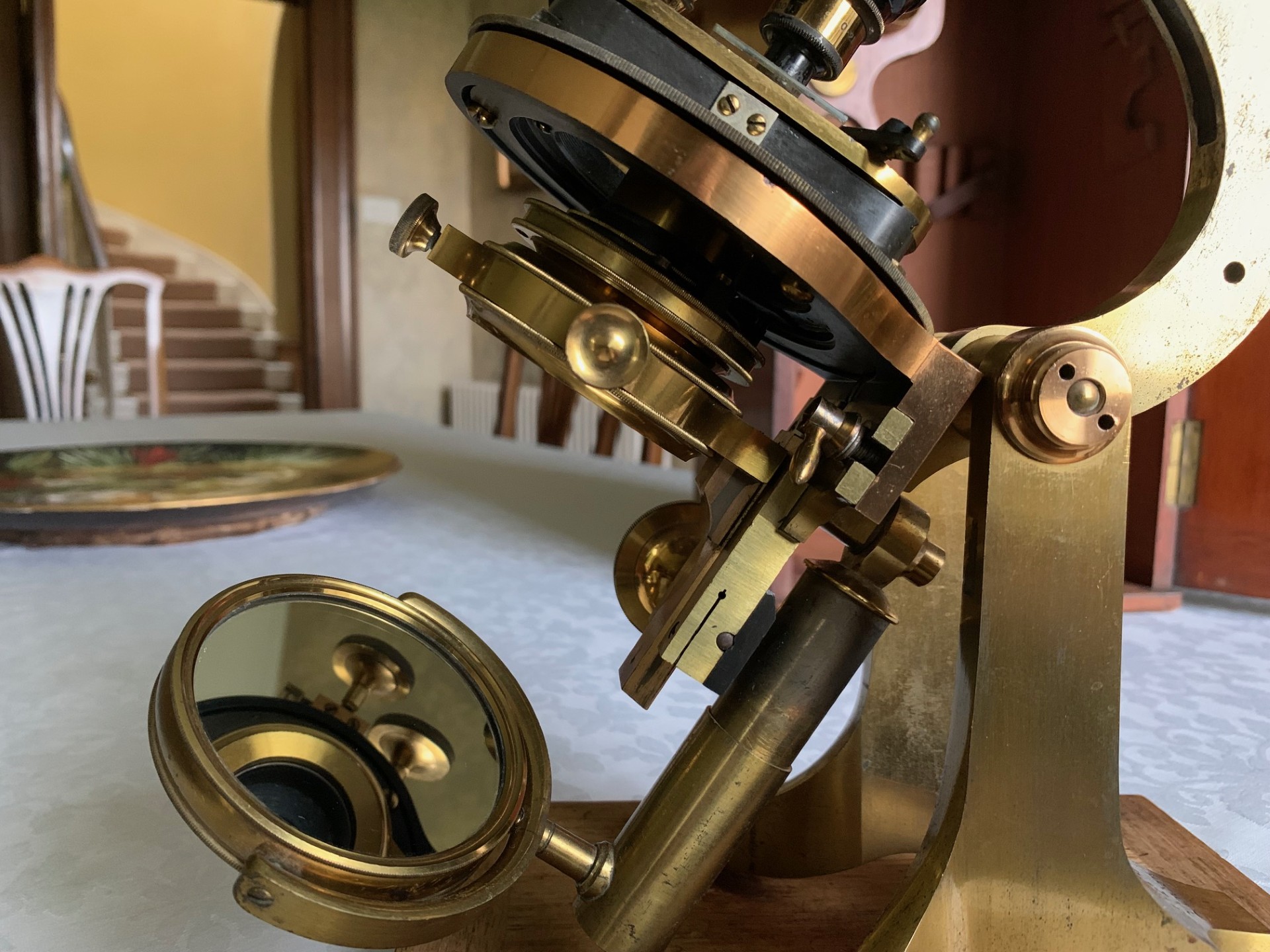
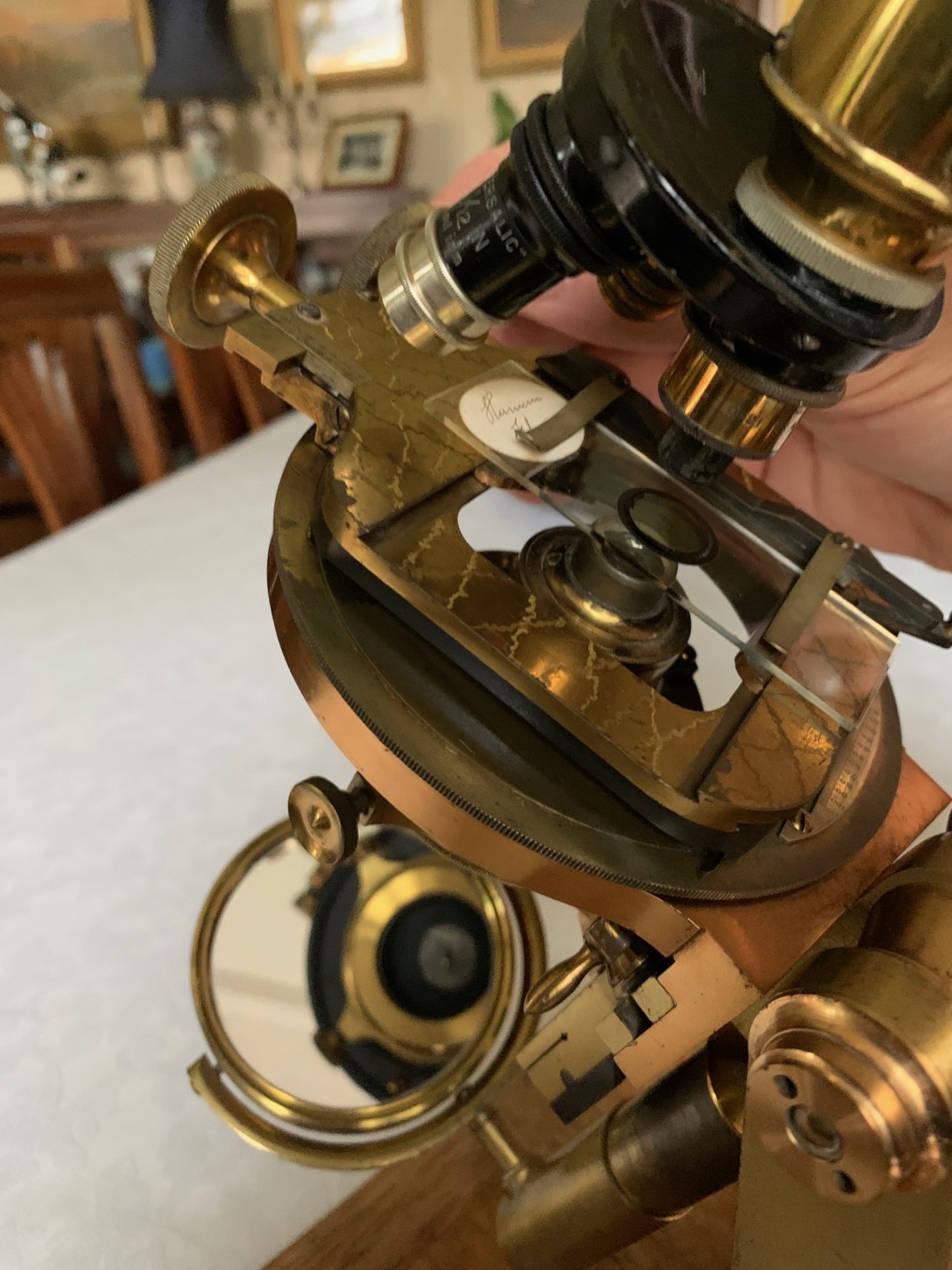
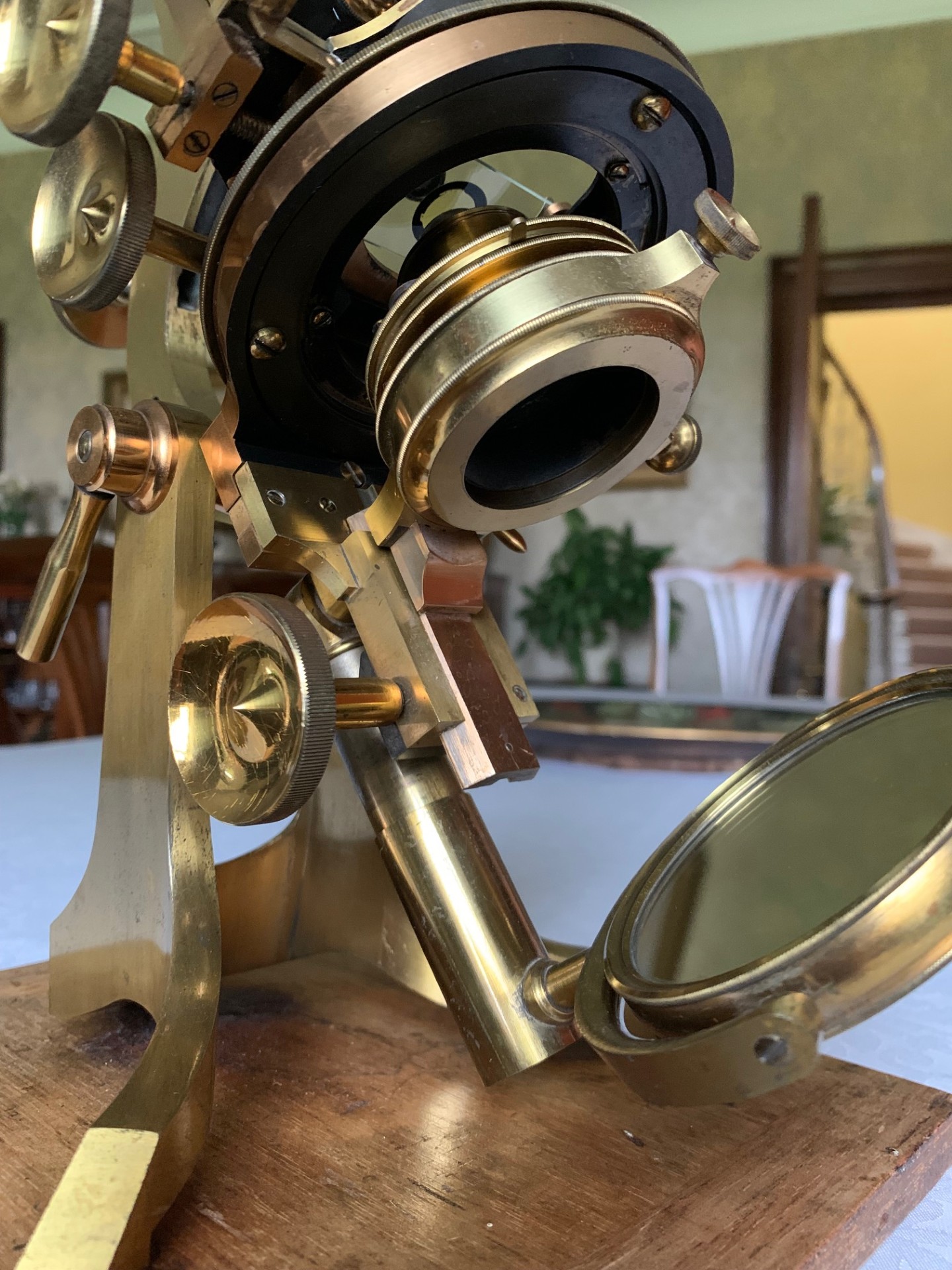
The instrument tilts for inclined viewing, holding in position as it should and can be tightened at the main pivot as may be required via the tension level to the right-hand side of the pivot. The fully mechanical circular stage has twin thumb-wheel x/y adjusters on the right hand side of the stage that work well. The stage top-plate has an eye-catching design as part of the lacquered finish and is fitted with vernier scales and a specimen slider for holding slides steady during inclined viewing and when the axes are being moved around. The slide holder runs in dovetail channels and is therefore adjustable for position with just the right resistance to movement so it holds position well. The slide holder also has a neat slide ejection lever to its left side, which is a useful feature. The x/y thumb-wheel controls offer a good range of movement and fine control of specimen positioning, with positive feel to the controls and little wear evident. The circular stage also rotates to left and right as demonstrated, but does not complete a full 360 degree rotation – it manages about 270 degrees before the thumb-wheels catch on the pivot point and it’s also well damped so holds in position on adjustment.
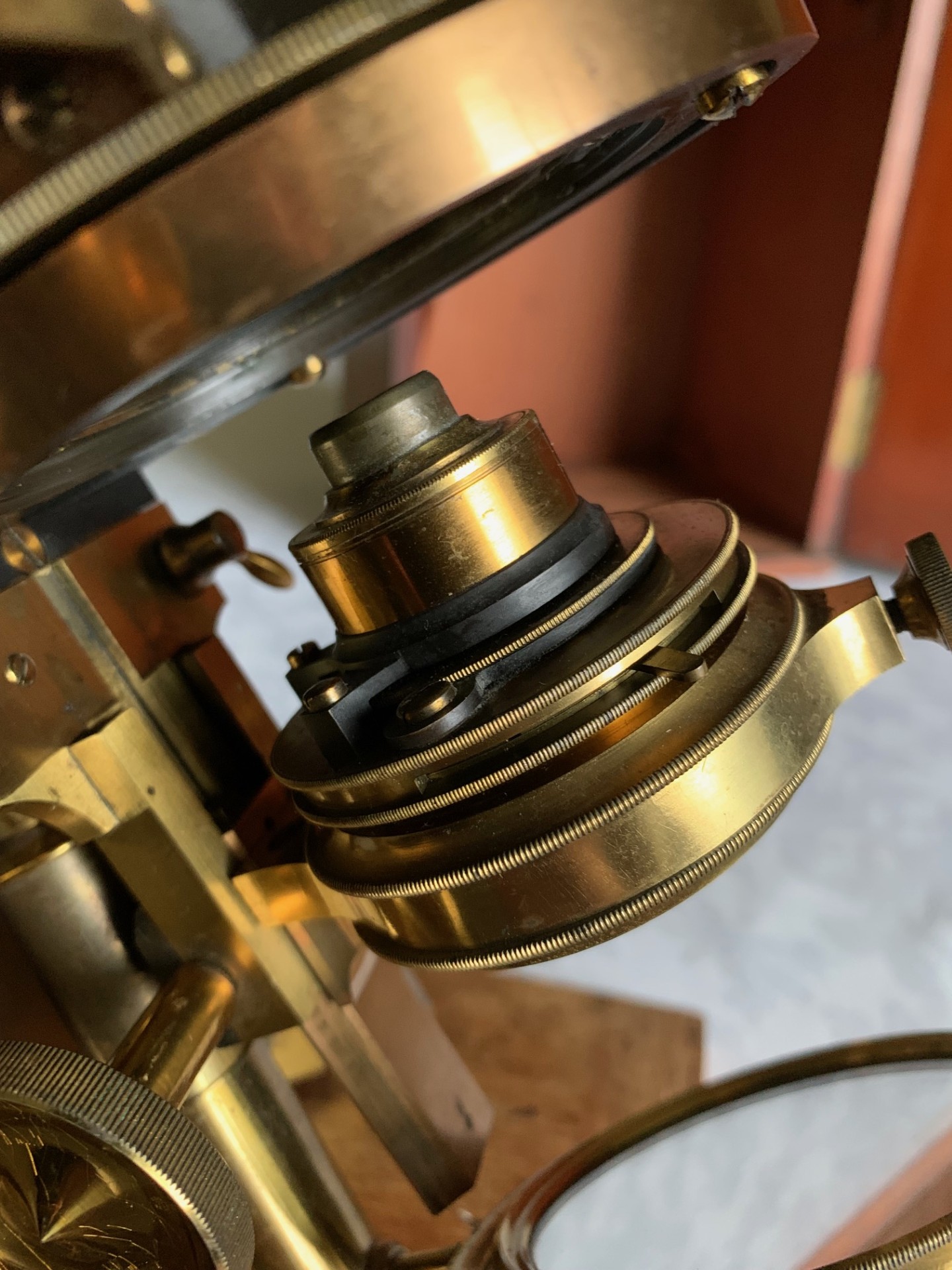
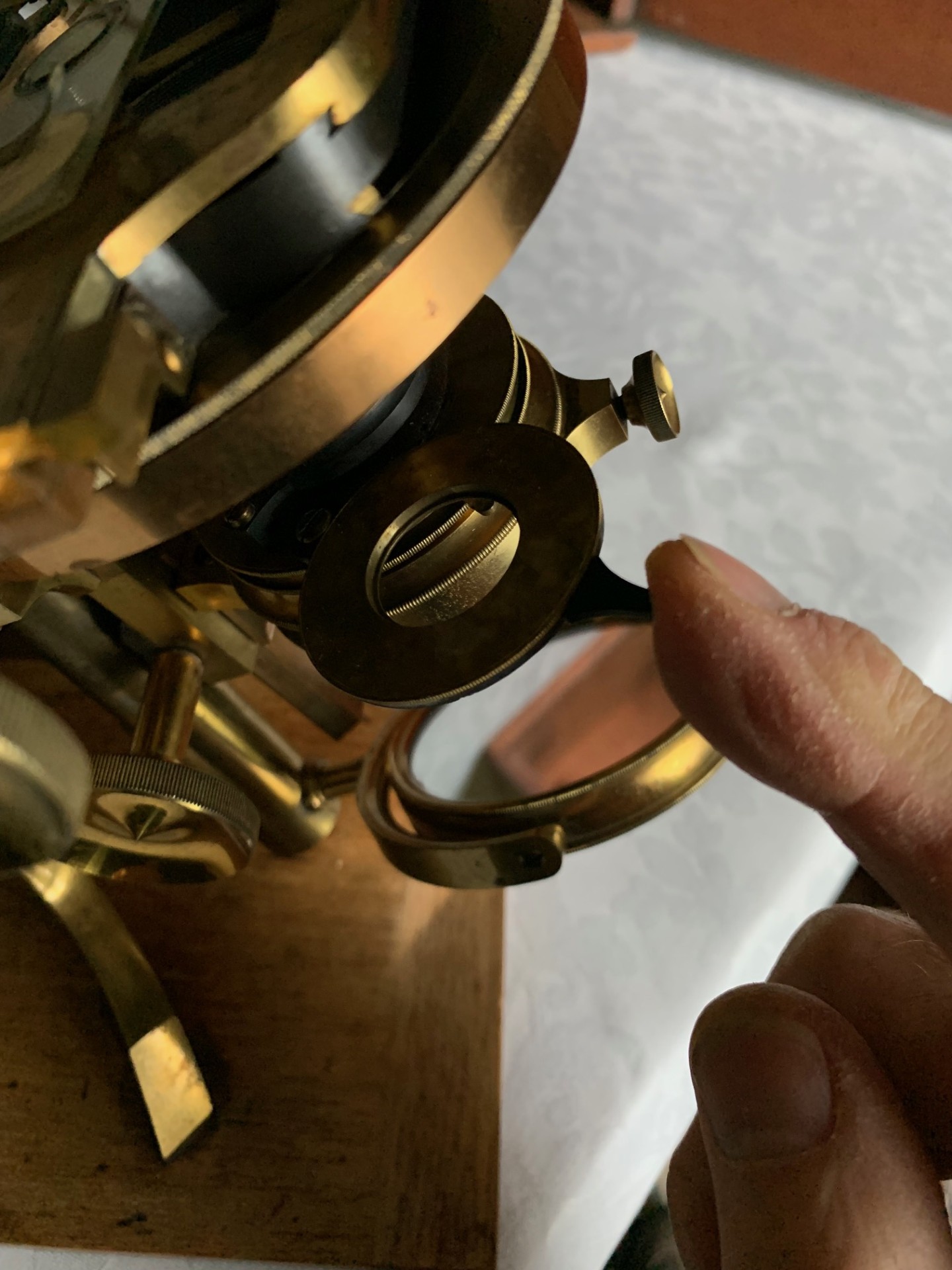
The technical sub-stage comprises the following:
– brass ring mount with centering and height adjustment via rack & pinion system with smooth action
– top-fit condenser fitted to ring mount
– working iris
– swing-out rotatable filter carrier
Note: the condenser assembly attaches via a horizontal mounting system with set screw to tighten into position.
Lighting is via an over-sized plano-concave mirror in a brass mount with gimbal, slider and swinging brass support rod – giving very good lighting options and adjustability.
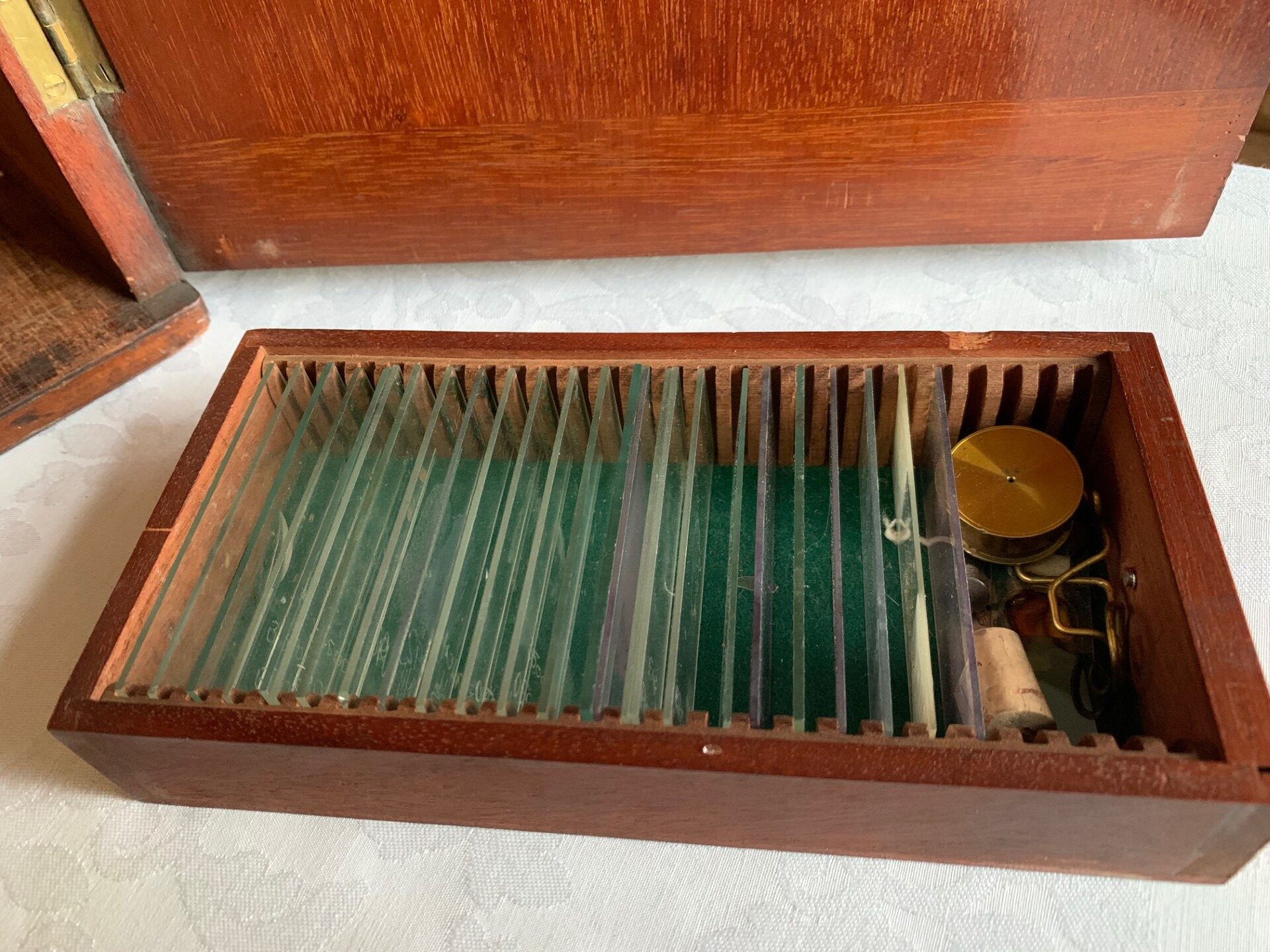
Accessories supplied in sundries drawer:
– set of dark-field and oblique stops in small brass canister
– some blank slides and cover-slips along with few Dexter-like blood film slides
– some slide preparation tools
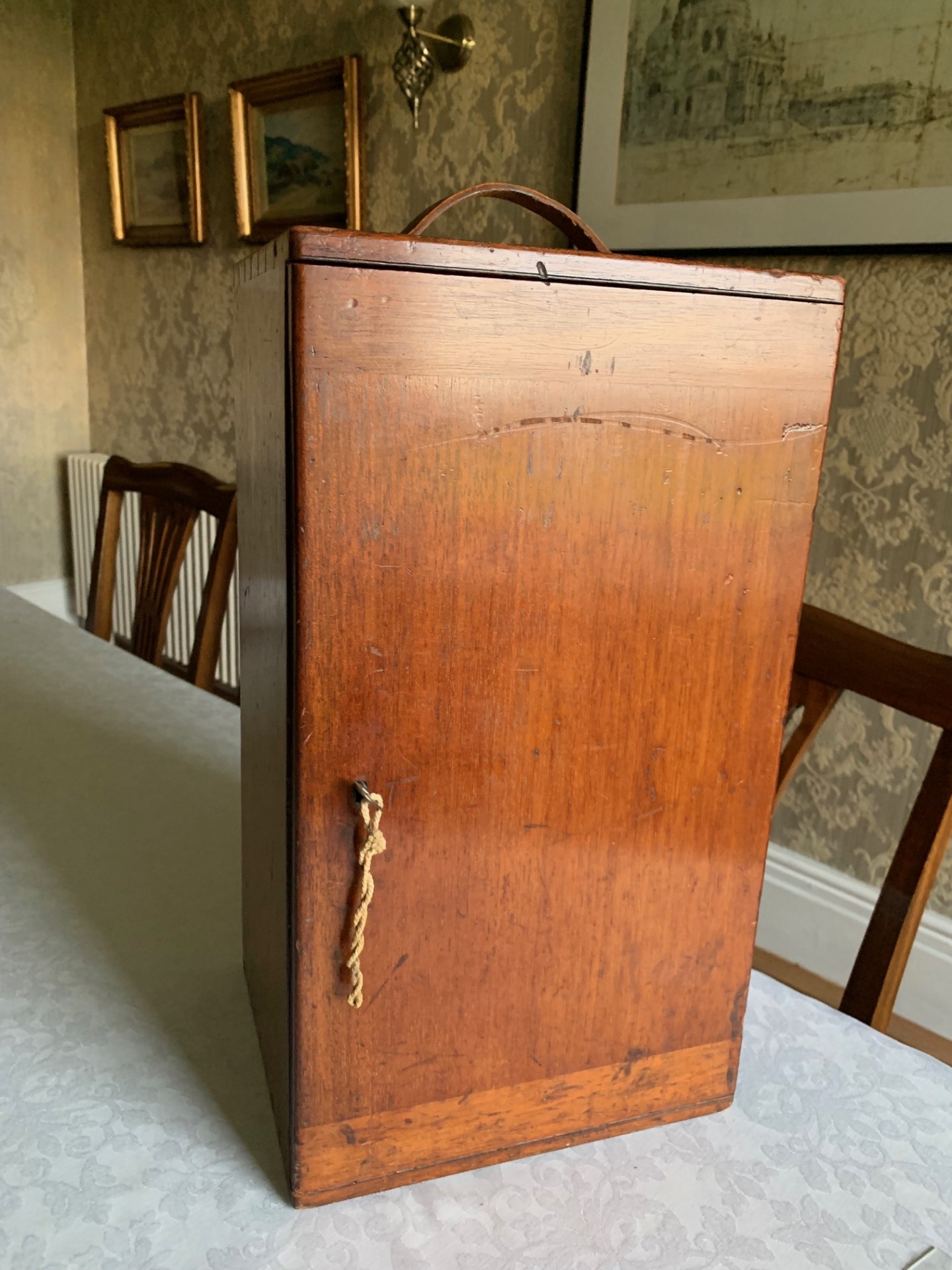
There’s the correct original Watson storage case with the instrument, which is quite substantial and in very good cosmetic condition with nice exterior sheen, leather carry-handle, working lock & key, sundries/slider-holder drawer and internal racking for objectives/eyepieces.
Owing to the weight and delicacy of this antique microscope and its accessories, it will be partially dismantled, very well wrapped for shipping and dispatched by insured courier upon receipt of cleared funds.
Please study the photos as they also form part of the description.
Thanks for looking – please also check out my other listings if you get a chance.



 Arcboutant Scientific