

Lind’s Pattern Anemometer or Wind Gauge by Negretti & Zambra
£2,500
Lind's Pattern Anemometer or Wind Gauge by Negretti & Zambra
Dimensions
H: 30 x W: 20 x D: 12cms
Circa
1850
Maker
Negretti & Zambra
Country of manufacture
UK and Ireland
Description
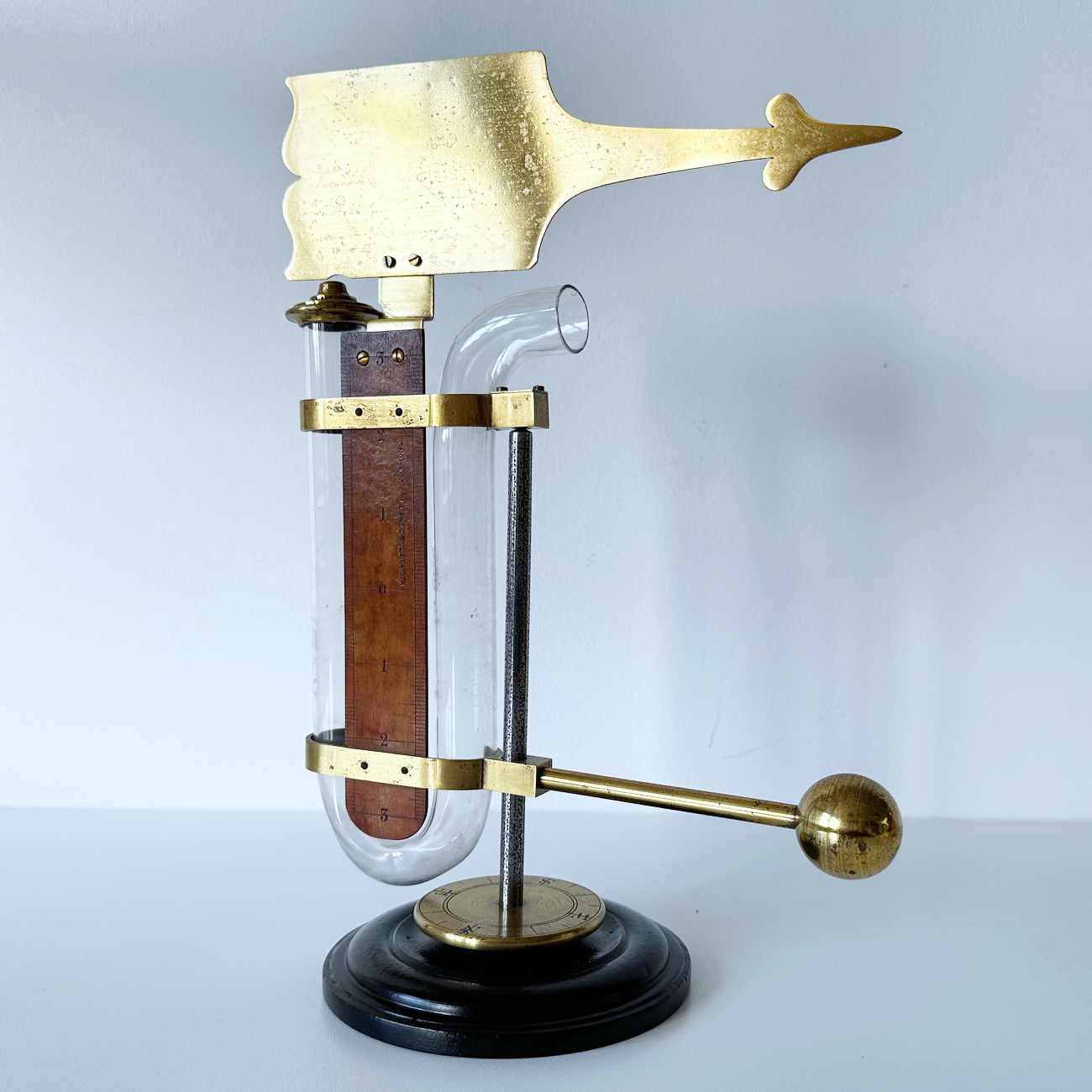
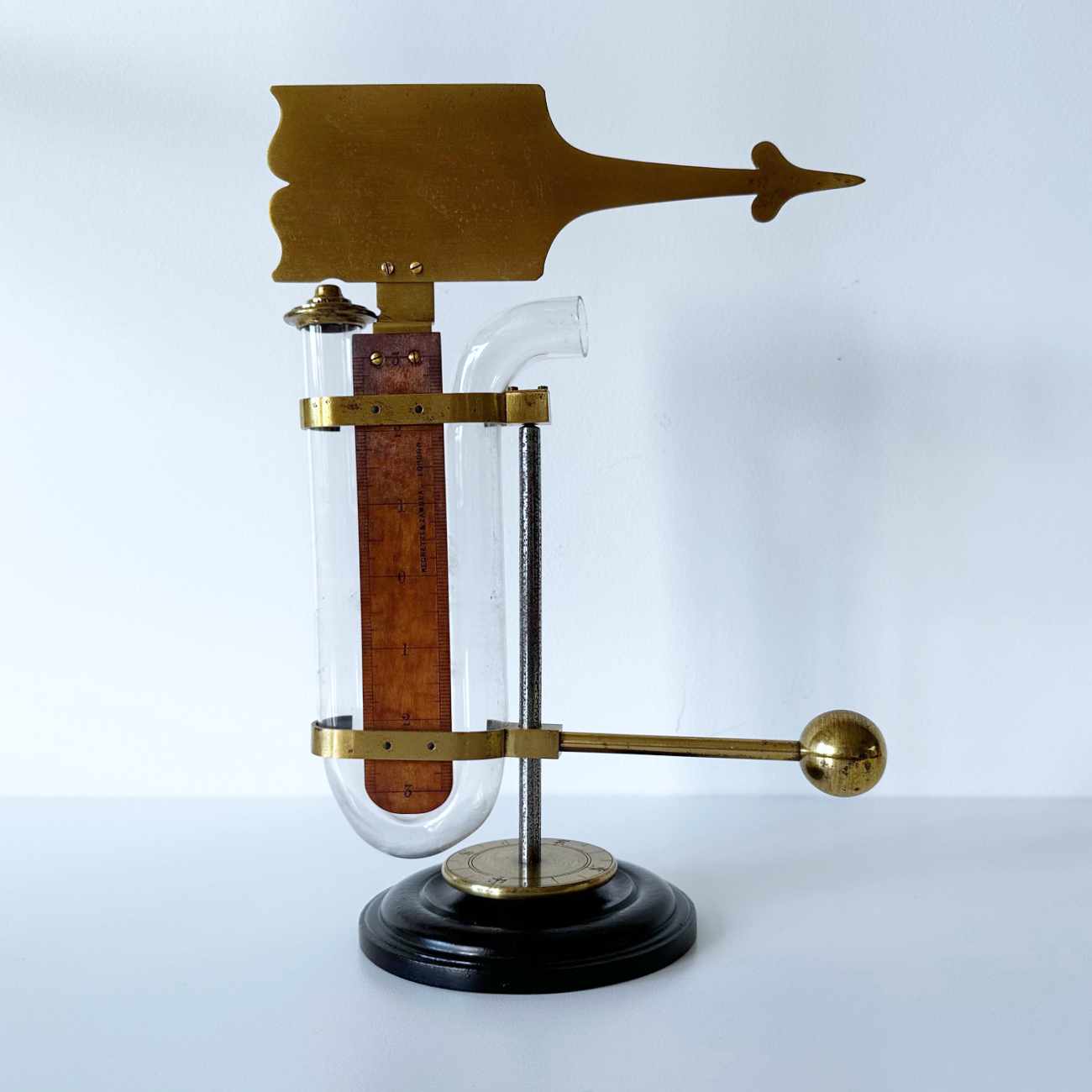
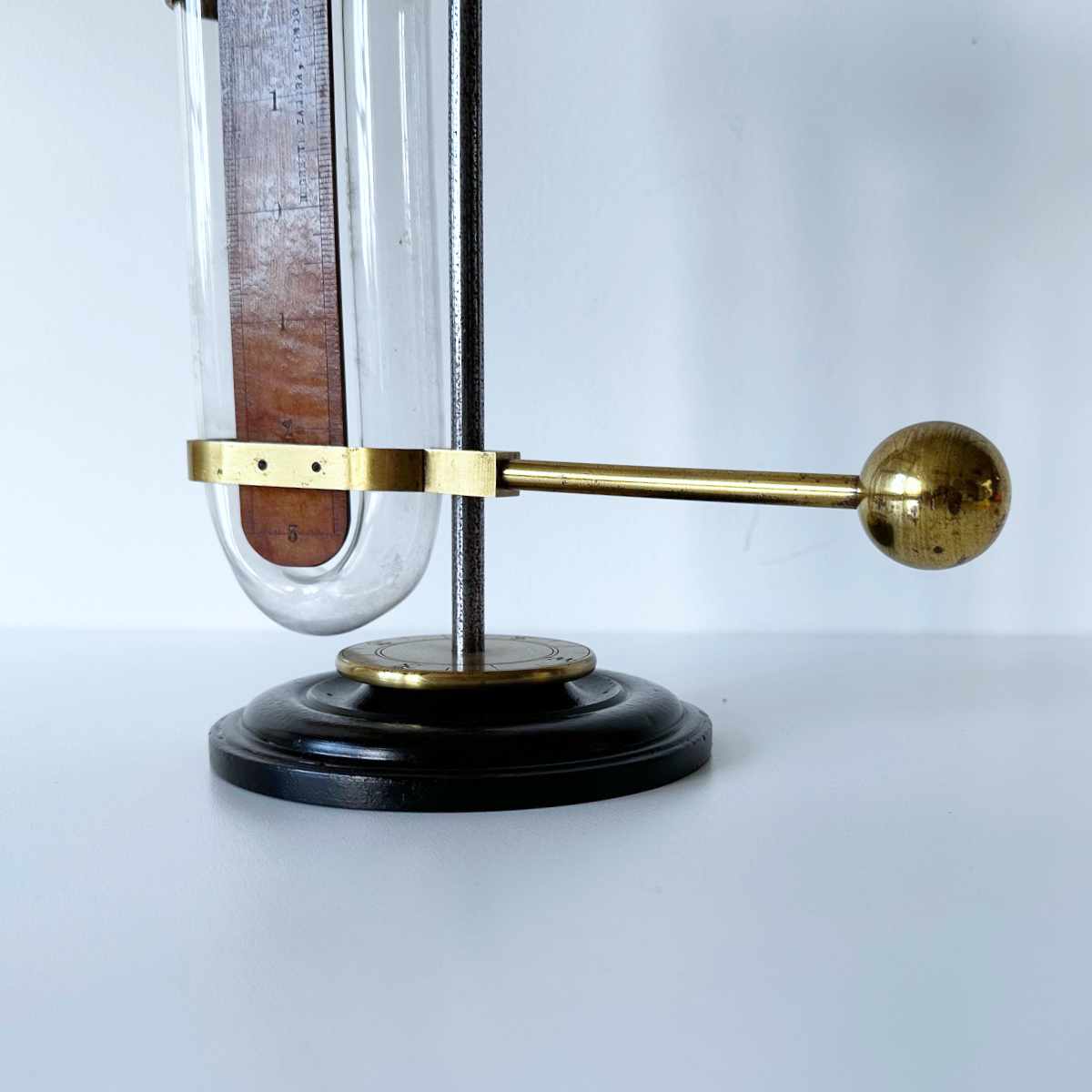
For sale, a scarce Lind’s Pattern Anemometer or Wind Gauge by Negretti & Zambra.
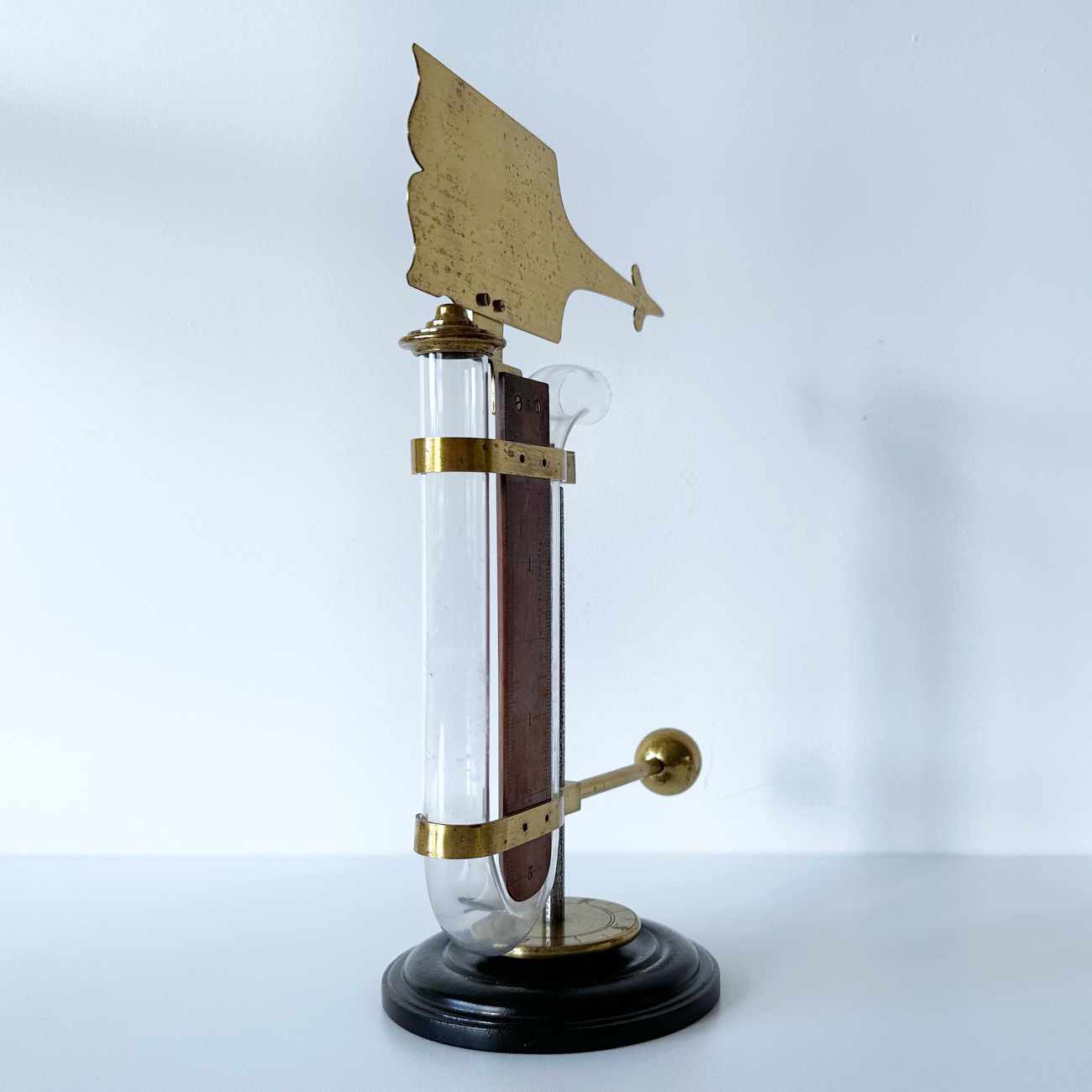
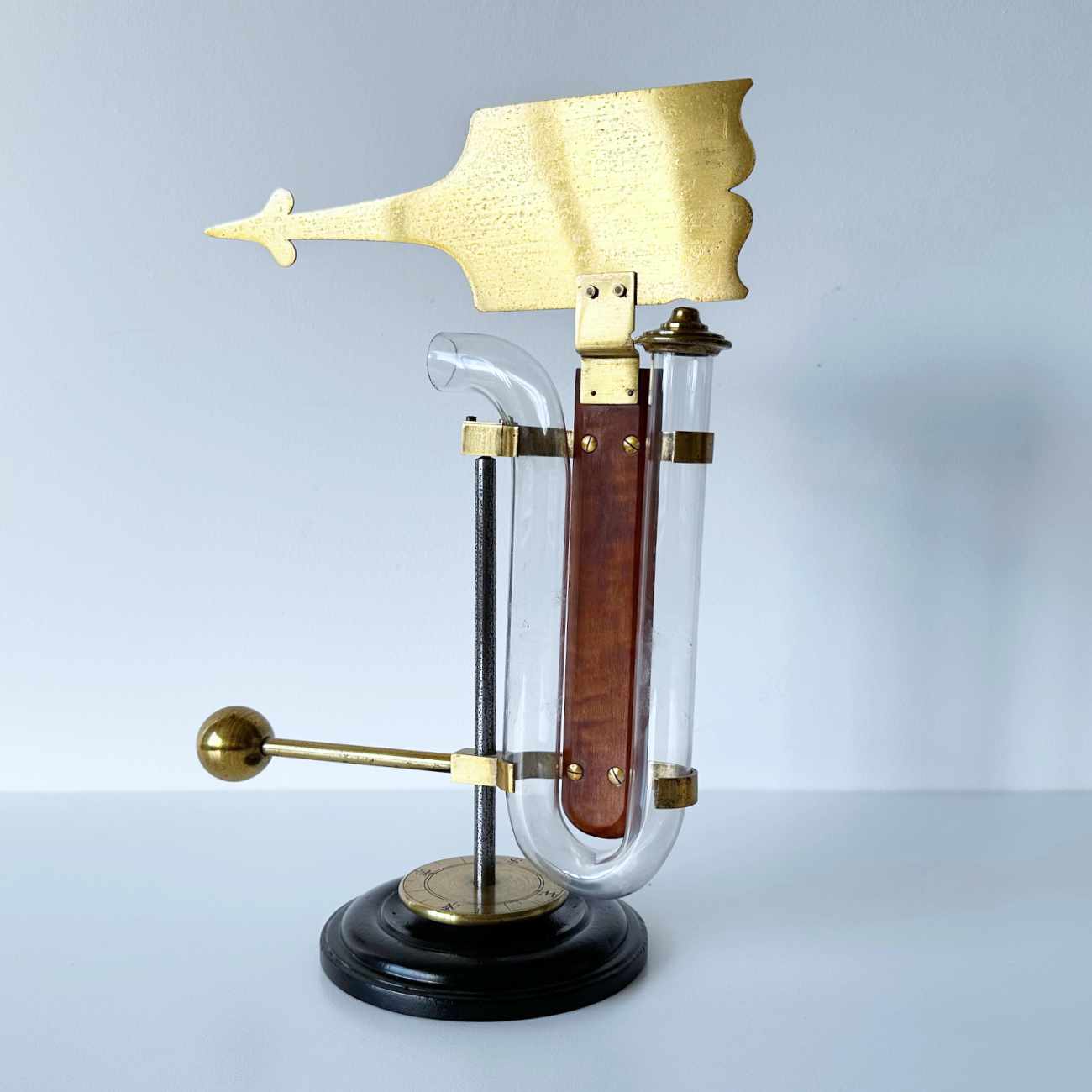
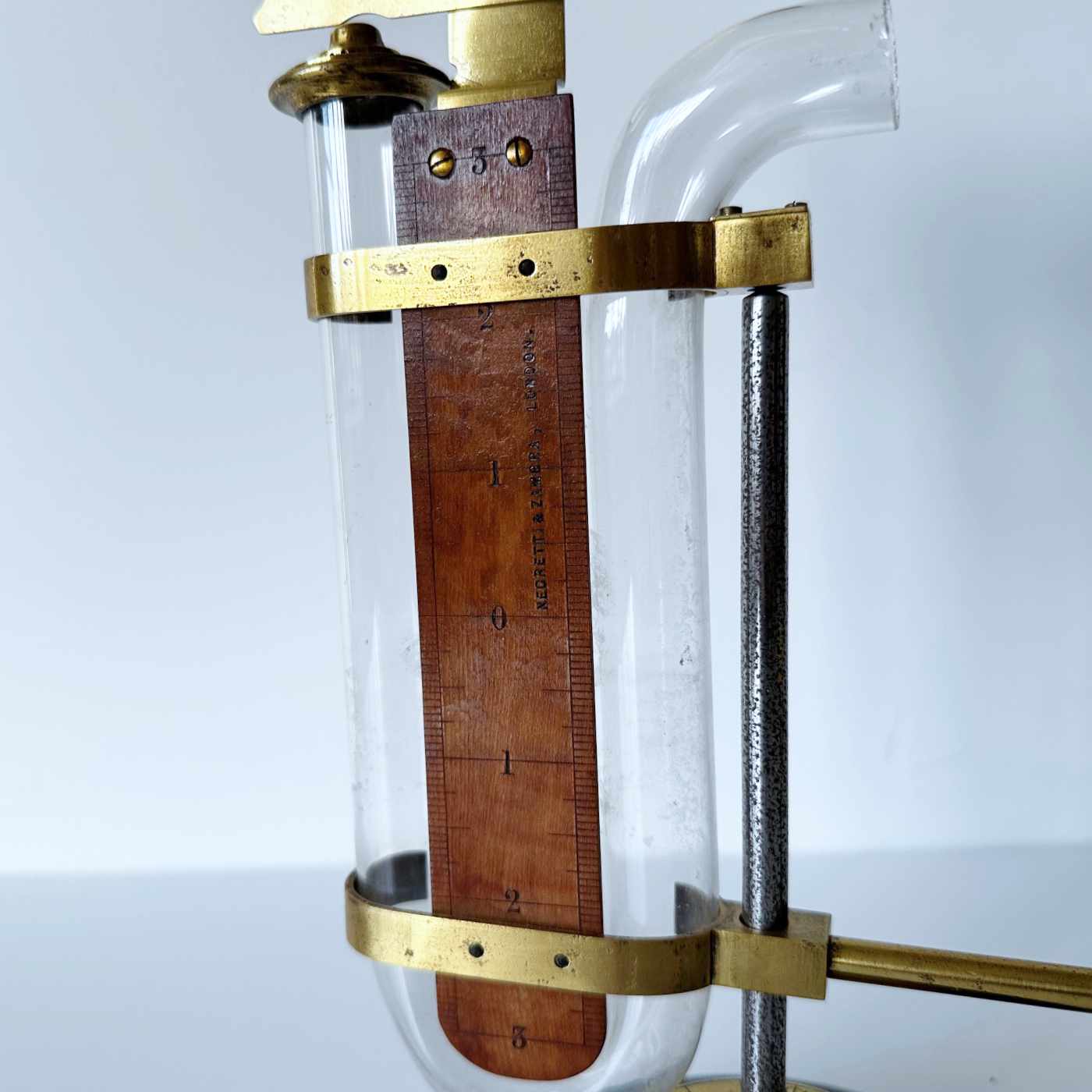
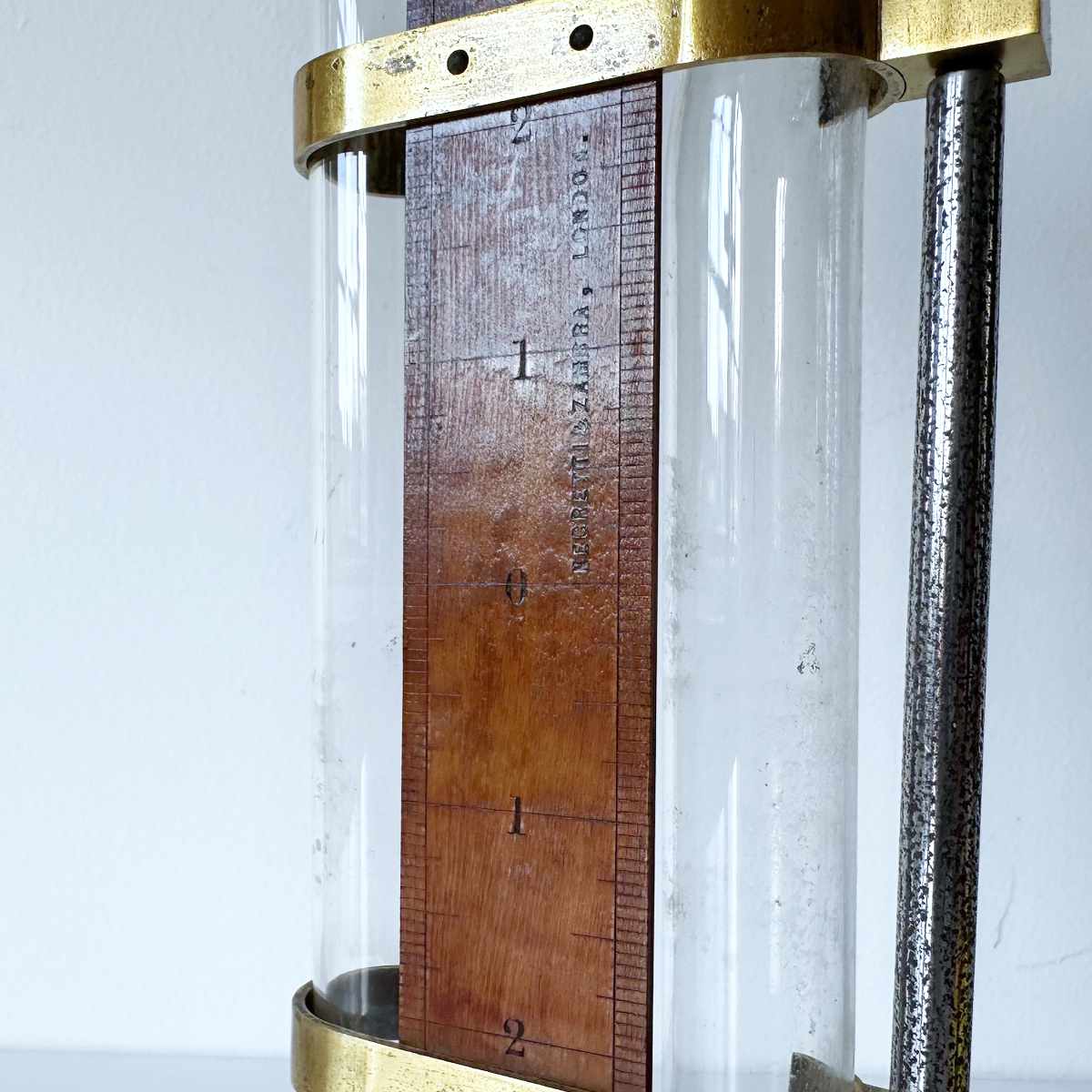
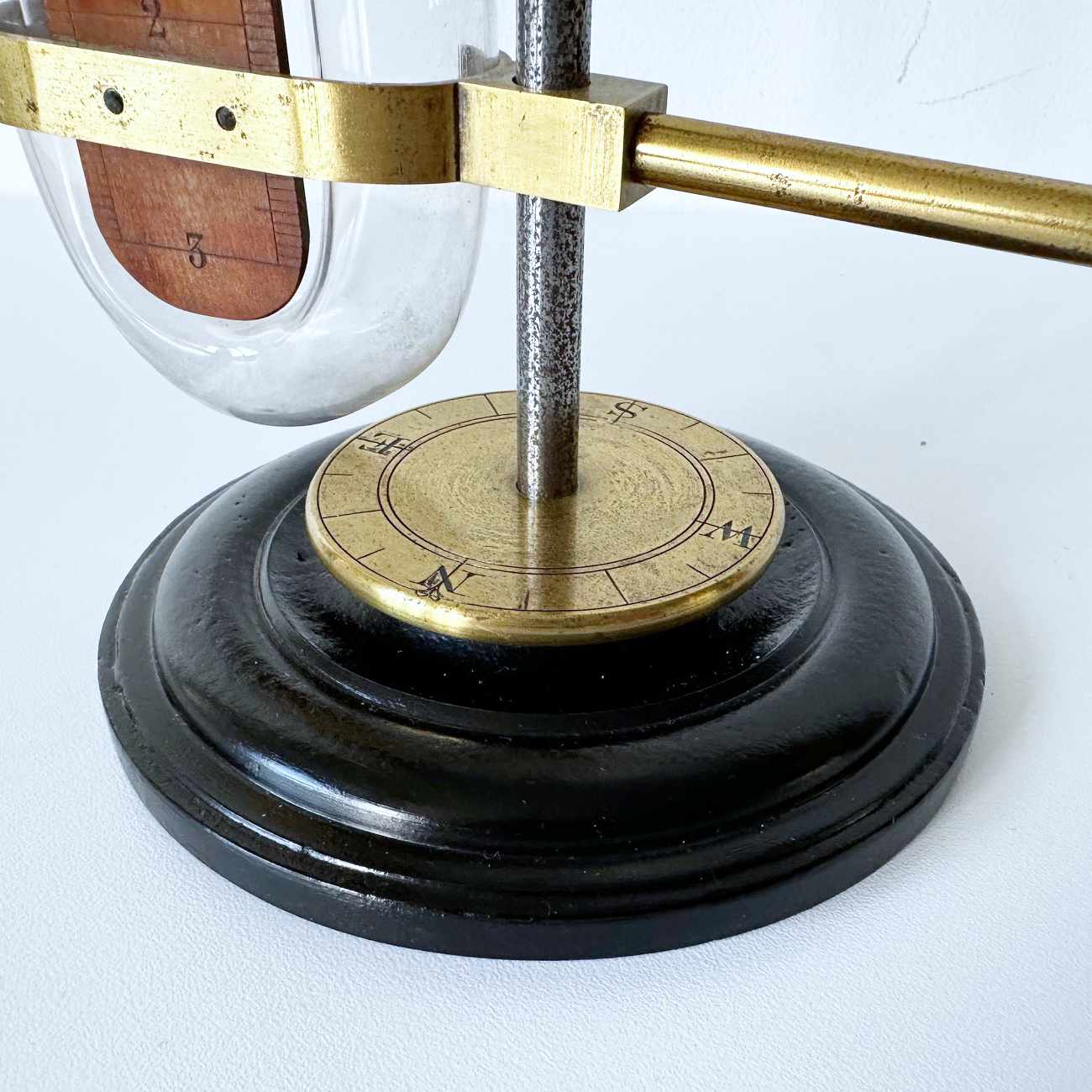
Comprised of a cast iron base with engraved brass plate denoting the four points of the compass. To the centre an iron rod with brass fittings holds a glass u-bend tube capped at one end with a brass ferrule and remaining open at the fore-end spout. Within the U-bend curve, a boxwood scale is secured with divisions starting at zero to the centre and graduating to three square feet of pressure both up and down the scale.
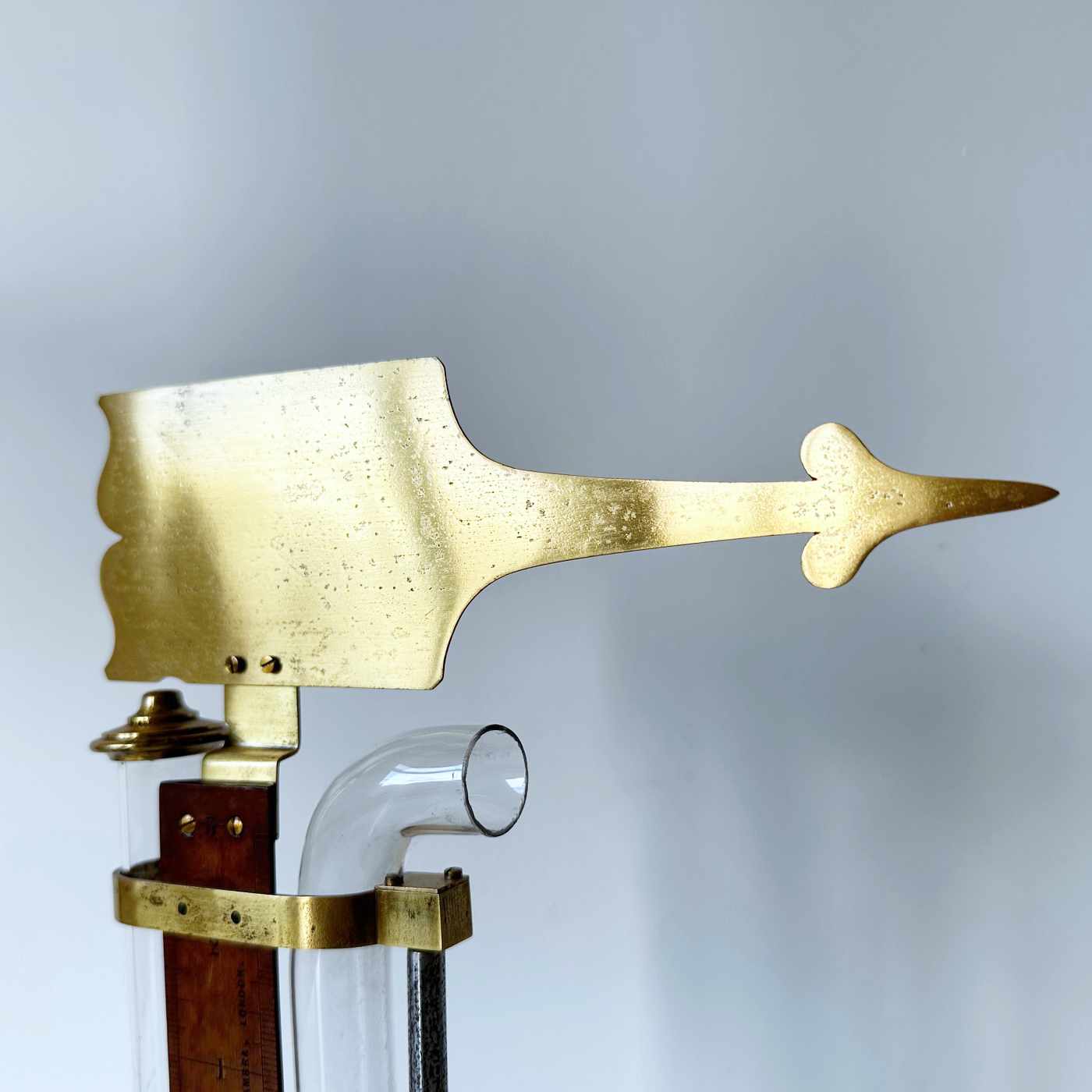
The top of the scale has a brass weathervane attached to the reverse and a brass weighted ball attached to the lower brass fittings and protruding from the front of the instrument in the same direction as the open spout of the glass tube.
The boxwood scale is marked to the makers, Negretti & Zambra, London.
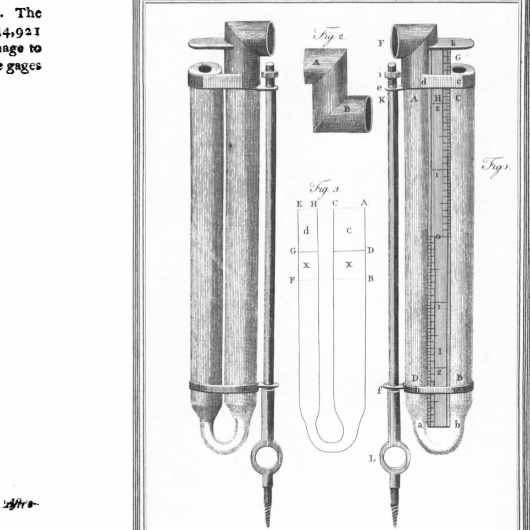
As the name suggests, this beautiful anemometer was first contrived by the Scottish physician and founding member of the Royal Society of Edinburgh, James Lind (1716 – 1794). In May of 1775 his, “Description and Use of a Portable Wind Gage” was presented to The Royal Society.
Lind spent much of his career in The Royal Navy, initially as a Surgeon’s mate in 1739, rising to Ship’s Surgeon in 1747 where he conducted one of the first experiments on the treatment and prevention of scurvy, first discovering the benefit of citrus fruit in treating the disease.
He retired from active service 1748 but was later appointed chief physician of The Royal Naval Hospital Haslar at Gosport where he continued to produce work on naval hygiene. His interests during this time stretched much further given the date of his Royal Society presentation.
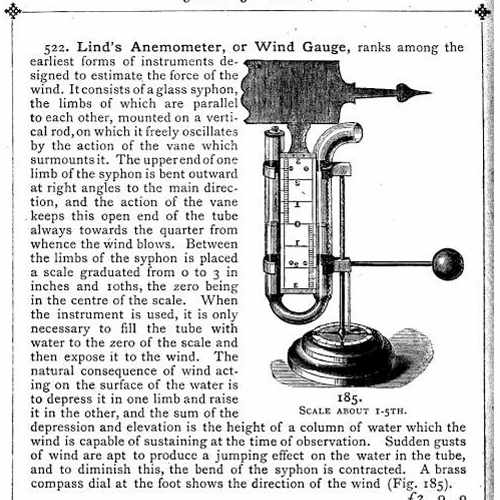
The instrument described by Lind (see images) is somewhat different to this Negretti example albeit based upon the same principles. The clue to the design’s development can be sourced from an 1860 Casella catalogue, a company known to have close ties with Negretti & Zambra, where a similar example is presented for sale. The title states, “Lind’s Anemometer (improved and modified by Sir William Snow Harris FRS) for showing the velocity and force of wind from a gentle breeze to the heaviest gale.” It continues.
“In this elegant little instrument, a column of fluid descending in a tube of about half inch bore, and ascending in one of one eighth inch bore, shows on a graduated scale the pressure of the wind on the square foot, and by consequence its velocity. A light arrow-shaped vane is placed, when required, on a pivot on the upper edge of the instrument to indicate the coincidence of the mouthpiece with the direction of the wind.”
Although I can find no specific source detail on Harris’s improvements, they presumably relate to the manoeuvrability of the instrument in relation to the wind. Like Lind, Harris was trained as a physician in Edinburgh but abandoned his career to focus on the study of electricity, an emerging science during this period. His development of lightning conductors for ships brought him significant fame after they were fitted to the HMS Beagle for trial during its famous expedition with Fitzroy and Darwin. Harris is listed as an exhibitor of lightning conductors at the Great Exhibition. Given the date of the catalogue source, I suspect that this instrument was further developed at some time during the 1850’s.
A significant and rare instrument with a fascinating link to two important figures in both medicine and the sciences during the Eighteenth and Nineteenth Centuries.
Negretti & Zambra were a leading name in the production of meteorological and scientific instruments and had a company history dating back to 1850 although their parents were amongst those Italian emigres that bolstered the British meteorological instrument making industry at the turn of the century.
Throughout their long and esteemed history, they exhibited at British and international industrial fairs and became makers to both Queen Victoria and Edward VII. Owing to changes in the business, the firm ceased the public retailing of scientific instruments sometime around the late 1960’s and continued with a focus on the aviation industry in numerous guises until its eventual liquidation in the year 2000. They are today perhaps the most collected of the scientific instrument firms which bears testament to the quality of their work.