

SOLD – Very Early Antique Watson & Son Bar-limb Brass Microscope c1870 with Fitted Case
Sold
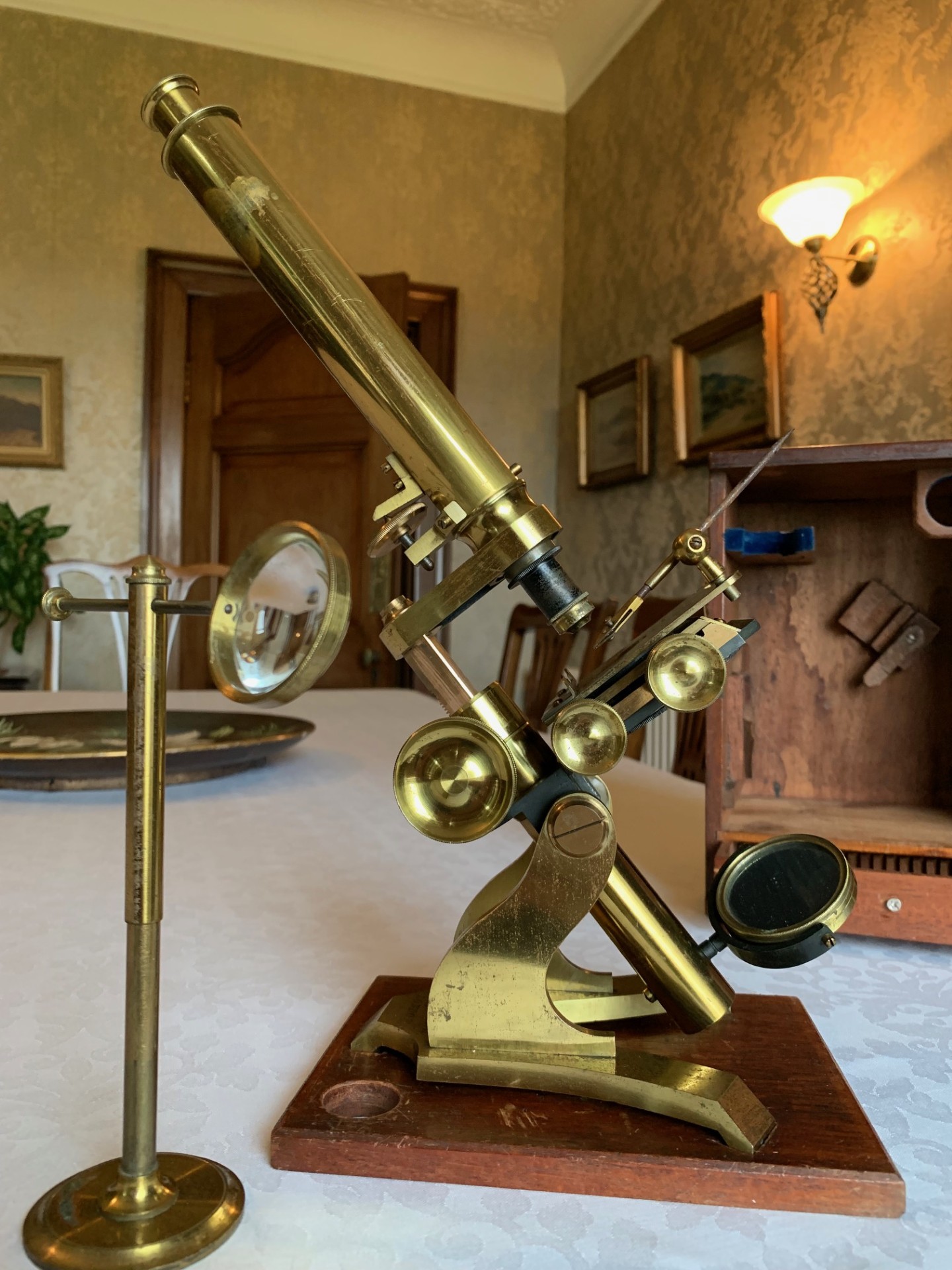
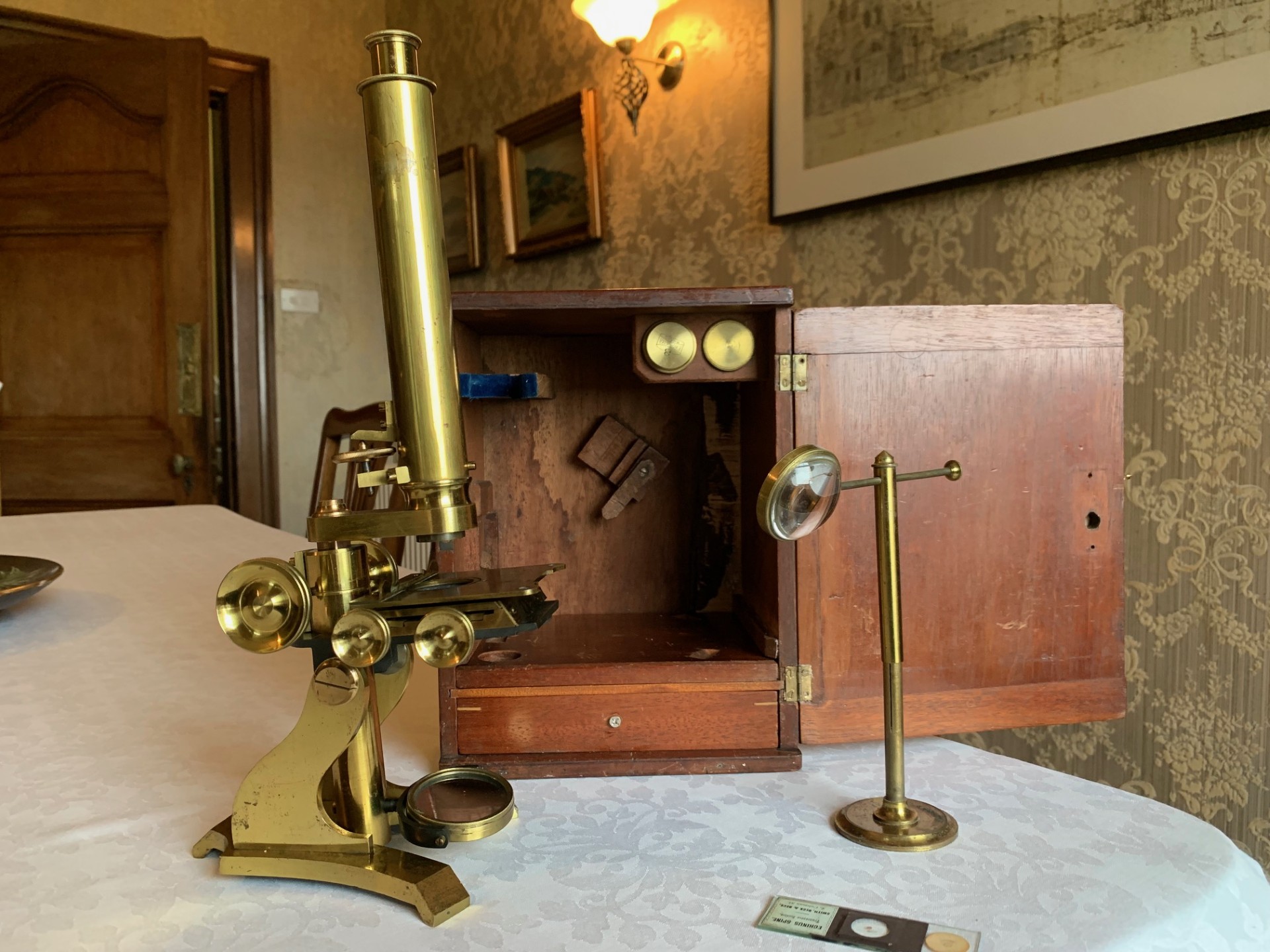
Very early antique Victorian period Watson & Son bar-limb model brass microscope, complete with fitted case and small selection of accessories. Great example of hard-to-find early "pre-Edinburgh" pre-serial number Watson microscope production from the 1870s.
Circa
1870
Maker
W. Watson & Son
Country of manufacture
UK and Ireland
Description
Background to Watson from Microscope Museum:
W. Watson & Sons were opticians and camera makers trading from London and Edinburgh. The company was originally founded in 1837 as Watson by William Watson, located at 71 City Road. The business continued at this address until 1861, when it moved to 313 High Holborn. In 1867, the name was changed to W. Watson & Son. In 1881 the founder William Watson died and in 1882, the name was changed to W. Watson & Sons when the second son joined the company. In 1900 the company acquired the business of John Browning and in 1908 the firm became W. Watson & Sons Ltd. Post WWII into the 1950s, the company changed their address to 25 West End Lane, Barnet, Hertfordshire, where they stayed until the late 1960s. In 1957 the company was acquired by Pye of Cambridge and ten years later, taken over by Philips. By 1970, the manufacture of microscopes was over.
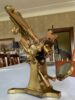
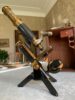
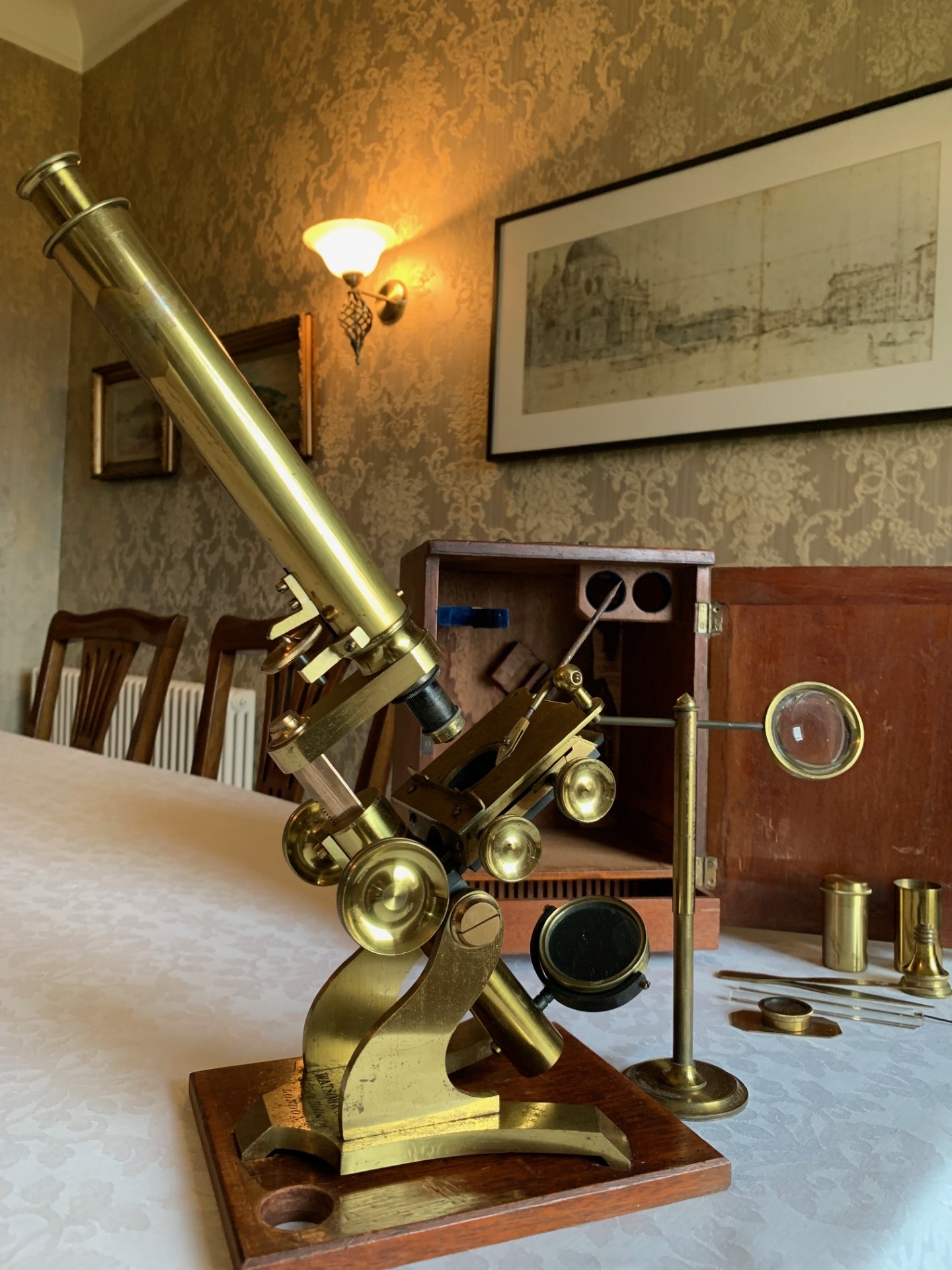
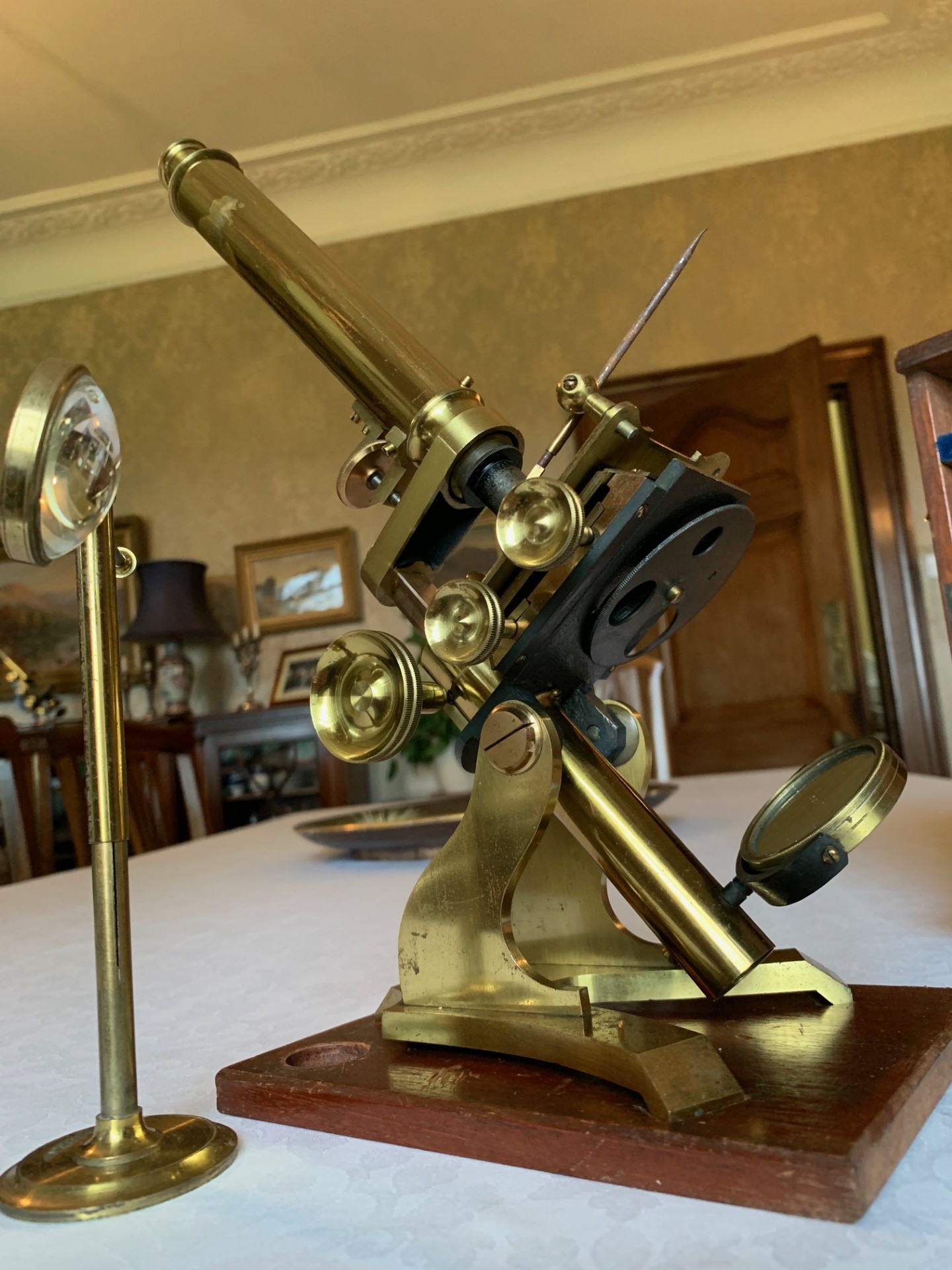
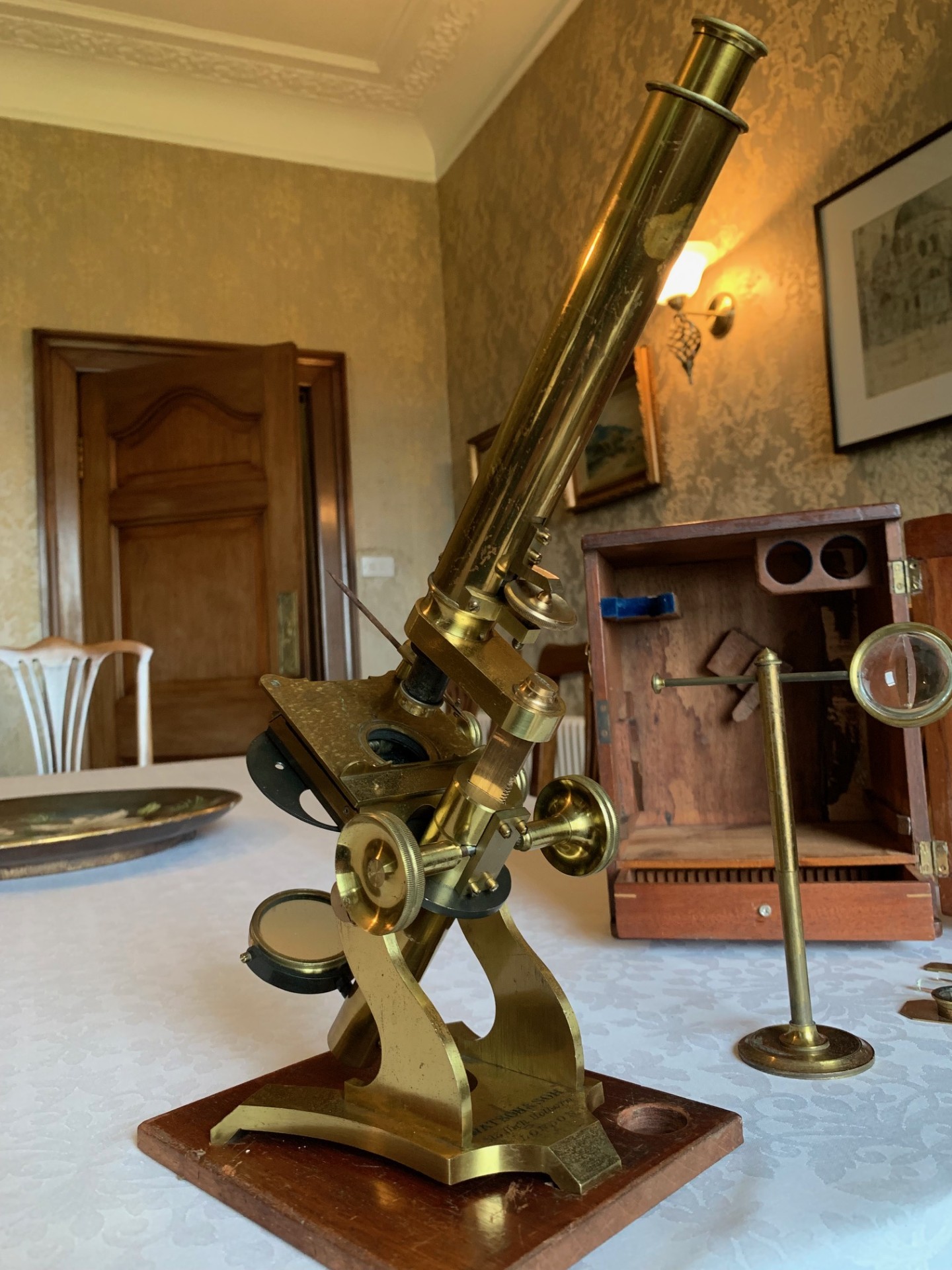
This early example of a late Victorian instrument by Watson & Son is in pretty good cosmetic condition for its age, with only light patination and no doubt quite a back story in light of its assumed many previous custodians. It’s a survivor from the last 150 years or so – the lacquered brass-work catches the light really well as I hope the listing photos illustrate and it’s also complete with original case. The instrument’s look and feel is pretty solid in that’s it’s fashioned from brass, giving it a quality feel and suitability for display, being compact, it’s an ideal and useful desk-top accessory.
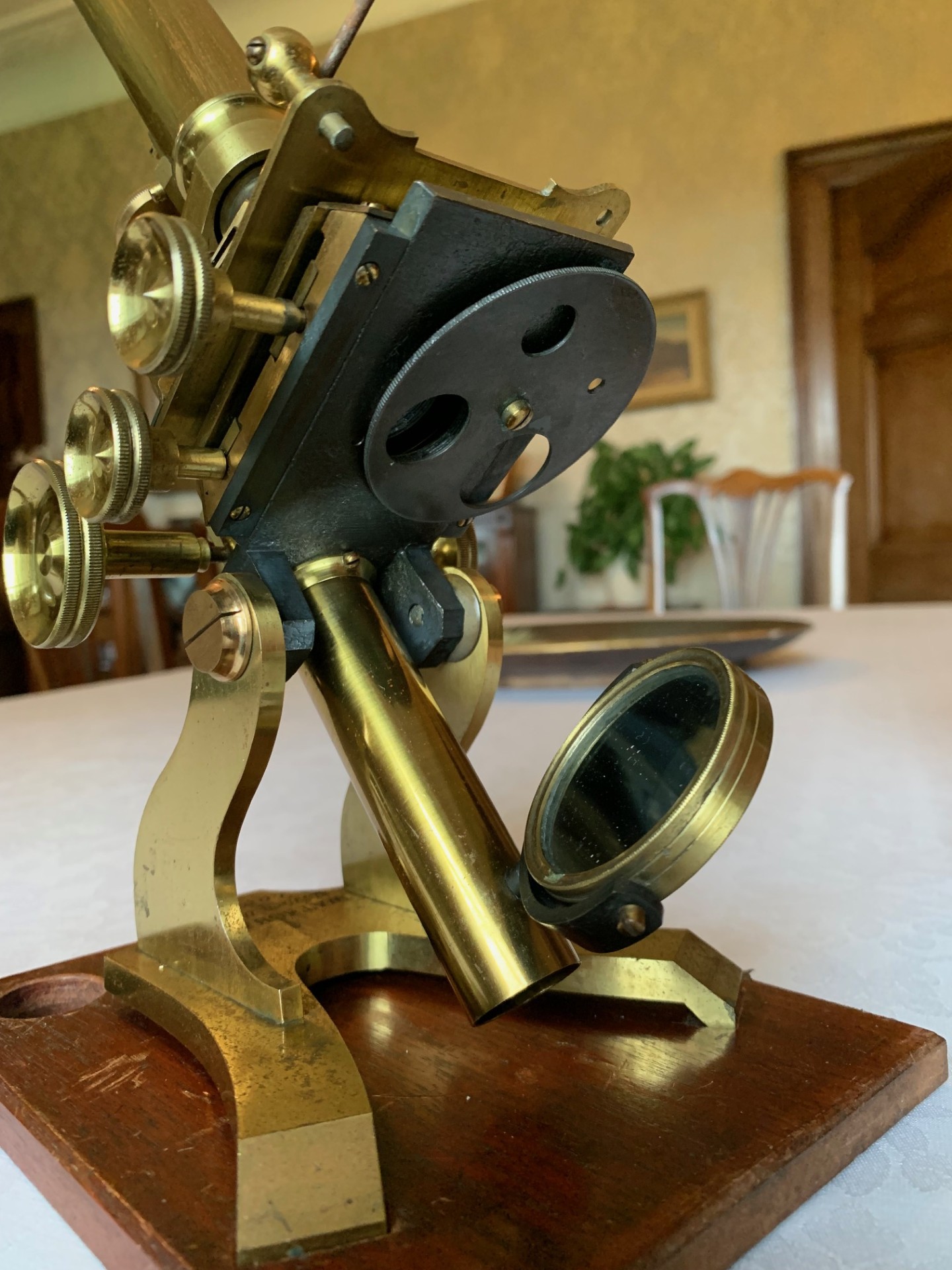
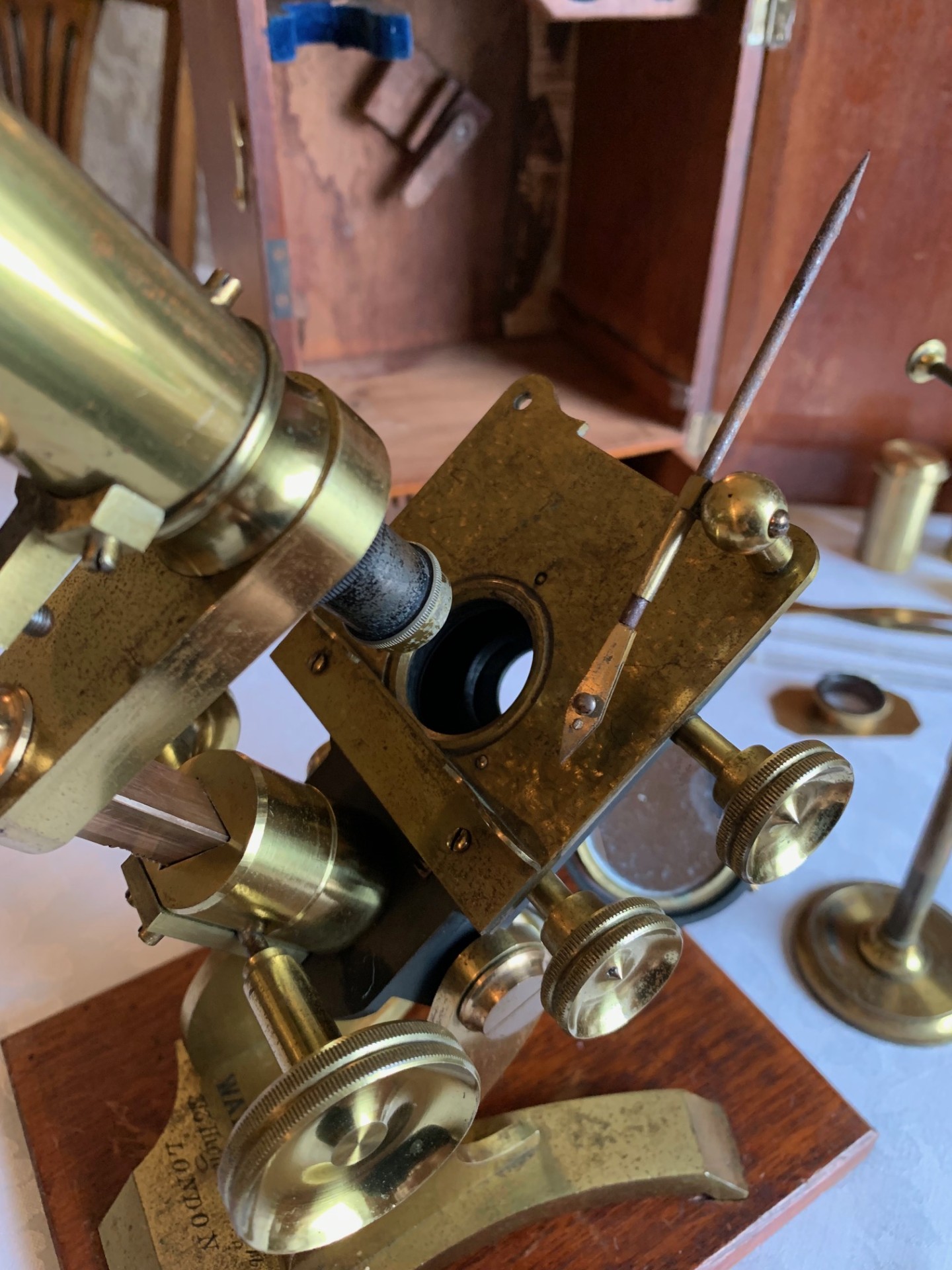
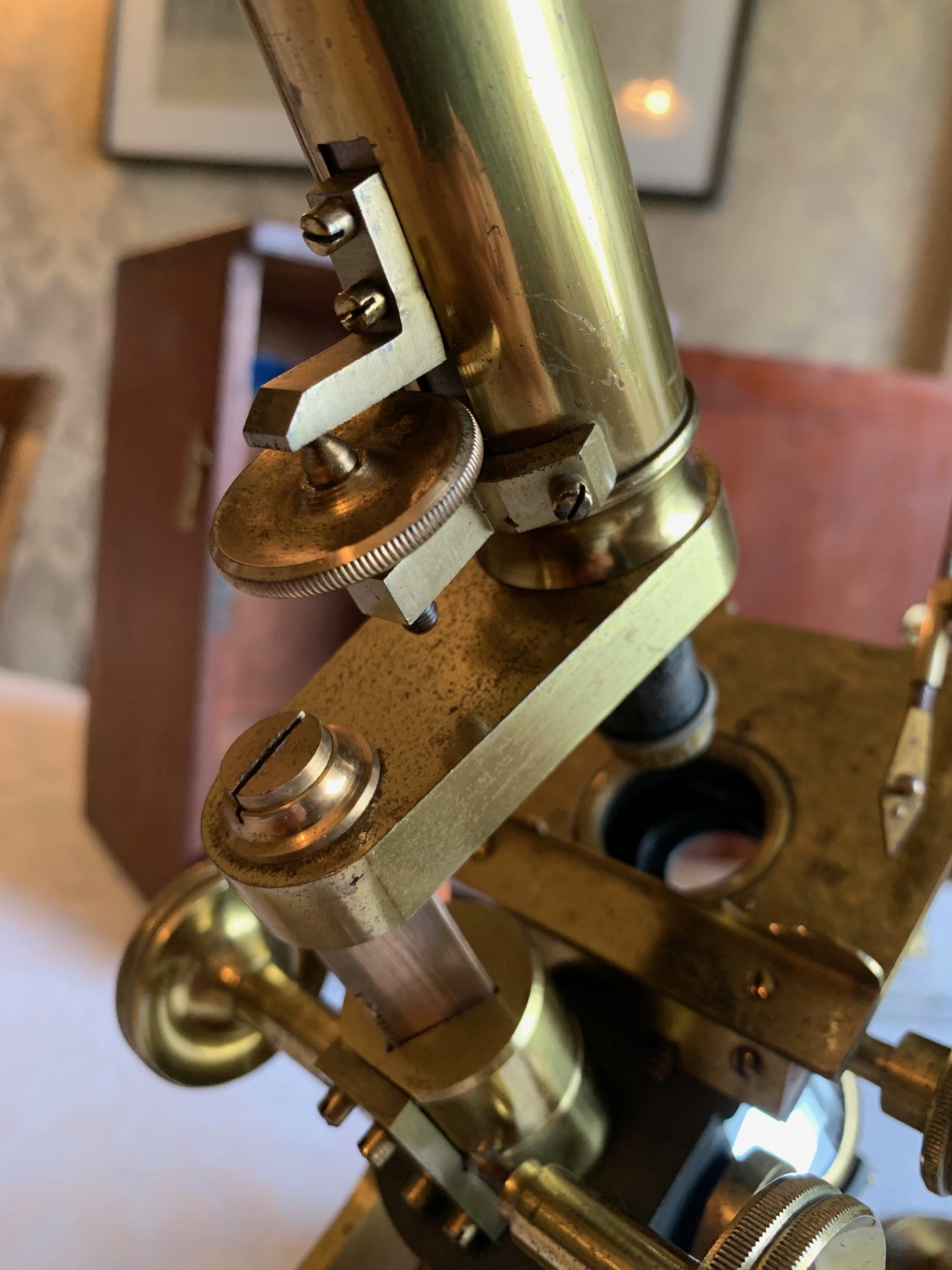
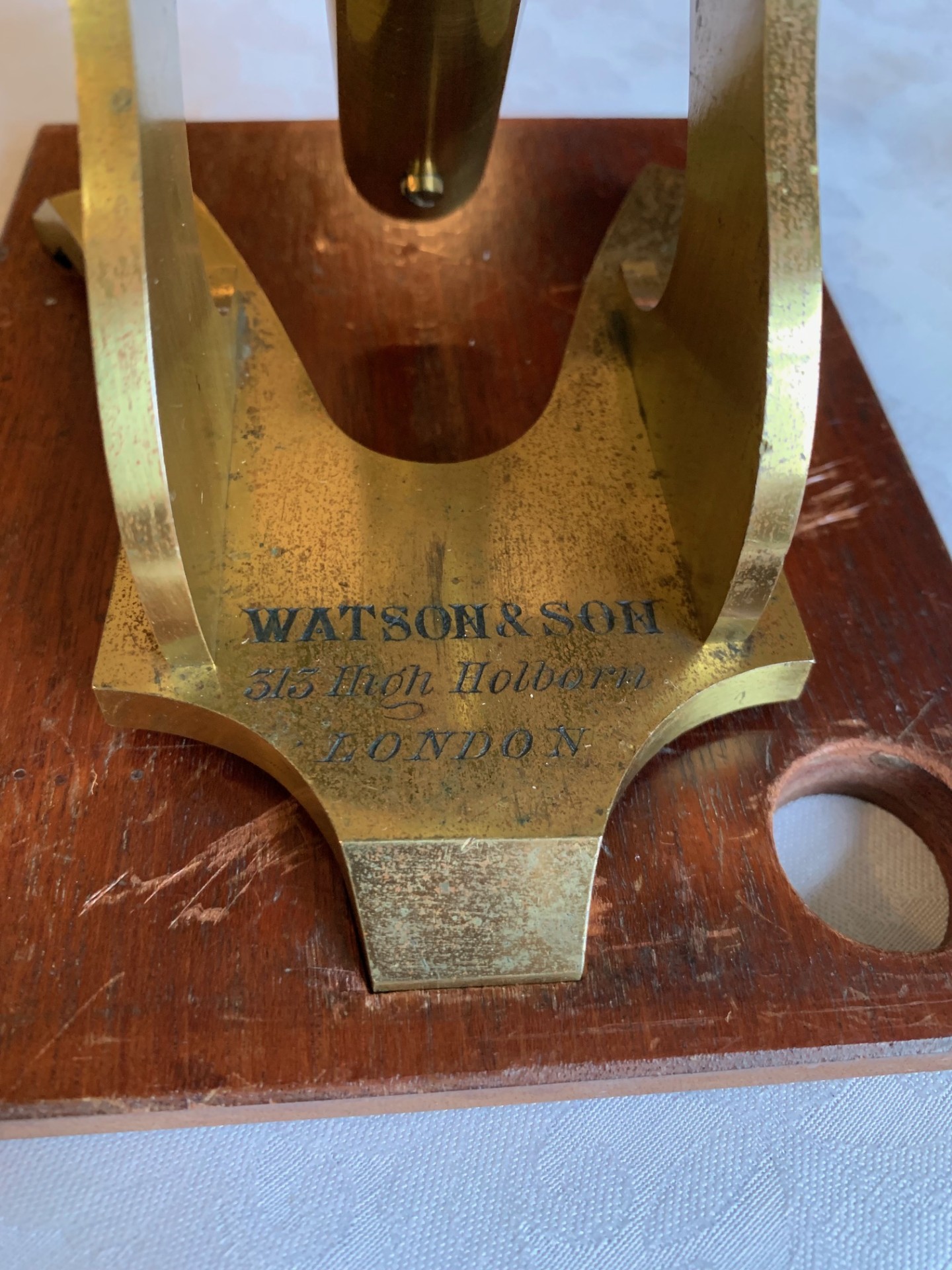
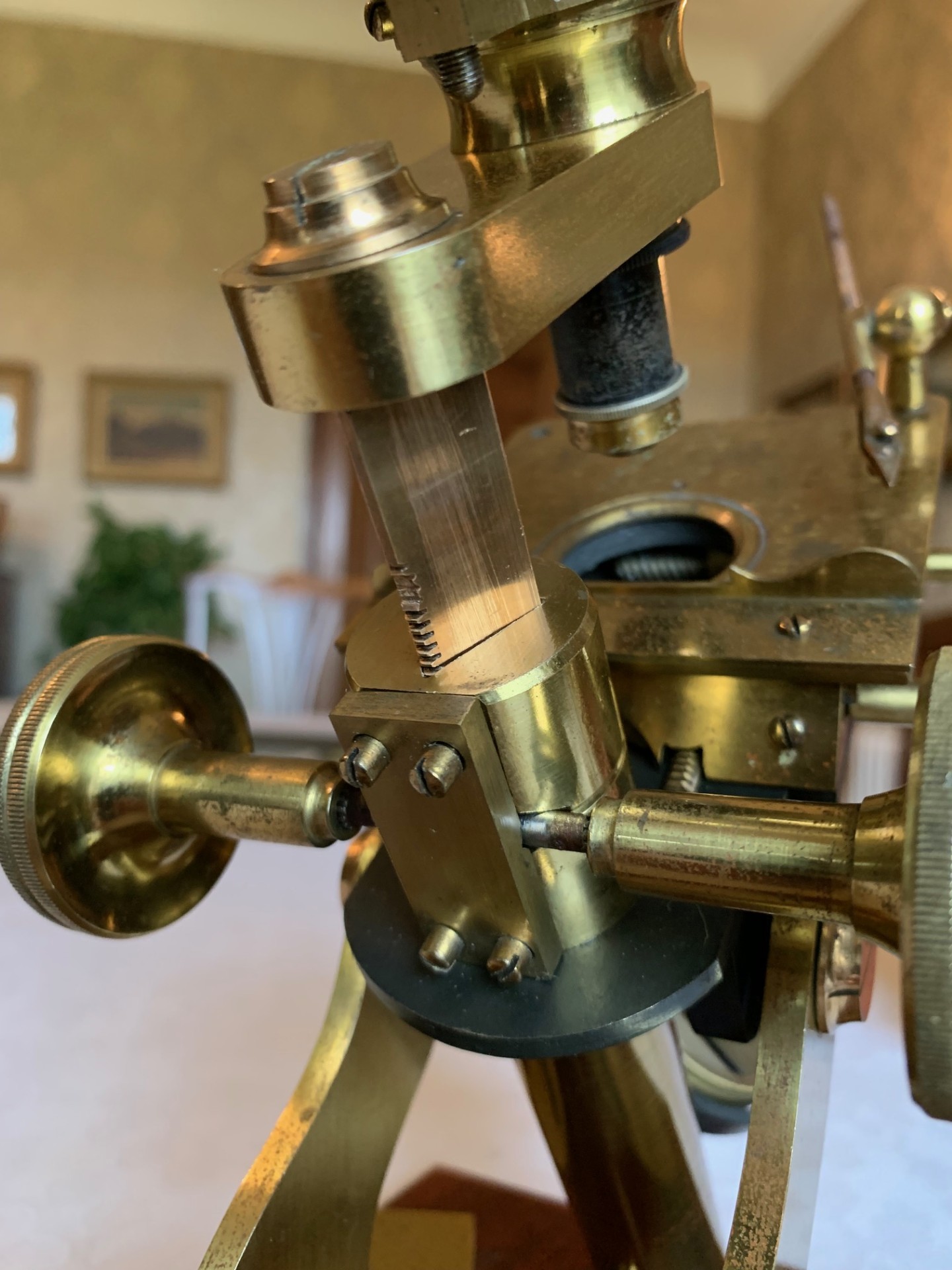
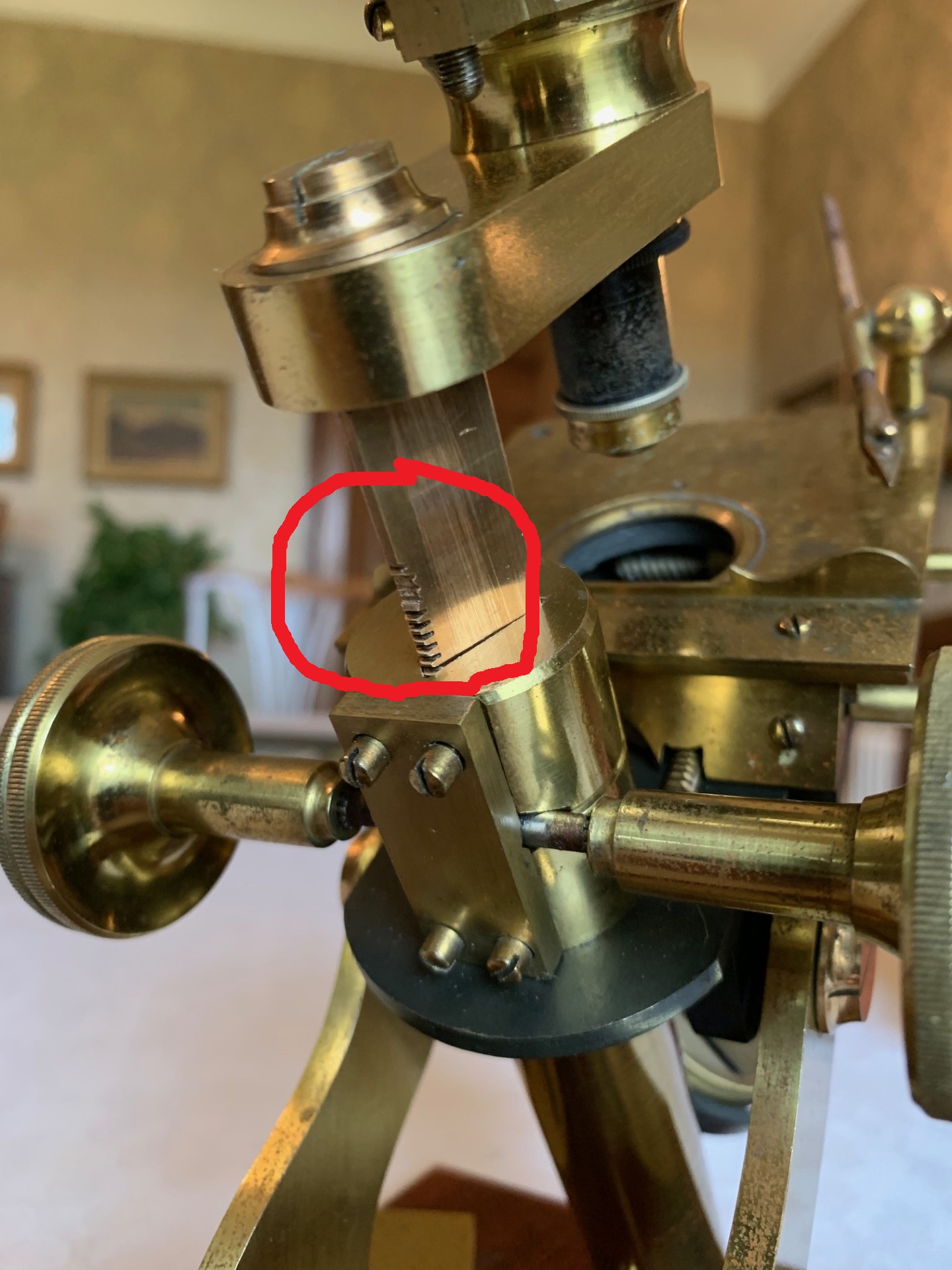
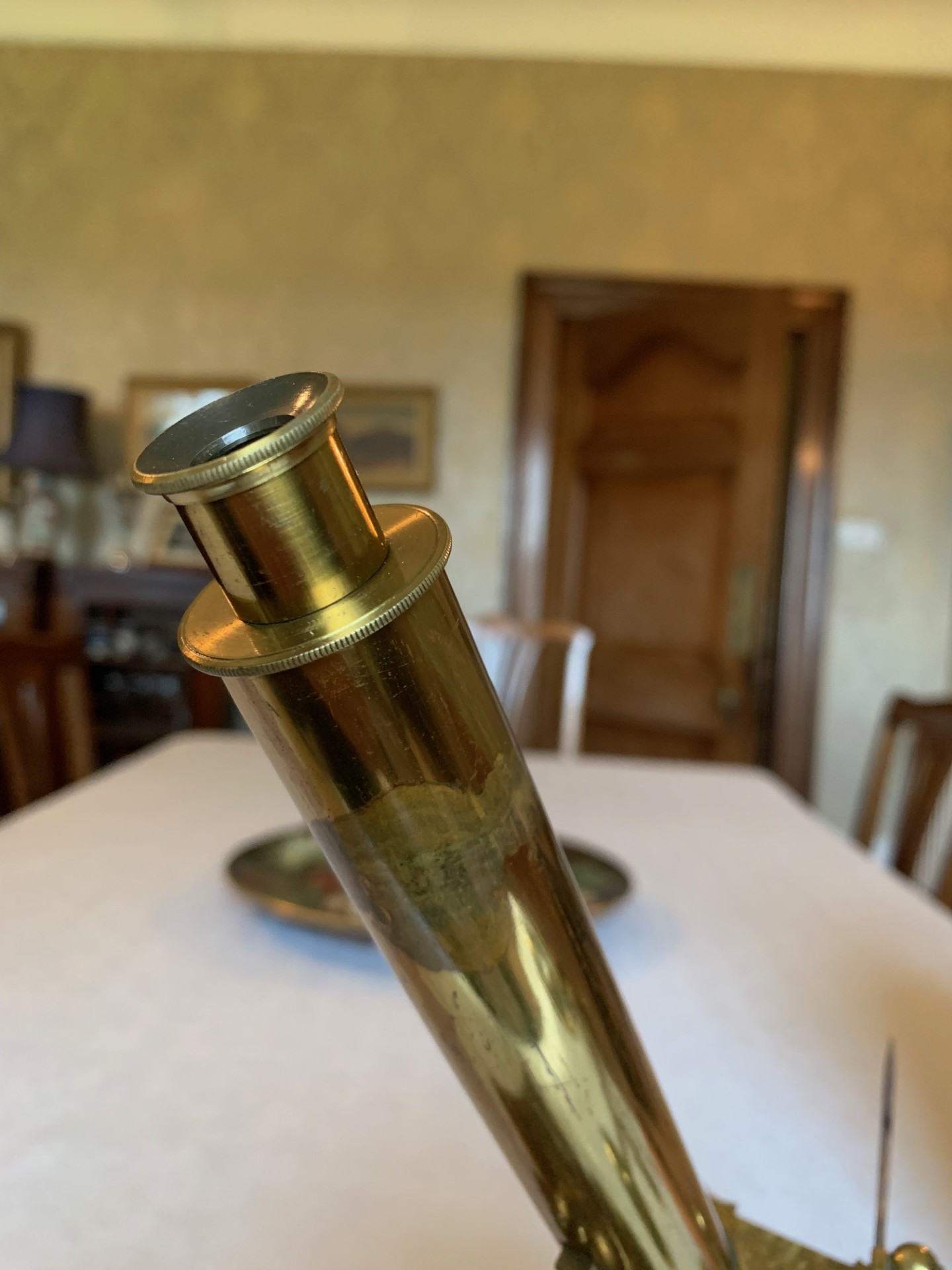
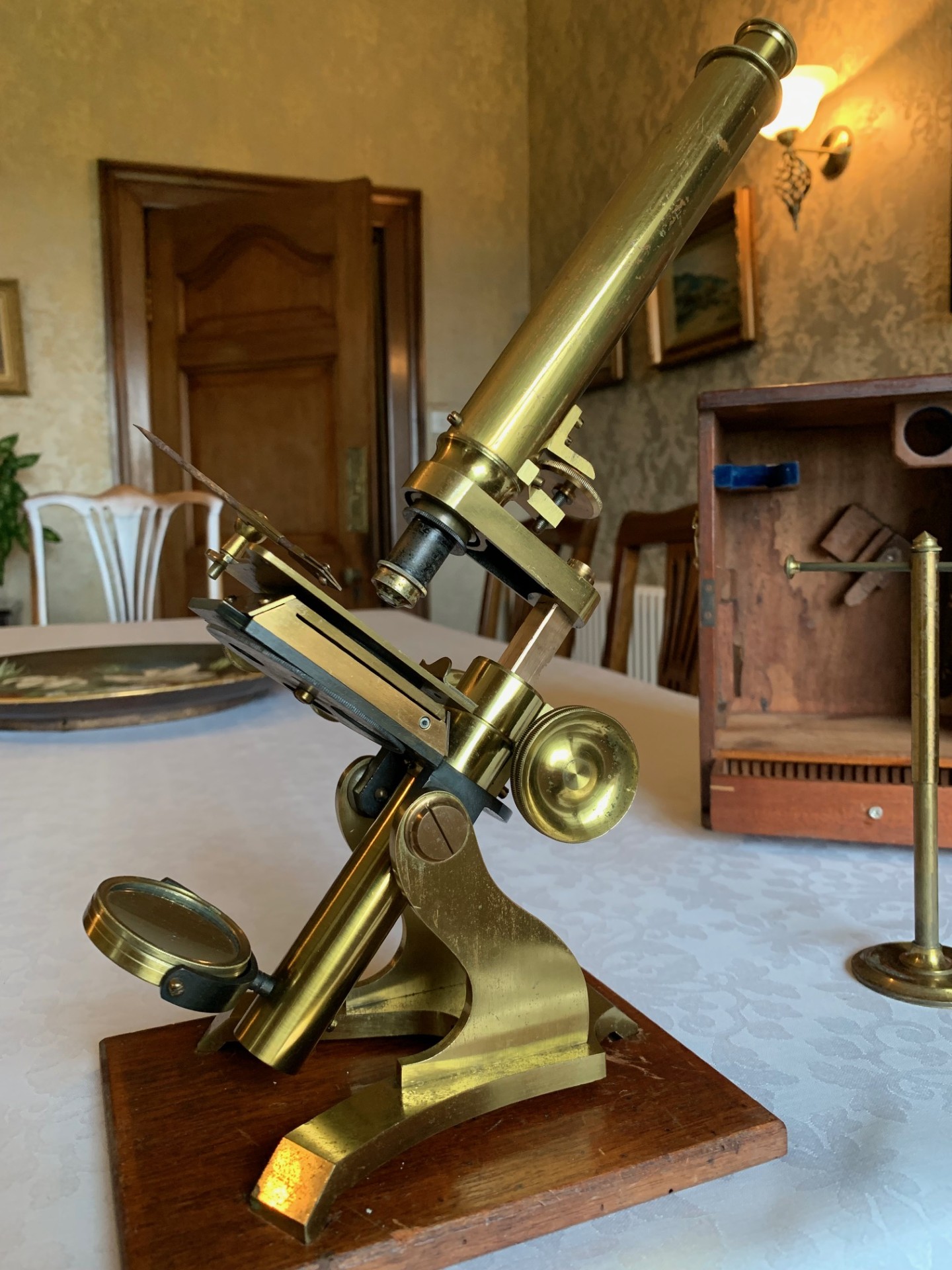
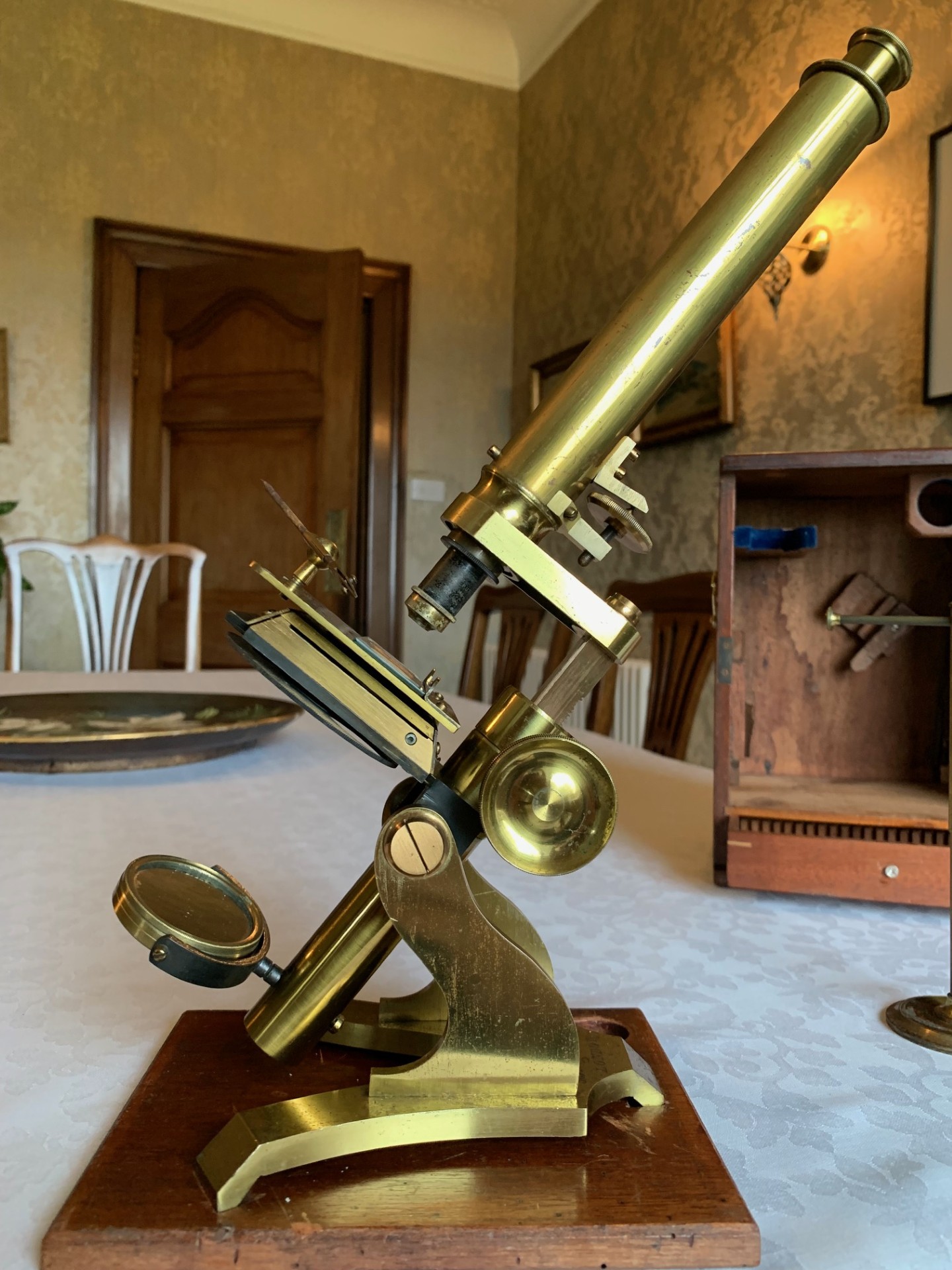
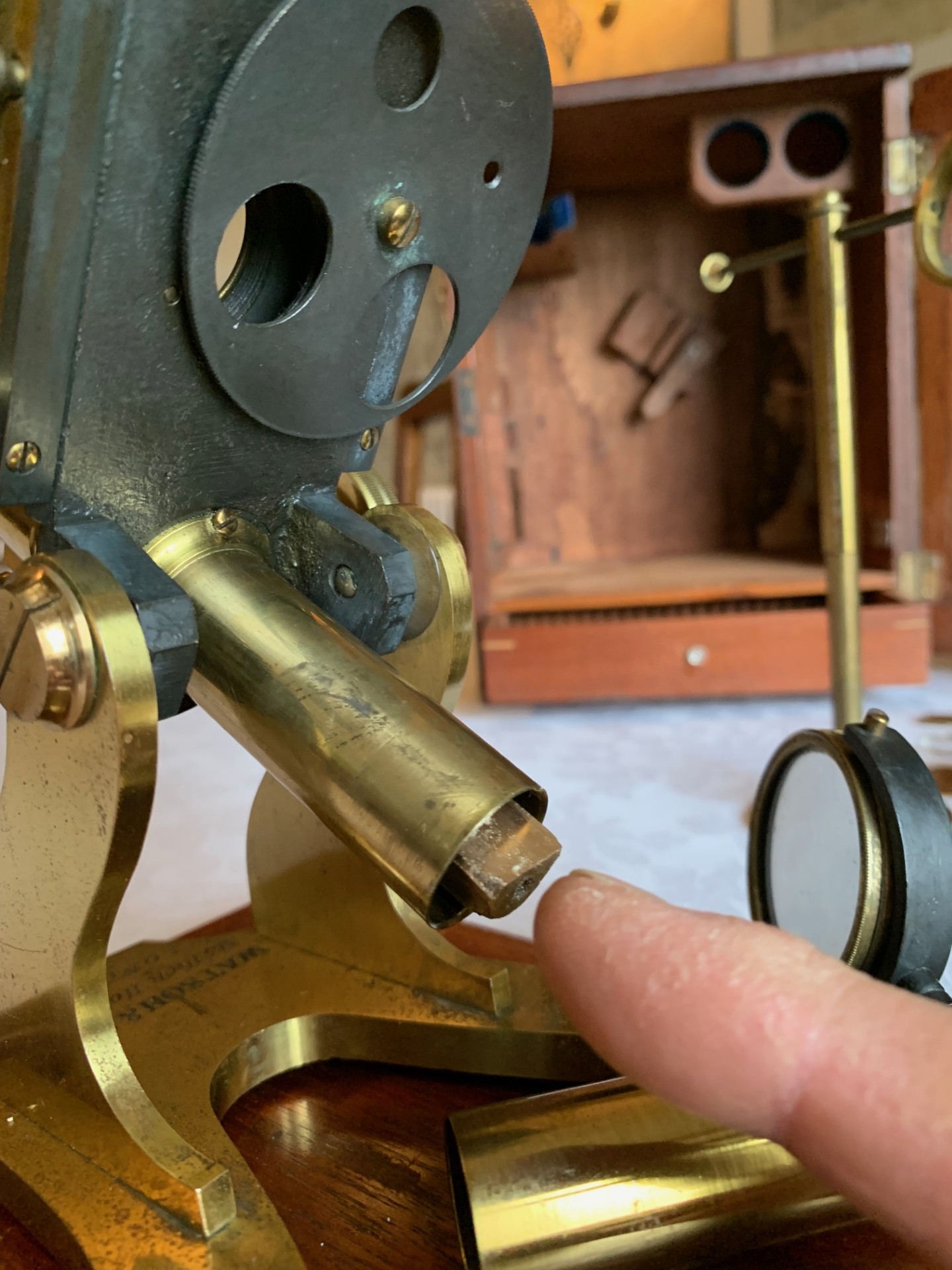
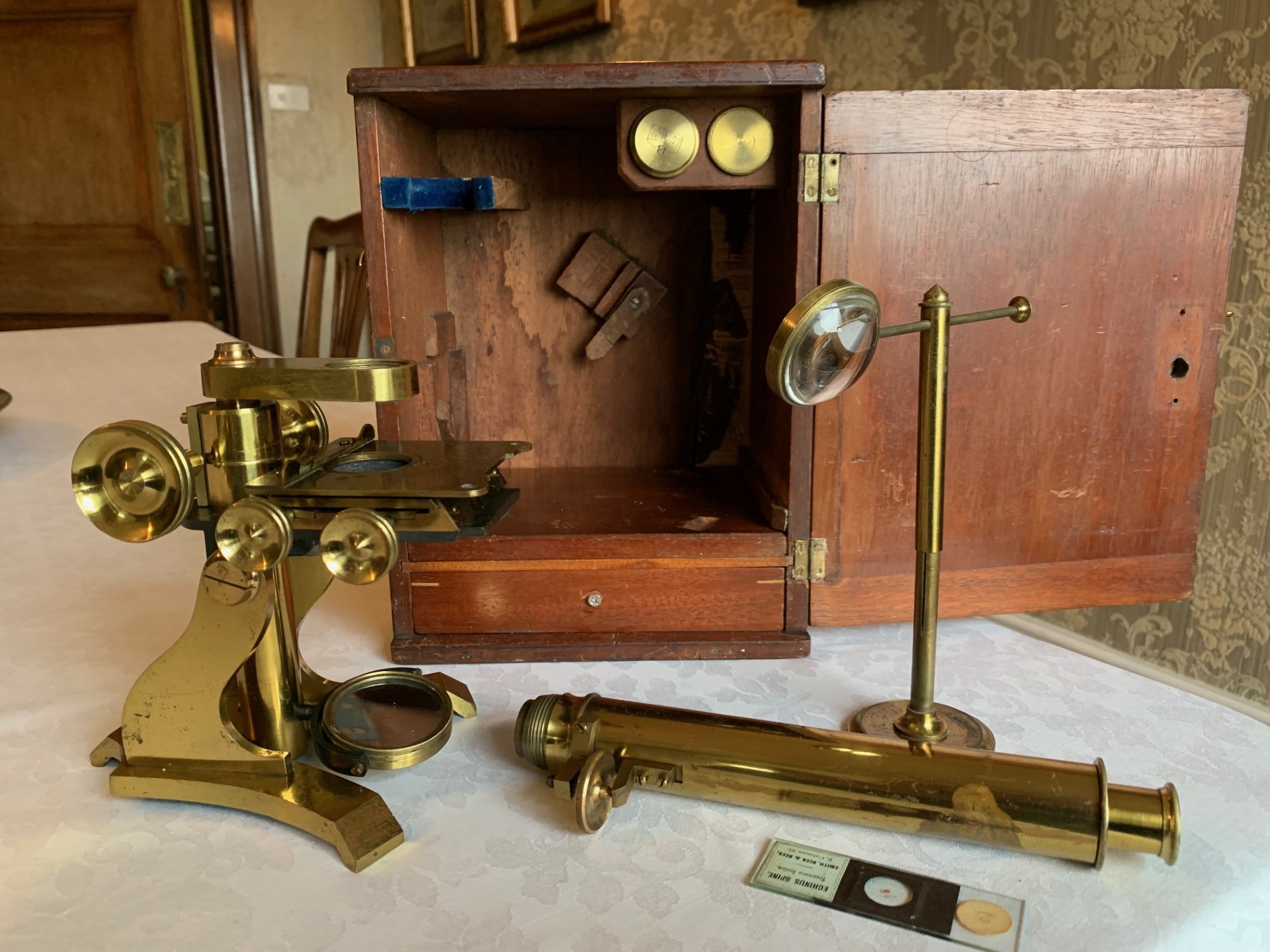
Technical details – the construction is a lacquered brass y-shaped foot – the firm’s name is engraved to the rear of the foot. There’s also a wooden base-plate in the case that can be used to give extra stability when in use, if so desired. From the foot twin uprights support a pivot and a bar-limb arrangement, comprising triangular section limb. Coarse focus is by a rack and pinion system with optical tube in brass. The coarse focus works well holding in position as it should with straight cut rack, with just a couple of teeth missing at the very bottom of it’s range of travel, which is outside the normal working range. The coarse focus rack can be moved manually by removing the mirror slider and just pushing up from underneath to re-engage the rack as needed. Fine focus is controlled by a brass thumb-wheel at the rear of the optical tube just above the bar, which also works well with good smooth fine adjustment.
In terms of its optics, this microscope is supplied with a single eyepiece as under:
– Top-hat 6x magnification by Watson
The eyepiece works well giving nice bright images.
It’s also got two objective lenses with RMS thread, as under:
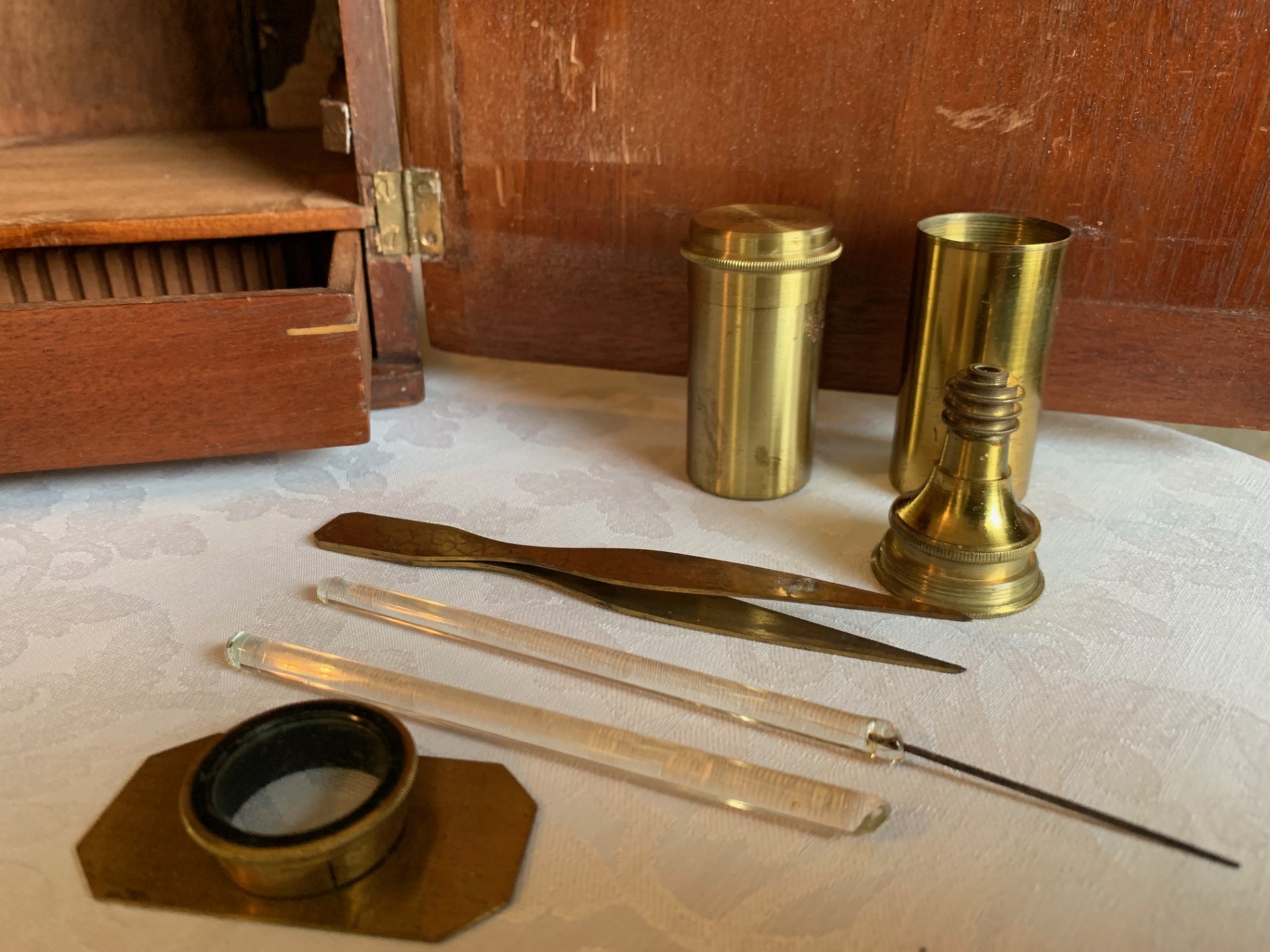
– 2/3rds inch – 10x magnification by Watson with brass canister
– unmarked brass objective – original by Watson – approx 1/6th inch 40x magnification with brass canister
The magnification available with its current set of optics is therefore 60x to 240x. I’ve tested the optics with various antique slides and the images produced are acceptable for the age of the optics when using suitable illumination. The 1/6th inch objective is a little cloudy internally.
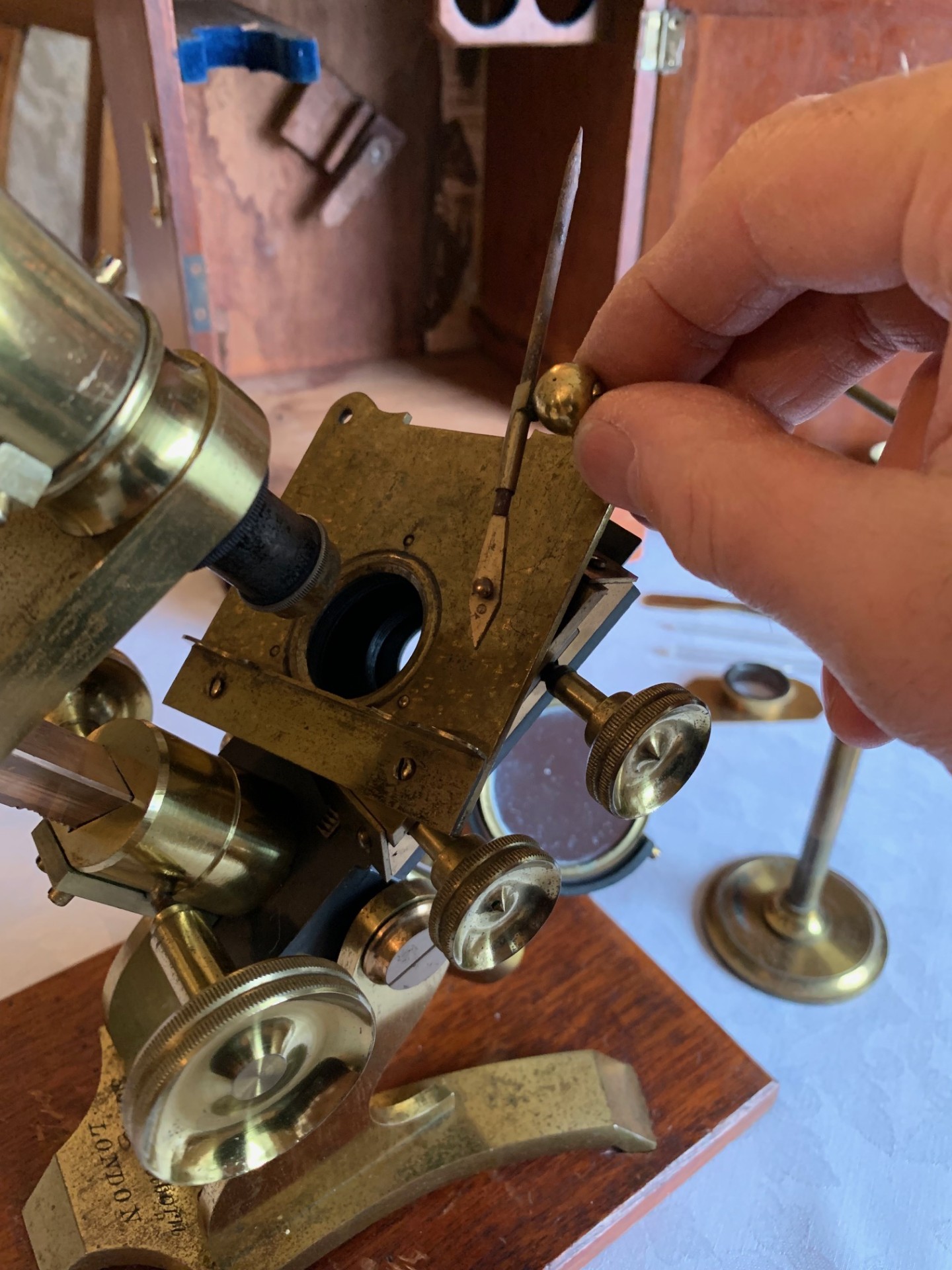
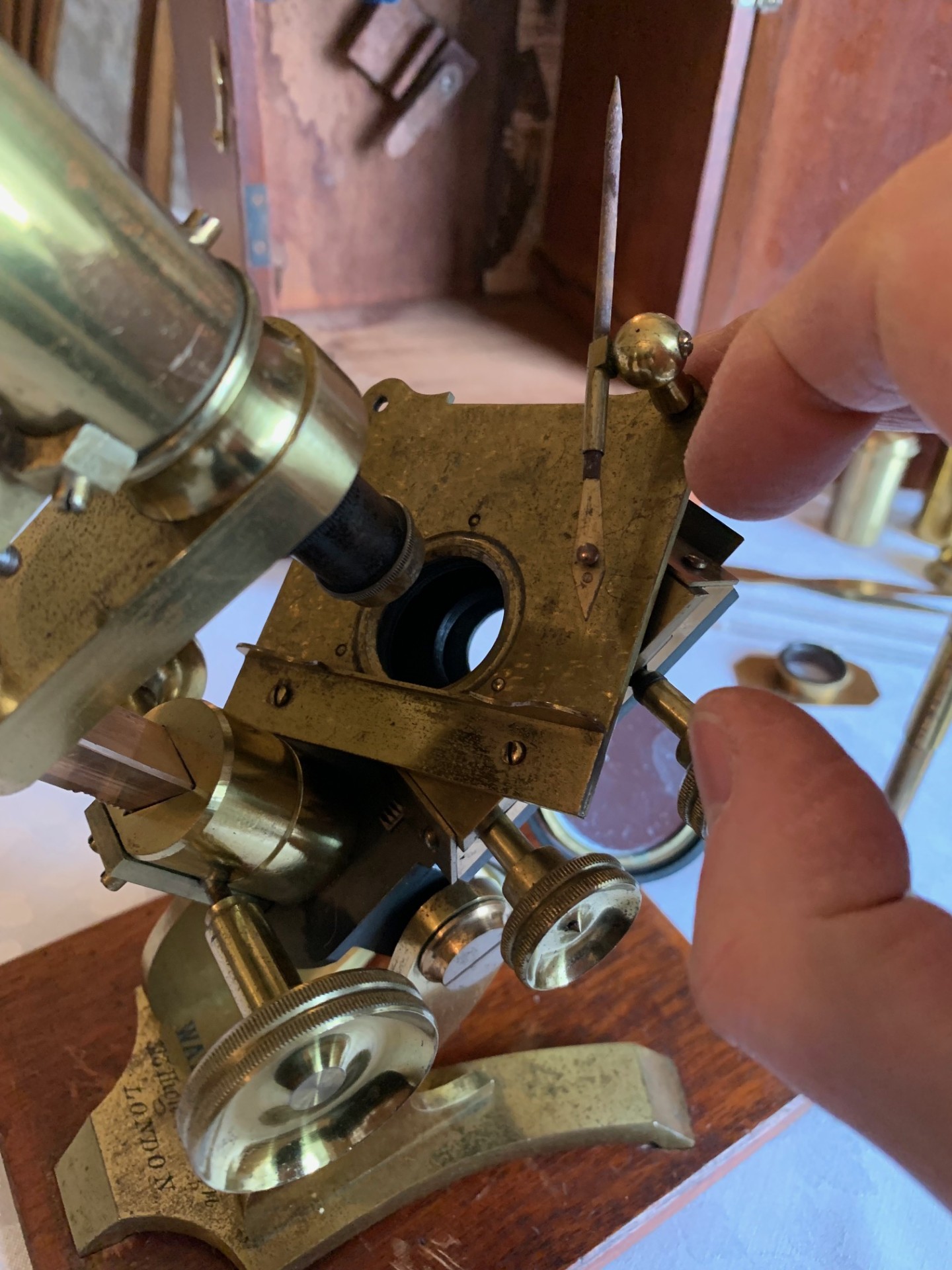
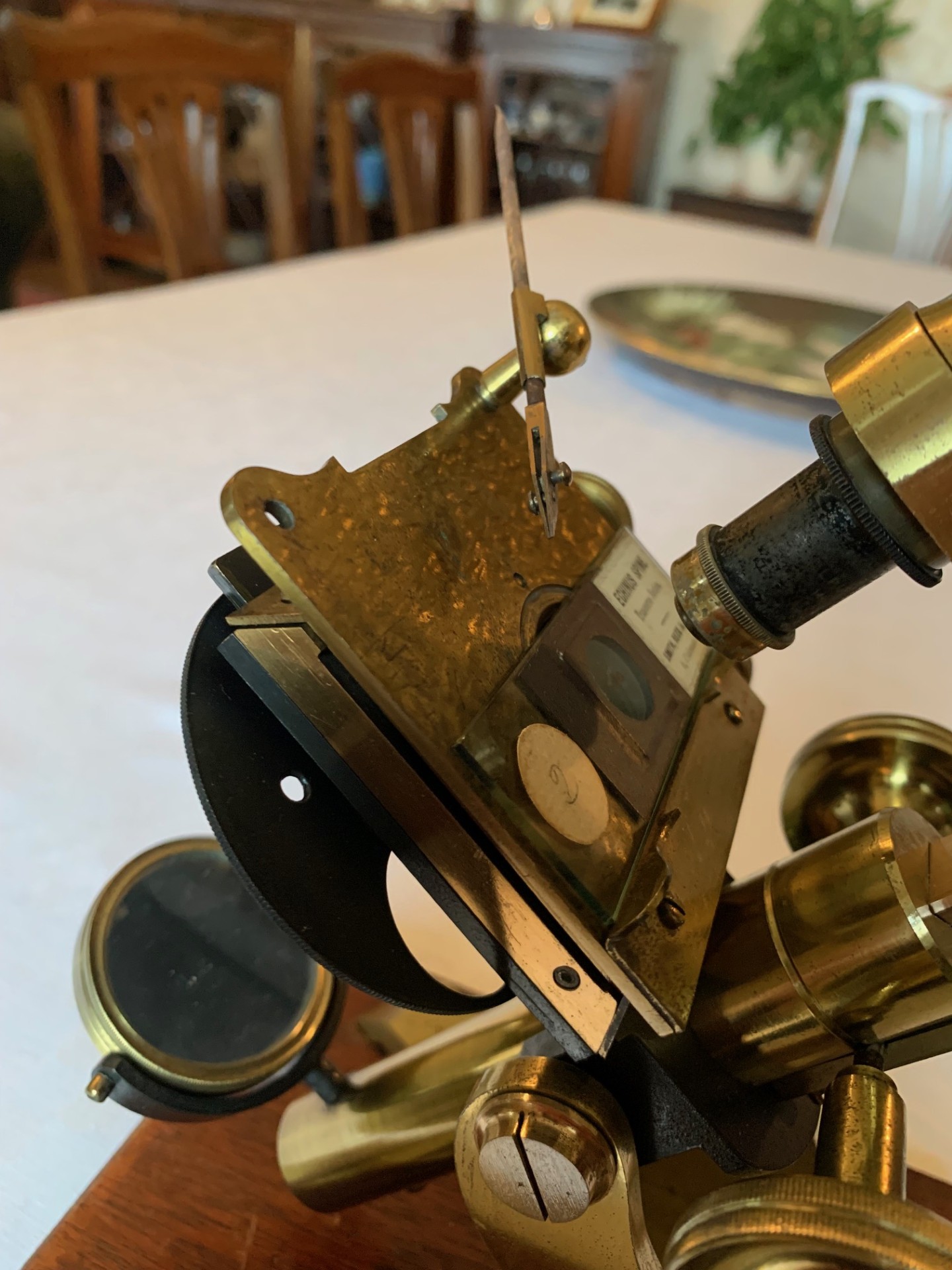
The instrument tilts for inclined viewing and holds in position through its working range as it should. The specimen stage is a rectangular fully mechanical design in solid brass, with rotating top-plate as shown – doesn’t complete a full 360 degree rotation. There are twin thumb-wheel adjusters for the x and y axes to the right-hand side of the stage giving a useful range of movement. There are two holes for siting stage tools and also a slide retainer ledge which works well.
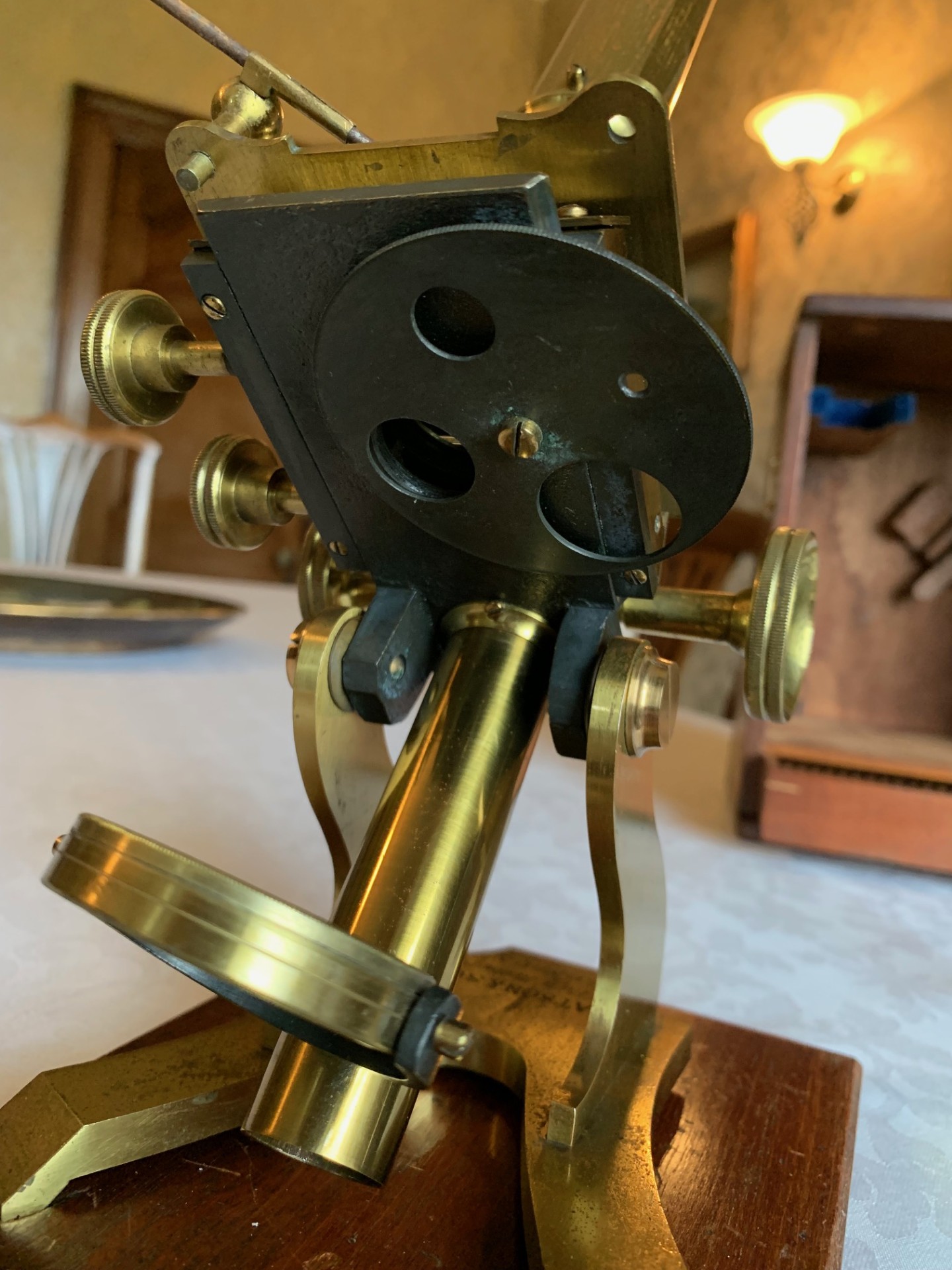
Sub-stage there’s brass ring mount to which is fitted a 4-position wheel-of-stops. Lighting is via a single-sided concave mirror in a brass carrier and gimbal mount fitted via a slider to the limb tail-piece. The mirror therefore has a useful range of height and rotation adjustment, with period silvering that’s in very good condition.
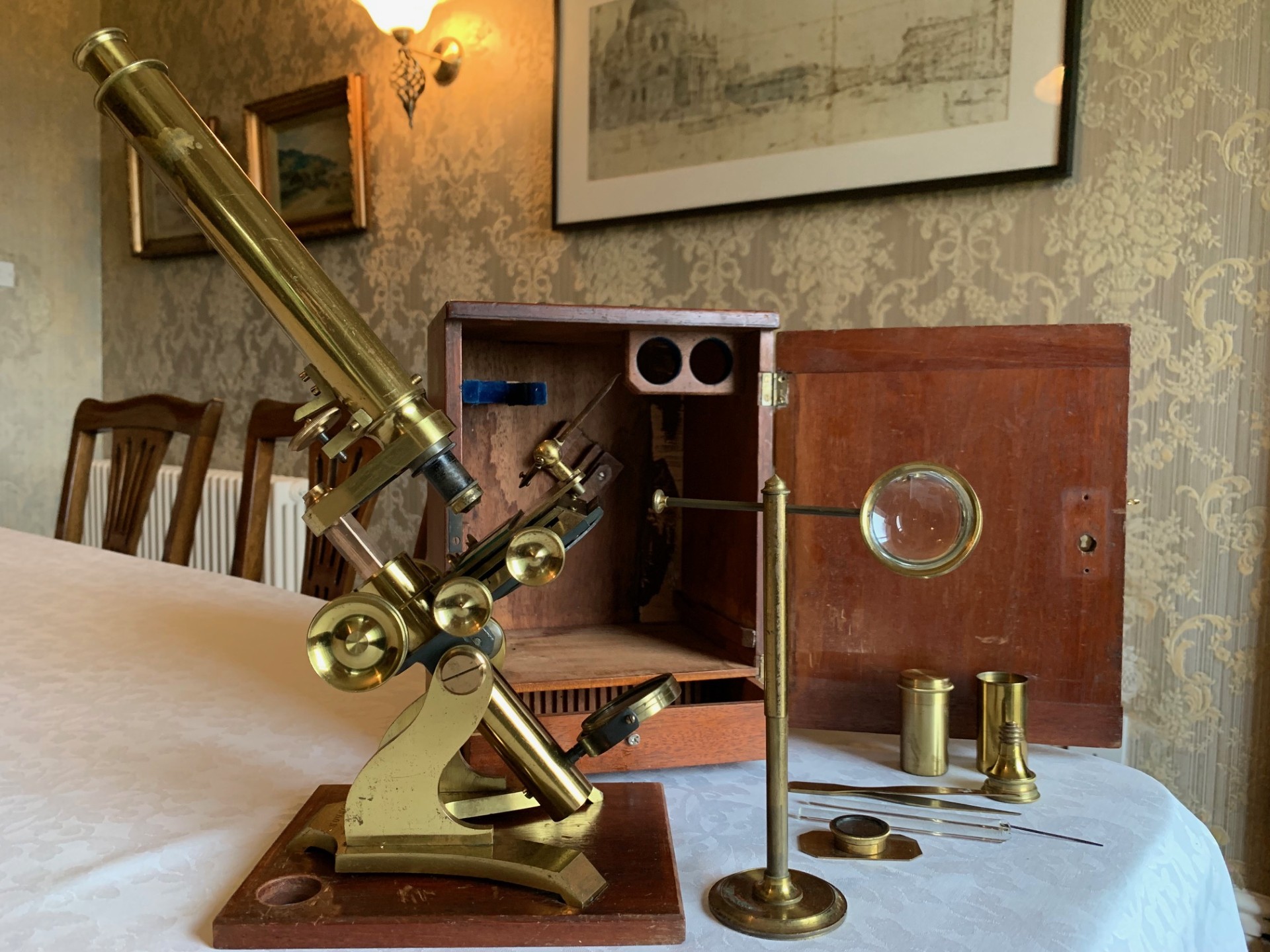
Accessories supplied:
– live box in brass
– stage forceps
– pair of brass tweezers
– wooden base plate
– slide prep tools – glass rods
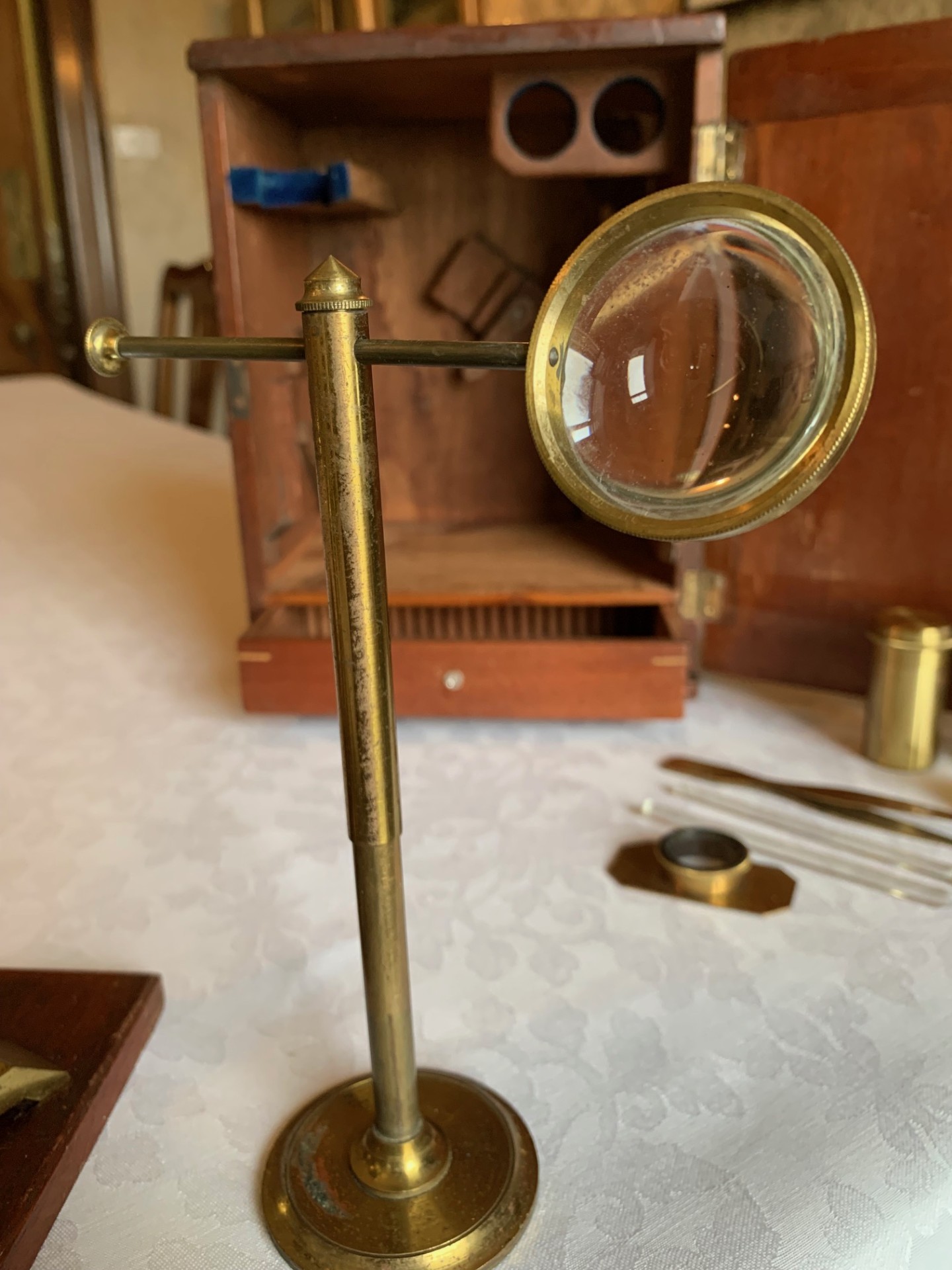
– bull’s-eye condenser with adjustable brass stand and base
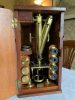
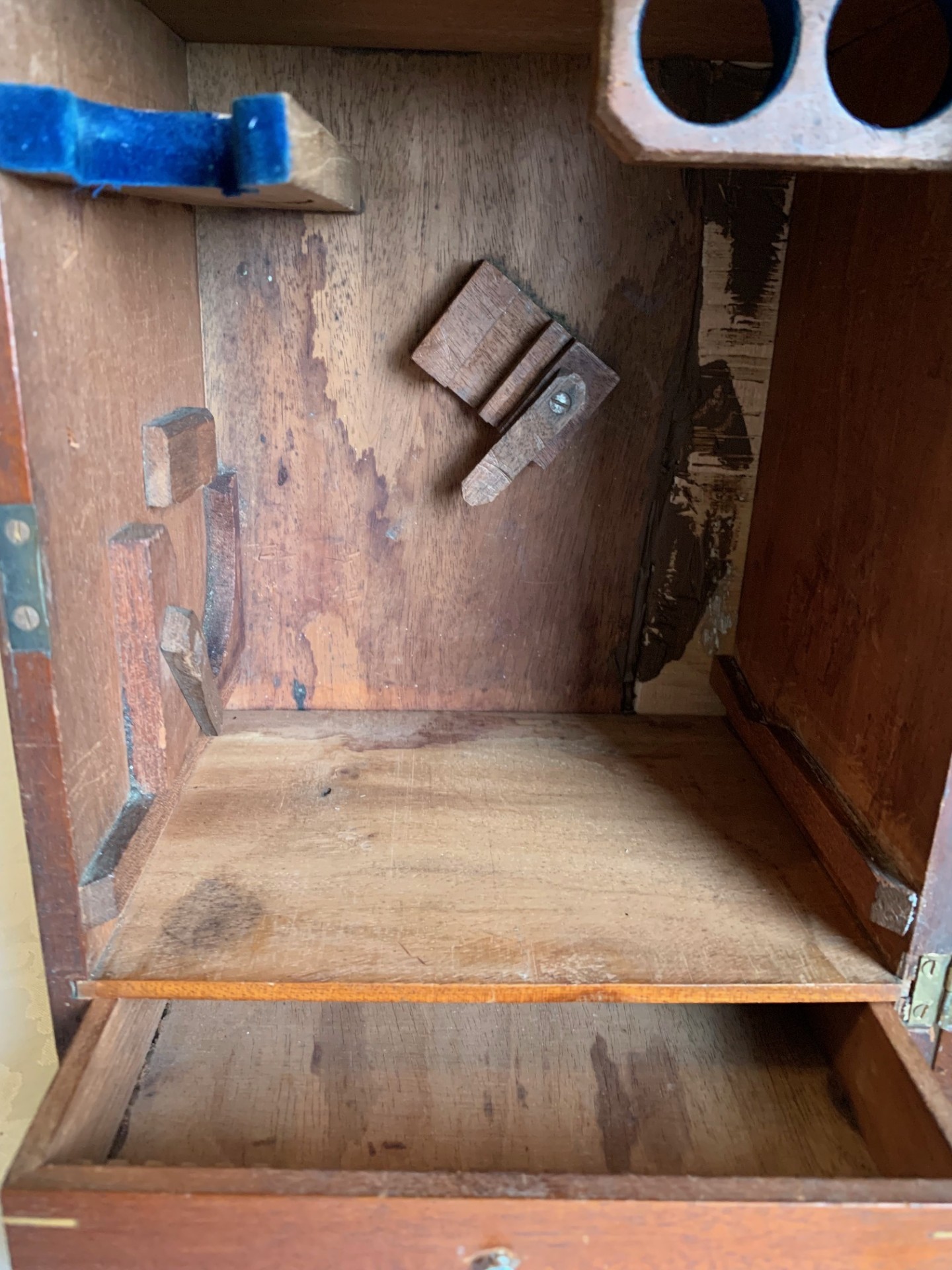
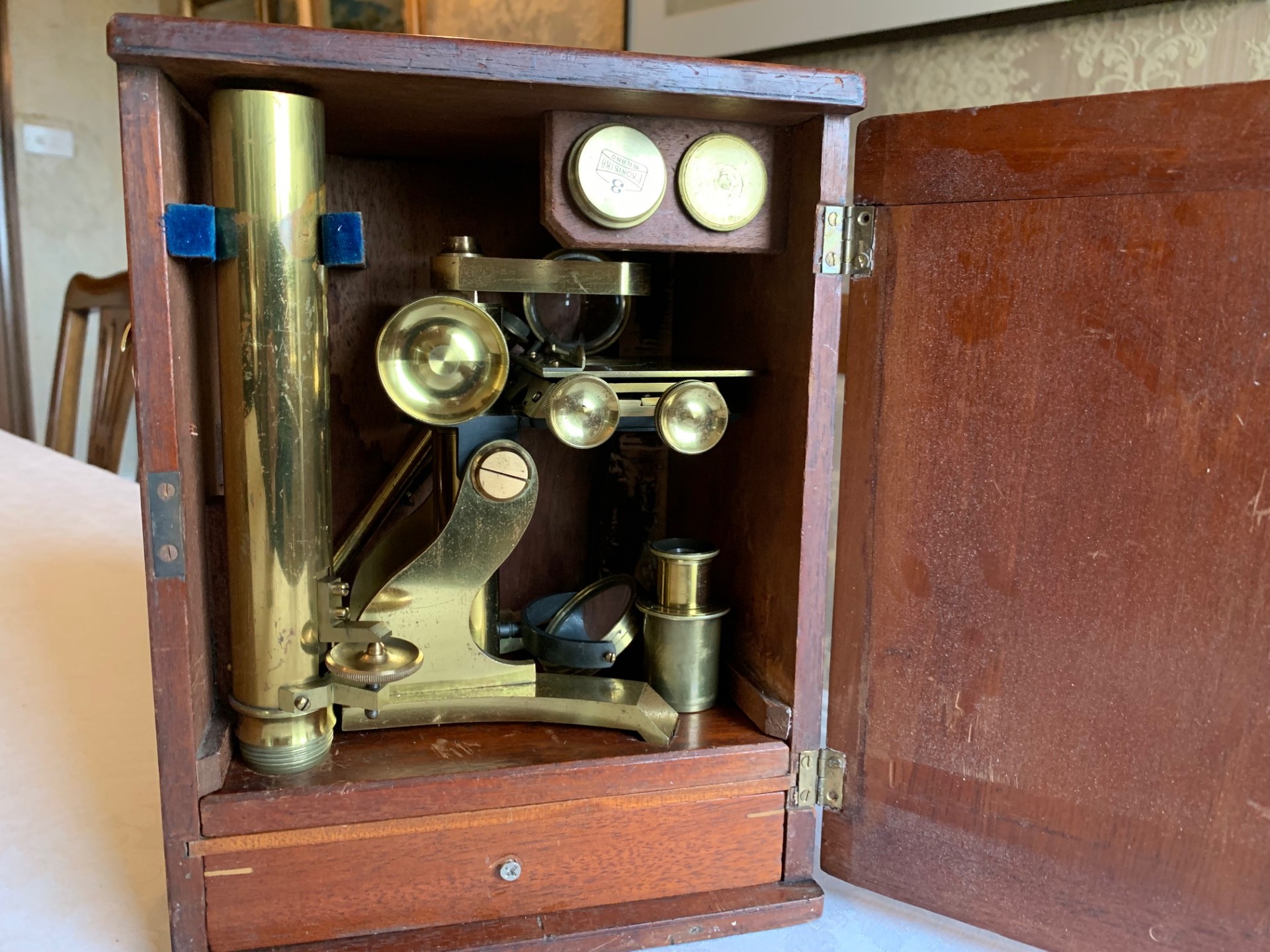
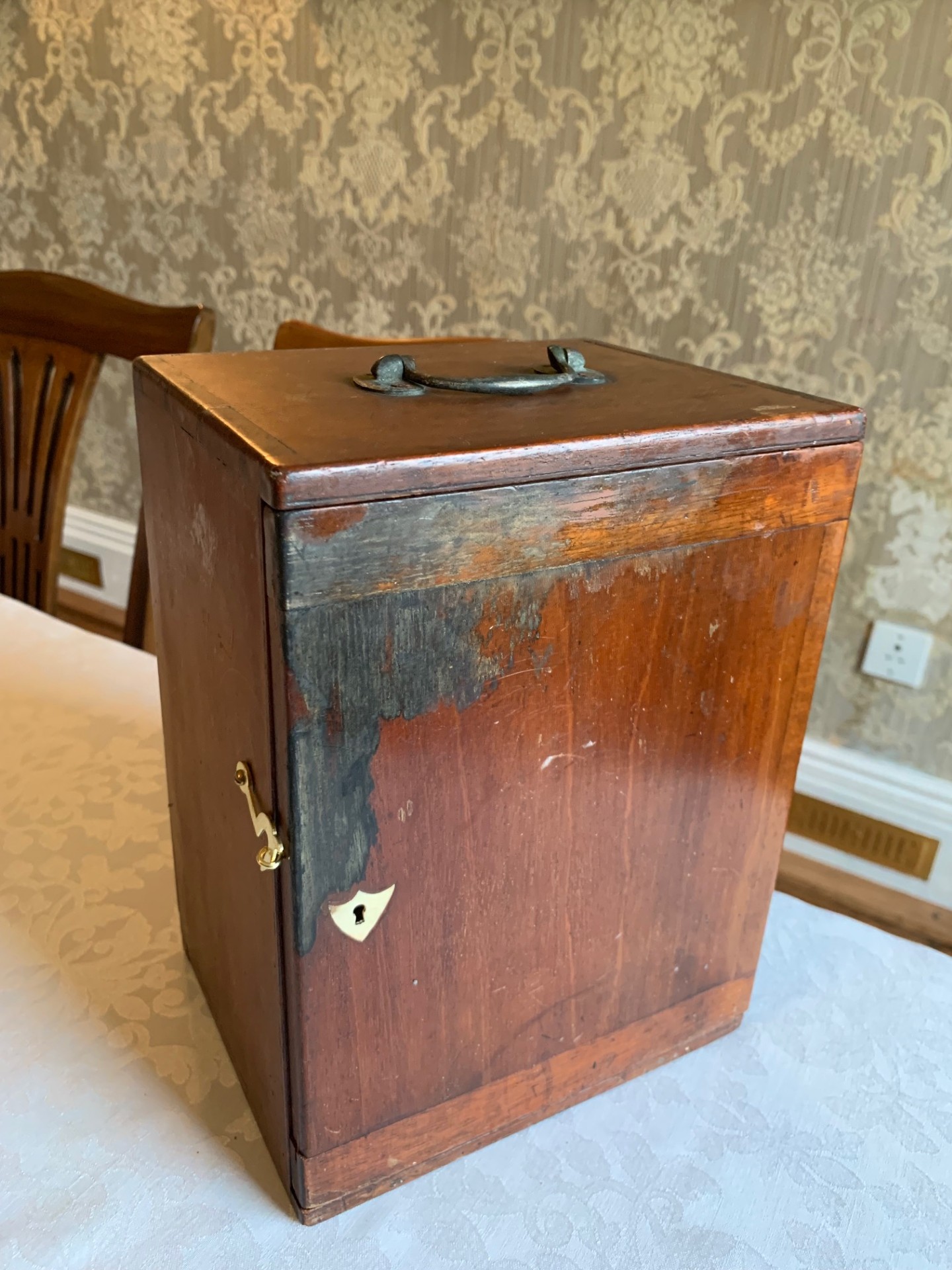
There’s an original fitted case probably in mahogany that’s showing some age and has a repaired area to the rear panel. It’s still in usable condition with appropriate external finish showing some water damage to the front surfaces, internal fittings, drawer for slides, brass carry-handle and a lock & key that are missing, so it’s got a cupboard latch to keep the door closed, which works well. In order to store the microscope away in its case, the optical tube has to be removed – it just unscrews, so is easy to remove and as shown it fits into a recess in the case.
The instrument has been very lightly lubricated with non-hardening grease where necessary, so that the controls operate smoothly. This example of a late Victorian Watson bar-limb microscope is very usable and essentially makes a superb technical display piece, especially in view of the excellent cosmetic condition. It could be displayed in a library or home office type of setting, especially when set up with an appropriate antique slide such as the Victorian Smith & Beck slide shown in some of the listing photos.
Owing to the weight and delicacy of this antique microscope and its case, it will be partially dismantled, carefully wrapped for shipping and dispatched by insured courier upon receipt of cleared funds.
Thanks for looking.
Ask the Dealer
Dealer information
 Arcboutant Scientific
Arcboutant Scientific based in Glasgow Scotland, with an interest in scientific collectables dating back to 1988. Now making available carefully curated fine examples, principally of antique microscopes and associated scientific equipment by quality English and Continental makers, to collectors world-wide.