Antique Microscope Model No.5 in Brass by Horne & Thornthwaite, London – c1860

Antique Microscope Model No.5 in Brass by Horne & Thornthwaite, London – c1860

£265

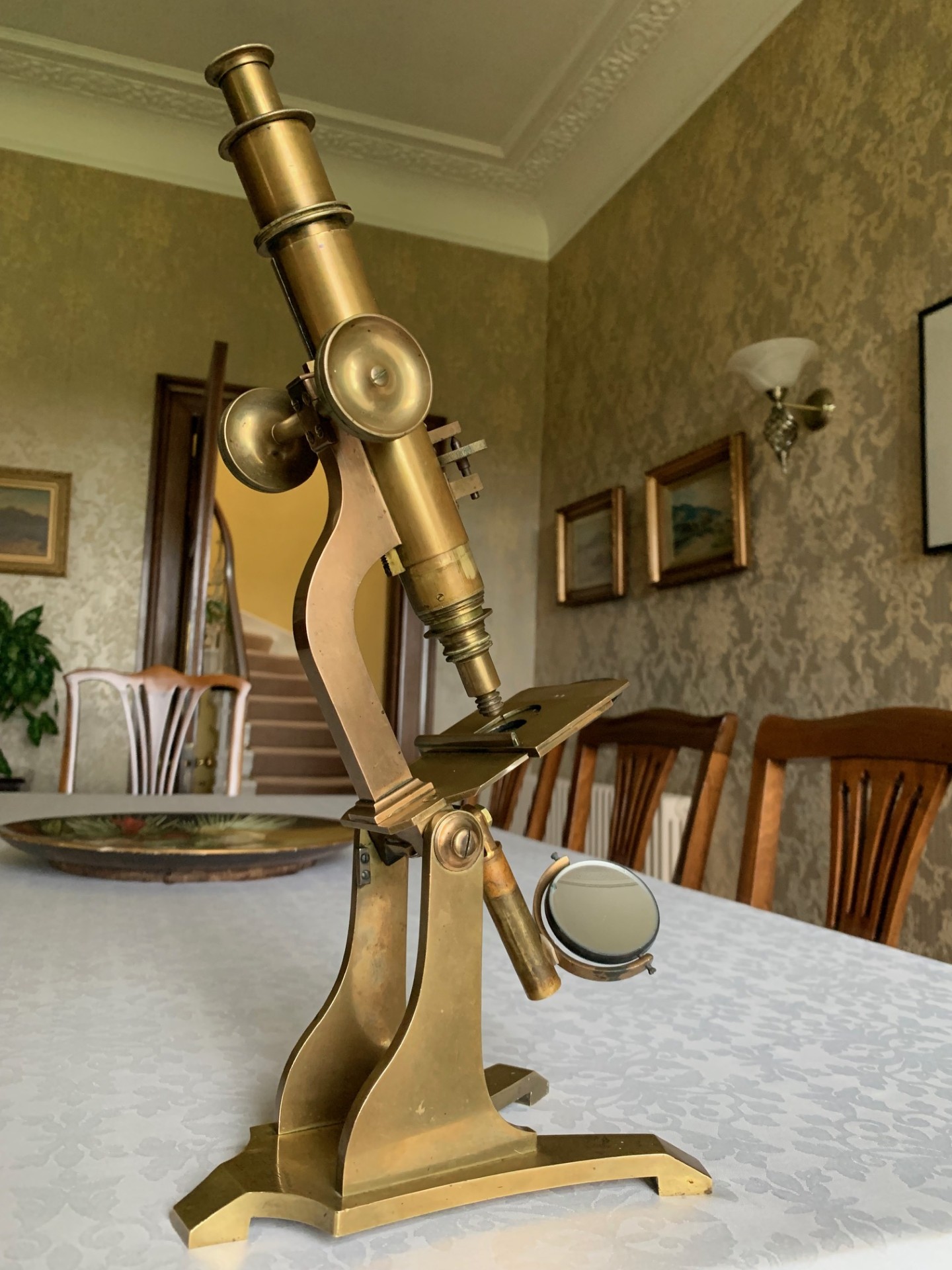
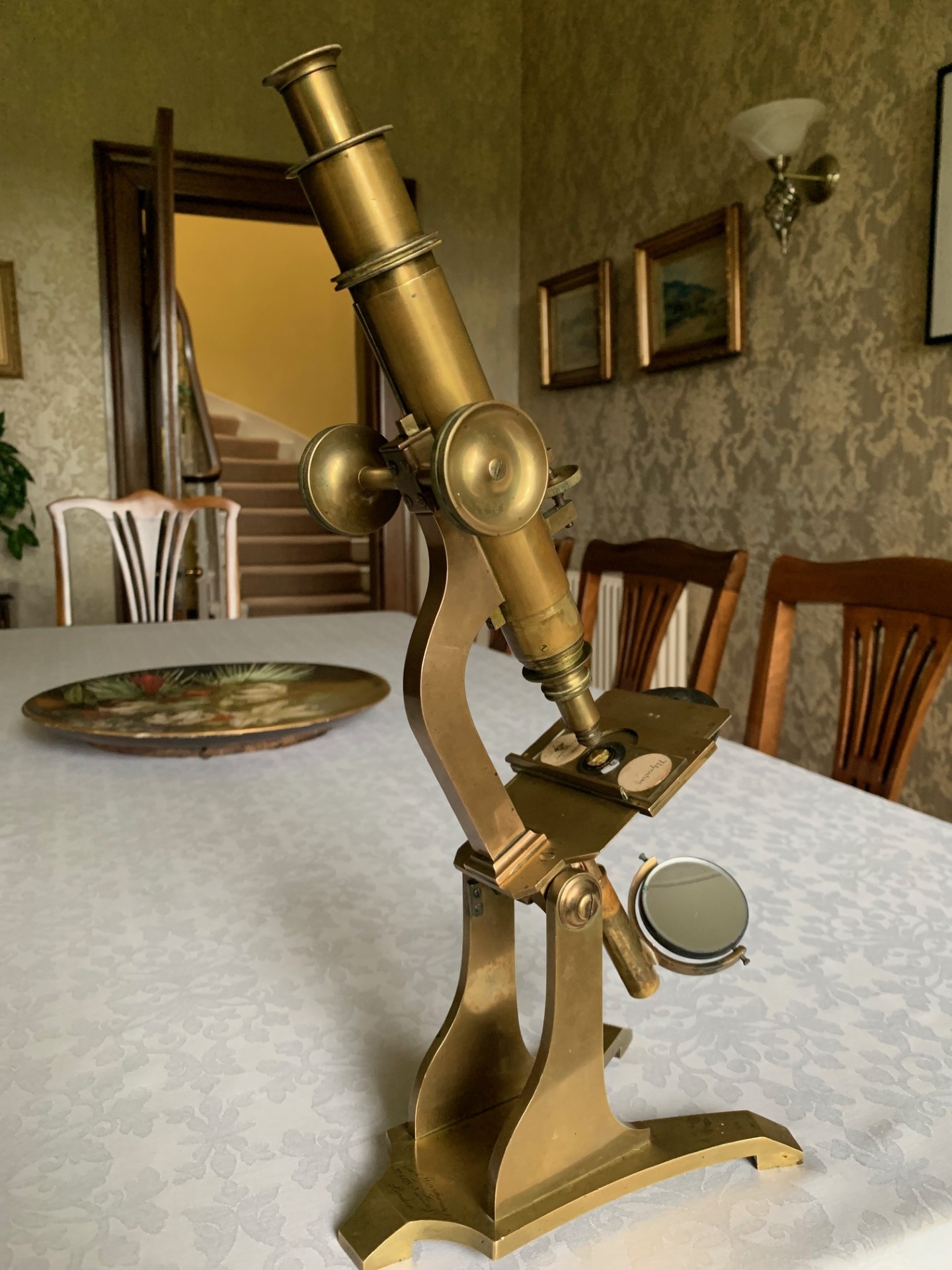
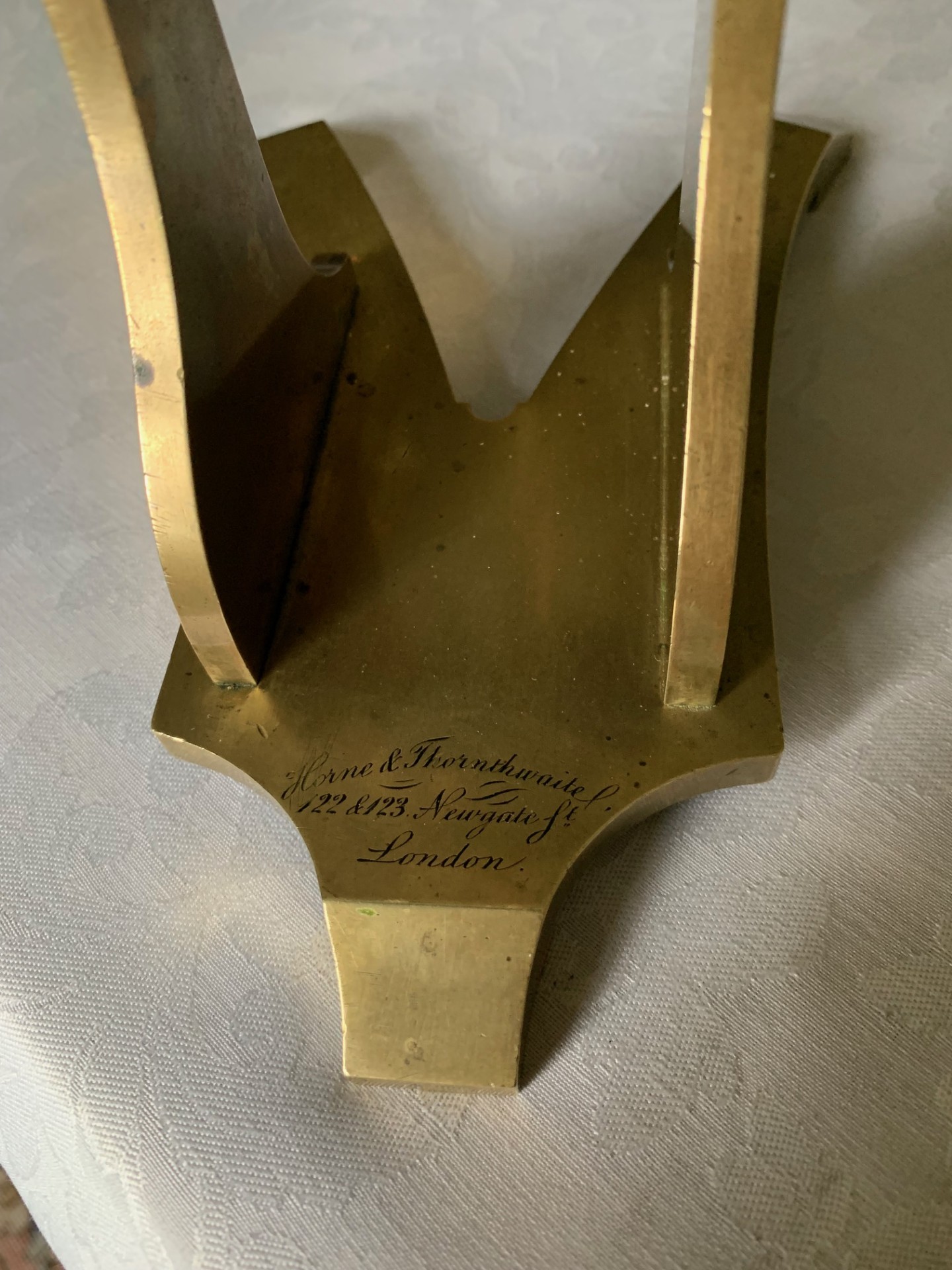
Antique monocular instrument marked Horne & Thornthwaite 122 & 123 Newgate St, London - circa 1860. Imposing antique instrument with non-RMS thread, usable and also suited to being a display piece.

Circa

1860

Maker

Horne & Thornthwaite, London

Country of manufacture

UK and Ireland

Categories: Scientific, Microscopy

Description

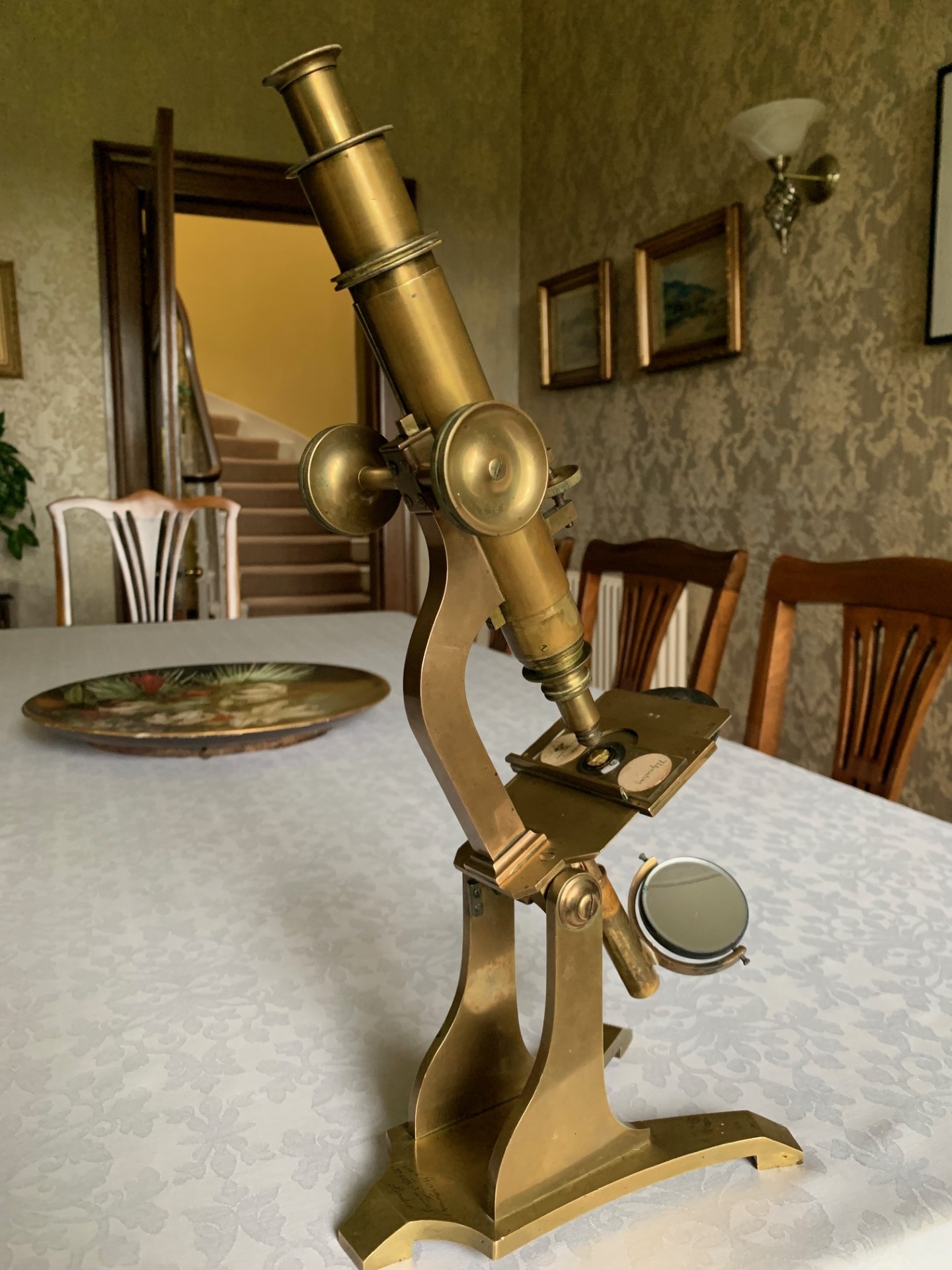
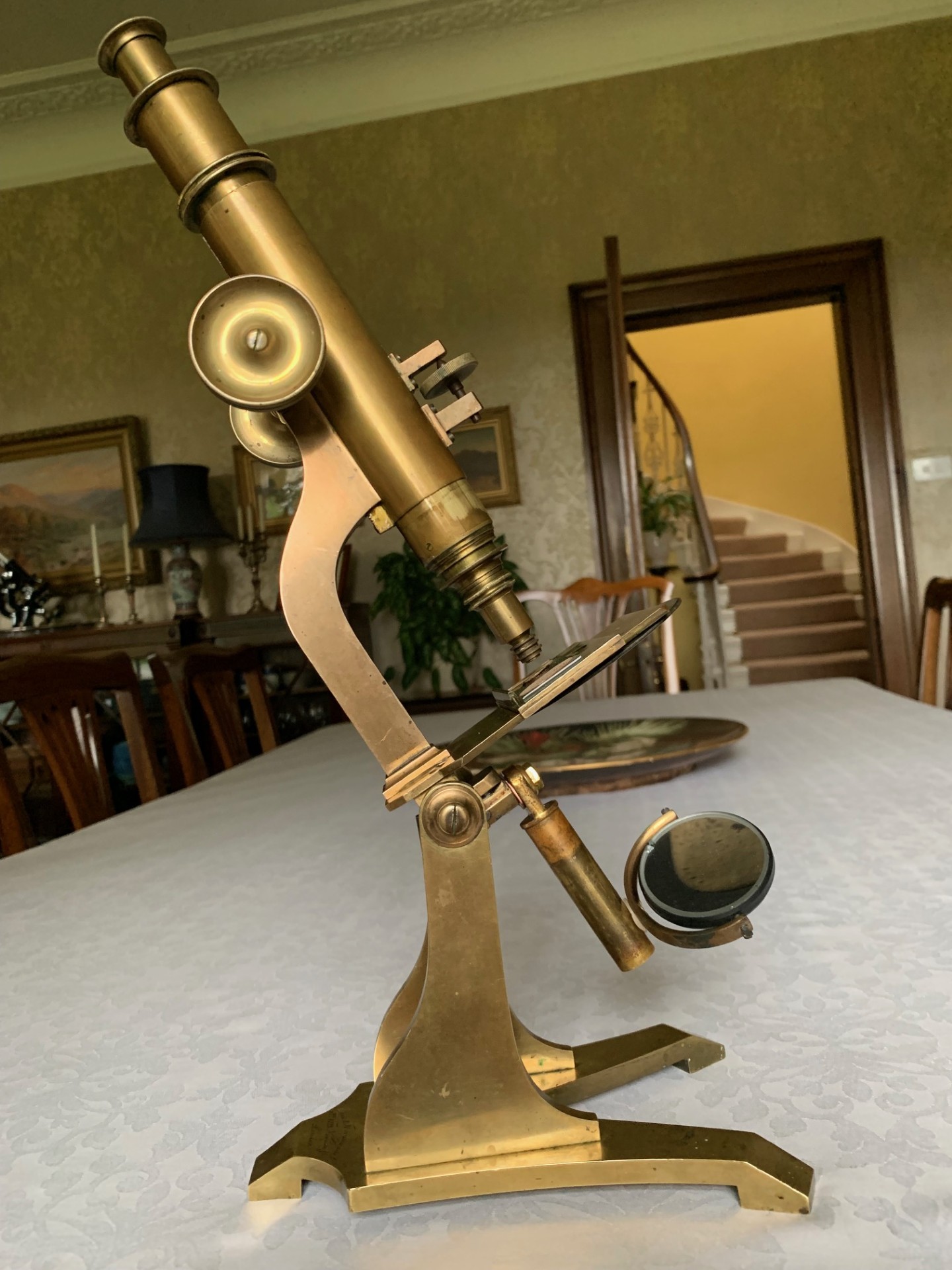
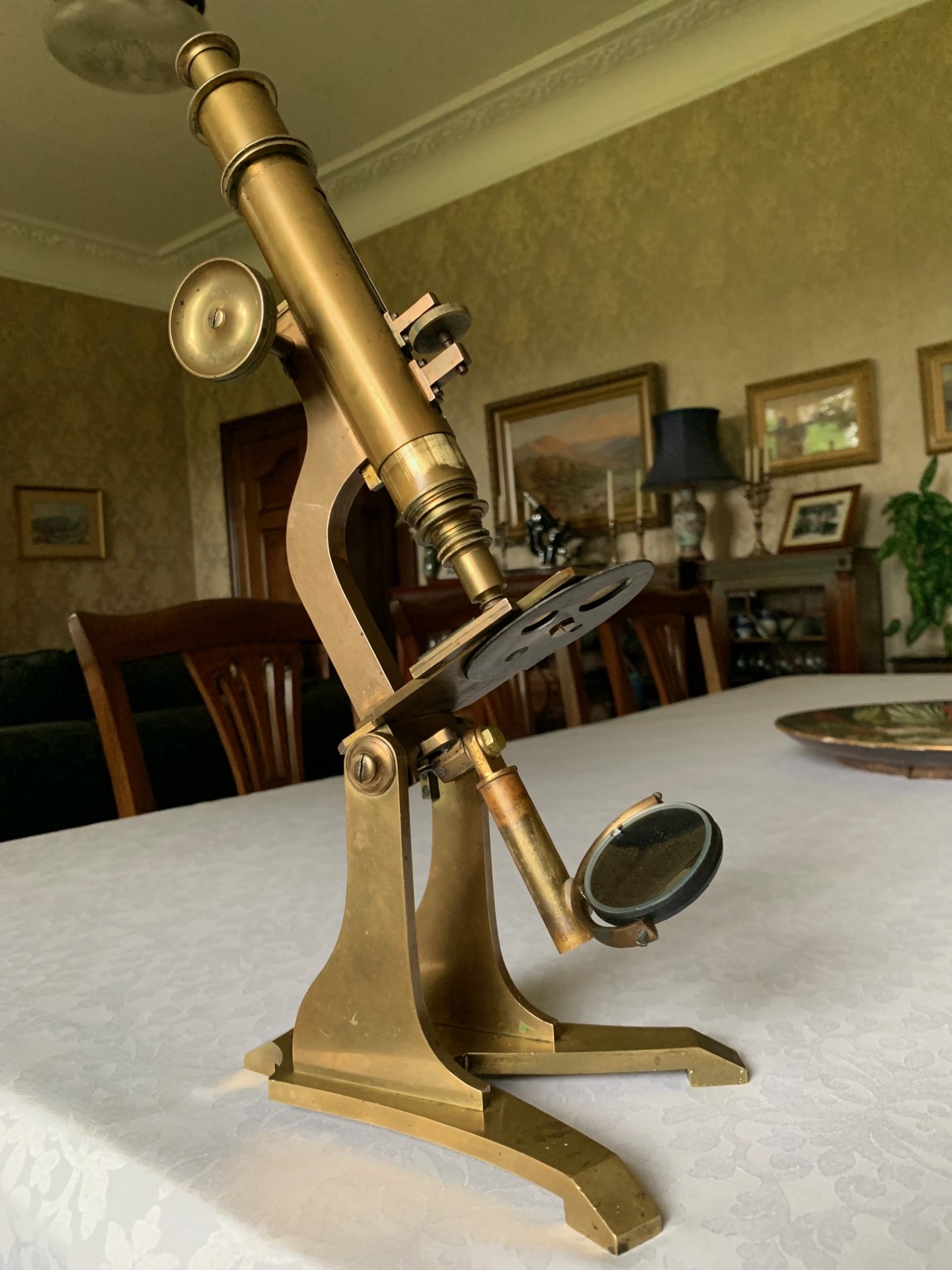
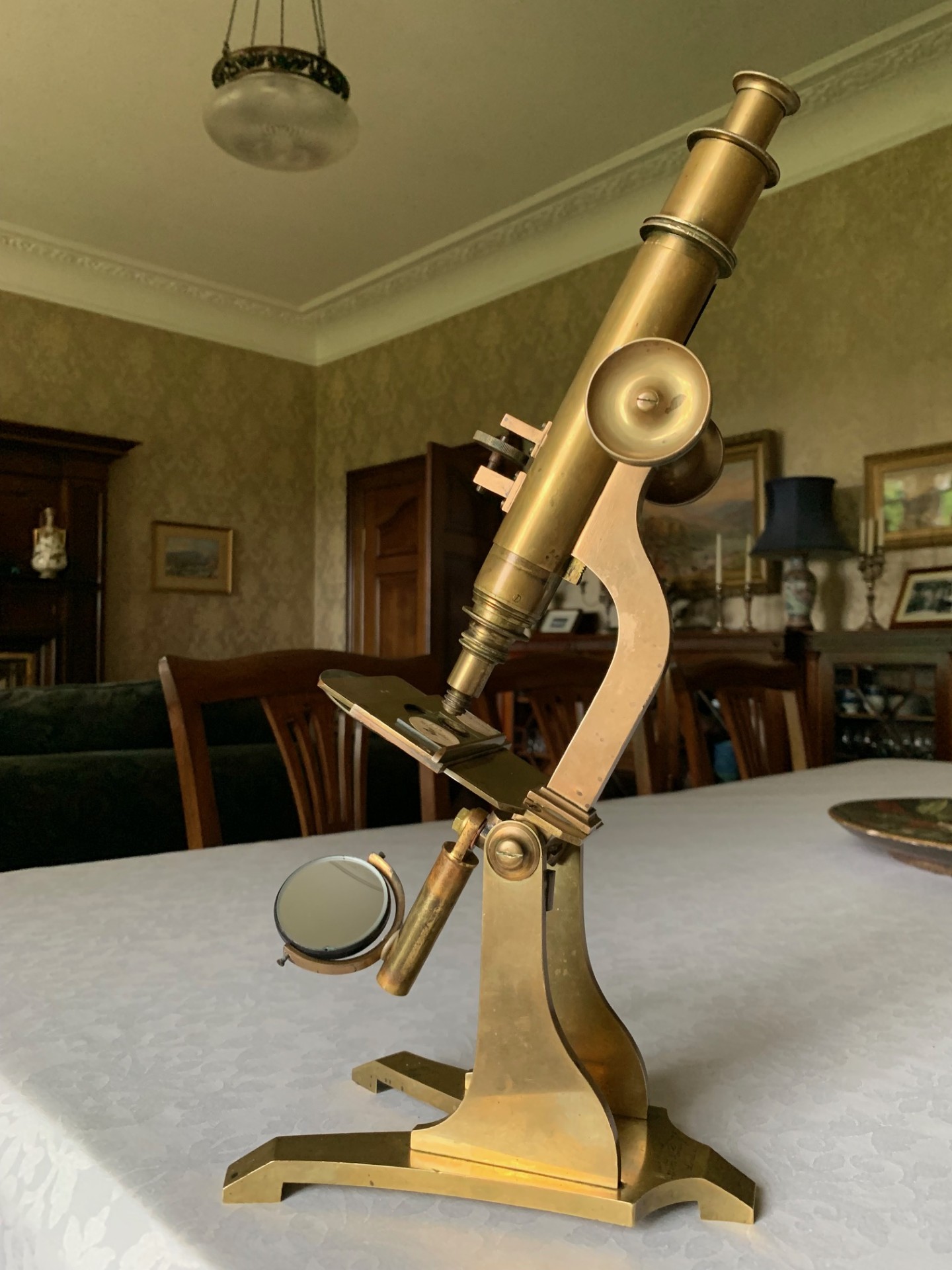
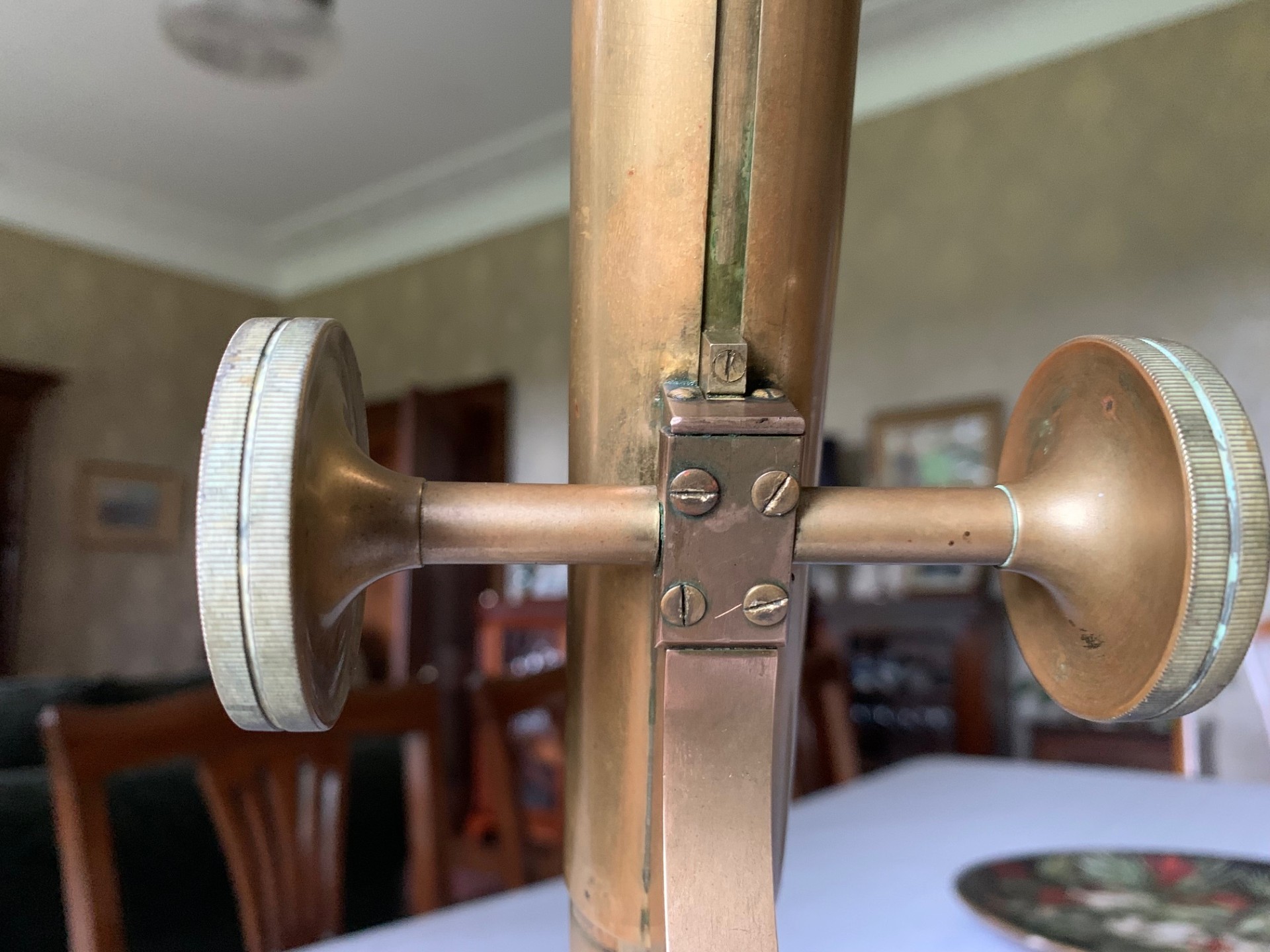
Offered for sale is a quite rare and monocular instrument by English makers Horne & Thornthwaite of London.  It’s quite a large instrument in brass with some surface patination and it’s no doubt seen polish applied by fastidious former custodians, explaining its partially oxidised patina.  There’s some interesting technical features along with other standard build elements as one would expect from this period of microscope manufracture – non-RMS, straight-cut rack & pinion and older-style fine focus being a few of teh more obvious ones.  
 
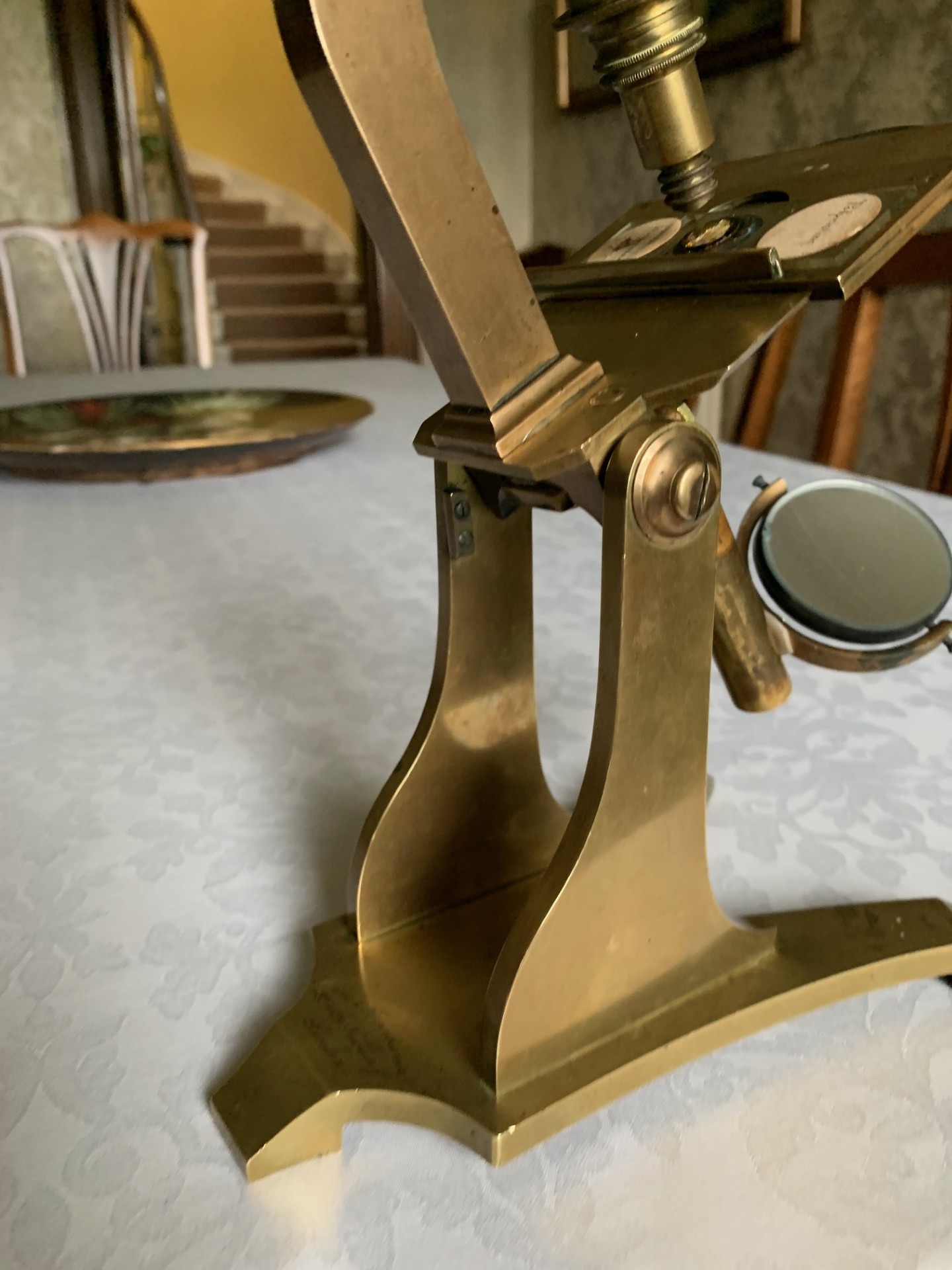
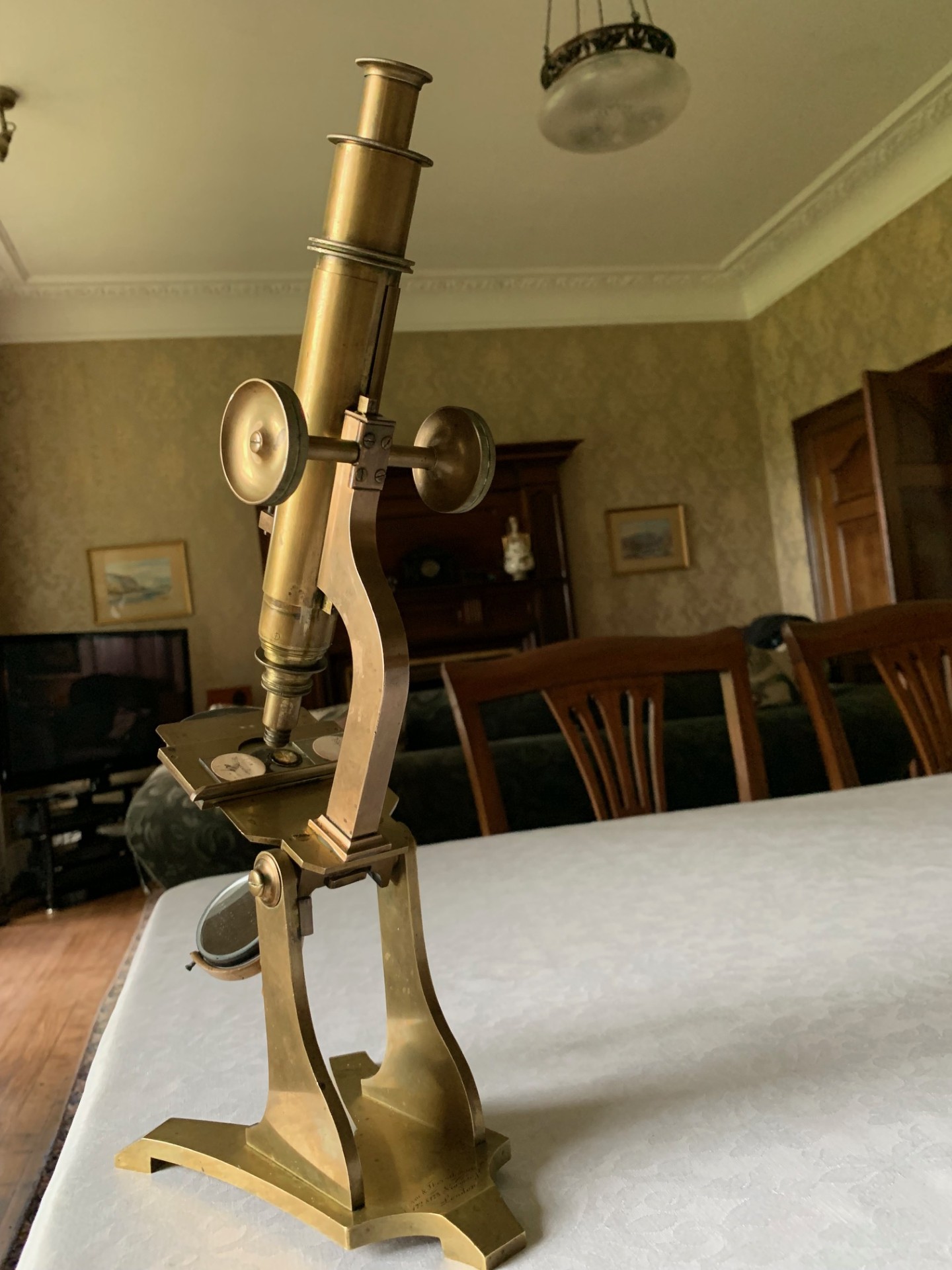
Overall though, quite an imposing and no doubt collectable example of a good size antique monocular brass microscope by a quality London maker – it’s the only one of these I’ve ever seen.   The instrument isn’t numbered and bears the details of its makers and their then London address at 122 & 123 Newgate Street which allows us to date the instrument fairly precisely.  


Background to Horne & Thorntwaite – source Microscope Museum:
 
Horne   Thornthwaite & Wood, Horne & Thornthwaite, and E.G. Wood were a series of London businesses that manufactured and retailed microscopes, cameras, telescopes and other instruments from 1844 until 1911. The firm were were experts in producing optical and scientific equipment and chemical supplies for photography and other occupations. Wood later separated from the partnership for some years.
 
Businesses associated with Horne, Thornthwaite & Wood operated under several names and in different locations over a period of nearly 70 years with quite a complex series of changes in line-up and location as noted below:

Horne, Thornthwaite & Wood (1844 – 1854), opened at 123 Newgate in 1844, occupying also 121 Newgate in 1850 and 122 Newgate in 1856.

Horne & Thornthwaite (1854 – 1885), after Wood left the firm in 1854, and moved from Newgate Street to 3 Holborn Viaduct at the beginning of 1874 for a short period of time, and then to 416 Strand.  The instrument in the listing traces back to this particular period.
 
Horne, Thornthwaite & Wood (1885 – 1893), after wood re-joined the partnership.
 
Horne & Thornthwaite (1893 – 1911), after acquisition by Ackland and the Overstall brothers in 1893. Wood traded independently from the partnership as E.G. Wood between 1854 and 1895. William Ackland became associated with Horne and Thornthwaite during the mid-1850s. Ackland was trained as a physician and became a skilled optometrist and mechanical engineer.  Ackland’s association with Horne and Thornthwaite came just before the death of Fallon Horne in 1858 (the name Horne and Thornthwaite was retained, without acknowledging Ackland as an owner).
 
 
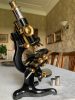
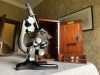
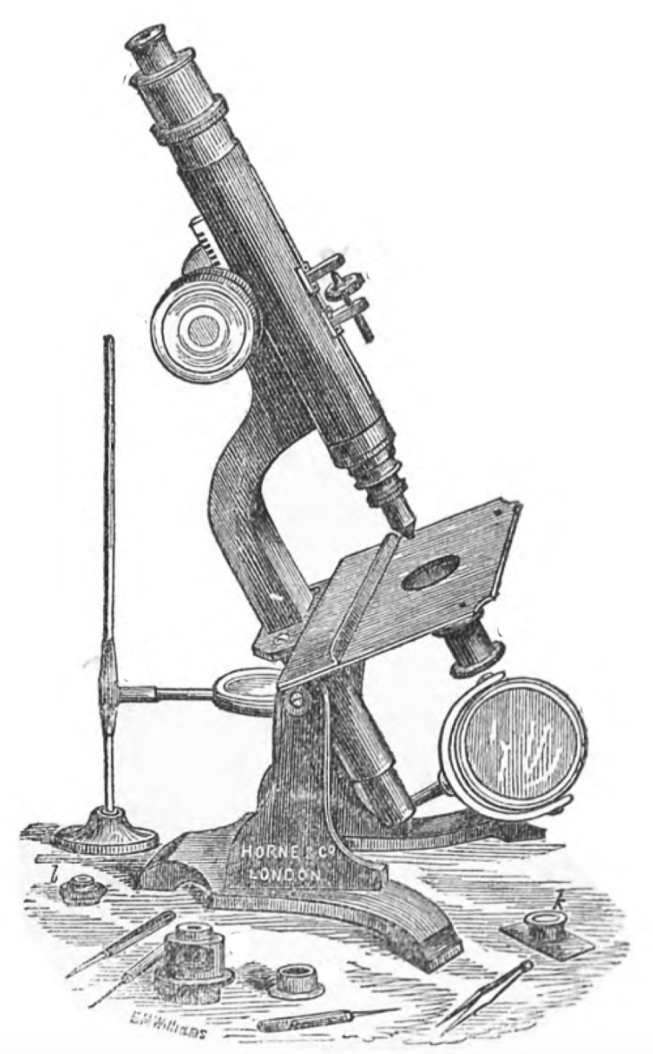
This example by Horne & Thornthwaite dates to around 1860 and is a well-engineered instrument and I’ve copied a photo of a similar instrument by the firm in the listing photos dating to 1857 for comparison. 
 
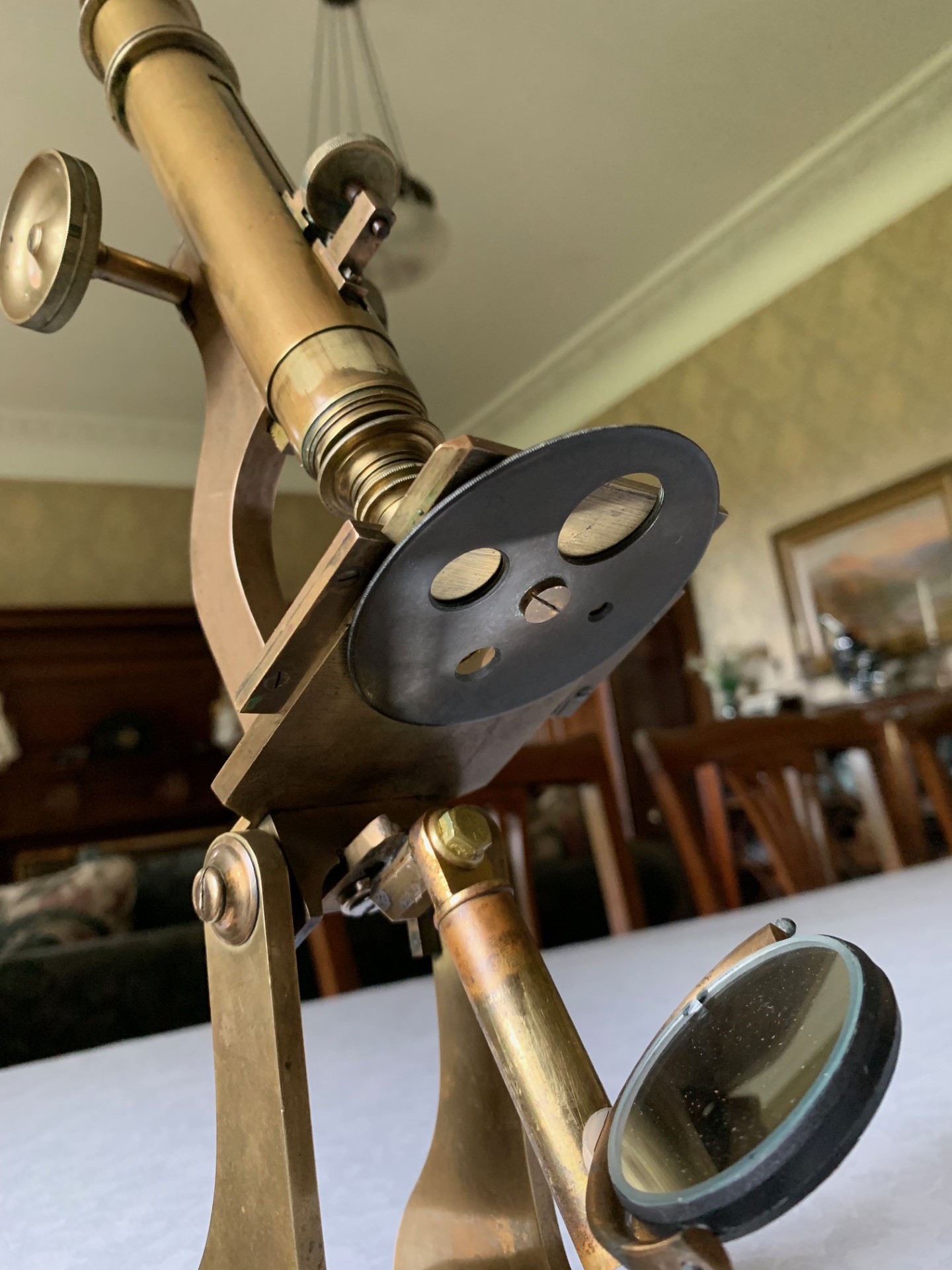
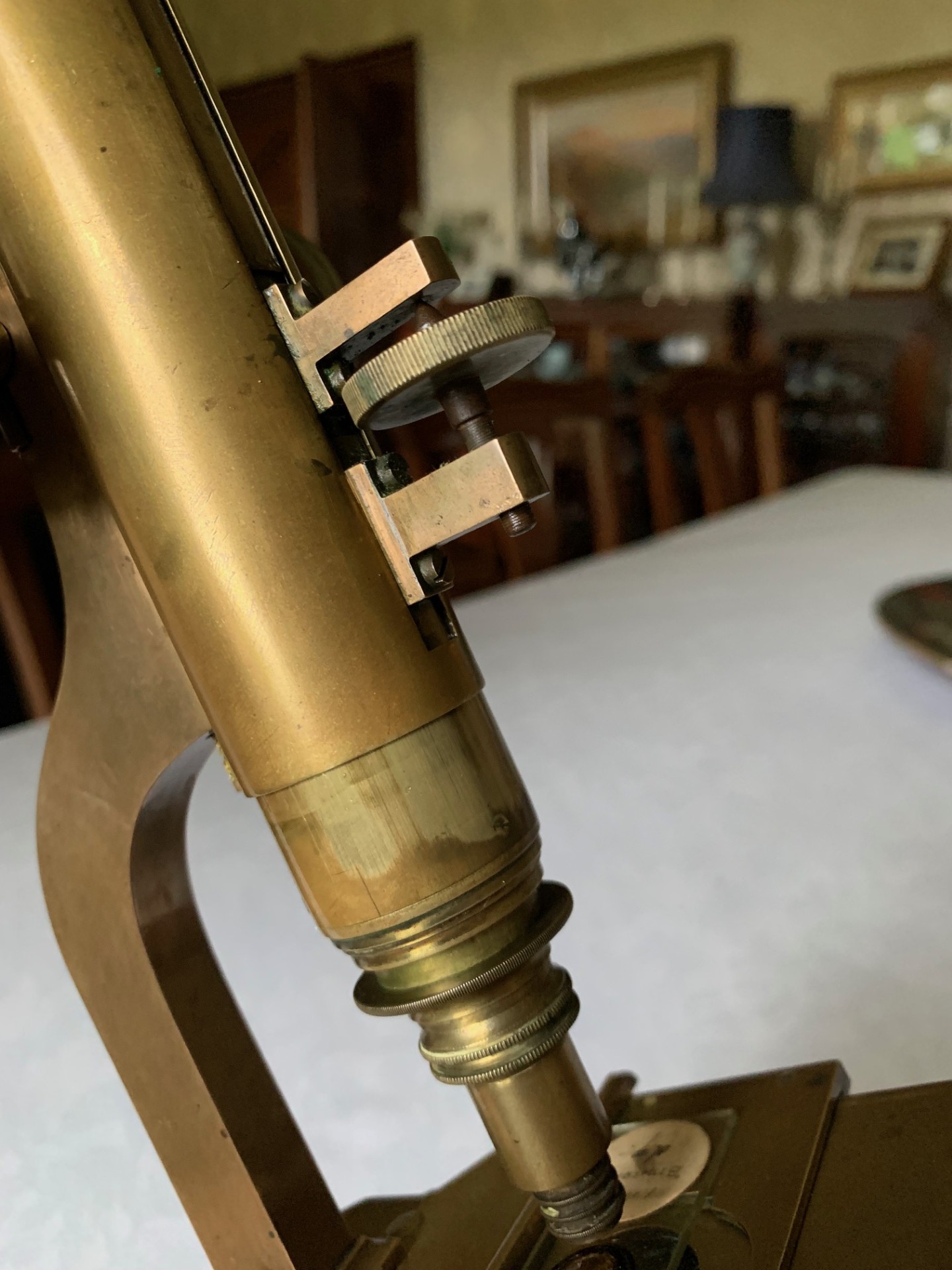
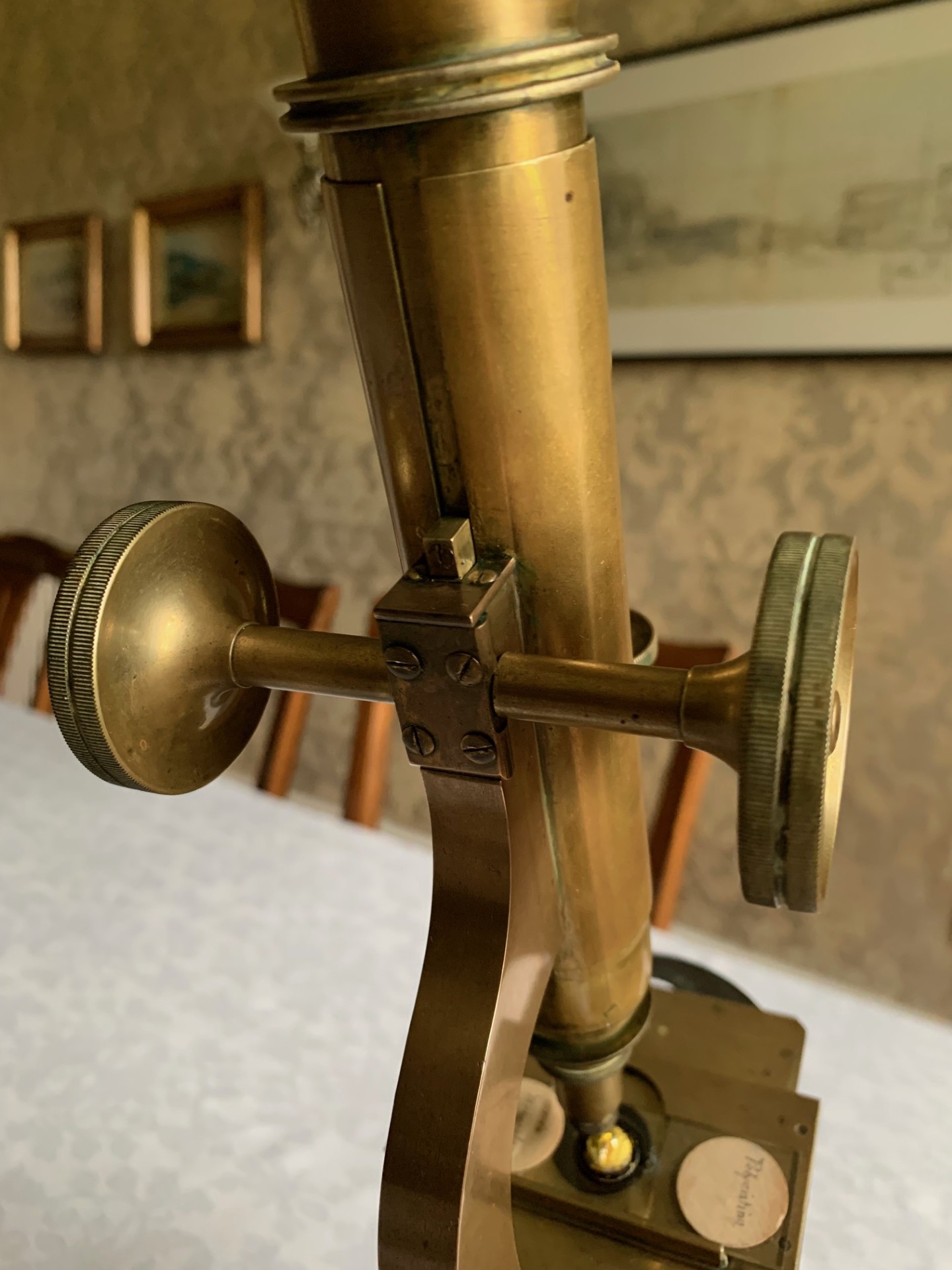
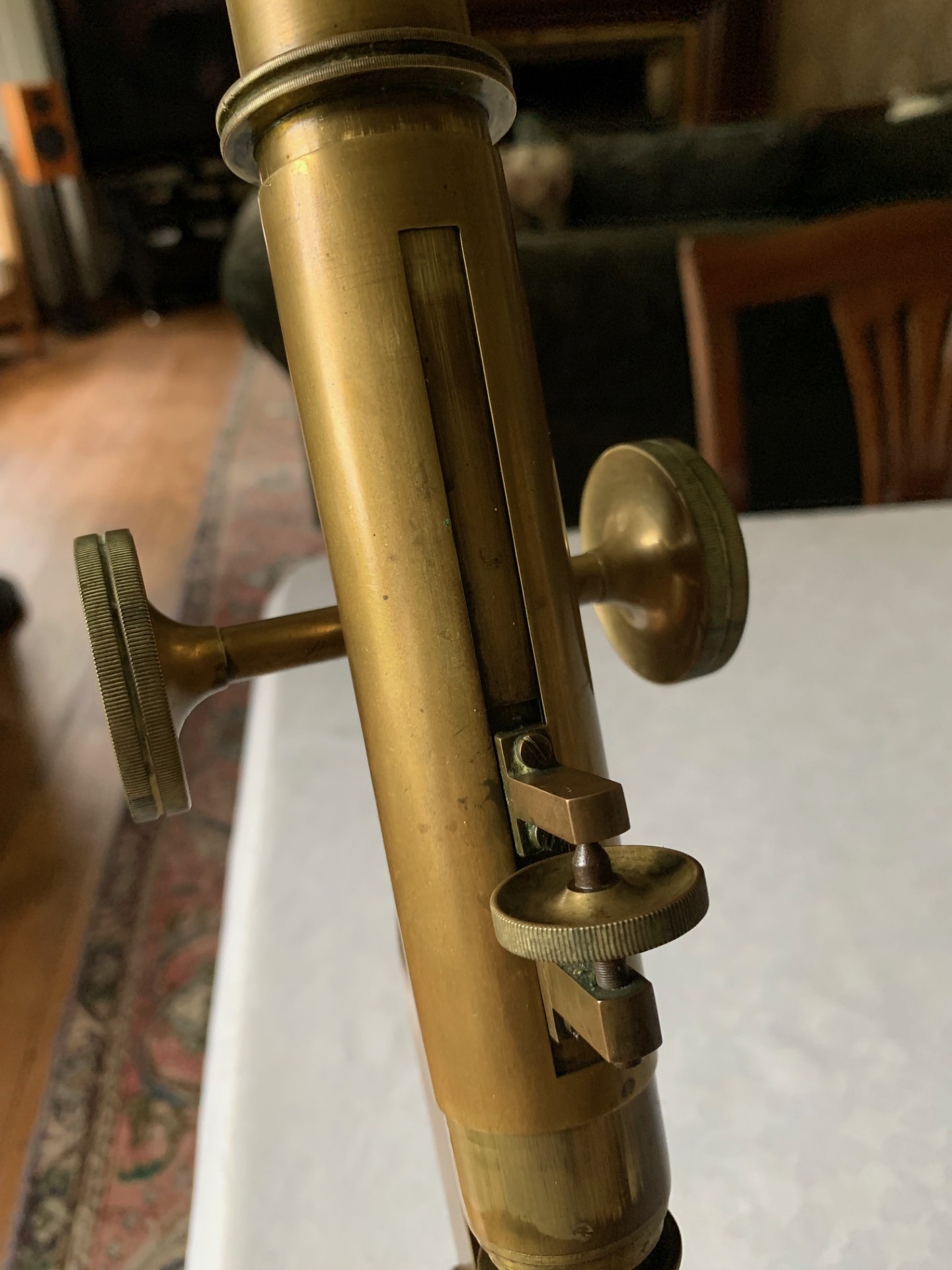
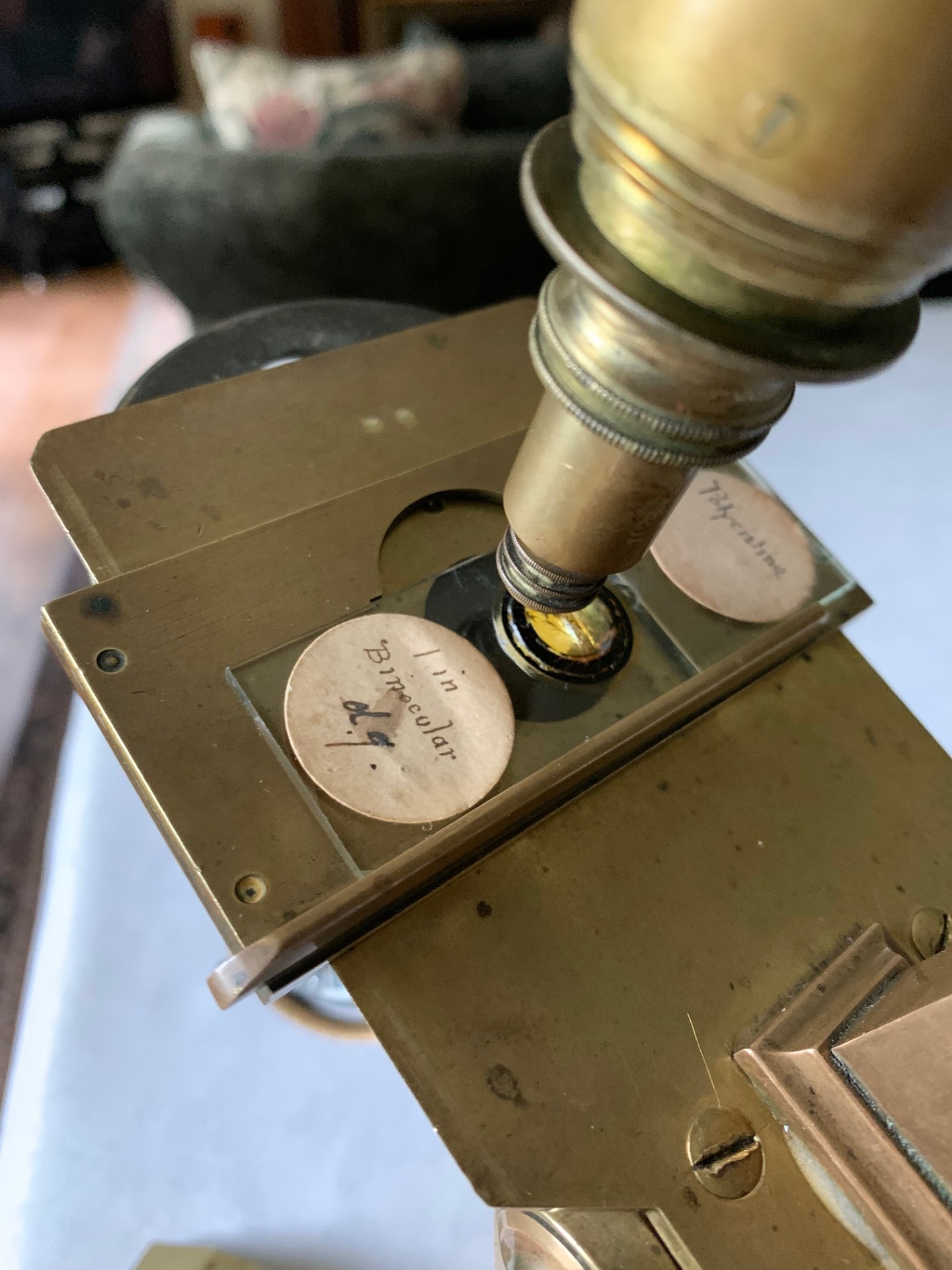
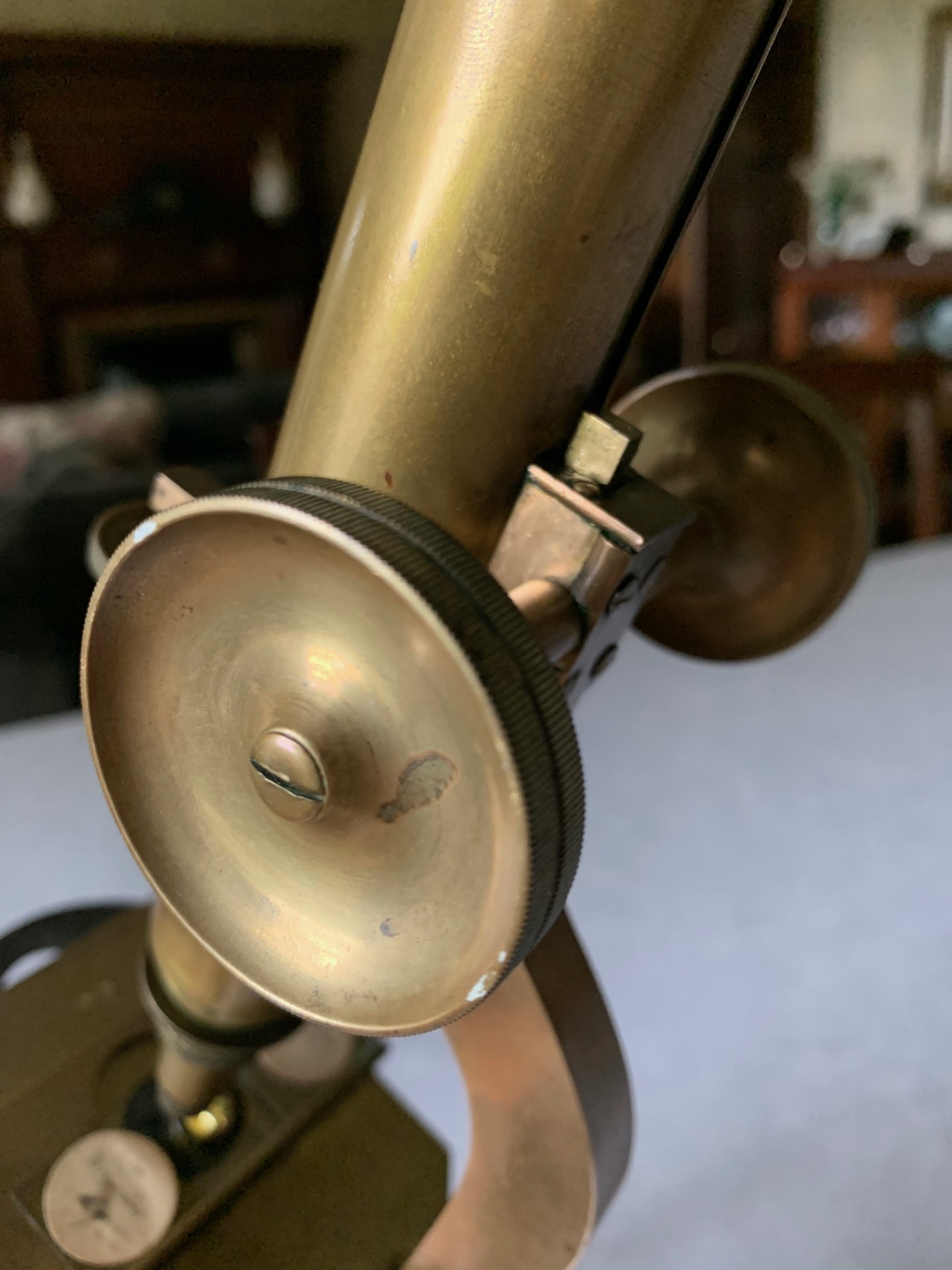
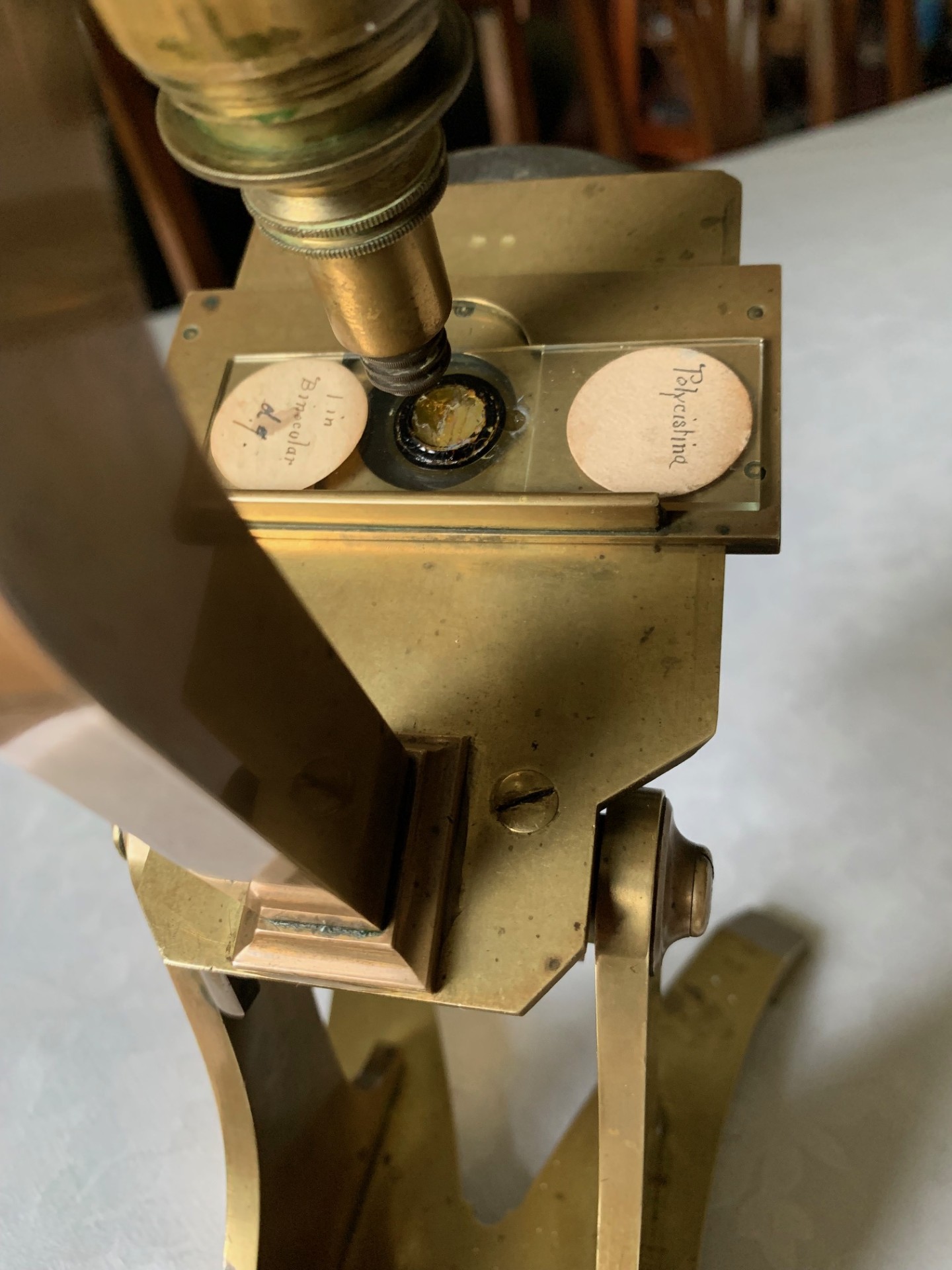
In terms of the technical details, the instrument stands on a brass Y-shaped foot with twin uprights leading to the main pivot joint with tension adjustment available as required.  There’s an upper limb with a Jackson/Lister pattern.  Coarse focus is conventional rack & pinion with straight-cut components as would be expected for the period. There’s a good range of coarse focus travel and the optical tube sits inside an outer friction tube.  There’s no eyepiece draw-tube as far as I can see.  Fine focus is of the older type positioned to the front of the optical tube, acting on the nose-piece only also with smooth action – both coarse and fine focus are freshly lubricated.  The instrument tilts for inclined viewing and holds in position throughout the usable range of inclination.  

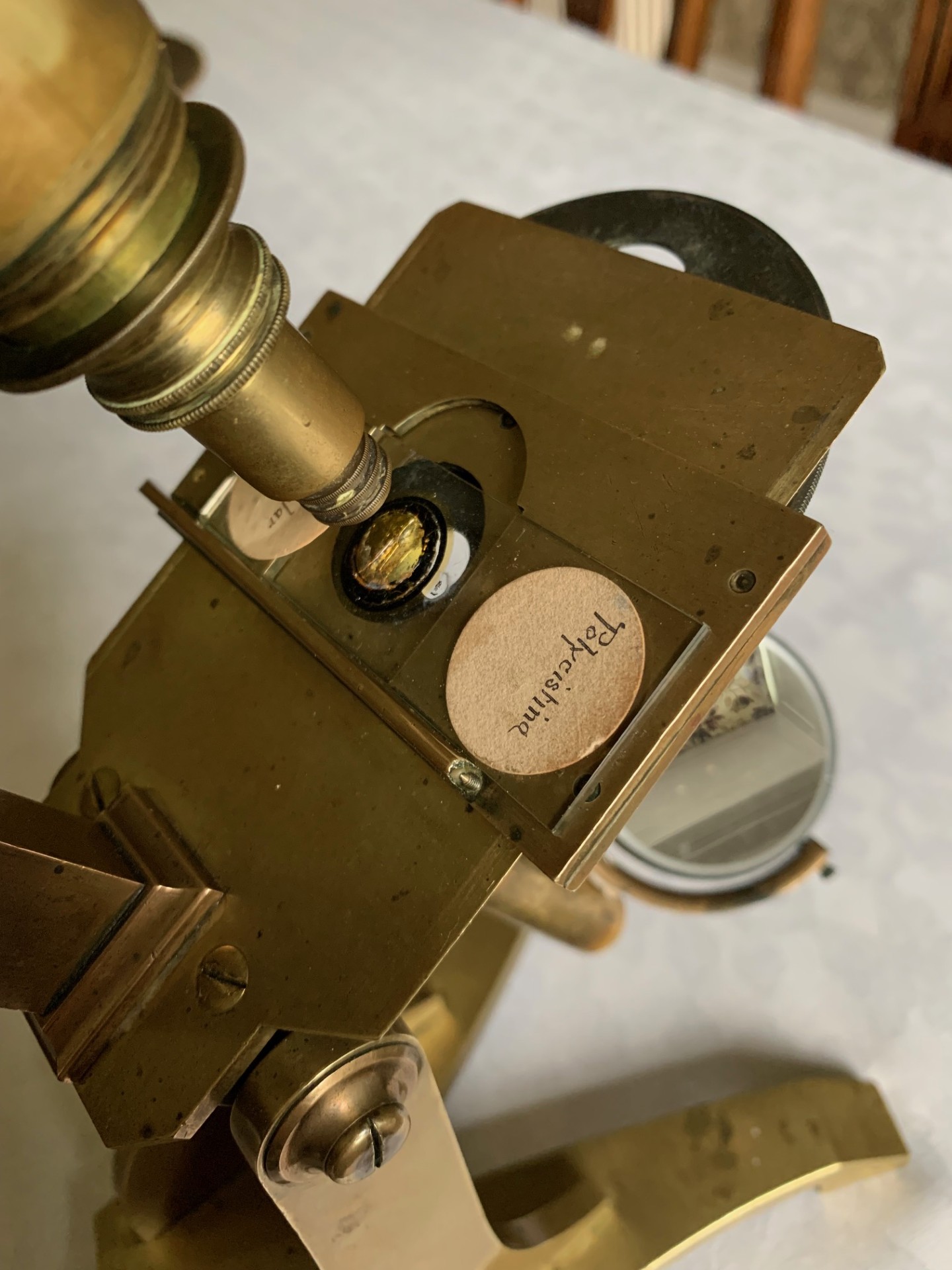
There’s one original top-hat style eyepiece of 6x magnification and one non-RMS – 6x magnification objective lens which is unmarked but will be around 1/2 inch, so approx. 15X magnification giving 90x magnification as currently configured.

There’s a brass stage with slider and ledge for holding slides which works well and we have a 4-posiiton wheel of stops with smooth rotation, operated from the front of the stage.

Lighting is via a plano-concave mirror in a brass carrier on a brass support rod and gimbal, with mirror silvering to both sides.  The mirror and possibly some of the mounting hardware appear to be later replacements, which is not unusual owing to degradation of mirror silvering over time.

There’s currently no case for the instrument.

The instrument and its controls have been very gently dusted, lightly lubricated as required with non-hardening lubricant and now operate fairly smoothly, with few age-appropriate signs of wear and condition points as described.  With its imposing profile it’ll make a great display piece in the right setting and is also a usable instrument as currently configured for low/medium magnification applications.  It’s forte though is probably as a display curio in the right setting as set up with a suitable antique slide. 

Owing to the weight and delicacy of this antique microscope, it will be carefully wrapped for shipping and dispatched by insured courier upon receipt of cleared funds.  

Thanks for looking and just message seller if any additional photos or details of condition are required.


Ask the Dealer

Item enquiry

To enquire about this item, complete the form bellow to send a message to the Dealer

Enter Email
Confirm Email
reCAPTCHA
Sending

Dealer information

GB Arcboutant Scientific

Arcboutant Scientific based in Glasgow Scotland, with an interest in scientific collectables dating back to 1988. Now making available carefully curated fine examples, principally of antique microscopes and associated scientific equipment by quality English and Continental makers, to collectors world-wide.

Shipping information
Payment methods
Terms & conditions