
Antique W. Watson & Sons Ltd – Edinburgh-H Brass Microscope – circa 1918, Cased
£465
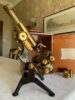
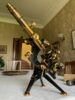
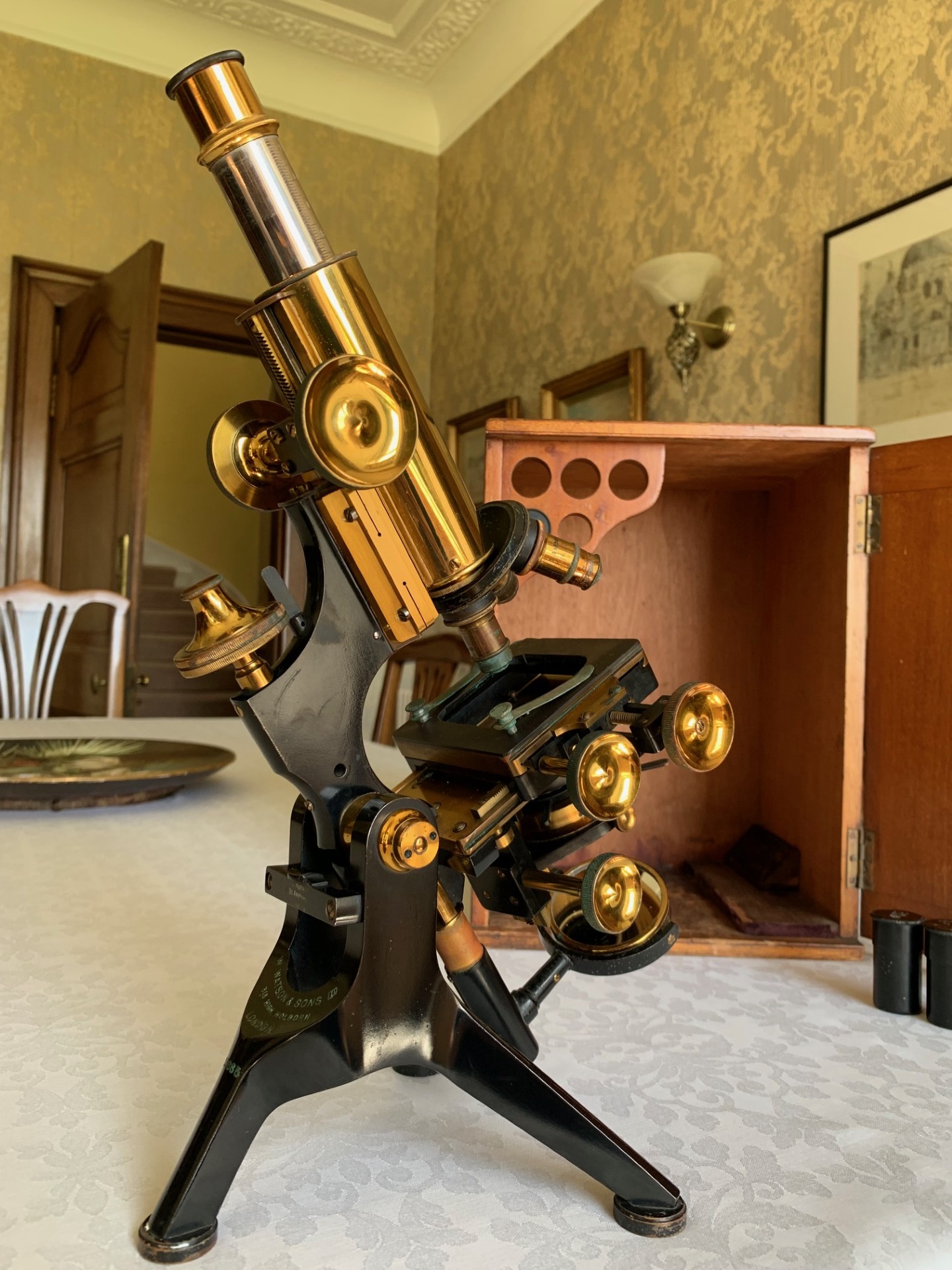
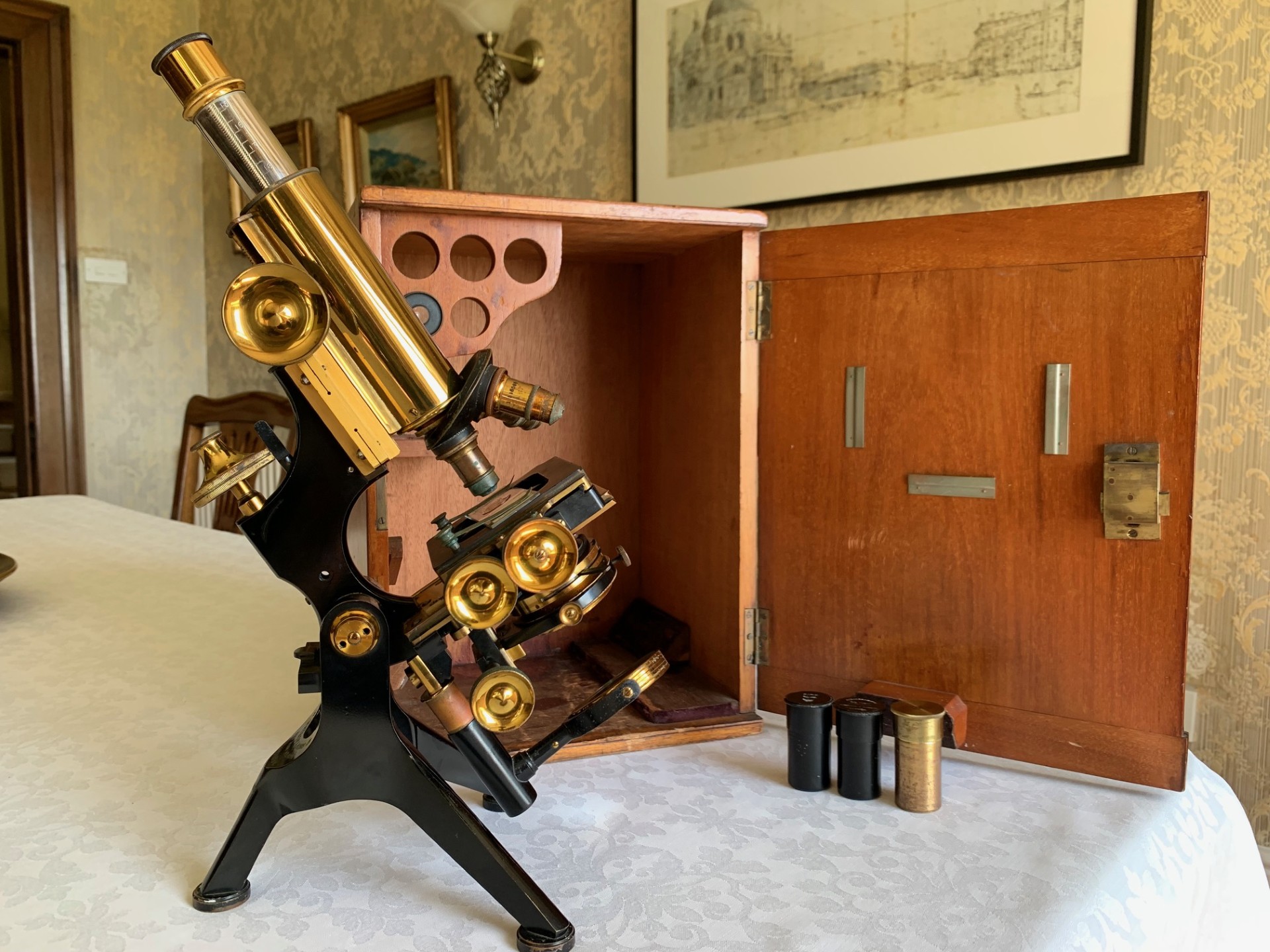
Generally very good working and cosmetic condition example of Watson's popular Edinburgh-H model. The instrument dates to around 1918, so just at the end of WWI. This cased example is a good candidate for a Watson enthusiast, experienced user or even someone new to microscopy. It also makes a great display item.
Circa
1918
Maker
W. Watson & Sons Ltd
Country of manufacture
UK and Ireland
Description
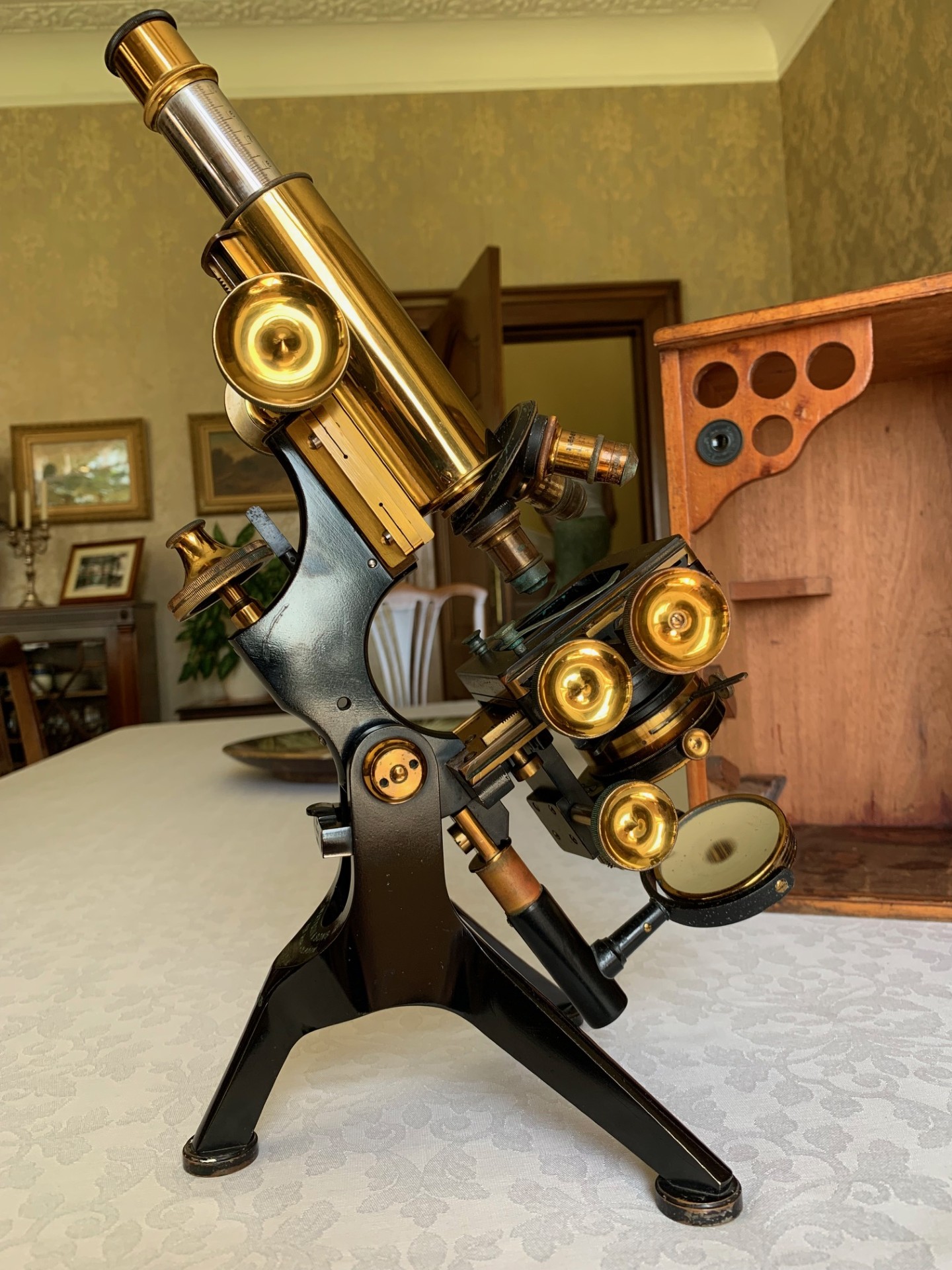
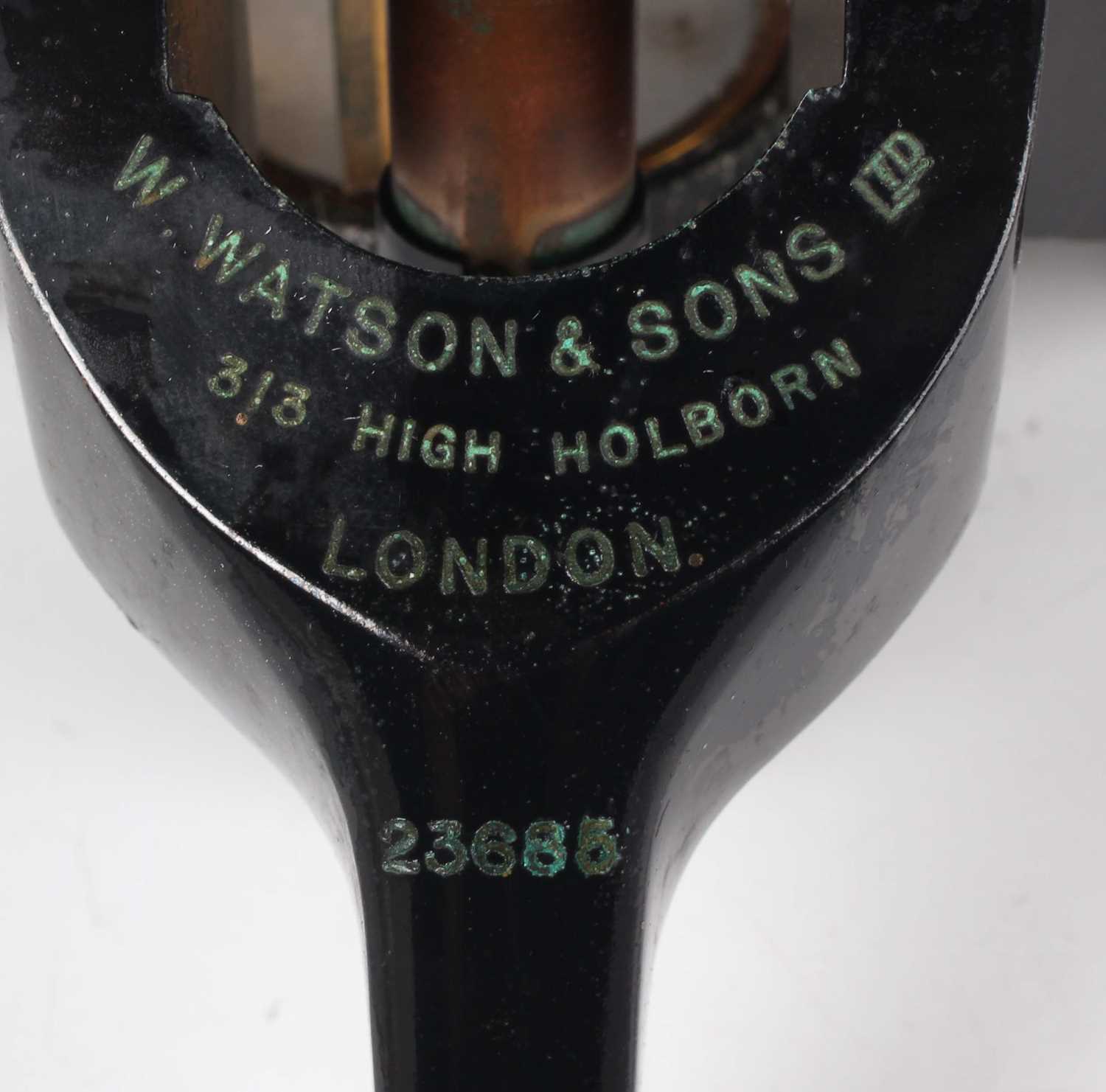
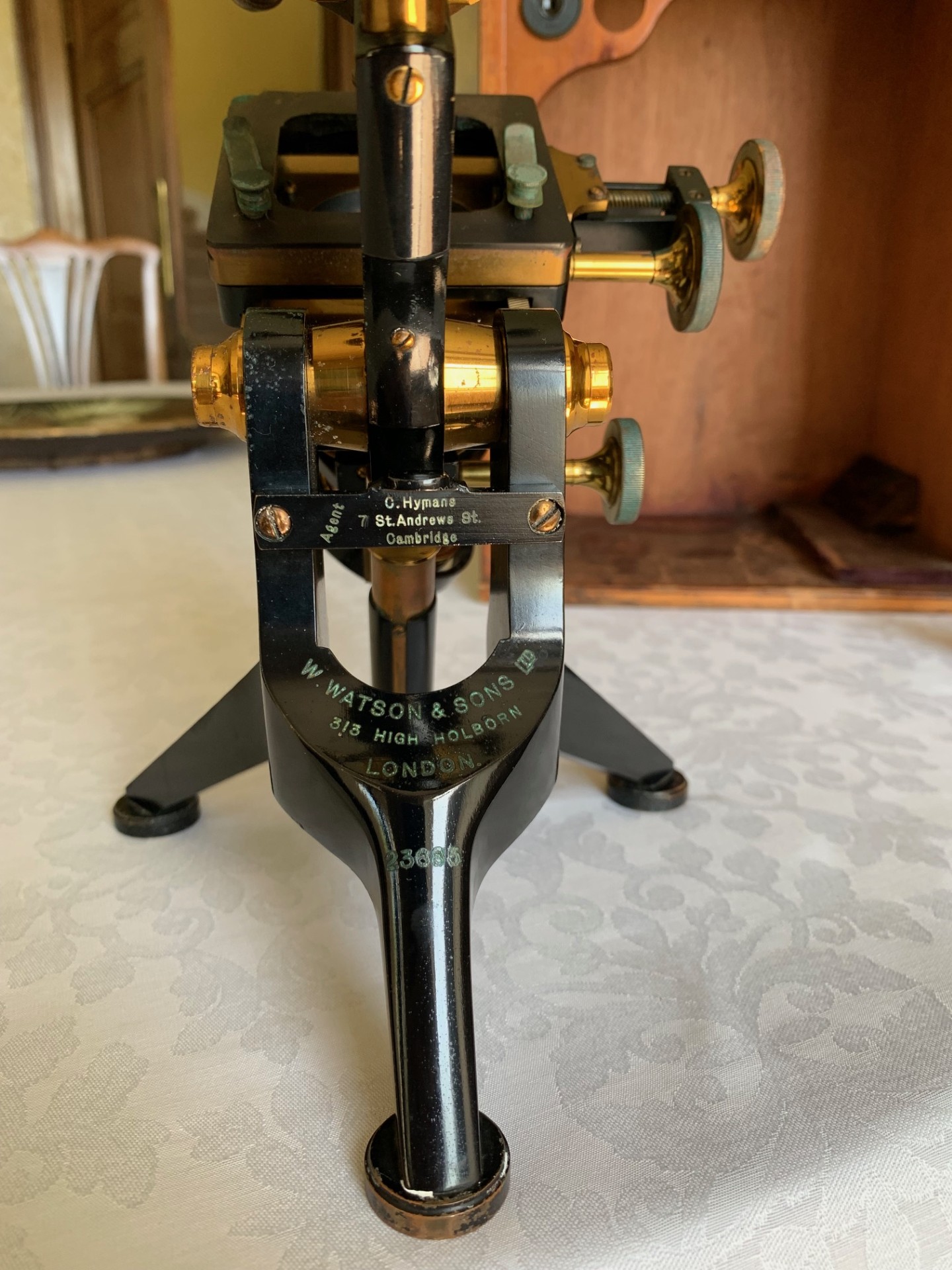
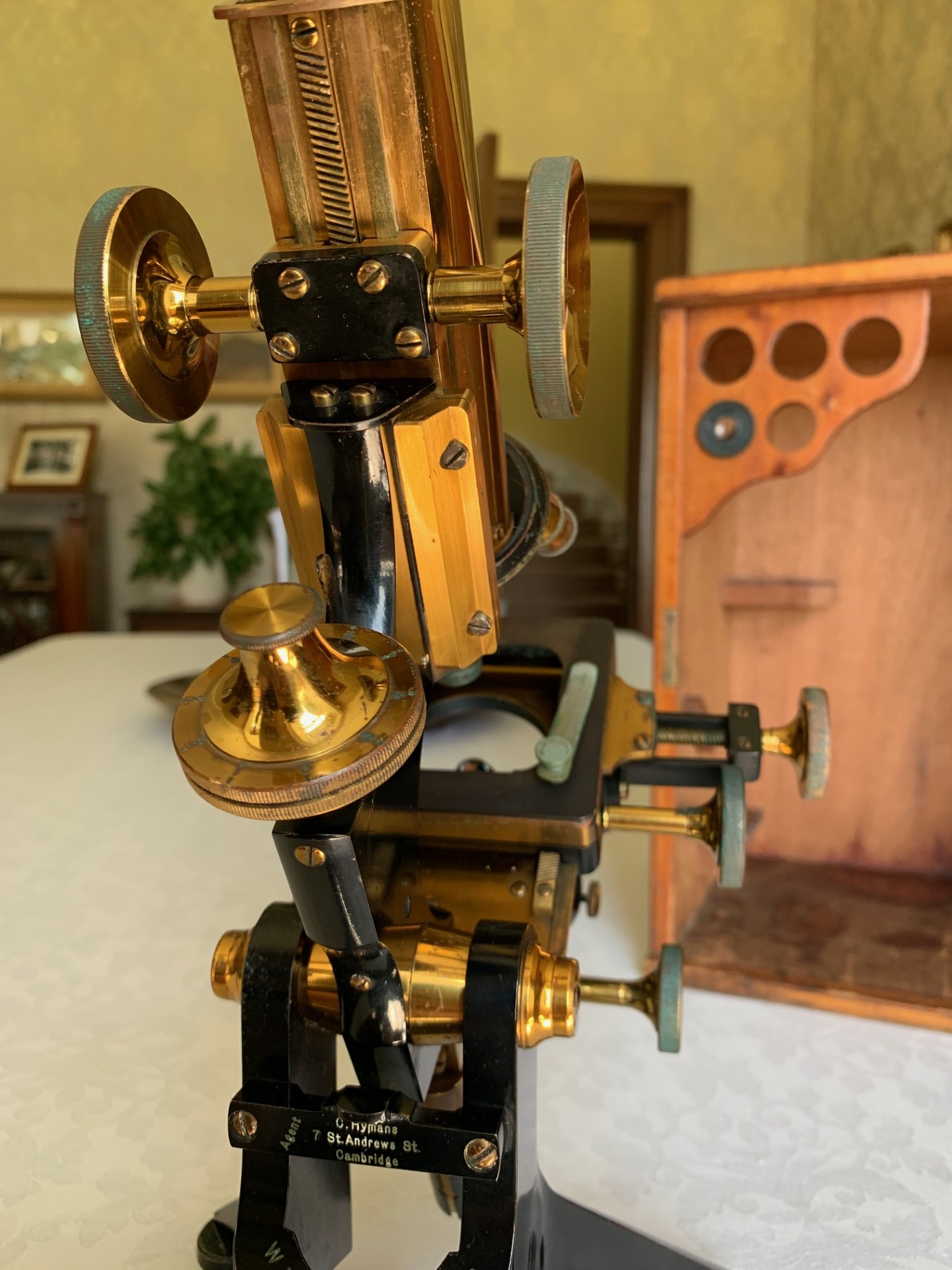
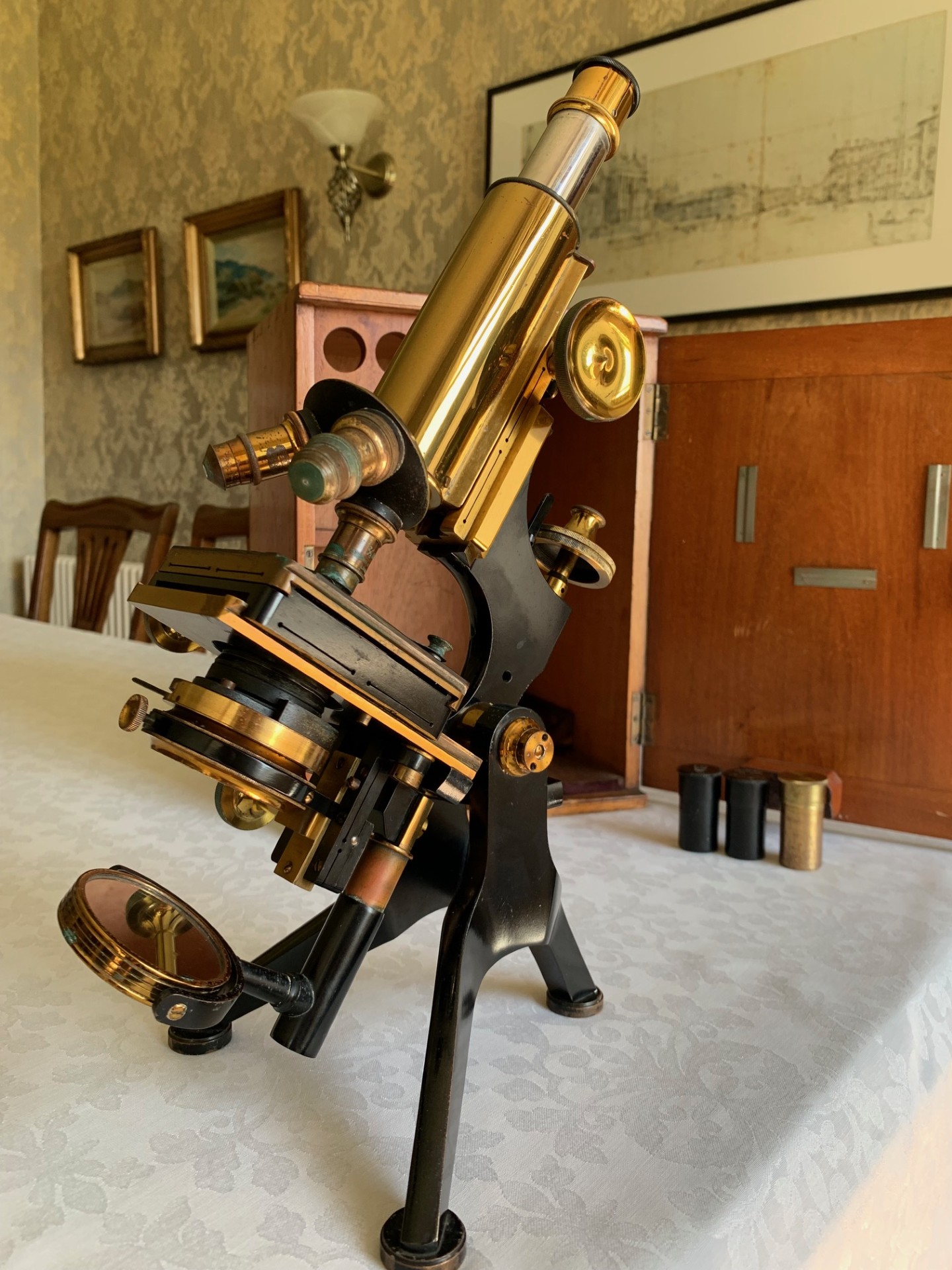
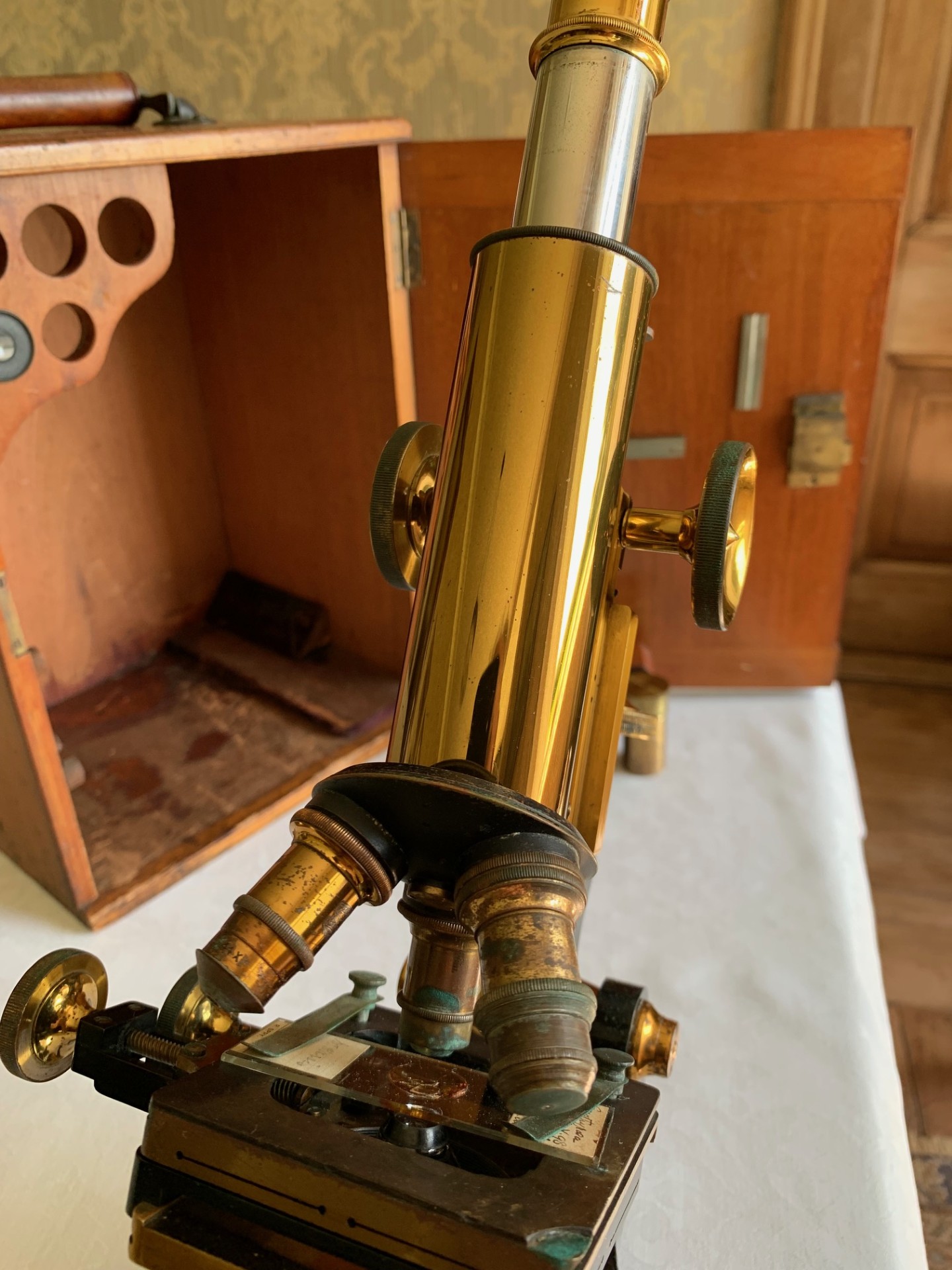
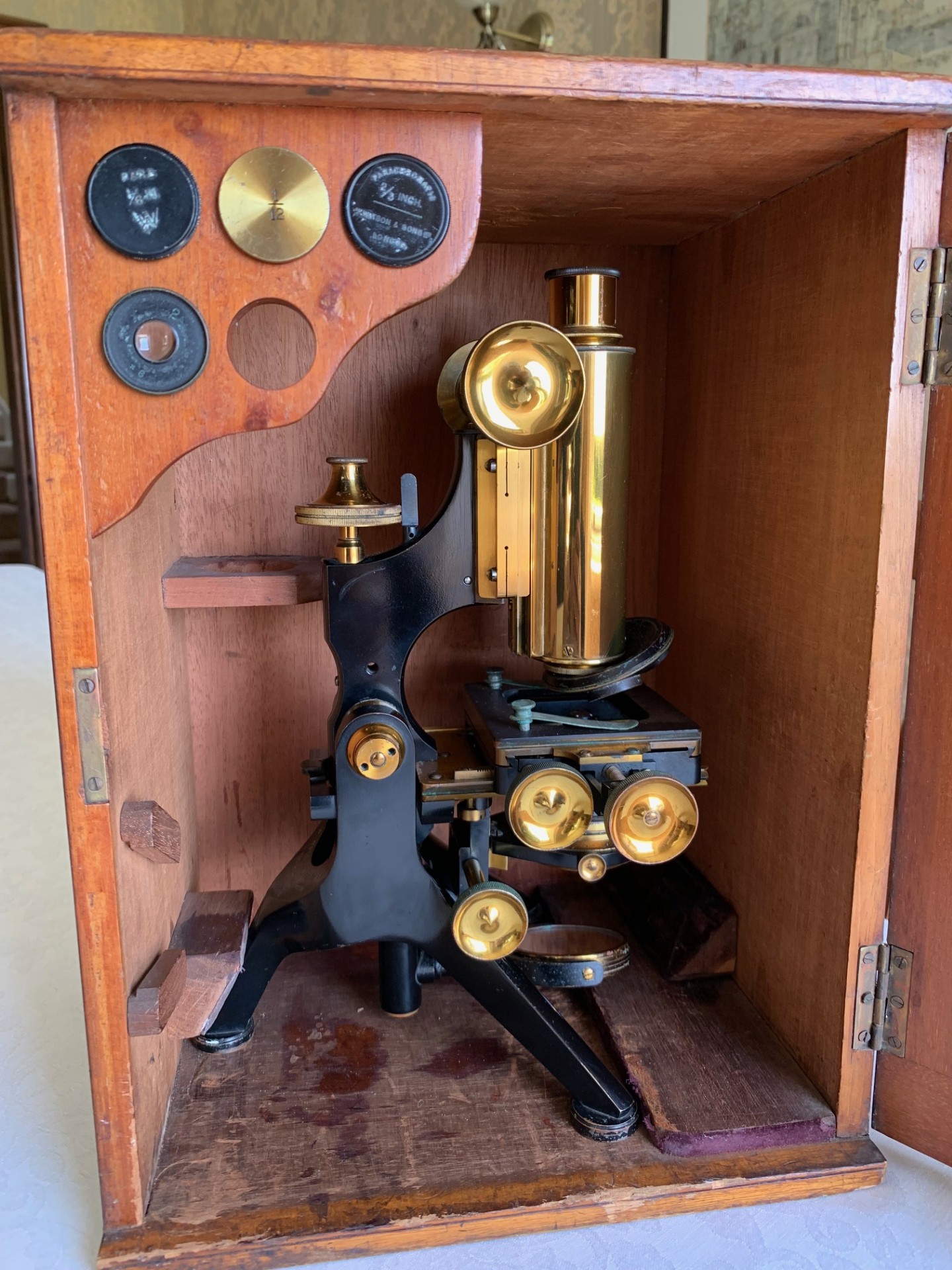
Offered for sale is a nicely presented and well seasoned example of Watson’s Edinburgh Student’s Stand-H model microscope in brass – it dates to around 1918 based on its serial number 23685. It’s marked W. Watson & Sons Ltd and post-dates the firm’s move to limited company status which occurred in 1908. It was originally retailed by Watson sales agents Hymans of Cambridge, with an inscription to this effect on the rear cross-member. This is a decent example with some signs of wear and a little verdigris here and there, but still quite presentable lacquered brass-work that’s showing just a little age and use-related spotting here and there, but not that bad in reality for an instrument that’s 108 years old and counting.
The Edinburgh pattern model of microscope was produced by Watson between 1887 and around 1945; its long production run giving us a firm clue regarding just how good this model of microscope was in its heyday and over that long production cycle Watson regularly updated and improved the model, so what you see here is a mid-production cycle example. The Edinburgh stand was originally developed by Watson in collaboration with a professor and lecturer in bacteriology at the University of Edinburgh, hence the Edinburgh designation. With its signature rear cross-member giving that classic “H” look and nice lacquered brass-work, the Edinburgh H is a fine example of British optical engineering with a design and style essentially dating back to the Victorian era.
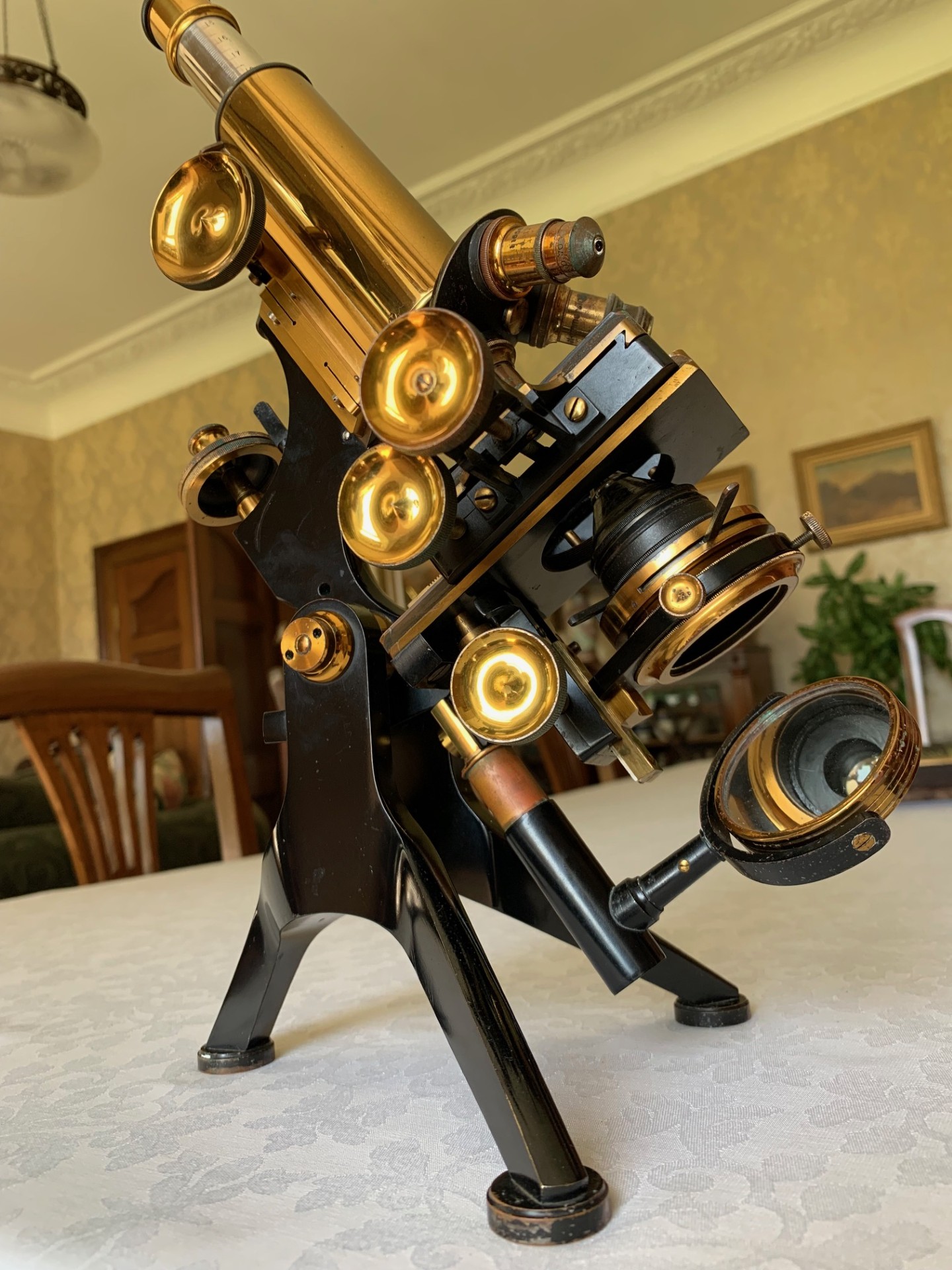
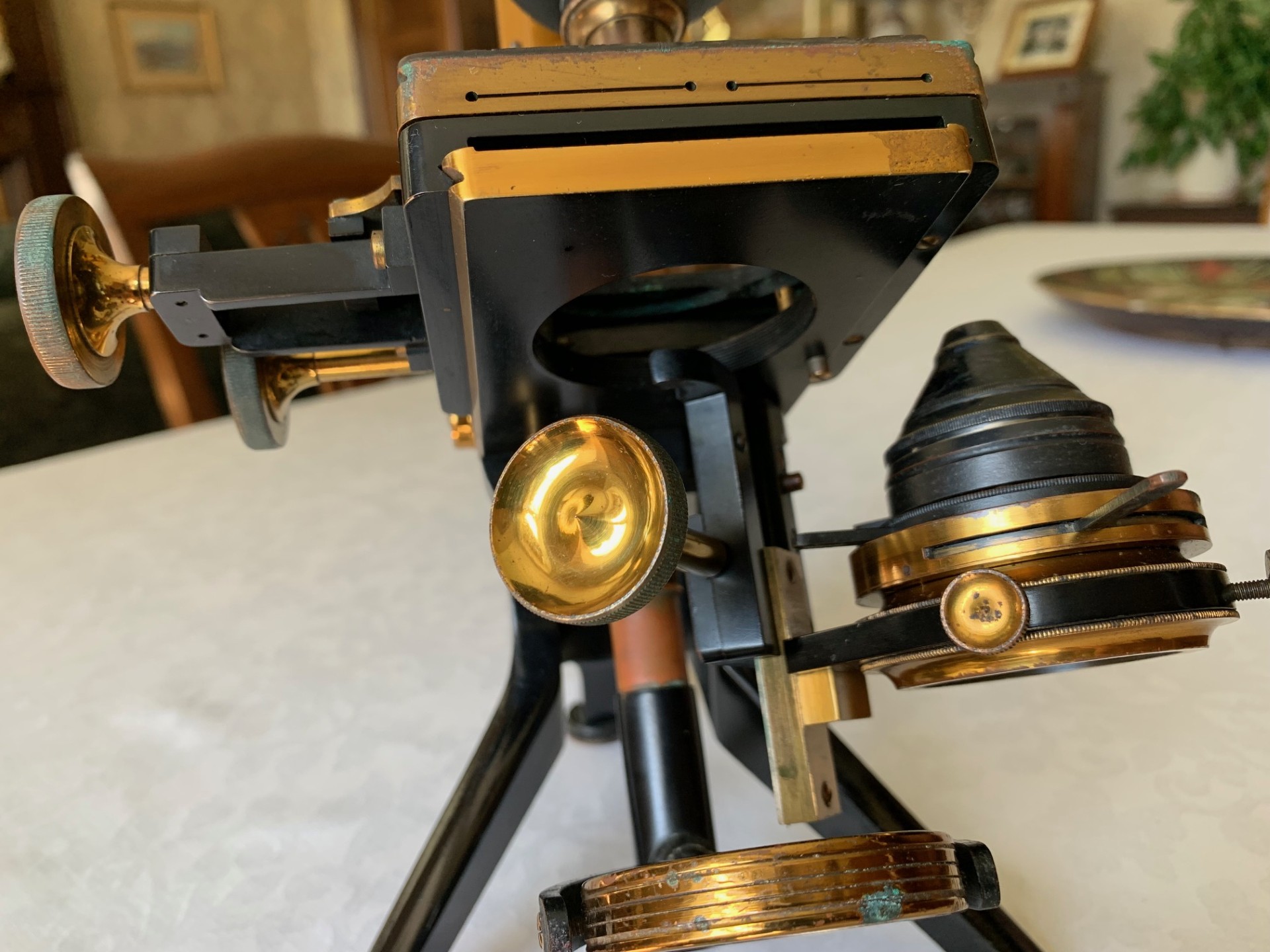
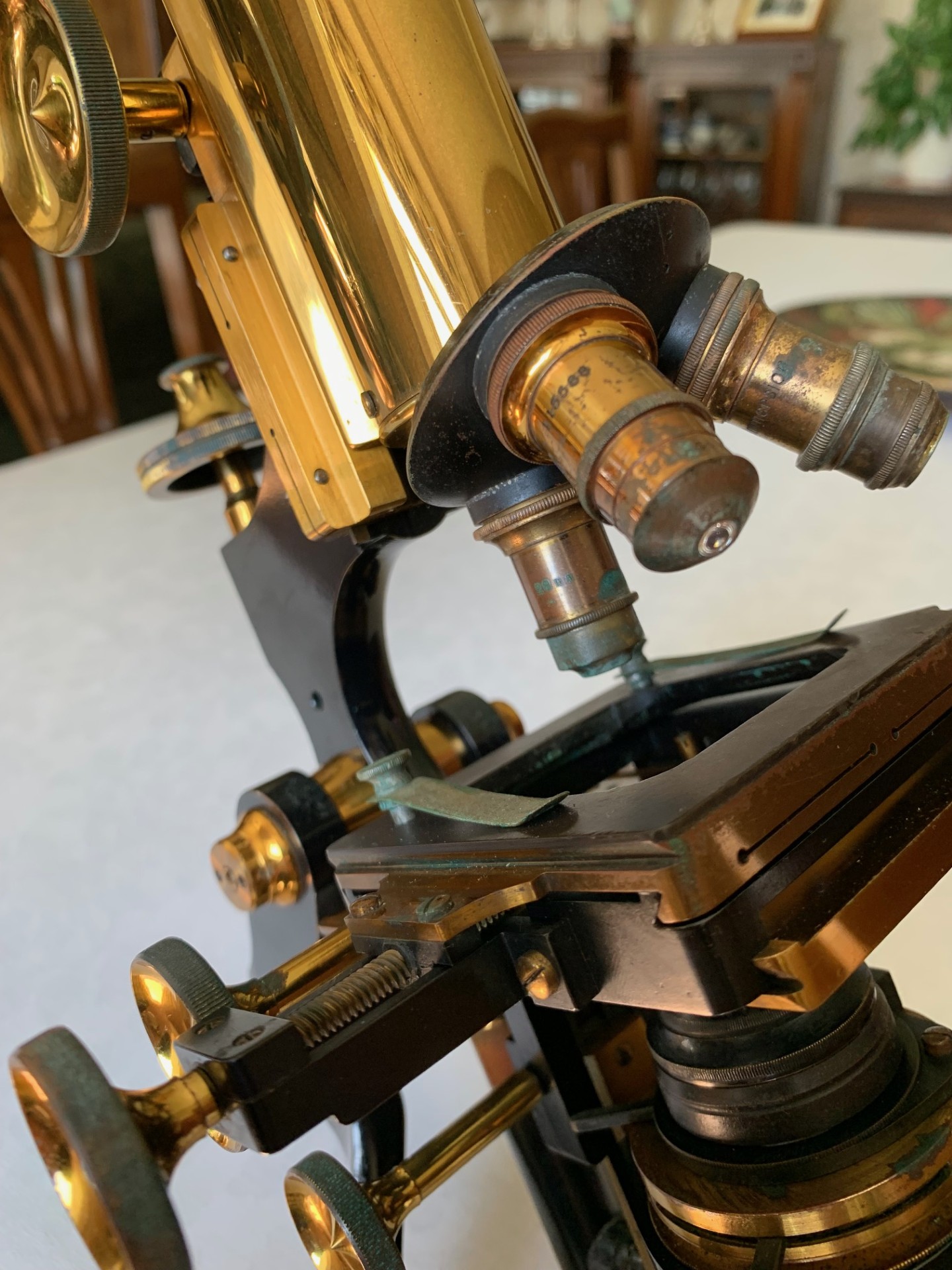
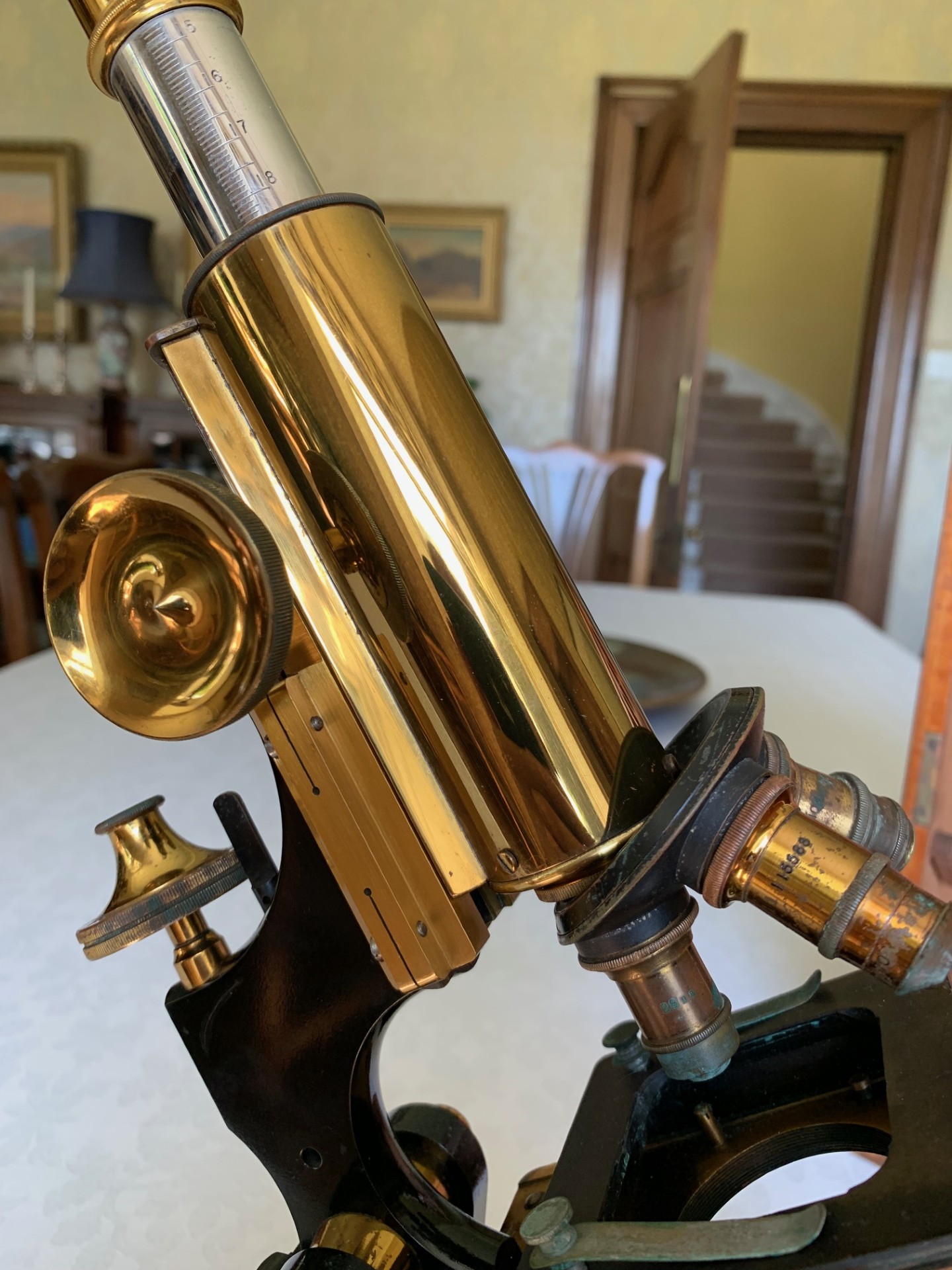
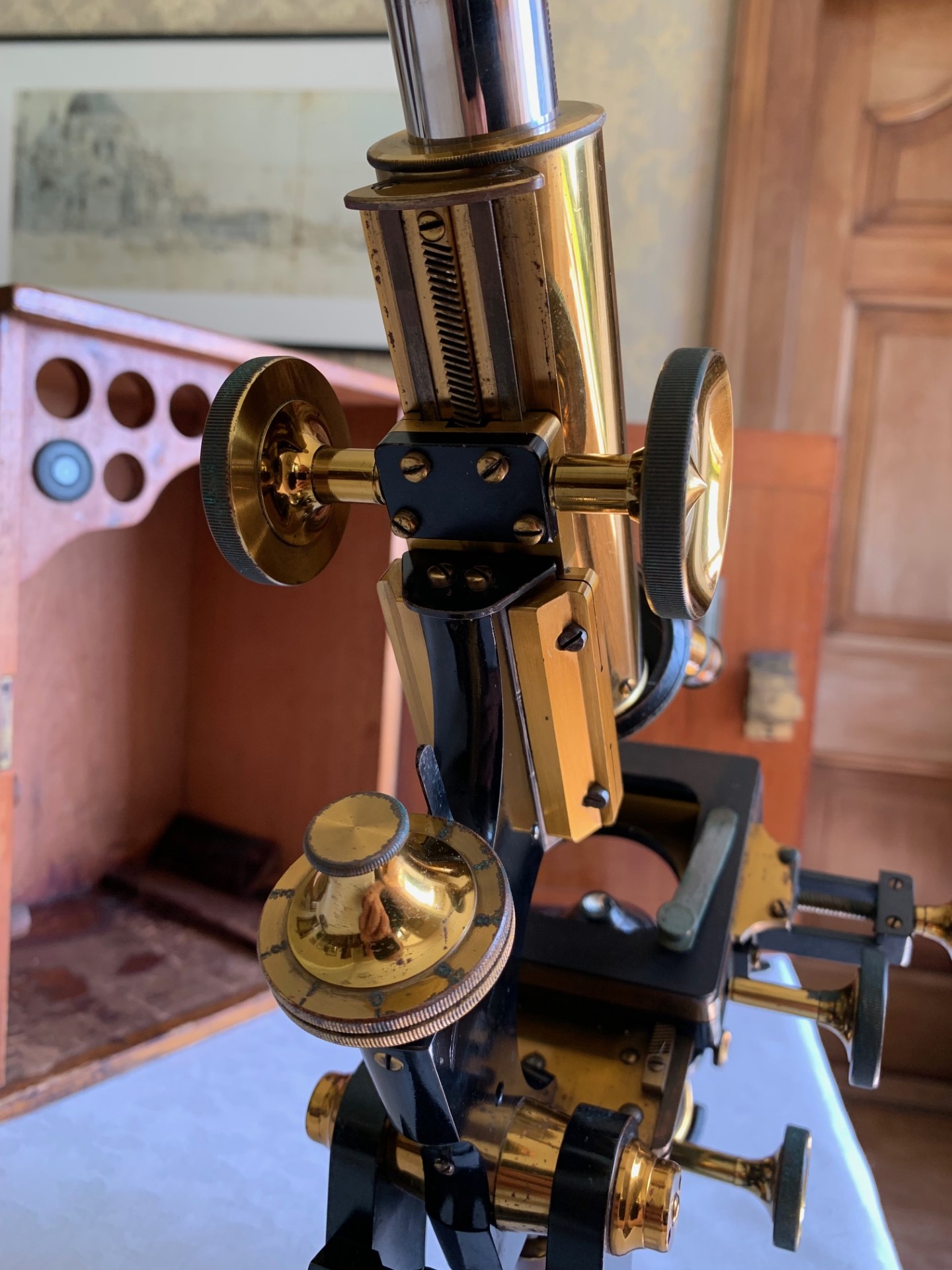
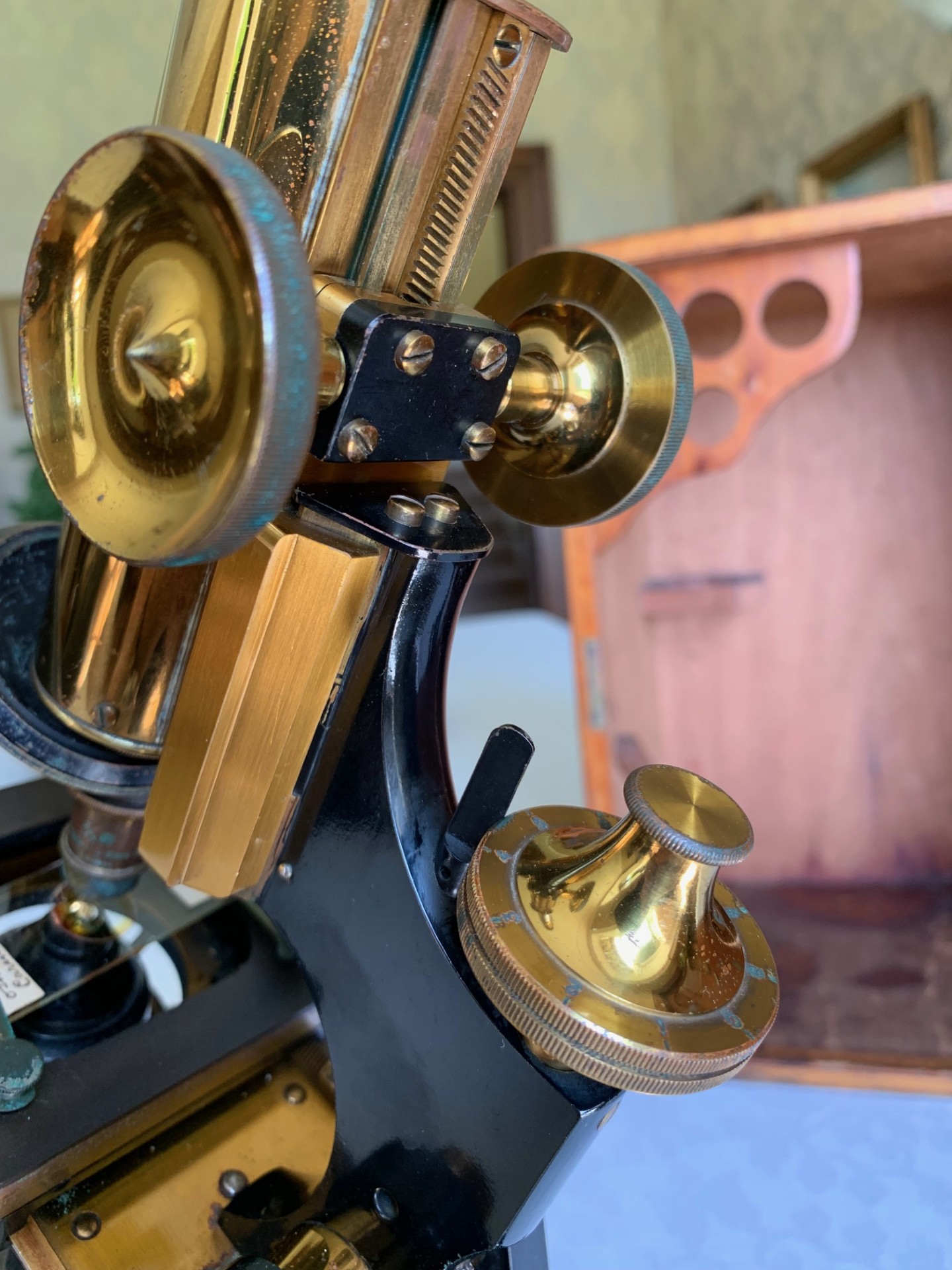
Turning to the technical details, the construction is a brass tripod in black paint finish, with bun feet that are attached by small brass screws. From the tripod rise twin uprights to a pivot with tension adjustment available if required. The upper limb is also in black-painted brass, with stage bolted to the limb and the sub-stage fittings attach to the underside of the stage. The coarse focus is via rack and pinion with good smooth action that holds in position on adjustment. Fine focus is operated via a separate brass thumb-wheel located at the rear of the upper limb which operates an internal lever system acting against sprung resistance. The focusing technique being to achieve near focus with the coarse thumb-wheels, then fine-tune with the single rear thumb-wheel, which only has a fairly small range of movement via its vernier screw mechanism.
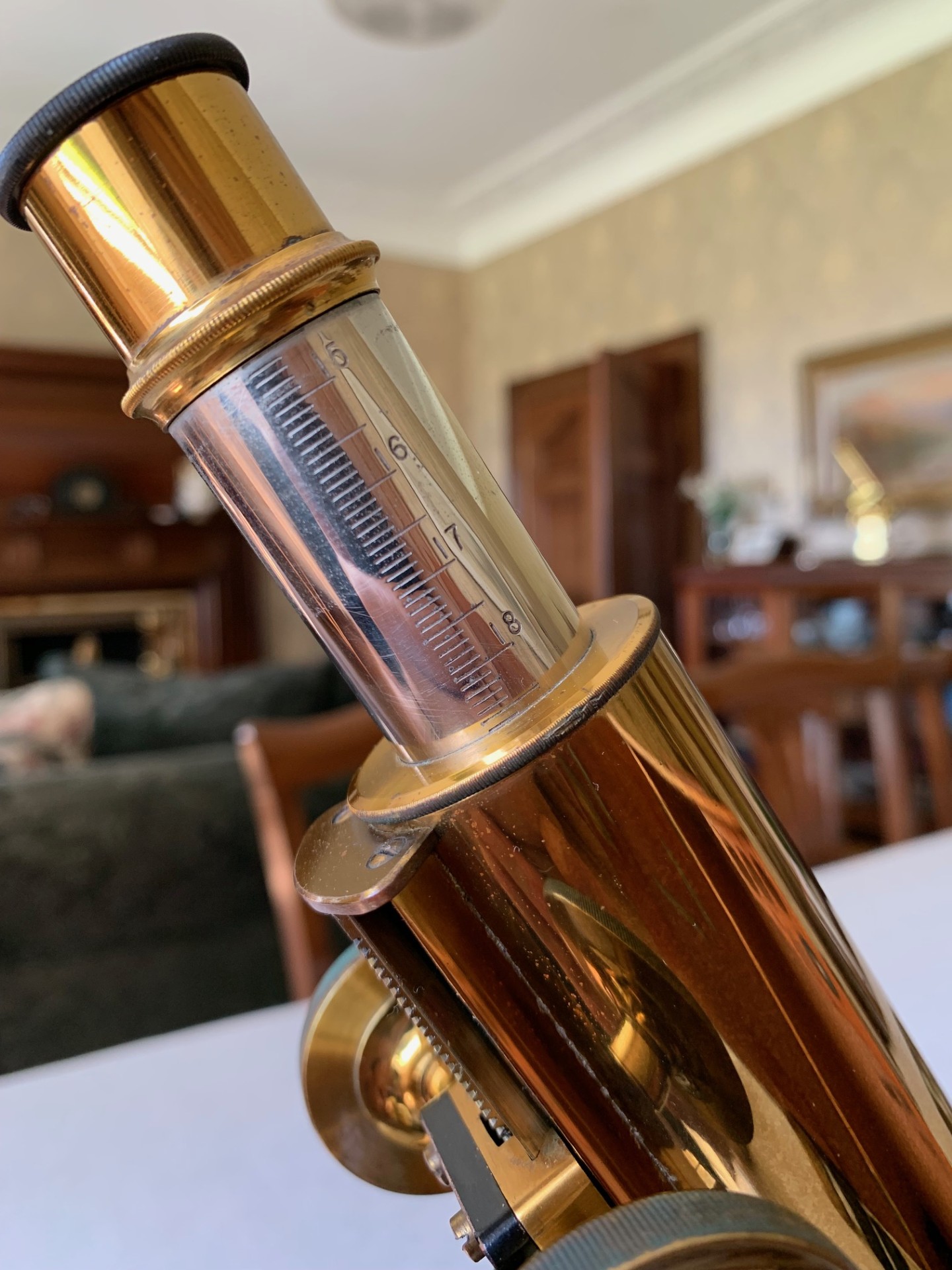
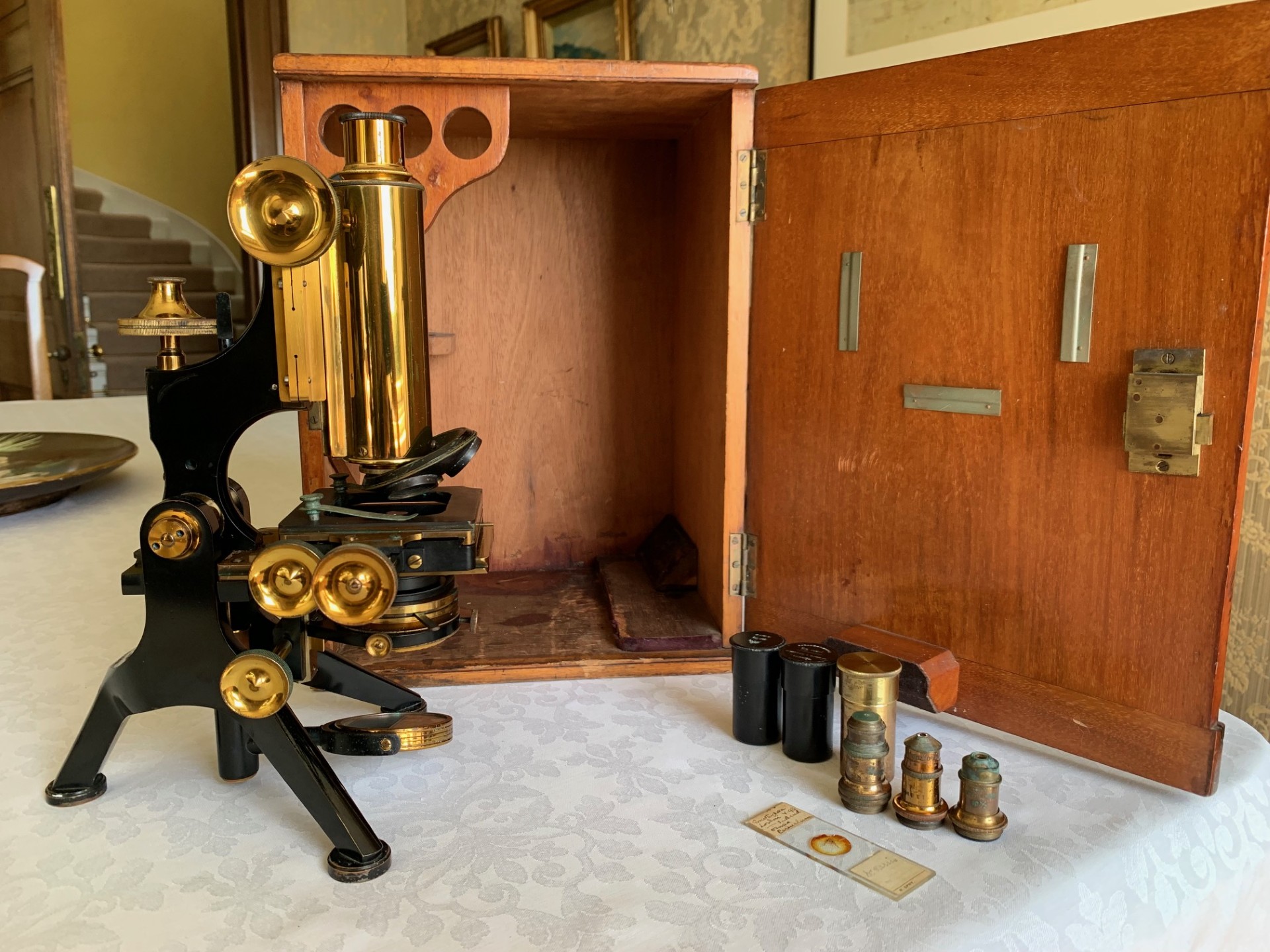
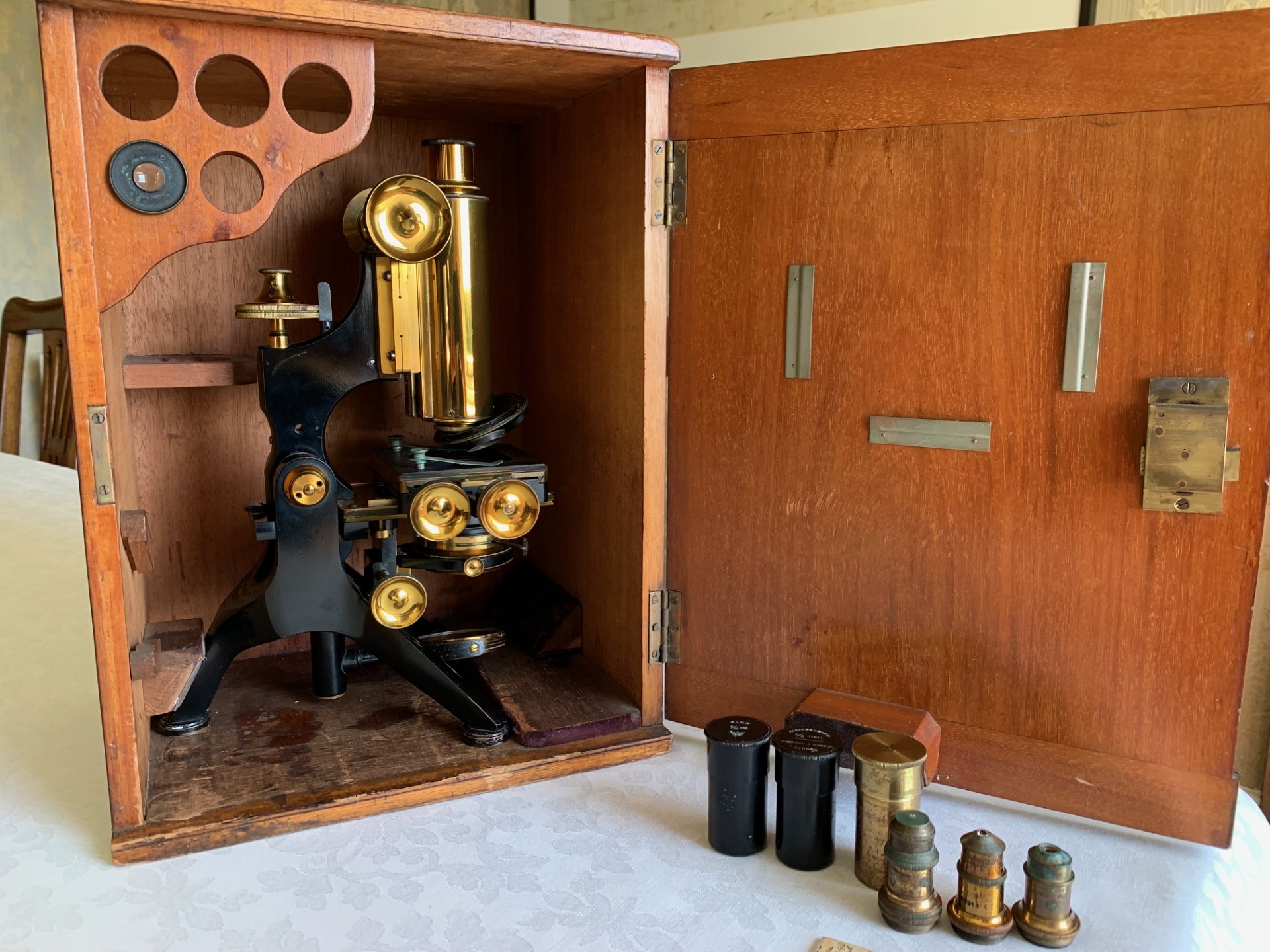
With the optics, this Watson microscope comes fitted with a period graduated chromed eyepiece draw-tube inside a brass main optical tube and there’s two vintage Watson eyepieces that with adequate illumination produce very good bright images:
– 6x magnification
– 10x magnification
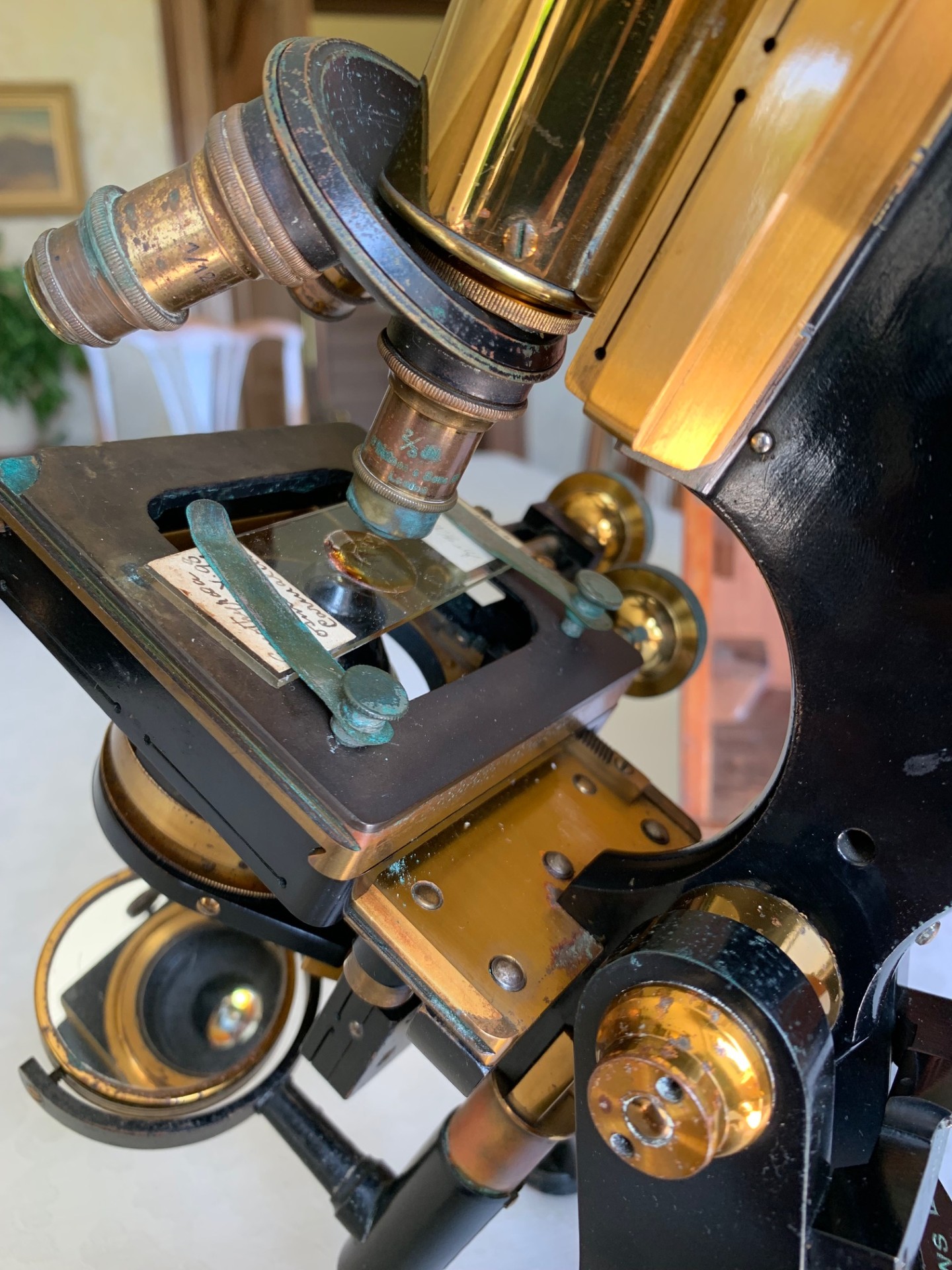
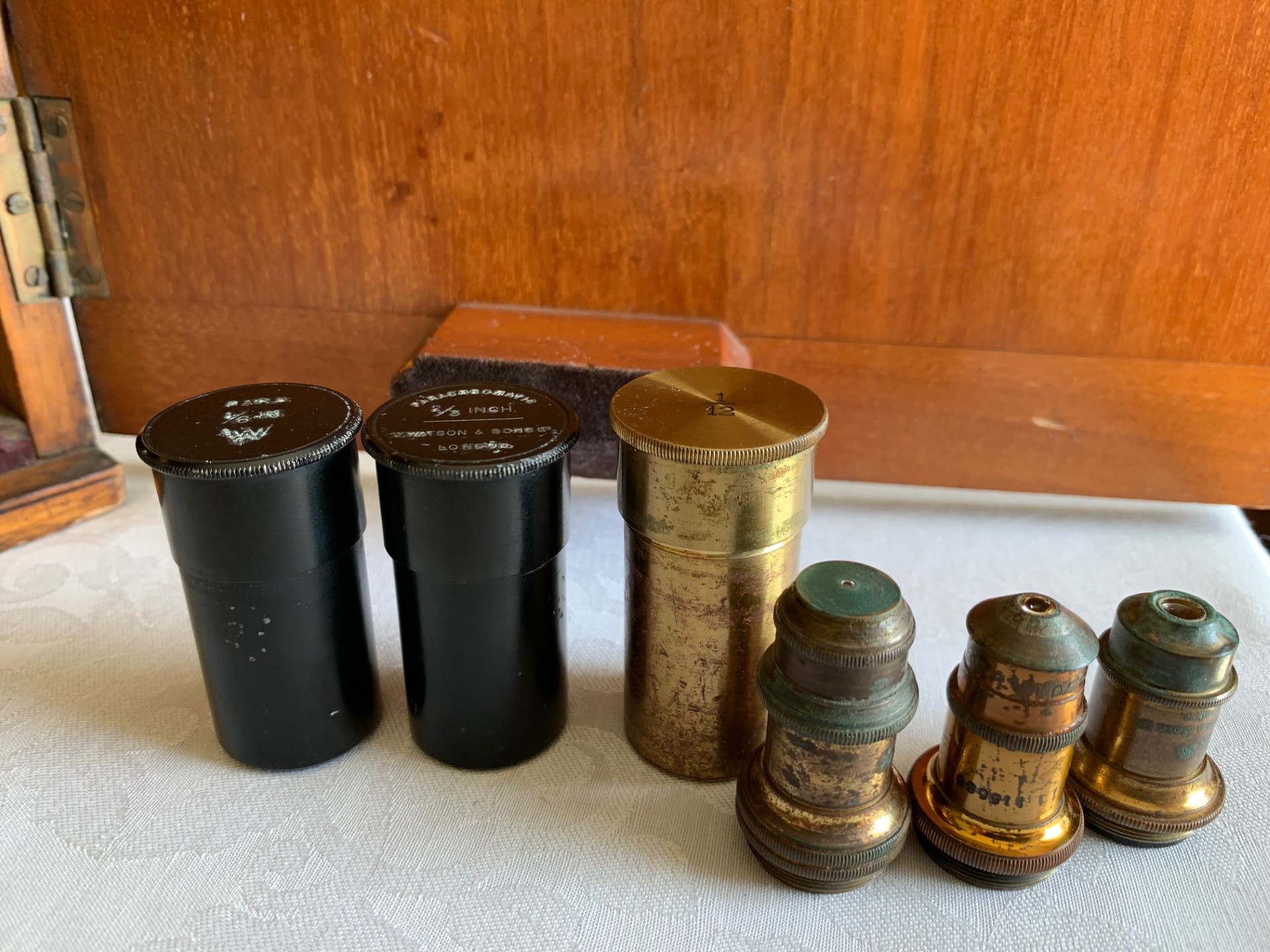
It’s also got three period objectives in total and an original older-pattern triple turret which rotates with a positive feel as the objectives slot into their viewing positions. The objectives are as follows:
– 2/3rds inch brass para by Watson – 10x magnification
– 1/6th inch in brass para by Watson – 40x magnification
– Unbranded 1/12th inch brass objective – approx 100x magnification – requires oil immersion
Overall therefore, the range of magnification available with this Watson Edinburgh-H ranges from about 60x with the lowest power lens combination, up to around 1,000x with the highest power combination and oil immersion when using the 1/12th inch objective.
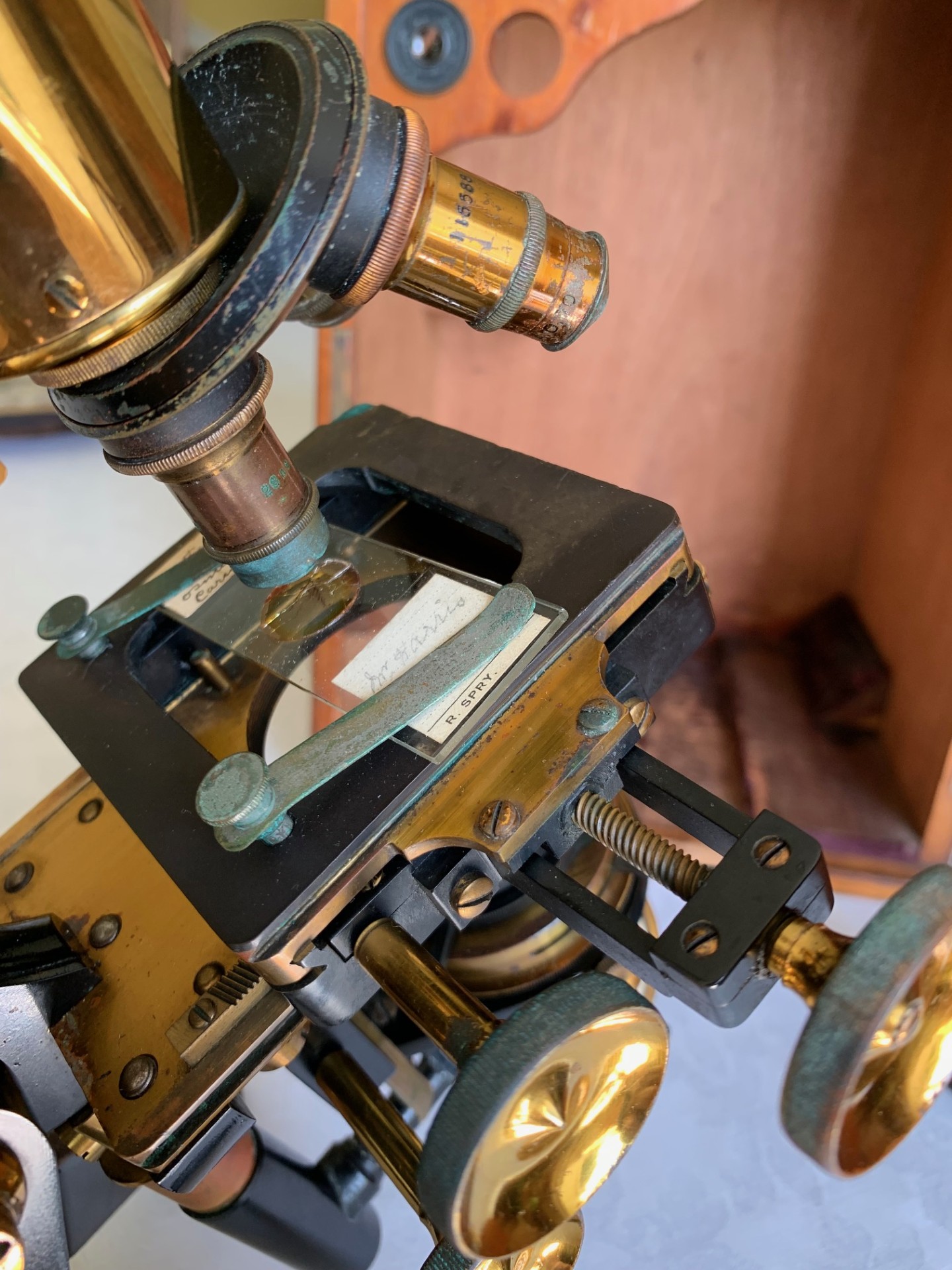
The fully mechanical stage is an original Watson design in brass, with twin thumb-wheel adjusters on the right hand side of the stage that have just the right positive feel and give a good range of x/y sample movement. It’s fitted with specimen clips that are fine for holding slides steady during inclined viewing and when the axes are being moved around. The x/y controls also offering good control of specimen positioning, which is a real advantage for higher magnification work.
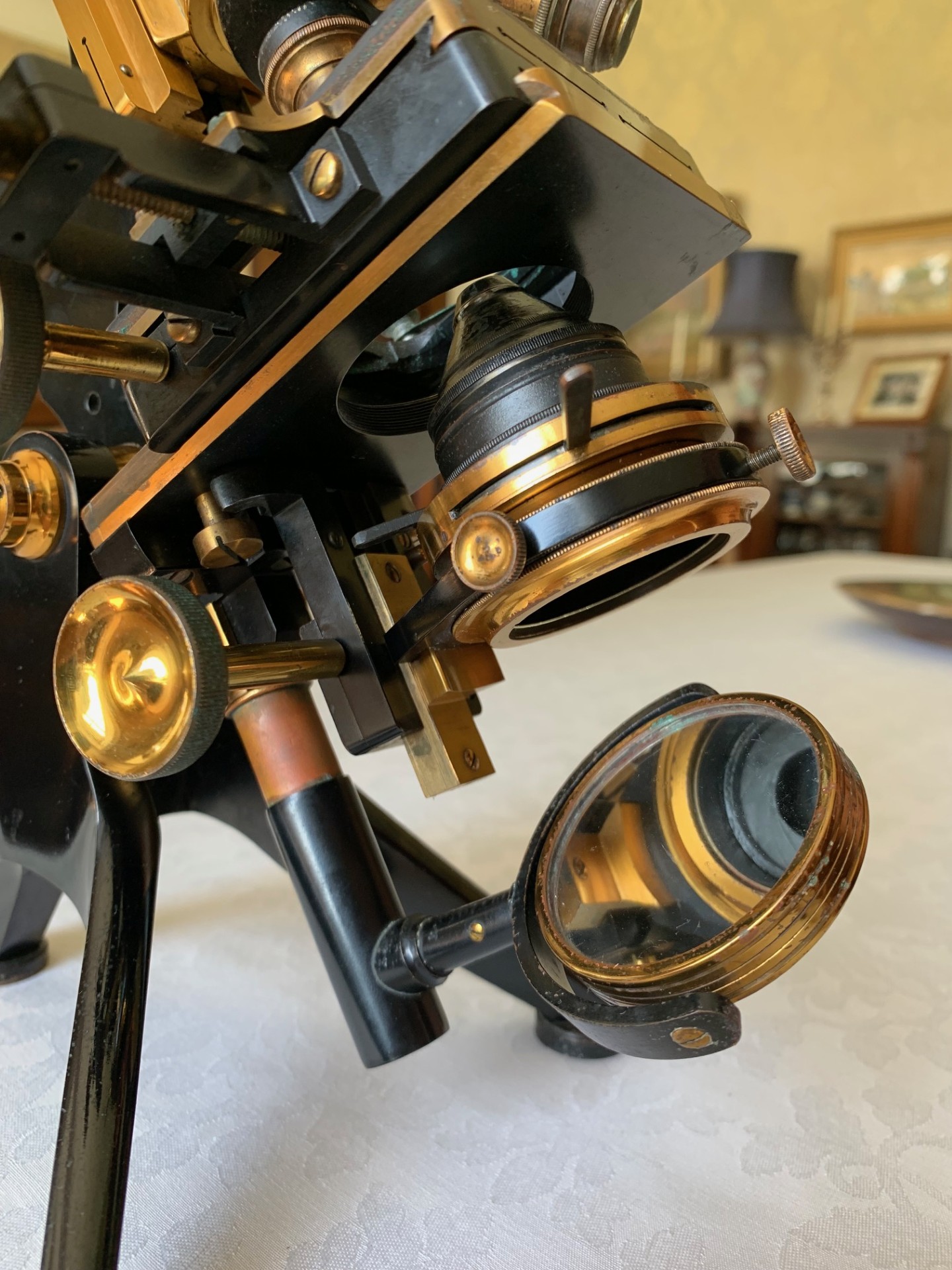
Turning to the sub-stage, we have a technical sub-stage with an Abbe-type condenser in a brass ring-mount with centering. The condenser also has a swing-out filter carrier and working iris with smooth action. The whole condenser assembly also swings out for maintenance as shown.
For lighting there’s the original brass plano-concave mirror attached to the limb tailpiece with gimbal and slider for adjustment. The mirror silvering is in very good condition to both sides.
The instrument’s controls and friction surfaces have been very lightly lubricated with non-hardening grease and operate reasonably smoothly with a nice feel and there’s not much in the way of noticeable of wear to any of the moving parts. This instrument presents reasonably well for its age and usage profile, with brass-work that catches the light well as I hope the listing photos demonstrate. This example presents well while being used as a desk-top instrument and will also display rather nicely in a library of home office setting.
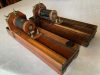
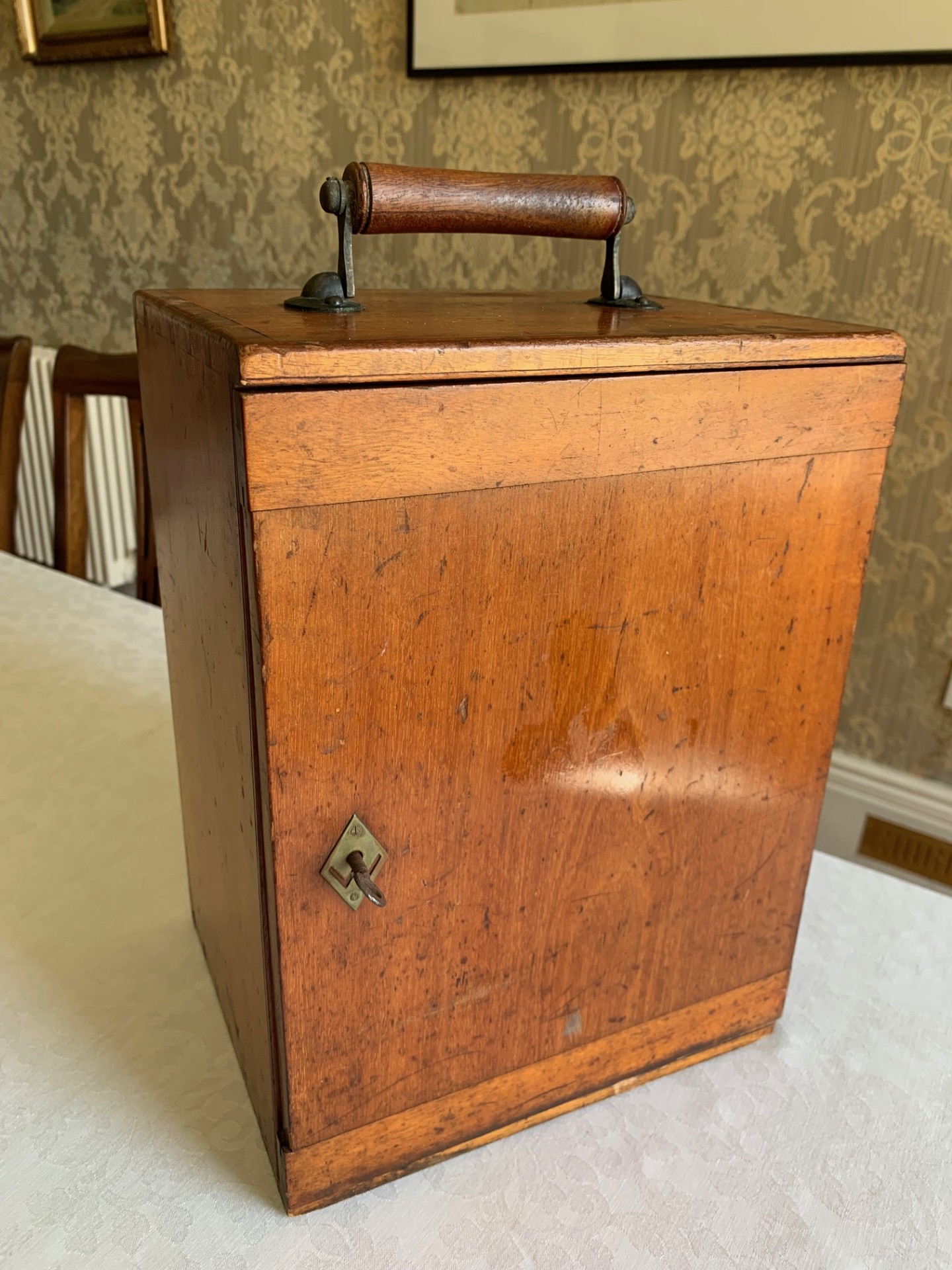
There’s an original Watson storage case with this example, with wooden carry-handle and internal racking. The lock and key are both present, which is always nice to have Overall, the case has just the right aged look with the right level of patination and a lovely exterior sheen, so complements the antique microscope perfectly.
Owing to the weight and delicacy of this antique Edinburgh-H microscope and its case, it will be partially dismantled, very well wrapped for shipping and dispatched by insured courier upon receipt of cleared funds.
Thanks for looking.
Ask the Dealer
Dealer information
 Arcboutant Scientific
Arcboutant Scientific based in Glasgow Scotland, with an interest in scientific collectables dating back to 1988. Now making available carefully curated fine examples, principally of antique microscopes and associated scientific equipment by quality English and Continental makers, to collectors world-wide.