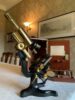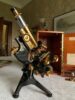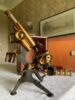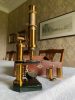


Antique W. Watson & Sons “Royal” Mono/Binocular Brass Microscope – c1901, Cased
£1,495
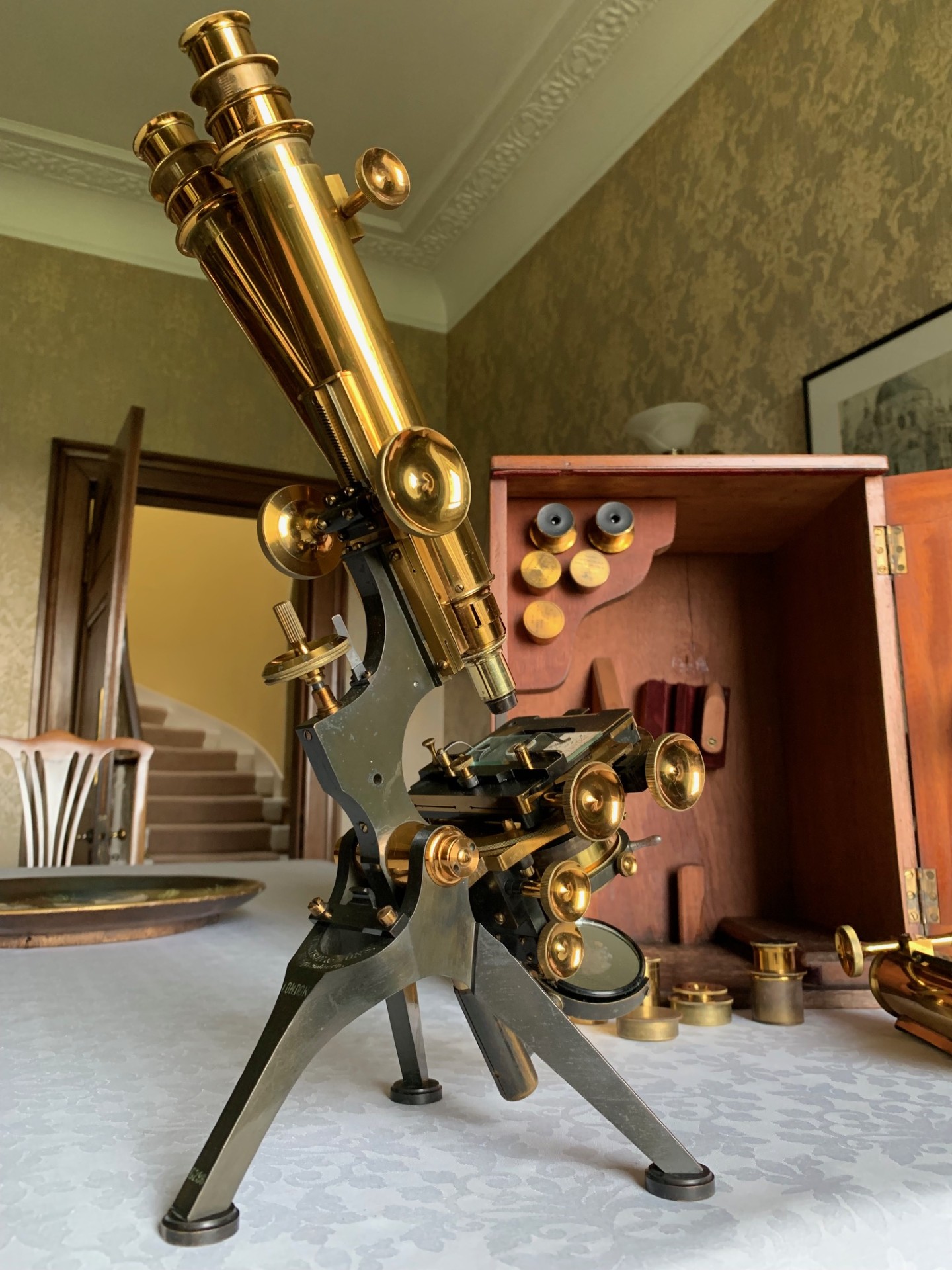
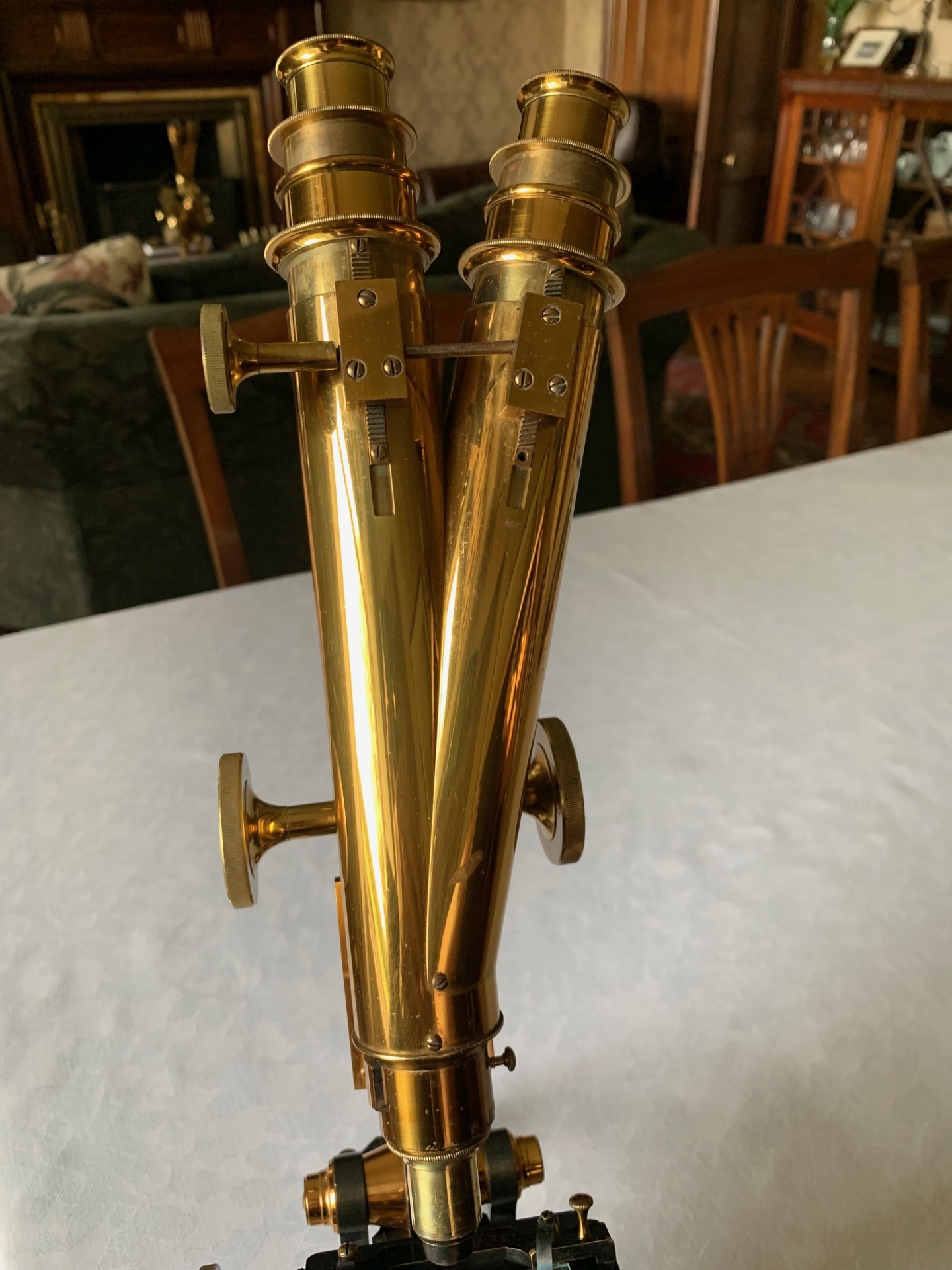
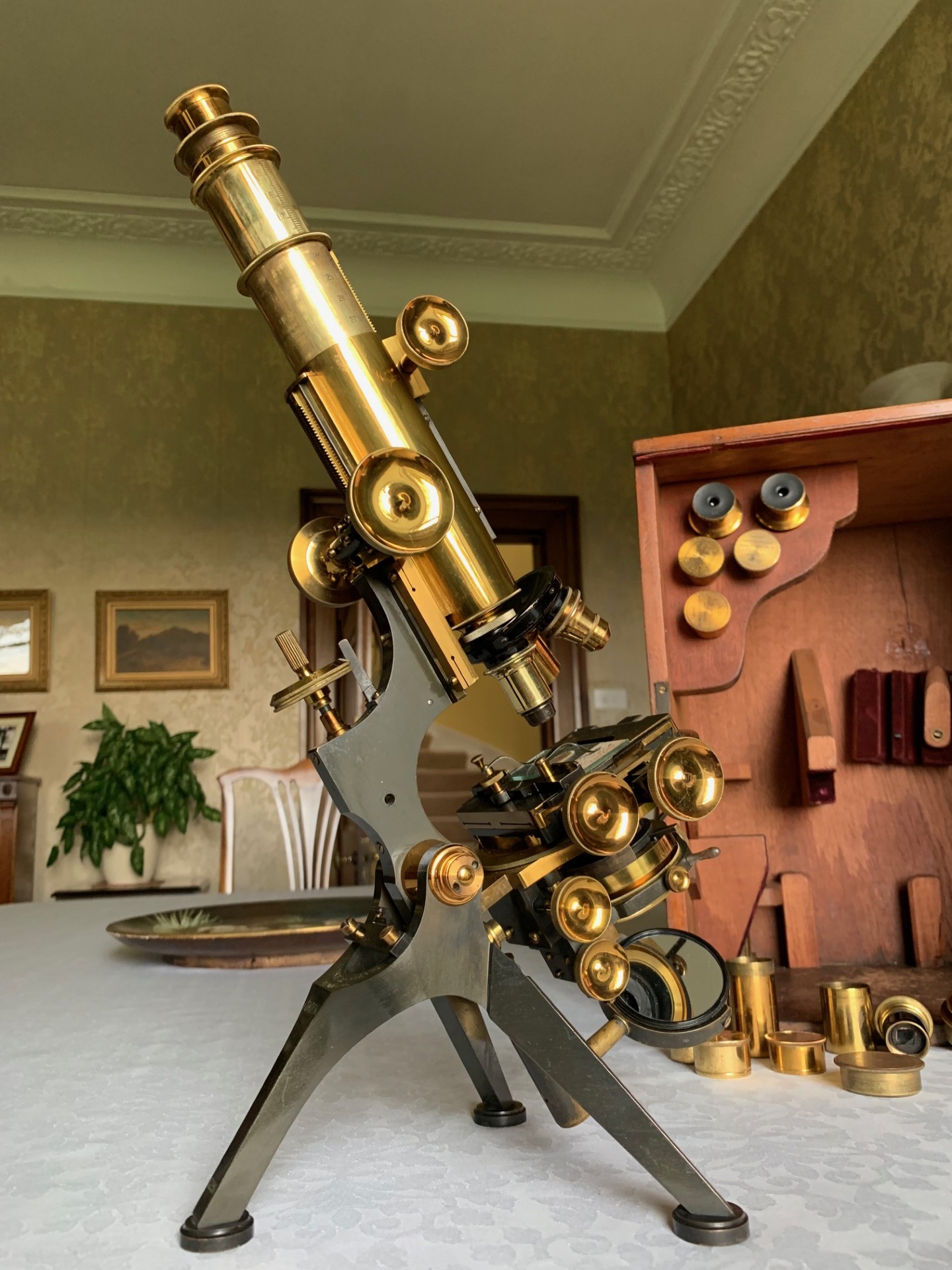
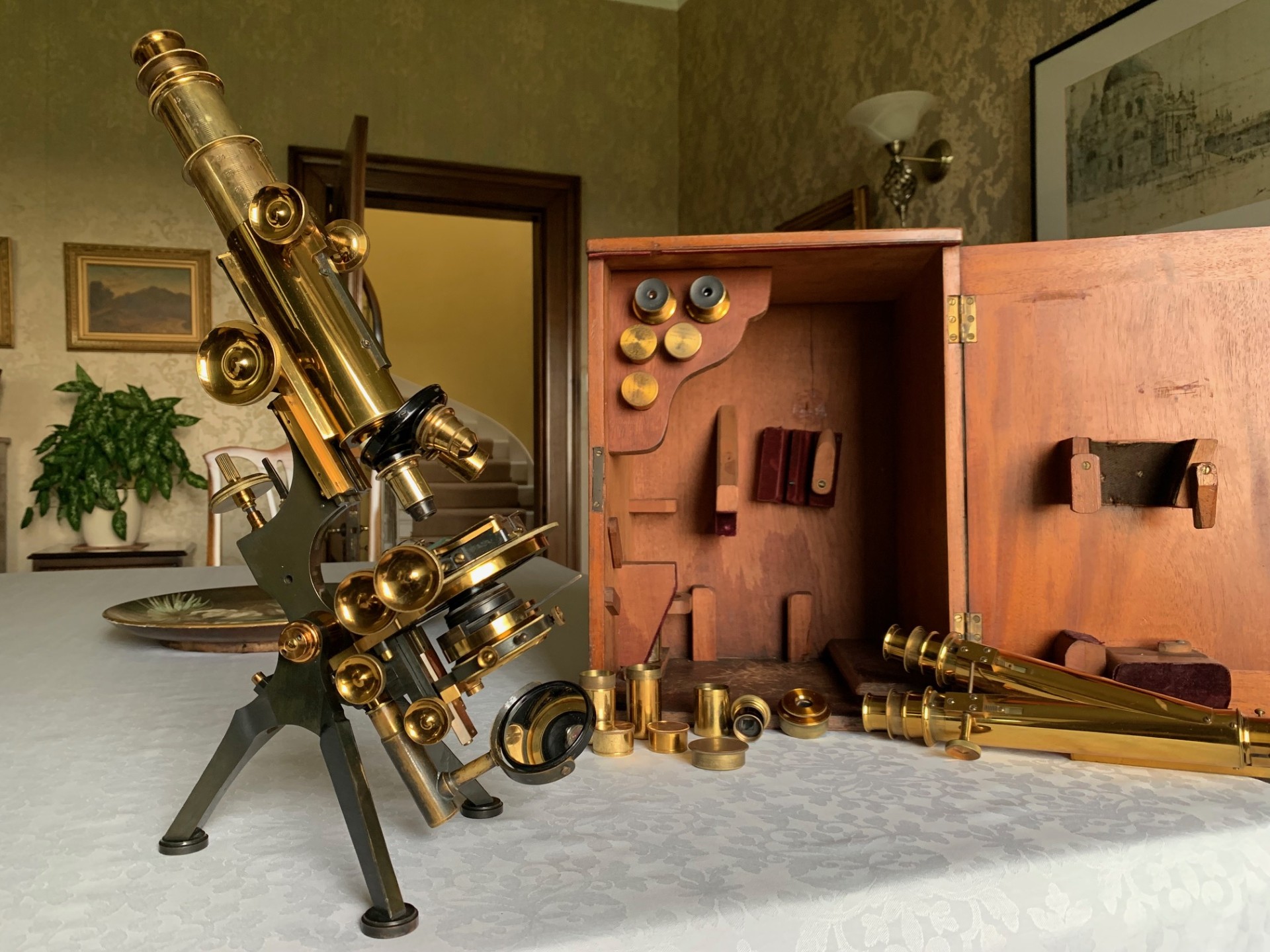
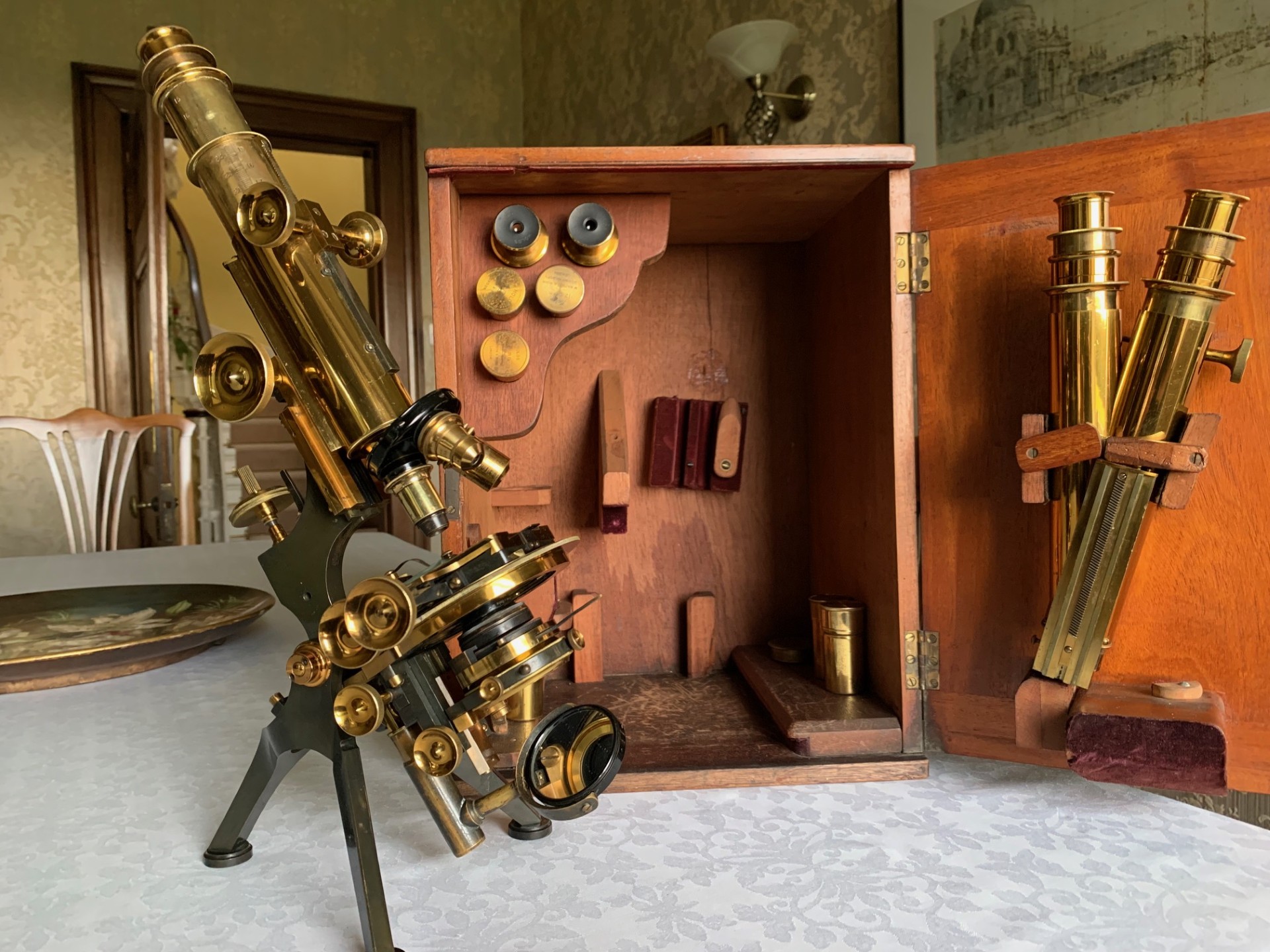
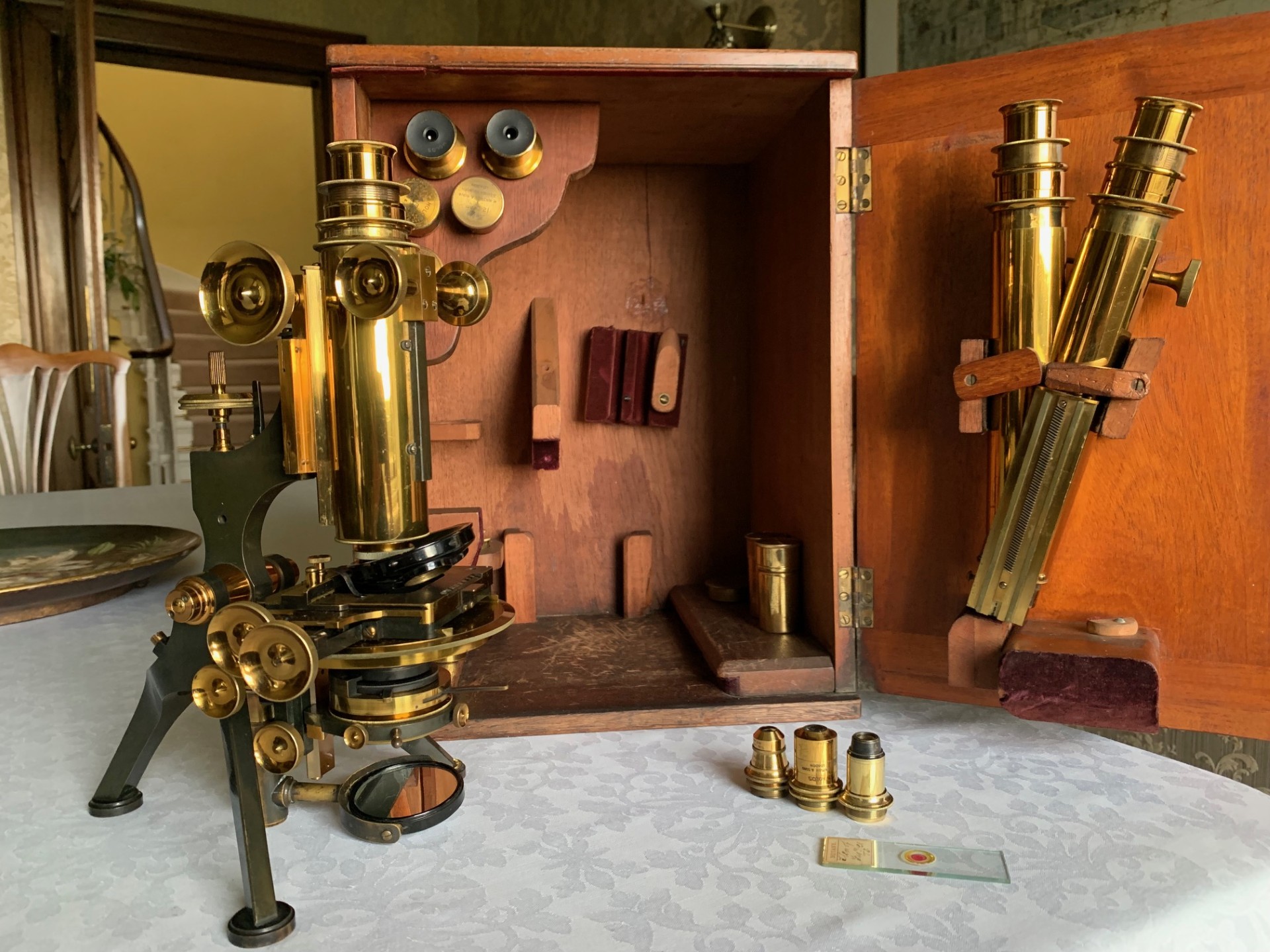
Exceptionally good working and cosmetic condition example of Watson's rare-to-market Royal model. The instrument dates to around 1901, so right at the end of the Victorian and start of Edwardian periods. This example is a good candidate for a Watson enthusiast, experienced user or even someone new to microscopy and is endowed with both monocular and binocular viewing options, the latter via the signature Wenham double tubes. Fine example that also makes a great display item.
Circa
1901
Maker
W. Watson & Sons
Country of manufacture
UK and Ireland
Description
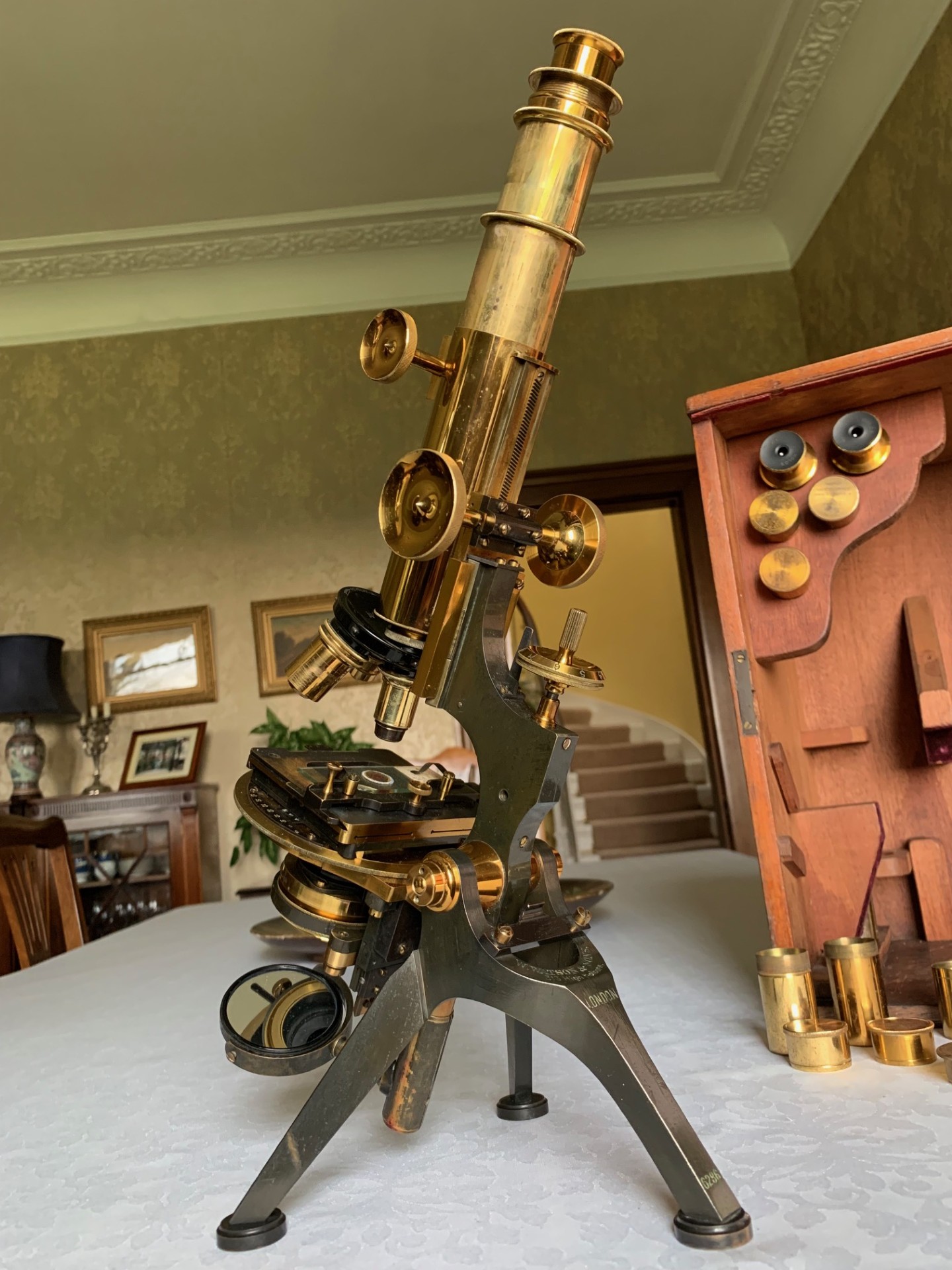
Antique Watson Royal circa 1901 serial no. 6286 – monocular & Wenham binocular model with accessories
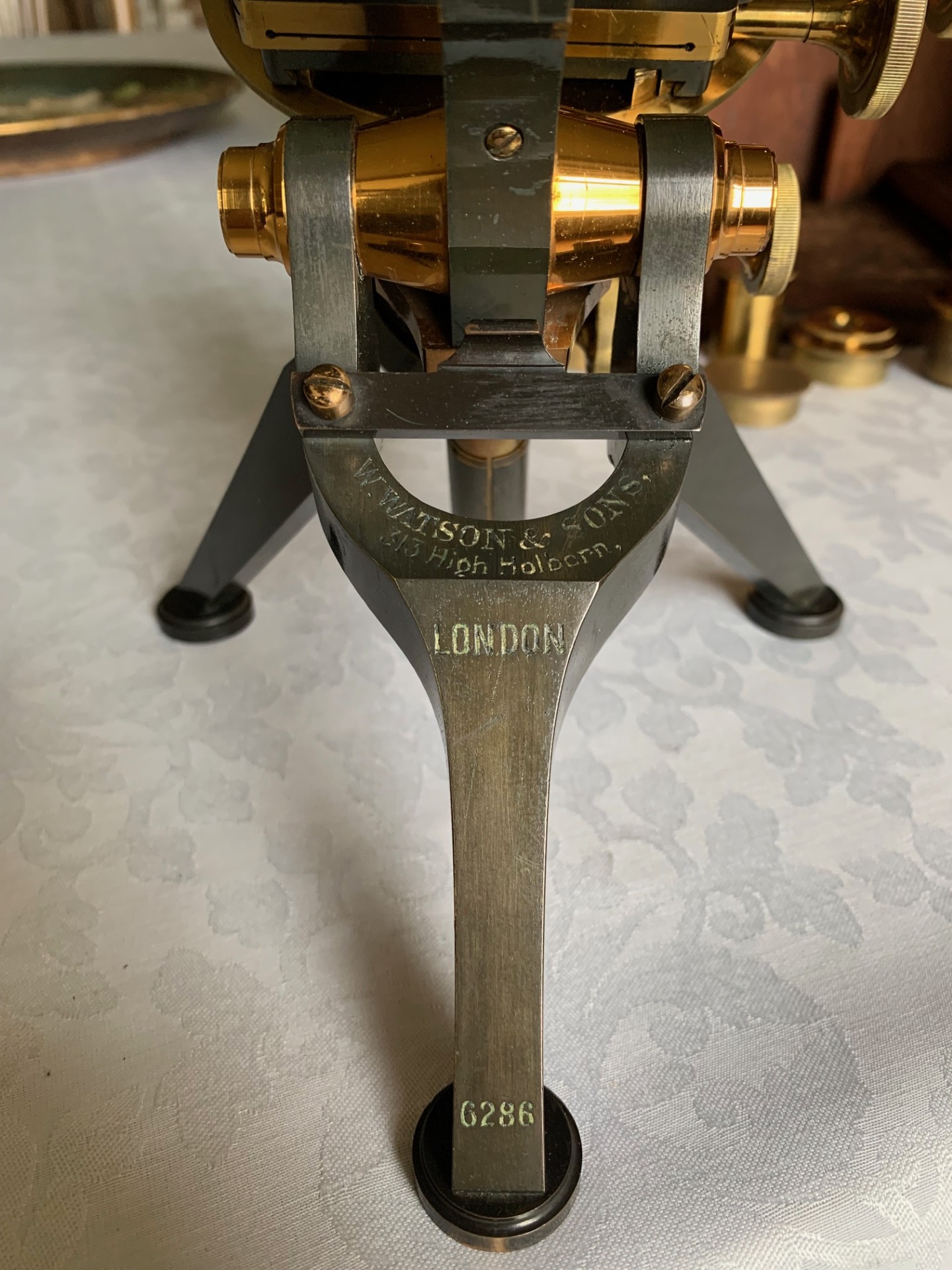
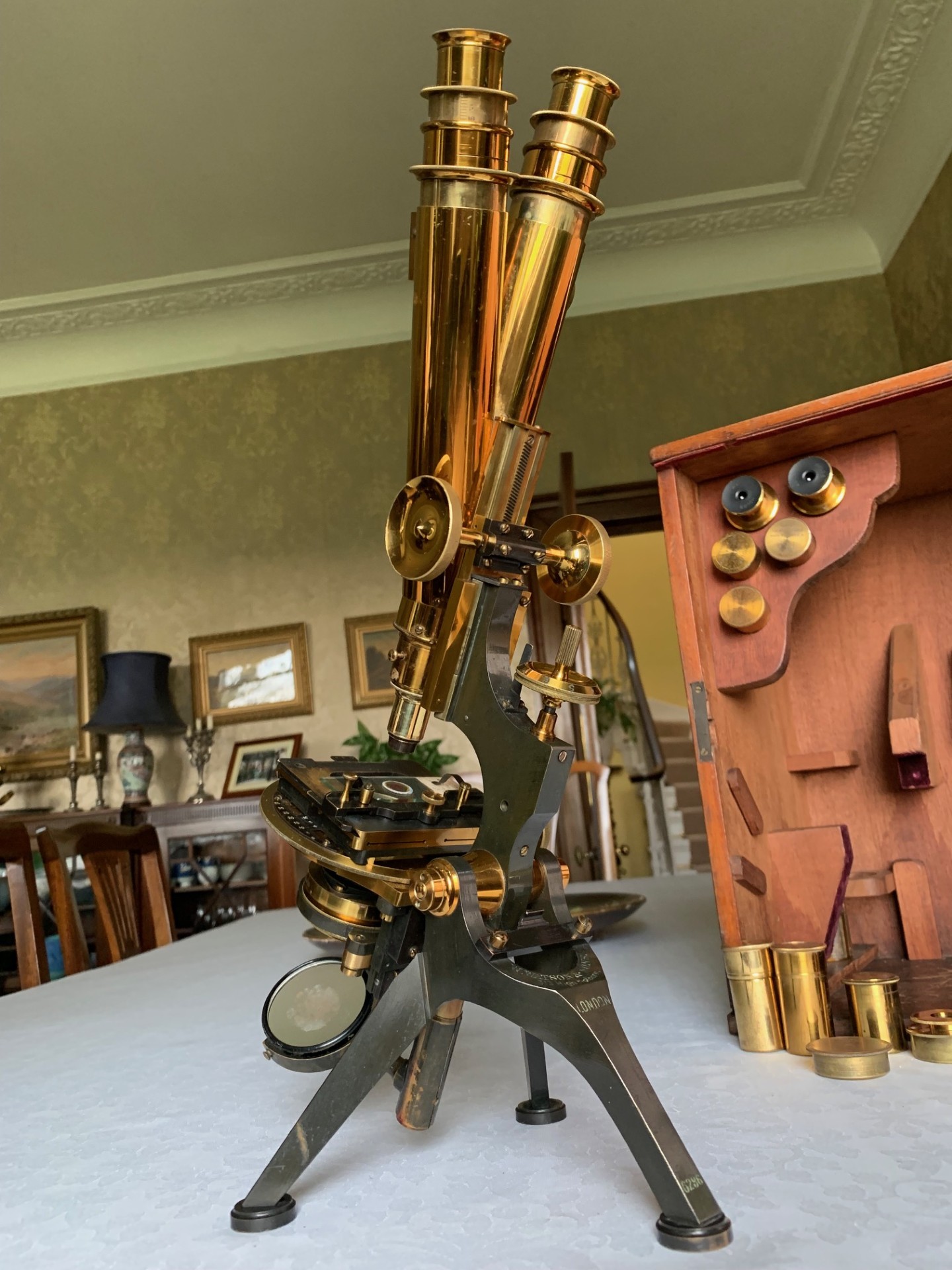
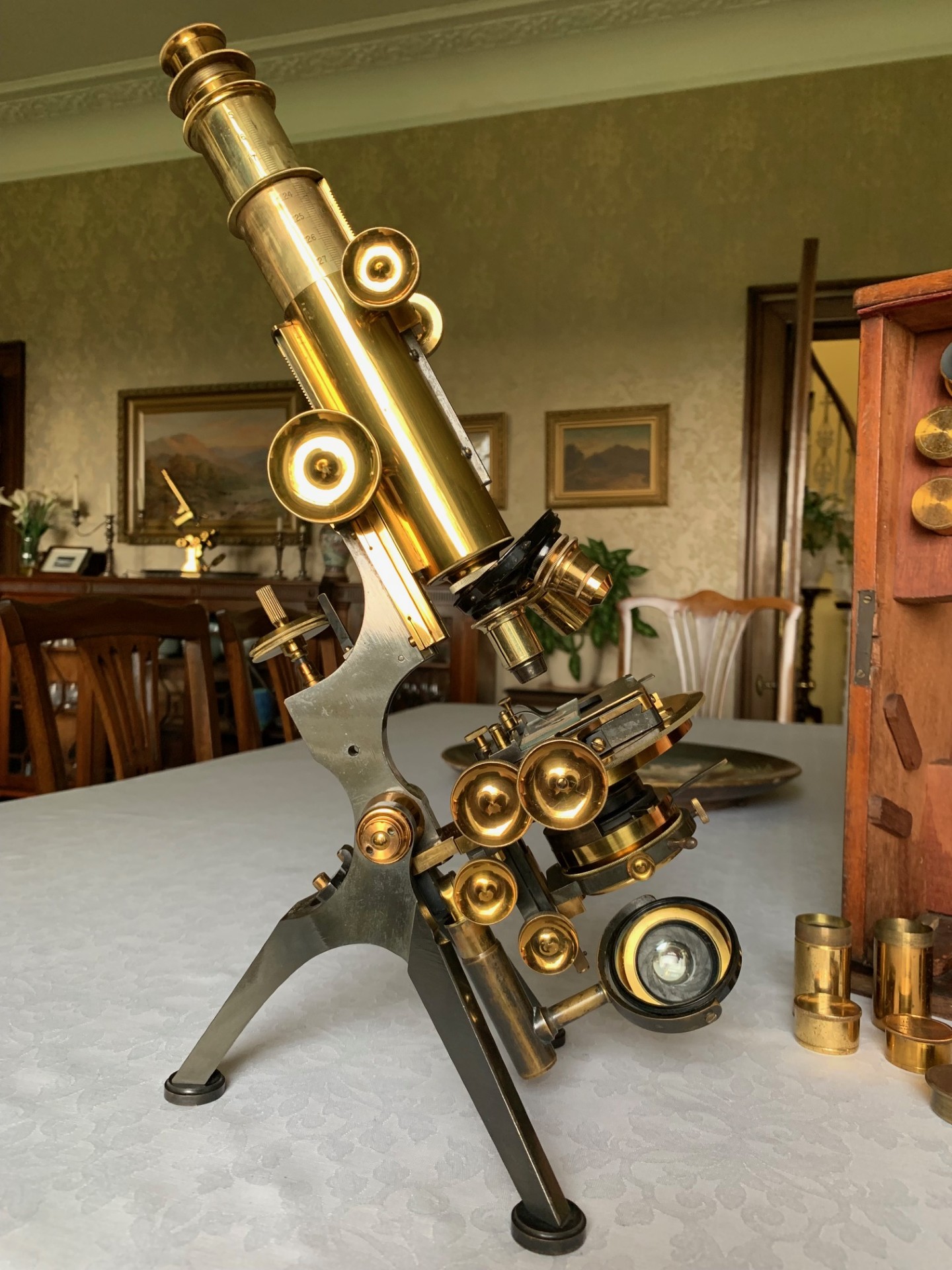
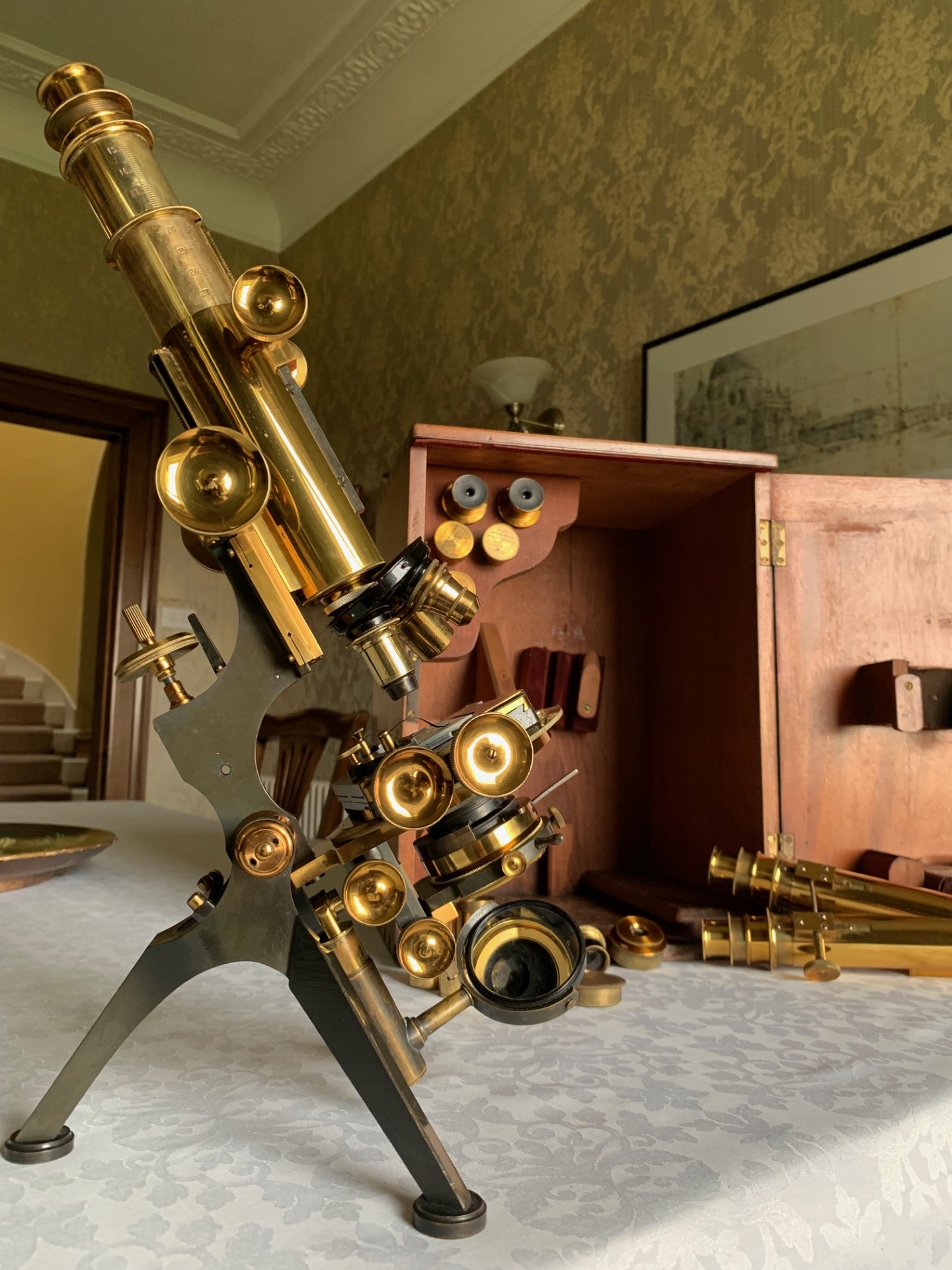
This listing is for a highly collectable example of Watson’s Royal model of brass microscope. It’s quite an imposing instrument standing over 18 inches high when the draw-tubes and coarse focus are fully racked out in monocular configuration and I hope that the listing photos do the instrument justice and showcase its excellent condition. This example dates to around 1901 based on its serial number 6286 which is engraved on the tripod just above the rear foot. In 1901 Watson traded as W.Watson & Sons and it wasn’t until 1908 that they incorporated as a limited company.
The Royal model was produced by W. Watson & Sons based on a design scheme originally proposed by famous Belgian microscopist Henri Van Heurck (1839 – 1909) and was intended to be a slightly smaller and more affordable version of the top-of-the-range Watson instruments of the time, which were the Van Heurck models. This example also benefits from the addition of Wenham binocular tubes endowing the instrument with both draw-tube extended monocular and binocular viewing options – are rare find in this condition.
The Van Heurck, Royal and Edinburgh models of Watson microscope all bear the same signature shape and were essentially based upon Watson’s original Edinburgh microscope design, which they had been manufacturing in various guises since about 1887. The signature form most commonly uses a tripod base and lister-type upper limb with vernier screw operating on an internal lever fine focus mechanism. This particular Royal model is fitted with some nice bespoke options and is evidence of the fact that Watson offered customisation and quite a number of discerning customers at that time must have had their instruments built to their own individual specifications, this example being no exception to that general rule.
This example #6286 dating to 1901 based on its size and key features therefore appears to be a custom Royal, with the old style of tripod with more slanted twin uprights supporting the main pivot and it’s a rather special period find in such pristine condition. The Royal was designed to offer most of what the larger Van Heurck models could offer, but at a more affordable price. I’m sure that the Watson cognoscenti will have their own views, but I believe that this example is a Royal fitted with sub-stage fine adjustment with the adjustment thumb-wheel located below-stage. Further evidence of this being a Royal model is the spread of the front tripod legs, which is 6.75 inches and the tripod feet are all anodised brass and shod in cork, which was a specific Royal feature and allows the instrument to be used on a polished surface if so desired. Van Heurck models when fitted with a tripod were also shod with cork but all had shiny lacquered brass feet; they would also have a tripod spread greater than 7 inches.
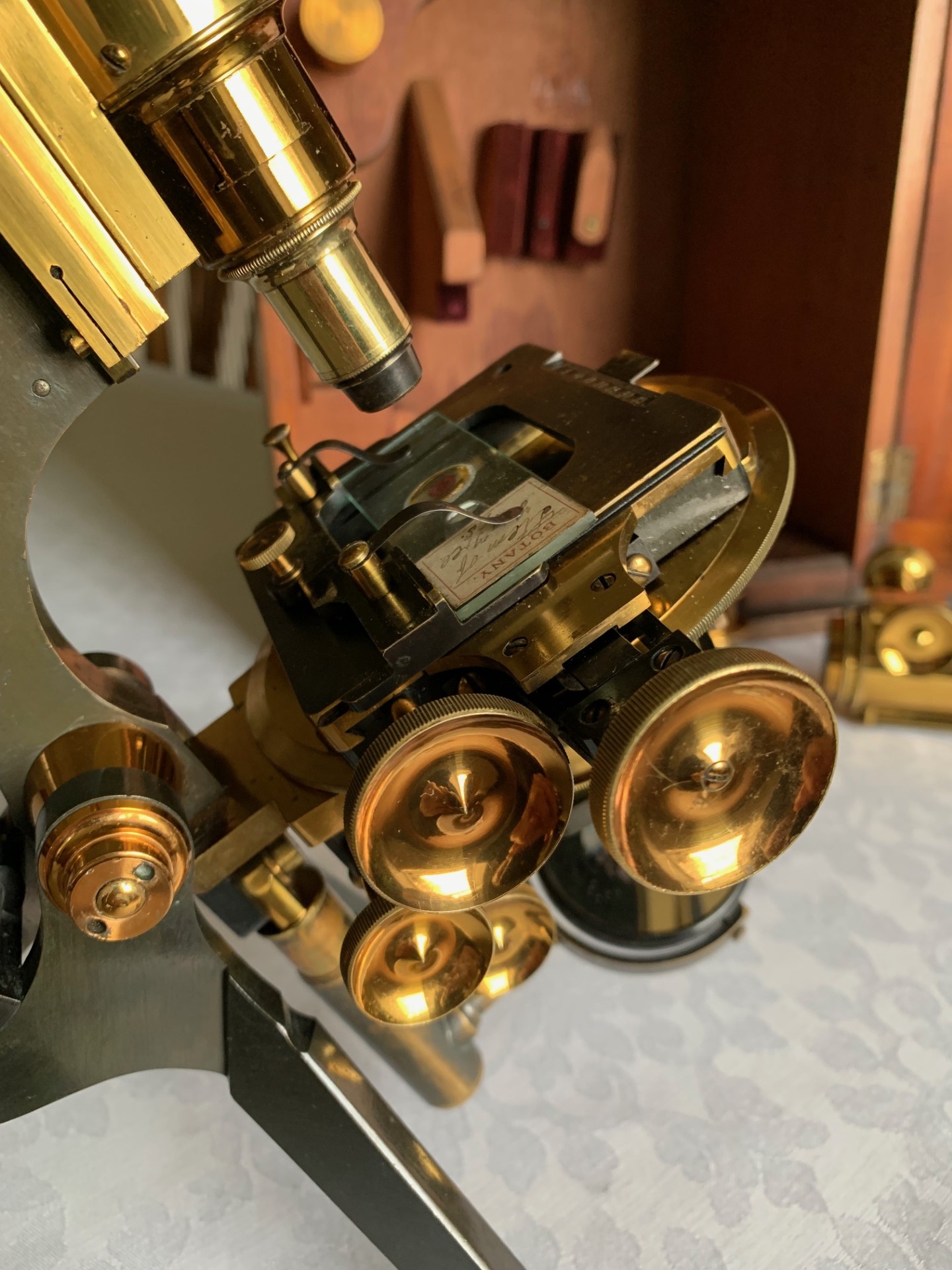
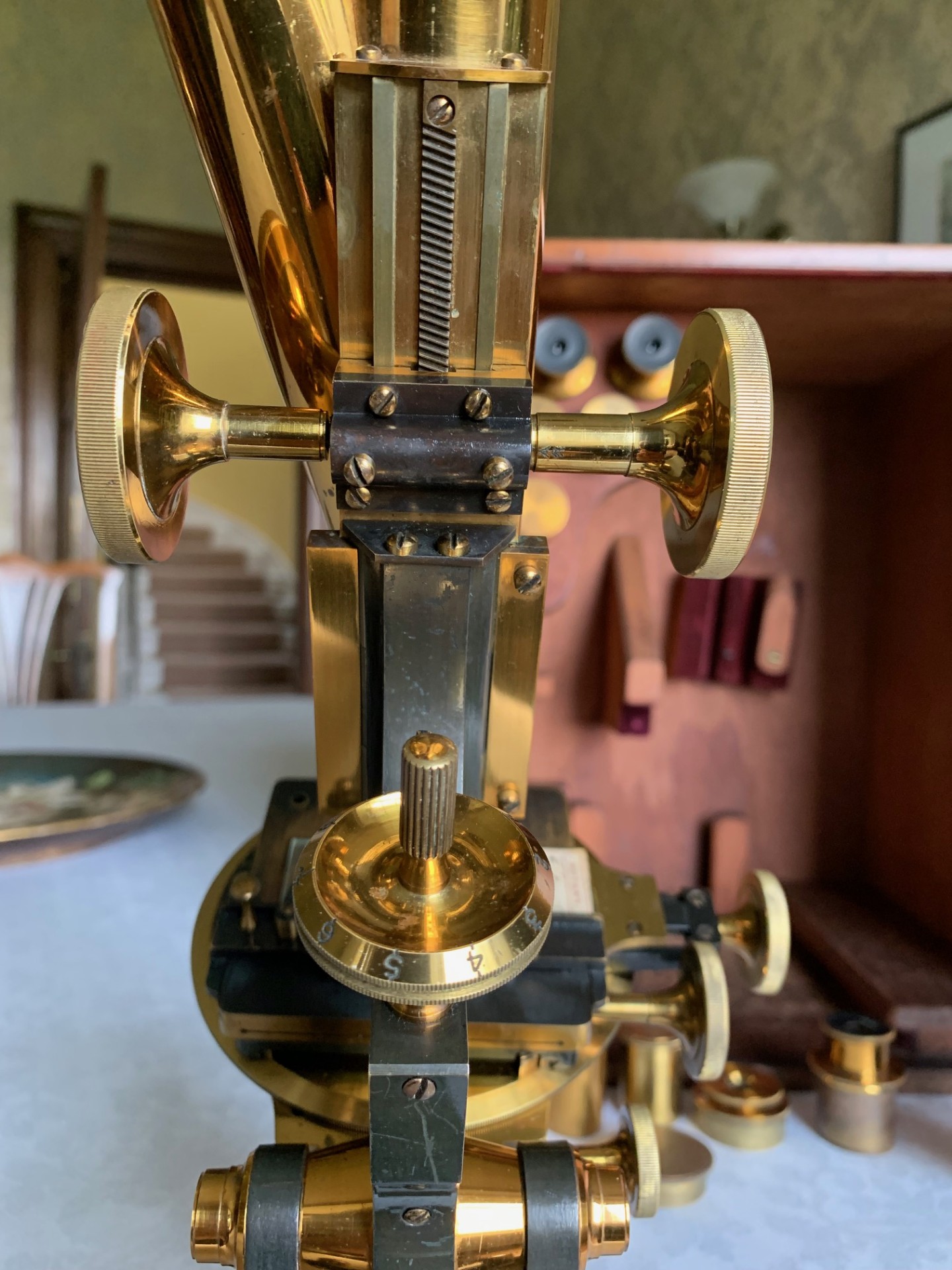
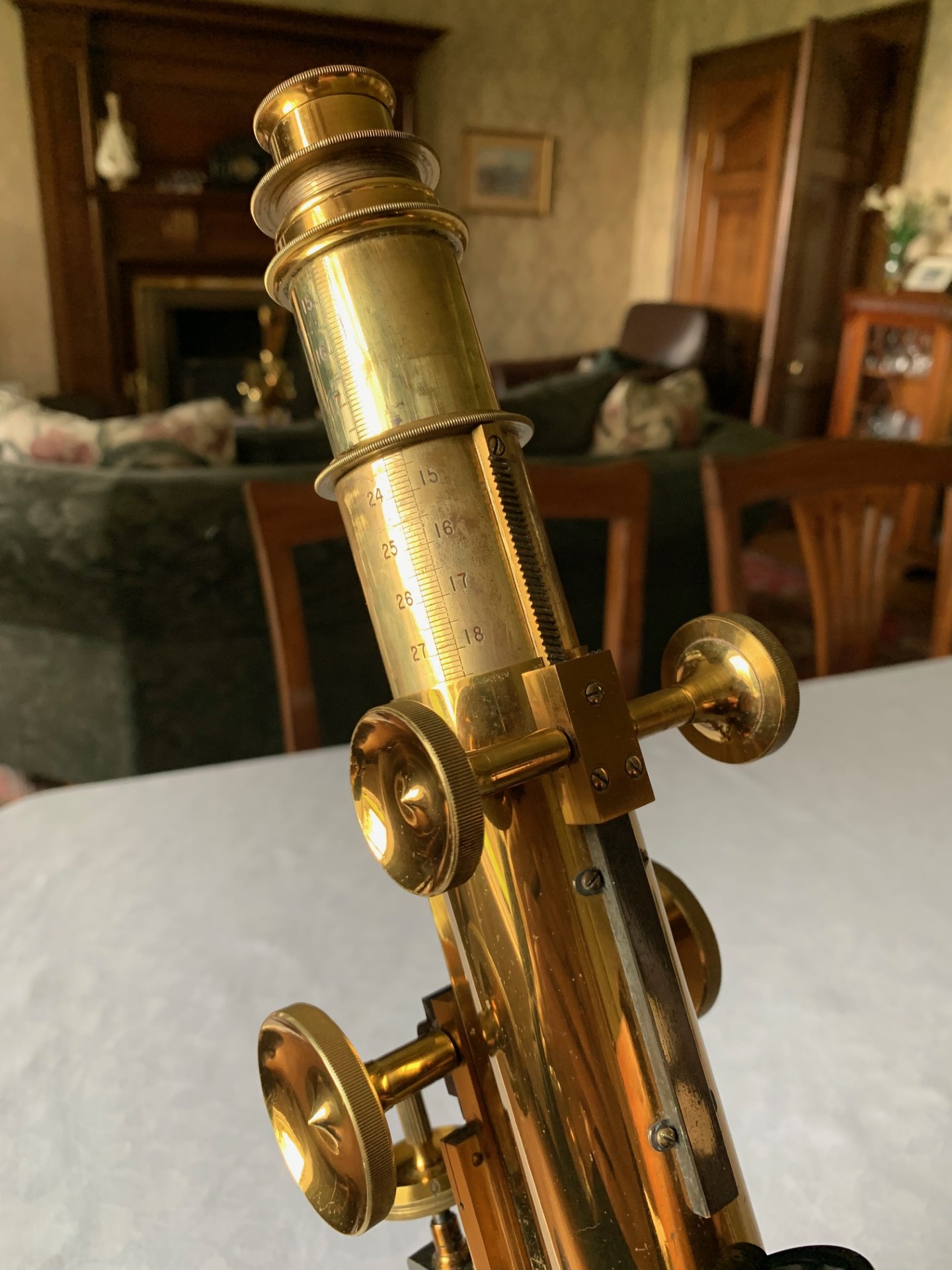
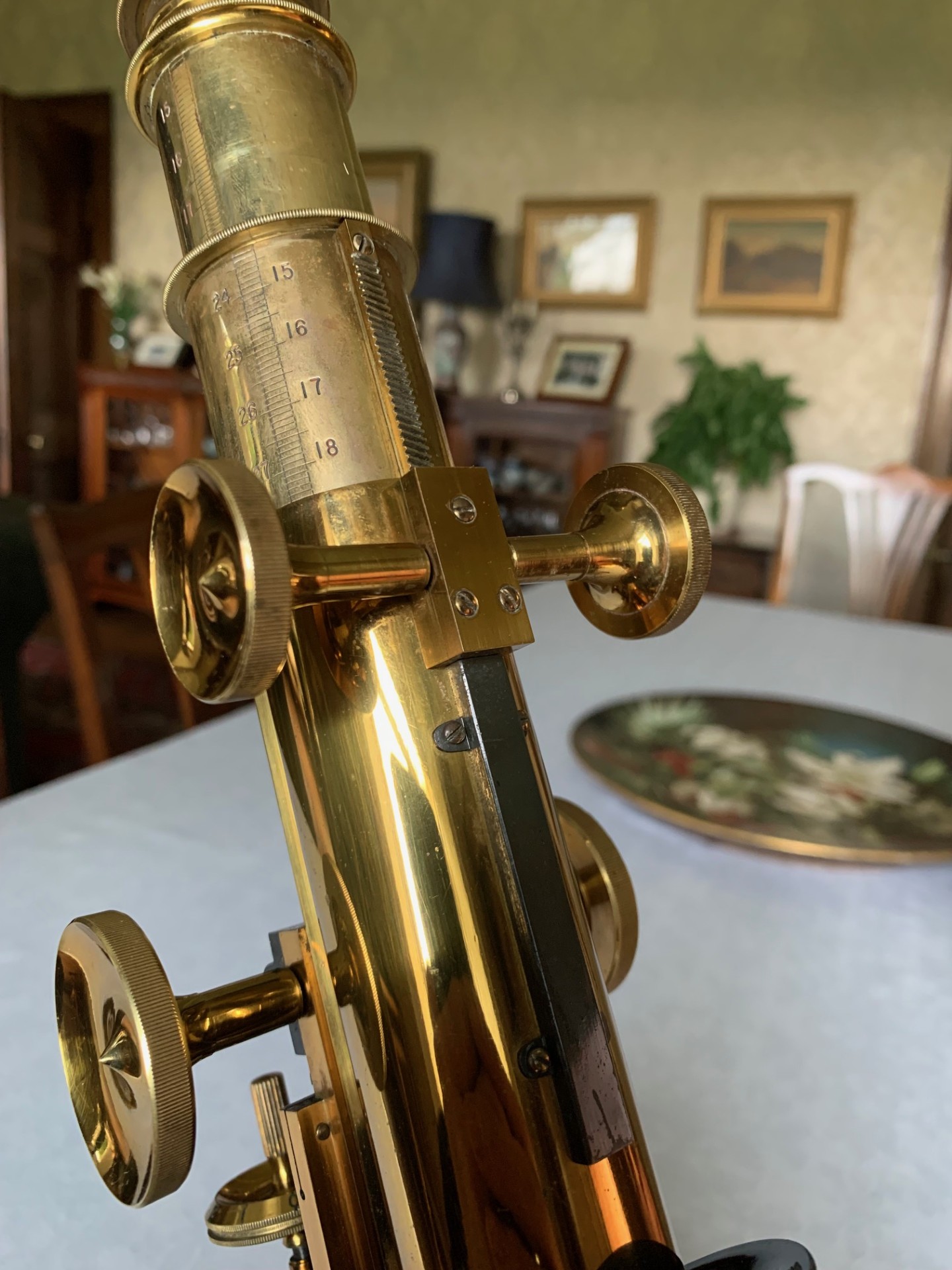
Turning to the technical details of this instrument, the coarse focus is via rack and pinion, with the optical tube holding in position as it should. It’s also interesting to note that there’s tension adjustment to the coarse focus, a feature not found on other Edinburgh models until much later. Fine focus is operated via a separate brass thumb-wheel with knurled extension, located at the rear of the upper limb which operates a vernier screw acting on an internal lever system and it too works nice and smoothly.
With its optics, this Watson Royal microscope comes with two viewing options, described below:
1) A monocular graduated brass eyepiece draw-tube inside another graduated draw-tube operated via a mechanical rack and pinion system, all of which sits inside a main lacquered brass monocular tube. Extending the draw-tubes noticeably increases the available magnification.
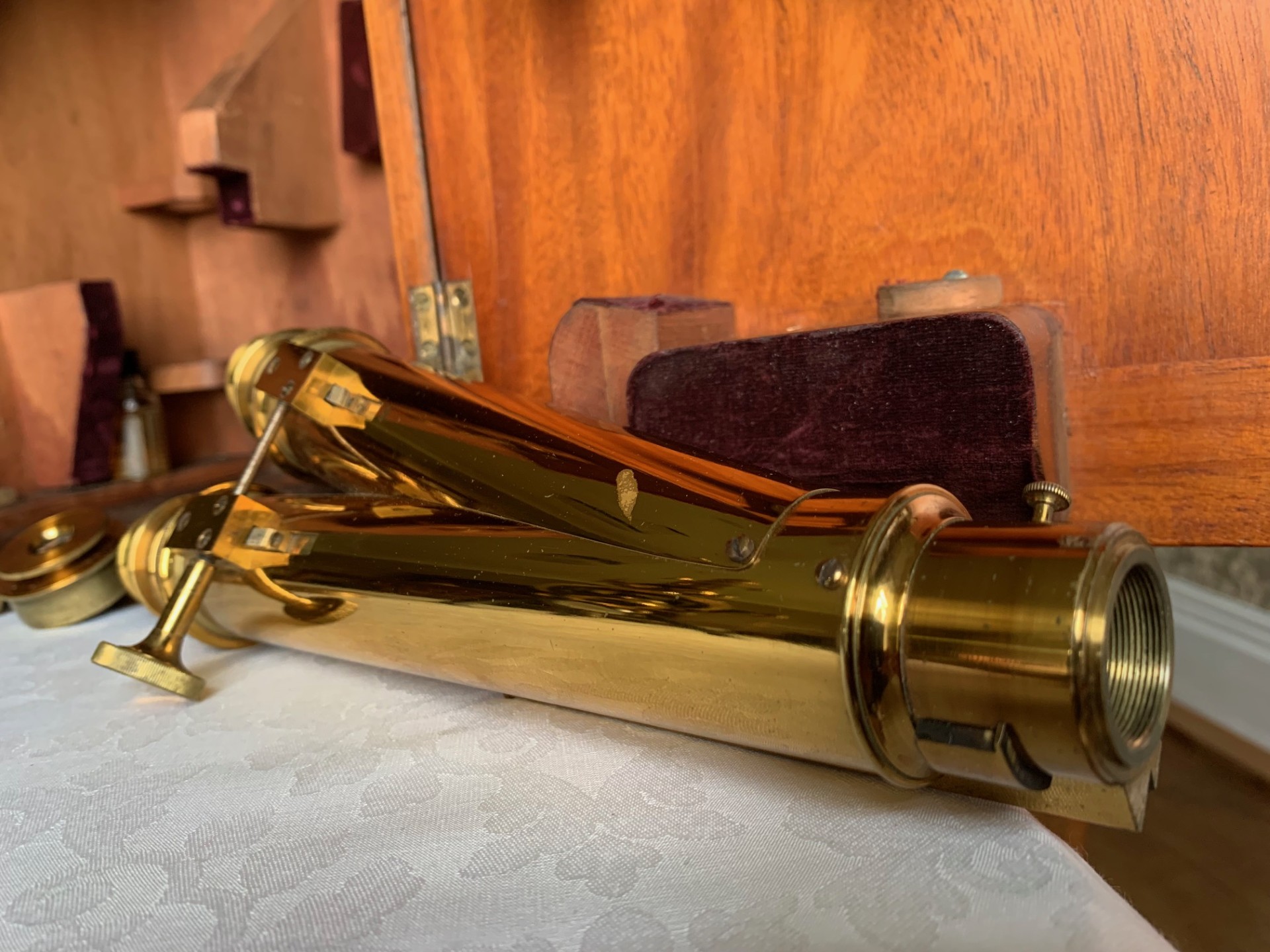
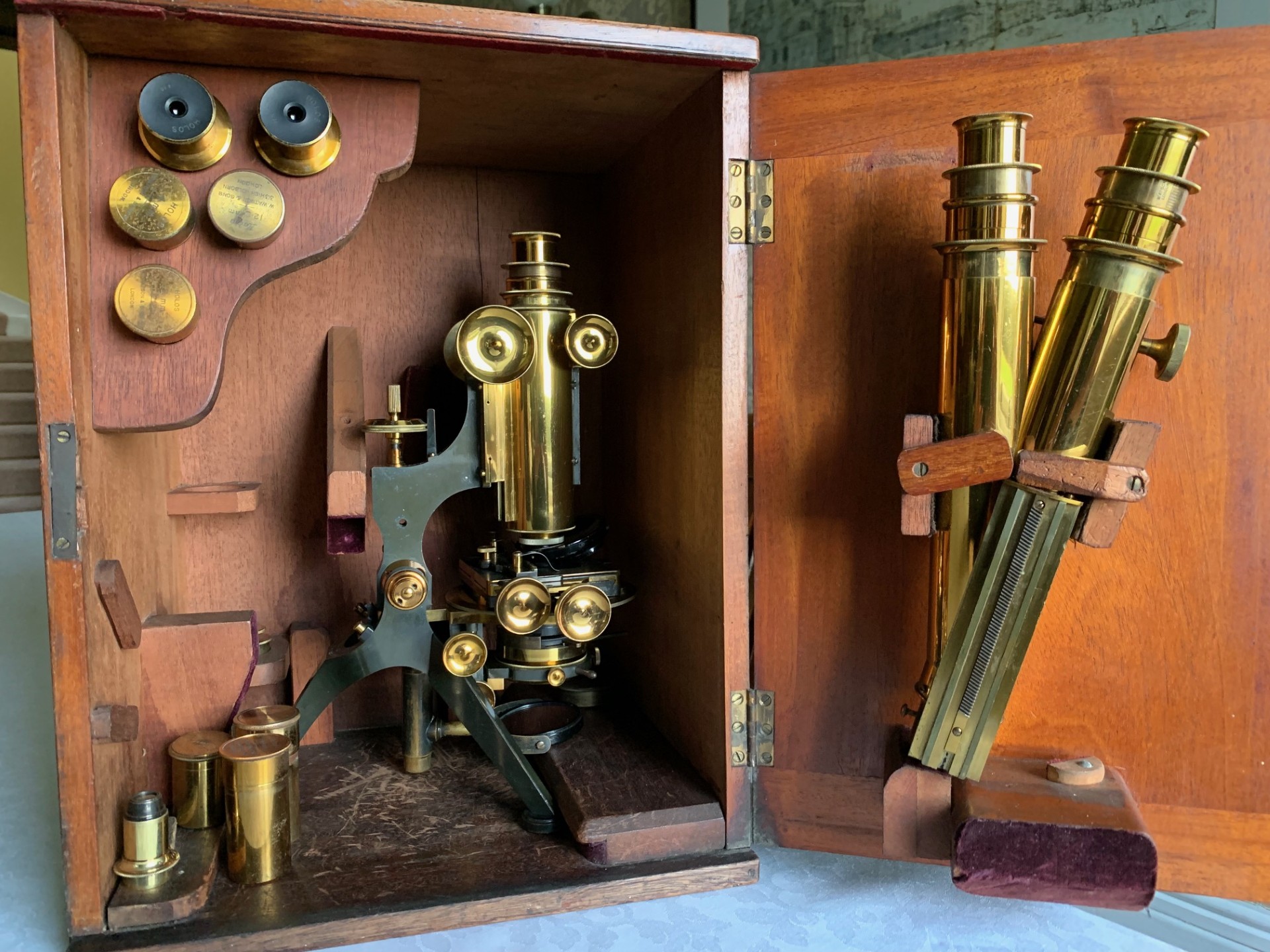
2) A pair of Wenham optical tubes in lacquered brass finish. These are fitted with eyepiece draw-tubes with mechanical operation via a rack & pinion system, which works well. At the base of the tubes sits the Wenham prism in its shoe-carrier. This prism when set to “in” splits the light, also sending a beam up the left-hand tube. Collimation is good and when everything is set correctly the Wenham system affords a comfortable binocular view. You can also use the Wenham tubes in monocular fashion, simply by adjusting the position of the Wenham prism.
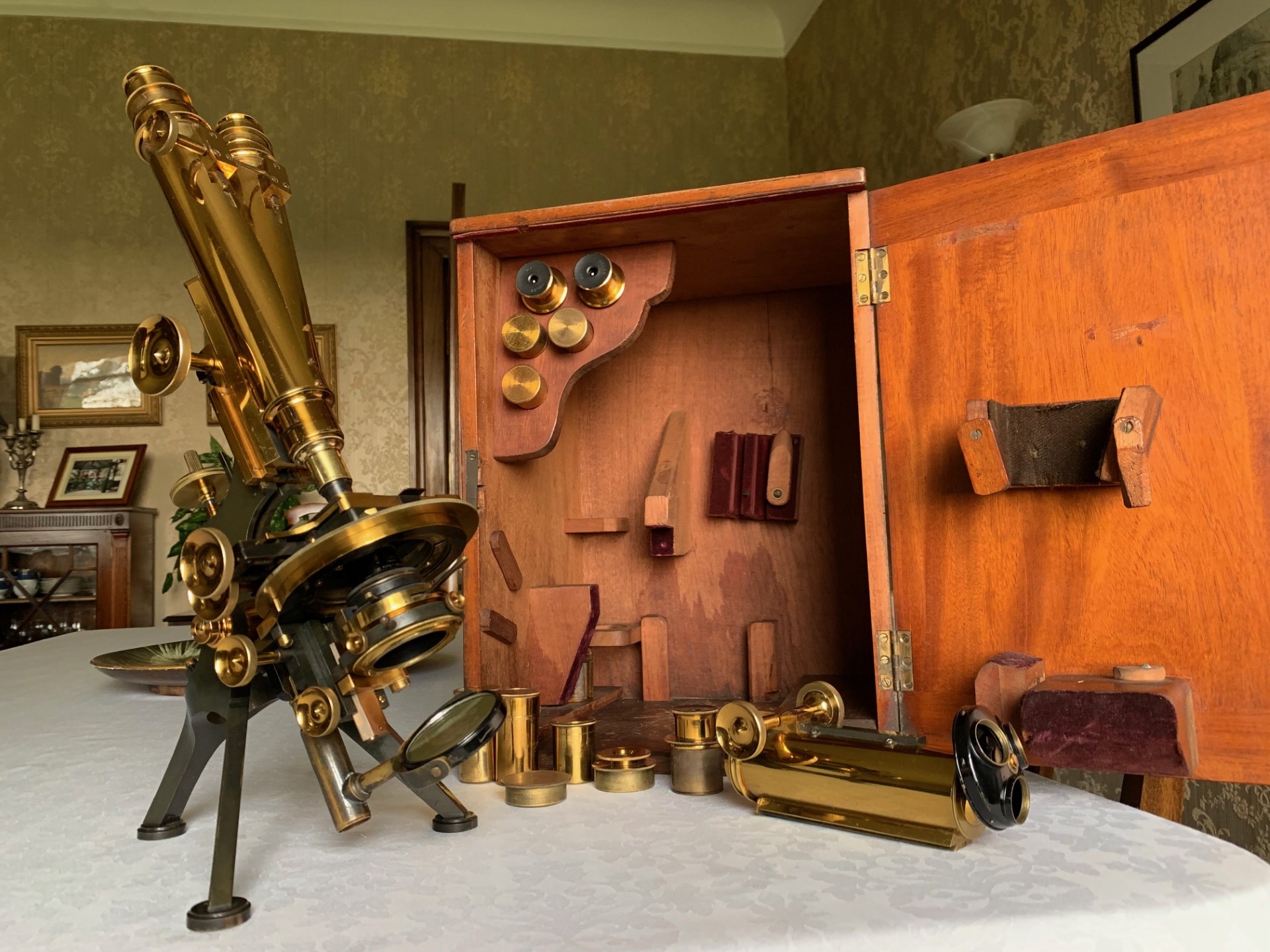
There’s a selection of top-hat eyepieces supplied as follows:
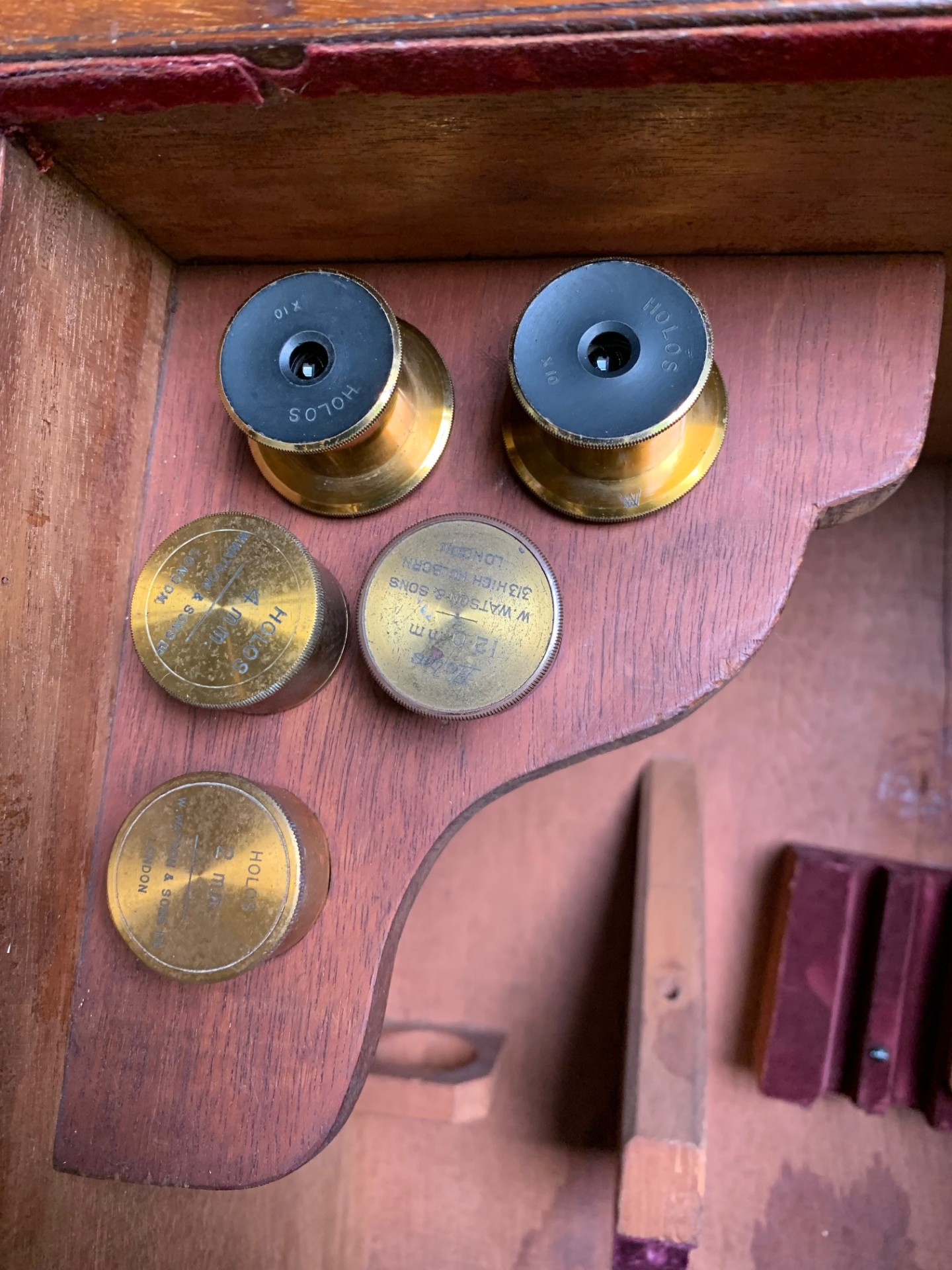
– a pair of Holos 5x magnification for binocular viewing – with integral draw-tubes
– a pair of Holos 10x magnification for binocular viewing – with integral draw-tubes
– single Holos 14x magnification for monocular – with integral draw-tube
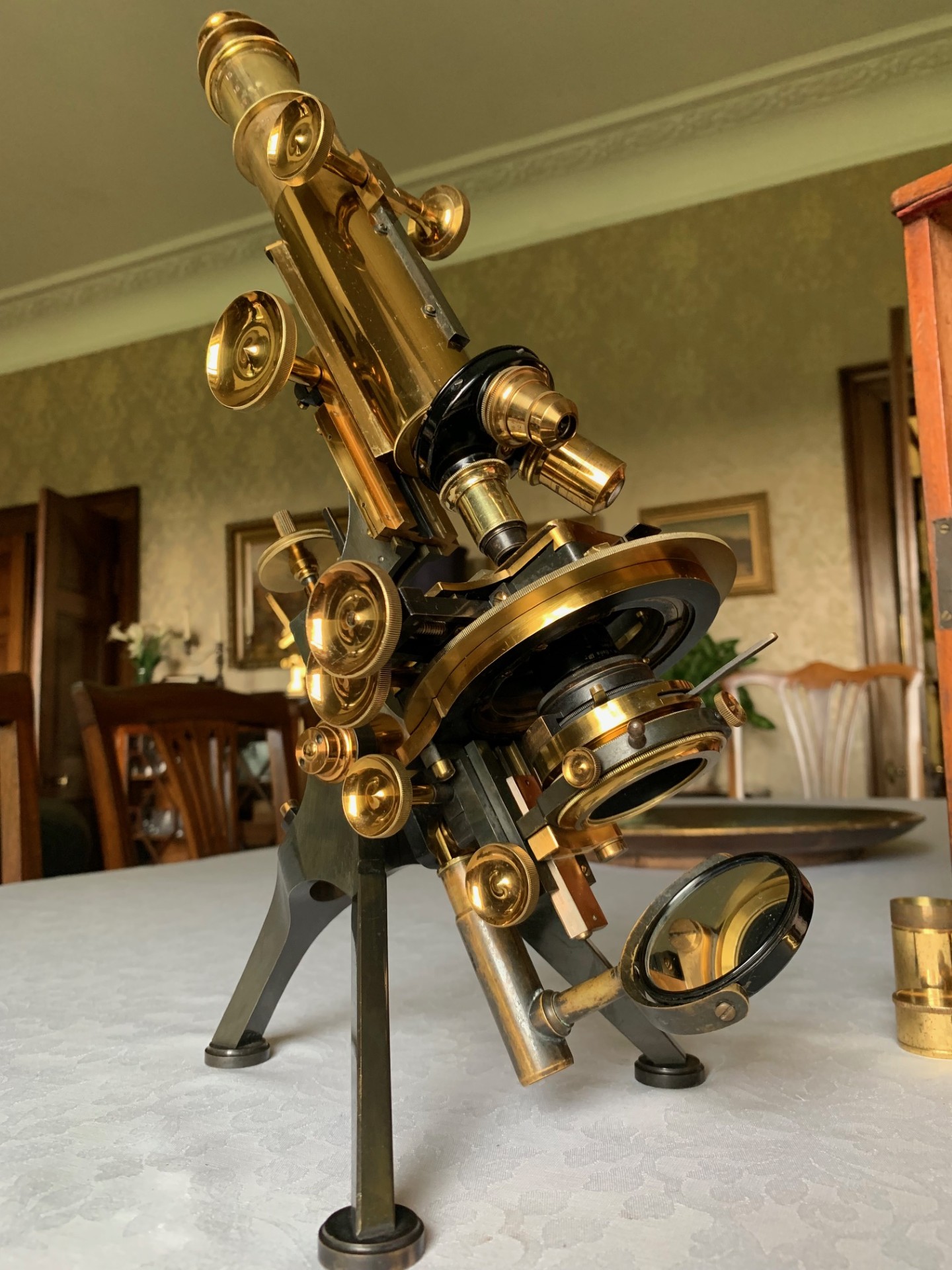
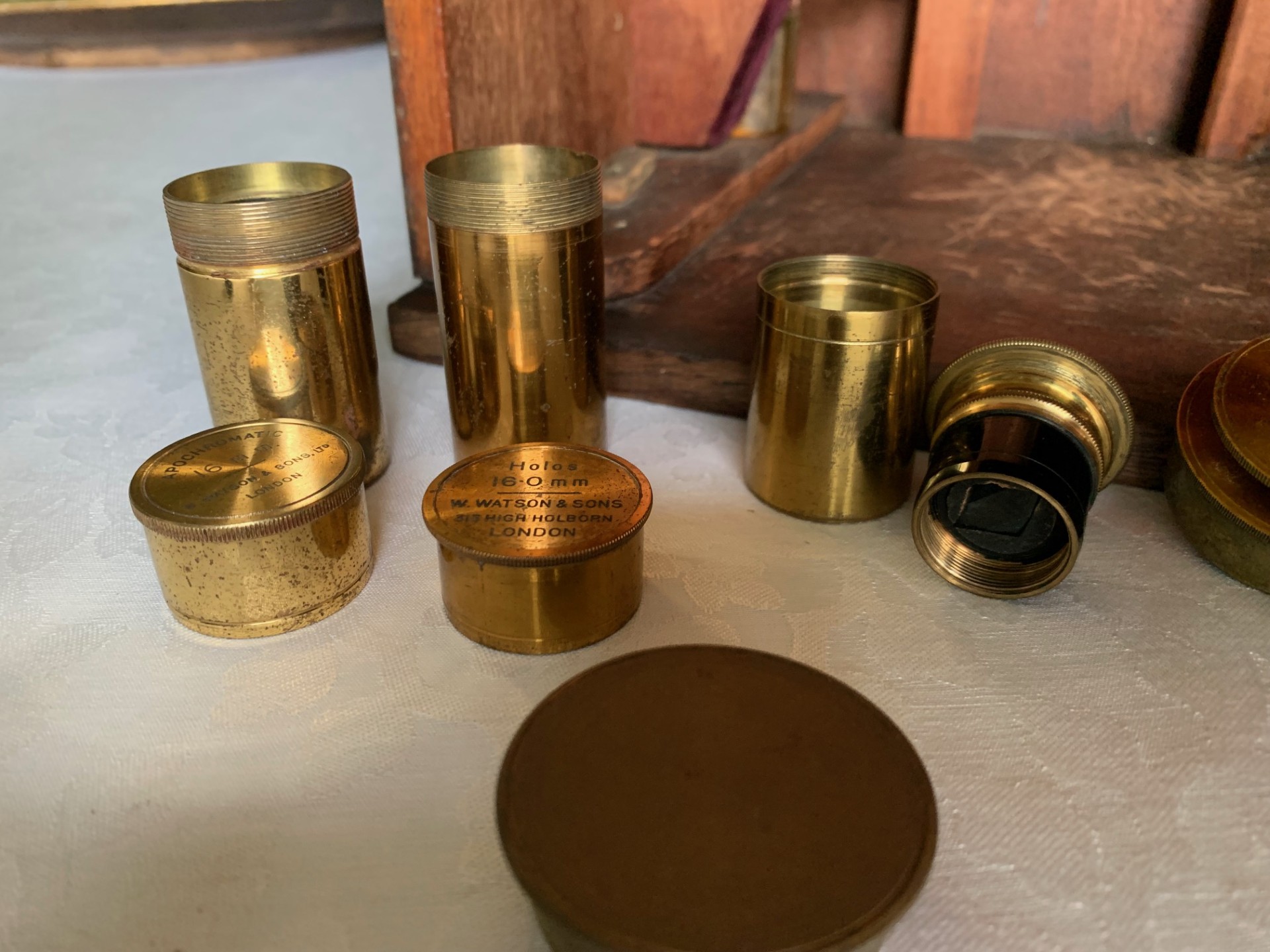
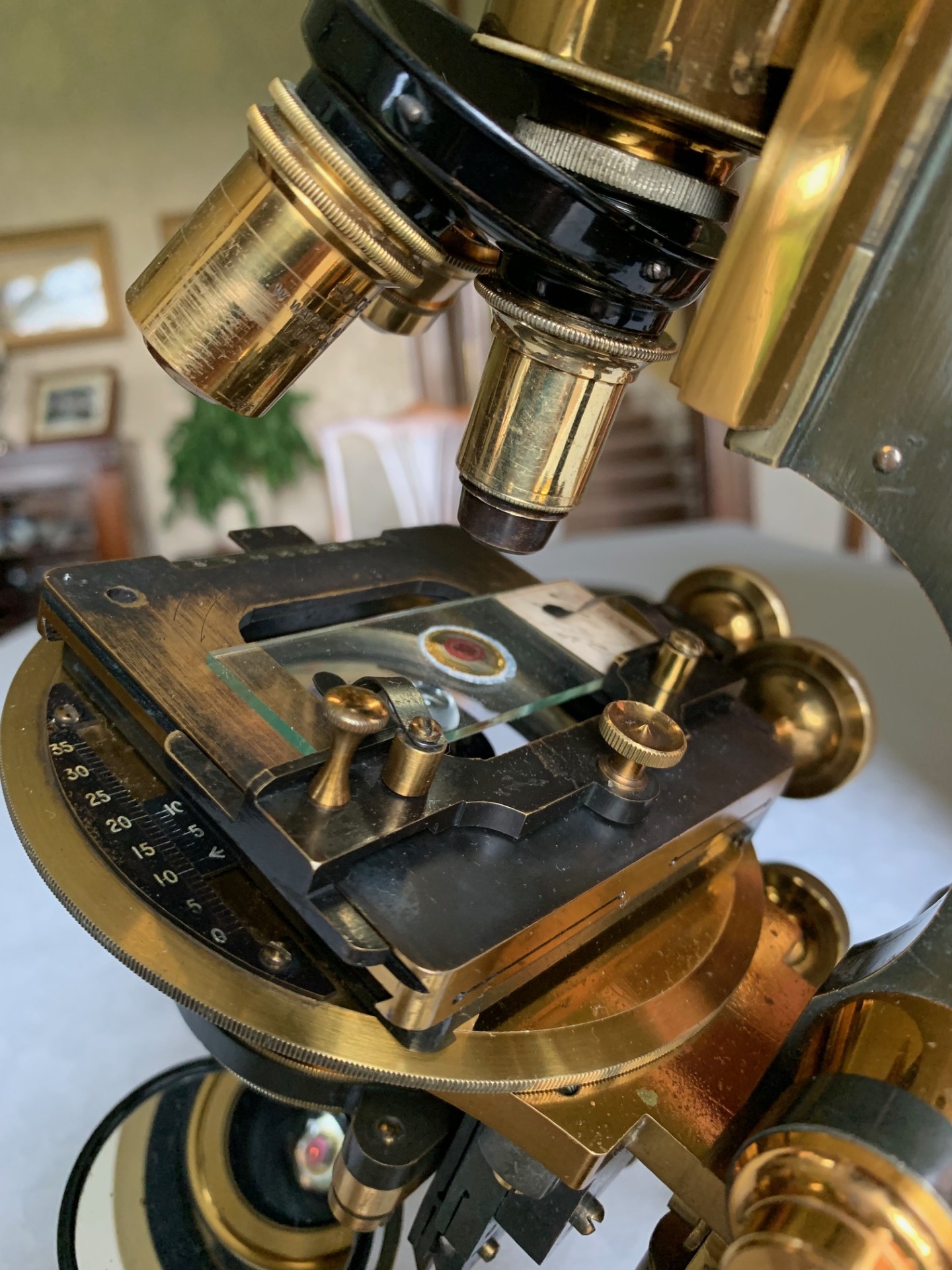
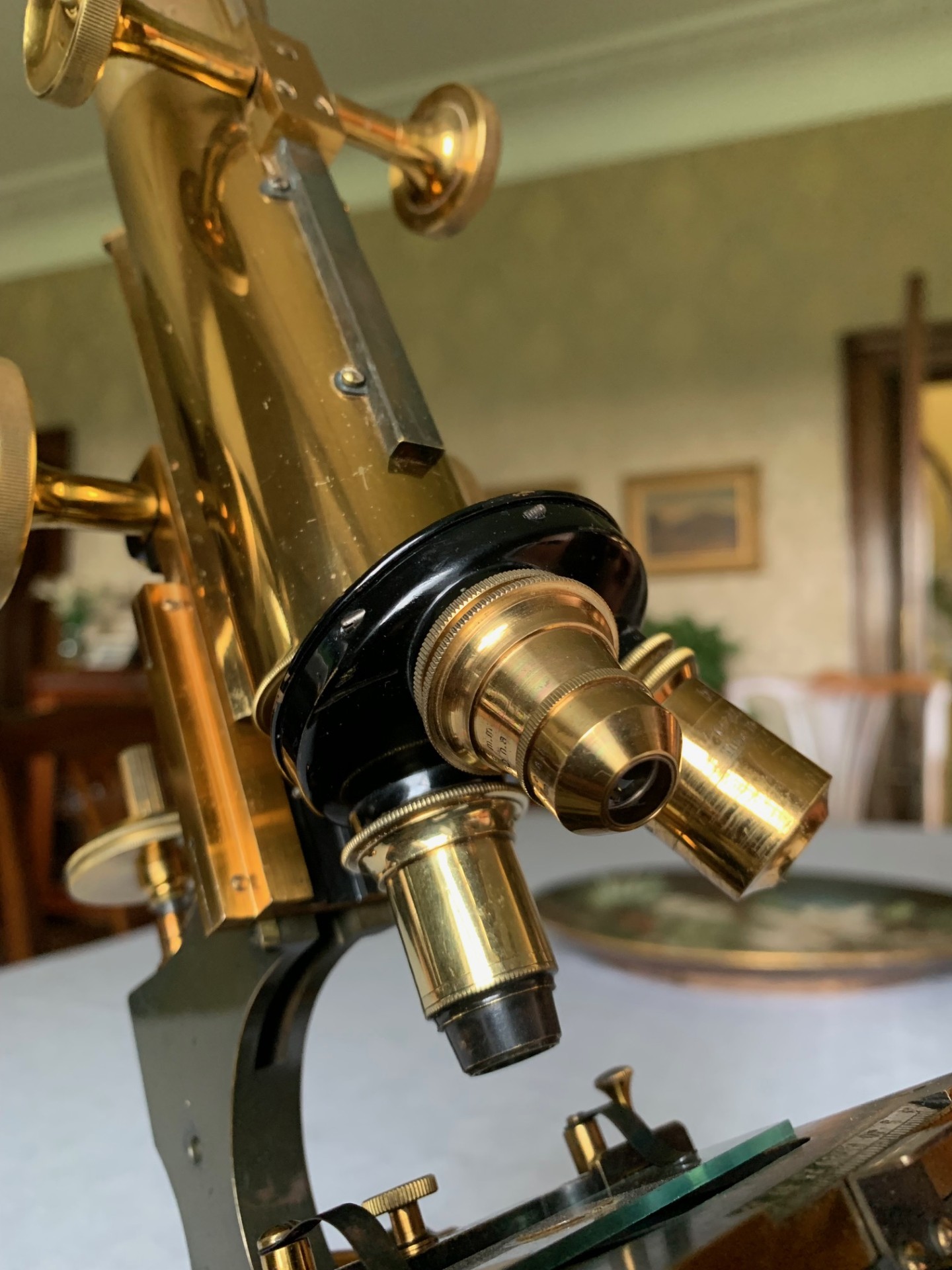
There’s a very good selection of quality objective lenses by Watson and a later 1930s Watson brass triple turret which rotates with good feel when the objectives align with the optical axis. The objective selection is as below:
– 2 inch Para – about 3x magnification
– 16mm Holos – 10x magnification
– 16mm Apochromatic – 10x magnification
– 12mm – Holos – 15x magnification
– 4mm Holos – 40x magnification
– 1/10th inch unbranded – approx 80x magnification – requires oil immersion
(All objectives have their correct brass canisters)
Overall therefore, the range of magnification available with this Watson with the draw-tubes set at standard length, ranges from about 15x with the lowest power lens combination, up to over 1,000x with highest power combination and with the benefit of very good illumination and oil of course immersion for the higher-power 1/10th inch objective.
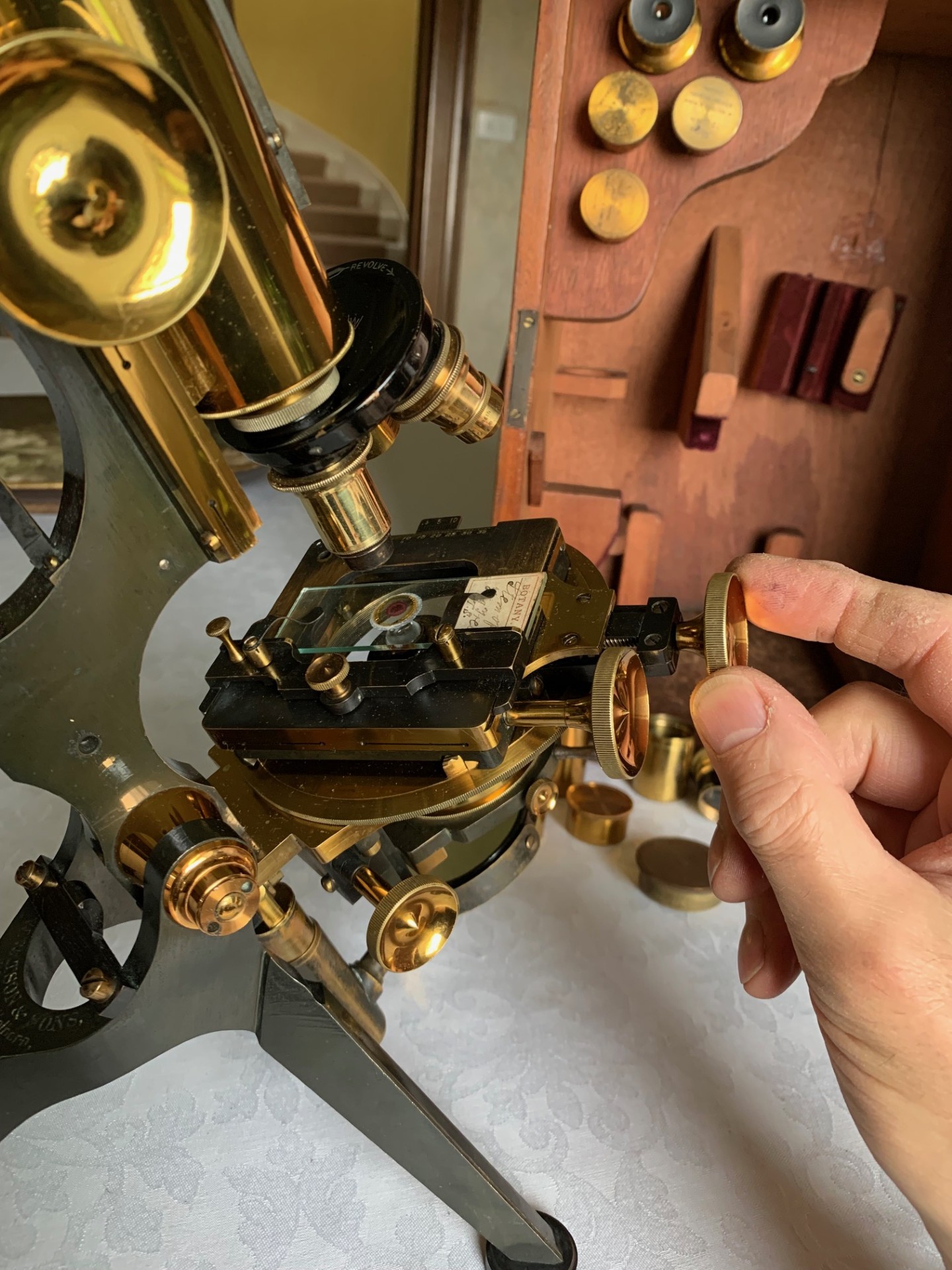
The mechanical stage is in brass, of circular design and rotates with smooth action, although it doesn’t complete a full 360 degree rotation. The stage manages about 270 degrees, then the x/y thumb-wheels catch on the upper limb – you need a Circuit Stage Van Heurck for full 360 degree rotation in this period of Watson production. The stage has vernier scales for both axes and x/y adjustment thumb-wheels on the right-hand side, which move nice and smoothly with good feel and just the right resistance to motion. The stage also has a sliding bar with slide clips and a thumb-screw locking mechanism. There’s also a useful slide ejection feature – by rotating the thumb-screw on the left of the sliding bar, the mechanism pops out the slide for easy removal – a nice Watson touch. The instrument also tilts for inclined viewing, holding in position as it should on inclination and can be tightened as necessary.
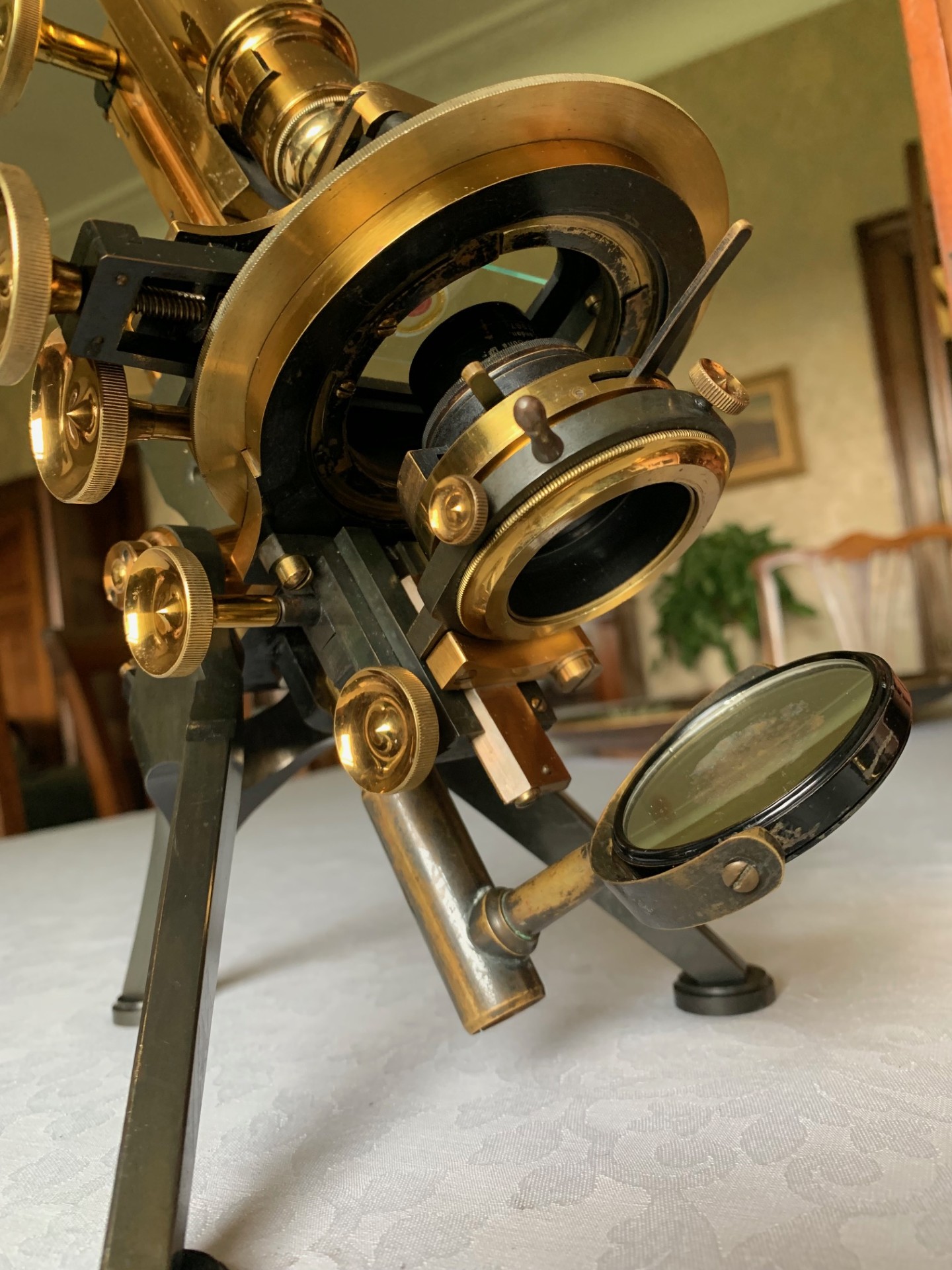
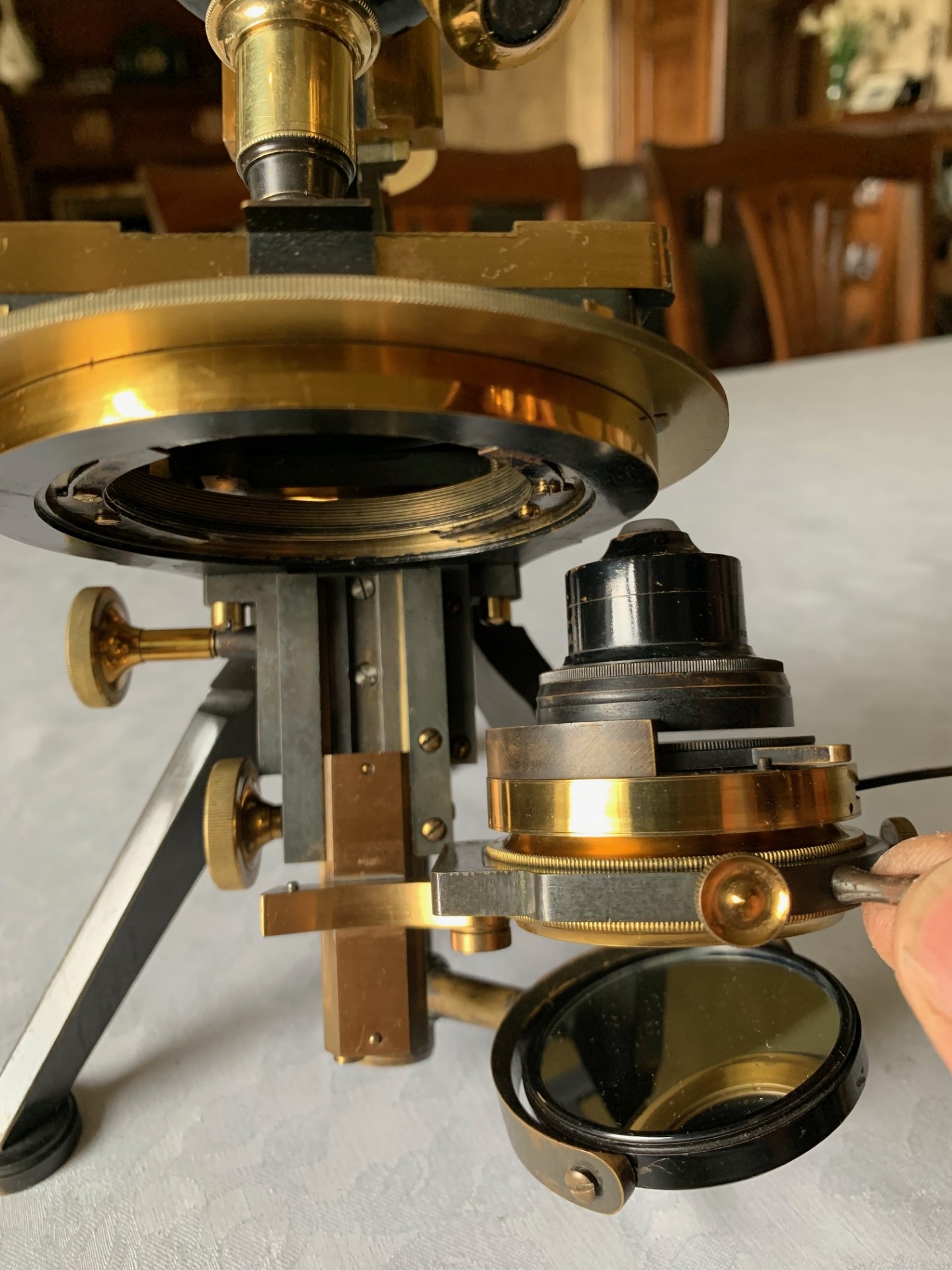
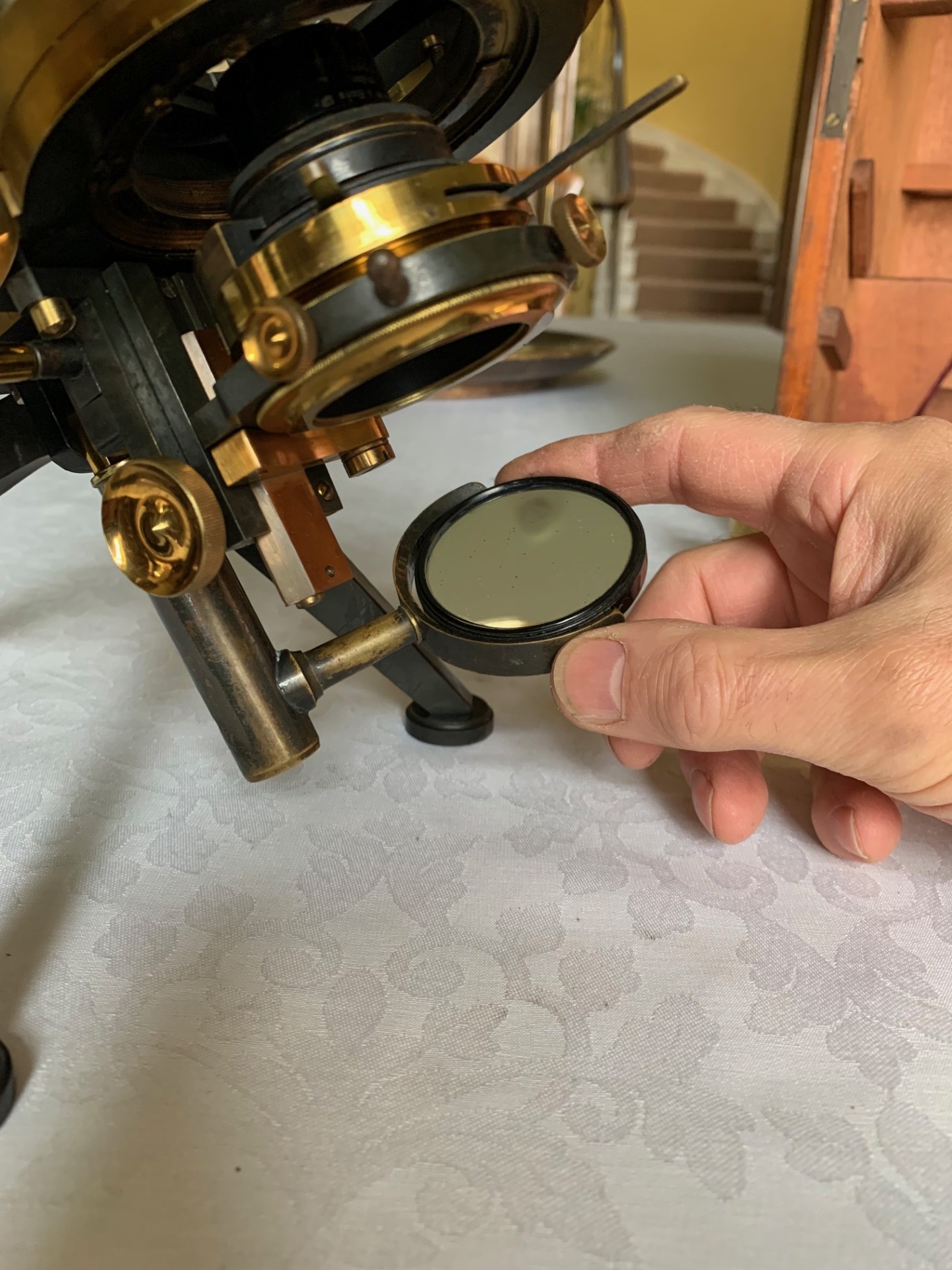
Turning to the sub-stage, we have a top-mount Watson Universal condenser fitted in the brass ring-carrier, with centering controls comprising brass thumb-screws, which sits in a height adjustable rack and pinion mount with additional vernier fine adjustment via a horizontally mounted thumb-wheel that’s located below-stage. There’s also a single-sided brass thumb-wheel for coarse adjustment of the height. The filter carrier fitted accepts 35mm filters which are standard for Watson instruments of this era. The condenser assembly also swings out for maintenance as shown and has a working iris to control lighting levels which has a smooth action.
Lighting is via a later replacement plano-concave mirror on a gimballed slider, which sits on a height and swing adjustable brass support arm, with silvering that’s got some foxing, but reflectivity that’s perfectly good.
The instrument and its controls have been very gently dusted, with the friction surfaces and moving parts sparingly lubricated so that they operate smoothly with only very slight age-appropriate signs of wear. This instrument presents extremely well and is in almost pristine condition, which is remarkable for a 125 year old technical instrument of this type. The brass-work catches the light beautifully, showing only very minor wear losses, which is what you’d hope for with an antique instrument of this age and quality that’s been really well cherished and cared for through what must have been several changes of ownership. Overall, it’s in fine shape and capable of producing some nice images, catering as it does for both monocular and binocular viewing styles. This example is essentially a highly collectible and very well endowed Watson Royal model with a good selection of accessories (listed below), in near perfect condition for its period and it’ll make a very nice usable instrument and also a stunning and imposing display piece. It also presents rather well while being used as a desk-top instrument and will also look good in a library or home office setting.
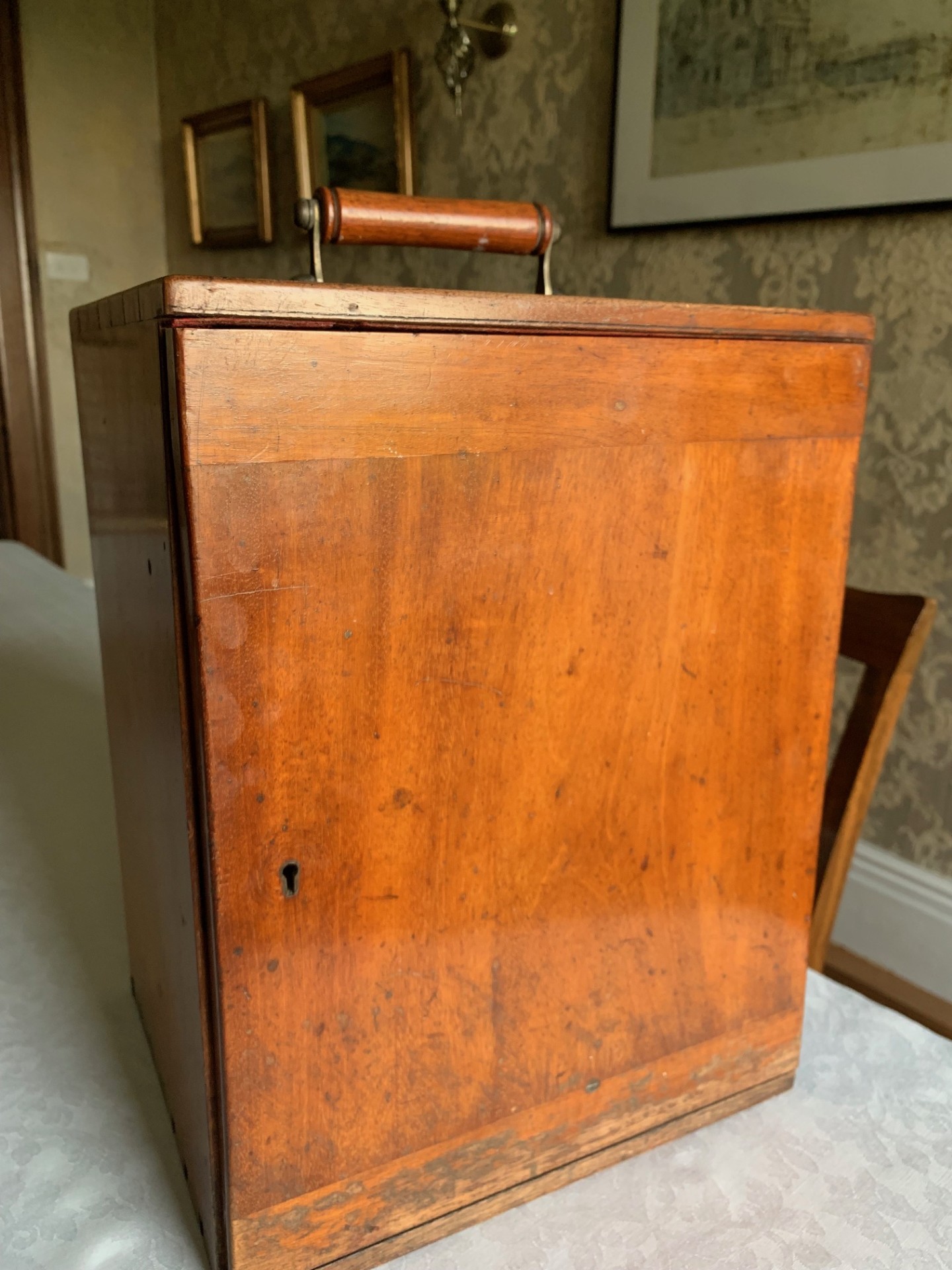
There’s a correct period Watson hardwood storage case with this instrument with wooden/brass carry-handle, internal racking and working lock that’s just missing the key. It’s also got an exterior finish that’s in keeping to complement the antique Watson microscope that resides within.
Accessories:
– sub-stage nicol prism polariser
– nose-piece nicol prism analyser
– double draw-tube monocular and Wenham binocular optical tubes
– Set of dark-field stops in brass case
Owing to the weight and delicacy of this antique microscope, case and its accessories, it will be partially dismantled, everything will be very well wrapped for shipping and the final package(s) will be dispatched by insured courier upon receipt of cleared funds. Yes, it’s expensive, but it will be quite difficult to find another example of a Victorian/Edwardian Watson Royal in such fine condition with such a good set of options and accessories – it’s really one for the serious enthusiast and/or seasoned Watson collector. So, if there’s a gap in your collection for a Watson Royal, or if the Royal with Wenham double tubes is something of a grail piece, as it was with me for a long time, then maybe you’ve finally found one.
Thanks for looking.
Ask the Dealer
Dealer information
 Arcboutant Scientific
Arcboutant Scientific based in Glasgow Scotland, with an interest in scientific collectables dating back to 1988. Now making available carefully curated fine examples, principally of antique microscopes and associated scientific equipment by quality English and Continental makers, to collectors world-wide.