
Antique Wenham Binocular Brass Microscope by Henry Crouch, London – c1870, Cased
£995
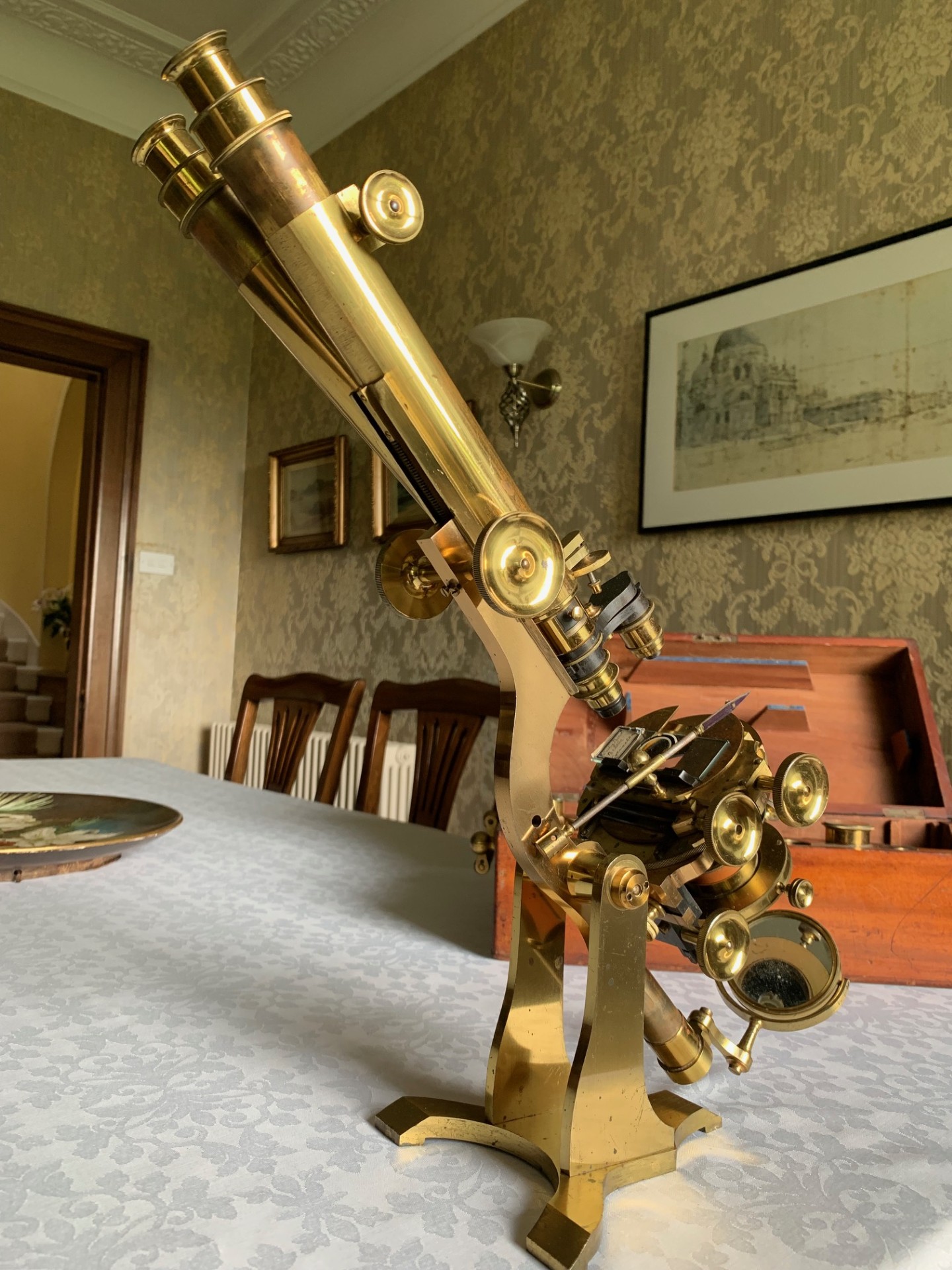
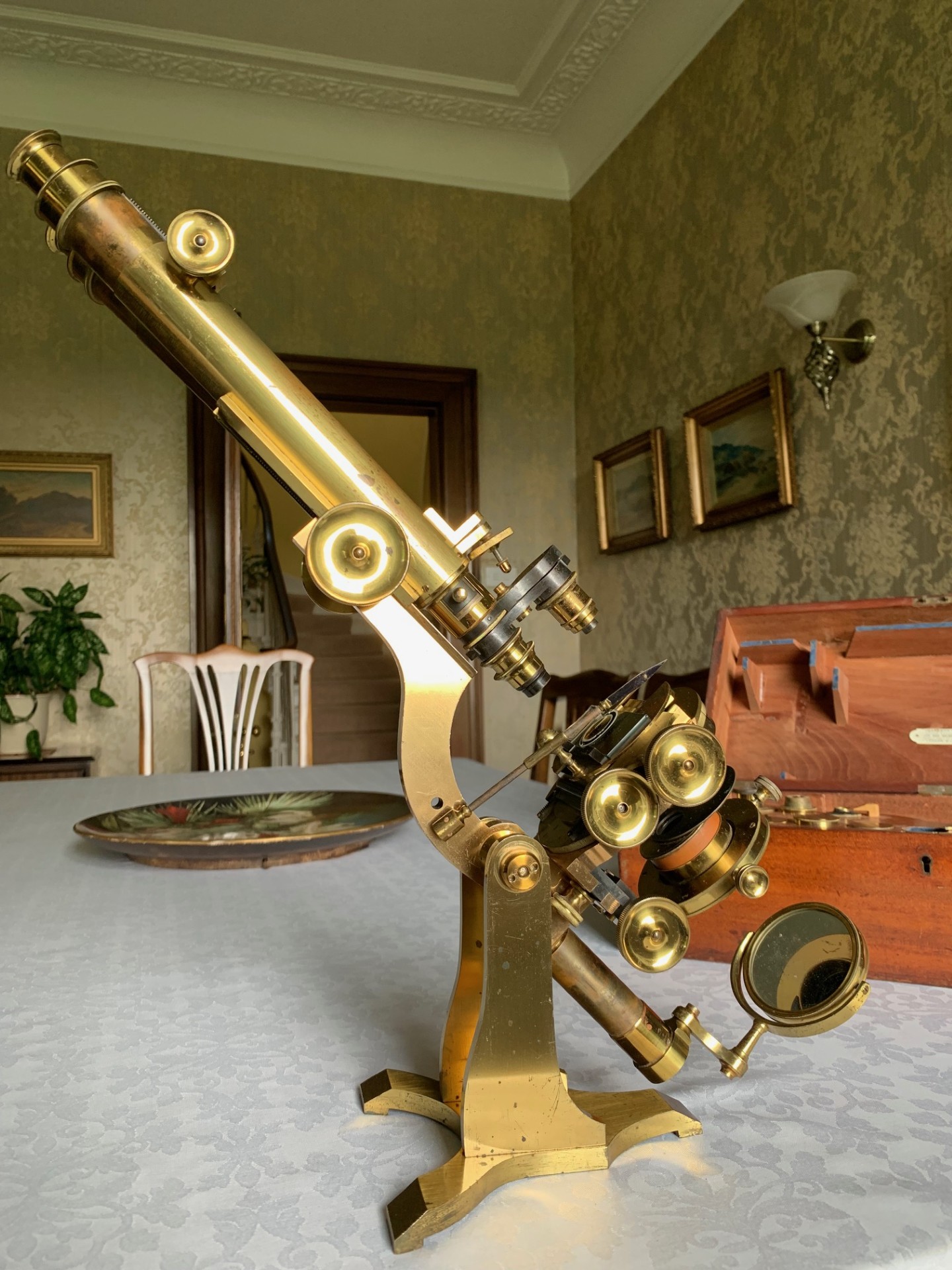
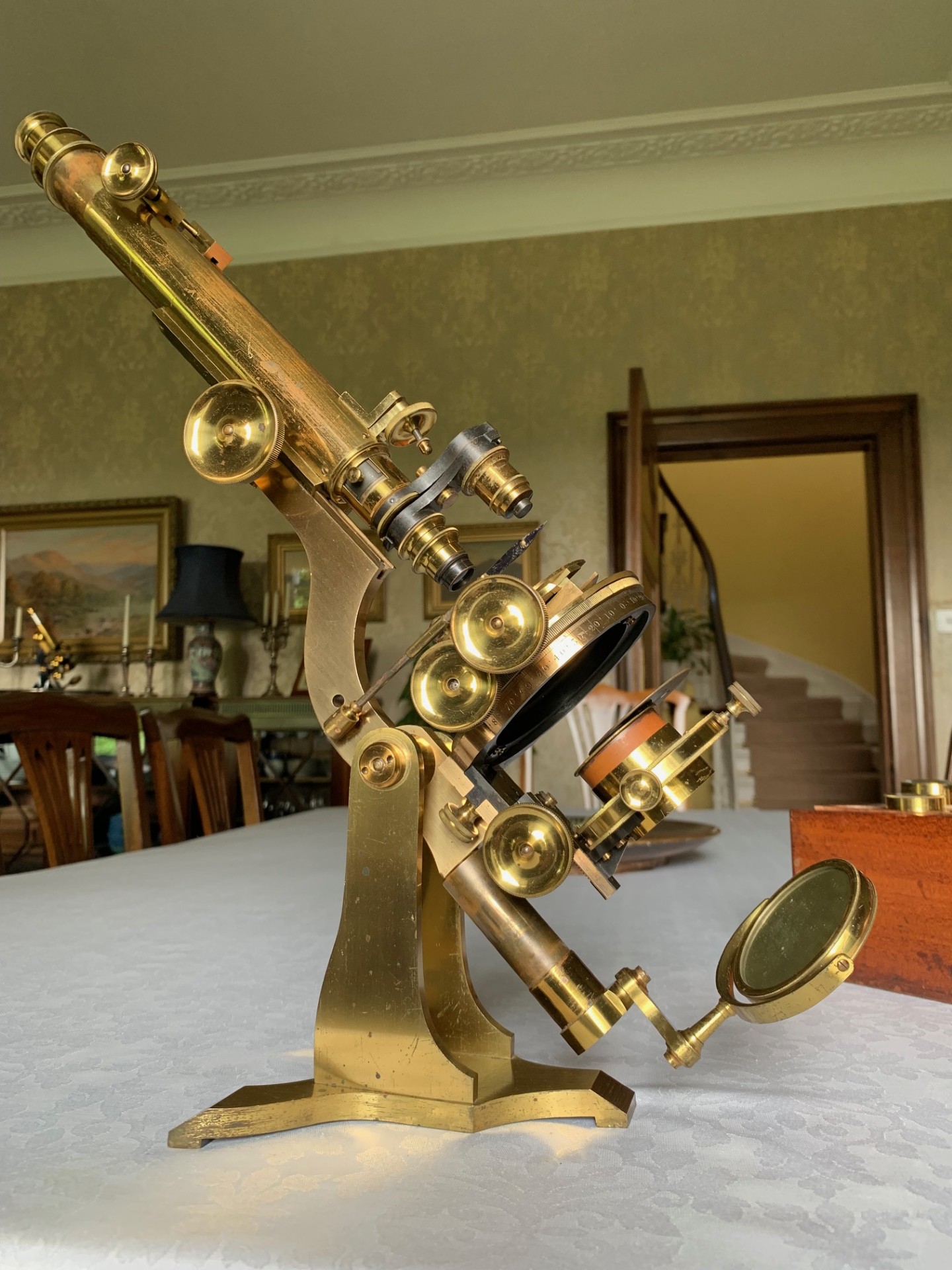
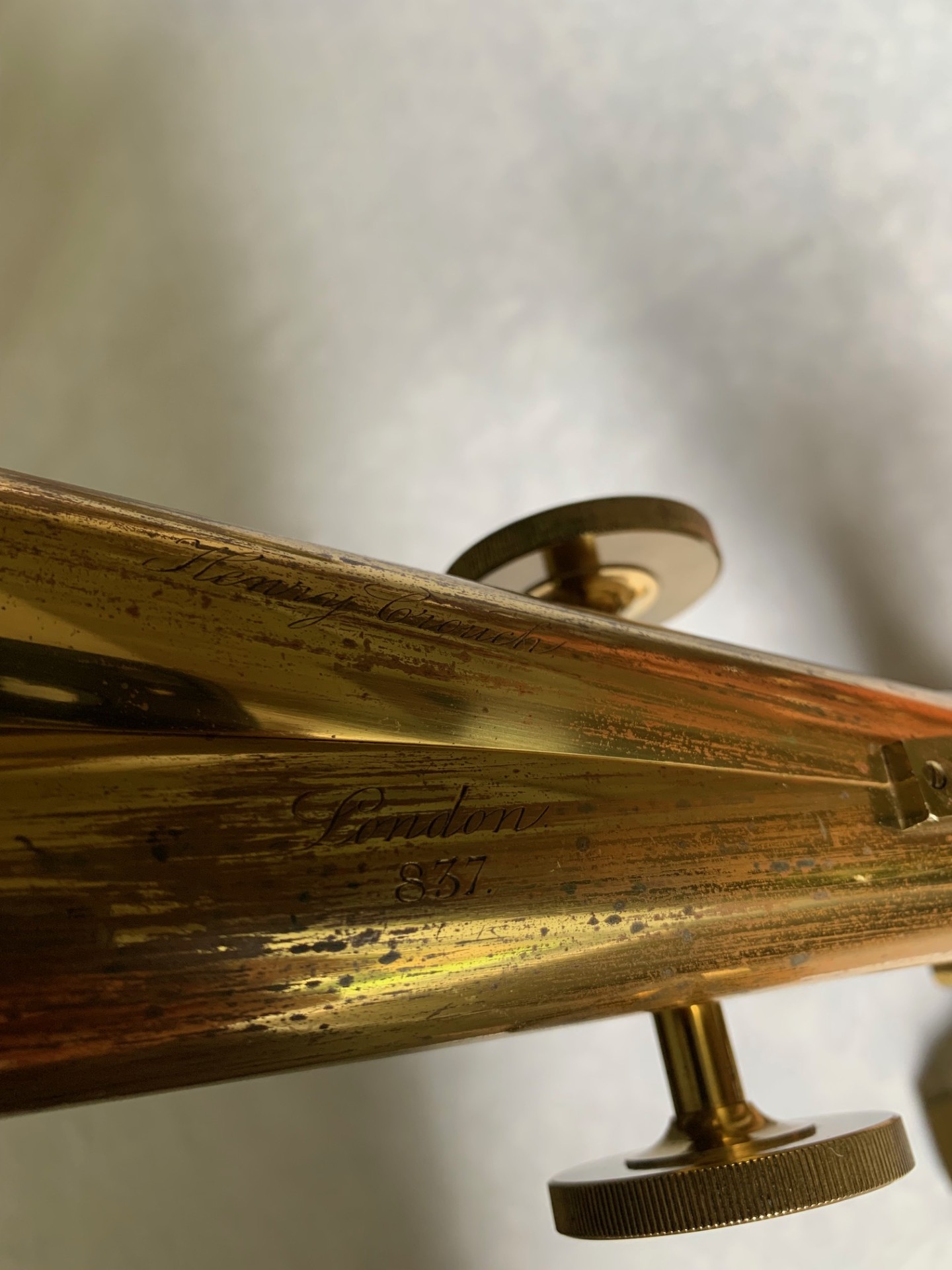
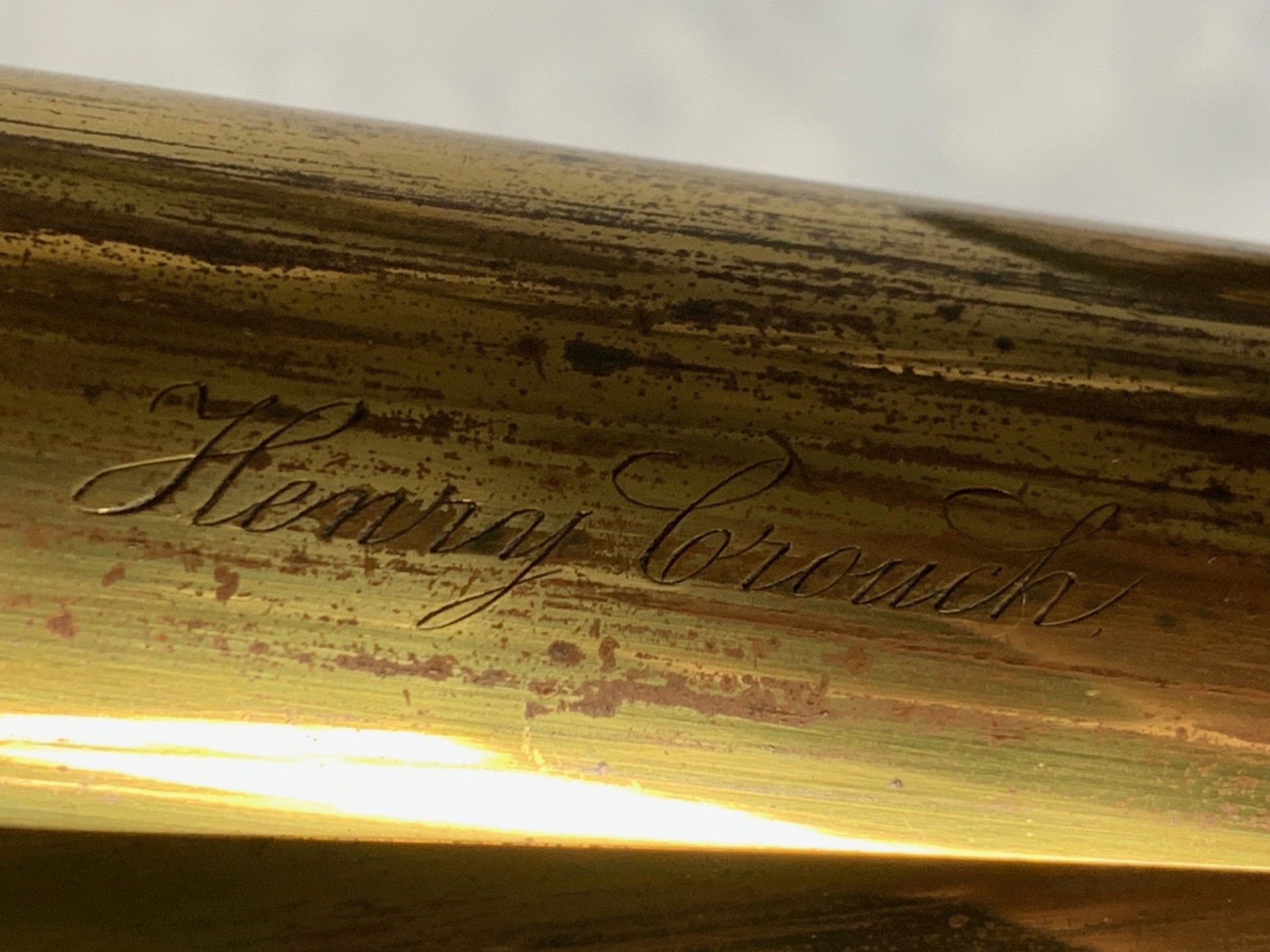
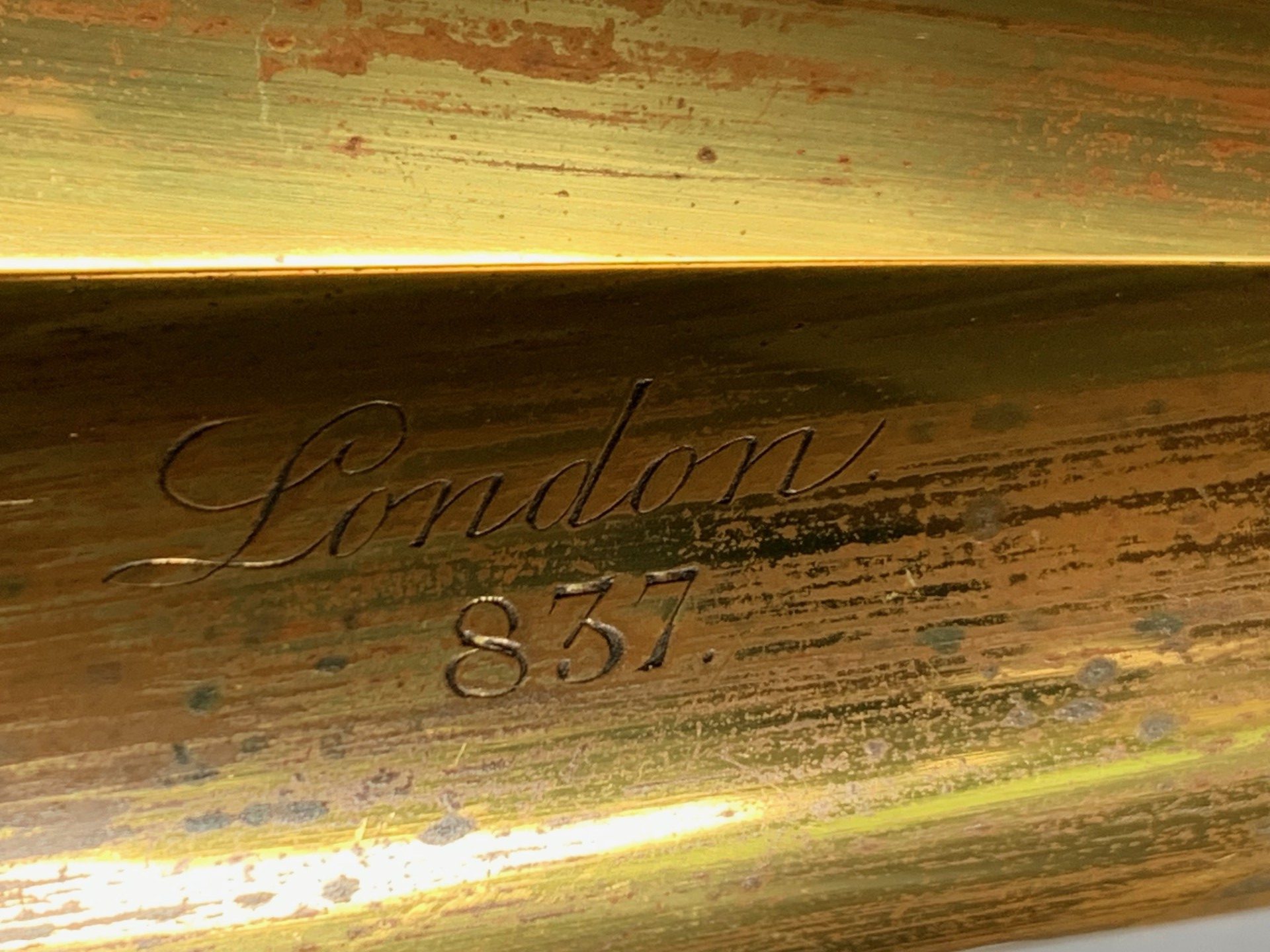
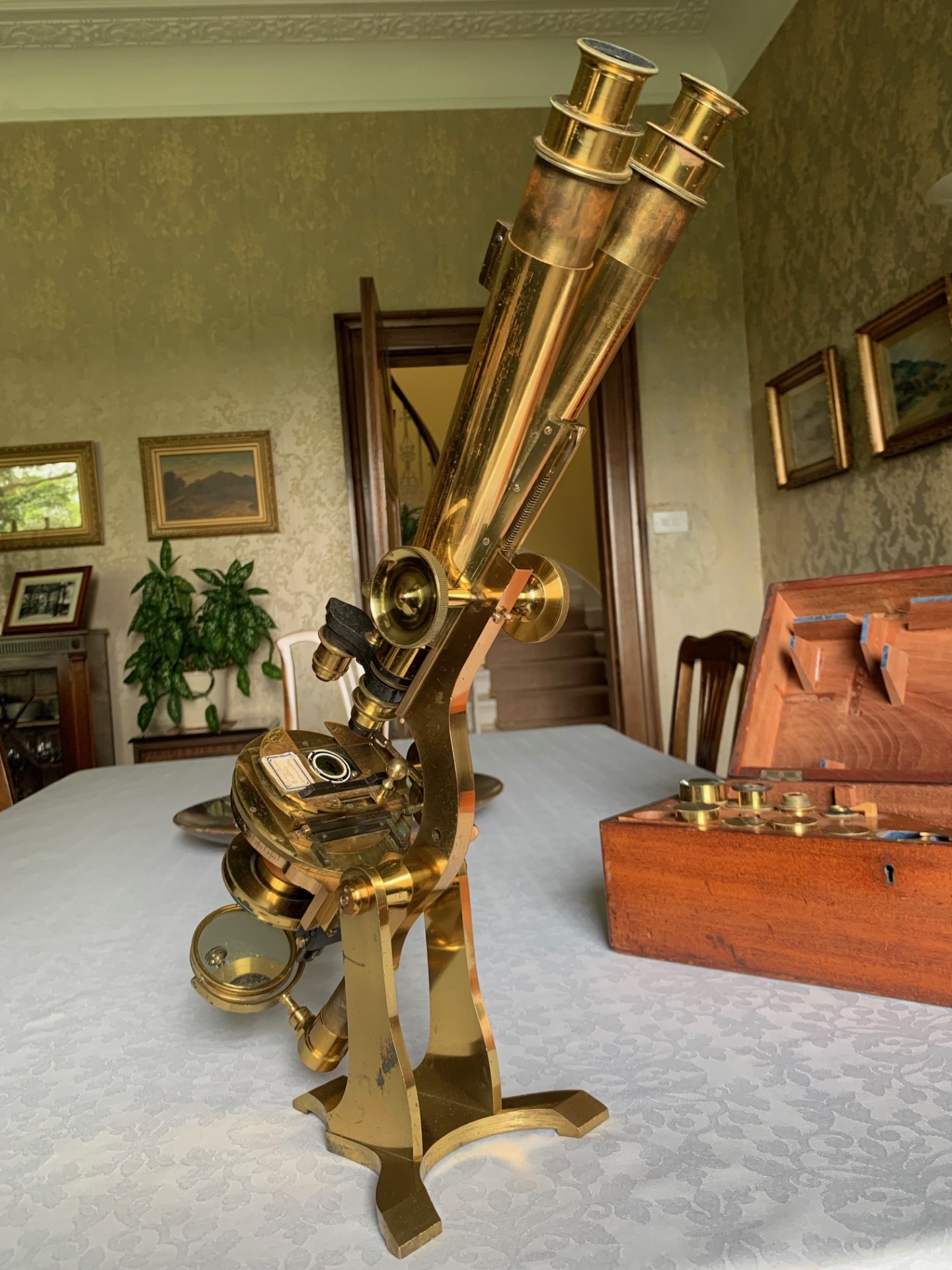
Antique generally good cosmetic and working condition Wenham binocular instrument serial no. 837 by Henry Crouch, London - circa 1870.
Circa
1870
Maker
Henry Crouch
Country of manufacture
UK and Ireland
Description
Henry joined the Royal Microscopical Society in 1863 and the Quekett Microscopical Club in 1866. Advertisements as early as September 1864 indicated a move to 64A Bishopsgate. For several years afterwards, the Crouches retained the Commercial Road location as their factory, although not as a retail location. The Crouch brothers dissolved their partnership in 1866, with Henry retaining the optical business. Henry Crouch’s business moved around 1868, to London Wall, then to Barbican in early 1873. About 1886, Henry incorporated his business as Henry Crouch Limited. Crouch sold the business in 1907 to S. Maw & Sons. Henry then worked for that firm, supervising manufacture of microscopes and other equipment. Many Crouch microscopes that already existed were additionally stamped with the new owner’s name, and newly made ones were imprinted on the foot with “S. Maw & Sons”. During the early 1900s, Henry Crouch began producing microscopes with horse-shoe shaped continental feet. Henry passed away in 1916.
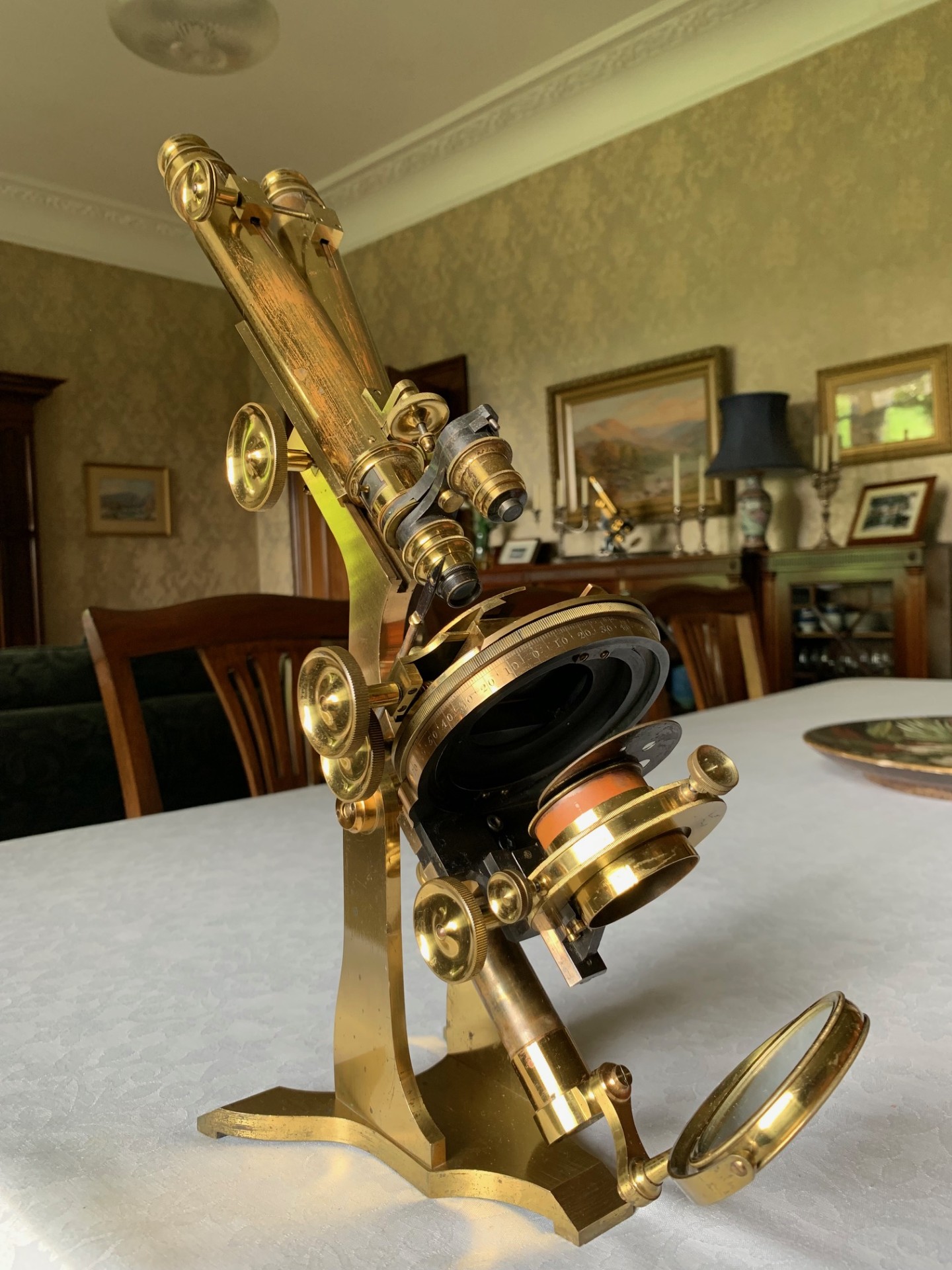
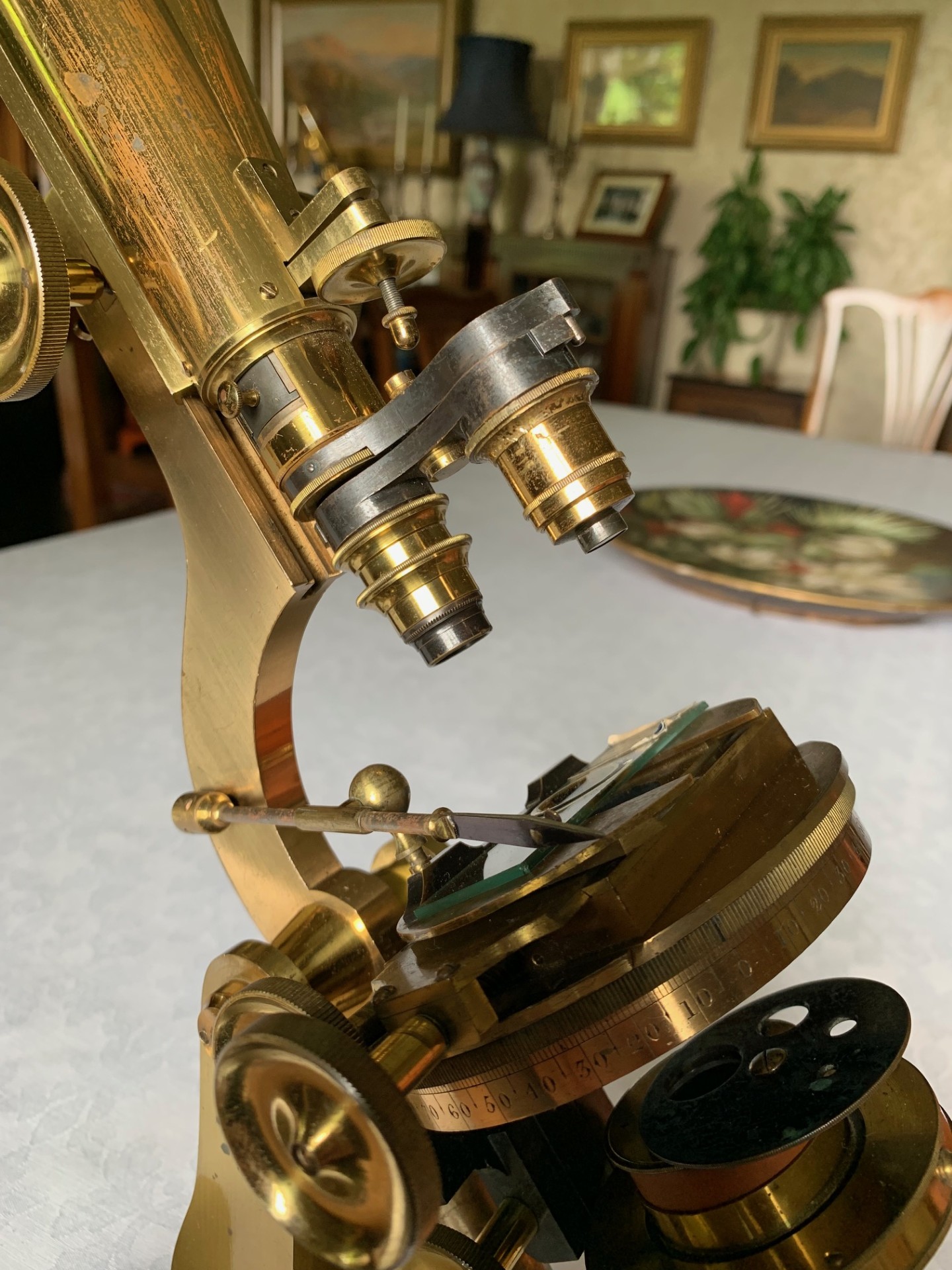
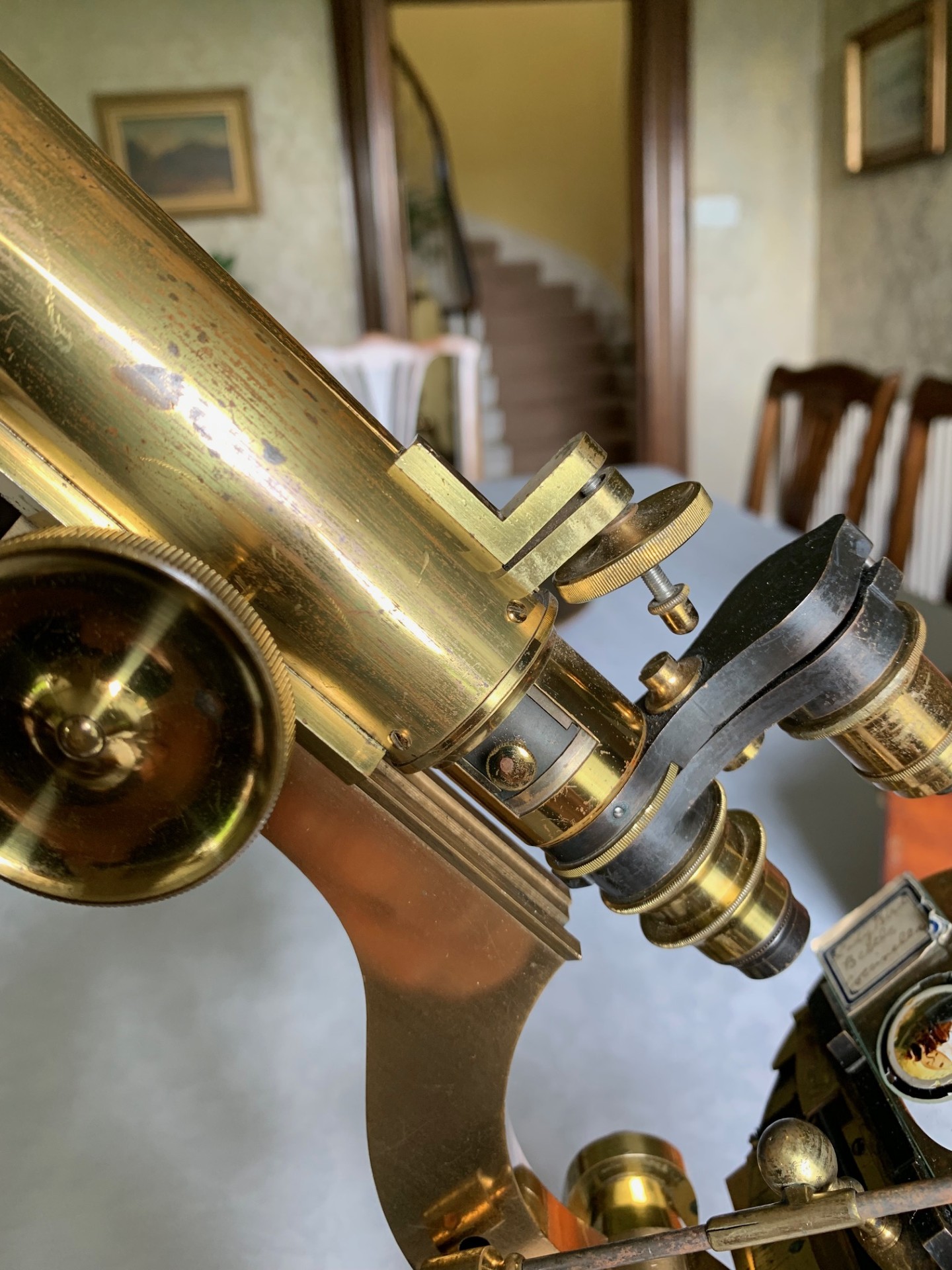
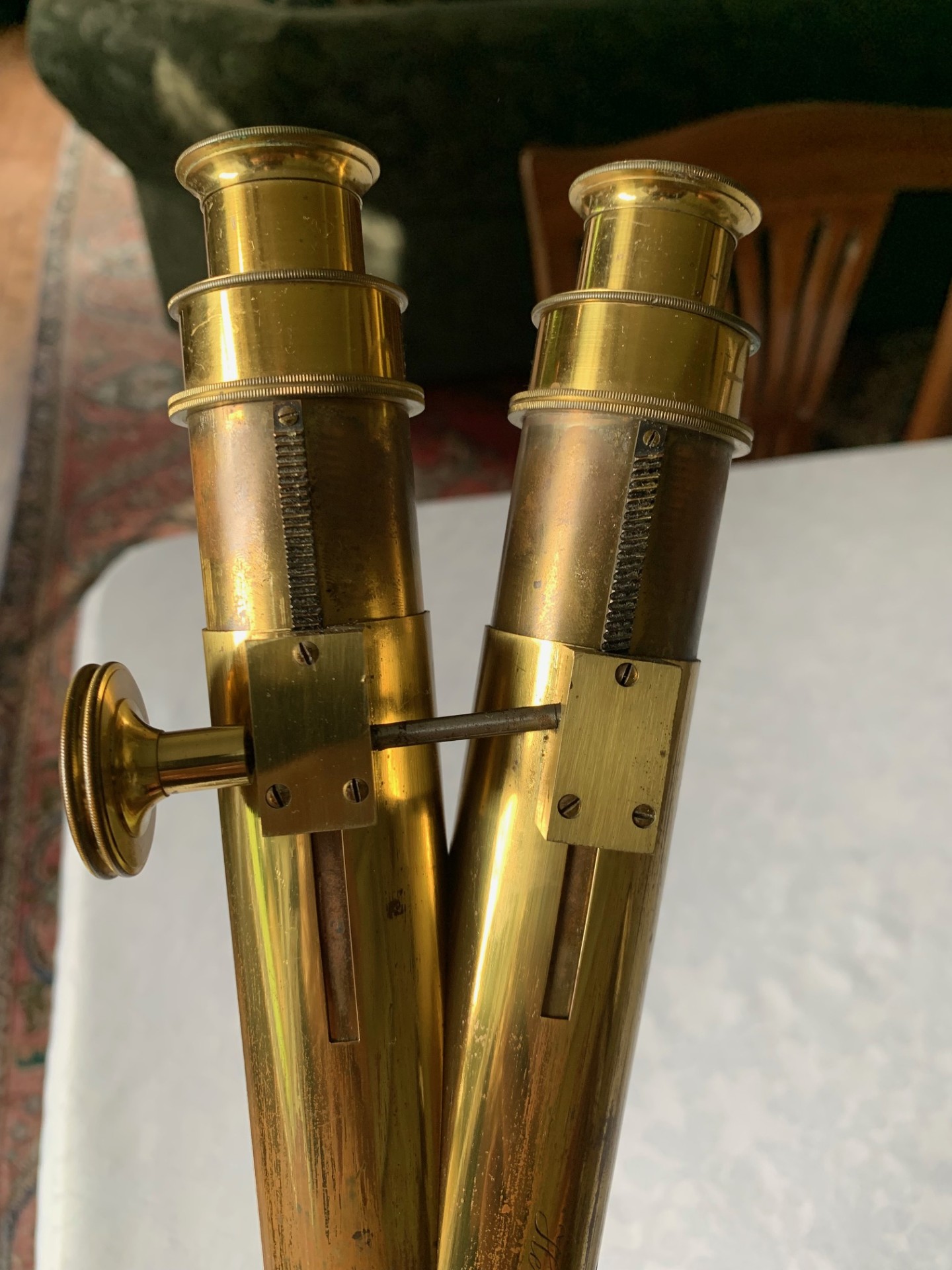
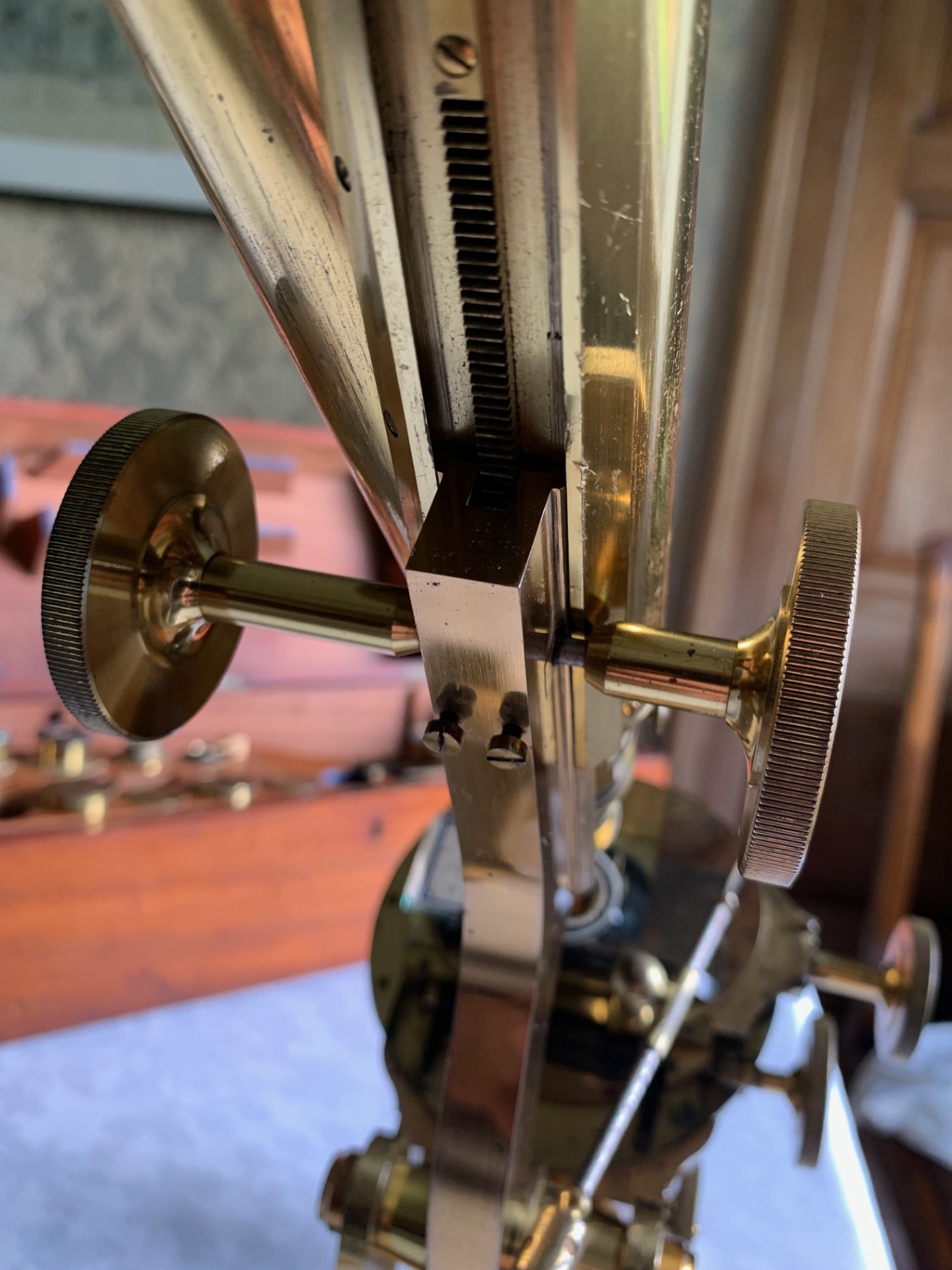
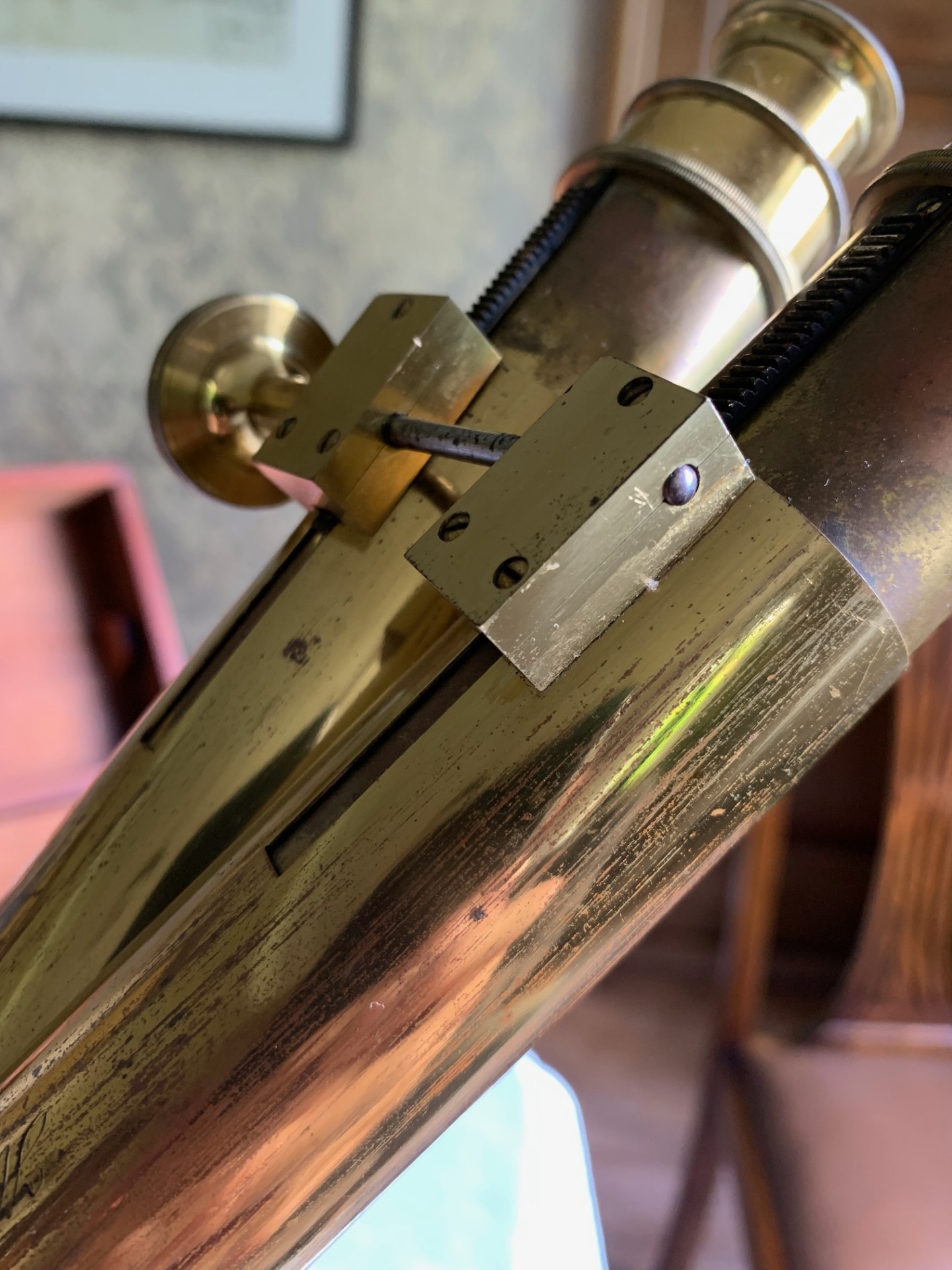
With its optics, this instrument is in binocular configuration with a Wenham-style prism in a shoe-carrier just above objective, which splits the light beam thereby illuminating both optical tubes: collimation is good. There’s mechanically extendable eyepiece draw-tubes operated by a rack and pinion system which works well. Extending the draw-tubes will increase magnification – you also have to re-focus.
There’s one pair of top-hat eyepieces:
– approx 6x magnification
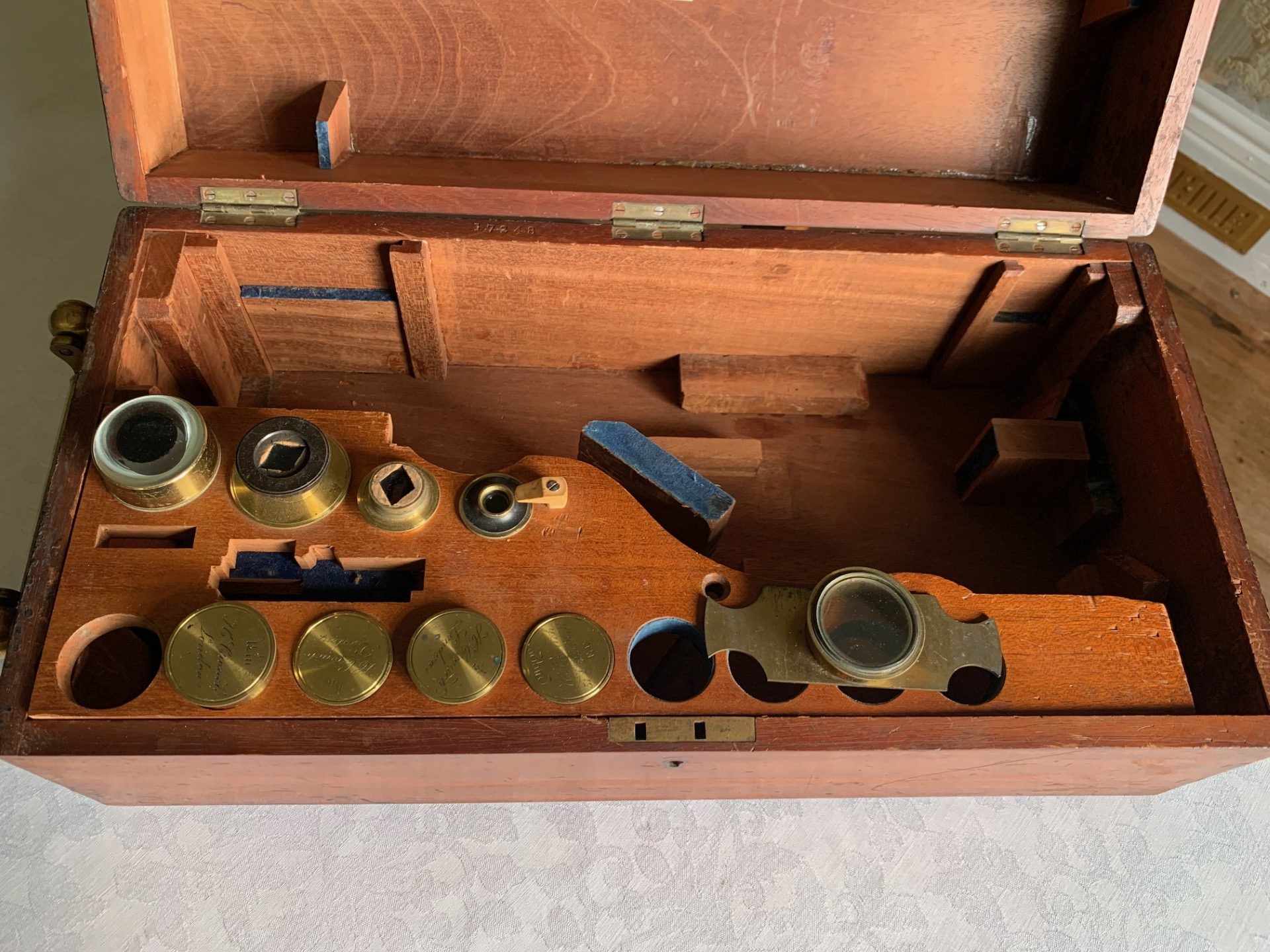
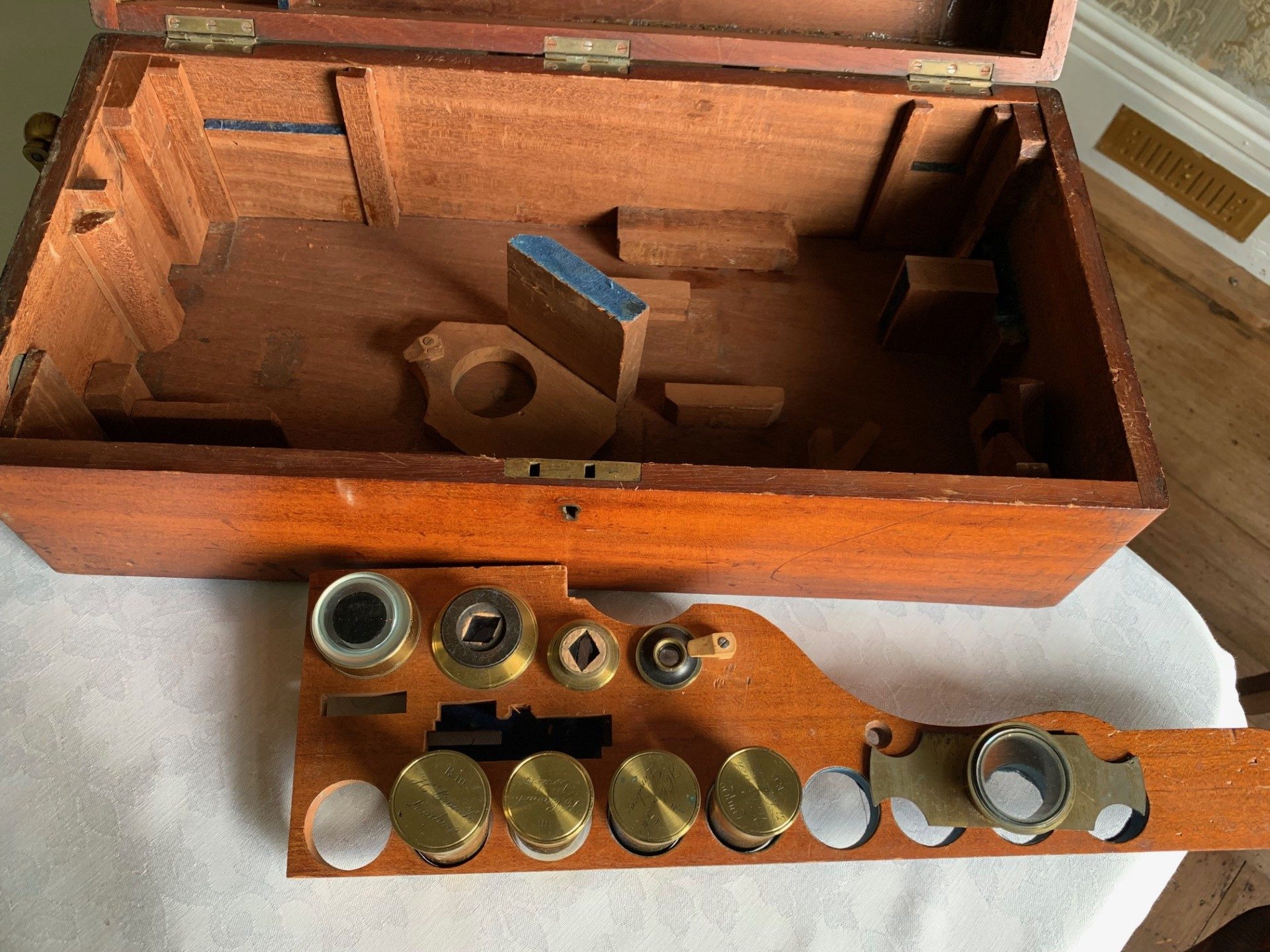
There’s four objective lenses all by Crouch in their correct brass canisters and a double turret shown fitted. The objectives are as under – note the instrument is RMS in terms of objective thread diameter:
– 2 inches – approx 2.5x magnification
– 1.5 inches – approx 4x magnification
– 1 inch – approx 6x magnification
– 1/2 inch – approx 15x magnificiation
The magnification range available is therefore around 15x to 90x with the current set of optics.
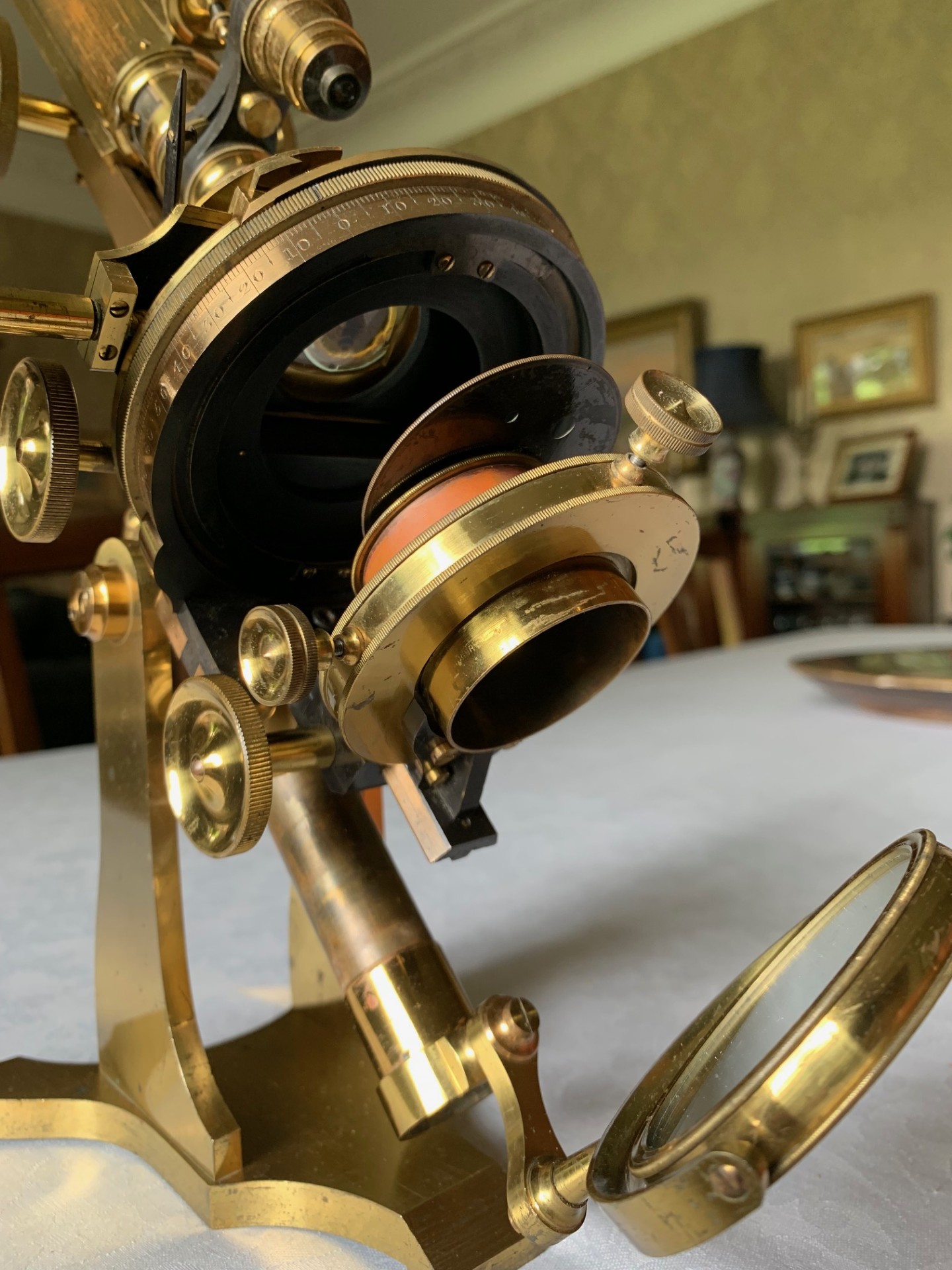
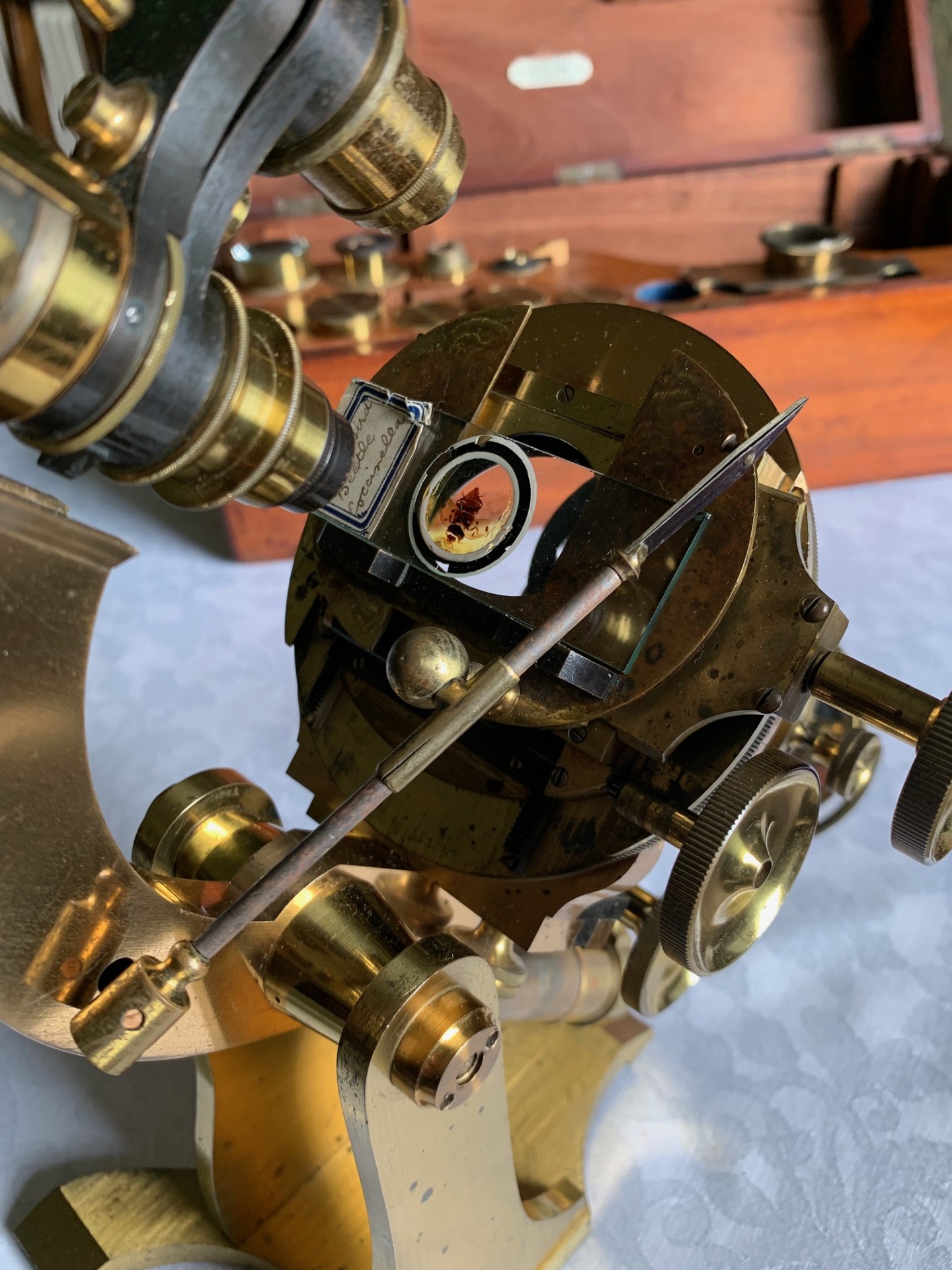
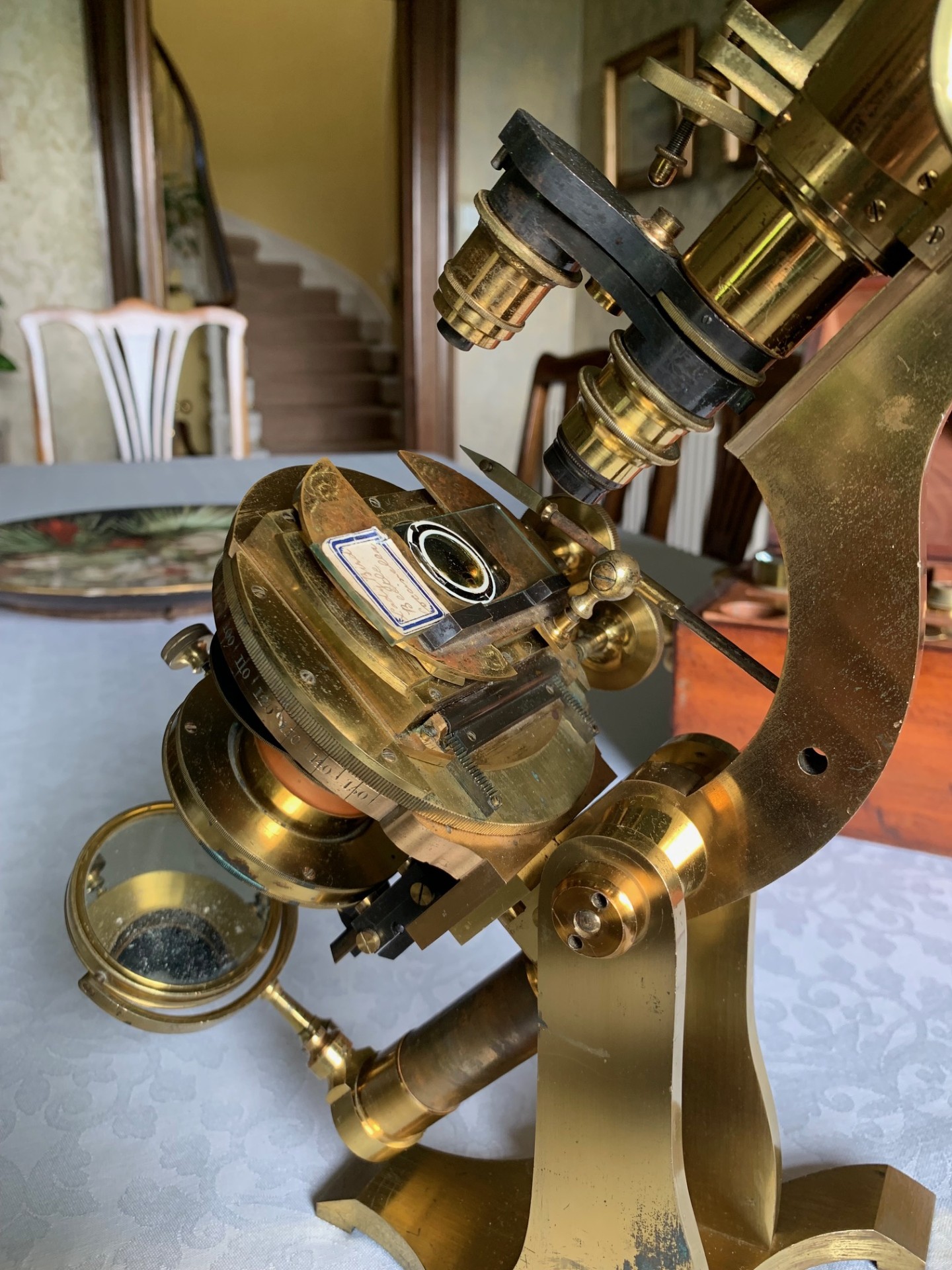
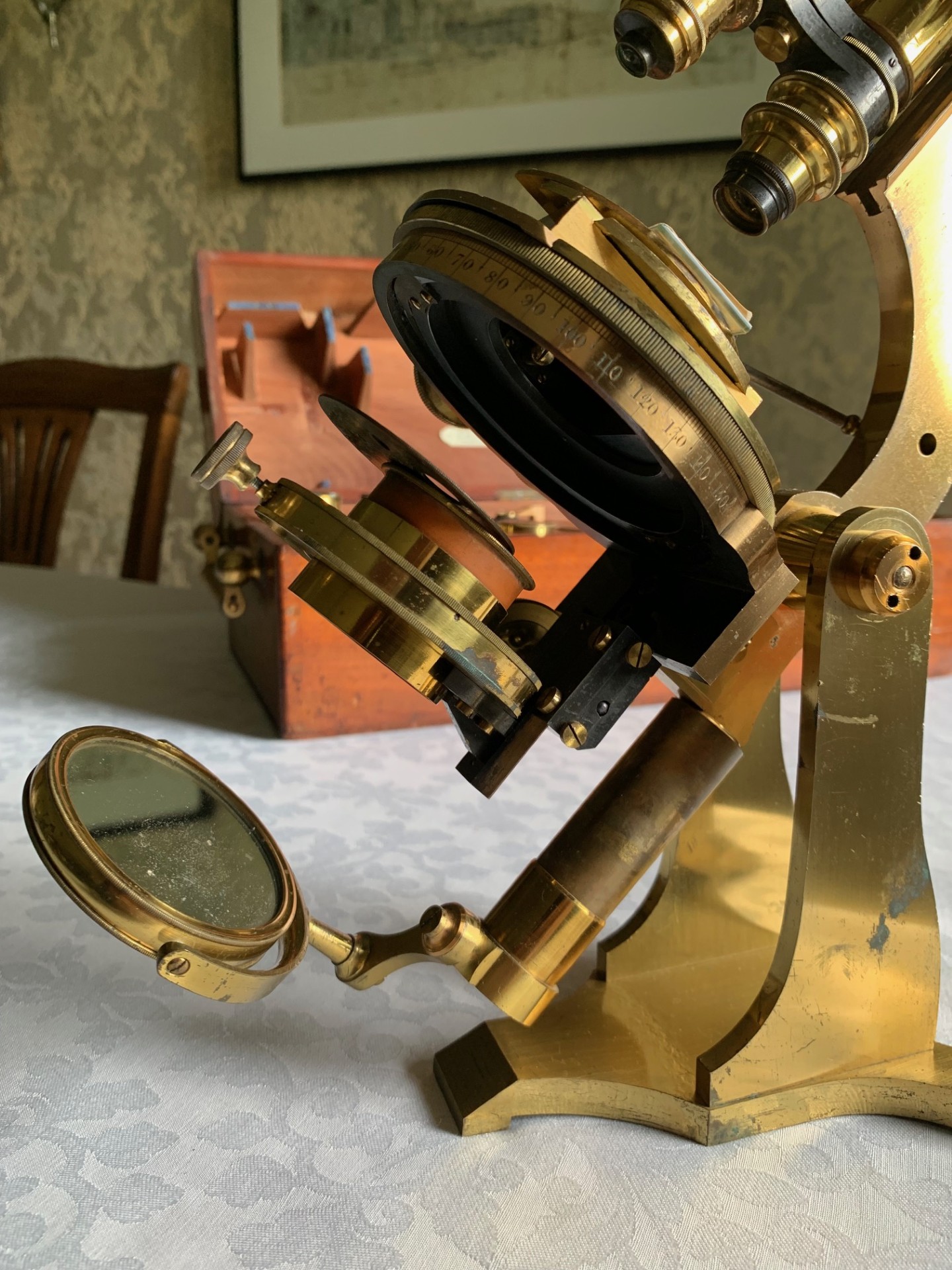
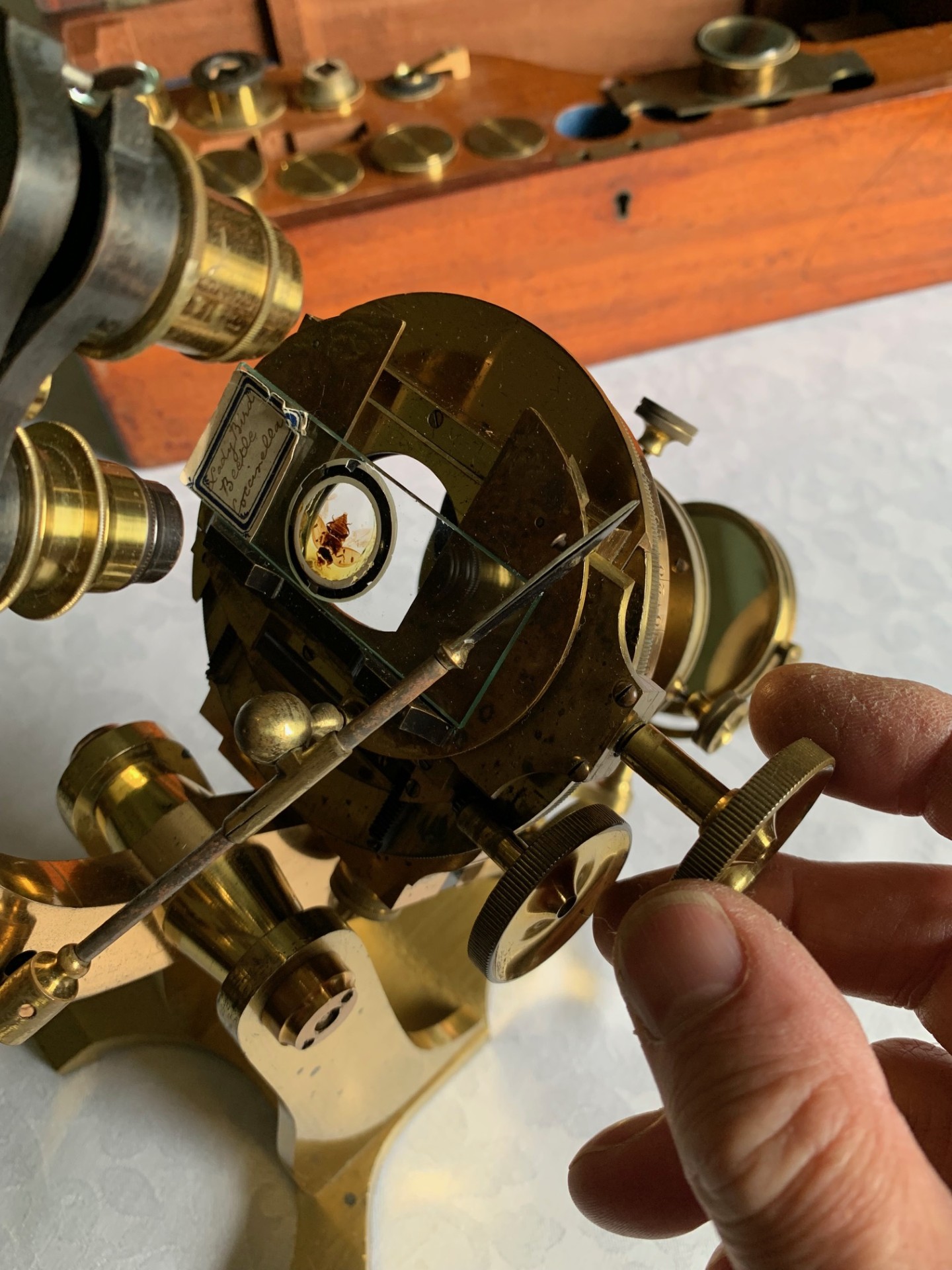
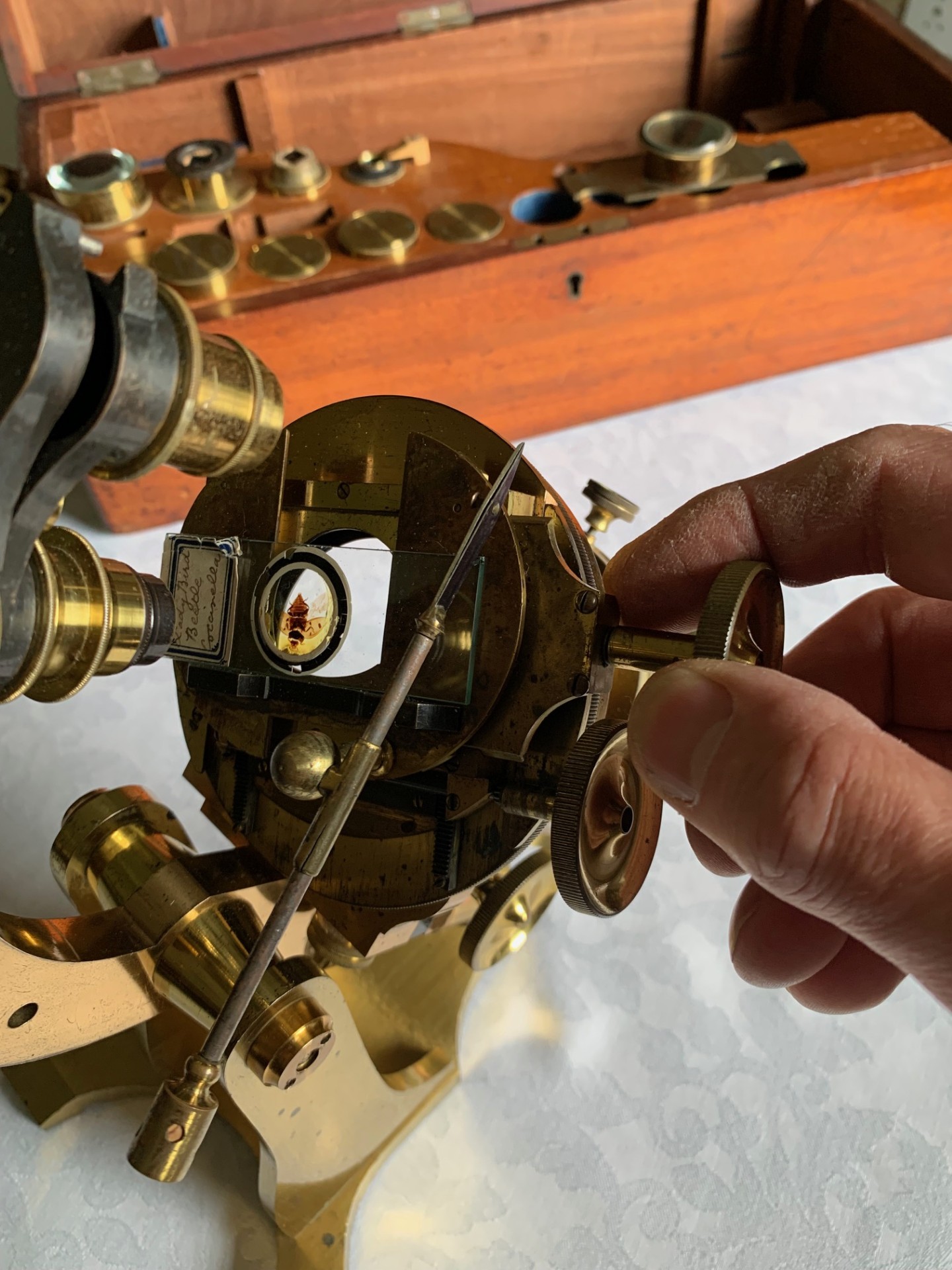
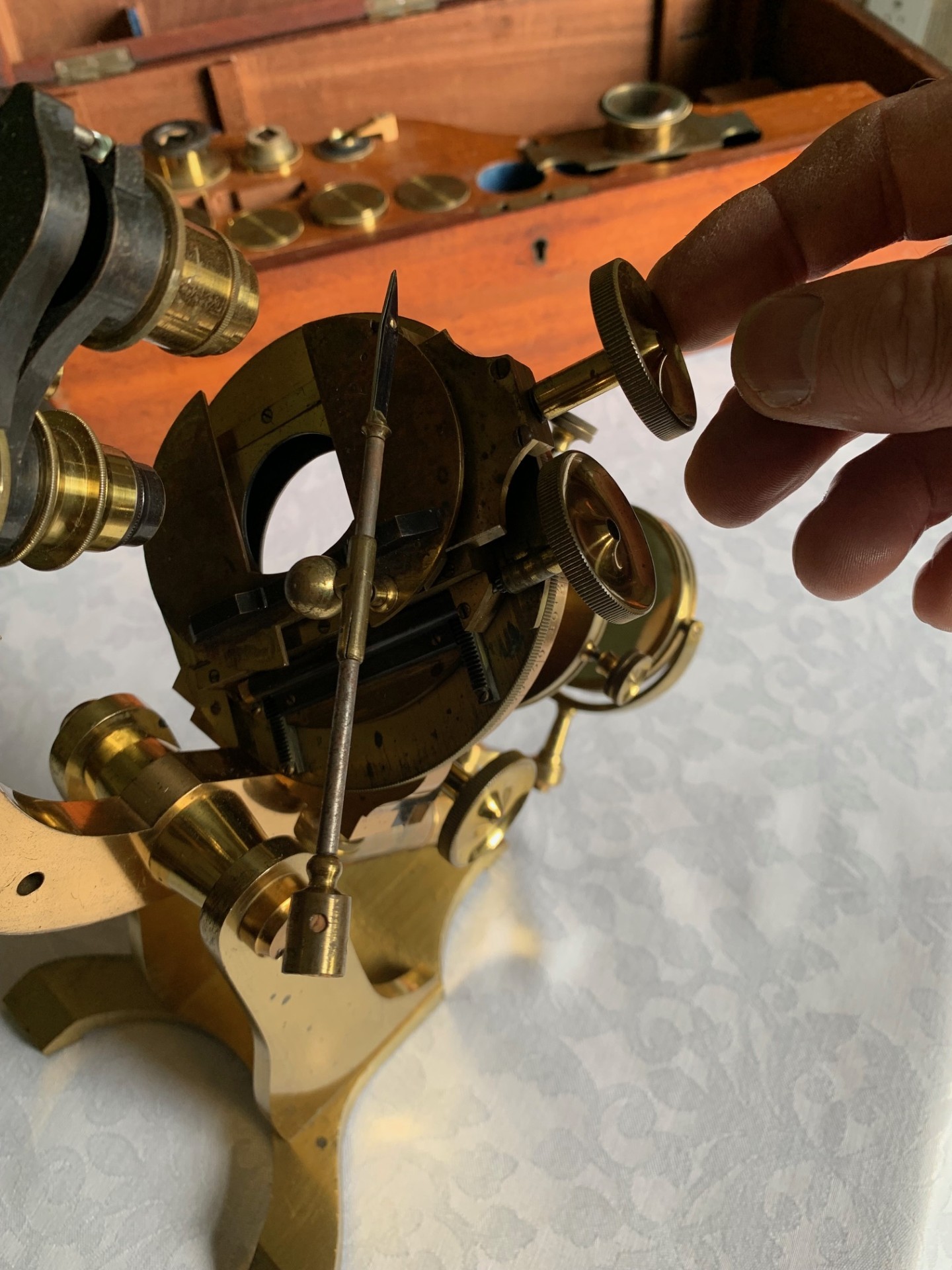
The fully mechanical circular brass stage is attached to the limb below the pivot point and is a well engineered feature that’s a delight to use, with nice smooth action to its moving parts and external engraved degree scale. It’s got thumb-wheel x/y adjusters for both axes with smooth operation. The top-plate slides off and the whole stage rotates as demonstrated in the listing photos, although it won’t complete a full 360 degrees because the thumb-wheels catch on the main body of the instrument, so you get about 270 degrees of free rotation. It also has an integral specimen slider/ledge for holding slides during inclined viewing and when the axes are being moved around which works well. The x/y controls have a nice solid feel about them, offering good accurate control of specimen positioning, with rotation well damped.
Turning to the compound sub-stage, we have a brass ring-mount for top-mounted accessories also with centering and height adjustment via a rack & pinion system with single-sided thumb-wheel adjustment. It’s currently shown fitted with a wheel-of-stops with four aperture sizes available and positive feel when the apertures align to the optical axis. There are additional accessories for the ring-mount as under:
– dark ground condenser
– sub-stage nicol prism polariser with rotation
Lighting is via a plano-concave mirror in a brass carrier on a height/rotation adjustable brass support arm and gimbal fitted to the limb tailpiece, with good range of adjustment also allowing oblique illumination as may be required for various applications. The mirror silvering is in pretty good condition to both sides with reflectivity that’s perfectly adequate.
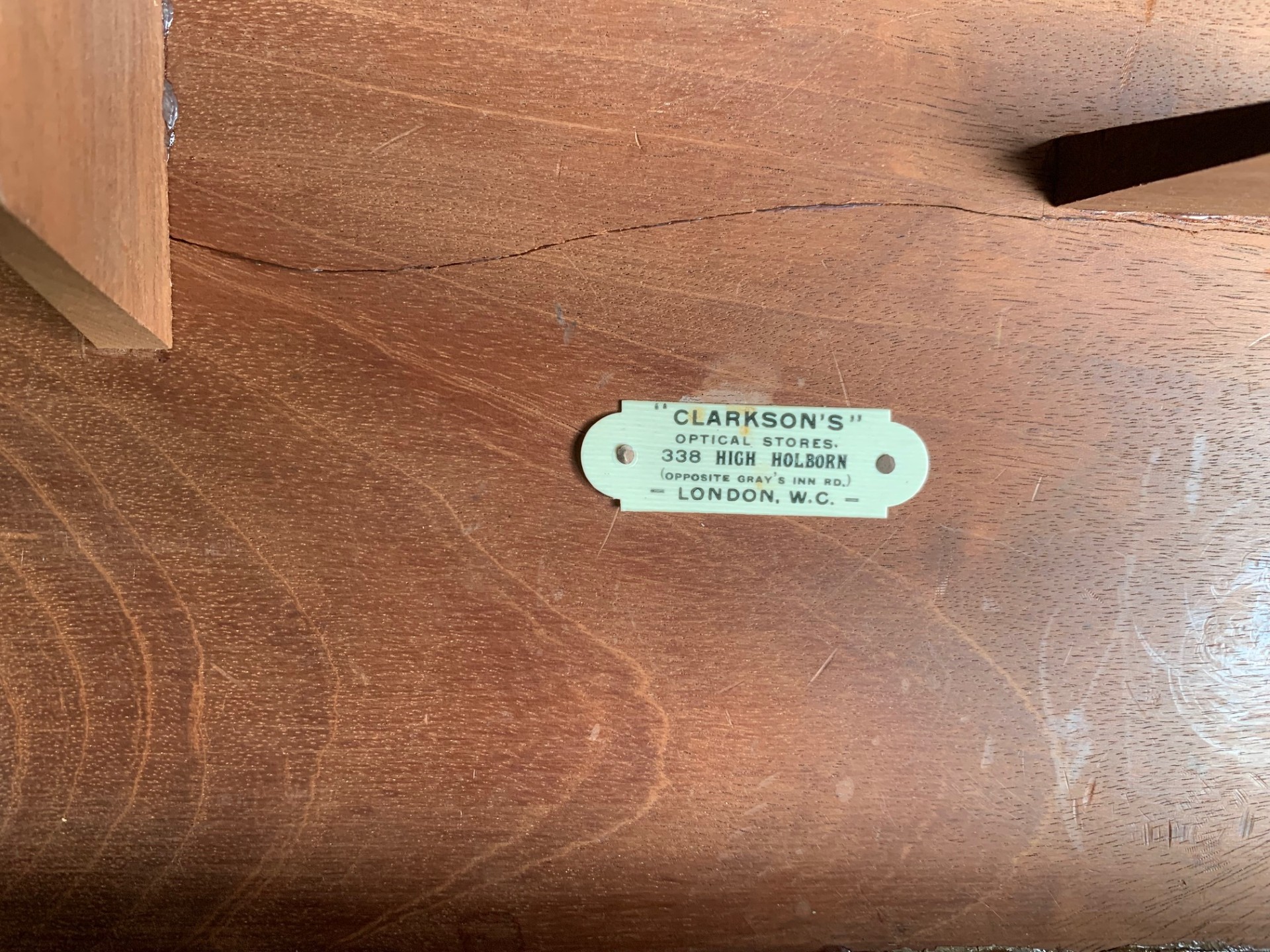
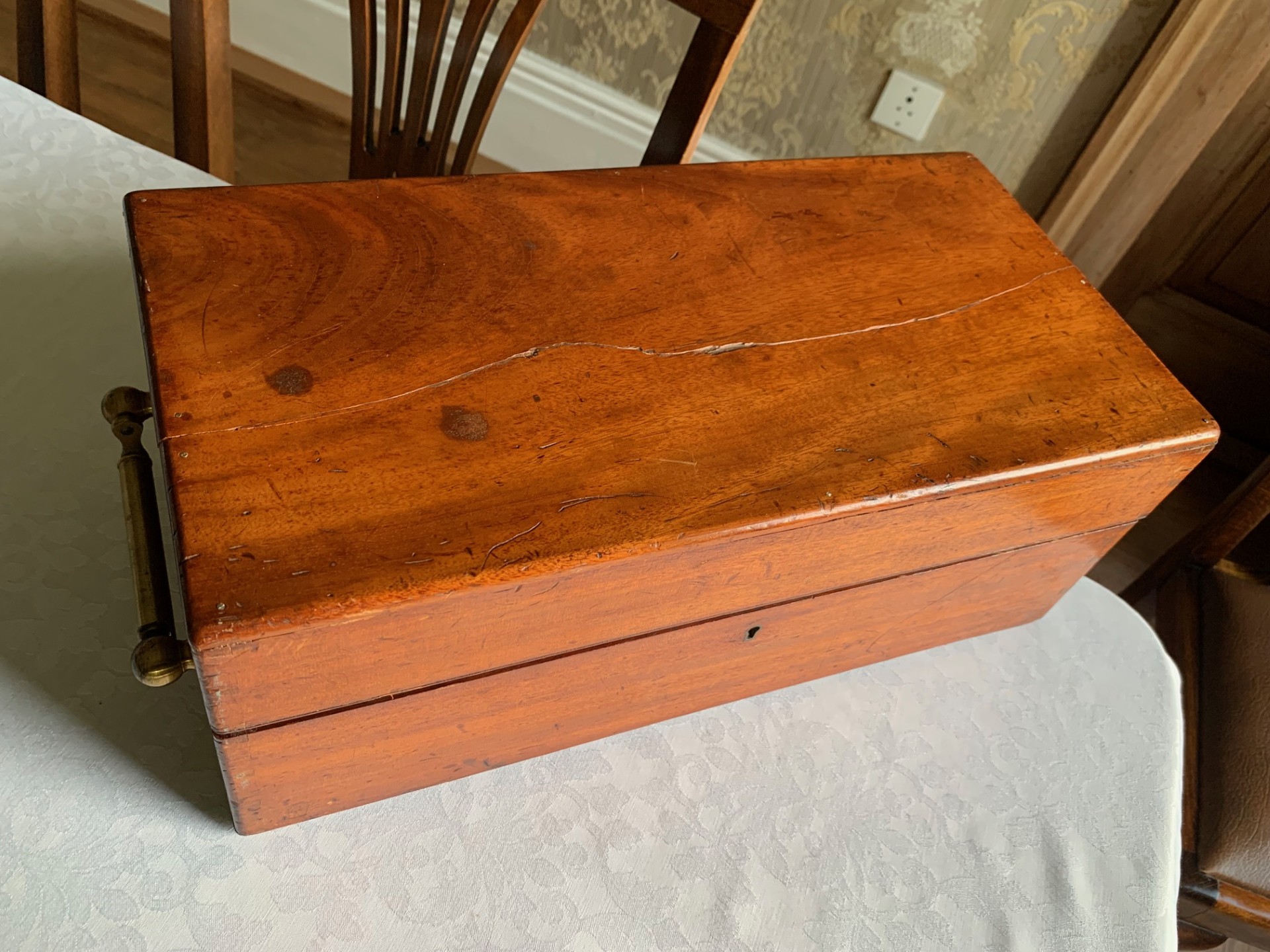
There’s also the original case for the instrument which is in decent cosmetic condition for its age with well-fitted interior and the original retailer’s details on the inside of the lid. Note – shrinkage crack to case lid and also the key is missing, so I may in due course fit a latch to keep the lid closed.
Accessories:
– stage forceps
– sub-stage nicol prism polariser and nose-piece nicol prism analyser
– live box
The instrument and its controls have been very gently dusted, lightly lubricated and operate smoothly with age-appropriate signs of wear and condition points as described, very much as one would expect for an instrument of this quality and age. With its bright lacquered finishes, characterful patination and the signature double optical tubes, it’ll make a great display piece in the right setting and is also a usable instrument currently equipped for low/medium power applications. It presents really well and I’m certain it will look the part in a library or home office, especially when set up with an appropriate antique slide, such as the insect slide shown in the listing photos.
Owing to the weight and delicacy of this antique microscope and case, it will be partially dismantled, carefully wrapped for shipping and dispatched by insured courier upon receipt of cleared funds. UK shipping will be by Royal Mail Special Delivery.
Thanks for looking and just message seller if any additional photos or details of condition are required.
Ask the Dealer
Dealer information
 Arcboutant Scientific
Arcboutant Scientific based in Glasgow Scotland, with an interest in scientific collectables dating back to 1988. Now making available carefully curated fine examples, principally of antique microscopes and associated scientific equipment by quality English and Continental makers, to collectors world-wide.