

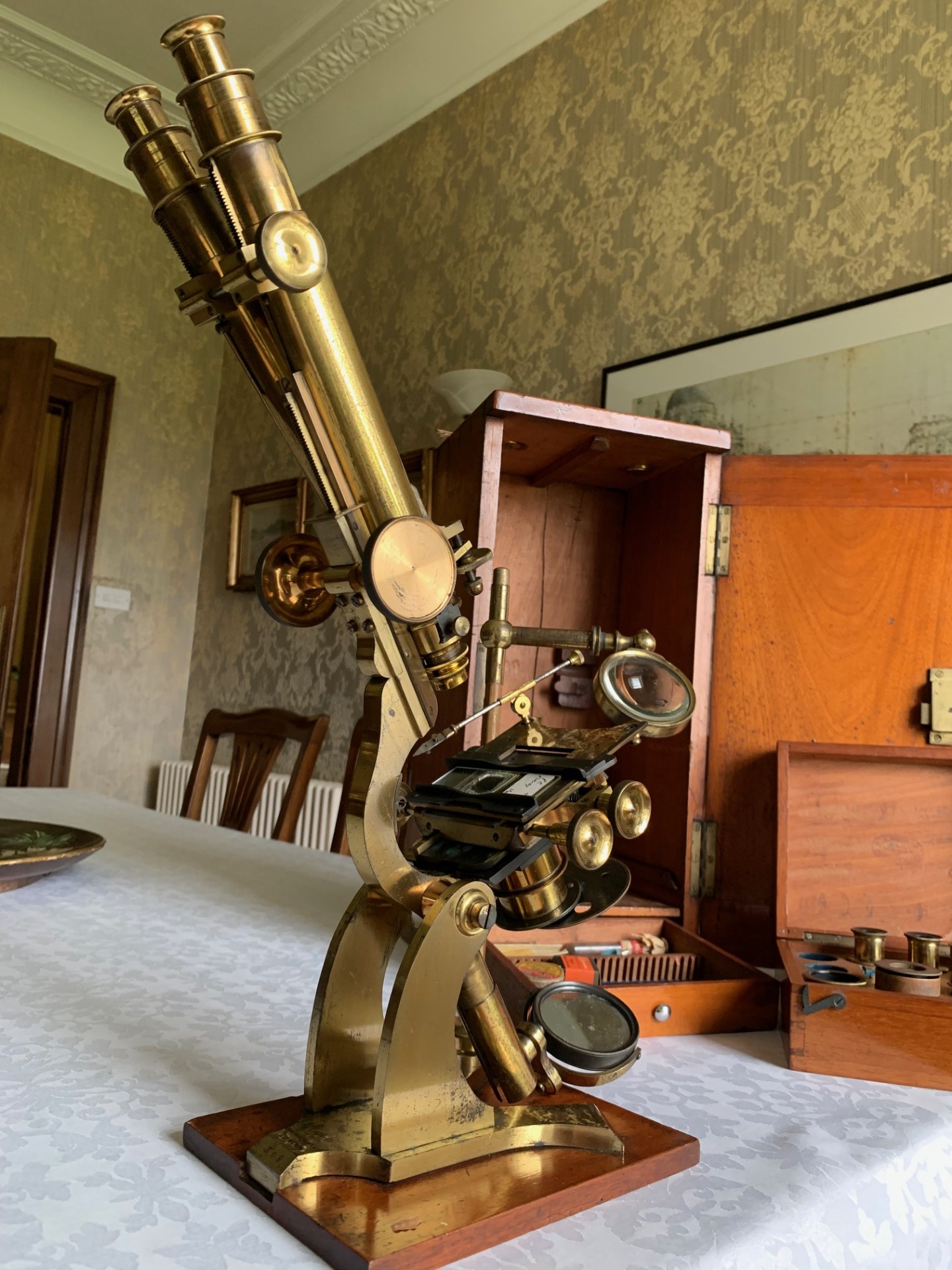
Antique Wenham Binocular Brass Microscope by J & C Robbins, London c1875, Cased
£875
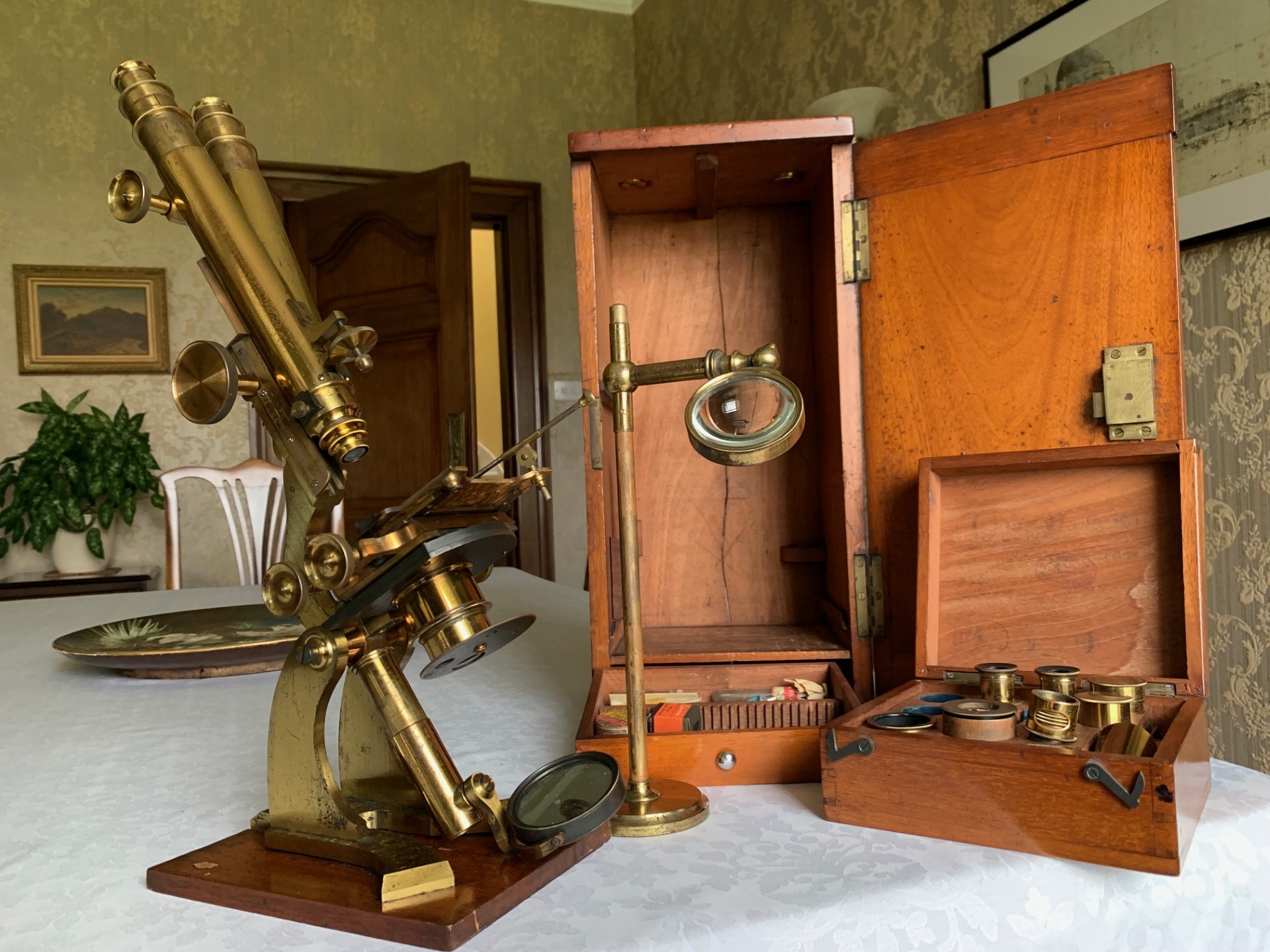
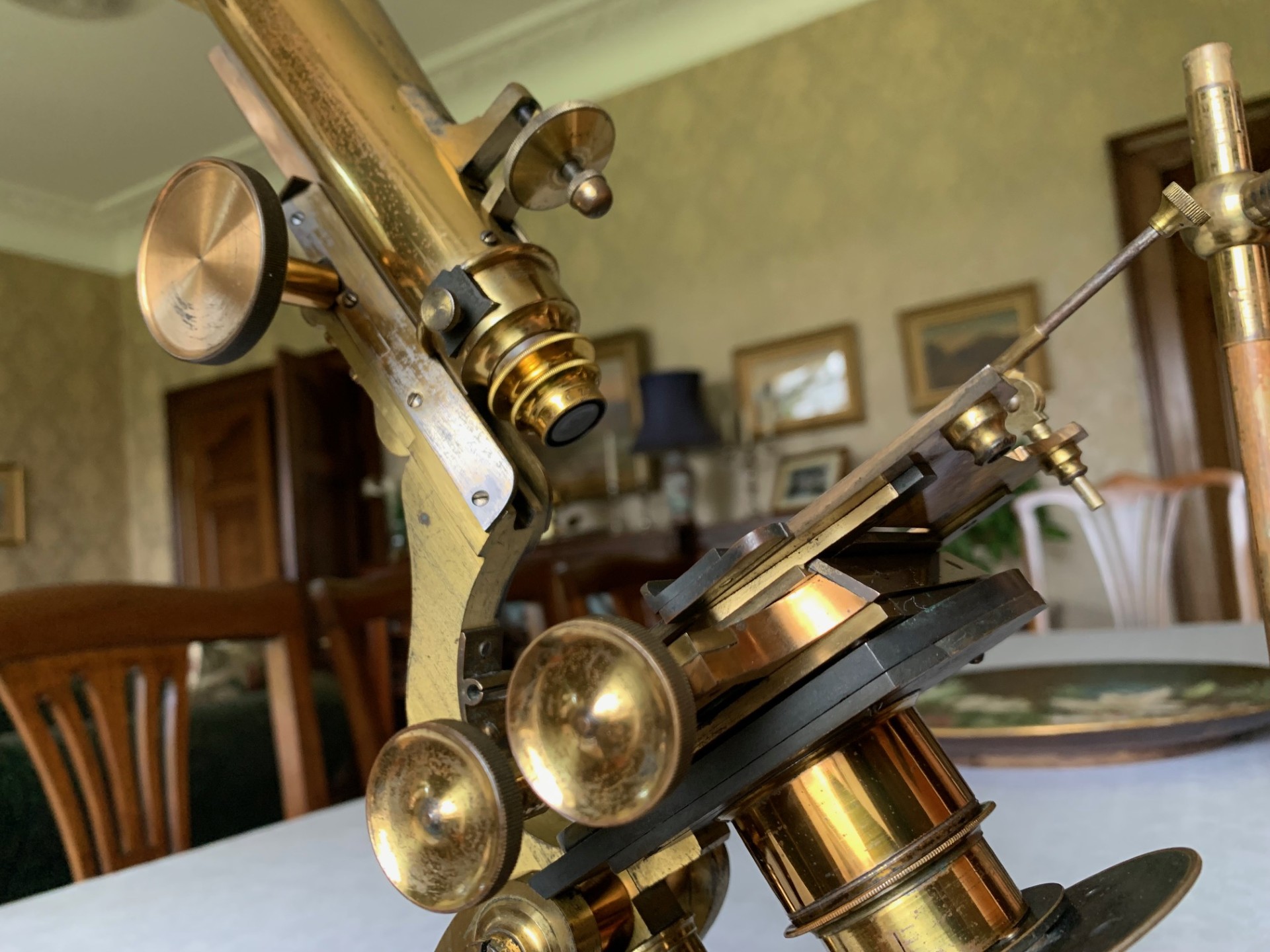
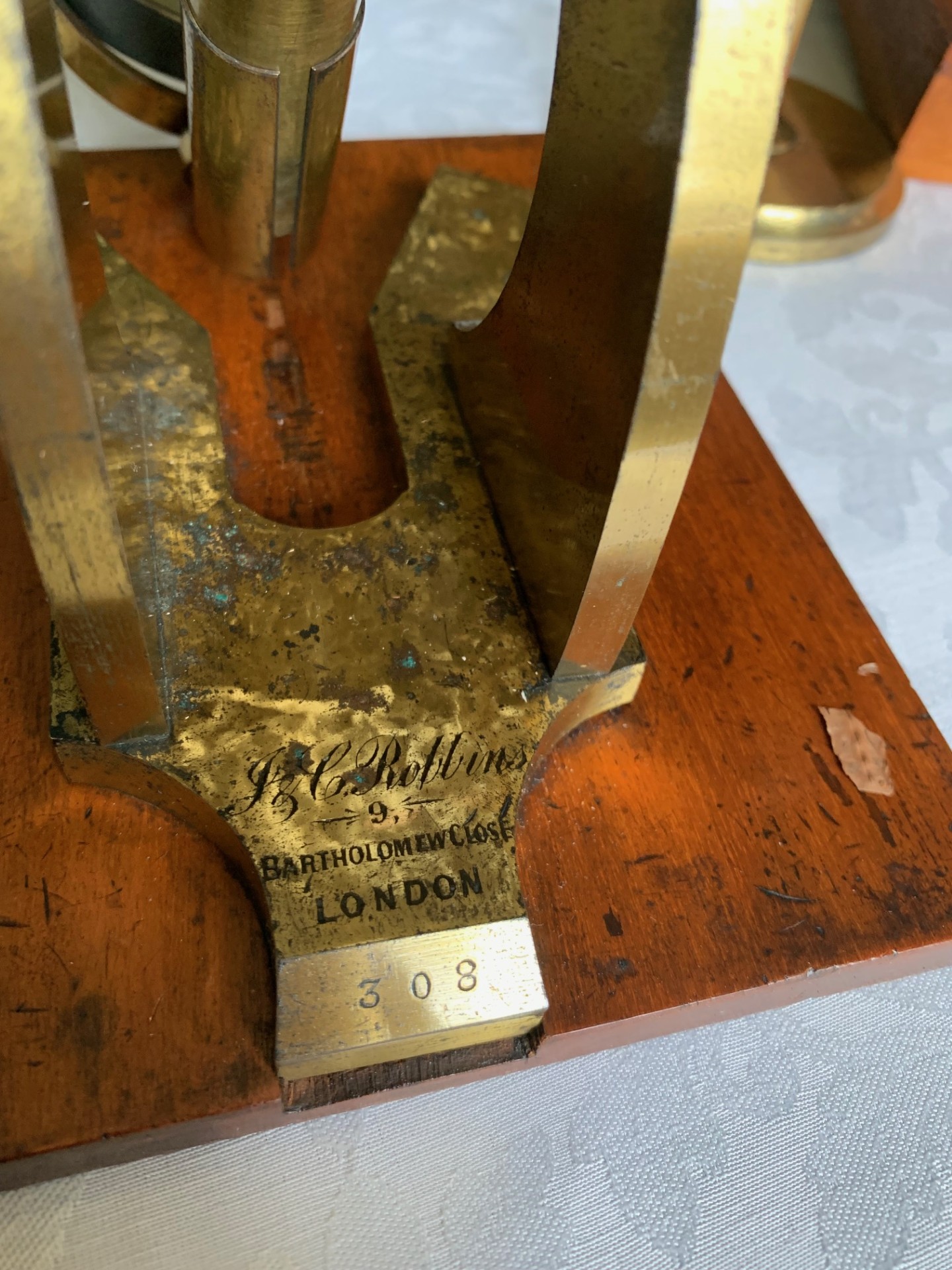
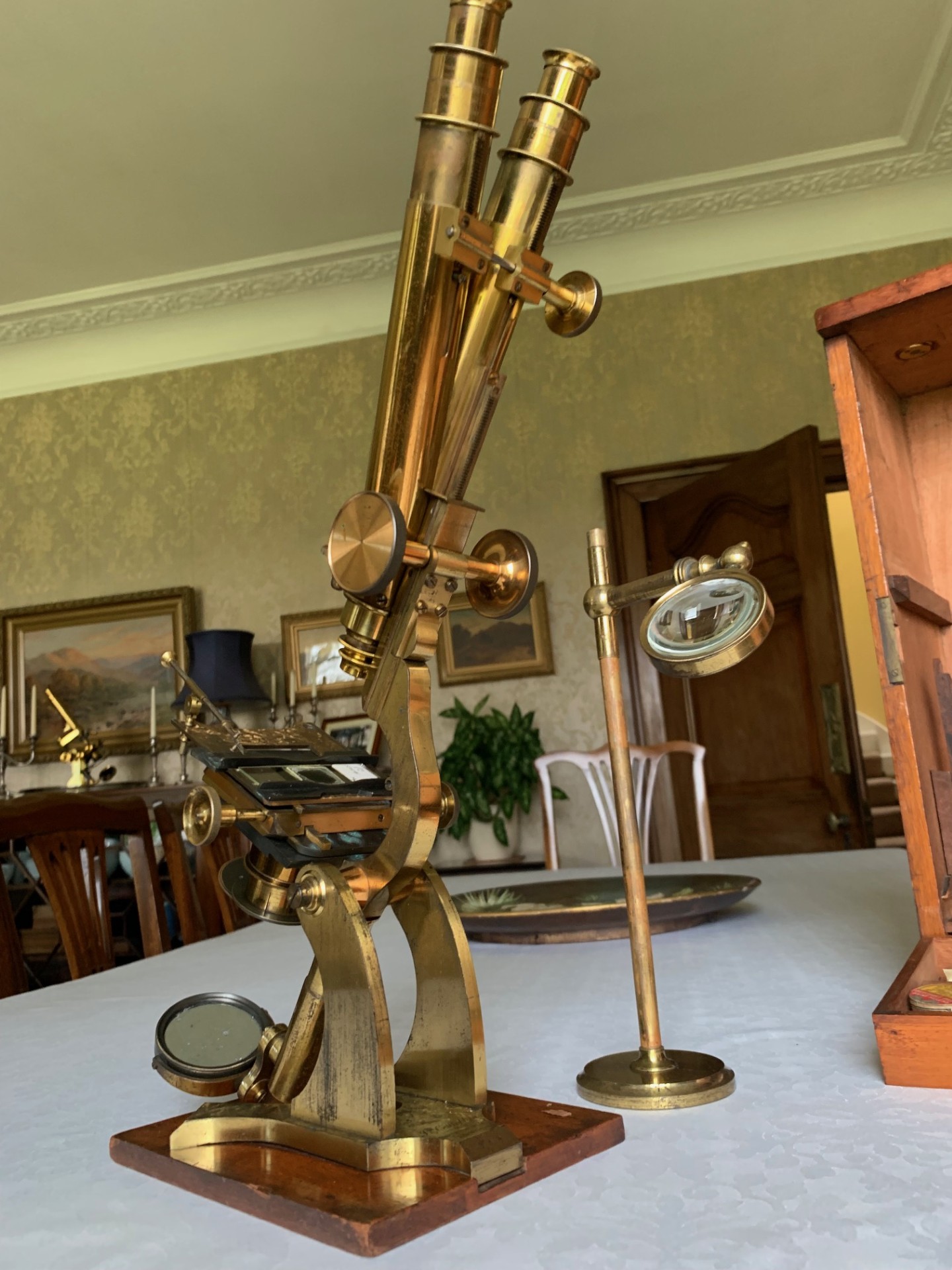
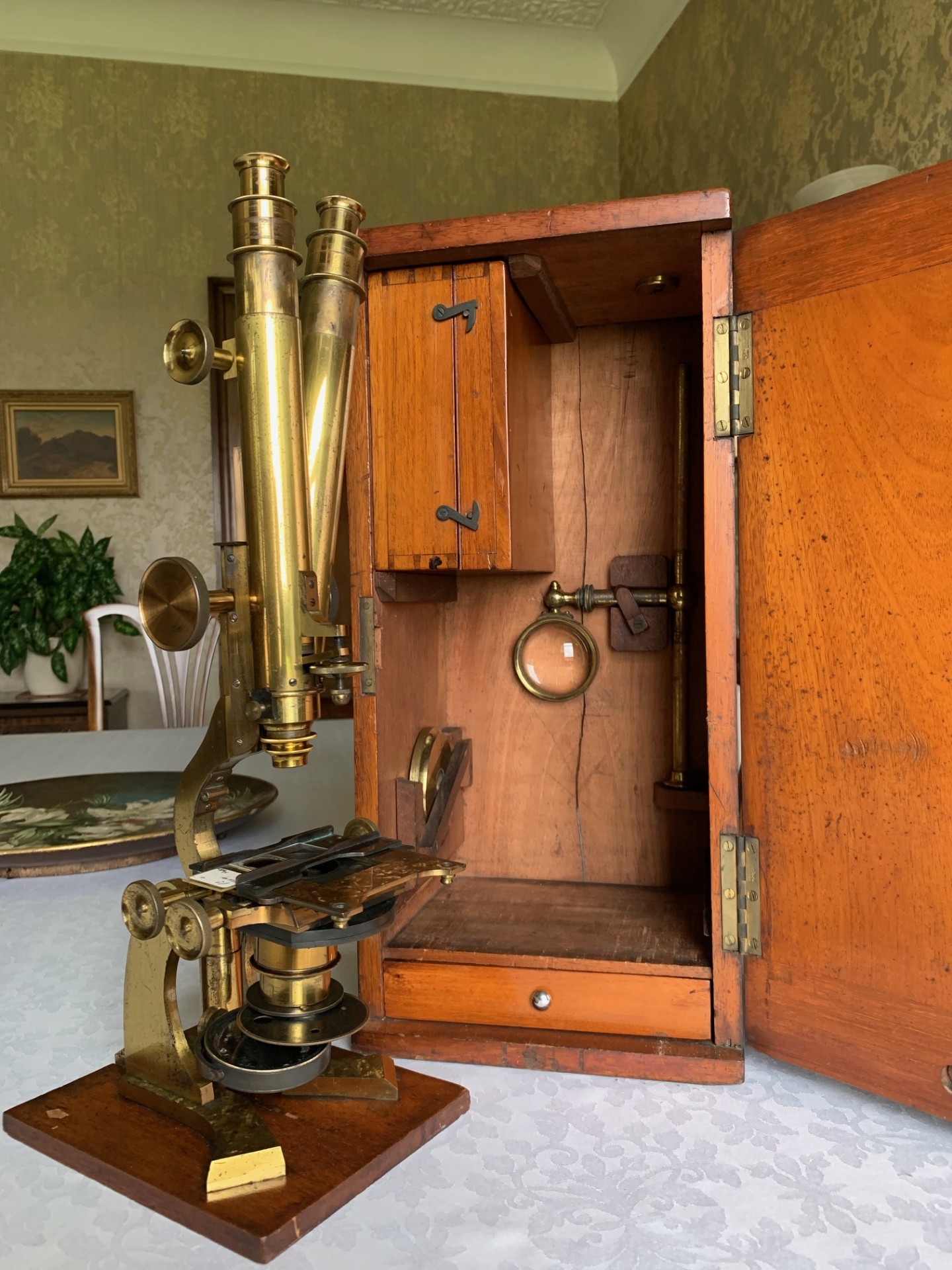
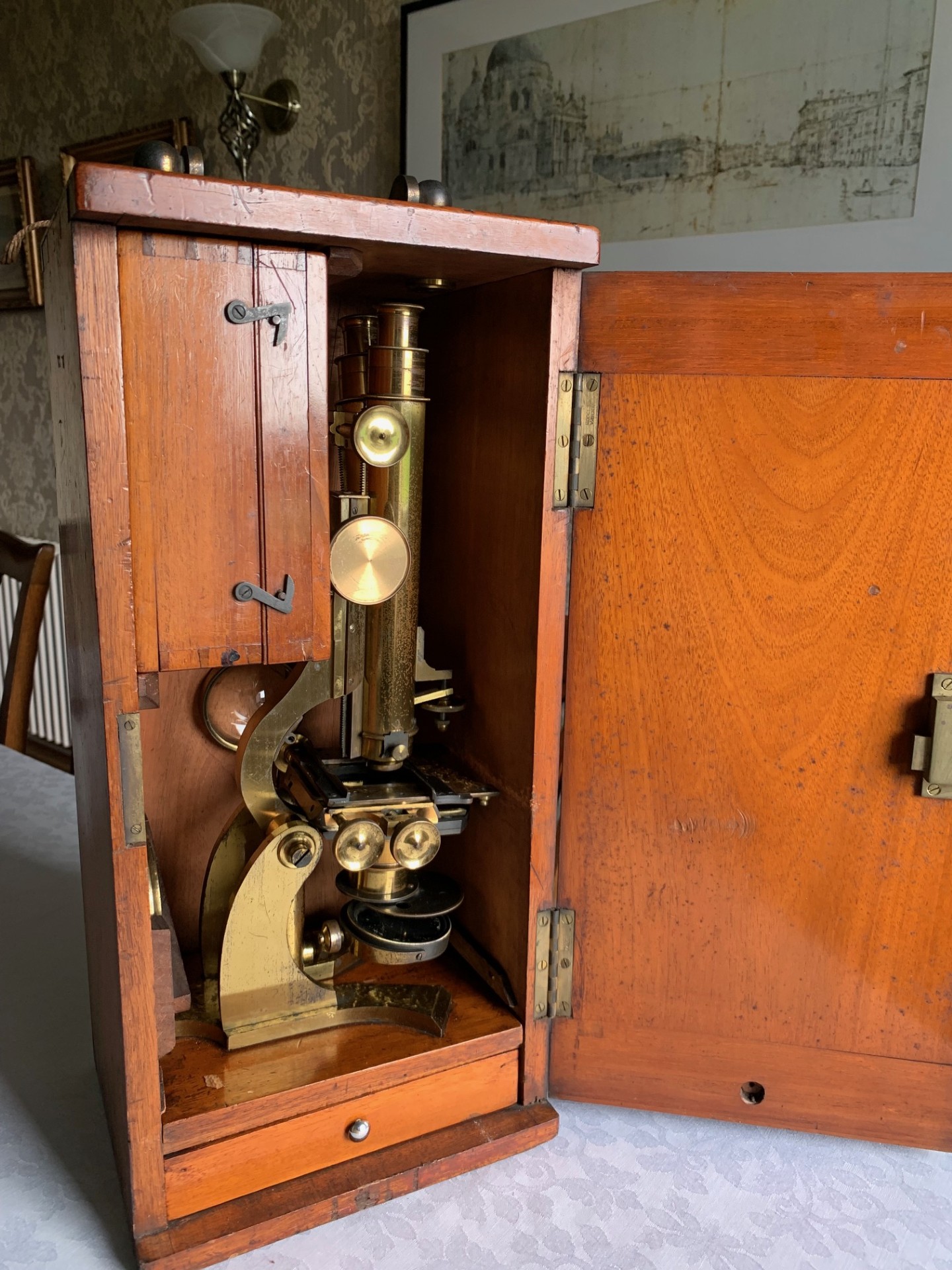
Antique generally good cosmetic and working condition Wenham binocular instrument serial no. 308 marked J & C Robbins of 9 Bartholomew Close, London - circa 1875.
Circa
1875
Maker
J & C Robbins, London
Country of manufacture
UK and Ireland
Description
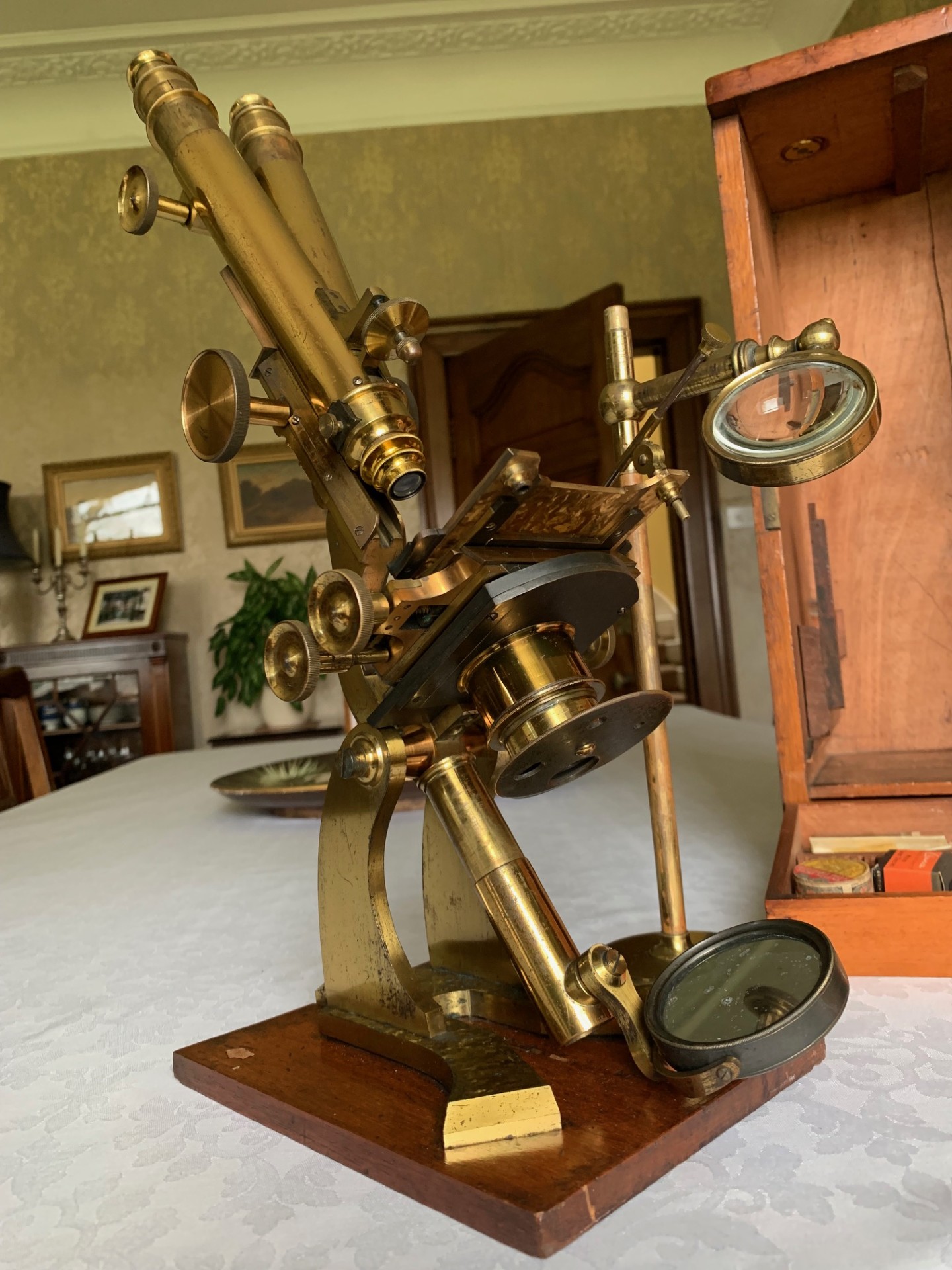
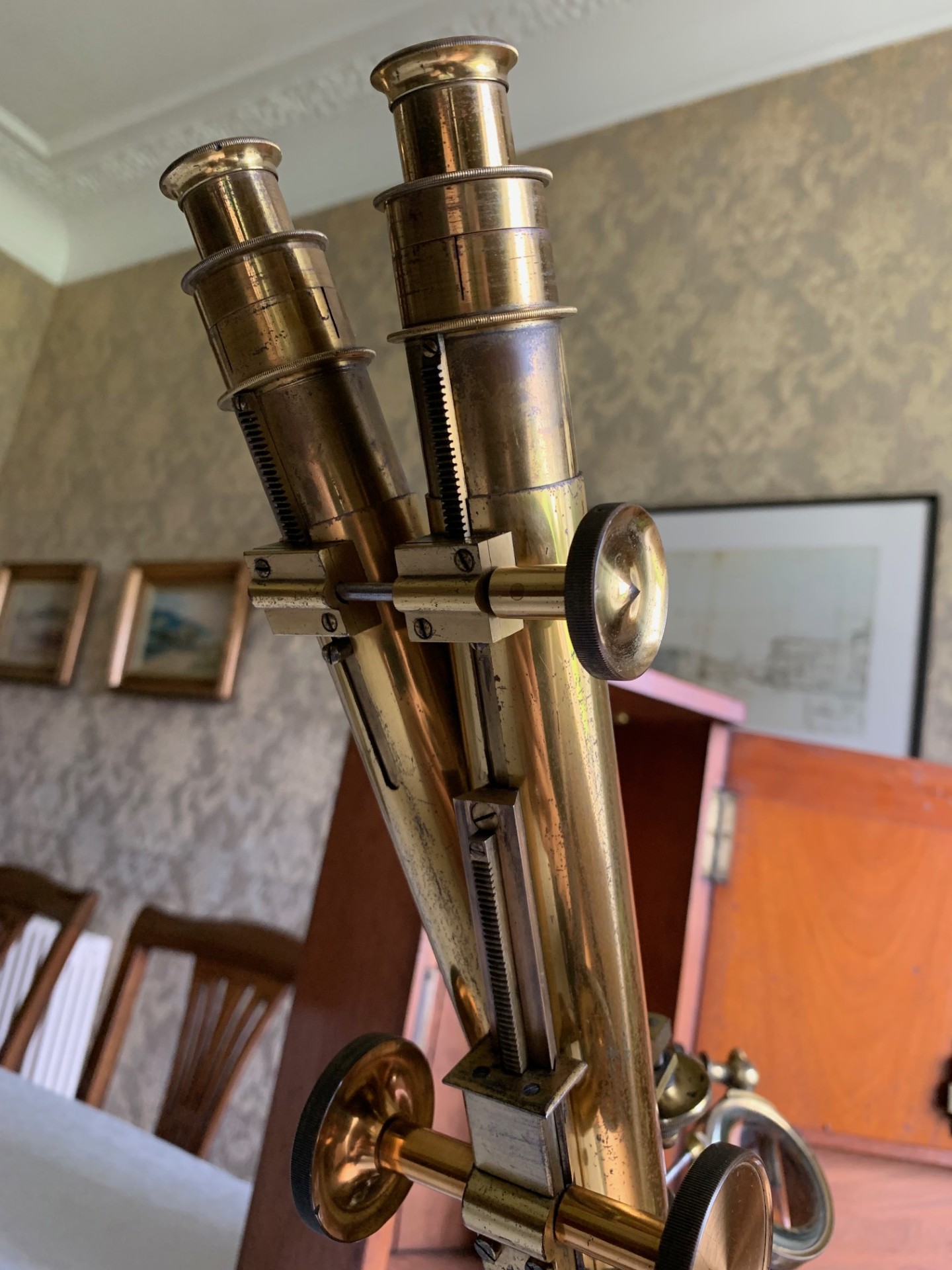
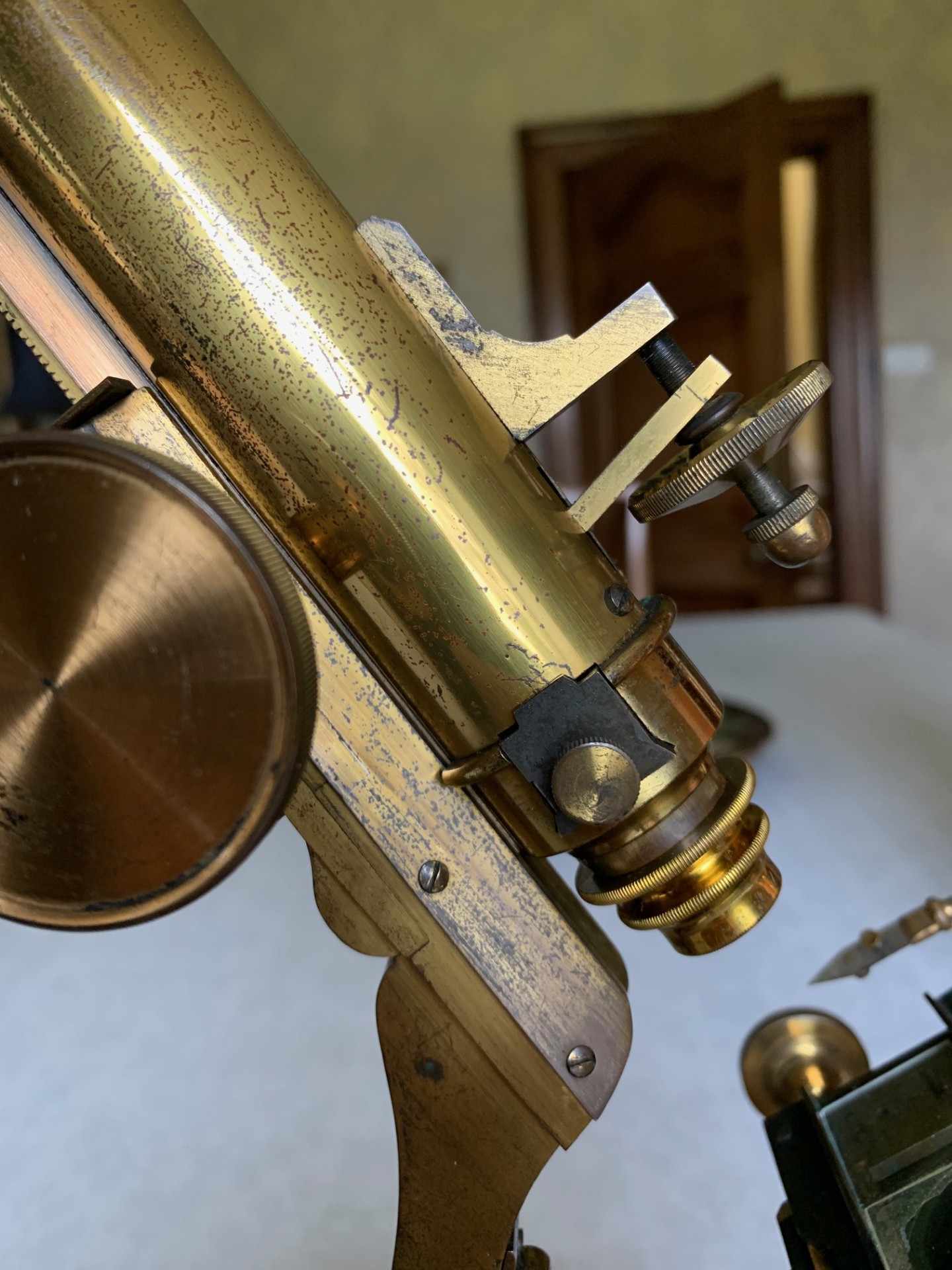
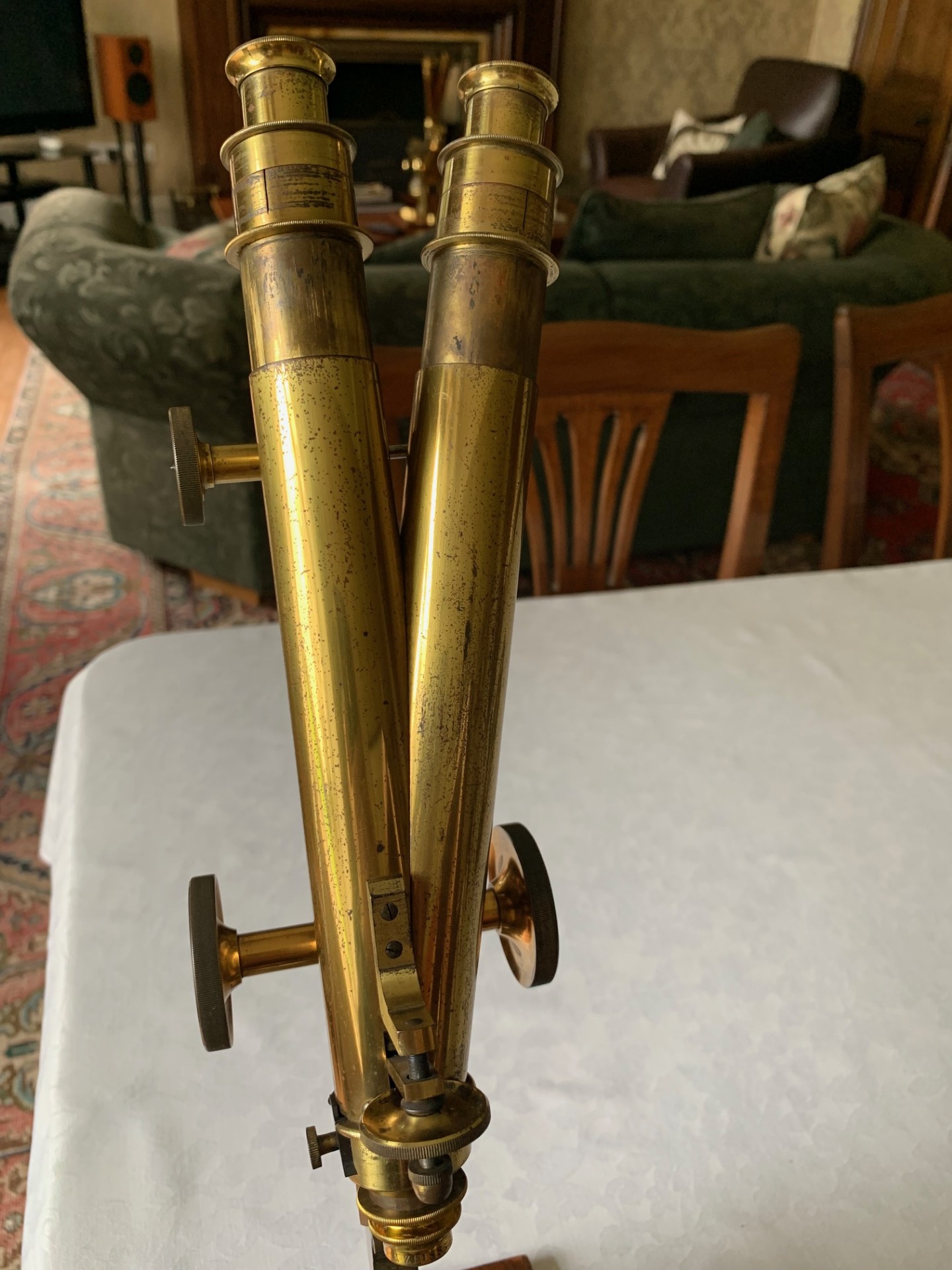
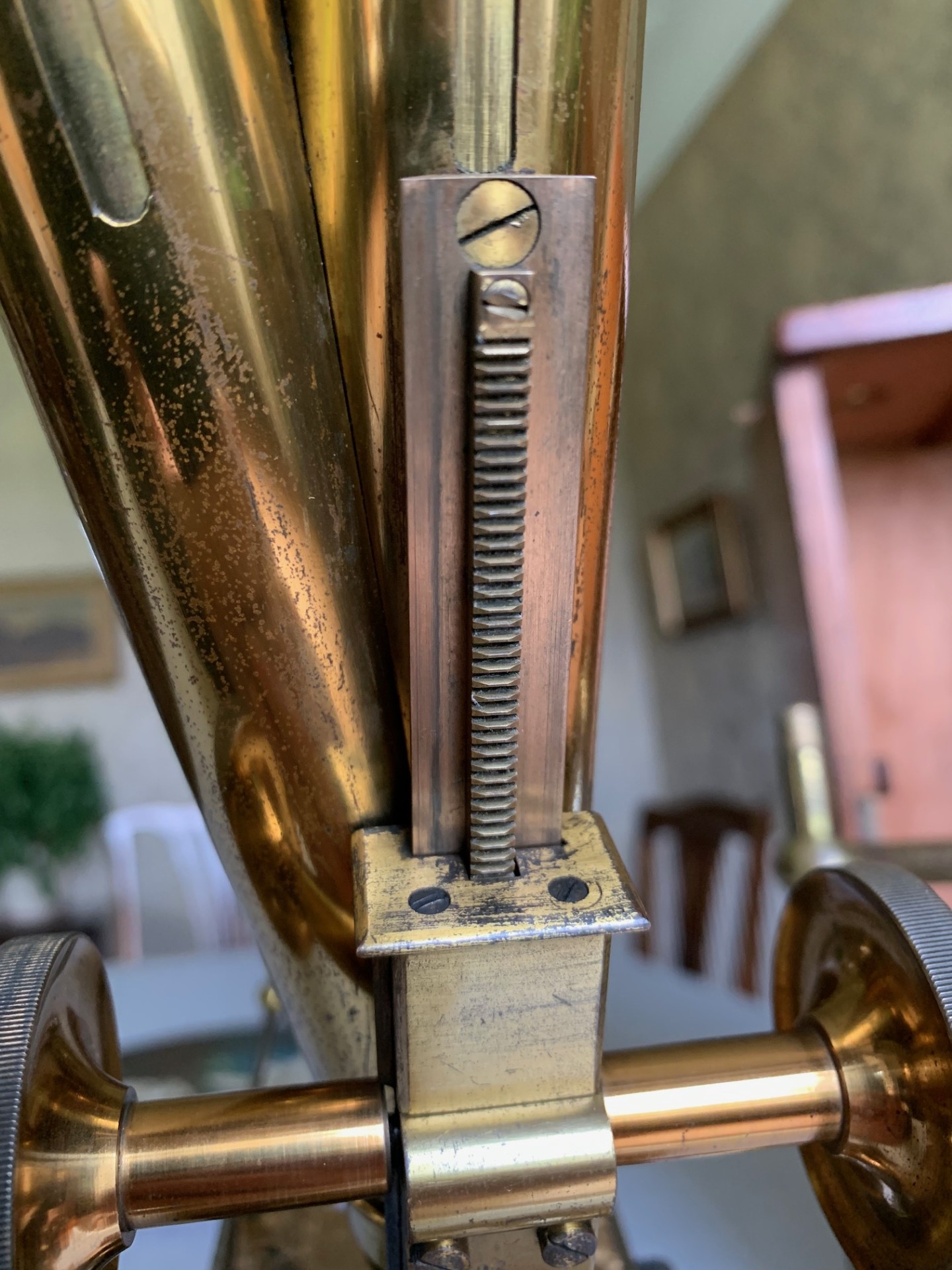
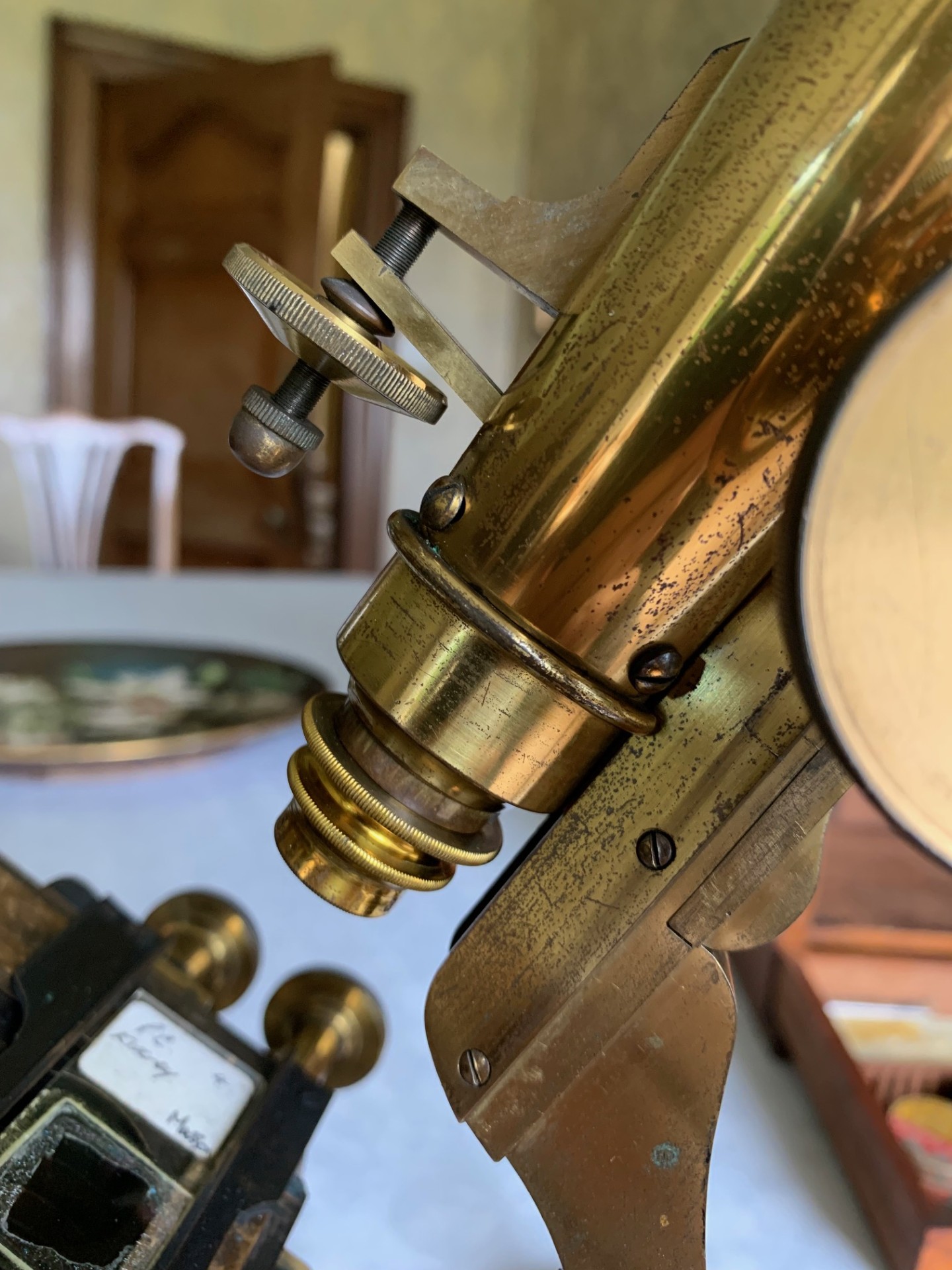
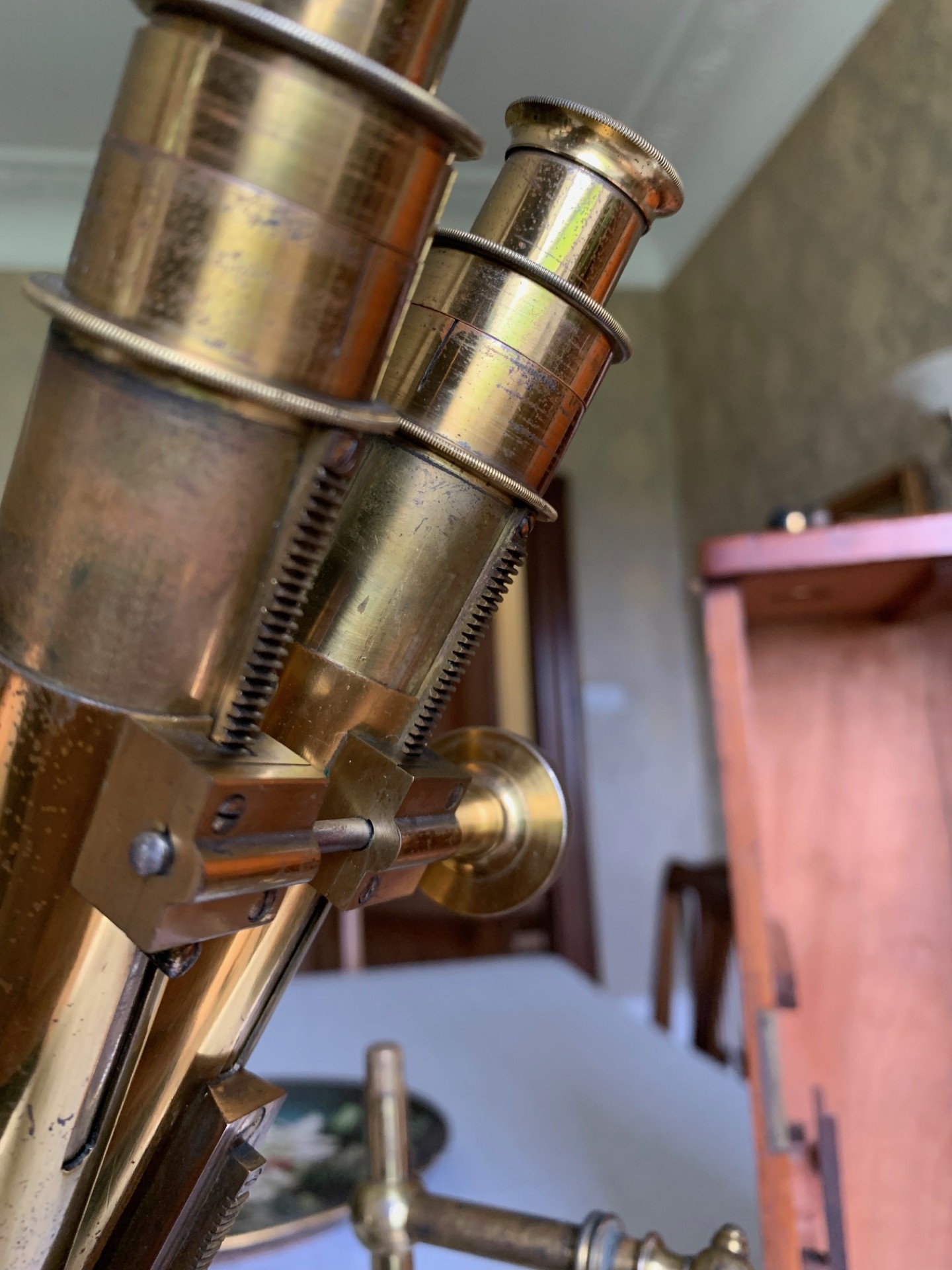
With its optics, this instrument is in binocular configuration with a Wenham-style prism in a carrier just above nose-piece, which is on an in/out slider and when set to “in” splits the light beam thereby illuminating both optical tubes, collimation is good. There’s mechanically extendable eyepiece draw-tubes operated by a rack and pinion system which works well. Extending the draw-tubes will increase magnification – you also have to re-focus. The optical Wenham prism operated via a slider allows use in both binocular and monocular configuration, with just the right-hand tube/eyepiece used for monocular observations (this tends to be the preferred method for higher magnification applications).
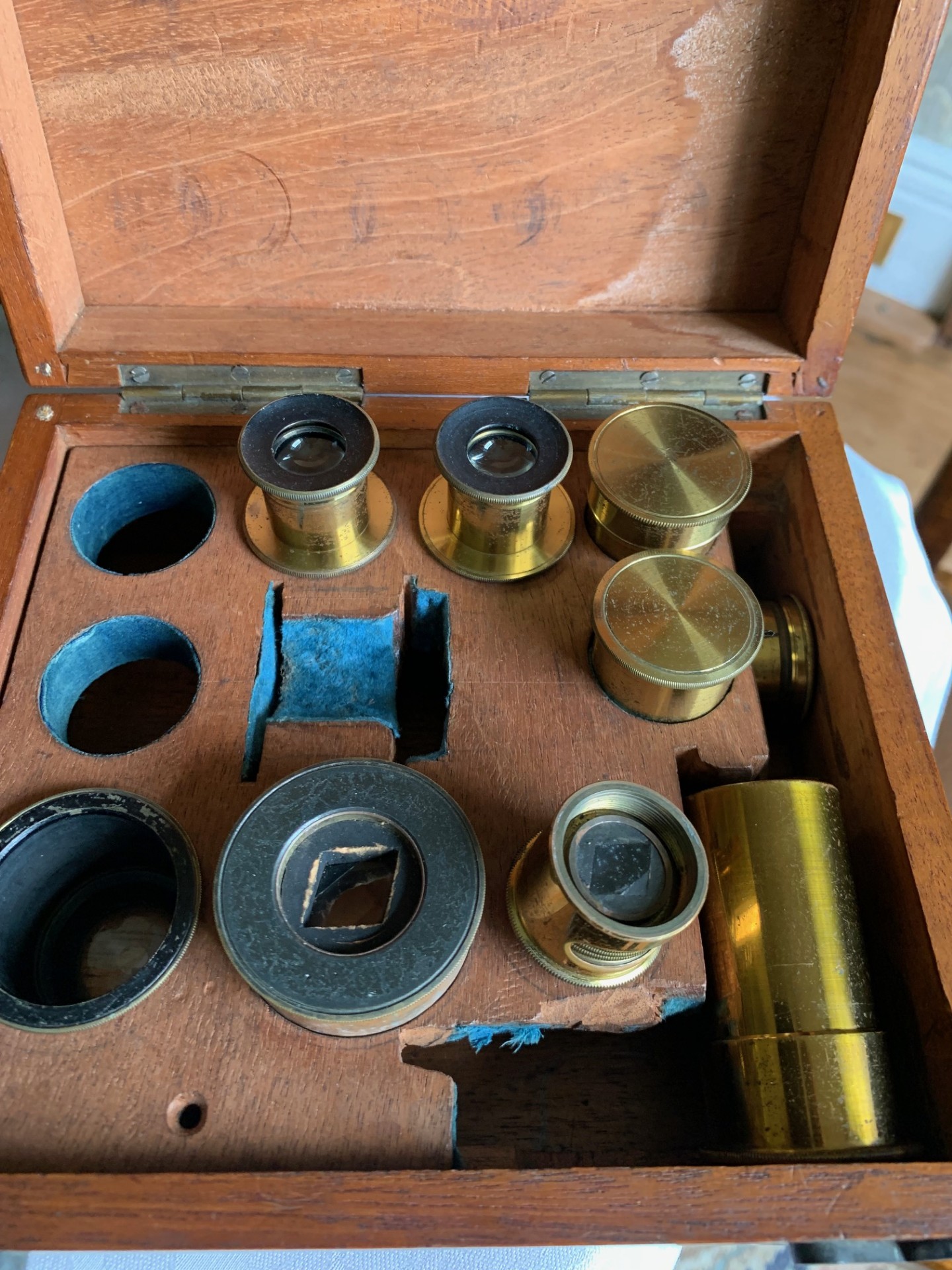
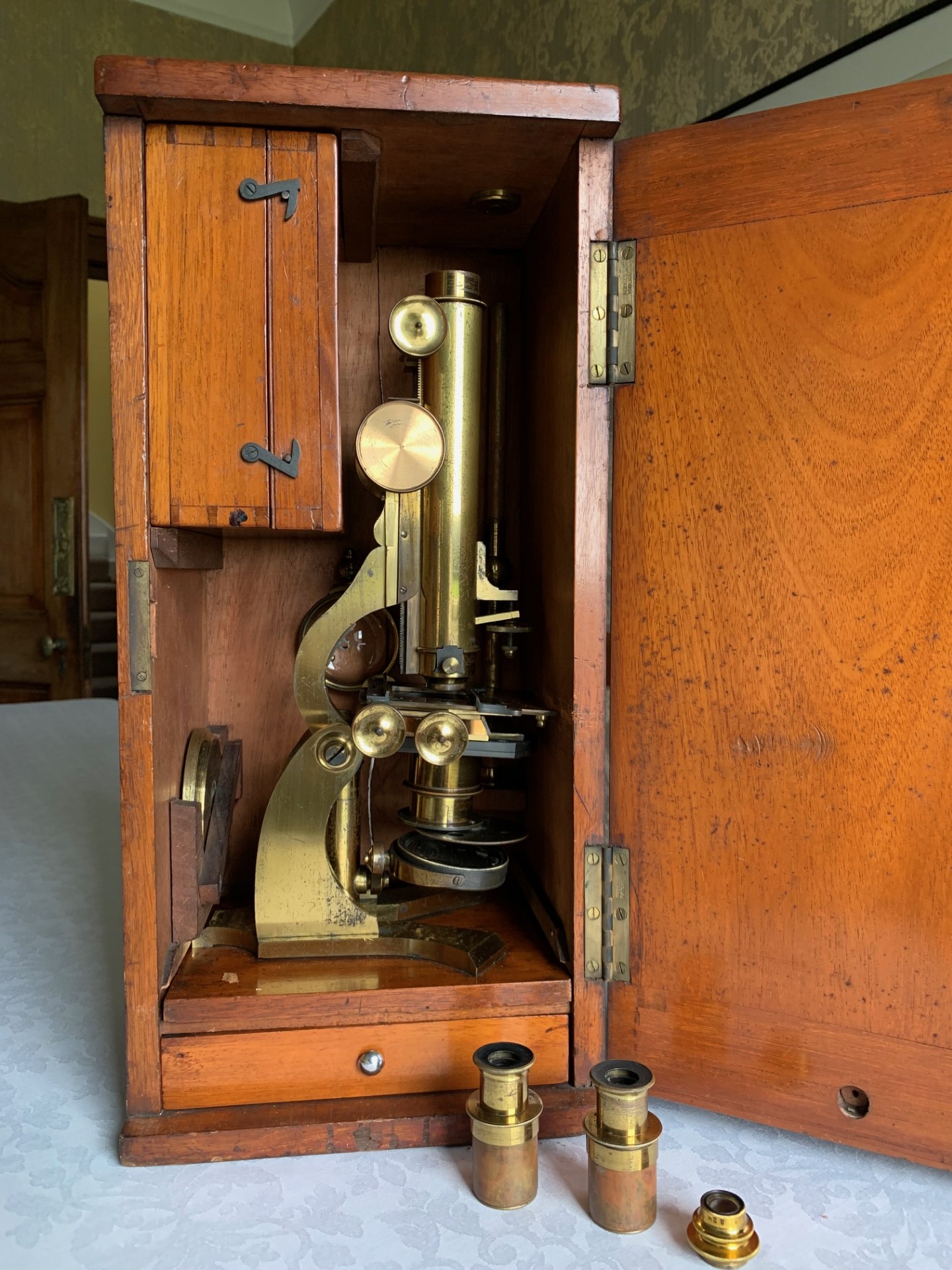
There’s two pairs of top-hat eyepieces:
– 6x magnification
– 10x magnification
There’s objective lenses in brass, as under – note the instrument is RMS in terms of objective thread diameter, so plenty of other objectives should also fit:
– Low power Zeiss objective – 3x magnification
– 1/2 inch – approx 15x magnification
– 1/4 inch – approx 25x magnification
(the objectives have period brass canisters)
The magnification range available is therefore around 18x to 250x with the current set of optics.
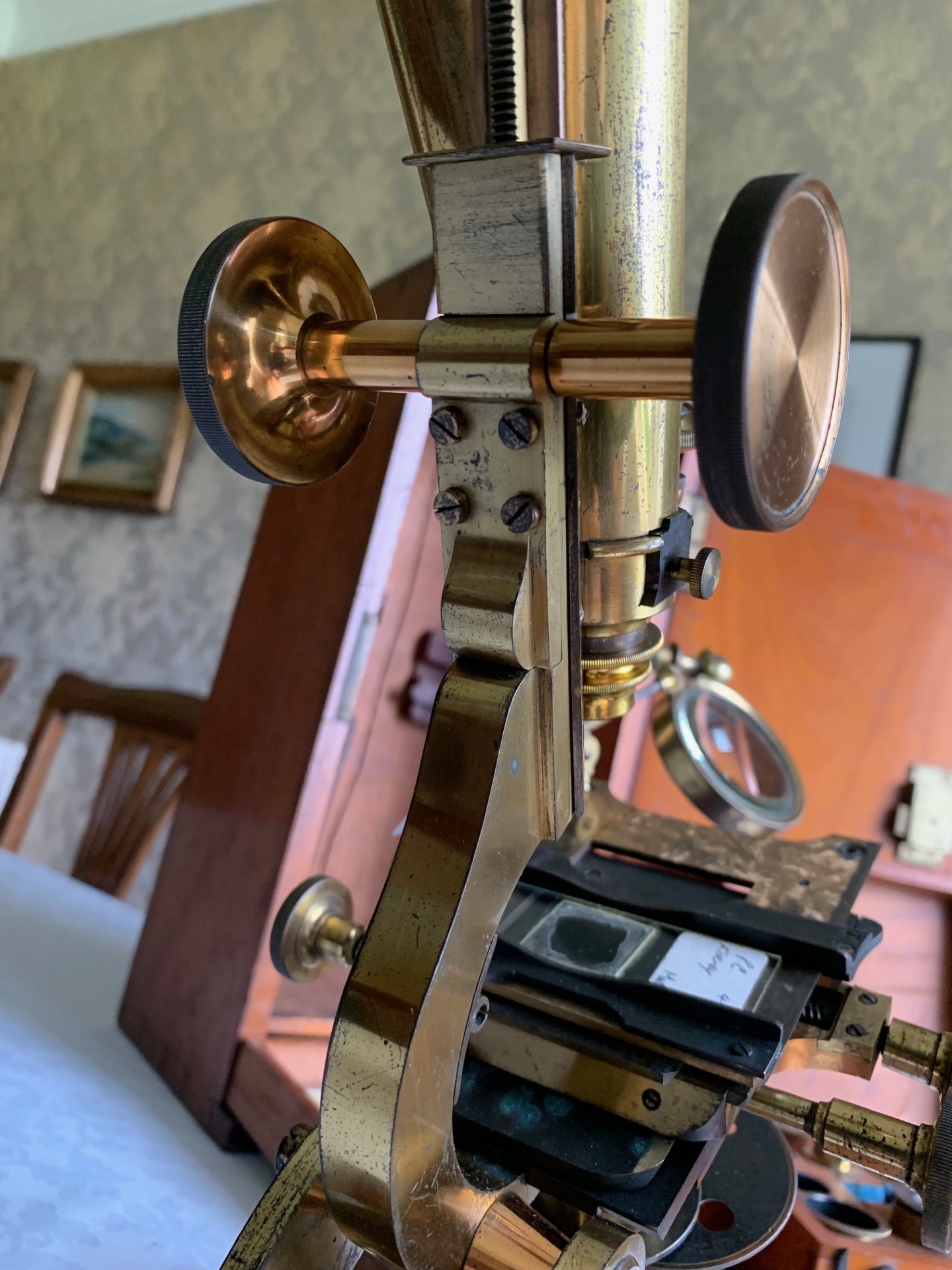
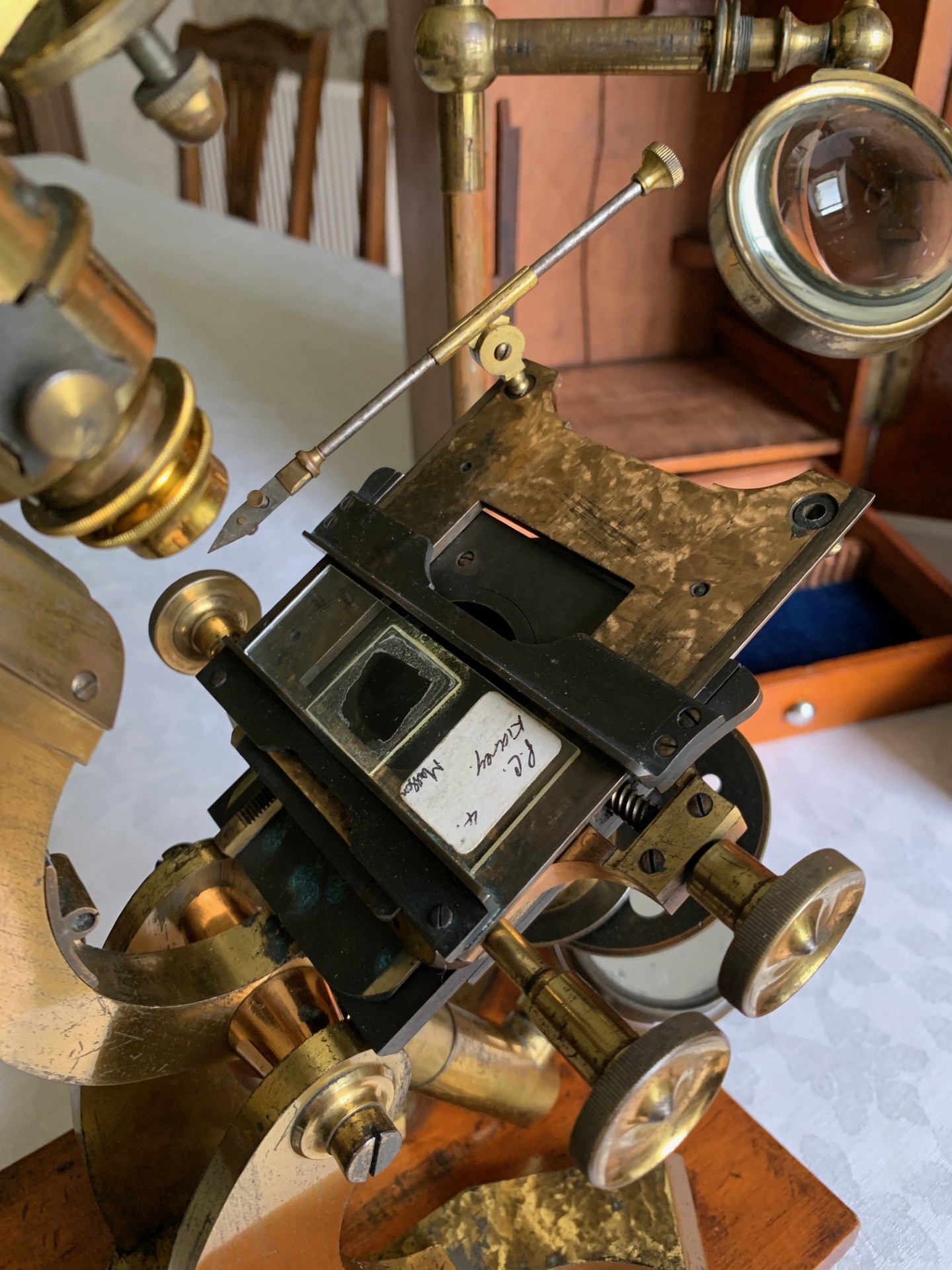
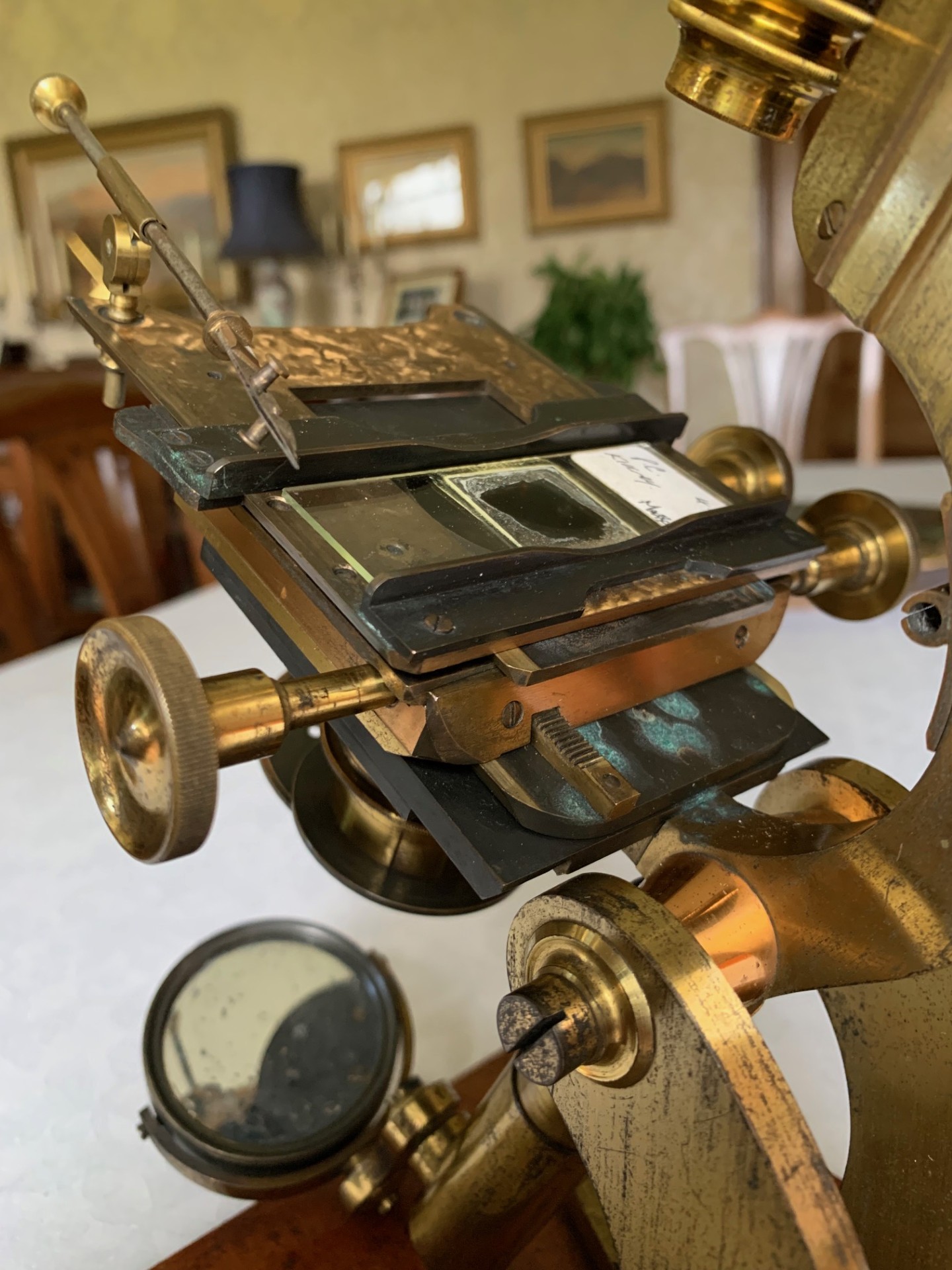
The fully mechanical rectangular brass stage is attached to the limb tail-piece just below the pivot point and is a well engineered feature that’s a delight to use, with nice smooth action to its moving parts. It’s got thumb-wheel x/y adjusters for both axes with smooth operation. The top-plate slides off and the entire stage also rotates although it won’t complete a full 360 degrees – it manages about 270 degrees before the thumb-wheels catch on the upper limb. It also has an integral specimen slider/ledge for holding slides during inclined viewing and when the axes are being moved around which works well. The x/y controls have a nice solid stable feel about them, offering good accurate control of specimen positioning, which is a real advantage for detailed and higher magnification work. The top-plate also has recesses for inter alia sage forceps and the like.
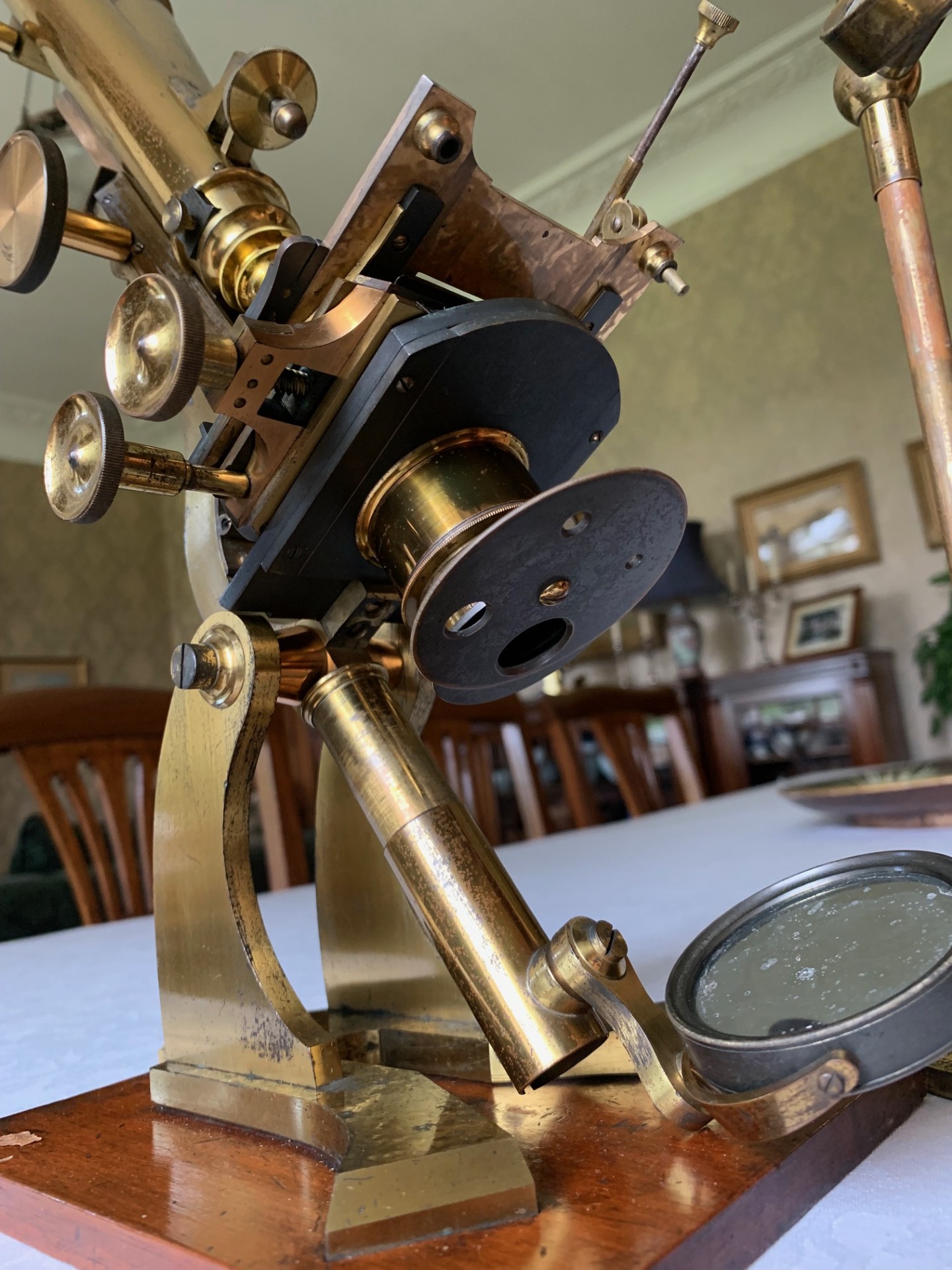
Turning to the sub-stage, we have a brass ring-mount fitted via a dovetail slider to which will friction-fit accessories – the listing shows the wheel-of-stops fitted.
Lighting is via a plano-concave mirror in a brass carrier on a height/rotation adjustable brass support arm and gimbal fitted to the limb tailpiece, with period silvering that’s in foxed condition to both sides and reflectivity that’s perfectly adequate.
Additional accessories:
– multi-adjustable bull’s-eye condenser on brass stand
– wheel-of-stops with 4 positions and positive click when stops align to optical axis
– nicol prism nose-piece analyser with rotation
– nicol prism sub-stage polariser with rotation
– stage forceps
– live box
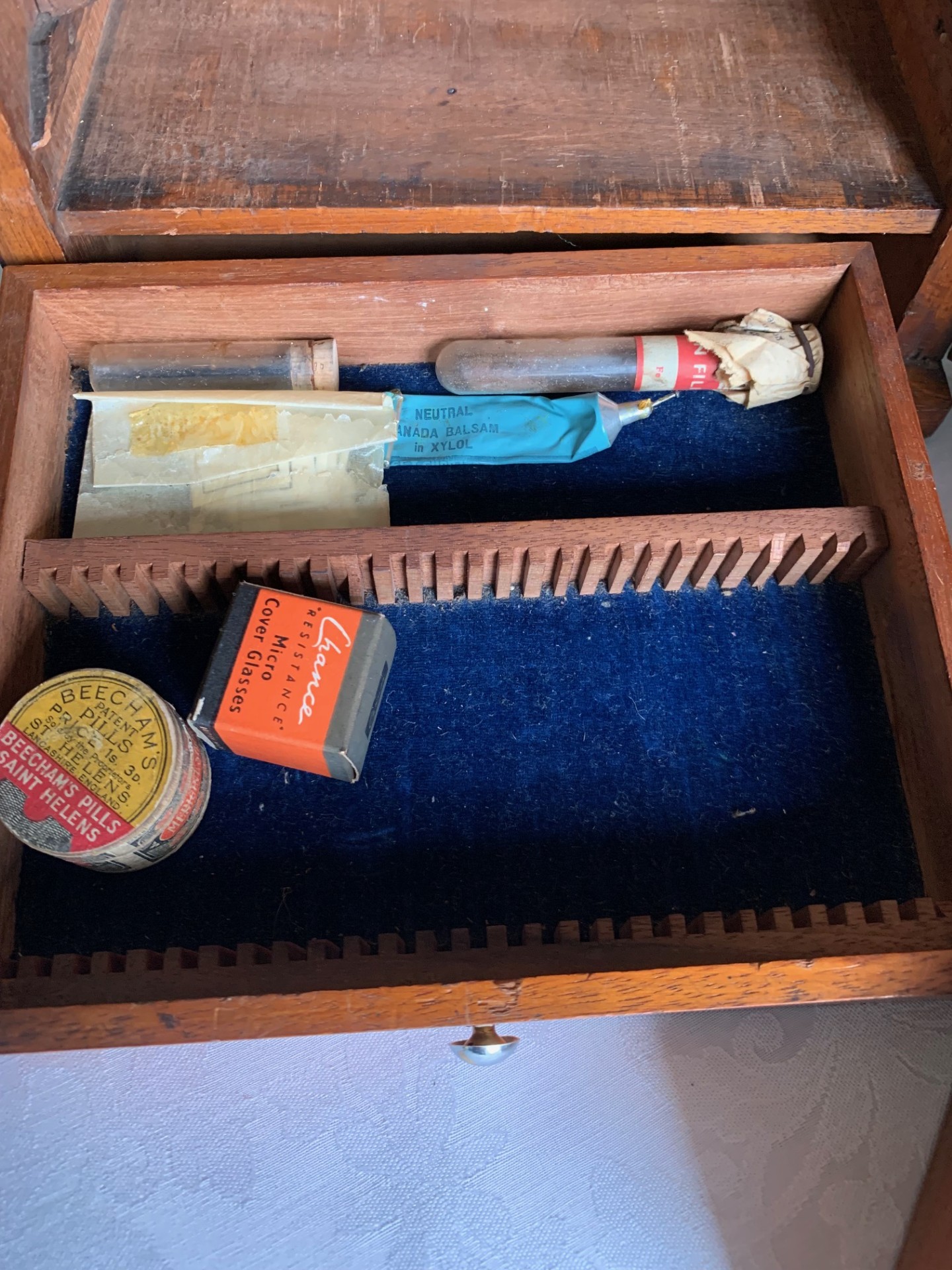
– slide preparation items housed in the case drawer
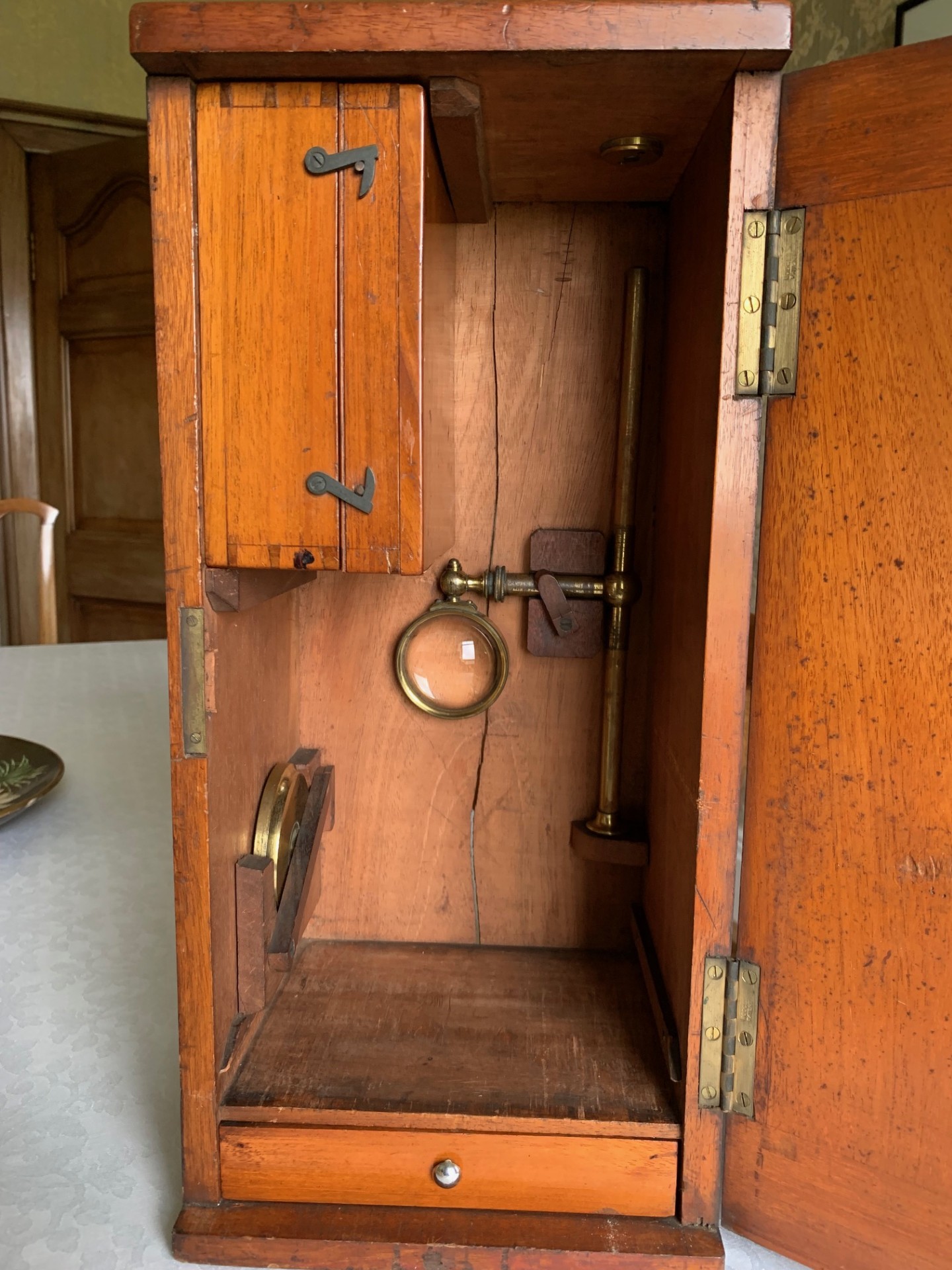
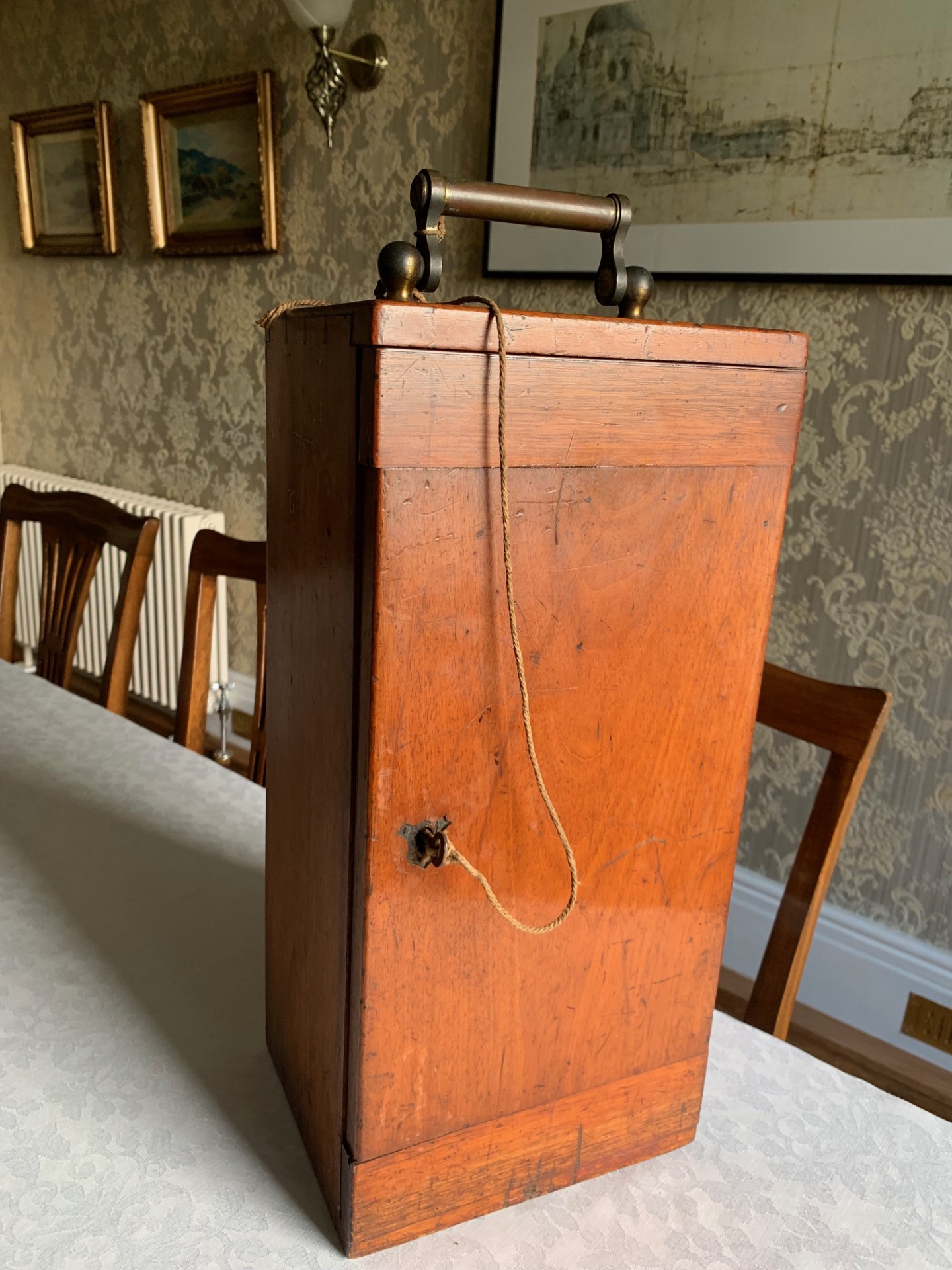
There’s a substantial period hardwood case for the instrument, with good exterior finish and an internal fitted wooden storage box and also a drawer that can accommodate the all the slide prep accessories. There’s a shrinkage crack to the rear panel which is just cosmetic and it’s fitted with a good solid brass carry-handle. The lock and key are also present which is always nice to have with an antique instrument such as this.
The instrument and its controls have been very gently dusted, lightly lubricated and operate smoothly with age-appropriate signs of wear and condition points as described, very much as one would expect for an instrument of this quality and age. With its patinated lacquered finishes and the signature double optical tubes, it’ll make a great display piece in the right setting and is also a very usable instrument. It presents really well and I’m certain it will look the part in a library or home office, especially when set up with an appropriate antique slide.
Owing to the weight and delicacy of this antique microscope, it will be partially dismantled, carefully wrapped for shipping and dispatched by insured courier upon receipt of cleared funds. UK shipping will be by Royal Mail Special Delivery.
Thanks for looking and just message seller if additional photos or details are required.
Ask the Dealer
Dealer information
 Arcboutant Scientific
Arcboutant Scientific based in Glasgow Scotland, with an interest in scientific collectables dating back to 1988. Now making available carefully curated fine examples, principally of antique microscopes and associated scientific equipment by quality English and Continental makers, to collectors world-wide.