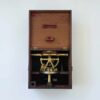


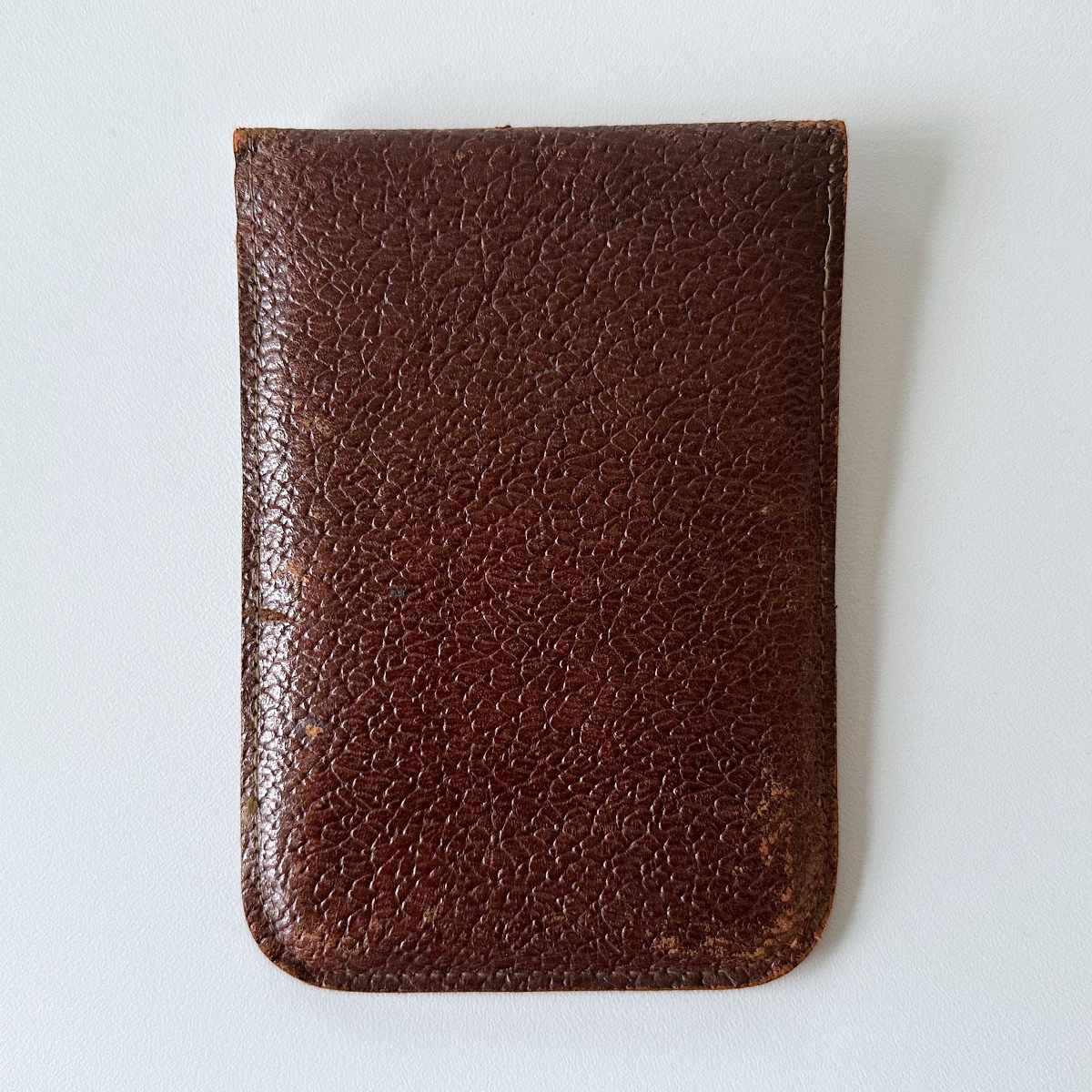
Early Twentieth Century Posograph Photographic Exposure Machine by Auguste Robert Kauffman
£650
Early Twentieth Century Posograph Photographic Exposure Machine by Auguste Robert Kauffman
Dimensions
H: 14 x W: 10 x D: 0.5cms
Circa
1924
Maker
Auguste Robert Kauffman
Country of manufacture
France
Description
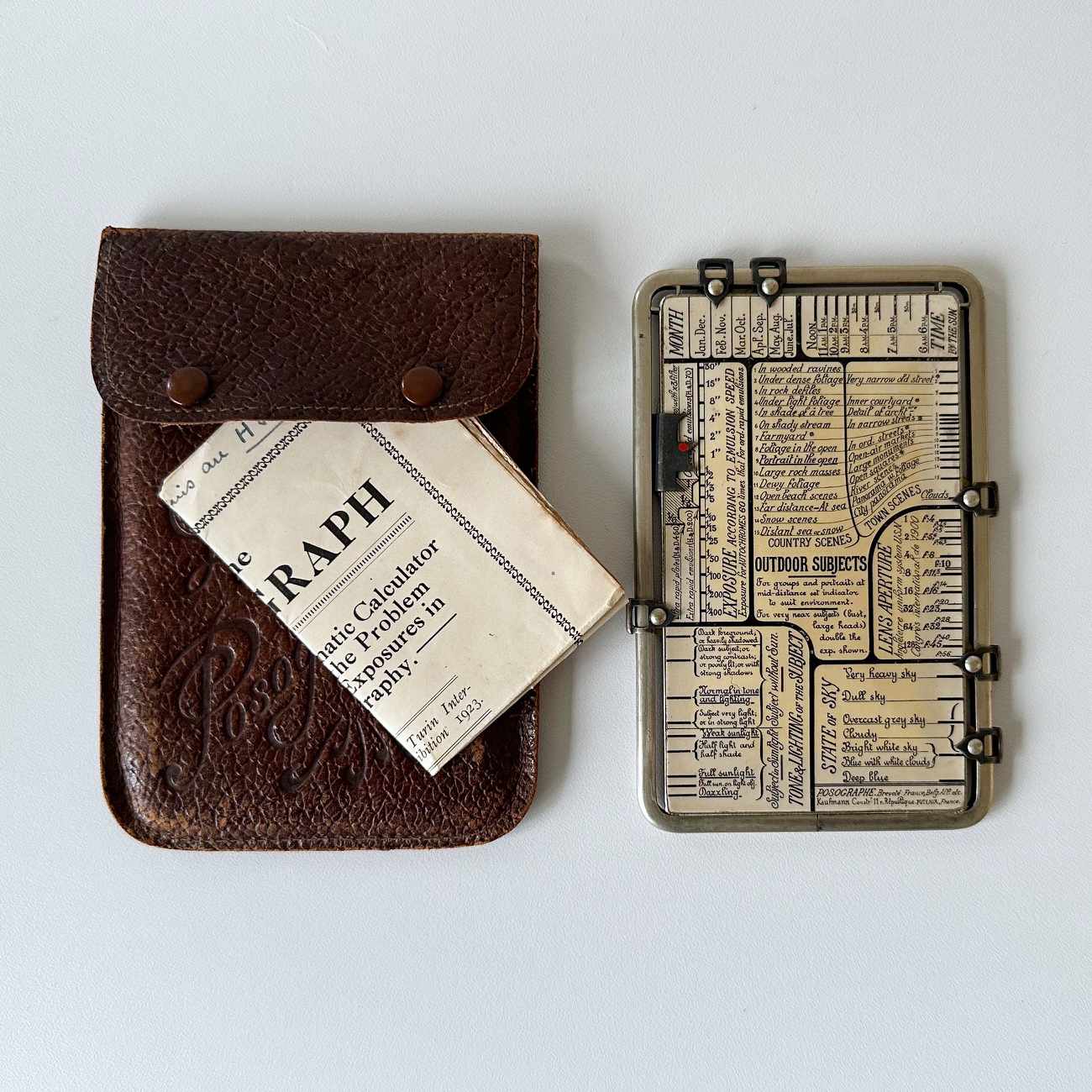
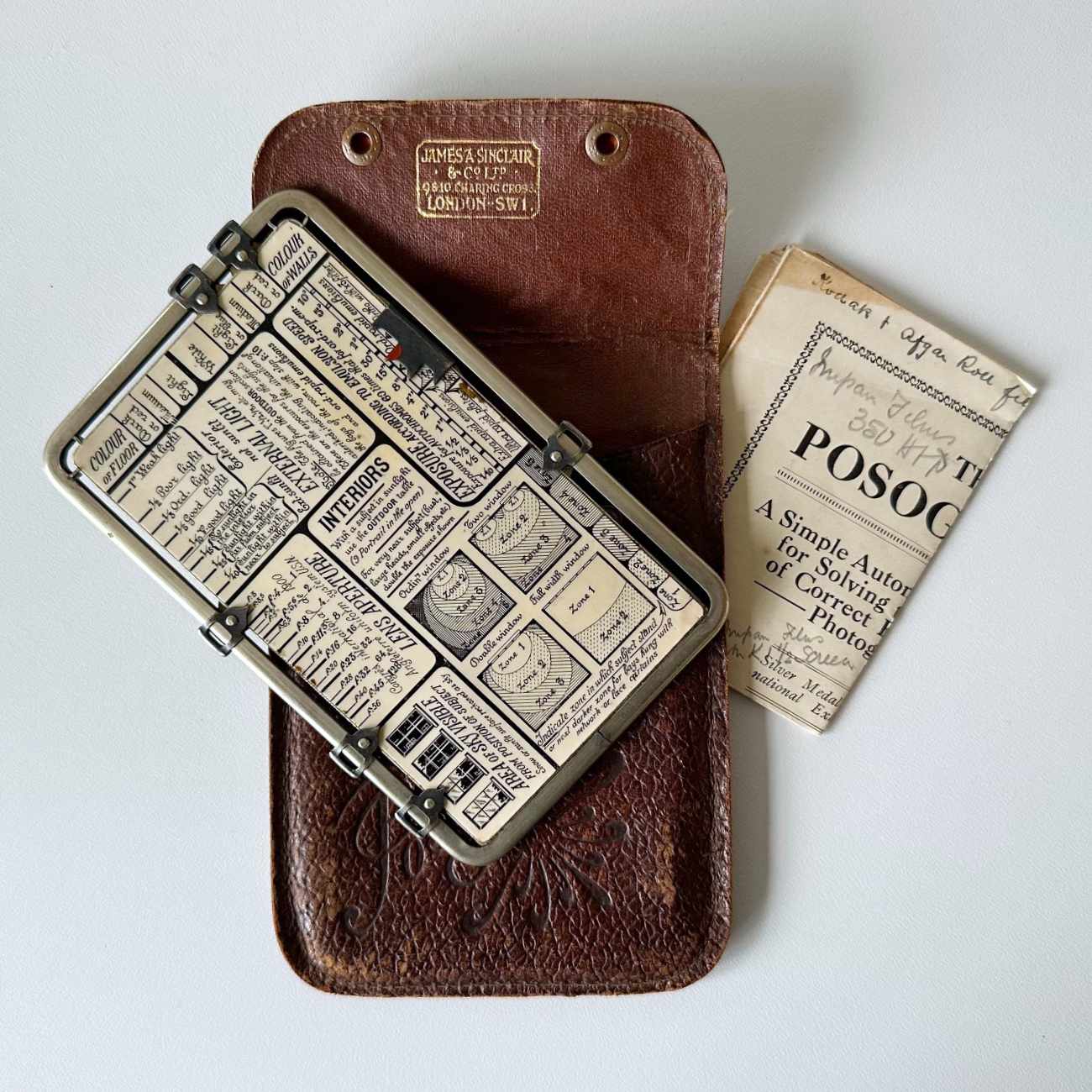
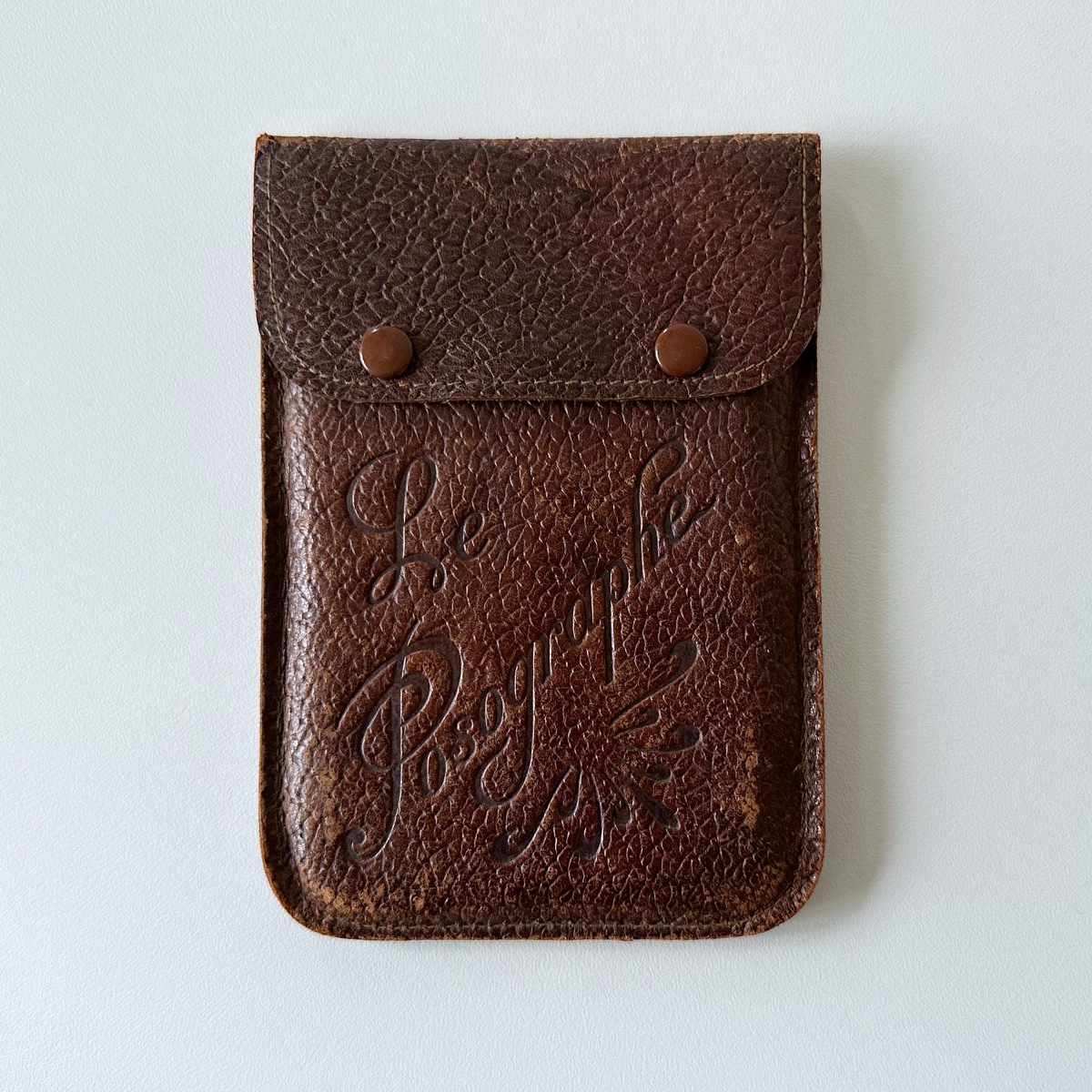
For sale a rare English language Posograph photographic exposure calculating machine by Auguste Robert Kauffman complete with original instruction manual and leather case embossed with “Le Posographe” and bearing the stamp the retailer’s details under the button flap, “James A Sinclair & Co Ltd, 9&10 Charing Cross, London, SW1.
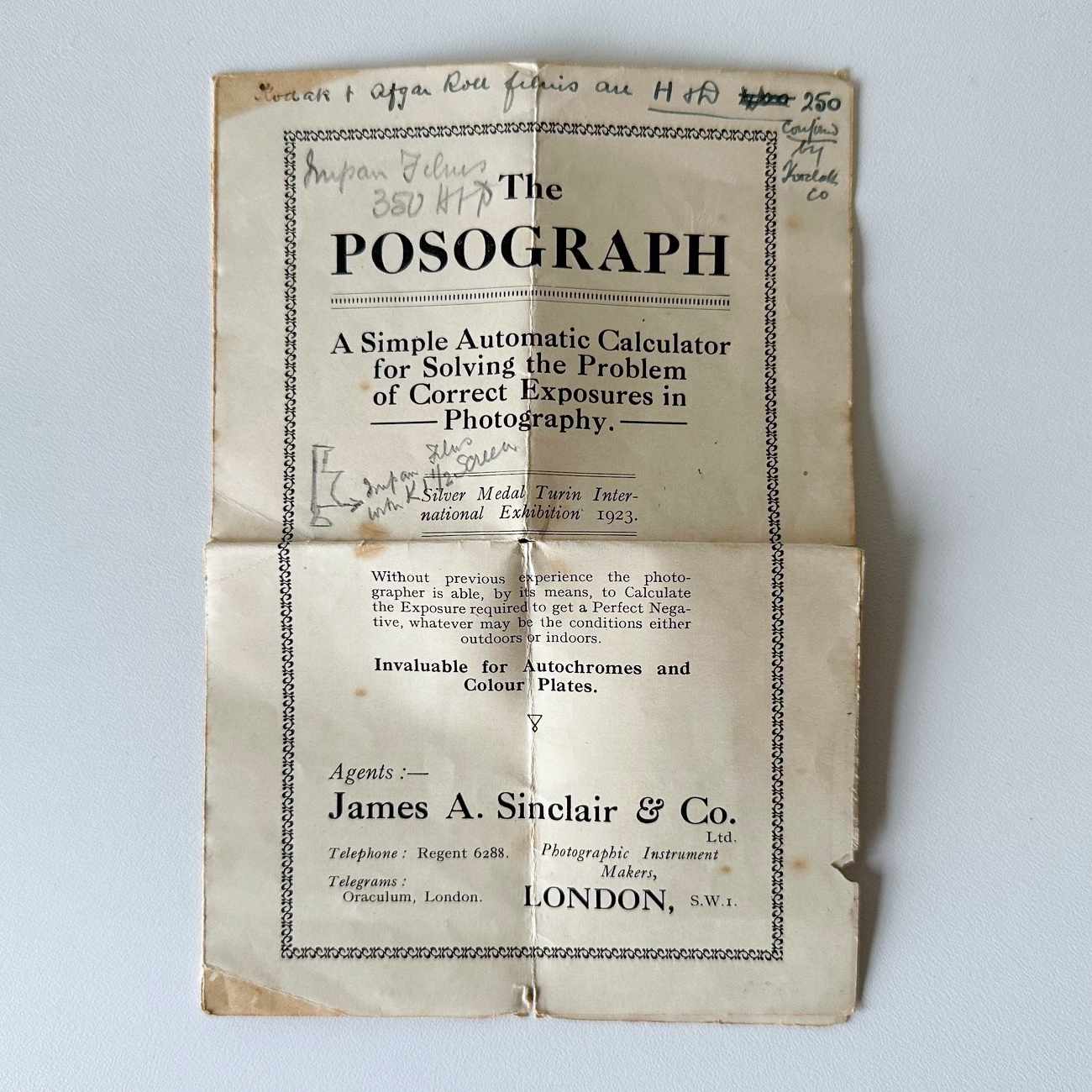
This fascinating and very useful photographic aid was patented on the 12th of May, 1922 by the French inventor and amateur photographer, Auguste-Robert Kauffman. The leaflet accompanying the Posograph is annotated below and provides a good description of the instrument, it also comes complete with its original black leather case which is stamped to the front with “Le Posographe” and the English retailer’s mark provided in gilt lettering on the inside of the lid. James A Sinclair Ltd. 9 & 10 Charing Cross London SW1.
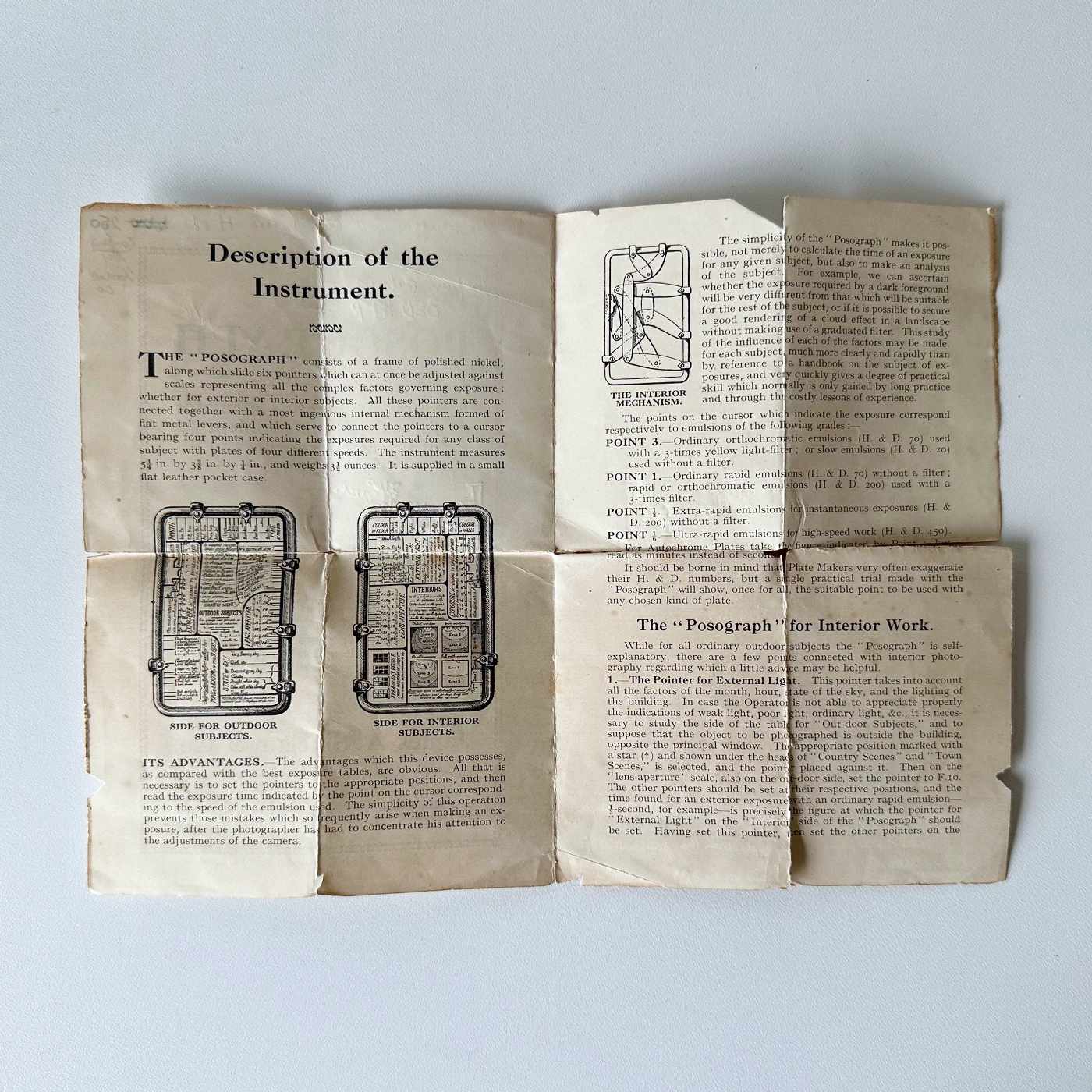
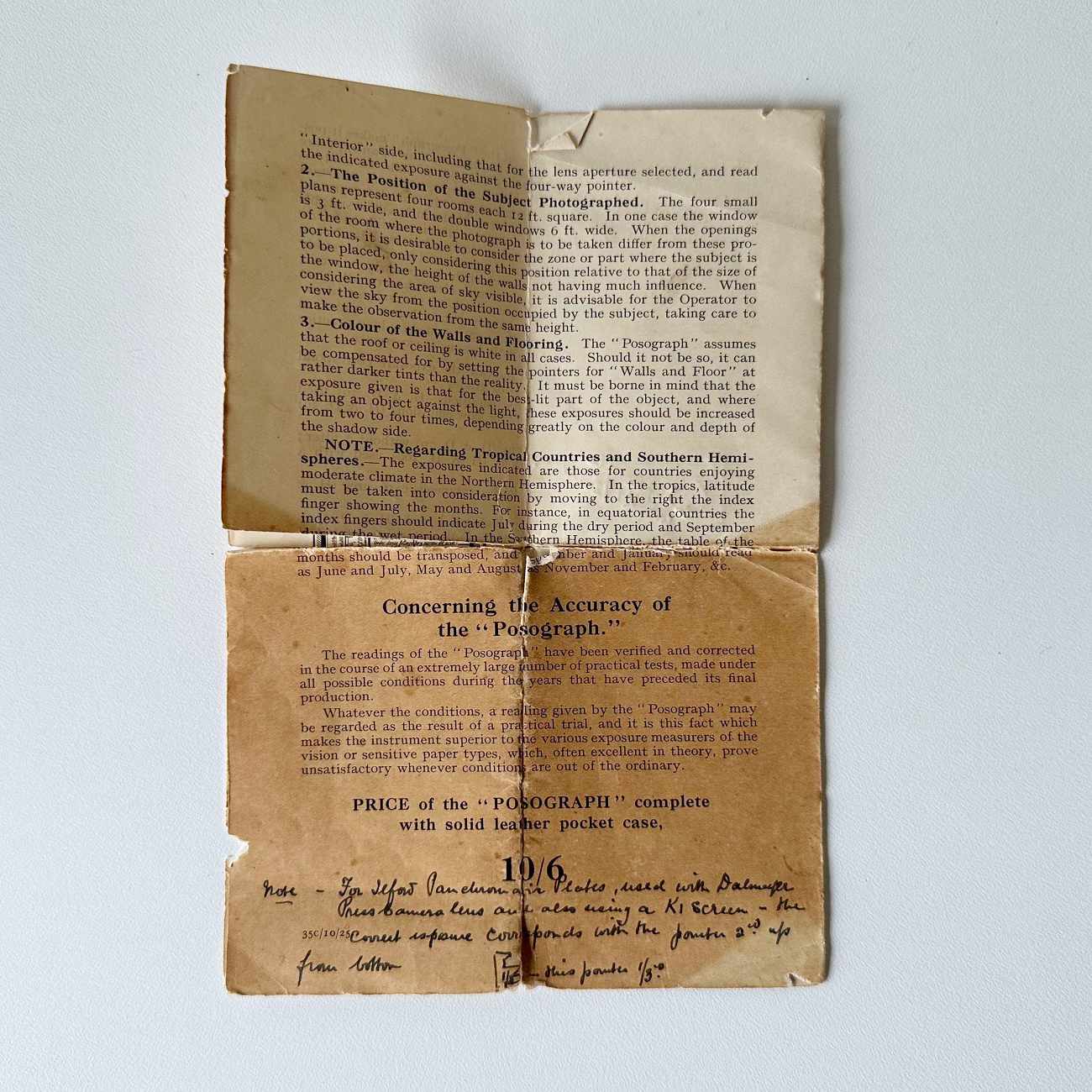
“The Posograph
A Simple Automatic Calculator for solving the problem of correct exposures in photography.
Silver medal Turin international Exhibition 1923
Without previous experience the photographer is able, by its means, to calculate the Exposure required to get a perfect negative, whatever may be the conditions either outdoors or indoors.
Invaluable for autochromes and Colour plates.
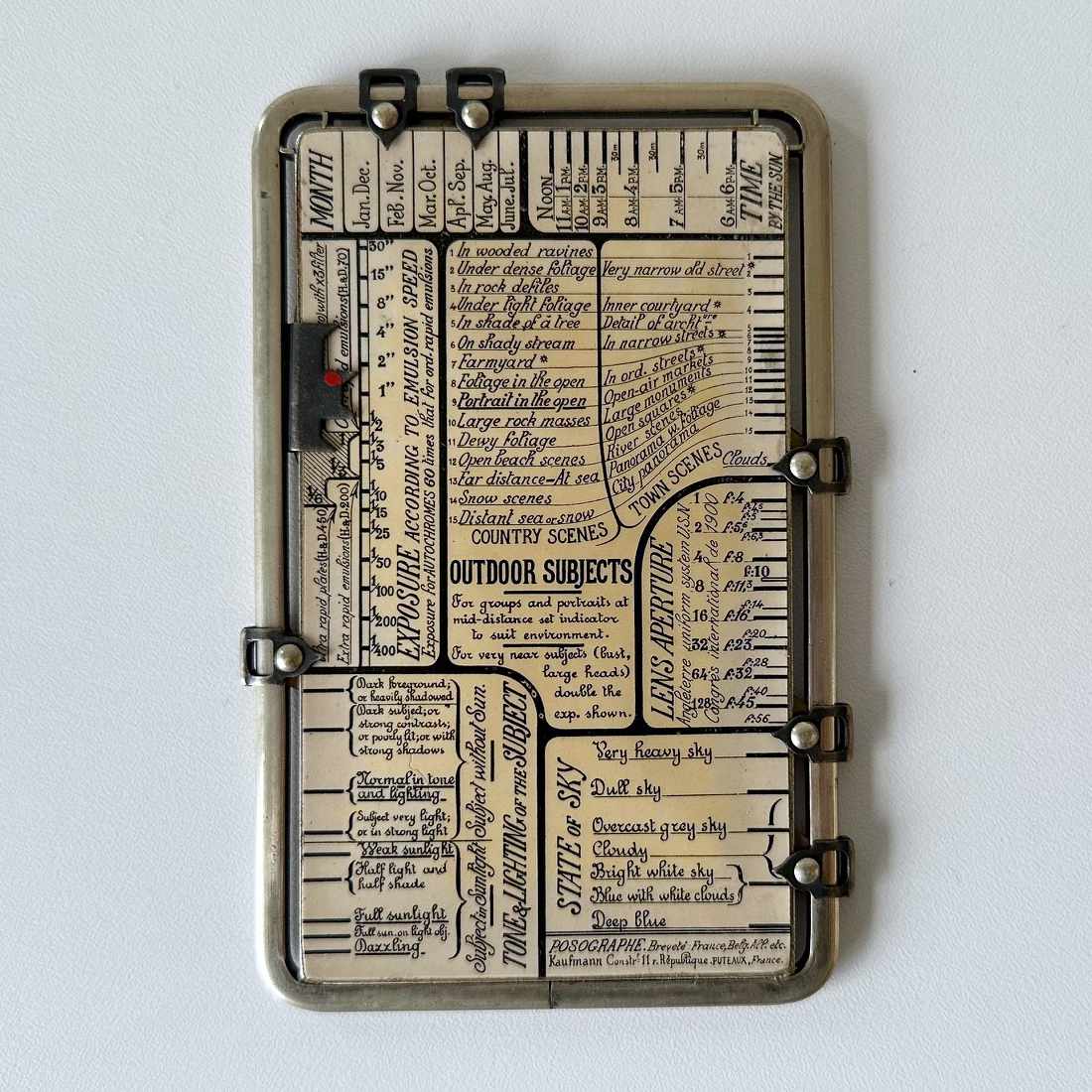
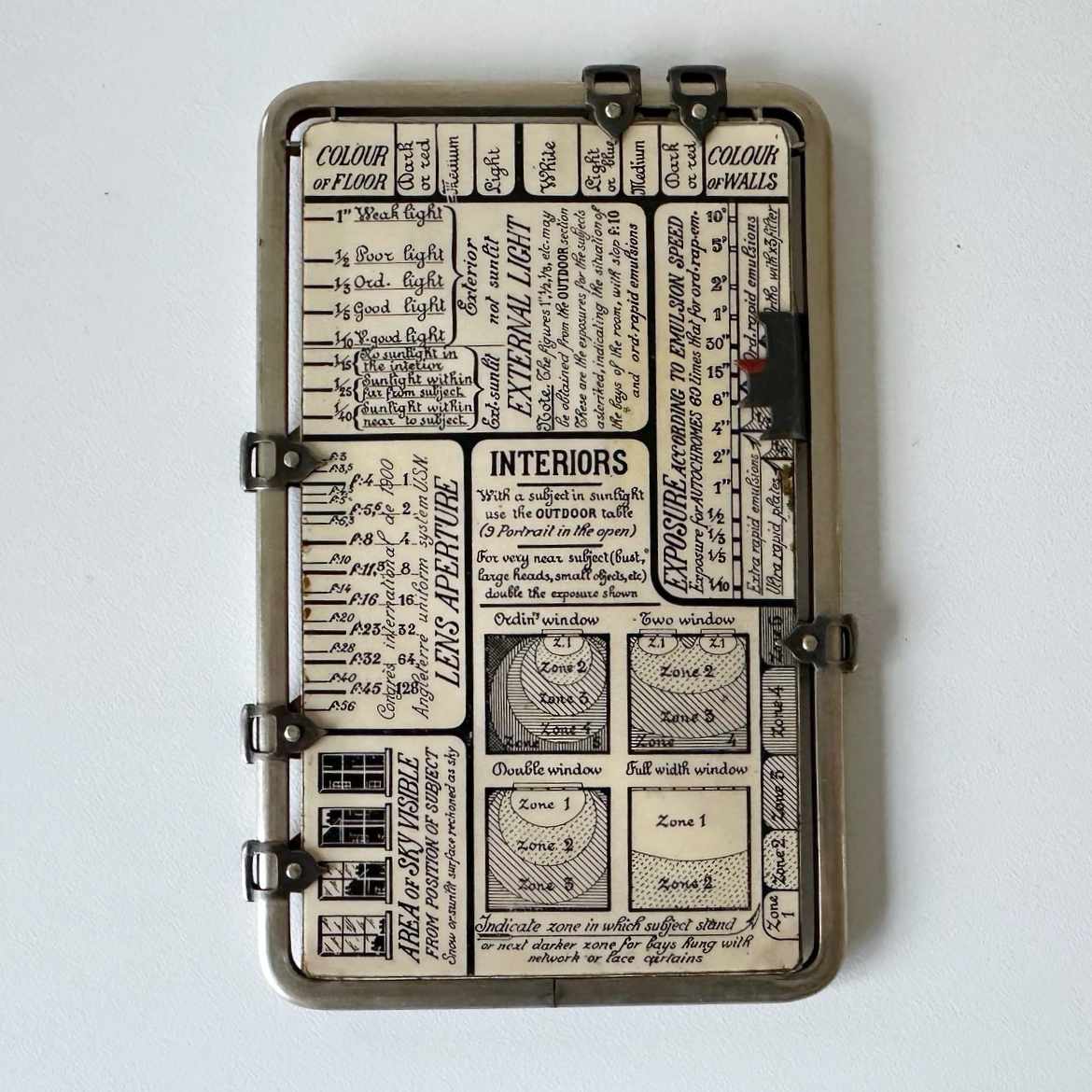
The Posograph consists of a frame of polished nickel, along which slide six pointers which can at once be adjusted against scales representing all the complex factors governing exposure; whether for exterior or interior subjects. All these pointers are connected together with a most ingenious internal mechanism formed of flat metal levers, and which serve to connect the pointers to a cursor bearing four points indicating the exposure required for any class of subject with plates of four different speeds.
The advantages which this device possesses, as compared with the best exposure tables are obvious. All that is necessary is to set the pointers to the appropriate positions, and then read the exposure time indicated by the point on the cursor corresponding to the speed of the emulsion used. The simplicity of this operation prevents those mistakes which so frequently arise when making an exposure, after the photographer has had to concentrate his attention to the adjustments of the camera.
The simplicity of the “Posograph” makes it possible, not merely to calculate the time of an exposure for any given subject, but also to make an analysis of the subject. For example, we can ascertain whether the exposure required by a dark foreground will be very different from that which will be suitable for the rest of the subject, or if it is possible to secure a good rendering of a cloud effect in a landscape without making use of a gradient filter. This study of the influence of each of the factors may be made, for each subject, much more clearly and rapidly than by reference to a handbook on the subject of exposures, and very quickly gives a degree of practical skill which normally is only gained by long practice and through the costly lessons of experience.”
The inventor Auguste Robert Kauffman was born in Paris in 1885. His early life is relatively undocumented but prior to World War One, he was already showing a flair for invention and ran a successful Paris business manufacturing motorised ride-in cars for children, a high-end product which I suspect allowed him a very good income. The onset of the First World War prompted Kauffman to move with his family to the town of Boullay Les Troux to the Southwest of Paris and with the demand for his products decreased, he established a more general mechanical engineering firm. Prior to 1922, Kauffman had already developed a tuner for violins, but it had little impact in comparison with the Posograph. In its first year of production, this ingenious calculating machine was awarded a silver medal at the Turin International Exhibition, and it continued to collect awards from both French and International Trade Fairs throughout its production.
Sadly, Kauffman died in a car accident in 1927 but the Posograph remained in production into the 1930’s until the development of the portable exposure meter which proved a more capable instruments.
The appearance of the Posograph in Britain, like so many other instruments, was probably through the interaction of nations at the numerous international fairs that took place through this period. The retailer James A Sinclair was a large and renowned maker of camera equipment which had been formed at the turn of the century by Arthur Newman and Sinclair himself. They earned a good reputation for producing cameras and invented the Una and the Newman-Sinclair Reflex Camera, the latter model was carried by Herbert Ponting on Scott’s Polar Exploration.
Posographs printed in English are far rarer than their French counterparts for obvious reason and this remains in good condition and complete with its original instruction manual. The cards have some very minor lifting at one end but could be resolved quite simply with some replacement adherent. This can be done free of charge should you wish to have the work undertaken prior to shipping but the decision is left to the purchaser.
Due to the lack of any other awards being advertised on the instruction manual, it is likely that this is an early example of the English Posograph.
Circa 1924