
Pre Imperial Act Improved Portable Chondrometer by Robert Brettell Bate of 17 Poultry London
£695
Pre Imperial Act Improved Portable Chondrometer by Robert Brettell Bate of 17 Poultry London
Dimensions
H: 5 x L: 23 x D: 7cms
Circa
1824
Maker
Robert Brettell Bate
Country of manufacture
UK and Ireland
Description
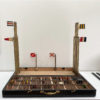
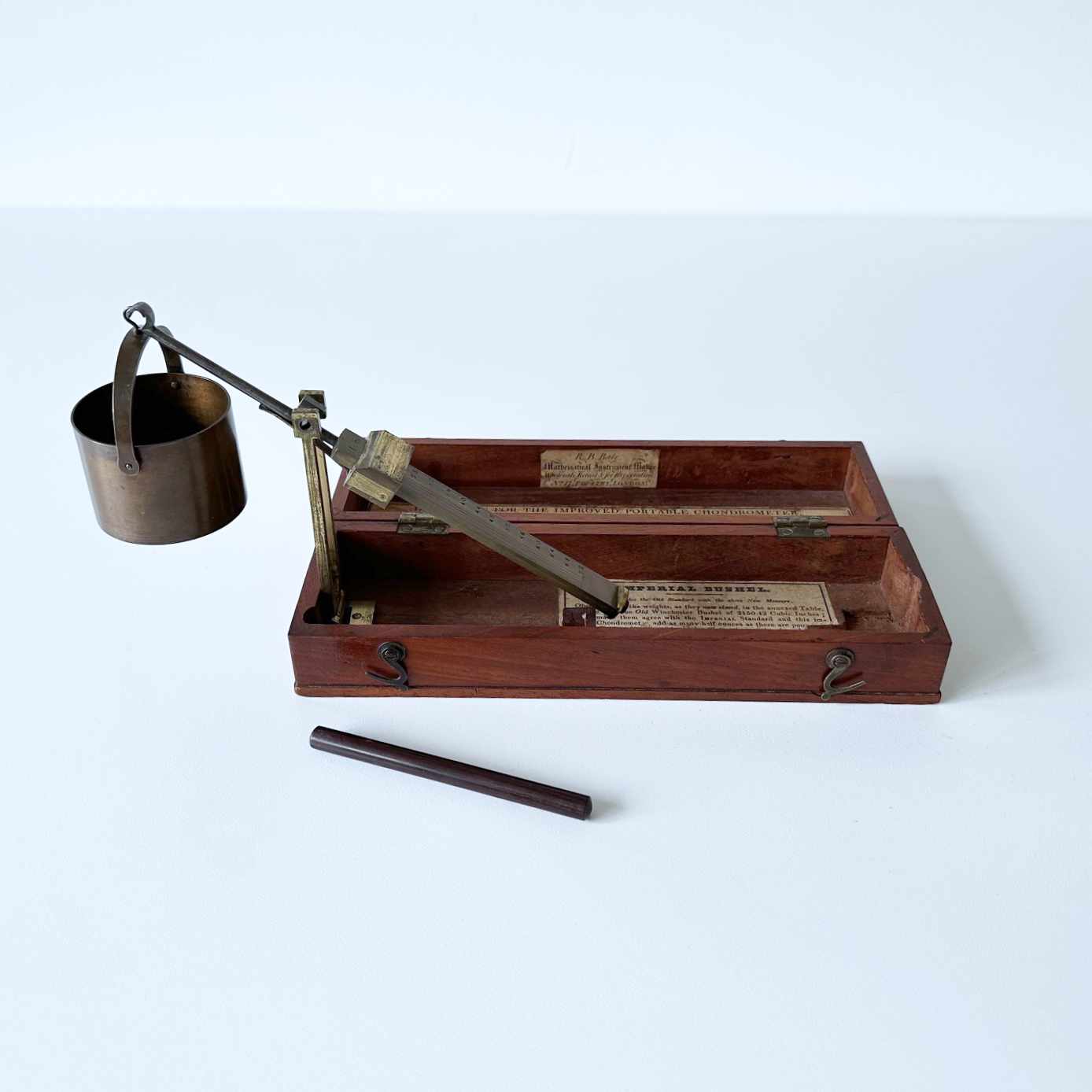
For sale, a rare pre-Imperial “Improved Portable Chondrometer” by Robert Brettell Bate of 17 Poultry, London.
This style of chondrometer or grain scale became largely popularised following an Act of Parliament on the 1st of January 1826 introducing the imperial form of measurement under George IV. The steelyard type scale was primarily used as a measure of the bulk density of grain and therefore quality of the product. Most examples come with separate stand, balance arm and measuring receptacle but this early Bate example is highly unusual as it clearly dates to prior to the Act of Parliament that formalised the new standards on January 1st 1826.
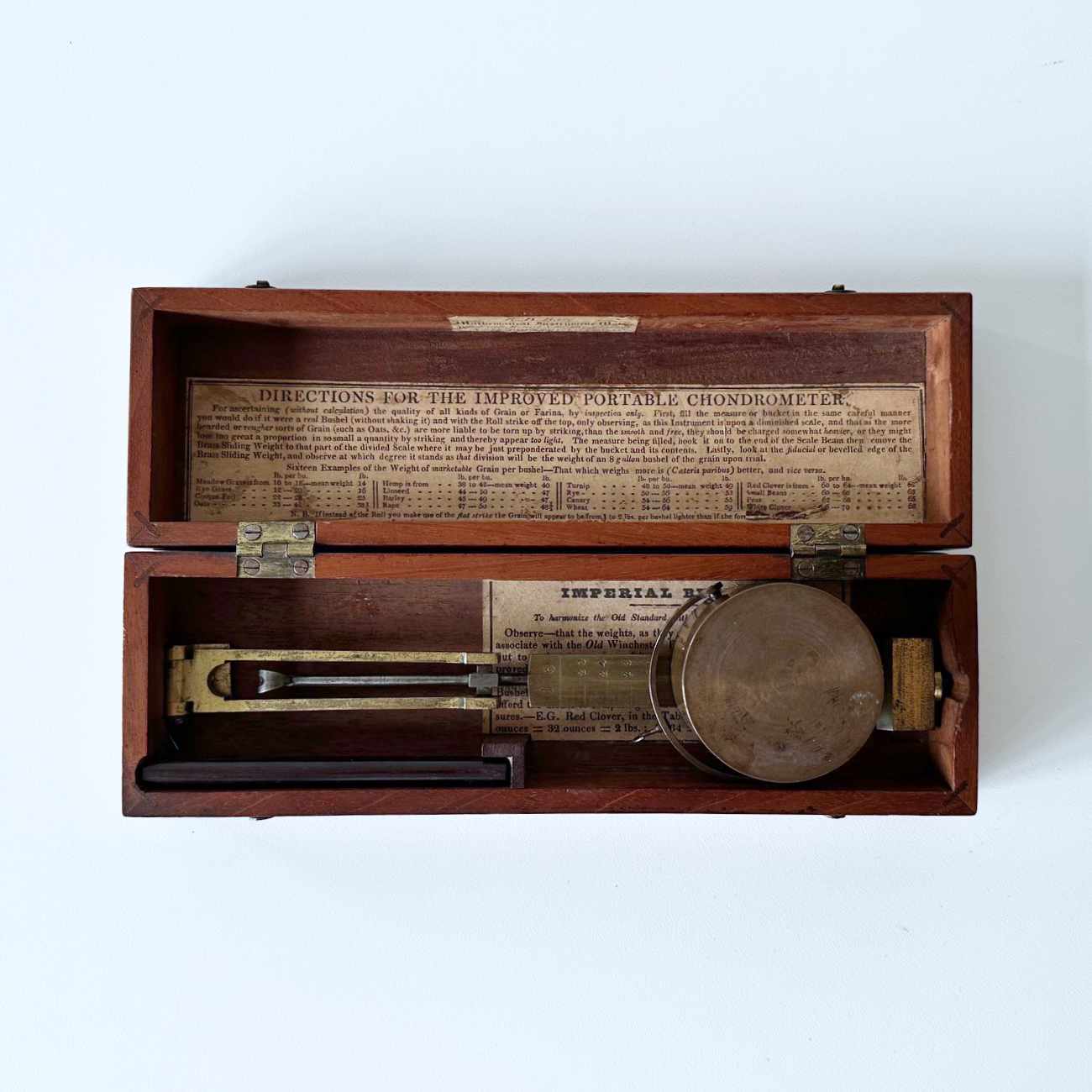
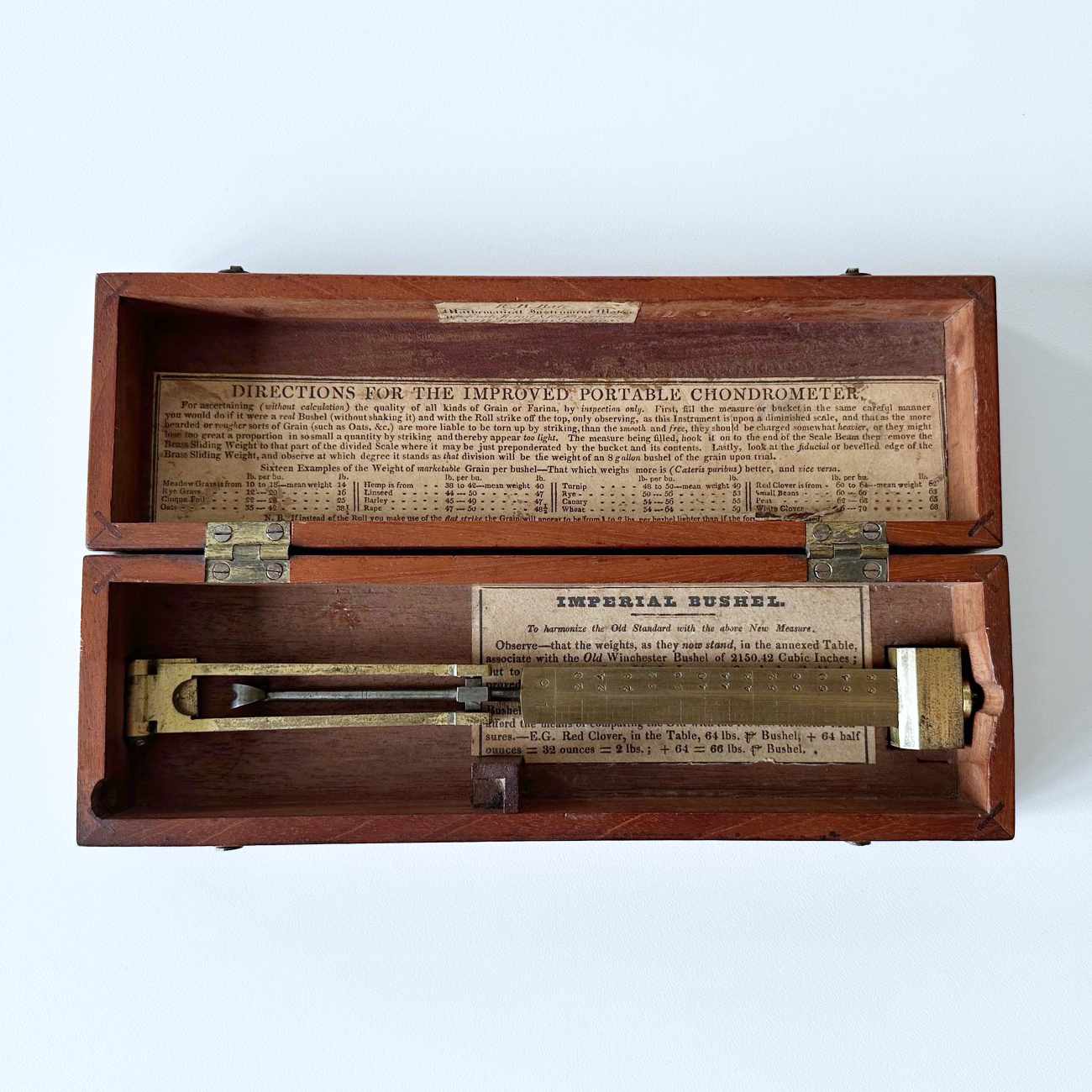
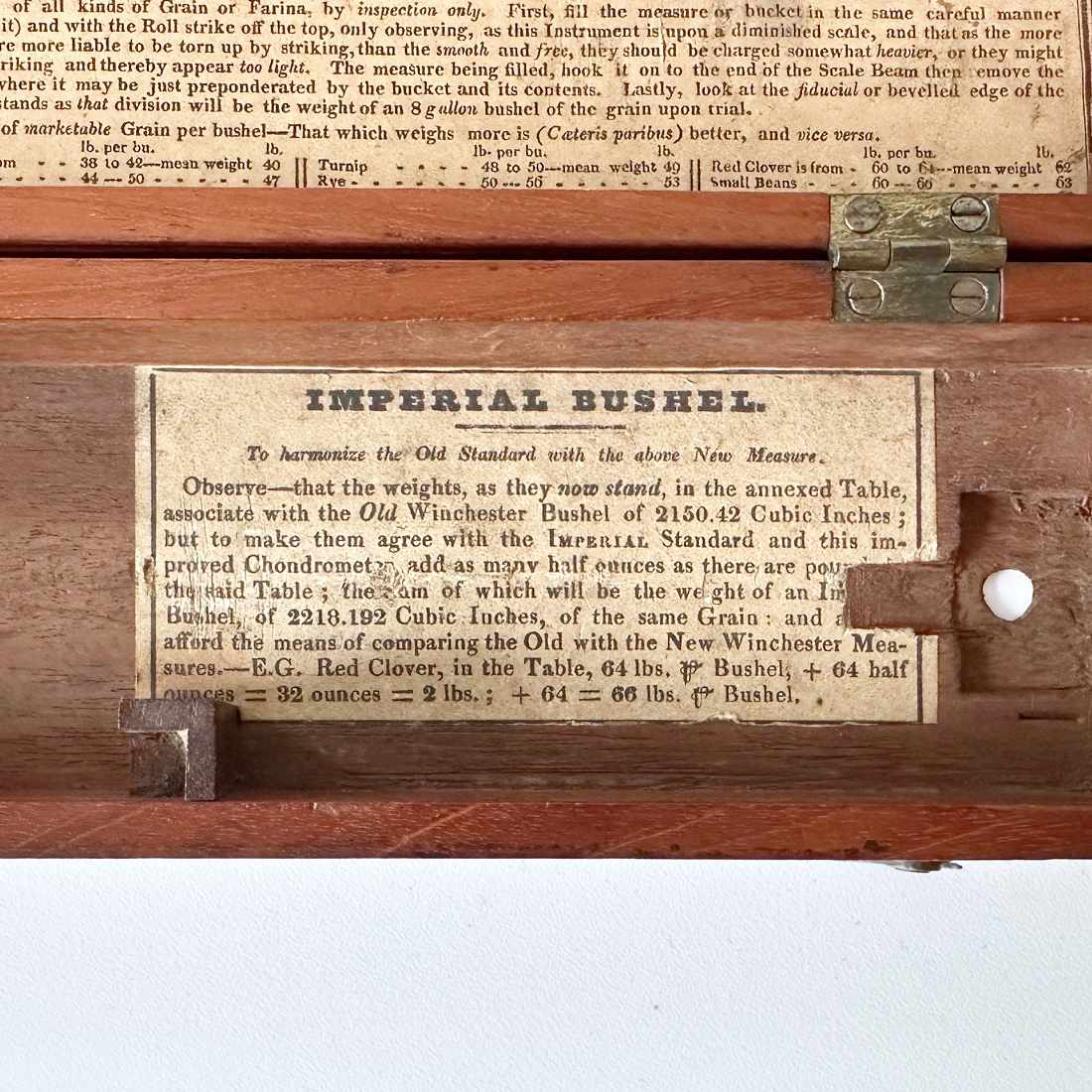
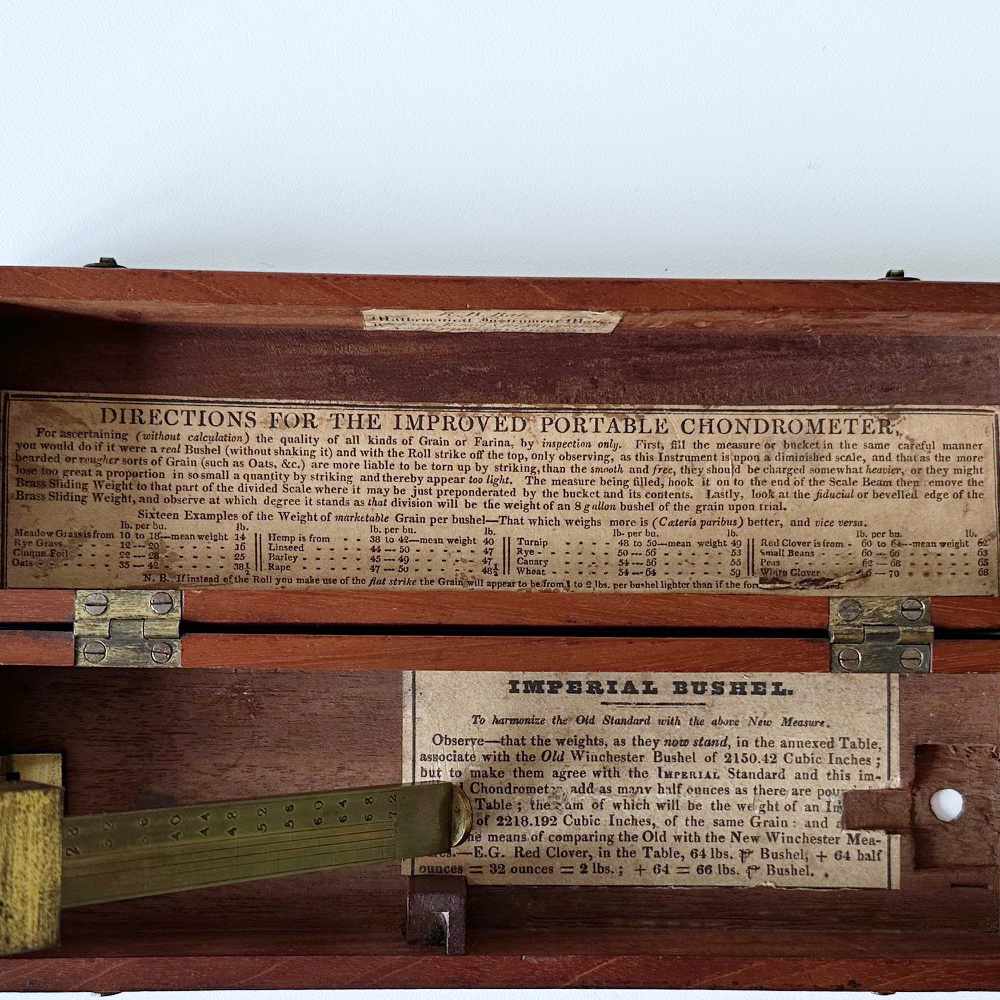
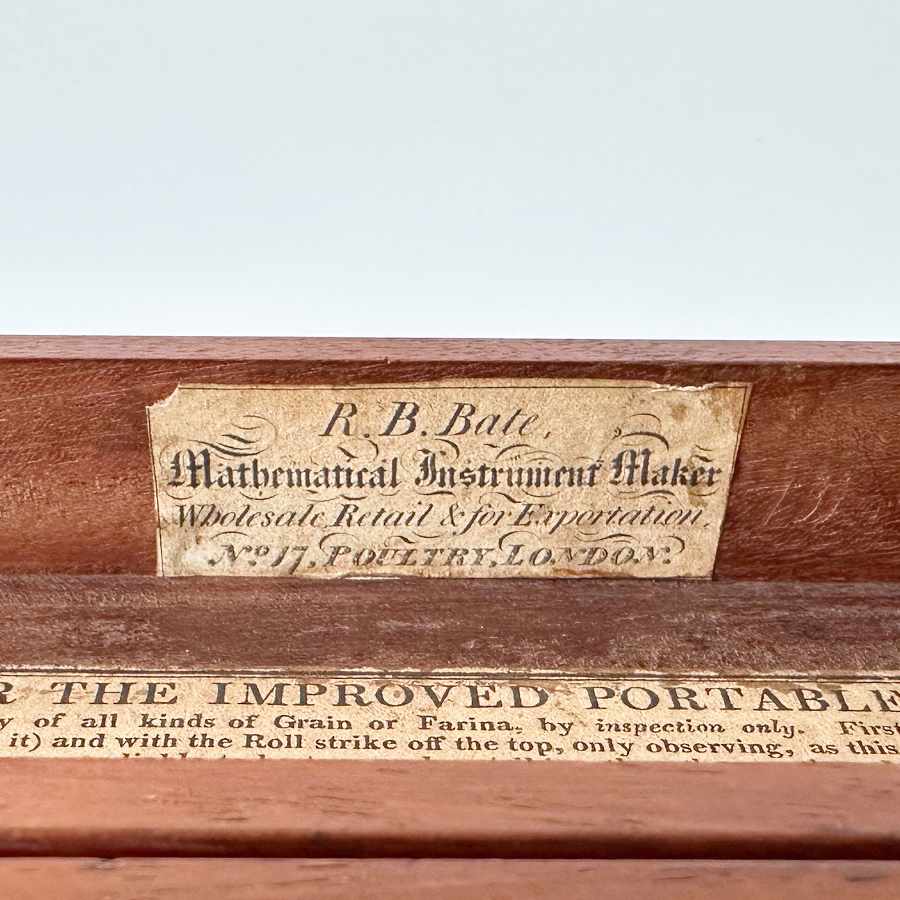
It is first evident from the paper inlay within the lid that outlines the Directions for the Improved Portable Chondrometer, where the weight examples differ from those which are ordinarily found on Bate “Post Act” chrondrometers. My suspicion is that this chondrometer was manufactured just prior to the Weights & Measures Act of 1824 and its accession to Parliament in January 1826. It is likely to have been a time of significant disruption in the UK and the addition of the label stating “Imperial Bushel” in the base of the case provided instructions on how to harmonise the old Winchester standard bushel with its imperial replacement would have been essential for customers and for selling old stock. Further support for the date theory is the trade label in the lid stating, “RB Bate, Mathematical Instrument Maker, Wholesale Retail & for exportation, No 17 Poultry, London. This early address was used prior to his move to 20/21 Poultry around 1824.
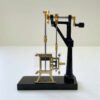
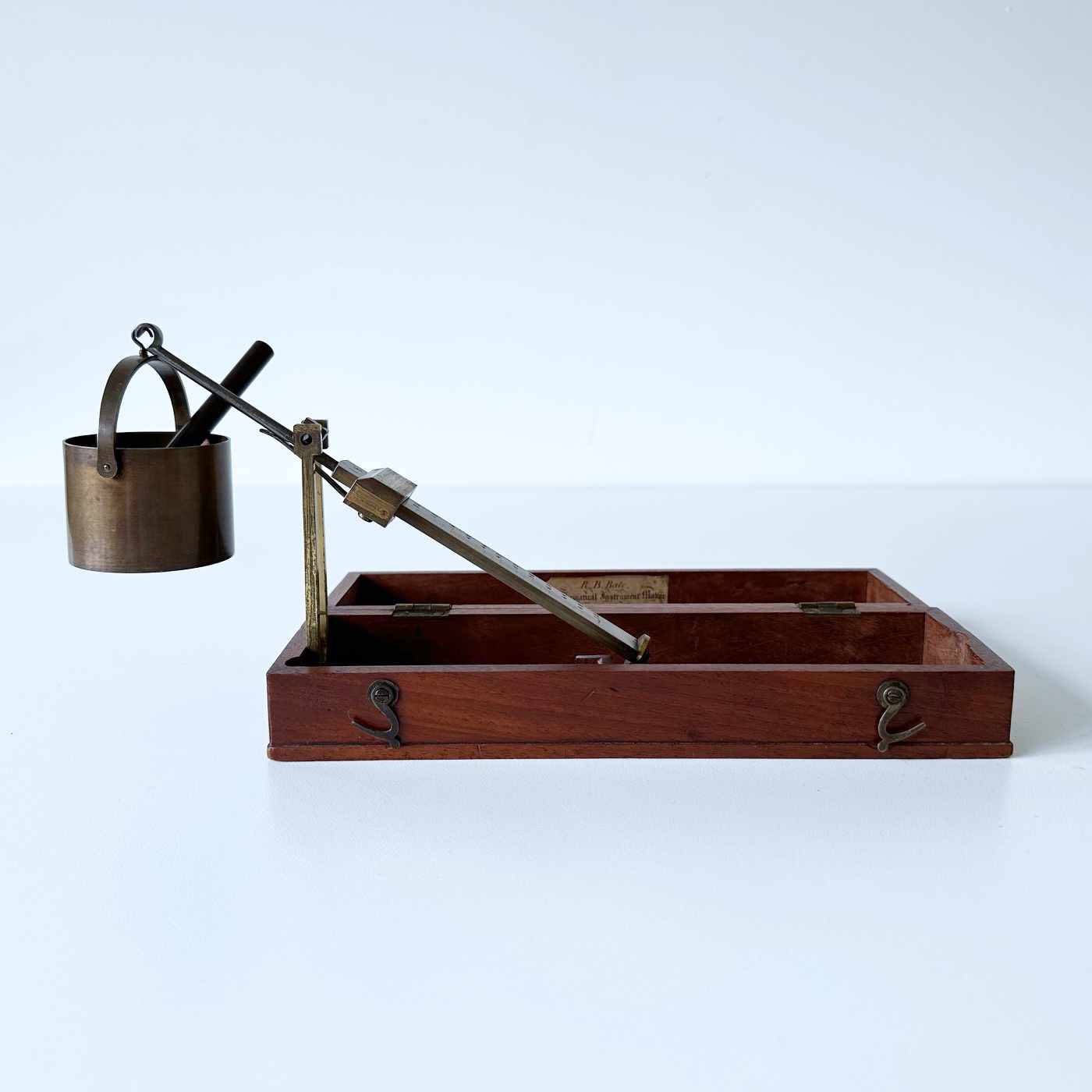
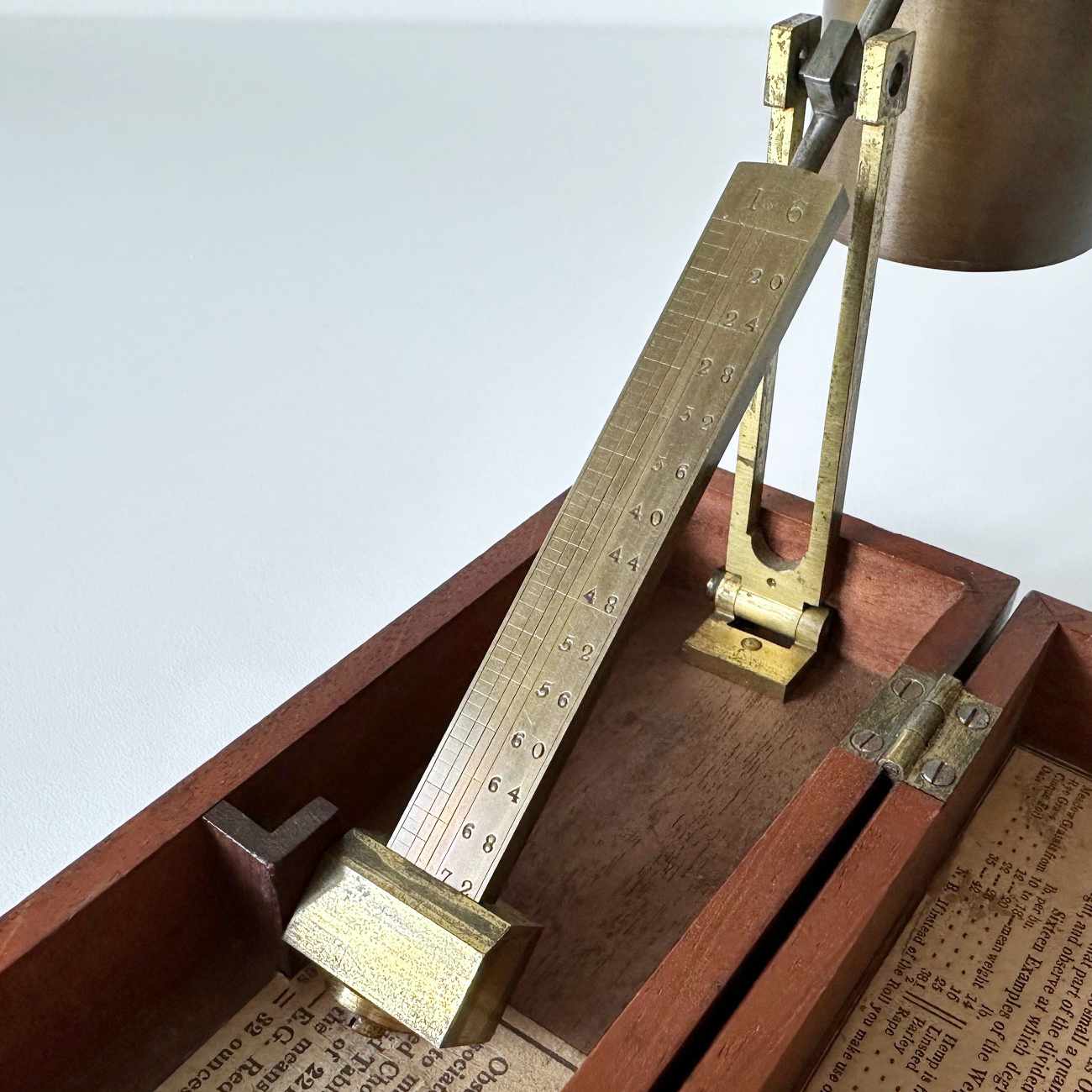
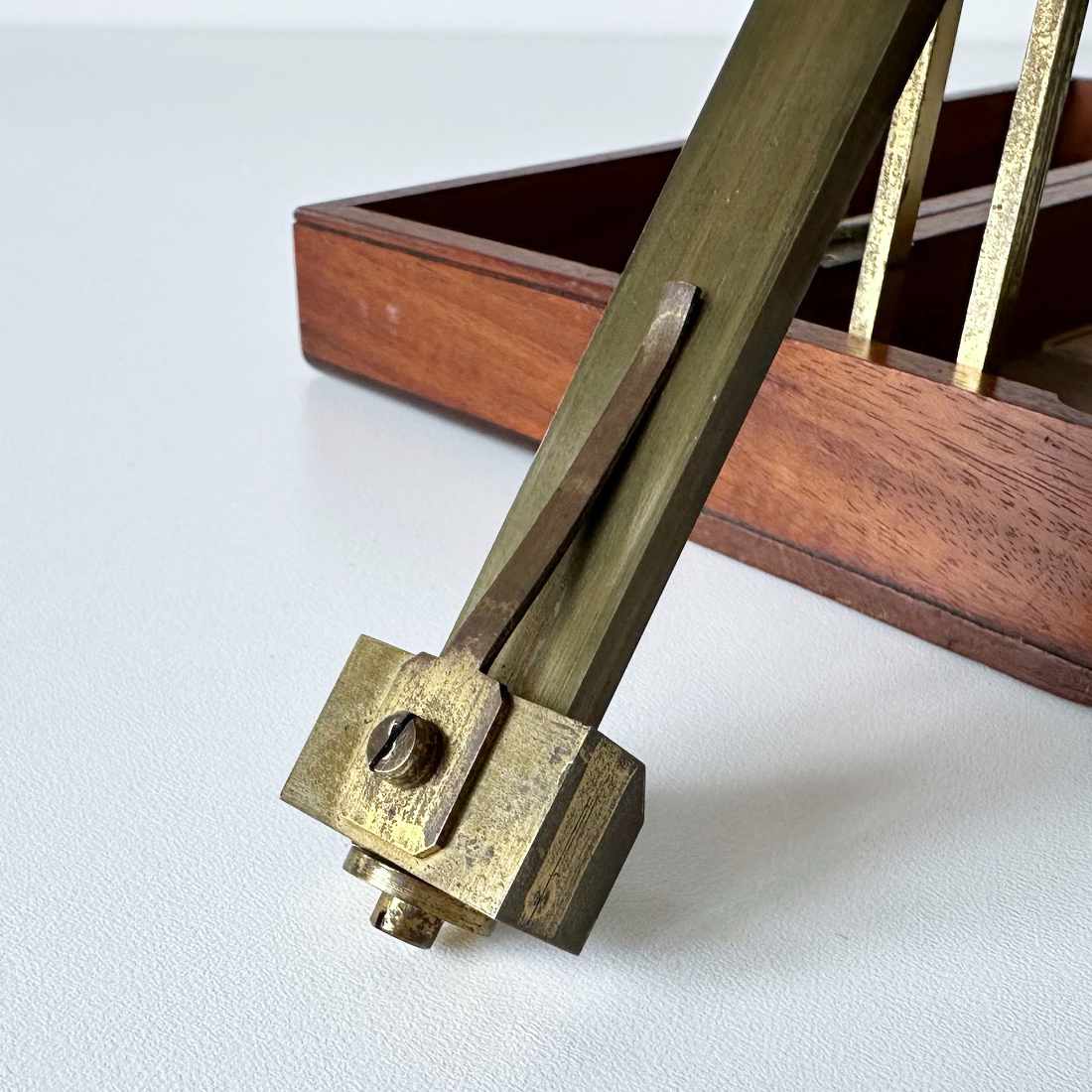
The design of the chondrometer is also unusual. This “portable” example is smaller than most of Bate’s grain scales I’ve previously encountered, and it is designed with both the stand and the weighted steelyard balance fixed and hinged to the case so that no separate parts are required except the grain bucket. The stand is simply lifted, the balance raised and the instrument is prepared for use. A rather neat design which may well have been the forerunner to what eventually became Bate’s more standard design. It is interesting to note that this example only contains a wooden roller to flatten the grain once the bucket is filled for weighing as opposed to the flat edge strickle and roller.
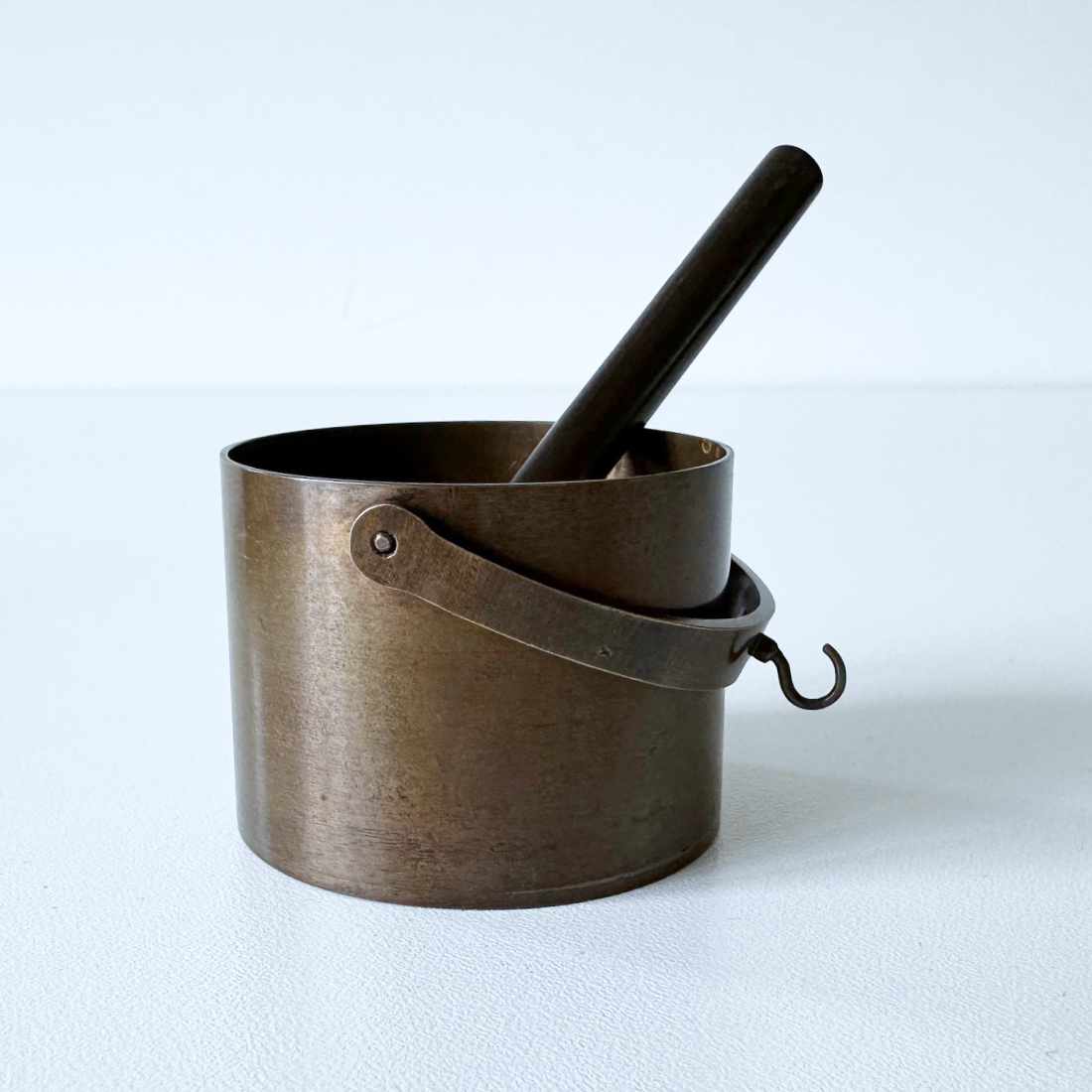
To use the scale, the brass measuring cylinder was placed upon the scale arm and filled to the brim with a sample of grain and levelled using the roller. The weight was identified by means of the sliding weight on the arm of the scale and was repeated several times to ensure accuracy of measurement. The outcome would determine price and space required to store the crop in question.
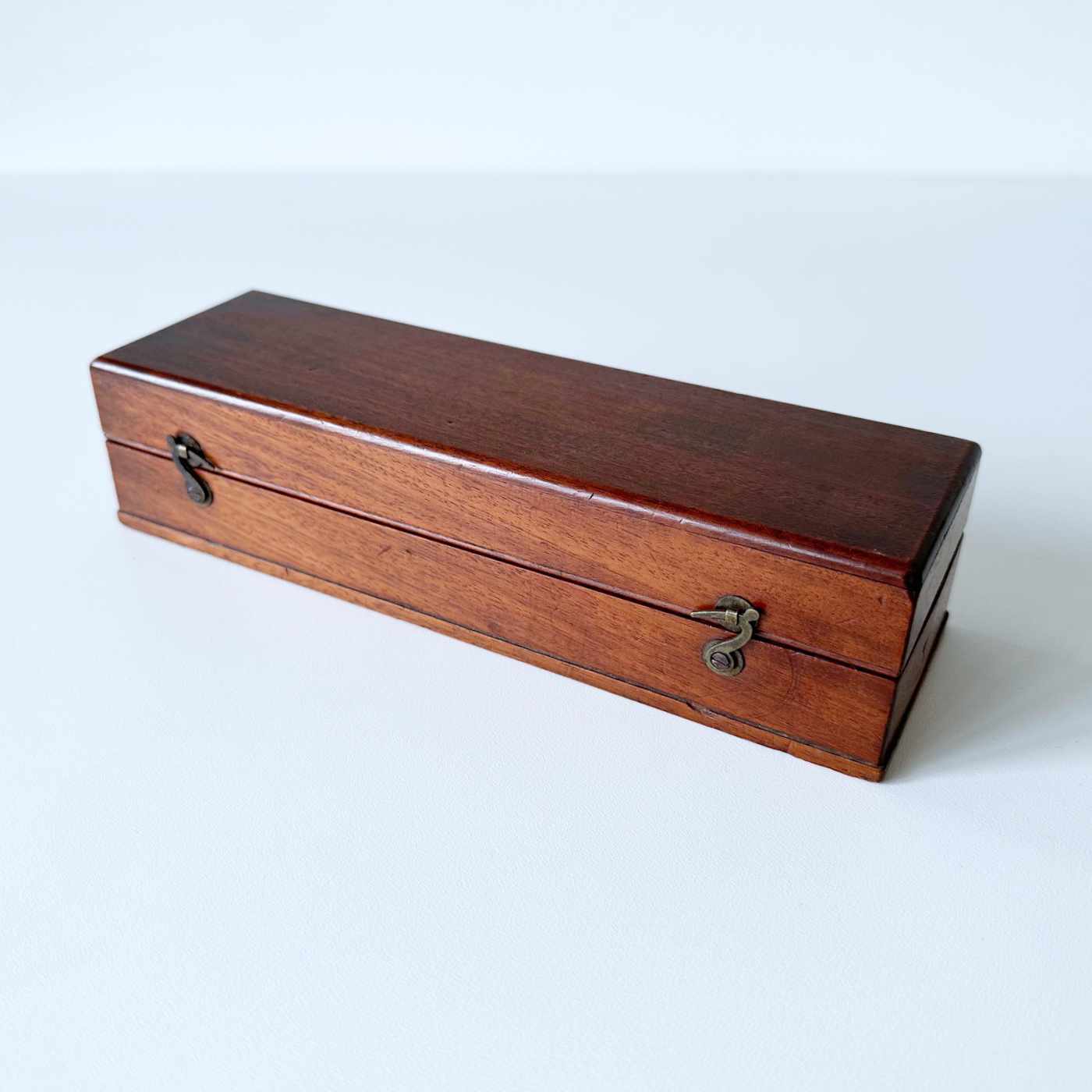
This very rare early example is housed within its original mahogany case with paper instructional label giving bushel conversions for sixteen types of grain.
The maker, Robert Brettell Bate was a very high-quality manufacturer of scientific instruments working in the early part of the Nineteenth Century. Born in 1782, to a family of Bankers in Stourbridge, he initially travelled to London to become a Haberdasher under his Uncle Robert Brettell. His Aunt also living in London was married to Bartholomew Sikes, famous for winning favour with The Board of Excise for his hydrometer design in 1802.
In 1804, Robert Bate married his cousin, the daughter of his aunt Mary and Bartholomew Sikes, however it was followed quite shortly with the sudden death of Sikes. Supported by his newly widowed Aunt, Bate took over Sike’s business and its government commission and successfully persuaded the Board of Excise to adopt the “improved” hydrometer that his Father-in-Law had been working on before his untimely death.
At this time, the company was being run at 17 Poultry where in 1814 he became a member of the Spectacle Maker’s Company of London, by 1824 his reputation was such that he was further commissioned by the Board of Excise & Ordnance to make the new national standard Imperial measures for weight & capacity created by George IV, this event led Bate to acquire further premises at 20 and 21 Poultry. It was this Governmental relationship that underpinned his entire career, leading to an important commission from the US Mint where his Troy pound standard weight became legal standard for US coinage at the time and his instruments were also known to have been used by The East India Company, The Royal Navy, The Board of Ordnance, The Hydrographic Office and The Bank of England.
His quality of manufacture led him to receive Royal Appointments from George IV, William IV and Queen Victoria where he acted as Optician, and he eventually rose to become Master of the Spectacle Maker’s Guild in 1833. He was also known to have acted for the Admiralty as its main chart agent with numerous sub agents acting below him such as his old apprentice and instrument maker to The Royal yacht Club, George Stebbing.
The final two decades of his life (the 1830’s and 40’s) were riddled with ill health probably due to the amount of work that he was undertaking. He travelled widely across the UK and abroad for health reasons but still maintained lively correspondence with his customers.
Bate traded from his Poultry street addresses for the majority of his career although he moved to number 33 Royal Exchange in 1846 until his death shortly after in 1847. Bate’s widow continued to run the business until 1850 where after the Excise work was taken over by Dring & Fage and the Admiralty Chart side of the business went to Bate’s former employee, John Dennett Potter.
There is an example of Bate’s portable chondrometer contained within the Science Museum collection which does not have the Imperial conversion within the case, so it is likely to have been retailed for some time prior.
Circa 1824