

Rare Pedestal Anemometer by J Hicks of London
£1,750
Rare Pedestal Anemometer by J Hicks of London
Dimensions
H: 22 W: 7 X D 7cms
Circa
1900
Maker
J Hicks
Country of manufacture
UK and Ireland
Description
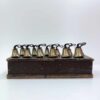
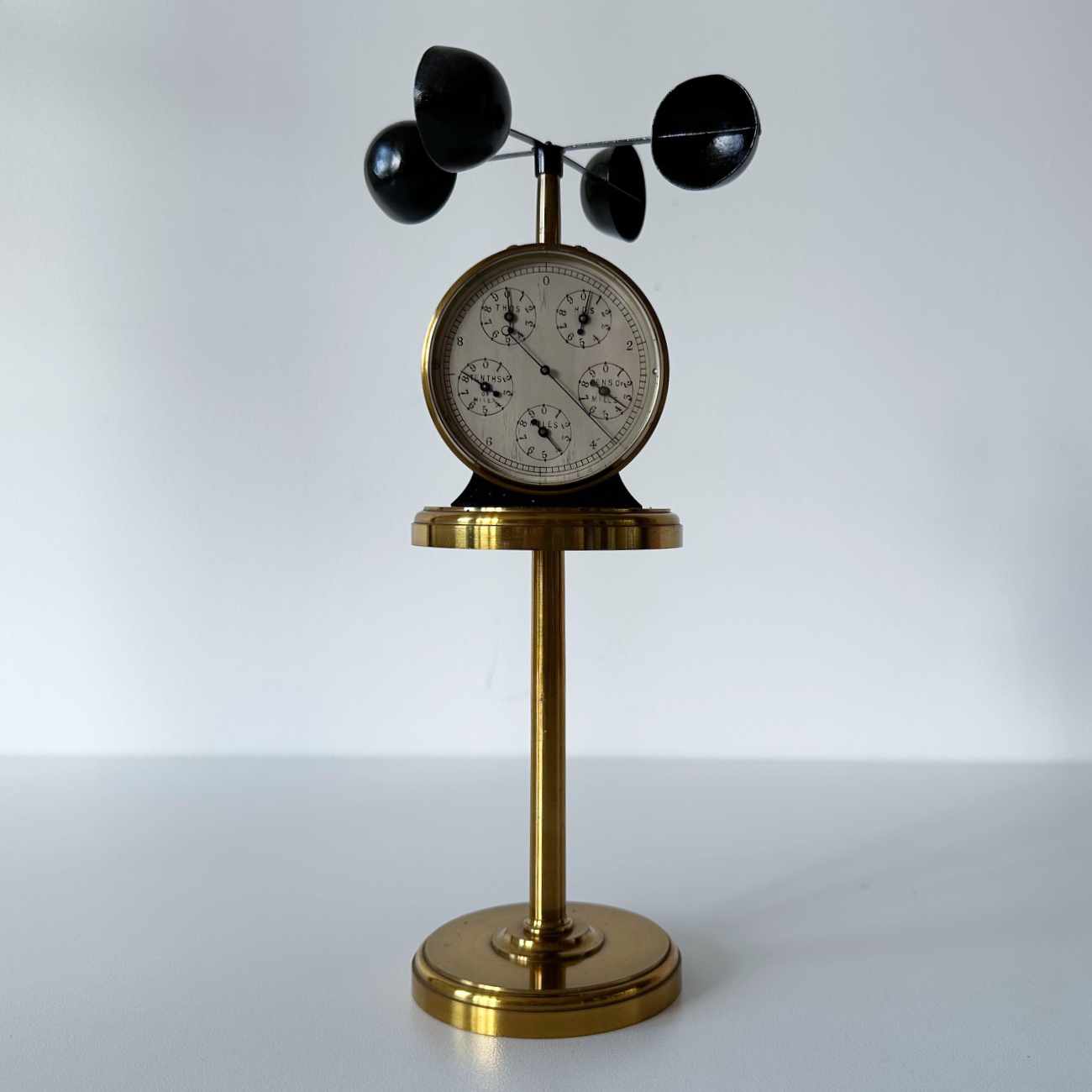
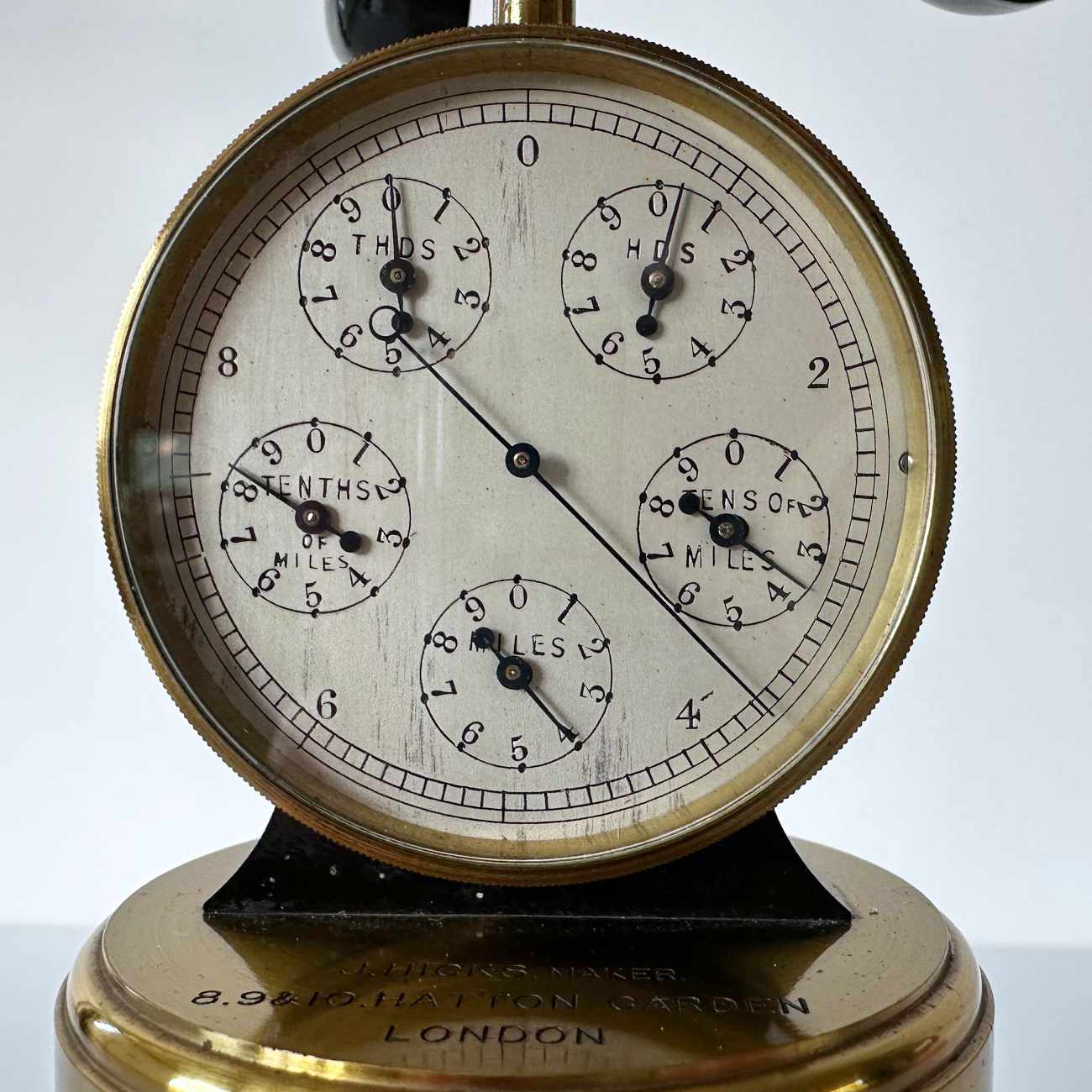
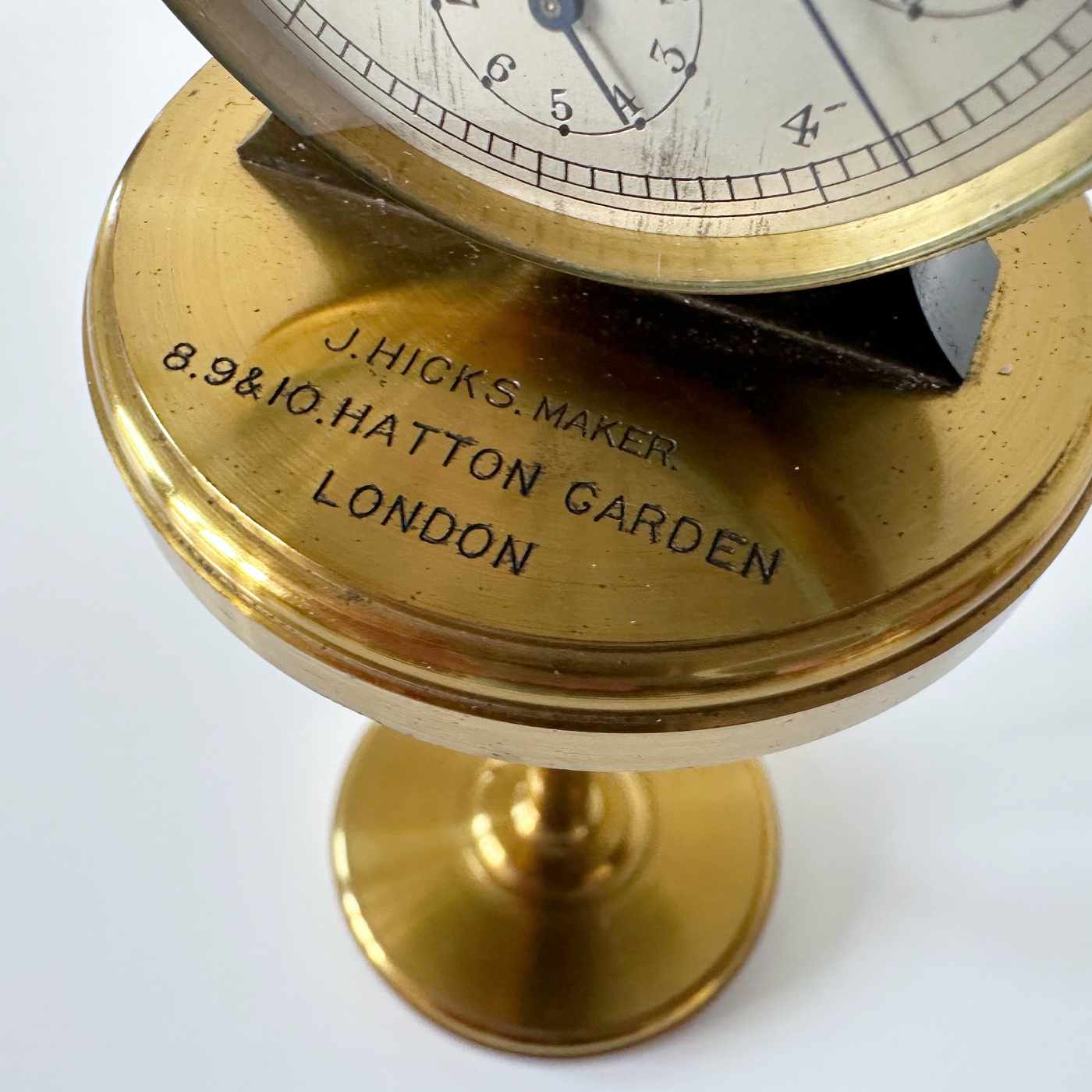
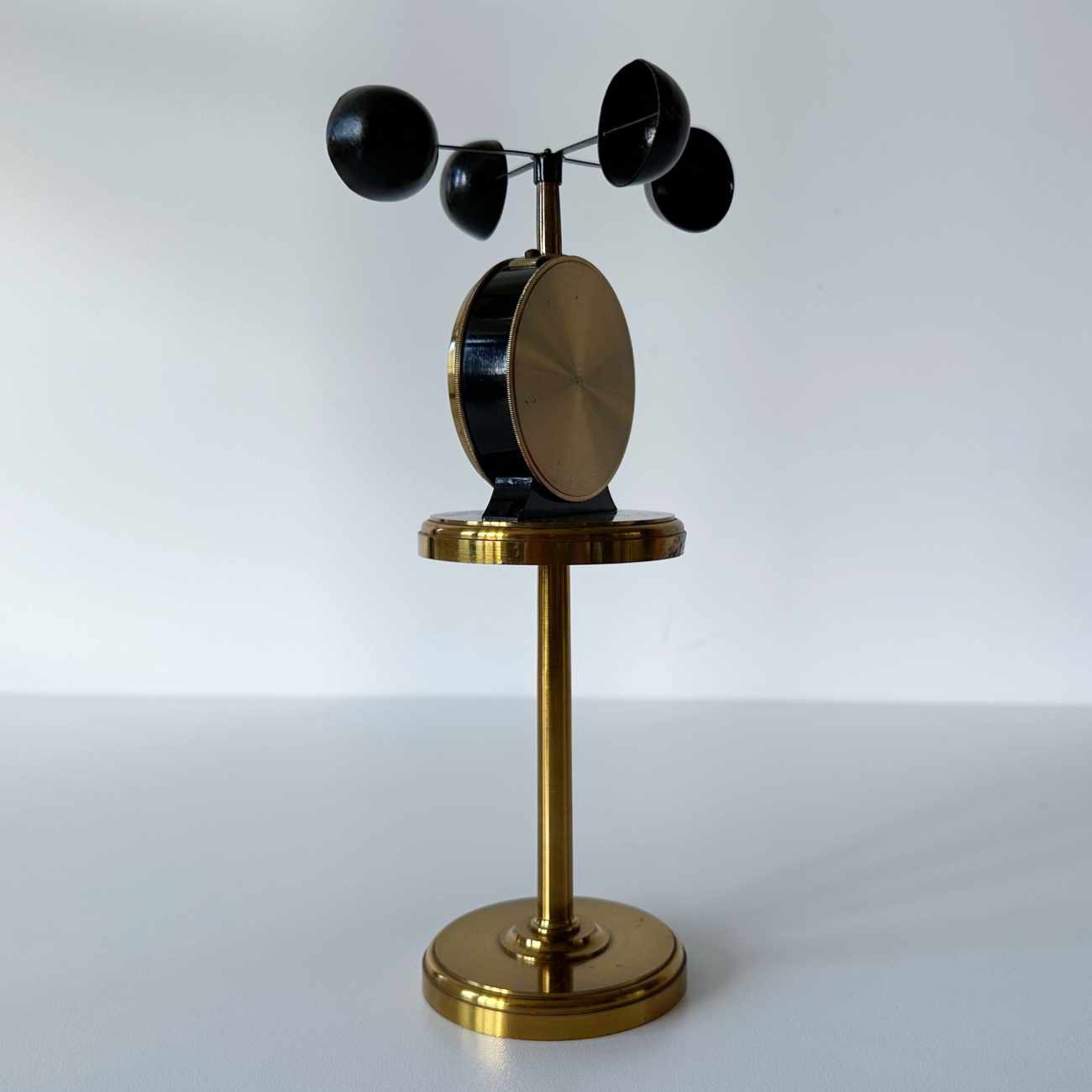
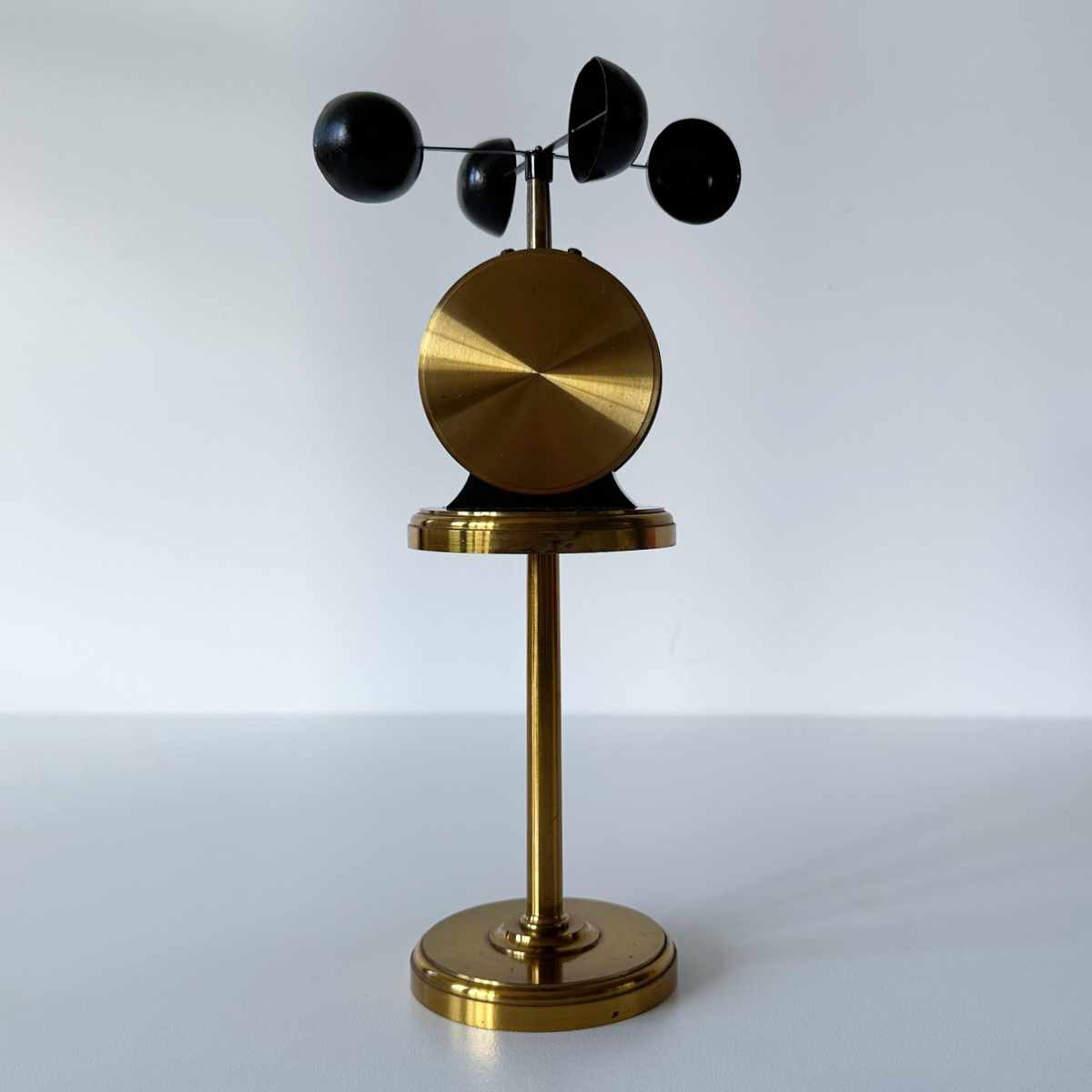
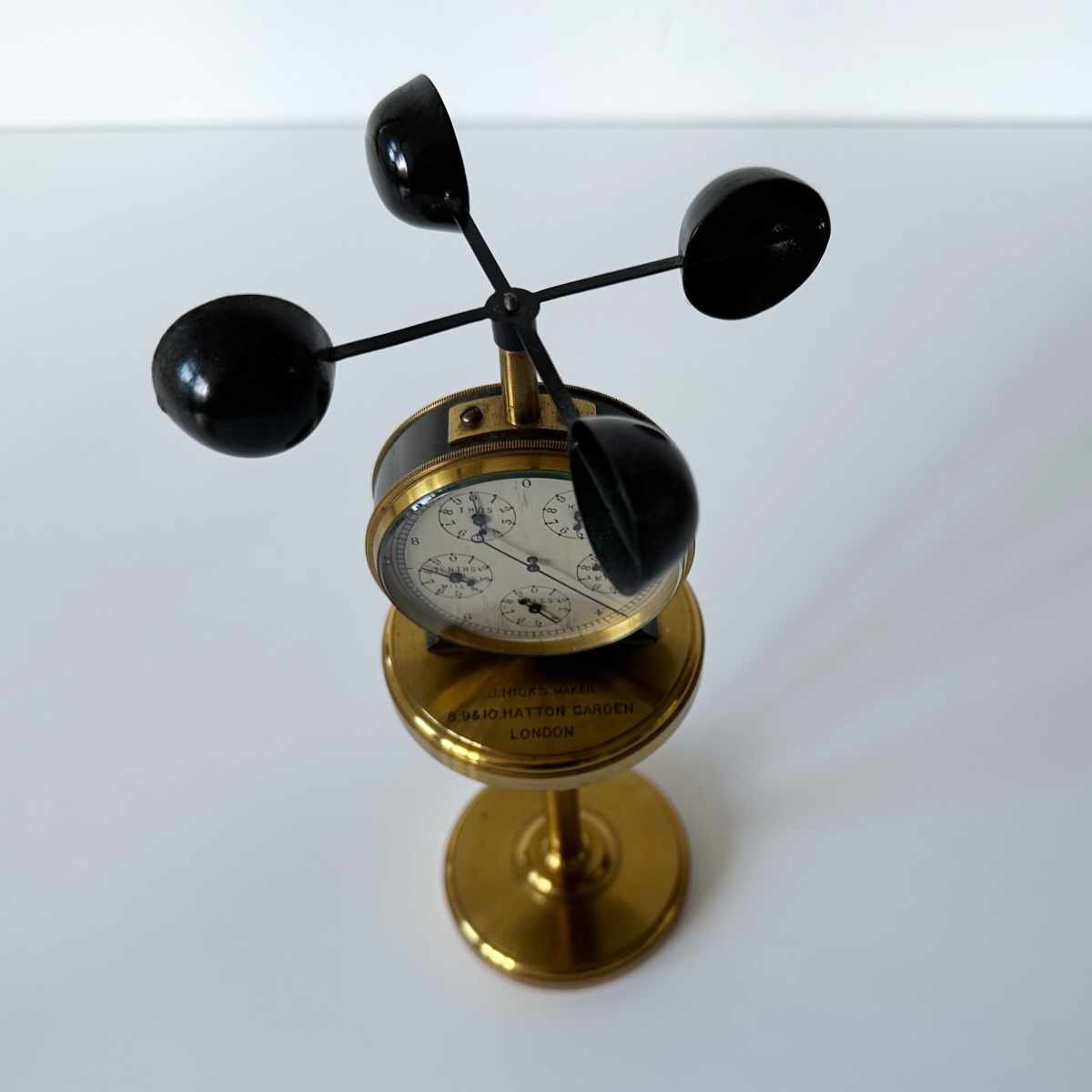
For sale, an extraordinarily rare pedestal anemometer by J Hicks of 8,9 & 10 Hatton Garden, London.
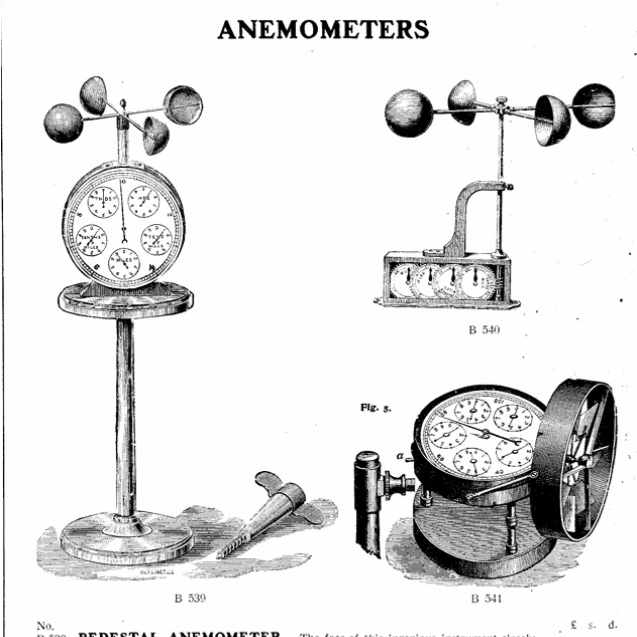
It is described in Hick’s catalogues as follows;
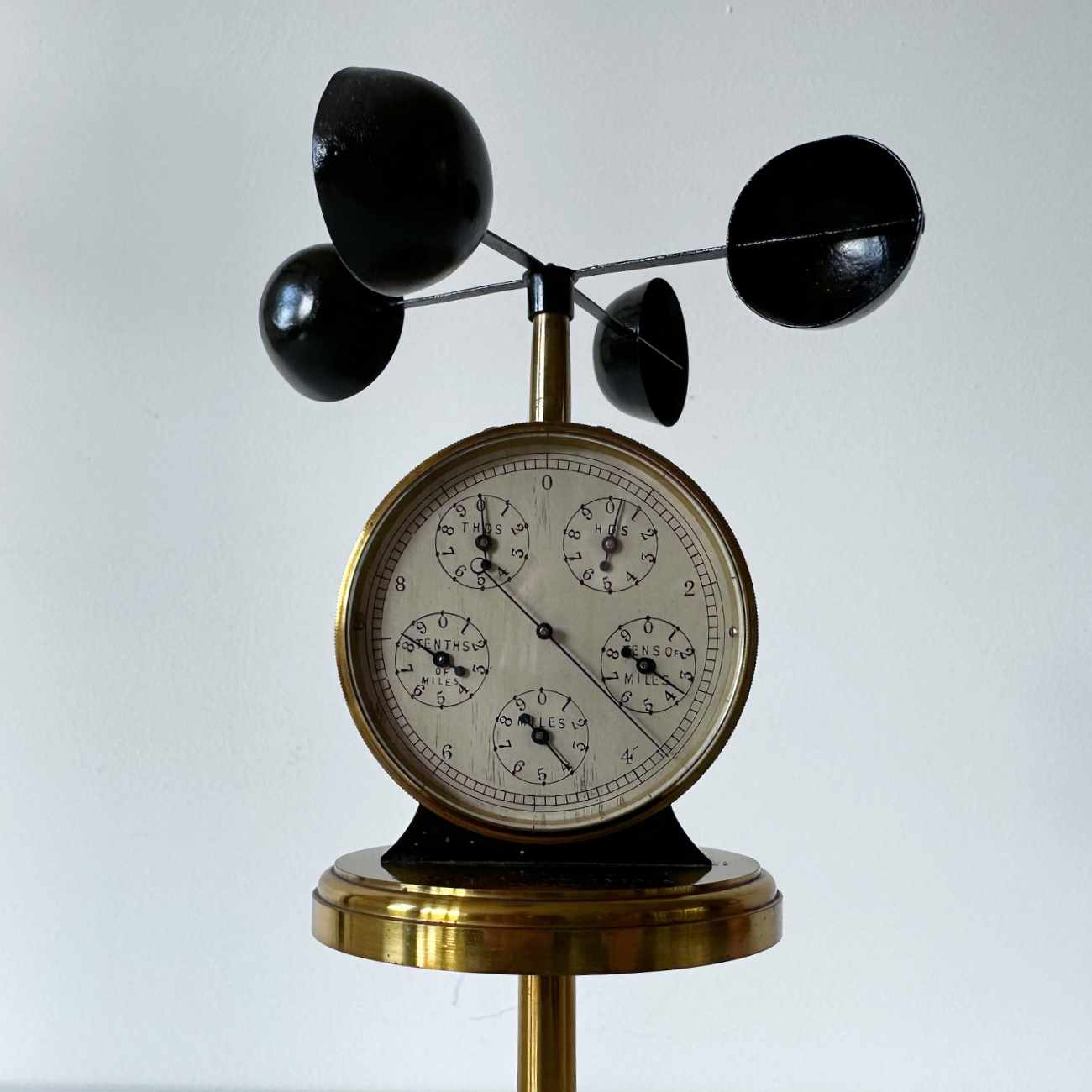
“The face of this ingenious instrument closely resembles that of the 5-dial Air Meter, and is similarly constructed, with the exception of the fan wheel being replaced by four hemispherical cups placed at the top. The instrument is attached to a brass stand, in which form it will be found particularly convenient in many places.”
Presumably intended as a miniature form of the Robinson’s cup anemometer with the compactness of the miner’s air meter dial, this example seems a little too fragile for field use, which would likely account for its rarity despite its superb aesthetics. The iron-filled, weighted brass is contrived to unscrew from the upper platform with the catalogue images suggesting that it may have had an auxiliary screw to allow for field attachment. Despite the impracticality, this is the only example of this instrument I have ever encountered. A truly rare piece from the Hicks catalogues of the turn of the Twentieth Century.
The maker, James Joseph Hicks was born in Cork, Ireland in 1837 to a poor farming family and was sent to London for schooling. He was apprenticed to the famous Louis P Casella where he remained until 1861. In that short time he had already risen to become Casella’s foreman, showing just how able the young Hicks was. He began to trade in his own right in around 1861-1862 at 8 Hatton Gardens, London and was respected enough by 1864 to have been granted membership to The British Meteorological Society.
Highly skilled in the development and the improvement of scientific instruments, Hick’s business was large enough by 1880 to have over 300 employees on the books. A shrewd marketer, he was present at eight Royal Society Exhibitions during the period, 1876 – 1913 and extended his reach overseas by attending numerous world trade fairs. He won a gold medal at the 1900 Paris exhibition.
In 1910 at the age of 73, he successfully negotiated a merger between his company and the equally famous WF Stanley and remained a director of the company that retained his name until his death in 1916.
During his life he established a near monopoly on clinical thermometers leading to Hick’s being dubbed, “King of the Clinicals”.
Hicks was a maker of extraordinary talent and this instrument bears testament to his skills. A rare example in superb order both mechanically and aesthetically.