

The 1862 London International Exhibition Medal for Smith, Beck & Beck of London
£2,500
The 1862 London International Exhibition Medal for Smith, Beck & Beck of London
Dimensions
7.5 x 7.5 x 0.5cms
Circa
1862
Maker
LC Wyon
Country of manufacture
UK and Ireland
Description
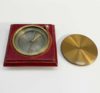
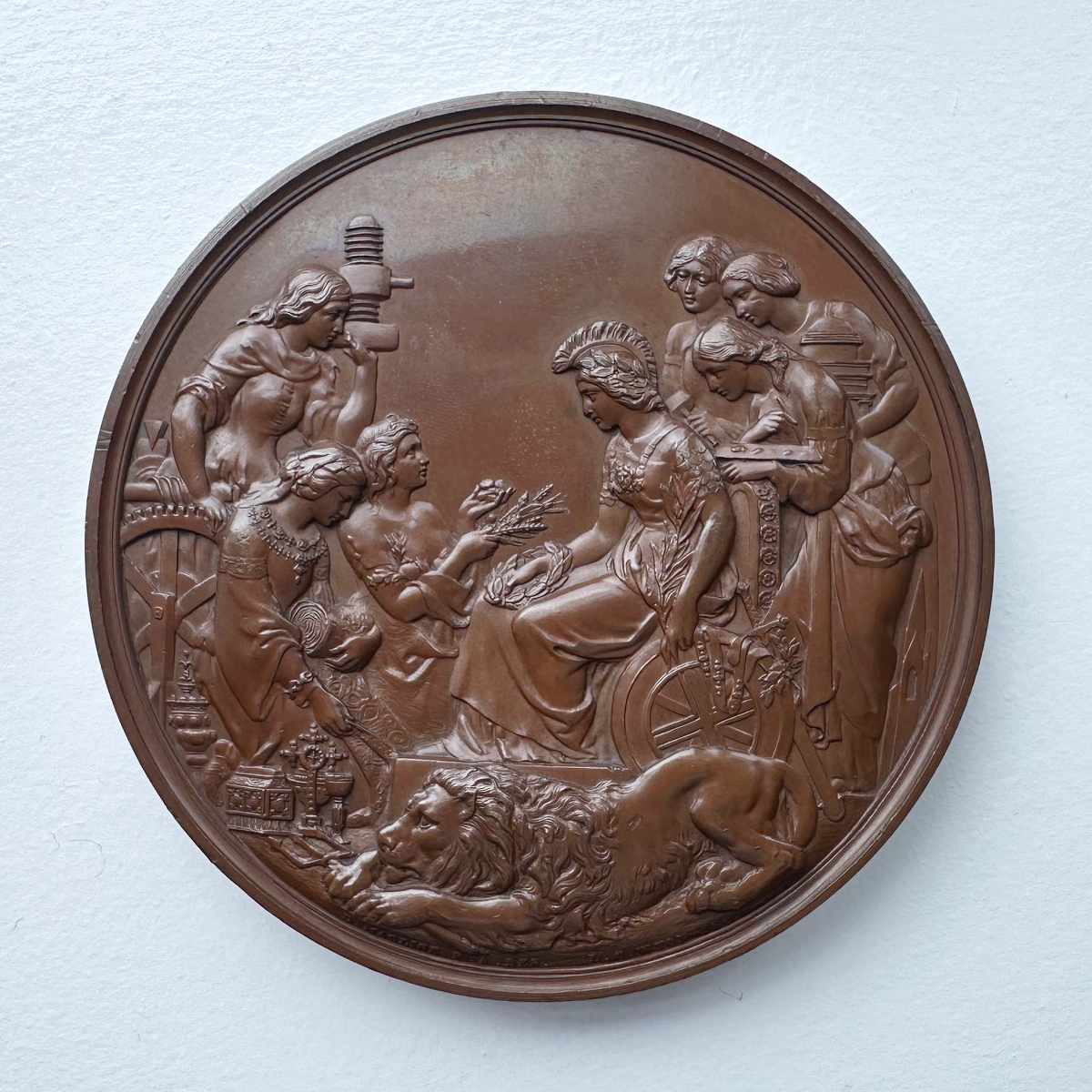
For sale, the 1862 London International Exhibition bronze medal for the renowned scientific instrument making firm, Smith Beck & Beck.
This superbly executed medal was awarded and individually engraved to each of the 1862 Exhibitors.
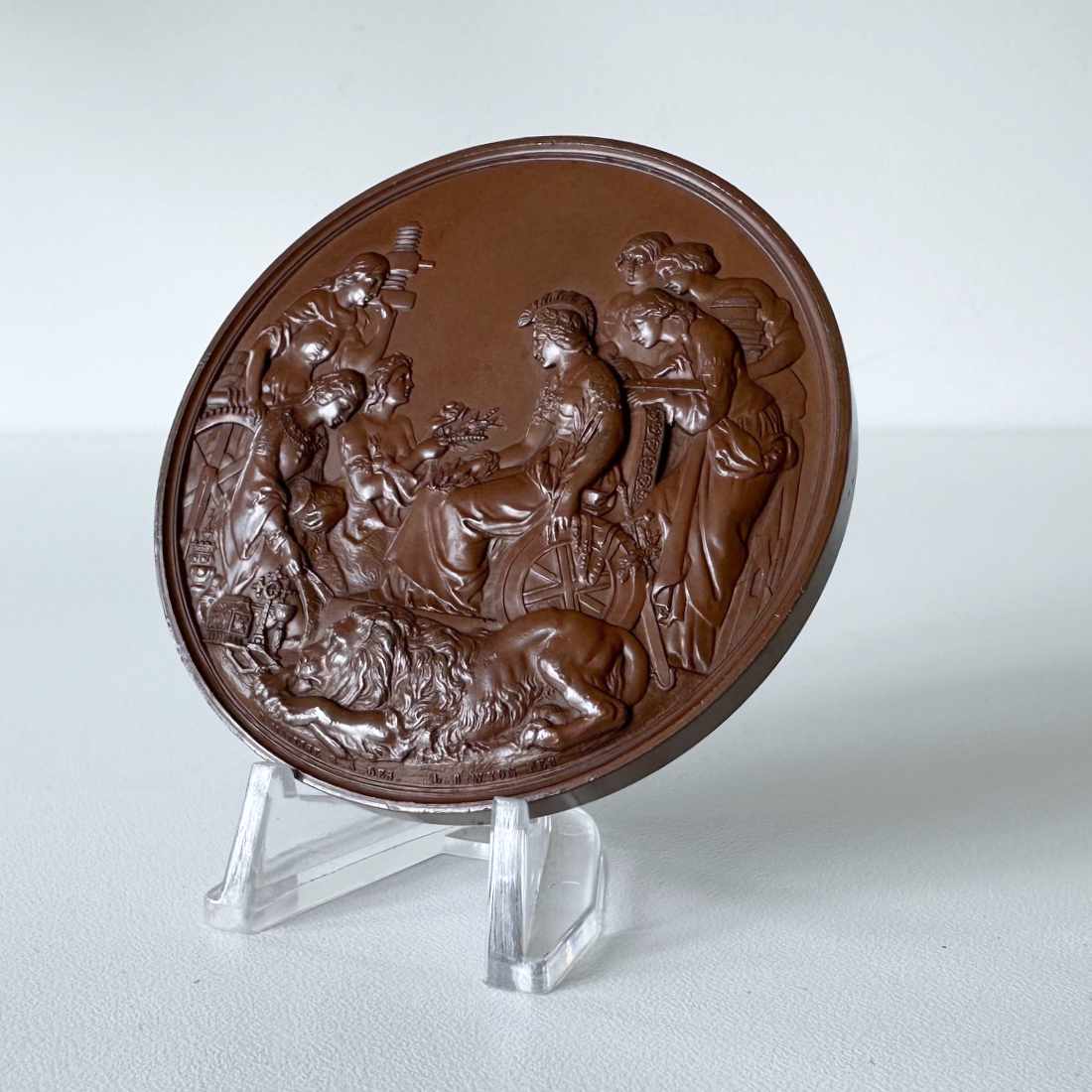
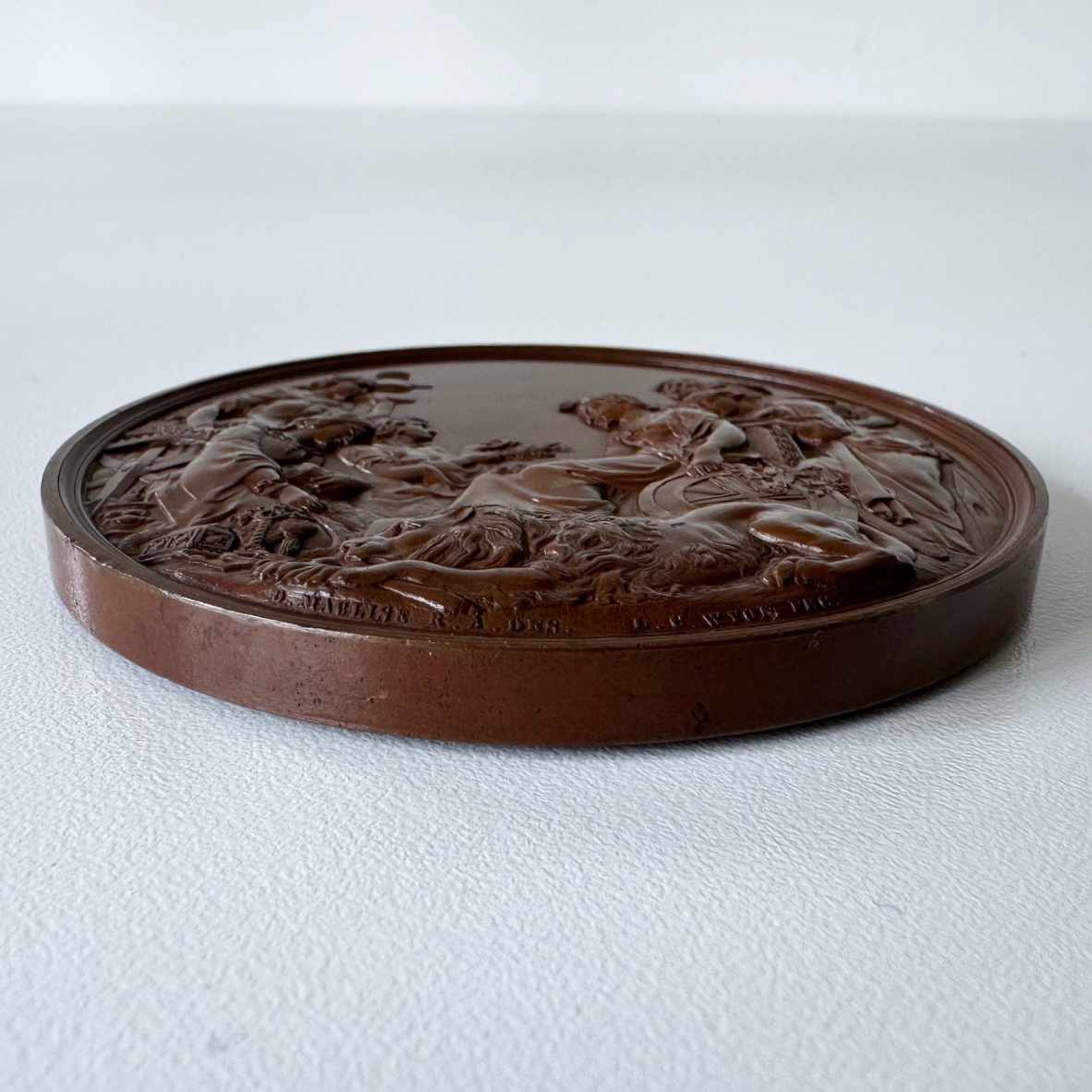
Struck entirely from bronze, the obverse face shows Britannia seated with shield to her side and a sleeping lion at her feet. She is surrounded by six women each individually representing Industry, Agriculture and The Arts. The rim below the lion is marked with, D. Maclise R.A. DES. & Leonard C. Wyon FEC.
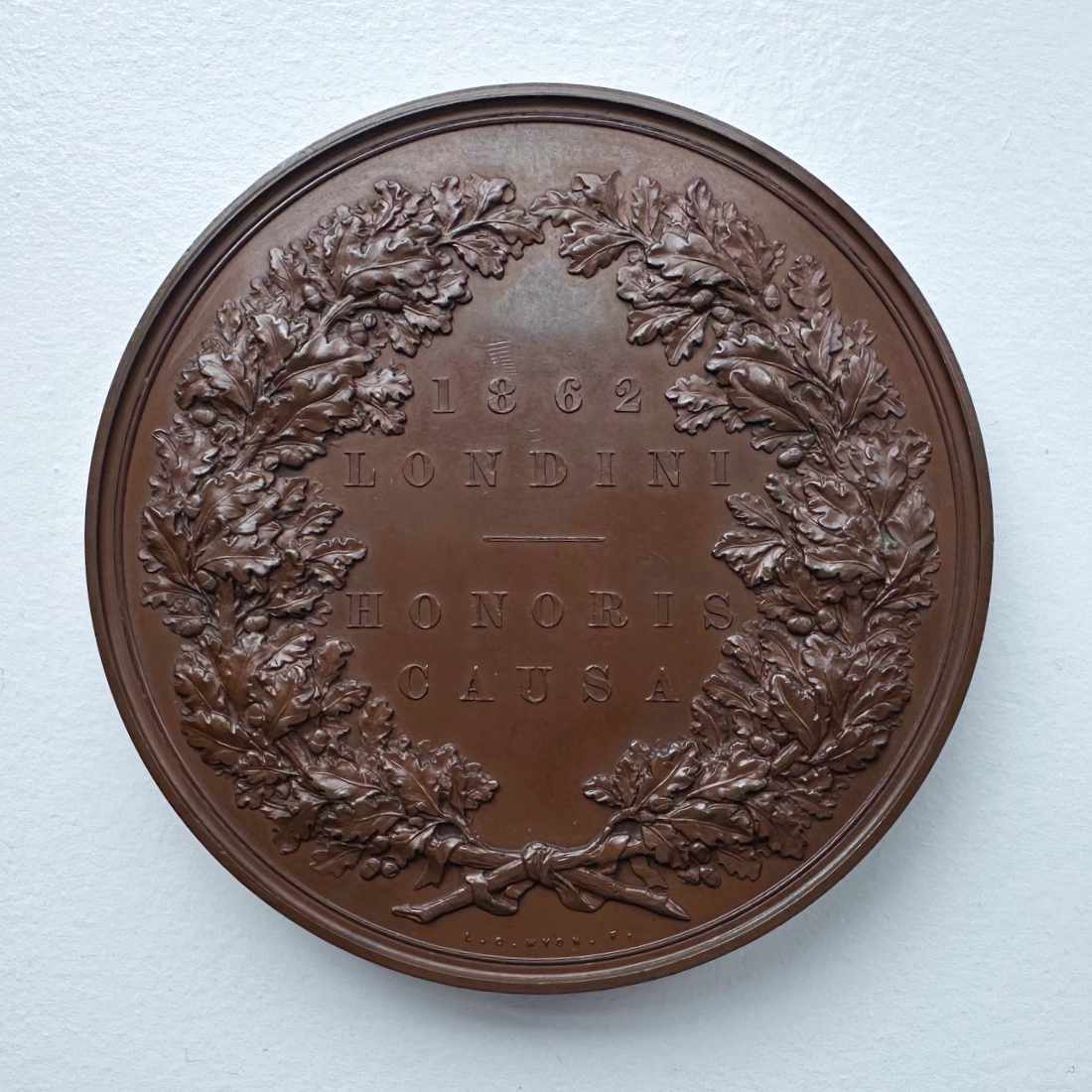
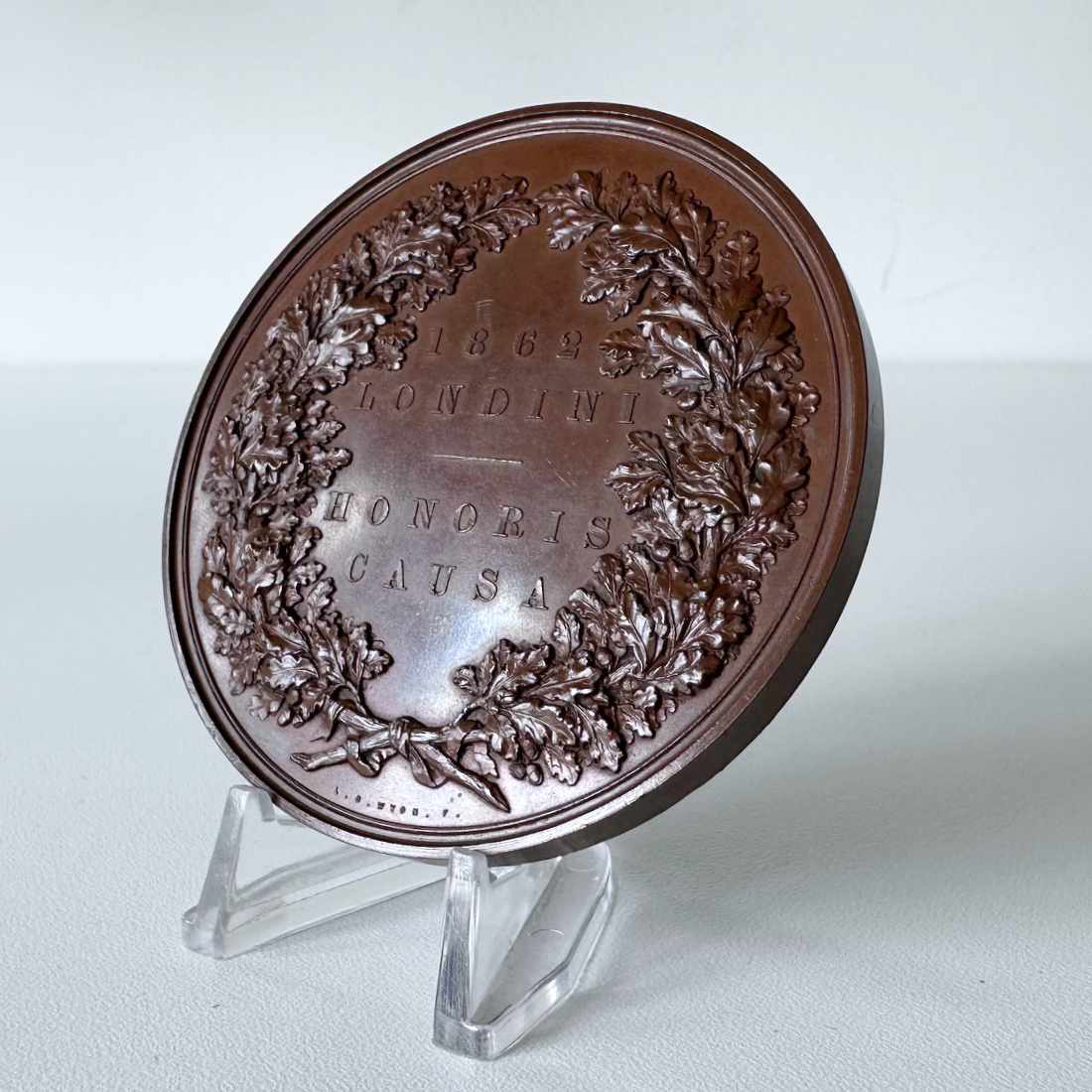
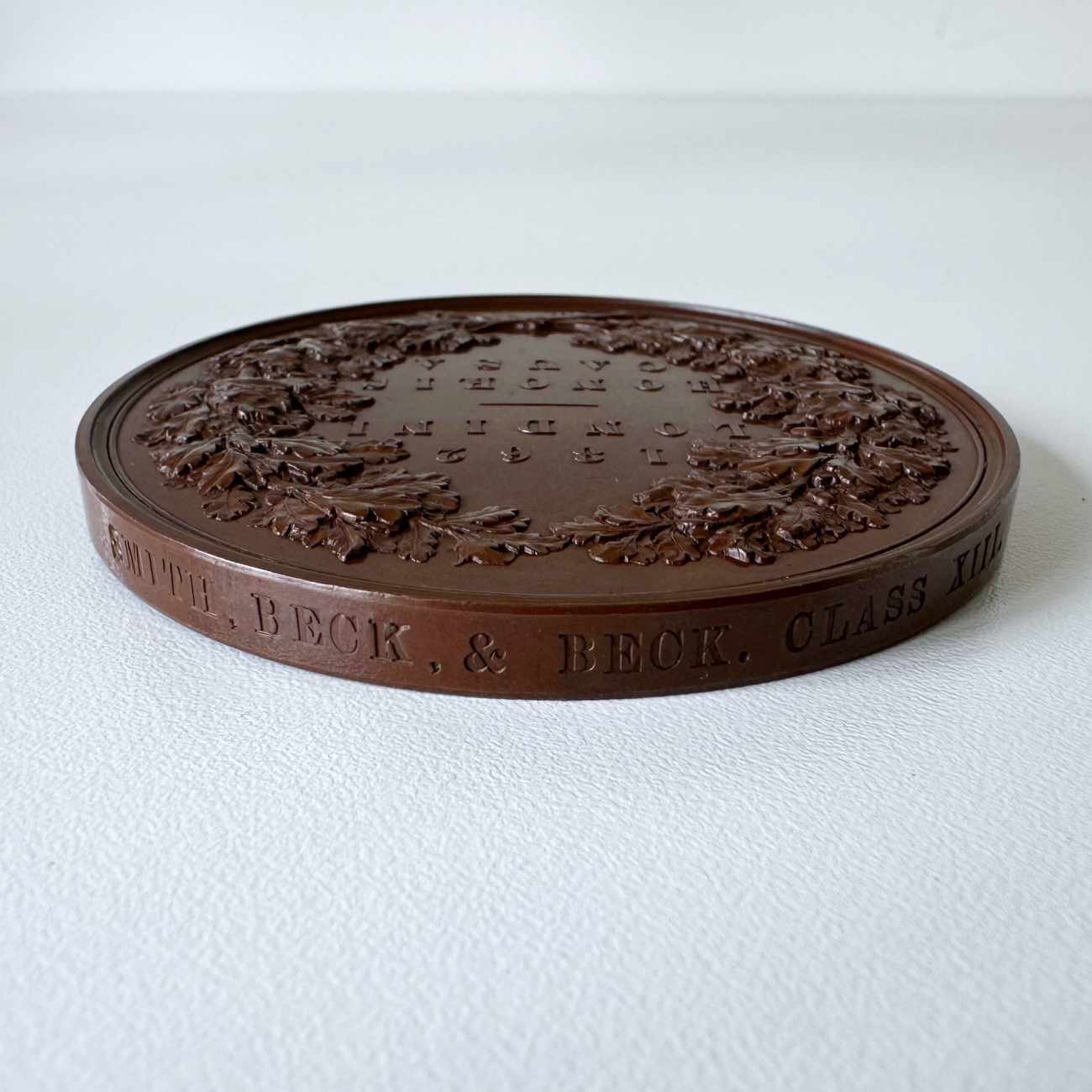
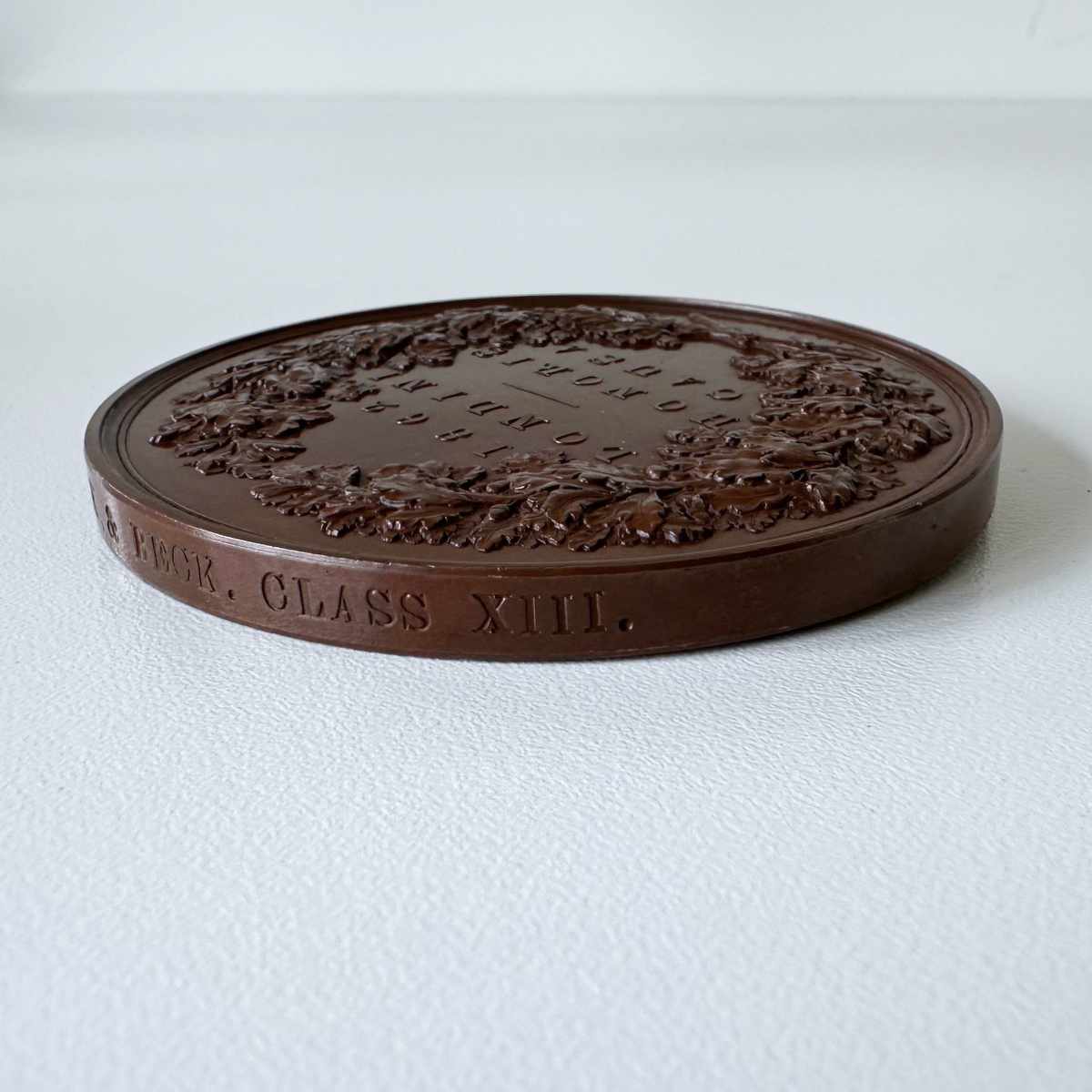
The reverse shows a wreath of oak running around the inner circumference with the words, 1862 Londini Honoris Causa which effectively translates to “London, a mark of esteem or respect” to the centre. In small letters to the base, the name of L.C. Wyon FEC is repeated.
The edge of the medal is further engraved to Smith Beck & Beck. Class VIII.
The International Exhibition was declared open by The Duke of Cambridge on the 1st of May 1862 in South Kensington on a site which is now occupied by The Natural History Museum. To give some idea of its scale, it featured nearly thirty thousand exhibitors from thirty-six countries throughout the six months of its existence and welcomed over six million visitors.
This second exhibition was meant to follow up on the huge success of the 1851 Exhibition, originally intended to have been opened in 1861, it was delayed due to the Italian War of Independence, the Civil War in America and not least because of the death of Prince Albert, its Chief Patron and supporter. The latter reason is of course why Queen Victoria was not present at the delayed opening in 1862.
The building that housed the Exhibition was designed using brick and iron by the architect Captain Francis Fowke and contracted out to the firm of Kelk & Lucas. Sadly, Parliament declined the Government’s wishes to purchase the building after the Exhibition but the materials which were reclaimed were eventually put to use in the building of Alexandra Palace. Fowke was also responsible for proposing the building of The Natural history Museum which was eventually constructed in 1881 and remains on the site to this day.
The earlier history of the medal’s recipients can be traced back to around 1839 when James Smith set up as a microscope manufacturer after having worked for the famous optician Tulley. He was encouraged into business through his close association with Joseph Jackson Lister, the man responsible for the development of achromatic lenses for use in microscopy, having previously manufactured brass work for Lister’s early experiments.
The Beck brothers were nephews of Lister, and Smith initially took on Richard Beck as an apprentice, finally culminating in the formation of a partnership between the two men (Smith & Beck) in 1847. The other brother Joseph Beck served an apprenticeship at the equally renowned company of Troughton & Simms under Williams Simms and moved to Smith & Beck in 1851 probably in support of his family’s participation in The Great Exhibition. He finally joining the partnership fully in 1857 whereafter the firm became Smith, Beck & Beck.
Following the success of the 1851 Exhibition, the new partnership took part in the second of these historic events in 1862. The catalogue entry stating as follows:
Smith Beck & Beck – 6 Coleman Street, E.C. – Achromatic microscopes; objects; achromatic stereoscopes; cabinets and other optical instruments.
The company was placed within Class XIII – Philosophical Instruments and it is worth mentioned some of the other names with whom they exhibited alongside. Patrick Adie, Charles Babbage, Louis Casella, T. Cooke & Sons, JH Dallmeyer, JB Dancer, Elliott Brothers, J. Hicks, Kew Observatory, Negretti & Zambra, Pastorelli and Pillischer were just a few of the recognisable names. To see all these great makers in the same room would have been simply astonishing!
They shortly afterwards feature in the Medals and Honourable mentions awarded by the international juries and are marked in the catalogue as receiving a medal for; “Microscopes and other optical instruments. For economy in the production of students’ binocular microscopes, and the excellence of their instruments generally.”
Almost all of the Victorian scientific instrument making exhibitors made great use of this medal’s image on letterheads, trade cards, catalogues and other associated ephemera, to find an example of the original medal for one of these famous Class XIII makers is extraordinarily rare.
To give further context, just three years later in May of 1865, Richard Beck also went on to publish the company’s iconic microscope manual, “A Treatise on the construction, Proper Use and Capabilities of Smith, Beck & Beck’s Achromatic Microscopes” which still serves as useful guidance to collectors to this day.
Smith finally retired in the same year, and the firm was renamed to R&J Beck trading from 31 Cornhill, London. Richard Beck also died unexpectedly at the age of 38 in the following year leaving Joseph Beck as the sole owner of the company until he passed away in 1891. His son Conrad turned R&J Beck into a limited company and the onset of the First World War proved to be a period of expansion with the production of military equipment such as periscopes which are still commonly encountered.
Conrad’s youngest son, Joseph was the final member of the Beck family to run the business, and he continued to support the war effort through World War II. In 1955 he sold the company to Griffin & George under which it remained a subsidiary. It was finally taken over by Ealing Corporation of America and produced microscopes under the name of Ealing, Beck & Co before its eventual demise.
This medal is an extraordinary find and would make a fine addition to a Beck collection.