

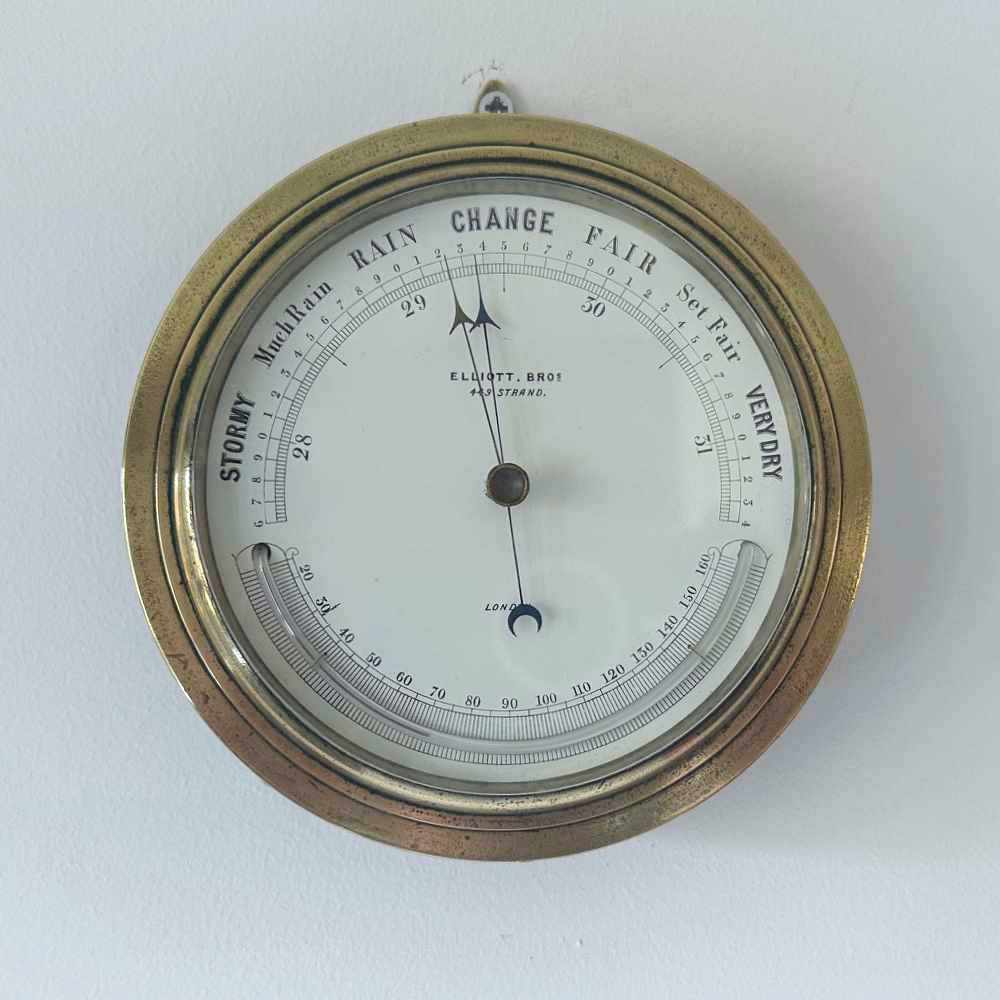
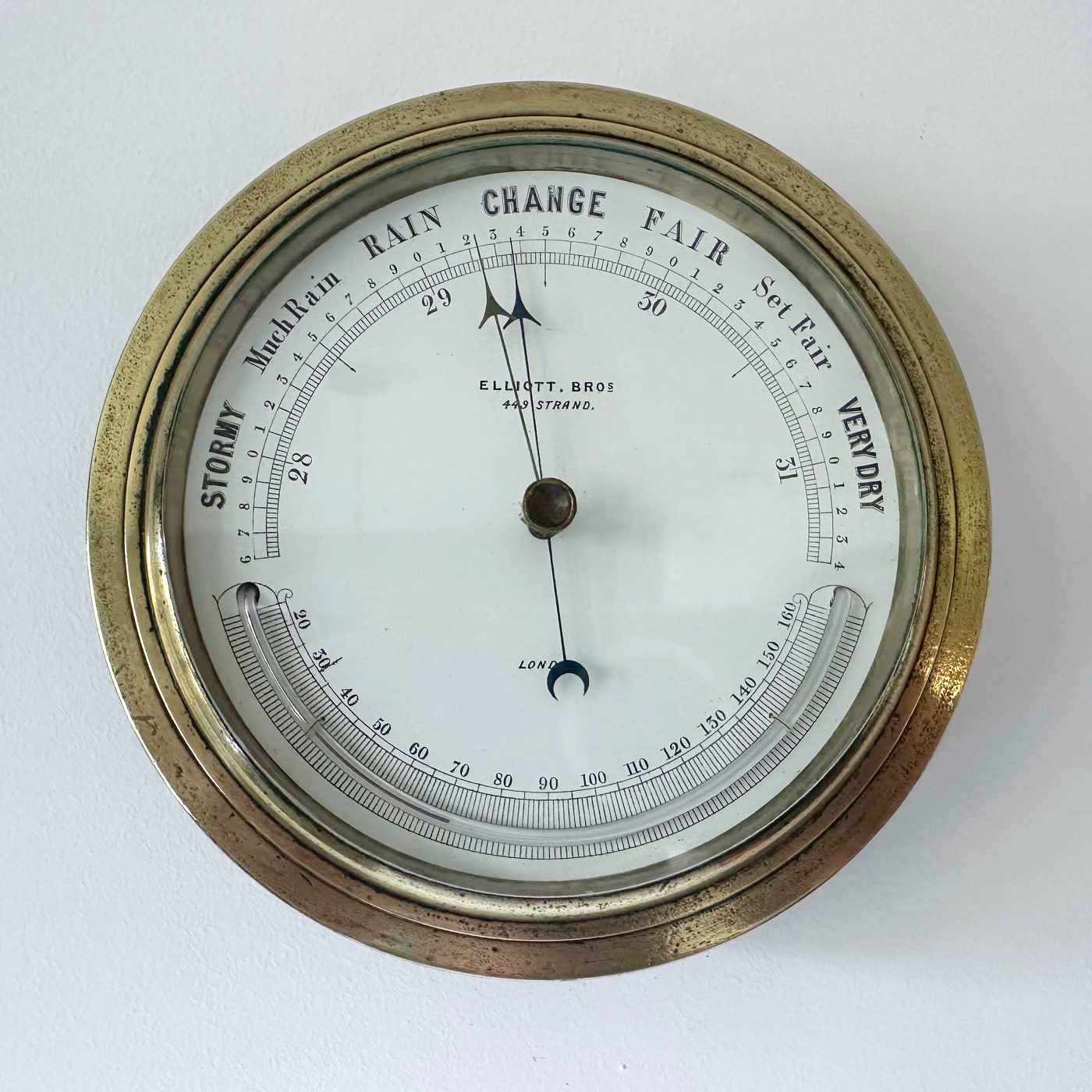
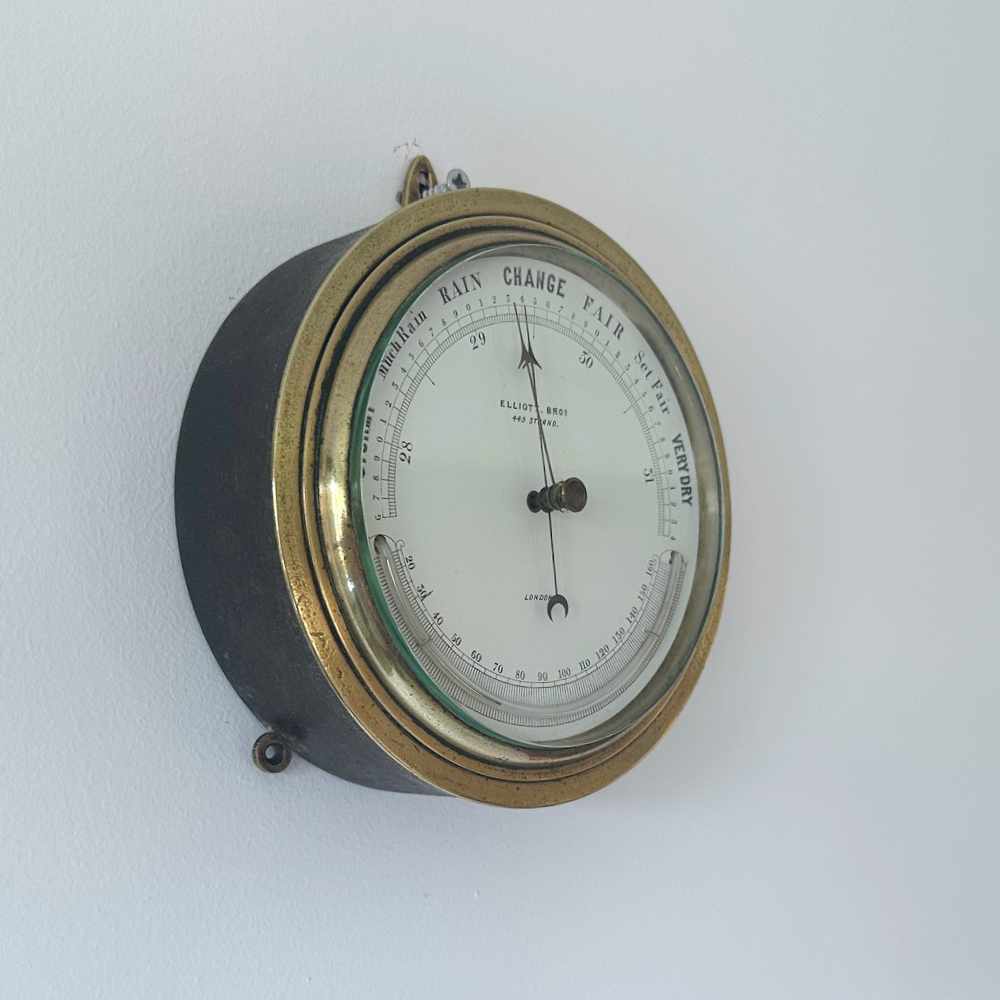
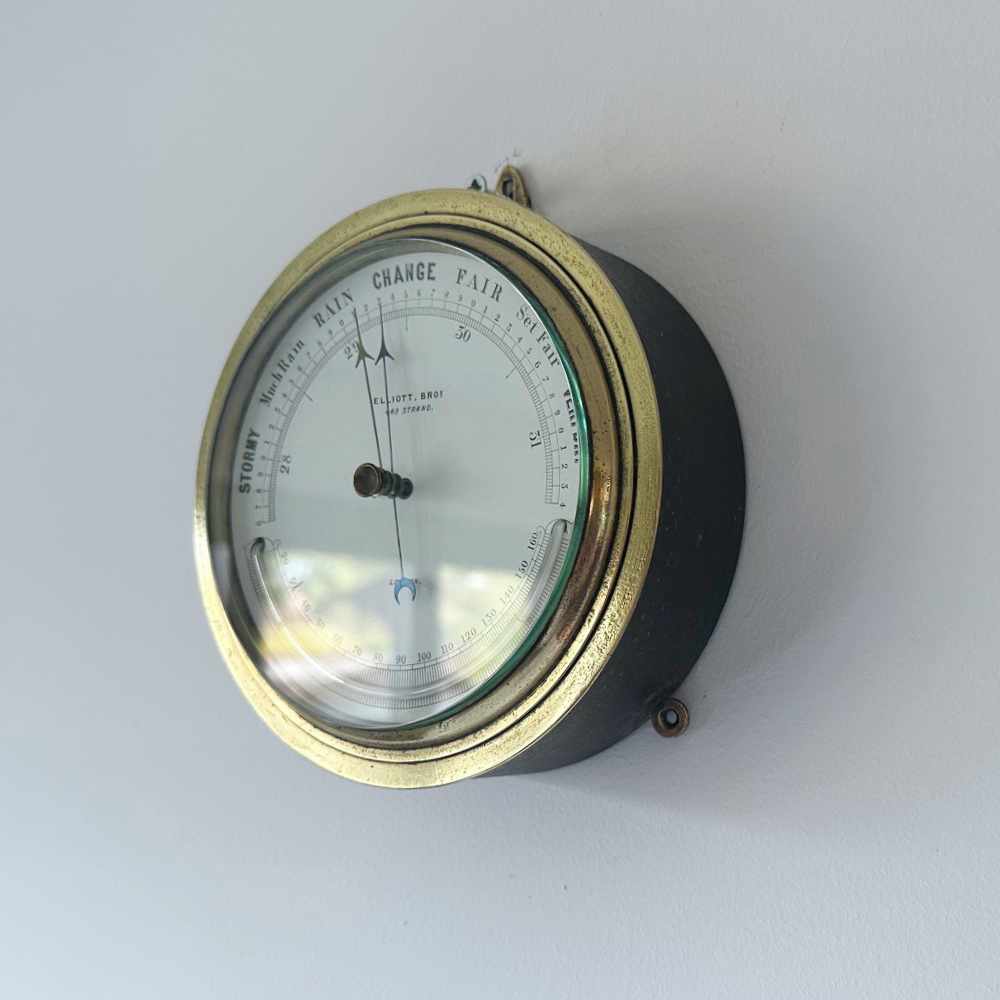
Victorian RNLI Type Aneroid Barometer by Elliott Brothers 449 Strand London
£395
Victorian RNLI Type Aneroid Barometer by Elliott Brothers 449 Strand London
Dimensions
H: 18 x 15 x D: 5.5cms
Circa
1870
Maker
Elliott Brothers
Country of manufacture
UK and Ireland
Description
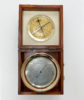
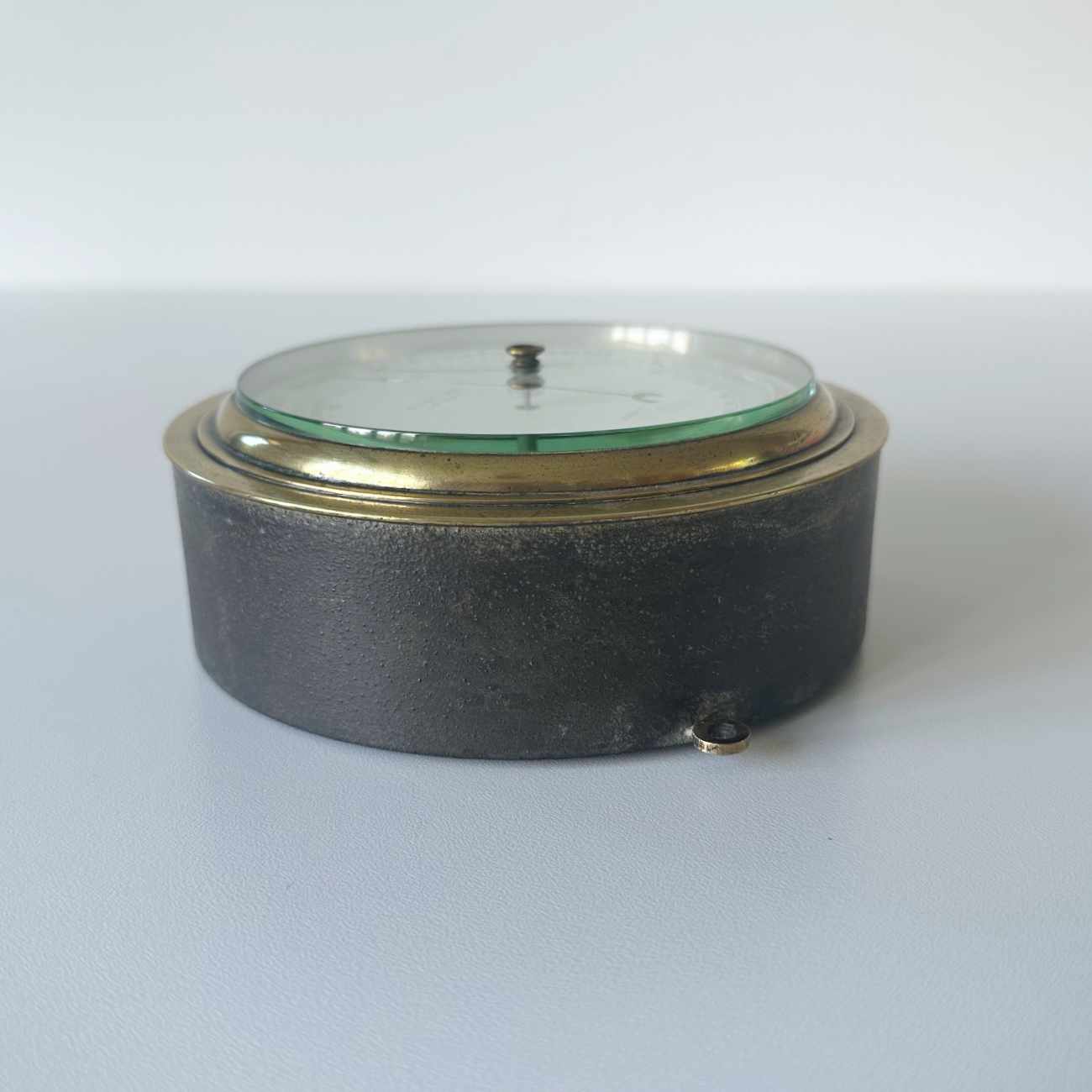
For sale an unusual RNLI type aneroid barometer by Elliott Brothers of 449 Strand, London.
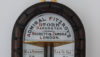
Comprised of four-and-a-half-inch card dial with divisions for 28 to 31 inches of barometric pressure to the upper half. Above the scale arc are provided Fitzroy type weather indications all complete with a very fine blue steel pointer and brass set knob and pointer for recording a particular reading.
The lower half of the dial has a curved thermometer with scale divided for 20-160 degrees of Fahrenheit. The centre has the maker’s name, “Elliott Brothers, 449 Strand, London.
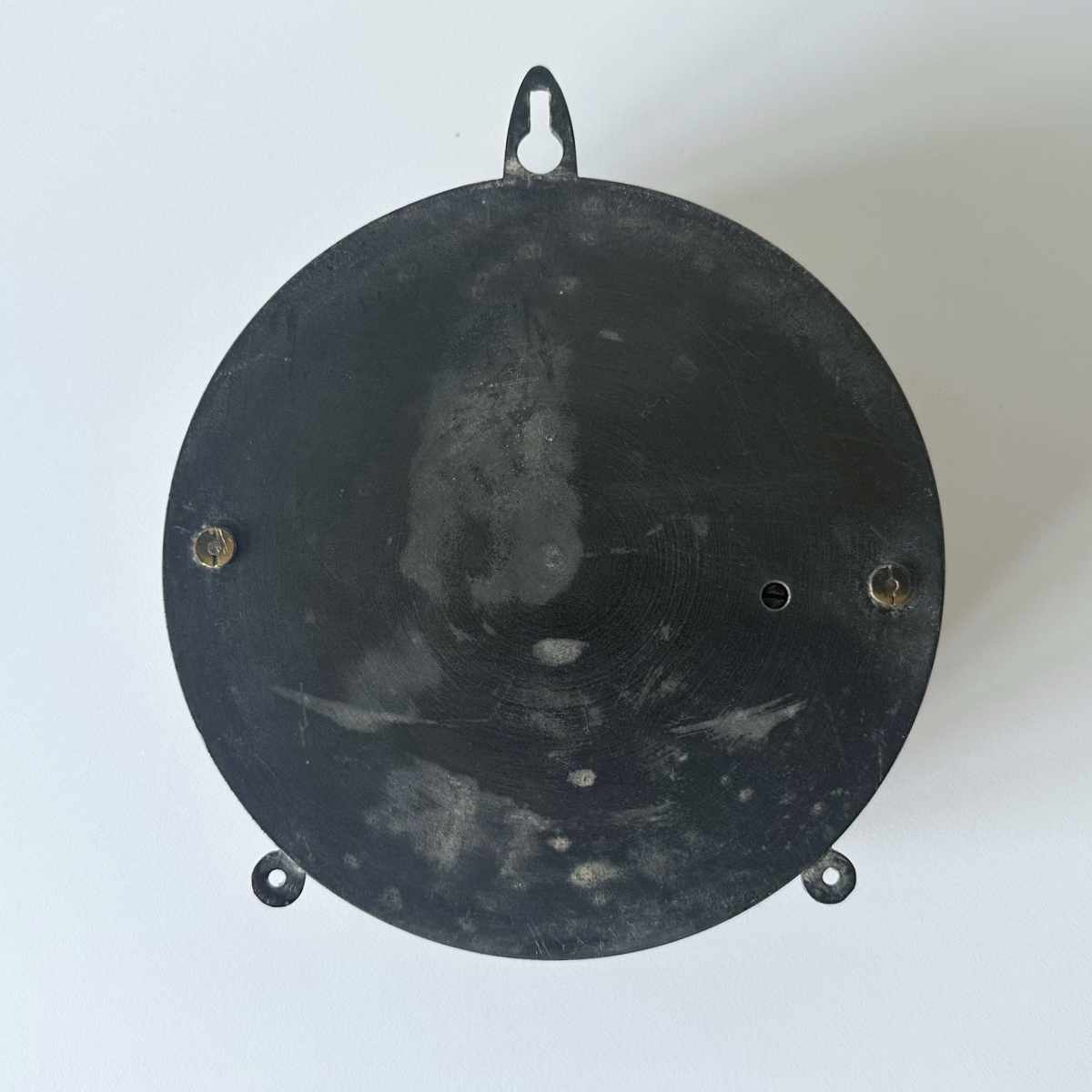
The barometer scale is housed in a very robust graduated brass bezel with a thick bevelled glass and a zinc case with integrated wall fixing at three points.
This unusual barometer bears all the similarities of the RNLI Fisherman’s aneroid barometer whose manufacture was licensed to Negretti & Zambra and Dollond. This is likely to have been a response to the popularity of this barometer by Elliott Brothers whilst carefully avoiding any legal issues. It is a very well-made example as you would expect from this company.
The makers, Elliott Brothers was formed in 1804 by William Elliott. Following the completion of his apprenticeship to instrument maker, William Blackwell, he began trading under his own name, W. Elliott and plied a successful trade in London. Elliott is considered to have been married three times during his life and early records suggest a number of makers with the same surname working in London. Evidence is not yet complete to confirm just how many of them were related, but William’s son Charles Alfred from his third marriage was apprenticed to him by 1837 after which he also spent time with the talented instrument maker, JF Newman of Regent Street. William must have been a man of means by this point as his elder son; Frederick Henry had also graduated from Christ’s College in Cambridge by 1845.
Four years later in 1849, William took both of his sons into business changing the name to William Elliott & Sons and in the following year exhibited at The Great Exhibition where they were a recipient of a bronze medal for their work. By this time, the company had moved from their original base in High Holborn to a new address at 56 The Strand.
William died in 1853 leaving the business to his sons and by 1854, the pair had changed the name to Elliott Brothers. In 1857 the company subsumed the highly renowned instrument making company, Watkins & Hill after the deaths of the partners. The Watkins & Hill Charing Cross premises were then leased and Elliott Brothers moved to larger premises at 449 Strand. Under the astute business leadership of Frederick, Elliott Brothers went on to work with a number of leading scientists of the period involved themselves in the production of early electrical instruments, telegraphic equipment and the new aneroid barometer as well as their standard stock. During this time, numerous patents are registered for barometers, telescopes and drawing boards amongst others.
In 1867 the company exhibited at The Paris Exhibition and three years later in 1870, records show that the partnership was dissolved upon Charles’s retirement. Frederick continued to direct the business until his death in 1877, however, it continued as Elliott Brothers under the guidance of William’s wife Susan who took leading telegraph engineer, Willoughby Smith into partnership.
Upon Susan’s death in 1880, the firm finally fell away from family ownership although the Smith family continued to run Elliott’s with Willoughby’s sons, William Oliver and Willoughby Statham taking roles as managers. Under this ownership, the company won a gold medal at the Paris Electrical Exhibition in 1881.
By 1893, Elliott Brothers had merged with Meinrad Theiler & sons but kept the original name and with GKB Elphinstone joining as chairman through this merger, the company gained vital contacts in The Royal Navy. By this time, the company is listed as trading from a new address at 101 & 102 St Martin’s Lane and began to focus business on electrical instruments for the military. Presumably, this more industrial focus led to the company moving out of London in 1898 to Lewisham in Kent but it continued to produce a range of instruments from meteorological to telegraphic whilst also manufacturing naval gunnery tables, it employed 200-300 people by this stage.
In 1902, Elliott Brothers were awarded the Royal Warrant and prior to the Great War, it started to produce aviation equipment for The War Office. Throughout this period, the company profited from its military links and was incorporated as Elliott Brothers (London) Ltd in 1917.
After the World Wars, Elliott’s story is one of specialisation with various subsidiary arms such as Aviation, Automation and Nucleonics being singled off. The company acquired numerous others throughout the twentieth century before being taken over in 1967 by The English Electric Co and just a year later that company was subsumed under GEC alongside Marconi. However, GEC’s subsidiary arms made reference to both Marconi & Elliott in their names. It was not until 1984 that the Elliott brand was dropped in favour of GEC Avionics, it was renamed again in 1998 as Marconi Electronic Systems and finally absorbed a year later into BAE Systems where the remnants of this prestigious company remain.
Circa 1870.