

SOLD – Antique Wenham Binocular Brass Microscope by H & W Crouch #119 circa 1863, Cased
Sold
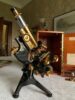
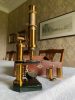
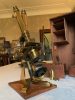
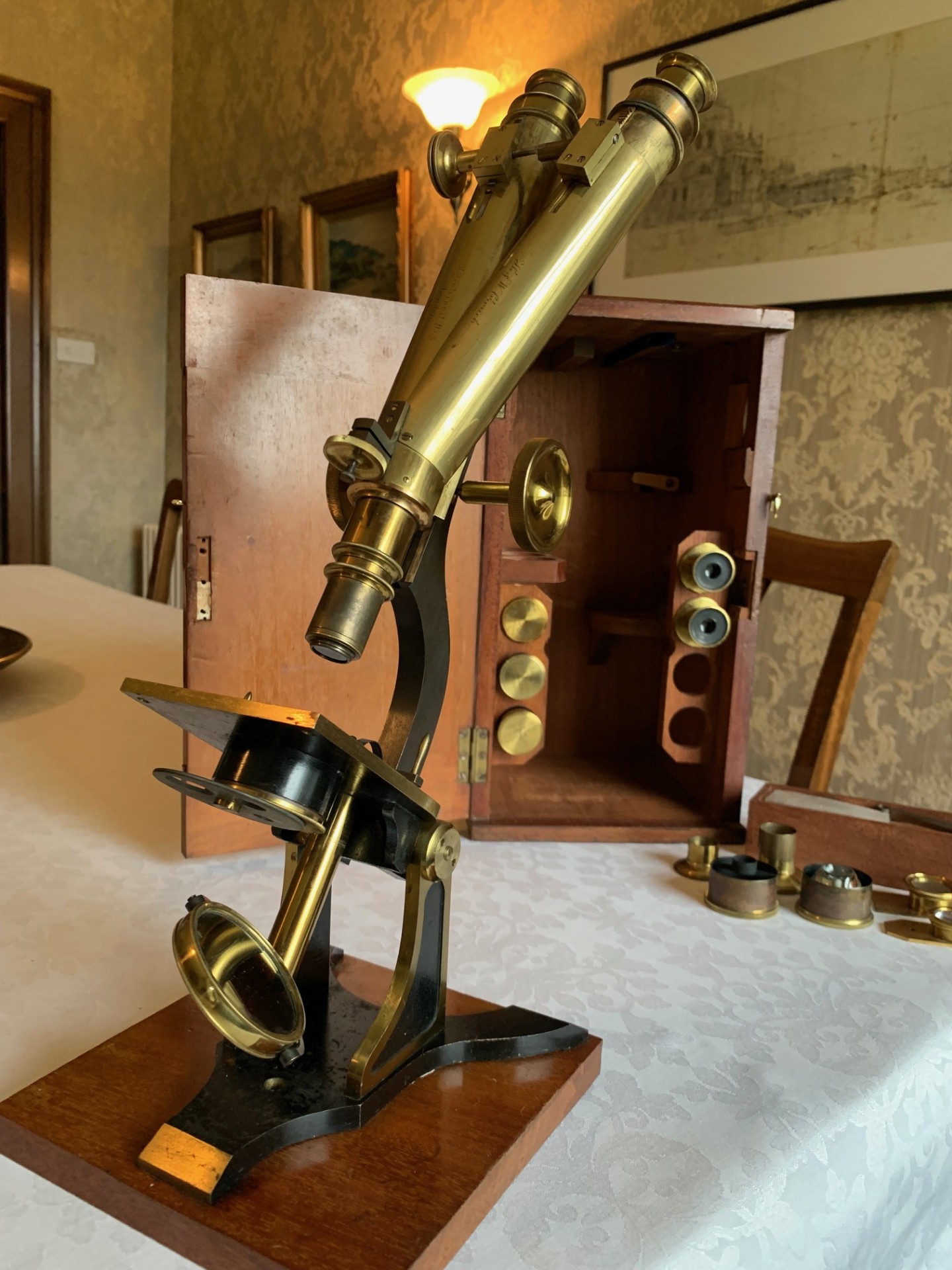
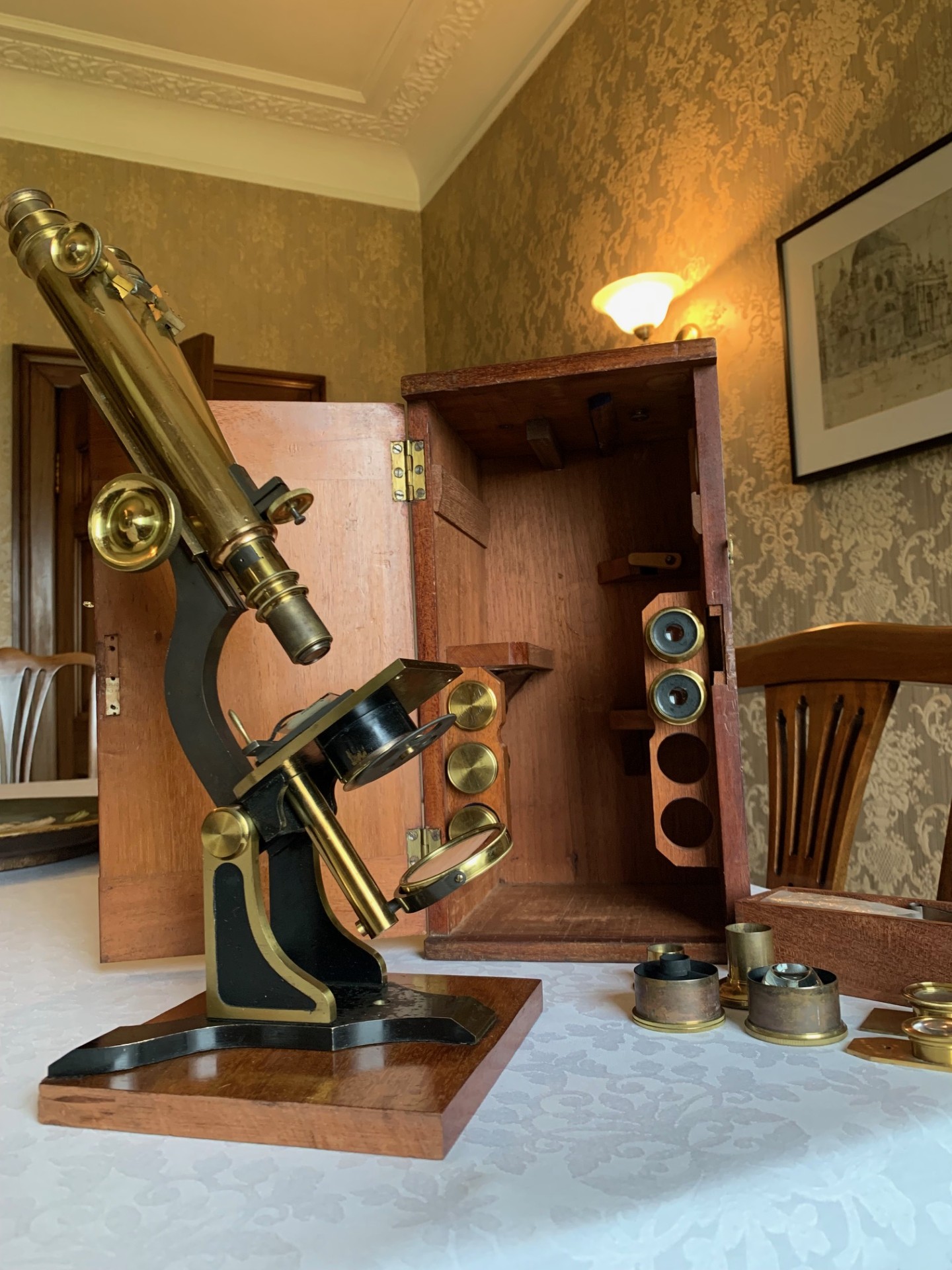
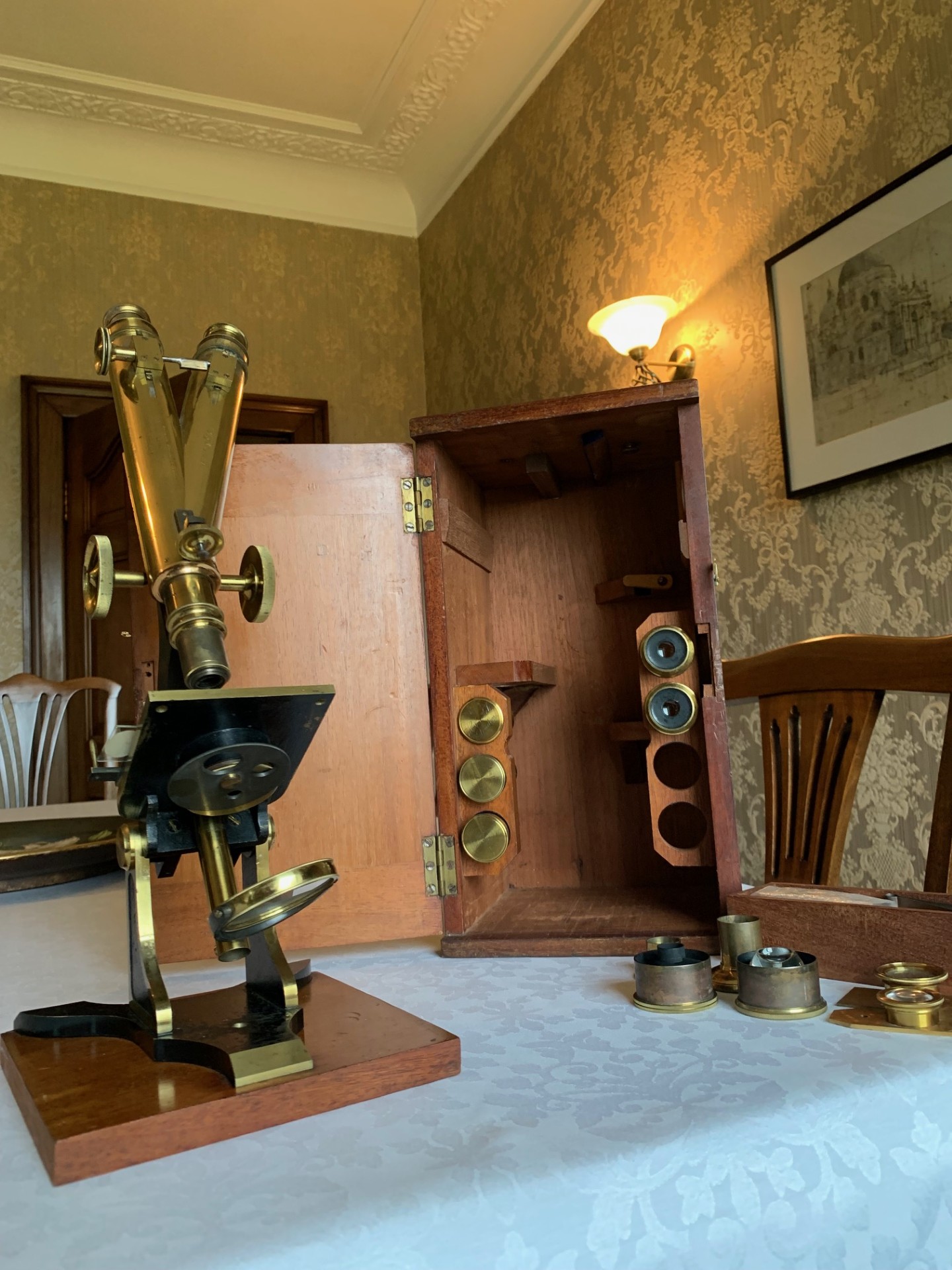
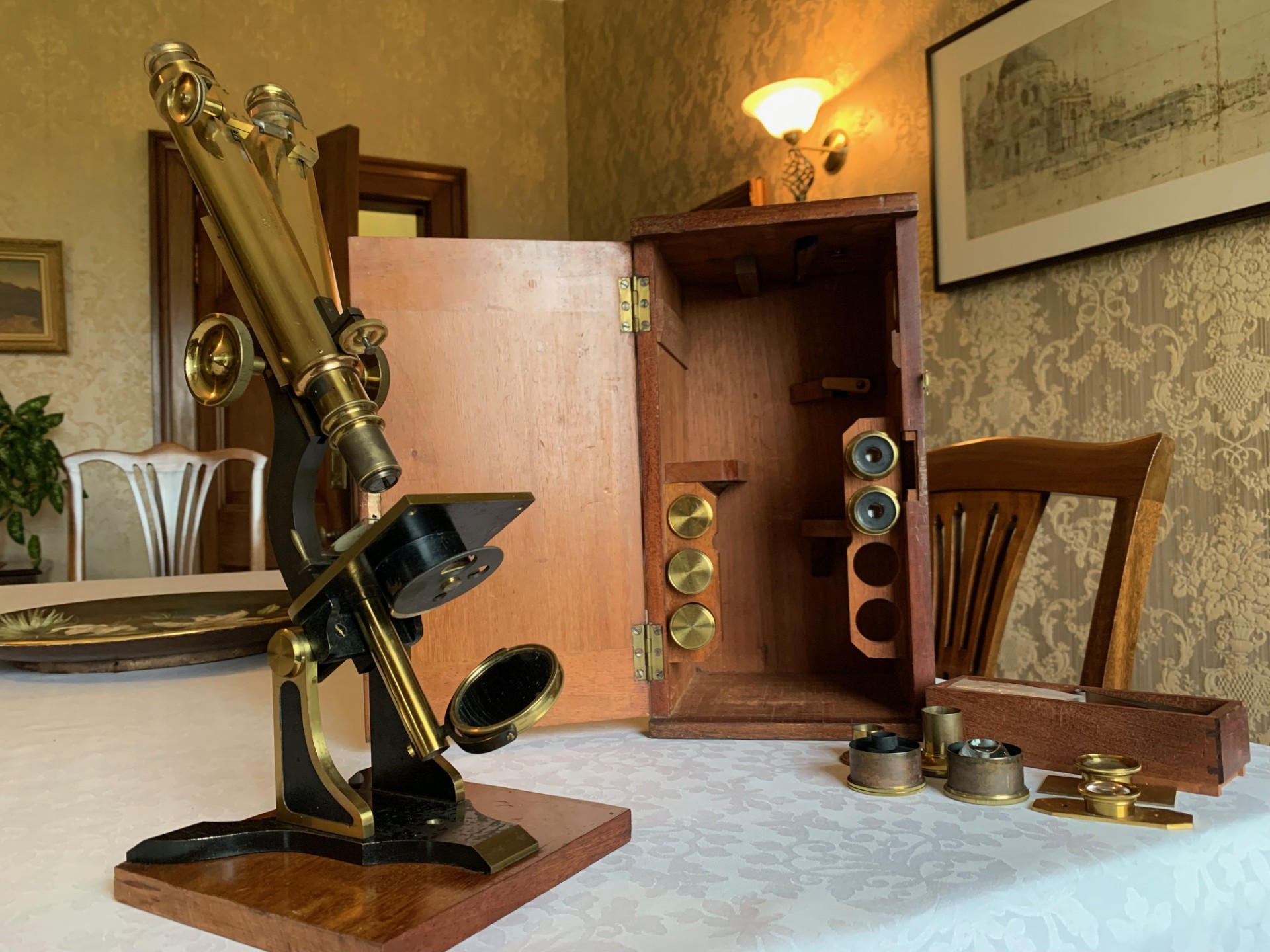
Very nice, well specified antique Victorian period example of a Wenham binocular brass microscope by quality London makers H & W Crouch. This model is quite an early Crouchy with serial number 119 and is described as the "flat tripod foot model" in the available literature.
Circa
1863
Maker
H & W Crouch, London
Country of manufacture
UK and Ireland
Description
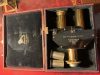
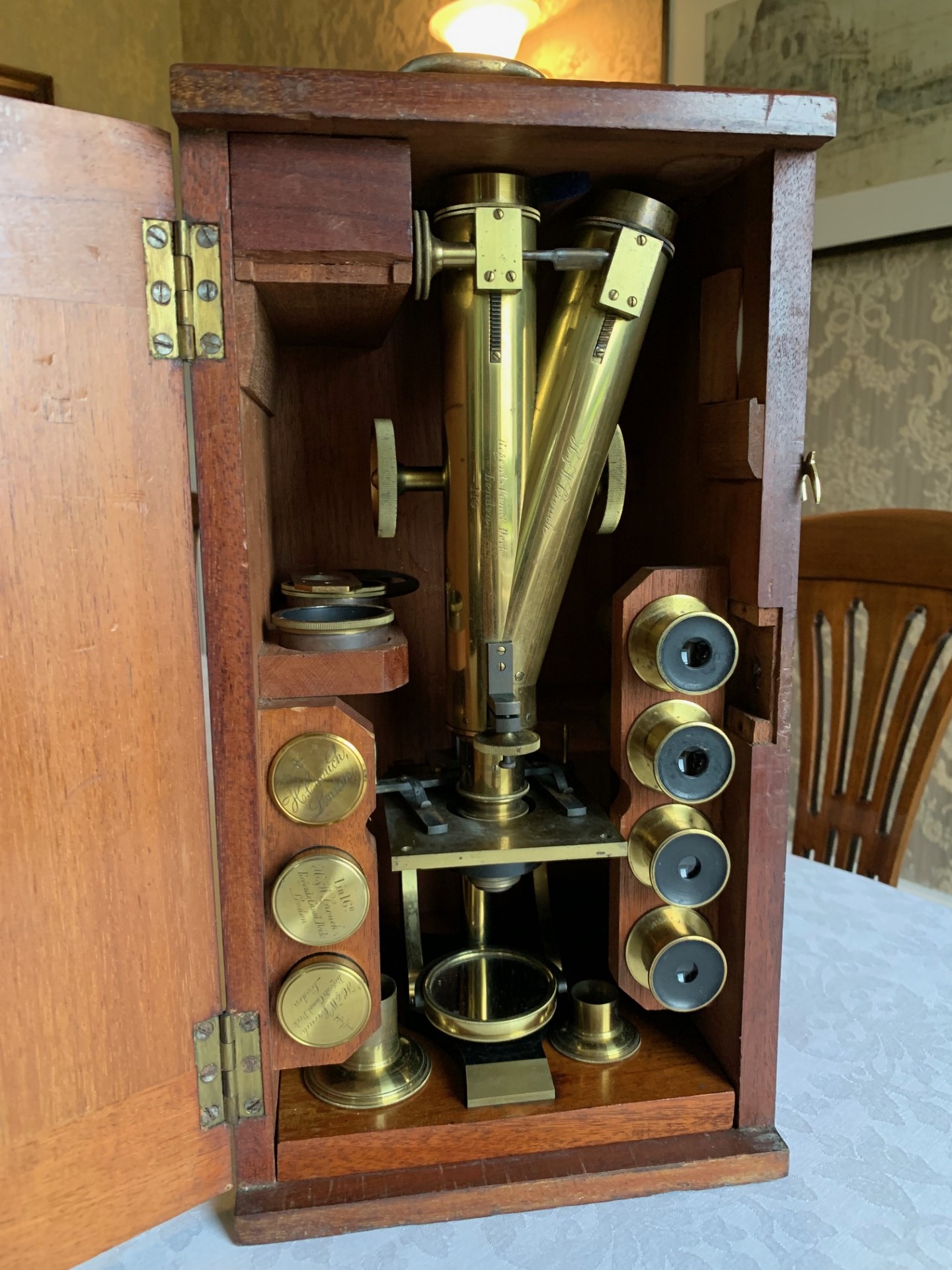
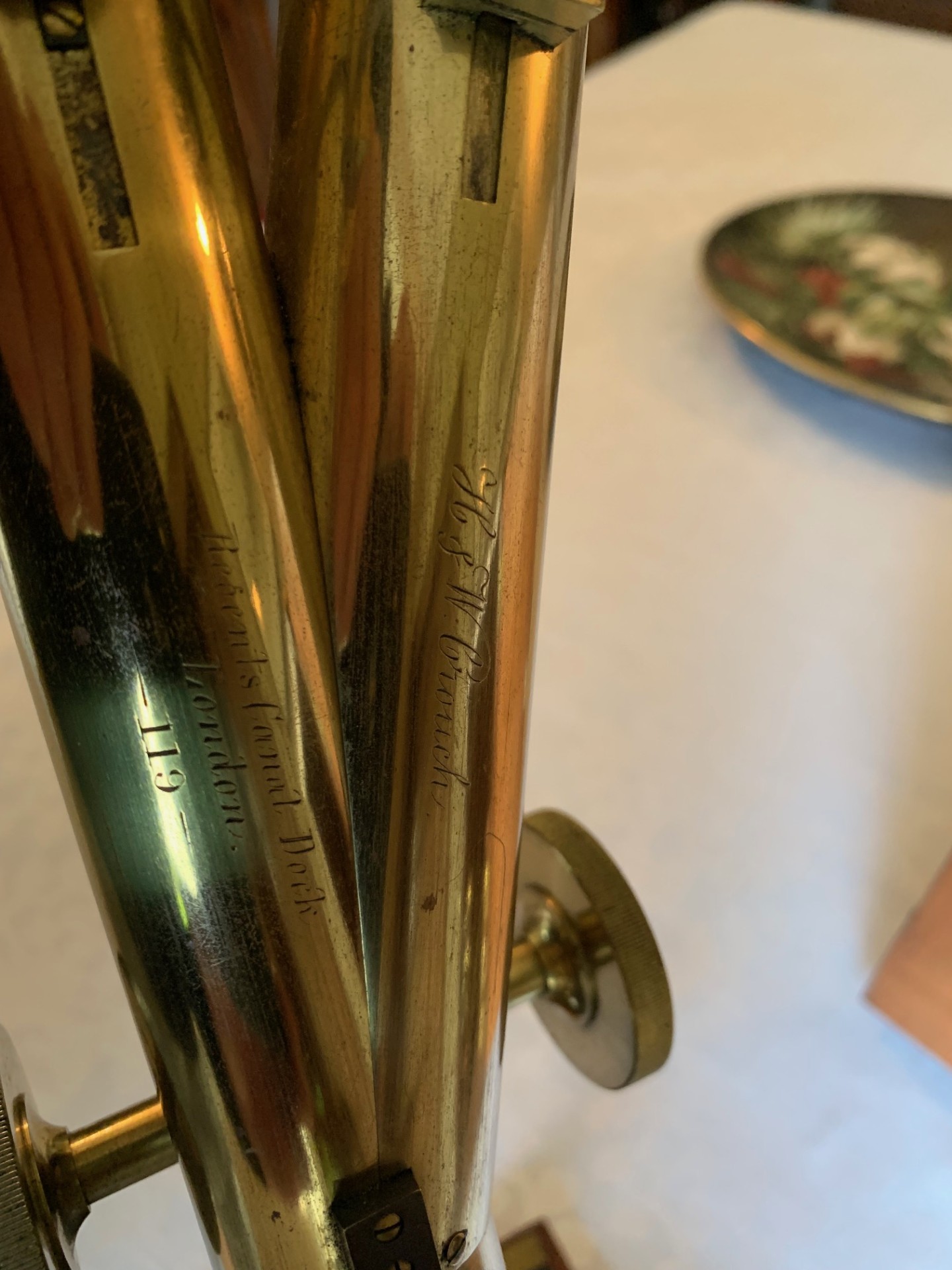
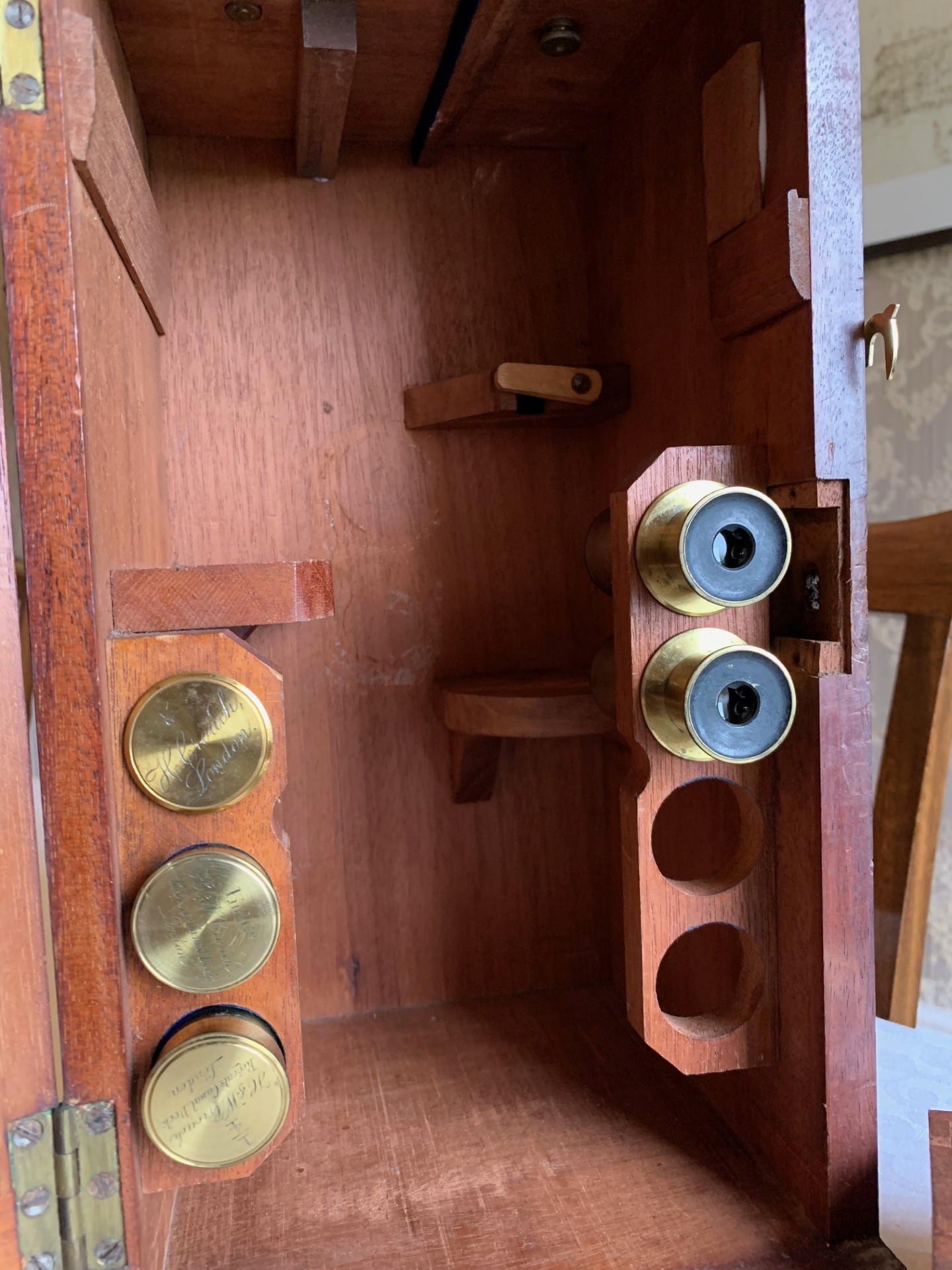
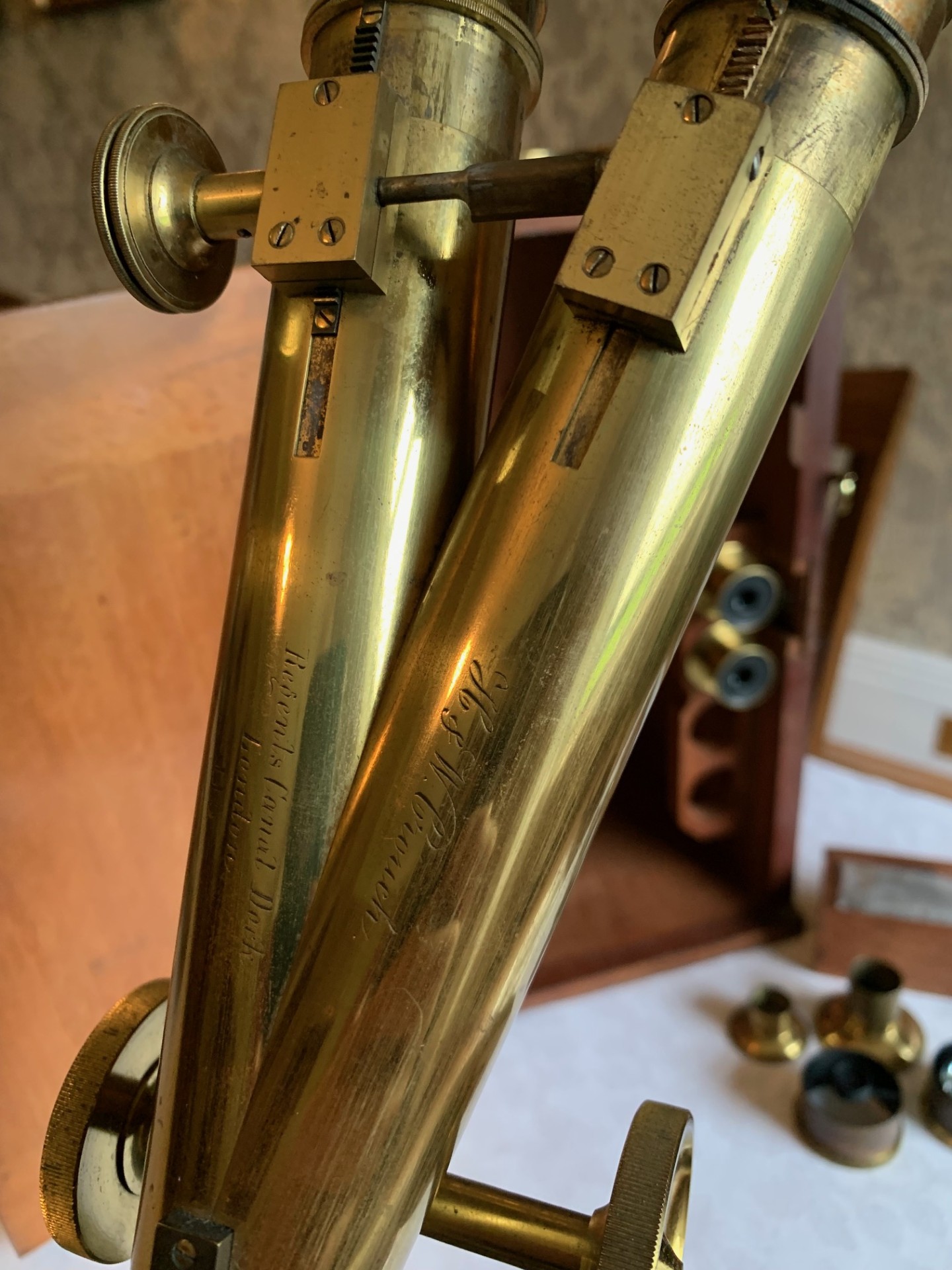
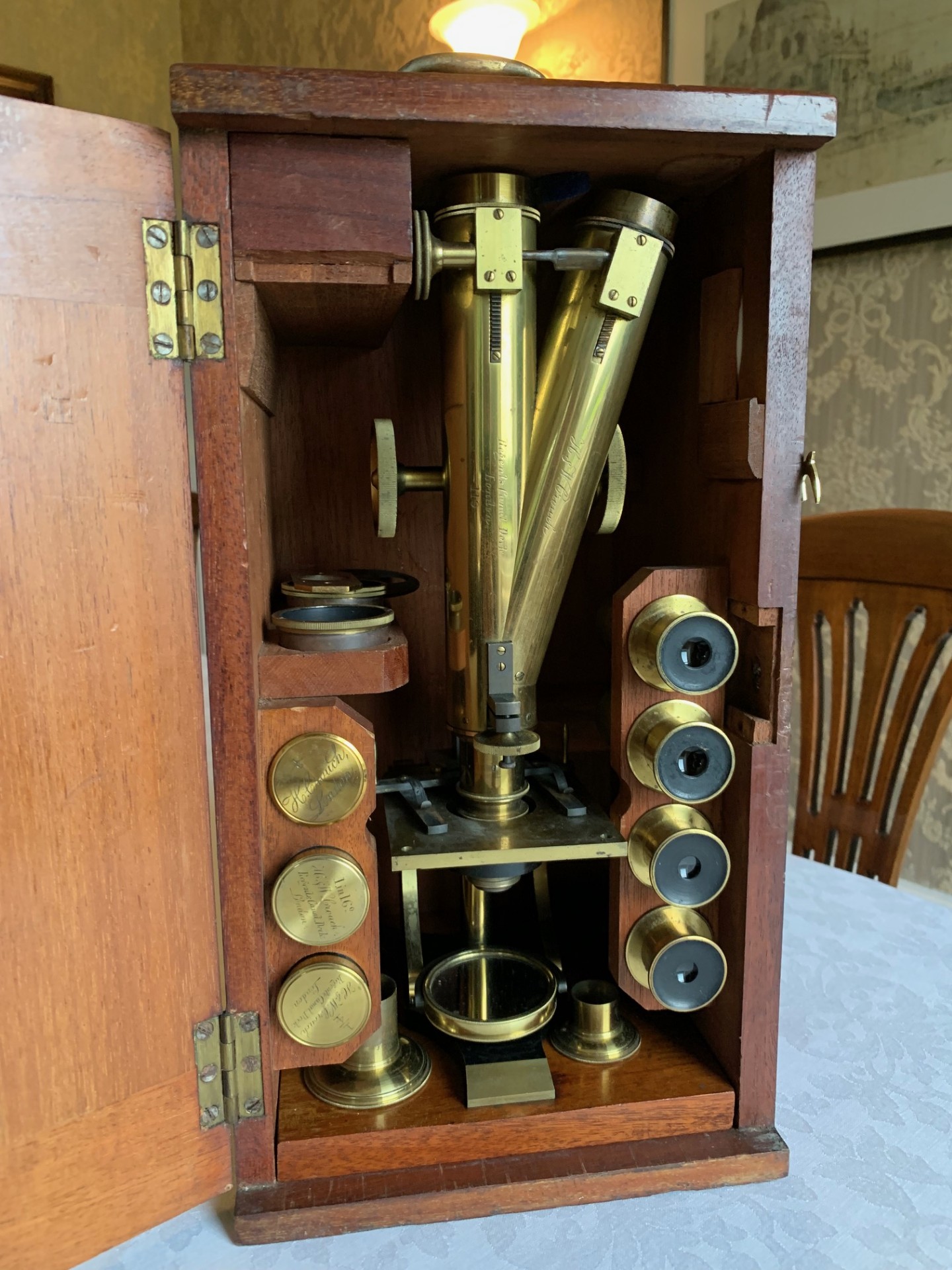
Offered for sale is a really good well-kept example of an antique binocular brass microscope by London makers H & W Crouch with the instrument serial number 119, which is engraved onto the optical tube. As for dating, my estimate is the mid 1860s, possibly around 1863 in view of the H & W Crouch address which is given as Regents Canal Dock, London. The condition is generally cosmetically very good, with only a few minor age and use appropriate signs of wear to the finish on the instrument and just the right time worn look to its lacquered finish and brass-work. This example is definitely also a proposition for display, say on a desk-top or library setting as well as being perfectly usable. It’s optics are nice and clean belying their age, producing some nice bright images to both eyepieces at low and medium magnification. The objective thread is also RMS which is useful meaning that many other objectives will also fit the instrument. There’s also a the original fitted case and everything fits into it, which is a remarkable feat, given the number of accessories.
Background to Henry Crouch, London – source Microscope Museum
Henry Crouch learned his trade as an apprentice with Smith, Beck & Beck. Henry then formed his own company, probably in early 1862. His younger brother, William, joined him. The original H. and W. Crouch shop was located on Commercial Road, London, and their earliest instruments bear that address. The Crouch brothers initially produced copies of the microscopes that Henry had made for Smith, Beck & Beck. The partners soon focused on producing good-quality, less-expensive microscopes for the middle-class microscopists and students. Henry joined the Royal Microscopical Society in 1863, and the Quekett Microscopical Club in 1866. Advertisements as early as September 1864 indicated a move to 64A Bishopsgate Street. For several years afterwards, the Crouches retained the Commercial Road location as their factory, although not as a retail location. The Crouch brothers dissolved their partnership in 1866, with Henry retaining the optical business. Henry Crouch’s business moved ca. 1868, to London Wall, then to Barbican in early 1873. About 1886, Henry incorporated as Henry Crouch Limited. Crouch sold the business in 1907 to S. Maw, Son and Sons. Henry then worked for that firm, supervising manufacture of microscopes and other equipment. Many Crouch microscopes that already existed were additionally stamped with the new owner’s name, and newly made ones were imprinted on the foot with “S. Maw, Son and Sons”. During the early 1900s, Henry Crouch began producing microscopes with horseshoe shaped, “continental” feet. Henry Crouch died in 1916.
Turning to the main technical details of this Victorian binocular microscope, we have the following:
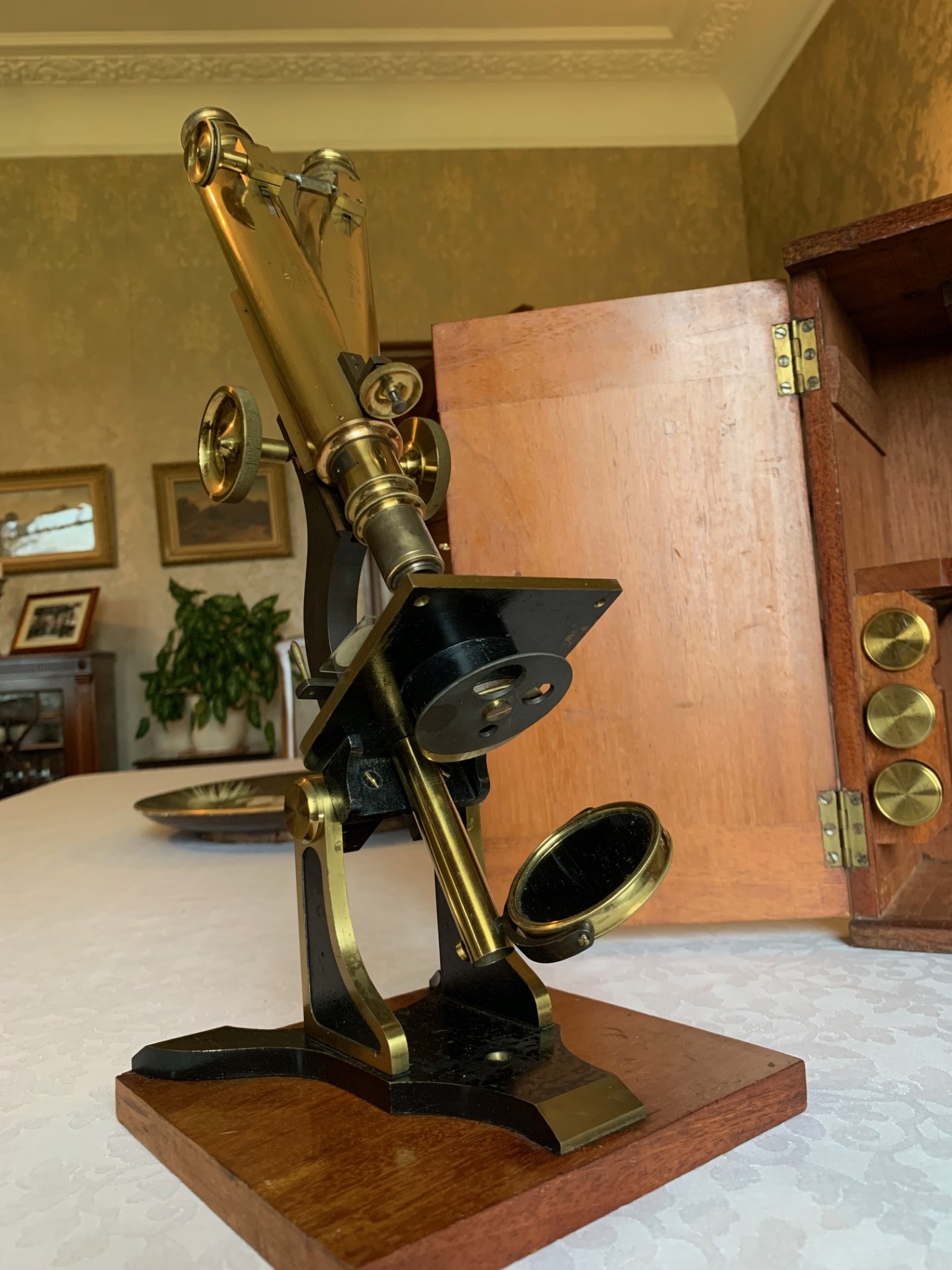
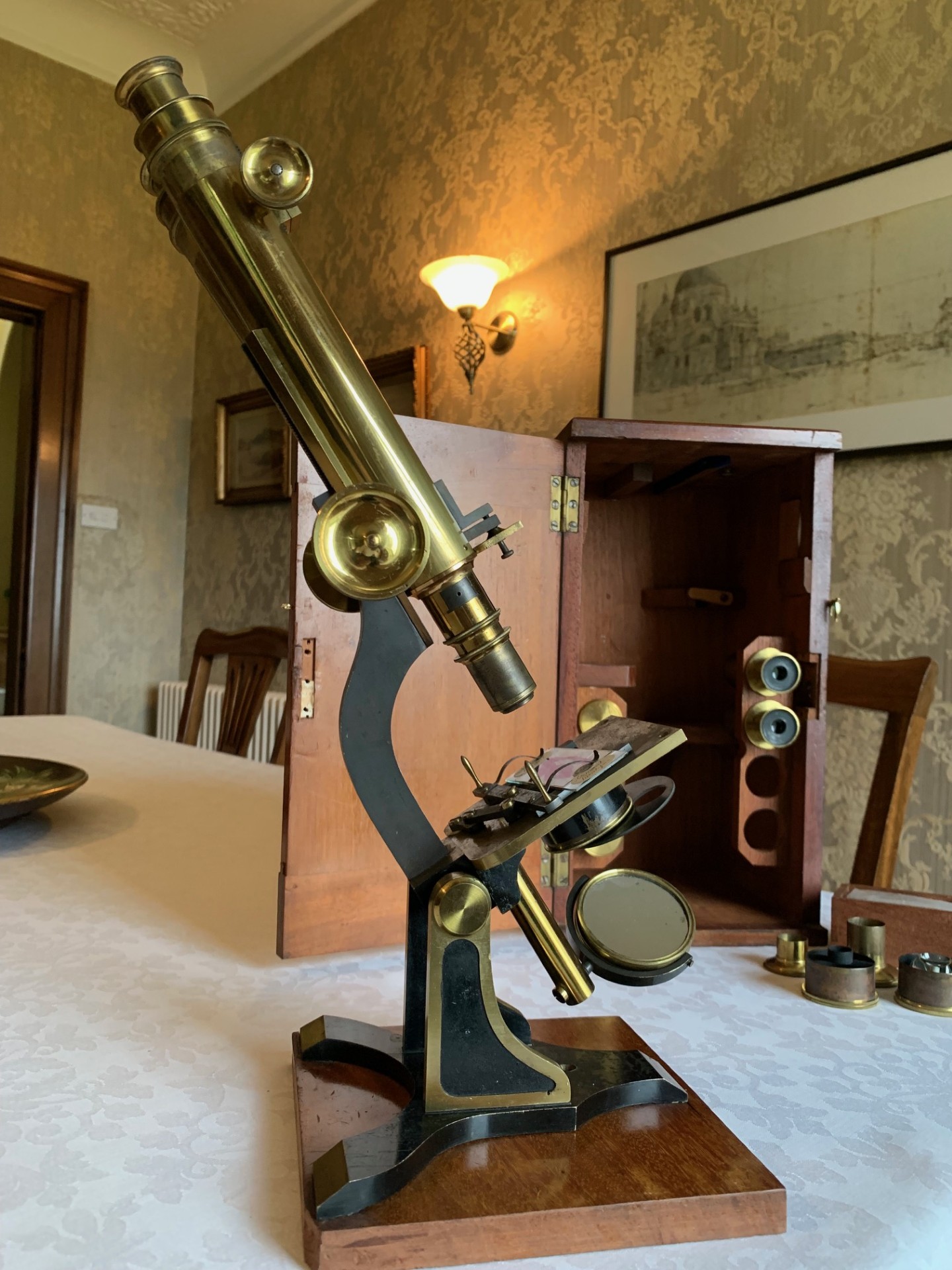
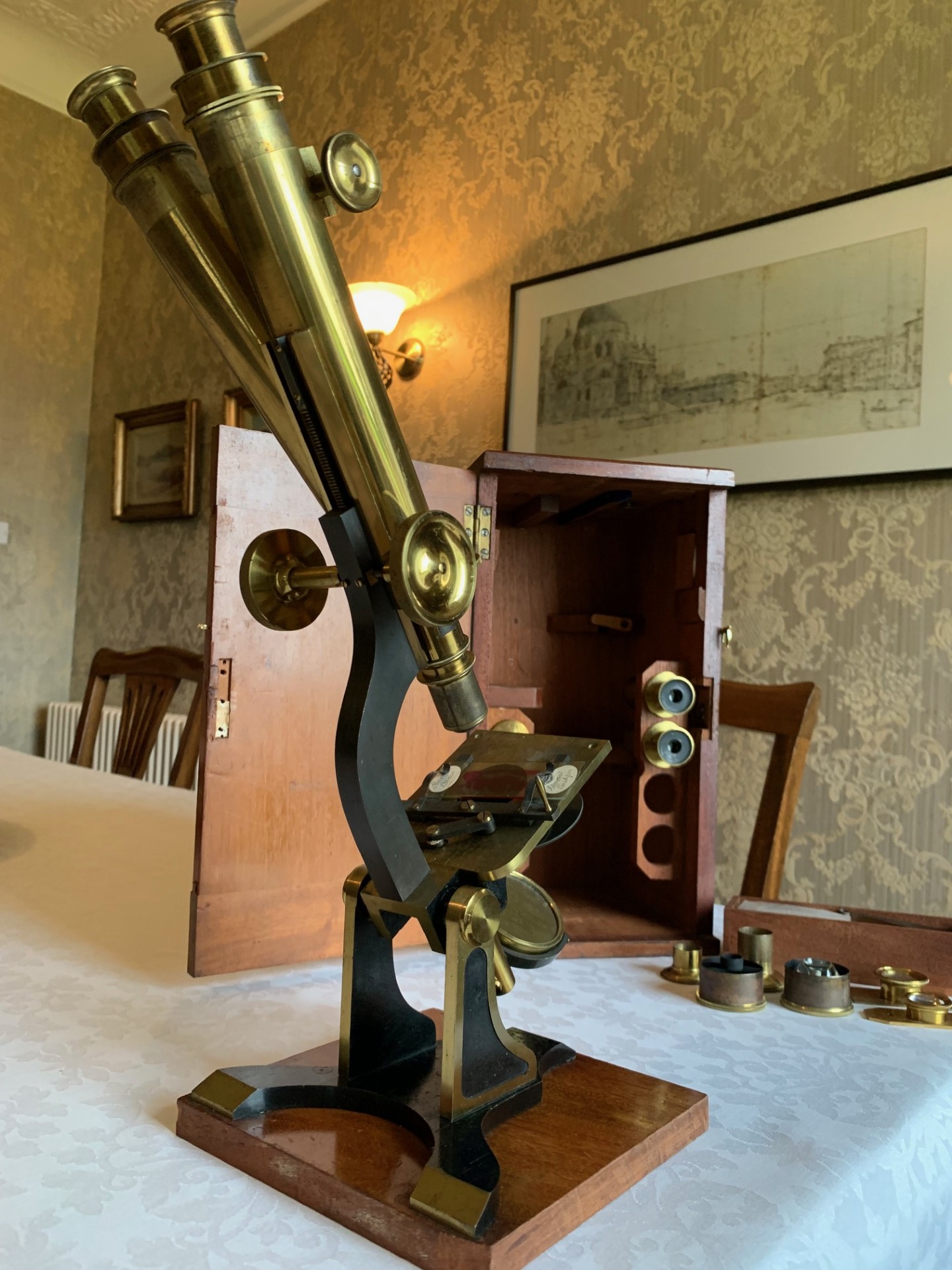
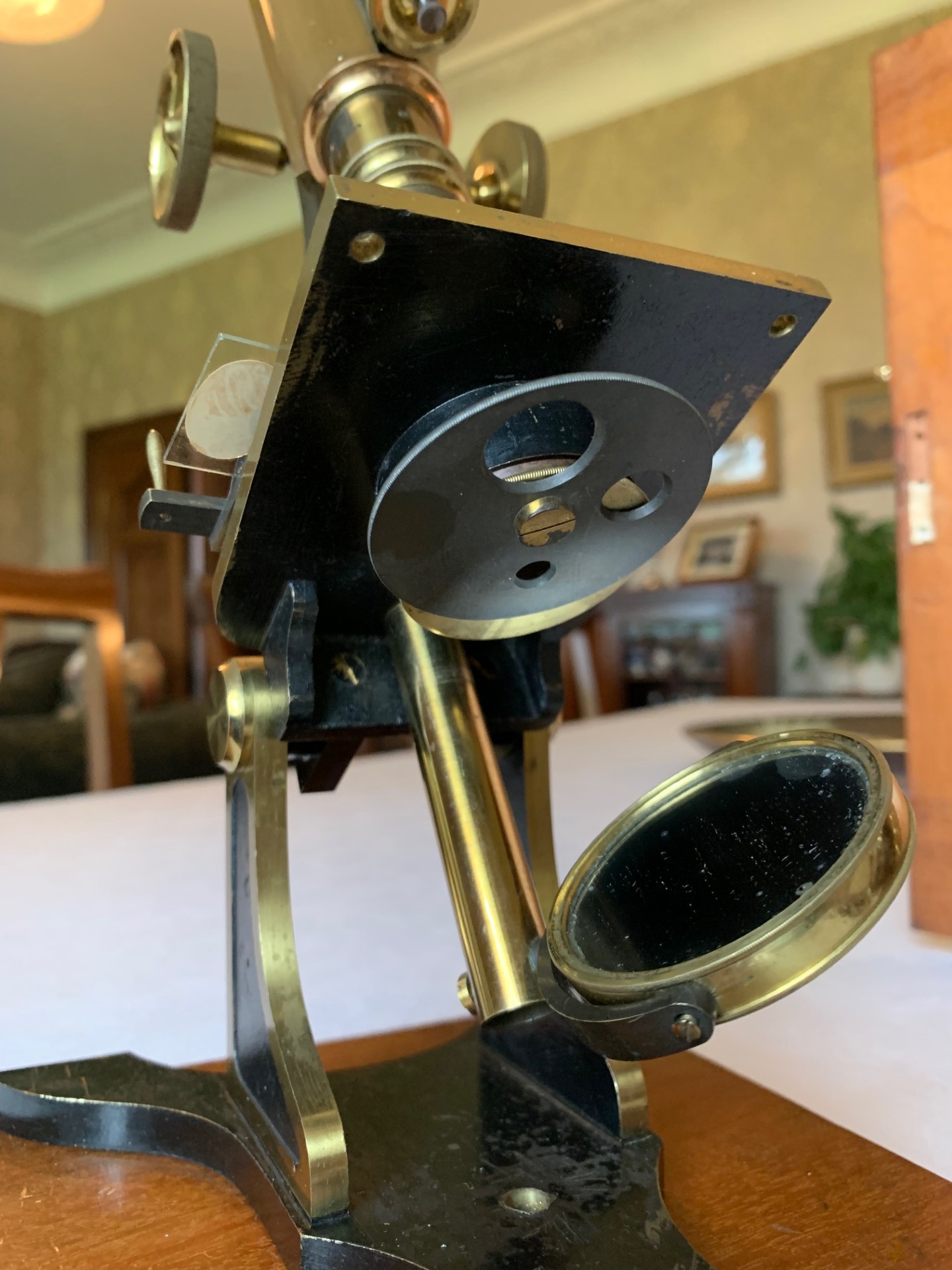
1) Reverse Y-shaped flat tripod foot construction in lacquered brass with black-painted panels and twin uprights to pivot, with Jackson-style upper limb form in anodised brass finish with lacquered brass finishes to the upper parts of the instrument. The microscope is inclinable and holds position on adjustment and can be manually tightened at the pivot point as required. There’s a limb tail-piece to which are attached stage and mirror. The instrument is currently fitted to a wooden base plate giving it extra stability.
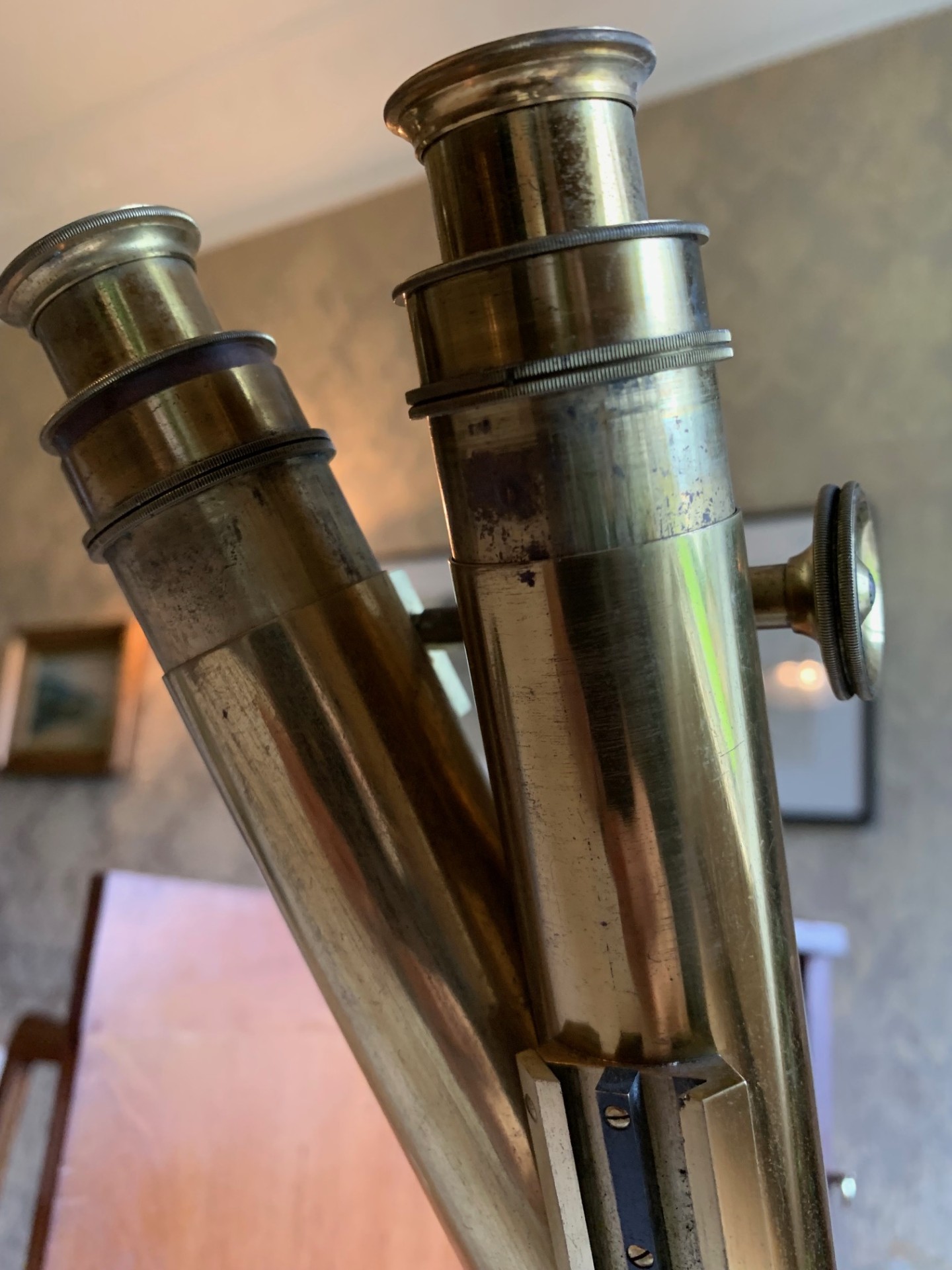
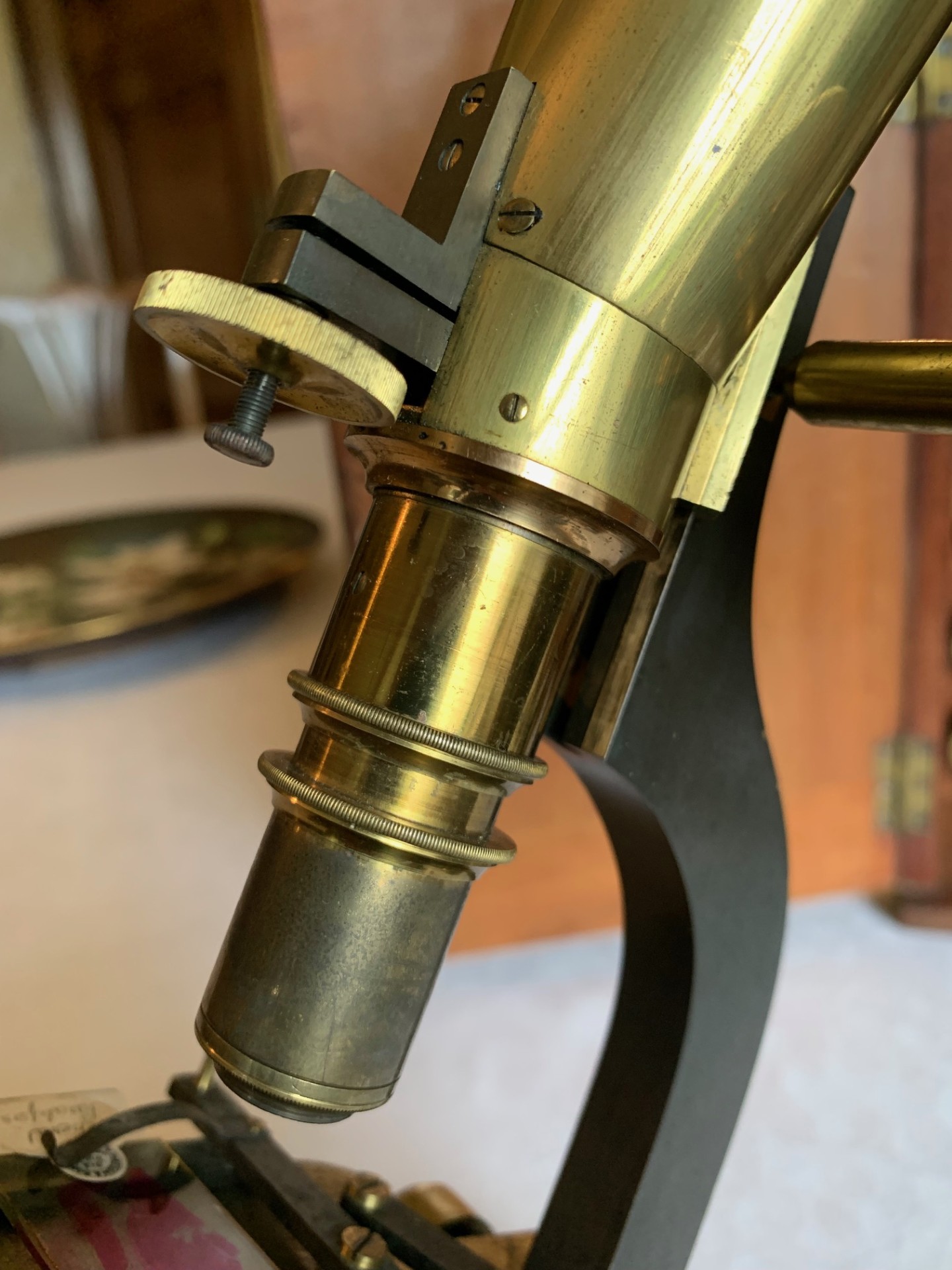
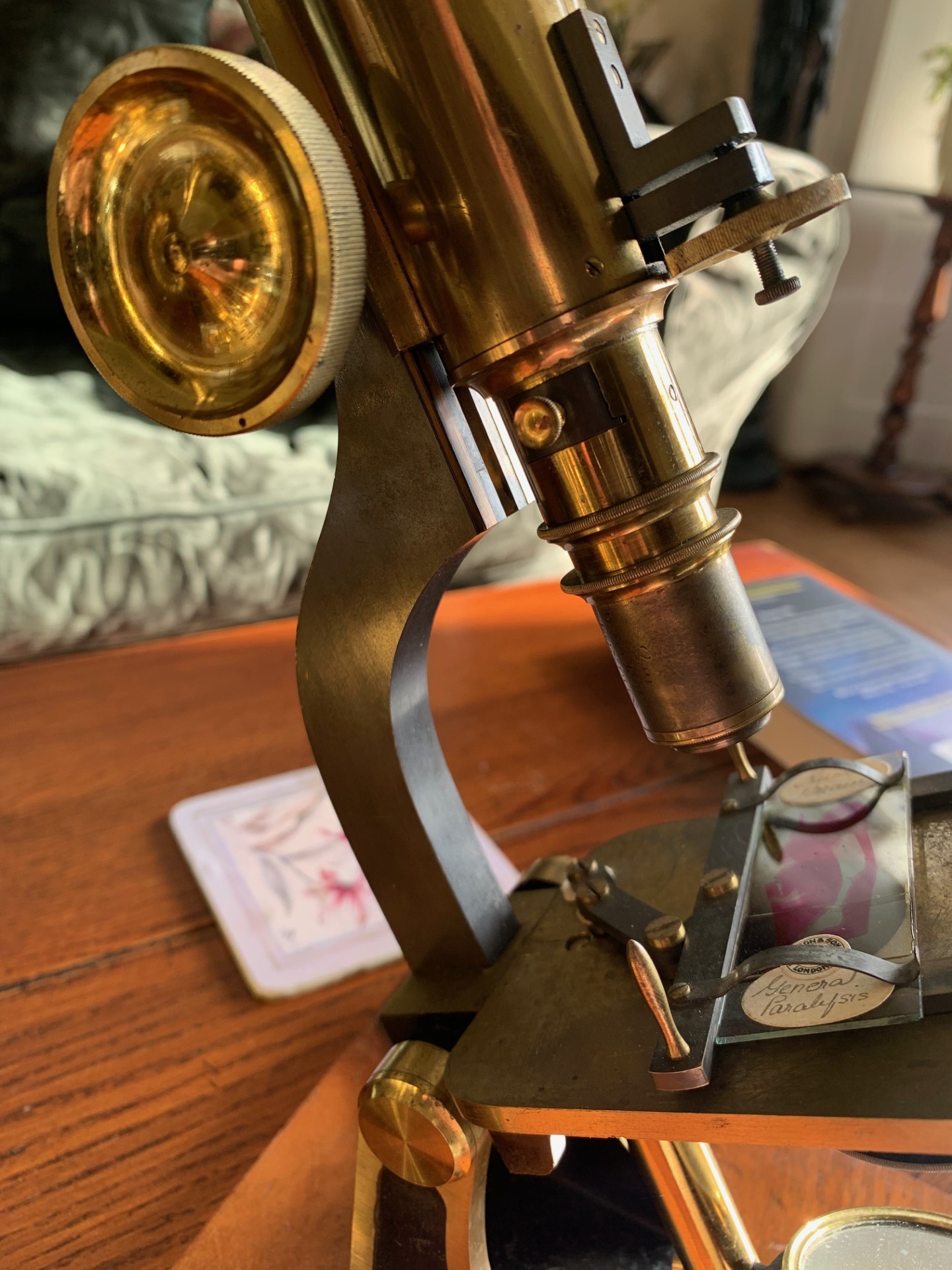
2) A Wenham binocular eyepiece unit with two pairs of top-hat style eyepieces giving around 6x and 10x magnification options. The instrument also has mechanically operated eyepiece draw-tubes with smooth movement. The Wenham prism is present in clean condition in its shoe-carrier and is correctly aligned – I’ve just replaced the small handle to the carrier as shown.
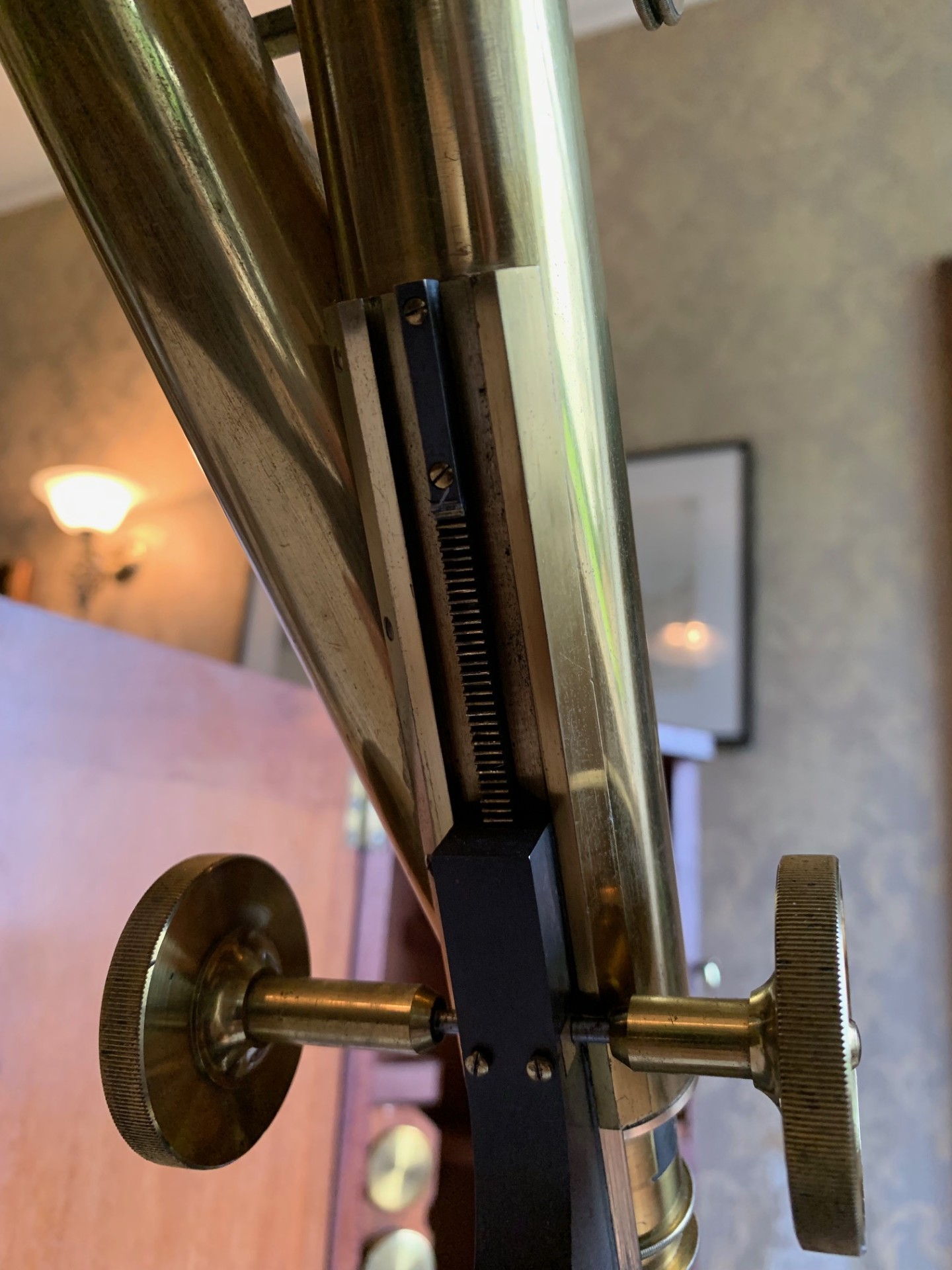
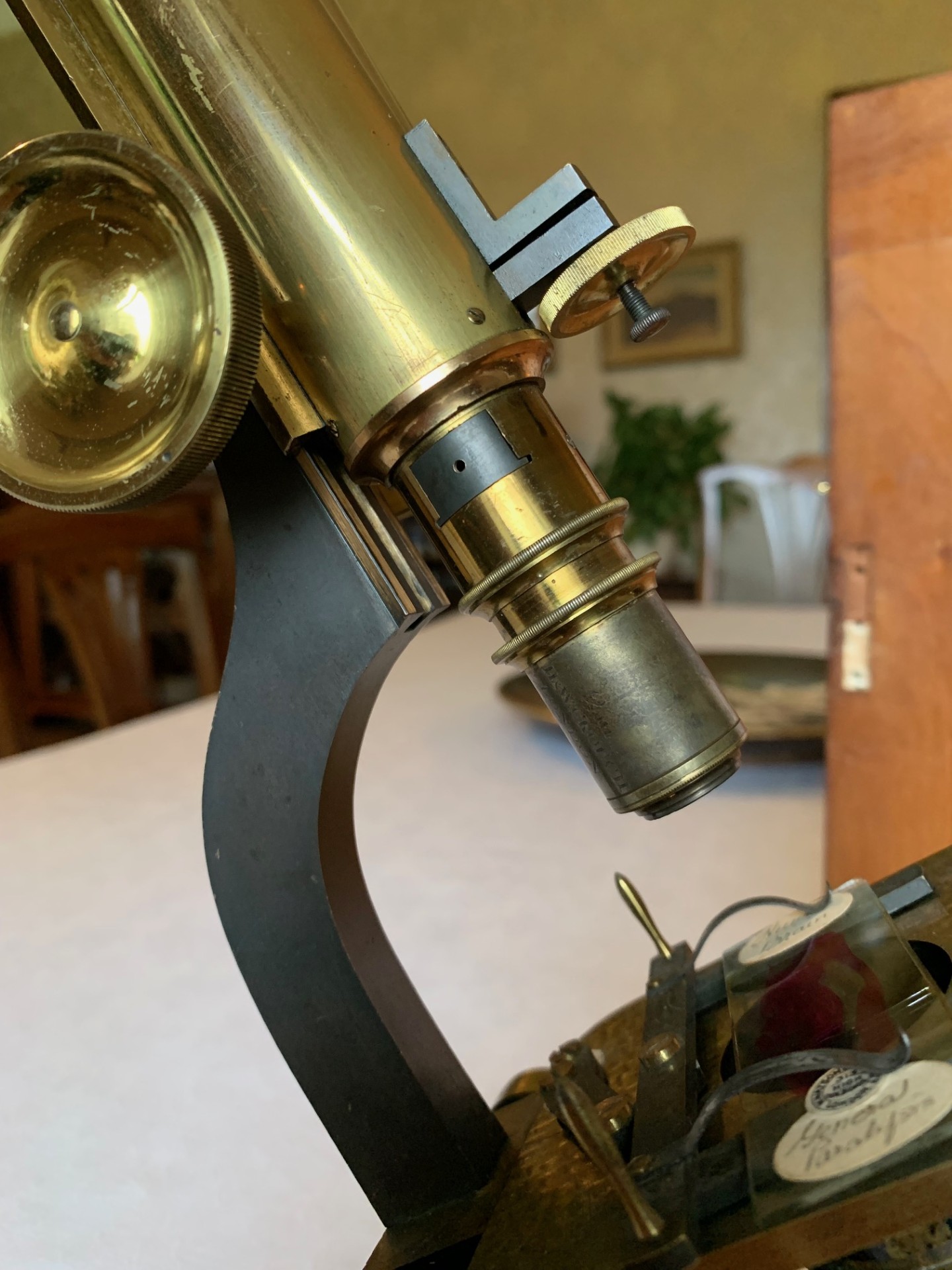
3) The instrument’s coarse focus is controlled by a set of thumb-wheels which are asymmetric to cater for the double Wenham tubes and there’s a straight-cut rack & pinion with fairly smooth action – the occasional feel of hesitancy but functional throughout its normal working range. Travel and focus are generally of positive feel and the optical tube holding in position as it should throughout its working range. Fine focus is via a single brass thumb-wheel at the front of the optical tube acting on the nose-piece only, that also has a smooth action in its working range being freshly lubricated.
4) There’s a selection of brass objective lenses as under:
– 2 inches by H & W Crouch – low power high working distance – 3x magnification – no canister
– 1 inch by Henry Crouch – 6x magnification with correct canister
– 1/4th inch by Henry Crouch – 30x magnification with correct canister
– 1/6th inch by Henry Crouch – approx 40x magnification with correct canister
The objective lens and eyepieces supplied therefore provide an effective magnification of around 18x to 400x.
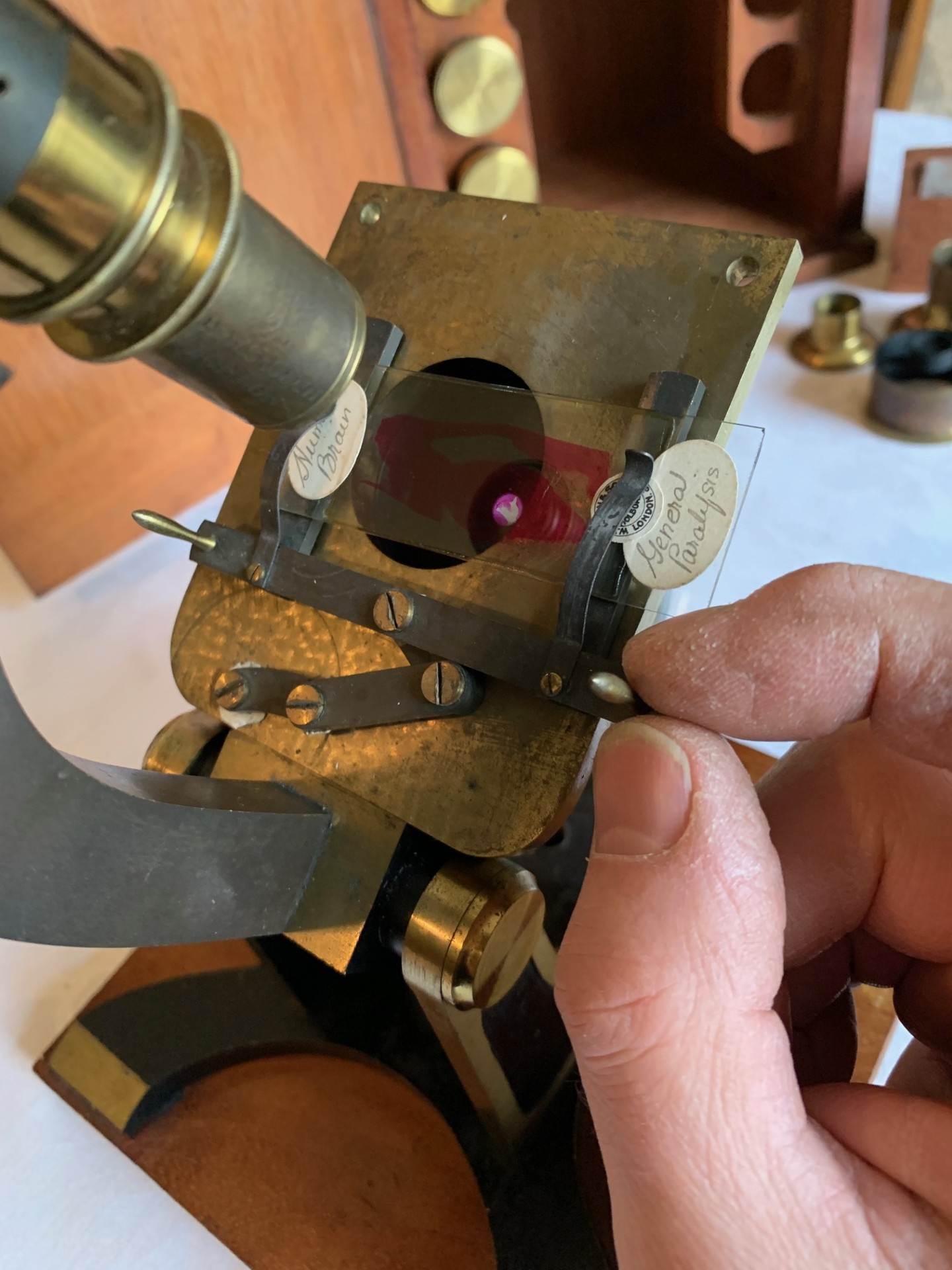
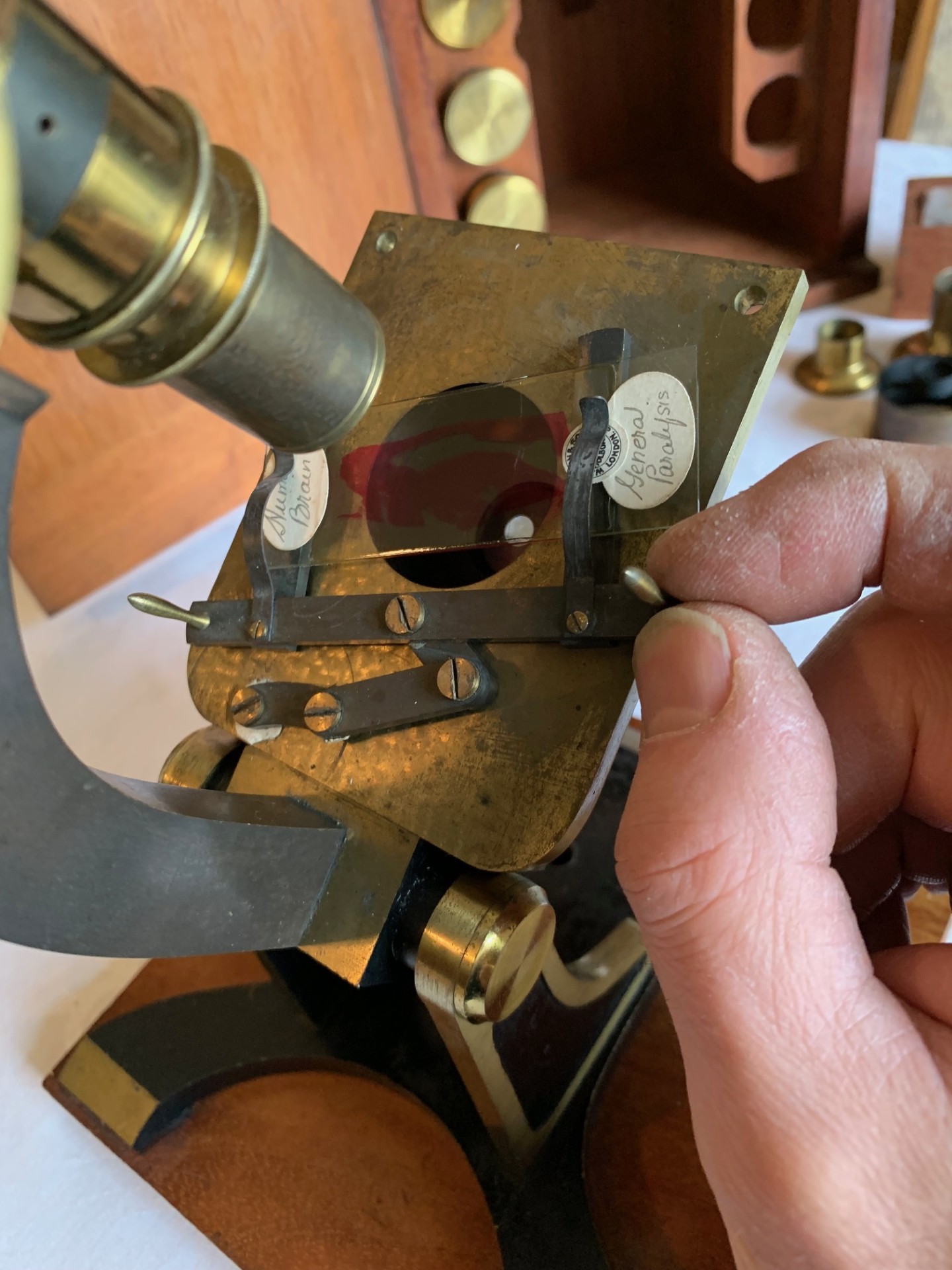
5) The stage is of a square design in brass with patterned surface finish. It’s currently fitted with a panto-graph type of mechanical stage giving easy manual movement of the slide in x/y planes. This has brass clips for retaining the specimen slide which work quite well. There’s also a couple of holes for siting stage tools or other clips.
6) Sub-stage there’s a wheel-of-stops shown fitted to a friction-fit ring mount. This has nicely damped rotation and 3 aperture sizes available. There’s also other sub-stage accessories described later that can be fitted as alternatives.
7) Lighting is provided by plano-concave mirror on a gimbal mount fitted to the limb tail-piece, with silvering that’s foxed to the plane side but still in usable condition and reflectivity that’s perfectly adequate.
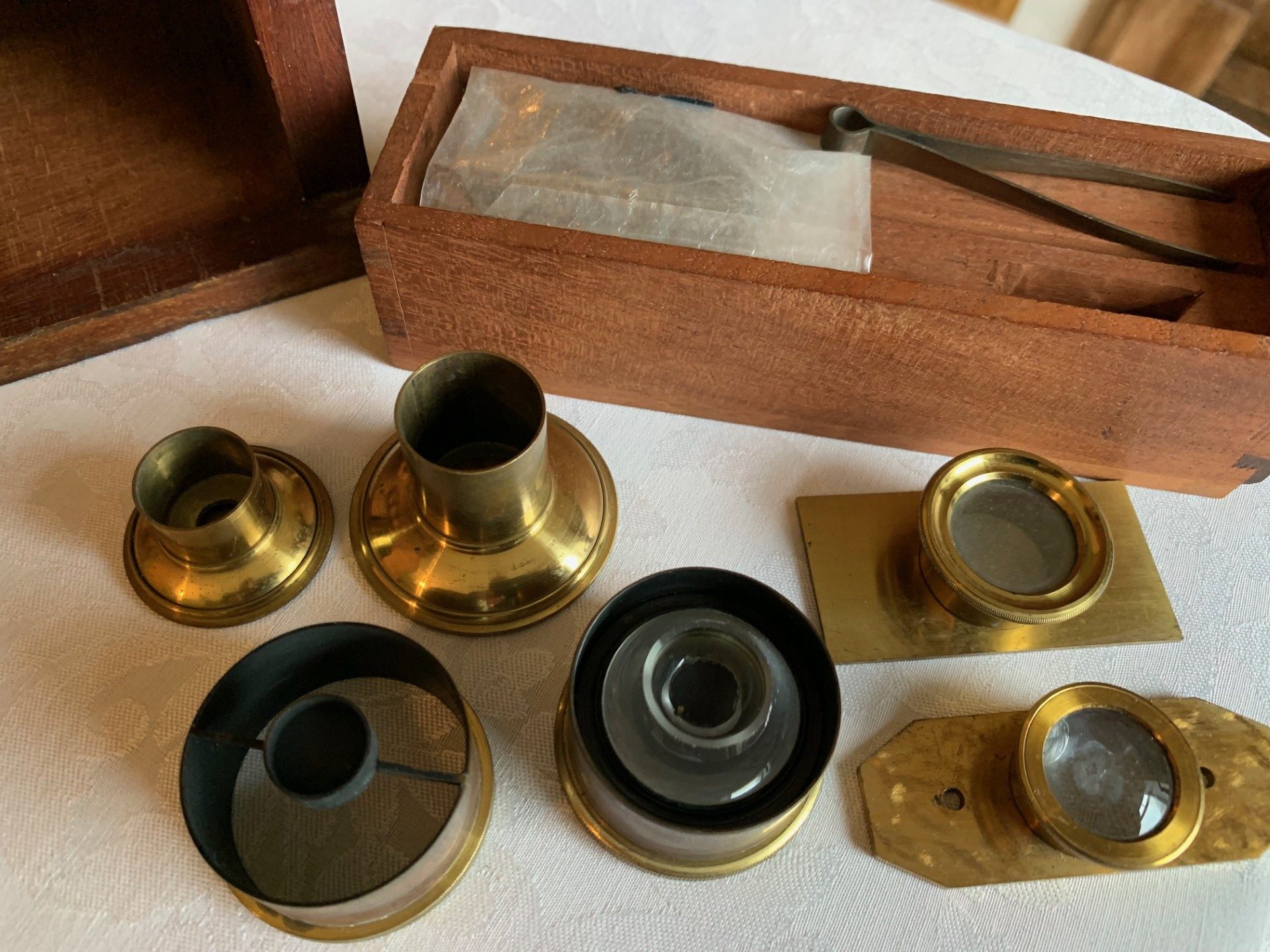
Accessories:
– set of tweezers
– wheel-of-stops with 3 apertures
– dark well
– dark-field condenser
– Lieberkuhns for 2 inch and 1/4 inch objectives
– live box
– live box with in-built magnification lens
In summary, this is a nice clean example of an antique Wenham binocular microscope from the Victorian period by quality London makers H & W Crouch, that’s in great condition for its age and it’s quite a statement piece with its double tubes. This example may therefore appeal to collectors as well as specialists seeking a quality signature brass instrument for use and/or display. It’s also a perfect desk-top accessory – it’s about 18 inches in height when inclined with high working distance objective and draw-tube extended for use as shown in listing photos.
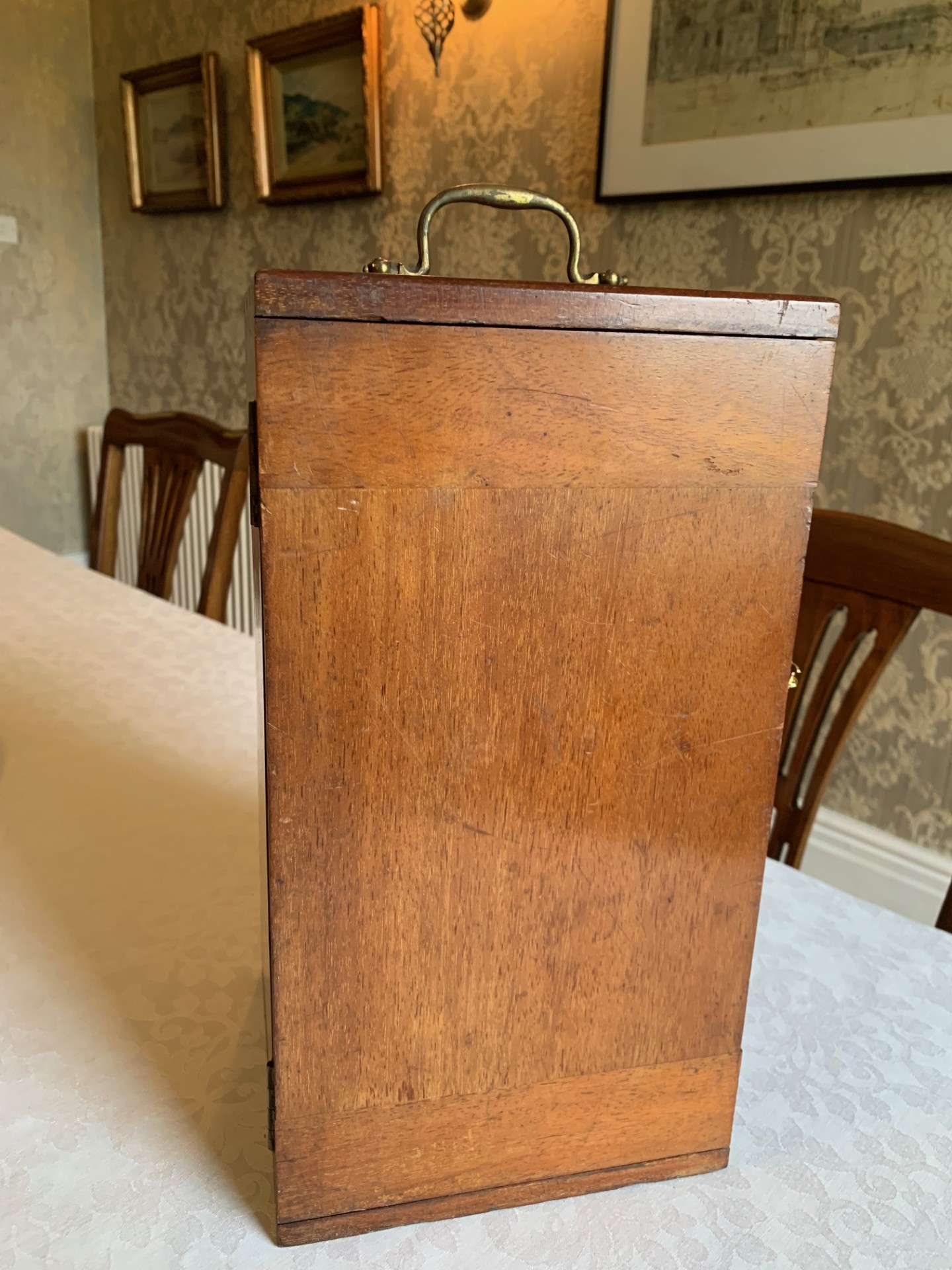
The instrument also has its original fitted wooden case with extensive internal fitments & racking. The key is missing (the lock is present in the case), so there’s a cupboard latch fitted to keep the case door closed. The external finish to the case is in reasonably good condition, showing some age-related patination and period sheen – also with brass carry-handle.
For shipping, the instrument and case will be very well packed and dispatched by insured courier upon receipt of cleared funds.
Thanks for looking.
Ask the Dealer
Dealer information
 Arcboutant Scientific
Arcboutant Scientific based in Glasgow Scotland, with an interest in scientific collectables dating back to 1988. Now making available carefully curated fine examples, principally of antique microscopes and associated scientific equipment by quality English and Continental makers, to collectors world-wide.