

Antique Wenham Binocular Brass Microscope by J Swift & Son, London c1895, Cased
£675
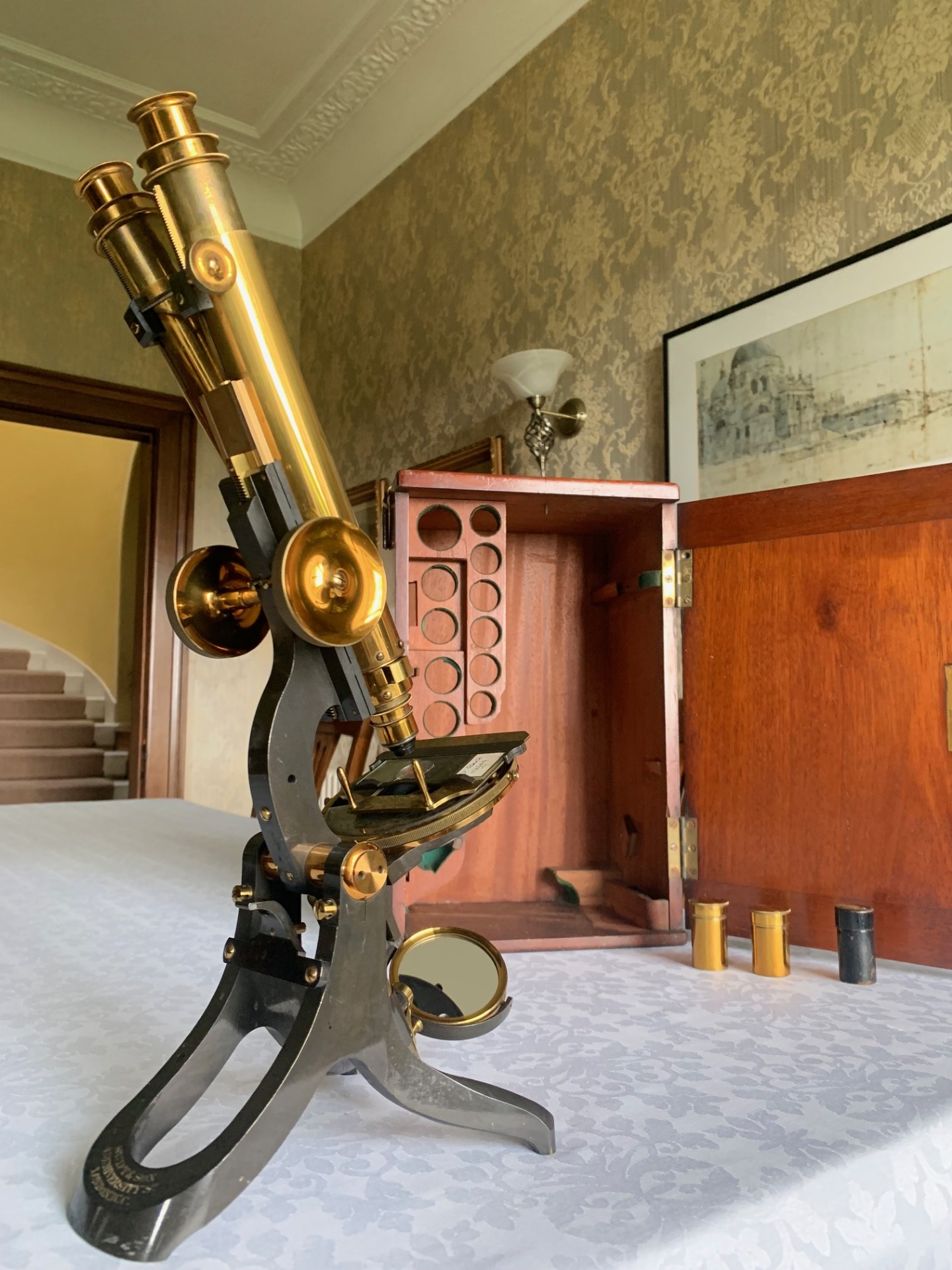
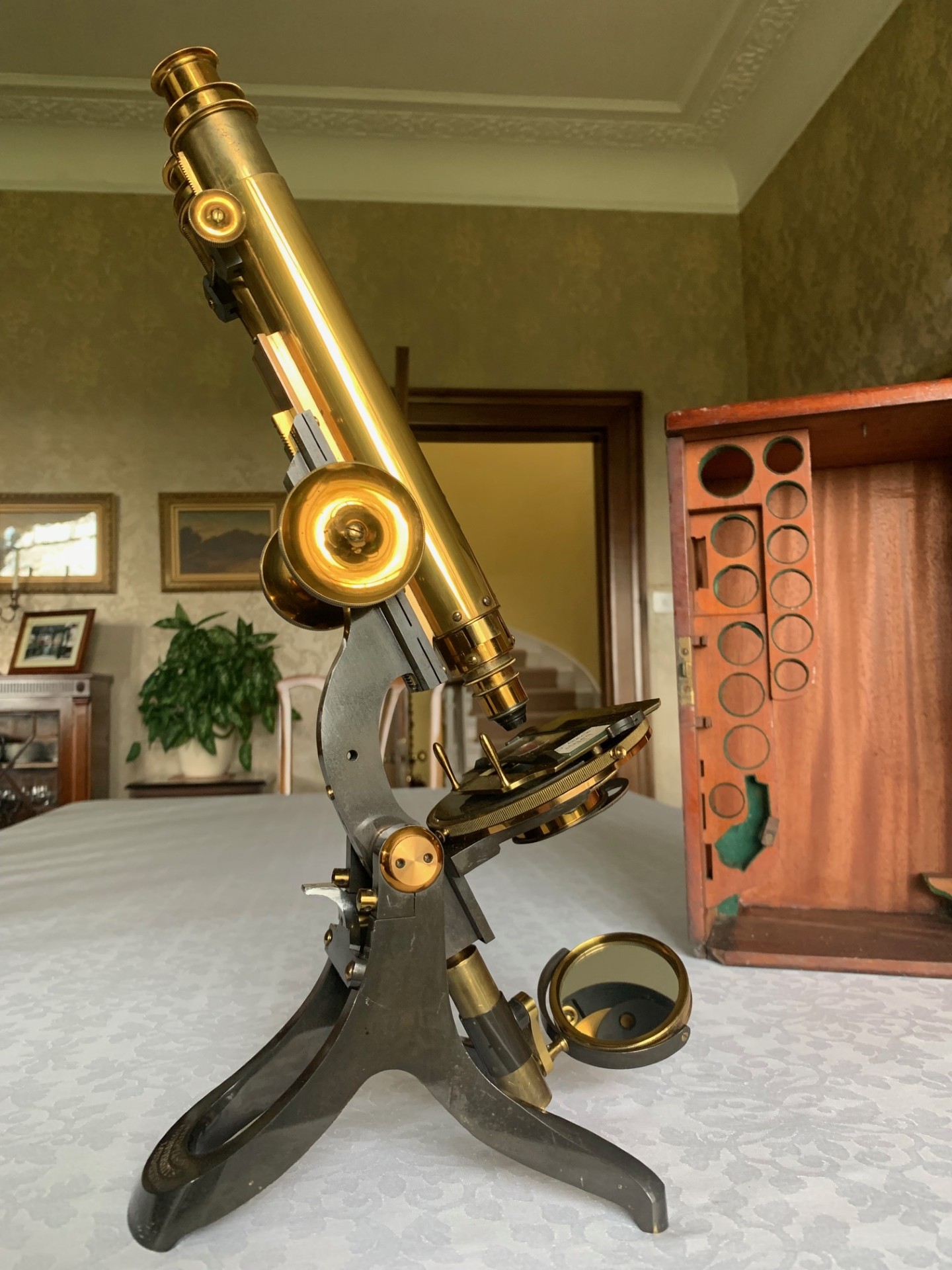
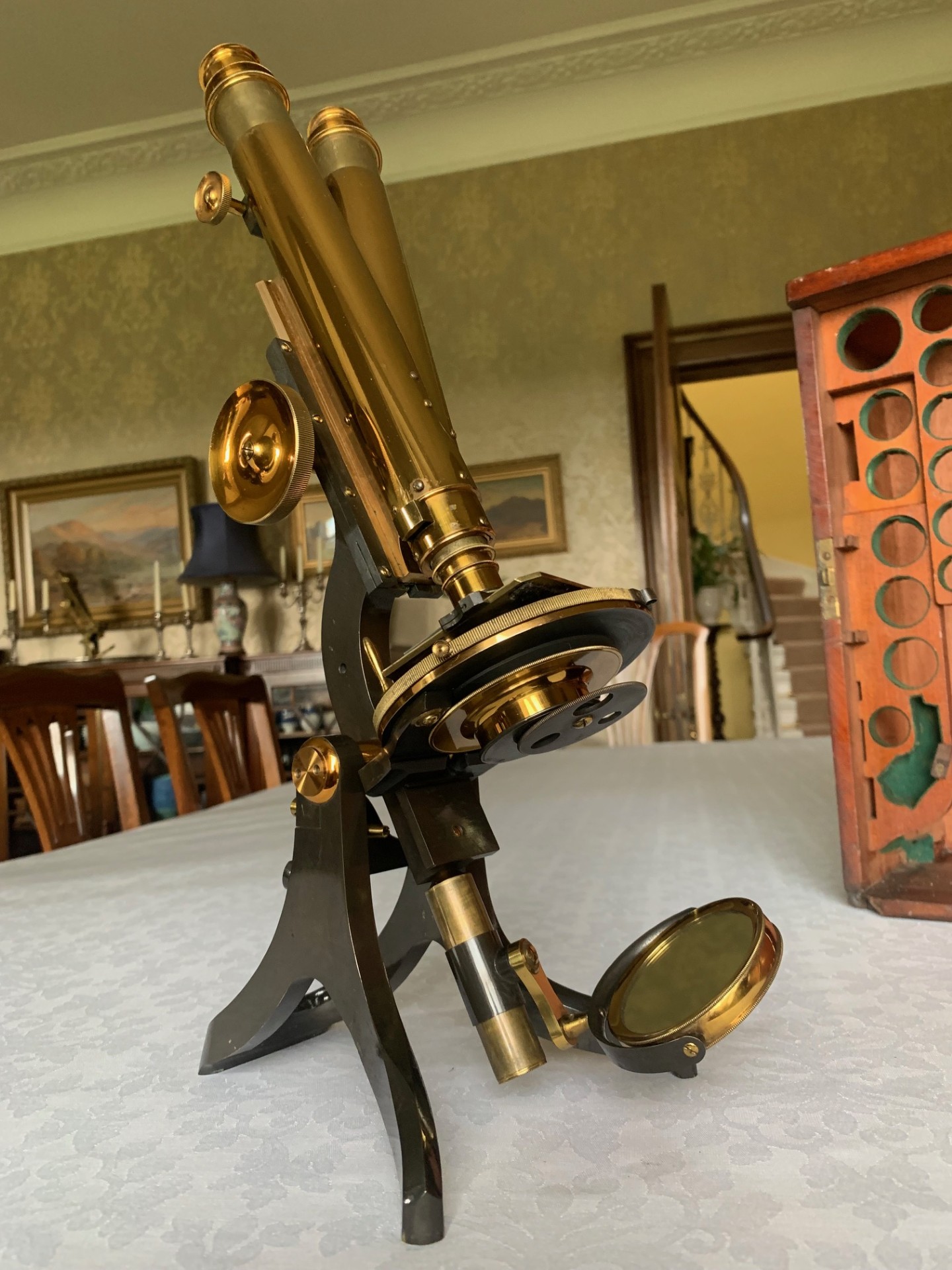
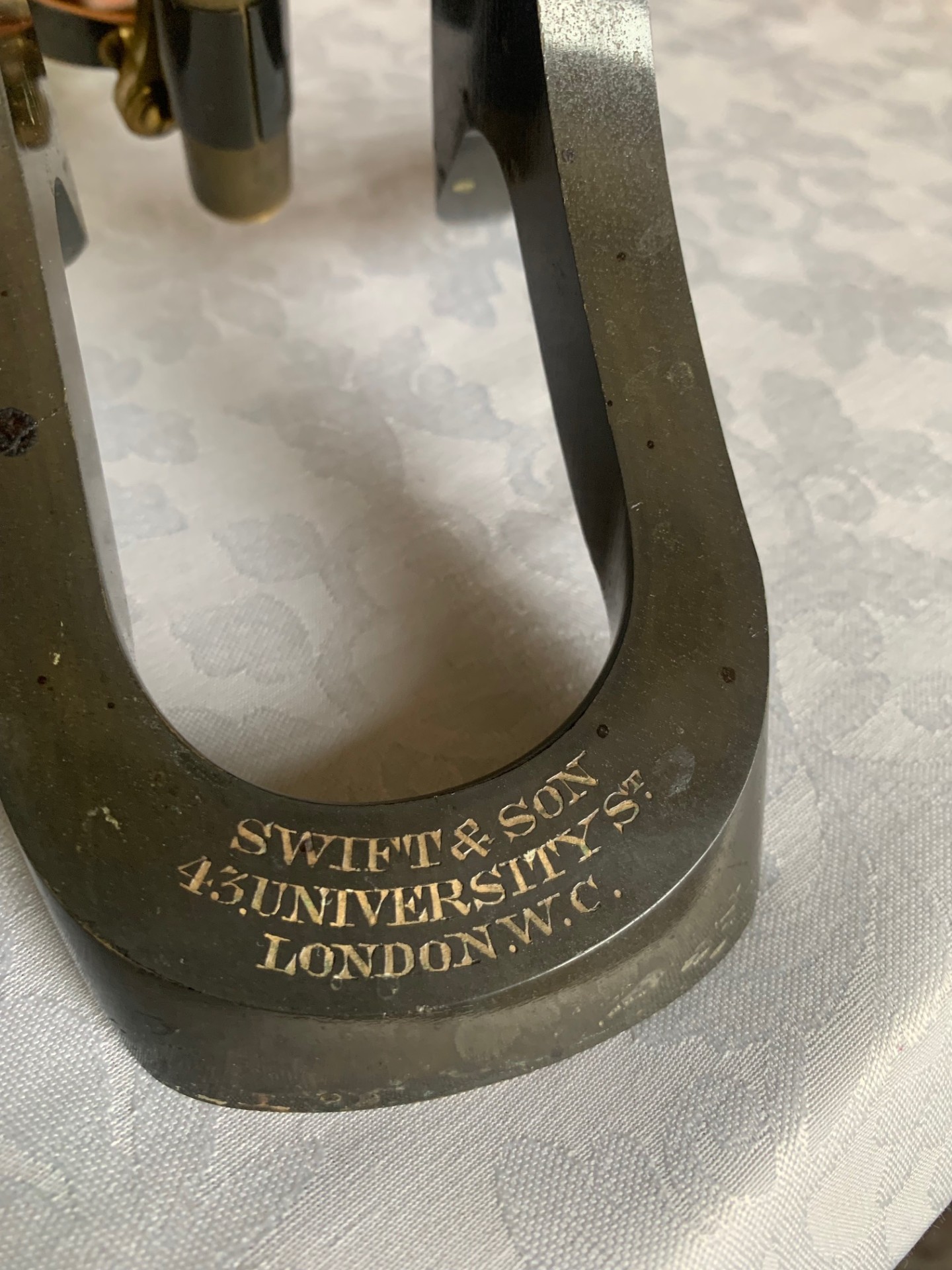
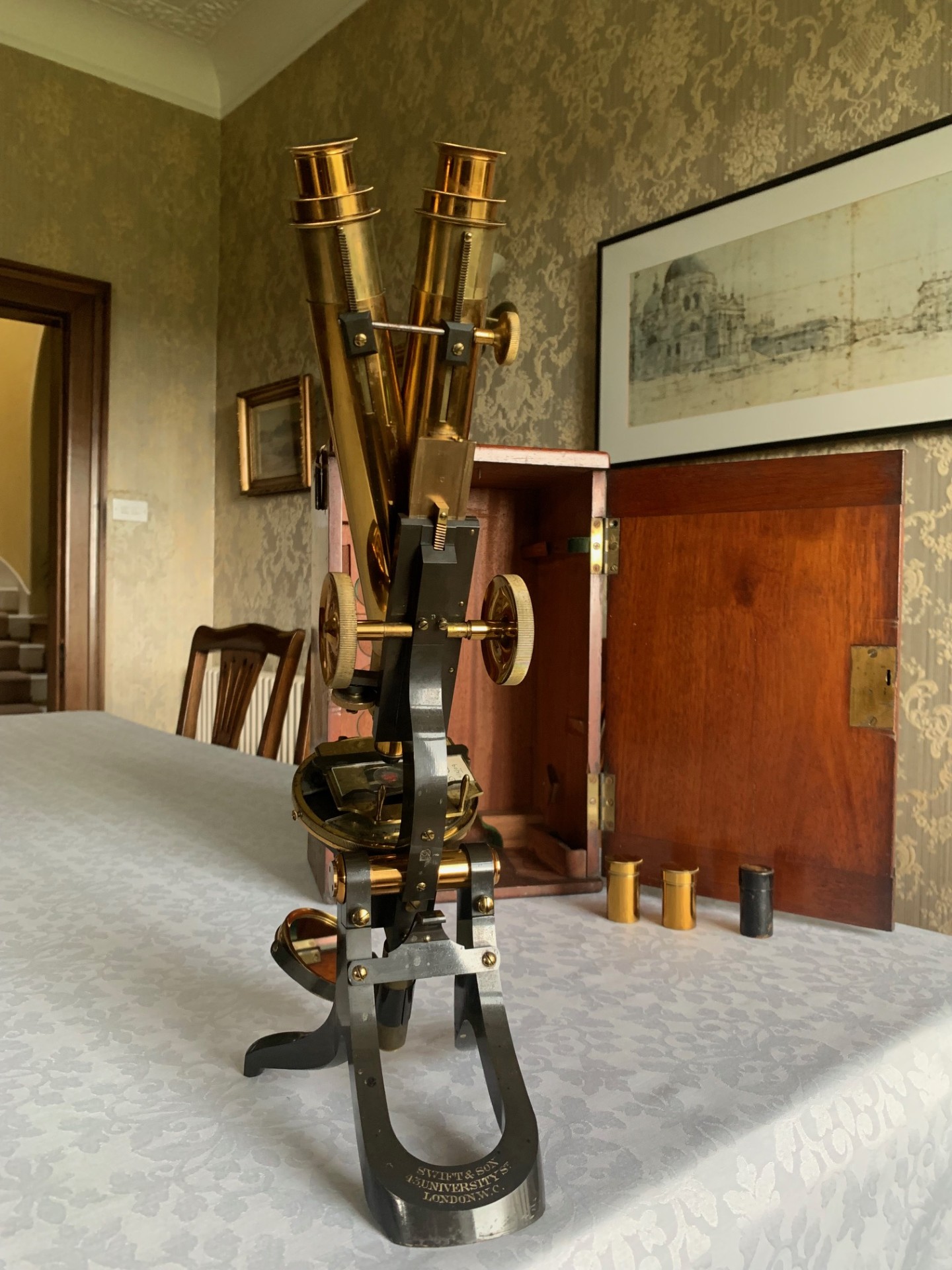
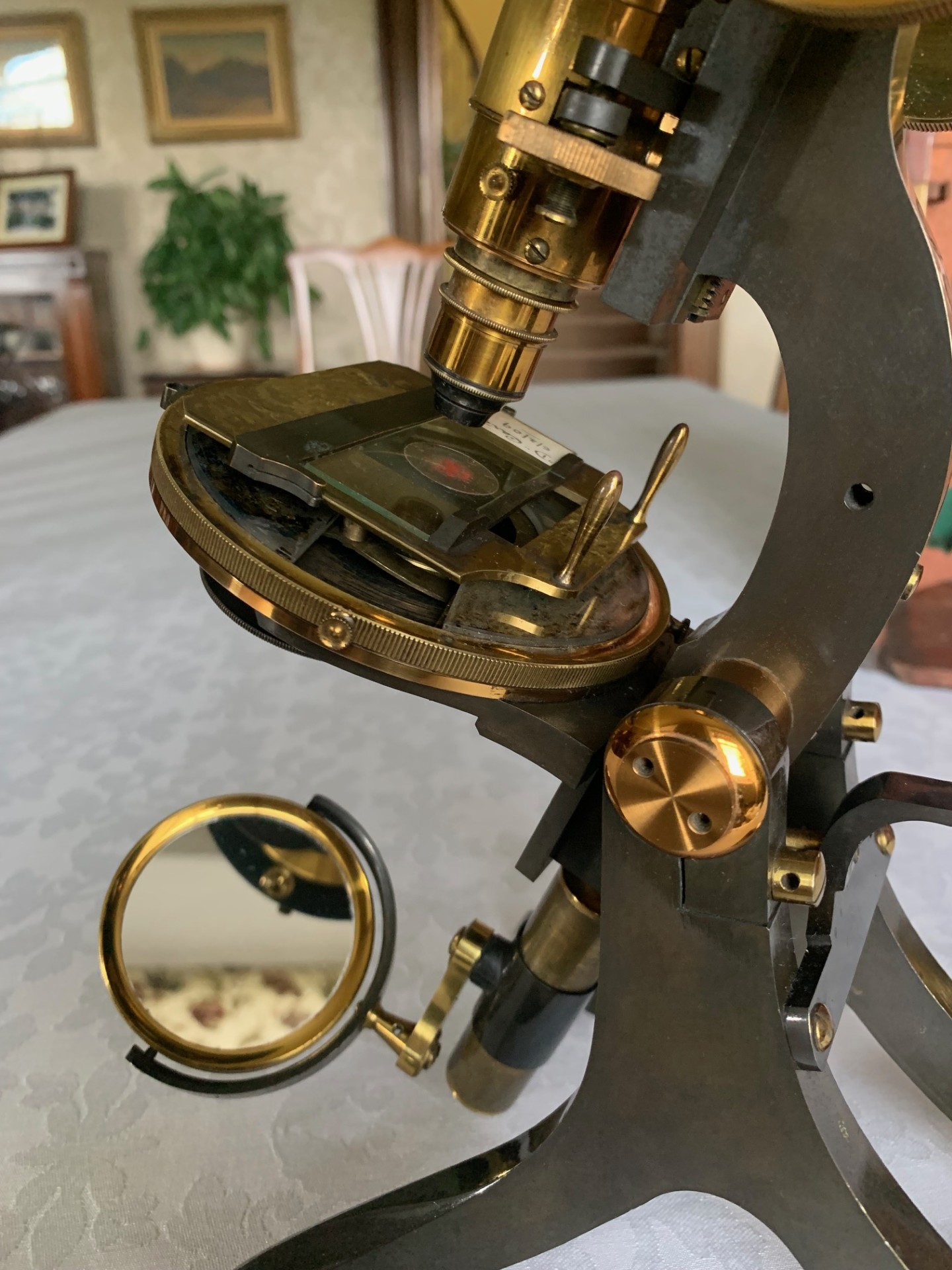
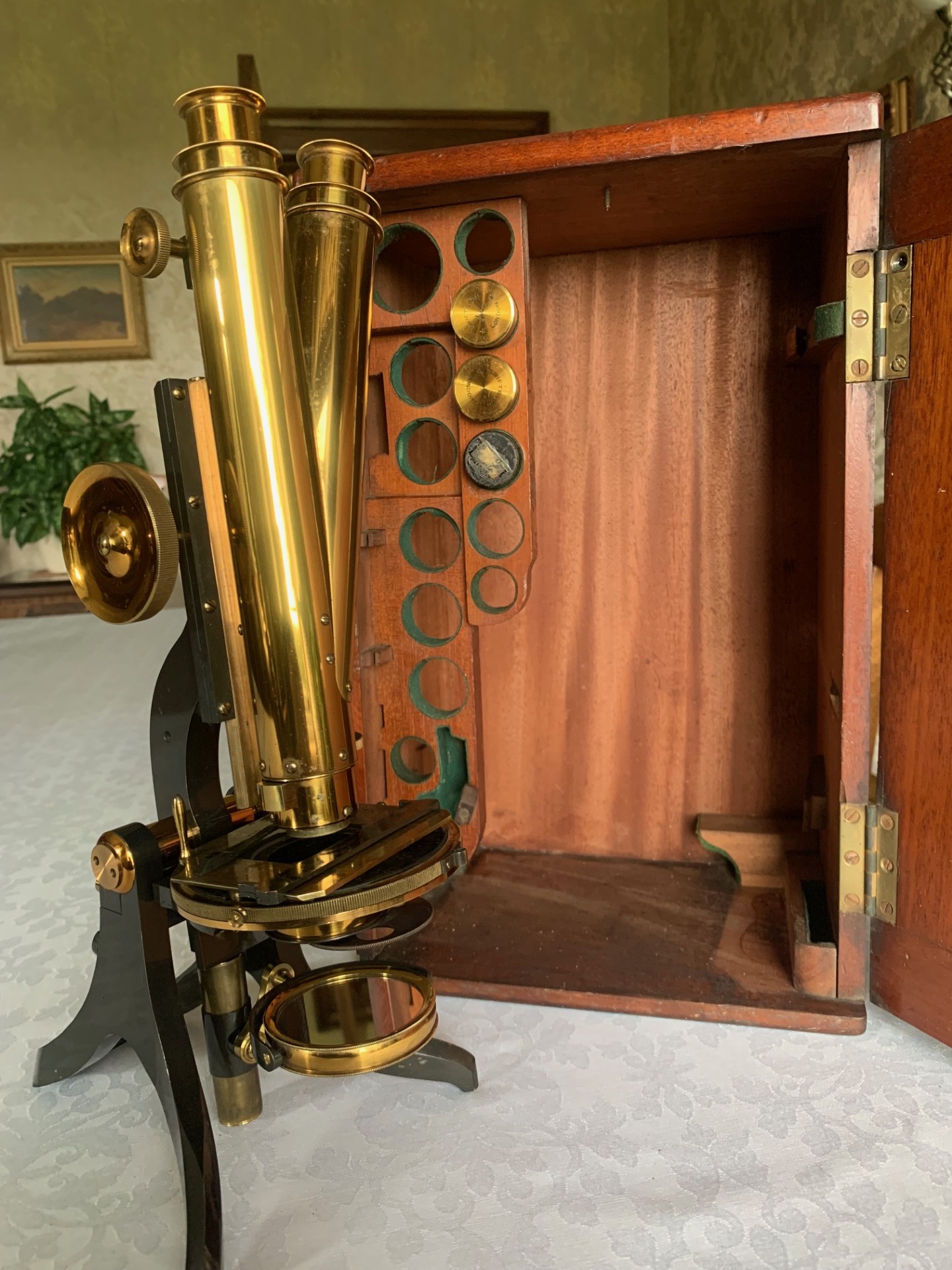
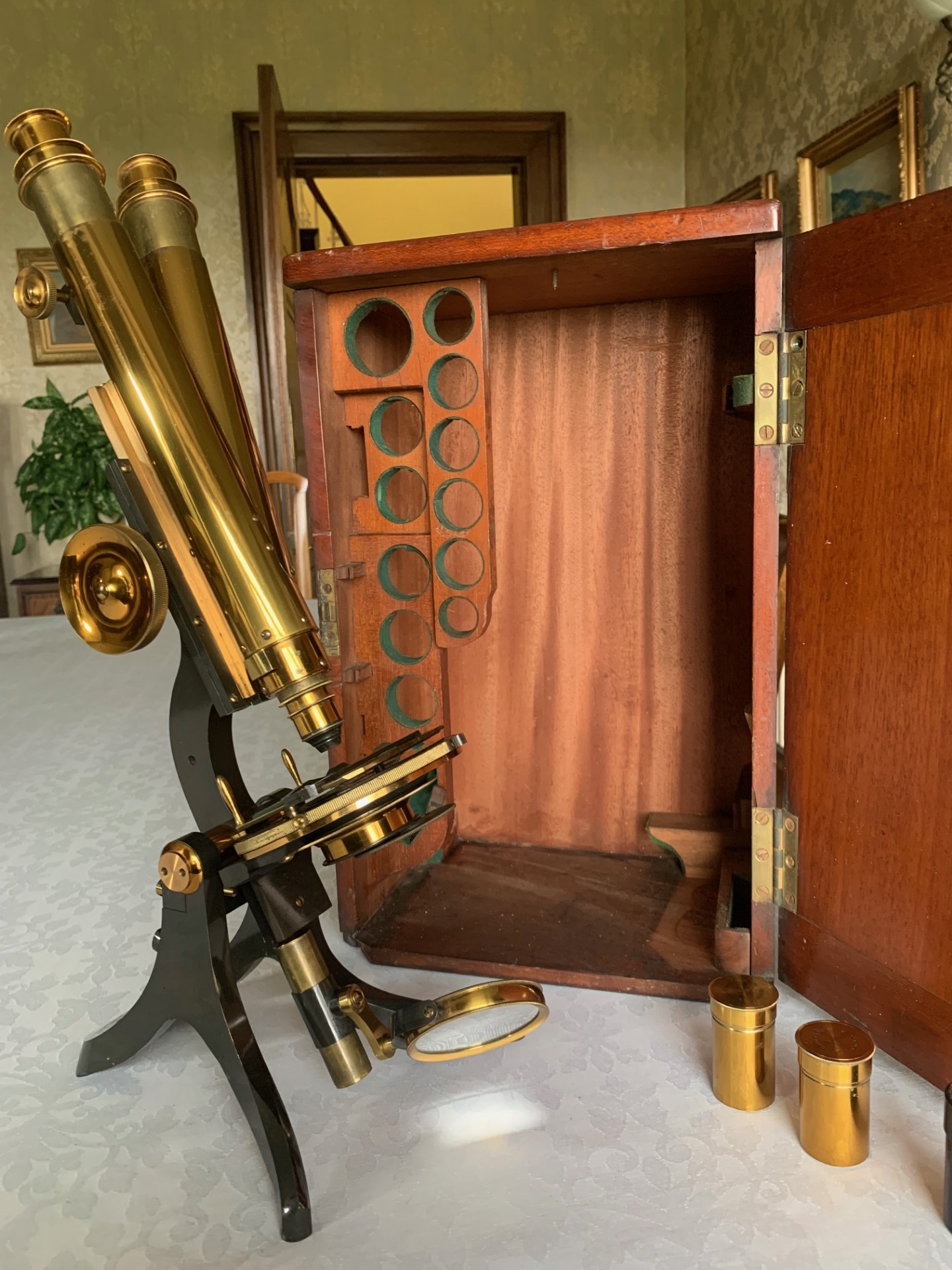
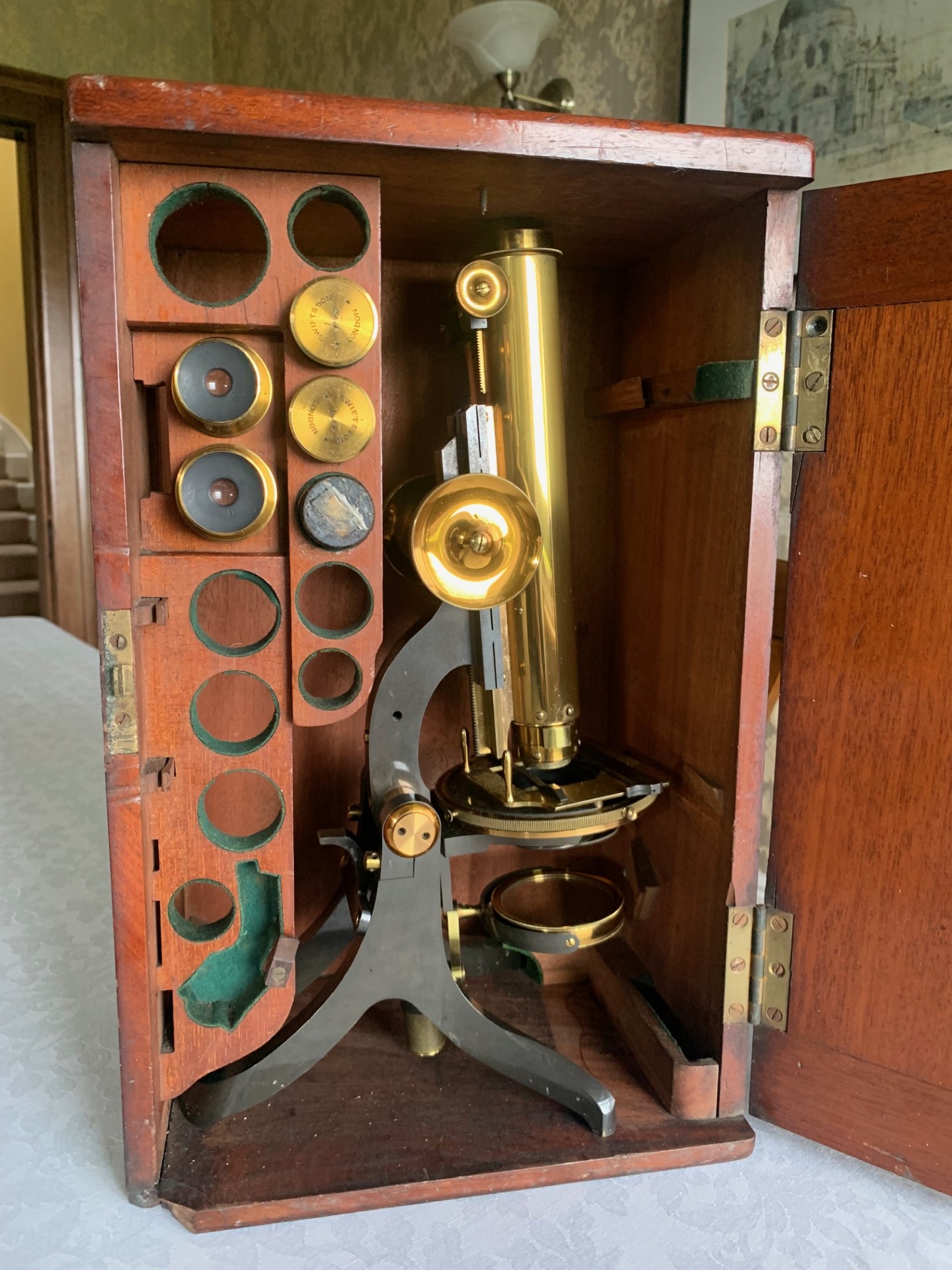
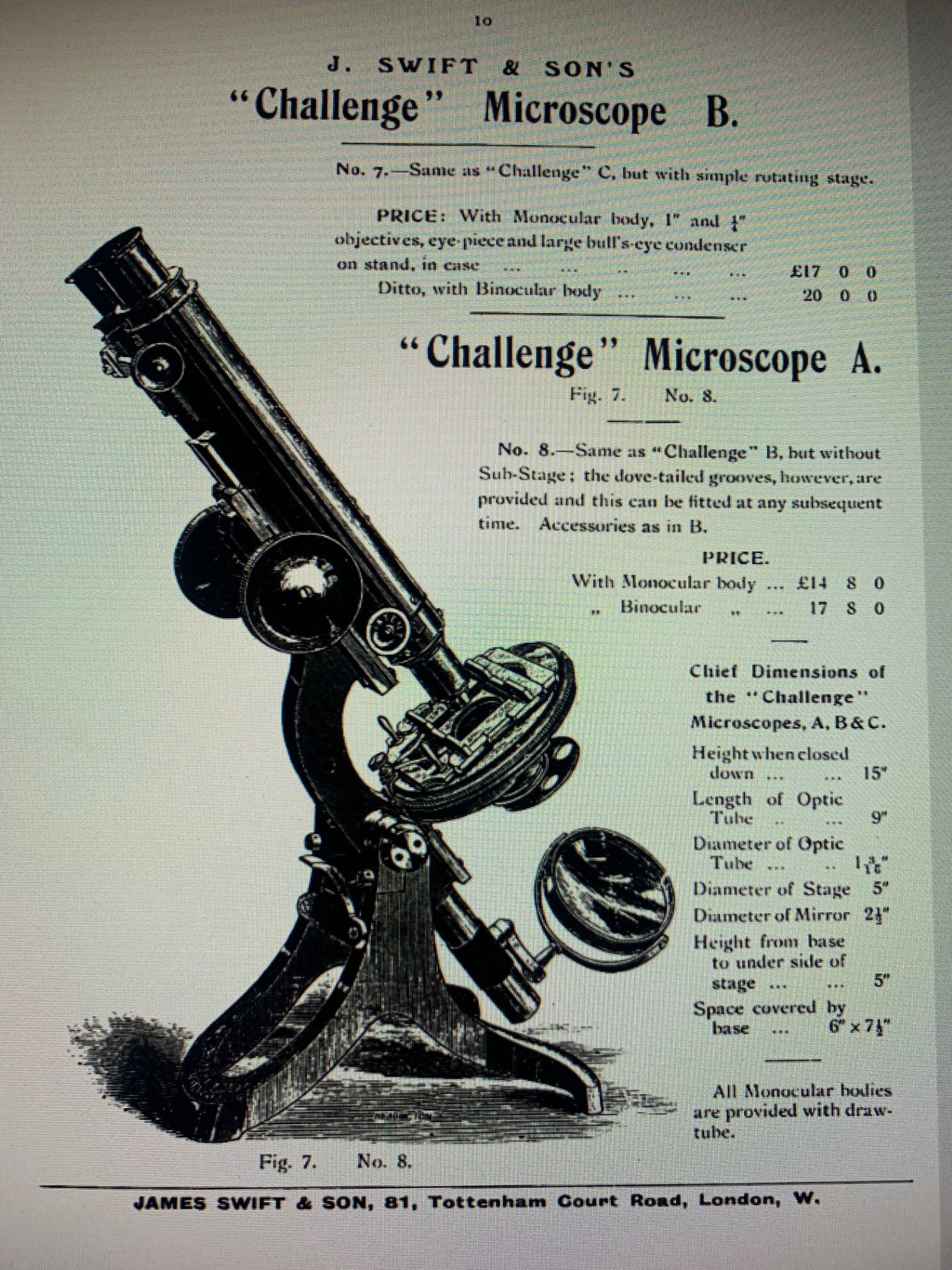
Antique generally excellent cosmetic and working condition Wenham binocular instrument by James Swift & Son, London. It's the Challenge A Model and is circa 1895, together with original case also in good condition.
Circa
1895
Maker
James Swift & Son of London
Country of manufacture
UK and Ireland
Description
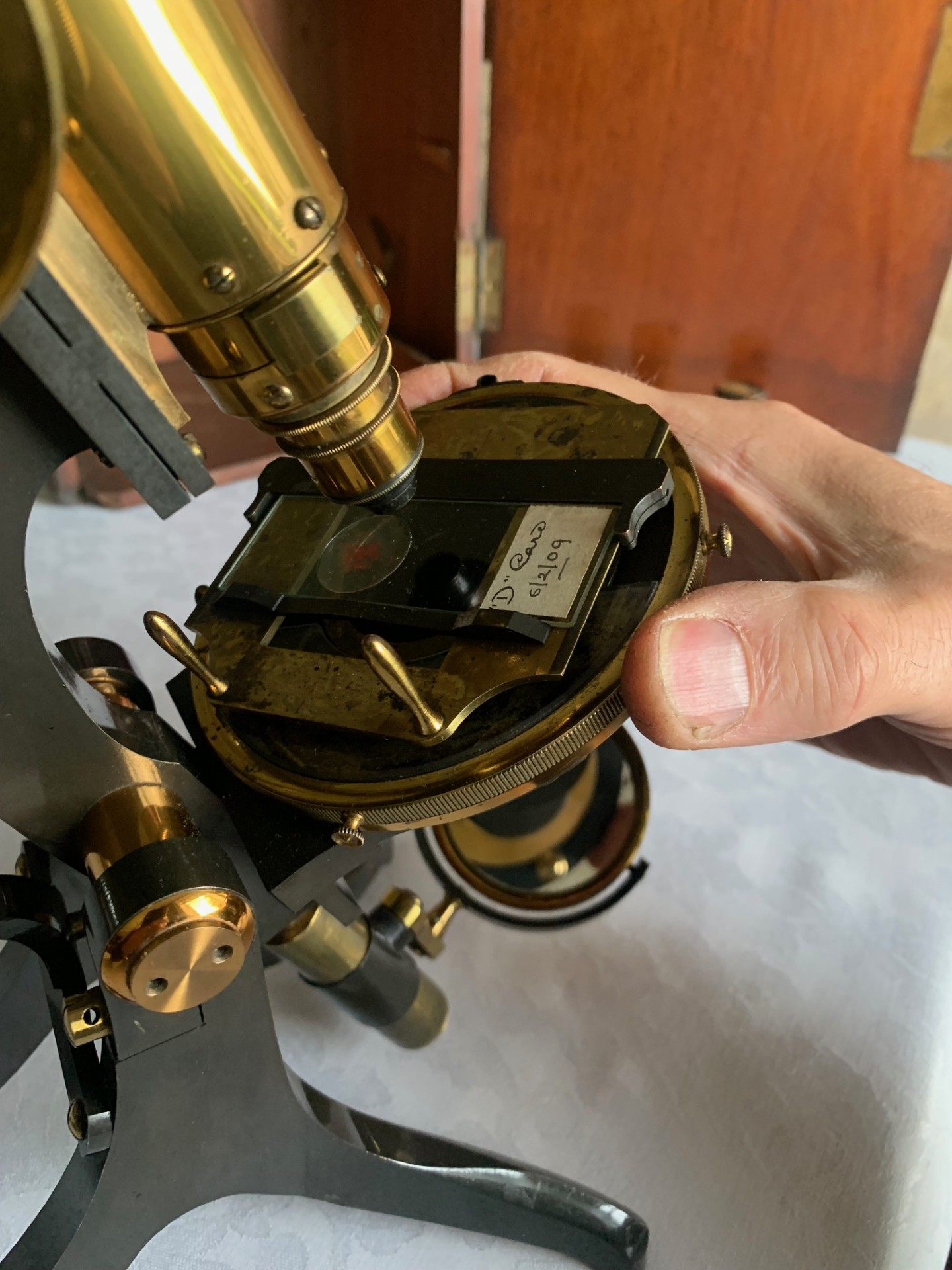
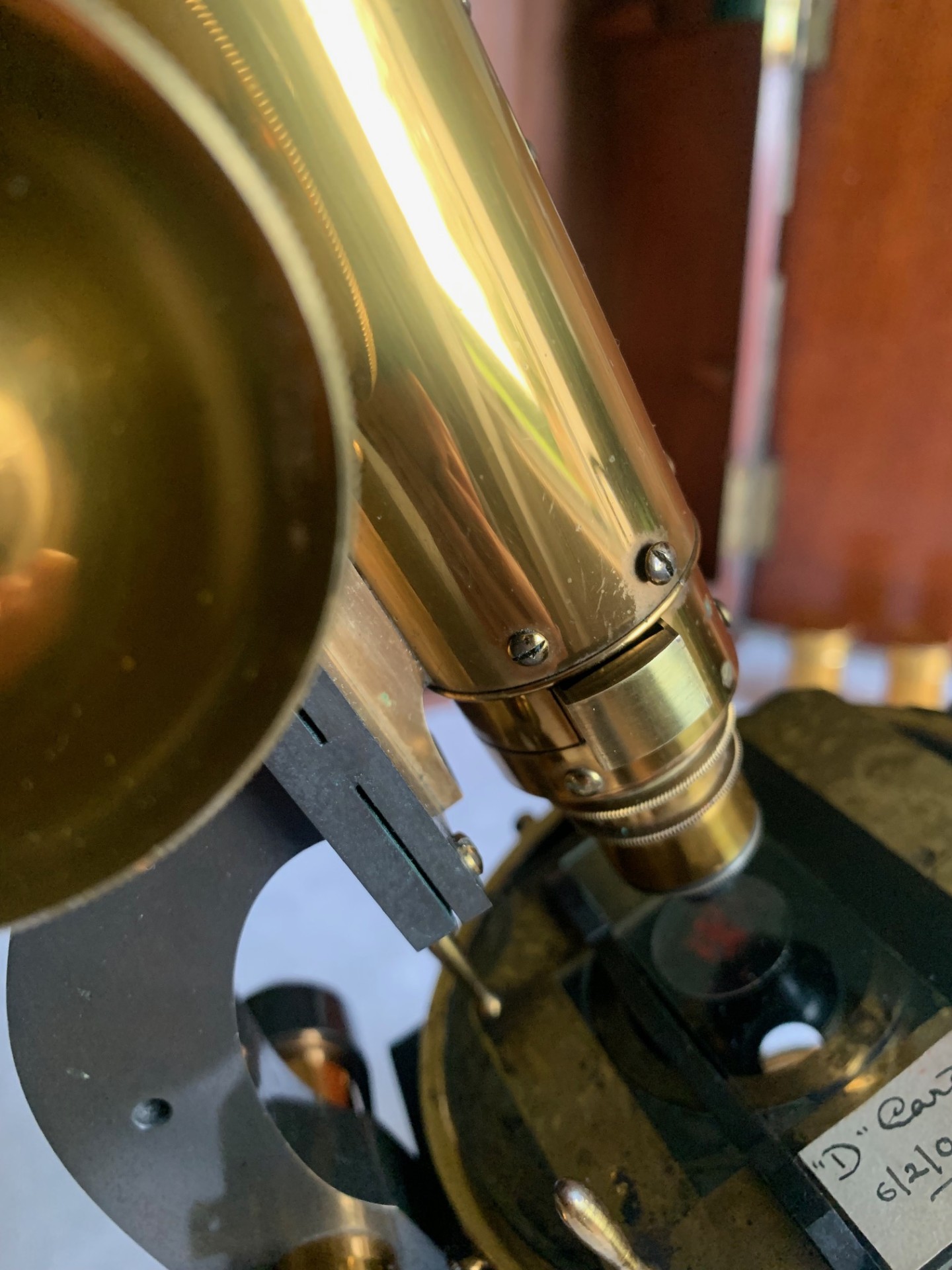
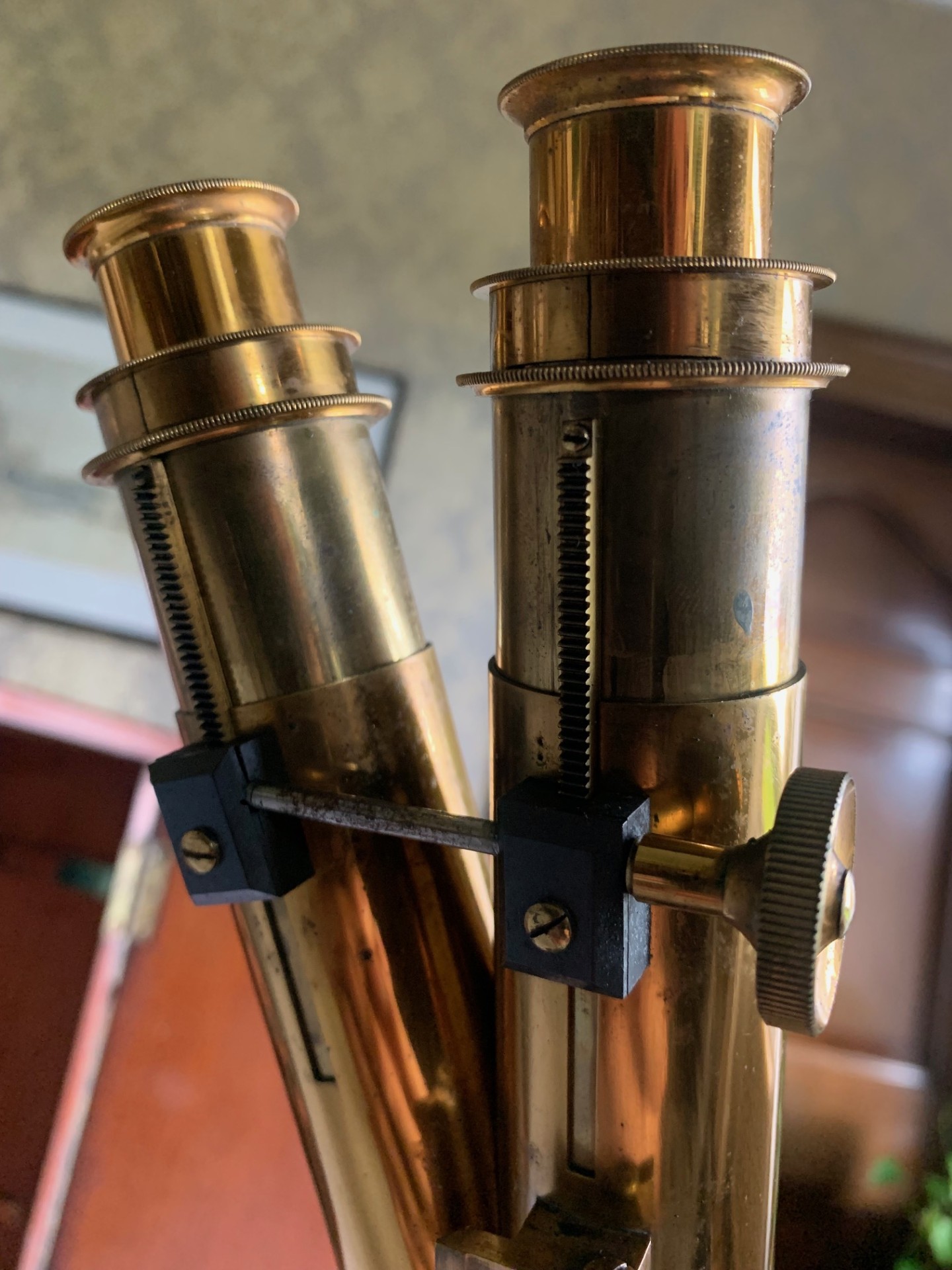
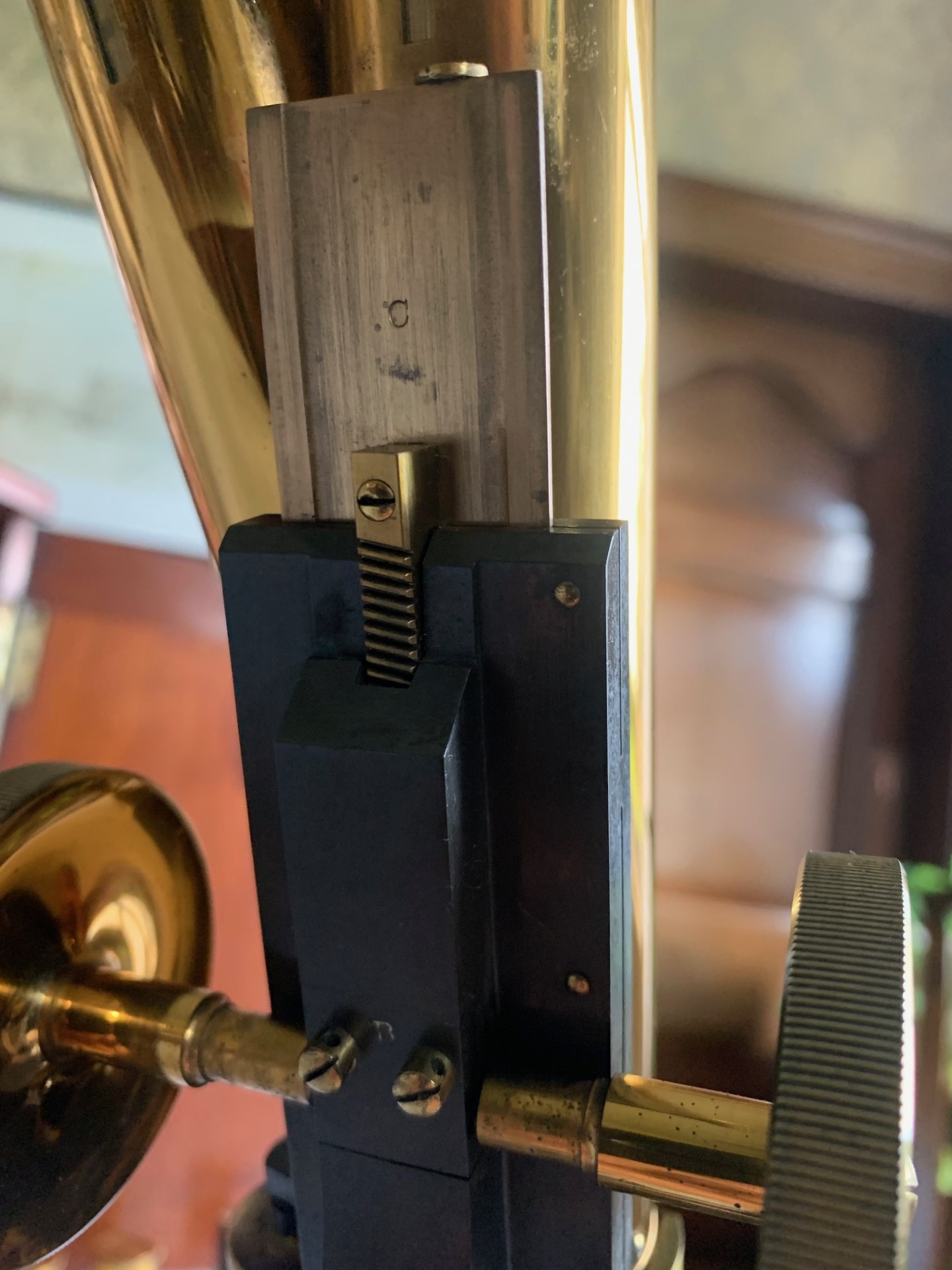
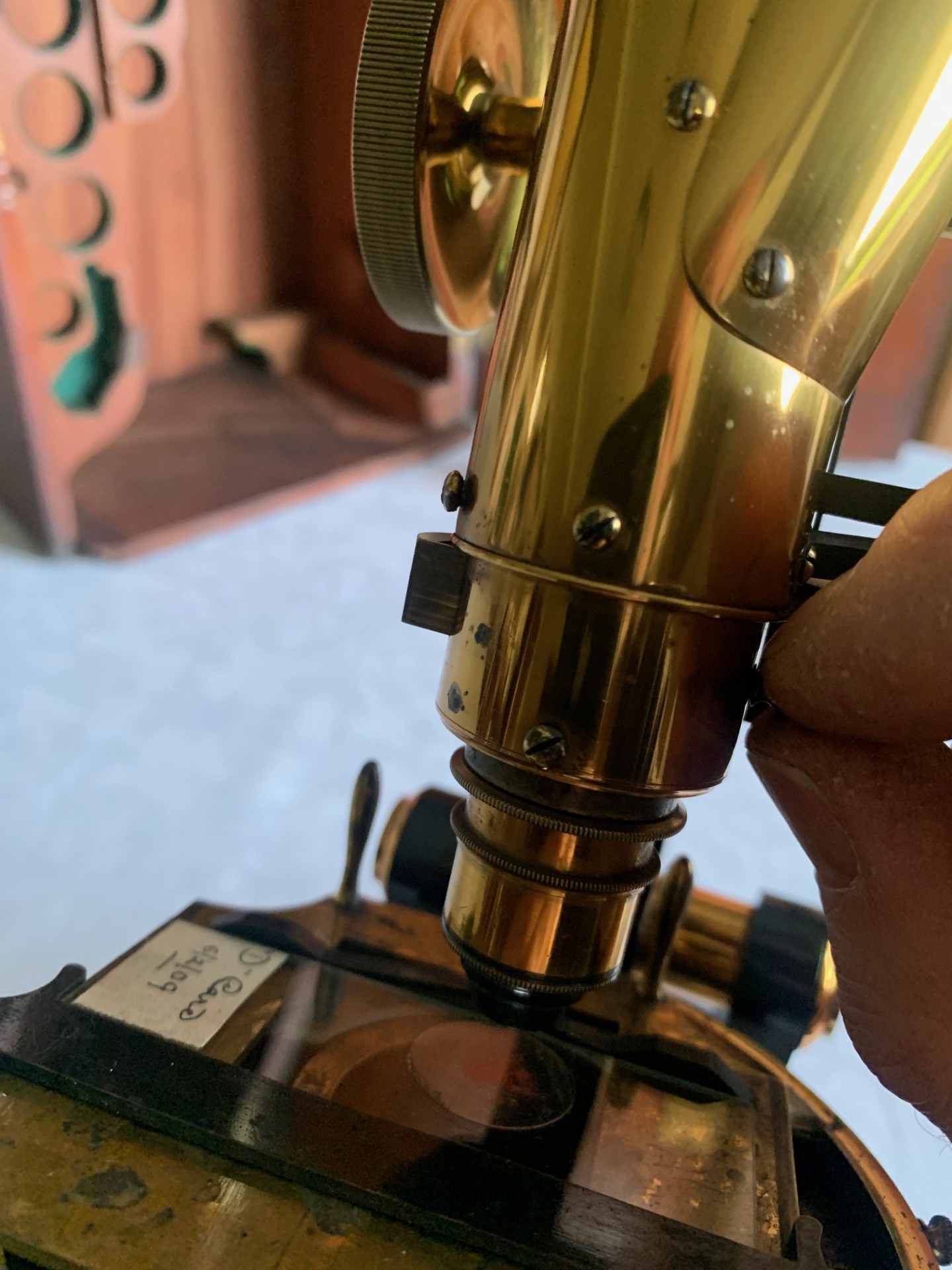
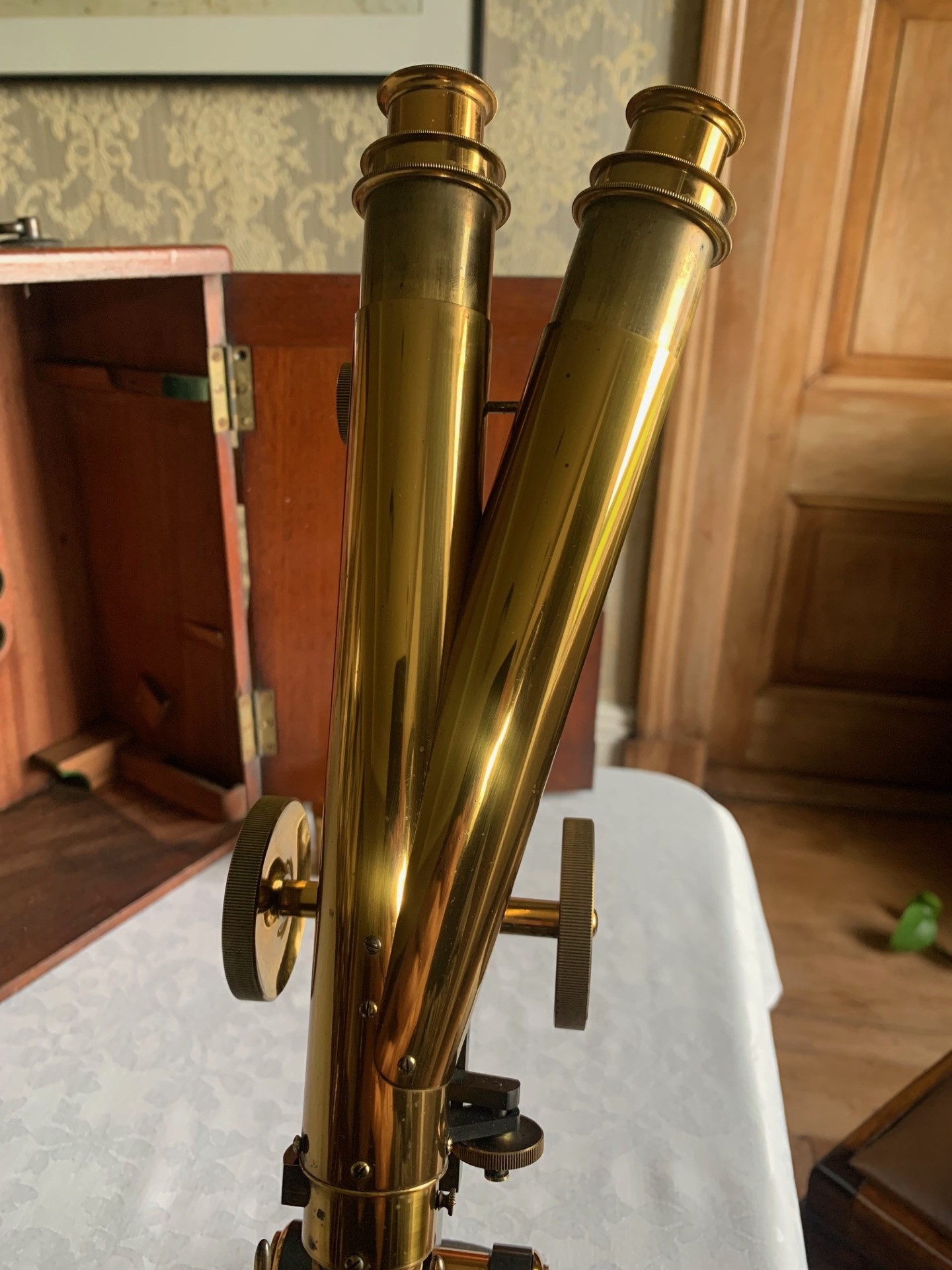
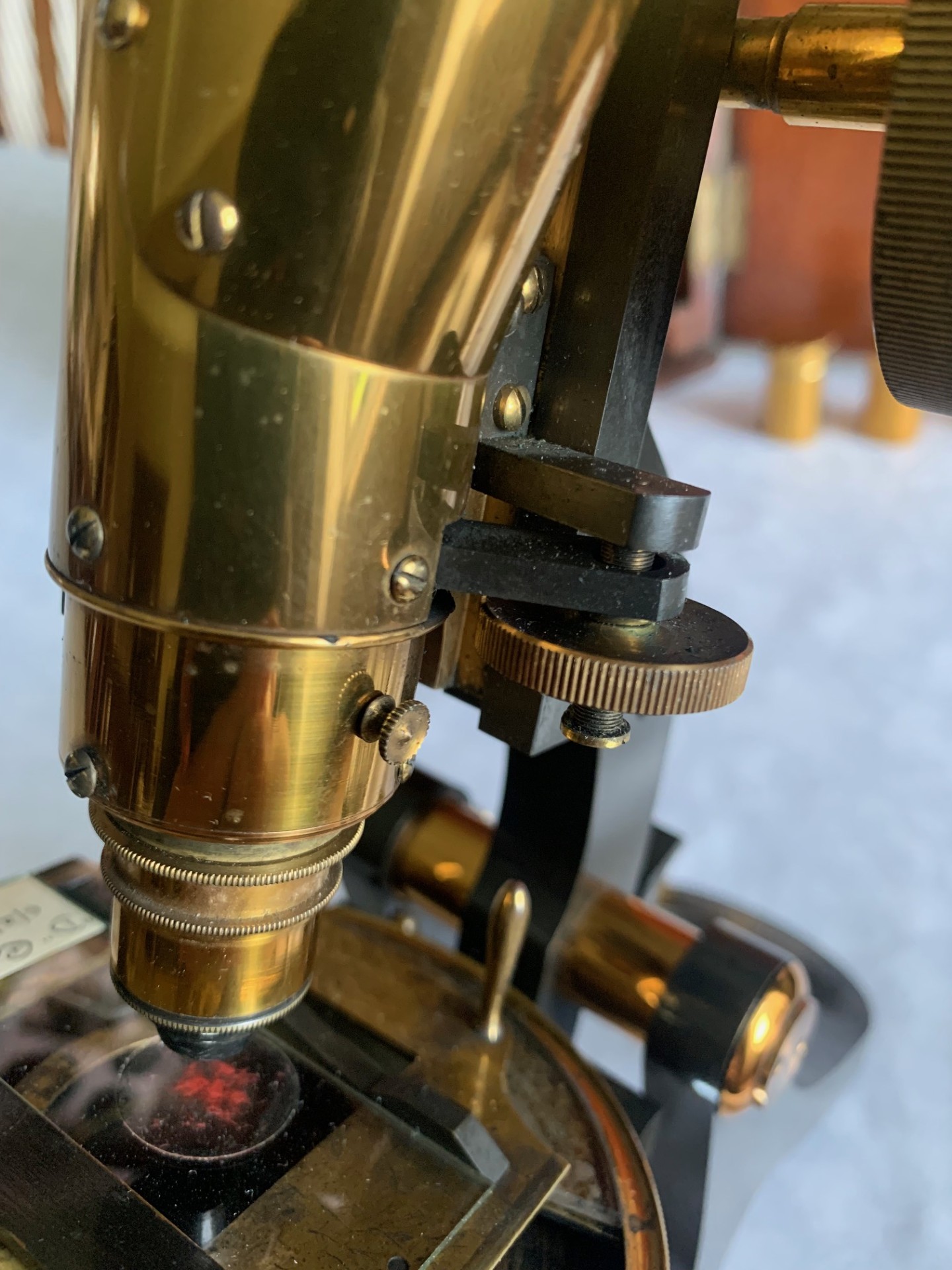
With its optics, this instrument is in binocular configuration with a Wenham-style prism in a carrier just above nose-piece, which is on an in/out slider and when set to “in” splits the light beam thereby illuminating both optical tubes. The prism is clean and free from any cracks, collimation is reasonably good when the prism is correctly aligned. Note: the Wenham prism is not cemented into its shoe-carrier, so may from time to time require re-alignment for optimum binocular viewing performance. There’s mechanically extendable eyepiece draw-tubes operated by a rack and pinion system which works well. Extending the draw-tubes will increase magnification – you also have to re-focus. The optical Wenham prism operated via a slider allows use in both binocular and monocular configuration, with just the right-hand tube/eyepiece used for monocular observations (this tends to be the preferred method for higher magnification applications).
There’s one pair of top-hat eyepieces:
– 6x magnification
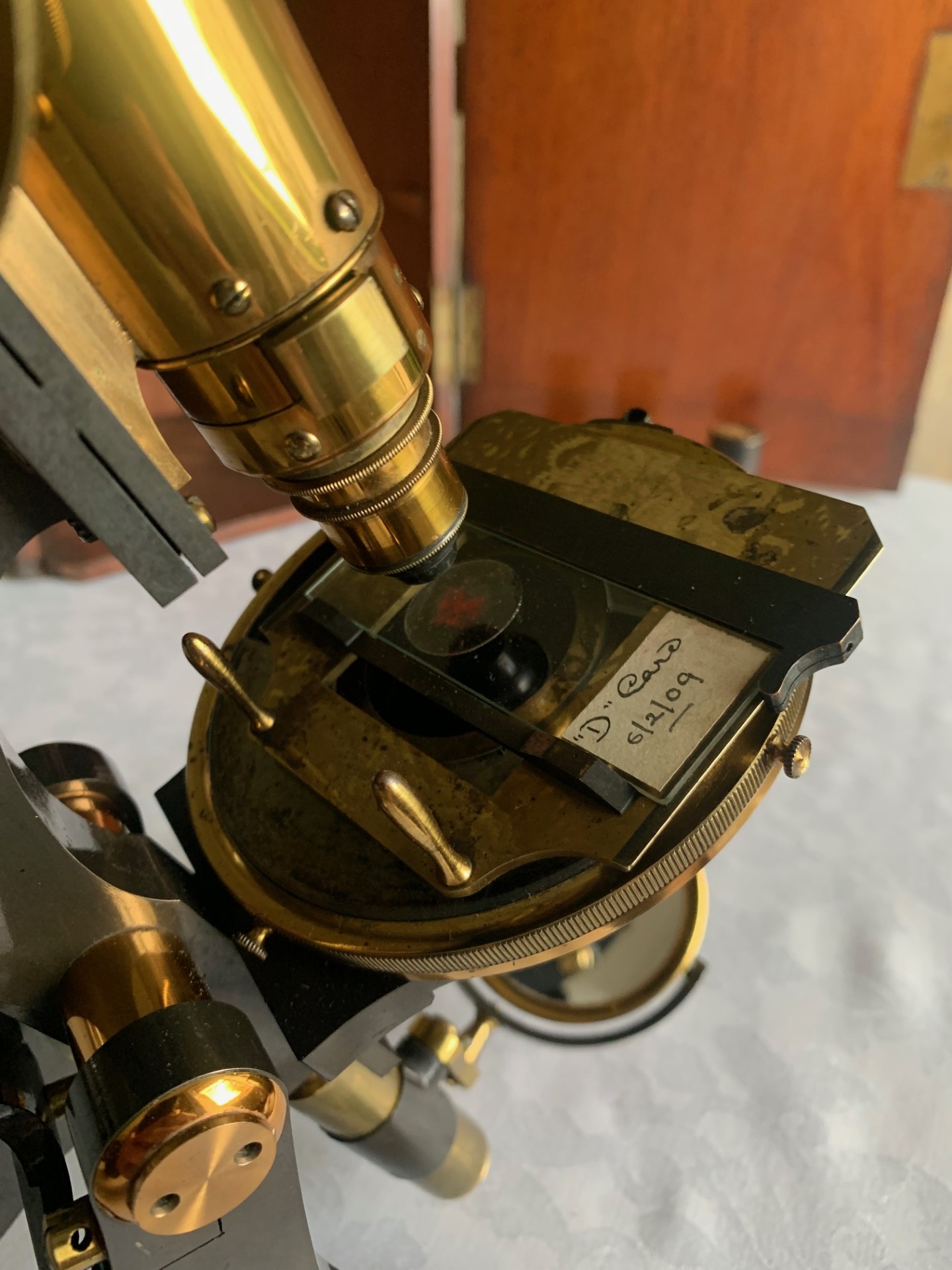
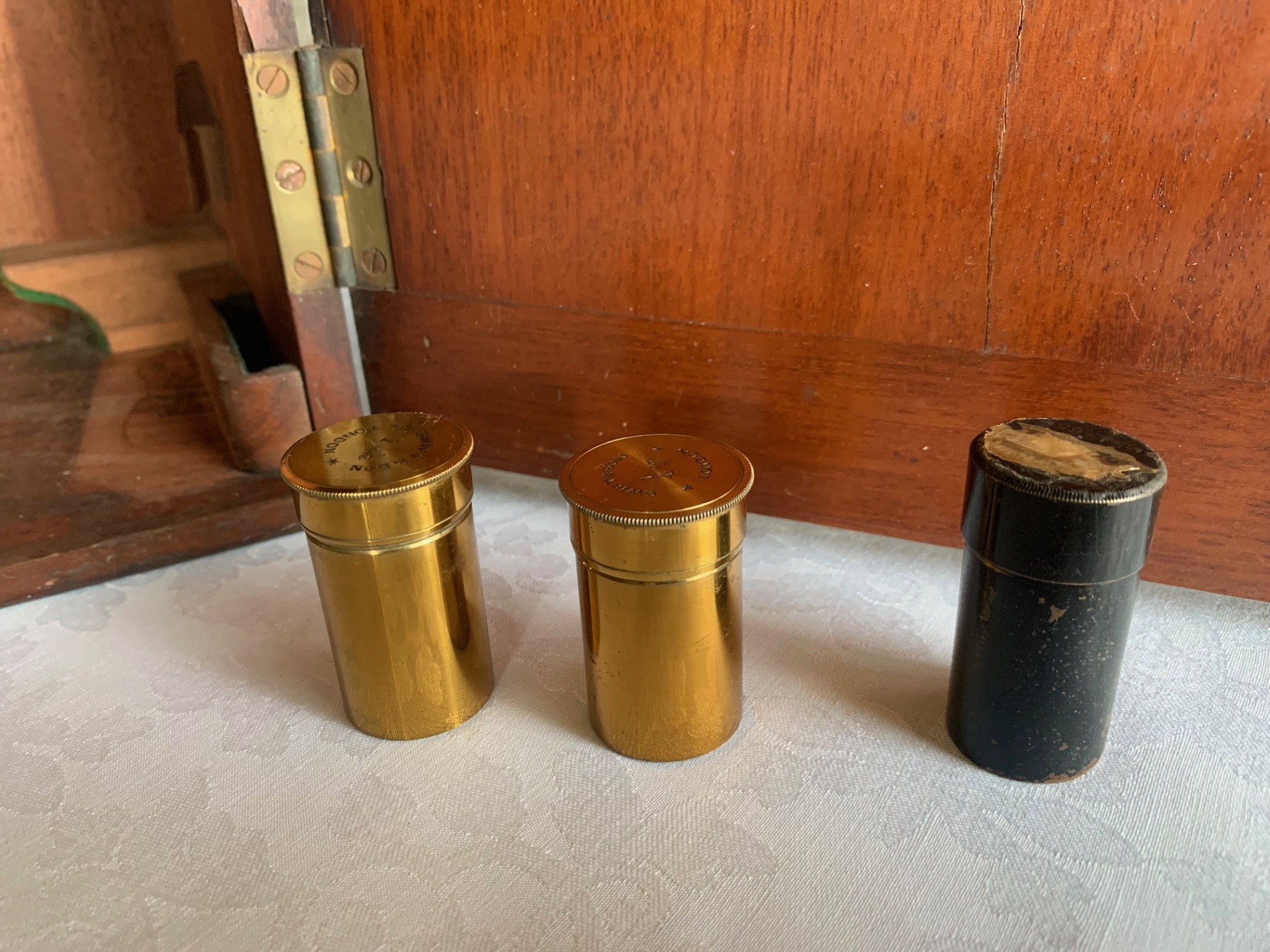
There’s three objective lenses in brass, as under – note the instrument is RMS in terms of objective thread diameter, so plenty of other objectives should also fit:
– 1 inch by Swift – 6x magnification
– No.3 by Nachet – approc 10x magnification
– 1/4 inch by Swift – approx 25x magnification
(the objectives have period brass canisters)
The magnification range available is therefore around 36x to 150x with the current set of optics.
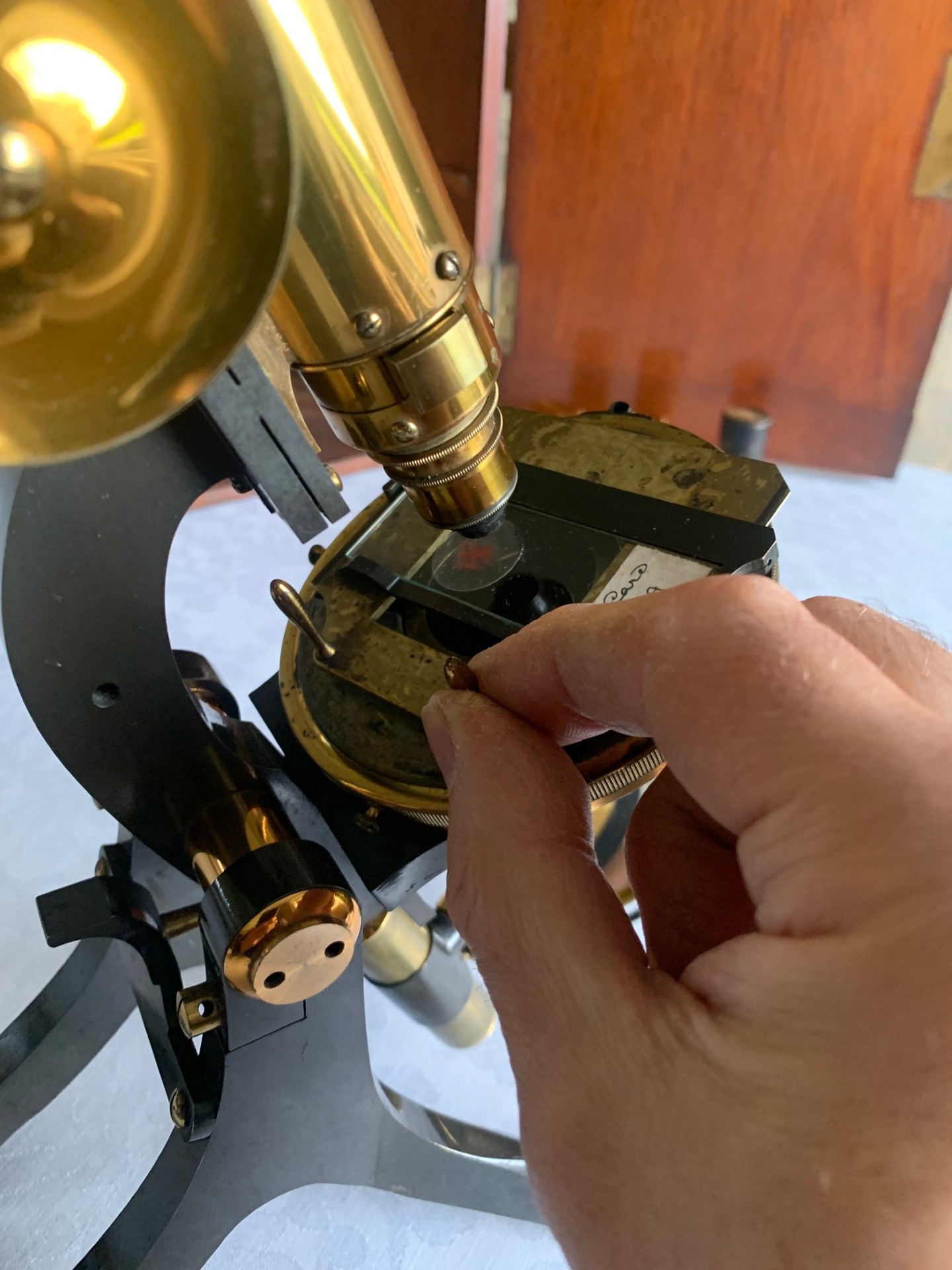
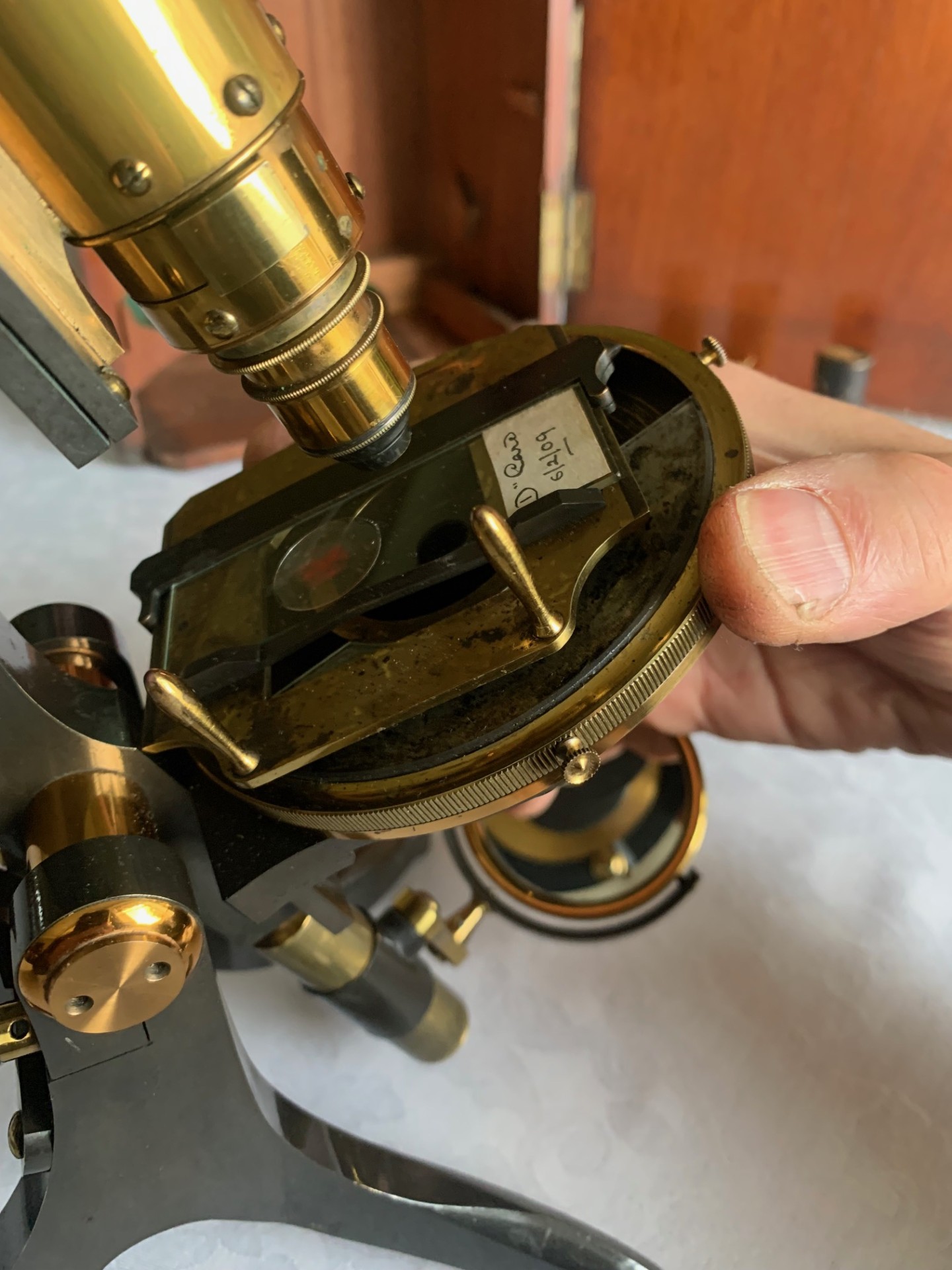
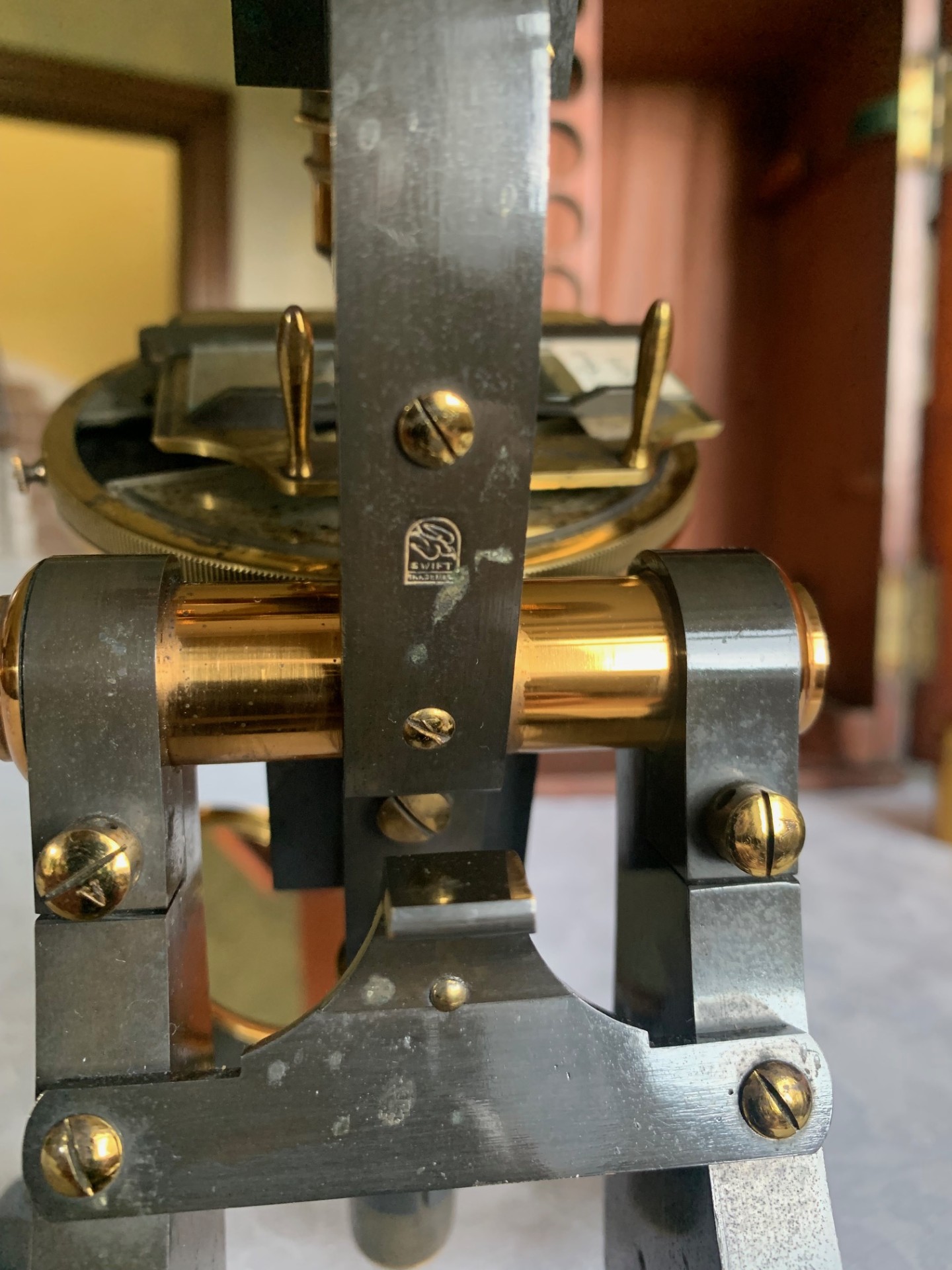
The circular brass stage is attached to the limb tail-piece just below the pivot point and is a well engineered feature that’s a delight to use, with nice smooth action to its moving parts. It’s got a slider assembly with ledge and retainer for holding slides which glides freely with light manual pressure in the x and y planes with smooth operation, although it can slip sometimes when the instrument is inclined and takes a little practice to master. The entire stage also rotates and will complete a full 360 degrees as may be required.
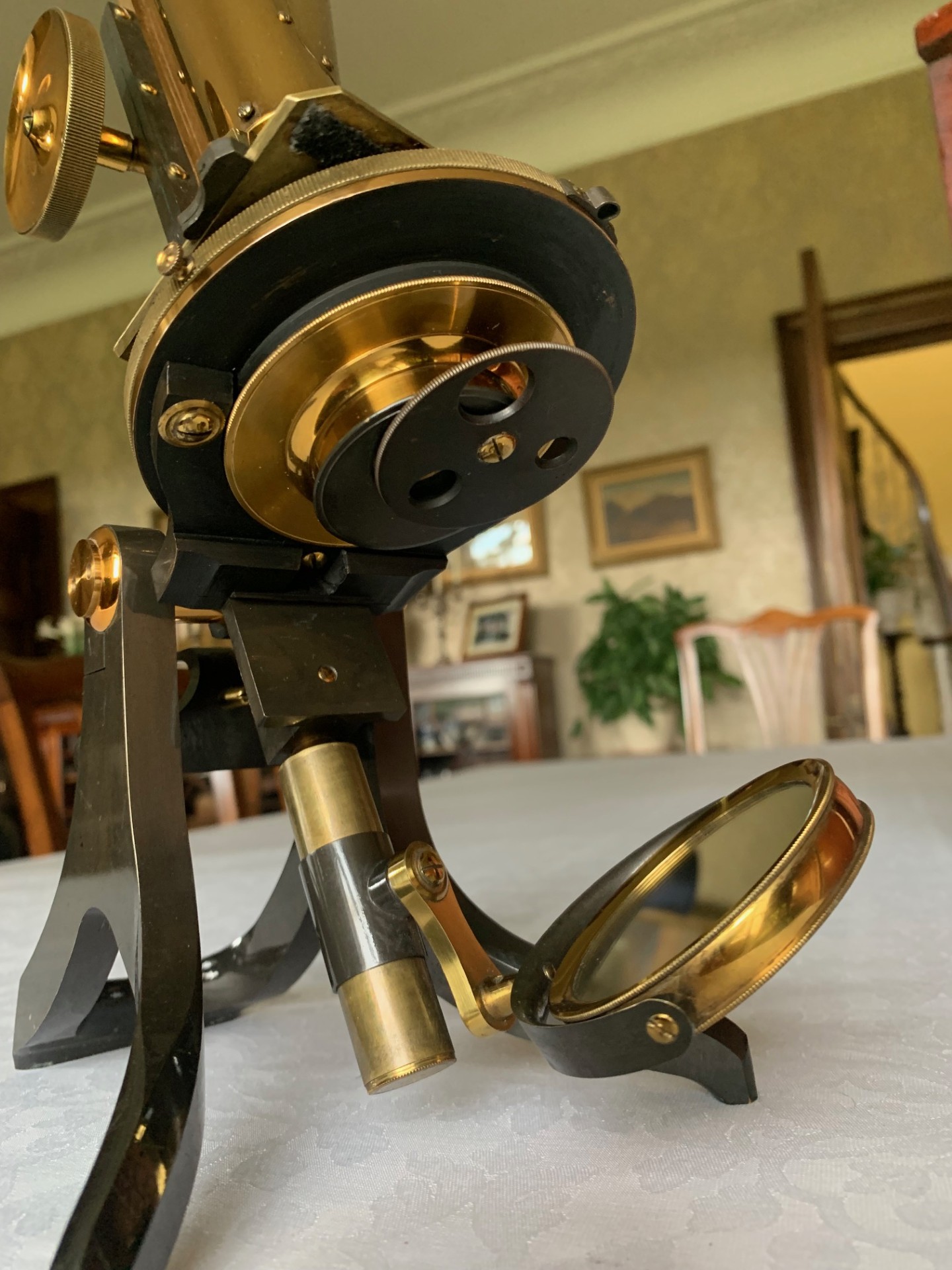
Turning to the sub-stage, we have a brass ring-mount fitted with a friction-fit wheel-of-stops with 3 apertures. The ring mount can be unscrewed and is standard size at 39mm for fitment of other sub-stage hardware.
Lighting is via a plano-concave mirror in a brass carrier on a height/rotation adjustable brass support arm and gimbal fitted to the limb tailpiece, with period silvering that’s in excellent condition to both sides.
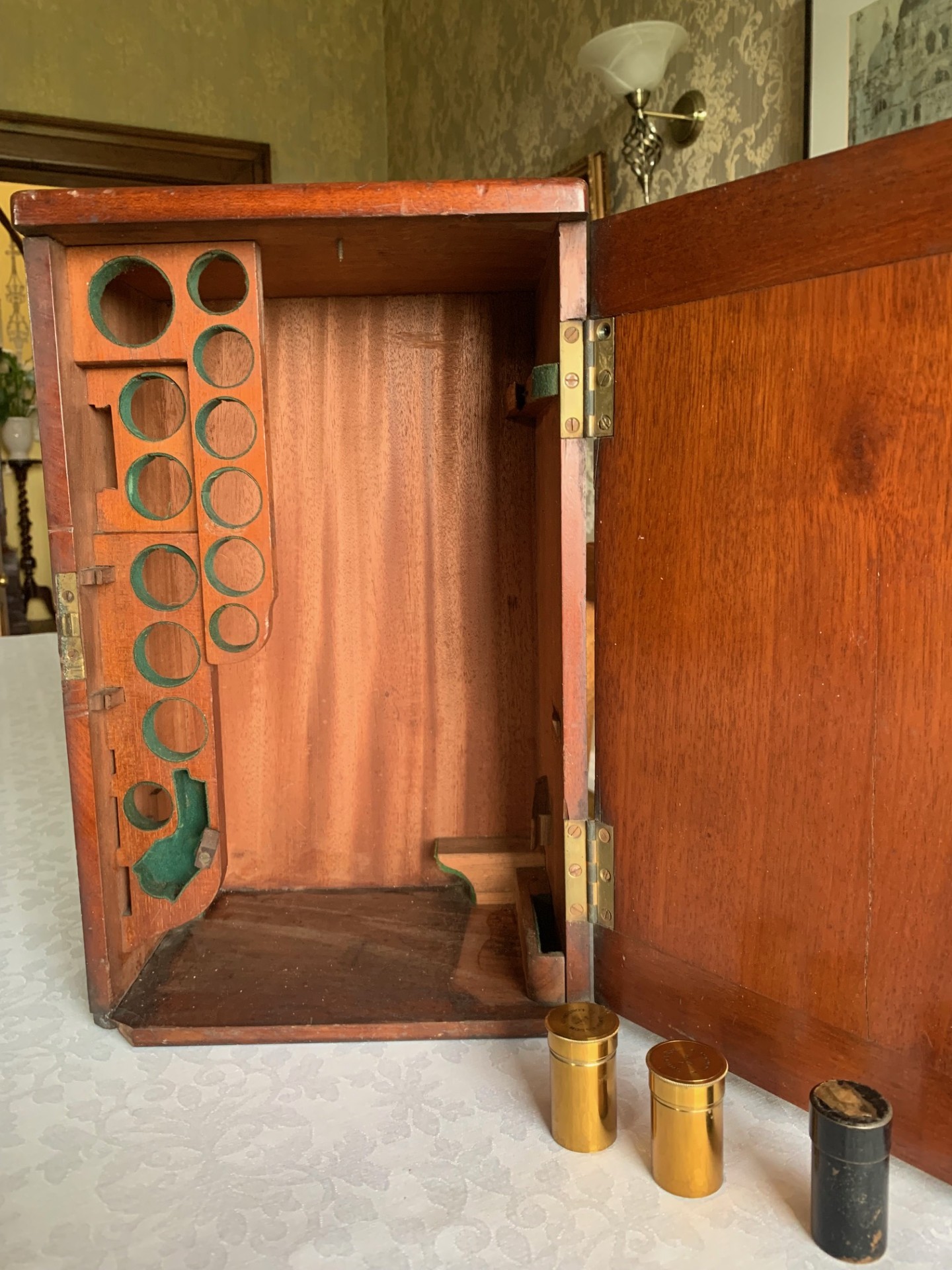
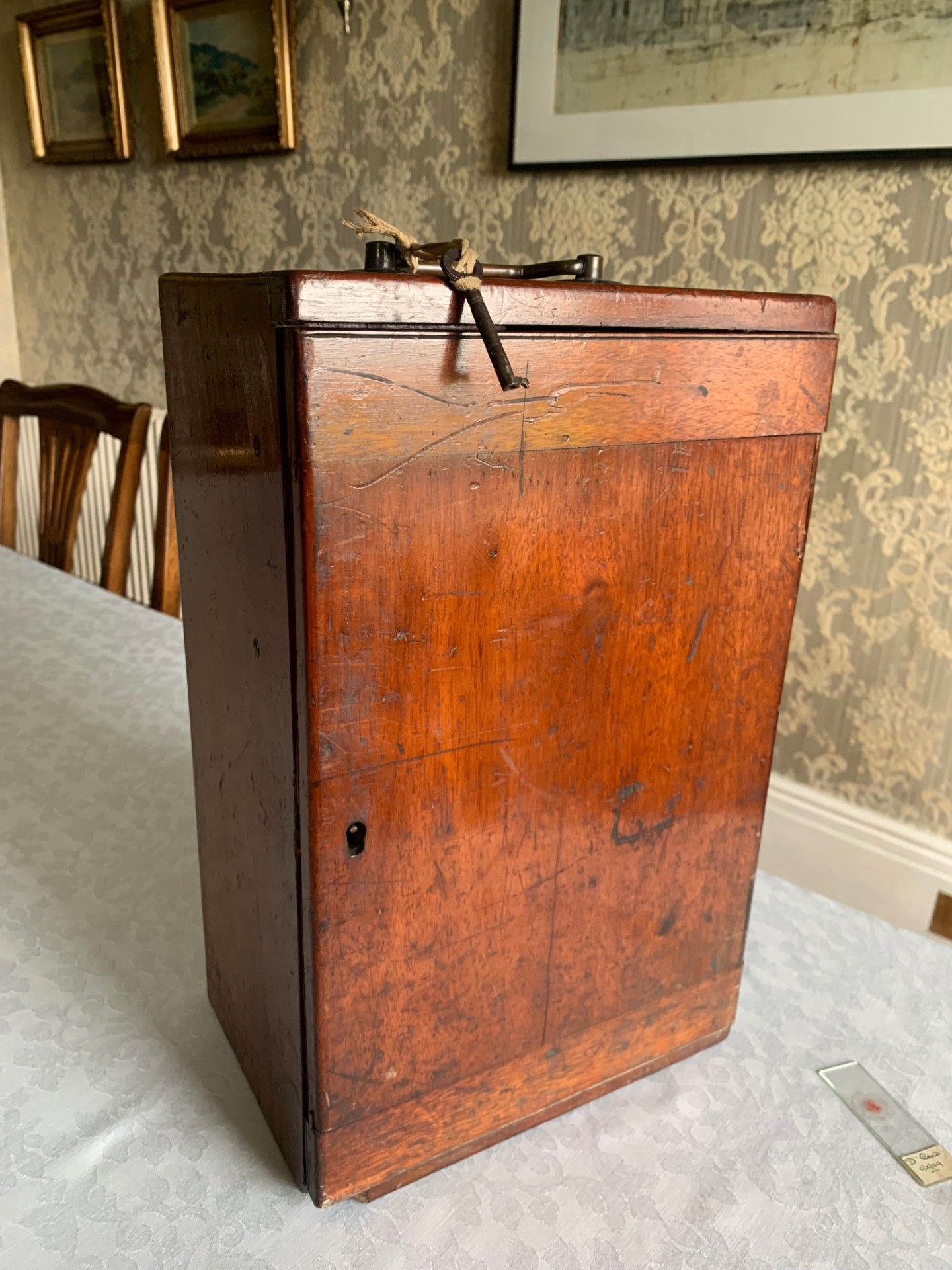
There’s a substantial period hardwood case for the instrument, with good exterior sheen and extensive internal racking. There’s the odd shrinkage crack – just cosmetic and it’s fitted with a good solid brass carry-handle. The lock and key are also present which is always nice to have with an antique instrument such as this. Note: the door is stiff in operation
The instrument and its controls have been very gently dusted, lightly lubricated and operate smoothly with age-appropriate signs of wear and condition points as described, very much as one would expect for an instrument of this quality and age. With its bright lacquered finishes and the signature double optical tubes, it’ll make a great display piece in the right setting and is also a very usable instrument. It presents really well and I’m certain it will look the part in a library or home office, especially when set up with an appropriate antique slide.
Owing to the weight and delicacy of this antique microscope, it will be partially dismantled, carefully wrapped for shipping and dispatched by insured courier upon receipt of cleared funds. UK shipping will be by Royal Mail Special Delivery.
Thanks for looking and just message seller if additional photos or details are required.
Ask the Dealer
Dealer information
 Arcboutant Scientific
Arcboutant Scientific based in Glasgow Scotland, with an interest in scientific collectables dating back to 1988. Now making available carefully curated fine examples, principally of antique microscopes and associated scientific equipment by quality English and Continental makers, to collectors world-wide.