
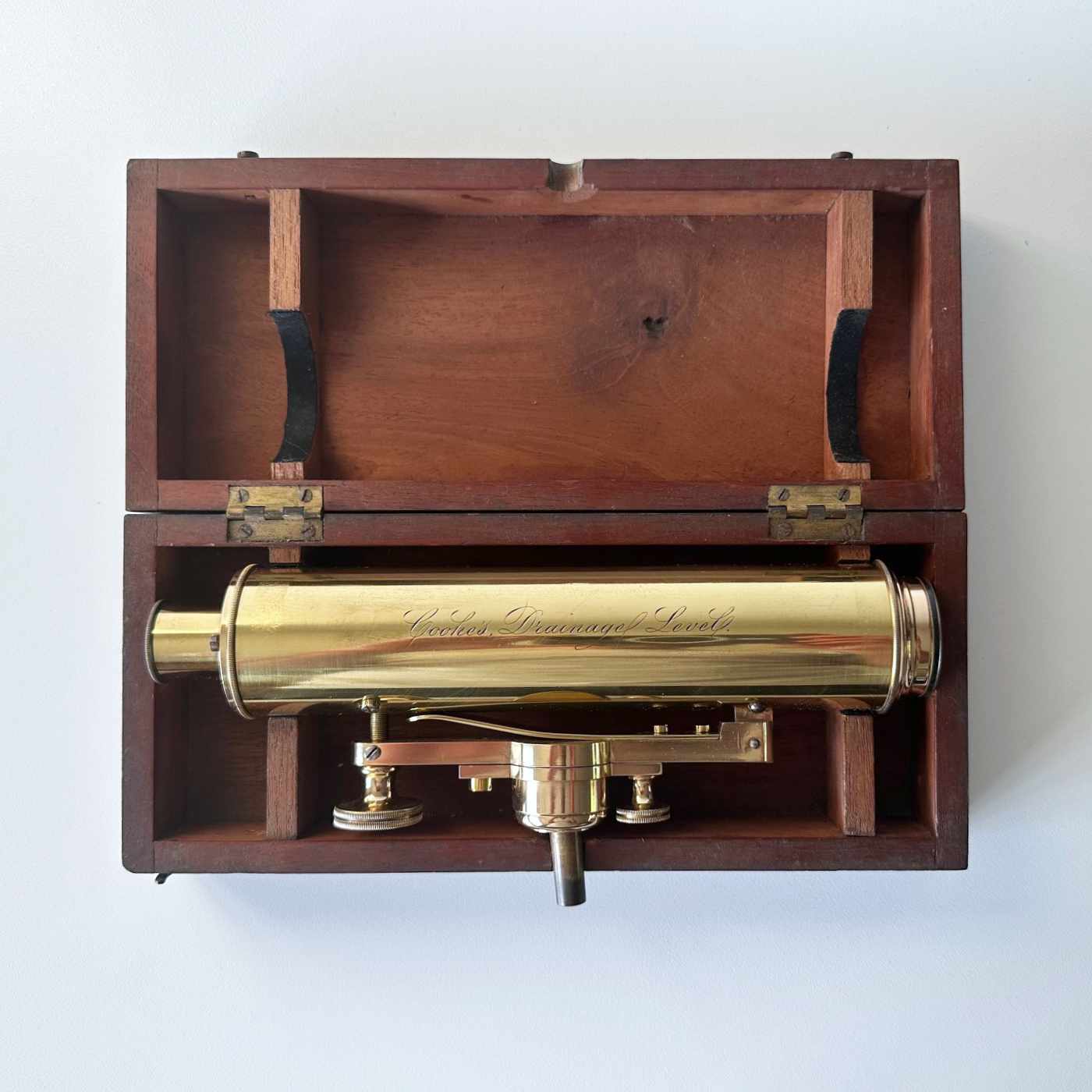
Early Victorian Cooke’s Drainage Level in Mahogany Case Retailed by L Casella & Co
£495
Early Victorian Cooke's Drainage Level in Mahogany Case Retailed by L Casella & Co
Dimensions
H: 6.5 x L: 23.5 x D: 10cms
Circa
1850
Maker
Thomas Cooke of York
Country of manufacture
UK and Ireland
Description
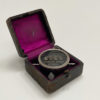
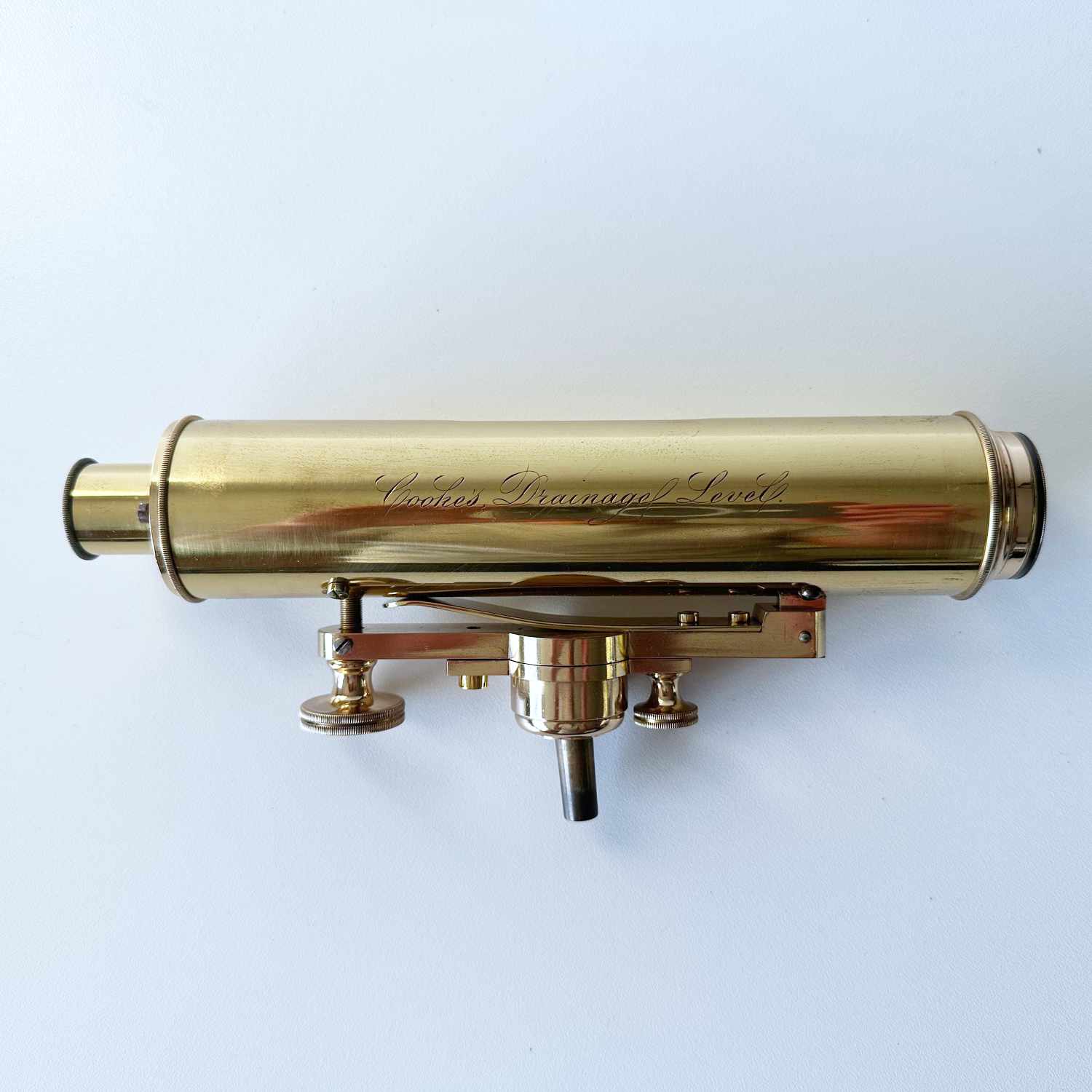
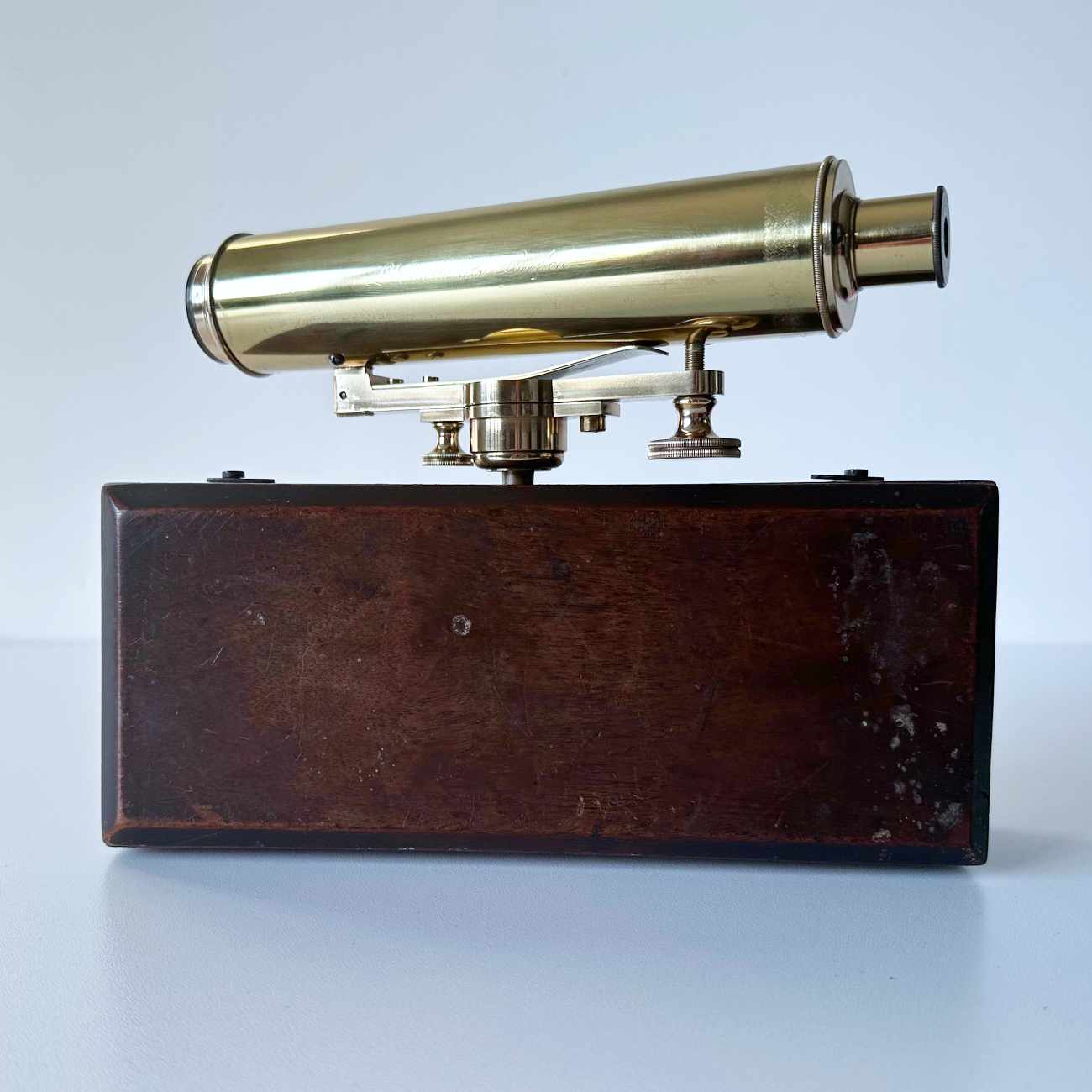
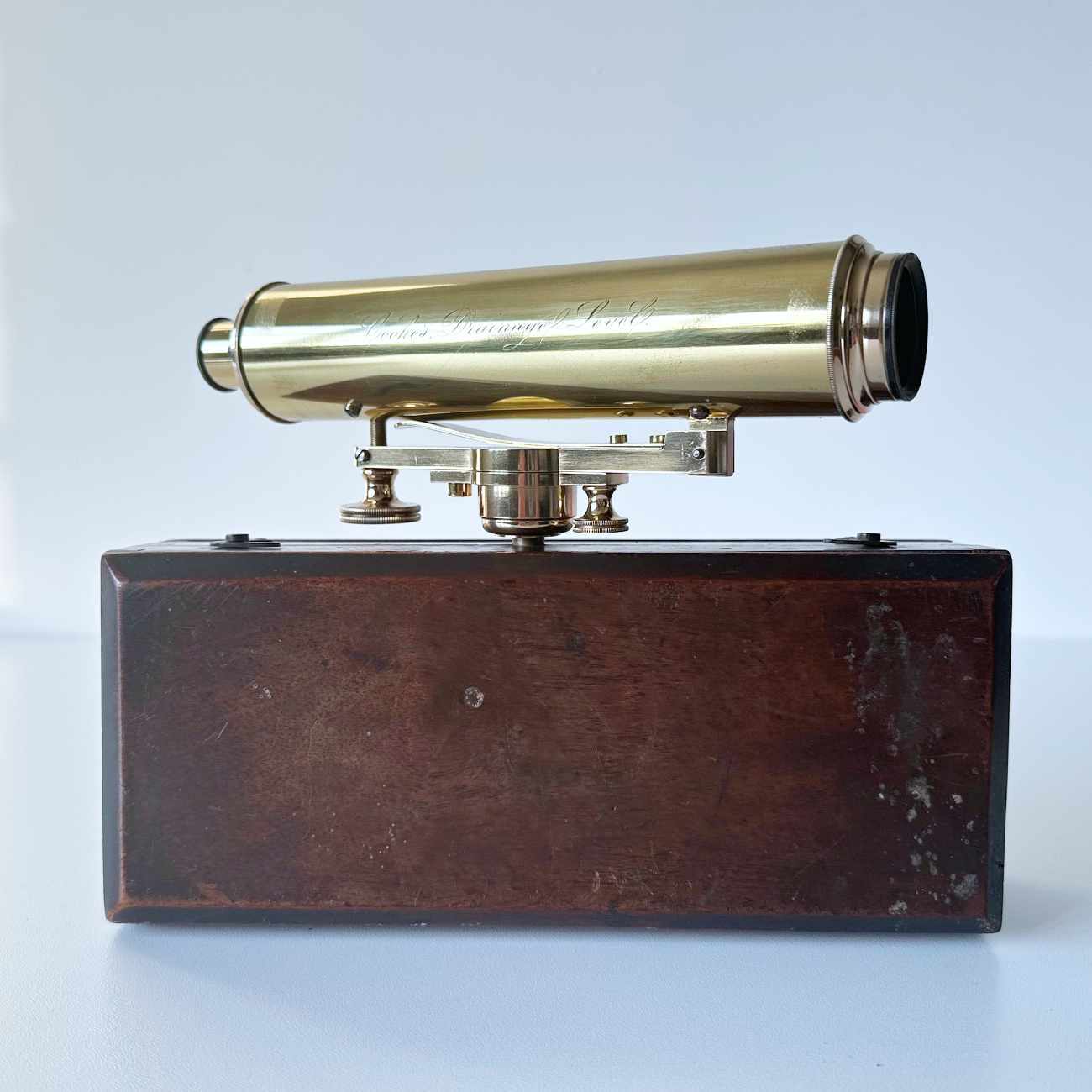
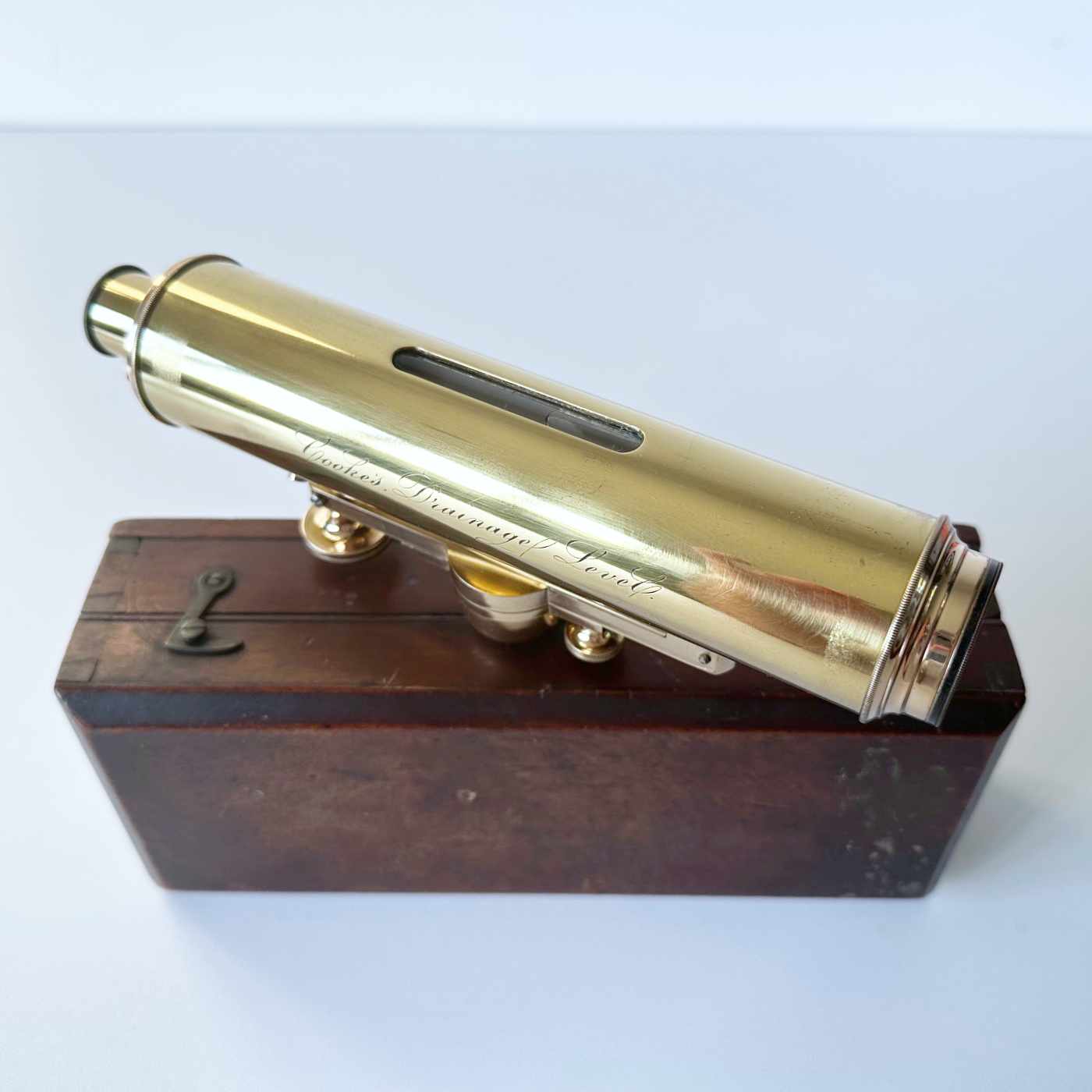
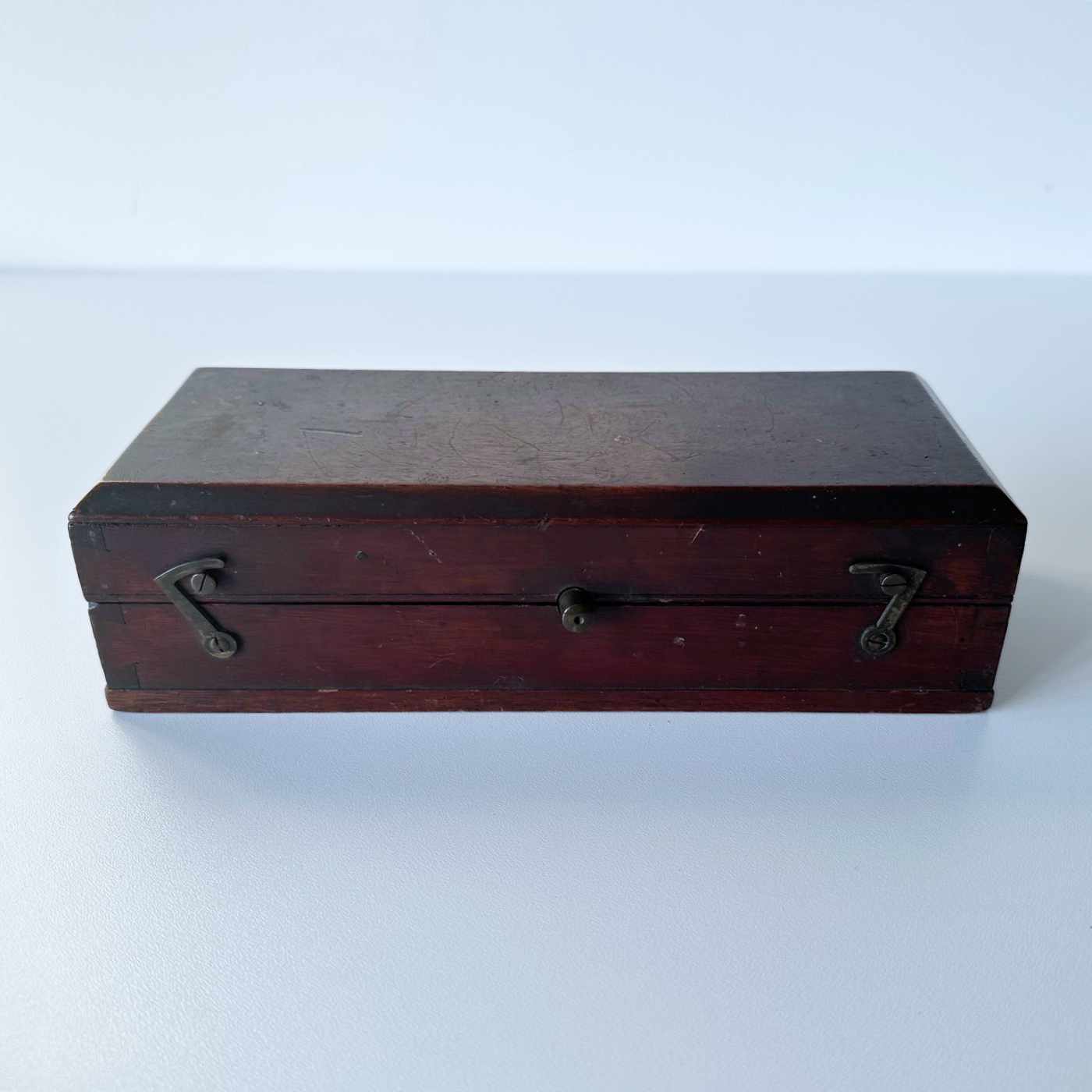
For sale, an early Victorian Cooke’s Drainage Level in original mahogany case retailed by L Casella & Co, London.
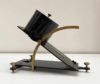
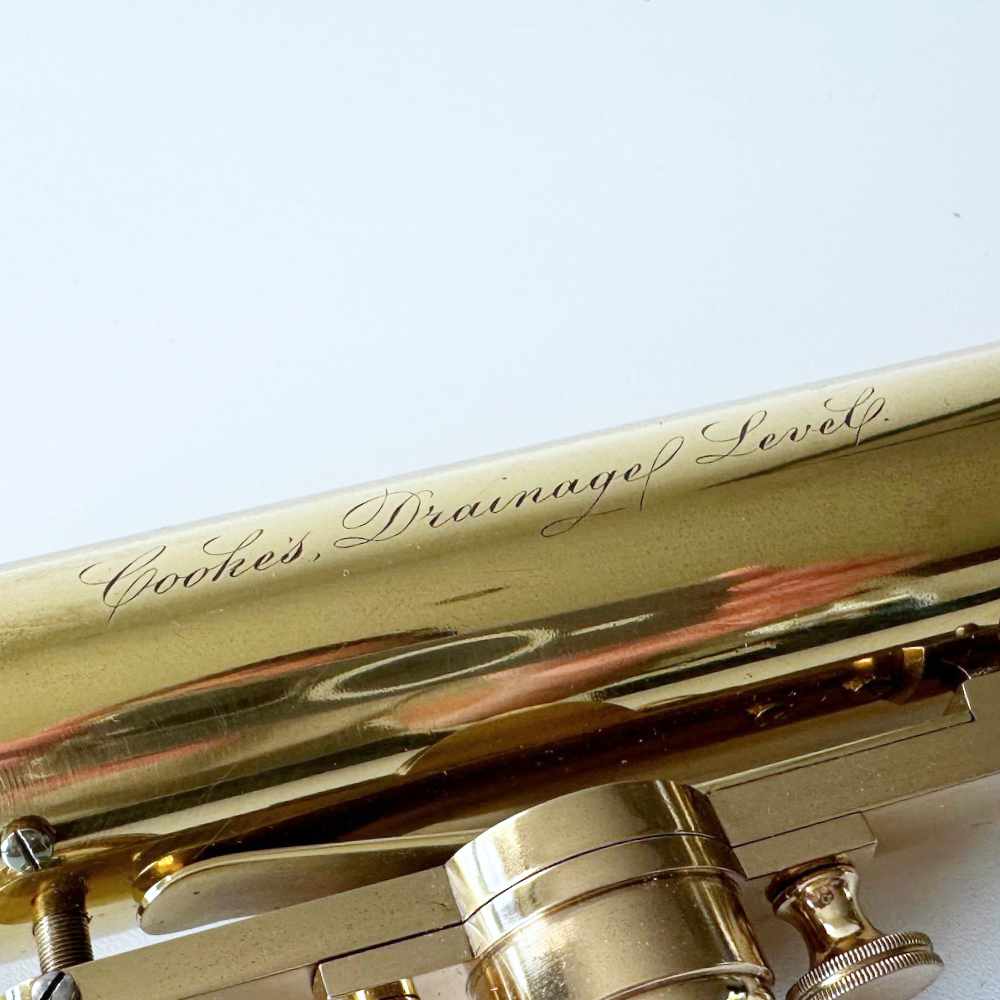
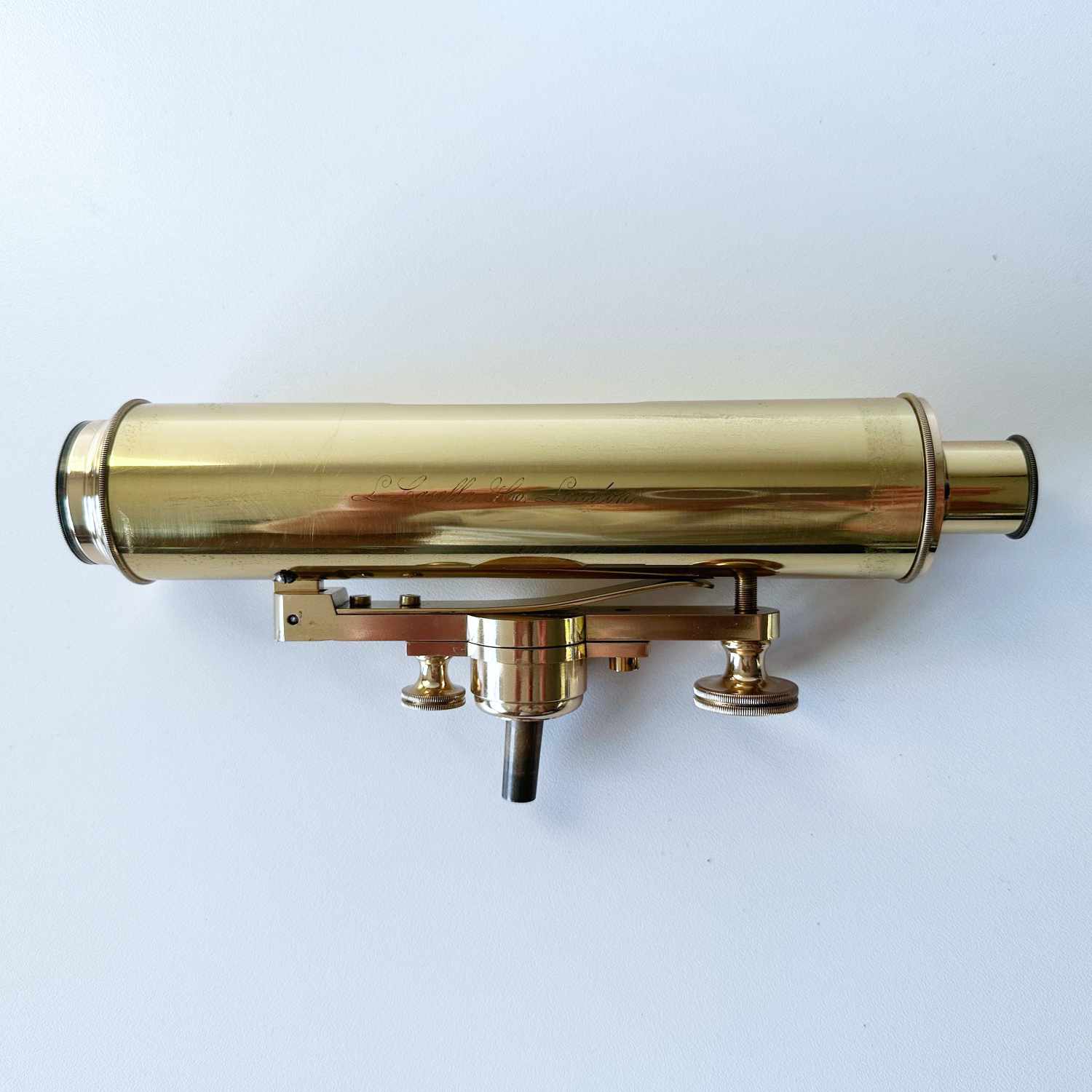
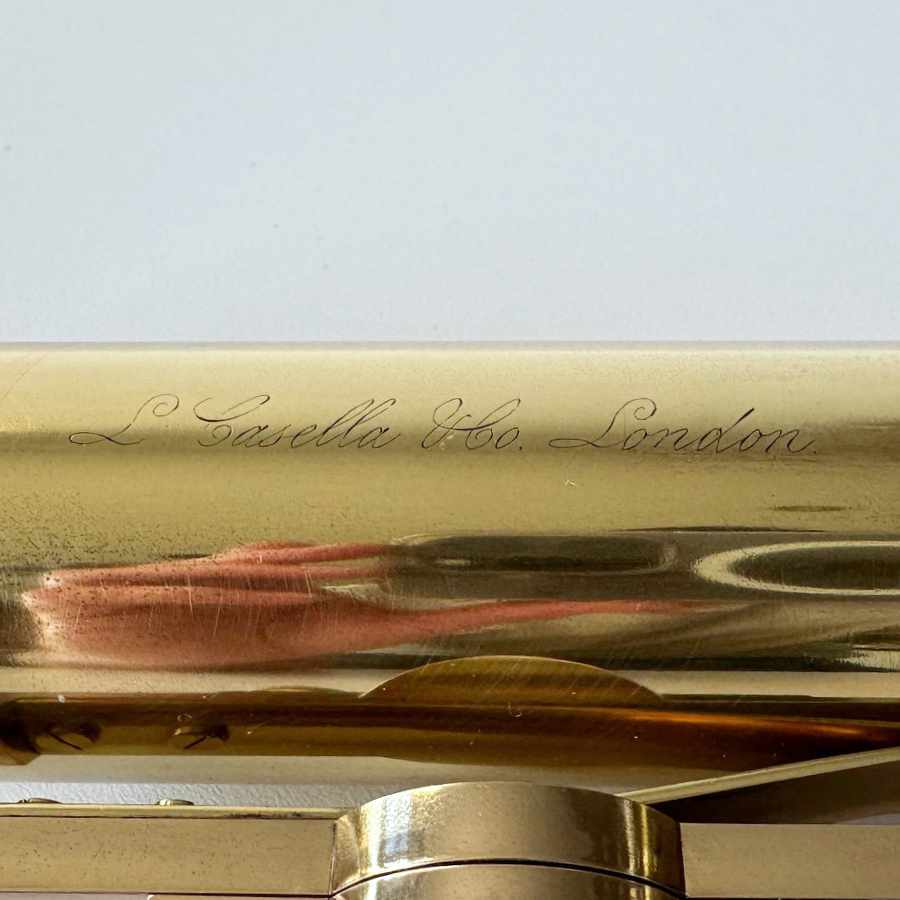
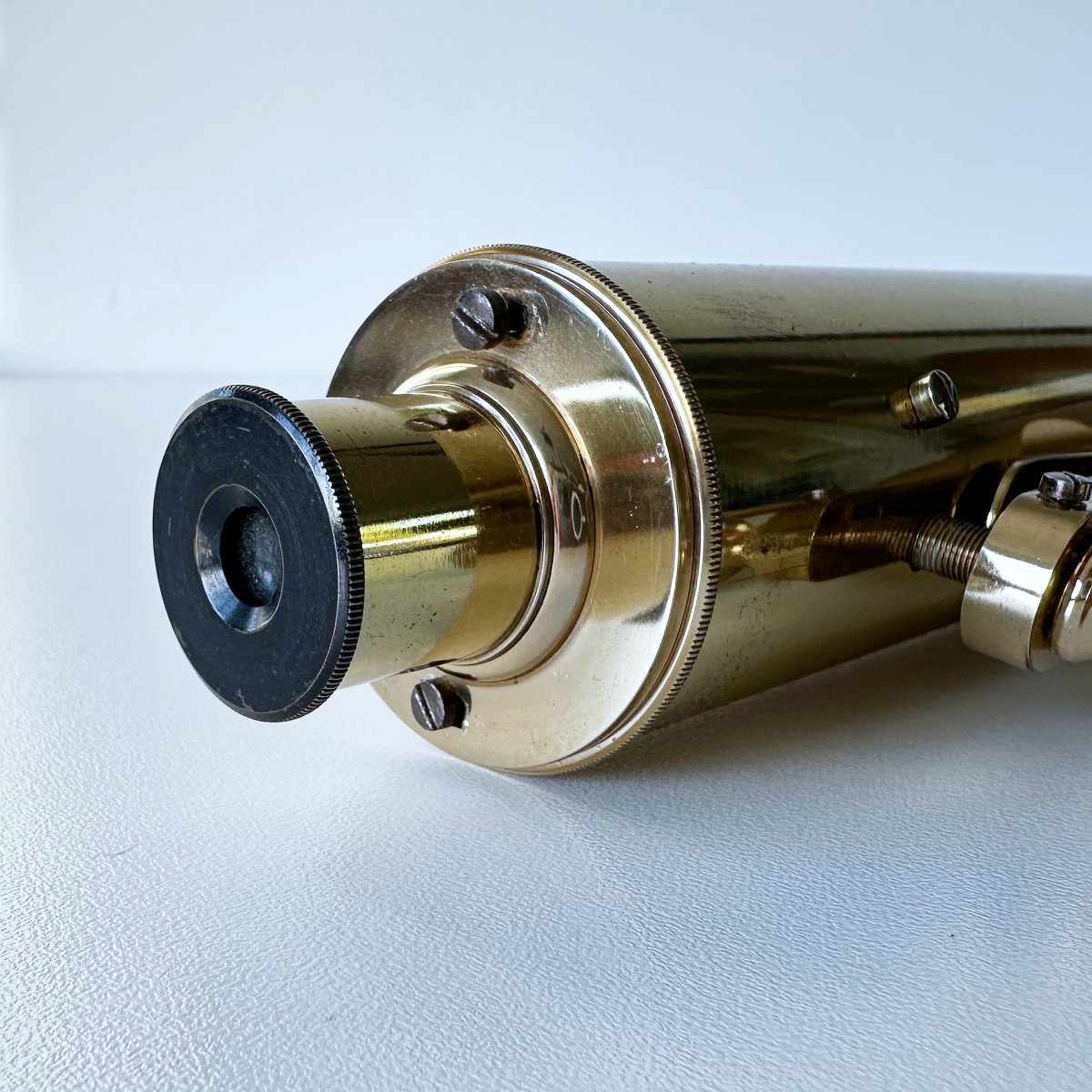
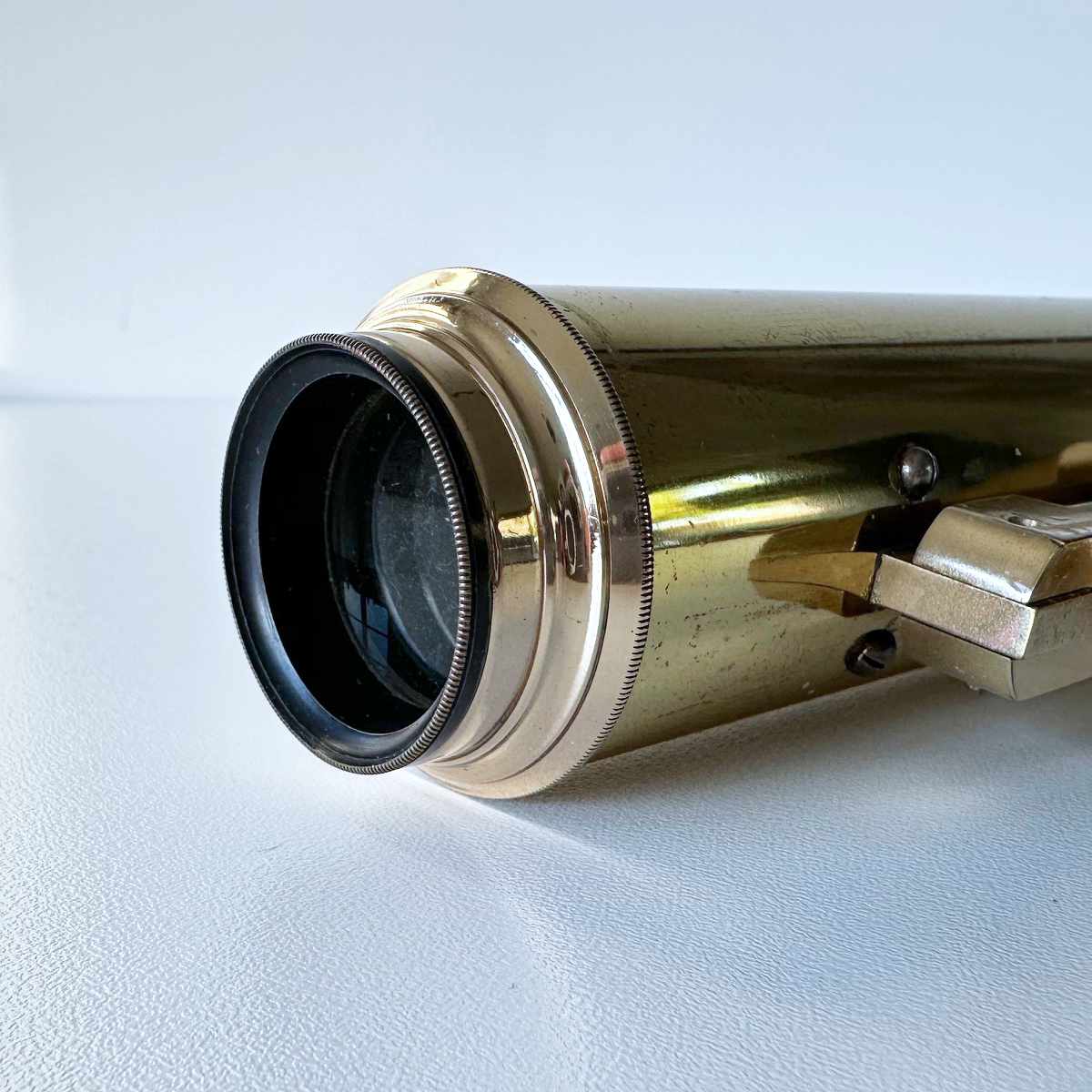
This simple level engraved with Cooke’s Drainage level to one side of the barrel and to L Casella and Co to the other, has a short 18cm brass barrel with “superior telescope, cross lines etched on the glass and ball and socket joint” as described in Casella’s catalogue of 1860. It has an integral bubble level fitted within the top of the barrel and fine tilt adjustment underneath by means of the large, knurled screw. The smaller knurled brass screw in front allows the release and adjustment of the ball and socket joint which would attach to a tripod stand or staff. According to Casella, the level is “strongly recommended by the Royal English, the Royal Irish, and the Highland Agricultural Societies”.
Described variously in catalogues as a drainage level or Agricultural Drainage Level this instrument is likely to have been one of Thomas Cooke’s earliest trading successes since it was first advertised by Thomas Cooke in 1849 before he had established his Buckingham Works and it remained a standard product for many retailers until at least the end of the Nineteenth century.
Retailers ordinarily included their paper label trade cards within the case but in this instance, Casella has applied more permanent secondary engraving to the other side of the telescope barrel. It is a very interesting convergence between two extraordinarily famous instrument makers of the Nineteenth Century and gives some flavour of the way in which the instrument trade worked. Casella was already well established in 1849 so it must have been hugely encouraging for Cooke to see his products gaining attention. His appearance at subsequent exhibitions in Paris and London cemented that position quite considerably since he stood alongside many of these famous figures.
Thomas Cooke was born in East Ridings, Yorkshire in 1807. His Father was a shoemaker of humble means which precluded him from being provided with an education worthy of his obvious talent. Dissatisfied with the prospect of a shoemaking career, Cooke taught himself astronomy and navigation and moved to York in 1829 at the age of twenty-two where he sought out a living as a private tutor of mathematics and writing. His spare time was otherwise devoted to the study of optics and the construction of telescopes.
In 1837, he took on premises in Stonegate, York where he immediately built a strong reputation for the manufacture of optical lenses and telescopes, receiving orders from numerous learned Yorkshiremen. A move to a larger shop in Coney Street became necessary shortly afterwards but by 1855, Cooke had also outgrown these premises and he purchased land to build a factory named the Buckingham Works in Bishopshill, York where with the assistance of his two sons, Frederick & Thomas he manufactured a diverse range of products including surveying instruments, clocks and steam engines to compliment the successful optical business. In the same year, he also won a first-class medal at the Paris Exposition Universelle for an equatorial refractor of his construction.
In 1860, Cooke’s reputation had grown large enough for him to be commissioned by Prince Albert to provide a 5.5-inch mounted telescope intended for the newly built Royal residence of Osborne House on the Isle of Wight. He also began to construct turret clocks which were eventually exhibited at the 1862 London Exhibition.
During the exhibition, Robert Stirling Newall of Gateshead purchased two very large optical glass discs from Chance Brothers of Birmingham and a year later, Cooke was commissioned to produce a mounted telescope using the enormous twenty-five inch discs. The Newall telescope took six years to construct, it was by some margin, the largest astronomical object glass ever produced and the telescope when installed in Newall’s premises in Gateshead measured thirty-two feet in length.
Ever industrious, Cooke also managed to provide surveying instruments for Colonel Strange’s Great Survey of India and by 1866, exhibited a new steam car at The York Exhibition.
Cooke died in October of 1868 without seeing the completion of the Newall telescope, but work was continued by his sons which promoted the change in name to T. Cooke & Sons. Both were similarly industrious and successful problem solvers, one specialising in optics and the other in engineering.
The company’s relationship with Colonel Strange continued and at his behest, they built an engraving machine and in 1889, Colonel Watkins of the Royal Engineers worked with Frederick to produce a new vertical base rangefinder. The optical arm of the business involved themselves in every element of the science including the provision of observatory domes to numerous countries including at Greenwich.
The 1890’s saw the retirement of both of the Cooke Brothers and both arms of the company were taken over by the brothers, Alfred and Dennis Taylor eventually becoming a limited company in 1897. Under their stewardship, the company continued to develop the company’s fine reputation and numerous inventions such as the apochromatic astronomical object glass, a new naval rangefinder and the still world-renowned Cooke photographic lens. The latter was used in 1902 to photograph the night skies of both the Northern and Southern hemispheres. Dennis also published his ”System of Applied Optics” which was very well regarded upon its release.
During the First World War, T. Cooke & Sons, focused their business on defence products and were a large supplier to the Government although they had by 1916, been acquired by Vickers Limited, themselves a military supplier of note. Just after the Great War in 1922, the company merged with Troughton & Simms to become Cooke, Troughton & Simms. The company still exists today and now trades as Cooke Optics Limited specialising in cinematography lenses.
The retailer, Luigi Pasquale Casella was the son of a musician who came to The British Isles in the Early Nineteenth Century and the anglicised “Louis” was born in Edinburgh in 1812. His Father eventually rose to be a music tutor to George III’s daughters but by the 1830’s, his son had apprenticed to Cesar Tagliabue, a noted Italian scientific instrument maker who had been in London since the turn of the century.
Casella eventually married Tagliabue’s daughter in 1837 and shortly after formed the partnership of Tagliabue and Casella with his new father-in-law in 1838. Tagliabue was already known to have been exporting his products to South America and Europe and must have provided Casella with a perfect grounding in both instrument making and more importantly in the business of selling them.
It is somewhat strange that this partnership should ever had existed given that Cesar is known to have had three sons, John, Anthony & Angelo but presumably his focus was on providing his daughter and her husband an equally good opportunity in life. The numerous Tagliabue’s listed in trade directories of the period would suggest that the family remained close knit in any case and the son John also went on to form an early partnership with Joseph Zambra prior to the latter’s more famous partnership with Henry Negretti in 1850.
Cesar Tagliabue died in 1844 leaving the business to be solely managed by his son in law Louis Casella and the under his long stewardship became one of the most renowned scientific instrument making firms of the nineteenth century, providing products to the likes of Darwin and Livingstone. Cordial relations were almost certainly maintained with Negretti & Zambra over the years as Casella’s catalogue of the 1860’s shares numerous similarities with his competitor. Both were equally capable makers so it suggests that the parties were probably sharing manufacturing practises to create greater industry and both exhibited with great success at The Great Exhibition and the following Exhibition of 1862 where Casella was awarded a prize for his meteorological instruments.
By this point, his catalogues state that he was employed as an instrument maker to The Admiralty, The Board of Trade, Board of Ordnance, The War Department, The Royal Observatories at Kew and The Cape of Good Hope and numerous Governments and Universities.
Casella’s sons, Louis Marino and Charles Frederick both trained under their Father alongside other members of the Tagliabue family and also the latterly famous JJ Hicks who was perhaps the most promising of all of those that emanated from his workshop. He eventually died in 1897 whereafter Charles took over the sole ownership of the company.
Sadly, the younger son did not possess the same level of business acumen and skill as his Father and the business had become rather run down by 1905 but it was incorporated in 1910 and with the assistance of more adept management from Rowland Miall and Robert Abraham, manged to regain its momentum. The First and Second World Wars saw it engaged in numerous Governmental contracts but also saw the deaths of both of Casella’s sons, finally severing the link with the original family.
Casella is one of the few companies of this period that still remains in existence today, it continued to provide meteorological instruments throughout much of the Twentieth Century, but the focus of the business has since diversified into environmental sampling and monitoring products.
Circa 1850