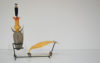

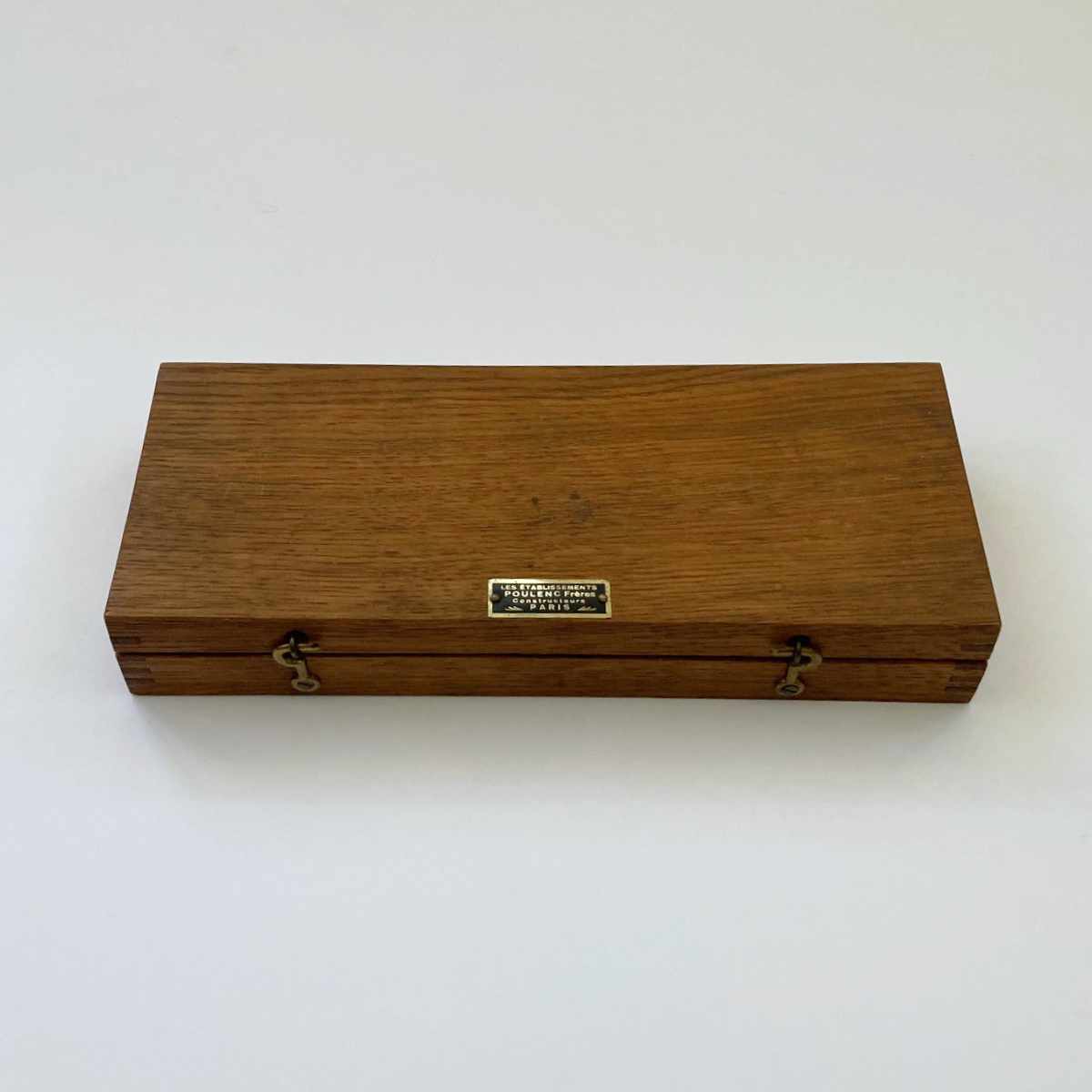
Late Victorian Cased Sausurre Hair Hygrometer by Poulenc Freres of Paris
£1,250
Late Victorian Cased Sausurre Hair Hygrometer by Poulenc Freres of Paris
Dimensions
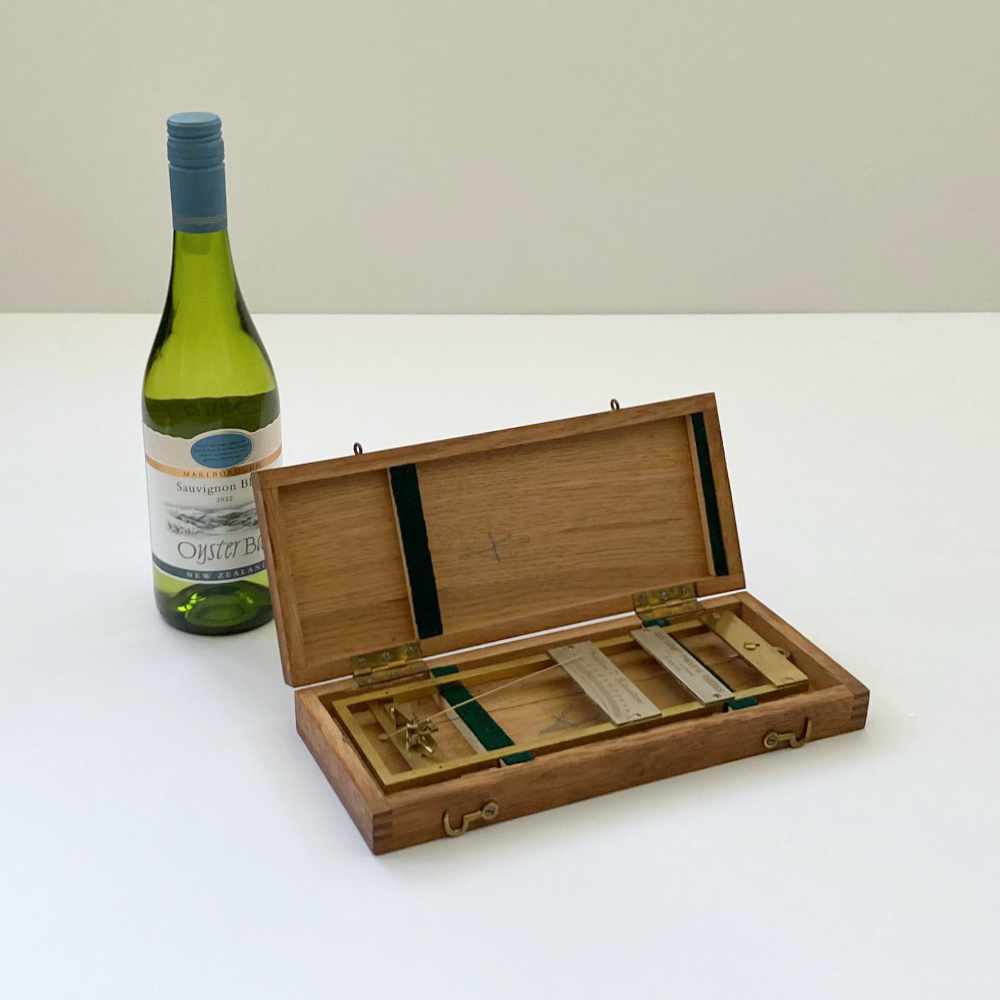
H: 4 x L: 28 x D: 11.5cms
Circa
1900
Maker
Poulenc Freres
Country of manufacture
France
Description
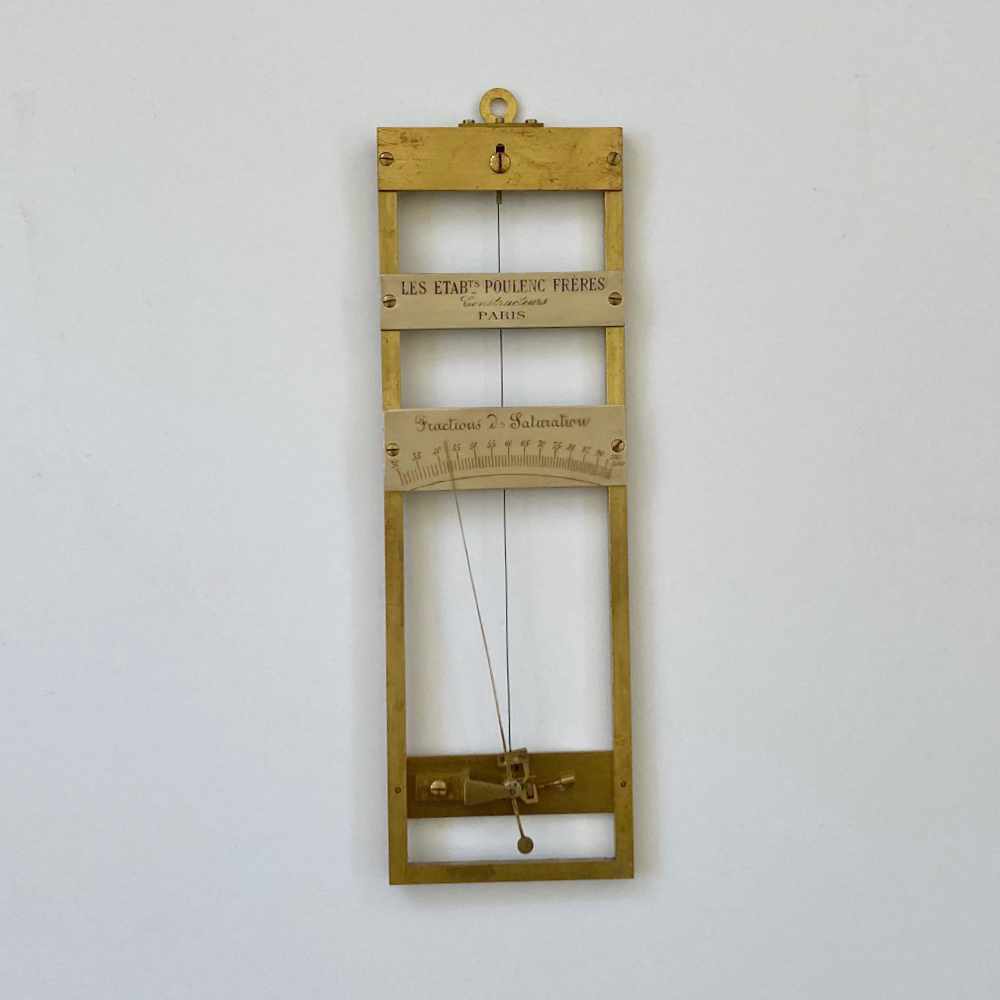
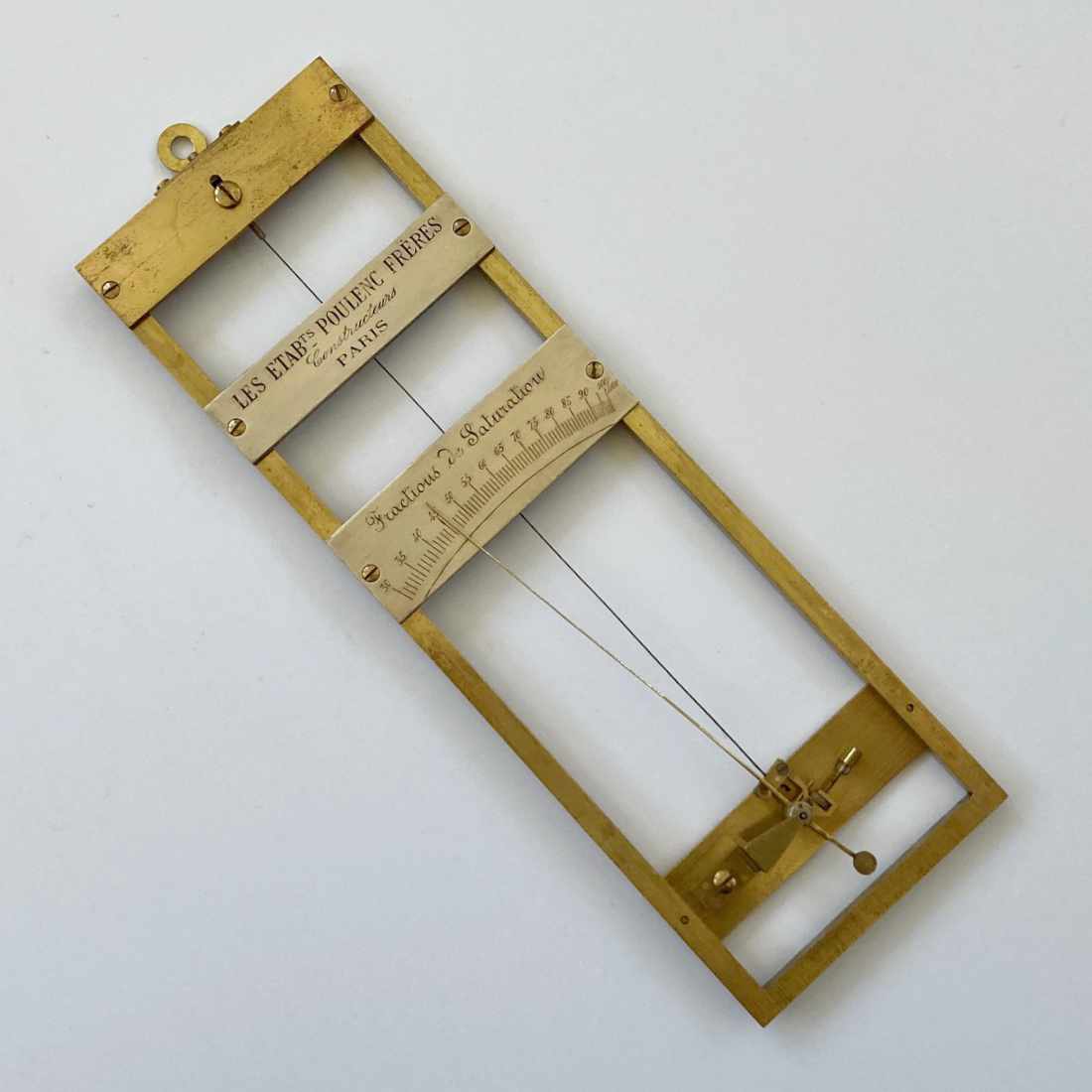
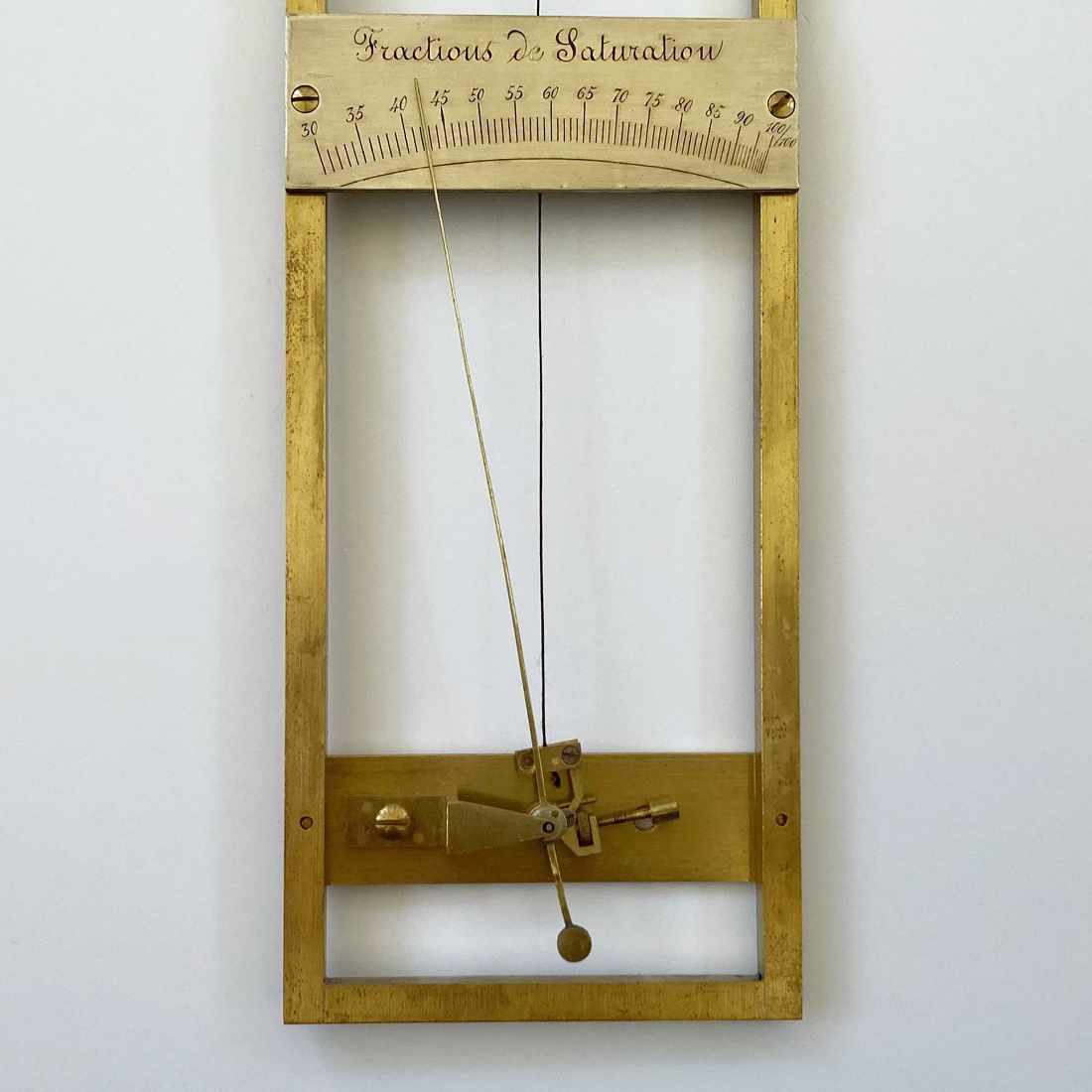
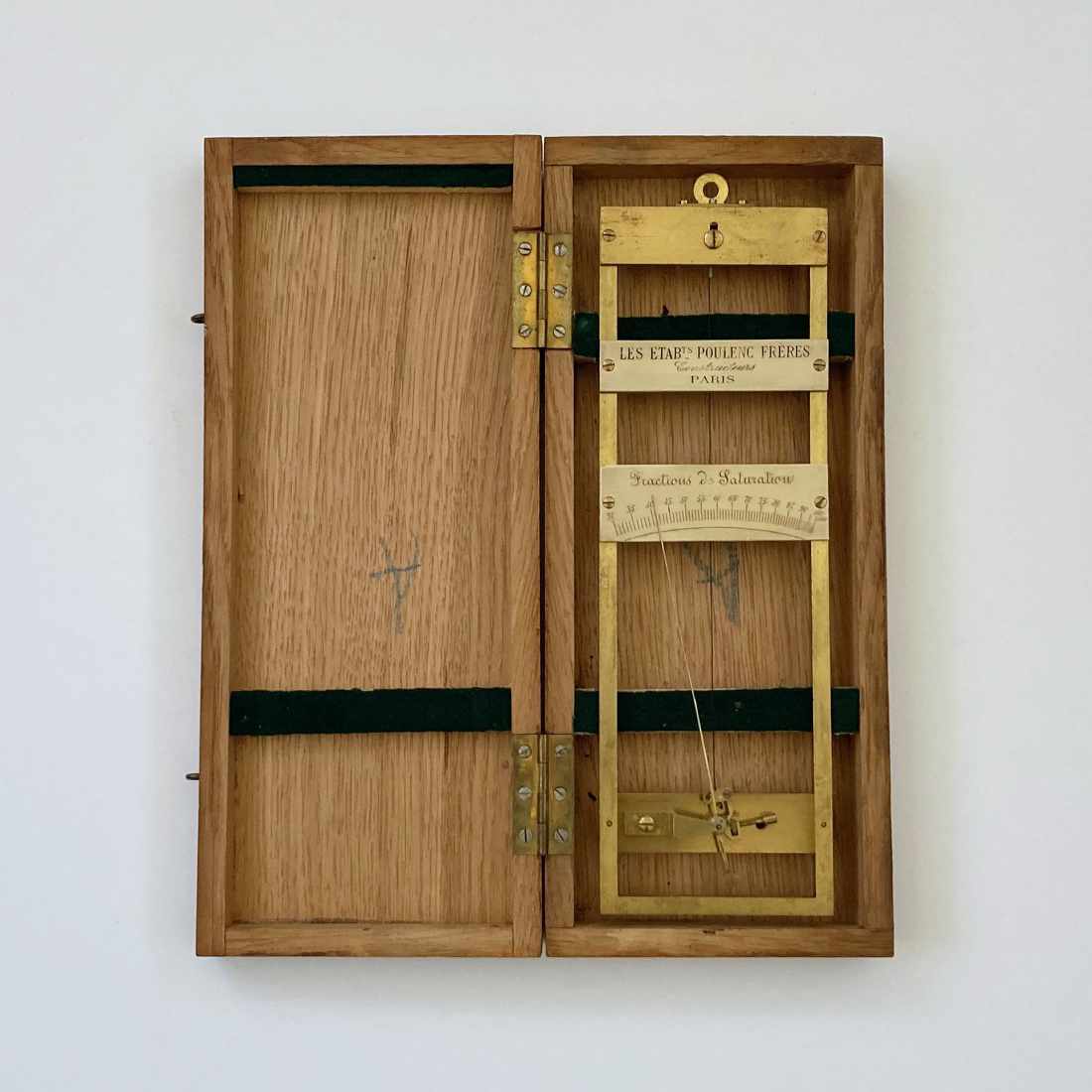
For sale, a French late Victorian period cased Saussure type hair hygrometer by Poulenc Freres of Paris.
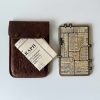
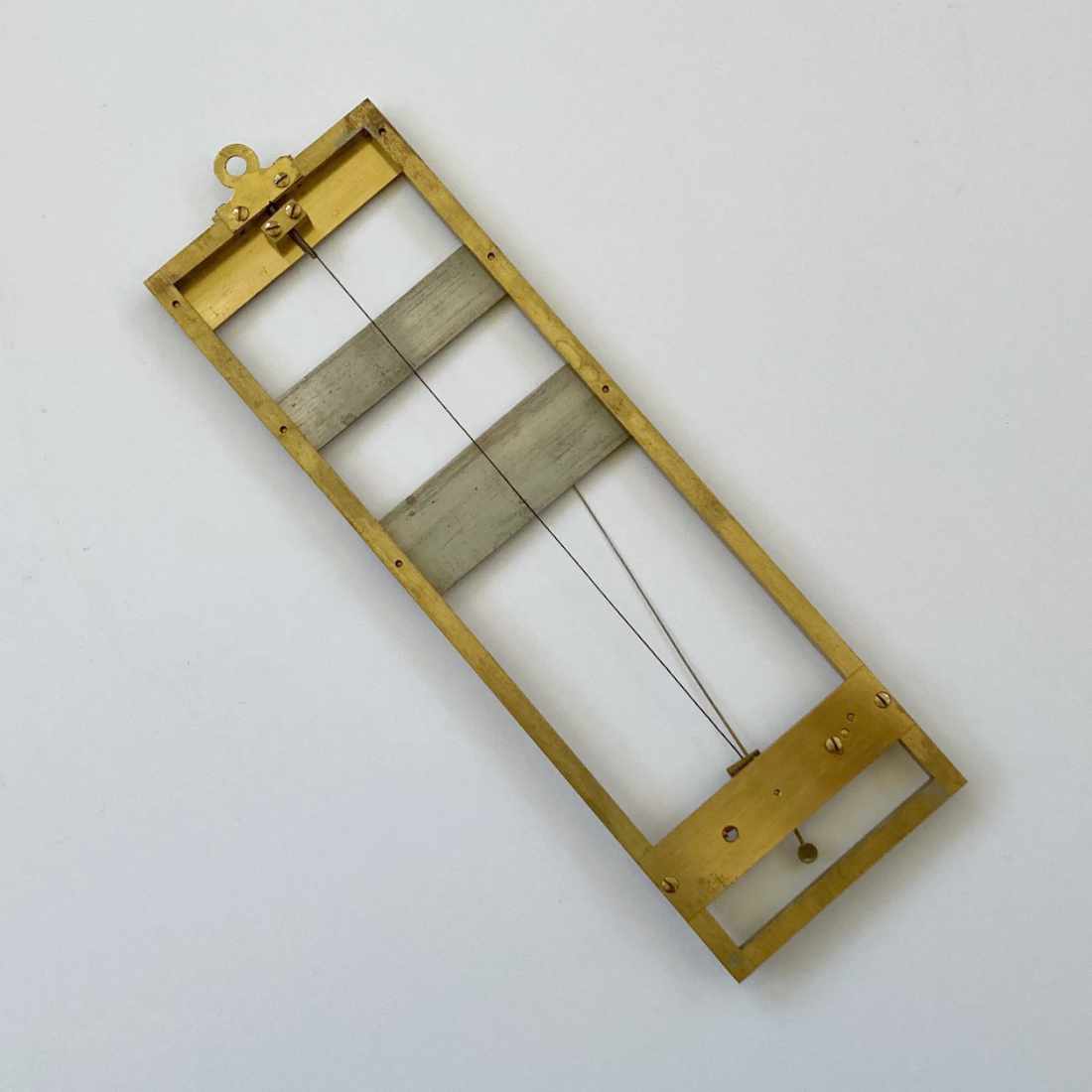
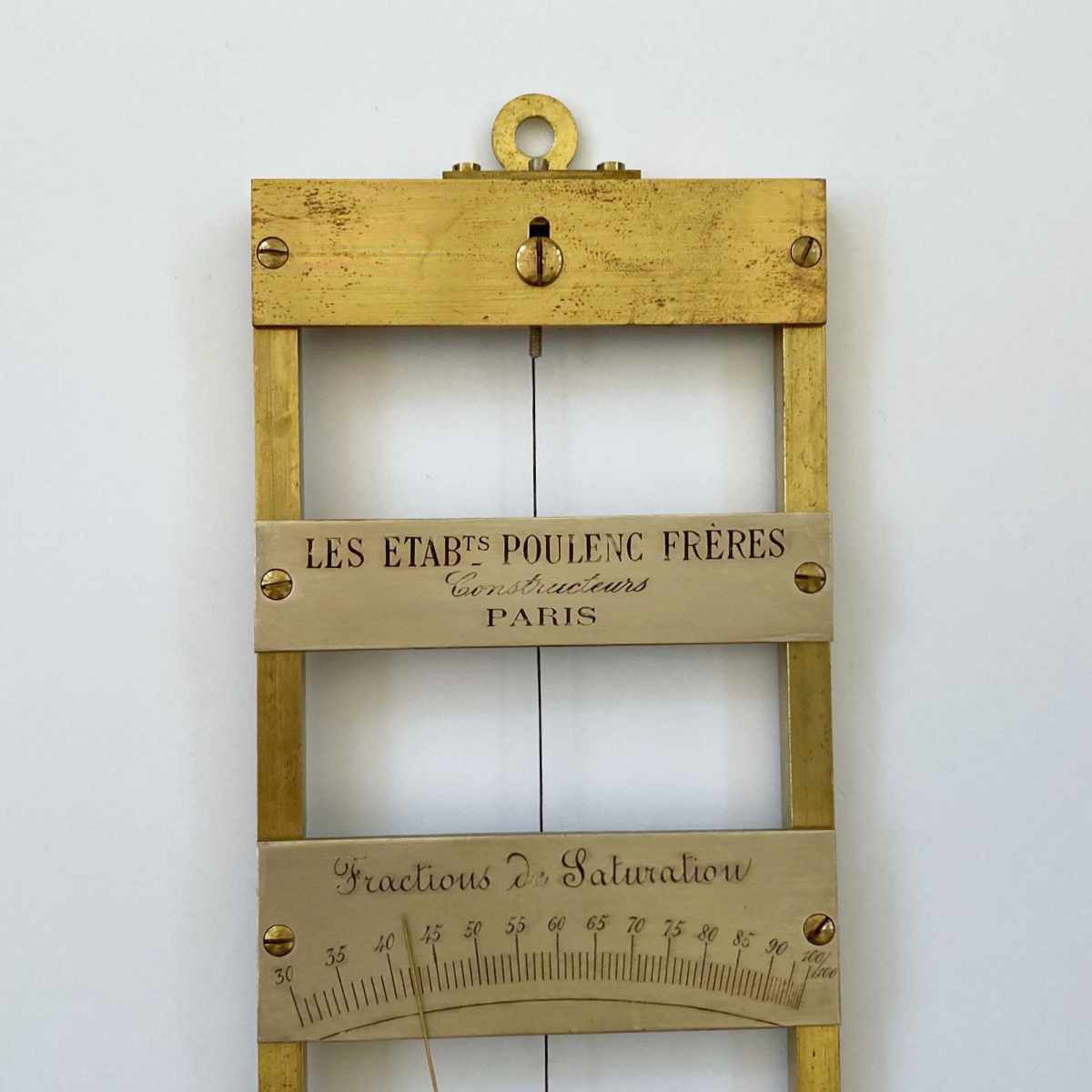
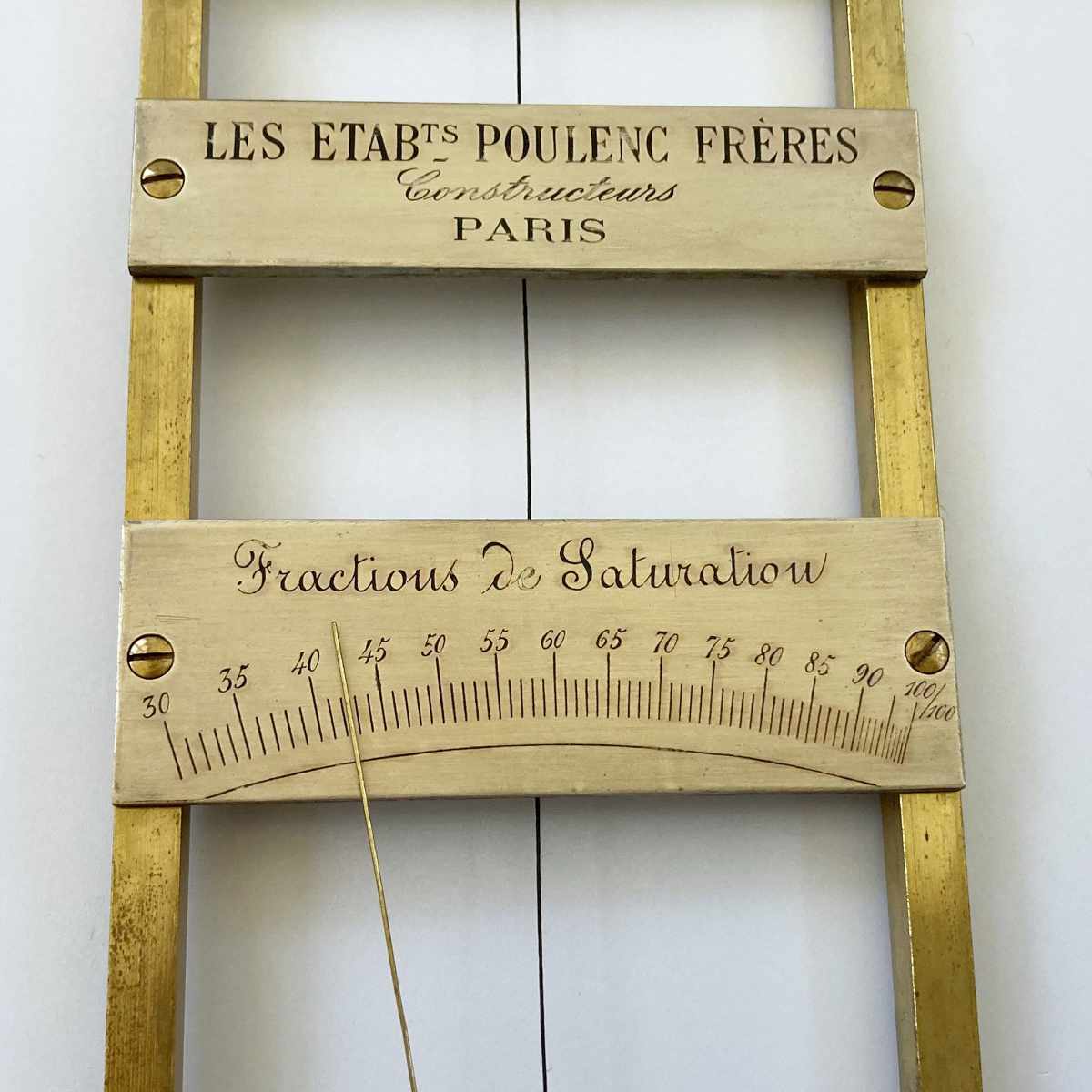
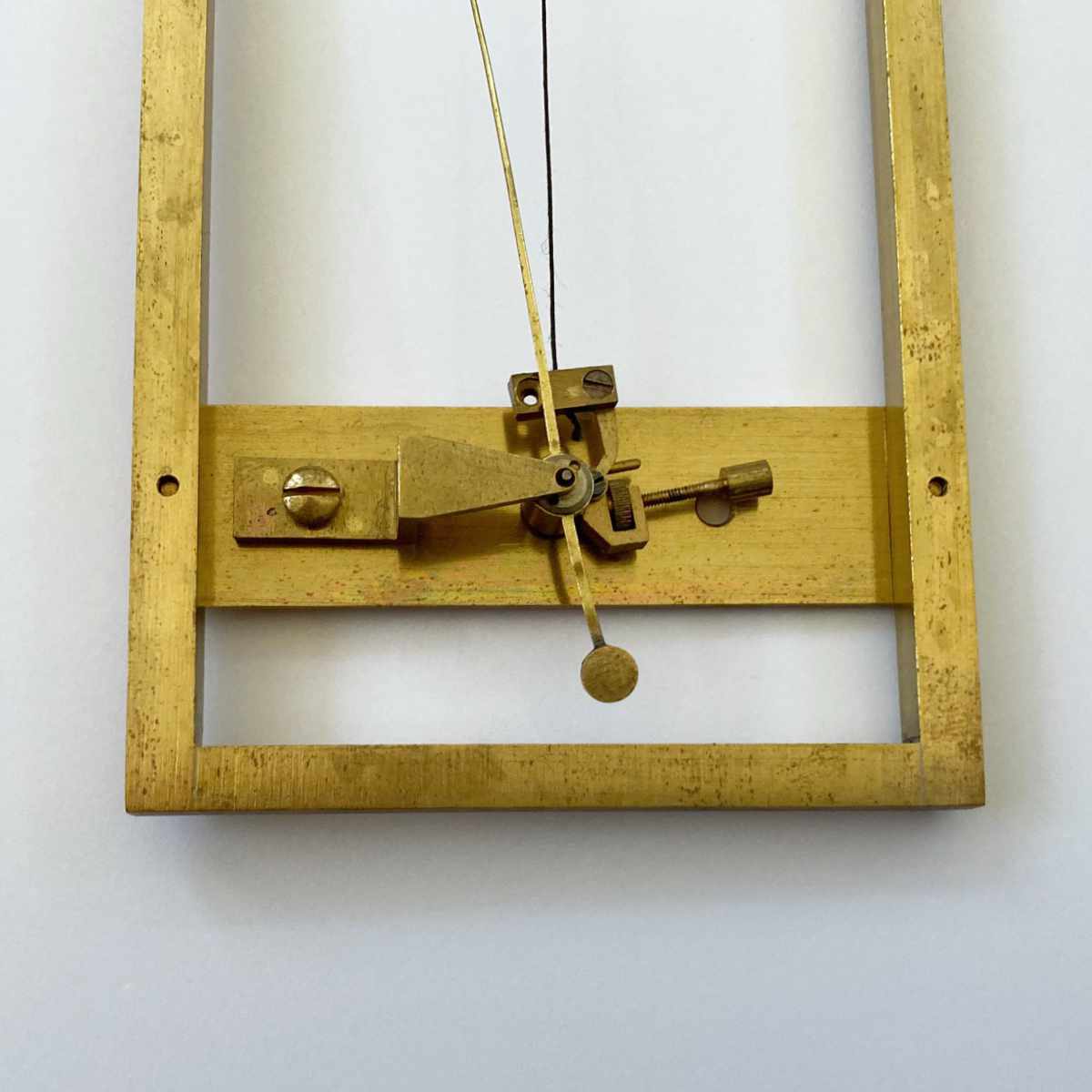
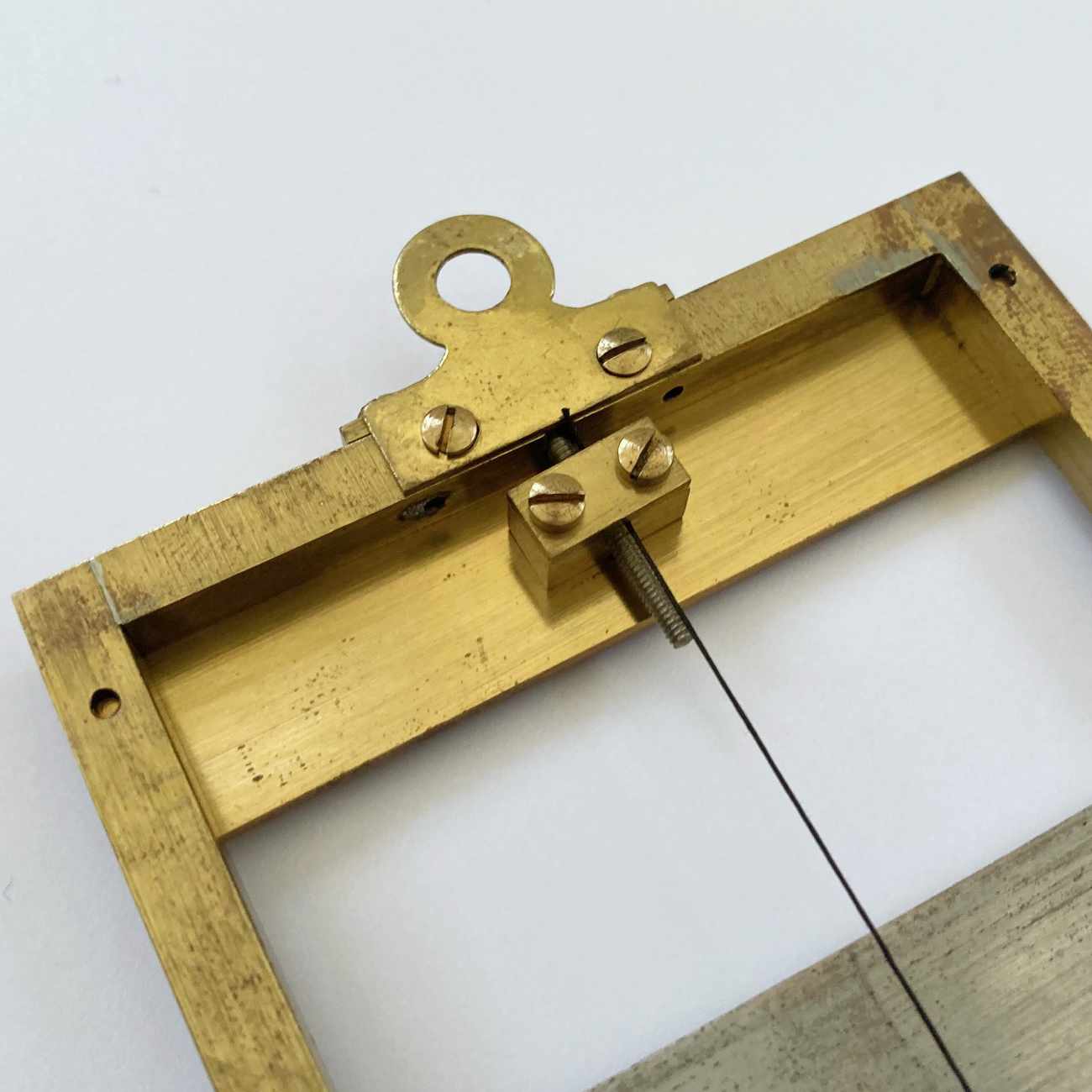
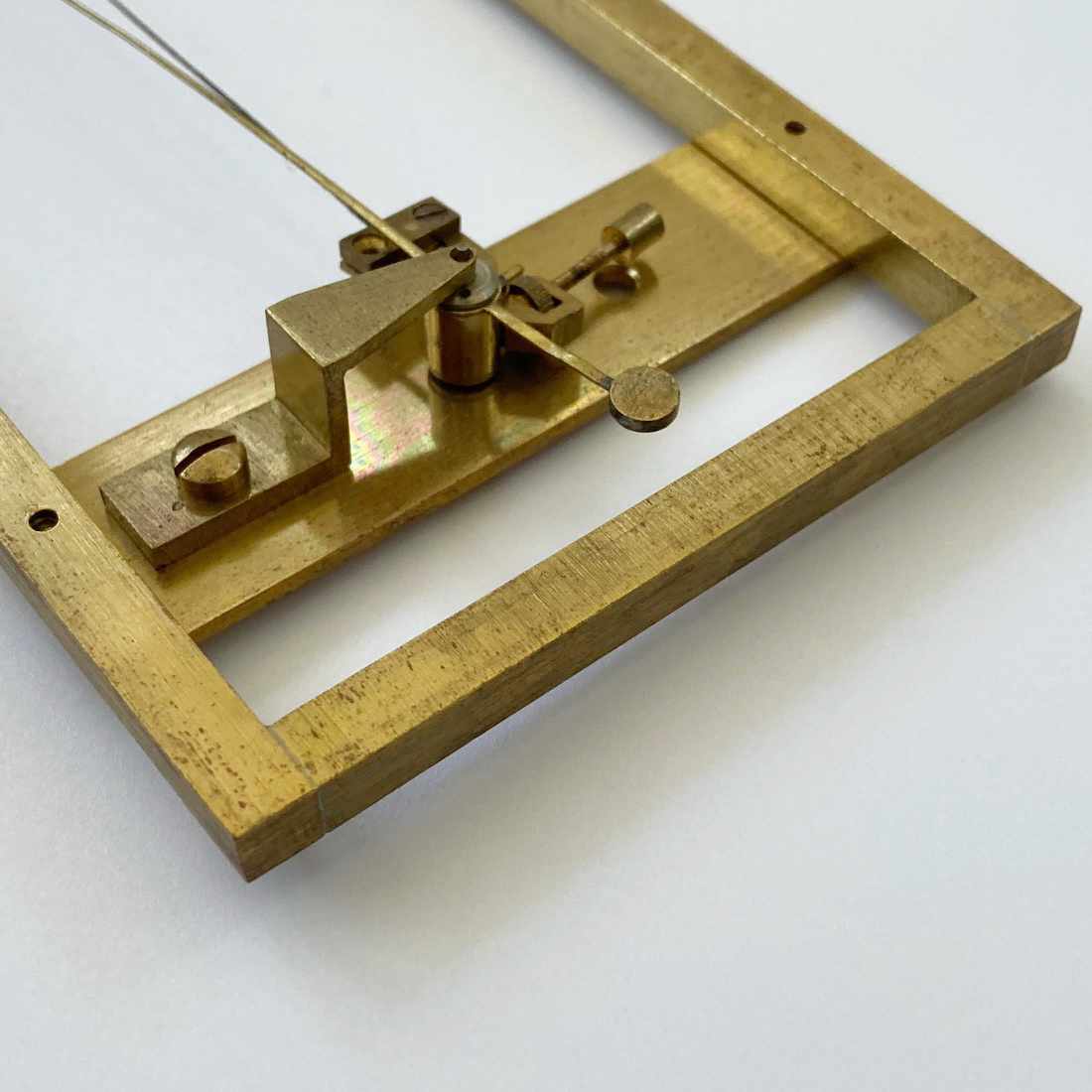
Constructed around a lacquered brass rectangular frame with attached wall hanging loop, a piece of hair is clamped at the top with the clamp attached to a screw mechanism which allows for adjustment of tautness. The hair is suspended through the centre of the frame and similarly clamped to the base pointer mechanism which has fine balance adjustment to allow the pointer to traverse the scale. A long brass pointer transfers the movement of the hair up to a central silvered scale plate measuring 30 to 100 degrees of humidity.
A second silvered and engraved plate is attached above the scale with the maker’s name, “Les Etablissements Poulenc Frères, Constructeurs, Paris”.
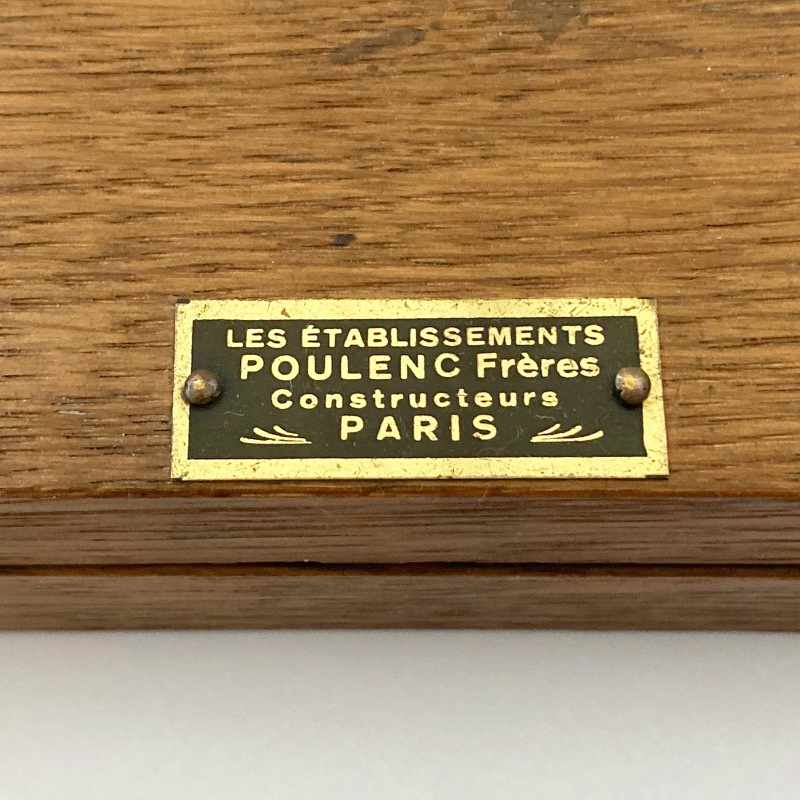
The instrument retains its original fitted walnut case with hook and eye fastenings and its original makers plaque to the lid.
The Poulenc company dates back to the early Nineteenth Century when baker Pierre Wittmann took ownership of the Hedouin pharmacy in Rue Saint-Merri, Paris. Wittmann had previously trained as a pharmacy technician and his interest in chemistry coincided with the rise of photography which developed during the middle part of the Century.
His daughter Pauline married Etienne Poulenc a pharmacist and chemist in 1851, and the son-in-law joined Pierre Witmann in business. A further workshop was established in 1852 at Vaugirard to manufacture chemicals related to the processing of photographs. By 1858 Pierre Wittmann had retired and passed the business to Etienne Poulenc and Leon Wittmann who produced photographic products under the P.W. brand (Poulenc & Wittmann) and the company exhibited these products at the 1878 Universal Exhibition in Paris.
Etienne Poulenc died in the same year, and business continued under his widow Pauline who introduced her sons to the company. It was briefly renamed “Veuve Poulenc et Fils” (Widow Poulenc & Sons) but in 1881 it was transformed into “Poulenc Freres”. The youngest son, Camille Poulenc graduated from his studies in 1893 as a Doctor of Science and headed up a Research Laboratory at what was by now an extraordinarily successful business selling scientific instruments, laboratory equipment, chemicals and a huge array of photographic products. Camille took the company further forward with his research into producing medicines using both organic and synthetic chemistry. He was also given radium by Pierre & Marie Curie as part of his research endeavours.
The company’s success drove the decision to incorporate in 1900 and it was renamed to the “Etablissements Poulenc Frère” with the three brothers retaining two thirds of the capital. In the same year it exhibited at the Exposition Universelle in Paris.
In 1903 Ernest Fourneau took over the management of pharmaceutical research producing a synthetic local anaesthetic named Stovain. It also benefitted from the onset of the First World War where its expertise was employed in producing poison gas and associated antidotes. It was also required to replicate drugs that were no longer available to the market owing to the effects of war on trade.
After the war, the Poulenc company bought a controlling stake in the British pharmaceutical company May & Baker in 1922 and subsequently merged with the French company, “Societe Chimique des Usines du Rhone” in 1928 to form a new company, “Rhone-Poulenc”.
It continued to trade as Rhone Poulenc until the 1990s where numerous selloffs and mergers took place and it was finally subsumed in 2011 into Sanofi.
Given the various mergers and name changes throughout the company’s long period of trading, it can be said with certainty that this instrument would have been produced between 1900 and 1928. My assumption is that due to its wartime demands and focus, this instrument is likely to have been produced quite soon after the company’s incorporation and in less fraught times.
Circa 1900