

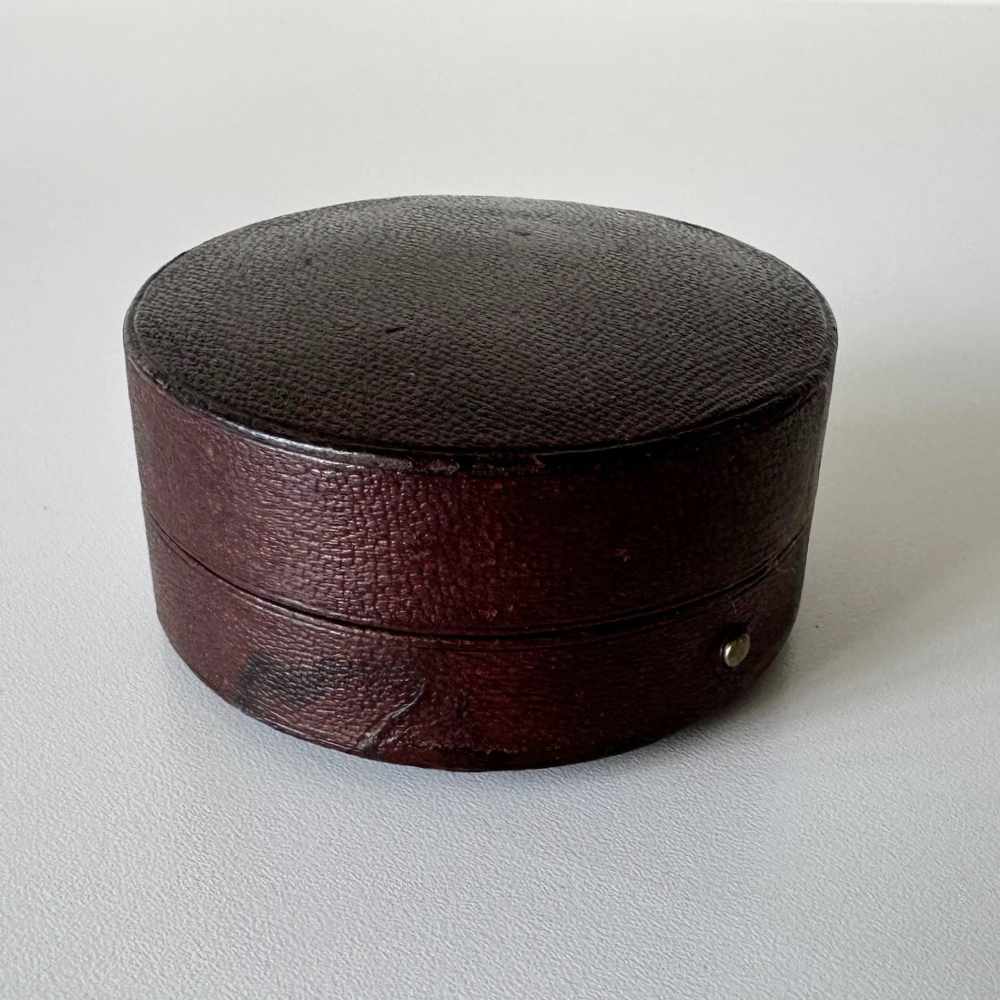
Victorian Cased Pocket Galvanometer by Alfred Apps of 433 The Strand London
£395
Victorian Cased Pocket Galvanometer by Alfred Apps of 433 The Strand London
Dimensions
H: 8.5 x W: 8.5 x D: 4cms
Circa
1870
Maker
Alfred Apps
Country of manufacture
UK and Ireland
Description
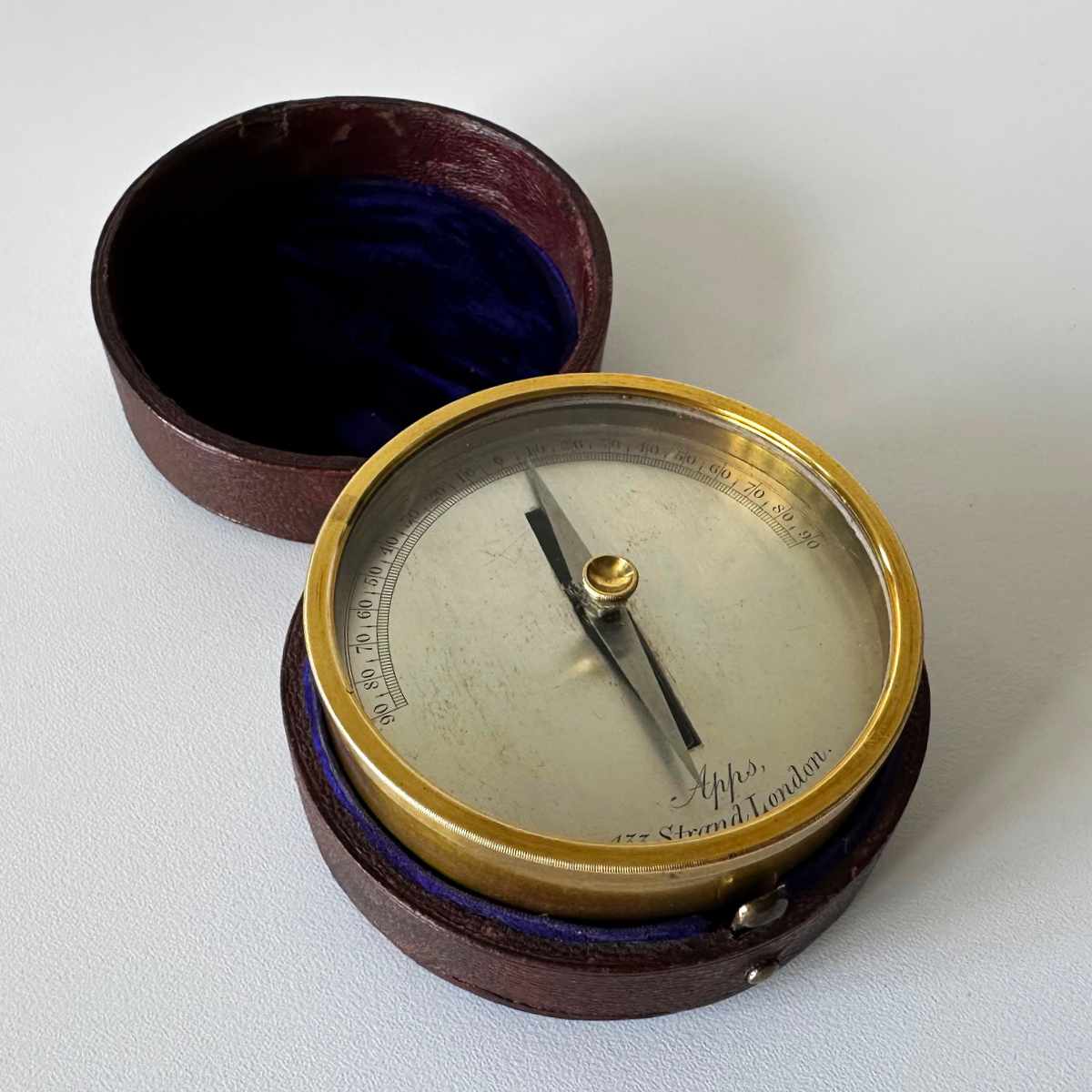
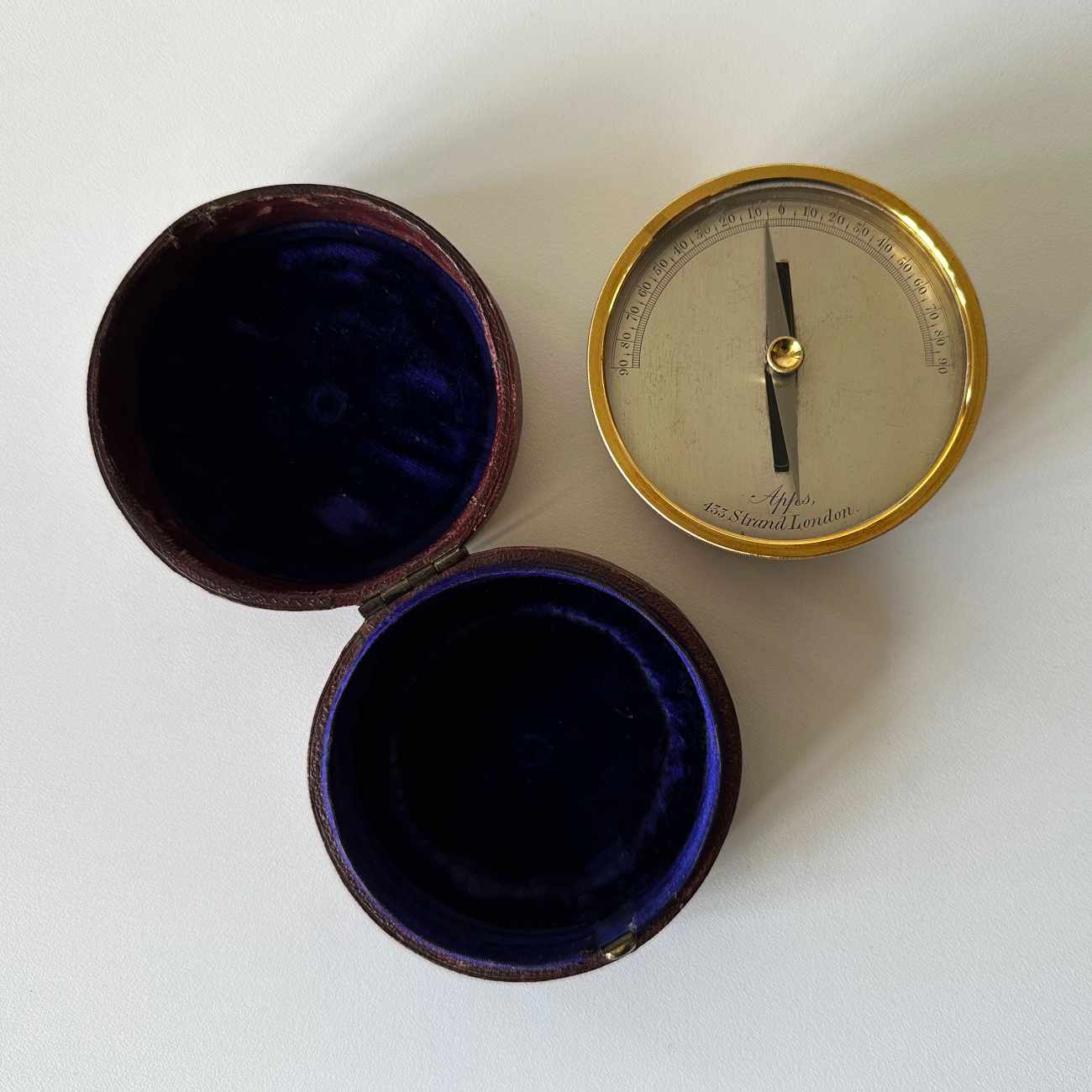
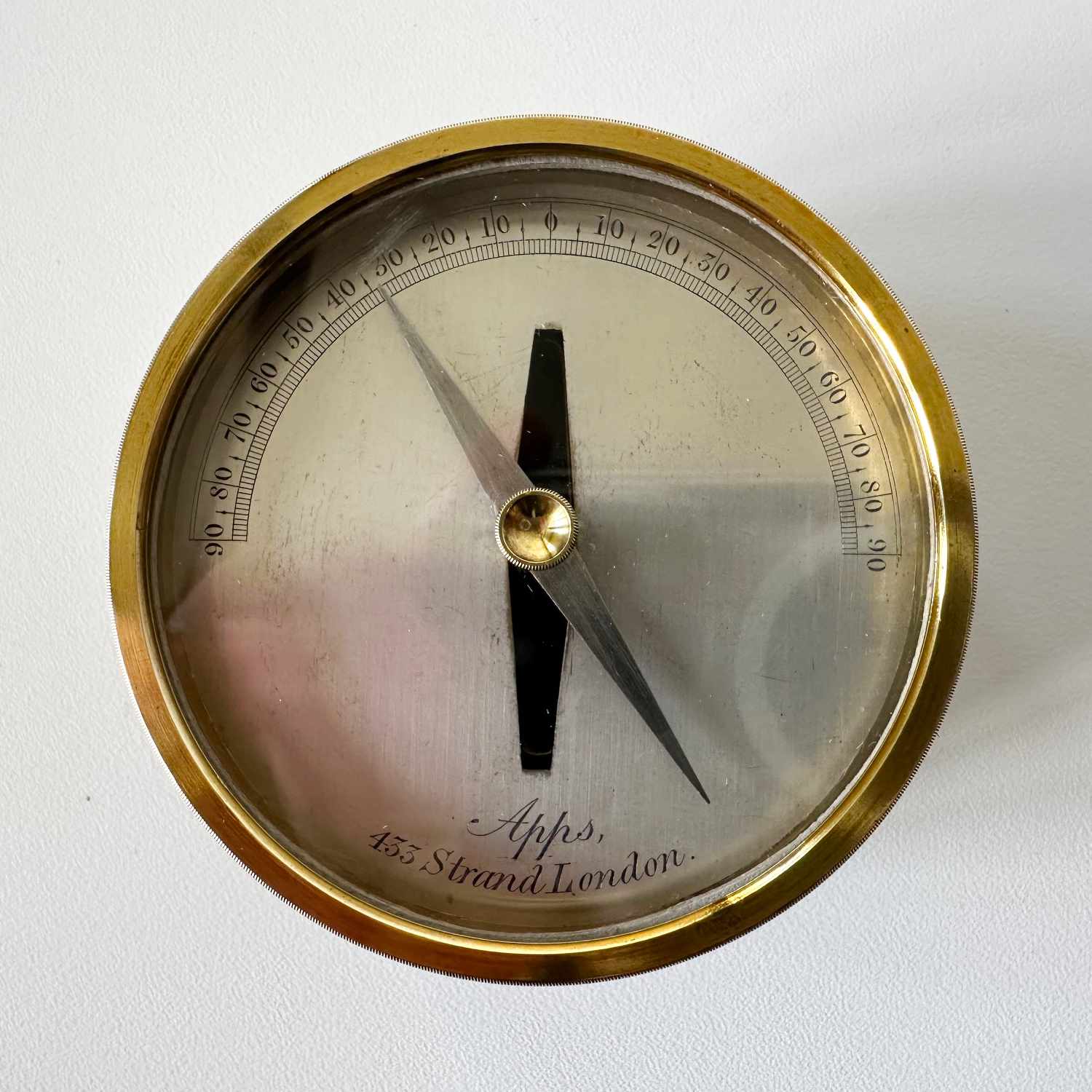
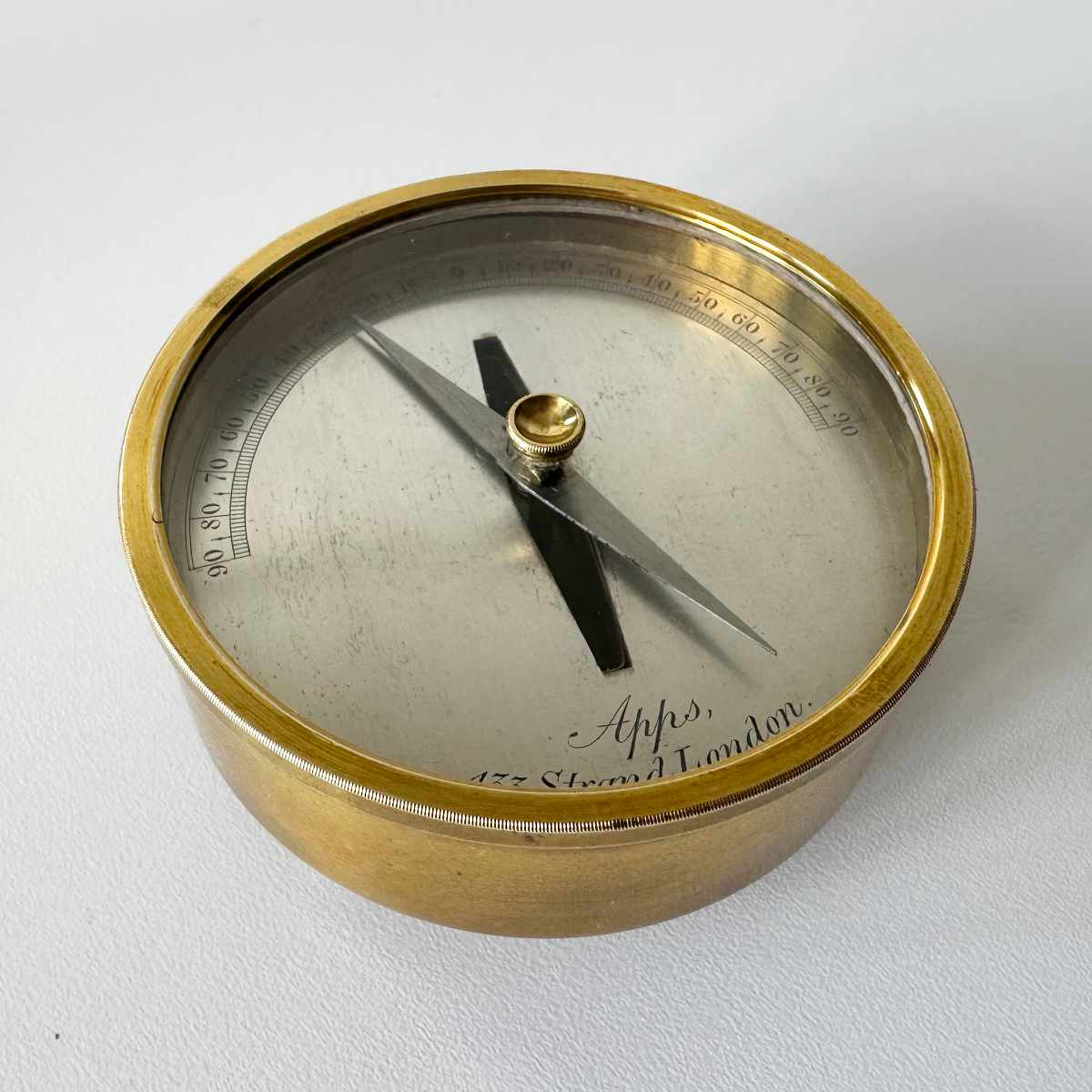
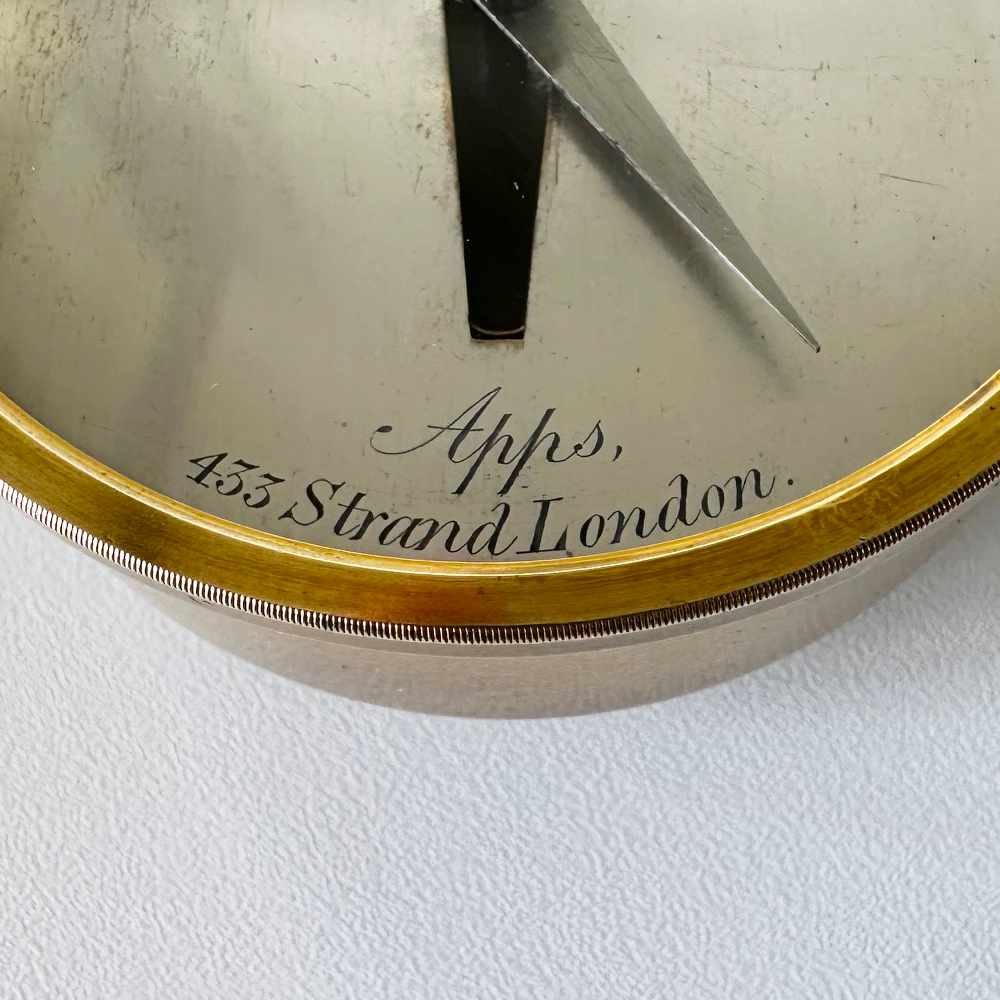
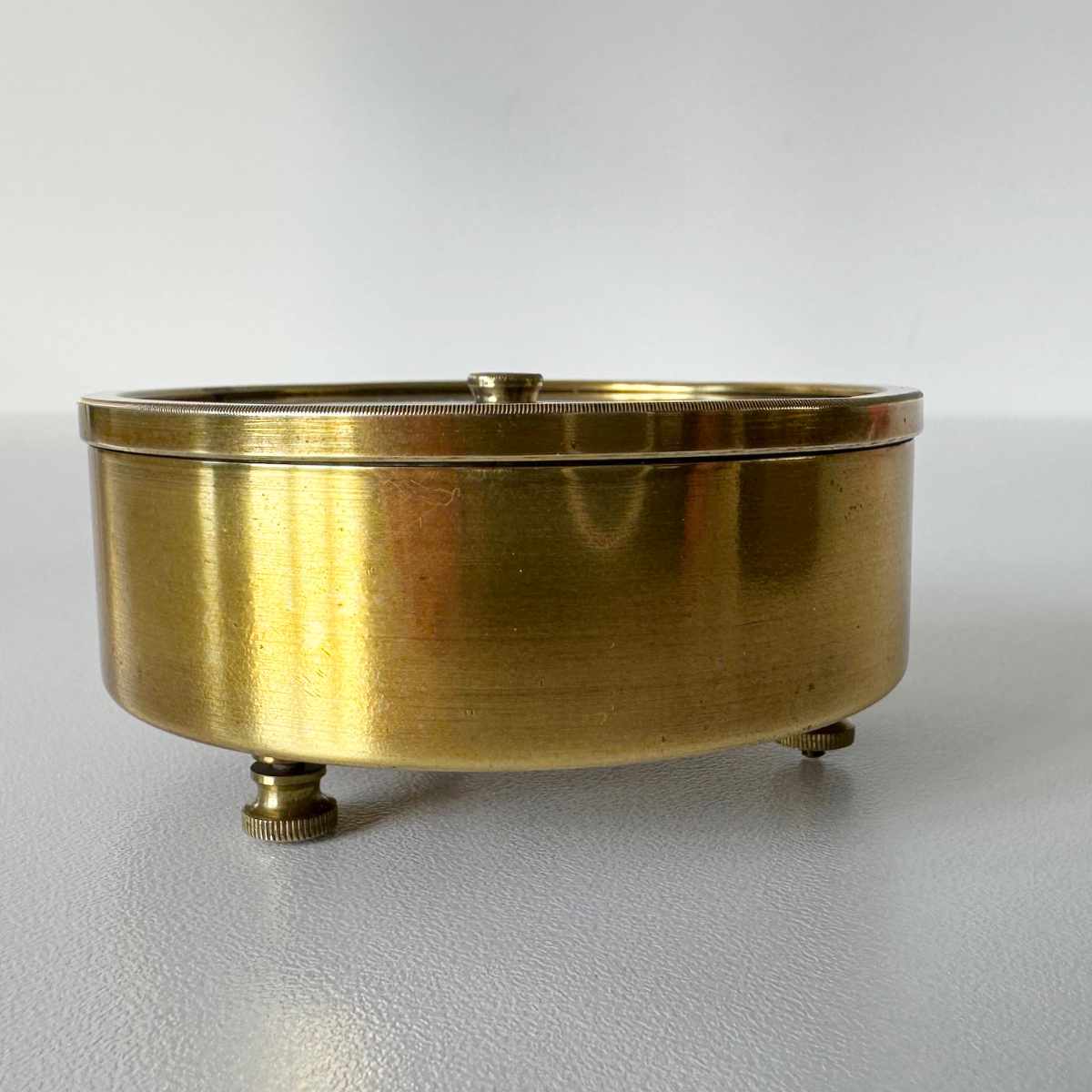
For sale, a Victorian cased pocket galvanometer by Alfred Apps of 433 Strand, London.
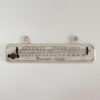
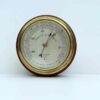
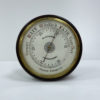
Comprised of three-inch silvered dial with voltage graduations engraved to the top half. The centre point set at zero graduating to 90 volts either side to denote direction and strength of the current to be measured. A silvered brass double ended pointer is set above the dial and is surmounted over a central magnet. The base of the dial is engraved to the maker, “Apps, 433 Strand, London”.
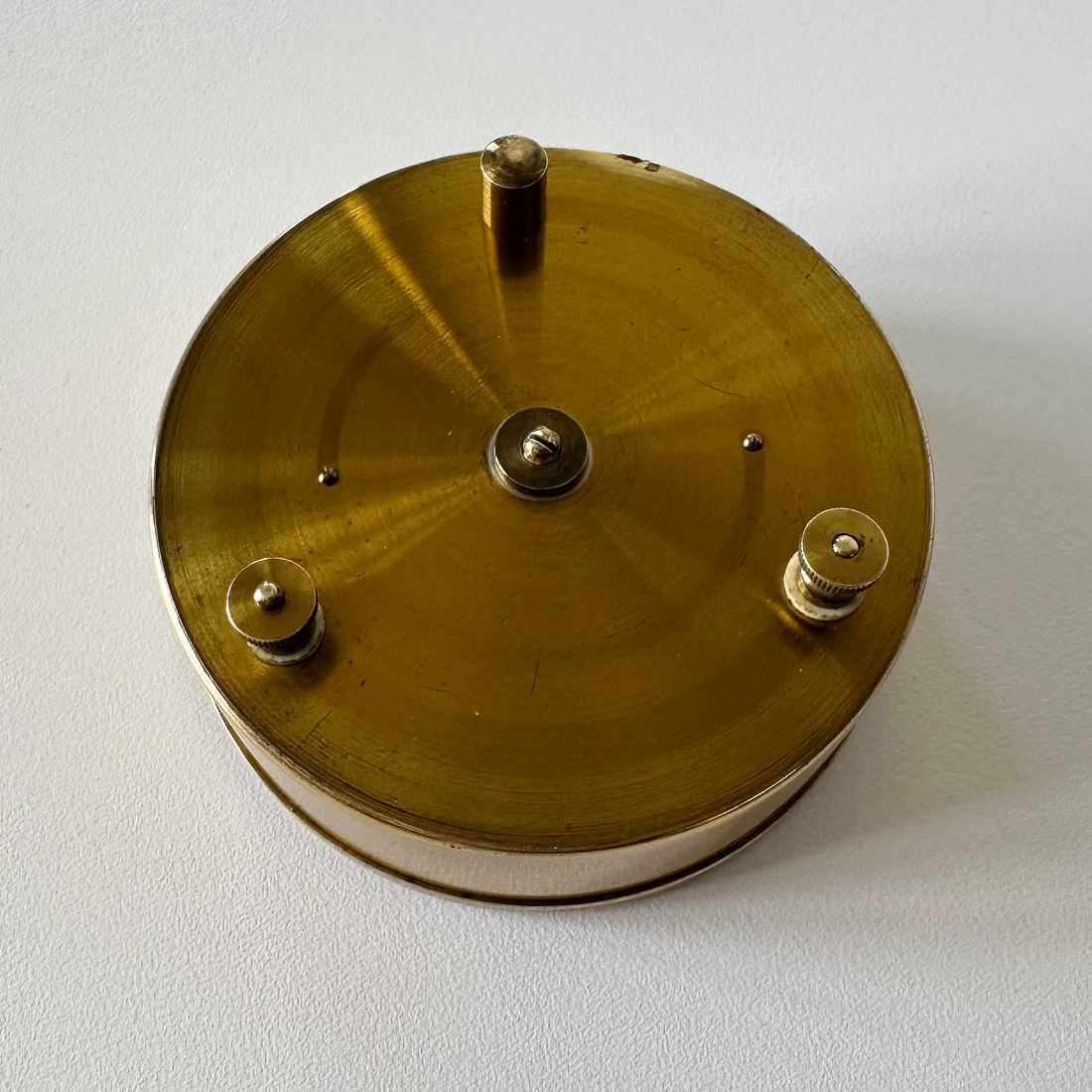
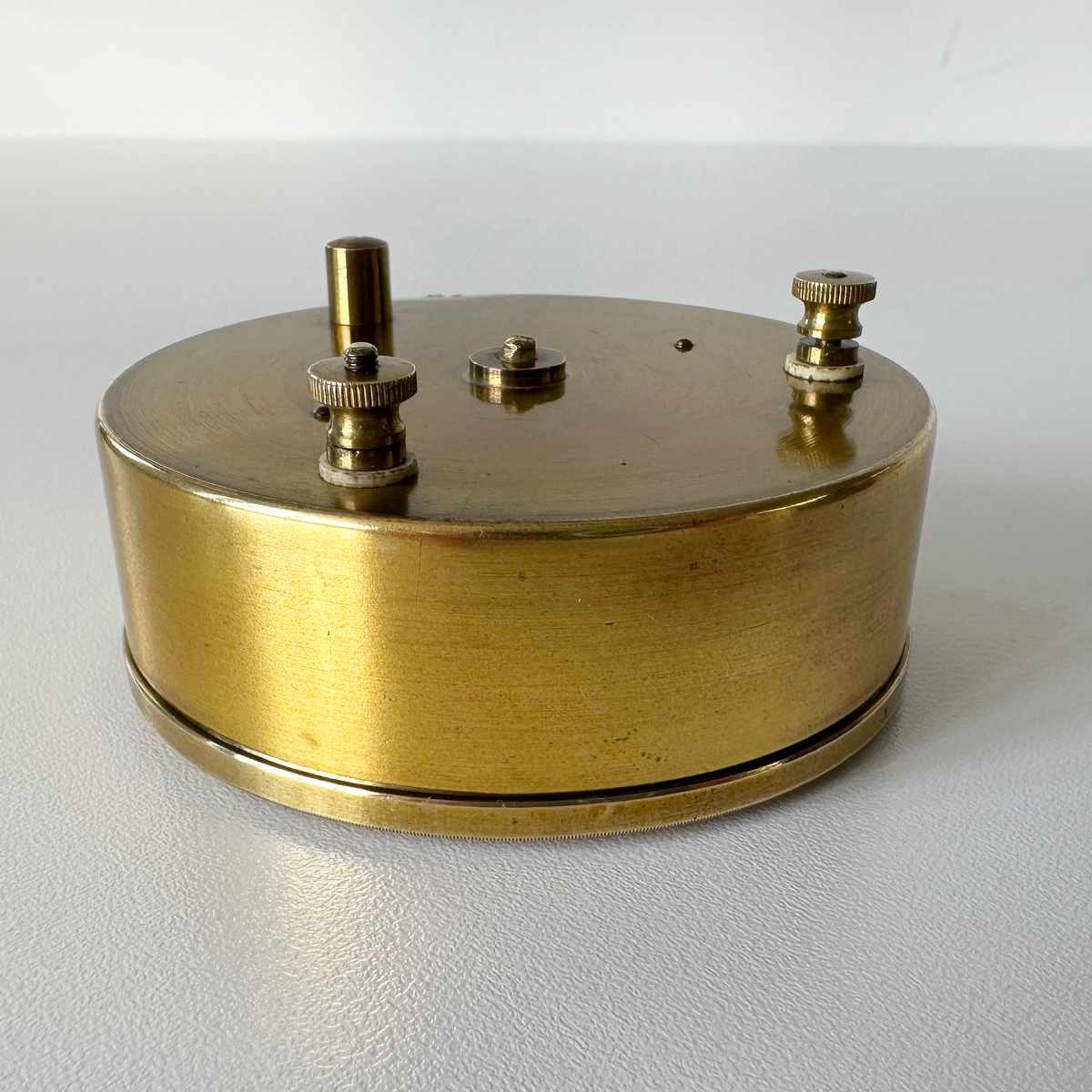
The dial is enclosed in a three-inch brass case with inset glass bezel and brass knob which serves to keep the pointer in position. The reverse of the instrument has three brass legs to raise the instrument up from a surface, two of which also have knurled brass screws to allow for the positioning of the electrical contacts when in use.
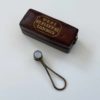
The instrument is complete with its original red Morocco leather two-part hinged case with blue silk velvet interior.
Antique tabletop galvanometers are not entirely uncommon, but I have rarely seen portable pocket type examples such as this one.
Alfred Apps remains surprisingly unrecognised within the roster of famed Nineteenth Century scientific instrument makers but during his lifetime, he was highly regarded and his instruments (though surprisingly rare now) are always superbly manufactured.
Born in 1839 into a milling family in Battle East Sussex and with his two older brothers destined to take over the family concern, Apps was presumably well educated and sought an apprenticeship in London although no records for this are available. Using this assumption, he would certainly have been able to trade in his own right by 1860, and it is certain that he was doing that by 1866 at premises at 433 The Strand, an address which he maintained throughout his life.
Trading through a period where electricity was at the forefront of scientific endeavour, Apps became a well renowned electrician and in 1869 was commissioned to build a huge induction coil (dubbed The Monster Coil or The Great Lightning Inductorium) for the Royal London Polytechnic. “The machine that Apps built was nine feet, ten inches in length and two feet in diameter. The primary coil weighed 145 pounds and was made of 3770 yards of copper wire would six thousand times around the central iron core, The secondary coil consisted of 150 miles of wire”. The public demonstrations of the instrument were impressive enough to receive the attention of The Times newspaper in the same year and were attended by British Royalty.
Apps maintained a specialism for electrical devices throughout his career, in 1877 he built an even larger coil for William Spottiswoode which required 280 miles of wire and could produce a 42 inch spark, he also patented his own induction coil during the 1880’s which was also sold by Newton & Co. His trade cards however, also reveal that he manufactured and sold a very wide range of goods, advertising himself as an optical, mathematical and philosophical instrument maker.
Apps seems not to have retired, he continued to work beyond the turn of the century and is mentioned as an award winner in the 1908 Franco-British Exhibition. Tragedy struck him in later life with the death of his daughter whilst working in a hospital in Palestine and he died just two years later in 1913 leaving an estate worth £21,943. A huge sum for that period.
The business was eventually sold to his close partners, Newton & Co
Circa 1870.