
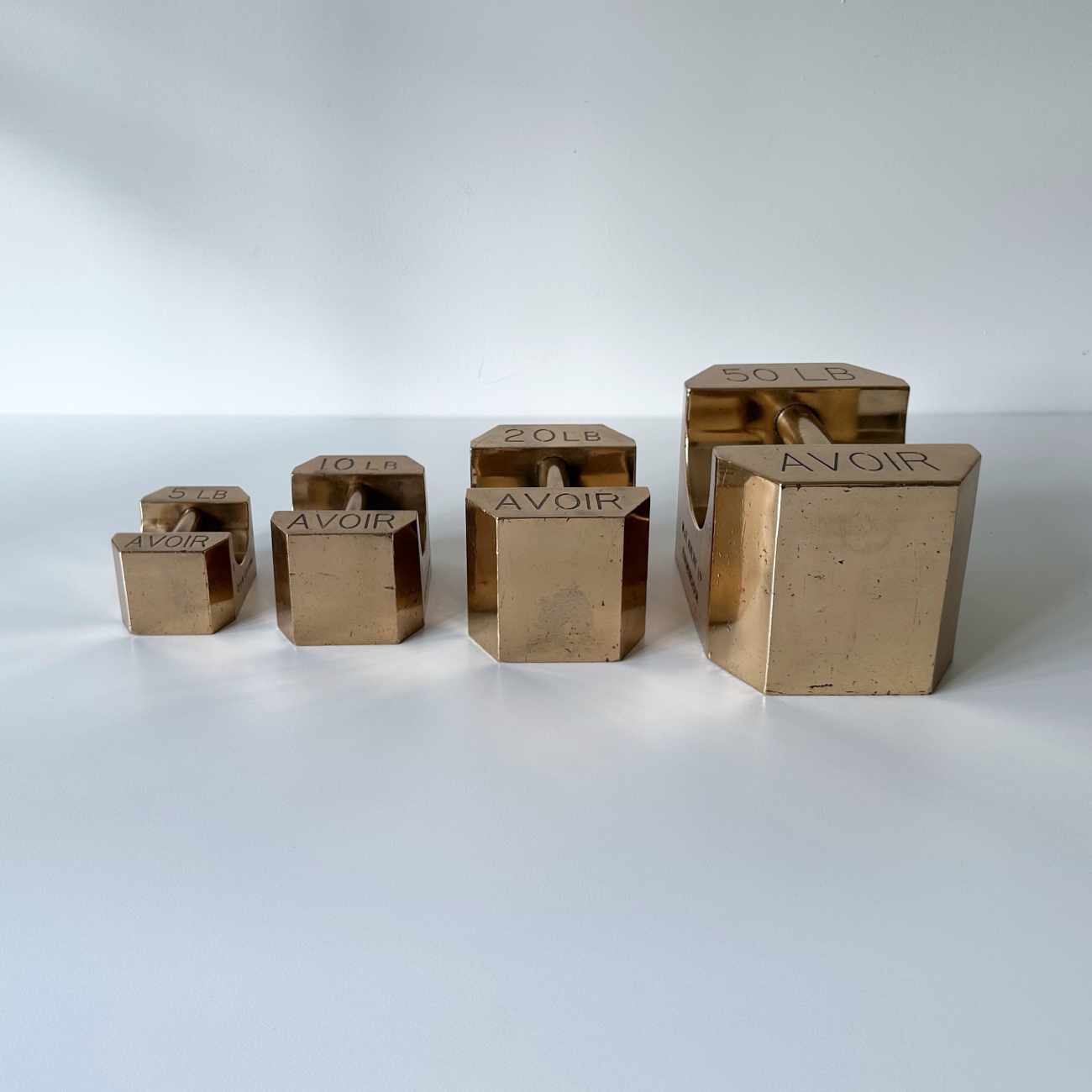
Edwardian Set of Avoir Standard Weights for The City of Liverpool by W&T Avery
£1,750
Edwardian Set of Avoir Standard Weights for The City of Liverpool by W&T Avery
Dimensions
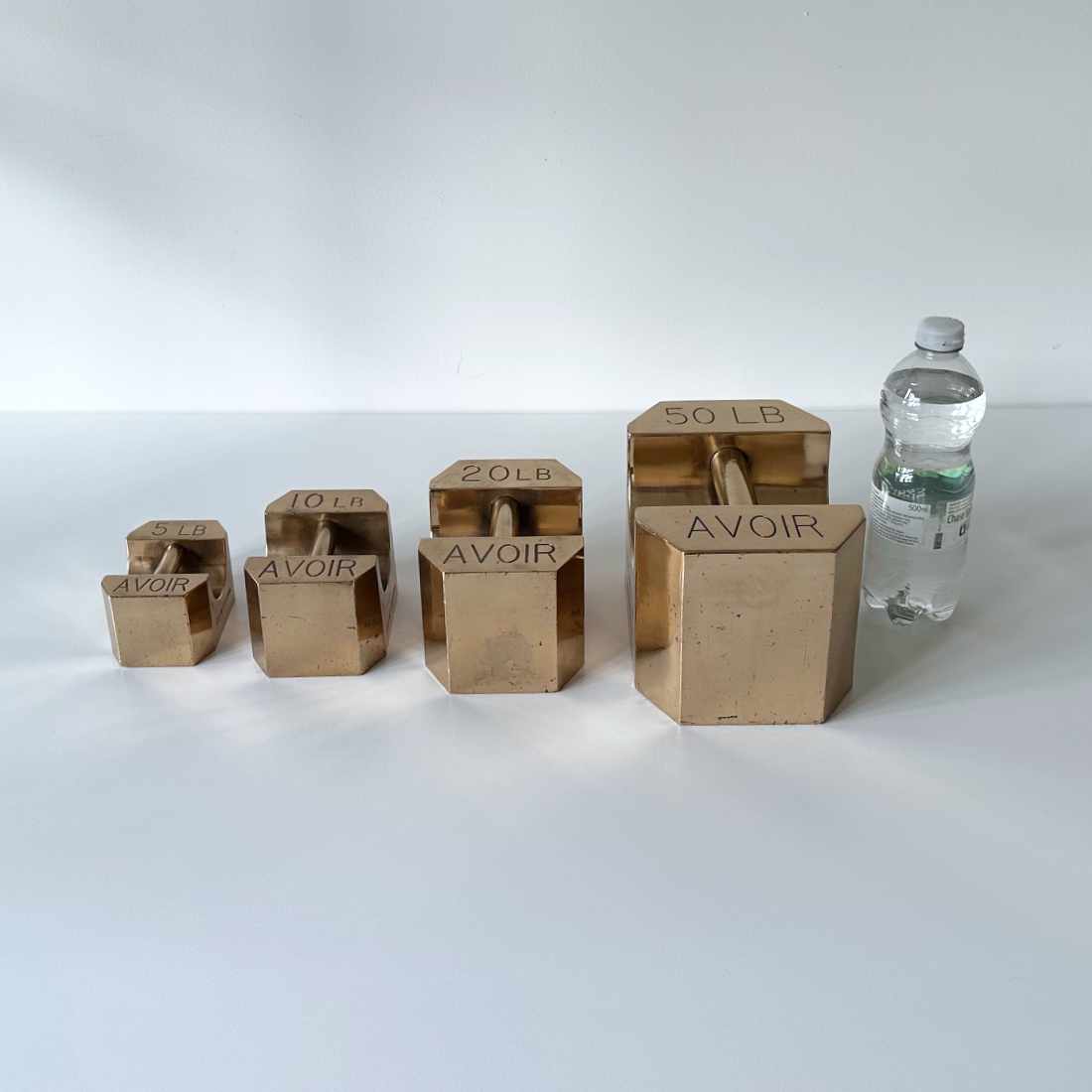
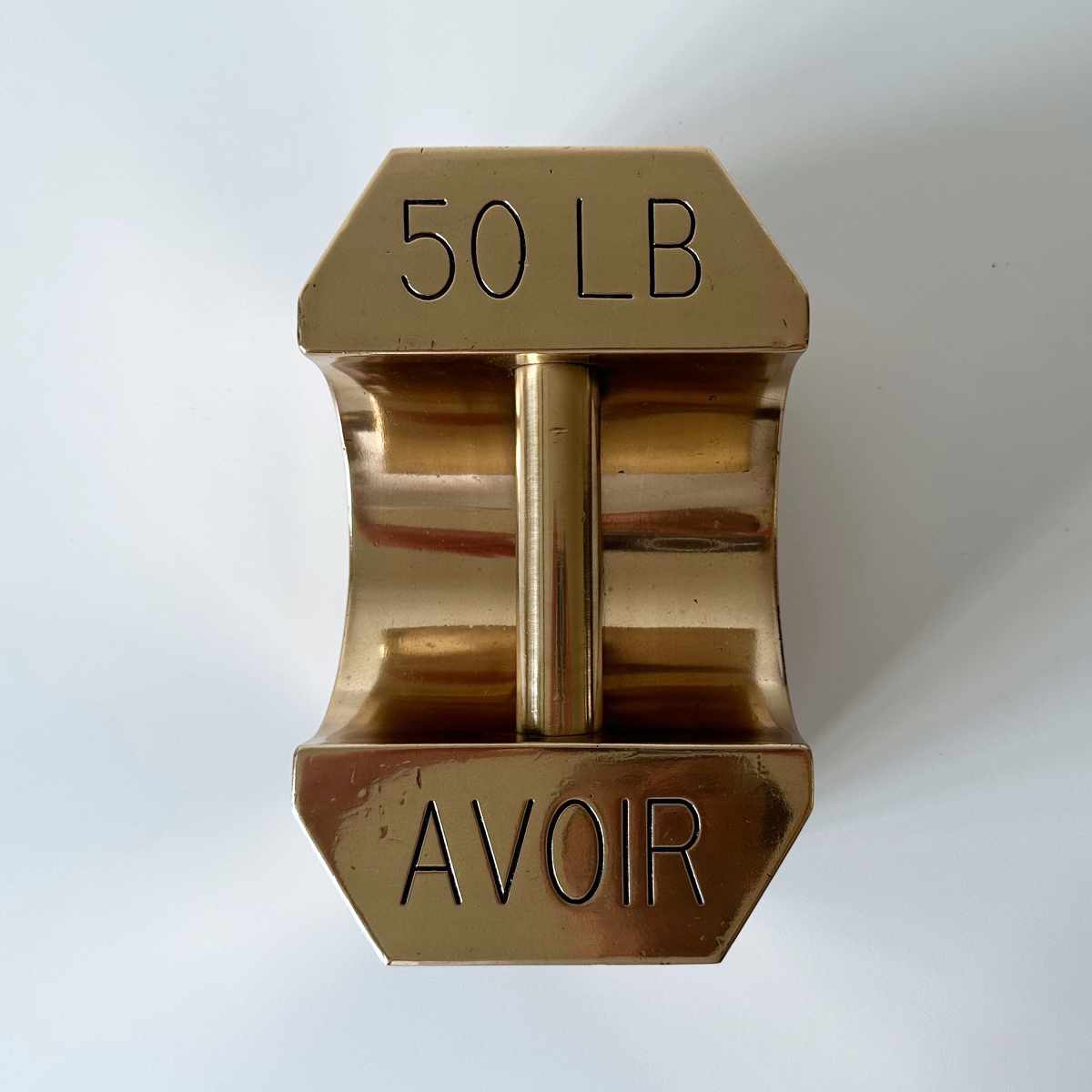
50lb weight: H: 12 x L: 22 x W: 14cms
Circa
1904
Maker
W&T Avery Limited
Country of manufacture
UK and Ireland
Description
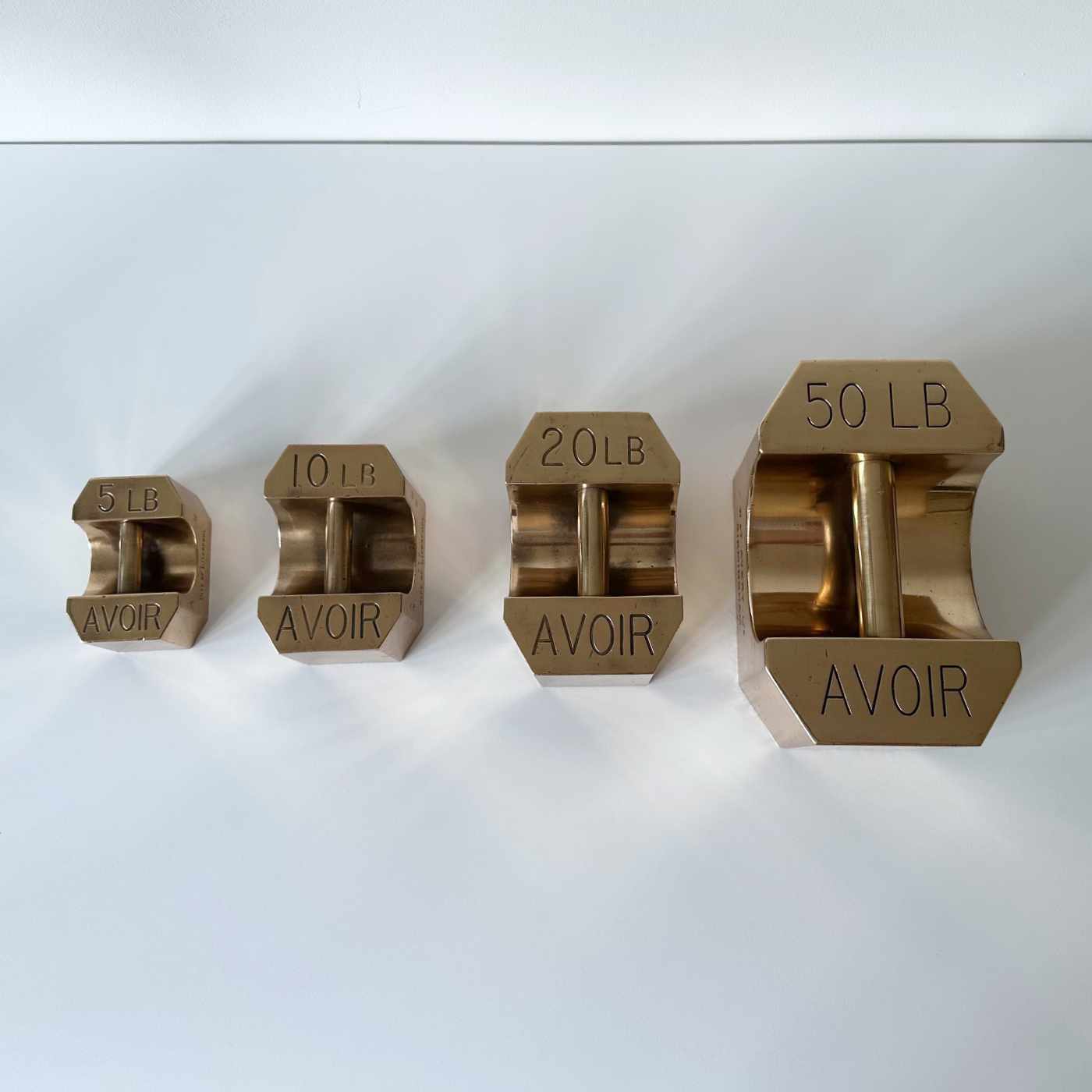
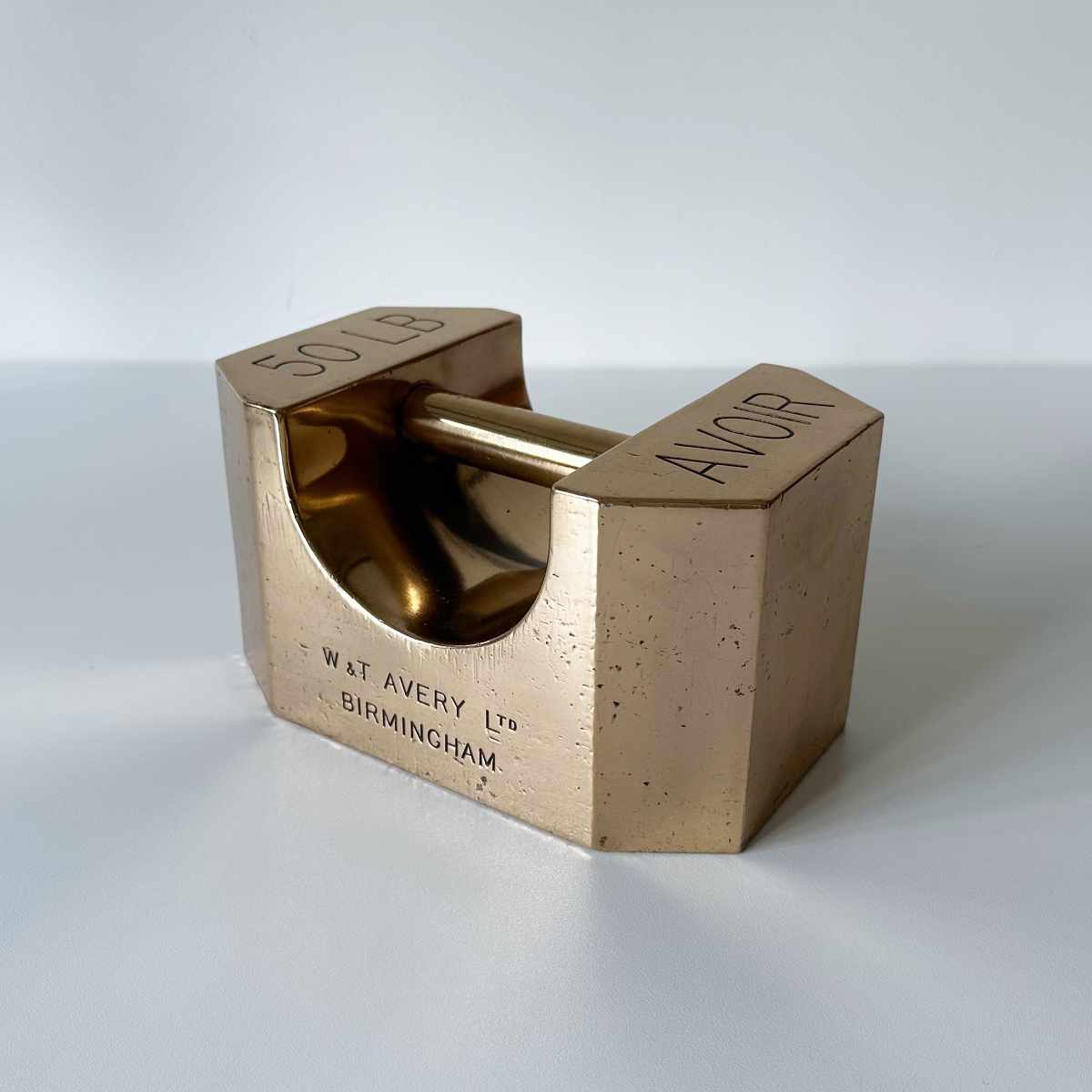
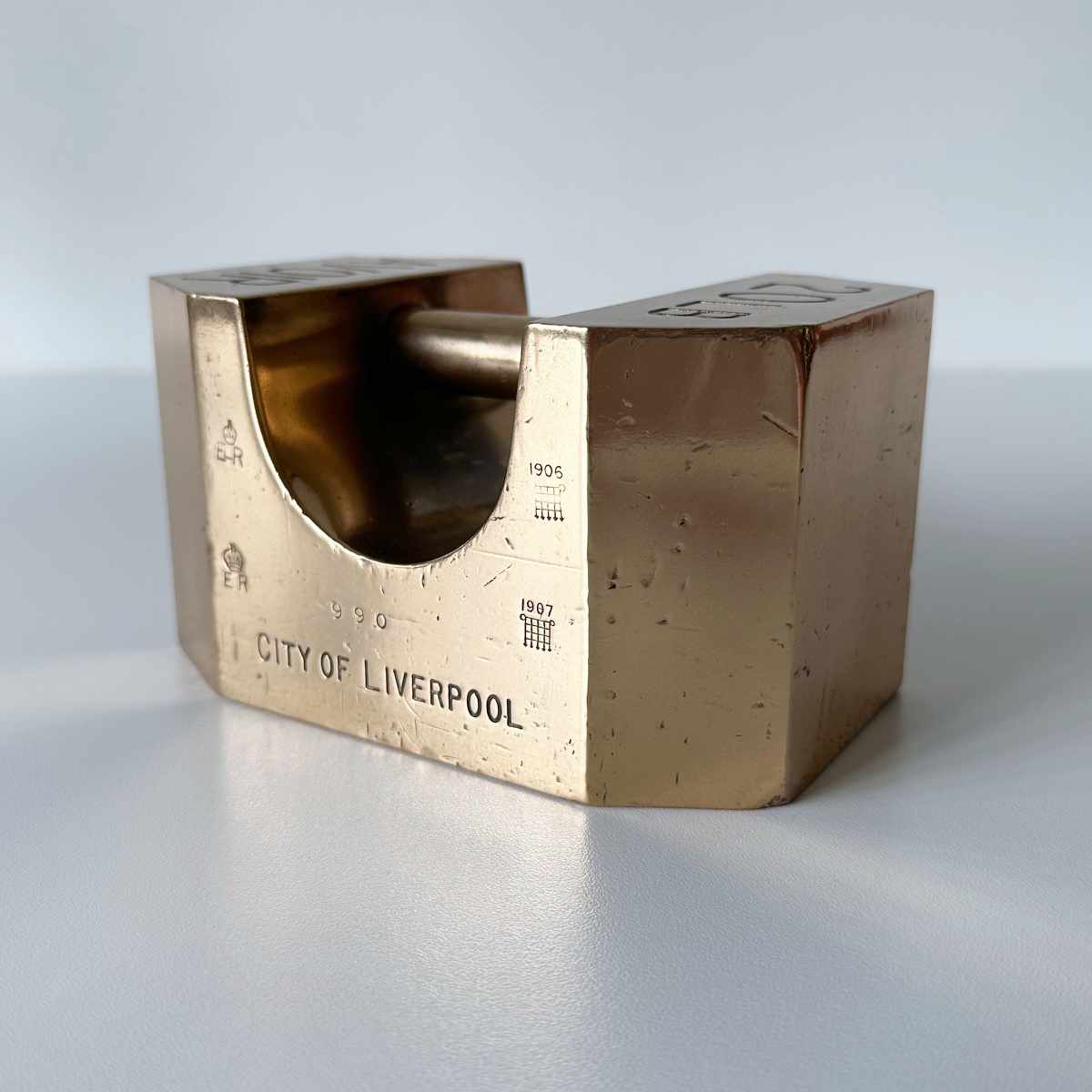
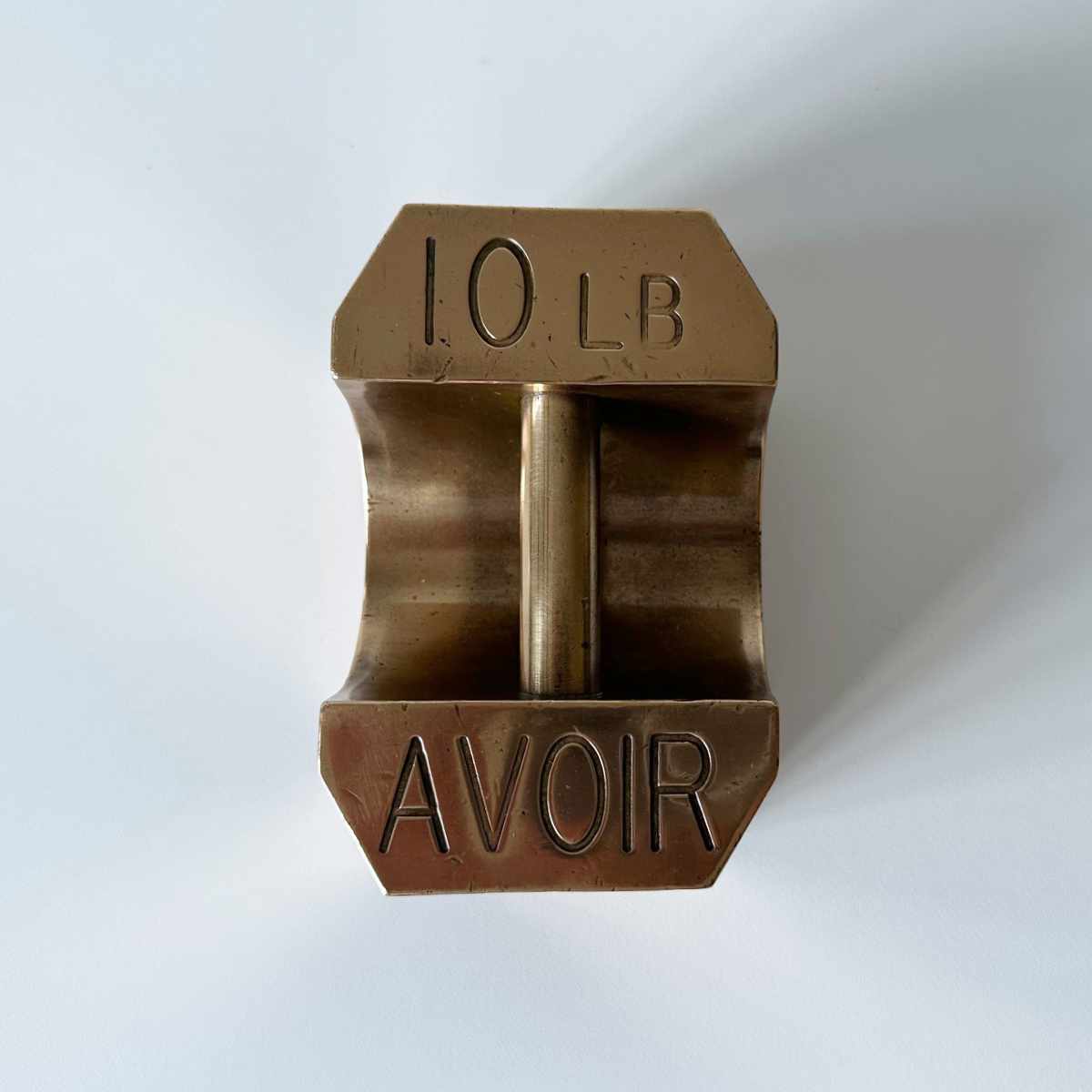
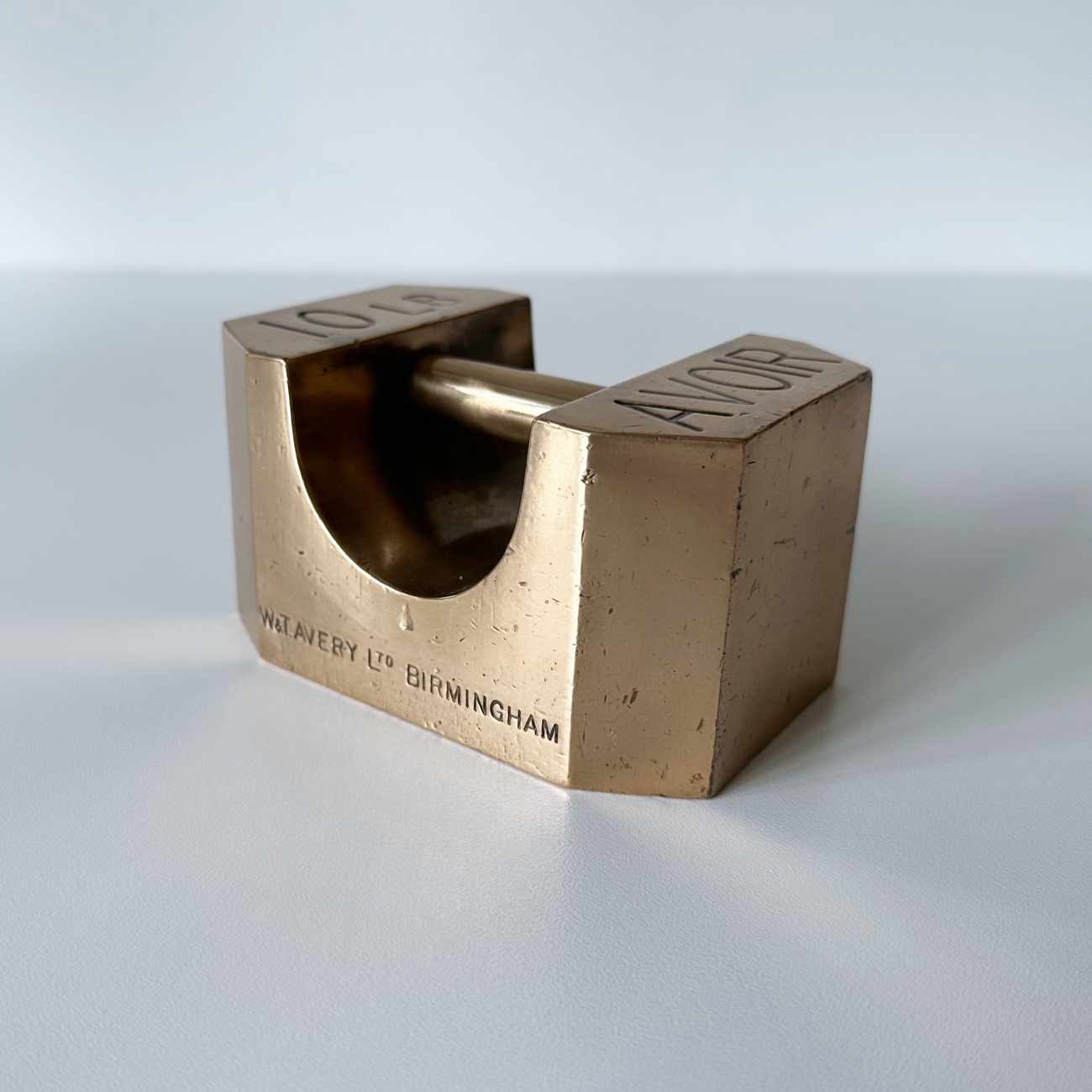
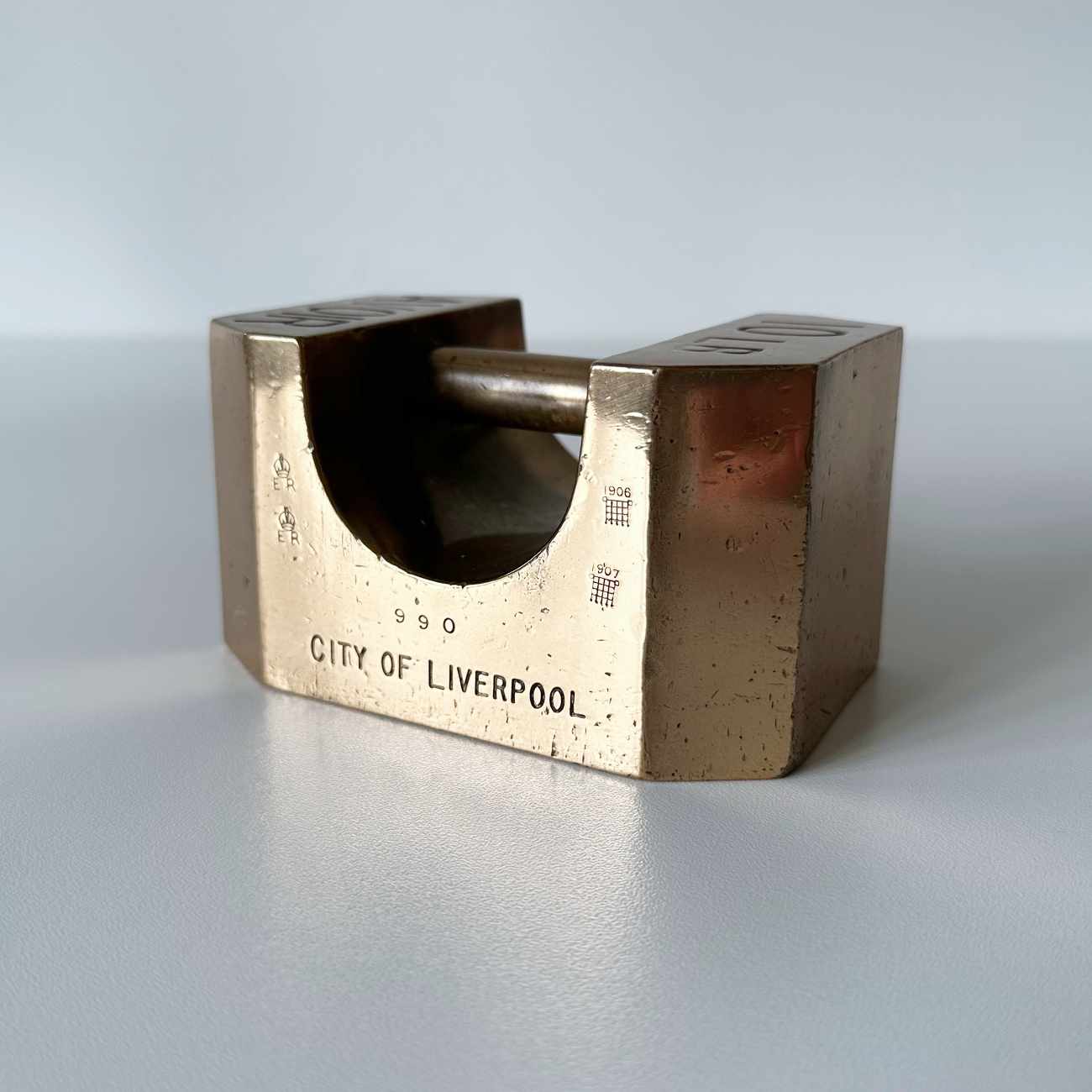
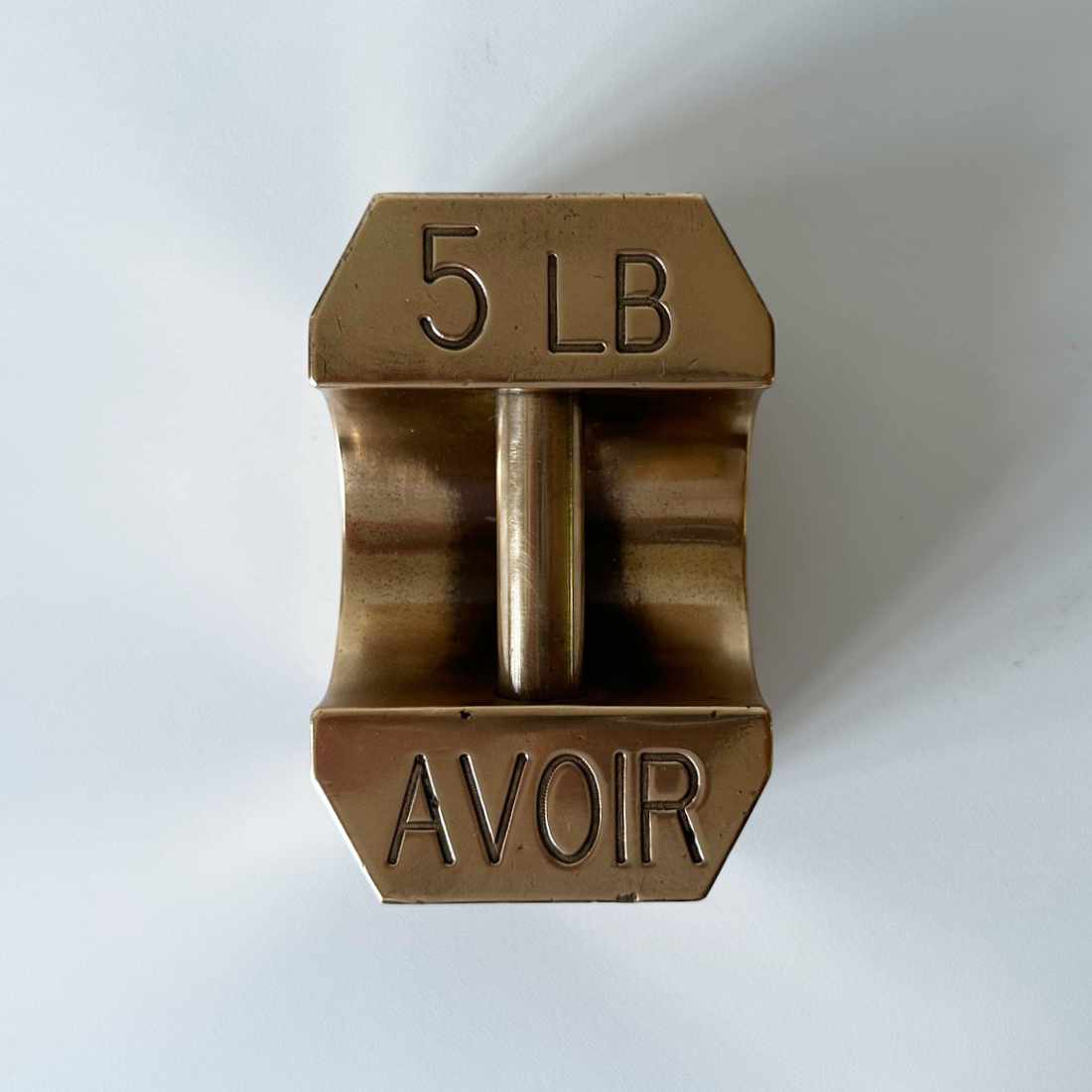
For sale, an Edwardian set of Avoir Imperial Standard Weights for The City of Liverpool by W&T Avery.
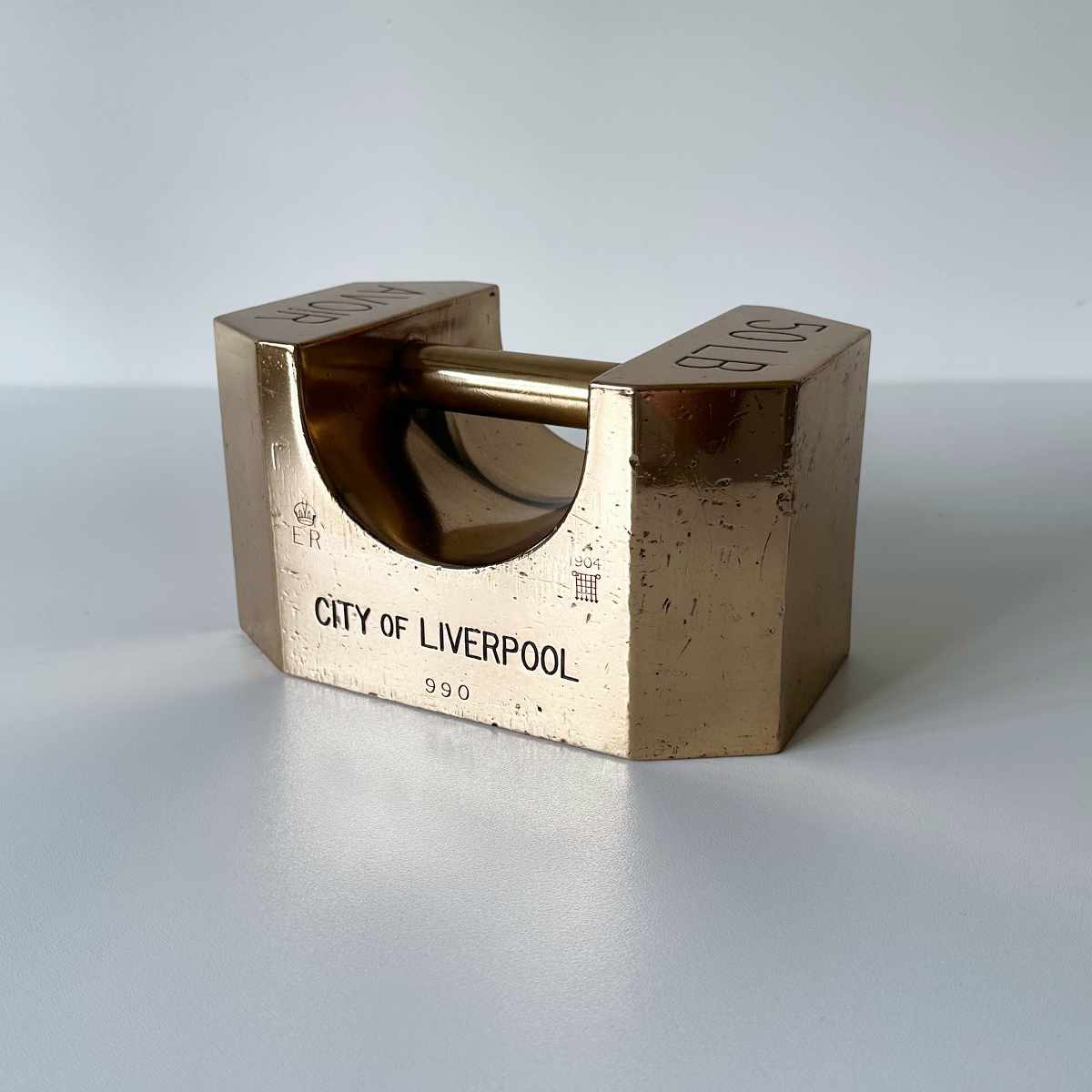
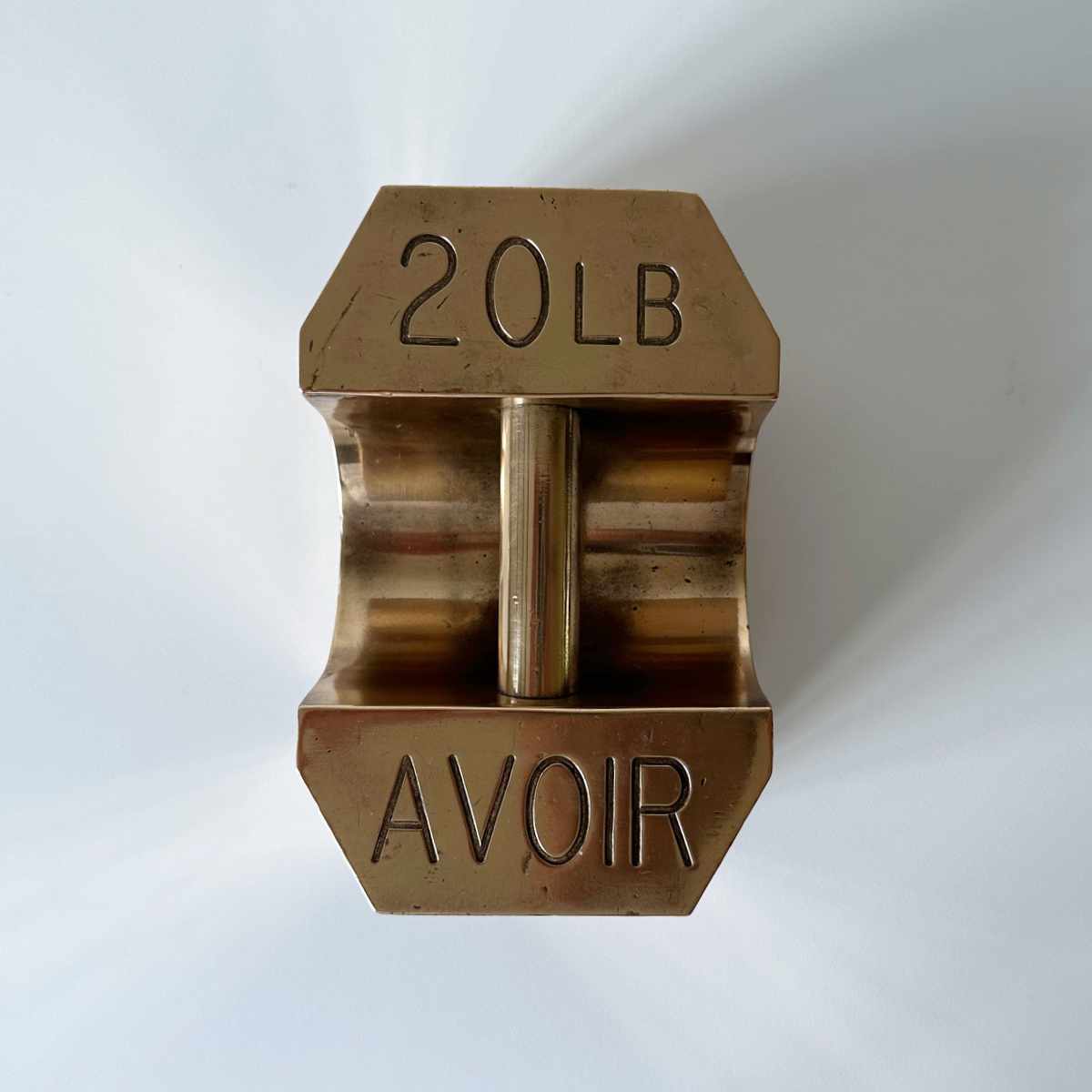
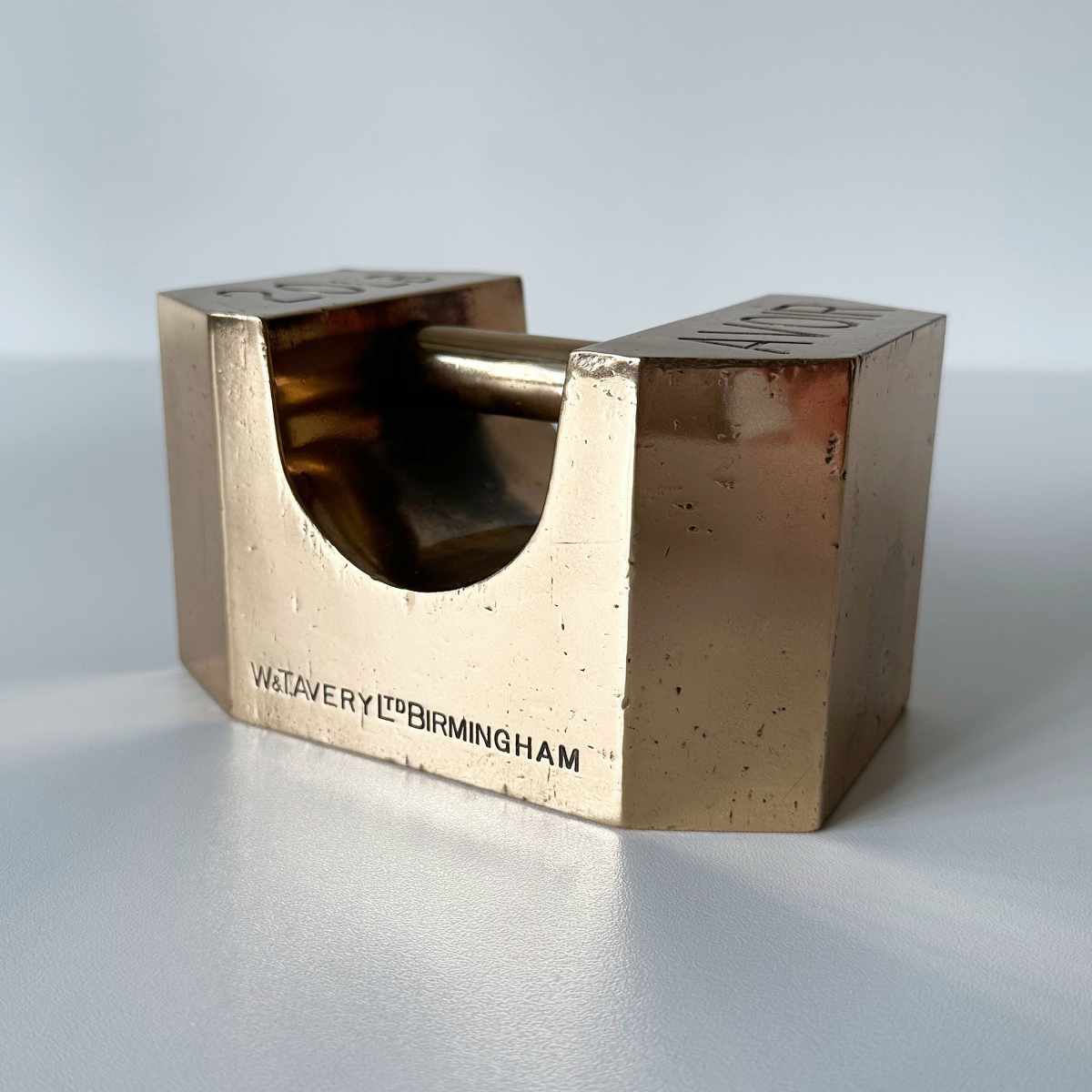
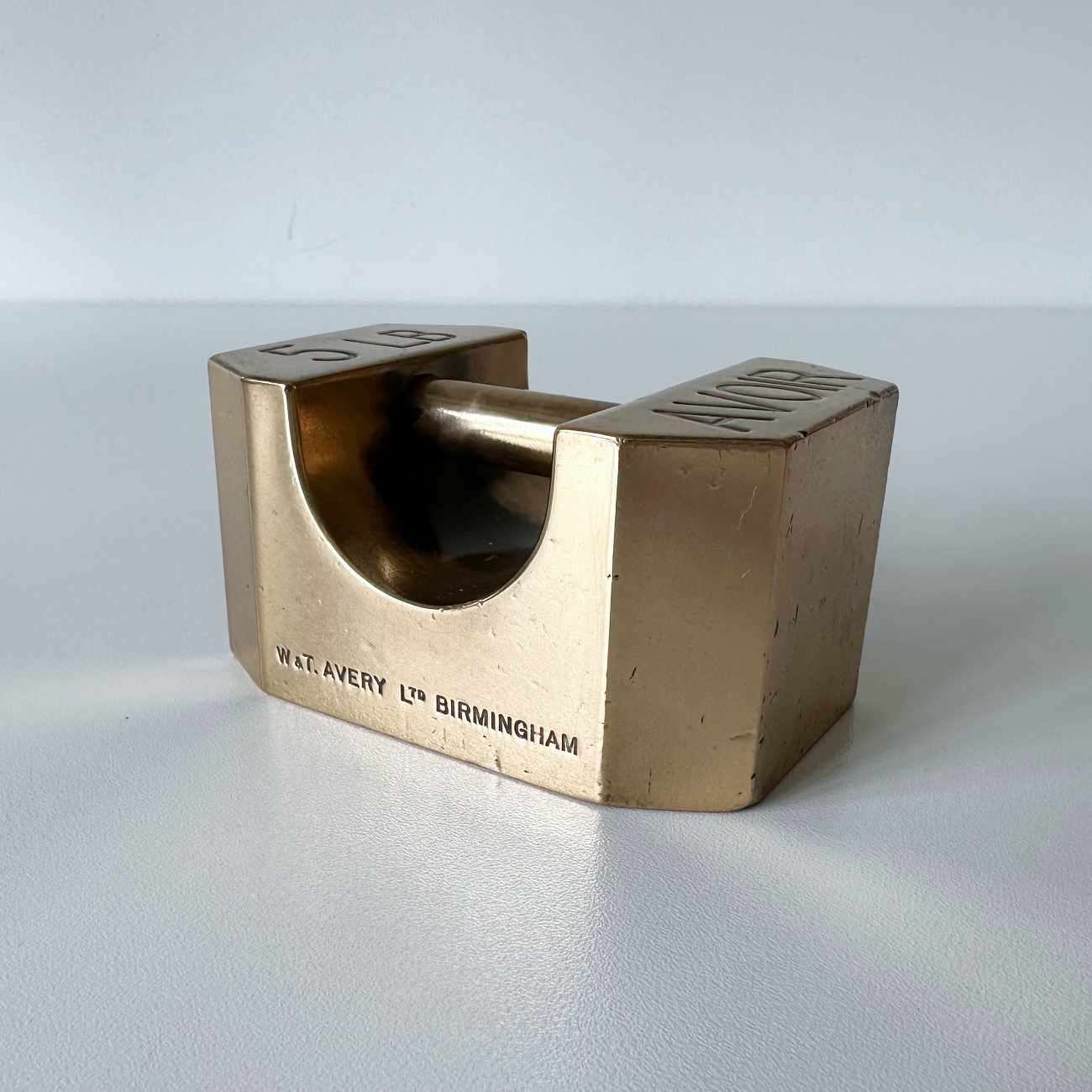
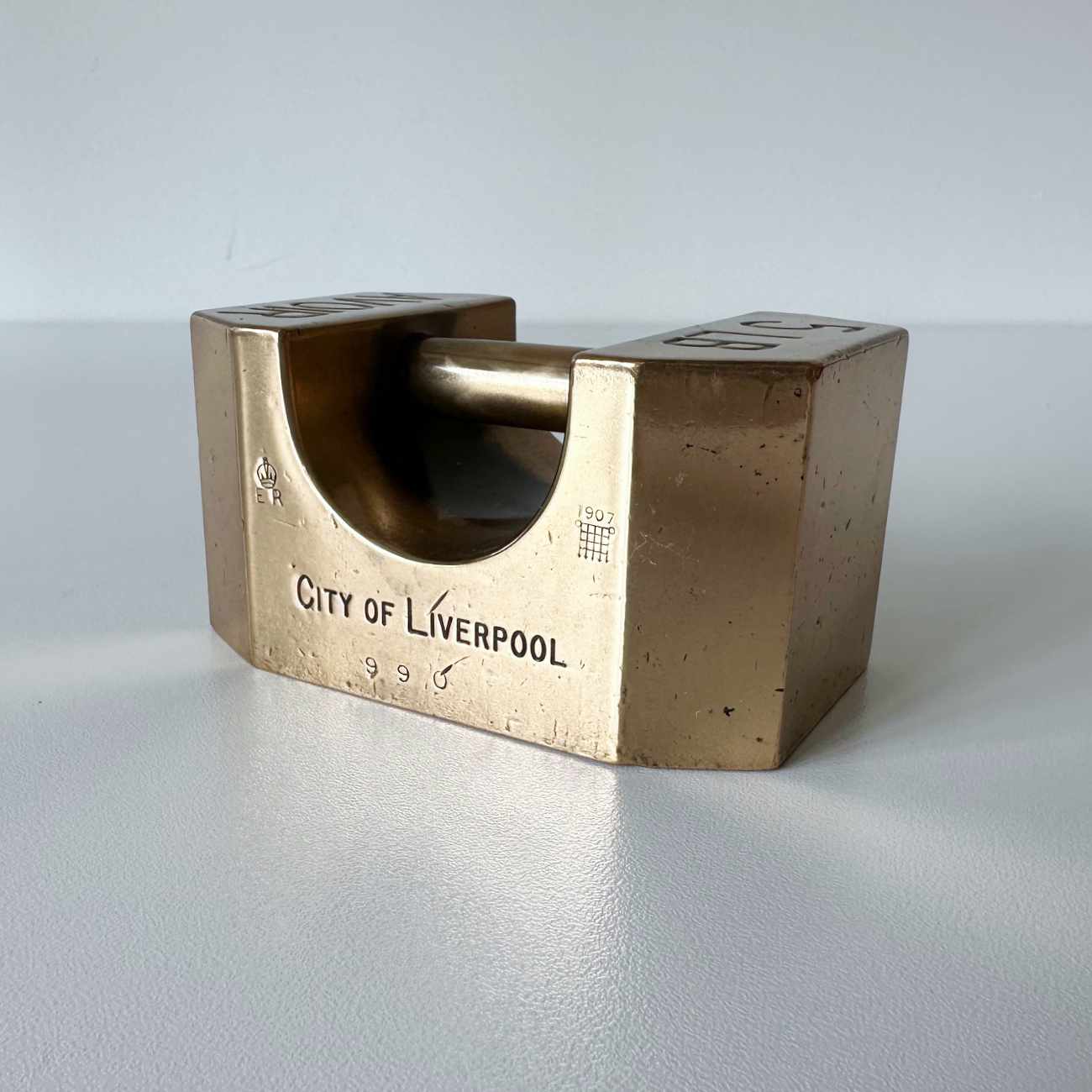
The set includes all county standard Avoir Weights with 50lb, 20lb, 10lb & 5lb all clearly engraved to the top face and with the Avoir unit of measurement engraved below. Each weight has the manufacturer’s name of W&T Avery Ltd, Birmingham to one side, with the other reserved for the indenture mark of 990 and City of Liverpool for whom they were made.
Every weight is marked with the crown over ER cipher to signify the monarch (Edward VII) who reigned from 1901 to 1910 and are marked with Board of Trade portcullis denoting the date in which the weights were last inspected. These vary from 1904 through to 1907.
The lineage of the Avery business can be dated to the early Eighteenth Century to an unrelated scale maker, James Ford who set up a small workshop in Digbeth Birmingham in 1730. The company passed to a William Bridges Barton and by 1782 the business had passed again to a Thomas Beach whose sister Mary married a John Avery.
In 1785, Joseph Balden married Thomas Beach’s niece, Mary Avery and the scale-making business in was eventually sold to him in 1799. Balden died in 1813 passing the business to his son, William although he failed to maintain trade and the business finally passed to his brother in law, William Avery in 1814.
William, a draper and mercer by trade immediately joined forces with his brother Thomas and the business now named W&T Avery once again flourished, however Thomas died just nine years later in 1823 at the age of twenty-six. Despite this tragic setback, William continued to operate the business, keeping his brother’s initials in the company name. William died in 1843 leaving a substantial business to his sons, William Henry and Thomas Avery.
By 1854 the brothers had expanded the company from two premises in Digbeth and Moat Lane in Birmingham to a factory named Atlas Works in West Bromwich employing around 150 men. The sites were organised into differing production lines with the Head Office remaining at the original Digbeth site and the company grew into a national business. In the same year, William’s first son, William Beilby Avery was born and his second son, Henry J Avery arriving in 1861.
Despite the company’s huge success, Thomas Avery withdrew from the business in 1864, leaving his older brother to continue alone. Thomas concentrated on civic duties becoming an elected councillor for his ward and eventually rose to become mayor in 1868 and again 1881. He died married but without children in 1894, his estate being passed to his brother’s children.
William Henry Avery continued to run the company employing his eldest son William Beilby before his death in 1874. It is unclear why so much time elapsed before William’s sons succeeded to the ownership of the Avery business, perhaps due to their young ages but it wasn’t until 1881 that the business was formalised, leaving the brothers in charge of a company employing up to seven hundred men.
The company continued to grow during the latter part of the Nineteenth Century, and it was eventually incorporated by the family with shares being registered on the London Stock Exchange in 1894. A year later, the company bought the business of James Watts & Co which included the famous Soho Foundry created and made famous by Watts and Matthew Boulton during the Industrial Revolution. It remains the home of Avery to this day.
William Beilby Avery is most famous for leading the company through its global expansion during this period and his brother Henry seems to have had little involvement. William was created a Baronet in 1905 and died in London in 1908, he was also remembered as being one of the fathers of philately and was a life Governor of Birmingham University.
Despite the World Wars, Avery continued to expand through the Twentieth Century employing up to three thousand men by the start of the Great War. Following its acquisition of the James Watts Company, it continued to subsume most of its historic scale making competitors such as Henry Pooley and Parnall’s of Bristol. In the 1920’s it also acquired the equally famous company of De Grave and the company of L Oertling.
The company was eventually acquired by GEC to become GEC-Avery, changed again in 1993 to Avery Berkel after GEC’s acquisition of the Dutch Company Berkel and then eventually sold to Weigh-Tronix Inc of America after which the company renamed itself to Avery Weigh-Tronix.
It continues to operate in the weighing industry to this day operating from the famous Soho Works.
Circa 1904